Transfer and Reinforcement Learning as Support Paradigms for Human Activity Recognition in Indoor Environments: A Comprehensive Analysis of Trends, Impact and Future Directions

 and
and
Abstract
1. Introduction
2. Theoretical Information
2.1. Overview of HAR
2.1.1. Types of Activities in HAR
2.1.2. Sensors Used in HAR for Indoor Environments
2.1.3. Datasets for HAR in Indoor Environments
2.2. Transfer Learning in HAR
- -
- Feature-based transfer learning aims to extract domain-invariant features that remain consistent across source and target domains. Techniques such as Domain-Adversarial Neural Networks (DANN) [45] and Maximum Mean Discrepancy (MMD)-based adaptations [46] are widely used to reduce distributional divergence between domains.
- -
- Instance-based transfer learning focuses on selecting or reweighting source instances that are most relevant to the target domain. Algorithms like TrAdaBoost [47] and Kernel Mean Matching (KMM) help reweight source samples to align them with the target distribution.
- -
- Parameter-based transfer learning involves fine-tuning pretrained models—often deep neural networks—on the target domain. Pretrained Convolutional Neural Networks (CNNs) and Recurrent Neural Networks (RNNs) trained on large HAR datasets can be adapted with minimal labeled data using techniques like layer freezing and learning rate scheduling [48].
- -
- Relational transfer learning transfers inter-feature or inter-activity relationships from one domain to another. This is especially relevant in multi-activity recognition, where the temporal or semantic relationships among activities (e.g., sitting often follows walking) can be shared across datasets [49].
2.3. Reinforcement Learning in HAR
3. Methods
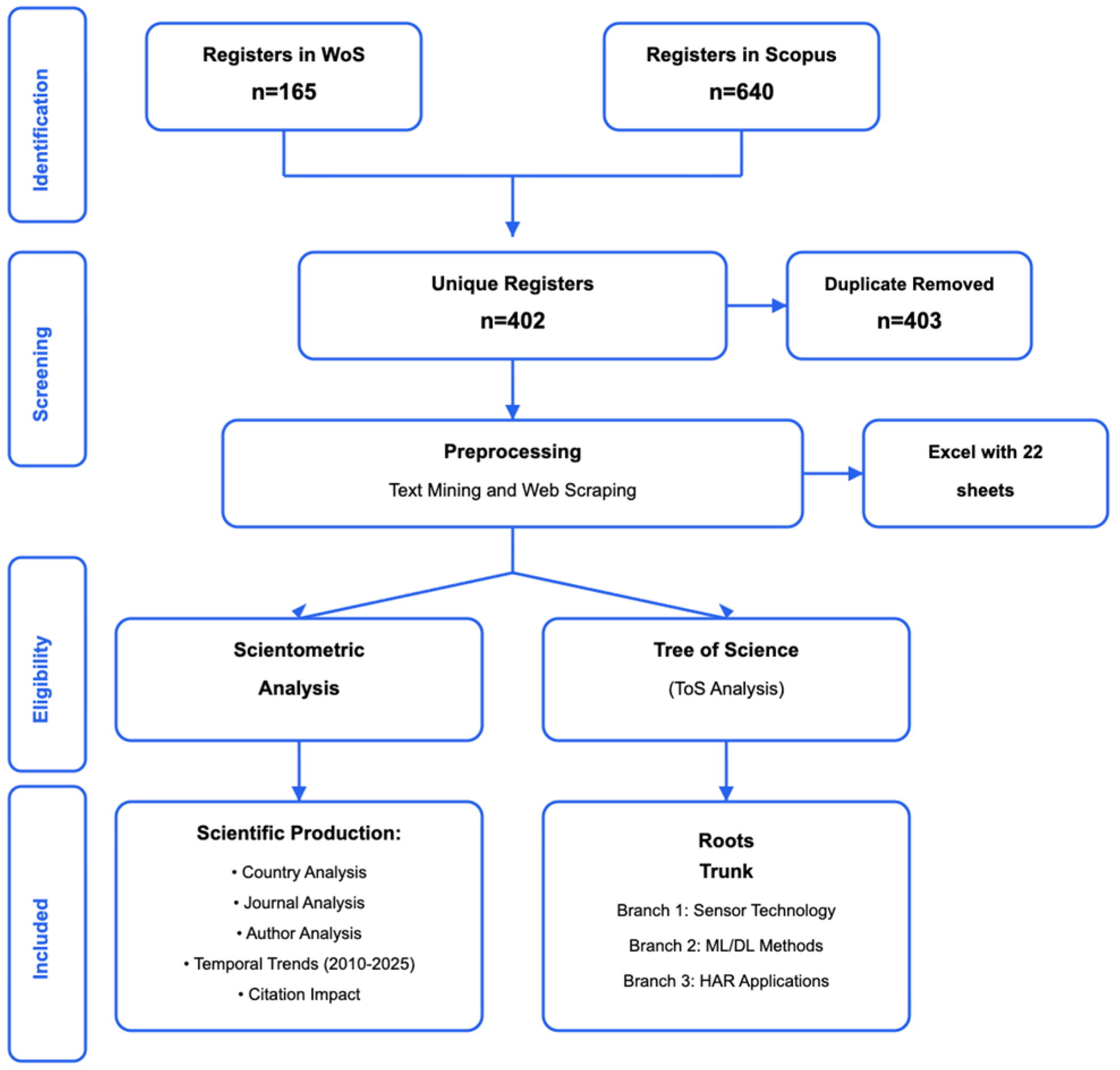
3.1. Scientometric Analysis
3.2. Tree of Science
4. Impact and Development Through Time
5. Results
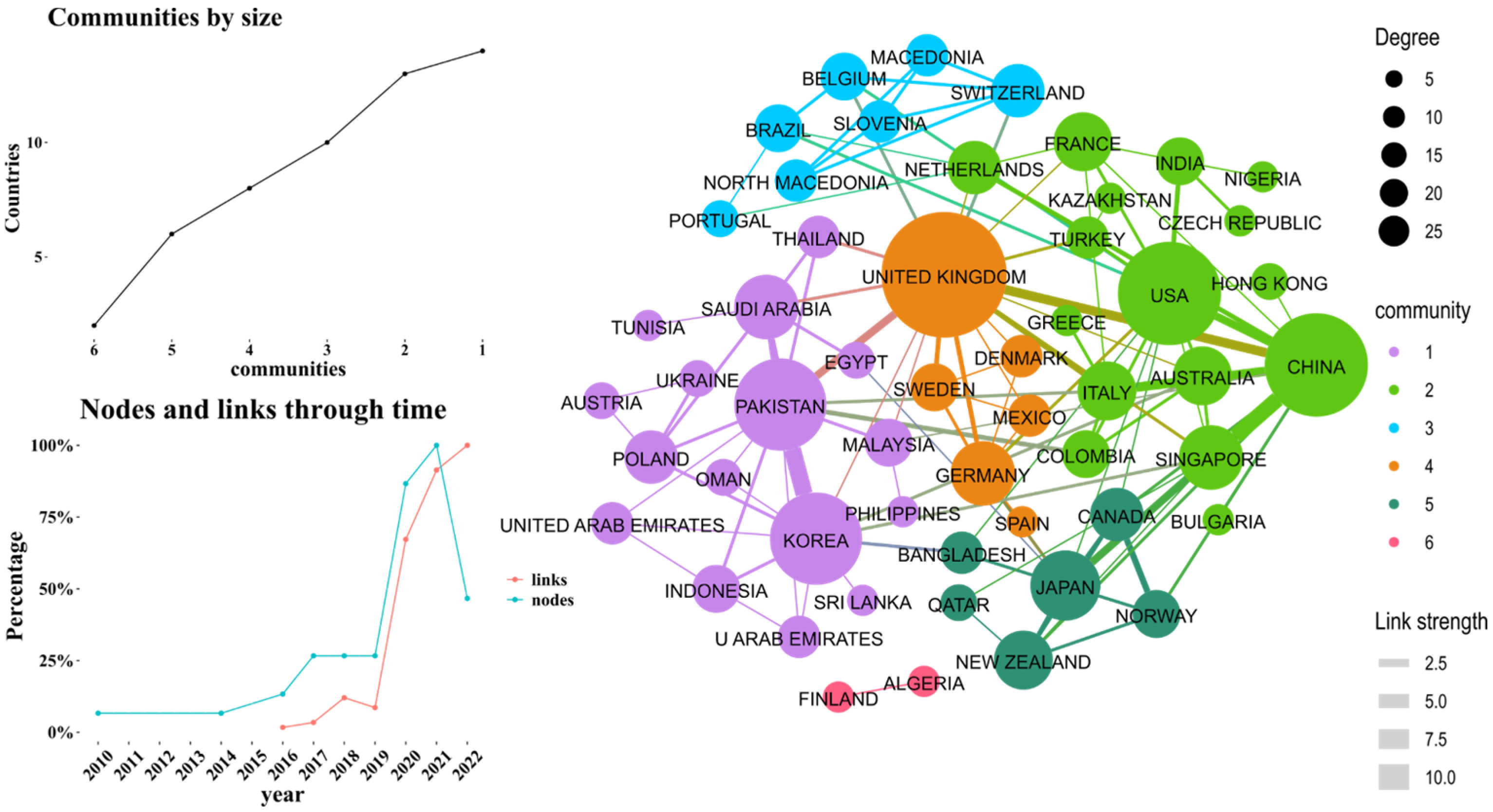
5.1. Pioneering Countries in the Development of the Research Line of Human Activity Recognition
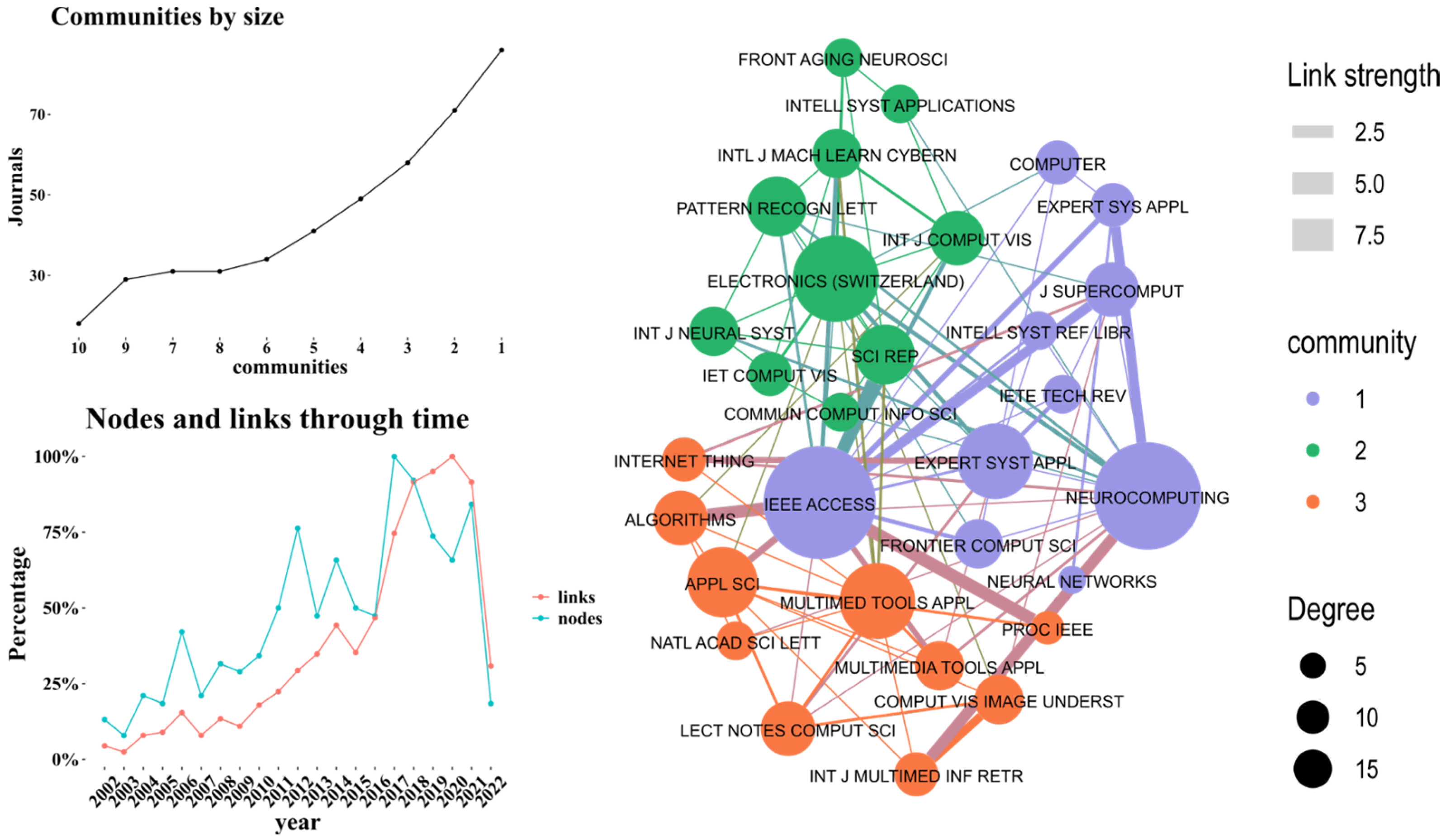
5.2. Leading Journals in Human Activity Recognition Publications
- -
- Sensors has 18 publications indexed in WoS and 14 in Scopus. With an impact factor of 0.76 and an H-index of 219, it is positioned in Q1, indicating it is among the top 25% of journals in its category. Notable contributions include those by author Fu [96], who provides a significant contribution to the field of wearable sensors and HAR, presenting a model that combines advances in sensor technology and machine learning methods. This work has the potential to significantly improve the efficiency and effectiveness of health and wellness monitoring systems, contributing to a better understanding and support of people’s daily lives, as well as the prevention and management of health conditions.
- -
- Lecture Notes in Computer Science (Including Subseries Lecture Notes in Artificial Intelligence and Lecture Notes in Bioinformatics) has no publications indexed in WoS but 14 in Scopus. Its impact factor is 0.32, and it has a high H-index of 446, placing it in Q3. Relevant contributions include those by author Negi [114], who explores the use of predictive analytics for human activity recognition using a residual network (ResNet) and fine-tuning techniques. This study focuses on improving HAR through deep learning algorithms, a fundamental task in areas such as digital health, security, and sports.
- -
- IEEE Internet of Things Journal shows a balance between WoS and Scopus with 7 publications in each database. It stands out with an impact factor of 3.75 and an H-index of 149, also positioned in Q1. Author Wang [115] demonstrates how his method can be effectively applied to HAR in different contexts, using multimodal data that includes both CSI signals and other sensors when available. The proposed approach significantly improves recognition performance compared to traditional methods, offering a more flexible and robust solution for HAR in the Internet of Things (IoT). This study contributes significantly to HAR and IoT research, providing an advanced methodology for the accurate interpretation of human activities in smart environments. The application of GANs for CSI data analysis opens up new possibilities for developing monitoring and assistance systems without the need for wearables or cameras, which is especially valuable in health, security, and home comfort applications.
- -
- ACM International Conference Proceeding Series has no entries in WoS but has 7 in Scopus and an impact factor of 0.21. Its H-index is 137. Wang is a representative author exploring the use of transferred deep learning for cross-domain activity recognition [101]. This study addresses one of the key challenges in HAR: how to improve the generalization of deep learning models to new domains or contexts that were not seen during training. To address this issue, the authors propose a transferred deep learning approach that adapts to new domain conditions without requiring extensive domain-specific labeled datasets. This is achieved by fine-tuning pre-trained models in a data-rich source domain to a data-scarce target domain, allowing the model to retain the generalizable knowledge learned from the source domain while adapting to the peculiarities of the target domain.
- -
- Neural Computing and Applications is not present in WoS but is in Scopus with 6 publications. It has an impact factor of 1.17 and an H-index of 111, placing it in Q1. Among the most notable works are those by author Ozcan [69], who focuses on developing advanced hand gesture recognition systems through the application of convolutional neural networks (CNNs) based on transfer learning, complemented by heuristic optimization techniques. This research is positioned at the intersection of computer vision and artificial intelligence, aimed at improving the interface between humans and computers through the accurate interpretation of hand gestures, an area of growing importance for applications ranging from healthcare assistance to device control and augmented reality. Ozcan and Basturk go further by integrating heuristic optimization techniques into the transfer learning process to efficiently adjust CNN model parameters to the specific task of gesture recognition. Heuristic optimization refers to the use of approximate methods to find optimal or near-optimal solutions to complex problems, often with fewer computational resources than exact optimization methods. In this context, it is used to refine the adapted CNN models, improving their ability to recognize hand gestures with high accuracy.
- -
- Computers, Materials & Continua is indexed in Scopus with 5 publications but does not appear in Web of Science (WoS). The journal has an impact factor of 0.53 and an H-index of 51, placing it in the Q2 quartile. Authors like Kiran [116] address the topic of human action recognition through the fusion of deep multilayer features obtained through deep learning. This study introduces a novel approach to improving the accuracy and efficiency of human action recognition in videos, a research area of great importance for applications ranging from security surveillance to human-machine interaction and sports analysis. The approach proposed by Kiran and co-authors uses convolutional neural network (CNN) and recurrent neural network (RNN) models to extract and analyze the visual and temporal features of videos, respectively. These models are known for their ability to learn complex and highly discriminative data representations. The key innovation of the study lies in how these multilayer and model features are combined to form a unified representation that is more representative and robust for action recognition.
- -
- Expert Systems With Applications is indexed with 4 entries in Web of Science (WoS) and 3 in Scopus. The journal has an impact factor of 1.87 and a high H-index of 249, positioning it in the Q1 quartile. Bermejo [117] introduces an innovative methodology for real-time change point detection, with a particular focus on activity segmentation within time series data collected in smart home environments. This approach is based on embedding techniques to effectively analyze and process large volumes of data generated by various devices in the smart home, with the aim of identifying significant changes in activity patterns that may indicate transitions between different activities or events. The article stands out for its proposal of a model that integrates embedding techniques to transform time series data into a feature space where change points can be detected more efficiently. This approach overcomes challenges associated with the variability and complexity of data in real-world environments, improving the accuracy of change point detection compared to traditional methods.
- -
- IEEE Access has 5 publications in both WoS and Scopus, an impact factor of 0.93, and an H-index of 204, also in Q1. Abdulazeem [118] explores a transfer learning-based approach for human action recognition. This work addresses the challenge of identifying and classifying various human activities through visual data, a fundamental research area for developing applications in security, surveillance, sports analysis, and human-computer interaction systems. The research presents how pre-trained convolutional neural networks (CNNs) can be adapted for HAR, fine-tuning the models to specific human action datasets with a relatively small amount of training data. This approach not only reduces the need for large volumes of data specifically labeled for HAR but also decreases the time and computational resources required for model training. The results obtained by Abdulazeem and his co-authors demonstrate that the transfer learning approach significantly improves the accuracy of human action recognition compared to methods that do not use knowledge transfer. This validates transfer learning’s effectiveness as a powerful strategy for addressing HAR challenges, facilitating the implementation of more efficient and accessible recognition systems.
- -
- Proceedings—International Symposium on Wearable Computers, ISWC has no publications in WoS but has 5 in Scopus and no impact factor or quartile, although it has an H-index of 57. Du [106] makes important contributions focused on applying transfer learning techniques for human activity recognition across different contexts, employing an innovative cascade neural network architecture. This study addresses a crucial challenge in HAR: how to improve machine learning models’ ability to generalize and adapt to new activities or users not seen during the training phase. To overcome this challenge, the authors propose a cascade neural network architecture that facilitates knowledge transfer between related but distinct HAR tasks. This approach allows the model to learn general features of human activities in an initial stage and then apply this knowledge to specific recognition tasks in subsequent stages, adjusting and refining its predictions.
- -
- Communications in Computer and Information Science does not appear in WoS, has 4 in Scopus, an impact factor of 0.19, and an H-index of 62, ranking in Q4. Among the most relevant authors is Palak [119], who addresses the challenge of recognizing human actions from static images. This study represents a valuable contribution to the field of computer vision, focusing specifically on how advanced techniques can be used to interpret and classify various human actions captured in photographs, an area that has attracted increasing interest due to its applications in security, surveillance, multimedia content analysis, and human-machine interaction systems. The study proposes a methodology that combines deep learning techniques with a detailed analysis of human body posture and orientation, allowing the model to distinguish between a wide range of human activities. This involves using convolutional neural networks (CNNs) for feature extraction and analyzing the spatial configuration of the body, leveraging the CNNs’ ability to learn high- and low-level representations of visual data.
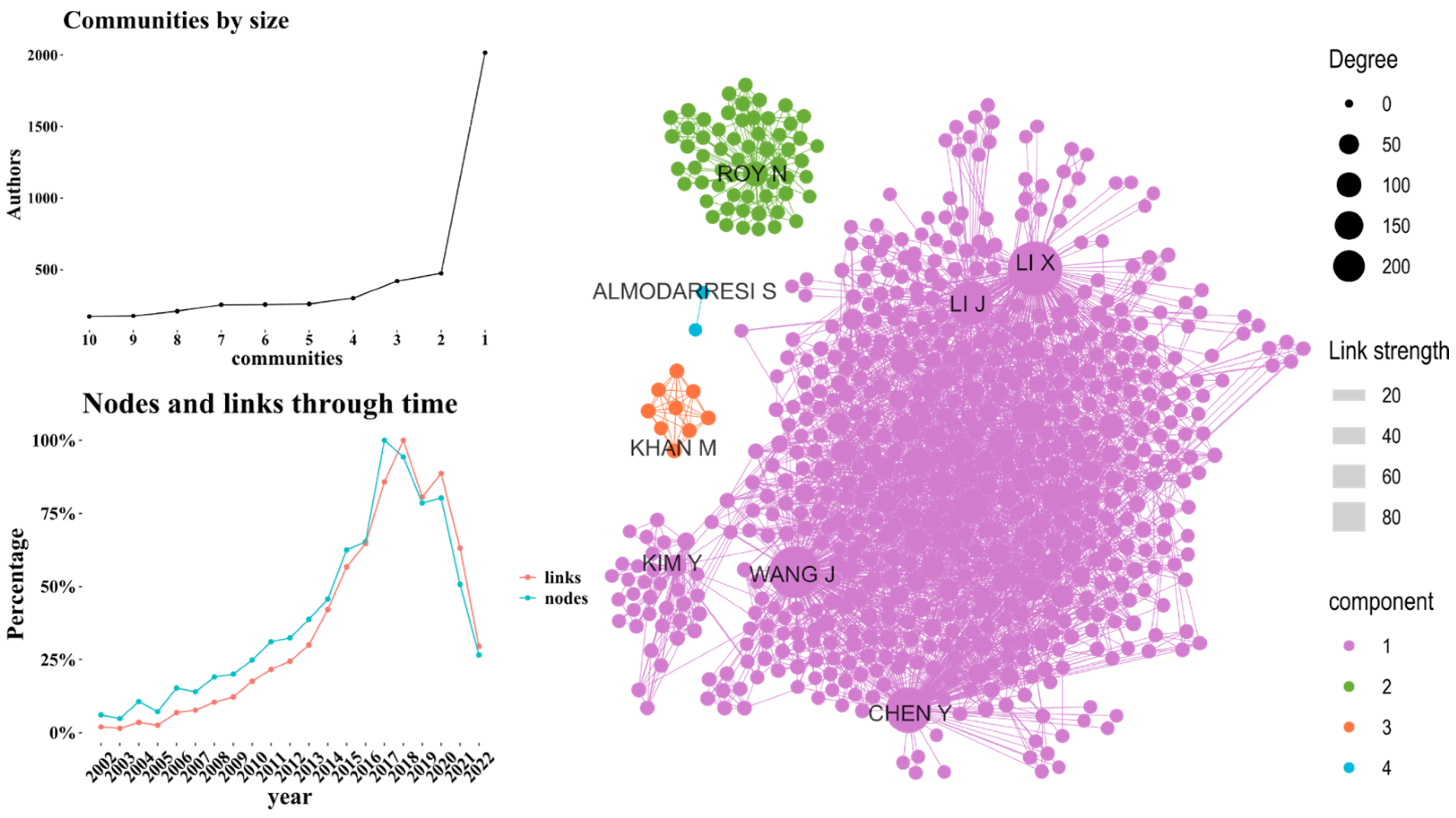
5.3. Leading Authors in Publications on Human Activity Recognition Using Transfer and Reinforcement Learning
- Chen, Y. [130], from National Taipei University, Taipei, Taiwan, with 9 articles and an h-index of 25, shows a balanced combination of productivity and considerable oimpact in his field, suggesting that his works are well recognized and cited in the scientific community, among which stands out the approach to an innovative challenge in the field of activity recognition using mobile and wearable devices. In this study, the authors focus on improving the ability of systems to recognize human activities regardless of the position of the device on the user’s body, which represents a significant problem in the practical application of activity recognition technologies in daily life.
- Khan, M. [131], from Kennesaw State University, Kennesaw, USA, stands out notably with 8 articles but an exceptional h-index of 112. This high h-index indicates that Khan M is a highly influential researcher whose work has had a profound and widely recognized impact on his discipline, in which he has published works focused on the emerging field of the Internet of Things (IoT) and its application in human activity recognition. This author addresses a particularly complex challenge in this field: the ability to recognize activities that have not been previously seen during the training phase of the model, using unlabeled data and transfer learning.
- Roy, N. [68], from the University Of Maryland, Baltimore County (UMBC), Baltimore, USA, with 8 publications and an h-index of 20, proves to be a researcher whose work has a respectable recognition and a significant influence, reflecting the quality and importance of his research. Among his most notable works is an innovative approach to human activity recognition through the use of transfer learning. This work addresses the problem of how to improve the efficiency and effectiveness of human activity recognition (HAR) systems in situations where datasets are limited, diverse, or where data collection conditions vary significantly. “TransAct” proposes a transfer learning framework specifically designed for HAR, with the aim of overcoming the limitations of traditional approaches that require extensive amounts of labeled and context-specific data to train accurate models. Transfer learning, in this context, is used to transfer knowledge gained from an activity recognition task (with a large, well-labeled dataset) to another task where the data may be sparse, unlabeled, or where activities may vary slightly in execution due to differences in the environment, user, or data collection device.
- Qin, J. [95], affiliated with Microsoft Research Redmond, USA, with 8 papers and an h-index of 21, shows an important contribution to his field. His affiliation suggests a privileged position to combine academic research with practical applications in industry. The author introduces an advanced methodology for activity recognition using spatial-temporal adaptive transfer learning. This study addresses one of the most significant challenges in the field of human activity recognition (HAR), especially in environments characterized by data heterogeneity among different datasets. The main objective of the work is to improve the ability of HAR systems to generalize across multiple datasets without the need for extensive recalibration or relabeling. This is particularly relevant in Internet of Things (IoT) applications and wearable devices, where the diversity of devices, users, and contexts can lead to high variability in the data collected.
- Zebhi, S. [132], from Yazd University, Yazd, Iran, with 6 publications and an h-index of 12, shows that although he has fewer publications than others on this list, his work is of quality and has gained a respectable number of citations, showing its impact on the academic community, as he addresses the task of human activity recognition (HAR) through an innovative technique that uses human motion images (MHIs) generated from sequences of frames. This work is enclosed in the field of computer vision and artificial intelligence, offering a novel methodology to improve the accuracy and efficiency of HAR, a crucial area of research for applications in security, health, and interactive systems. The method proposed in the article is based on the generation and analysis of MHIs from sequences of video frames to identify and classify different human activities. The authors develop and apply advanced algorithms to process these MHIs, extracting key features that allow the accurate identification of the activity performed. Through this approach, the study seeks to overcome some of the limitations of traditional HAR methods, which often require complex preprocessing or cannot effectively handle variability in activity execution.
- Oh, S. [86], from Inha University Incheon, South Korea, has 6 papers and an h-index of 3. This profile suggests that Kim Y is possibly a newer researcher or that his work is just beginning to gain recognition in his area of study. The author focuses on an advanced methodology to improve the accuracy and efficiency of HAR by using semi-supervised learning and active transfer learning. This study addresses critical challenges in HAR, such as label sparsity and data diversity in practical applications, by proposing an innovative solution that combines the advantages of semi-supervised learning and active learning to optimize the use of unlabeled and labeled data effectively. The research introduces an active semi-supervised learning framework in which a model initially trained with a small labeled dataset is iteratively improved by actively selecting and labeling the most informative samples from an unlabeled dataset. This strategy allows the system to efficiently identify the samples that, once labeled, will contribute most significantly to model improvement. Combined with transfer learning techniques, this approach allows pre-trained models to be adapted to new HAR contexts or tasks with minimal additions of labeled data, thus overcoming the limitations of purely supervised or unsupervised approaches.
- Myagmar, B. [133], from Harbin Institute Of Technology, Harbin, China, with 6 publications, where he stands out for addressing a central problem in the field of ADL recognition through big data analysis: the heterogeneity of data from different domains. This study proposes an innovative solution to effectively learn about heterogeneous ADLs by identifying and leveraging a domain-invariant feature subspace, thus improving the generalization of machine learning models in ADL recognition tasks.
- Li, X. [134], from the University Of Technology Sydney, Sydney, Australia, with 6 papers and an h-index of 7, shows a moderate impact in his field, with a balance between the amount of work produced and the recognition obtained through citations. The author introduces a state-of-the-art methodology for human activity recognition using micro-Doppler signatures obtained through radar technology. This research is situated at the intersection of remote sensing and machine learning, proposing a semi-supervised approach to identify human activities, which is critical for applications ranging from security and surveillance to healthcare and disaster management.
- Zebhi, S. [135], also from Yazd University, Yazd, Iran, with 6 publications and an h-index of 3, shares a similar profile to Kim Y, suggesting that they are either in the early stages of their academic careers or that their research areas are emerging in terms of recognition and citations. The authors address the challenge of HAR by using pre-trained neural networks and implementing informative templates. This approach is proposed as an innovative solution to improve the accuracy and efficiency of HAR, especially in scenarios where collecting and labeling large volumes of activity-specific data may prove prohibitively expensive or impractical. To overcome these limitations, Zebhi and his co-authors propose a method that leverages pre-trained neural networks, which have already learned useful features from large datasets in general computer vision tasks. The key innovation of their approach lies in the integration of these networks with informative templates specifically designed to highlight the most relevant features for activity recognition. These templates act as a filter that guides the pre-trained network to focus on particular aspects of the input data that are most informative for distinguishing between different activities.
- Finally, Almodarresi, S. [136] is the last author who focuses on identifying the use of transfer learning applied to human activity recognition (HAR) through spatiotemporal representations. This work addresses the challenge of how to improve the accuracy and generalization of HAR systems in diverse environments and conditions, using an innovative approach that combines transfer learning with the detailed analysis of movement patterns in time and space. The authors propose a framework that uses transfer learning to adapt HAR models pre-trained in a source domain to a new target domain, with an emphasis on capturing and analyzing spatiotemporal representations of activities. These representations allow capturing the dynamics of human movement more completely, considering both the spatial distribution of movements and their evolution over time.
6. Discussion: Frontier of Knowledge in the Line of Research
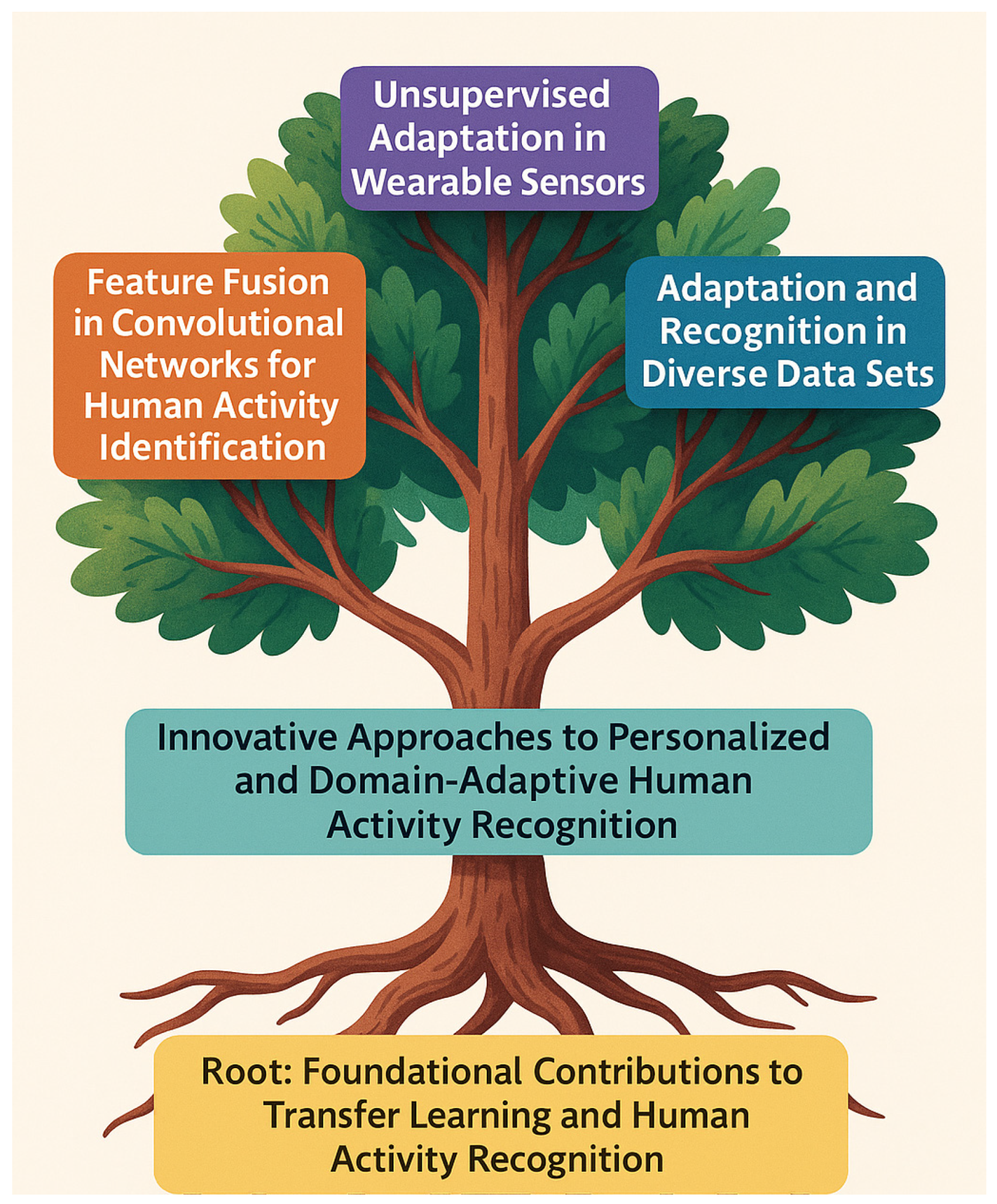
6.1. Root: Foundational Contributions to Transfer Learning and Human Activity Recognition
6.2. Trunk: Innovative Approaches to Personalized and Domain-Adaptive Human Activity Recognition
6.3. Branch 1: Feature Fusion in Convolutional Networks for Human Activity Identification
6.4. Branch 2: Unsupervised Adaptation in Wearable Sensors
6.5. Branch 3: Adaptation and Recognition in Diverse Datasets
6.6. Challenges and Gaps in Transfer Learning for Human Activity Recognition
7. Conclusions
- Consolidation of a theoretical framework through the “Tree of Science”
- 2.
- Identification of strategic thematic clusters
- 3.
- Fundamental contribution to understanding current challenges
- 4.
- Production of knowledge that can be used in practice and in science policy
Supplementary Materials
Author Contributions
Funding
Institutional Review Board Statement
Informed Consent Statement
Data Availability Statement
Conflicts of Interest
References
- Zhou, X.; Liang, W.; Kevin, I.; Wang, K.; Wang, H.; Yang, L.T.; Jin, Q. Deep-learning-enhanced human activity recognition for Internet of healthcare things. IEEE Internet Things J. 2020, 7, 6429–6438. [Google Scholar] [CrossRef]
- Ramamurthy, R.S.; Roy, N. Recent trends in machine learning for human activity recognition—A survey. Wiley Interdiscip. Rev. Data Min. Knowl. Discov. 2018, 8, e1254. [Google Scholar] [CrossRef]
- Qiu, S.; Zhao, H.; Jiang, N.; Wang, Z.; Liu, L.; An, Y.; Zhao, H.; Miao, X.; Liu, R.; Fortino, G. Multi-sensor information fusion based on machine learning for real applications in human activity recognition: State-of-the-art and research challenges. Inf. Fusion 2022, 80, 241–265. [Google Scholar] [CrossRef]
- Wang, Z.; Wu, D.; Gravina, R.; Fortino, G.; Jiang, Y.; Tang, K. Kernel fusion based extreme learning machine for cross-location activity recognition. Inf. Fusion 2017, 37, 1–9. [Google Scholar] [CrossRef]
- Khan, M.A.A.H.; Roy, N.; Misra, A. Scaling human activity recognition via deep learning-based domain adaptation. In Proceedings of the 2018 IEEE International Conference on Pervasive Computing and Communications (PerCom), Athens, Greece, 19–23 March 2018; IEEE: New York, NY, USA, 2018; pp. 1–9. [Google Scholar]
- Seyfioglu, M.S.; Erol, B.; Gurbuz, S.Z.; Amin, M.G. DNN transfer learning from diversified micro-Doppler for motion classification. IEEE Trans. Aerosp. Electron. Syst. 2018, 55, 2164–2180. [Google Scholar] [CrossRef]
- Patricia, A.-C.P.; Enrico, V.; Shariq, B.A.; Franco, E.D.l.H.; Alberto, P.-M.M.; Isabel, O.-C.A.; Tariq, M.I.; Restrepo, J.K.G.; Fulvio, P. Machine learning applied to datasets of human activity recognition: Data analysis in health care. Curr. Med. Imaging 2023, 19, 46–64. [Google Scholar] [CrossRef]
- Qureshi, T.S.; Shahid, M.H.; Farhan, A.A.; Alamri, S. A systematic literature review on human activity recognition using smart devices: Advances, challenges, and future directions. Artif. Intell. Rev. 2025, 58, 1–57. [Google Scholar] [CrossRef]
- Zhu, P.; Zhu, Y.; Li, W.; He, Y.; Zou, Y.; Wu, K.; Leung, V.C. Char: Composite head-body activities recognition with a single earable device. IEEE Trans. Mob. Comput. 2025, 24, 6532–6549. [Google Scholar] [CrossRef]
- Ugwu, C.; Oyeleke, O. Potential of Large Language Model for Activity Recognition in Activities of Daily Living: A Systematic Review. Authorea Preprints. 2025. Available online: https://www.techrxiv.org/users/894192/articles/1270903-potential-of-large-language-model-for-activity-recognition-in-activities-of-daily-living-a-systematic-review (accessed on 1 June 2025).
- Chen, H. Activity Recognition Based on Sensor Networks Using Learning Models. Ph.D. Thesis, Université de Sherbrooke, Sherbrooke, QC, Canada, 2025. [Google Scholar]
- Yang, Z.; Zhang, Y.; Li, Y.; Huang, L.; Hu, P.; Lin, Y. Fusion of Inertial and High-resolution Acoustic Data for Privacy-Preserving Human Activity Recognition. IEEE Trans. Instrum. Meas. 2025, 74, 1–20. [Google Scholar] [CrossRef]
- Liu, J. Semantic Segmentation and Zero-Shot Recognition of Environmental Sensor Data with Large Language Models. Master’s Thesis, University of Helsinki, Helsinki, Finland, 2025. [Google Scholar]
- Wang, K.; Du, S.; Kong, J.; Zheng, M.; Li, S.; Liang, E.; Zhu, X. Self-Powered, Flexible, Transparent Tactile Sensor Integrating Sliding and Proximity Sensing. Materials 2025, 18, 322. [Google Scholar] [CrossRef]
- Wang, S.; Wang, X.; Jiang, B.; Zhu, L.; Li, G.; Wang, Y.; Tian, Y.; Tang, J. Human Activity Recognition using RGB-Event based Sensors: A Multi-modal Heat Conduction Model and A Benchmark Dataset. arXiv 2025, arXiv:2504.05830. [Google Scholar]
- Kanjilal, R.; Kucuk, M.F.; Uysal, I. Human Activity Recognition: A Review of RFID and Wearable Sensor Technologies Powered by AI. IEEE J. Radio Freq. Identif. 2025, 9, 180–199. [Google Scholar] [CrossRef]
- Cook, D.J.; Crandall, A.S.; Thomas, B.L.; Krishnan, N.C. CASAS: A smart home in a box. IEEE Comput. 2013, 46, 26–33. [Google Scholar] [CrossRef] [PubMed]
- Alemdar, H.; İncel, Ö.D.; Ertan, H.; Ersoy, C. ARAS Human Activity Datasets in Multiple Homes with Multiple Residents. In Proceedings of the 7th International Conference on Pervasive Computing Technologies for Healthcare (PervasiveHealth), Venice, Italy, 5–8 May 2013. [Google Scholar] [CrossRef]
- Chavarriaga, R.; Sagha, H.; Calatroni, A.; Digumarti, S.T.; Tröster, G.; del R. Millán, J.; Roggen, D. The Opportunity challenge: A benchmark database for on-body sensor-based activity recognition. Pattern Recognit. Lett. 2013, 34, 2033–2042. [Google Scholar] [CrossRef]
- Vavoulas, G.; Chatzaki, C.; Malliotakis, T.; Pediaditis, M.; Tsiknakis, M. The MobiAct Dataset: Recognition of Activities of Daily Living using Smartphones. In Proceedings of the 2nd International Conference on Information and Communication Technologies for Ageing Well and e-Health (ICT4AWE), 21–22 April 2016; SCITEPRESS: Rome, Italy, 2016; pp. 143–151. [Google Scholar] [CrossRef]
- Baños, O.; Tóth, M.A.; Damas, M.; Pomares, H.; Rojas, I.; Amft, O. A benchmark dataset to evaluate sensor displacement in activity recognition. In Proceedings of the 2012 ACM Conference on Ubiquitous Computing, Pittsburgh, PA, USA, 5–8 September 2012; pp. 1026–1035. [Google Scholar]
- Espinilla, M.; Medina, J.; Nugent, C. UCAmI Cup. Analyzing the UJA human activity recognition dataset of activities of daily living. Proceedings 2018, 2, 1267. [Google Scholar] [CrossRef]
- Reiss, A.; Stricker, D. Introducing a New Benchmarked Dataset for Activity Monitoring. In Proceedings of the 2012 16th International Symposium on Wearable Computers (ISWC), Newcastle, UK, 18–22 June 2012; pp. 1–8. [Google Scholar]
- Kwapisz, J.R.; Weiss, G.M.; Moore, S.A. Activity Recognition using Cell Phone Accelerometers. In Proceedings of the 4th International Workshop on Knowledge Discovery from Sensor Data (KDD), Washington, DC, USA, 25 July 2010. [Google Scholar]
- Anguita, D.; Ghio, A.; Oneto, L.; Parra, X.; Reyes-Ortiz, J.L. A public domain dataset for human activity recognition using smartphones. In Proceedings of the European Symposium on Artificial Neural Networks, Computational Intelligence and Machine Learning (ESANN), Bruges, Belgium, 24–26 April 2013. [Google Scholar]
- Reyes-Ortiz, J.L.; Anguita, D.; Ghio, A.; Oneto, L.; Parra, X. Human Activity Recognition Using Smartphones [Dataset]. UCI Machine Learning Repository. 2013. Available online: https://archive.ics.uci.edu/dataset/240/human+activity+recognition+using+smartphones (accessed on 23 November 2025).
- Zappi, P.; Lombriser, C.; Stiefmeier, T.; Farella, E.; Roggen, D.; Benini, L.; Troster, G. Activity recognition from on- body sensors: Accuracy-power trade-off by dynamic sensor selection. In Wireless Sensor Networks; Springer: Berlin/Heidelberg, Germany, 2008; pp. 17–33. [Google Scholar]
- Bächlin, M.; Hausdorff, J.M.; Roggen, D.; Giladi, N.; Plotnik, M.; Tröster, G. Online Detection of Freezing of Gait in Parkinson’s Disease Patients: A Performance Characterization. In Proceedings of the 4th International Conference on Body Area Networks (BodyNets), Los Angeles, CA, USA, 1–3 April 2009; pp. 1–6. [Google Scholar]
- Wang, Y.; Chen, Y.; Rudolph, M.; He, Z.; Tröster, G. Smartphone-Based Human Activity Recognition Dataset for Multimodal and Real-World Mobility Applications. In Proceedings of the 21st International Symposium on Wearable Computers (ISWC), Singapore, 8–12 October 2018. [Google Scholar]
- Chen, L.; Wei, H.; Ferryman, J. A Survey of Human Motion Recognition Using Kinect. In Proceedings of the International Conference on Computer Vision Theory and Applications (VISAPP), Barcelona, Spain, 21–24 February 2013. [Google Scholar]
- Tahir, Y.; Hamarash, I.I. “IMU-Based Human Activity Recognition Dataset”, Mendeley Data, V3. 2025. Available online: https://data.mendeley.com/datasets/fcnmmsn857/3 (accessed on 1 June 2025).
- Vaizman, Y.; Ellis, K.; Lanckriet, G.; Weibel, N. Extrasensory app: Data collection in-the-wild with rich user interface to self-report behavior. In Proceedings of the 2018 CHI Conference on Human Factors in Computing Systems, Montreal, QC, Canada, 21–26 April 2018; pp. 1–12. [Google Scholar]
- Tenorth, M.; Bandouch, J.; Beetz, M. The TUM kitchen data set of everyday manipulation activities for motion tracking and action recognition. In Proceedings of the 2009 IEEE 12th International Conference on Computer Vision Workshops, ICCV Workshops; IEEE: New York, NY, USA, 2009; pp. 1089–1096. [Google Scholar]
- Zhang, M.; Sawchuk, A.A. USC-HAD: A daily activity dataset for ubiquitous activity recognition using wearable sensors. In Proceedings of the 2012 ACM Conference on Ubiquitous Computing, Pittsburgh, PA, USA, 5–8 September 2012; pp. 1036–1043. [Google Scholar]
- Malekzadeh, M.; Clegg, R.G.; Cavallaro, A.; Haddadi, H. Mobile sensor data anonymization. In Proceedings of the International Conference on Internet of Things Design and Implementation, Montreal, QC, Canada, 15–18 April 2019; pp. 49–58. [Google Scholar]
- Chen, C.; Jafari, R.; Kehtarnavaz, N. UTD-MHAD: A multimodal dataset for human action recognition utilizing a depth camera and a wearable inertial sensor. In Proceedings of the 2015 IEEE International Conference on Image Processing (ICIP); IEEE: New York, NY, USA, 2015; pp. 168–172. [Google Scholar]
- Hirano, S.H.; Brubaker, J.R.; Patterson, D.J.; Hayes, G.R. Detecting cooking state with gas sensors during dry cooking. In Proceedings of the 2013 ACM International Joint Conference on Pervasive and Ubiquitous Computing, Zurich, Switzerland, 8–12 September 2013; p. 411. [Google Scholar]
- Sikder, N.; Nahid, A.A. KU-HAR: An open dataset for heterogeneous human activity recognition. Pattern Recognit. Lett. 2021, 146, 46–54. [Google Scholar] [CrossRef]
- Ofli, F.; Chaudhry, R.; Kurillo, G.; Vidal, R.; Bajcsy, R. Berkeley mhad: A comprehensive multimodal human action database. In Proceedings of the 2013 IEEE Workshop on Applications of Computer Vision (WACV); IEEE: Clearwater Beach, FL, USA, 2013; pp. 53–60. [Google Scholar]
- Frank, K.; Vera Nadales, M.J.; Robertson, P.; Angermann, M. Reliable Real-Time Recognition of Motion-Related Human Activities Using MEMS Inertial Sensors; Technical Report; DLR Institute for Communications and Navigation: Copenhagen, Denmark, 2010. [Google Scholar]
- Weiss, G.M.; Yoneda, K.; Hayajneh, T. Smartphone and smartwatch-based biometrics using activities of daily living. IEEE Access 2019, 7, 133190–133202. [Google Scholar] [CrossRef]
- Ordóñez, F.J.; Roggen, D. Deep convolutional and LSTM recurrent neural networks for multimodal wearable activity recognition. Sensors 2016, 16, 115. [Google Scholar] [CrossRef]
- Zeng, M.; Nguyen, L.T.; Yu, B.; Mengshoel, O.J.; Zhu, J.; Wu, P.; Zhang, J. Convolutional neural networks for human activity recognition using mobile sensors. In Proceedings of the 6th International Conference on Mobile Computing, Applications and Services, Austin, TX, USA, 6–7 November 2014. [Google Scholar]
- Jiang, W.; Yin, Z. Human activity recognition using wearable sensors by deep convolutional neural networks. In Proceedings of the 23rd ACM International Conference on Multimedia, Brisbane, Australia, 26–30 October 2015. [Google Scholar]
- Ganin, Y.; Lempitsky, V. Unsupervised domain adaptation by backpropagation. In Proceedings of the 32nd International Conference on Machine Learning, Lille, France, 6–11 July 2015. [Google Scholar]
- Long, M.; Cao, Y.; Wang, J.; Jordan, M. Learning transferable features with deep adaptation networks. In Proceedings of the 32nd International Conference on Machine Learning, Lille, France, 6–11 July 2015. [Google Scholar]
- Dai, W.; Yang, Q.; Xue, G.R.; Yu, Y. Boosting for transfer learning. In Proceedings of the 24th Annual International Conference on Machine Learning, Corvalis, OR, USA, 20–24 June 2007. [Google Scholar]
- Guan, Y.; Plötz, T. Ensembles of deep LSTM learners for activity recognition using wearables. Proc. ACM Interact. Mob. Wearable Ubiquitous Technol. 2017, 1, 1–28. [Google Scholar] [CrossRef]
- Tang, Y.; Wei, Y.; Yu, X.; Lu, J.; Zhou, J. Graph interaction networks for relation transfer in human activity videos. IEEE Trans. Circuits Syst. Video Technol. 2020, 30, 2872–2886. [Google Scholar] [CrossRef]
- Gong, T.; Kim, Y.; Shin, J.; Lee, S.J. Metasense: Few-shot adaptation to untrained conditions in deep mobile sensing. In Proceedings of the 17th Conference on Embedded Networked Sensor Systems, New York, NY, USA, 10–13 November 2019; pp. 110–123. [Google Scholar]
- Li, G.; Cai, C.; Chen, Y.; Wei, Y.; Chi, Y. Is Q-learning minimax optimal? a tight sample complexity analysis. Oper. Res. 2024, 72, 222–236. [Google Scholar] [CrossRef]
- El Shar, I.; Jiang, D. Weakly coupled deep Q-networks. Adv. Neural Inf. Process. Syst. 2024, 36, 43931–43950. [Google Scholar]
- Bhandari, J.; Russo, D. Global optimality guarantees for policy gradient methods. Oper. Res. 2024, 72, 1906–1927. [Google Scholar] [CrossRef]
- Bettini, M.; Prorok, A.; Moens, V. Benchmarl: Benchmarking multi-agent reinforcement learning. J. Mach. Learn. Res. 2024, 25, 1–10. [Google Scholar]
- Wu, F.; Ke, J.; Wu, A. Inverse reinforcement learning with the average reward criterion. Adv. Neural Inf. Process. Syst. 2024, 36, 100. [Google Scholar]
- Zuluaga, M.; Robledo, S.; Arbelaez-Echeverri, O.; Osorio-Zuluaga, G.A.; Duque-Méndez, N. Tree of Science—ToS: A web-based tool for scientific literature recommendation. Search less, research more! Issues Sci. Technol. Libr. 2022. [Google Scholar] [CrossRef]
- Robledo, P.; Duque, A.; Aguirre, G. Word of Mouth Marketing: A Scientometric Analysis. J. Scientometr. Res. 2023, 11, 436–446. [Google Scholar] [CrossRef]
- Duran-Aranguren, D.; Robledo, S.; Gomez-Restrepo, E.; Arboleda-Valencia, J.; Tarazona, N. Scientometric Overview of Coffee By-Products and Their Applications. Molecules 2021, 26, 7605. [Google Scholar] [CrossRef]
- Yildirim, O.; Plawiak, P.; Tan, R.; Acharya, U. Arrhythmia detection using deep convolutional neural network with long duration ECG signals. Comput. Biol. Med. 2018, 102, 411–420. [Google Scholar] [CrossRef]
- Marín-Rodríguez, N.J.; González-Ruiz, J.D.; Botero, S. A Wavelet Analysis of the Dynamic Connectedness among Oil Prices, Green Bonds, and CO2 Emissions. Risks 2023, 11, 15. [Google Scholar] [CrossRef]
- Santoveña-Casal, S.; Gil-Quintana, J.; Javier, H.-R.J. Microteaching Networks in Higher Education. Interact. Technol. Smart Educ. 2023, ahead-of-print. [Google Scholar] [CrossRef]
- Torres, G.; Robledo, S.; Berrío, S.R. Orientación Al Mercado: Importancia, Evolución Y Enfoques Emergentes Usando Análisis Cienciométrico. Criteriolibre 2021, 19, 326–340. [Google Scholar] [CrossRef]
- Sim, K.; Yap, G.-E.; Phua, C.; Biswas, J.; Wai, A.A.P.; Tolstikov, A.; Huang, W.; Yap, P. Improving the accuracy of errone- 1262 ous-plan recognition system for Activities of Daily Living. In Proceedings of the the 12th IEEE International Conference on e-Health Networking, 1263 Applications and Services; IEEE: New York, NY, USA, 2010; pp. 28–35. [Google Scholar]
- Pietquin, O. Inverse reinforcement learning for interactive systems. In Proceedings of the 2nd Workshop on 1265 Machine Learning for Interactive Systems: Bridging the Gap Between Perception, Action and Communication, Beijing, China, 4 August 2013; pp. 71–75. [Google Scholar]
- Prins, N.W.; Sanchez, J.C.; Prasad, A. A confidence metric for using neurobiological feedback in actor-critic reinforcement learning based brain-machine interfaces. Front. Neurosci. 2014, 8, 111. [Google Scholar] [CrossRef]
- Saeedi, R.; Ghasemzadeh, H.; Gebremedhin, A.H. Transfer learning algorithms for autonomous reconfig- 1267 uration of wearable systems. In 2016 IEEE International Conference on Big Data (Big Data); IEEE: New York, NY, USA, 2016; pp. 563–569. [Google Scholar]
- Wei, Y.; Zhu, Y.; Leung, C.; Song, Y.; Yang, Q. Instilling social to physical: Co-regularized heterogeneous transfer learning. In Proceedings of the AAAI Conference on Artificial Intelligence, Phoenix, AZ, USA, 12–17 February 2016; Volume 30. [Google Scholar]
- Khan, M.A.A.H.; Roy, N. Transact: Transfer learning enabled activity recognition. In Proceedings of the 2017 IEEE International Conference on Pervasive Computing and Communications Workshops (PerCom Workshops), Big Island, HI, USA, 13–17 March 2017; IEEE: New York, NY, USA, 2017; pp. 545–550. [Google Scholar]
- Ozcan, T.; Basturk, A. Transfer learning-based convolutional neural networks with heuristic optimization for hand gesture recognition. Neural Comput. Appl. 2019, 31, 8955–8970. [Google Scholar] [CrossRef]
- Wilson, G.; Doppa, J.R.; Cook, D.J. Visualization of time-series sensor data for time-series sensor datato inform the design of just-in-time adaptive stress interventions. In Proceedings of the 26th ACM SIGKDD International Conference on Knowledge Discovery & Data Mining, Virtual, 23–27 August 2020; pp. 1768–1778. [Google Scholar]
- Khan, N.S.; Ghani, M.S. A survey of deep learning based models for human activity recognition. Wirel. Pers. Commun. 2021, 120, 1593–1635. [Google Scholar] [CrossRef]
- Ariza-Colpas, P.P.; Vicario, E.; Oviedo-Carrascal, A.I.; Butt Aziz, S.; Pineres-Melo, M.A.; Quintero-Linero, A.; Patara, F. Human activity recognition data analysis: History, evolutions, and new trends. Sensors 2022, 22, 3401. [Google Scholar] [CrossRef] [PubMed]
- Sahoo, K.K.; Ghosh, R.; Mallik, S.; Roy, A.; Singh, P.K.; Zhao, Z. Wrapper-based deep feature optimization for activity recognition in the wearable sensor networks of healthcare systems. Sci. Rep. 2023, 13, 965. [Google Scholar] [CrossRef]
- Hassan, N.; Miah, A.S.M.; Shin, J. A deep bidirectional LSTM model enhanced by transfer-learning-based feature extraction for dynamic human activity recognition. Appl. Sci. 2024, 14, 603. [Google Scholar]
- Kaseris, M.; Kostavelis, I.; Malassiotis, S. A comprehensive survey on deep learning methods in human activity recognition. Mach. Learn. Knowl. Extr. 2024, 6, 842–876. [Google Scholar] [CrossRef]
- Thukral, M.; Haresamudram, H.; Ploetz, T. Cross-domain har: Few-shot transfer learning for human activity recognition. ACM Trans. Intell. Syst. Technol. 2025, 16, 1–35. [Google Scholar] [CrossRef]
- LLamani, D.; Kumar, P.; Bhagyalakshmi, A.; Shanthi, J.M.; Maguluri, L.P.; Arif, M.; Dhanamjayulu, C.; K, S.K.; Khan, B. SVM directed machine learning classifier for human action recognition network. Sci. Rep. 2025, 15, 672. [Google Scholar] [CrossRef]
- Shah, S.A.; Fioranelli, F. Human activity recognition: Preliminary results for dataset portability using 1212 FMCW radar. In Proceedings of the 2019 International Radar Conference (RADAR), Toulon, France, 23–27 September 2019; pp. 1–4. [Google Scholar]
- Li, F.; Shirahama, K.; Nisar, M.A.; Huang, X.; Grzegorzek, M. Deep transfer learning for time series data based on 1273 sensor modality classification. Sensors 2020, 20, 4271. [Google Scholar]
- Hernandez, N.; Lundström, J.; Favela, J.; McChesney, I.; Arnrich, B. Literature review on transfer learning for human 1275 activity recognition using mobile and wearable devices with environmental technology. SN Comput. Sci. 2020, 1, 66. [Google Scholar]
- Nikpour, B.; Armanfard, N. Joint selection using deep reinforcement learning for skeleton-based activity 1277 recognition. In Proceedings of the 2021 IEEE International Conference on Systems, Man, and Cybernetics (SMC); IEEE: New York, NY, USA, 2021; pp. 1056–1061. [Google Scholar]
- Soleimani, E.; Nazerfard, E. Cross-subject transfer learning in human activity recognition systems using generative 1199 adversarial networks. Neurocomputing 2021, 426, 26–34. [Google Scholar] [CrossRef]
- Du, Y.; Wang, J.; Feng, W.; Pan, S.; Qin, T.; Xu, R.; Wang, C. Adarnn: Adaptive learning and forecasting of 1201 time series. In Proceedings of the 30th ACM International Conference on Information & Knowledge Management, Gold Coast, Australia, 1–5 November 2021; pp. 402–411. [Google Scholar]
- Jung, S.; Jeoung, J.; Hong, T. Occupant-centered real-time control of indoor temperature using deep learning algorithms. Build. Environ. 2022, 208, 108633. [Google Scholar] [CrossRef]
- Bilal, M.; Maqsood, M.; Yasmin, S.; Hasan, N.U.; Rho, S. A transfer learning-based efficient spatiotemporal human action recognition framework for long and overlapping action classes. J. Supercomput. 2022, 78, 2873–2908. [Google Scholar]
- Oh, S.; Ashiquzzaman, A.; Lee, D.; Kim, Y.; Kim, J. Study on human activity recognition using semi-supervised active transfer learning. Sensors 2021, 21, 2760. [Google Scholar] [CrossRef] [PubMed]
- Mutegeki, R.; Han, D.S. Feature-representation transfer learning for human activity recognition. In Proceedings of the 2019 International Conference on Information and Communication Technology Convergence (ICTC); IEEE: New York, NY, USA, 2019; pp. 18–20. [Google Scholar]
- Nguyen, C.T.; Van Huynh, N.; Chu, N.H.; Saputra, Y.M.; Hoang, D.T.; Nguyen, D.N.; Pham, Q.-V.; Niyato, D.; Dutkiewicz, E.; Hwang, W.-J. Transfer learning for wireless networks: A comprehensive survey. Proc. IEEE 2022, 110, 1073–1115. [Google Scholar] [CrossRef]
- Prabono, A.G.; Yahya, B.N.; Lee, S.L. Atypical sample regularizer autoencoder for cross-domain human activity recognition. Inf. Syst. Front. 2021, 23, 71–80. [Google Scholar] [CrossRef]
- Diyan, M.; Khan, M.; Nathali Silva, B.; Han, K. Scheduling sensor duty cycling based on event detection using bi-directional long short-term memory and reinforcement learning. Sensors 2020, 20, 5498. [Google Scholar] [CrossRef]
- Prabono, A.G.; Yahya, B.N.; Lee, S.L. Hybrid domain adaptation for sensor-based human activity recognition in a heterogeneous setup with feature commonalities. Pattern Anal. Appl. 2021, 24, 1501–1511. [Google Scholar] [CrossRef]
- Kim, G.; Kim, H.; Lee, D. Towards deployment of mobile robot driven preference learning for user-state-specific thermal control in a real-world smart space. In Proceedings of the 38th ACM/SIGAPP Symposium on Applied Computing, Tallinn, Estonia, 27–31 March 2023; pp. 724–731. [Google Scholar]
- Ding, R.; Li, X.; Nie, L.; Li, J.; Si, X.; Chu, D.; Liu, G.; Zhan, D. Empirical study and improvement on deep transfer learning 1205 for human activity recognition. Sensors 2018, 19, 57. [Google Scholar]
- Fu, Z.; He, X.; Wang, E.; Huo, J.; Huang, J.; Wu, D. Personalized human activity recognition based on integrated wearable sensor and transfer learning. Sensors 2021, 21, 885. [Google Scholar] [CrossRef]
- Qin, X.; Chen, Y.; Wang, J.; Yu, C. Cross-dataset activity recognition via adaptive spatial-temporal transfer learning. Proc. ACM Interact. Mob. Wearable Ubiquitous Technol. 2019, 3, 1–25. [Google Scholar]
- Shi, X.; Li, Y.; Zhou, F.; Liu, L. Human activity recognition based on deep learning method. In Proceedings of the 2018 International Conference on Radar (RADAR), Brisbane, Australia, 27–31 August 2018; pp. 1–5. [Google Scholar]
- Chen, W.H.; Cho, P.C.; Jiang, Y.L. Activity Recognition Using Transfer Learning. Sens. Mater. 2017, 29, 897–904. [Google Scholar]
- Pei, L.; Xia, S.; Chu, L.; Xiao, F.; Wu, Q.; Yu, W.; Qiu, R. MARS: Mixed virtual and real wearable sensors for human activity recognition with multidomain deep learning model. IEEE Internet Things J. 2021, 8, 9383–9396. [Google Scholar] [CrossRef]
- Zhang, Y.; Chen, Y.; Wang, Y.; Liu, Q.; Cheng, A. CSI-based human activity recognition with graph few-shot learning. IEEE Internet Things J. 2021, 9, 4139–4151. [Google Scholar] [CrossRef]
- Lu, W.; Chen, Y.; Wang, J.; Qin, X. Cross-domain activity recognition via substructural optimal transport. Neurocomputing 2021, 454, 65–75. [Google Scholar] [CrossRef]
- Wang, J.; Zheng, V.W.; Chen, Y.; Huang, M. Deep transfer learning for cross-domain activity recognition. In Proceedings of the 3rd International Conference on Crowd Science and Engineering, Singapore, 28–31 July 2018; pp. 1–8. [Google Scholar]
- Creagh, A.P.; Lipsmeier, F.; Lindemann, M.; Vos, M.D. Interpretable deep learning for the remote characterisation of ambulation in multiple sclerosis using smartphones. Sci. Rep. 2021, 11, 14301. [Google Scholar] [CrossRef]
- Melanson, D.; Maia, R.; Kim, H.S.; Nascimento, A.; De Cock, M. Secure multi-party computation for personalized human activity recognition. Neural Process. Lett. 2023, 55, 2127–2153. [Google Scholar] [CrossRef]
- Stojchevska, M.; De Brouwer, M.; Courteaux, M.; Ongenae, F.; Van Hoecke, S. From lab to real world: Assessing the effectiveness of human activity recognition and optimization through personalization. Sensors 2023, 23, 4606. [Google Scholar] [CrossRef]
- Ali, S.M.; Augusto, J.C.; Windridge, D. A survey of user-centred approaches for smart home transfer learning and new user home automation adaptation. Appl. Artif. Intell. 2019, 33, 747–774. [Google Scholar] [CrossRef]
- Du, X.; Farrahi, K.; Niranjan, M. Transfer learning across human activities using a cascade neural network architecture. In Proceedings of the 2019 ACM International Symposium on Wearable Computers, London, UK, 9–13 September 2019; pp. 35–44. [Google Scholar]
- Ye, J. SLearn: Shared learning human activity labels across multiple datasets. In 2018 IEEE International Conference on Pervasive Computing and Communications (PerCom); IEEE: New York, NY, USA, 2018; pp. 1–10. [Google Scholar]
- Spathis, D.; Perez-Pozuelo, I.; Brage, S.; Wareham, N.J.; Mascolo, C. Self-supervised transfer learning of physiological representations from free-living wearable data. In Proceedings of the Conference on Health, Inference, and Learning, Virtual Event, 8–10 April 2021; pp. 69–78. [Google Scholar]
- Shah, S.A.; Tahir, A.; Le Kernec, J.; Zoha, A.; Fioranelli, F. Data portability for activities of daily living and fall detection in different environments using radar micro-doppler. Neural Comput. Appl. 2022, 34, 7933–7953. [Google Scholar] [CrossRef]
- Ghayvat, H.; Gope, P. Smart aging monitoring and early dementia recognition (SAMEDR): Uncovering the hidden wellness parameter for preventive well-being monitoring to categorize cognitive impairment and dementia in community-dwelling elderly subjects through AI. Neural Comput. Appl. 2023, 35, 23739–23751. [Google Scholar] [CrossRef]
- Ito, C.; Shuzo, M.; Maeda, E. CNN for human activity recognition on small datasets of acceleration and gyro sensors using transfer learning. In Proceedings of the Adjunct Proceedings of the 2019 ACM International Joint Conference on Pervasive and Ubiquitous Computing and Proceedings of the 2019 ACM International Symposium on Wearable Computers, London, UK, 9–13 September 2019; pp. 724–729. [Google Scholar]
- Putra, P.U.; Shima, K.; Shimatani, K. A deep neural network model for multi-view human activity recognition. PLoS ONE 2022, 17, e0262181. [Google Scholar] [CrossRef] [PubMed]
- Romaissa, B.D.; Mourad, O.; Brahim, N. Vision-based multi-modal framework for action recognition. In 2020 25th International Conference on Pattern Recognition (ICPR), 10–15 January 2021; IEEE: New York, NY, USA, 2021; pp. 5859–5866. [Google Scholar]
- Negi, A.; Kumar, K.; Chaudhari, N.S.; Singh, N.; Chauhan, P. Predictive analytics for recognizing human activities using residual network and fine-tuning. In Proceedings of the Big Data Analytics: 9th International Conference, BDA 2021, Virtual Event, 5–18 December, 2021; pp. 296–310. [Google Scholar]
- Wang, D.; Yang, J.; Cui, W.; Xie, L.; Sun, S. Multimodal CSI-based human activity recognition using GANs. IEEE Internet Things J. 2021, 8, 17345–17355. [Google Scholar] [CrossRef]
- Kiran, S.; Khan, M.A.; Javed, M.Y.; Alhaisoni, M.; Tariq, U.; Nam, Y.; Damaševičius, R.; Sharif, M. Multi-Layered Deep Learning Features Fusion for Human Action Recognition. Comput. Mater. Contin. 2021, 69, 4061–4075. [Google Scholar] [CrossRef]
- Bermejo, U.; Almeida, A.; Bilbao-Jayo, A.; Azkune, G. Embedding-based real-time change point detection with appli- 1299 cation to activity segmentation in smart home time series data. Expert Syst. Appl. 2021, 185, 115641. [Google Scholar] [CrossRef]
- Abdulazeem, Y.; Balaha, H.M.; Bahgat, W.M.; Badawy, M. Human action recognition based on transfer learning approach. IEEE Access 2021, 9, 82058–82069. [Google Scholar] [CrossRef]
- Palak; Chaudhary, S. Human Action Recognition in Still Images. In Proceedings of the International Conference on Computer Vision and Image Processing, 3–5 December 2021; Springer International Publishing: Cham, Switzerland, 2021; pp. 483–493. [Google Scholar]
- Fährmann, D.; Jorek, N.; Damer, N.; Kirchbuchner, F.; Kuijper, A. Double deep q-learning with prioritized experience 1307 replay for anomaly detection in smart environments. IEEE Access 2022, 10, 60836–60848. [Google Scholar] [CrossRef]
- Aldahoul, N.; Karim, H.A.; Sabri, A.Q.M.; Tan, M.J.T.; Momo, M.A.; Fermin, J.L. A comparison between various human detectors and CNN-based feature extractors for human activity recognition via aerial captured video sequences. IEEE Access 2022, 10, 63532–63553. [Google Scholar] [CrossRef]
- Stuart, M.; Manic, M. Deep learning shared bandpass filters for resource-constrained human activity recognition. IEEE Access 2021, 9, 39089–39097. [Google Scholar] [CrossRef]
- Bouchabou, D.; Nguyen, S.M.; Lohr, C.; LeDuc, B.; Kanellos, I. Using language model to bootstrap human activity recognition ambient sensors based in smart homes. Electronics 2021, 10, 2498. [Google Scholar] [CrossRef]
- Munteanu, D.; Bejan, C.; Munteanu, N.; Zamfir, C.; Vasić, M.; Petrea, S.M.; Cristea, D. Deep-learning-based system for assisting people with Alzheimer’s disease. Electronics 2022, 11, 3229. [Google Scholar] [CrossRef]
- Adama, D.A.; Lotfi, A.; Ranson, R. A survey of vision-based transfer learning in human activity recognition. Electronics 2021, 10, 2412. [Google Scholar] [CrossRef]
- Shen, Q.; Teso, S.; Giunchiglia, F.; Xu, H. To transfer or not to transfer and why? meta-transfer learning for explainable and controllable cross-individual activity recognition. Electronics 2023, 12, 2275. [Google Scholar] [CrossRef]
- Chakraborty, S.; Mondal, R.; Singh, P.K.; Sarkar, R.; Bhattacharjee, D. Transfer learning with fine tuning for human action recognition from still images. Multimed. Tools Appl. 2021, 80, 20547–20578. [Google Scholar] [CrossRef]
- Snoun, A.; Jlidi, N.; Bouchrika, T.; Jemai, O.; Zaied, M. Towards a deep human activity recognition approach based on video to image transformation with skeleton data. Multimed. Tools Appl. 2021, 80, 29675–29698. [Google Scholar] [CrossRef]
- Varshney, N.; Bakariya, B.; Kushwaha, A.K.S. Human activity recognition using deep transfer learning of cross position sensor based on vertical distribution of data. Multimed. Tools Appl. 2022, 81, 22307–22322. [Google Scholar] [CrossRef]
- Chen, Y.S.; Li, C.Y.; Juang, T.Y. Dynamic associate domain adaptation for human activity recognition using wifi signals. In Proceedings of the 2022 IEEE Wireless Communications and Networking Conference (WCNC); IEEE: New York, NY, USA, 2022; pp. 1809–1814. [Google Scholar]
- Khan, M.A.A.H.; Roy, N. Untran: Recognizing unseen activities with unlabeled data using transfer learning. In Proceedings of the 2018 IEEE/ACM Third International Conference on Internet-of-Things Design and Implementation (IoTDI); IEEE: New York, NY, USA, 2018; pp. 37–47. [Google Scholar]
- Zebhi, S.; Almodarresi, S.M.T.; Abootalebi, V. Human activity recognition by using MHIs of frame sequences. Turk. J. Electr. Eng. Comput. Sci. 2020, 28, 1716–1730. [Google Scholar] [CrossRef]
- Myagmar, B.; Li, J.; Kimura, S. Heterogeneous daily living activity learning through domain invariant feature sub- space. IEEE Trans. Big Data 2020, 7, 922–929. [Google Scholar] [CrossRef]
- Li, X.; Jing, X.; He, Y. Unsupervised domain adaptation for human activity recognition in radar. In Proceedings of the 2020 IEEE Radar Conference (RadarConf20); IEEE: New York, NY, USA, 2020; pp. 1–5. [Google Scholar]
- Zebhi, S.; AlModarresi, S.M.T.; Abootalebi, V. Human activity recognition using pre-trained network with informative templates. Int. J. Mach. Learn. Cybern. 2021, 12, 3449–3461. [Google Scholar] [CrossRef]
- Zebhi, S.; Almodarresi, S.M.T.; Abootalebi, V. Human activity recognition based on transfer learning with spatio- temporal representations. Int. Arab J. Inf. Technol. 2021, 18, 839–845. [Google Scholar] [CrossRef]
- Zhang, K.; Liu, X.; Xie, X.; Zhang, J.; Niu, B.; Li, K. A cross-domain federated learning framework for wireless human sensing. IEEE Netw. 2022, 36, 122–128. [Google Scholar] [CrossRef]
- Chen, Y.; Wang, J.; Huang, M.; Yu, H. Cross-position activity recognition with stratified transfer learning. Pervasive Mob. Comput. 2019, 57, 1–13. [Google Scholar] [CrossRef]
- Alam, M.A.U.; Roy, N. Unseen activity recognitions: A hierarchical active transfer learning approach. In Proceedings of the 2017 IEEE 37th International Conference on Distributed Computing Systems (ICDCS); IEEE: New York, NY, USA, 2017; pp. 436–446. [Google Scholar]
- Faridee, A.Z.M.; Khan, M.A.A.H.; Pathak, N.; Roy, N. AugToAct: Scaling complex human activity recognition with few labels. In Proceedings of the 16th EAI International Conference on Mobile and Ubiquitous Systems: Computing, Networking and Services, Houston, TX, USA, 12–14 November 2019; pp. 162–171. [Google Scholar]
- Zebhi, S.; AlModarresi, S.M.; Abootalebi, V. Video classification by fusing two-stream image template classification and pretrained network. J. Electron. Imaging 2020, 29, 053011. [Google Scholar] [CrossRef]
- Zebhi, S.; AlModarresi, S.M.T.; Abootalebi, V. Transfer Learning Based Method for Human Activity Recognition. In Proceedings of the 2021 29th Iranian Conference on Electrical Engineering (ICEE); IEEE: New York, NY, USA, 2021; pp. 761–765. [Google Scholar]
- Zebhi, S.; AlModarresi, S.M.T.; Abootalebi, V. Action recognition in videos using global descriptors and pre-trained deep learning architecture. In 2020 28th Iranian Conference on Electrical Engineering (ICEE); IEEE: New York, NY, USA, 2020; pp. 1–4. [Google Scholar]
- Pan, S.J.; Yang, Q. A survey on transfer learning. IEEE Trans. Knowl. Data Eng. 2009, 22, 1345–1359. [Google Scholar] [CrossRef]
- Cook, D.; Feuz, K.D.; Krishnan, N.C. Transfer learning for activity recognition: A survey. Knowl. Inf. Syst. 2013, 36, 537–556. [Google Scholar] [CrossRef]
- Bulling, A.; Blanke, U.; Schiele, B. A tutorial on human activity recognition using body-worn inertial sensors. ACM Comput. Surv. (CSUR) 2014, 46, 1–33. [Google Scholar]
- Mazankiewicz, A.; Böhm, K.; Bergés, M. Incremental real-time personalization in human activity recognition using domain adaptive batch normalization. Proc. ACM Interact. Mob. Wearable Ubiquitous Technol. 2020, 4, 1–20. [Google Scholar] [CrossRef] [PubMed]
- Chen, X.; Kim, K.T.; Youn, H.Y. Feature matching and instance reweighting with transfer learning for human activity recognition using smartphone. J. Supercomput. 2022, 78, 712–739. [Google Scholar] [CrossRef]
- Zhang, X.; Abbasi, Q.H.; Fioranelli, F.; Romain, O.; Le Kernec, J. Elderly care–Human activity recognition using radar with an open dataset and hybrid maps. In Proceedings of the EAI International Conference on Body Area Networks; Springer International Publishing: Cham, Switzerland, 2021; pp. 39–51. [Google Scholar]
- Gomaa, W.; Khamis, M.A. A perspective on human activity recognition from inertial motion data. Neural Comput. Appl. 2023, 35, 20463–20568. [Google Scholar] [CrossRef]
- Bursa, S.O.; Incel, O.D.; Alptekin, G.I. Personalized and motion-based human activity recognition with transfer learning and compressed deep learning models. Comput. Electr. Eng. 2023, 109, 108777. [Google Scholar] [CrossRef]
- Xu, Q.; Wei, X.; Bai, R.; Li, S.; Meng, Z. Integration of deep adaptation transfer learning and online sequential extreme learning machine for cross-person and cross-position activity recognition. Expert Syst. Appl. 2023, 212, 118807. [Google Scholar] [CrossRef]
- Jia, Q.; Guo, J.; Yang, P.; Yang, Y. A holistic multi-source transfer learning approach using wearable sensors for personalized daily activity recognition. Complex Intell. Syst. 2024, 10, 1459–1471. [Google Scholar] [CrossRef]
- Nasir, I.M.; Raza, M.; Ulyah, S.M.; Shah, J.H.; Fitriyani, N.L.; Syafruddin, M. ENGA: Elastic net-based genetic algorithm for human action recognition. Expert Syst. Appl. 2023, 227, 120311. [Google Scholar] [CrossRef]
- Li, X.J.; Ma, M.; Sun, Y. An adaptive deep learning neural network model to enhance machine-learning-based classifiers for intrusion detection in smart grids. Algorithms 2023, 16, 288. [Google Scholar] [CrossRef]
- Ray, A.; Kolekar, M.H.; Balasubramanian, R.; Hafaine, A. Transfer learning enhanced vision-based human activity recognition: A decade-long analysis. Int. J. Inf. Manag. Data Insights 2023, 3, 100142. [Google Scholar]




| Conventions | Description | Technical Explanation |
|---|---|---|
| B | Basic or Simple Activities | These are the most common activities and involve simple, everyday movements. Examples include walking, running, sitting, standing, lying down, climbing stairs, and sleeping. These activities are often repetitive and predictable, making them easier to recognize with inertial sensors such as accelerometers and gyroscopes [8]. |
| C | Complex or Composite Activities | These activities involve more sophisticated sequences of movements and actions. For example, preparing a meal, cleaning a room, or performing specific physical exercises require interaction with multiple objects and possibly several stages of action. Recognizing these activities is more complex due to the variability in execution and the diversity of the actions involved [9]. |
| SC | Social or Contextual Activities | These activities greatly depend on the context and environment. For example, working in an office, attending a meeting or class, or participating in group activities. Recognizing these activities not only requires motion sensor data but also additional contextual information, such as the presence of other people, the time of execution, and the specific environment in which they occur [10]. |
| CA | Critical or Anomalous Activities | These are infrequent but highly important activities, such as falls, fainting, or risky behaviors. Accurately detecting these activities is crucial for health and safety applications and typically requires the combination of multiple sensor types and advanced algorithms for anomaly detection [11]. |
| Conventions | Description | Technical Explanation |
|---|---|---|
| I | Inertial Sensors | Inertial sensors, integrated into portable devices such as smartphones, smartwatches, and fitness trackers, are essential for capturing basic human body movements. Accelerometers measure acceleration across three axes (X, Y, Z), enabling the detection of changes in speed and movement direction. Gyroscopes, on the other hand, measure rotation and orientation. These sensors are effective for simple activities such as walking or running, although their accuracy may decline when detecting complex or low-mobility activities [12]. |
| E | Environmental Sensors | In indoor environments, environmental sensors provide contextual data that complement the information obtained from inertial sensors. Examples include temperature, humidity, atmospheric pressure, and light and sound sensors. These sensors are valuable for detecting changes in the environment that may be associated with specific activities. For instance, a light sensor can help determine whether a person is in a well-lit room (such as an office) or in a dark environment (such as a bedroom) [13]. |
| MP | Motion and Proximity Sensors | Motion sensors, such as passive infrared (PIR) sensors, detect the presence and movement of individuals within a given area. Proximity sensors, on the other hand, can determine the distance between an object or person and the sensor. These sensors are widely used in home automation systems and security settings to monitor room occupancy and detect intrusions [14]. |
| V | Vision Sensors | RGB cameras capture images and videos that can be processed using computer vision techniques to recognize postures, gestures, and complex movements. Depth cameras, such as those used in Kinect systems, provide three-dimensional information about body position and objects in the environment. These sensors are particularly useful for complex and context-dependent activities, where visual information is essential for accurate analysis [15]. |
| B | Biometrics Sensors | These sensors measure physiological signals such as heart rate, brain electrical activity (EEG), respiration, and body temperature. Biometric sensors can provide additional information about an individual’s physical and emotional state during activities. For instance, an elevated heart rate may indicate intense physical exertion, while variations in brain activity may be associated with changes in attention or stress [16]. |
| Dataset | Description | Sensor Used | Activities Covered | Limitations/Gaps | Sensor Type(s) | Activity Type(s) |
|---|---|---|---|---|---|---|
| CASAS [17] | Developed by Washington State University, this dataset contains data collected from environmental and motion sensors installed in real homes, along with detailed annotations of residents’ daily activities. CASAS is widely used in research on home automation, elderly care, and indoor security. | Motion sensors (PIR), door/window sensors, temperature sensors, light sensors, water flow sensors | Daily activities: sleeping, eating, cooking, personal hygiene, work, leisure, housekeeping | Limited representation of outdoor activities and social interactions | E | B, SC |
| ARAS [18] | The ARAS dataset focuses on data collection in real apartments, where residents are monitored during their daily routines. It combines data from environmental sensors and wearable devices to capture a broad range of activities in indoor environments, making it particularly valuable for developing algorithms capable of recognizing activities in complex and ambiguous scenarios. | Accelerometers (wearable), gyroscopes (wearable), ambient sensors (PIR motion, pressure mats) | 27 activities including: walking, sitting, lying, eating, drinking, brushing teeth, cooking | Underrepresented: fine motor activities, cognitive tasks, social activities | E, MP | B, SC |
| Opportunity [19] | The Opportunity dataset is used for activity recognition in simulated environments, particularly in the fields of robotics and human–computer interaction. It contains recordings of activities performed in a controlled indoor setting, captured using a variety of wearable and fixed sensors. | 12 IMUs (body-worn), 12 object sensors, 8 ambient sensors (accelerometers on doors/objects) | Locomotion, postures, manipulation activities (opening doors, drinking), ADL scenarios | Limited environmental diversity (single apartment), few interaction activities | I, E, MP | B, C |
| MobiAct [20] | The MobiAct dataset focuses on the collection of inertial sensor data for activity recognition in indoor environments, including accelerometer and gyroscope recordings for both basic and complex activities. It is widely used in fall detection research and in the recognition of critical events. | Accelerometer and gyroscope from smartphones (worn on body) | Falls (4 types), ADLs (walking, stairs, sitting, standing, jogging, jumping), car activities | Overrepresented: fall detection activities. Underrepresented: complex household tasks, social activities | I | B, CA |
| REALDISP [21] | This dataset focuses on the recognition of human activities in indoor environments using wearable devices and environmental sensors. It includes data on Activities of Daily Living (ADLs) and is commonly used in applications designed to enhance the quality of life for elderly and individuals with disabilities. | 9 IMUs (chest, arms, legs), environmental sensors (ambient light, temperature, PIR motion) | 33 fitness/rehabilitation activities and ADLs: walking, exercises, lying, sitting, household tasks | Strong focus on physical/rehabilitation activities. Limited cognitive tasks and multi-person scenarios | I, E | B, SC |
| UCAmI Cup [22] | Created to support the analysis of human activity recognition in daily living tasks, the UCAmI Cup dataset contains detailed recordings of Activities of Daily Living (ADLs), collected through the UJA dataset, which was specifically designed to evaluate activity recognition algorithms. This dataset is widely used to test models aimed at enhancing independent living and support systems for individuals with specific needs. | Binary sensors (motion, door, light, temperature), some deployments include pressure mats | Morning routine, meal preparation, medication management, hygiene, entertainment | Limited to binary sensor data (lower granularity). Underrepresented: fine-grained manipulation tasks | E, MP | B, SC |
| PAMPA2 [23] | This paper provides a detailed overview of the data collection protocol—using three IMUs (wrist, chest, ankle) and a heart rate sensor at 9 Hz across nine participants over 18 daily activities—and establishes PAMAP2 as a benchmark in multimodal physical activity recognition. | 3 IMUs (wrist, foot, ankle), heart rate sensor (PPG) | 18 ADLs: walking, sitting, lying, standing, eating, drinking, cooking, cleaning, computer work | Good physiological data integration. Underrepresented: outdoor activities, social interactions | I, B | B, CA |
| WISDM (Wireless Sensor Data Mining) [24] | The WISDM dataset contains accelerometer and gyroscope data collected from smartphones and smartwatches during common physical activities such as walking, running, sitting, standing, and stair climbing. The data is recorded in real-world conditions using mobile devices carried in the pocket or worn on the wrist, making it well-suited for training and evaluating machine learning models for human activity recognition in realistic scenarios. | Accelerometer and gyroscope from smartphone (pocket) and smartwatch (wrist) | 18 activities: walking, jogging, stairs, sitting, standing, typing, eating, teeth brushing, folding laundry | Overrepresented: ambulatory activities. Underrepresented: fine manipulation, household complex taskssks | I | B |
| HAPT [25] | HAPT is an extended dataset derived from WISDM that includes not only physical activities such as walking, running, and sitting, but also detailed annotations of postural transitions like sitting down, standing up, and lying down. The data is collected using smartphone-based accelerometers and gyroscopes, making it suitable for analyzing both steady-state activities and dynamic changes in body posture. | Smartphone-based accelerometers and gyroscopes (body-worn) | Physical activities: walking, running, sitting; Postural transitions: sitting down, standing up, lying down | Strong focus on physical activities and postural changes. Underrepresented: complex ADLs, household tasks, cognitive activities, social interactions, manipulation tasks | I | B, C |
| UCI HAR Dataset [26] | The data collection protocol—30 volunteers aged 19 to 48 wearing Samsung Galaxy S II smartphones on their waists; 3-axis accelerometer and gyroscope signals sampled at 50 Hz during six ADLs (walking, walking upstairs, walking downstairs, sitting, standing, lying). It also describes sensor pre-processing (noise filtering, gravity separation) and feature extraction across sliding time windows, establishing the dataset as a benchmark for smartphone-based activity recognition. | 3-axis accelerometer and gyroscope from smartphone (waist-worn, Samsung Galaxy S4) | 6 basic activities: walking, walking upstairs, walking downstairs, sitting, standing, lying | Very limited activity variety (only 6 basic postural/ambulatory activities). Missing: manipulation tasks, household activities, social interactions, cognitive tasks, outdoor activities, complex ADLs | I | B |
| Skoda Mini Checkpoint [27] | This dataset captures technical gestures performed in industrial assembly line settings using accelerometers placed on both arms of a worker. It includes ten distinct manipulation gestures—such as opening a car bonnet or checking the boot—each repeated approximately 70 times over a three-hour recording session, sampled at around 98 Hz using 20 accelerometers mounted on the upper and lower arms. | 20 accelerometers (upper and lower arms, bilateral placement) | 10 industrial manipulation gestures: reaching, bending, picking, lifting, checking bonnet, checking boot, assembly related movements | Highly specialized for industrial/manufacturing contexts. Missing: general ADLs, whole-body activities, locomotion variety, household tasks, social interactions, lower body movements | I | C |
| Daphnet Gait Dataset [28] | This dataset focuses on gait analysis and the detection of freezing of gait (FoG) episodes in Parkinson’s disease patients. It contains accelerometer data recorded from sensors placed on the lower limbs and lower back of participants during walking tasks in a controlled environment. The dataset is widely used to develop and evaluate algorithms for early FoG detection and mobility monitoring in clinical and assistive settings. | 3-axis accelerometers (lower limbs and lower back) | Gait analysis: normal walking, walking with freezing of gait (FoG) episodes, turns, walking tasks in Parkinson’s patients | Highly specialized for Parkinson’s disease gait patterns. Missing: other ADLs, upper body activities, general population data, healthy subject comparisons, non-gait activities, diverse mobility conditions | I | CA |
| SHL (Smartphone-Based Human Activity Recognition) [29] | The SHL dataset contains sensor data collected from smartphones placed at various body locations under realistic urban mobility conditions. It includes accelerometer, gyroscope, magnetometer, and GPS signals recorded during activities such as walking, cycling, riding public transport, and driving. The dataset is designed to support the development of activity recognition systems in real-world, dynamic environments. | Accelerometer, gyroscope, magnetometer, GPS, and additional sensors from smartphone (multiple body locations: hand, torso, bag, pocket) | Transportation modes: walking, running, cycling, bus, train, car, subway, standing still; urban mobility activities | Strong focus on transportation/mobility activities. Underrepresented: static indoor activities, household tasks, fine manipulation, social interactions, complex ADLs, non-transportation contexts, sedentary behaviors | I, E | B, SC |
| Kinect Activity Recognition Dataset [30] | This dataset uses Kinect depth cameras to capture human activities in indoor environments. It includes skeletal joint data for actions such as sitting down, standing up, walking, and picking up objects. The dataset is commonly used to train and evaluate activity recognition models that rely on 3D pose estimation and motion analysis. | Kinect depth camera (skeletal tracking, 3D joint positions, depth sensing) | Basic actions: sitting down, standing up, walking, waving, clapping, picking up objects, simple gestures | Limited to simple, isolated actions in controlled indoor settings. Missing: complex multi-step ADLs, fine manipulation details, outdoor activities, occlusion handling, multi-person interactions, naturalistic scenarios, sensor diversity beyond vision | V | B, C |
| IMU-LOC Dataset [31] | The IMU-LOC dataset is a multimodal resource that combines inertial sensor readings with location information for human activity recognition in indoor environments. It captures synchronized tri-axial accelerometer and gyroscope data from smartphone-mounted IMUs at approximately 64 Hz during six daily activities—walking, walking upstairs/downstairs, jogging, sitting, and standing—along with positional context provided by Raspberry Pi–based localization units. The dataset, comprising nearly 15,980 time-stamped observations, supports research in activity classification and context-aware health monitoring. | Smartphone-mounted IMUs (accelerometer and gyroscope at ~64 Hz), Raspberry Pi-based localization system | 6 activities: walking, walking upstairs, walking downstairs, jogging, sitting, standing | Limited activity diversity (only 6 basic ambulatory/postural activities). Missing: complex ADLs, household tasks, manipulation activities, social interactions, lying down, outdoor activities, transitional movements, cognitive tasks | I, E | B, SC |
| ExtraSensory Dataset [32] | Collected in real-world conditions using participants’ own smartphones and smartwatches, the ExtraSensory dataset includes multi-minute sensor recordings from 60 users. It features accelerometer, gyroscope, magnetometer, GPS, audio, and phone-state data, and is annotated with self-reported labels spanning over 50 daily activities and contexts. | Accelerometer, gyroscope, magnetometer, GPS, audio, phone-state data from smartphones and smartwatches (participants’ own devices) | Multi-context activities: walking, running, sitting, standing, lying, driving, cycling, eating, cooking, watching TV, working, exercising; Context labels: at home, at work, outdoors, indoors, with people | Reliance on self-reported labels (potential annotation inconsistency). Activity labels may be coarse-grained. Missing: fine-grained manipulation tasks, detailed household activities, clinical populations, synchronized ground truth for complex activities | I, E, B | B, SC, C |
| TUM Kitchen Dataset [33] | The TUM Kitchen Dataset captures everyday manipulation activities in a realistic kitchen setting. It comprises multimodal data—including RGB video recordings from four overhead cameras (25 fps, 384 × 288 resolution), markerless full-body motion capture (51-DoF), RFID tag readings, and magnetic sensor readings—all synchronized and annotated for tasks such as table setting. It serves as a benchmark for motion segmentation and action recognition in complex, real-world environments. | RGB-D cameras (4 overhead), markerless full-body motion capture (31-DoF), RFID tag readers, magnetic sensors | Kitchen manipulation activities: table setting, reaching for objects, opening/closing drawers and cabinets, pouring, stirring, cutting, placing objects | Focus limited to kitchen environment only. Missing: other household rooms/contexts, outdoor activities, social interactions, non-manipulation ADLs (hygiene, dressing), ambulatory activities, diverse populations, long-duration tasks | V, E, MP | C, SC |
| USC-HAD (USC Human Activity Dataset) [34] | This dataset records indoor human activities using wearable inertial sensors placed on different body parts. It includes data from accelerometers and gyroscopes during defined daily actions—such as walking, sitting, and climbing stairs—captured from multiple participants. USC-HAD supports comparative evaluations of HAR algorithms in healthcare and general-purpose monitoring contexts. | Accelerometers and gyroscopes (wearable inertial sensors on body) | Basic physical activities: walking, running, jumping, climbing stairs (upstairs/downstairs), sitting, standing, elevator up/down, sleeping | Limited to basic ambulatory and postural activities. Missing: complex ADLs, household tasks, manipulation activities, social interactions, cognitive tasks, outdoor contexts, fine-grained movements, transitional activities, natural daily routines | I | B |
| MotionSense Dataset [35] | This dataset captures accelerometer and gyroscope data from an iPhone 6s placed in the front pants pocket of participants during six physical activities: walking, jogging, sitting, standing, walking upstairs, and walking downstairs. Data were collected at 50 Hz over 15 trials per subject, involving 24 individuals with diverse gender, age, height, and weight. MotionSense supports both human activity recognition and the inference of personal attributes from motion patterns. | Accelerometer and gyroscope from iPhone 6s (front trouser pocket, 50 Hz sampling rate) | 6 basic activities: walking, jogging, sitting, standing, going upstairs, going downstairs | Very limited activity diversity (only 6 basic ambulatory/postural activities). Missing: complex ADLs, household tasks, manipulation activities, lying down, social interactions, outdoor contexts beyond walking, fine motor skills, transitional movements, upper body activities | I | B |
| UTD-MHAD [36] | The UTD-MHAD dataset comprises synchronized multimodal data—RGB videos, depth frames, 3D skeletal joint positions from a Kinect camera, and inertial readings from a wearable sensor—for 27 distinct human actions performed by 8 subjects. Each action is repeated multiple times (typically four), creating a comprehensive set of 861 action sequences. The dataset is particularly valuable for researching sensor fusion between depth and inertial modalities in indoor activity recognition tasks. | RGB camera, depth camera (Kinect), skeletal joint positions (Kinect), wearable inertial sensor (accelerometer, typically on wrist) | 27 actions: swipe left/right, wave, clap, throw, arm cross, basketball shoot, draw X/circle, bowling, boxing, baseball swing, tennis swing/serve, arm curl, tennis serve, push, knock, catch, pickup/throw, jog, walk, sit-to-stand, stand-to-sit, lunge, squat | Focus on isolated, repetitive actions in controlled settings. Missing: naturalistic ADLs, complex multi-step tasks, household activities, social interactions, fine manipulation, continuous daily routines, outdoor contexts, cognitive activities | I, V | C |
| UCI Gas Sensor Array Dataset for HAR [37] | This dataset includes recordings from an array of 8 metal-oxide gas sensors, plus temperature and humidity sensors, deployed in a simulated indoor kitchen environment. The sensor data captures changes in air composition resulting from human activities—such as cooking, cleaning, or movement—making it a unique resource for non-intrusive activity recognition using ambient sensor signals. | 8 metal-oxide gas sensors (VOC detection), temperature sensor, humidity sensor | Kitchen-related activities inferred from gas emissions: cooking, cleaning, presence/movement in kitchen environment | Highly specialized sensing modality (gas sensors). Limited to kitchen context only. Missing: direct activity labels, non-kitchen environments, fine-grained activity details, visual confirmation, wearable integration, other household rooms, outdoor activities, social contexts | E | SC |
| KU-HAR [38] | The dataset contains over 600,000 time-domain sensor records capturing 18 daily activities performed by 90 participants. Data were collected via built-in smartphone accelerometers and gyroscopes at 100 Hz, with devices positioned in a waist pouch. It includes 1945 raw activity samples and approximately 20,750 three-second subsamples, making it suitable for evaluating classification models in real-world HAR scenarios. | Built-in smartphone accelerometers and gyroscopes (waist pouch position) | 18 daily activities: walking, standing, sitting, lying, stand-to-sit, sit-to-stand, sit-to-lie, lie-to-sit, stand-to-lie, lie-to-stand, walking upstairs, walking downstairs, running, jumping, phone call, texting, typing, writing | Good coverage of basic ADLs and postural transitions. Missing: complex household tasks (cooking, cleaning details), social interactions, cognitive activities, fine manipulation tasks, outdoor activities beyond walking/running, context-rich scenarios | I | B, C |
| Berkeley MHAD (Multimodal Human Action Database) [39] | This richly multimodal dataset comprises synchronized data from 12 RGB cameras, 2 Kinect depth sensors, 6 wearable accelerometers, an optical motion-capture system, and 4 microphones. It includes 659 sequences of 11 distinct actions—each performed five times—by 12 subjects in a controlled indoor environment. It serves as a standard benchmark for developing and testing algorithms that utilize both vision-based and inertial signals for action recognition. | 12 RGB cameras, 8 RGB-D sensors (depth), 6 wearable accelerometers, optical motion-capture system (marker-based), 4 microphones | 11 actions: jumping in place, jumping jacks, bending, punching, waving (two hands/one hand), clapping hands, throwing ball, sit-to-stand, stand-to-sit | Limited to 11 simple, isolated actions in highly controlled lab setting. Missing: complex ADLs, household tasks, naturalistic behaviors, fine manipulation, cognitive activities, social interactions, outdoor contexts, continuous daily routines, elderly/clinical populations | I, V, B | C |
| DLR IMU Activity Dataset [40] | Collected by the Institute of Communications and Navigation at the German Aerospace Center (DLR), this dataset comprises motion data from a single inertial measurement unit (IMU) worn on the belt of 16 participants (mixed gender, ages 23–50). The IMU sampled tri-axial acceleration and rotation rate at 100 Hz across seven activities including walking, running, standing, sitting, lying, jumping, and falling. Approximately 4.5 h of labelled recordings support research in real-time activity and fall detection using minimal, single-sensor setups. | Single IMU (tri-axial accelerometer and gyroscope, 102.4 Hz sampling rate, body-worn) | Activities: walking, running, standing, sitting, lying, jumping, falling (falls). Focus on routine activities and fall events | Limited activity variety focused mainly on ambulatory activities and falls. Missing: complex ADLs, household tasks, manipulation activities, social interactions, cognitive tasks, transitional movements beyond basic postures, upper body activities, fine motor skills | I | B, C |
| Transfer Learning Type | Description | Representative Methods |
|---|---|---|
| Feature-Based | Transfers shared representations between source and target using domain-invariant feature learning. | DANN, MMD, CORAL [45,46] |
| Instance-Based | Selects or reweights instances from the source domain to match the target distribution. | TrAdaBoost, KMM [47] |
| Parameter-Based | Fine-tunes model parameters from a pretrained network using target domain data. | CNN/RNN fine-tuning, TransferCNN [48] |
| Relational Transfer | Transfers temporal, structural, or semantic relationships among activities or features across domains. | Graph-based transfer, relational modeling [49] |
| Dataset | Description |
|---|---|
| Q-Learning [51] | Q-learning is one of the most widely used reinforcement learning algorithms. In HAR, it can be applied to optimize decision-making processes such as dynamically adjusting sensor configurations or selecting features that maximize recognition accuracy. Q-learning operates by updating a Q-table that stores the expected future rewards for each action-state pair, enabling the system to learn optimal actions over time. |
| Deep Q-Networks (DQN) [52] | Deep Q-Networks (DQNs) extend traditional Q-learning by incorporating deep neural networks to approximate Q-values in high-dimensional state spaces. This approach is particularly effective in HAR scenarios, where the state space is large due to the diversity of activities and sensor inputs. DQNs enable the system to learn complex activity representations without relying on explicit feature engineering. |
| Policy Gradient Methods [53] | These methods optimize a policy directly by estimating the gradient of the expected reward with respect to the policy parameters. In HAR, policy gradient algorithms can be employed to optimize continuous control tasks, such as adjusting sensor thresholds or dynamically selecting appropriate sensor modalities in real time. Algorithms such as REINFORCE and Proximal Policy Optimization (PPO) are frequently used in these applications. |
| Multi-Agent Reinforcement Learning (MARL) [54] | In environments involving multiple agents (e.g., sensors or devices), Multi-Agent Reinforcement Learning (MARL) enables each agent to learn its own policy while accounting for the actions of other agents. This approach is particularly valuable in smart home systems or wearable sensor networks, where multiple devices must collaborate to accurately recognize human activities. |
| Inverse Reinforcement Learning (IRL) [55] | Unlike traditional reinforcement learning, which learns from explicit reward signals, Inverse Reinforcement Learning (IRL) infers the underlying reward function from expert demonstrations. In HAR, IRL can be applied to learn from human behavior, enabling the system to recognize complex activities that are difficult to formalize through predefined rules. |
| Ref. | Year | Author | Technical Evaluation |
|---|---|---|---|
| [63] | 2010 | Sim et al. | The system shows strong integration of multiple sensor modalities and employs an MDP with Q-learning to improve the recognition of erroneous plans in ADLs, achieving a 26.2% improvement in F-measure. Its main limitations lie in scalability, limited validation in real-world settings, and sensitivity to initial conditions. Technically, it exemplifies the use of Reinforcement Learning in HAR, where Q-learning filters sensor noise and supports decision-making. Although Transfer Learning is not applied, the system’s modular design suggests potential for adaptation to new environments with minimal manual intervention. |
| [64] | 2013 | Pietquin | Proposes the use of Inverse Reinforcement Learning (IRL) to model interactive systems, particularly in spoken dialogue management. The paper explores how IRL can simulate user behavior, cluster interactions, and achieve human-machine co-adaptation by learning the reward function directly from expert demonstrations. Technically, it highlights IRL’s strength in removing the need for manually designed rewards and representing user policies compactly via feature expectations. It also allows comparing and generalizing behaviors across users and systems, supporting transferability. However, IRL remains computationally intensive and requires subsequent policy optimization after learning the reward. The method is promising for emulating human-like interaction but lacks quantitative validation in HAR-specific settings. |
| [65] | 2014 | Prins | The authors propose an actor-critic approach for brain-machine interfaces (BMI), introducing a confidence metric that regulates system updates based on the reliability of the critic’s feedback. This technique significantly improves performance under noisy and uncertain conditions, achieving up to 70% accuracy even with unreliable critics. Its modular architecture and ability to operate with unstructured biological signals position it as a reference point for the development of current adaptive systems based on reinforcement learning. |
| [66] | 2016 | Saeedi | A set of transfer learning algorithms is proposed to enable the autonomous reconfiguration of wearable systems in human activity recognition tasks. These methods allow pre-trained models to be adapted to new users or devices without requiring retraining, using techniques such as motif-based mapping and similarity metrics. Experimental results show accuracy improvements of up to 13% in cross-subject and cross-sensor transfer scenarios. This approach represents a significant advancement in transfer learning, particularly for mobile and heterogeneous environments. |
| [67] | 2016 | Wei | A novel Co-Regularized Heterogeneous Transfer Learning (CoHTL) model is proposed to address the sparsity of labeled sensor data in HAR by transferring knowledge from social media. By projecting both physical sensor data and social messages into a shared latent semantic space, the model aligns heterogeneous domains despite differences in feature spaces and label representations. Through co-regularization and matrix factorization, CoHTL preserves intra-domain structures and semantic inter-domain similarities. Technically, this method outperforms state-of-the-art baselines such as HeMap and DAMA, achieving up to 25% improvement in classification accuracy under limited labeled data. Its ability to enrich physical sensor features using social signals represents a significant advance in transfer learning for ubiquitous computing applications, particularly in contexts where sensor labeling is expensive or impractical. |
| Ref. | Year | Author | Technical Evaluation |
|---|---|---|---|
| [4] | 2017 | Wang | Wang makes a significant contribution to the field of human activity recognition by developing a kernel fusion-based Extreme Learning Machine (ELM) model for cross-location activity recognition. This approach addresses a key challenge in the field: the variability of locations where data is collected. The kernel fusion technique enables the integration of diverse information sources, thereby improving the model’s accuracy in recognizing activities across different environments and enhancing its generalization capability. |
| [68] | 2017 | Khan | They propose TransAct, an activity recognition model based on transfer learning and clustering. It employs the Instance-Based Transfer Boost algorithm combined with anomaly detection and k-means clustering. The model is evaluated using the HAR, MHealth, and DailyAndSports datasets. It achieves an average accuracy of 81.55%, outperforming traditional methods such as Random Forest (68.20%) and Decision Tree (63.81%). Its main strength lies in its ability to recognize new activities in environments with limited labeled data. |
| [2] | 2018 | Ramasamy | Ramasamy provides a comprehensive review of recent trends in the application of machine learning techniques for HAR. The work offers an overview of the most advanced and emerging methods in the field, with a particular focus on deep learning techniques, recurrent neural networks, and transfer learning approaches. In addition, the article addresses current challenges and outlines future research directions in HAR, offering valuable guidance for researchers aiming to enhance the accuracy and effectiveness of activity recognition systems. |
| [5] | 2018 | Khan | The authors introduce HDCNN, a transductive adaptation model based on convolutional neural networks (CNNs), designed to scale human activity recognition (HAR) across different domains without requiring labeled data in the target domain. It operates under the assumption that the relative distribution of CNN weights remains invariant when the underlying activities are consistent. The model achieves high accuracy even in the absence of target labels, and with minimal labeled data, it significantly outperforms both shallow and deep baseline classifiers. |
| [6] | 2019 | Seyfioglu | Seyfioglu makes an innovative contribution by applying transfer learning in deep neural networks (DNNs) for motion classification using diverse micro-Doppler data. The study demonstrates that transferring learned features across different micro-Doppler scenarios enhances the accuracy of motion classification in radar systems. This approach is particularly valuable for aerospace and electronic systems applications, where precise motion classification is essential for the reliable operation of detection and tracking systems. |
| [69] | 2019 | Ozcan | The authors propose an architecture based on transfer learning (using a pre-trained AlexNet model) and hyperparameter optimization through heuristic algorithms, including Artificial Bee Colony (ABC), Genetic Algorithms, and Particle Swarm Optimization (PSO). Experiments were conducted on the Sign Language Digits and Thomas Moeslund Gesture Recognition datasets, with each experiment repeated 30 times. The ABC method achieved an average accuracy of 98.40% on the first dataset (compared to the previous state-of-the-art at 94.2%) and 98.09% on the second (compared to 94.33%). The results demonstrate clear superiority over previous approaches using both deep and traditional techniques. |
| [1] | 2020 | Zhou | The authors introduce a semi-supervised framework powered by Deep Q-Networks (DQN) for automatic labeling, combining data from multiple body-worn and contextual sensors. They apply a multimodal fusion technique along with an LSTM network to classify fine-grained patterns in sequential data. The model is evaluated using real-world datasets, showing substantial improvements in both accuracy and efficiency in environments with limited labeled data. |
| [70] | 2020 | Wilson | Wilson contributes to the field of human activity recognition by proposing a multi-source deep domain adaptation method with weak supervision for time-series sensor data. This approach enables knowledge transfer from multiple source domains to a target domain with limited data and partial labeling, thereby improving activity classification accuracy. The method is particularly useful in applications where labeled data is scarce or costly to obtain, enhancing performance in real-world scenarios. |
| Ref. | Year | Author | Technical Evaluation |
|---|---|---|---|
| [10] | 2021 | Soleimani | Soleimani makes a significant contribution to the field of HAR by implementing cross-subject transfer learning through Generative Adversarial Networks (GANs). This methodology tackles one of the central challenges in HAR: the inter-subject variability that often hampers model accuracy when applied to unseen users. By leveraging GANs, the authors introduce a technique that enables the transfer of learned knowledge from one group of subjects to another, thereby enhancing the adaptability of recognition systems to diverse individuals without the need for extensive labeled datasets. |
| [71] | 2021 | Khan | Khan and Ghani provide a comprehensive survey of deep learning models applied to HAR. The paper evaluates various architectures, including CNNs, RNNs, hybrid models, and GAN-based approaches. It compares performance across standard datasets (e.g., WISDM, UTD-MHAD, OPPORTUNITY) using common metrics such as accuracy and F1-score. The authors highlight major challenges like inter-subject variability, data labeling requirements, and generalization issues. They also suggest future directions focusing on model robustness, transfer learning, and real-time implementation. |
| [45] | 2022 | Li | Li makes a notable contribution to the field of Human Activity Recognition by applying semi-supervised learning techniques to micro-Doppler signatures obtained from radar. This approach enables the detection and classification of human activities using minimal labeled data, while effectively leveraging unlabeled information to improve model performance. The proposed methodology is particularly valuable in scenarios where obtaining large volumes of labeled data is costly or impractical, thereby enhancing the applicability and robustness of recognition systems in real-world environments. |
| [72] | 2022 | Ariza | They review the historical evolution and current approaches in data analysis for HAR, including supervised, unsupervised, ensemble, deep, reinforcement, transfer, and metaheuristic learning methods. The study examines recent experimental metrics and identifies promising directions—particularly reinforcement and transfer learning—applicable to Ambient Assisted Living environments, highlighting key challenges and emerging trends. |
| [46] | 2023 | Ray | Ray conducts a comprehensive decade-long analysis of vision-based Human Activity Recognition, enhanced through transfer learning. This study highlights how transfer learning techniques have boosted the accuracy and effectiveness of activity recognition systems, enabling the adaptation of pre-trained models to new environments with limited data. The article not only examines technological developments in this field but also provides a thorough overview of emerging trends and future challenges in Human Activity Recognition using vision-based approaches. |
| [73] | 2023 | Sahoo | The authors develop a HAR model based on wearable sensors by converting accelerometer and gyroscope signals into spectrogram images. Deep features are extracted using pre-trained CNNs, and a wrapper-based method (BBA) is applied for feature selection. The approach yields substantial improvements in accuracy (+21%, +20%, +6%) using only 52–60% of the original features, significantly reducing training time and enhancing overall performance on HARTH, KU-HAR, and HuGaDB datasets. |
| [74] | 2024 | Hassan | They propose a dynamic HAR method that combines pre-trained CNN-based feature extraction (using MobileNetV2) with a deep bidirectional LSTM (Deep BiLSTM) classifier. Thanks to transfer-learning-based features and iterative fine-tuning, the model achieves high accuracy on three video benchmarks: UCF11 (99.20%), UCF Sport (93.3%), and JHMDB (76.30%). |
| [75] | 2024 | Kaseris | This survey delivers an extensive overview of deep learning and classical machine learning techniques used in HAR, covering multiple input modalities including wearable sensors (accelerometer/gyroscope), video, and audio. It introduces a novel method using large language models (LLMs) to filter and rank relevant literature, offering a clear taxonomy of current methods. The paper is particularly valuable for organizing the HAR landscape, discussing historical evolution, modality fusion, datasets, methodological trends, and future directions. |
| [76] | 2025 | Thukral | The authors introduce Cross-Domain HAR, a novel few-shot transfer learning framework following a teacher–student self-training paradigm. It bridges gaps across source and target domains (sensor placement, activity types), using self-supervision, consistency regularization, and data augmentation. Evaluated across six IMU datasets, the method delivers substantial improvements (~20% gain with only 2–5 labeled samples per class) compared to strong baselines, demonstrating robust few-shot adaptation in realistic HAR scenarios. |
| [77] | 2025 | Lamani | The authors introduce HARNet-SVM, a novel lightweight residual 3D CNN (HARNet) built on directed acyclic graphs to jointly learn spatial and motion representations from raw video. Extracted latent features from HARNet’s fully connected layer are fed into an SVM classifier, yielding efficient action recognition. The method demonstrates significant performance improvements: +2.75% on UCF101, +10.94% on HMDB51, and +0.18% on KTH, compared to current state-of-the-art models, while reducing computational complexity. |
| Country | Production | Citation | Q1 | Q2 | Q3 | Q4 | ||
|---|---|---|---|---|---|---|---|---|
| China | 51 | 17.65% | 451 | 15.34% | 15 | 2 | 3 | 1 |
| Usa | 41 | 14.19% | 699 | 23.78% | 7 | 2 | 1 | 1 |
| India | 29 | 10.03% | 127 | 4.32% | 3 | 4 | 1 | 2 |
| United Kingdom | 17 | 5.88% | 113 | 3.84% | 3 | 2 | 1 | 0 |
| Korea | 16 | 5.54% | 132 | 4.49% | 4 | 4 | 0 | 0 |
| Japan | 14 | 4.84% | 305 | 10.37% | 2 | 1 | 1 | 0 |
| Germany | 11 | 3.81% | 92 | 3.13% | 2 | 2 | 0 | 0 |
| Canada | 8 | 2.77% | 4 | 0.14% | 0 | 1 | 0 | 0 |
| Iran | 8 | 2.77% | 66 | 2.24% | 1 | 2 | 3 | 0 |
| Singapore | 8 | 2.77% | 229 | 7.79% | 2 | 0 | 0 | 0 |
| Journal | Wos | Scopus | Wos and Scopus | Impact Factor (SJR) | Impact Factor (JCR) | H Index | Quartile (SJR) | Quartile (JCR) | ICORE Rank (If Conference) |
|---|---|---|---|---|---|---|---|---|---|
| Sensors | 18 | 14 | 14 | 0.76 | 219 | Q1 | Q2 | -- | |
| Lecture Notes In Computer Science (Including Subseries Lecture Notes In Artificial Intelligence And Lecture Notes In Bioinformatics) | 0 | 14 | 14 | 0.32 | 446 | Q2 | -- | __ | |
| IEEE Internet of Things Journal | 7 | 7 | 7 | 3.75 | 149 | Q1 | Q1 | ||
| ACM International Conference Proceeding Series | 0 | 7 | 7 | 0.21 | 137 | - | -- | B | |
| Neural Computing And Applications | 0 | 6 | 6 | 1.17 | 111 | Q1 | Q2 | -- | |
| Computers, Materials And Continua | 0 | 5 | 5 | 0.53 | 51 | Q2 | Q3 | -- | |
| Expert Systems With Applications | 4 | 3 | 3 | 1.87 | 249 | Q1 | Q1 | -- | |
| IEEE Access | 5 | 5 | 3 | 0.93 | 204 | Q1 | Q2 | -- | |
| Proceedings—International Symposium On Wearable Computers, Iswc | 0 | 5 | 5 | 0 | 57 | - | -- | -- | |
| Communications In Computer And Information Science | 0 | 4 | 4 | 0.19 | 62 | Q4 | -- | -- |
| No | Researcher | Total Articles * | H-Index (Scopus) | Affiliation |
|---|---|---|---|---|
| 1 | Chen Y | 9 | 25 | National Taipei University, Taipei, Taiwan |
| 2 | Khan M | 8 | 112 | Kennesaw State University, Kennesaw, United States |
| 3 | Roy N | 8 | 20 | University Of Maryland, Baltimore County (Umbc), Baltimore, United States |
| 4 | Wang J | 8 | 21 | Microsoft Research, Redmond, United States |
| 5 | Abootalebi V | 6 | 12 | Yazd University, Yazd, Iran |
| 6 | Kim Y | 6 | 3 | Inha University, Incheon, South Korea |
| 7 | Li J | 6 | 1 | Harbin Institute Of Technology, Harbin, China |
| 8 | Li X | 6 | 7 | University Of Technology Sydney, Sydney, Australia |
| 9 | Zebhi S | 6 | 3 | Yazd University, Yazd, Iran |
| 10 | Almodarresi S | 5 | 6 | Yazd University, Yazd, Iran |
Disclaimer/Publisher’s Note: The statements, opinions and data contained in all publications are solely those of the individual author(s) and contributor(s) and not of MDPI and/or the editor(s). MDPI and/or the editor(s) disclaim responsibility for any injury to people or property resulting from any ideas, methods, instructions or products referred to in the content. |
© 2026 by the authors. Licensee MDPI, Basel, Switzerland. This article is an open access article distributed under the terms and conditions of the Creative Commons Attribution (CC BY) license.
Share and Cite
Ariza-Colpas, P.P.; Piñeres-Melo, M.-A.; Oviedo-Carrascal, A.I.; Díaz Jiménez, D. Transfer and Reinforcement Learning as Support Paradigms for Human Activity Recognition in Indoor Environments: A Comprehensive Analysis of Trends, Impact and Future Directions. Sensors 2026, 26, 3751. https://doi.org/10.3390/s26123751
Ariza-Colpas PP, Piñeres-Melo M-A, Oviedo-Carrascal AI, Díaz Jiménez D. Transfer and Reinforcement Learning as Support Paradigms for Human Activity Recognition in Indoor Environments: A Comprehensive Analysis of Trends, Impact and Future Directions. Sensors. 2026; 26(12):3751. https://doi.org/10.3390/s26123751
Chicago/Turabian StyleAriza-Colpas, Paola Patricia, Marlon-Alberto Piñeres-Melo, Ana Isabel Oviedo-Carrascal, and David Díaz Jiménez. 2026. "Transfer and Reinforcement Learning as Support Paradigms for Human Activity Recognition in Indoor Environments: A Comprehensive Analysis of Trends, Impact and Future Directions" Sensors 26, no. 12: 3751. https://doi.org/10.3390/s26123751
APA StyleAriza-Colpas, P. P., Piñeres-Melo, M.-A., Oviedo-Carrascal, A. I., & Díaz Jiménez, D. (2026). Transfer and Reinforcement Learning as Support Paradigms for Human Activity Recognition in Indoor Environments: A Comprehensive Analysis of Trends, Impact and Future Directions. Sensors, 26(12), 3751. https://doi.org/10.3390/s26123751