Cosine Similarity Distillation Vision Mixture-of-Experts for Intelligent Housing-Dimensional Urban Physical Examinations
 , , , and
Abstract
1. Introduction
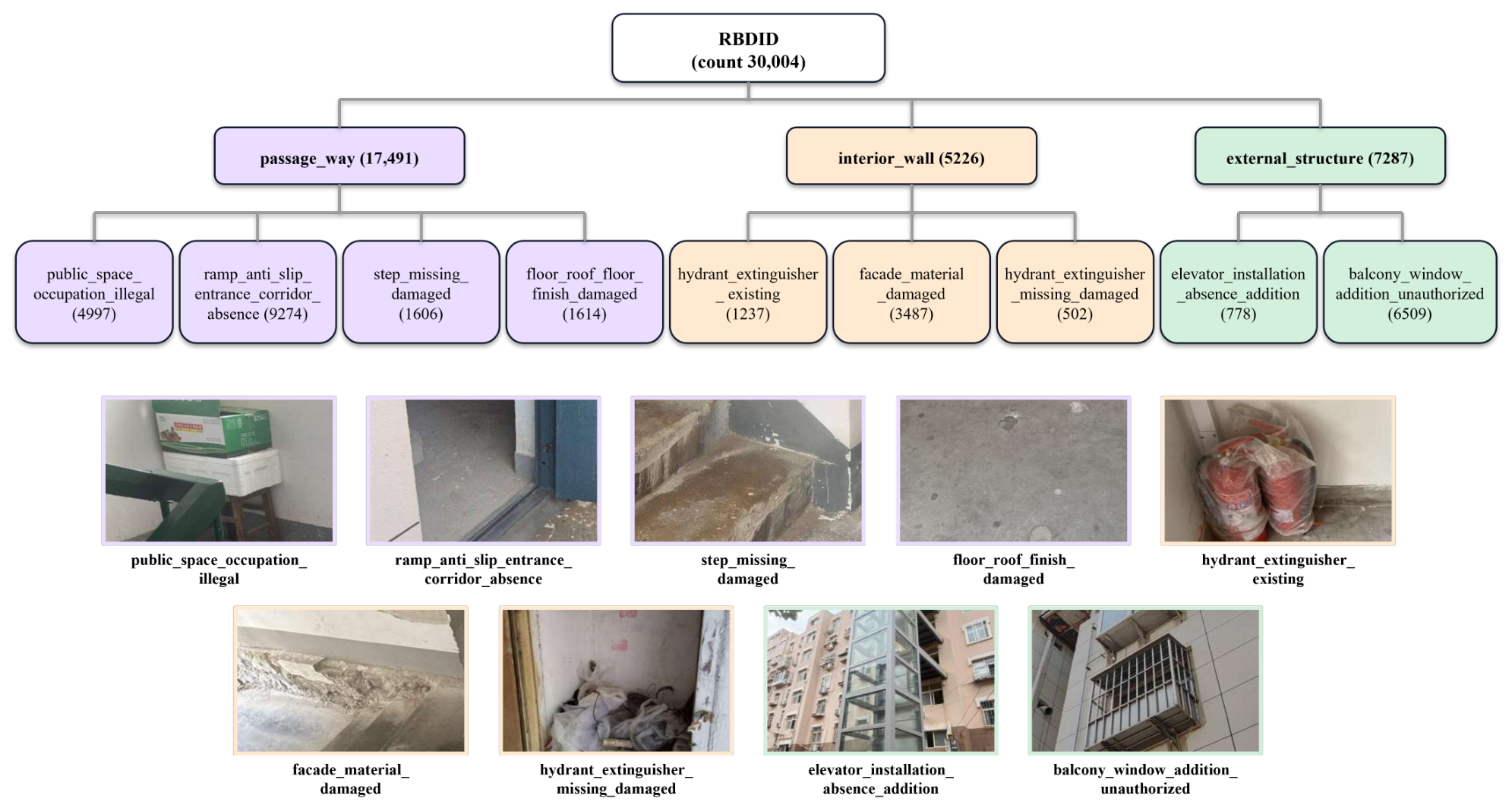
- The HOUSED dataset is constructed. We compiled and constructed the Housing-dimensiOnal visUal inSpection imagE Dataset (HOUSED) for housing-dimensional urban physical examinations. Addressing prevalent inspection issues, we defined a hierarchical semantic label system comprising 3 parent categories and 9 fine-grained subcategories.
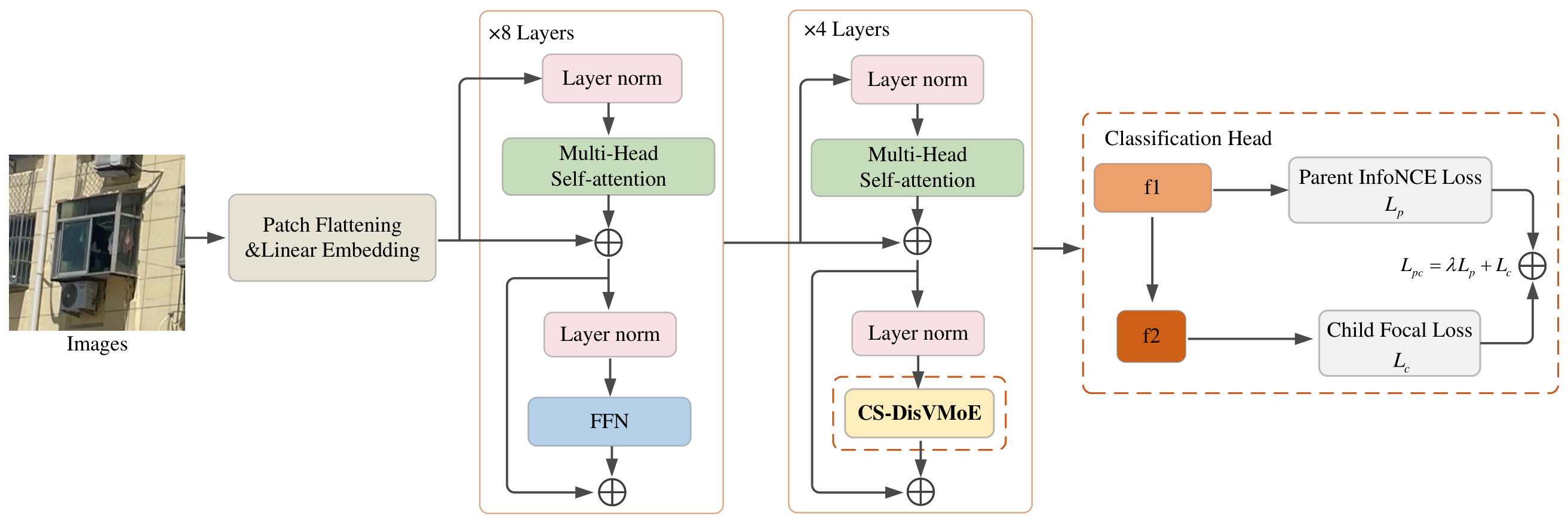
- The CS-Soft routing mechanism is proposed. A cosine similarity metric is utilized to match MoE inputs with expert slot weights. Furthermore, the original data information is fully preserved through an inverse hyperbolic tangent transformation to better represent visual correlations across different spatial contexts.
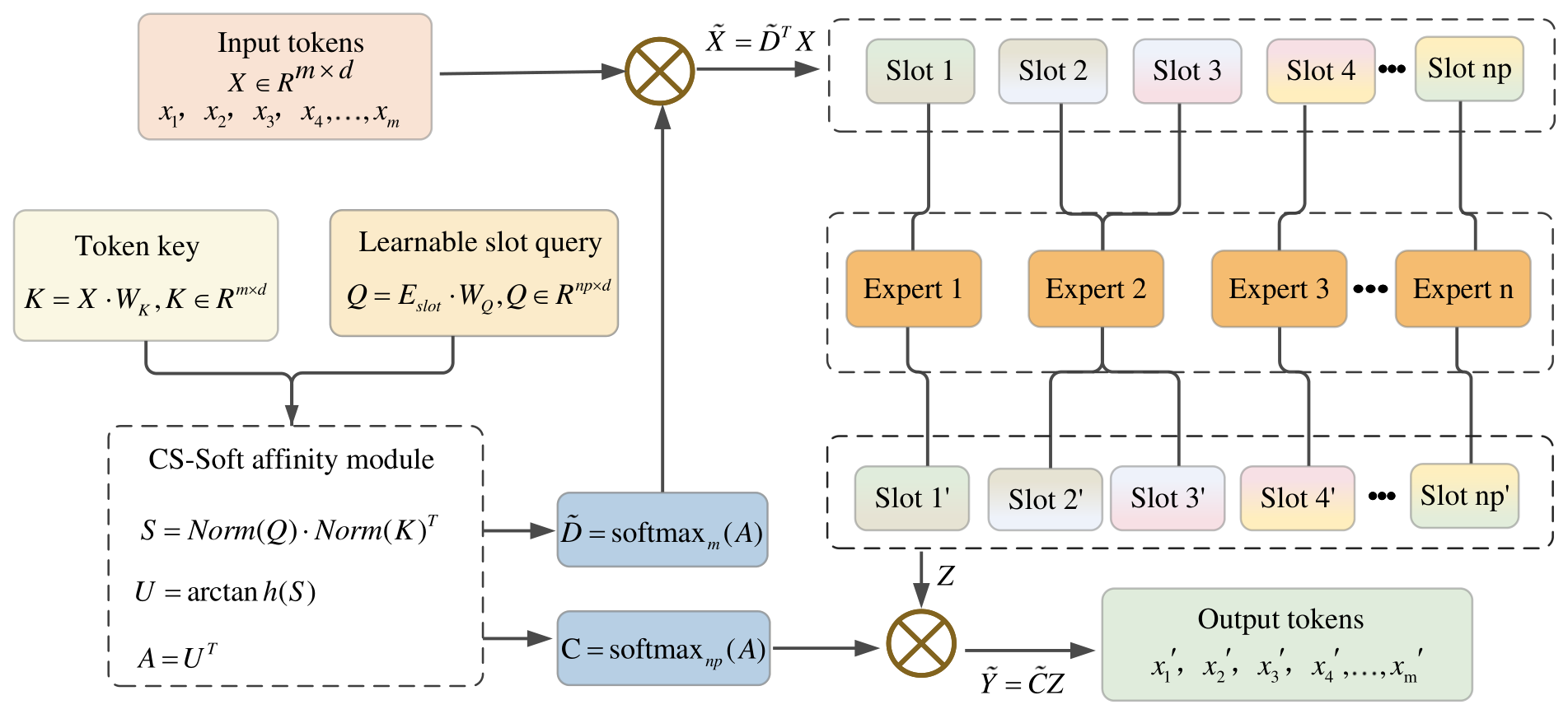
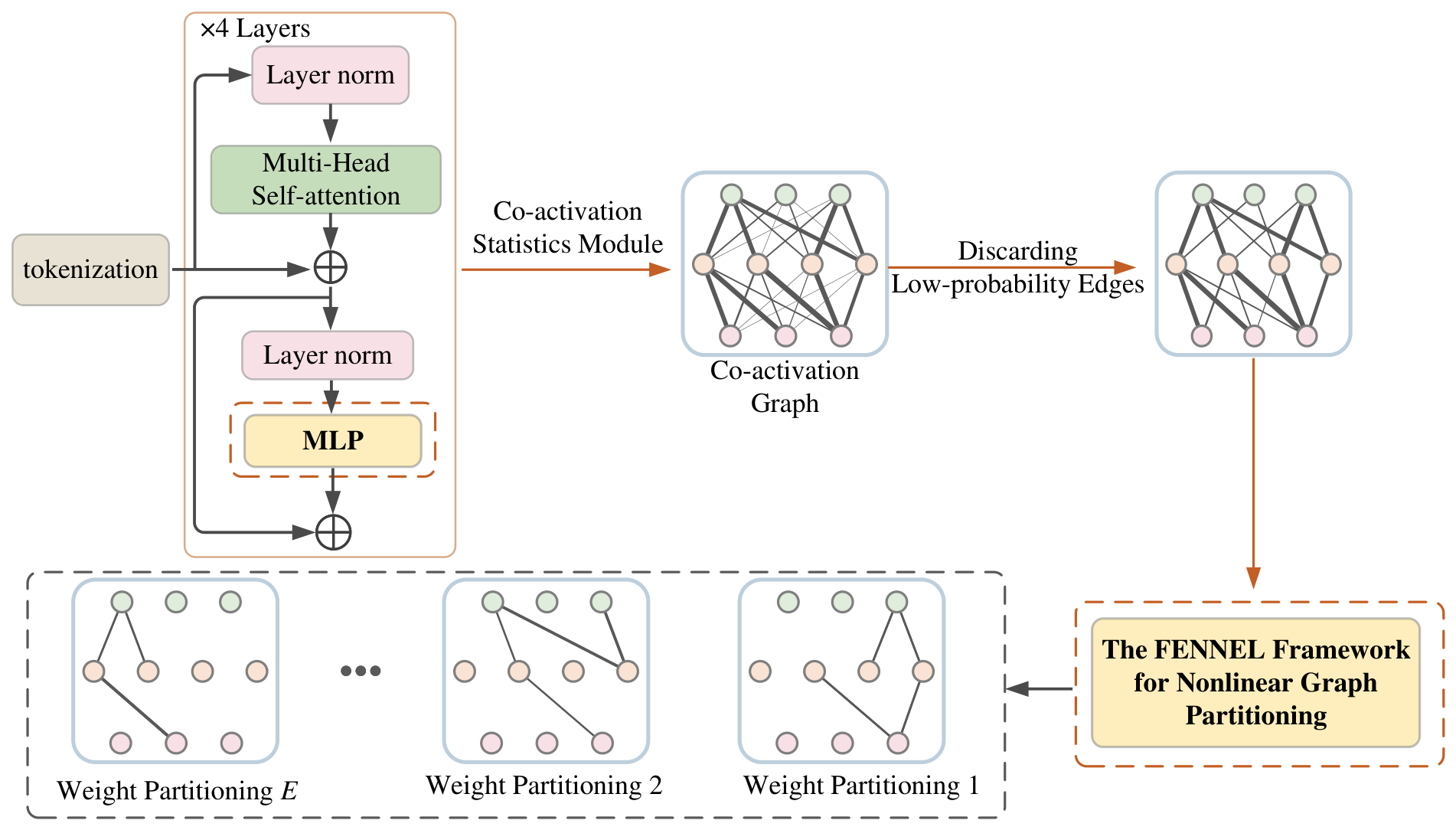
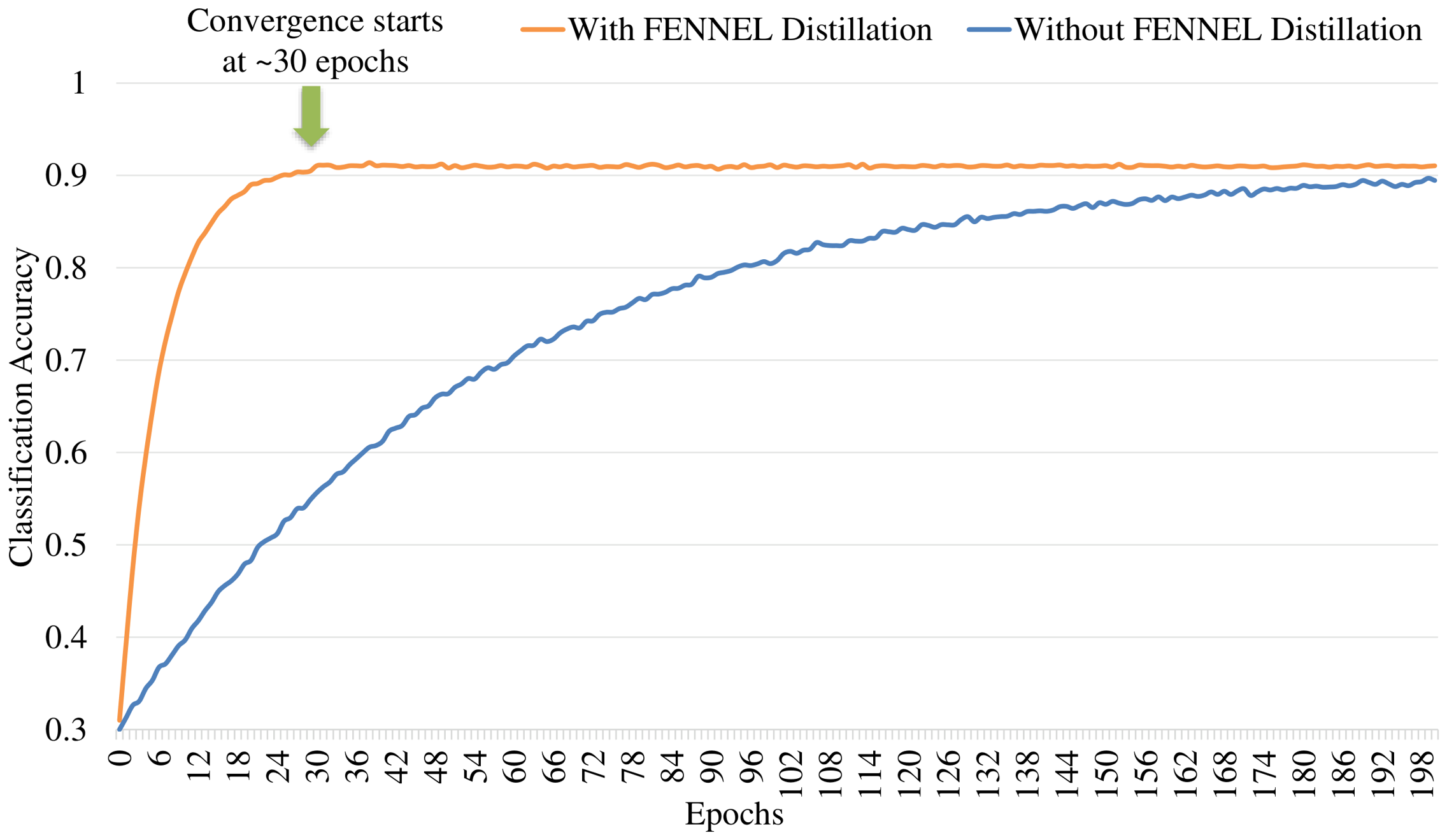
- A FENNEL-based expert distillation method is proposed. In this study, expert distillation refers specifically to converting a pre-trained dense model into a MoE architecture through structurally informed weight initialization, rather than conventional knowledge distillation. A non-linear streaming graph partitioning method (FENNEL) is employed to reorganize pre-trained dense MLP weights into semantically coherent expert groups. This effectively reduces model training time and computational overhead while enhancing overall performance.
- A composite hierarchical loss function () is proposed. By fully utilizing hierarchical labels, this loss synergistically integrates Supervised Contrastive Learning to accelerate convergence, and Focal Loss to mitigate subcategory data imbalance and facilitate hard sample mining, thereby significantly enhancing feature representation and fine-grained classification accuracy in complex scenes.
2. Related Work
2.1. Vision Mixture of Experts Model
2.2. Expert Routing Mechanism
2.3. Dense-to-MoE Weight Conversion
2.4. Hierarchical Label Classification
3. Data Acquisition
4. Methods and Models
4.1. CS-Soft Routing Mechanism
4.2. FENNEL-Based Expert Distillation and Non-Linear Graph Partitioning
| Algorithm 1 FENNEL Expert Distillation Graph Partitioning Algorithm |
|
4.3. Composite Hierarchical Loss Function Based on Supervised Contrastive Learning and Focal Loss
5. Experiment and Result Analysis
5.1. Dataset Description
- HOUSED: Contains 30,004 images divided into 9 fine-grained subcategories and 3 parent categories, split into training, validation, and test sets at a 7:2:1 ratio.
- CIFAR100 [36]: Contains 60,000 images with 20 parent categories and 100 subcategories. The data split follows the original paper.
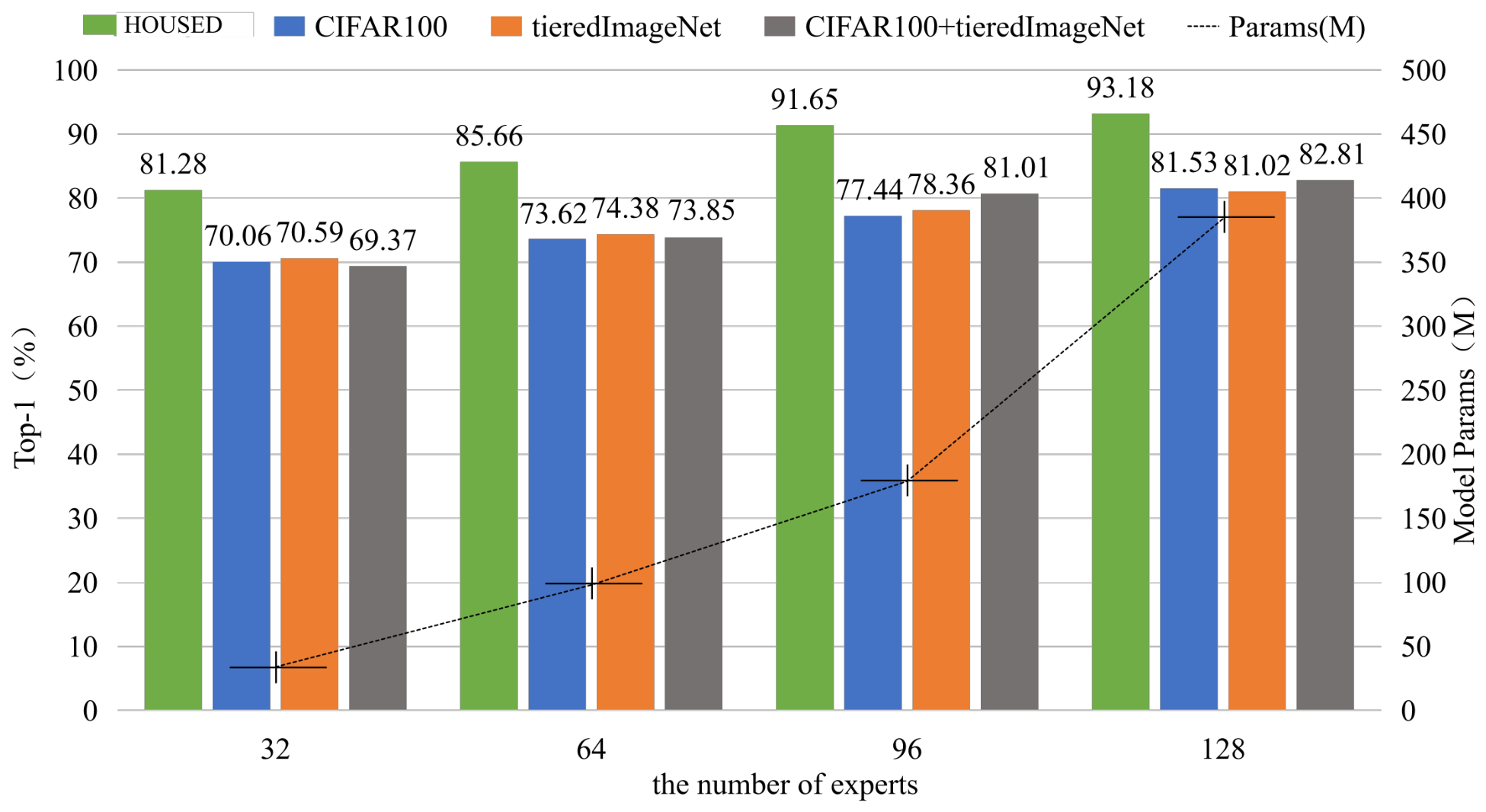
- tieredImageNet [37]: A subset of ImageNet [38]. To keep the computational cost manageable while preserving a sufficiently complex hierarchical structure, we selected the test split of tieredImageNet as the experimental source pool, which contains 8 parent categories, 160 subcategories, and 206,209 images, and re-split it into training, validation, and test sets at a 7:2:1 ratio.
- CIFAR100+tieredImageNet: To verify performance in highly complex scenarios, we mixed 51,000 images from 17 parent categories in CIFAR100 with all the data from the tieredImageNet test set. The resulting hybrid dataset contains 25 parent categories, 245 subcategories, and 257,209 images.
5.2. Experimental Baseline Models and Evaluation Metrics
5.3. Experimental Setup
5.4. Ablation Experiments
5.5. Comparative Experiment
- The proposed model outperforms the best non-MoE model (ConvNeXt-Tiny) by 3.96% on the housing-dimensional urban physical examination task, and achieves an average improvement of 1.36% on the standard general vision datasets (CIFAR100, tieredImageNet). Furthermore, these improvements occur despite a significant difference in model depth, fully demonstrating the advantages of expertization over non-MoE architectures. Although the parameter count increases substantially due to expertization, the incorporation of soft routing combined with expert distillation reduces the inference FLOPs by 1.76G compared to the most lightweight deep non-MoE model (Inception-v3).
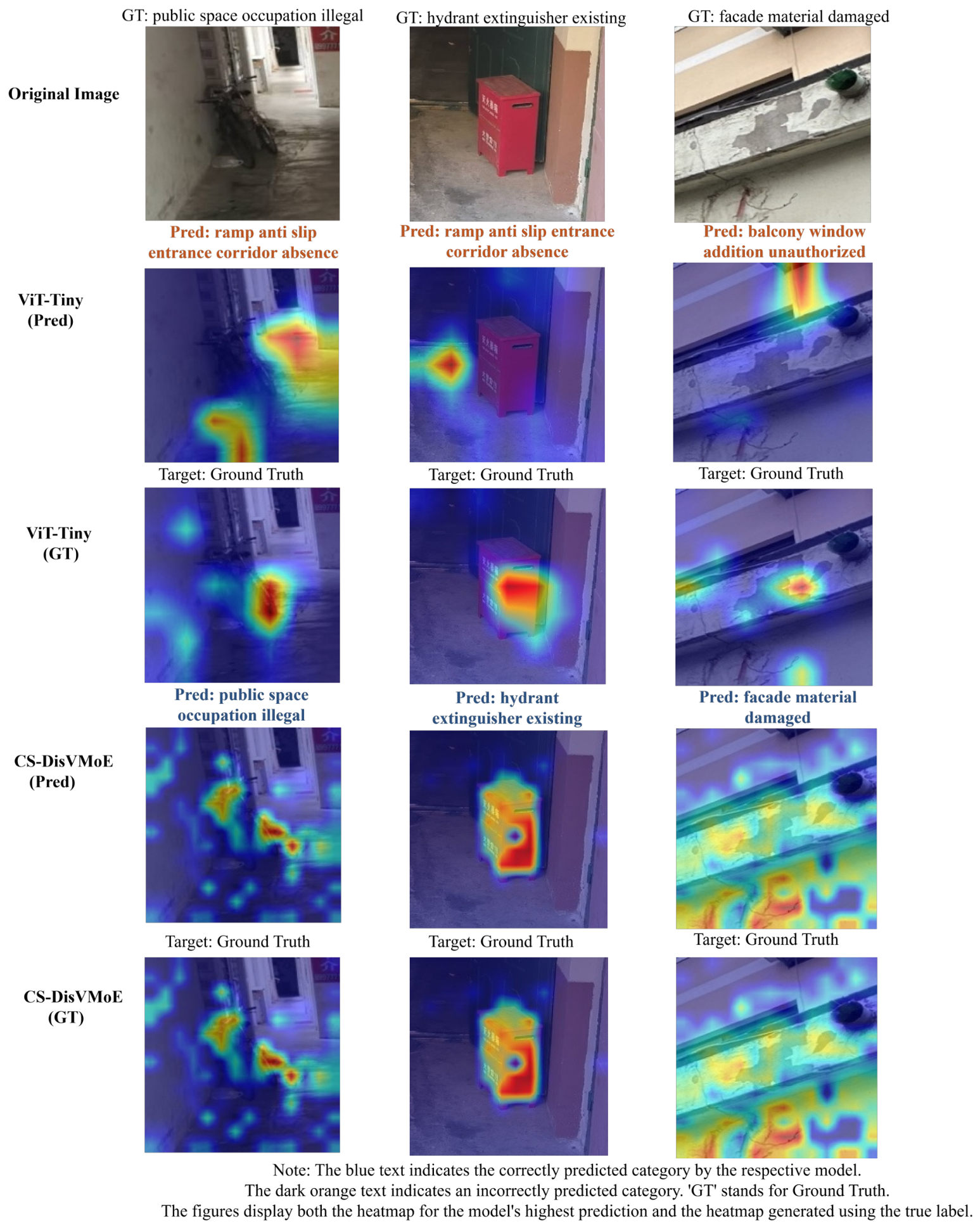
- In comparisons with shallow Transformer models based on ViT-Tiny, the proposed method achieves a 5.44% improvement over the baseline (ViT-Tiny) and a 1.92% improvement over a competitive MoE model (SoftMoE-Tiny) on the housing-dimensional urban physical examination task. This not only validates the effectiveness of the MoE mechanism in complex scenarios but also supports the effectiveness of our proposed innovations. On general vision tasks, the proposed model achieves an average improvement of 2.88% over the baseline and 1.29% over the optimal MoE model, further demonstrating its generalizability.
- The hybrid dataset (CIFAR100+tieredImageNet) increases the recognition difficulty for non-MoE models due to the expanded number of categories and inconsistent sample sizes, resulting in performance lower than that achieved on single-vision datasets. While all MoE models show some level of improvement in recognition capabilities, the proposed method outperforms the best-performing MoE model (SoftMoE-Tiny) by 2.76%, further indicating its effectiveness in handling complex hybrid vision problems.
- By adopting the FENNEL expert distillation method, under the same base model and expert count settings, the parameter size of the proposed model is reduced by nearly half compared to mainstream existing MoE methods, and the computational FLOPs decrease by 8.33% (because different routing mechanisms are employed, numerous weights in MoE do not participate in actual computations; thus, the reduction in computational FLOPs is less pronounced than the reduction in parameter size).
5.6. Training Convergence and Visualization Analysis
6. Conclusions
Author Contributions
Funding
Institutional Review Board Statement
Informed Consent Statement
Data Availability Statement
Conflicts of Interest
References
- Jesumoroti, C.; Olanrewaju, A.L.; Khor, S.C. Defects in Malaysian hospital buildings. Int. J. Build. Pathol. Adapt. 2024, 42, 835–856. [Google Scholar] [CrossRef]
- Mydin, M.A.O.; Omar, R.; Muhamad Azian, F.U.; Nawi, M.; Kadir, H. Establishing the taxonomy of building defects triggered by moisture intrusion and dampness. J. Adv. Res. Fluid Mech. Therm. Sci. 2024, 119, 211–228. [Google Scholar] [CrossRef]
- Sheth, S.; Cogle, C.R. Home modifications for older adults: A systematic review. J. Appl. Gerontol. 2023, 42, 1151–1164. [Google Scholar] [CrossRef]
- Hasik, V.; Escott, E.; Bates, R.; Carlisle, S.; Faircloth, B.; Bilec, M.M. Comparative whole-building life cycle assessment of renovation and new construction. Build. Environ. 2019, 161, 106218. [Google Scholar] [CrossRef]
- Perez, H.; Tah, J.H.M.; Mosavi, A. Deep learning for detecting building defects using convolutional neural networks. Sensors 2019, 19, 3556. [Google Scholar] [CrossRef]
- Lv, Y.; Hao, M.; Sun, K.; Zhou, L.; Sun, J. Application of machine vision technology in defect detection of adhesive films. Tech. Autom. Appl. 2025, 44, 131–134. [Google Scholar]
- Yang, L.; Li, B.; Li, W.; Liu, Z.M.; Yang, G.Y.; Xiao, J.Z. A robotic system towards concrete structure spalling and crack database. In Proceedings of the 2017 IEEE International Conference on Robotics and Biomimetics (ROBIO), Macau, China, 5–8 December 2017; pp. 1276–1281. [Google Scholar]
- Kottari, P.; Arjunan, P. Bd3: Building defects detection dataset for benchmarking computer vision techniques for automated defect identification. In Proceedings of the 11th ACM International Conference on Systems for Energy-Efficient Buildings, Cities, and Transportation, Hangzhou, China, 29–30 November 2024; pp. 297–301. [Google Scholar]
- Ministry of Housing and Urban-Rural Development of China. Guiding Opinions of the Ministry of Housing and Urban-Rural Development on Comprehensively Carrying out City Physical Examination Work (Document No. 75 of Jianke [2023]). 2023. Available online: https://www.gov.cn/zhengce/zhengceku/202312/content_6918801.htm (accessed on 20 May 2026).
- GB 50180-2018; Urban Residential Area Planning and Design Standards. Ministry of Housing and Urban-Rural Development of China. China Architecture & Building Press: Beijing, China, 2018.
- GB/T 50362-2022; Residential Performance Evaluation Standards. Ministry of Housing and Urban-Rural Development of China. China Architecture & Building Press: Beijing, China, 2022.
- Gross, S.; Ranzato, M.; Szlam, A. Hard mixtures of experts for large scale weakly supervised vision. In Proceedings of the IEEE Conference on Computer Vision and Pattern Recognition, Honolulu, HI, USA, 21–26 July 2017; pp. 6865–6873. [Google Scholar]
- Zhou, Y.Q.; Lei, T.; Liu, H.X.; Du, N.; Huang, Y.P.; Zhao, V.; Dai, A.M.; Le, Q.V.; Laudon, J. Mixture-of-experts with expert choice routing. Adv. Neural Inf. Process. Syst. 2022, 35, 7103–7114. [Google Scholar]
- Puigcerver, J.; Riquelme, C.; Mustafa, B.; Houlsby, N. From sparse to soft mixtures of experts. arXiv 2023, arXiv:2308.00951. [Google Scholar]
- Tsourakakis, C.; Gkantsidis, C.; Radunovic, B.; Vojnovic, M. Fennel: Streaming graph partitioning for massive scale graphs. In Proceedings of the 7th ACM International Conference on Web Search and Data Mining, New York, NY, USA, 24–28 February 2014; pp. 333–342. [Google Scholar]
- Oord, A.V.D.; Li, Y.; Vinyals, O. Representation learning with contrastive predictive coding. arXiv 2018, arXiv:1807.03748. [Google Scholar]
- Lin, T.Y.; Goyal, P.; Girshick, R.; He, K.M.; Dollár, P. Focal loss for dense object detection. In Proceedings of the IEEE International Conference on Computer Vision, Venice, Italy, 22–29 October 2017; pp. 2980–2988. [Google Scholar]
- Jacobs, R.A.; Jordan, M.I.; Nowlan, S.J.; Hinton, G.E. Adaptive mixtures of local experts. Neural Comput. 1991, 3, 79–87. [Google Scholar] [CrossRef]
- Shazeer, N.; Mirhoseini, A.; Maziarz, K.; Davis, A.; Le, Q.V.; Hinton, G.E.; Dean, J. Outrageously large neural networks: The sparsely-gated mixture-of-experts layer. arXiv 2017, arXiv:1701.06538. [Google Scholar]
- Zhang, L.B.; Huang, S.L.; Liu, W.; Tao, D.C. Learning a mixture of granularity-specific experts for fine-grained categorization. In Proceedings of the IEEE/CVF International Conference on Computer Vision, Seoul, Republic of Korea, 27 October–2 November 2019; pp. 8331–8340. [Google Scholar]
- Riquelme, C.; Puigcerver, J.; Mustafa, B.; Neumann, M.; Jenatton, R.; Susano Pinto, A.; Keysers, D.; Houlsby, N. Scaling vision with sparse mixture of experts. Adv. Neural Inf. Process. Syst. 2021, 34, 8583–8595. [Google Scholar]
- Wu, Z.Y.; Chen, X.K.; Pan, Z.Z.; Liu, X.C.; Liu, W.; Dai, D.M.; Gao, H.Z.; Ma, Y.Y.; Wu, C.Y.; Wang, B.X.; et al. Deepseek-vl2: Mixture-of-experts vision-language models for advanced multimodal understanding. arXiv 2024, arXiv:2412.10302. [Google Scholar]
- Jain, G.; Hegde, N.; Kusupati, A.; Nagrani, A.; Buch, S.; Jain, P.; Arnab, A.; Paul, S. Mixture of nested experts: Adaptive processing of visual tokens. Adv. Neural Inf. Process. Syst. 2024, 37, 58480–58497. [Google Scholar]
- Yang, L.R.; Shen, D.; Cai, C.X.; Yang, F.; Gao, T.T.; Zhang, D.; Li, X. Solving token gradient conflict in mixture-of-experts for large vision-language model. arXiv 2024, arXiv:2406.19905. [Google Scholar]
- Lewis, M.; Bhosale, S.; Dettmers, T.; Goyal, N.; Zettlemoyer, L. Base layers: Simplifying training of large, sparse models. In Proceedings of the International Conference on Machine Learning, Virtual Event, 18–24 July 2021; pp. 6265–6274. [Google Scholar]
- Roller, S.; Suleman, D.; Szlam, A.; Goyal, N.; Weston, J. Hash layers for large sparse models. Adv. Neural Inf. Process. Syst. 2021, 34, 17555–17566. [Google Scholar]
- Komatsuzaki, A.; Puigcerver, J.; Lee-Thorp, J.; Ruiz, C.R.; Mustafa, B.; Houlsby, N.; Dehghani, M.; Tay, Y. Sparse upcycling: Training mixture-of-experts from dense checkpoints. arXiv 2022, arXiv:2212.05055. [Google Scholar]
- Frankle, J.; Carbin, M. The lottery ticket hypothesis: Finding sparse, trainable neural networks. In Proceedings of the International Conference on Learning Representations (ICLR), New Orleans, LA, USA, 6–9 May 2019. [Google Scholar]
- Zhu, X.K.; Guan, Y.R.; Liang, D.K.; Chen, Y.C.; Liu, Y.L.; Bai, X. Moe jetpack: From dense checkpoints to adaptive mixture of experts for vision tasks. Adv. Neural Inf. Process. Syst. 2024, 37, 12094–12118. [Google Scholar]
- Zangari, A.; Marcuzzo, M.; Rizzo, M.; Giudice, L.; Albarelli, A.; Gasparetto, A. Hierarchical text classification and its foundations: A review of current research. Electronics 2024, 13, 1199. [Google Scholar] [CrossRef]
- Feng, S.; Zhao, C.H.; Fu, P. A deep neural network based hierarchical multi-label classification method. Rev. Sci. Instrum. 2020, 91, 025113. [Google Scholar] [CrossRef]
- Zhang, S.; Xu, R.; Xiong, C.M.; Ramaiah, C. Use all the labels: A hierarchical multi-label contrastive learning framework. In Proceedings of the IEEE/CVF Conference on Computer Vision and Pattern Recognition, New Orleans, LA, USA, 18–24 June 2022; pp. 16660–16669. [Google Scholar]
- Wehrmann, J.; Cerri, R.; Barros, R. Hierarchical multi-label classification networks. In Proceedings of the International Conference on Machine Learning, Stockholm, Sweden, 10–15 July 2018; pp. 5075–5084. [Google Scholar]
- Yan, Z.C.; Zhang, H.; Piramuthu, R.; Jagadeesh, V.; DeCoste, D.; Di, W.; Yu, Y.Z. HD-CNN: Hierarchical deep convolutional neural networks for large scale visual recognition. In Proceedings of the IEEE International Conference on Computer Vision, Santiago, Chile, 7–13 December 2015; pp. 2740–2748. [Google Scholar]
- Touvron, H.; Cord, M.; Jégou, H. DeiT III: Revenge of the ViT. In Proceedings of the European Conference on Computer Vision, Tel Aviv, Israel, 23–27 October 2022; pp. 516–533. [Google Scholar]
- Krizhevsky, A.; Hinton, G. Learning Multiple Layers of Features from Tiny Images; Technical Report; University of Toronto: Toronto, ON, Canada, 2009. [Google Scholar]
- Ren, M.Y.; Triantafillou, E.; Ravi, S.; Snell, J.; Swersky, K.; Tenenbaum, J.B.; Larochelle, H.; Zemel, R.S. Meta-learning for semi-supervised few-shot classification. arXiv 2018, arXiv:1803.00676. [Google Scholar]
- Deng, J.; Dong, W.; Socher, R.; Li, L.J.; Li, K.; Fei-Fei, L. Imagenet: A large-scale hierarchical image database. In Proceedings of the 2009 IEEE Conference on Computer Vision and Pattern Recognition, Miami, FL, USA, 20–25 June 2009; pp. 248–255. [Google Scholar]
- He, K.M.; Zhang, X.Y.; Ren, S.Q.; Sun, J. Deep residual learning for image recognition. In Proceedings of the IEEE Conference on Computer Vision and Pattern Recognition, Las Vegas, NV, USA, 27–30 June 2016; pp. 770–778. [Google Scholar]
- Szegedy, C.; Vanhoucke, V.; Ioffe, S.; Shlens, J.; Wojna, Z. Rethinking the inception architecture for computer vision. In Proceedings of the IEEE Conference on Computer Vision and Pattern Recognition, Las Vegas, NV, USA, 27–30 June 2016; pp. 2818–2826. [Google Scholar]
- Liu, Z.; Mao, H.Z.; Wu, C.Y.; Feichtenhofer, C.; Darrell, T.; Xie, S.N. A convnet for the 2020s. In Proceedings of the IEEE/CVF Conference on Computer Vision and Pattern Recognition, New Orleans, LA, USA, 18–24 June 2022; pp. 11976–11986. [Google Scholar]



| Parent Category | Readable Class Name | Original Dataset Label (Size) | Semantic Description |
|---|---|---|---|
| passage_way (17,491) | Public Corridor Blocked | public_space_occupation_illegal (4997) | The public corridor is physically blocked by unauthorized objects. |
| Missing Anti-slip Ramp | ramp_anti_slip_entrance_corridor_absence (9274) | The entrance lacks age-appropriate accessibility modifications. | |
| Damaged Staircase | step_missing_damaged (1606) | The staircase exhibits visible structural damage. | |
| Damaged Floor Surface | roof_floor_finish_damaged (1614) | The floor surface has potholes and uneven cement. | |
| interior_wall (5226) | Fire Extinguisher Present | hydrant_extinguisher_existing (1237) | Visible fire protection facilities are present. |
| Damaged Wall Plaster | facade_material_damaged (3487) | The wall plaster is peeling with visible cement detachment. | |
| Missing/Damaged Extinguisher | hydrant_extinguisher_missing_damaged (502) | The fire hydrant equipment is incomplete or damaged. | |
| external_structure (7287) | Exterior Elevator Addition | elevator_installation_absence_addition (778) | An exterior elevator has been newly installed. |
| Unauthorized Bay Window | balcony_window_addition_unauthorized (6509) | Unauthorized bay windows or security cages are added. |
| Dataset | No. of Parent Categories | No. of Subcategories | Number of Samples |
|---|---|---|---|
| HOUSED | 3 | 9 | 30,004 |
| CIFAR100 | 20 | 100 | 60,000 |
| tieredImageNet | 8 | 160 | 206,209 |
| CIFAR100+tieredImageNet | 25 | 245 | 257,209 |
| Hyperparameter | Value |
|---|---|
| Backbone | ViT-Tiny [35], 12-layer Transformer |
| Embedding dimension d | 192 |
| MLP hidden dimension | 768 |
| Input resolution | 224 × 224, patch 16 × 16, 196 patch tokens + 1 class token |
| Dense layers | 8 (first 8 layers retain original MLP) |
| MoE layers | 4 (last 4 layers replaced with CS-DisVMoE) |
| Number of experts n | 96 (determined by the ablation study ) |
| Slots per expert p | 1 (following Soft MoE [14]) |
| Total slots | 96 |
| Routing dimension | 192 (matches the ViT-Tiny embedding dimension) |
| (learnable projection matrices) | |
| FENNEL | 1.5 (selected based on sensitivity analysis) |
| 0.07 (InfoNCE contrastive loss temperature) | |
| 2.0 (Focal Loss focusing parameter) | |
| Optimizer | SGD, momentum = 0.9, weight decay = 0.0001 |
| Batch size | 64 |
| Training epochs | 200 |
| Data augmentation | Color jittering, horizontal flip, random crop |
| Hardware | NVIDIA RTX 3090 |
| Dataset | ViT-Tiny (Base) | +CS-Soft | +FENNEL Expert Distillation (CS-DisVMoE) | + (SupCon + Focal Loss) |
|---|---|---|---|---|
| HOUSED | 86.21 | 89.29 (+3.08) | 90.24 (+0.95) | 91.65 (+1.41) |
| CIFAR100 | 74.92 | 76.32 (+1.40) | 76.89 (+0.57) | 77.44 (+0.55) |
| tieredImageNet | 75.12 | 77.65 (+2.53) | 77.94 (+0.29) | 78.36 (+0.42) |
| CIFAR100+tieredImageNet | 75.02 | 78.29 (+3.27) | 79.06 (+0.77) | 81.01 (+1.95) |
| Dataset | Default | ||||
|---|---|---|---|---|---|
| HOUSED | 91.28 | 91.52 | 91.65 | 91.55 | 91.35 |
| CIFAR100 | 77.38 | 77.55 | 77.44 | 77.52 | 77.32 |
| tieredImageNet | 78.15 | 78.30 | 78.36 | 78.28 | 78.10 |
| CIFAR100+tieredImageNet | 80.82 | 80.95 | 81.01 | 80.92 | 80.75 |
| Configuration | HOUSED | CIFAR100 | tieredImageNet | CIFAR100+ TieredImageNet |
|---|---|---|---|---|
| Focal only | 89.82 | 75.85 | 76.92 | 78.54 |
| CE + CE | 90.24 | 76.31 | 77.23 | 79.05 |
| CE + Focal | 90.71 | 76.88 | 77.61 | 79.62 |
| SupCon + Focal | 91.65 | 77.44 | 78.36 | 81.01 |
| Configuration | HOUSED | CIFAR100 | tieredImageNet | CIFAR100+ TieredImageNet |
|---|---|---|---|---|
| Softmax, | 89.82 | 75.95 | 76.85 | 78.92 |
| Softmax, | 90.68 | 76.85 | 77.52 | 79.78 |
| Softmax, | 90.92 | 77.15 | 77.88 | 80.15 |
| Softmax, | 90.45 | 76.68 | 77.35 | 79.52 |
| arctanh + softmax | 91.65 | 77.44 | 78.36 | 81.01 |
| Dataset/Metric | Deep Models (CNN) | Shallow Models (ViT) | Proposed | ||||
|---|---|---|---|---|---|---|---|
| ResNet-50 | Inception-v3 | ConvNeXt-T | ViT-Tiny | Expert Choice | SoftMoE-T | CS-DisVMoE+ | |
| Accuracy (%, mean ± std) | |||||||
| HOUSED | 86.43 ± 0.12 | 87.59 ± 0.10 | 87.69 ± 0.09 | 86.21 ± 0.13 | 88.62 ± 0.11 | 89.73 ± 0.10 | 91.65 ± 0.07 |
| CIFAR100 | 75.39 ± 0.11 | 75.87 ± 0.10 | 76.36 ± 0.09 | 74.92 ± 0.12 | 75.81 ± 0.10 | 75.91 ± 0.09 | 77.44 ± 0.06 |
| tieredImageNet | 75.71 ± 0.16 | 76.36 ± 0.14 | 76.73 ± 0.13 | 75.12 ± 0.17 | 76.88 ± 0.14 | 77.32 ± 0.12 | 78.36 ± 0.09 |
| CIFAR100+tiered | 75.56 ± 0.18 | 76.14 ± 0.16 | 76.33 ± 0.15 | 75.02 ± 0.18 | 76.97 ± 0.15 | 78.25 ± 0.13 | 81.01 ± 0.10 |
| Model Properties | |||||||
| Model Depth | 50 | 42 | 23 | 12 | 12 | 12 | 12 |
| Params (M) | 26 | 24 | 29 | 6 | 354 | 354 | 179 |
| FLOPs (G) | 4.13 | 2.86 | 4.46 | 1.10 | 1.20 | 1.20 | 1.10 |
Disclaimer/Publisher’s Note: The statements, opinions and data contained in all publications are solely those of the individual author(s) and contributor(s) and not of MDPI and/or the editor(s). MDPI and/or the editor(s) disclaim responsibility for any injury to people or property resulting from any ideas, methods, instructions or products referred to in the content. |
© 2026 by the authors. Licensee MDPI, Basel, Switzerland. This article is an open access article distributed under the terms and conditions of the Creative Commons Attribution (CC BY) license.
Share and Cite
Zhao, K.; Ren, H.; He, W.; Zhao, Y.; Jiang, J.; Yao, W.; Gao, W.; Ban, Q. Cosine Similarity Distillation Vision Mixture-of-Experts for Intelligent Housing-Dimensional Urban Physical Examinations. Sensors 2026, 26, 3473. https://doi.org/10.3390/s26113473
Zhao K, Ren H, He W, Zhao Y, Jiang J, Yao W, Gao W, Ban Q. Cosine Similarity Distillation Vision Mixture-of-Experts for Intelligent Housing-Dimensional Urban Physical Examinations. Sensors. 2026; 26(11):3473. https://doi.org/10.3390/s26113473
Chicago/Turabian StyleZhao, Kun, Helei Ren, Wenbin He, Yuhong Zhao, Jinming Jiang, Wanxiang Yao, Weijun Gao, and Qichao Ban. 2026. "Cosine Similarity Distillation Vision Mixture-of-Experts for Intelligent Housing-Dimensional Urban Physical Examinations" Sensors 26, no. 11: 3473. https://doi.org/10.3390/s26113473
APA StyleZhao, K., Ren, H., He, W., Zhao, Y., Jiang, J., Yao, W., Gao, W., & Ban, Q. (2026). Cosine Similarity Distillation Vision Mixture-of-Experts for Intelligent Housing-Dimensional Urban Physical Examinations. Sensors, 26(11), 3473. https://doi.org/10.3390/s26113473