Optimal Techno-Economic Feasibility of Solar PV Irrigation System Augmented Hydrogen Energy Storage



Abstract
1. Introduction
1.1. Motivation
1.2. Related Works
1.3. Research Gaps and Contributions of the Paper
1.3.1. Research Gap
- A WPPVS integrated with vibration avoidance technique is developed for drip irrigation systems in the vast desert regions of Saudi Arabia, particularly the Sakaka area in the northern part of the country, due to the scarcity of surface water.
- Developing optimization techniques based on MOPSO in order to uncover the nonlinear aspects of the WPPVS integrated drip irrigation system’s global optimum. This can be especially useful when addressing an issue that may have several local solutions that can be implemented. GMM, therefore clustering is used to determine the near-optimal sizes for the storage tank, PV generator, and HySS.
- As a part of the drip irrigation system, developing a hybrid ESS that combines a water tank with a HySS, making the installation of solar PV more affordable. Therefore, whether this energy can be used to store hydrogen could have a positive impact on the energy market.
1.3.2. Contributions of the Paper
- To develop a platform model that reduces water supply failures and costs while preventing the pump vibrations and the energy waste during operation.
- To assess the WPPVS’s long-term performance using a hybrid energy storage system comprising a tank and a HySS.
1.4. Paper Organization
2. Problem Description and System Modeling
2.1. System Modeling
2.1.1. PV Modeling
2.1.2. Hydraulic Pump Modeling
2.1.3. HySS Modeling
2.2. Inverter Modeling
2.3. Water Necessary for Irrigation
2.4. Economic Analysis
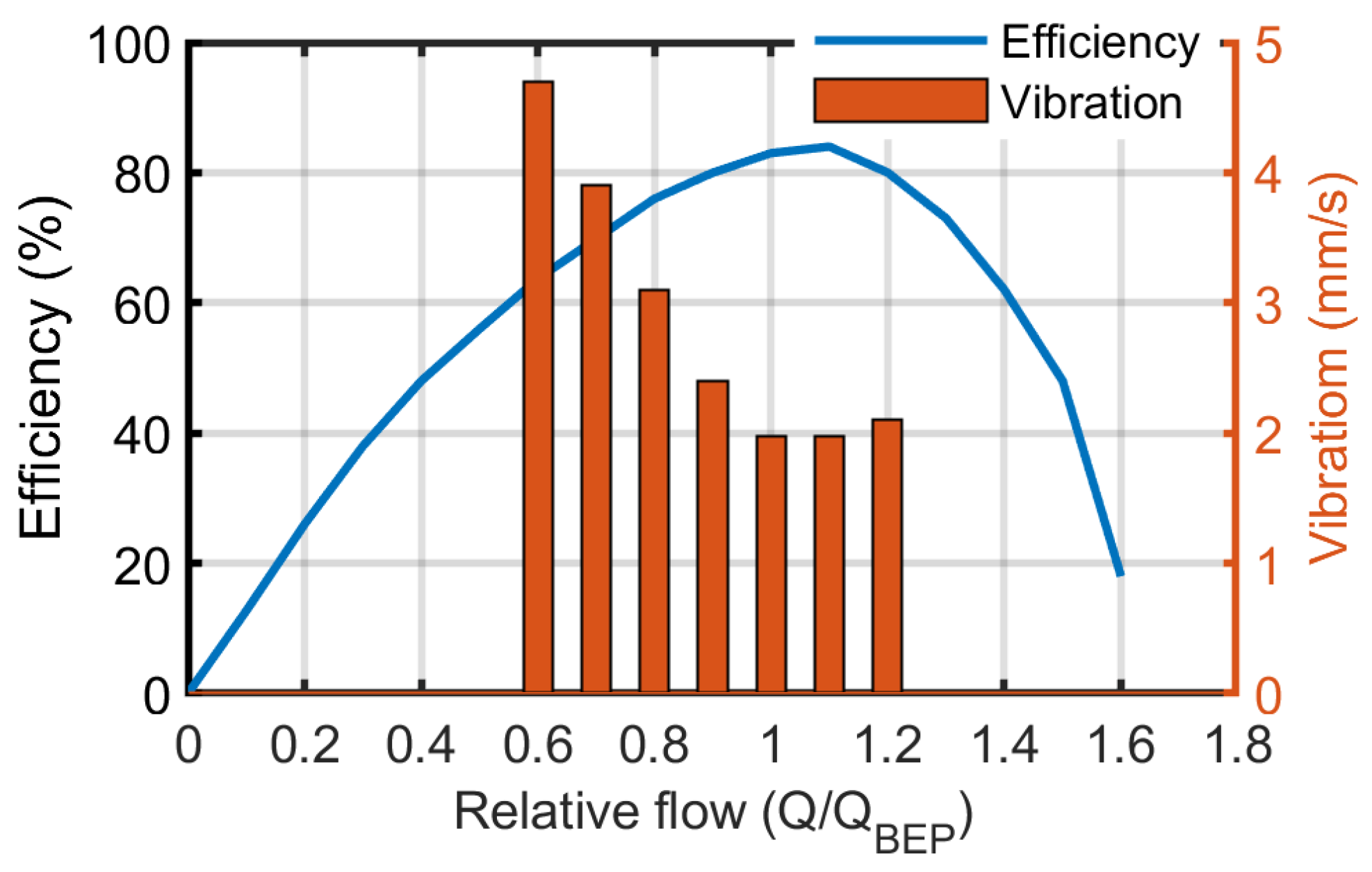
2.5. Avoidance of Pump Vibrations Due to Changes in Flow Rate
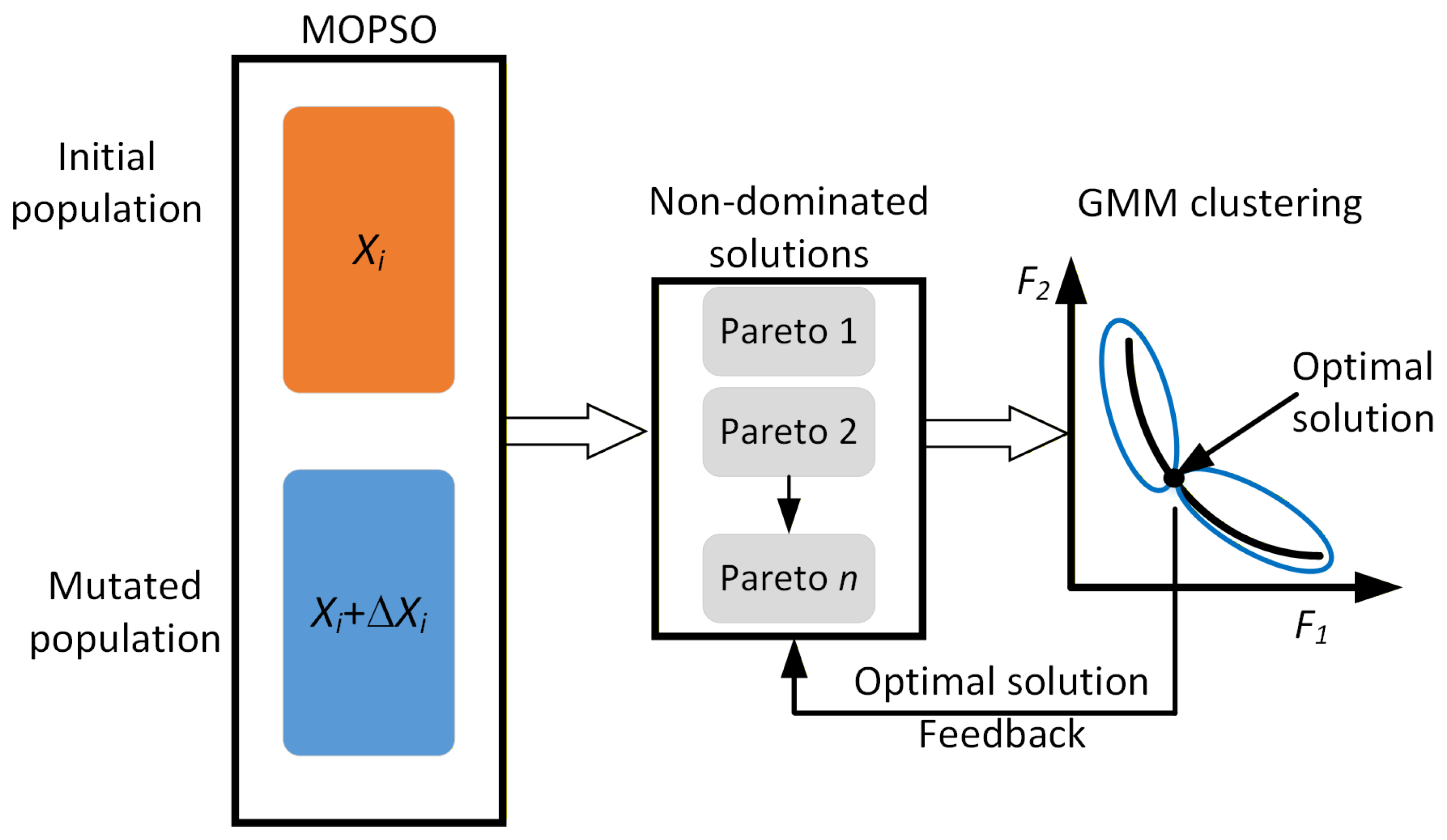
2.6. Multi-Objective PSO
- Randomly, set the population, , to its initial value for i = 1, 2,…, n, where n is the number of the population.
- Make the initial positions the global best locations found so far.
- For every particle, set the initial velocity, , to zero. Subsequently, each particle is assessed as in (36).
- Such a multiobjective function yields non-dominated solutions. The non-dominated solutions and their corresponding objectives are then archived in an array.
- Estimate the speed of each particle as in (35), from which the positions of each particle are updated as in (36).
- Every particle, in this step, undergoes mutation, which is a random perturbation added to the particle’s position. In addition, the particles are kept within the search space.
- Adjust the position of each particle by replacing its current best position with the previous best position.
- Demonstrate the resulting Pareto front whenever the maximum iteration has been completed.
2.6.1. Gaussian Mixture Model Clustering Based on Multi-Objective Particle Swarm Optimization
2.6.2. Knee-Point Selection Strategy for Pareto Optimal Decision Making
2.7. Proposed Methodology
2.7.1. Hourly Pumped Water
2.7.2. Field Capacity
2.7.3. Problem Formulation
| Algorithm 1 Problem formulation modes of the developed WPPVS. |
| 1: procedure MOPSO(k, Hyper-parameters, meteorological data) ▹k is the iteration number |
| 2: Initialize energy flow management phase (historical data) ▹PHASE 1: ESTIMATION & CALCULATION |
| 3: ▹Set initial values for the decision variables embedded in Equation (36) |
| 4: for to do ▹ is the maximum number of iterations |
| 5: ▹The pump output flow rate according to Equation (6). |
| 6: ▹The actual evapotranspiration according to Equation (20). |
| 7: ▹The estimated hourly rainfall according to Equation (22). |
| 8: ▹The field water capacity according to Equation (51). |
| 9: , ▹Set initial conditions for the moisture and the water levels |
| 10: ▹Calculate the hourly water needs balancing according to Equation (21). |
| 11: ▹Calculate the water level in the well according to Equation (46). |
| 12: |
| 13: if then ▹according to Figure 2. |
| 14: if then ▹according to Equation (53). |
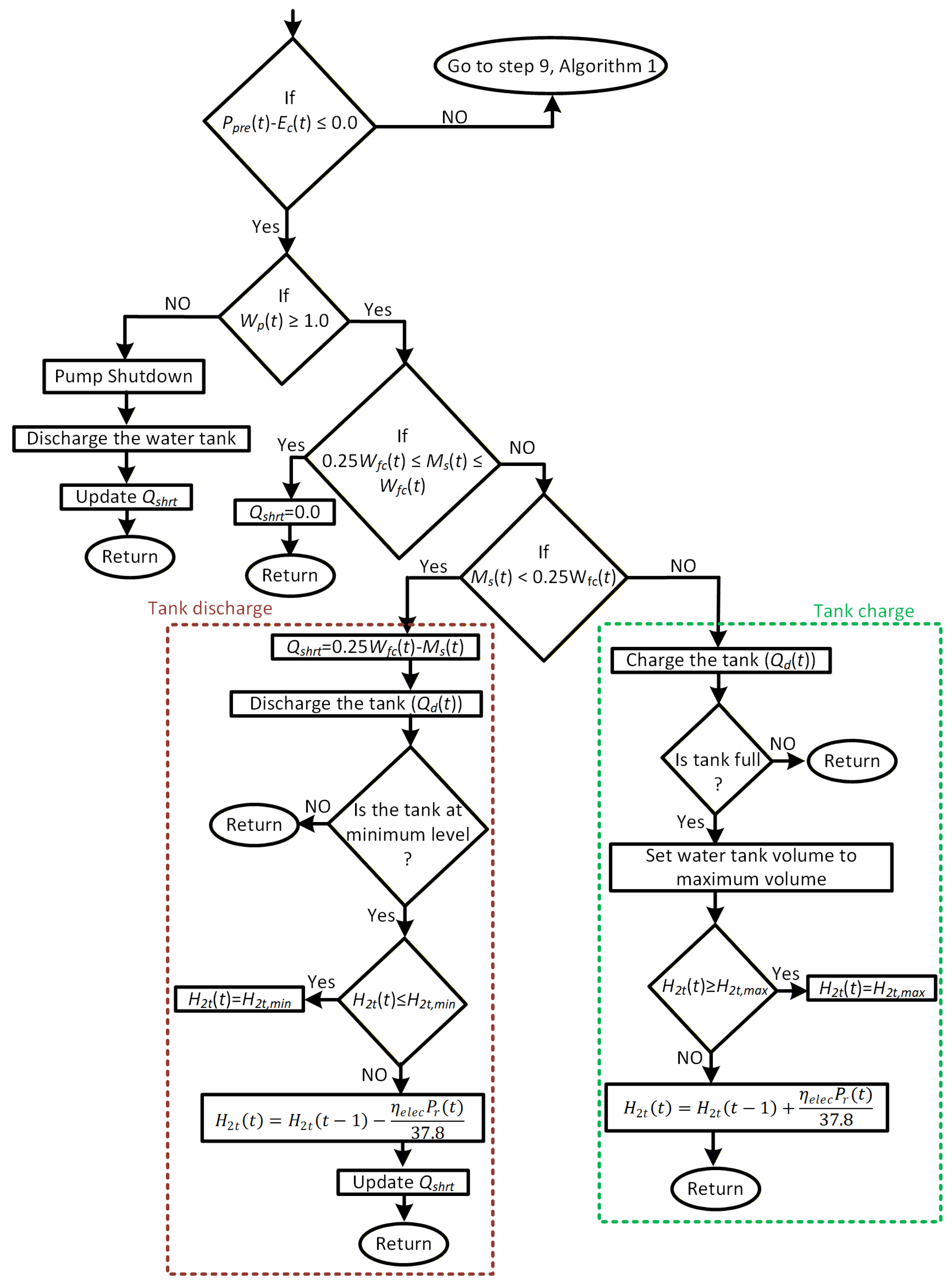
| 15: Perform the EMS in Figure 4 |
| 16: else |
| 17: goto step 10 |
| 18: end if |
| 19: else |
| 20: goto step 5 |
| 21: end if |
| 22: ▹ is the minimization function evaluated for k iteration as in Equation (42). |
| 23: if then |
| 24: |
| 25: ▹The optimal solution ever obtained from Equation (36) |
| 26: ▹ takes the corresponding value to k. |
| 27: end if |
| 28: end for |
| 29: Input all non-dominated solutions from the Pareto archive into the GMM. |
| 30: Assign solutions to n clusters based on the Gaussian probability density function. |
| 31: Identify the optimal centroid by determining the optimal solution. |
| return |
| 32: Initialize sensing layer & monitoring (Flow, Level, Soil Moisture) ▹PHASE 2 |
| 33: Read real-time sensed Data: (, Dynamic head, water tank status, Meteorological data) |
| 34: , |
| 35: Perform the EMS in Figure 4 |
| 36: Store the WPPVS performance diagrams |
| 37: end procedure |
3. Simulated Results
3.1. Coordinated WPPVS
3.2. Impact of the HySS on the Use of Irradiation
3.3. Seasonal Energy Mapping of an Integrated the WPPVS System
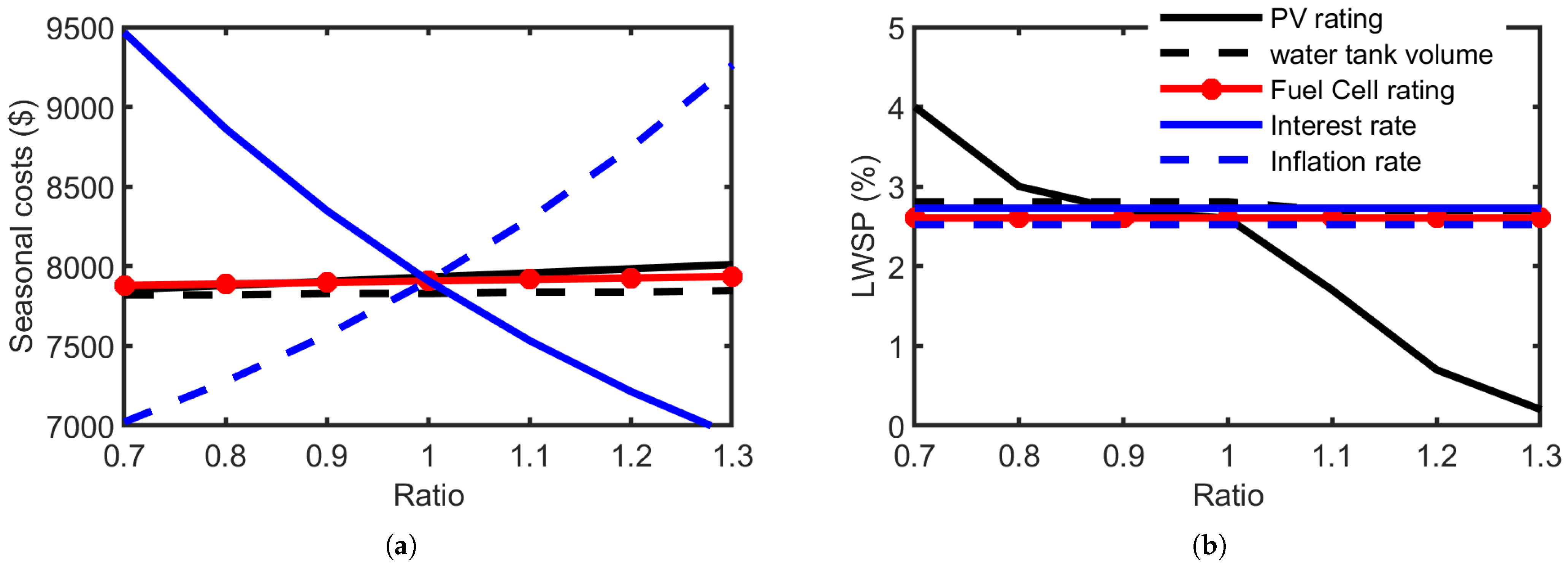
3.4. Sensitivity Analysis
3.5. Findings and Discussion of the Implications for Practical Engineering
- -
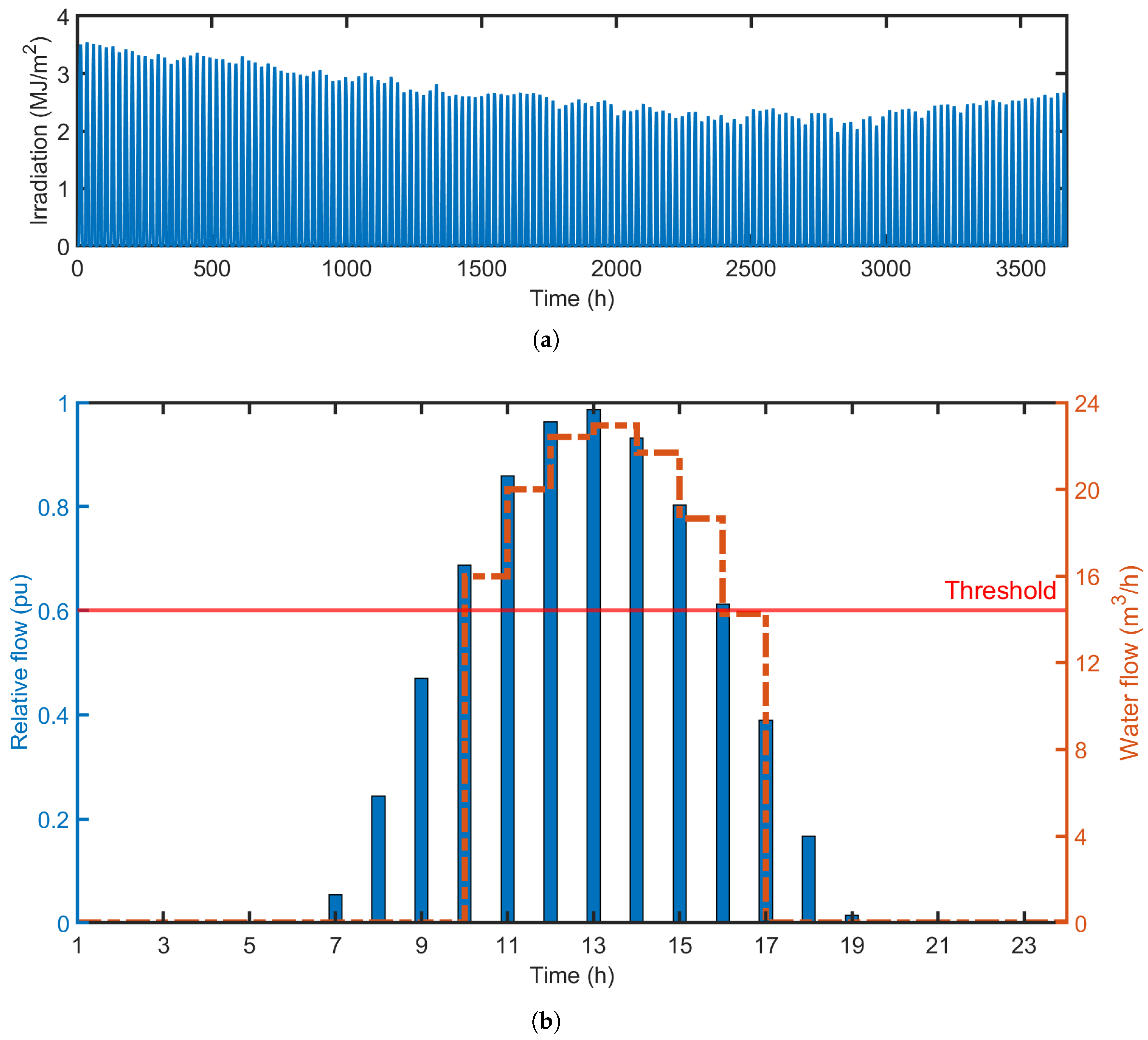
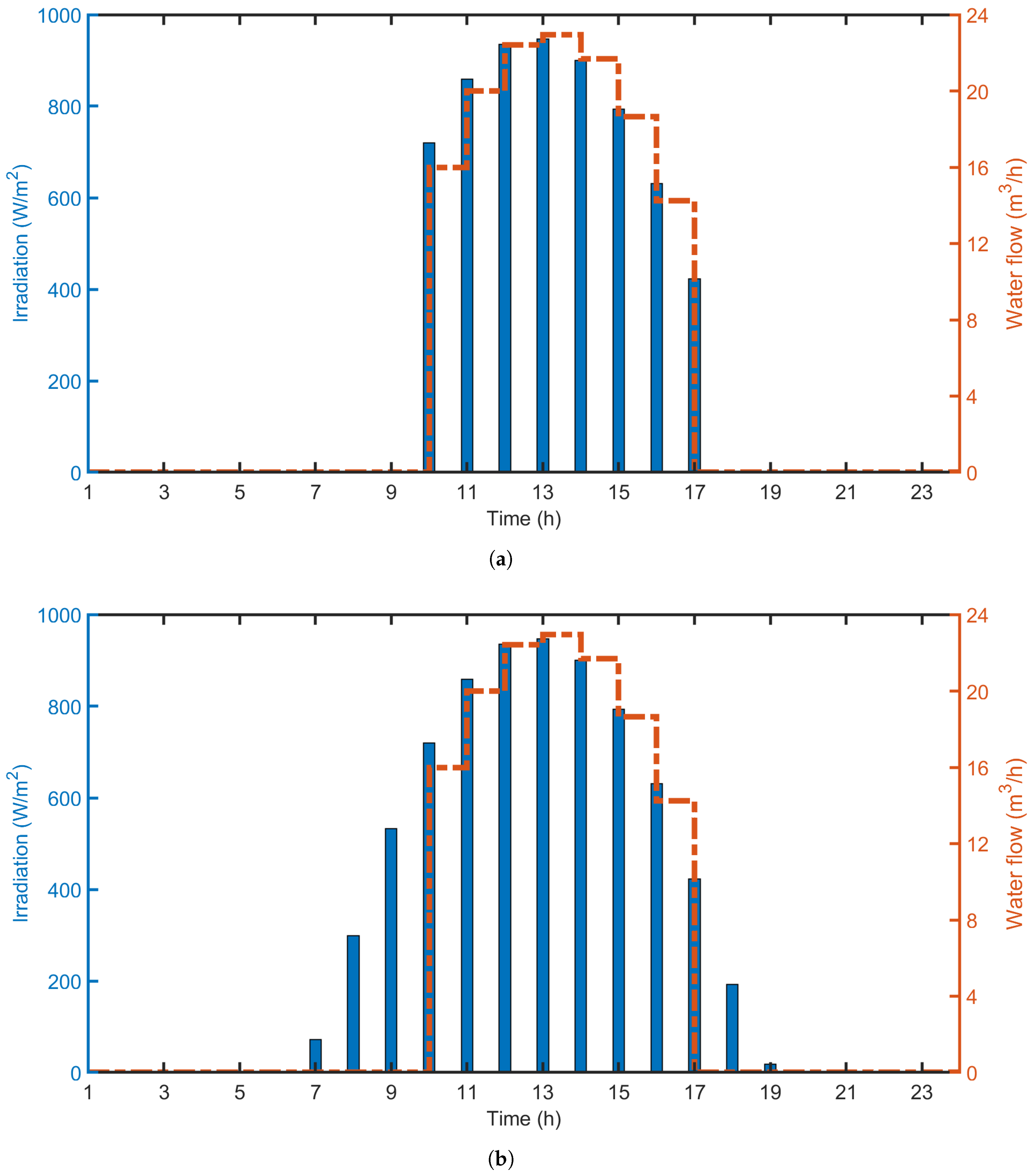
- Argumentation in Sensing (The 0.6 Threshold): Figure 11b, demonstrates the practical application of the Qref < 0.6 threshold. As shown at t = 17h, when the relative flow (pu) drops below the threshold due to decreasing solar input, the system control logic successfully initiates a reduction in water flow (m3/h) to avoid the high-vibration regime.
- -
- Hysteresis and Control Logic: The control logic is (0.6 < Qref < 0.83) to avoid the pump vibration. Looking closely at the difference between Hour 9 and Hour 17. In Hour 9, the relative flow is lower than 0.5, but the system is just starting up. In Hour 17, it is dropping.
4. Conclusions and Perspectives
Supplementary Materials
Author Contributions
Funding
Institutional Review Board Statement
Informed Consent Statement
Data Availability Statement
Acknowledgments
Conflicts of Interest
Abbreviations
| BEP | Best Efficiency Point |
| EMS | Energy Management System |
| ESS | Energy Storage System |
| FAO | Food and Agriculture Organization |
| GMM | Gaussian Mixture Model |
| HySS | Hydrogen Energy Storage System |
| LWSP | Loss of Water Supply Probability |
| NPC | Net Present Cost |
| MOPSO | Multi-objective Particle Swarm Optimization |
| PV | Photovoltaics |
| RES | Renewable Energy Resources |
| WPPVS | Water Pumping Photovoltaic System |
Appendix A. Optimizers’ Setup Parameters
References
- Sánchez Millán, F.; Ortiz, F.J.; Mestre Ortuño, T.C.; Frutos, A.; Martínez, V. Development of Smart Irrigation Equipment for Soilless Crops Based on the Current Most Representative Water-Demand Sensors. Sensors 2023, 23, 3177. [Google Scholar] [CrossRef]
- Habib, S.; Jia, Y.; Tamoor, M.; Zaka, M.A.; Shi, M.; Dong, Q. Modeling, simulation, and experimental analysis of a photovoltaic and biogas hybrid renewable energy system for electrification of rural community. Energy Technol. 2023, 11, 2300474. [Google Scholar] [CrossRef]
- Elnozahy, A.; Abdel-Salam, M.; Abo-Elyousr, F.K. Optimal techno-economic energy coordination of solar PV water pumping irrigation systems. Energy 2024, 288, 129817. [Google Scholar] [CrossRef]
- Diez, F.J.; Boukharta, O.F.; Navas-Gracia, L.M.; Chico-Santamarta, L.; Martínez-Rodríguez, A.; Correa-Guimaraes, A. Daily estimation of global solar irradiation and temperatures using artificial neural networks through the virtual weather station concept in Castilla and León, Spain. Sensors 2022, 22, 7772. [Google Scholar] [CrossRef]
- Costa, T.S.; Villalva, M.G. Technical evaluation of a PV-diesel hybrid system with energy storage: Case study in the Tapajós-Arapiuns Extractive Reserve, Amazon, Brazil. Energies 2020, 13, 2969. [Google Scholar] [CrossRef]
- Ganiyu, S.O.; Martinez-Huitle, C.A.; Oturan, M.A. Electrochemical advanced oxidation processes for wastewater treatment: Advances in electrochemical technologies driven by renewable energy. Appl. Catal. B Environ. 2020, 270, 118857. [Google Scholar] [CrossRef]
- Muhsen, D.H.; Khatib, T.; Nagi, F. A review of photovoltaic water pumping system designing methods, control strategies and field performance. Renew. Sustain. Energy Rev. 2017, 68, 70–86. [Google Scholar] [CrossRef]
- Rawat, R.; Kaushik, S.C.; Lamba, R. A review on modeling, design methodology, and size optimization of photovoltaic based water pumping system. Sol. Energy 2016, 134, 147–164. [Google Scholar] [CrossRef]
- Osama, M.; Abdel-Salam, M.; Elnozahy, A. Optimization of solar PV water pumping system with different scenarios for storage elements: A case-study in Egypt. Environ. Dev. Sustain. 2025, 1–45. [Google Scholar] [CrossRef]
- Nekkache, A.; Bouzidi, B.; Bakelli, Y.; Kaabeche, A.; Larbes, C. Optimised sizing of a hybrid renewable water pumping system based on recent metaheuristic algorithms: A case study in Algeria. Int. J. Ambient Energy 2023, 45, 2267569. [Google Scholar] [CrossRef]
- Haile, M.G.; Mesele, M. Optimizing the performance and economic viability of photovoltaic water pumping systems (PVWPS): A multi-objective approach. Eng. Res. Express 2025, 7, 025564. [Google Scholar] [CrossRef]
- Heydari, A.; Nezhad, M.M.; Keynia, F.; Fekih, A.; Shahsavari-Pour, N.; Garcia, D.A.; Piras, G. A combined multi-objective intelligent optimization approach considering techno-economic and reliability factors for hybrid-renewable microgrid systems. J. Clean. Prod. 2023, 383, 135249. [Google Scholar] [CrossRef]
- Bakelli, Y.; Bouzidi, B.; Guerri, O. Multi-objective optimization of hybrid PV/wind/diesel water pumping systems considering economic and environmental aspects. Energy Convers. Manag. 2024, 294, 117538. [Google Scholar]
- Nekkache, M.; Bouzidi, B.; Haddad, S. Optimal sizing and control of a hybrid PV–wind–diesel system for water pumping. Int. J. Hydrogen Energy 2018, 43, 4754–4766. [Google Scholar]
- Rekioua, D.; Achour, Y.; Bacha, S. Fuzzy logic based energy management and MPPT control for hybrid renewable energy systems. Renew. Energy 2023, 202, 1384–1398. [Google Scholar]
- Raza, F.; Tamoor, M.; Miran, S. Socioeconomic and climatic impacts of photovoltaic systems operating high-efficiency irrigation systems: A case study of the government subsidy scheme for climate-smart agriculture in Punjab, Pakistan. Eng. Proc. 2021, 12, 36. [Google Scholar] [CrossRef]
- Mokeddem, A.; Midoun, A.; Kadri, D.; Hiadsi, S.; Raja, I.A. Performance of a directly-coupled PV water pumping system. Energy Convers. Manag. 2011, 52, 3089–3095. [Google Scholar] [CrossRef]
- Harkani, A.; Fassi, H.F.; El Aissaoui, A. Modeling of PV Water Pumping Performance using Multi-Parallel Pump Switching for an Optimal Hydraulic Power Point Tracking. Model. Earth Syst. Environ. 2024, 10, 6435–6448. [Google Scholar] [CrossRef]
- Hossain, M.S.; Chowdhury, M.M.; Das, B.K.; Islam, M.R.; Kibria, M.G.; Banik, S. A sustainable energy approach for pumping and irrigation in the Barind Region of Bangladesh. Clean Technol. Environ. Policy 2024, 26, 2151–2180. [Google Scholar] [CrossRef]
- Mwendwa, D.M.; Leonard, A.; Hirmer, S. GIS-based method for assessing the viability of solar-powered irrigation. Appl. Energy 2024, 377, 124461. [Google Scholar] [CrossRef]
- Khattak, S.; Yousif, M.; Hassan, S.U.; Hassan, M.; Alghamdi, T.A. Techno-economic and environmental analysis of renewable energy integration in irrigation systems: A comparative study of standalone and grid-connected PV/diesel generator systems in Khyber Pakhtunkhwa. Heliyon 2024, 10, e31025. [Google Scholar] [CrossRef] [PubMed]
- Vick, B.D.; Neal, B.A. Analysis of off-grid hybrid wind turbine/solar PV water pumping systems. Sol. Energy 2012, 86, 1197–1207. [Google Scholar] [CrossRef]
- Ahmed, M.M.; Bawayan, H.M.; Enany, M.A.; Elymany, M.M.; Shaier, A.A. Modern advancements of energy storage systems integrated with hybrid renewable energy sources for water pumping application. Eng. Sci. Technol. Int. J. 2025, 62, 101967. [Google Scholar] [CrossRef]
- Bakelli, A.; Hamache, S.; Bakelli, Y.; Kaabeche, A. Multi-objective optimization of a photovoltaic/wind/diesel pumping system with water tank in the Adrar region. J. Renew. Energies 2024, 127–135. [Google Scholar] [CrossRef]
- Rekioua, D.; Rekioua, T.; Elsanabary, A.; Mekhilef, S. Power management control of an autonomous photovoltaic/wind turbine/battery system. Energies 2023, 16, 2286. [Google Scholar] [CrossRef]
- Hodkiewicz, M.; Norton, M. The effect of change in flow rate on the vibration of double-suction centrifugal pumps. Proc. Inst. Mech. Eng. Part E J. Process Mech. Eng. 2002, 216, 47–58. [Google Scholar] [CrossRef]
- Zhao, W.; Egusquiza, M.; Valero, C.; Valentín, D.; Presas, A.; Egusquiza, E. On the use of artificial neural networks for condition monitoring of pump-turbines with extended operation. Measurement 2020, 163, 107952. [Google Scholar] [CrossRef]
- Li, X.; Yang, H.; Ge, J.; Zhu, S.; Zhu, Z. Intelligent cavitation recognition of a canned motor pump based on a CEEMDAN-KPCA and PSO-SVM method. IEEE Sens. J. 2024, 24, 5324–5334. [Google Scholar] [CrossRef]
- Alharbi, T.; Abo-Elyousr, F.K.; Abdelshafy, A.M. Efficient coordination of renewable energy resources through optimal reversible pumped hydro-storage integration for autonomous microgrid economic operation. Energy 2024, 304, 131910. [Google Scholar] [CrossRef]
- Abo-Elyousr, F.K.; Guerrero, J.M.; Ramadan, H.S. Prospective hydrogen-based microgrid systems for optimal leverage via metaheuristic approaches. Appl. Energy 2021, 300, 117384. [Google Scholar] [CrossRef]
- Guo, X.; Gu, F.; Liu, H.; Yu, Y.; Li, R.; Wang, J. Sustainable PV-hydrogen-storage microgrid energy management using a hierarchical economic model predictive control framework. Energy Inform. 2025, 8, 18. [Google Scholar] [CrossRef]
- Li, H.; Yazdi, M.; Adumene, S.; Goleiji, E. Integrating safety management systems in hydrogen production facilities. Int. J. Hydrogen Energy 2025, 128, 345–358. [Google Scholar] [CrossRef]
- Rao, M.J.M.; Sahu, M.K.; Subudhi, P.K. PV based water pumping system for agricultural sector. Mater. Today Proc. 2018, 5, 1008–1016. [Google Scholar] [CrossRef]
- Kaldellis, J.; Spyropoulos, G.; Kavadias, K.; Koronaki, I. Experimental validation of autonomous PV-based water pumping system optimum sizing. Renew. Energy 2009, 34, 1106–1113. [Google Scholar] [CrossRef]
- Campana, P.E.; Li, H.; Yan, J. Dynamic modelling of a PV pumping system with special consideration on water demand. Appl. Energy 2013, 112, 635–645. [Google Scholar] [CrossRef]
- Boutelhig, A.; Arab, A.H.; Hanini, S. New approach to exploit optimally the PV array output energy optimally by maximizing the discharge rate of a directly-coupled photovoltaic water pumping system (DC/PVPS). Energy Convers. Manag. 2016, 111, 375–390. [Google Scholar] [CrossRef]
- Bawa, A.R.; Amponsah, W.; Quansah, D.A. Design, Simulation, and Economic Analysis of a Solar Photovoltaic-Powered Pumping System for Drip Irrigation of a 1-ha Bean Farm in a Tropical Climate. J. Eng. 2025, 2025, 1662260. [Google Scholar] [CrossRef]
- Navarro-Gonzalez, F.J.; Manzano, J.; Pardo, M. Sizing optimisation under irradiance uncertainty of irrigation systems powered by off-grid solar panels. Comput. Electron. Agric. 2025, 232, 110034. [Google Scholar] [CrossRef]
- Xu, H.; Liu, J.; Qin, D.; Gao, X.; Yan, J. Feasibility analysis of solar irrigation system for pastures conservation in a demonstration area in Inner Mongolia. Appl. Energy 2013, 112, 697–702. [Google Scholar] [CrossRef]
- Yu, Y.; Liu, J.; Wang, Y.; Xiang, C.; Zhou, J. Practicality of using solar energy for cassava irrigation in the Guangxi Autonomous Region, China. Appl. Energy 2018, 230, 31–41. [Google Scholar] [CrossRef]
- Nikzad, A.; Chahartaghi, M.; Ahmadi, M.H. Technical, economic, and environmental modeling of solar water pump for irrigation of rice in Mazandaran province in Iran: A case study. J. Clean. Prod. 2019, 239, 118007. [Google Scholar] [CrossRef]
- Xiong, H.; Egusquiza, M.; Østergaard, P.A.; Pérez-Díaz, J.I.; Sun, G.; Egusquiza, E.; Patelli, E.; Xu, B.; Duan, H.; Chen, D.; et al. Multi-objective optimization of a hydro-wind-photovoltaic power complementary plant with a vibration avoidance strategy. Appl. Energy 2021, 301, 117459. [Google Scholar] [CrossRef]
- Errouha, M.; Derouich, A.; Motahhir, S.; Zamzoum, O.; El Ouanjli, N.; El Ghzizal, A. Optimization and control of water pumping PV systems using fuzzy logic controller. Energy Rep. 2019, 5, 853–865. [Google Scholar] [CrossRef]
- Lu, J.; Ning, C.; Wu, F.; Liu, X.; Luo, K.; Zhang, F.; Qiu, Y. Dynamic mode decomposition based investigation of unsteady flow characteristics and pressure pulsations in centrifugal pumps operating under partial load conditions for scientific advancement. Flow Meas. Instrum. 2025, 103, 102850. [Google Scholar] [CrossRef]
- Habib, S. A diverse framework for optimization and techno-economic evaluation of PV Mini-grids for sustainable future of agricultural irrigation. Appl. Energy 2025, 389, 125743. [Google Scholar] [CrossRef]
- Allen, R.; Pereira, L.S.; Raes, D.; Smith, M.; Food and Agriculture Organization of the United Nations. ETc-Single crop coefficient (Kc). In Crop Evapotranspiration: Guidelines for Computing Crop Water Requirements; FAO irrigation and drainage paper; FAO: Rome, Italy, 1998; Chapter 6; pp. 1–17. [Google Scholar]
- Allen, R.; Pereira, L.S.; Raes, D.; Smith, M.; Food and Agriculture Organization of the United Nations. ETc under soil water stress conditions. In Crop Evapotranspiration: Guidelines for Computing Crop Water Requirements; FAO irrigation and drainage paper; FAO: Rome, Italy, 1998; Chapter 8; pp. 1–24. [Google Scholar]
- bin Mohd Zain, M.Z.; Kanesan, J.; Chuah, J.H.; Dhanapal, S.; Kendall, G. A multi-objective particle swarm optimization algorithm based on dynamic boundary search for constrained optimization. Appl. Soft Comput. 2018, 70, 680–700. [Google Scholar] [CrossRef]
- Reynolds, D. Gaussian Mixture Models. In Encyclopedia of Biometrics; Springer: Boston, MA, USA, 2015; pp. 827–832. [Google Scholar] [CrossRef]
- Deb, K. Multi-Objective Optimization Using Evolutionary Algorithms; Wiley Interscience Series in Systems and Optimization; John Wiley & Sons: Chichester, UK, 2001; Available online: https://www.egr.msu.edu/~kdeb/papers/k2011003.pdf (accessed on 15 March 2026).
- Branke, J.; Deb, K.; Dierolf, H.; Osswald, M. Finding Knees in Multi-objective Optimization. In Proceedings of the Parallel Problem Solving from Nature (PPSN VIII); Springer: Berlin/Heidelberg, Germany, 2004; pp. 722–731. [Google Scholar] [CrossRef]
- Das, I.; Dennis, J.E. Normal-Boundary Intersection: A New Method for Generating the Pareto Surface in Nonlinear Multicriteria Optimization Problems. SIAM J. Optim. 1998, 8, 631–657. [Google Scholar] [CrossRef]
- Deb, K.; Pratap, A.; Agarwal, S.; Meyarivan, T. A Fast and Elitist Multiobjective Genetic Algorithm: NSGA-II. IEEE Trans. Evol. Comput. 2002, 6, 182–197. [Google Scholar] [CrossRef]
- Bishop, C.M. Pattern Recognition and Machine Learning; Information Science and Statistics; Springer: New York, NY, USA, 2006; Available online: https://link.springer.com/book/9780387310732 (accessed on 15 March 2026).
- Li, M.; Wang, H.; Gu, H.; Chi, B. Weighted joint curve inversion of aquifer parameters in pumping tests with multiple observation wells. Desalin. Water Treat. 2025, 321, 101040. [Google Scholar] [CrossRef]
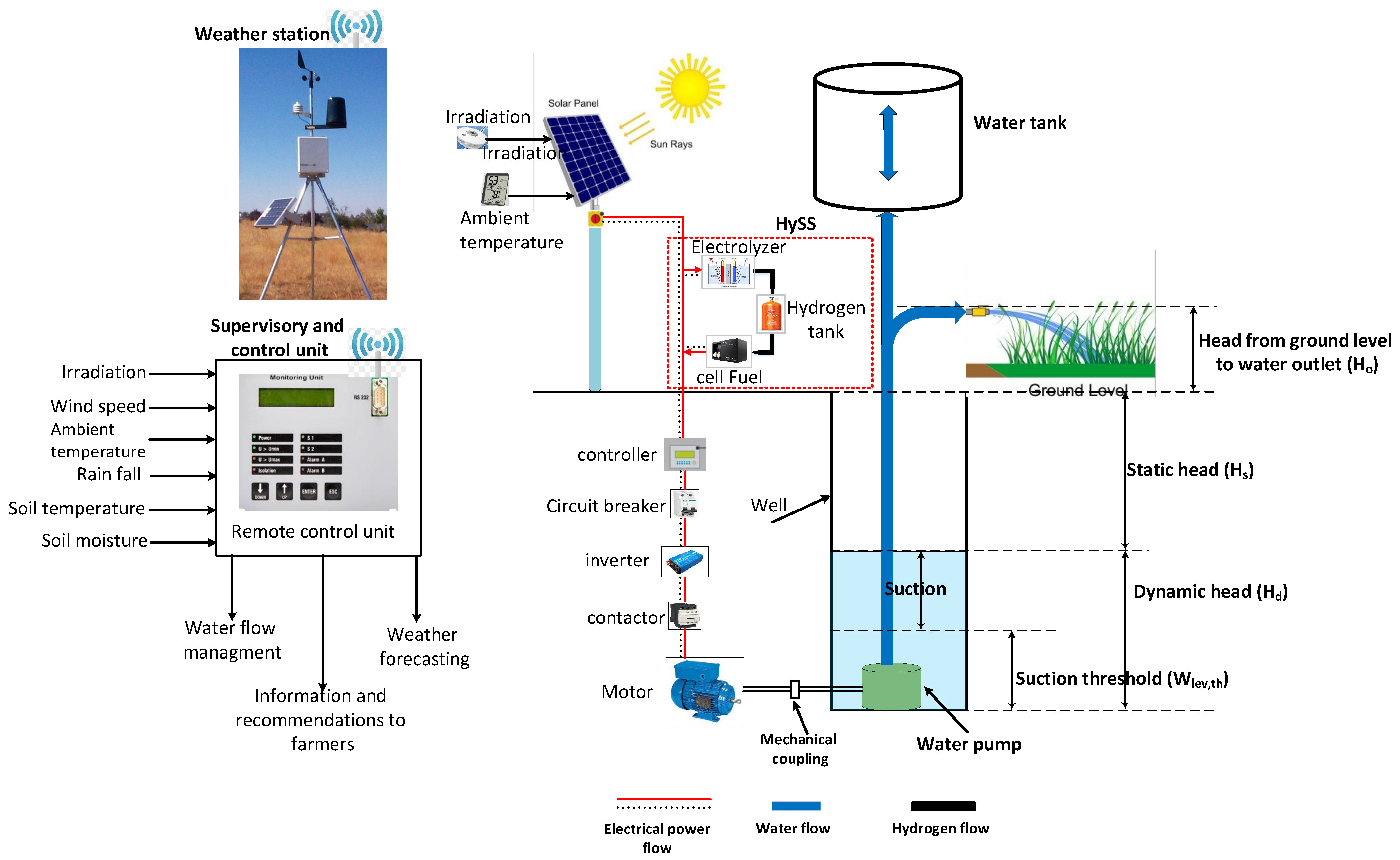


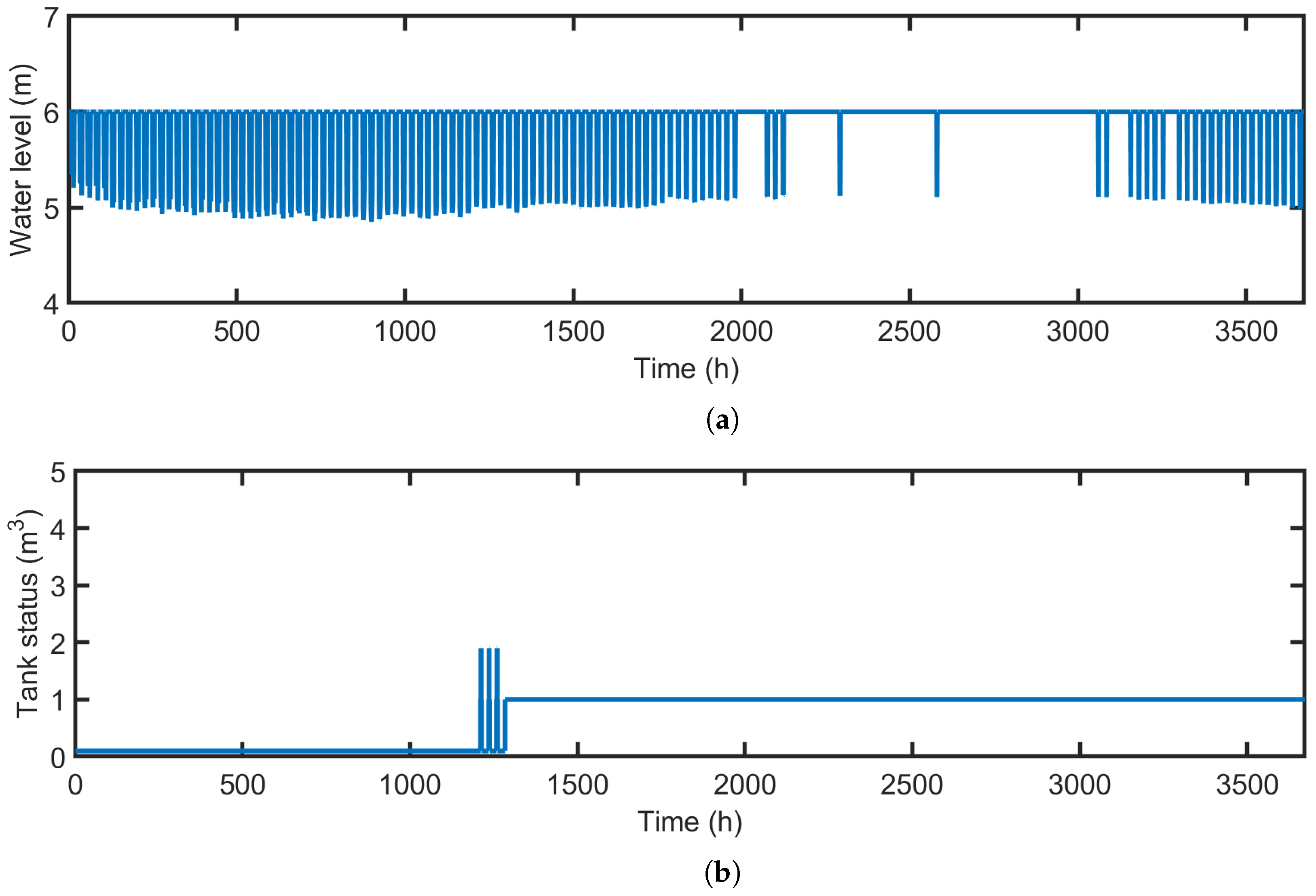
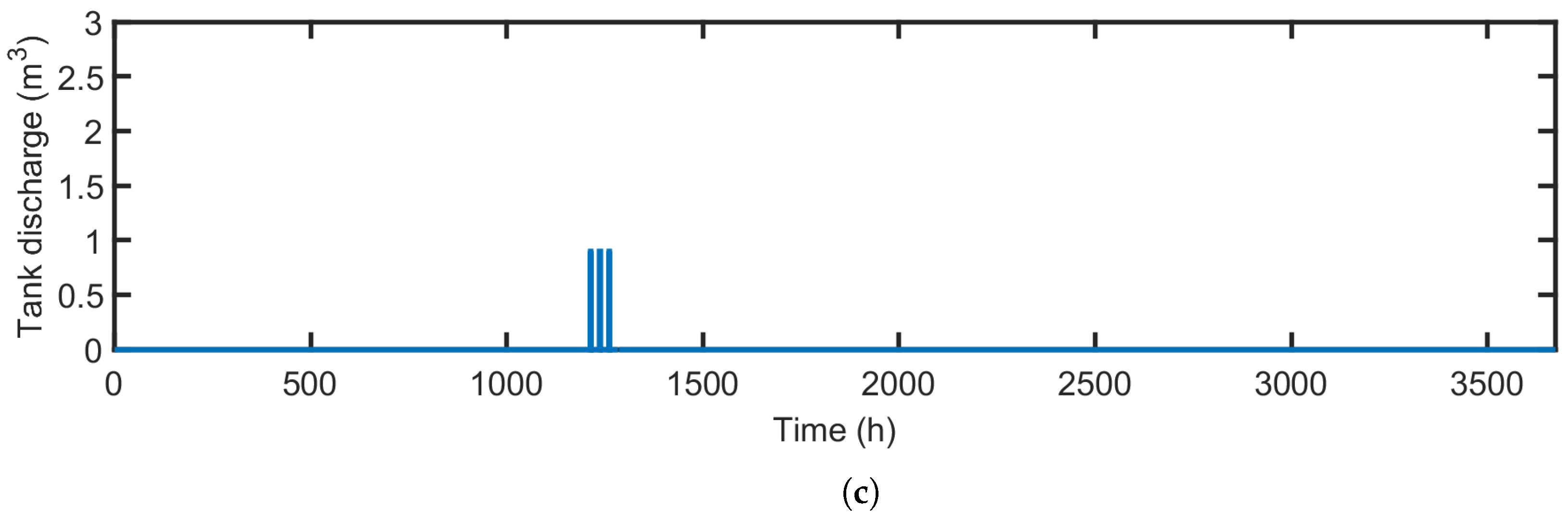




| Method | RES | Storage (B/T/H) | Load to be Served | Vibration Avoidance |
|---|---|---|---|---|
| NSGA-III [3] | PV | C/C/NC | Irrigation | C |
| Analytical [16] | PV | NC/NC/NC | Irrigation | NC |
| Analytical [17] | PV | C/C/NC | Irrigation, Cattle | NC |
| HPPT [18] | PV | NC/NC/NC | Water pumping | NC |
| Analytical [19] | PV | C/NC/NC | Irrigation | NC |
| P&O [33] | PV | C/NC/NC | Water pumping | NC |
| PHOTOV-IV [34] | PV | C/NC/NC | Pumping, Electric loads | NC |
| Dynamic model [35] | PV | NC/NC/NC | Irrigation | NC |
| Analytical [20] | PV | NC/NC/NC | Irrigation | NC |
| Mathematical [36] | PV | NC/NC/NC | Water pumping | NC |
| HOMER opt. [21] | PV | C/NC/NC | Irrigation | NC |
| PVsyst opt. [37] | PV | NC/C/NC | Drip irrigation | NC |
| Analytical [22] | WT + PV | NC/C/NC | Water pumping | NC |
| AI [23] | WT + PV | C/C/NC | Irrigation | NC |
| Analytical [38] | PV | NC/NC/NC | Irrigation | NC |
| Analytical [39] | PV | NC/NC/NC | Irrigation | NC |
| Analytical [40] | PV | NC/NC/NC | Irrigation | NC |
| Analytical [41] | PV | C/NC/NC | Irrigation, Power gen. | NC |
| Equilibrium opt. [10] | PV | C/NC/NC | Irrigation | NC |
| NSGA-II + MOPSO [42] | WT + PV | NC/NC/NC | Irrigation | C |
| Fuzzy logic [43] | PV | C/NC/NC | Water pumping | NC |
| Analytical [44] | NC | NC/NC/NC | Water pumping | NC |
| Analytical [45] | PV | C/NC/NC | Irrigation | NC |
| Variable | Proposed Sensor Type | Specifications | Role in the System |
|---|---|---|---|
| Solar irradiation | Pyranometer (e.g., ISO 9060 Class A) | Spectral range: 285–3000 nm | Input for energy availability |
| Flow rate | Ultrasonic flowmeter | Accuracy: ; non-invasive | Monitoring fluid dynamics |
| Vibration | Piezoelectric Accelerometer | Frequency range: 10 Hz–10 kHz | Detecting mechanical instability |
| Soil moisture | TDR (Time Domain Reflectometry) | Operating range: 0–100% VWC | Feedback for irrigation control |
| Meteorological data | Integrated weather station | Wind speed, humidity, temp | Environmental context |
| PV (W) | Water Tank (m3) | HySS | ||
|---|---|---|---|---|
| Fuel Cell (W) | Number of Tanks | Number of Electrolyzers | ||
| 1150 | 5 | 500 | 1 | 1 |
| Condition | Cost Increase | LWSP Stress | Primary Use Case |
|---|---|---|---|
| Low interest rates (−30%) high inflation rate (+30%) | +20.1% | <2.6% | Advanced countries |
| High interest rates (+30%) low inflation rate (−30%) | −11.5% | <2.6% | Developed countries |
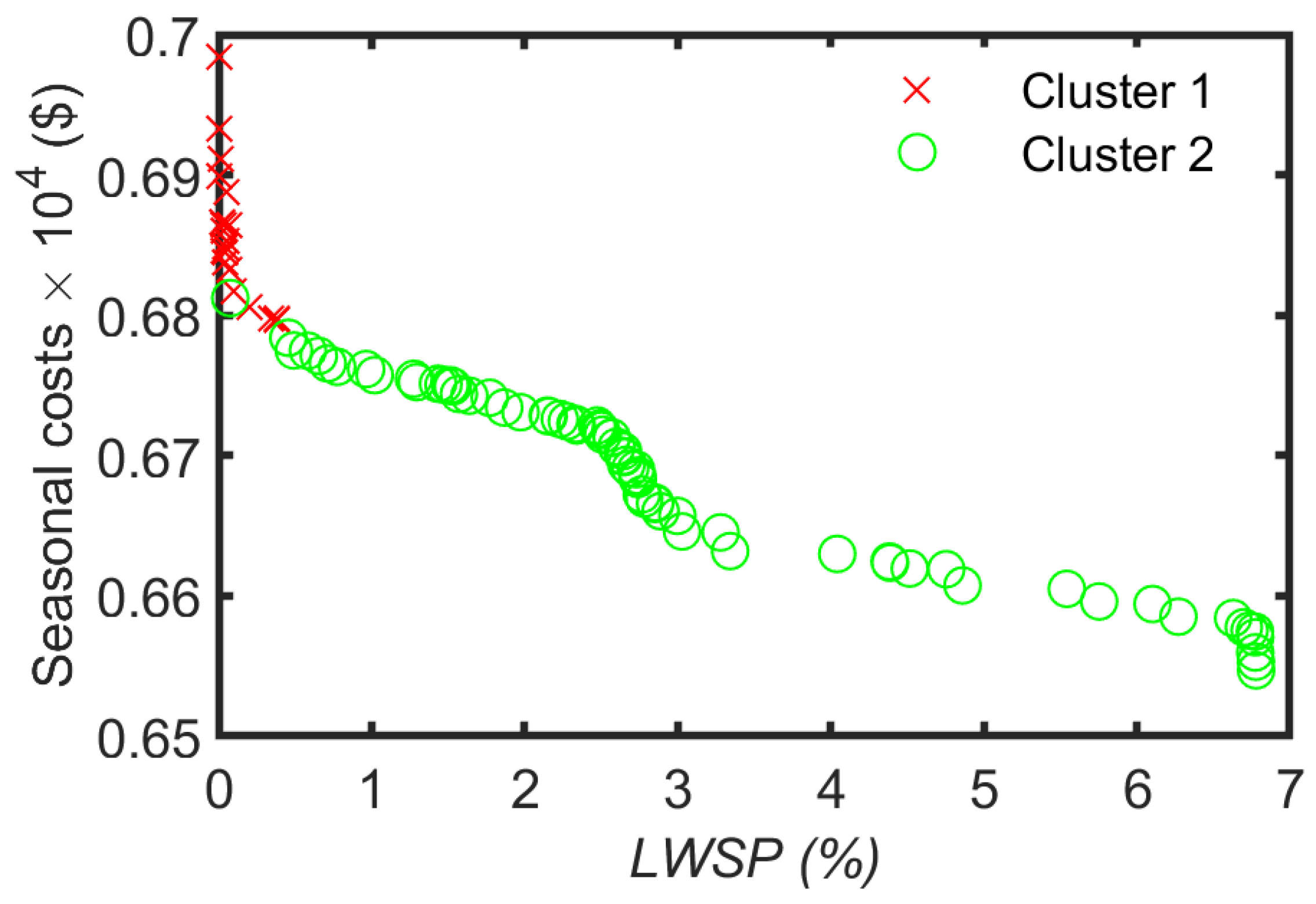
| GMM-optimized knee | optimized | balanced (2.6%) | Standard daily operation for developed countries |
| Over-sizing the PV (+30%) | insignificant | LWSP is low | High-groundwater regions |
| Down-sizing the PV (−30%) | insignificant | LWSP is moderate (4%) | Sub-optimal operation |
Disclaimer/Publisher’s Note: The statements, opinions and data contained in all publications are solely those of the individual author(s) and contributor(s) and not of MDPI and/or the editor(s). MDPI and/or the editor(s) disclaim responsibility for any injury to people or property resulting from any ideas, methods, instructions or products referred to in the content. |
© 2026 by the authors. Licensee MDPI, Basel, Switzerland. This article is an open access article distributed under the terms and conditions of the Creative Commons Attribution (CC BY) license.
Share and Cite
O. Mohamed, M.v.; Alghamdi, T.G.; Abo-Elyousr, F.K. Optimal Techno-Economic Feasibility of Solar PV Irrigation System Augmented Hydrogen Energy Storage. Sensors 2026, 26, 3350. https://doi.org/10.3390/s26113350
O. Mohamed Mv, Alghamdi TG, Abo-Elyousr FK. Optimal Techno-Economic Feasibility of Solar PV Irrigation System Augmented Hydrogen Energy Storage. Sensors. 2026; 26(11):3350. https://doi.org/10.3390/s26113350
Chicago/Turabian StyleO. Mohamed, Mohamed vall, Turki G. Alghamdi, and Farag K. Abo-Elyousr. 2026. "Optimal Techno-Economic Feasibility of Solar PV Irrigation System Augmented Hydrogen Energy Storage" Sensors 26, no. 11: 3350. https://doi.org/10.3390/s26113350
APA StyleO. Mohamed, M. v., Alghamdi, T. G., & Abo-Elyousr, F. K. (2026). Optimal Techno-Economic Feasibility of Solar PV Irrigation System Augmented Hydrogen Energy Storage. Sensors, 26(11), 3350. https://doi.org/10.3390/s26113350