Smart Hydrogel Architectures for Sensors: Narrative Review

 ,
, 
 ,
,  and
and 
Abstract
1. Introduction
2. Methods
- Hydrogel combinations with carbon nanomaterials for force sensors in the field of medicine—recent reports.
- Nanomaterial-based sensing: application of carbon nanomaterials, MXene, metal-organic frameworks, plasmonic nanoparticles, quantum dots, and magnetic nanoparticles to increase sensitivity and enable new transmission mechanisms due to low detection limits down to single molecules, selectivity, and integration into implantable formats.
3. Hydrogel Application for Sensors
3.1. Supramolecular Chemistry and Hydrogel Sensors
3.2. Types of Hydrogels in Sensor Manufacturing
3.3. Nanomaterials in Hydrogel-Based Sensor Mmanufacturing
4. Nanomaterials for a Hydrogel Sensor
Hydrogel Sensor with Carbon Nanomaterials
5. Conclusions and Future Trends
Author Contributions
Funding
Institutional Review Board Statement
Data Availability Statement
Conflicts of Interest
Abbreviations
| AA | acrylic acid |
| ANF | an aramid fiber |
| AgNWs | silver nanowires |
| AM | acrylamide |
| BC | bacterial cellulose |
| CaTPD | tannic acid–Ca2+ complex + polyacrylamide |
| CDs | coal-based carbon quantum dots |
| CH | conductive hydrogel |
| CL | carbonized lignin |
| CMC | carboxymethylcellulose |
| CNC | cellulose nanocrystal |
| CNCs@HA | hyaluronic acid (HA)-functional cellulose nanocrystals |
| CNN-LSTM | convolutional neural network-long short-term memory |
| CNT | carbon nanotubes |
| CPDs | carbonized polymer dots |
| CB[6] | cucurbit[6]uril-modified |
| CQDs | carbon quantum dots |
| DEMA | N,N-diethylacrylamide |
| DMDAAC | dimethyl diallyl ammonium chloride |
| EMI | electromagnetic interference |
| f-CNTs | functionalized carbon nanotubes |
| FRESH | the Free-Form Reversible Embedding of Suspended Hydrogels |
| GQDs | graphene quantum dots |
| GO | graphene oxide |
| HEC-Ac | hydroxyethylcellulose with citric acid |
| HEMA | hydroxyethyl methacrylate |
| LCD | liquid crystal display |
| κ-Car | κ-carrageenan single-network hydrogel |
| IPN | Interpenetrating polymer networks |
| MCNF | matrix, dual-cellulose hierarchical network |
| MD | molecular dynamics |
| ML | machine learning |
| NC | nanocellulose |
| NIPAM | N-isopropylacrylamide |
| NPs | nanoparticles |
| NDs | nano-diamonds |
| OH-MWCNTs | hydroxylated multi-walled carbon nanotubes |
| PAA | polyacrylic acid |
| PAA/CNCs/MWCNTs | polyacrylic acid/cellulose nanocrystals/multi-walled carbon nanotubes |
| PAAm/PVA | polyacrylamide/polyvinyl alcohol |
| PAM | polyacrylamide |
| PAM–PDA/Ga3+ | polyacrylamide–polydopamine/gallium(iii) |
| PAM/SA | polyacrylamide/sodium alginate |
| PAM/HACC | polyacrylamide/quaternary ammonium chitosan |
| PANI/3-ABSA-ENR | polyaniline/3-aminobenzenesulfonic acid-epoxidized natural rubber |
| PCM | multifunctional poly (vinyl alcohol)/chitosan/multi-walled carbon nanotube |
| PDMA | poly(N,N-dimethylacrylamide) |
| Pdots | polymer dots |
| PDA | polydopamine |
| PDA@CNT | polydopamine-encapsulated carbon nanotubes |
| PDMS | polydimethylsiloxane |
| PEI | polyethyleneimine |
| P(AA-HEMA)/St/rGO | poly (acrylic acid-2-hydroxyethyl methacrylate)/starch/reduced graphene oxide hydrogel |
| PHEAA | poly(hydroxyethyl acrylamide) |
| PNIPAM | poly(N-isopropylacrylamide) |
| P-NPs | polypyrrole-polydopamine-MnOx nanoparticles |
| PSCLE | PAM/SA/CNTs/LM/ethylene glycol hydrogel |
| PPy | polypyrrole |
| PVA | polyvinyl alcohol |
| PVA-CMC | PVA-sodium carboxymethylcellulose |
| PVA-SbQ | styryl-pyridinium-functionalized polyvinyl alcohol |
| PVA/HAp | poly(vinyl alcohol)/hydroxyapatite |
| PVA-LS | PVA-sodium lignosulfonate |
| PVA/SA | polyvinyl alcohol/sodium alginate |
| PVA/P(AA-NIPAM)-Fe3+ | polyvinyl alcohol/poly(acrylic acid-N-isopropyl acrylamide)-Fe3+ |
| PRGO | partially reduced graphene oxide |
| S | pressure sensitivity |
| SMA | stearyl methacrylate |
| SPBC | poly(vinyl alcohol) (PVA)/sodium alginate (SA)/cellulose nanofibers (CNFs)/sodium borate tetrahydrate |
| rGO | reduced graphene oxide |
| rGO-APBA | reduced graphene oxide-3-Aminophenylboronic acid |
| SA | sodium alginate |
| TA@AL | tannic acid-modified lignin |
| TA@CNF | tannic acid-encapsulated cellulose nanofibers |
| TA@CNC | tannic acid-coated nanocrystalline cellulose |
| TCR | temperature coefficient of resistance |
| VCL | vinylcaprolactam |
References
- Kulkarni, M.B.; Rajagopal, S.; Prieto-Simón, B.; Pogue, B.W. Recent advances in smart wearable sensors for continuous human health monitoring. Talanta 2024, 272, 125817. [Google Scholar] [CrossRef]
- Li, J.; Fang, Z.; Wei, D.; Liu, Y. Flexible Pressure, Humidity, and Temperature Sensors for Human Health Monitoring. Adv. Healthc. Mater. 2024, 13, 2401532. [Google Scholar] [CrossRef] [PubMed]
- Sengar, R.; Dubey, S. Introduction and History of Hydrogels. In Applications of Hydrogels in Modern Wastewater Treatment; Springer: Berlin/Heidelberg, Germany, 2026; pp. 1–26. [Google Scholar] [CrossRef]
- Radha, P.; Nirubarani, J.; Sayyed, N.; Padmanabhan, S.; Priya, A. Interdisciplinary Collaboration: Health IT Meets 6G. In Patient-Centric 6G: A New Era in Smart Healthcare; Auerbach Publications: New York, NY, USA, 2025; pp. 1–11. [Google Scholar] [CrossRef]
- Mihailidis, A. Interdisciplinary Collaboration: Bridging Gaps to Advance AgeTech Innovation. In The Age of AgeTech; Springer: Cham, Switzerland, 2026; pp. 149–159. [Google Scholar] [CrossRef]
- Bathaei, M.J.; Bathaei, Y.; Liao, Z.; Yazdanmehr, M.; Sethi, S.S.; Nikolayev, D.; Cardoso, F.A.; Bounty, C.M. Environmental and Ecological Monitoring with Biodegradable Technologies. Adv. Sci. 2026, 13, e11452. [Google Scholar] [CrossRef] [PubMed]
- De, S.; Xu, S.; Tang, Y.; Jackson, A.; Wang, P.L.; Rukmani, S.J.; MacDonald, E.; Zhao, X.; Duty, C.; Roschli, A.; et al. Printing the future of strain measurement: Flexible sensors via additive manufacturing for wearables, robotics, and smart infrastructure. Sens. Int. 2026, 7, 100375. [Google Scholar] [CrossRef]
- Dube, A.; Malode, S.J.; Alodhayb, A.N.; Mondal, K.; Shetti, N.P. Conducting polymer-based electrochemical sensors: Progress, challenges, and future perspectives. Talanta Open 2025, 11, 100395. [Google Scholar] [CrossRef]
- Zheng, H.; Pochan, D.J. Spiers Memorial Lecture: Recent advances (and challenges) in supramolecular gels. Faraday Discuss. 2025, 260, 9–34. [Google Scholar] [CrossRef]
- Mo, X.; Wang, H.; Luo, B.; Zhang, J.; Cai, C. High-Performance Hydrogels for Triboelectric Tactile Sensing: Principles, Design, and Applications. Adv. Funct. Mater. 2026, e74686. [Google Scholar] [CrossRef]
- Wang, Y.; Gao, Y.; Tang, L.; Guo, Y.; Sha, B.; Jiang, Y. Hydrogel-based wearable and implantable biosensors in health monitoring. Biomater. Sci. 2026, 14, 2260–2289. [Google Scholar] [CrossRef] [PubMed]
- Zhang, Y.; Li, X.; Wu, W.; Hong, W.; Jiao, T. 3D Printed Hydrogel Flexible Sensors: Fabrication Techniques, Sensing Mechanisms, and Application Advances. ACS Appl. Polym. Mater. 2026, 8, 686–705. [Google Scholar] [CrossRef]
- Jing, X.; Xu, Y.; Zeng, J.; Feng, P.; Li, S.; Mi, H.Y. Gradient-Structured Hydrogel with Integrated Actuation and Strain Sensing for Biomimetic Robotics. Adv. Funct. Mater. 2026, 36, e24820. [Google Scholar] [CrossRef]
- Gu, Y.; Luo, Y.; Guo, Q.; Yu, W.; Li, P.; Wang, X.; Ye, T.; Chang, H.; Yuan, W.; Wu, H.; et al. Empowering Human-Machine Interfaces: Self-Powered Hydrogel Sensors for Flexible and Intelligent Systems. Adv. Funct. Mater. 2026, 36, e09085. [Google Scholar] [CrossRef]
- Shi, W.; Feng, Z.; Zhu, X.; Wang, L. Fully Self-Powered Multimodal Flexible Sensors: Multi-Mechanism Energy Conversion for Next-Generation Wearable Electronics. Adv. Sustain. Syst. 2026, 10, e01409. [Google Scholar] [CrossRef]
- Chen, R.; Guo, R.; Li, Y.; Yan, H.; Huang, J.; Xu, H.; Zhang, Z.; Zhuo, S.; Liu, M. Hydrogel Ionic Sensory Systems. Mater. Chem. Front. 2026; in press. [CrossRef]
- Zhi, C.; Wang, C.; Wu, H.; Guo, C.; Zhou, X.; Shi, S.; Si, Y.; Hu, J. Self-powered functional hydrogel bioelectronics: From material design to biomedical applications. Matter 2026, 9, 102461. [Google Scholar] [CrossRef]
- Mo, F.; Lin, Y.; Liu, Y.; Zhou, P.; Yang, J.; Ji, Z.; Wang, Y. Advances in ionic conductive hydrogels for skin sensor applications. Mater. Sci. Eng. R Rep. 2025, 165, 100989. [Google Scholar] [CrossRef]
- Li, N.; Luo, X.; Zhu, H.; Shen, G.; Li, M.; Zhou, C.; Liang, N.; Zhang, P.; Zhu, X. Hydrogel composite nanomaterials for diabetic wound treatment. Colloids Surf. B Biointerfaces 2026, 260, 115392. [Google Scholar] [CrossRef]
- Cao, X.; Zhang, T.; Zha, B.; Li, S.; Huo, F. Nanoparticle-enhanced functional hydrogels: From design, characterization to their biomedical applications. Eur. Polym. J. 2026, 245, 114548. [Google Scholar] [CrossRef]
- Yang, H.; Lu, H.; Mialo, Y.; Cong, Y.; Ke, Y.; Wang, J.; Yang, H.; Fu, J. Non-swelling, super-tough, self-healing, and multi-responsive hydrogels based on micellar crosslinking for smart switch and shape memory. Chem. Eng. J. 2022, 450, 138346. [Google Scholar] [CrossRef]
- Tian, Y.; Li, Y.; Xu, M.; Li, W.; Cong, H.; Yu, B. Polyvinyl alcohol Hydrogels: Structure, Preparation, Modification Strategies and Biomedical Applications. Eur. Polym. J. 2026, 244, 114517. [Google Scholar] [CrossRef]
- Chen, Y.; Lv, S.; Liu, L.; He, T.; Xu, J.; Liu, J.; Liu, X.; Mu, Y.; She, J. A multifunctional ion-conductive hydrogel with supramolecular interactions for wearable sensing: Human motion monitoring and Morse code communication. Chem. Eng. J. 2026, 528, 172645. [Google Scholar] [CrossRef]
- Sun, Q.; Yao, J.; Wang, L.; Liu, W. A gum Arabic-augmented hydrogel with high toughness, robust adhesion, and antibacterial efficacy for motion sensing and rehabilitation training. Talanta 2026, 306, 129713. [Google Scholar] [CrossRef] [PubMed]
- Xue, Y.; Ni, Z.; Wang, Y.; Shan, L.; Liu, J. Engineering Conducting Polymer Hydrogels for Bioelectronic Interfacing. Adv. Funct. Mater. 2026, 36, e21327. [Google Scholar] [CrossRef]
- Li, D.; Zhou, H.; Liu, L.; Jing, C.; Ji, K.; Liu, G.; Bai, H.; Yuan, H.; Wei, H.; Zhang, W.; et al. Dual-Anchored Interfacial Adhesion-Enhanced Strain-Insensitive Hydrogels Electronic Skin for Consciousness-Driven Brain-Computer Interface. Adv. Funct. Mater. 2026, e32170. [Google Scholar] [CrossRef]
- Lee, K.; Gul, O.; Kwon, Y.; Jeong, J.; Cho, S.; Ahn, J.; Yu, J.; Kim, C.; Lee, D.; Han, H.; et al. Smarter Sensors Through Machine Learning: Historical Insights and Emerging Trends across Sensor Technologies. Adv. Funct. Mater. 2026, 36, e19859. [Google Scholar] [CrossRef]
- Liu, S.; Zhan, H.; Wu, P.; Lei, Z. Underwater-Stable Conductive Hydrogels: From Molecular Design to Next-Generation Aquatic Sensors†. Chin. J. Chem. 2026, 44, 571–582. [Google Scholar] [CrossRef]
- Theyagarajan, K.; Saikrithika, S.; Kim, Y.J. MXene- and MOF-Based Hydrogels: Emerging Platforms for Electrochemical Biosensing and Health Monitoring. Micromachines 2026, 17, 267. [Google Scholar] [CrossRef] [PubMed]
- Wang, Q.; Gul, O.; Kwon, Y.; Jeong, J.; Cho, S.; Ahn, J.; Yu, J.; Kim, C.; Lee, D.; Han, H.; et al. Robust, highly conductive, and recyclable hydrogel with tunable sensitivity for advanced flexible electronics. Mater. Today 2026, 96, 103325. [Google Scholar] [CrossRef]
- Chang, Y.; Jia, Y.; Pan, Y.; Wang, J.; Yang, H.; Zu, M.; Cheng, H. Enhancing water retention in hydrogels under extreme conditions: Strategies, applications and challenges. Mater. Sci. Eng. R Rep. 2026, 167, 101098. [Google Scholar] [CrossRef]
- Li, Y.; Liu, R.; Li, Y.; Chen, G.; Wan, Y.; Tian, Y. PVA-based composite hydrogels for biomedical applications. J. Mater. Chem. C Mater. 2026, 14, 3018–3048. [Google Scholar] [CrossRef]
- Haghighat, H.R.; Naqvi, M.; Moghari, S.; Naderi, G.; Khonakdar, H.A. Conductive Hydrogels as Next-Generation Materials for Flexible and Wearable Electronic Systems. Polym. Eng. Sci. 2026, 66, 73–104. [Google Scholar] [CrossRef]
- Kang, X.; Wang, Y.; Chen, C.; Liu, J.; Zhai, X.; Niu, C.; He, X.; Chen, X.; Li, J. MXene-based multi-component conductive hydrogel with synergistic crosslinking networks for high-performance wearable sensors. Nanoscale 2026, 18, 4874–4886. [Google Scholar] [CrossRef] [PubMed]
- Du, Y.; Qin, G.; Han, C.; Rong, Y.; Du, H.; Wang, Z. PEG-based conductive gels with ‘ring-wrapped chains’ dynamic crosslinking used for flexible wearable devices. J. Mater. Sci. 2026, 61, 8318–8329. [Google Scholar] [CrossRef]
- Wu, R.; Zhu, T.; Ni, Y.; Wu, C.; Wang, W.; Zhao, K.; Huang, J.; Lai, Y. UV-Cured Dense Double Network Hydrogel via Multiple Dynamic Crosslinking for Stable Amphibious Motion Sensing. Adv. Funct. Mater. 2026, 36, e15120. [Google Scholar] [CrossRef]
- Lou, M.; Ma, Z.; Shi, L.; Zhang, J.; Li, W.; Wang, H.; Jia, L. Confined-space volume compression for ultra-thin and tough composite hydrogel films via enhanced hydrogen bond crosslinking. Chem. Eng. J. 2026, 531, 174140. [Google Scholar] [CrossRef]
- Zar, Y.; Htwe, N.; Pawłowska, S.; Jaafar, M.; Htwe, Y.Z.N.; Pawłowska, S. Emerging Strategies for the Fabrication of Conductive Hydrogels from Conductive Polymers and Their Composites for Wearable Sensors, Energy Storage, and Biosensor Applications: Methods, Mechanisms, and Future Perspectives. Adv. Mater. Technol. 2026, 11, e01845. [Google Scholar] [CrossRef]
- Tordi, P.; Tamayo, A.; Jeong, Y.; Han, B.; Kayal, B.-A.; Cavallo, A.; Bonini, M.; Samori, P. Fully Bio-Based Gelatin Organohydrogels via Enzymatic Crosslinking for Sustainable Soft Strain and Temperature Sensing. Adv. Funct. Mater. 2026, 36, e20762. [Google Scholar] [CrossRef]
- Liu, C.; Huang, H.; Yu, X.; Luo, Y.; Jianh, Y.; Li, Y.; Zhang, X.; Wan, Z.; Ji, J.; Yu, Y.; et al. Machine Learning-Validated Silk Fibroin Composite Hydrogels: Robust, Antifreezing, and Conductive Sensors. ACS Appl. Polym. Mater. 2026, 8, 3612–3628. [Google Scholar] [CrossRef]
- Zheng, T.; Cheng, C.; Wang, D.; Cheng, C.C. Electronic jelly: Engineering the mechanics of hydrogels for flexible electronics. FlexMat, 2026; ahead of print. [CrossRef]
- Ramkumar, V.; Rukmanikrishnan, B.; Endla, P.; Kim, S.C.; Shanmugan, S.; Madhappan, S. Recent advances in the smart biopolymer nanocomposite hydrogels for biomedical interfaces and therapeutics. J. Mol. Liq. 2026, 444, 129159. [Google Scholar] [CrossRef]
- Barhoum, A.; Sadak, O.; Ramirez, I.A.; Iverson, N. Stimuli-bioresponsive hydrogels as new generation materials for implantable, wearable, and disposable biosensors for medical diagnostics: Principles, opportunities, and challenges. Adv. Colloid Interface Sci. 2023, 317, 102920. [Google Scholar] [CrossRef]
- Farahbakhsh, J.; Najafi, M.; Al-Shaeli, M.; Benkhaya, S.; Zargar, M.; Iglauer, S.; Vatanpour, V. Next-generation thermo-responsive materials: From hydrogels for biomedical applications to smart membranes for separation technologies. Sci. Total Environ. 2026, 1017, 181413. [Google Scholar] [CrossRef]
- Ramesh, A.; Subbarayan, R.; Srinivasan, D.; Balakrishnan, R.; Shrestha, R.; Chauhan, A. Matrix-Based Hydrogels in Biomedical Applications: Design, Functionality, and Translational Insights. Biomed. Res. Ther. 2026, 13, 8271–8290. [Google Scholar] [CrossRef]
- Bisht, N.; Yeo, R.J.; Ramakrishna, S.; Sankaranarayanan, S.K.R.S.; Dhand, C.; Dwivedi, N. Shape Memorable and Self-Healable Smart Hydrogels and Emerging Directions. Adv. Healthc. Mater. 2026, 15, e03361. [Google Scholar] [CrossRef]
- Pande, S.; Sahu, I.; Pati, F.; Chakraborty, P. Merging Supramolecular Chemistry with Nanotechnology for Hydrogel-Based Soft Electronics. ChemNanoMat 2026, 12, e202500722. [Google Scholar] [CrossRef]
- Mascini, M.; Palmieri, S.; Eugelio, F.; Rivero, M.I.; Del Carlo, M. Analytical Performances of Polymer-Based Biosensors for Real Samples Application. Biosensors 2026, 16, 207. [Google Scholar] [CrossRef] [PubMed]
- Song, Y.; Yang, M.; Liu, T.; Sun, C.; Jin, M.; Tan, H.; Zheng, D.; Zhang, Y. Design of a flexible cellulose framework via supramolecular structure modulation and its application in hydrogel sensors. Carbohydr. Polym. 2026, 373, 124591. [Google Scholar] [CrossRef] [PubMed]
- Zeng, Y.; Li, X.; Tu, Y.; Zeng, Y.; Qiu, L.; Liu, H.; Yu, J. Robust supramolecular conductive hydrogels based on silk fibroin and wool keratin for stretchable, self-healing, and adhesive strain sensors. Chem. Eng. J. 2025, 520, 165954. [Google Scholar] [CrossRef]
- Chen, X.; Tian, P.; Zhang, T.; Wang, Y.; Guo, H.; Li, Q.; Ti, B. Soft/hard double network supramolecular hydrogel with multifunctional properties for flexible strain sensor. Colloids Surf. A Physicochem. Eng. Asp. 2025, 710, 136293. [Google Scholar] [CrossRef]
- Tang, Z.; Yang, J.; Li, S.; Wu, Z.; Mondal, A.K. Anti-swellable, stretchable, self-healable, shape-memory and supramolecular conductive TA-based hydrogels for amphibious motion sensors. Eur. Polym. J. 2024, 211, 113034. [Google Scholar] [CrossRef]
- Lei, T.; Duan, X.; Zhalo, H.; Ma, S.; Ma, X.; Wang, N.; Zhang, Q.; Wan, A.; Xia, Z.; Shou, W.; et al. A multifunctional flexible wearable hydrogel sensor with anti-swelling via supramolecular interactions for underwater motion detection and information transmission. Chem. Eng. J. 2025, 504, 158700. [Google Scholar] [CrossRef]
- Xia, F.; Huang, Y.; Yang, Y.; Chen, H.; Xu, C.; Liu, S.; Yang, Q.; Zhang, X. Chitosan-mediated supramolecular hydrogel strengthened by freezing and salting-out showing self-healing, stretchable and biocompatible for flexible electronic. Polymer 2026, 356, 130043. [Google Scholar] [CrossRef]
- Li, S.; Wang, X.; Du, L.; Li, Y.; Tang, Z.; Hu, J.; Zhang, W. Supramolecular hydrogel membranes reinforced with aramid nanofibers via the dynamic cross-linking and hydrogen bonding network. Chem. Eng. J. 2025, 526, 171116. [Google Scholar] [CrossRef]
- Fang, D.; Bian, J.; Xiang, Y.; Wang, Y.; Zhu, T.; Kang, Y. Self-Assembled Zwitterionic Lignin-Induced Joint Enhancement of Mechanics and Adhesion in High-Performance Hydrogels for Flexible Strain Sensors. Biomacromolecules 2025, 26, 8652–8667. [Google Scholar] [CrossRef]
- Yang, Y.; Huang, Y.; Chen, H.; Chen, L.; Liu, S.; Zhang, X. Supramolecular hydrogels mediated by cucurbit[6]uril-modified Fe3O4 with self-healing, photothermal responsiveness and stretchability for flexible electronics. Colloids Surf. A Physicochem. Eng. Asp. 2024, 694, 134042. [Google Scholar] [CrossRef]
- Wang, L.; Wei, J.; You, M.; Jin, Y.; Li, D.; Xu, Z.; Yu, A.; Li, J.; Chen, C. Initiatorless polymerization of mechanically robust hydrogels reinforced by cellulose of wood skeleton as multifunctional sensors. Carbohydr. Polym. 2025, 354, 123345. [Google Scholar] [CrossRef]
- Lin, Z.; Li, G.-Z.; Tao, L. Development of self-healing hydrogels with new functions using nanomaterials. Nano Res. 2026, 19, 94908459. [Google Scholar] [CrossRef]
- Adnan, N.A.; Bakar, N.A.; Zahid, N.I.; Nordin, N. Emerging nanomaterials for conductive electroactive and stretchable hydrogels in biomedical microdevices. Polymer 2025, 339, 129132. [Google Scholar] [CrossRef]
- Zhang, X.; Chen, X.; Ye, Z.; Liu, W.; Liu, X.; Wang, X. Conductive hydrogels for bioelectronics: Molecular structures, design principles, and operation mechanisms. J. Mater. Chem. C Mater. 2023, 11, 10785–10808. [Google Scholar] [CrossRef]
- Edo, G.I.; Nwachukwu, S.C.; Gaaz, T.S.; Emumejaye, K.; Iwanegbe, I.; Oghroro, E.E.A.; Owheruo, O.; Yousif, E.; Jikah, A.N.; Igbuku, U.A.; et al. Smart biopolymers in commercial practice: A review of applications and challenges. Polym. Bull. 2025, 83, 60. [Google Scholar] [CrossRef]
- Beg, M.; Sam, V.; Kanathedath, J.; Markapudi, P.R.; Alcock, K.M.; Goh, K.; Yu, H.; Manjakkal, L. Multifunctional ultra-low voltage sweat-activated battery using piezo-ionic hydrogel. Nano Energy 2026, 149, 111729. [Google Scholar] [CrossRef]
- Song, B.; Zhang, J.; Hao, S.; Shao, C.; Fu, P.; Wen, J.; Yang, J.; Cong, H.; Pan, C. Multifunctional Hydrogel Interfaces: Reshaping the Future of Flexible Electronics. Adv. Mater. 2026, 38, e20644. [Google Scholar] [CrossRef]
- Choudhury, S.; Wang, Z.L.; Kim, S.W. Hydrogel-based piezoelectric materials and devices for implantable bioelectronics. Biomaterials 2026, 327, 123768. [Google Scholar] [CrossRef]
- Chen, Y.; Guo, X.; Zhang, Y.; Yang, Z.; Meng, J.; Li, P.; Ni, Y.; Huang, Z.; Wu, H.; Wei, Q. Recent advances in plant polyphenol-based adhesive hydrogels for biomedical applications. Biomater. Adv. 2026, 183, 214757. [Google Scholar] [CrossRef]
- Sun, Y.; Tian, G.; Deng, W.; Yang, W. Ionic Hydrogel Sensors toward Next-Gen Personalized Healthcare. Adv. Mater. 2026, 38, e09122. [Google Scholar] [CrossRef]
- Wu, J.; Hong, J.; Gao, X.; Wang, Y.; Wang, W.; Zhang, H.; Park, J.; Shi, W.; Guo, W. Recent Progress in Flexible Wearable Sensors Utilizing Conductive Hydrogels for Sports Applications: Characteristics, Mechanisms, and Modification Strategies. Gels 2025, 11, 589. [Google Scholar] [CrossRef]
- Zeng, L.; Li, Z.; Wu, D.; Lan, X.; Xu, S.; Zhang, Y.; Dong, J.; Zhang, D.; Han, S.; Huo, P. Injectable dual-network conductive antimicrobial hydrogels from oxidized dextran/hydroxypropyl chitosan: Multifunctional applications in wound healing and physiological monitoring. Int. J. Biol. Macromol. 2026, 335, 149242. [Google Scholar] [CrossRef]
- Li, Y.; Wang, Y.; Qiao, Y.; Liu, X.; Wang, H.; Zhang, S.; Yin, X.; Wang, X.; Han, P.; Gu, Z. High-performance lignin-based hydrogel strain sensors for human motion monitoring. J. Colloid Interface Sci. 2026, 718, 140487. [Google Scholar] [CrossRef]
- Lee, C.; Huang, H.-S.; Wang, Y.-Y.; Zhang, Y.s.; Chakravarthy, R.D.; Yeh, M.-Y.; Lin, H.-C.; Wei, J. Stretchable, Adhesive, and Biocompatible Hydrogel Based on Iron–Dopamine Complexes. Polymers 2023, 15, 4378. [Google Scholar] [CrossRef]
- Guan, X.; Ma, X.; Gao, R.; Zheng, Q.; Sun, C.; Chen, Y.; Mu, J. Low-Temperature One-Pot Fabrication of a Dual-Ion Conductive Hydrogel for Biological Monitoring. Sensors 2026, 26, 2086. [Google Scholar] [CrossRef]
- Ren, J.; Wang, Y.; Liu, Z.; Liu, K.; Xiang, X. Balancing stretchability and conductivity: Carbon nanotube layer-enhanced non-ionic conductive hydrogels with a sandwich structure. Chem. Eng. J. 2024, 500, 156641. [Google Scholar] [CrossRef]
- Jiang, Z.; Lv, Q.; Yan, L.; Chen, X.; Zhao, F.; Pan, B.; Chen, S. Ionic thermoelectric poly(vinyl alcohol)/gelatin hydrogel for passive multimodal physiological sensing via the sol-gel transition triggered by salting out effect. React. Funct. Polym. 2026, 222, 106679. [Google Scholar] [CrossRef]
- Liang, X.; Chen, S.; Liang, Y.; Wang, M.; Wang, Q.; Chen, D.; Ma, X.; Zhong, H.-J. Alginate-Based Hydrogels: Recent Progress in Preparation, Property Tuning, and Multifunctional Applications. Gels 2026, 12, 182. [Google Scholar] [CrossRef]
- Guan, L.; Li, X.; Zhao, H. Conductive Hydrogels: Progress and Prospects in Biomedical Engineering. Macromol. Rapid Commun. 2026, 47, e00889. [Google Scholar] [CrossRef]
- Shen, C.; Wang, Y.; Xiao, X.; Yang, R.; Chen, H.; Yuan, P.; Zhang, Y.; Lyu, G.; Shin, J.; Chen, G.; et al. Hydrogels for in vivo biomedical applications: Recent advances and future perspectives. J. Mater. Chem. B 2026, 14, 2386–2406. [Google Scholar] [CrossRef]
- Zhang, K.; Huang, Y.; Han, J.; Li, Z.; Wang, J.; Yang, S. Design and Sensing Applications of Eutectogels: A Review. Materials 2026, 19, 1059. [Google Scholar] [CrossRef]
- Sun, L.; Zhang, Y.; Yang, Z.; Zhang, Y.; Dong, Q.; Zhang, Z.; Zhang, Q. Recent advances in synthesis and biomedical applications of structurally chiral plasmonic nanomaterials. Coord. Chem. Rev. 2026, 556, 217660. [Google Scholar] [CrossRef]
- Rahman, M.S.; Helal, E.; Demarquette, N.R. Recent Advances in Metal-Organic Framework-Integrated Nanocomposite Hydrogels for Sensors and Sensing Systems. SmartMat 2026, 7, e70061. [Google Scholar] [CrossRef]
- Talipova, A.B.; Buranych, V.V.; Savitskaya, I.S.; Bondar, O.V.; Turlybekuly, A.; Pogrebnjak, A.D. Synthesis, Properties, and Applications of Nanocomposite Materials Based on Bacterial Cellulose and MXene. Polymers 2023, 15, 4067. [Google Scholar] [CrossRef]
- Li, Z.; Cui, C.; Yang, F.; Yuan, D.; Wang, H.; Lin, Z.; Shao, L.; Wang, Q.; Jiang, W.; Shi, L.; et al. Loofah-inspired recyclable MXene/polypyrrole fiber-skeleton hydrogels for machine-learning-assisted multimodal flexible sensor. Chem. Eng. J. 2026, 535, 175466. [Google Scholar] [CrossRef]
- Fu, H.; Li, N.; Yuna, Y.; Wang, Z.; Chain, S.; Duan, T.; Xu, J. Metal coordination-hydrogen bonding synergistic cross-linked MXene for 3D-printed micro-supercapacitors in self-powered sensing systems. Chem. Eng. J. 2026, 528, 172180. [Google Scholar] [CrossRef]
- Shi, J.; Wang, S.; Wang, H.; Gu, J. Mechanically Tough and Highly Stretchable Hydrogels Based on Polyurethane for Sensitive Strain Sensor. Polymers 2023, 15, 3902. [Google Scholar] [CrossRef]
- Akram, T.; Zhang, B.; Zhao, G.; Akram, T.; Zhang, B.; Zhao, G. MXene-Polymer Hydrogel Sensors for Next-Generation Advanced Wearable Sensing: From Synthesis to Real World Integration. Adv. Mater. Technol. 2026, 11, e00906. [Google Scholar] [CrossRef]
- Arinova, A.; Boukhvalov, D.W.; Umirzakov, A.; Bondar, E.; Shongalova, A.; Mustafa, L.; Kemelbekova, A.; Dmitriyeva, E. Synthesis and Studies of PAM-Ag-g/WS2/Ti3C2Tx Hydrogel and Its Possible Applications. Polymers 2025, 17, 2588. [Google Scholar] [CrossRef]
- Annu; Han, S.S.; Shin, D.K. Chitosan/MXene hydrogels for biomedical and self-powered health-monitoring bioelectronics: Challenges and strategic solutions. Int. J. Biol. Macromol. 2026, 344, 150537. [Google Scholar] [CrossRef]
- Wei, Q.; Chu, F.; Tian, C.; Ke, H.; Wang, X.; Chen, X.; Qiang, L.; Xu, S. Robust and anti-swelling MXene composite hydrogel sensors for intelligent gait monitoring via a CNN-LSTM network. RSC Adv. 2026, 16, 14159–14169. [Google Scholar] [CrossRef]
- Li, Y.; Xuan, X.; Pan, Z.; Li, Y.; Do, T.Q.; Phan, G.; Chen, H.; Thambi, T. A robust and multifunctional conductive double-network hydrogel exhibiting self-healing, anti-freezing, antibacterial, and electromagnetic shielding properties for advanced wearable sensors and biofabrication. Chem. Eng. J. 2025, 522, 167264. [Google Scholar] [CrossRef]
- Tan, S.-C.; Teng, F.-R.; Huang, Y.; Zhang, S.; Li, A.-D. Ultrastretchable and Self-Healing Polyacrylic Acid Hydrogel Strain Sensor with Pt Nanoparticles-Modified MXene for Machine Learning-Assisted Gesture Recognition. ACS Appl. Nano Mater. 2026, 9, 3334–3345. [Google Scholar] [CrossRef]
- Tan, W.; Zhalo, W. Designing WS2@Ti3C2Tx heterojunction nanofillers via electrostatic self-assembly for achieving long term corrosion resistance under AHP environment. Mater. Today Nano 2020, 20, 100259. [Google Scholar] [CrossRef]
- Zhang, Y.; Wang, S.; Tian, Y.; Chen, L.; Du, Y.; Su, G.; Hu, Y. Multi-Physically Cross-Linked Hydrogels for Flexible Sensors with High Strength and Self-Healing Properties. Polymers 2023, 15, 3748. [Google Scholar] [CrossRef]
- Wang, Y.; Wang, M.; Dai, Y.; Li, M.; Wang, B.; Qi, K.; Ramakrishna, S.; Ou, K. Carbon Nanotube-Encapsulated Liquid Metal Hydrogel Fibers: An Integrated Conductive, Stretchable, and Adhesive Platform for Multifunctional Sensing. ACS Appl. Mater. Interfaces 2026, 18, 14230–14243. [Google Scholar] [CrossRef]
- Huang, Y.; Yan, T.; Jiang, L.; Pan, W.G.; Wang, L.W. Advances in nanofiber hydrogels: Revolutionizing wearable technology applications. Renew. Sustain. Energy Rev. 2026, 227, 116484. [Google Scholar] [CrossRef]
- Anwar, M.Z.; Kathuria, H.; Er, J.X.; Wang, Y.; Chiu, G.N.C. Hybrid hydrogels for biomedical applications: Addressing challenges in drug delivery through advanced crosslinking and nanocarrier integration. J. Control. Release 2026, 392, 114719. [Google Scholar] [CrossRef] [PubMed]
- Ampong, D.N.; Aguekum, E.; Dzikunu, P.; Ocloo, D.; Clottey, I.; Aggrey, P.; Nartey, M.A.; Agyemang, F.O.; Mensah-Darkwa, K.; Gupta, R.K. Harnessing hydrogels for electrochemical energy and environmental sustainability. Renew. Sustain. Energy Rev. 2026, 229, 116628. [Google Scholar] [CrossRef]
- Peñalver, I.; Torres, M.; Lu, L.; He, C.; Xu, X. Dual-Mode Electrical–Optical Nanocomposite Hydrogel with Enhanced Upconversion Luminescence for Strain and pH Sensing. Gels 2026, 12, 284. [Google Scholar] [CrossRef]
- Sun, X.; Barker, D.; Travas-Sejdic, J. Transient degradable electronics enabled by systems of conducting polymers and natural biopolymers. J. Mater. Chem. C Mater. 2026, 14, 4228–4247. [Google Scholar] [CrossRef]
- Ba, Y.; Chang, Y.; Yu, Z. Natural gelatin hydrogel active sensor based on ion–electron dual-pathway synergistic conduction. Flex. Print. Electron. 2026, 11, 015010. [Google Scholar] [CrossRef]
- Li, X.; Zhou, Y.; Wei, Z.; Yin, H.; Wang, P.; Li, G.; Meng, C. High-Performance Hydrogel-Based Temperature Sensor by Integrating Ion Channels and Stabilized Ion Gradients. Adv. Funct. Mater. 2026, e74877. [Google Scholar] [CrossRef]
- Guo, Y.; Wang, Y.; Wang, H.; Hu, X.; Zhou, G.; Liu, S.; Li, J. Highly Flexible, Adhesive, Antimicrobial, and Self-Powered Hydrogel Strain Sensor for Human Motion Monitoring. Biomacromolecules 2026, 27, 2736–2751. [Google Scholar] [CrossRef]
- Vinnakoti, M.; Illa, R. Design and Development of PVA/Starch/Sunitinib Malate Composite Hydrogels with Enhanced Mechanical Strength, Conductivity, and Self-Healing Capability for Sensor Applications. J. Appl. Polym. Sci. 2026, 143, e70614. [Google Scholar] [CrossRef]
- Wang, X.; Cheng, J.; Han, Z.; Cheng, W.; Han, G.; Wang, Y.; Wang, D. Superelastic and highly sensitive conductive hydrogel sensor enabled by spatially confined assembly of MXene within bacterial cellulose network. Int. J. Biol. Macromol. 2026, 348, 150732. [Google Scholar] [CrossRef]
- Li, S.; Wang, N.; Zhan, S.; Sheng, L.; Wang, H.; Fu, Y.; Wang, B.; Liu, C.; Yang, H.Y. Dynamic hofmeister effect-engineered thermosensitive ionic conductive hydrogel with 3D plasticity and environmental adaptability for wearable strain sensor. J. Colloid Interface Sci. 2026, 711, 140102. [Google Scholar] [CrossRef] [PubMed]
- Wang, B.; Zhang, H.; Zhao, W.; Zhang, X.; Wang, L. Mechano-nanoconfinement synergy constructs layered rigid-soft interlocked architecture for ultra-strong and resilient hydrogels. Chem. Eng. J. 2026, 534, 175050. [Google Scholar] [CrossRef]
- Nagay, B.E.; Janghour, L.M.; El-Khordagui, L.K.; Akhavan, B.; Barao, V.A.R.; Dananjaya, V.; Abeykoon, C.; El-Habashy, S.E.; Dodda, J.M. Multifunctional implantable hydrogels: Smart platforms at the forefront of biomedical innovation. Mater. Today Bio 2026, 37, 102940. [Google Scholar] [CrossRef]
- Shin, M.; Lim, J.; An, J.; Yoon, J.; Choi, J.W. Nanomaterial-based biohybrid hydrogel in bioelectronics. Nano Converg. 2023, 10, 8. [Google Scholar] [CrossRef]
- Duan, H.; Zhang, Y.; Zhang, Y.; Zhu, P.; Mao, Y. Recent Advances of Stretchable Nanomaterial-Based Hydrogels for Wearable Sensors and Electrophysiological Signals Monitoring. Nanomaterials 2024, 14, 1398. [Google Scholar] [CrossRef]
- Chauke, H.; Miya, N.; Moloto, W.; Jijana, A.; Zigyalew, Y.; Mamo, M.D.; Machogo-Phao, L.; Sikhwivhilu, L.; Ntsendwana, B. Advanced graphene hydrogels in flexible electronics and sensor applications. In Graphene Hydrogels: Synthesis, Properties, and Applications; Elsevier: Amsterdam, The Netherlands, 2026; pp. 407–434. [Google Scholar] [CrossRef]
- Asthana, N.; Khan, U.A.; Srivastava, A.; Kumar, D.; Mishra, A.K. Integration and Characterization of Synthetic Biodegradable Polymer (PVA) with Graphite Oxide (GO) for Performance Assessment in Sustainable Electrochemical Devices. J. Inorg. Organomet. Polym. Mater. 2025, 35, 1912–1927. [Google Scholar] [CrossRef]
- Alotaibi, A.M.; Alansi, A.M.; Alade, I.; Qahtan, T.F. Green nanochemistry approaches for the sustainable synthesis of biomedical nanomaterials and their emerging applications. Adv. Powder Technol. 2026, 37, 105226. [Google Scholar] [CrossRef]
- Lv, Y.; Li, Y.; Pan, Y.; Li, Q.; Shi, C.; Gu, R.; Wei, L. Progress in the application of conductive hydrogels in wound healing: A review. Nanoscale Adv. 2026, 8, 1490–1507. [Google Scholar] [CrossRef]
- Espenti, C.S.; Mettu, M.R.; Surendra, T.V.; Boora, S.; Kummara, M.R.; Rao, K. pH-responsive polymer hydrogel nanocomposites for sensor applications: A review. Sens. Actuators A Phys. 2025, 393, 116853. [Google Scholar] [CrossRef]
- Xu, H.; Zhao, J.; Feng, S.; Xu, Z. All-in-one nanocomposite hydrogel bridging wearable sensing and environmental remediation. Microchem. J. 2026, 224, 117507. [Google Scholar] [CrossRef]
- Syed, S.M.; Kulkarni, S.; Patil, M.; Satpute, K. A comprehensive review of green synthesis methods and applications of nanoparticles derived from plant extracts and microorganisms. Discov. Green Chem. 2026, 1, 6. [Google Scholar] [CrossRef]
- Razzak, S.A.; Uddin, S.; Anwarul, H.; Nawaz, A.; Siddiquee, M.N.; Al Bari, A.; Hossain, M.M. Biomass-derived carbon materials as sustainable platforms for advanced biomedical applications. Environ. Surf. Interfaces 2026, 4, 45–70. [Google Scholar] [CrossRef]
- Chen, D.; Zhang, X.; Zhu, H.; Bai, H. Conductive hydrogels with oriented dual-network structure for flexible strain sensors: Integrating strength, adhesion, and orientation-dependent sensing. Polymer 2026, 345, 129600. [Google Scholar] [CrossRef]
- Li, Z.; Shen, C.; Shin, J.; Dixit, K.; Kumar, H.; Zhang, H.; Liu, D.; Lu, Q.; Chen, G.; Lee, H.J.; et al. Encapsulation of patterned carbon nanotube in PVA-SbQ hydrogels via embedded printing for advanced biocompatible organ patches. Mater. Des. 2026, 263, 115658. [Google Scholar] [CrossRef]
- Hsu, C.Y.; Alnaimat, F.; PadmaPria, G.; Al-Hasnaawei, S.; Najafloo, M.; Dehghanipour, M.; Ray, S.; Chennakesavulu, K.; Sharma, R.; Chauhan, A.S. Smart hydrogel architectures for integrated supercapacitors, sensors, and biomedical technologies. Mater. Today Chem. 2026, 51, 103338. [Google Scholar] [CrossRef]
- Saria, M.; Hayat, S.; Ijaz, M.U.; Saqalein, M.; Ashraf, A.; Muzammil, S. Recent advances in graphene hydrogels for biomedical applications. In Graphene Hydrogels: Synthesis, Properties, and Applications; Elsevier: Amsterdam, The Netherlands, 2026; pp. 215–254. [Google Scholar] [CrossRef]
- Ahmad, A.; Nazar, M.; Reddy, A.V.B.; Al-Hamouz, O.C.S.; Hussain, S.M.S.; Moniruzzaman, M. Prospective routes for the synthesis of graphene-based hydrogels. In Graphene Hydrogels: Synthesis, Properties, and Applications; Elsevier: Amsterdam, The Netherlands, 2026; pp. 49–73. [Google Scholar] [CrossRef]
- Kim, S.; Subba, S.H.; Kim, T.M.; Darmawan, N.S.; Park, S.Y. Light-responsive microporous structure-mediated tunable mechanical and conductive hydrogel for bioelectronic sensor with photothermal therapy. Chem. Eng. J. 2026, 527, 171763. [Google Scholar] [CrossRef]
- Wu, Y.; Zhao, K.; Wang, J.; Li, C.; Jiang, X.; Wang, Y.; Gu, X. Five-Cavity Resonance Inspired, rGO Nano-Sheet Reinforced, Multi-Site Voice Synergetic Detection Hydrogel Sensors with Diverse Self-Adhesion and Robust Wireless Transmissibility. Gels 2025, 11, 233. [Google Scholar] [CrossRef]
- Villegas, E.; Diaz-Barrios, A.; Gonzalez, G.; Chimborazo, J.; Reinoso, C.; Caetano, M.; de Lima, L.; Gardener, J.; Solorzano, G. Enhanced luminescent properties of carbon quantum dots on thermo-responsive vinylcaprolactam hydrogel matrix. Carbon Trends 2025, 19, 100484. [Google Scholar] [CrossRef]
- Cui, Y.; Wang, Z.; Zhao, M.; Wang, Z.; Zong, L. Biomimetic Cellulose Nanocrystals Composite Hydrogels: Recent Progress in Surface Modification and Smart Soft Actuator Applications. Nanomaterials 2025, 15, 996. [Google Scholar] [CrossRef]
- Tang, Y.; Fang, Z.; Lee, H.J. Exploring Applications and Preparation Techniques for Cellulose Hydrogels: A Comprehensive Review. Gels 2024, 10, 365. [Google Scholar] [CrossRef]
- Dhar, A.K.; Chowdhury, N.; Biswas, O.; Mahmood, A.; Ahmed, N.; Poudel, S.; Lucky, B.P.; Sami, S.T.; Mazumder, J. Cellulose–graphene composite hydrogels (CGHs). J. Mater. Sci. 2026, 61, 7334–7366. [Google Scholar] [CrossRef]
- Zhang, Y.; Deng, W.; Wu, M.; Rahmaninia, M.; Xu, C.; Li, B. Tailoring Functionality of Nanocellulose: Current Status and Critical Challenges. Nanomaterials 2023, 13, 1489. [Google Scholar] [CrossRef]
- Yang, H.; Han, W.; Shi, C.; Miao, D.; Wang, D.; Shi, Z.; Yang, J.; Shen, J. Tannic-Ca2+ complex-induced rapid fabrication of anti-freezing and adhesive hydrogels for high-performance strain sensing. Chem. Eng. J. 2026, 530, 173581. [Google Scholar] [CrossRef]
- Gonzalez-Dominguez, M.; Maruthapandi, M.; Luong, J.H.T. Bacterial Cellulose Scaffolds for Advanced Wound Care: Immunomodulation, Mixed Biofilms, and Smart Regenerative Dressings. Macromol 2026, 6, 23. [Google Scholar] [CrossRef]
- Yu, Z.; Zeng, F.; Cai, Y.; Wang, Z.; Chen, Z.; Wang, R.; Sun, Q.; Tang, X.; Shen, X. Dual-responsive carboxymethyl cellulose-based hydrogel sensor with antibacterial activity for wound monitoring and infected wound repair. Chem. Eng. J. 2025, 526, 171224. [Google Scholar] [CrossRef]
- Xu, R.; Zhang, C.; Gao, Y.; Wu, X.; Quan, Y.; Zhang, Y.; Song, S.; Wei, Q. Mussel-inspired PAM–PDA/Ga3+ hydrogels with antibacterial, adhesive and self-healable properties for wearable strain sensors. Polym. Chem. 2025, 16, 4649–4658. [Google Scholar] [CrossRef]
- Nan, N.; Li, Q.; Wen, X.; Jia, B.; Li, H.; Bao, L. Carbon-dot nanozyme-empowered responsive hydrogels for smart wound dressing. Chem. Eng. Sci. 2026, 323, 123225. [Google Scholar] [CrossRef]
- Tian, B.; Ye, F.; Ma, H.; Zhao, C.; Lin, Z.; Sun, Q.; Hu, X.; Ang, R. Thermoelectric composite hydrogels with ionic-electronic transport for bioactive energy harvesting and sensing. Nano Energy 2026, 153, 111940. [Google Scholar] [CrossRef]
- Wei, Y.; Cong, B.; Ji, X.; Wang, D.; Hu, J.; Mou, Z.; Song, H.; Zhi, Y.; Liu, Y.; Hu, J.; et al. Multifunctional carboxymethyl cellulose/polydopamine dual-network conductive hydrogels for motion detection and photothermal therapy. Carbohydr. Polym. 2026, 380, 125074. [Google Scholar] [CrossRef]
- Du, X.Y.; Song, Y.J.; Du, C.; Liu, J.D. Multifunctional microfluidic-directed polymer/hydrogel fabrics towards pH-responsive drug delivery, wound monitoring and wearable sensing. J. Control. Release 2026, 390, 114565. [Google Scholar] [CrossRef]
- Yao, Y.; Zhou, Y.; Lu, Y.; Zheng, H.; Zhong, W. Oligopeptide-assisted synthesizing robust, highly compressible, and low-hysteresis multi-level crosslinking zwitterionic polymer hydrogels as wide-temperature range strain sensors. Chem. Eng. J. 2026, 531, 173849. [Google Scholar] [CrossRef]
- Davuluri, V.; Regala, A.; Thotakura, R. Strategies for enhancing electrical conductivity in graphene hydrogels. In Graphene Hydrogels: Synthesis, Properties, and Applications; Elsevier: Amsterdam, The Netherlands, 2026; pp. 137–170. [Google Scholar] [CrossRef]
- Hublikar, L.V.; Ganachari, S.V. Functionalization and surface modification of graphene hydrogels. In Graphene Hydrogels: Synthesis, Properties, and Applications; Elsevier: Amsterdam, The Netherlands, 2026; pp. 77–106. [Google Scholar] [CrossRef]
- Mampane, L.; Mamo, M.D.; Motaung, M.P.; Jijana, A.; Sikhwihilu, L.; Ntsendwana, B.; Moloto, N. Electrically conducting graphene hydrogels in healthcare applications. In Graphene Hydrogels Synthesis, Properties, and Applications; Elsevier: Amsterdam, The Netherlands, 2026; pp. 381–406. [Google Scholar] [CrossRef]
- Du, T.; Cui, T.; Yang, B.; Wu, B.; Zhang, C.; Shang, K.; Yang, Y.; Wu, J.; Gao, Y.; Wang, M.; et al. Multifunctional Flexible Sensor Based on P(AA-NIPAM)/PVA Dual-Network Hydrogel for Monitoring Soccer Players’ Motion. Adv. Mater. Technol. 2026, e02061. [Google Scholar] [CrossRef]
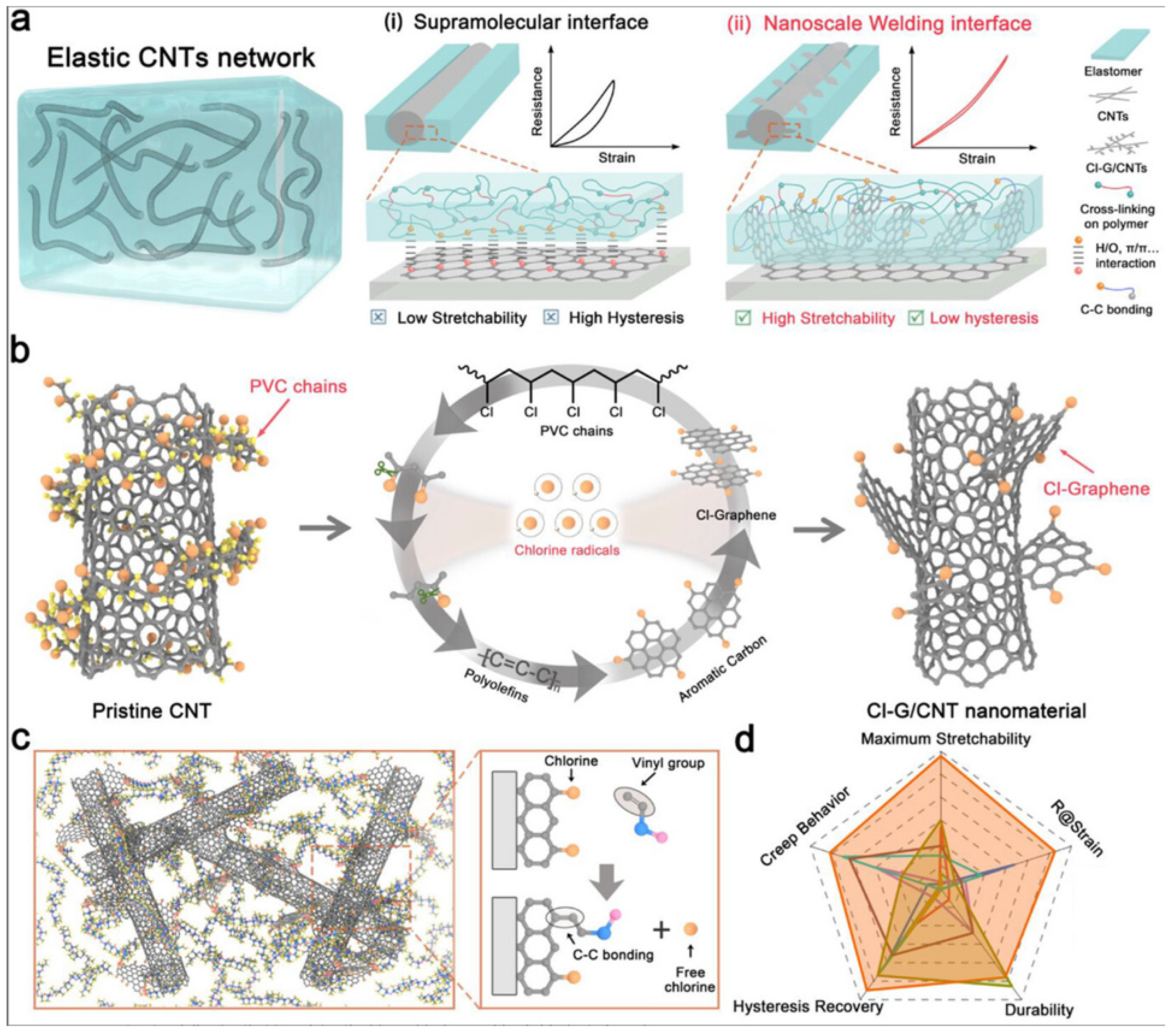
- Ren, D.; Zhang, C.; Ma, T.; Wang, J.; Ju, J.; Cao, X.; Yan, Y.; Li, Y.; Fan, Y.; Huang, F. Dechlorination-Triggered Nano-Welding: A Universal Strategy for Ultra-Stretchable, Low-Hysteresis Conductive Elastomer. Adv. Funct. Mater. 2026, e74786. [Google Scholar] [CrossRef]
- Li, W.; Cai, X.; He, J.; Liu, H.; Gui, X.; Lin, S. A flexible strain sensor with high adhesion and mechanical enhancement based on PDMS/MWCNTs. Colloids Surf. A Physicochem. Eng. Asp. 2026, 737, 139752. [Google Scholar] [CrossRef]
- Liu, M.; Chu, R.; Li, G.; Song, Z.; Yu, D.; Wang, H.; Liu, H.; Liu, W. Hydrogel-infiltrated micropatterned nano-carbon aerogel sheet composed of partially carbonized cellulose nanofibers for wearable sensor. Nano Energy 2025, 138, 110852. [Google Scholar] [CrossRef]
- Wang, J.; Li, W.; Liu, J.; Li, J.; Wang, F. Supersensitive strain/pressure sensor based on PDA@CNT-K+ nanohybrid hydrogel for human motion detection and information transmission. Polymer 2025, 336, 128899. [Google Scholar] [CrossRef]
- Wang, F.; Wang, J.; Li, W.; Wu, Y.; Liu, J. High performance hydrogel sensor based on rGO integrated P(AA-HEMA) and starch for motion and temperature monitoring. Carbohydr. Polym. 2026, 371, 124497. [Google Scholar] [CrossRef]
- Sun, L.L.; Zhao, J.; Zhao, L.J.; Sun, S.N.; Cao, X.F. Sustainable construction of lignin-containing cellulose nanofibrils reinforced antifreeze deep eutectic solvent gel for wearable human motion strain sensors. J. Clean. Prod. 2026, 553, 148011. [Google Scholar] [CrossRef]
- Chen, J.Y.; Lu, B.-C.; Zhang, B.; Chen, X.-X.; Yao, X.-H.; Zhang, D.-Y.; Zhao, W.-G. Hierarchically structured cellulose hydrogel with high stretchability, conductivity, and stability for flexible sensing applications. Int. J. Biol. Macromol. 2026, 347, 150747. [Google Scholar] [CrossRef]
- Liu, H.; Wang, G.; Wang, M.; Lv, M.; Liu, T.; Yu, M.; Lan, C. Synergistic effect of GaInSn liquid metal and MXene in biomimetic sandwich hydrogels: A strategy for high-sensitive, self-healable strain sensors. Chem. Eng. J. 2026, 535, 175425. [Google Scholar] [CrossRef]
- Wang, H.; Song, R.; Chen, G.; Wang, F.; Wang, L.; Lei, J.; Liu, J. Biomass-based dual-network multifunctional hydrogel for durable wearable sensors and emergency hemostasis. Chem. Eng. J. 2026, 529, 172777. [Google Scholar] [CrossRef]
- Chen, T.; Chen, X.; Lin, Z.; Zhang, Y.; Zhao, G.; Xu, L.; Peng, X.; Wu, B. Biodegradable, Stretchable, and Self-Healing Starch-Based Hydrogel with Intelligent Multi-Bond Network Facilitated by MXene Nanosheets for Multifunctional Wearable Electronics. Adv. Mater. 2026, 38, e12267. [Google Scholar] [CrossRef]
- Qiao, Y.; Wang, Y.; Li, Y.; Liu, X.; Wang, H.; Yin, X.; Zhang, S.; Wang, X.; Gu, Z.; Han, P. Robust PAM/HACC dual-network hydrogel with hydroxylated carbon nanotubes for strain sensing and electromagnetic interference shielding. Colloids Surf. A Physicochem. Eng. Asp. 2026, 740, 140212. [Google Scholar] [CrossRef]
- Chen, L.; Yu Li, X.; Su, J.L.; Xiao, Q.; Ning, Y.M.; Yu, Z.C.; Cui, T.J. Flexible and Robust Metasurface-Based Wearable Sensor for Intelligent Human Monitoring. Adv. Mater. 2026, 38, e14150. [Google Scholar] [CrossRef]
- Peng, G.; Yuan, Y.; Tian, X.; Sun, J.; Yu, H.; Cai, C. Stretchable Elastomer Strain Sensor Based on a Three-Dimensional Cross-Linked Conductive Network of Polyaniline/3-Aminobenzenesulfonic Acid-Epoxidized Natural Rubber for Human Motion Monitoring. J. Appl. Polym. Sci. 2026, 143, e70305. [Google Scholar] [CrossRef]
- Zhao, W.; Geng, L.; Li, J.; Zhang, H.; Shang, S.; Guo, Y.; Cheng, S.; Zhao, W. Flexible piezoresistive sensing device with integrated design and fabrication for health monitoring. Chem. Eng. J. 2025, 523, 168600. [Google Scholar] [CrossRef]
- Li, X.; Xia, Z.; Zheng, Y.; Shang, S.; Xin, B. MWCNT-reinforced PVA/CS conductive hydrogel for high-sensitivity motion sensing. J. Polym. Res. 2026, 33, 70. [Google Scholar] [CrossRef]
- Lee, J.Y.; Tey, W.Y.; Chai, P.V.; Quen, L.K.; Panpranot, J.; Lee, K.M. Cellulose nanocrystals hydrogel induced by deep eutectic solvent for the fabrication of conductive flexible strain sensors with superior tensile and self-healing properties. Biomass Convers. Biorefin. 2026, 16, 63. [Google Scholar] [CrossRef]
- Liao, L.; Ding, J.; Xiong, X.; Quan, F.; Liu, X.; Zhu, X.; Chen, Z.; Li, S.; Zhu, L.; Wei, B.; et al. Triple-Dynamic-Bond-Engineered Self-Healing Conductive Hydrogels for Deformation-Immune Flexible Supercapacitors and Wearable Epidermal Sensors. Biomacromolecules 2026, 27, 805–821. [Google Scholar] [CrossRef]
- Li, S.; Ju, L.; Pan, Y.; Zhu, N.; Li, J.; Wang, J.; Song, Z.; Wang, L.; Shi, R.; Lin, L. Towards wearable electronic devices: A high linearity bionic flexible stretchable sensor based on MXene/GO nanocomposites and gradient stiffness strategy. Talanta 2026, 300, 129165. [Google Scholar] [CrossRef]
- Tarashi, S.; Nazockdast, H. Unveiling the pivotal role of pH in the development of a mechanically strong and adsorptive nanocomposite double-network hydrogel. Mater. Today Commun. 2026, 51, 114732. [Google Scholar] [CrossRef]
- Mu, Y.; Liu, Y.; Dong, Y.; Liu, J.; Hou, M.; Sun, Y.; Li, Y.; Li, J. Sustainable and multi-stimulus response coal-based carbon quantum dots hydrogel for wearable sensors. Polymer 2026, 350, 129788. [Google Scholar] [CrossRef]
- Chen, C.-T.; Guo, J.-H. LCD 3D printing of conductive photo-nanocomposite for a piezoresistive component integrated with wearable rings. Sens. Actuators A Phys. 2026, 401, 117586. [Google Scholar] [CrossRef]
- Liu, J.; Jia, M.; Yang, J.; Wang, W.; Bai, L.; Chen, H.; Wei, K.; Yang, L. Dual-functional flexible sensor based on CNCs nanocomposite hydrogels for sweat analysis and human motion monitoring. Colloids Surf. A Physicochem. Eng. Asp. 2026, 735, 139578. [Google Scholar] [CrossRef]
- Zhou, J.; Zheng, J.; Wang, C.; Fan, M.; Xiong, F.; Li, Y.; Yang, C. Fabrication of high-toughness PEDOT:PSS-based conductive hydrogel strain/temperature sensors. RSC Adv. 2026, 16, 1240–1254. [Google Scholar] [CrossRef]
- Wang, R.; Pang, H.; Guan, R.; Du, W. Hoffmeister effect assisted the double-network cellulose hydrogel electrolyte with extreme environmental stability and enhanced conductivity for wearable devices and strain sensors. J. Mater. Sci. Technol. 2026, 253, 12–24. [Google Scholar] [CrossRef]
- del Río, E.P.; Esplugues-Lopez, A.; Heyvaert, Y.; Jergitsch, M.; Colombi, S.; Ahmadi, M.; Martinez, H.; Gineba, M.-P.; Aleman, C.; Mateos-Timoneda, M.A.; et al. Integrating electrical conductivity capability into 3D printed alginate-gelatin hydrogels as skin tissue constructs for temperature sensing. Colloids Surf. B Biointerfaces 2026, 257, 115206. [Google Scholar] [CrossRef]
- Cao, J.; Liu, J.; Wang, W.; Bai, L.; Chen, H.; Wei, K.; Yang, L. Dynamic network hydrogel with cryogenic mechanical reinforcement, self-healing for motion sensing. Chem. Eng. Sci. 2026, 323, 123281. [Google Scholar] [CrossRef]
- Mao, Y.; Gao, M.; Qian, C.; Zhang, N.; Miao, R.; Fan, X.; Li, Y. Multi-responsive and self-sensing flexible actuators based on conductive polypyrrole/poly(N-isopropylacrylamide) hydrogels. Sens. Actuators A Phys. 2026, 400, 117539. [Google Scholar] [CrossRef]
- Li, J.; Shi, S.; Wang, W.; Bai, L.; Chen, H.; Wei, K.; Yang, L. Seawater-assisting antifreezing hydrogels with functional cellulose nanocrystals for wearable flexible sensors. Chem. Eng. J. 2025, 524, 169577. [Google Scholar] [CrossRef]
- Xu, Q.; Hou, M.; Wang, L.; Zhang, X.; Liu, L. Anti-bacterial, anti-freezing starch/ionic liquid/PVA ion-conductive hydrogel with high performance for multi-stimulation sensitive responsive sensors. Chem. Eng. J. 2023, 477, 147065. [Google Scholar] [CrossRef]
- Zong, S.; Wen, X.; Lei, F.; Zhu, L.; Jiang, J.; Duan, J. Construction of environmentally stable self-adhesive conductive cellulose hydrogel for electronic skin sensor via autocatalytic fast polymerization strategy at room temperature. Int. J. Biol. Macromol. 2025, 298, 139999. [Google Scholar] [CrossRef]
- Liu, L.; Zhong, X.; Wang, A.; Gu, Q.; Sun, C.; Wang, F.; Lei, L.; Zhang, W. Biodegradable natural hydrogels: Design, crosslinking, and medical applications. Mater. Today Commun. 2025, 46, 112929. [Google Scholar] [CrossRef]
- Jeyalakshmi, C.; Parameswari, M.; Vaidehi, V.; Muthukumaran, B.; Jayamoorthy, K. Next-generation biodegradable sensors: A roadmap toward zero-waste electronics. Microchem. J. 2026, 222, 117139. [Google Scholar] [CrossRef]
- Kantasiri, T.; Trisong, P.; Pimphatam, P.; Uyama, H.; Theerakulpisut, S.; Okhawilai, M.; Chindaprasirt, P.; Kasemsiri, P. Green conductive hydrogel from metal–phenolic networks derived from Fe (III) and spent green tea for smart strain sensors and flexible electronics. Mater. Sci. Eng. B 2026, 329, 119443. [Google Scholar] [CrossRef]
- Ji, F.; Shang, P.; Lai, Y.; Wang, J.; Zhang, G.; Lin, D.; Xu, J.; Cai, D.; Qin, Z. Fully Physically Crosslinked Conductive Hydrogel with Ultrastretchability, Transparency, and Self-Healing Properties for Strain Sensors. Materials 2023, 16, 6491. [Google Scholar] [CrossRef]
- Yang, T.; Shen, T.; Duan, B.; Liu, Z.; Wang, C. In Vivo Electrochemical Biosensing Technologies for Neurochemicals: Recent Advances in Electrochemical Sensors and Devices. ACS Sens. 2025, 10, 100–121. [Google Scholar] [CrossRef]
- Li, Y.; Pei, S.; Wang, J.; Zhang, C.; Shi, B.; Luo, Z. Wearable Sensors Fabricated by 3D-Printed Composite Hydrogel with 2D Fillers. Small Methods 2026, 10, e02195. [Google Scholar] [CrossRef]
- Eckstein, S.; Benkirane, S.; Rufo-Martín, C.; Youssef, G. 3D printing of pseudo-woven continuous carbon fiber meta-skins. Compos. Sci. Technol. 2026, 278, 111562. [Google Scholar] [CrossRef]
- Xu, K.; Huang, B.; Zhang, X.; Ge, S.S.; Wei, X. 3D Printed Flexible Piezoelectric Sensor with Enhanced Performance for Gait Recognition. ACS Appl. Electron. Mater. 2025, 7, 6015–6026. [Google Scholar] [CrossRef]
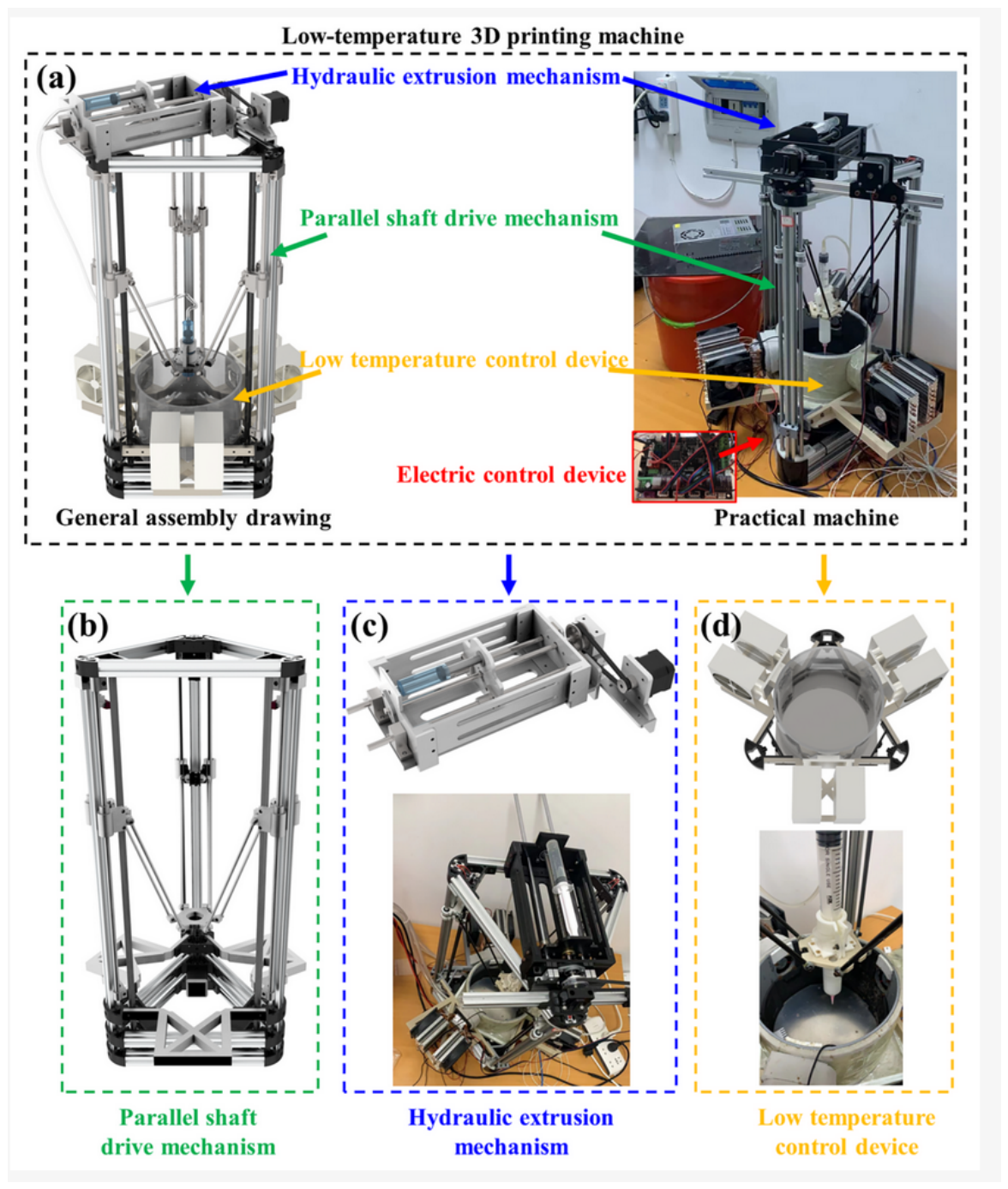
- Zhao, Q.; Liu, C.; Chang, Y.; Wu, H.; Hou, Y.; Wu, S.; Guo, M. Low-Temperature 3D Printing Technology of Poly (Vinyl Alcohol) Matrix Conductive Hydrogel Sensors with Diversified Path Structures and Good Electric Sensing Properties. Sensors 2023, 23, 8063. [Google Scholar] [CrossRef]
- Tang, Z.H.; Xue, S.S.; Wang, D.Y.; Huang, P.; Li, Y.Q.; Fu, S.Y. 3D printing of soft and porous composite pressure sensor with monotonic and positive resistance response. Compos. Sci. Technol. 2023, 241, 110126. [Google Scholar] [CrossRef]
- Li, M.; Wang, Y.; Wei, Q.; Zhang, J.; Chen, X.; An, Y. A High-Stretching, Rapid-Self-Healing, and Printable Composite Hydrogel Based on Poly(Vinyl Alcohol), Nanocellulose, and Sodium Alginate. Gels 2024, 10, 258. [Google Scholar] [CrossRef]
- Zhang, P.; Teng, Z.; Yu, X.; Yang, H.; Niu, J.; Wen, H.; Liu, Z.; Wang, D.; Zhang, S.; Hu, Z.; et al. Unibody flexible hydrogel sensor in vivo via NIR three-dimensional printing. Cell Biomater. 2026. [Google Scholar] [CrossRef]
- Ma, H.; Su, X.; Liang, J.; Liu, L.; Sun, J.; Tong, J.; Lu, J.; Zhang, Y.; Lei, B.; Zhao, H. Bioactive protein/polysaccharide hydrogel functionalized bone implants surface for enhanced osteogenesis. Int. J. Biol. Macromol. 2025, 317, 144626. [Google Scholar] [CrossRef]
- Seneviratne, D.M.; Whiteside, E.J.; Windus, L.C.E.; Burey, P.; Ward, R.; Annamalai, P.K. Emerging Biomedical Applications of Sustainable Cellulose Nanocrystal-Incorporated Hydrogels: A Scoping Review. Gels 2025, 11, 740. [Google Scholar] [CrossRef]
- Kumar, D.; Azhar, M.; Sridhar, S.B.; Shareef, J.; Wadhwa, T.; Malviya, R. Bio-printed cellulose nanocrystal: Processing, fabrication, and biomedical applications. JCIS Open 2026, 21, 100172. [Google Scholar] [CrossRef]
- Shin, M.; Lee, S.; Shin, R.S.; Choi, J.-H.; Choi, J.-W. Nanomaterial-Based Muscle Cell/Neural Tissue Biohybrid Robots: From Actuation to Biomedical Applications. Adv. Robot. Res. 2026, 2, e202500167. [Google Scholar] [CrossRef]
- Filippi, M.; Balciunaite, A.; Georgopoulou, A.; Paniagua, P.; Drescher, F.; Nie, M.; Takeuchi, S.; Clemens, F.; Katzschmann, R.K. Sensor-Embedded Muscle for Closed-Loop Controllable Actuation in Proprioceptive Biohybrid Robots. Adv. Intell. Syst. 2025, 7, 2400413. [Google Scholar] [CrossRef]
- Shen, C.; Wang, Y.; Yuan, P.; Wei, J.; Bao, J.; Li, Z. Conductive Hydrogels in Biomedical Engineering: Recent Advances and a Comprehensive Review. Gels 2026, 12, 69. [Google Scholar] [CrossRef]





| Hydrogel Type | Performance | Advantages | Limitations | Ref. |
|---|---|---|---|---|
| Natural origin | Low mechanical strength; Limited capacity; Ionic/covalent crosslinking; | Biodegradability; Biocompatibility | Fast degradation; Weak mechanical strength | [98,99] |
| Synthetic | Easy engineering; Good stiffness; durability | Durability; Repeatability; Customizable properties; | Toxicity of manufacturing bioactivity; poor adhesion | [100,101] |
| Hybrid: natural and synthetic | Improved strength; stiffness | Bioactivity; Biocompatibility; Reinforcement of structure; Combined synergic features of bioactivity with strength | Higher cost; Challenges in repeatability | [102,103,104] |
| Polymer | Nanomaterial | Parameters | Ref. |
|---|---|---|---|
| PAAm/PVA/TA@AL- +Fe3+ | Alkaline lignin nanoparticles | tensile strength of 115 kPa; strain of ∼900%; toughness of 0.45 MJ m−3; ionic conductivity = 0.75 S m−3 | [70] |
| A1-P6-PDMS | MWCNTs | GF = 27.63; elongation at break >140%; tensile strength >2.5 MPa | [143] |
| nano-carbon aerogel/BC-P(AM-SMA)-Al3+ | BC, nanocarbon | GF = 12.3ε1.27; GF = 5.10 50 % strain; GF = 229.1 at 1000 % strain; S = 31.33p−0.71; response = 83.3 ms; cycling stability over 1000 cycles; | [144] |
| P (AA-HEMA)/PDA@CNT | PDA@CNT | GF = 5.46; Compressive sensitivity = 53.13 kPa−1; piezoresistive performance = 54.18 kPa−1; stability over 2000 cycles; | [145] |
| PDA (P(AA-HEMA)/St/rGO | GO, rGO | GF = 5.1; 176 kPa tensile stress; 1258% strain; conductivity (from 3.82 to 3.64 S/m); heating rate of 0.8 °C/s; | [146] |
| PAM | Cellulose nanofibrils | GF = 13.66; stress = 0.75 MPa, strain = 1593%; conductivity = 2.29 S/m; | [147] |
| PAM, MCNF | Cellulose nanofibers | tensile strength = 116.86–277.84 kPa, strain = 1923–2029%, and toughness = 1.34–2.12 MJ m−3; | [148] |
| PVA, (PVA-Borax-GaInSn-MXene) | MXene nanosheets | GF = 5.32; toughness = 1350.2 kJ/m3; strain range = 617.46%; recovering ~580% strain; response time = 170 ms; adhesion = 75.6 kPa (peak stress) | [149] |
| PEI | GO | GF = 2.26; conductivity = 0.46 S/m; adhesion = 13.7 kPa; stress: 113.5 kPa; strain: 1672% | [150] |
| Starch, amylopectin, PVA | MXene | GF = 1.1; stretchability ∼6151%; sensing range up to 300%; | [151] |
| PAM/HACC | OH-MWCNTs; CNT = 0.02 wt% | GF = 16.04; conductivity = 0.31 S/m; tensile strength = 435 kPa; elongation at break = 2500%;. | [152] |
| PVA/P(AA-NIPAM)-Fe3+ | Ionic cross-linking | GF = 3.77; elongation = 475 ± 27%; tensile strength = 1.91 ± 0.05 MPa | [141] |
| Function | Polymer | Nanomaterial | Parameters of Sensor | Ref. |
|---|---|---|---|---|
| Vibration | PVA, PDA | rGO, GO | GF = 0.64; conductivity = 8.15 S m−1; response time = 350 ms; hydrogel’s adhesion = 0.89 kPa | [123] |
| Strain | PANI/3-ABSA-ENR | ENR nanospheres | GF = 21.6; tensile strength 10 MPa; response time = 230 ms; | [154] |
| Motion monitoring | BC + AM | BC-confined MXene | GF = 11.48 at 600–800%; mechanical resilience = 6.5 MJ/m3 Elongation ~1800%; conductivity = 435.6 mS m−1 | [103] |
| Force monitoring rehabilitation training | TPU | MWCNTs | GF = 10.065 0–3% strain range; GF = 5.419 in the 17–38%; GF = 0.219 at 38–62.80%; detection range = 0.039–2200 kPa; sensitivity = 0.029–9.912 kPa−1; recovery time: 50 ms–66 ms; durability 3735 cycles; | [155] |
| Motion sensor | PVA | PCM with MWCNTs | GF = 5.72; Sel = 13.2 mS/cm; durability over 500 cycles; | [156] |
| strain | PAA | CNCs/MWCNTs | GF = 7.07; tensile strength from 0.159 to 0.180 MPa; self-healing efficiency at 88.33%; swelling ratio = 39% | [157] |
| wearable epidermal sensor | chitosan | polydopamine-coated Mxene | GF = 1.73; specific capacitance = 373.41 mF/cm2, energy density = 74.67 μWh/cm2, capacitance retention = 82.43%; 5000 cycles, | [158] |
| human movement | PDMS/silicone rubber layers | Mxene/GO | sensitivity = 51.36; response time = 60 ms; strain detection lower limit of 0.1% | [159] |
| tensile | κ-Car/PAA/ | GO | strength, toughness, flexibility (σf = 0.370 vs. 0.075 Mpa, εf = 1361 vs. 602%, E = 0.069 vs. 0.015 Mpa, W = 2.58 vs. 0.21 MJ/m3, | [160] |
| Strain sensor | CDs/CL/PVA | Nano carbon dots | GF = 5.34; toughness = 18.83 MJ/m3; tensile strength of 7.5 Mpa; conductivity = 24.5 mS/m; break of 487%; 1000 s cycle | [161] |
| piezoresistive device, LCD | Photo-resin | MWCNT | resistivity of ∼7.2–7.7 Ω; GF = ∼1.1–1.2; TCR ∼−1.58%K−1 for zero strain at 300 K; ΔR/R0, of ∼9.6–10.4; | [162] |
| Motion/sweat | PVA | rGO-APBA | self-healing capability >89%; sensing detection range = 0–550%; detection limit = 0.96 μM; mechanical = 2.23 MPa | [163] |
| Resistive sensor for breathing pattern | PEDOT:PSS/PVA/SA | PVA crystalline peaks; liquid metal nanoparticles; carbon-based nanomaterials | electrical conductivity = 48.69 mS m−1; fracture strength = 45.38 kPa, ductility = 209.13%; detect small deformation (2.5%); temperature response = −2.43 Ω K−1, 7.91 mV K−1; | [164] |
| heart rate and pulse monitoring | poly (acrylic acid)-TA@CNF (PTCCG-Na+) hydrogel | CNTs | GF = 4.47; resistance = 2.82 Ω; capacitance: 422.545 mFcm−2; environmental tolerance = −40–80 °C; stability >2000 cycles conductivity = 72.88 mS cm−1 | [165] |
| real-time physiological monitoring and infection detection | alignate–gelatin ink | MXene vs. AuNP | Conductivity S = 0.44 S/m for AuNP-modified; S = 1.04 S/m for MXene; sensitivities in the range from −1.54–2.00% °C−1 | [166] |
| human movements in extreme environments | polyvinyl alcohol–guar gum | cellulose nanocrystals 99.0%, (156.02)n g/mol | GF = 2.72; tensile modulus = 2.11 MPa; 92.94% self-healing | [167] |
| Resistive strain sensor | PNIPAM/PPy//PAA-Fe3+/clay | PPy nanoparticles | electrical conductivity = 1.24 ± 0.04 S/m; GF = 3.44; | [168] |
Disclaimer/Publisher’s Note: The statements, opinions and data contained in all publications are solely those of the individual author(s) and contributor(s) and not of MDPI and/or the editor(s). MDPI and/or the editor(s) disclaim responsibility for any injury to people or property resulting from any ideas, methods, instructions or products referred to in the content. |
© 2026 by the authors. Licensee MDPI, Basel, Switzerland. This article is an open access article distributed under the terms and conditions of the Creative Commons Attribution (CC BY) license.
Share and Cite
Petronienė, J.J.; Rasimavičius, T.; Viržonis, D.; Dzedzickis, A.; Bučinskas, V. Smart Hydrogel Architectures for Sensors: Narrative Review. Sensors 2026, 26, 3213. https://doi.org/10.3390/s26103213
Petronienė JJ, Rasimavičius T, Viržonis D, Dzedzickis A, Bučinskas V. Smart Hydrogel Architectures for Sensors: Narrative Review. Sensors. 2026; 26(10):3213. https://doi.org/10.3390/s26103213
Chicago/Turabian StylePetronienė, Jūratė Jolanta, Tadas Rasimavičius, Darius Viržonis, Andrius Dzedzickis, and Vytautas Bučinskas. 2026. "Smart Hydrogel Architectures for Sensors: Narrative Review" Sensors 26, no. 10: 3213. https://doi.org/10.3390/s26103213
APA StylePetronienė, J. J., Rasimavičius, T., Viržonis, D., Dzedzickis, A., & Bučinskas, V. (2026). Smart Hydrogel Architectures for Sensors: Narrative Review. Sensors, 26(10), 3213. https://doi.org/10.3390/s26103213