1. Introduction
Since the invention of the vertical celluloid molding machine by John W. Hyatt in 1872, injection molding has served as the cornerstone of the plastics industry [
1]. Driven by advancements in control systems and material science during the latter half of the 20th century, the technology has transitioned from a mere means of mass production into a high-precision manufacturing discipline capable of micrometer-scale accuracy [
2]. Notably, in recent years, sophisticated injection mechanisms, such as the V-LINE
® system, have emerged, decoupling plasticization from injection to ensure stable melt pressure. This approach has demonstrated superior repeatability compared to conventional reciprocating screw systems, even in demanding applications like Metal Injection Molding (MIM), where extreme dimensional tolerances are mandatory [
3]. Consequently, injection molding has solidified its status as an indispensable technology for the fabrication of precision optical components and medical devices.
A prominent application of this precision injection molding technology is the mass production of soft contact lenses (CLs). Currently, the double-sided molding process is the predominant method for contact lens manufacturing. In this process, a pair of precision-designed and injection-molded resin molds (concave and convex) is prepared. The CL monomer is dispensed into the concave mold, and the convex mold is then fitted to it to define the CL shape. Subsequently, the monomer is polymerized to form a solid. Upon removal of the resin molds, a dry-state lens (dry lens) is obtained. Finally, the CL is completed by hydrating the dry lens with water [
4]. In this workflow, the optical performance of the final lens hinges fundamentally on the geometric integrity of these intermediate resin molds. However, resin molds are highly susceptible to warpage and dimensional deviations during post-molding cooling, driven by resin shrinkage and residual stresses. Prior research has demonstrated that subtle fluctuations in holding pressure and mold temperature profoundly influence the anisotropic shrinkage and resulting shape accuracy of spherical lenses [
5]. Consequently, to ensure stable, high-quality lens production, precise control over shrinkage behavior through optimized molding parameters—beyond mere surface fidelity and replicability—represents a critical technical imperative.
In prior studies, the present authors established a measurement framework utilizing a Shack-Hartmann reflective wavefront sensor and optical coherence tomography (OCT) for the non-contact, high-precision evaluation of the optical properties of resin molds and the dry lens [
6,
7]. Notably, while wavefront analysis permits evaluation with sub-nanometer precision, our previous findings identified instances in which wavefront aberrations derived solely from the resin mold failed to fully account for refractive power deviations in the final CL. This discrepancy suggests a complex interaction between nonuniform shrinkage induced by injection-molding conditions and geometric deformation driven by heat and pressure during polymerization.
In optical elements, excessive aberrations and geometric deviations not only impair imaging performance but also constitute critical non-conformities in manufacturing quality control. Notably, it has been reported that wavefront aberrations—mathematically characterized by Zernike polynomials—can exert markedly different effects on visual quality even when the root-mean-square (RMS) error remains constant [
8]. Thus, minimizing specific aberration modes is vital to preserving vision quality. Furthermore, in injection-molded high-precision aspheric lenses, geometric deviations arising during the molding cycle have been shown to correlate directly with a decrease in optical fidelity [
9]. In replication workflows such as CL manufacturing, the ability to predict and govern the shrinkage and expansion of the resin across the mold-to-resin-to-lens sequence is paramount. Given that resin exhibits thickness-dependent differential shrinkage during the melt-flow and cooling phases, the resin mold thickness design transcends its role as a mere structural support; it serves as a decisive control factor in mitigating anisotropic molding shrinkage and maintaining the target curvature.
In addition to conventional optical systems, metasurface-based lenses have recently attracted significant attention due to their compact form factor and advanced wavefront control capabilities [
10]. In particular, tunable metasurfaces with adjustable focal lengths enable dynamic focusing without mechanical movement, making them promising for integration into compact optical systems. Such functionality may be advantageous for curvature radius measurements of contact lens molds, as it provides increased flexibility in focal adjustment. However, challenges such as fabrication complexity remain. Therefore, although further technological development is required for practical implementation, the fiber-based configuration employed in this study provides a promising platform for integration with these advanced optical technologies.
The objective of this study is to systematically elucidate how resin mold thickness design and injection molding parameters impact CL characteristics. Specifically, focusing on resin mold thickness, we quantitatively evaluate the influence of these design variables on post-molding geometric deformation by integrating wavefront aberration analysis via a reflective wavefront sensor with three-dimensional thickness distribution mapping via OCT. Furthermore, by deriving optimization guidelines for resin mold design that account for shrinkage and expansion phenomena, this research aims to establish a robust molding process framework. This framework is intended to suppress micro-scale morphological deviations and ensure high fidelity to target optical design specifications.
2. Materials
The evaluation targets in this research consist of the injection-molded resin molds and the resulting CL in their dry state (dry lens). This focus on the dry lens was strategically chosen to evaluate how resin mold design and injection molding parameters dictate lens morphology, while isolating these effects from confounding variables such as hydration-induced swelling. By analyzing the dry lens, it is possible to directly characterize the fidelity of shape transfer from the mold to the dry lens, as well as the geometric deviations inherent to the molding process.
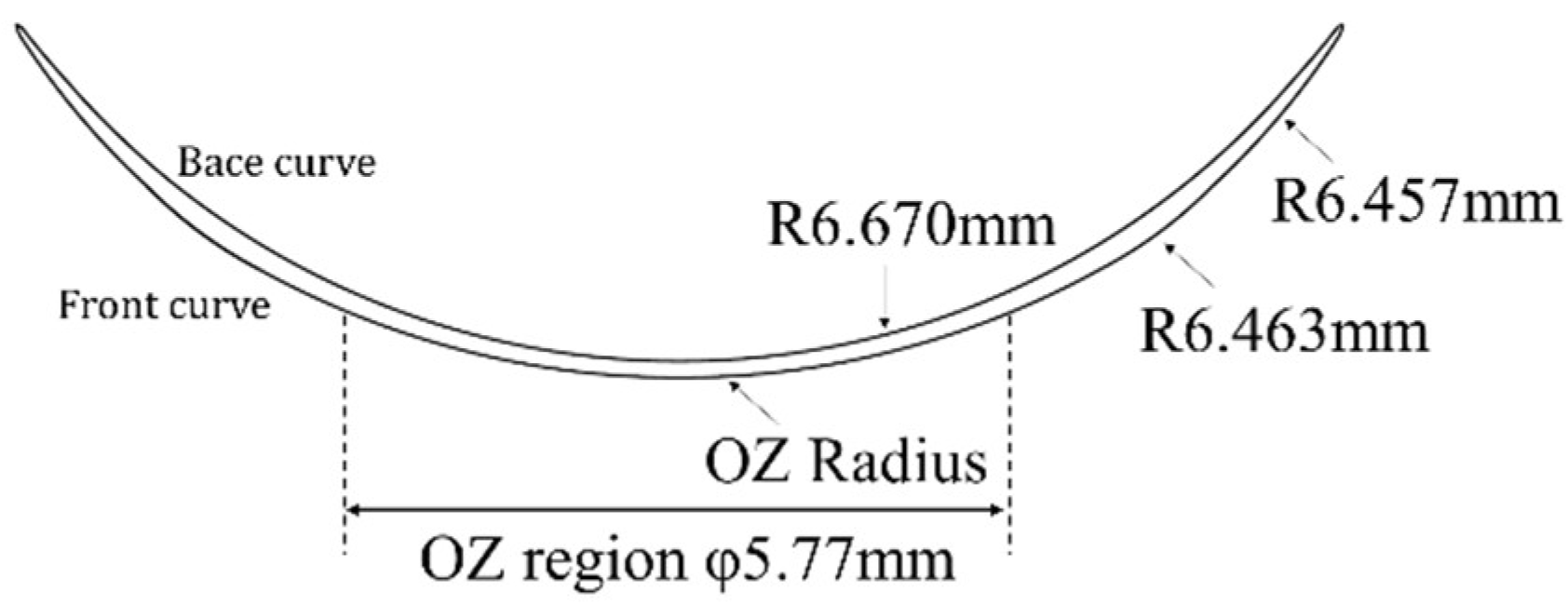
Figure 1 illustrates the dry lens design specifications, and
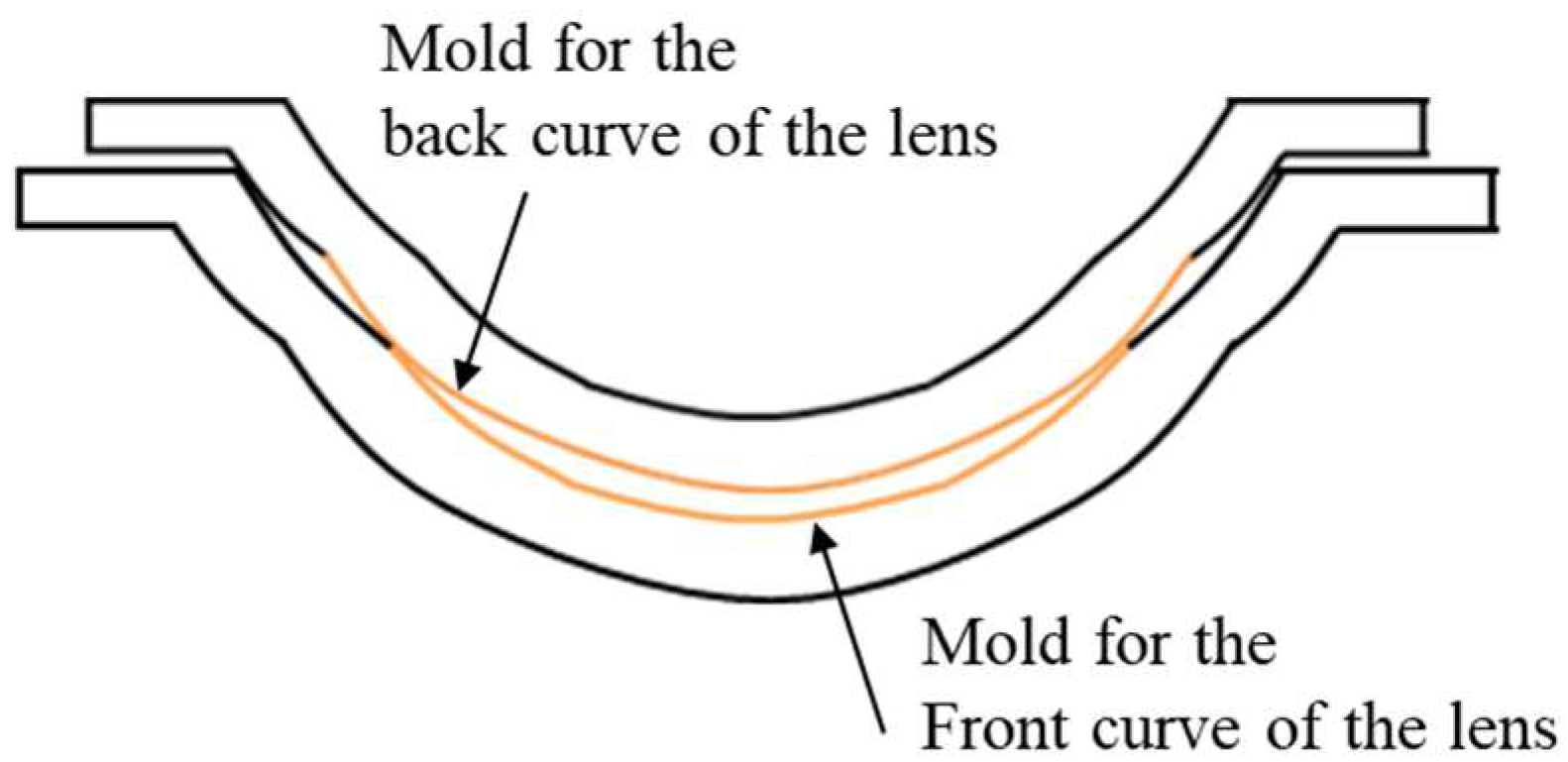
Figure 2 shows the resin mold configuration used in the manufacturing process.
A dry lens is fabricated by dispensing liquid monomer between a pair of resin molds and then polymerizing it. In general, the OZ—the region responsible for refractive correction—is governed by the geometry of the Front Curve (FC) mold. Accordingly, this study designates the FC resin mold as the primary subject of evaluation, employing the OZ radius of curvature design and resin mold thickness as variable parameters. In contrast, the design specifications for the peripheral region were kept constant across all samples, and the geometry of the Base Curve (BC) mold was unified throughout all experimental conditions to ensure consistency.
Optical characterization of the resin molds and CLs was conducted using measurement systems tailored to their respective material properties. For the evaluation of the resin molds—which function as reflectors due to their opaque substrates—a Shack-Hartmann reflective wavefront sensor was employed to measure wavefront aberrations and the radius of curvature. Simultaneously, the resin mold thickness was characterized via Optical Coherence Tomography (OCT). In contrast, evaluating dry lenses poses a significant challenge for reflective systems because of their extreme thinness and high transparency. To address this, a transmission wavefront sensor (Lambda-X s.a., Nivelles, Belgium, NIMO TR1504; NIMO) was utilized to quantify refractive power and transmitted wavefront aberrations [
11,
12].
Furthermore, three-dimensional geometric assessments via OCT were performed to corroborate the findings obtained from both NIMO and the reflective wavefront sensors. By integrating these diverse metrological approaches, we quantified the correlation between resin mold design variations and the resulting optical performance of the dry lens. Detailed diagrams of these techniques are provided in
Section 3.
To efficiently achieve both precise refinement of the resin mold’s geometric profile and the minimization of subtle morphological deviations, an orthogonal array-based experimental design was formulated. This methodology offers the advantage of evaluating the main effects of each factor independently—under the assumption that interactions between control factors are sufficiently small—thereby enabling a comprehensive understanding of each factor’s impact with a minimal number of trials [
13]. The control factors are detailed in
Table 1. As design variables, “OZ radius of curvature” and “resin mold thickness” were selected. For the radius of curvature, 6.5 mm and 8.5 mm were chosen, representing the lower and upper limits in practical CL design. Regarding resin mold thickness, variations of ±0.1 mm relative to the design value (±0.8 mm) (0.7 and 0.9 mm) were introduced to evaluate the impact of resin mold thickness differences on design fidelity and aberration generation. Furthermore, “holding pressure” and “injection speed” were selected as molding parameters due to their documented influence on dimensional stability [
14,
15].
Table 2 presents the assignment of each level to the L18 orthogonal array. As a mixed-level orthogonal array, the L18 matrix allows evaluation of the effects of individual control factors without being confounded by interactions between specific pairs of factors [
16]. By employing this framework in a system where design variables and molding processes coexist, we aimed to identify the dominant factors contributing to shape retention and to establish optimal process guidelines.
3. Methods
Under the experimental conditions outlined in
Table 1 and
Table 2, the evaluation focused on injection-molded resin molds and the resulting polymerized, dry lens. Thickness measurements for both the resin molds and the dry lens were performed using non-contact Optical Coherence Tomography (OCT), which was also used for the morphological assessment of the lenses [
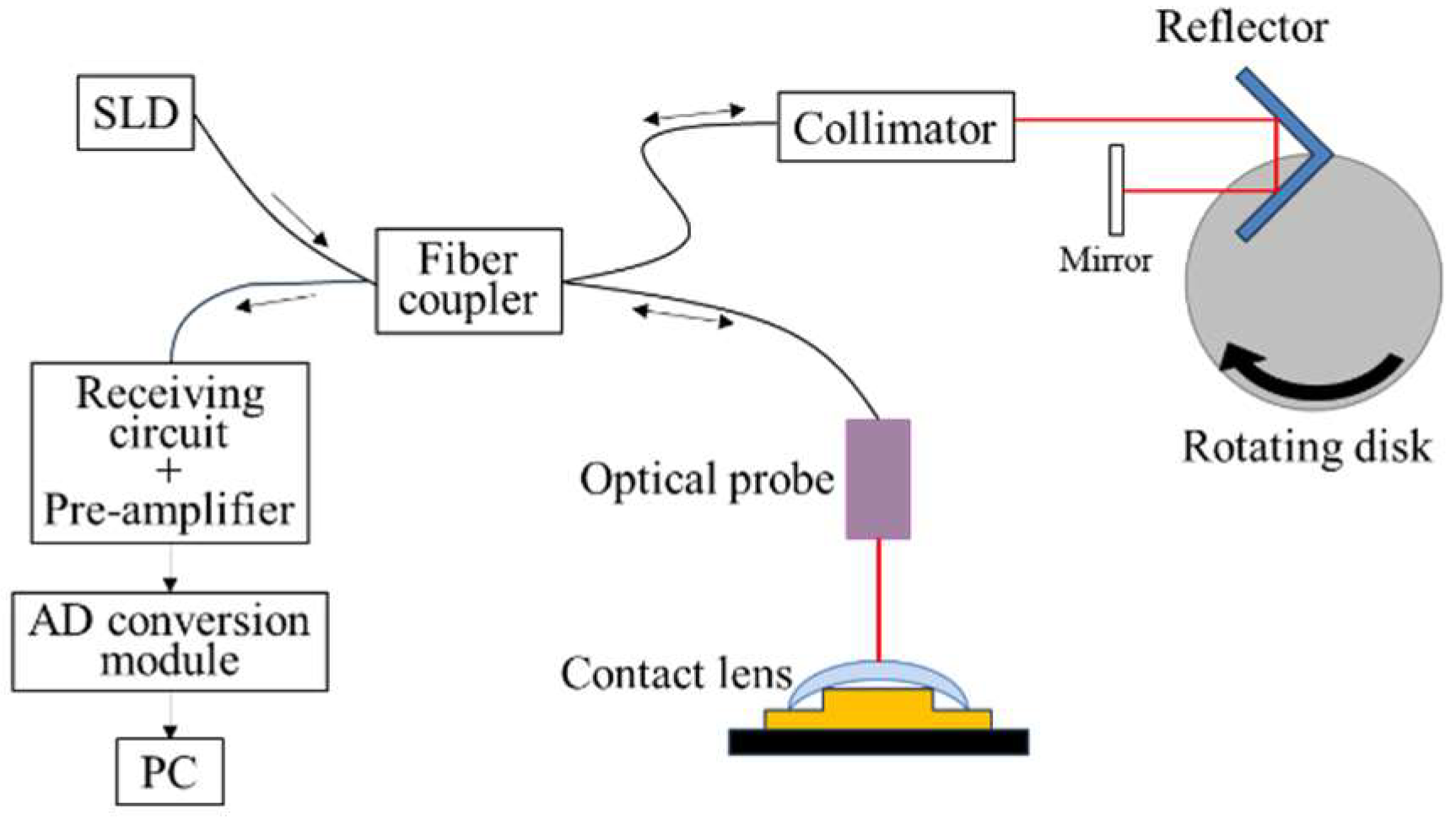
17]. Among the various OCT modalities that resolve depth-resolved structures via low-coherence interferometry, this study employed Time-Domain OCT (TD-OCT). This method acquires interference signals by mechanically scanning the reference optical path, a mechanism that enables a long working distance and an extensive measurement range in the optical probe design [
18].
A significant advantage of TD-OCT is that the measurement probe configuration can be established independently of other performance parameters, such as resolution, scanning speed, and measurement range. Moreover, because the interference signals are linearly amplified, the system exhibits high signal linearity, ensuring superior measurement accuracy [
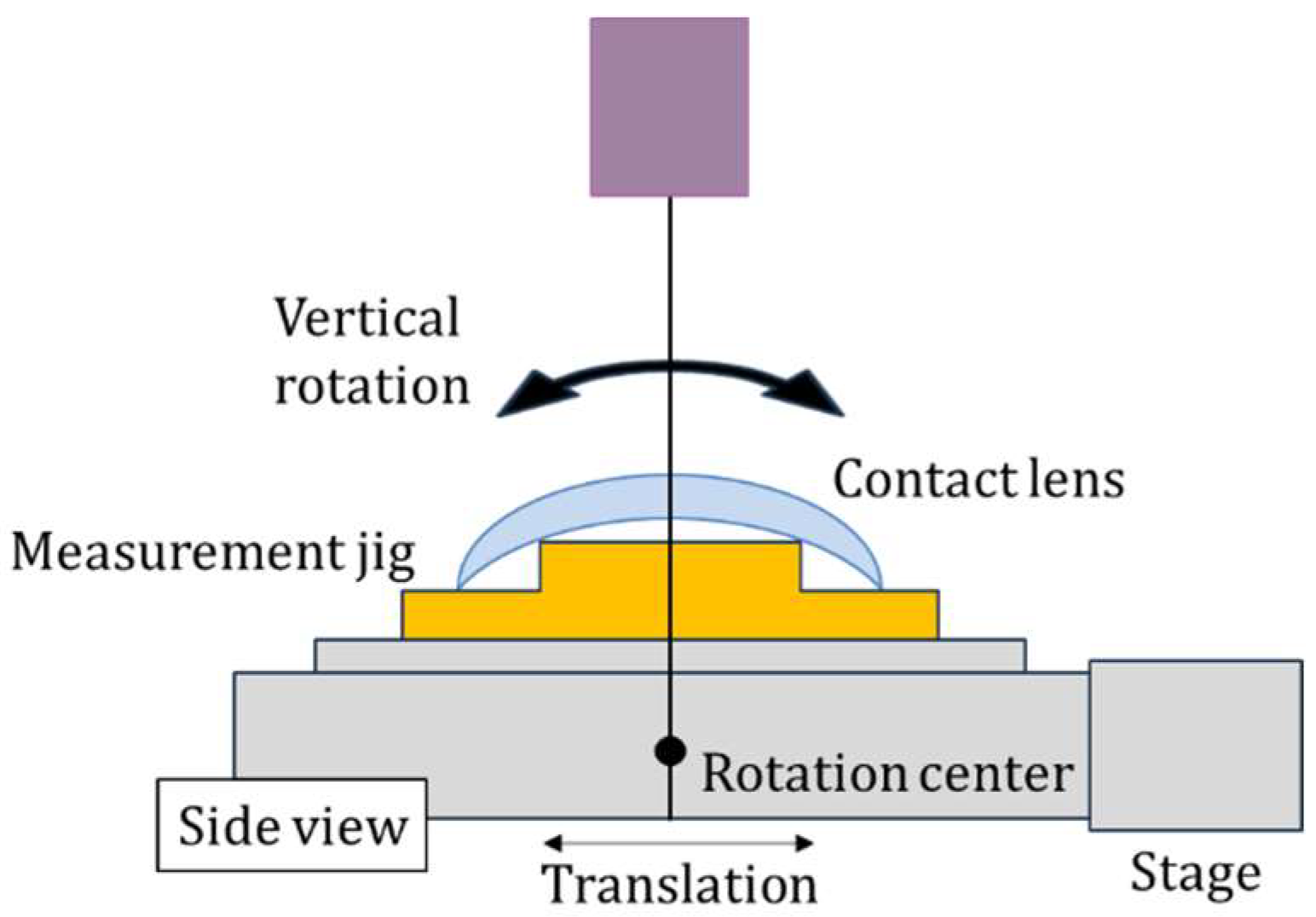
19]. A schematic representation of this measurement framework is provided in
Figure 3 and
Figure 4.
During the metrological process, a normal-incidence configuration relative to both the front and base dry lens surfaces was maintained by precise control of the measurement stage. The stage incorporates two degrees of freedom—translational motion and vertical-axis rotation—enabling identification of the orthogonal entry point by monitoring the intensity ratio of interference signals from both surfaces. In the OCT framework, the time delay between the two discrete interference signals serves as the basis for calculating local thickness.
The raw interference data were first mapped to spatial distance information based on the reflector’s rotational velocity, then transformed into Cartesian coordinates for both surfaces using the stage’s displacement and angular orientation. To accurately calculate the posterior coordinates, the group refractive index of the CL material was compensated. The radius of curvature was subsequently estimated by applying a least-squares circular fit to the resulting coordinate sets. A key advantage of this methodology is its ability to perform simultaneous, co-axial assessment of both surfaces in a fixed orientation, making it highly effective not only for thickness mapping but also for characterizing inter-surface misalignment.
The dioptric power of the dry lens was calculated from the radii of curvature derived from geometric measurements. Furthermore, the thickness measurements facilitated the acquisition of all essential parameters—specifically center thickness and surface profiles—required for the comprehensive determination of refractive power.
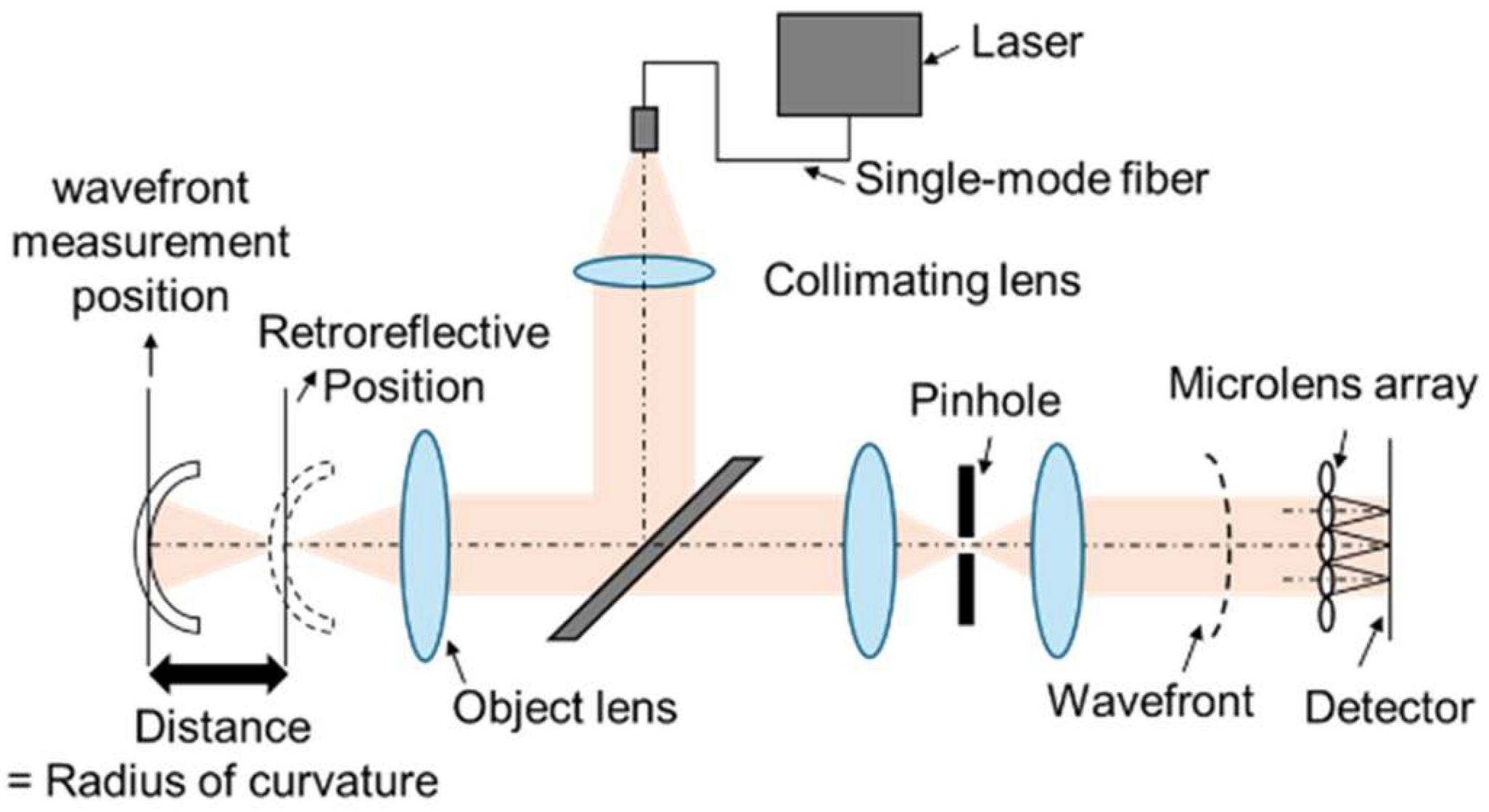
The configuration of the reflective wavefront sensor developed for resin mold characterization is illustrated in
Figure 5. A fiber-pigtail light source was utilized, and the divergent output from the fiber was transformed into a collimated beam via a collimating lens. To facilitate the measurement of resin molds possessing inherent curvature, a condensing lens was positioned immediately proximally to the sample. Light reflected from the mold surface passes through a microlens array before reaching the imaging sensor. By integrating a pinhole aperture immediately preceding the sensor, the sample surface and the microlens array’s posterior focal plane are rendered optically conjugate, thereby ensuring high-fidelity measurement of wavefront aberrations.
The local gradients of the partitioned wavefront are detected as focal-spot displacements. These gradients are reconstructed using Zernike polynomials—a set of orthogonal basis functions defined over a unit disk—to quantify the wavefront profile. Each term of the Zernike polynomials has an independent wavefront shape and corresponds to an aberration. Using Zernike polynomials
, the incident equiphase surface
is expressed as in Equation (1):
Defining the focal spot displacements as
and the focal length of the microlens array as
, the relationship governing the local wavefront slope is expressed as shown in Equation (2):
The wavefront can be reconstructed by substituting Equation (1) into Equation (2) to determine the Zernike coefficients. While 36 Zernike parameters are fundamentally defined, this study identified and discussed the notable coefficients that exhibited significant sensitivity to the experimental variables [
7]. Furthermore, as shown in
Figure 5, the radius of curvature was defined as the distance between the wavefront measurement position and the retroreflection position.
By integrating the thickness data obtained via OCT with wavefront and radius of curvature measurements from the sensor, we quantitatively evaluated morphological variations as a function of both the resin mold design and injection molding conditions.
Conversely, since dry lenses are characterized by their extreme thinness and transparency, their refractive power was quantified using the NIMO system. This was complemented by geometric assessments via OCT [
6], from which the dioptric power was independently determined from the measured radius of curvature. By integrating these three distinct datasets—NIMO-derived power, OCT-derived power, and theoretical power calculated from reflective wavefront measurements of the resin molds—we conducted a comprehensive comparative analysis of shape-transfer characteristics. The refractive power “
” was determined based on the focal length “
”, the refractive index of the dry lens material “
”, the radii of curvature of the front and back surfaces “
” and “
”, and the center thickness of the dry lens “
”, using the following thick-lens equation:
5. Discussion
In this study, the effects of resin mold design (OZ radius of curvature and resin mold thickness) and injection molding conditions (holding pressure and injection speed) on the dimensional stability of resin molds and the optical characteristics of the dry lens were systematically evaluated based on orthogonal array experiments. This comprehensive evaluation integrated several methodologies: wavefront aberration analysis of the resin molds using a reflective wavefront sensor, thickness and shape measurements via OCT, and refractive power measurements of the dry lens using NIMO. Through this multi-faceted approach, we investigated the shape-transfer behavior from the resin mold to the final dry lens.
5.1. Influence of Molding Conditions on Wavefront Aberration in Resin Molds
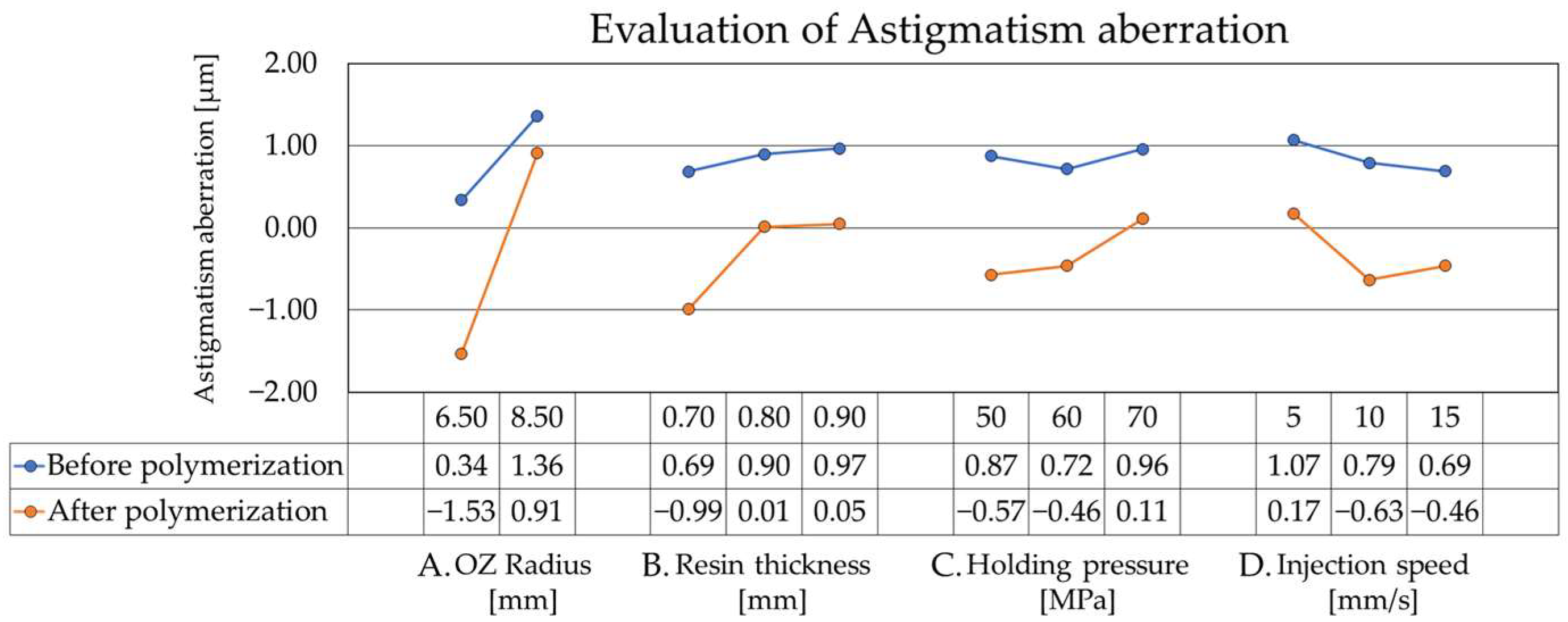
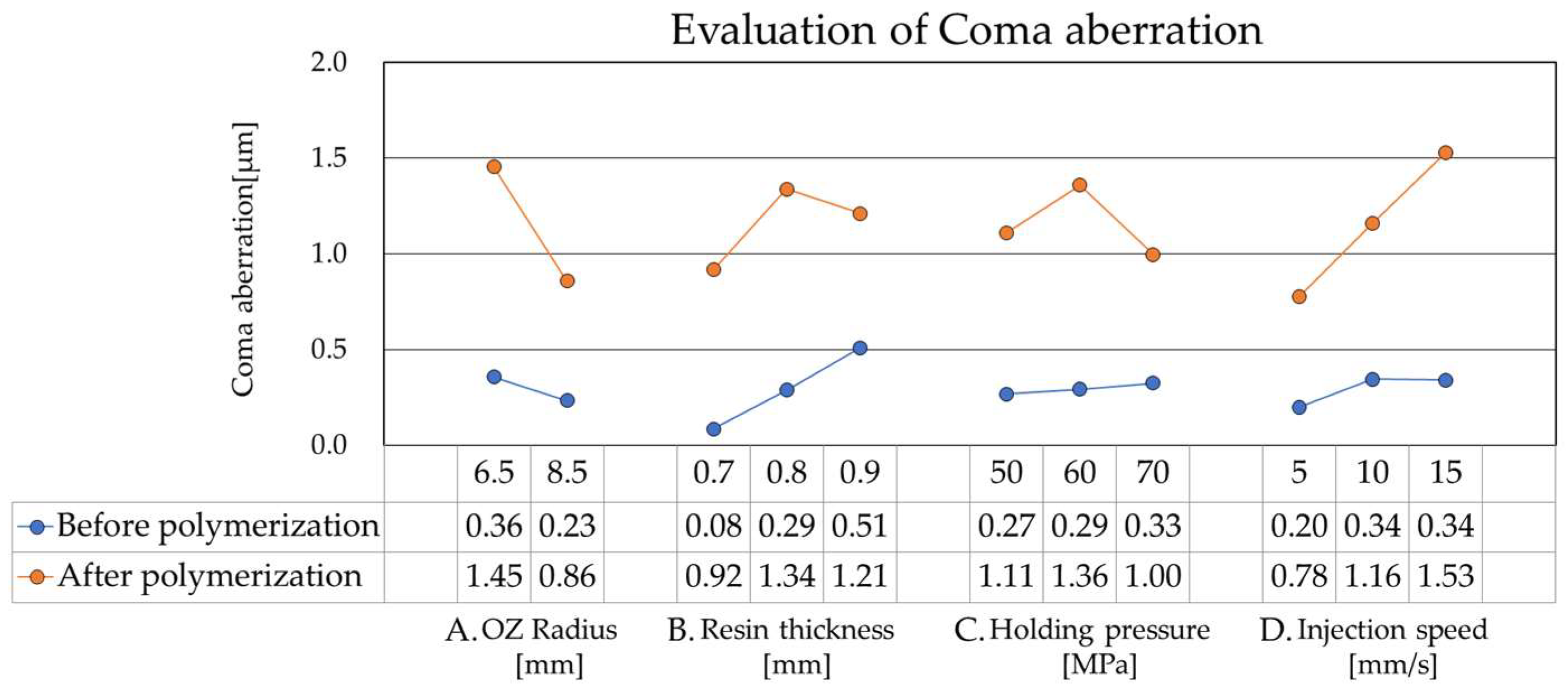
Wavefront analysis reveals that astigmatism and coma are highly dependent on the resin mold thickness and injection molding conditions. Specifically, under thinner resin mold thickness conditions, steep temperature gradients during cooling and polymerization likely induce asymmetric shrinkage and residual stress. In this study, astigmatism exhibited extremely sensitive behavior; by increasing the resin mold thickness from 0.7 mm to 0.9 mm, the aberration value decreased from 0.99 µm to less than 0.05 µm—a substantial reduction of approximately 95%. Consequently, low-order Zernike coefficients, such as astigmatism and coma, tended to fluctuate significantly before and after polymerization. This behavior aligns with previous reports stating that asymmetric shrinkage in injection-molded optical lenses manifests as low-order aberrations [
20,
21].
Furthermore, a thicker resin mold increased the mold’s structural rigidity and promoted a uniform temperature distribution during cooling, thereby reducing wavefront aberration fluctuations throughout the polymerization process. The effectiveness of controlling temperature history via resin mold thickness to reduce residual stress and morphological variation is consistent with recent findings in precision injection molding [
22,
23].
Regarding holding pressure conditions, higher pressure was associated with lower aberration fluctuations and improved shape reproducibility. By setting a high holding pressure of 70 MPa, we successfully decreased both astigmatism and coma. This is attributed to the stabilized resin filling and suppressed volumetric shrinkage during cooling. Such stabilization effects of holding pressure are recognized as dominant factors in reducing warpage and optical aberrations in molded lenses [
24]. However, a slight increase in Coma values was observed at excessively high holding pressure, suggesting that over-packing may increase internal residual stress, which manifests as localized asymmetric distortion [
21].
In terms of injection speed, slower conditions reduced the change in aberration during polymerization, yielding a more stable wavefront profile. Reducing the injection speed decreased the coma aberration value by approximately 50% (from 1.53 µm to 0.78 µm). This improvement is likely due to the suppression of molecular orientation and shear stress during resin flow, which decreased the generation of internal residual stress [
13,
20]. Based on these wavefront aberration results, we conclude that combining a thicker resin mold, a high holding pressure, and a slow injection speed are optimal conditions for enhancing the dimensional stability of the resin mold.
5.2. Relationship Between Resin Mold Shape and Dry Lens Power
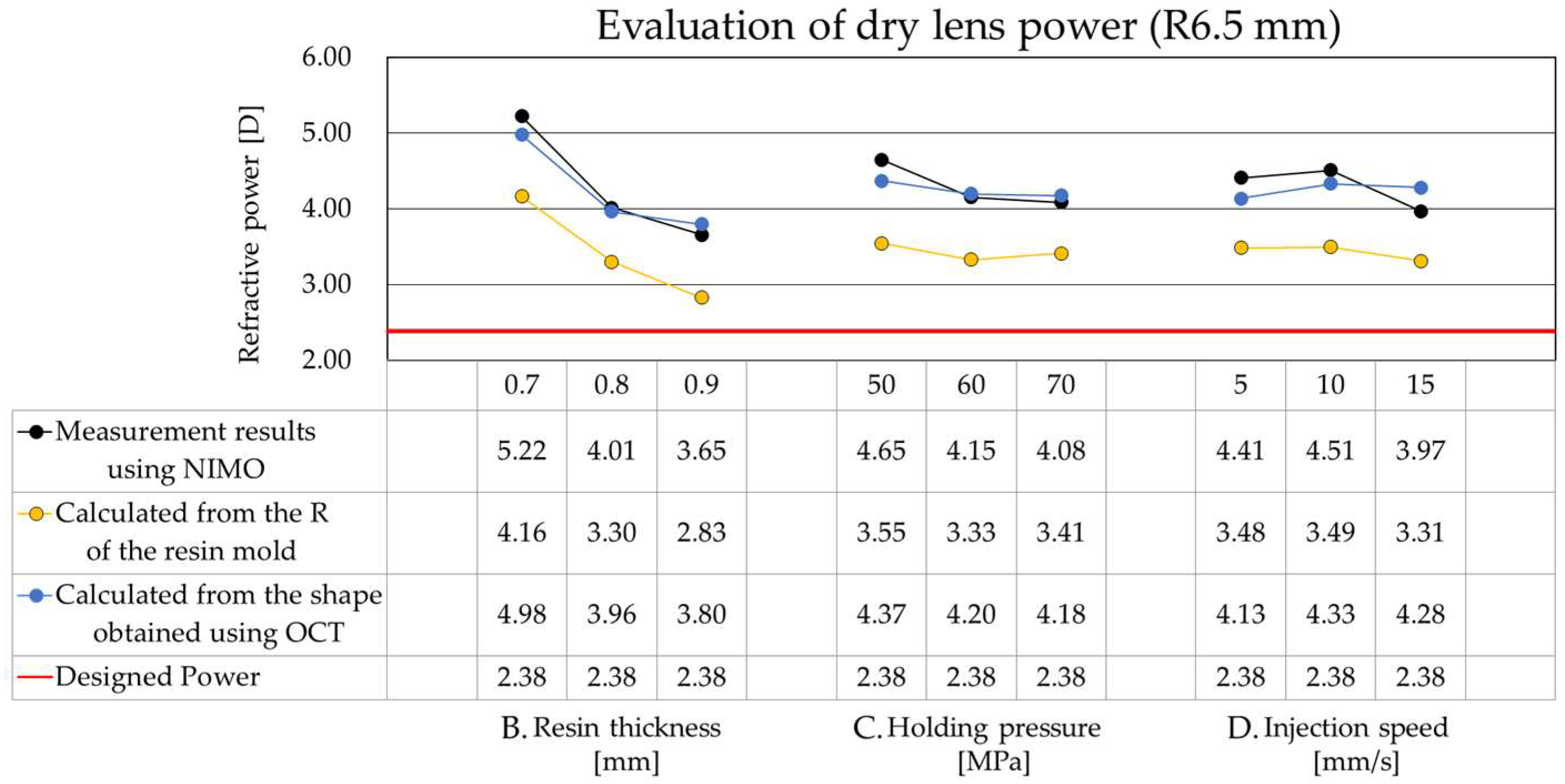
In the evaluation of dry lenses fabricated using the resin molds, a significant discrepancy was observed for the 6.5 mm OZ radius of curvature design (Design power: +2.38 D). This deviation appeared between the power calculated from the wavefront sensor measurements, the actual dry lens power measured by NIMO and OCT, and the theoretical design power. Specifically, the measured dry lens power consistently exceeded the design power (+2.38 D) across all molding conditions. For the 0.7 mm thickness condition, an extremely large error occurred with a power of 5.22 D (a deviation of +2.84 D). However, increasing the thickness to 0.9 mm decreased deviation, resulting in a power of 3.65 D (+1.57 D deviation). The +2.84 D deviation from the design value observed in this study exceeds the acceptable tolerance for products (±0.25 D) and therefore represents a significant error. This deviation is attributed to macroscopic shape changes in the resin mold caused by the molding and thermal processes. In contrast, the aberrations generated in the resin mold are influenced by the flow and polymerization shrinkage that occur as the monomer transitions from a liquid to a solid state, resulting in the relaxation and averaging of fine surface irregularities and higher-order aberration components; thus, they are not necessarily directly transferred. In fact, the RMS values evaluating the aberration variation are in the sub-micron range, indicating minimal deviation. Therefore, the final lens power can be compensated through design feedback, and it can be concluded that controlling the macroscopic shape is more critical than mitigating aberrations.
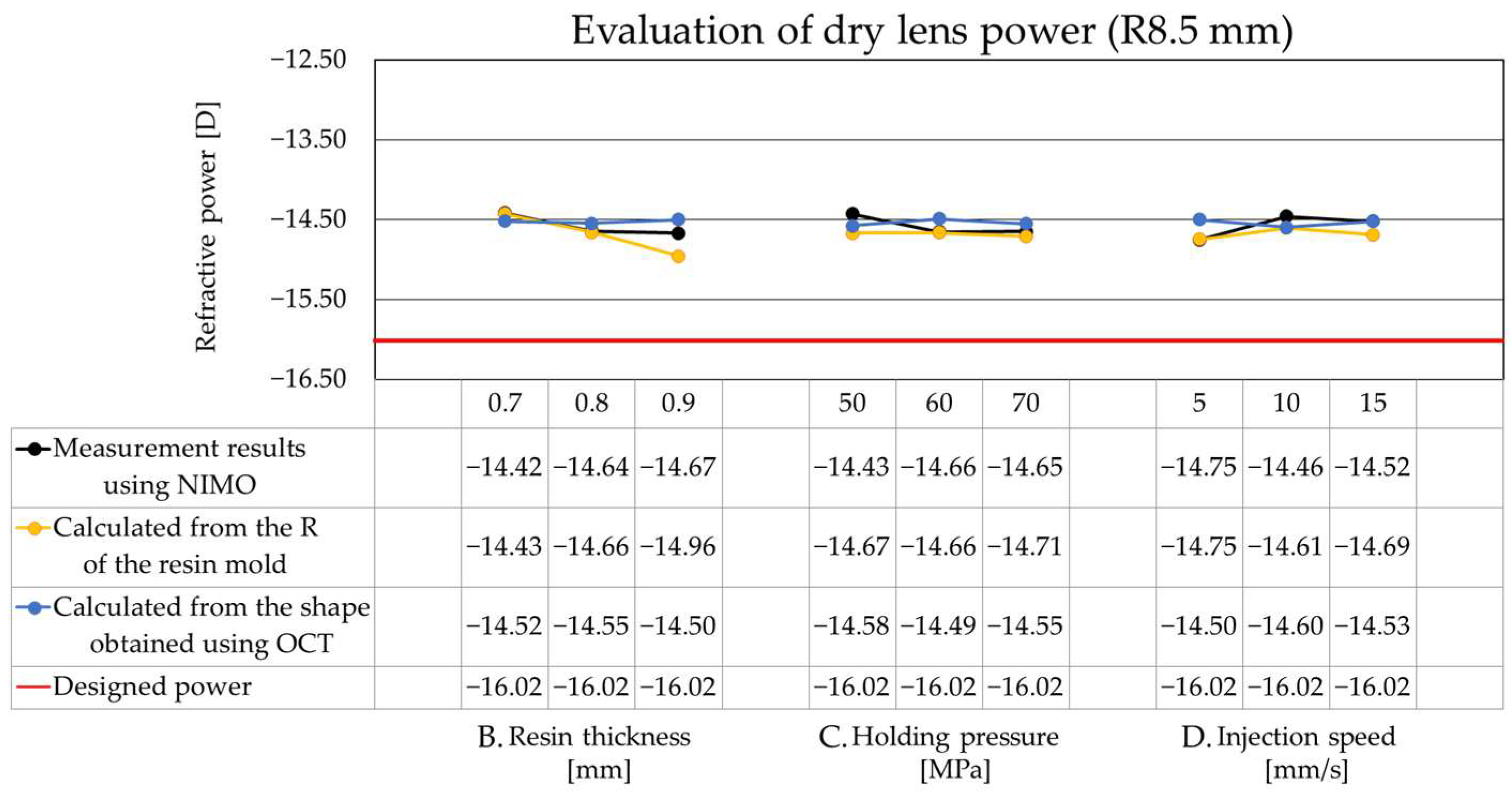
In contrast, for the 8.5 mm OZ radius of curvature design (Design power: −16.02 D), the measured values remained within a stable range of −14.4 D to −14.7 D across molding conditions, showing excellent agreement with the design, calculated, and measured values. These results indicate that for designs with a smaller OZ radius of curvature (6.5 mm), minute geometric errors arising from the resin mold thickness or molding conditions are amplified as significant errors in dry lens power. As shown in Equation (3), since optical power is proportional to the reciprocal of the radius of curvature, even a slight curvature deviation increases the power error more prominently in high-curvature conditions [
25,
26].
It has been reported that in injection-molded optical lenses, geometric errors caused by asymmetric shrinkage or warpage manifest as low-order Zernike aberrations, such as astigmatism and coma, and that these errors exert a greater impact on optical performance as the curvature increases [
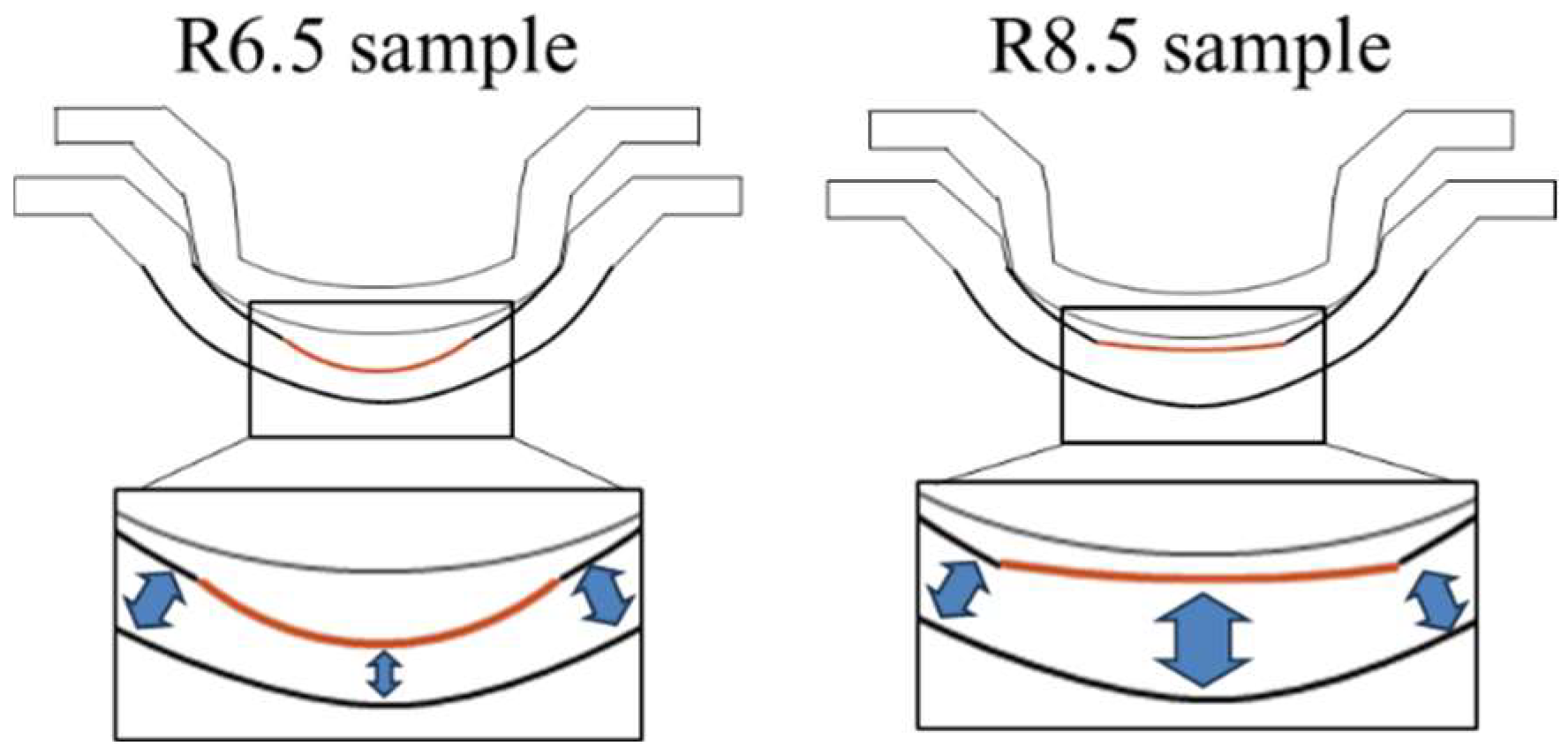
20]. In this study, comparing the two designs confirmed that the 6.5 mm design, which has higher curvature, exhibited larger fluctuations in both astigmatism and coma, consistent with previous findings. This behavior is attributed to the structural characteristic of the 6.5 mm design, where the resin mold thickness is thinnest in the OZ region (
Figure 10). This unbalanced structure likely increased the discrepancy in dry lens power and affected optical performance.
Generally, regions with thinner resin mold thicknesses are prone to non-uniform cooling rates and concentrated residual stresses, which manifest as morphological variations [
21,
27]. Especially under small OZ radius of curvature conditions, these geometric errors stemming from local thickness variations amplify the dry lens power and low-order aberrations. Consequently, this had a substantial impact on the final optical performance, including the deviation from the design power.
Conversely, the 8.5 mm design, with its smaller curvature, exhibited lower sensitivity to geometric variations. The impact of minute geometric errors on the power remained limited, with the fluctuation range confined to approximately ±0.2 D. Therefore, the shape-transfer from the resin mold to the dry lens was performed relatively stably. This trend aligns with reports of higher molding stability in lower-curvature conditions [
27,
28]. Regarding the resin mold thickness, the 8.5 mm design features a relatively thicker OZ region. Although thickness differences relative to the peripheral areas still exist, the impact of geometric variations caused by the resin mold thickness is considered smaller than that in the 6.5 mm design.
5.3. Importance of Resin Mold Thickness Design and Optimization Guidelines
The results from
Section 5.2 yield the critical insight that variations in wavefront aberration observed in the resin mold are not necessarily transferred directly as power fluctuations in the dry lens. This phenomenon is likely due to micro-scale surface irregularities and high-order aberration components being relaxed or averaged out by flow and polymerization shrinkage as the monomer transitions from a liquid to a solid state [
26]. Consequently, the dry lens power is suggested to be more strongly governed by macro-scale curvature variations and internal stress distributions arising from the resin mold thickness, rather than the wavefront aberration of the resin mold itself [
20,
26].
This study shows that resin mold thickness is the dominant design factor. In thinner designs, stress relaxation during cooling and polymerization is insufficient, increasing the likelihood of asymmetric shrinkage and geometric errors. Conversely, a thicker resin mold enhances morphological stability by dispersing internal stress, thereby improving adherence to the design curvature and the reproducibility of the dry lens power. Specifically, the optimal combination identified in this study—a 0.9 mm resin mold thickness, 70 MPa holding pressure, and a slow injection speed—decreased astigmatism by 95% and reduced power deviation by more than 1.5 D in high-curvature designs.
In designs with a small OZ radius of curvature, the non-uniformity in the resin mold thickness significantly affects optical performance. Therefore, a design approach that prioritizes the thickness distribution, including the area surrounding the OZ region, is essential. However, even after parameter optimization, a residual dry lens power error (approximately +1.3 to +1.5 D) is expected to persist as a direct consequence of resin shrinkage and deformation during polymerization. Future mold designs must therefore account for this molding shrinkage, with a particular focus on the OZ radius of curvature and its peripheral geometry. These findings demonstrate that the resin mold should not be treated merely as an intermediate step but must be engineered as a high-precision component that dictates the final optical characteristics of the dry lens.




 ,
,