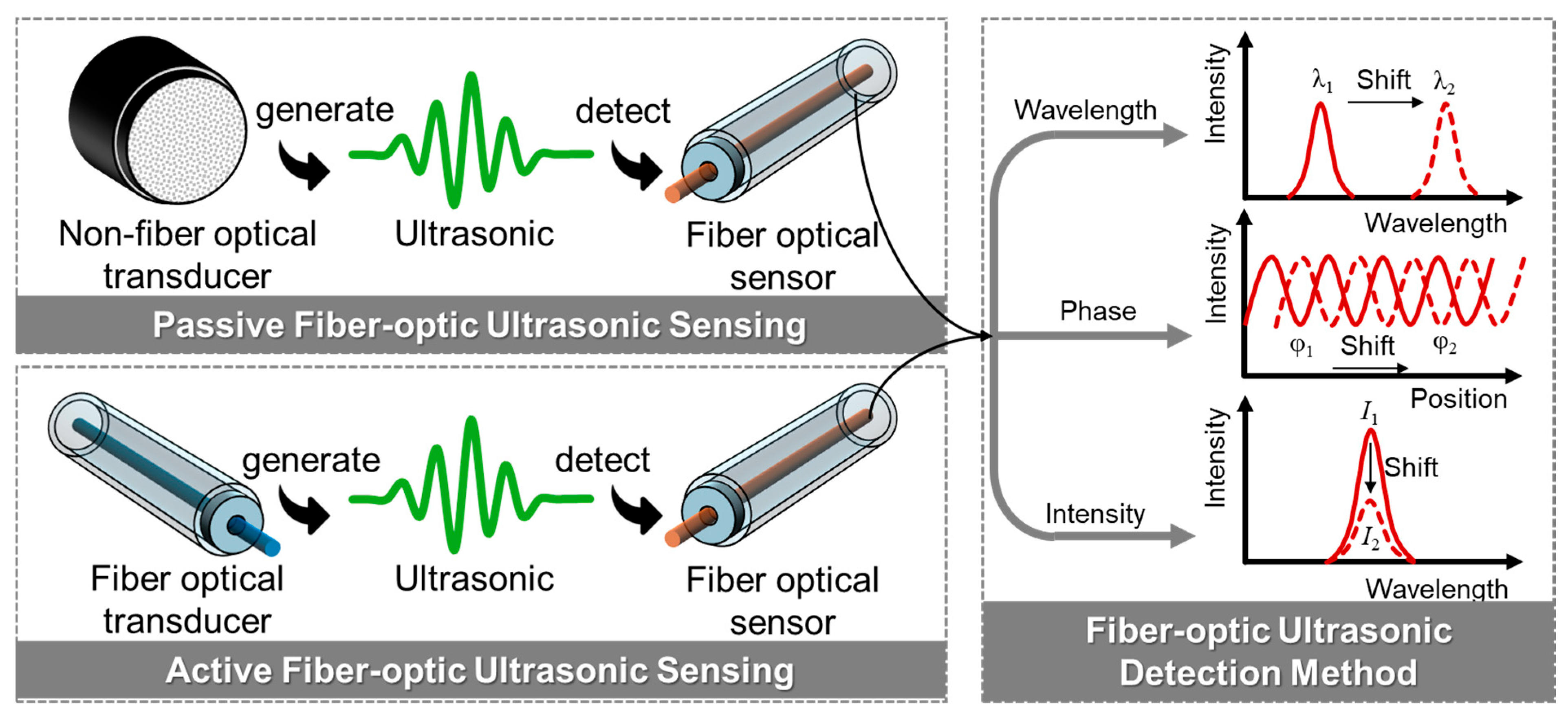
The fundamental distinction of active fiber-optic ultrasonic NDT lies not in any single “core component” but in its integrated dual functionality—where the optical fiber system simultaneously serves as both ultrasonic generator and detector. Unlike passive implementations that rely on external ultrasonic sources with fiber solely functioning as receiver, active NDT achieves complete integration through coordinated transducer-sensor pairing. The photoacoustic transducer component, composed of light-absorbing materials integrated with micro-scale structures, leverages the photoacoustic effect to convert laser pulses into ultrasonic waves via optical-to-thermal-to-mechanical energy conversion. Concurrently, specialized fiber-optic sensors (such as FBGs or FPIs) detect the resulting wavefields through optical parameter modulation. This complementary transducer-sensor architecture defines the “active” nature of the system, enabling distributed ultrasonic generation without electronic components while maintaining the fiber’s inherent detection capabilities. The photoacoustic effect itself describes the physical process where a material, upon absorbing periodically modulated light (such as pulsed or amplitude-modulated continuous-wave light), converts optical energy into thermal energy, resulting in localized temperature rise, thermal expansion, and consequent pressure wave generation that manifests as ultrasonic signals.
2.2.1. Photoacoustic Materials
The performance of a FOPT is fundamentally governed by the properties of its constituent photoacoustic materials and the physics of the photoacoustic effect. The photoacoustic effect describes the process where a material absorbs pulsed optical energy, converts it into heat, and subsequently generates an ultrasonic wave through thermoelastic expansion [
64,
65,
66,
67]. The efficiency of this photoacoustic conversion, the ultrasonic frequency, and the resulting acoustic pressure are critical parameters that directly determine the sensitivity and resolution of the NDT system.
The photoacoustic conversion efficiency (
) quantifies the ratio of generated acoustic energy (
) to the incident optical energy (
), as expressed by Equation (11) [
68]:
where
is the optical absorption coefficient and
is the laser fluence. The generated acoustic pressure (
) is directly proportional to the temperature rise (
) of the material, which is determined by its optical absorption, density (
), and specific heat capacity (
), as shown in Equation (12) [
64,
68]:
Here,
is the light absorption coefficient and
is the non-radiative transition probability. The initial ultrasonic pressure can then be described by Equation (13) [
64,
68]:
where
is the thermal expansion coefficient and Γ is the Grüneisen parameter, a dimensionless quantity representing the efficiency of converting thermal energy into acoustic energy. Furthermore, the center frequency (
) of the generated ultrasonic pulse is inversely related to the characteristic dimension (
) of the heated region and the speed of sound (
) in the material, often approximated by
[
64]. The photoacoustic pressure generation efficiency depends critically on four material properties (Equations (11)–(13)): (1) a high optical absorption coefficient (
) ensures that most incident light is converted into heat; (2) a low specific heat capacity (
) allows for a larger temperature rise (
) for a given energy input; (3) a high thermal expansion coefficient (
) enhances the volumetric strain response to heating; and (4) a large Grüneisen parameter (Γ) promotes efficient conversion of thermal energy into acoustic pressure. This explains why materials like carbon nanotubes and MXenes—despite moderate absorption—are effective when embedded in PDMS: they provide strong localized heating, while PDMS’s high β and Γ amplify the resulting acoustic output. These formulas underscore the importance of photoacoustic materials possessing a high optical absorption coefficient, large thermal expansion coefficient, low specific heat capacity, and optimized geometry to achieve high conversion efficiency, high acoustic pressure, and broad bandwidth. Notably, while PDMS exhibits relatively low intrinsic optical absorption, it possesses a high thermal expansion coefficient (~3.1 × 10
−4 K
−1) and excellent viscoelastic properties, making it an ideal matrix for translating photothermal energy into mechanical expansion. When combined with high-absorption nanomaterials (e.g., CNTs, CSNPs, MXenes), PDMS efficiently converts localized heating into strong thermoelastic stress, thereby enhancing photoacoustic signal generation. This functional synergy explains its widespread use in DFP-NDT transducers.
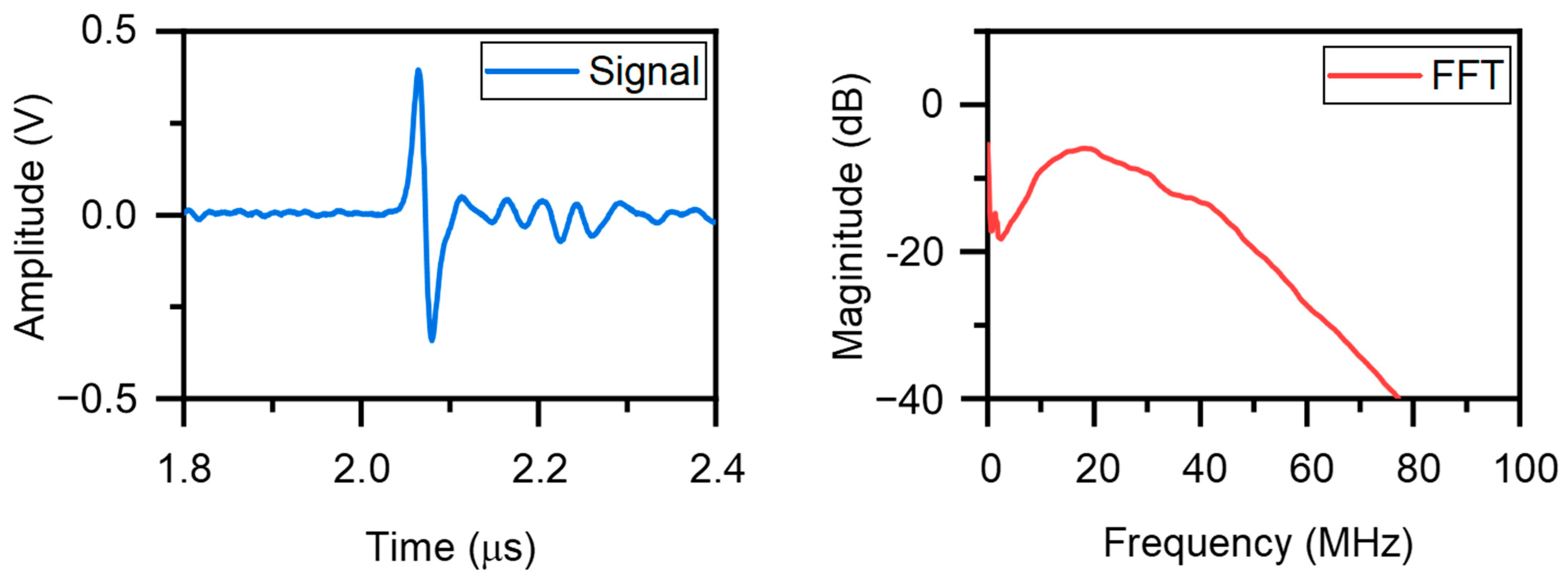
Figure 4 shows an illustrative example of the ultrasonic signals excited by polydimethylsiloxane (PDMS) and graphene and their spectra. The graphene-enhanced composite exhibits higher peak amplitude and broader bandwidth compared to pure PDMS, illustrating the improved photothermal conversion efficiency enabled by carbon-based nanofillers.
In 2015, Chang et al. proposed a candle-soot nanoparticle-polydimethylsiloxane (CSNPs-PDMS) composite film as a photoacoustic transducer material, leveraging its high light absorption and rapid heat diffusion for efficient photoacoustic conversion [
69]. The device generated broadband ultrasonic pulses with a center frequency of approximately 12 MHz, achieving an energy conversion efficiency of 0.441 × 10
−2 and a peak acoustic pressure exceeding 1 MPa.
In 2018, Chen et al. introduced a photoacoustic transducer based on a multilayered carbon nanotube (CNT) yarn-gold nanoparticle-PDMS composite structure. By algorithmically optimizing the light absorption and thermoelastic expansion models, they achieved efficient acoustic field modulation [
70]. This device produced broadband ultrasonic pulses centered at approximately 11.8 MHz, with an energy conversion efficiency of 2.74 × 10
−2 and a peak positive pressure as high as 33.6 MPa.
In 2021, Li et al. developed an aligned CNT array-PDMS composite photoacoustic transducer. Their algorithmic model revealed an inverse relationship between device thickness and operating frequency, confirming its operation in thickness mode [
71]. By exploiting the high anisotropic thermal conductivity of CNTs and the high thermal expansion coefficient of PDMS, the device achieved efficient photothermal-acoustic conversion. Experimental results demonstrated that a 18 μm-thick composite layer generated ultrasonic signals at ~20 MHz, with a photoacoustic conversion efficiency of ~0.251 × 10
−2 and a peak pressure approaching 9 MPa under 10 mJ laser excitation.
Also in 2021, Du et al. presented a photoacoustic transducer based on a methylammonium lead iodide (MAPbI
3) perovskite/PDMS composite structure [
72]. Through algorithmic modeling, they elucidated the coupling mechanisms among light absorption, heat conduction, and acoustic field generation. The material’s high absorption coefficient, low specific heat capacity, and low thermal diffusivity enabled efficient photothermal-acoustic conversion. Under 532 nm laser excitation, the transducer generated broadband pulses at ~29.2 MHz, achieving a conversion efficiency of 2.97 × 10
−2 and a peak pressure of 24.9 MPa.
In 2023, Wu et al. proposed a Ti
3C
2T
x MXene/PDMS bilayer photoacoustic transducer, establishing a multiphysics algorithmic model that coupled optical, thermal, mechanical, and acoustic fields to optimize the layer thickness–acoustic pressure relationship [
73]. The device leveraged MXene’s high light absorption and near-100% photothermal conversion efficiency, combined with PDMS’s high thermal expansion. Under 532 nm laser excitation, the transducer produced ~8.06 MHz broadband pulses with a conversion efficiency of 1.25 × 10
−2 and a peak pressure of 15.7 MPa.
In 2024, Du et al. developed a mid-infrared photoacoustic transducer using a PDMS film, with their algorithmic model analyzing the coupling between C–H bond vibrational excitation and acoustic field generation [
74]. The high C–H bond density and favorable thermal expansion of PDMS enabled efficient vibration-driven photoacoustic conversion. A 25 μm thick PDMS film under 3.38 μm laser excitation generated ~10 MHz broadband ultrasonic signals, with a conversion efficiency 37.5-fold higher than conventional CNT-PDMS structures.
In 2025, Zhang et al. reported a laser-driven photoacoustic transducer based on a Ti
3C
2T
x MXene/PDMS composite film [
75]. Through multiphysics field modeling, they analyzed the coupling of light absorption, heat conduction, and acoustic generation, while optimizing the film thickness–pressure relationship. Experimental results showed that a 1.2 μm thick MXene film under 532 nm laser excitation generated broadband pulses in the 7.7–8.4 MHz range, with a high conversion efficiency of 1.21 × 10
−2 and a peak pressure of 25.3 MPa.
Critical comparison among carbon nanotubes (CNTs), perovskites (e.g., MAPbI3), and MXenes reveals distinct efficiency-bandwidth trade-offs. CNT-based composites offer broadband operation (up to ~20 MHz) and moderate conversion efficiency (~2.7 × 10⁻²), but suffer from dispersion instability and moderate photothermal yield. Perovskite materials exhibit higher peak efficiencies (~3 × 10⁻²) and >29 MHz bandwidths due to strong light-matter interaction, though their long-term stability under ambient conditions remains a concern. MXene-based transducers balance efficiency (~1.2–1.25 × 10⁻²), robustness, and dual functionality (e.g., corrosion protection), but operate at lower frequencies (<10 MHz), making them more suitable for large-area, low-frequency inspection. For high-frequency applications (>20 MHz), materials with high absorption and rapid thermal relaxation (e.g., perovskites, graphene) are preferred; for deep-penetration or structural monitoring, lower-frequency, thermally robust composites (e.g., MXene-PDMS) offer practical advantages.
Table 4 summarizes the key metrics, including center frequency and conversion efficiency, of various photoacoustic materials developed in recent years. Correspondingly, material selection has evolved to significantly enhance performance. Early composites like CSNPs-PDMS established a solid foundation, while subsequent innovations, such as CNT-gold nanoparticle hybrids and perovskite materials, have pushed boundaries by achieving higher center frequencies (>20 MHz) and remarkably improved efficiencies (up to ~3 × 10
−2). The latest explorations of MXene composites and vibration-driven mechanisms continue this trend, delivering multi-megahertz signals with high acoustic pressures. This progressive development of high-performance materials is fundamental for advancing the capabilities of fiber-optic photoacoustic transducers.
2.2.2. Microstructures of Single Point FOPT
The fundamental performance of a FOPT, including its efficiency, bandwidth, and directional characteristics, is not merely determined by the photoacoustic materials. It is critically dependent on the microstructure designed at the fiber tip or along its sidewall. These intricate microstructures govern the spatial distribution of optical energy, the thermo-mechanical conversion process, and the effective coupling of generated ultrasound into the target medium. In recent years, a multitude of innovative microstructural designs have been proposed (
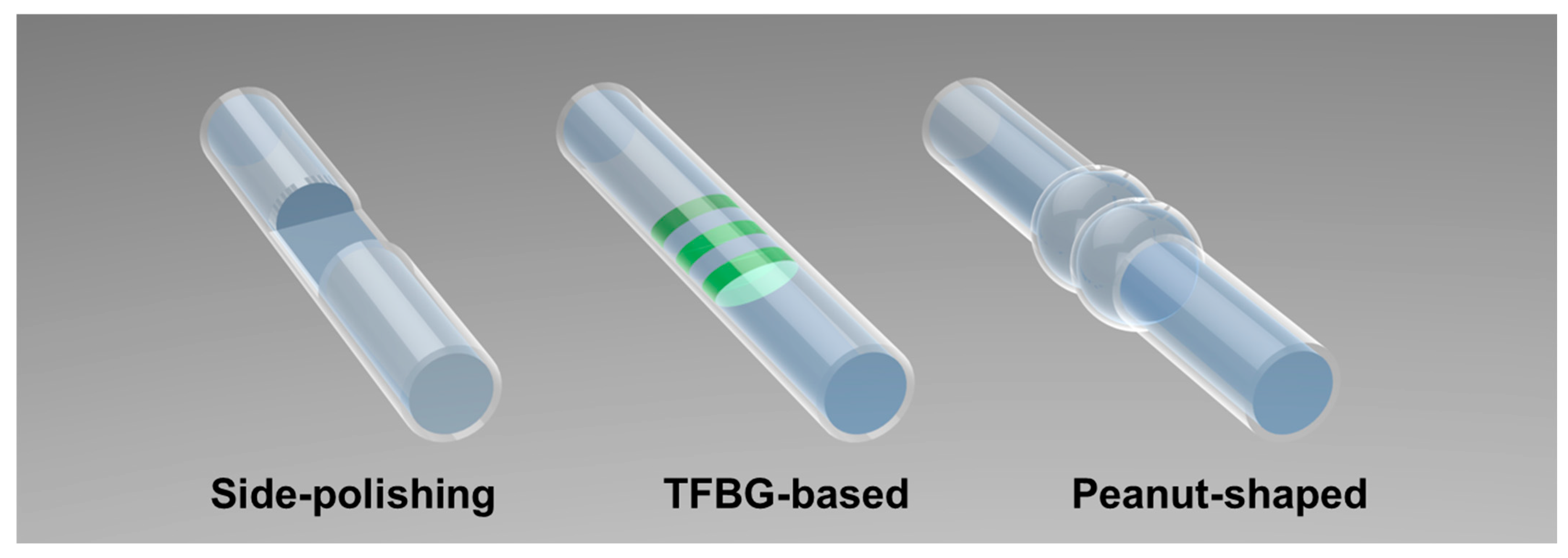
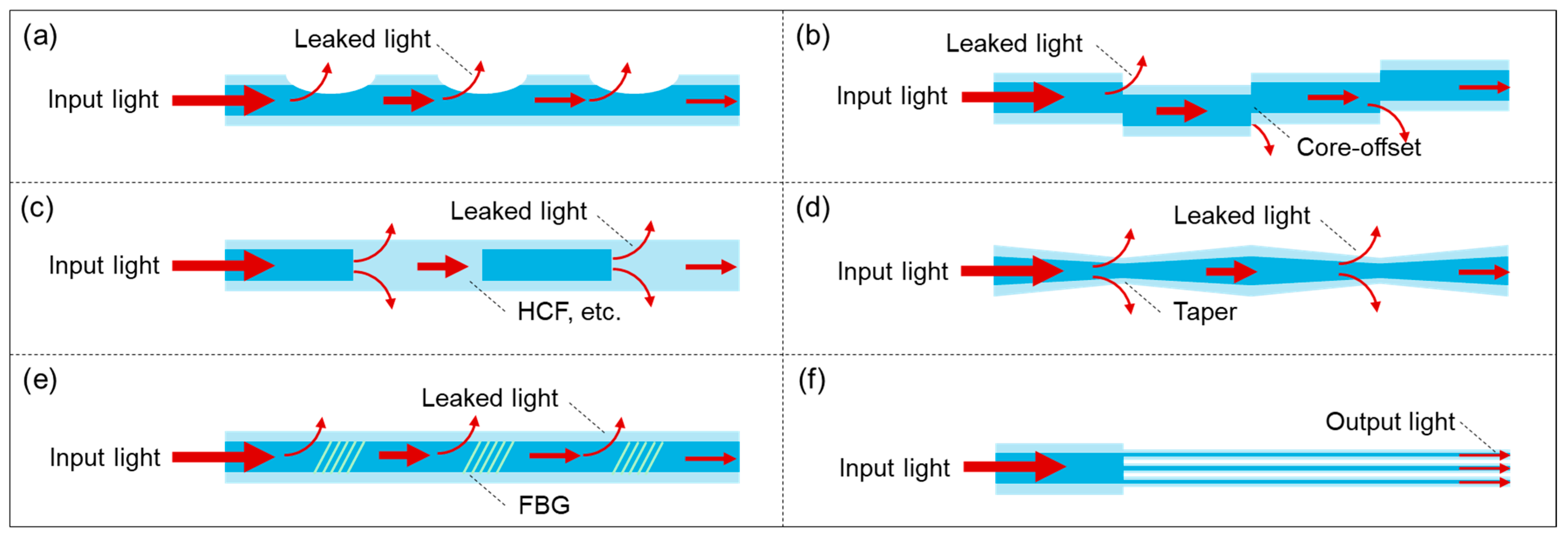
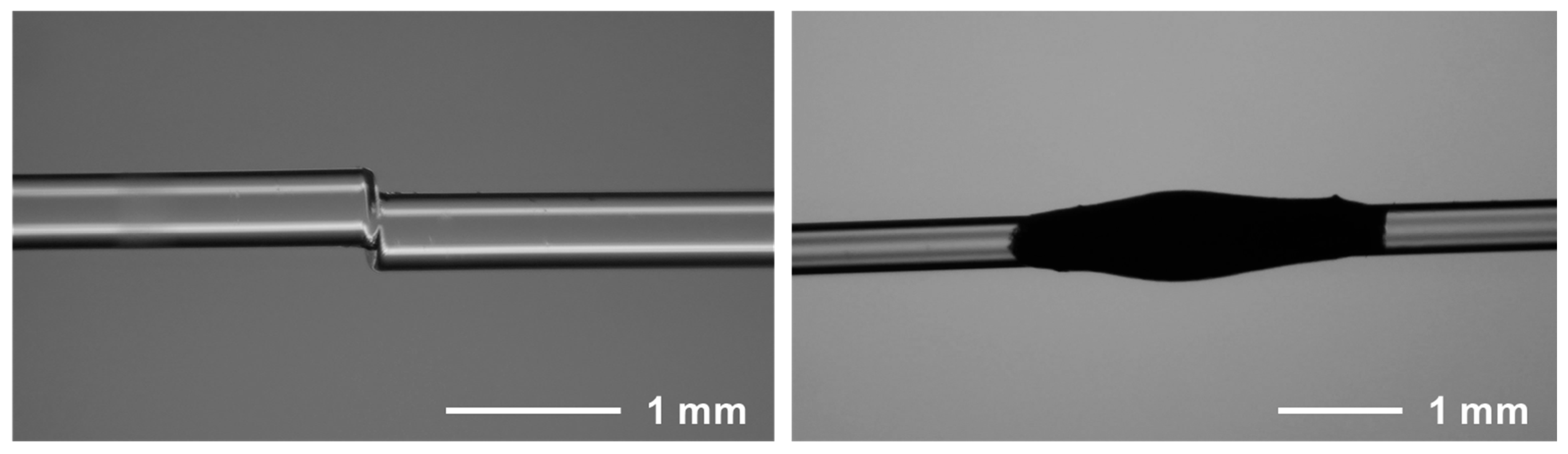
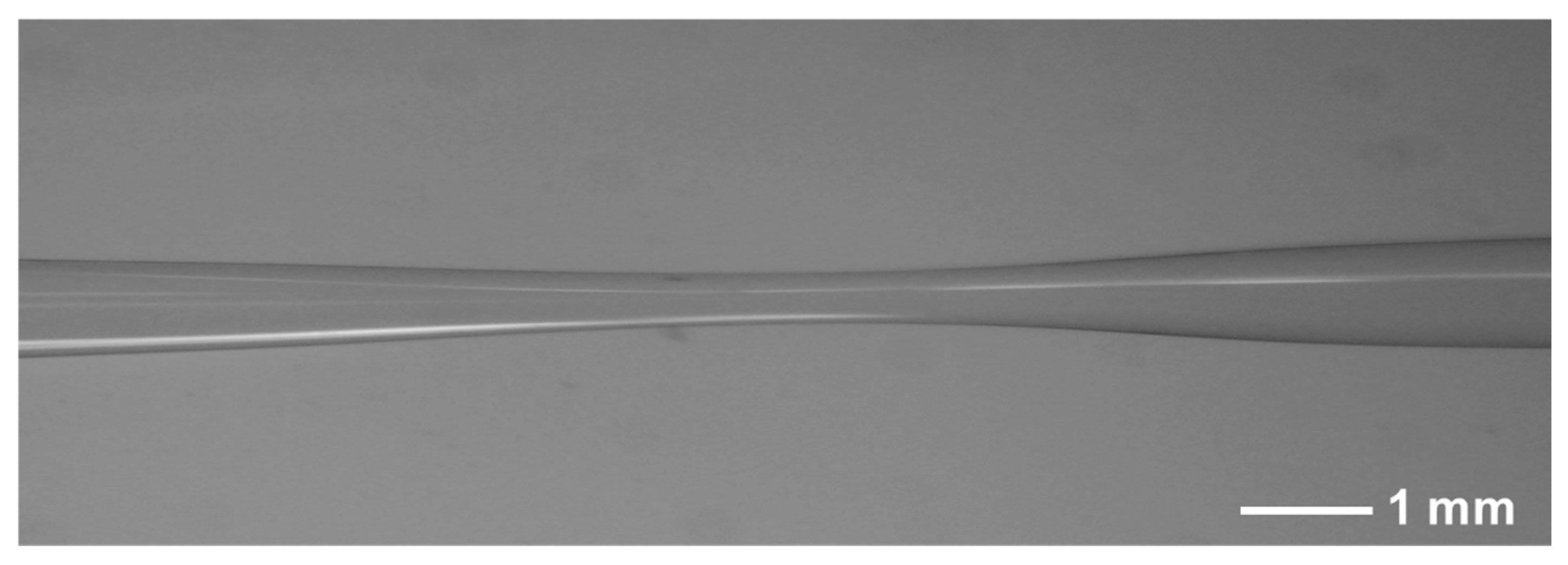
Figure 5) to address a wide range of application requirements, from focused high-frequency imaging to large-area structural inspection. This section provides a comprehensive review of these representative microstructures in single point FOPT, detailing their fabrication methods and their impact on ultrasonic generation performance.
In 2009, Luna Innovations Incorporated pioneered a side-polishing technique to couple pulsed laser light from the fiber core into the cladding, followed by coating the polished region with a graphite-epoxy composite as both the optical absorber and thermoelastic medium, thereby fabricating an array of five side-excited FOPTs [
76].
In 2020, Wang et al. developed a FOPT capable of operating at elevated temperatures up to 600 °C [
77]. The device used a gold-coated multimode fiber for ultrasonic generation and integrated both a FPI and a FBG within a second fiber for detection. By bonding both fibers to a metal pipe (1.5 cm long, 4.14 cm in diameter), the system successfully detected two 0.5 mm-wide cracks.
In 2023, Li et al. proposed a tilted fiber Bragg grating (TFBG)-based laterally emitting and receiving integrated ultrasonic transducer, achieving, for the first time, simultaneous ultrasonic generation and reception from the side of a single fiber [
78]. Functionalized carbon nanotube composite was deposited on the TFBG cladding to enable pulse excitation with a center frequency of 5 MHz and a 7 MHz bandwidth, yielding a SNR of 51 dB. For signal reception, intensity modulation of the core mode in the TFBG was demodulated.
In 2024, Luo et al. introduced a multi-point excitation laser-ultrasonic transducer based on a long-period fiber grating (LPFG), where precise coupling between the core and cladding modes was achieved by tuning the LPFG parameters (grating length and modulation depth) [
79]. Experimentally, two excitation sources produced ultrasonic signals with peak-to-peak amplitudes of approximately 500 mV at 3 MHz, exhibiting balanced energy distribution. Also in 2024, Wu et al. proposed a peanut-shaped FOPT for NDT of large-area aluminum plates [
28]. The transducer generated Lamb wave signals at 0.08 MHz and 0.42 MHz, achieving an inspection coverage of up to 50 cm.
In 2025, Kang et al. presented a FOPT based on the thermal cavitation effect [
80]. By delivering low-power continuous-wave laser light through an optical fiber to heat a highly absorbent copper salt solution in a micro-encapsulated cavity, periodic bubble nucleation and collapse were induced, generating high-frequency, broadband ultrasonic pulses. Experiments demonstrated a sound pressure of 330 kPa, a repetition rate of 4 kHz, and a bandwidth of 5–17 MHz (−10 dB) under a laser power of 52 mW. In the same year, Luo et al. reported a FOPT based on collapsed photonic crystal fiber (CPCF) [
81]. By precisely controlling the CPCF length, highly efficient light–heat–sound energy conversion was achieved. A 3-point excitation configuration was constructed, yielding a balanced peak-to-peak output of 1.5 V on an aluminum plate. Also in 2025, Wu et al. developed a low-frequency photoacoustic fiber transducer array filled with polyethylene (PE) particles for large-area, high-precision NDT [
82]. By lowering the center frequency from 1 MHz to 0.3 MHz, the inspection area was significantly expanded to 90 × 54 cm
2, with a localization error within 0.894 cm. Compared to the unmodified design, the SNR improved by 7 dB, the attenuation coefficient decreased from 0.262 to 0.248, and the relative bandwidth increased from 138% to 209%. Combined with pulse compression technology, the resolution improved from 0.45 cm to 0.24 cm. In a thick plate of 30 × 30 × 1.5 cm
3, a localization error of 0.781 cm was achieved, demonstrating robustness against multimode interference. Also in 2025, Li et al. proposed an MXene-PDMS composite anti-corrosion coating that functions as a photoacoustic transducer array by embedding fiber sensors and leveraging the high photothermal conversion efficiency of MXene (~90%) [
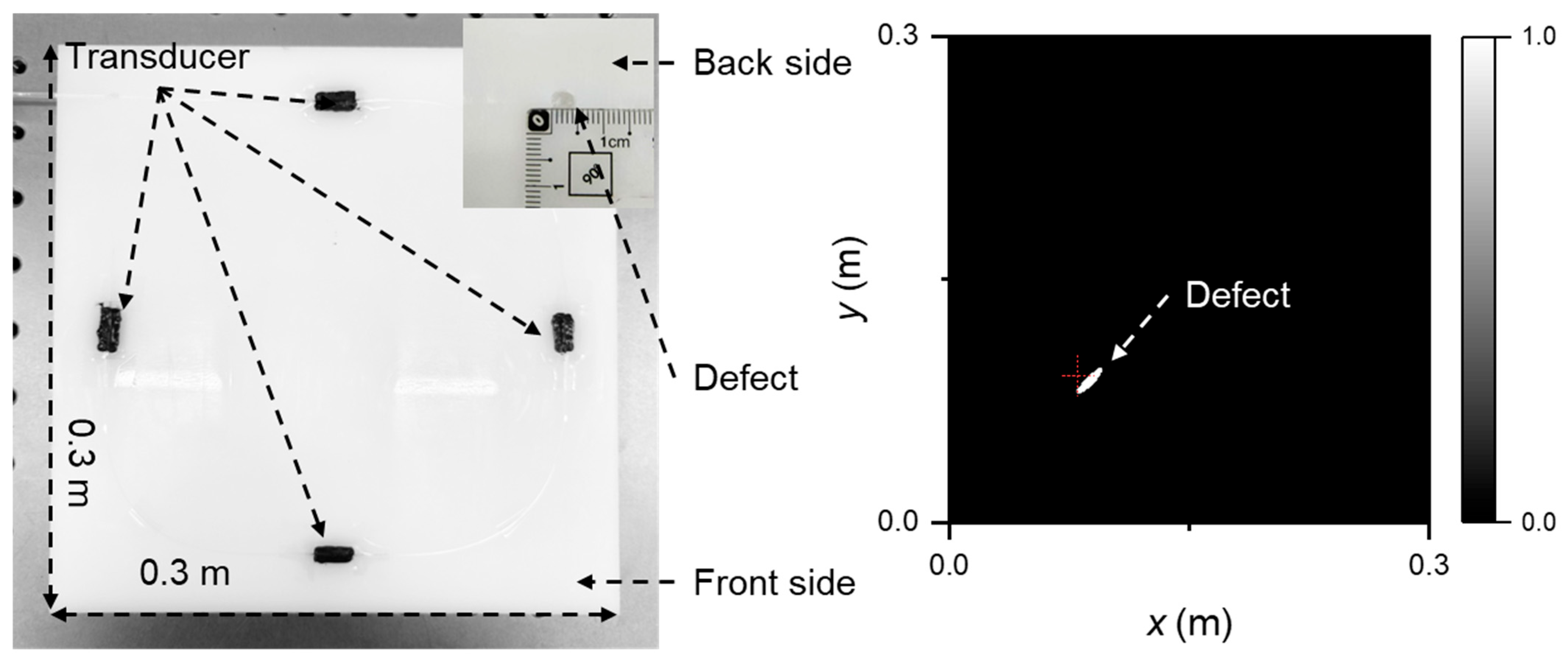
83]. The coating simultaneously excited multi-point Lamb waves over a 90 × 54 cm
2 area, enabling precise localization of a 0.5 mm defect with an error of only 0.894 cm and a positioning accuracy of 97.4%.
Table 5 summarizes recent methods and photoacoustic materials employed in single point FOPTs. In recent years, significant progress has been made in the development of FOPTs, as exemplified by the diverse range of structures and mechanisms presented. Building on the foundational side-polishing technique, researchers have innovated with advanced functional materials—such as MXene-PDMS for efficient energy conversion—and engineered structures like TFBGs, LPFGs, and CPCFs to achieve multi-point excitation and side-wall integration. Novel physical mechanisms, including thermo-cavitation, have been explored to generate broadband ultrasonic. These advancements have collectively enabled the creation of transducers with enhanced functionalities, such as operation in extreme environments, large-area coverage, and integrated sensing capabilities, thereby significantly advancing the field toward practical, high-performance distributed photoacoustic NDT systems.