Article

A Task- and Role-Oriented Design Method for Multi-User Collaborative Interfaces

by
Xiaoxi Du
1,
Menglian Yu
1,†,
Zichen Zhang
1,2,
Mu Tong
3,
Yanfei Zhu
1,‡ and
Chengqi Xue
1,*
1
School of Mechanical Engineering, Southeast University, Nanjing 211189, China
2
Nanjing Vivo Software Technology Co., Ltd., Nanjing 210012, China
3
School of Design, South China University of Technology, Guangzhou 510641, China
*
Author to whom correspondence should be addressed.
Current address: Sichuan AEROFUGIA Technology Development Co., Ltd., Chengdu 610041, China.
Current address: College of Furnishing and Industrial Design, Nanjing Forestry University, Nanjing 210037, China.
Sensors 2025, 25(6), 1760; https://doi.org/10.3390/s25061760
Submission received: 27 January 2025 / Revised: 28 February 2025 / Accepted: 10 March 2025 / Published: 12 March 2025
(This article belongs to the Section Intelligent Sensors)

Abstract

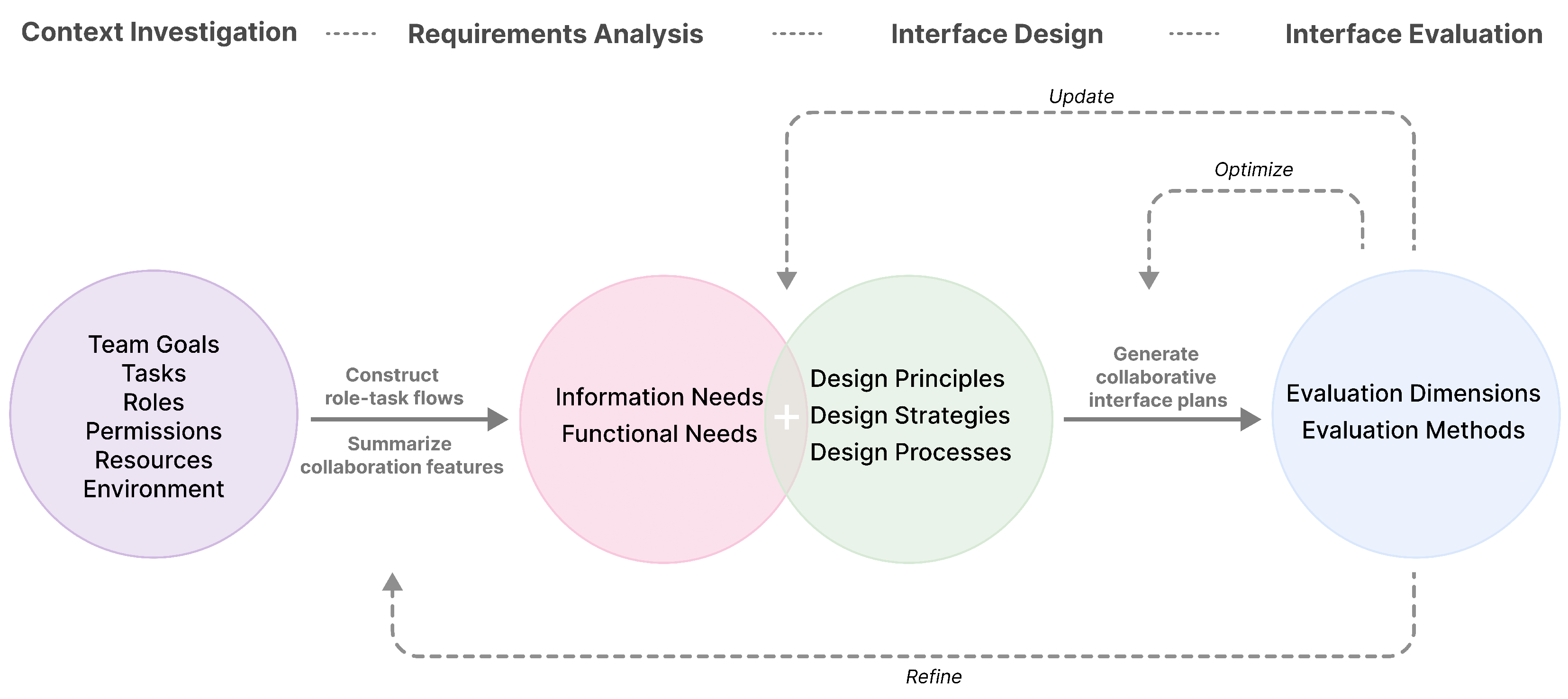
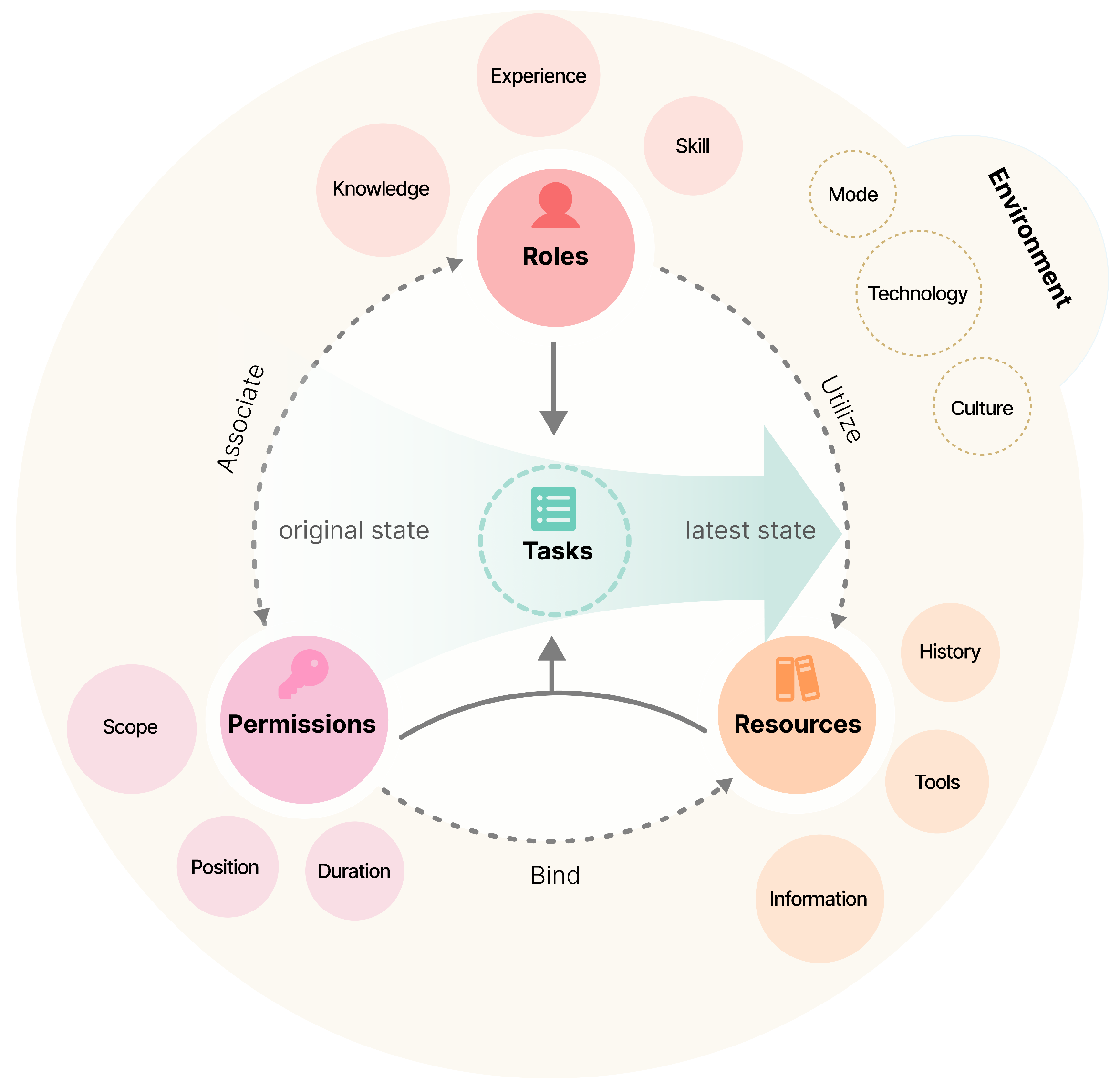
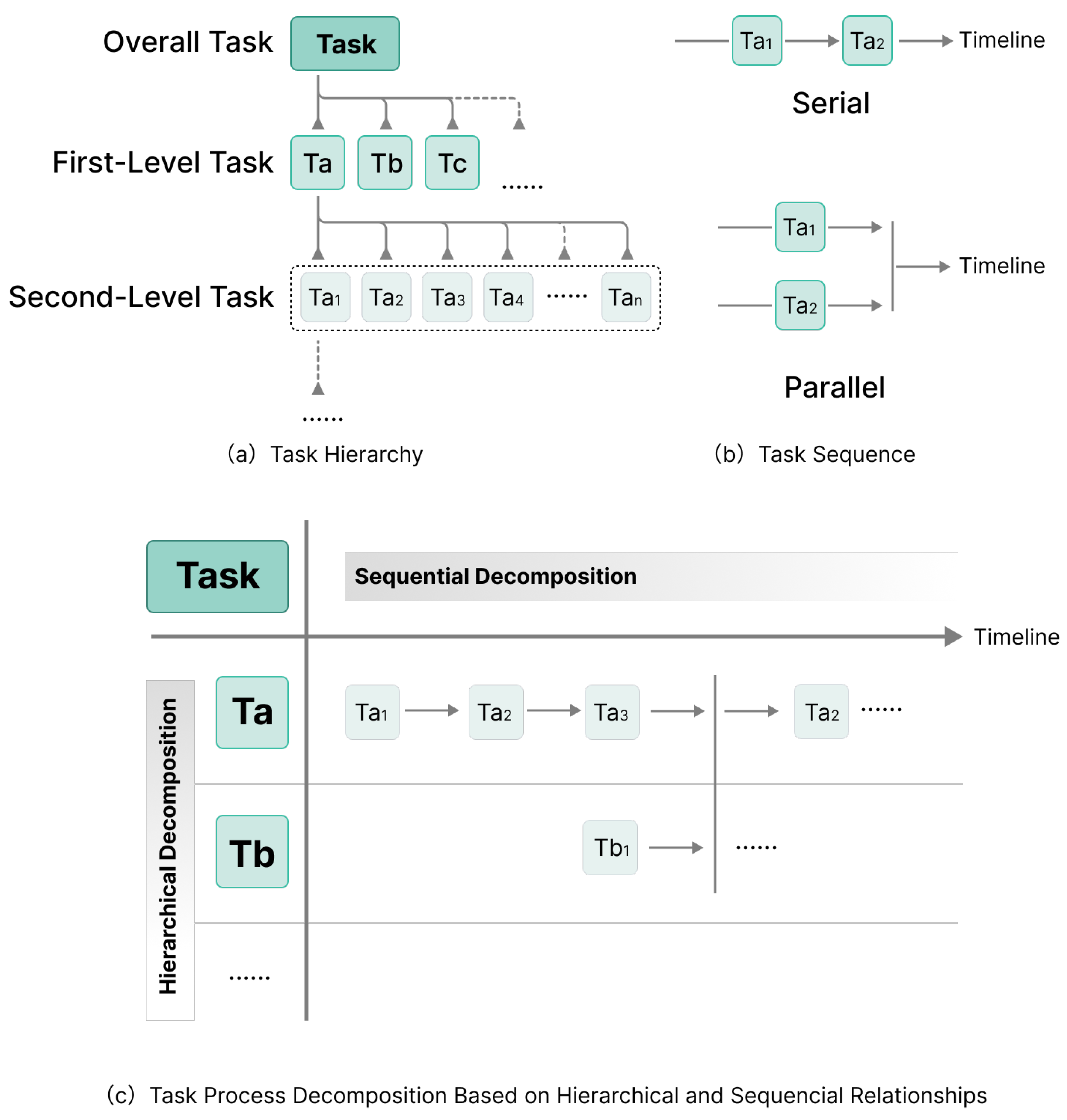
In multi-user collaborative interaction systems, the interface serves not only as a medium for human–computer interaction but also as a crucial channel for communication between users. Consequently, the quality of collaborative interface design directly impacts the overall effectiveness of the system. In collaborative systems, different users typically assume distinct roles, and task flows are typically more complex. Compared to single-user interfaces, multi-user collaborative interfaces must account for a broader range of collaboration requirements and characteristics. Although a substantial body of theoretical and practical research on user interface design exists, design methods specifically for multi-user collaborative interaction interfaces are still lacking. Therefore, this study builds on the existing theories and case studies of collaborative systems, extending user-centered design methods. The study emphasizes the analysis of task flows and role relationships in multi-user collaboration and integrates collaboration needs and characteristics throughout every stage of the interface design process. Ultimately, we propose a methodological framework for interface design tailored to multi-user collaborative interaction systems, aiming to provide theoretical support for the development of more advanced and comprehensive collaborative systems.
Keywords: collaborative interface; multi-user; task; role; design method collaborative interface; multi-user; task; role; design method