


Abstract
Between 2018 and 2024, the global market has experienced significant advancements in sensor technologies for monitoring patients’ health conditions, which have demonstrated a pivotal role in diagnostics, treatment monitoring, and healthcare optimization. Progress in microelectronics, device miniaturization, and wireless communication technologies has facilitated the development of sophisticated sensors, including wearable devices such as smartwatches and fitness trackers, enabling the real-time monitoring of key health parameters. These devices are widely employed across clinical settings, nursing care, and daily life to collect critical data on vital signs, including heart rate, blood pressure, oxygen saturation, and respiratory rate. A systematic review of the developments within this period highlights the transformative potential of AI and IoT-based technologies in healthcare personalization, particularly in disease symptom prediction and public health management. Furthermore, innovative techniques such as respiratory inductive plethysmography (RIP) and millimeter-wave radar systems (mmTAA) have emerged as precise, non-contact solutions for respiratory monitoring, with applications spanning diagnostics, therapeutic interventions, and enhanced safety in daily life.
1. Introduction
A noticeable trend is the growing popularity of wearable devices, such as smartwatches and fitness bands, which can simply connect to a smartphone—a device most people have with them at all times. These devices allow for the measurement of basic health parameters, increasing people’s awareness of health. There are also wearable devices, which are medical devices that, through connections to dedicated applications, allow a doctor to monitor health in real time and take faster action on required critical situations. The widespread use of miniaturized and wearable sensors plays a key role in medicine, enabling the remote monitoring of patients by doctors. With the help of such medical devices, doctors can remotely observe health conditions, make precise diagnostic decisions, and adjust therapies according to the current state of health. They do not have to be guided by past results, only, instead, by the current state.
One of the key issues is the diagnosis of the respiratory system, and the available devices and sensors allow for different observations of respiratory parameters depending on the needs. Using the available devices [1,2,3,4,5], we can monitor parameters such as respiratory rate (RR), tidal volume (TV), oxygen saturation (SpO2), chest movements, and periods of apnea and hypopnea. These devices also allow for the monitoring of sleep, respiratory rhythm, and changes in body position. Recent years have shown an increase in the importance of respiratory diagnostics for general health assessments, but also for sudden exacerbations of disease. Selecting appropriate diagnostic techniques can help to highlight respiratory problems in specific cases. Various sensors and techniques will be used, for example, to check the status of an asthma exacerbation, to monitor a patient during sleep, or to observe patient parameters in the intensive care unit.
Moreover, the development of artificial intelligence (AI) has enabled more sophisticated analysis of the data collected by health sensors. AI can help to identify patterns and detect abnormalities in health parameters, which can lead to faster diagnosis and intervention.
With the increase in health data collection, there are also concerns about data security and patient privacy. Companies and organizations must take precautions to protect this information from unauthorized access. As this technology grows, regulations and standards are also being introduced to ensure the safety and effectiveness of health sensors. Organizations, such as the Food and Drug Administration (FDA) in the United States, are implementing regulations for the registration and approval of such devices. The health sensor market is growing rapidly, and more and more companies are investing in this field. Competition and innovation are contributing to the rapid introduction of new products and lower costs.
2. Materials and Methods
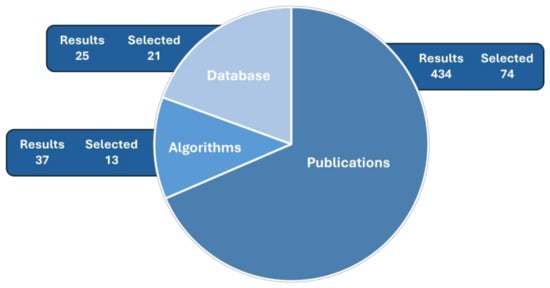
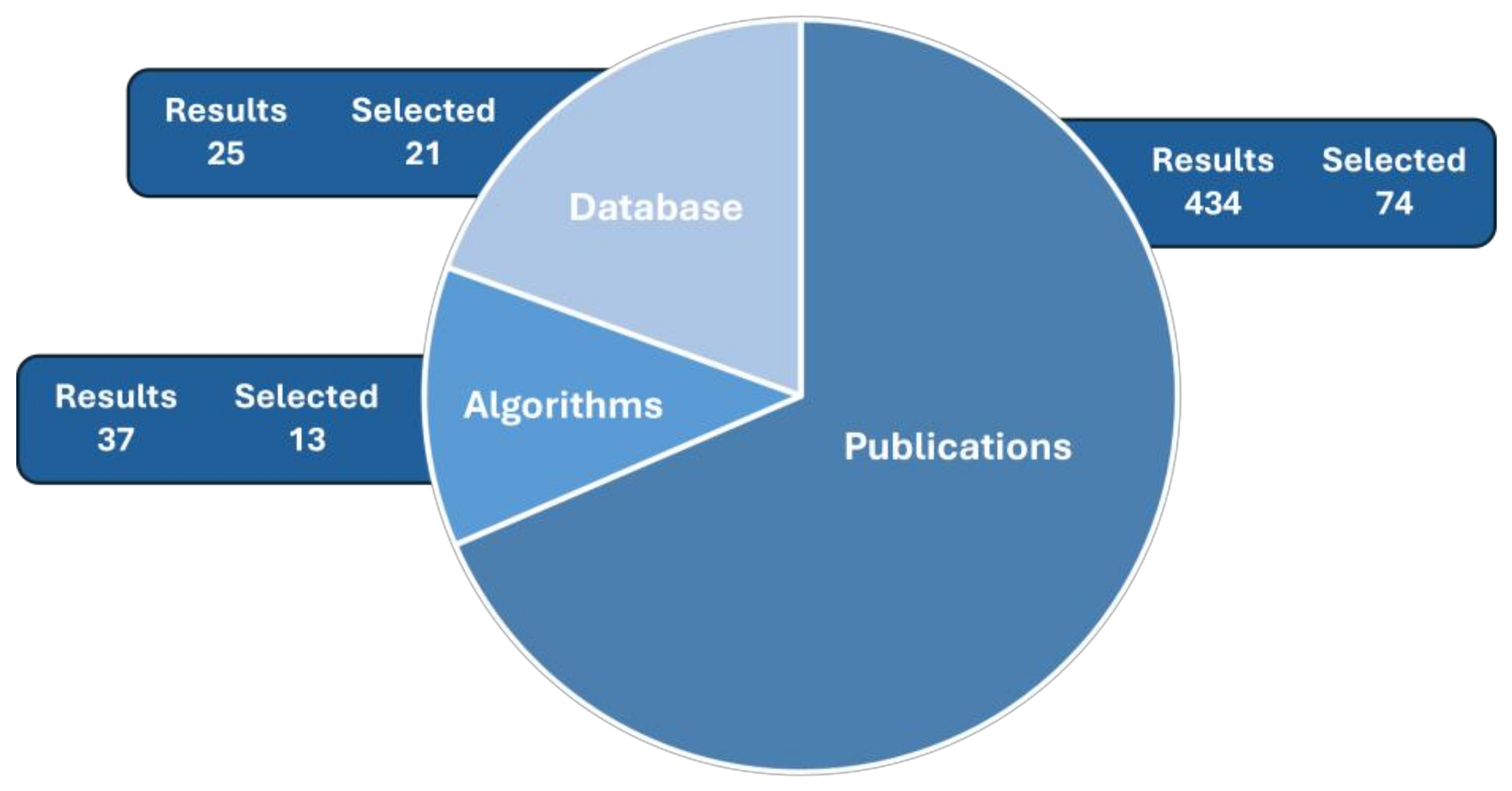
This study reviewed the available solutions that emerged between 2018 and 2024, focusing on monitoring or diagnosing patients with upper respiratory tract conditions. The review was conducted without the use of AI tools for generating comparisons. The search for articles was conducted in the IEEE Xplore database between 9 October and 31 October 2024, using terms related to machine learning, artificial intelligence, and respiratory monitoring techniques. Additionally, the GitHub platform was searched for repositories of databases related to respiratory monitoring, which provided additional resources supporting the development of new AI-based solutions. As a result, a full-text review of 111 articles was conducted, from which 77 publications were selected that best met the review criteria. Our team focused on the IEEE Xplore database, considering it to be the most suitable for engineering and technological research, offering more relevant and up-to-date resources compared to databases like PubMed, Scopus, or Web of Science, which focus on other fields. Studies in the review were selected at all stages by three analysts working independently, as shown in Figure 1.
Figure 1.
Tally of search results and selected records for publications, databases, and algorithms.
3. Open Database
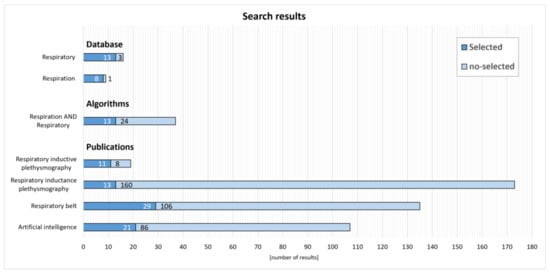
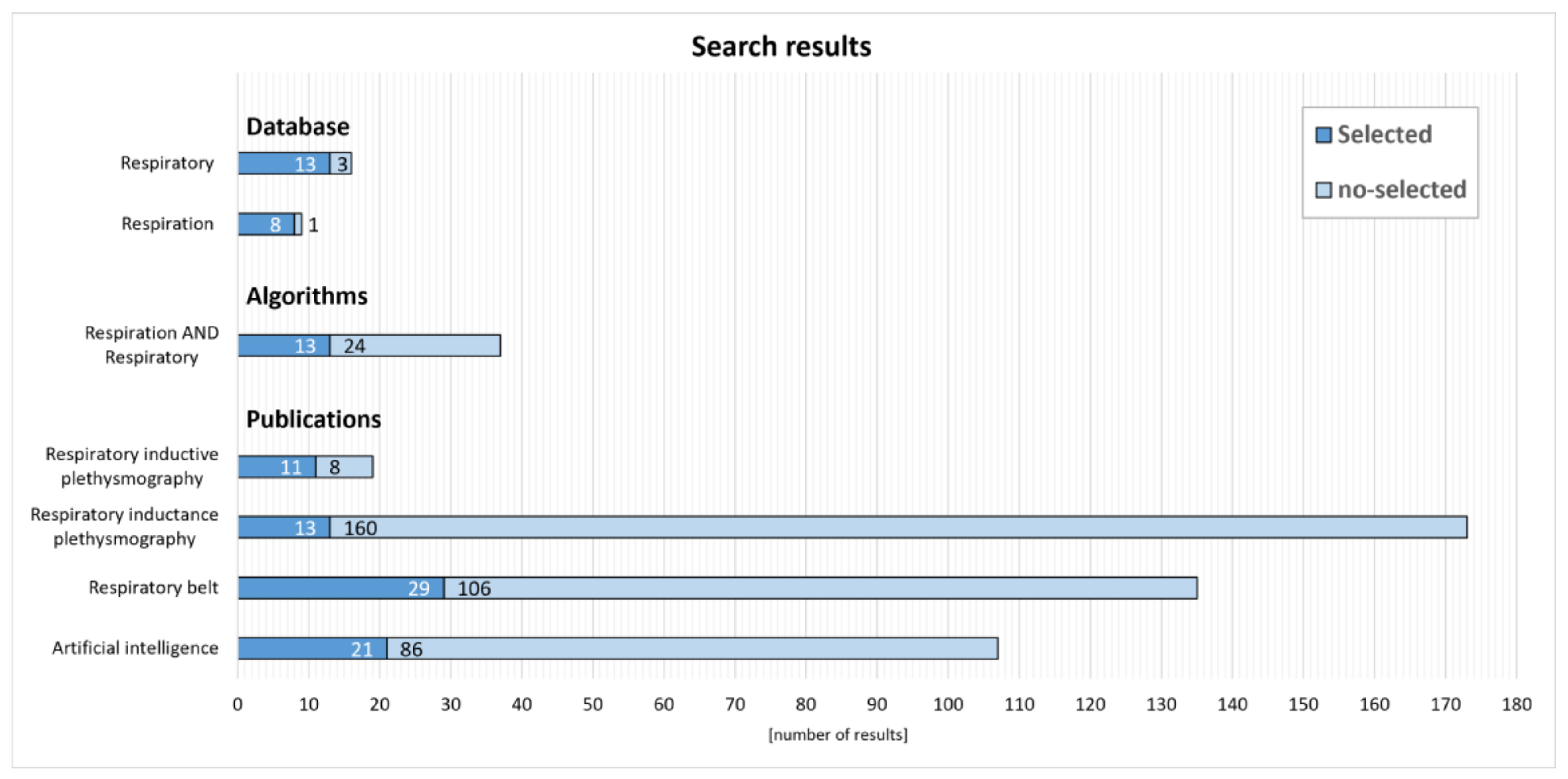
In today’s world, medicine and information technology are closely collaborating, leading to increased accessibility and the exchange of medical data. International organizations are developing standards and protocols to facilitate the exchange of medical data between different information systems. Interoperability is crucial for the global exchange of medical information. There is a noticeable trend indicating a growing demand for data, particularly physiological signals, respiratory signals, respiratory parameters, and others. Figure 2 presents the number of responses to a query related to signals in the publicly available PhysioNet database. The database was searched and the most relevant keywords were “respiration” and “respiratory,” which together form a dataset of 21 results (with one dataset appearing twice).
Figure 2.
Characteristics of the results obtained from the PhysioNet and IEEE database in response to selected keywords from 1 January 2018–27 November 2024.
Databases containing signals are essential in the context of modern medicine and information technology because they are key to modern diagnostics and patient monitoring. They are crucial for the development and validation of AI algorithms, and the PhysioNet database provides the actual data needed to train machine learning algorithms. The keyword “Respiration” appears relatively infrequently and the reviewed databases, although widely used, do not respond 100% to market demand and the needs of researchers who are in the process of designing new devices.
The characteristics (I) of the bases in response to the keyword “respiration” are as follows:
- Simultaneous physiological measurements with five devices at different cognitive and physical loads: Measurement included electrocardiography (ECG), photoplethysmography, accelerometry, oxygen saturation respiration, heart rate (HR), heart rate variability (HRV), and RR intervals ranging from 1 Hz to 8000 Hz [6].
- MIMIC-IV waveform database: The MIMIC-IV waveform database is a collection of physiological signals and measurements from patients in intensive care units, including electrocardiograms, photoplethysmograms, respiratory parameters, blood pressure measured invasively and non-invasively, and other measurements. These measurements and signals are obtained directly from the bedside monitor and provide a detailed picture of the physiology of critically ill patients [7].
- NInFEA: Non-Invasive Multimodal Fetal ECG-Doppler Dataset for Antenatal Cardiology Research: The first publicly available dataset of simultaneous non-invasive electrophysiological recordings, fetal pulsed-wave Doppler (PWD), and maternal respiratory signals [8].
- Electrocardiogram, skin conductance and respiration from spider-fearful individuals watching spider video clips: This project includes an electrocardiogram, skin conductance, and respiration as raw data (unfiltered, unprocessed) recorded from consenting individuals afraid of spiders using a BITalino portable biosignal measurement device (PLUX—Wireless Biosignals SA, Lisbon, Portugal) with a sampling rate set to 100 Hz per channel at a resolution of 10 bits [9].
- MIMIC-III waveform database: The MIMIC-III waveform database contains 67,830 sets of records for approximately 30,000 intensive care unit patients. The majority of record sets include a waveform record containing digital signals (usually including ECG, ABP, respiration, and PPG) and a ‘numerical’ record containing a time series of periodic measurements, each representing a quasi-continuous record of vital signs [10].
- MIMIC-III waveform database matched subset: Matched subset of the ‘MIMIC-III waveform database’. Matches records with the older clinical database ‘MIMIC-III clinical database’. Contains 22,317 waveform records and 22,247 numerical records for 10,282 different ICU patients [11].
- Cerebral Vasoregulation in Elderly with Stroke: Contains multimodal data from a large study investigating the effects of ischemic stroke on cerebral vasoregulation. The cross sectional study compared 60 subjects who suffered strokes to 60 control subjects, collecting the following data for each patient across multiple days: transcranial Doppler of cerebral arteries, 24 h blood pressure numerics, high resolution waveforms (ECG, blood pressure, CO2, and respiration) during various movement tasks, 24 h ECG, EMG (electromyography), accelerometer recordings, and gait pressure recordings during a walking test [12].
- BIDMC PPG and Respiration Dataset: Dataset contains signals and numerics extracted from the larger MIMIC II matched waveform database, along with manual breath annotations made from two annotators using the impedance respiratory signal [13].
The second characterization (II) of the bases in response to the keyword “respiratory” is as follows:
- Pressure, flow, and dynamic thoraco-abdominal circumferences data for adults breathing under CPAP therapy: This database of respiratory pressure, flow, and dynamic chest and abdominal circumferences was collected from 30 healthy adults at the University of Canterbury. Measurements were made using a bidirectional Venturi taper and a tape measure with rotary encoders, which recorded chest expansion and contraction at different pressures and breathing conditions. The data were intended to validate respiratory monitoring systems for use in primary care and home settings [14].
- Cerebral perfusion and cognitive decline in type 2 diabetes: This collection includes studies on vasoregulation and blood flow involving 70 patients with type 2 diabetes and 70 healthy control patients aged 50–85 years [15].
- Cerebromicrovascular Disease in Elderly with Diabetes: This database from a prospective study evaluates the effects of type 2 diabetes on cerebral vasoregulation, perfusion, and functional outcomes in 69 participants aged 55–75 with diabetes and in a control group. Data include measurements of blood flow, pressure, heart rate, respiratory parameters, gait, balance, and MRI images, including CASL, FLAIR, and DTI [16].
- CPAP Pressure and Flow Data from a Local Trial of 30 Adults at the University of Canterbury: The study includes pressure and flow measurements during breathing with CPAP (Continuous Positive Airway Pressure) from 30 patients [17].
- Upper body thermal images and associated clinical data from a pilot cohort study of COVID-19: The database contains upper-body thermal recordings from 252 patients in the COVID-19 study who performed breath-holds in four positions. The data include PCR results, demographics, vital signs, activities, medications, respiratory symptoms, and respiratory rate. The aim of the study was to analyze temperature patterns for developing algorithms to analyze thermal recordings [18].
- MIMIC-III and eICU-CRD: Feature Representation by FIDDLE Preprocessing: This collection of data is derived from the MIMIC-III and eICU databases, and includes the features and labels for five prediction tasks related to three adverse outcomes: in-hospital mortality (48 h), acute respiratory failure (4 h, 12 h), and shock (4 h, 12 h) [19].
- Cerebral Vasoregulation in Diabetes: A database of studies evaluating the effects of type 2 diabetes on cerebral vasoregulation and body function. It contains data from 37 diabetics and 49 control subjects aged 55–75, with continuous measurements of cerebral blood flow (TCD, MRI), heart rate, blood pressure, respiratory parameters, balance, gait, and laboratory results [20].
- OpenOximetry Repository: The OpenOximetry database contains clinical and laboratory data on pulse oximetry, including high-frequency waveforms, oxygen saturation readings, and other physiological parameters. It enables research on the impact of physiological variables on pulse oximeter performance [21].
- A Temporal Dataset for Respiratory Support in Critically Ill Patients: The dataset includes 90-day hourly respiratory parameters, such as ventilation data, breathing support interventions, and other parameters from 50,920 ICU patients. The data are sourced from MIMIC v2.2 and also contain laboratory results and therapy details [22].
- Respiratory and heart rate monitoring dataset from aeration study: The dataset includes respiratory pressure and flow, electrical impedance tomography (EIT), ECG, and heart rate belt (HRB) data collected from 20 healthy individuals. Participants breathed through a full-face mask with a pressure gauge and flowmeter [23].
- Simulated Obstructive Disease Respiratory Pressure and Flow: The dataset includes respiratory pressure and flow parameters collected from 20 healthy adults simulating COPD effects, such as gas trapping during exhalation. Tests were conducted using a Venturi splitter with a device attached to the oral exhalation outlet [24].
- Respiratory dataset from PEEP study with expiratory occlusion: The dataset includes respiratory pressure and flow, dynamic chest and abdominal circumference data, and aeration from EIT, which were collected from 80 adults. Participants breathed with CPAP support, and the study was conducted with approval from the University of Canterbury HREC [25].
In addition to the databases appearing in the PhysioNet database, several databases were found that also answer our query and can provide the necessary signals:
- Cough Database contains samples of coughing and other breathing-related sounds. It is a useful source of data for research on respiratory problems [26].
- Polysomnographic databases include the SHHS (Sleep Heart Health Study) or NSRR (National Sleep Research Resource), which contain data related to breathing during sleep [27,28].
Projects are also underway to collect a large amount of data:
- Chronic Obstructive Pulmonary Disease Gene “COPDGene” is a multi-center research project to understand and investigate the causes and mechanisms of chronic obstructive pulmonary disease (COPD), a serious respiratory condition [29].
4. Algorithms
A sizable portion of the algorithms, programs, and databases that are made available on the Internet and used by the whole world are on the GitHub platform. Table 1 shows the databases used in the development of new solutions based on AI. The review of repositories was carried out from 9 October 2024 to 31 October 2024. The keyword “Respiration” on the GitHub platform appears 566 times, and “Respiratory” yields 4300 results. Narrowing the search to “Topics”, the word “Respiration” obtains 23 results, and “Respiratory” 14. Other items were not included in the review.
Table 1.
Algorithms, databases, and software sources hosted on the Github platform.
Unfortunately, the content is not verified, despite the fact that it is a popular way of posting data. There is a lack of order, verification, and review. A sizable part of the content of repositories is empty or contains only part of the code, without descriptions and reliable information. It is worth mentioning that the selected keywords are also related to other topics besides human respiration analysis algorithms, i.e., soil respiration, database intermediary programs, visualization programs (without analysis), libraries for handling integrated circuits, converter schemes, and more. This ambiguity complicates the search for relevant materials and diminishes the usability of these repositories for researchers and developers. To address these challenges, there is a growing need for a structured approach to organizing and verifying data within such repositories. Implementing a standardized method for documenting and reviewing contributions could significantly enhance the quality of shared resources. One promising solution is the concept of the ’Shared Open Network’ (SON), which emphasizes collaboration, verification, and transparency among users. By fostering a community-driven environment, SON can facilitate the effective exchange of high-quality information, making it easier for researchers to find credible data and tools tailored to their specific needs. In this way, we can strive toward a more reliable and efficient landscape for data sharing and analysis in various fields, including human respiration studies. In Table 1, we present solutions that appear on platforms such as GitHub, blogs, and other open source sources, but none of them are medical devices that could be tested under real-world conditions that could be implemented shortly. Some solutions have been in existence for more than 10 years, and they are still being developed and modified. Still, they are not for the evaluation of physiological parameters in real conditions, including the hospital or home.
5. Results
We conducted a systematic search in one electronic database: IEEE explore. We searched for articles published between January 2018 and October 2024. The search was conducted between 9 October and 31 October, 2024. The reference lists of the included articles were reviewed to check for possible articles that could be included. Regarding search terms, the search strategies applied differed depending on the nature of the databases chosen for the search. For example, PubMed allows for the application of limiters such as “humans” and “English” language articles. The terms identified were (“Artificial Intelligence” OR “Respiratory Belt” OR “Respiratory Inductance Plethysmography“ OR “Respiratory Inductive Plethysmography”, OR “ Respiratory Sensor”), which are presented in Figure 2.
We reviewed the full text of 434 articles. The selection process aimed to ensure the inclusion of diverse and high-quality resources, focusing on technical and engineering-oriented solutions in respiratory monitoring. The review may vary depending on the database selected and the keywords chosen by the specialists. Our team chose to review the IEEE Xplore database, which is managed by the Institute of Electrical and Electronics Engineers (IEEE), which focuses mainly on the literature in engineering, computer science, telecommunications, and related technologies. This database was prioritized due to its extensive repository of peer-reviewed articles that align with the technical aspects of our research goals, offering insights into cutting-edge innovations in IoT, AI, and sensor-based respiratory monitoring. Our choice is based on the conviction that IEEE Xplore is a better choice for technical, engineering, and IT research and projects, offering more relevant, up-to-date and industry-specific resources compared to PubMed, which focuses on biomedical sciences. We skipped searching databases such as Scopus and Web of Science, focusing only on one specific one. The table is divided into 4 sections and includes the 74 publications our team selected, taking into account the abbreviated description of the method. To ensure clarity in data categorization, publications were grouped based on their focus areas, including disease detection, AI integration, and real-time monitoring applications.
Six papers were repeated in response to queries, and six did not fit into our review and were omitted from the review paper description. The review focused on solutions that were dedicated to various conditions, applied or prepared for diagnosis and later therapy, and the real-time monitoring of patients at home and in facilities. Particular emphasis was placed on evaluating the practical application and readiness level of these technologies in clinical and non-clinical environments. There are so many similar solutions, as it turns out, that keywords do not necessarily allow for a precise narrowing of the topic. The abundance of overlapping solutions highlights the challenge of distinguishing innovative methodologies from incremental advancements, necessitating rigorous criteria for inclusion and detailed analysis. Table 2 shows the results, the areas of which fall into six main groups, i.e., vital signs monitoring [48,49], disease detection and diagnosis [50,51], application in diagnostic breathing sounds [52,53], innovative technologies in disease detection [54,55], use of AI in the COVID-19 pandemic [56,57], and, in general, the challenges and future of AI in health monitoring.
Table 2.
Summary of scientific publications on respiratory sensor solutions for patient diagnosis and monitoring.
Each of these categories represents a pivotal area of respiratory monitoring, with implications for both individual patient care and public health. The use of AI and IoT solutions in the COVID-19 pandemic, for instance, demonstrates their scalability and adaptability in large-scale health crises. As AI and IoT technologies develop, the potential for using these tools to personalize healthcare is growing. Examples shown in Table 2, such as the use of AI to analyze audio and image signals, point to the potential to create advanced predictive algorithms that can forecast the onset of disease symptoms or predict the risk of disease exacerbation. These predictive capabilities are particularly relevant for chronic respiratory diseases, where early intervention can significantly impact patient outcomes. For instance, algorithms capable of detecting subtle changes in lung sounds could serve as early warning systems for exacerbations in COPD patients. Relying on multi-modal data—including information on heart rhythm, breathing, lung sounds, or signals from motion sensors—could enable a more comprehensive assessment of a patient’s health. This could lead to personalized therapy tailored to individual patients, which is particularly important for chronic diseases, such as chronic obstructive pulmonary disease (COPD) or diabetes. The integration of multi-modal data, as evidenced in the reviewed studies, not only enhances diagnostic accuracy but also opens pathways for developing holistic health monitoring platforms that address comorbidities. Another important aspect is the possibility of using combined AI and IoT systems to manage public health. Solutions such as IoT-based platforms for monitoring and controlling the COVID-19 pandemic show that similar systems can be adapted to monitor other infectious diseases or the broader population health. By leveraging real-time data aggregation and analytics, these systems can facilitate proactive measures, such as the early identification of outbreaks and resource optimization during healthcare crises. Automated collection and analysis of data on symptoms, test results, and human contact information can support a rapid response to potential outbreaks, which is crucial in the context of future pandemics. Such capabilities exemplify the shift towards data-driven public health strategies, which rely on AI and IoT integration for scalability and precision.
Respiratory induction plethysmography (RIP) is a modern and non-invasive method of monitoring respiratory patterns that is increasingly used in the analysis of smoking behavior. A key aspect of a respiratory sensor in diagnostics and monitoring is its ability to accurately and continuously record breathing patterns, allowing for the detection of abnormalities and early identification of potential health risks, such as airway obstruction or apnea. Thanks to advanced data analysis algorithms, the information collected by the sensors—which includes parameters such as breathing rhythm, tidal volume, and the synchronization of chest and abdominal movements—can be processed in real time. This makes it possible to create predictive algorithms that support both the personalization of therapy and monitoring in home and clinical settings. In addition, integration with AI and IoT technologies allows for the analysis of multi-modal data, which improves the accuracy of diagnoses and opens up new possibilities in the management of chronic diseases such as COPD and asthma. This technique uses inductive sensors to measure changes in the volume of the thorax and abdomen, which allows for detailed monitoring of respiratory parameters such as tidal volume (TV), respiratory rate, and the duration of inhalation and exhalation phases. In the context of smoking, RIP enables precise detection of respiratory patterns associated with smoke inhalation, which can be crucial in assessing its impact on the respiratory system.
In recent years, the effectiveness of RIP has been significantly improved by the use of advanced artificial intelligence algorithms [132,133,134,135] such as convolutional neural networks (CNN) and Long Short-Term Memory (LSTM). Specifically, CNNs excel in identifying spatial patterns in respiratory data, while LSTMs are particularly effective in modeling temporal dependencies in respiratory cycles, making them ideal for dynamic applications like detecting irregular smoke inhalation patterns, demonstrating improved sensitivity and specificity in complex scenarios, such as distinguishing smoking behavior from other respiratory events. Studies have shown that these deep learning algorithms outperform traditional methods such as support vector machines (SVM), Markov models, or decision trees in detecting smoke inhalation patterns, suggesting their potential in the precise monitoring of smokers’ behavior. Moreover, the method has a wide range of applications in clinical diagnostics, including monitoring the synchrony of chest and abdominal movements in patients with chronic obstructive pulmonary disease (COPD), assessing respiratory asynchrony during the spontaneous breathing test (SBT), and detecting apneas and shallow breathing.
Despite its many advantages, RIP is not without its limitations. Inductive sensors are susceptible to interference from non-respiratory body movements, which can affect the quality and accuracy of data. In addition, this technology requires precise calibration and proper positioning of sensors on the patient’s body, which can be challenging in a home setting. Advanced algorithms that incorporate motion artifact correction and dynamic re-calibration techniques have been proposed to address these issues, enhancing the reliability in non-clinical environments. However, the development of more advanced filtering and correction algorithms, as well as integration with other measurement methods such as heart rate (HR) monitoring and electroencephalography (EEG), can significantly improve the quality and versatility of RIP applications [136]. The use of RIP in combination with bioimpedance and piezoelectric signal analysis also allows for a more comprehensive assessment of the patient’s health status, which may be particularly important in the context of integrated cardiorespiratory monitoring.
As the technology evolves, the introduction of more compact, wireless systems, such as the Personal Automatic Cigarette Tracker v2 (PACT-2), and the integration of RIP with optical and infrared methods of chest movement analysis, may revolutionize the way respiratory health is monitored, both in clinical and home settings [137,138]. Furthermore, hybrid systems that combine RIP with advanced radar technologies offer promising avenues for creating low-cost, contactless solutions capable of delivering comparable accuracy to traditional methods.
The latest developments in radar technology raise significant and impactful issues for modern applications. In 2024, Kang et al. [95] described the advanced use of Frequency Modulation Continuous Wave (FMCW) radar technology combined with a metasurface antenna and passive metasurface tags, designed to monitor the breathing of the driver and passengers in a car. In the context of contemporary challenges, such as road safety and increasing vehicle automation, this solution holds great potential for accident prevention. For instance, it can detect symptoms of driver fatigue or health issues like sleep apnea, enabling timely interventions. Moreover, the ability to precisely track passengers’ breathing in real time offers opportunities for the development of intelligent climate control systems or personalized cabin settings, significantly enhancing travel comfort. This innovation also paves the way for medical diagnostics while driving and the seamless integration with autonomous vehicle systems, fostering a safer and more intuitive driving environment. Similarly, Zhang et al. [120] introduced the mmTAA system in 2024, which utilizes millimeter-wave (mmWave) radar with multiple antennas and an advanced neural network, TAANet, for the non-invasive measurement of Target Angle and Azimuth (TAA) and monitoring of respiratory activity. This system excels at accurately determining the centroid position of respiratory chest and abdominal movements (RC-AB), achieving precision comparable to traditional methods, such as Optoelectronic Plethysmography (OEP). The mmTAA system demonstrates immense potential for revolutionizing respiratory health monitoring in daily life by providing a non-contact, reliable solution. Its practical implementation in wearable and stationary devices could bridge the gap between clinical-grade accuracy and everyday usability. Its ability to continuously track respiratory parameters in a discreet and user-friendly manner could significantly improve the early diagnosis and management of respiratory conditions, such as respiratory insufficiency or sleep disorders. Together, these innovations showcase the transformative power of radar technology in enhancing safety, comfort, and health monitoring in modern vehicles and daily life. By integrating advanced signal processing, metasurface designs, and machine learning, they address critical challenges in mobility and healthcare, pointing towards a future where technology seamlessly enhances both safety and well-being.
5.1. Development of Respiratory Monitoring Technologies for Infants and Children
This review also helped to locate a niche of sorts when it comes to the use of similar devices that will support respiratory monitoring, but in MRI, fMRI or rsfMRI studies [81]. Monitoring respiration in infants and young children poses significant challenges due to the irregularity of their breathing patterns and the various physiological conditions that can affect monitoring accuracy. In infants, particularly in the first months of life, there are notable fluctuations in breathing rates, a result of the immaturity of the respiratory and autonomic systems. Research has shown that infants can exhibit breathing rates ranging from 30 to 60 breaths per minute, with distinct periods of rapid breathing interspersed with slower breaths. For instance, studies such as those conducted by Njeru et al. [139] and Arzi et al. [140] document the variability in infant breathing and the impact of sleep on respiratory patterns. The inclusion of real-time monitoring tools that adapt dynamically to these fluctuations is critical for ensuring reliable assessments during sleep studies or developmental evaluations. This variability, often exacerbated during sleep, can be a critical indicator of respiratory health and development in infants.
5.2. From Non-Specific Methods to Dedicated Solutions
The transition from non-specific methods to dedicated solutions in respiratory monitoring illustrates the versatility of engineering devices originally designed for unrelated tasks. Many technologies, such as buttons used in input devices or radios [62,64], have been tested in experimental setups to assess their feasibility for respiratory analysis, despite their lack of direct implementation in clinical environments. Similarly, motion-sensing technologies like Kinect [59], initially developed for gaming and motion detection, have shown potential when repurposed for monitoring respiratory patterns. These methods, while not inherently intended for respiratory analysis, have been adapted with some success due to their ability to capture relevant physiological data.
Further, technologies dedicated to a single function, such as sensors used exclusively for sleep monitoring, are being progressively refined and modified for real-time respiratory monitoring applications. An example includes their evolution from tracking sleep-related events to providing continuous feedback during day-to-day activities. Additionally, respiratory detection is increasingly used to support other modalities, such as magnetic resonance imaging (MRI), where respiratory signals [66] are employed to minimize motion artifacts by synchronizing image acquisition with periods of breath-hold or reduced motion.
Even non-respiratory tools, like pulse monitors, have been leveraged to extract respiratory parameters such as breathing rate, demonstrating how multipurpose data can enhance clinical insights. Meanwhile, proximity-based devices like LiDAR [99], which require the subject to remain within a specific field of detection, highlight the range of contactless solutions emerging for respiratory monitoring. These devices complement traditional approaches, and are often validated against gold-standard methods like plethysmography, where new techniques are benchmarked against established respiratory measurement tools [118]. This trend showcases the potential of flexible, multi-functional engineering methods in advancing respiratory diagnostics beyond their original intent.
5.3. The Need for Advanced Monitoring in a Medical Context
Monitoring respiration in children is crucial not only for assessing their development, but also for the early detection of potential health risks, such as Sudden Infant Death Syndrome (SIDS) and asthma. Studies indicate that infants are particularly vulnerable to SIDS in the early months of life, and early respiratory monitoring can help to identify the risk and potential preventive interventions [141,142]. Furthermore, children with asthma and allergies may experience breathing difficulties, necessitating the precise monitoring of their respiratory patterns to tailor therapy and manage symptoms effectively [143,144]. Integrating modern respiratory monitoring technologies, such as remote sensing and real-time analysis, can provide valuable data and enhance care for children with specific health needs.
6. Conclusions
Devices in the form of wearable respiratory belts can be utilized in various contexts, including sleep monitoring, patient assessment, and even sports training. Their capability to track respiratory parameters offers valuable insights into respiratory health and can aid in the early identification of potential issues. As technology evolves, ongoing comparisons of available solutions are essential to ensure that theoretical advancements keep pace with practical developments. This continuous evaluation will facilitate the refinement of current solutions and the emergence of novel approaches, thus driving innovation in respiratory monitoring.
The integration of AI and IoT in respiratory monitoring systems holds significant promise for personalized healthcare and precision diagnostics. Key areas for future research include optimizing analytical algorithms for the more accurate detection of respiratory changes and the early identification of health risks. The combination of different technologies—such as breath monitoring, sound analysis, and imaging—may enable the development of advanced diagnostic and predictive systems.
One of the challenges that remains is improving the accuracy of monitoring in home settings, particularly in minimizing disturbances caused by body movements. The miniaturization of wearable devices, along with the integration of multimodal data (e.g., heart rate, breath patterns, sound signals), is expected to enhance personalized therapies, particularly for chronic conditions such as COPD. Furthermore, the integration of these systems with public health monitoring platforms can contribute to rapid responses in the face of health crises, such as pandemics.
While these advancements are promising, further studies are needed to address issues related to data privacy and security. Additionally, regulatory frameworks and user education will be crucial to ensuring the safe and responsible implementation of respiratory monitoring technologies in clinical practice.
Author Contributions
Conceptualization, I.K. and M.M.; methodology, I.K. and M.M.; writing—original draft preparation, I.K., M.M. and K.O.; writing—review and editing, I.K., M.M. and K.O.; formal analysis, M.M. and M.C.; visualization, I.K. and M.M.; supervision, I.K. All authors have read and agreed to the published version of the manuscript.
Funding
This research received no external funding.
Institutional Review Board Statement
Not applicable.
Informed Consent Statement
Not applicable.
Data Availability Statement
No new data were created or analyzed in this study. Data sharing is not applicable to this article.
Conflicts of Interest
The authors declare no conflicts of interest.
References
- Natus Medical Incorporated—Natus. Available online: https://natus.com/ (accessed on 3 November 2023).
- Modern Breath Training|Mindfield ® eSense Respiration. Available online: https://mindfield.de/en/esense-respiration/ (accessed on 3 November 2023).
- Respiration Sensor—SA9311M. Available online: https://thoughttechnology.com/respiration-sensor-sa9311m/ (accessed on 3 November 2023).
- RESPeRATE Ultra—2breathe. Available online: https://2breathe.com/product/productresperate-ultra/ (accessed on 3 November 2023).
- 2breathe—Sleep Inducer—2breathe. Available online: https://2breathe.com/product/2breathe-sleep-inducer/ (accessed on 3 November 2023).
- Vollmer, M.; Bläsing, D.; Reiser, J.E.; Nisser, M.; Buder, A. Simultaneous physiological measurements with five devices at different cognitive and physical loads (version 1.0.2). PhysioNet 2023. [Google Scholar] [CrossRef]
- Moody, B.; Hao, S.; Gow, B.; Pollard, T.; Zong, W.; Mark, R. MIMIC-IV Waveform Database (version 0.1.0). PhysioNet 2022. [Google Scholar] [CrossRef]
- Pani, D.; Sulas, E.; Urru, M.; Sameni, R.; Raffo, L.; Tumbarello, R. NInFEA: Non-Invasive Multimodal Foetal ECG-Doppler Dataset for Antenatal Cardiology Research (version 1.0.0). PhysioNet 2020. [Google Scholar] [CrossRef]
- Ihmig, F.R.; Gogeascoechea, A.; Schäfer, S.; Lass-Hennemann, J.; Michael, T. Electrocardiogram, skin conductance and respiration from spider-fearful individuals watching spider video clips (version 1.0.0). PhysioNet 2020. [Google Scholar] [CrossRef]
- Moody, B.; Moody, G.; Villarroel, M.; Clifford, G.; Silva, I. MIMIC-III Waveform Database (version 1.0). PhysioNet 2020. [Google Scholar] [CrossRef]
- Moody, B.; Moody, G.; Villarroel, M.; Clifford, G.; Silva, I. MIMIC-III Waveform Database Matched Subset (version 1.0). PhysioNet 2020. [Google Scholar] [CrossRef]
- Novak, V. Cerebral Vasoregulation in Elderly with Stroke. PhysioNet 2018. [Google Scholar] [CrossRef]
- Pimentel, M.; Johnson, A.E.W.; Charlton, P.; Birrenkott, D.; Watkinson, P.; Tarassenko, L.; Clifton, D. BIDMC PPG and Respiration Dataset. PhysioNet 2018. [Google Scholar] [CrossRef]
- Guy, E.F.S.; Knopp, J.; Lerios, T.; Chase, J.G. Pressure, flow, and dynamic thoraco-abdominal circumferences data for adults breathing under CPAP therapy (version 1.0.0). PhysioNet 2023. [Google Scholar] [CrossRef]
- Novak, V.; Quispe, R.; Saunders, C. Cerebral perfusion and cognitive decline in type 2 diabetes (version 1.0.1). PhysioNet 2022. [Google Scholar] [CrossRef]
- Novak, V.; Quispe, R. Cerebromicrovascular Disease in Elderly with Diabetes (version 1.0.1). PhysioNet 2022. [Google Scholar] [CrossRef]
- Guy, E.; Knopp, J.; Chase, G. CPAP Pressure and Flow Data from a Local Trial of 30 Adults at the University of Canterbury (version 1.0.1). PhysioNet 2022. [Google Scholar] [CrossRef]
- Tamez-Peña, J.; Yala, A.; Cardona, S.; Ortiz-Lopez, R.; Trevino, V. Upper body thermal images and associated clinical data from a pilot cohort study of COVID-19 (version 1.1). PhysioNet 2021. [Google Scholar] [CrossRef] [Scilit]
- Tang, S.; Davarmanesh, P.; Song, Y.; Koutra, D.; Sjoding, M.; Wiens, J. MIMIC-III and eICU-CRD: Feature Representation by FIDDLE Preprocessing (version 1.0.0). PhysioNet 2021. [Google Scholar] [CrossRef]
- Novak, V.; Mendez, L. Cerebral Vasoregulation in Diabetes (version 1.0.0). PhysioNet 2020. [Google Scholar] [CrossRef]
- Fong, N.; Lipnick, M.; Bickler, P.; Feiner, J.; Law, T. OpenOximetry Repository (version 1.0.1). PhysioNet 2024. [Google Scholar] [CrossRef]
- Moukheiber, M.; Moukheiber, L.; Moukheiber, D.; Hao, S.; Celi, L.A.; Lee, H.-C. A Temporal Dataset for Respiratory Support in Critically Ill Patients (version 1.0.0). PhysioNet 2024. [Google Scholar] [CrossRef]
- Guy, E.F.S.; Flett, I.; Clifton, J.A.; Caljé-van der Klei, T.; Chen, R.; Knopp, J.; Moeller, K.; Chase, J.G. Respiratory and heart rate monitoring dataset from aeration study (version 1.0.0). PhysioNet 2024. [Google Scholar] [CrossRef]
- Clifton, J.A.; Guy, E.F.S.; Caljé-van der Klei, T.; Knopp, J.; Chase, J.G. Simulated Obstructive Disease Respiratory Pressure and Flow (version 1.0.0). PhysioNet 2023. [Google Scholar] [CrossRef]
- Guy, E.F.S.; Clifton, J.A.; Caljé-van der Klei, T.; Chen, R.; Knopp, J.; Moeller, K.; Chase, J.G. Respiratory dataset from PEEP study with expiratory occlusion (version 1.0.0). PhysioNet 2023. [Google Scholar] [CrossRef]
- Orlandic, L.; Teijeiro, T.; Atienza, D. The COUGHVID crowdsourcing dataset, a corpus for the study of large-scale cough analysis algorithms. Sci. Data 2021, 8, 156. [Google Scholar] [CrossRef] [Scilit] [PubMed]
- Mueller, R. Sleep Heart Health Study (SHHS). Natl. Sleep Res. Resour. 2014. [Google Scholar] [CrossRef]
- Sleep Data—National Sleep Research Resource—NSRR. Available online: https://sleepdata.org/ (accessed on 3 November 2023).
- Home | COPDGene. Available online: https://www.copdfoundation.org/Research/Research-Projects-and-Consortia/COPDGene.aspx (accessed on 3 November 2023).
- Respiratory Rate Estimation by Peterhcharlton. Available online: https://peterhcharlton.github.io/RRest/index.html (accessed on 15 January 2024).
- Charlton, P.H.; Bonnici, T.; Tarassenko, L.; Clifton, D.A.; Beale, R.; Watkinson, P.J. An assessment of algorithms to estimate respiratory rate from the electrocardiogram and photoplethysmogram. Physiol. Meas. 2016, 37, 610–626. [Google Scholar] [CrossRef] [Scilit] [PubMed]
- Nagy, Á. Cezius/Neonatal-Respiration-Monitoring-Algorithm. GitHub 2023. Available online: https://github.com/cezius/Neonatal-Respiration-Monitoring-Algorithm (accessed on 6 February 2025).
- Nagy, Á.; Földesy, P.; Jánoki, I.; Terbe, D.; Siket, M.; Szabó, M.; Varga, J.; Zarándy, Á. Continuous Camera-Based Premature-Infant Monitoring Algorithms for NICU. Appl. Sci. 2021, 11, 7215. [Google Scholar] [CrossRef] [Scilit]
- Misharin, A. Lvetech/ALT. GitHub 2024. Available online: https://github.com/lvetech/ALT (accessed on 6 February 2025).
- Contactless Sleep Monitoring. Available online: https://lvetechnologies.com/ (accessed on 28 August 2024).
- Mishra, M. Mayank31398/Real-Time-Visual-Respiration-Rate-Estimation-with-Dynamic-Scene-Adaptation. GitHub 2023. Available online: https://github.com/mayank31398/real-time-visual-respiration-rate-estimation-with-dynamic-scene-adaptation (accessed on 6 February 2025).
- Chatterjee, A.; Prathosh, A.P.; Praveena, P.; Upadhya, V. Real-Time Visual Respiration Rate Estimation with Dynamic Scene Adaptation. In Proceedings of the 2016 IEEE 16th International Conference on Bioinformatics and Bioengineering (BIBE), Taichung, Taiwan, 31 October–2 November 2016; pp. 154–160. [Google Scholar]
- Grund, M.; Al, E.; Pabst, M.; Dabbagh, A.; Stephani, T.; Nierhaus, T.; Gaebler, M.; Villringer, A. Respiration, Heartbeat, and Conscious Tactile Perception. J. Neurosci. 2022, 42, 643–656. [Google Scholar] [CrossRef] [Scilit]
- Sun, H.; Ganglberger, W.; Panneerselvam, E.; Leone, M.J.; Quadri, S.A.; Goparaju, B.; Tesh, R.A.; Akeju, O.; Thomas, R.J.; Westover, M.B. Sleep staging from electrocardiography and respiration with deep learning. Sleep 2020, 43, zsz306. [Google Scholar] [CrossRef] [Scilit]
- Pal, S.; Bauer, S.; Kumar, C. isuparnopal/RF_respiration_monitoring. GitHub 2024. Available online: https://github.com/isuparnopal/RF_respiration_monitoring (accessed on 6 February 2025).
- Yang, Y.; Cao, J.; Liu, X.; Liu, X. Multi-Breath: Separate Respiration Monitoring for Multiple Persons with UWB Radar. In Proceedings of the 2019 IEEE 43rd Annual Computer Software and Applications Conference (COMPSAC), Milwaukee, WI, USA, 15–19 July 2019; pp. 840–849. [Google Scholar]
- Kim, M. Mins-n/UWB_Radar_Respiration_Monitoring. GitHub 2024. Available online: https://github.com/mins-n/UWB_Radar_Respiration_Monitoring (accessed on 6 February 2025).
- Manne, S.K.R.; Zhu, S.; Ostadabbas, S.; Wan, M. Automatic Infant Respiration Estimation from Video: A Deep Flow-Based Algorithm and a Novel Public Benchmark. In Perinatal, Preterm and Paediatric Image Analysis; Link-Sourani, D., Abaci Turk, E., Macgowan, C., Hutter, J., Melbourne, A., Licandro, R., Eds.; Lecture Notes in Computer Science; Springer Nature: Cham, Switzerland, 2023; Volume 14246, pp. 111–120. ISBN 978-3-031-45543-8. [Google Scholar]
- Ubicomplab/rPPG-Toolbox. GitHub 2024. Available online: https://github.com/Ubicomplab/rPPG-Toolbox/ (accessed on 6 February 2025).
- Rathore, K.S. Kapil19-dev/RESPIRATION_RATE_ESTIMATION. GitHub 2024. Available online: https://github.com/Kapil19-dev/RESPIRATION_RATE_ESTIMATION (accessed on 6 February 2025).
- Ghibaudo, V.; Granget, J.; Dereli, M.; Buonviso, N.; Garcia, S. A Unifying Method to Study Respiratory Sinus Arrhythmia Dynamics Implemented in a New Toolbox. eNeuro 2023, 10. ENEURO.0197-23.2023. [Google Scholar] [CrossRef] [Scilit]
- Samuel, G. samuelgarcia/physio. GitHub 2024. Available online: https://github.com/samuelgarcia/physio (accessed on 6 February 2025).
- Karvounis, E.; Vavva, M.; Giannakeas, N.; Tzallas, A.T.; Smanis, I.; Tsipouras, M.G. A Hospital Healthcare Monitoring System Using Internet of Things Technologies. In Proceedings of the 2021 6th South-East Europe Design Automation, Computer Engineering, Computer Networks and Social Media Conference (SEEDA-CECNSM), Preveza, Greece, 24–26 September 2021; pp. 1–6. [Google Scholar]
- Chen, X.; Jiang, S.; Li, Z.; Lo, B. A Pervasive Respiratory Monitoring Sensor for COVID-19 Pandemic. IEEE Open J. Eng. Med. Biol. 2021, 2, 11–16. [Google Scholar] [CrossRef] [Scilit]
- Jiang, W.; Majumder, S.; Kumar, S.; Subramaniam, S.; Li, X.; Khedri, R.; Mondal, T.; Abolghasemian, M.; Satia, I.; Deen, M.J. A Wearable Tele-Health System towards Monitoring COVID-19 and Chronic Diseases. IEEE Rev. Biomed. Eng. 2022, 15, 61–84. [Google Scholar] [CrossRef] [Scilit]
- Abdullah, K.H.; Bilal Er, M. Lung sound signal classification by using Cosine Similarity-based Multilevel Discrete Wavelet Transform Decomposition with CNN-LSTM Hybrid model. In Proceedings of the 2022 4th International Conference on Artificial Intelligence and Speech Technology (AIST), Delhi, India, 9–10 December 2022; pp. 1–4. [Google Scholar]
- Chawla, J.; Walia, N.K. Artificial Intelligence based Techniques in Respiratory Healthcare Services: A Review. In Proceedings of the 2022 3rd International Conference on Computing, Analytics and Networks (ICAN), Rajpura, Punjab, India, 18–19 November 2022; pp. 1–4. [Google Scholar]
- Rani, S.; Chaurasia, A.; Dutta, M.K.; Myska, V.; Burget, R. Machine learning approach for automatic lungs sound diagnosis from pulmonary signals. In Proceedings of the 2021 44th International Conference on Telecommunications and Signal Processing (TSP), Brno, Czech Republic, 26–28 July 2021; pp. 366–371. [Google Scholar]
- Grooby, E.; Sitaula, C.; Fattahi, D.; Sameni, R.; Tan, K.; Zhou, L.; King, A.; Ramanathan, A.; Malhotra, A.; Dumont, G.; et al. Noisy Neonatal Chest Sound Separation for High-Quality Heart and Lung Sounds. IEEE J. Biomed. Health Inform. 2023, 27, 2635–2646. [Google Scholar] [CrossRef] [Scilit]
- Kuang, H.; Ao, C.; Ma, X.; Liu, X. Remote photoplethysmography signals enhancement based on generative adversarial networks. In Proceedings of the 2023 IEEE 3rd International Conference on Information Technology, Big Data and Artificial Intelligence (ICIBA), Chongqing, China, 26–28 May 2023; pp. 792–796. [Google Scholar]
- Dong, Y.; Yao, Y.-D. IoT Platform for COVID-19 Prevention and Control: A Survey. IEEE Access 2021, 9, 49929–49941. [Google Scholar] [CrossRef] [Scilit] [PubMed]
- Misra, S.; Pal, S.; Deb, P.K.; Gupta, E. KEdge: Fuzzy-Based Multi-AI Model Coalescence Solution for Mobile Healthcare System. IEEE Syst. J. 2023, 17, 1721–1728. [Google Scholar] [CrossRef] [Scilit]
- Coronel, C.; Wiesmeyr, C.; Garn, H.; Kohn, B.; Wimmer, M.; Mandl, M.; Glos, M.; Penzel, T.; Klosch, G.; Stefanic-Kejik, A.; et al. 3D Camera and Pulse Oximeter for Respiratory Events Detection. IEEE J. Biomed. Health Inform. 2021, 25, 181–188. [Google Scholar] [CrossRef] [Scilit] [PubMed]
- He, S.; Mehta, V.; Bolic, M. A Joint Localization Assisted Respiratory Rate Estimation using IR-UWB Radars. In Proceedings of the 2020 42nd Annual International Conference of the IEEE Engineering in Medicine & Biology Society (EMBC), Montreal, QC, Canada, 20–24 July 2020; pp. 489–493. [Google Scholar]
- Kusche, R.; Grashoff, J.; Oltmann, A.; Rostalski, P. A Multichannel EMG System for Spatial Measurement of Diaphragm Activities. IEEE Sens. J. 2022, 22, 23393–23402. [Google Scholar] [CrossRef] [Scilit]
- Vanbuis, J.; Feuilloy, M.; Baffet, G.; Meslier, N.; Gagnadoux, F.; Girault, J.-M. A New Sleep Staging System for Type III Sleep Studies Equipped With a Tracheal Sound Sensor. IEEE Trans. Biomed. Eng. 2022, 69, 1225–1236. [Google Scholar] [CrossRef] [Scilit]
- Alam, M.M.; Hussain, M.; Amin, M.A. A Novel Design of a Respiratory Rate Monitoring System using a Push Switch Circuit and Arduino Micocontroller. In Proceedings of the 2019 International Conference on Robotics, Electrical and Signal Processing Techniques (ICREST), Dhaka, Bangladesh, 10–12 January 2019; pp. 470–473. [Google Scholar]
- Qiu, C.; Yuce, M.R. A Wearable Bioimpedance Chest Patch for IoHT-Connected Respiration Monitoring. In Proceedings of the 2021 43rd Annual International Conference of the IEEE Engineering in Medicine & Biology Society (EMBC), Guadalajara, Jalisco, Mexico, 1–5 November 2021; pp. 6924–6927. [Google Scholar]
- Sharma, P.; Hui, X.; Kan, E.C. A Wearable RF Sensor for Monitoring Respiratory Patterns. In Proceedings of the 2019 41st Annual International Conference of the IEEE Engineering in Medicine and Biology Society (EMBC), Berlin, Germany, 23–27 July 2019; pp. 1217–1223. [Google Scholar]
- Laufer, B.; Krueger-Ziolek, S.; Docherty, P.D.; Hoeflinger, F.; Reindl, L.; Moeller, K. An alternative way to measure respiration induced changes of circumferences: A pilot study. In Proceedings of the 2020 42nd Annual International Conference of the IEEE Engineering in Medicine & Biology Society (EMBC), Montreal, QC, Canada, 20–24 July 2020; pp. 4632–4635. [Google Scholar]
- Nedoma, J.; Fajkus, M.; Kepak, S.; Cubik, J.; Zabka, S.; Martinek, R.; Slany, V.; Marecek, J. An Interferometric Sensor for Monitoring Respiratory and Heart Rate of the Human Body. In Proceedings of the 2018 IEEE 20th International Conference on e-Health Networking, Applications and Services (Healthcom), Ostrava, Czech Republic, 17–20 September 2018; pp. 1–5. [Google Scholar]
- Shakhih, M.F.; Nursyazana, R.; Asnida, A.W.; Maheza Irna, M.S. Assessment of Prolonged Expiration Breathing Using Infrared Thermal Imaging Modality: A Case Study. In Proceedings of the 2018 2nd International Conference on BioSignal Analysis, Processing and Systems (ICBAPS), Kuching, Malaysia, 24–26 July 2018; pp. 181–186. [Google Scholar]
- Nassi, T.E.; Ganglberger, W.; Sun, H.; Bucklin, A.A.; Biswal, S.; Van Putten, M.J.A.M.; Thomas, R.J.; Westover, M.B. Automated Scoring of Respiratory Events in Sleep with a Single Effort Belt and Deep Neural Networks. IEEE Trans. Biomed. Eng. 2022, 69, 2094–2104. [Google Scholar] [CrossRef] [Scilit]
- Tataraidze, A.; Olesyuk, R.; Pikhletsky, M. Can We Monitor Breathing During Sleep via Wi-Fi on Smartphone? In Proceedings of the 2019 41st Annual International Conference of the IEEE Engineering in Medicine and Biology Society (EMBC), Berlin, Germany, 23–27 July 2019; pp. 6710–6713. [Google Scholar]
- Wang, R.; Zhang, Y.; Chen, X.; Lin, F.; He, R.; Lv, R.; Gao, S. Chest and Abdomen Respiratory Monitoring by Large Area Piezoresistive Array. In Proceedings of the 2021 IEEE International Conference on Flexible and Printable Sensors and Systems (FLEPS), Manchester, UK, 20–23 June 2021; pp. 1–4. [Google Scholar]
- Erdyarahman, R.; Suratman, F.Y.; Pramudita, A.A. Contactless Human Respiratory Frequency Monitoring System Based on FMCW Radar. In Proceedings of the 2022 IEEE Asia Pacific Conference on Wireless and Mobile (APWiMob), Bandung, Indonesia, 9–10 December 2022; pp. 1–7. [Google Scholar]
- Cruz, J.C.D.; Mercado, I.L.R.; Algabre, M.K.N. Deriving Heart Rate and Respiratory Rate from Pulse Oximetry Using Neural Networks. In Proceedings of the 2021 IEEE 13th International Conference on Humanoid, Nanotechnology, Information Technology, Communication and Control, Environment, and Management (HNICEM), Manila, Philippines, 28–30 November 2021; pp. 1–6. [Google Scholar]
- Bevilacqua, N.; Andria, G.; Attivissimo, F.; Di Nisio, A.; Spadavecchia, M. Development of an adaptive bandwidth filter for the estimation of respiratory parameters using a piezoelectric belt. In Proceedings of the 2022 IEEE International Symposium on Medical Measurements and Applications (MeMeA), Messina, Italy, 22–24 June 2022; pp. 1–6. [Google Scholar]
- Guede-Fernandez, F.; Fernandez-Chimeno, M.; Ramos-Castro, J.; Garcia-Gonzalez, M.A. Driver Drowsiness Detection Based on Respiratory Signal Analysis. IEEE Access 2019, 7, 81826–81838. [Google Scholar] [CrossRef] [Scilit]
- Sanae, A.; Kawanaka, H.; Oguri, K. Drowsiness Estimation from Respiratory Index Obtained by Using Smart Seat Belt Buckle. In Proceedings of the 2022 IEEE 11th Global Conference on Consumer Electronics (GCCE), Osaka, Japan, 18–21 October 2022; pp. 479–481. [Google Scholar]
- Padasdao, B.; Shahhaidar, E.; Stickley, C.; Boric-Lubecke, O. Electromagnetic Biosensing of Tidal Volume. IEEE Sens. J. 2018, 18, 6391–6398. [Google Scholar] [CrossRef] [Scilit]
- Nedoma, J.; Kostelansky, M.; Vilimek, D.; Ladrova, M.; Martinek, R.; Kahankova, R.; Fajkus, M.; Brablik, J.; Hanzlikova, P.; Mohammed, M.A.; et al. Fiber-Optic Breathing Mask: An Alternative Solution for MRI Respiratory Triggering. IEEE Trans. Instrum. Meas. 2022, 71, 1–13. [Google Scholar] [CrossRef] [Scilit]
- Härmä, A.; Großekathöfer, U.; Ouweltjes, O.; Nallanthighal, V.S. Forecasting of Breathing Events from Speech for Respiratory Support. In Proceedings of the ICASSP 2023—2023 IEEE International Conference on Acoustics, Speech and Signal Processing (ICASSP), Rhodes Island, Greece, 4–10 June 2023; pp. 1–5. [Google Scholar]
- Zhang, Z.; Sharma, P.; Zhou, J.; Hui, X.; Kan, E.C. Furniture-Integrated Respiration Sensors by Notched Transmission Lines. IEEE Sens. J. 2021, 21, 5303–5311. [Google Scholar] [CrossRef] [Scilit]
- Mukhopadhyay, B.; Sharma, O.; Kar, S. IoT Based Wearable Knitted Fabric Respiratory Monitoring System. In Proceedings of the 2018 IEEE SENSORS, New Delhi, India, 28–31 October 2018; pp. 1–4. [Google Scholar]
- Addeh, A.; Ardila, K.; Vega, F.; Golestani, A.; MacDonald, M.E. Limitations of the Derived Respiratory Variation Measurements Used in Functional Magnetic Resonance Imaging. In Proceedings of the 2023 IEEE 20th International Symposium on Biomedical Imaging (ISBI), Cartagena, Colombia, 18–21 April 2023; pp. 1–5. [Google Scholar]
- Piuzzi, E.; Pisa, S.; Pittella, E.; Podesta, L.; Sangiovanni, S. Low-Cost and Portable Impedance Plethysmography System for the Simultaneous Detection of Respiratory and Heart Activities. IEEE Sens. J. 2019, 19, 2735–2746. [Google Scholar] [CrossRef] [Scilit]
- Erdogan, S.; Yilmaz, S.; Oncu, A. Microwave Noncontact Vital Sign Measurements for Medical Applications. In Proceedings of the 2019 IEEE International Symposium on Medical Measurements and Applications (MeMeA), Istanbul, Turkey, 26–28 June 2019; pp. 1–5. [Google Scholar]
- Altekreeti, A.; Roberts, M.; Convey, D.; Leighton, S.; Setear, M.; Cay, G.; Solanki, D.; Mankodiya, K. NAPNEA: A Cost Effective Neonatal Apnea Detection System. In Proceedings of the 2021 IEEE/ACM Conference on Connected Health: Applications, Systems and Engineering Technologies (CHASE), Washington, DC, USA, 16–18 December 2021; pp. 113–114. [Google Scholar]
- Zhao, H.; Gao, X.; Jiang, X.; Hong, H.; Liu, X. Non-contact Robust Respiration Detection by Using Radar-Depth Camera Sensor Fusion. In Proceedings of the 2020 42nd Annual International Conference of the IEEE Engineering in Medicine & Biology Society (EMBC), Montreal, QC, Canada, 20–24 July 2020; pp. 4183–4186. [Google Scholar]
- Nabavi, S.; Bhadra, S. Oral Cavity Pressure Measurement-based Respiratory Monitoring System with Reduced Susceptibility to Motion Artifacts. In Proceedings of the 2020 42nd Annual International Conference of the IEEE Engineering in Medicine & Biology Society (EMBC), Montreal, QC, Canada, 20–24 July 2020; pp. 5900–5904. [Google Scholar]
- Nallanthighal, V.S.; Harma, A.; Strik, H.; Doss, M.M. Phoneme Based Respiratory Analysis of Read Speech. In Proceedings of the 2021 29th European Signal Processing Conference (EUSIPCO), Dublin, Ireland, 23–27 August 2021; pp. 191–195. [Google Scholar]
- Kjar, M.R.; Brink-Kjar, A.; Hanif, U.; Mignot, E.; Jennum, P.; Sorensen, H.B.D. Polysomnographic Plethysmography Excursions are Reduced in Obese Elderly Men. In Proceedings of the 2021 43rd Annual International Conference of the IEEE Engineering in Medicine & Biology Society (EMBC), Guadalajara, Jalisco, Mexico, 1–5 November 2021; pp. 2396–2399. [Google Scholar]
- Li, Z.; Jin, T.; Hu, X.; Song, Y.; Zhang, J.; Sang, Z. Remote Respiratory and Cardiac Motion Patterns Separation With 4D Imaging Radars. IEEE J. Biomed. Health Inform. 2023, 27, 2717–2728. [Google Scholar] [CrossRef] [Scilit]
- Torres, J.L.; Yumang, A.; Hortinela, C.; Plameras, J.M.F.; Si, J.E.Z.; Uywan, J.A.O. Respiratory Inductance Plethysmography for Long-Distance Medical Consultation Using Mobile Application for Android Smartphones. In Proceedings of the 2019 IEEE International Conference on Consumer Electronics—Asia (ICCE-Asia), Bangkok, Thailand, 12–14 June 2019; pp. 187–189. [Google Scholar]
- Slastnikov, K.; Koscheeva, E.; Chupov, A.; Konstantinova, A. Review of Instrumental Methods for Detecting the Respiratory Signal. In Proceedings of the 2021 IEEE Ural-Siberian Conference on Computational Technologies in Cognitive Science, Genomics and Biomedicine (CSGB), Novosibirsk-Yekaterinburg, Russia, 26–28 May 2021; pp. 110–113. [Google Scholar]
- Islam, S.M.M.; Yavari, E.; Rahman, A.; Lubecke, V.M.; Boric-Lubecke, O. Separation of Respiratory Signatures for Multiple Subjects Using Independent Component Analysis with the JADE Algorithm. In Proceedings of the 2018 40th Annual International Conference of the IEEE Engineering in Medicine and Biology Society (EMBC), Honolulu, HI, USA, 18–21 July 2018; pp. 1234–1237. [Google Scholar]
- Valentina, Z.; Mario, V.; Juliane, C.; Vincent, N.; Sami, A.; Morwena, L. The Gastric Myoelectrical Activity Response to Emotional Stimuli. In Proceedings of the 2018 IX International Seminar of Biomedical Engineering (SIB), Bogota, Colombia, 16–18 May 2018; pp. 1–5. [Google Scholar]
- Sacco, G.; Piuzzi, E.; Pittella, E.; Pisa, S. Vital Signs Monitoring for Different Chest Orientations Using an FMCW Radar. In Proceedings of the 2020 XXXIIIrd General Assembly and Scientific Symposium of the International Union of Radio Science, Rome, Italy, 29 August–5 September 2020; pp. 1–4. [Google Scholar]
- Kang, W.; Zhou, C.; Wu, W. Respiration Monitoring of All Occupants in a Vehicle Using Time-Division Multiplexing FMCW Radar Based on Metasurface Technology. IEEE Trans. Microw. Theory Technol. 2024, 72, 4960–4974. [Google Scholar] [CrossRef] [Scilit]
- Deshpande, G.; Schuller, B.W.; Deshpande, P.; Joshi, A.R. Automatic Breathing Pattern Analysis from Reading-Speech Signals. In Proceedings of the 2023 45th Annual International Conference of the IEEE Engineering in Medicine & Biology Society (EMBC), Sydney, Australia, 24–27 July 2023; pp. 1–4. [Google Scholar]
- Elfaramawy, T.; Fall, C.L.; Arab, S.; Morissette, M.; Lellouche, F.; Gosselin, B. A Wireless Respiratory Monitoring System Using a Wearable Patch Sensor Network. IEEE Sens. J. 2019, 19, 650–657. [Google Scholar] [CrossRef] [Scilit]
- Bricout, A.; Fontecave-Jallon, J.; Colas, D.; Gerard, G.; Pepin, J.-L.; Gumery, P.-Y. Adaptive Accelerometry Derived Respiration: Comparison with Respiratory Inductance Plethysmography during Sleep. In Proceedings of the 2019 41st Annual International Conference of the IEEE Engineering in Medicine and Biology Society (EMBC), Berlin, Germany, 23–27 July 2019; pp. 6714–6717. [Google Scholar]
- Bin Nesar, M.S.; Trippe, K.; Stapley, R.; Whitaker, B.M.; Hill, B. Improving Touchless Respiratory Monitoring via LiDAR Orientation and Thermal Imaging. In Proceedings of the 2022 IEEE Aerospace Conference (AERO), Big Sky, MT, USA, 5–12 March 2022; pp. 1–8. [Google Scholar]
- Sadr, N. Non-invasive Diagnosis of Sleep Apnoea Using ECG and Respiratory Bands. Available online: https://pubmed.ncbi.nlm.nih.gov/31946204/ (accessed on 6 February 2025).
- Hurtado, D.E.; Chavez, J.A.P.; Mansilla, R.; Lopez, R.; Abusleme, A. Respiratory Volume Monitoring: A Machine-Learning Approach to the Non-Invasive Prediction of Tidal Volume and Minute Ventilation. IEEE Access 2020, 8, 227936–227944. [Google Scholar] [CrossRef] [Scilit]
- Huysmans, D.; Castro, I.; Heffinck, E.; Deviaene, M.; Borzée, P.; Buyse, B.; Testelmans, D.; Van Huffel, S.; Varon, C. Sleep-Wake Classification for Home Monitoring of Sleep Apnea Patients. Comput. Cardiol. 2020, 2020, 9344196. [Google Scholar]
- Mannee, D.; Van Helvoort, H.; De Jongh, F. The Feasibility of Measuring Lung Hyperinflation with a Smart Shirt: An in Vitro Study. IEEE Sens. J. 2020, 20, 15154–15162. [Google Scholar] [CrossRef] [Scilit]
- Hill, B.; Stapley, R.; Bin Nesar, M.S.; Whitaker, B.M. Touchless Respiratory Monitor Preliminary Data and Results. In Proceedings of the 2021 IEEE Aerospace Conference (50100), Big Sky, MT, USA, 6–13 March 2021; pp. 1–7. [Google Scholar]
- Guo, S.; Zhao, X.; Matsuo, K.; Liu, J.; Mukai, T. Unconstrained Detection of the Respiratory Motions of Chest and Abdomen in Different Lying Positions Using a Flexible Tactile Sensor Array. IEEE Sens. J. 2019, 19, 10067–10076. [Google Scholar] [CrossRef] [Scilit]
- Song, Y.; Guo, S.; Xiao, S.; Zhao, X. Unconstrained Identification of the Positions of Chest and Abdomen and Detection of Respiratory Motions in Sleep by Using a Bed-Size Tactile Sensor Sheet. IEEE Sens. J. 2023, 23, 16276–16286. [Google Scholar] [CrossRef] [Scilit]
- Rathore, K.S.; Sricharan, V.; Preejith, S.; Sivaprakasam, M. MRNet—A Deep Learning Based Multitasking Model for Respiration Rate Estimation in Practical Settings. In Proceedings of the 2022 IEEE 10th International Conference on Serious Games and Applications for Health (SeGAH), Sydney, Australia, 10–12 August 2022; pp. 1–6. [Google Scholar]
- Nabavi, S.K.; Moghadam, A.K.; Salahi, S. A Highly Sensitive Surface Acoustic Wave Sensor for Continuous Respiratory Monitoring. In Proceedings of the 2023 IEEE SENSORS, Vienna, Austria, 29 October–1 November 2023; pp. 1–4. [Google Scholar]
- Akamatsu, Y.; Umematsu, T.; Imaoka, H. CalibrationPhys: Self-supervised Video-based Heart and Respiratory Rate Measurements by Calibrating Between Multiple Cameras. arXiv 2023, arXiv:2310.15043. [Google Scholar] [CrossRef] [Scilit]
- Senyurek, V.Y.; Imtiaz, M.H.; Belsare, P.; Tiffany, S.; Sazonov, E. A Comparison of SVM and CNN-LSTM Based Approach for Detecting Smoke Inhalations from Respiratory signal. In Proceedings of the 2019 41st Annual International Conference of the IEEE Engineering in Medicine and Biology Society (EMBC), Berlin, Germany, 23–27 July 2019; pp. 3262–3265. [Google Scholar]
- Schulz, S.; Serra Juhé, A.; Giraldo, B.; Haueisen, J.; Baer, K.-J.; Voss, A. Analysis of Linear and Nonlinear Central-Cardiorespiratory Coupling Pathways in Healthy Subjects. In Proceedings of the 2018 Computing in Cardiology Conference, Maastricht, The Netherlands, 23–26 September 2018. [Google Scholar]
- Azimi, H.; Gilakjani, S.S.; Bouchard, M.; Goubran, R.A.; Knoefel, F. Automatic apnea-hypopnea events detection using an alternative sensor. In Proceedings of the 2018 IEEE Sensors Applications Symposium (SAS), Seoul, Republic of Korea, 12–14 March 2018; pp. 1–5. [Google Scholar]
- Mateu-Mateus, M.; Guede-Fernandez, F.; Garcia-Gonzalez, M.A.; Ramos-Castro, J.J.; Fernandez-Chimeno, M. Camera-Based Method for Respiratory Rhythm Extraction from a Lateral Perspective. IEEE Access 2020, 8, 154924–154939. [Google Scholar] [CrossRef] [Scilit]
- Belsare, P.; Senyurek, V.Y.; Imtiaz, M.H.; Tiffany, S.; Sazonov, E. Computation of Cigarette Smoke Exposure Metrics from Breathing. IEEE Trans. Biomed. Eng. 2020, 67, 2309–2316. [Google Scholar] [CrossRef] [Scilit] [PubMed]
- Lyakhova, E.K.; Shlyakhotka, A.V.; Sutyagina, A.D. Design of a wearable module for respiratory rate registration rased on multiply network. In Proceedings of the 2018 IEEE Conference of Russian Young Researchers in Electrical and Electronic Engineering (EIConRus), Moscow, Russia, 29 January–1 February 2018; pp. 1212–1215. [Google Scholar]
- Huang, P.-H.; Chung, W.-C.; Sheu, C.-C.; Tsai, J.-R.; Hsiao, T.-C. Is the asynchronous phase of thoracoabdominal movement a novel feature of successful extubation? A preliminary result. In Proceedings of the 2021 43rd Annual International Conference of the IEEE Engineering in Medicine & Biology Society (EMBC), Guadalajara, Jalisco, Mexico, 1–5 November 2021; pp. 752–756. [Google Scholar]
- Huang, P.-H.; Luo, Y.-F.; Yeh, C.-F.; Hsiao, T.-C. Towards instantaneous phase difference on the COPD pre-discrimination. In Proceedings of the 2018 IEEE 23rd International Conference on Digital Signal Processing (DSP), Shanghai, China, 19–21 November 2018; pp. 1–5. [Google Scholar]
- Zhu, K.; Li, M.; Akbarian, S.; Hafezi, M.; Yadollahi, A.; Taati, B. Vision-Based Heart and Respiratory Rate Monitoring During Sleep—A Validation Study for the Population at Risk of Sleep Apnea. IEEE J. Transl. Eng. Health Med. 2019, 7, 1–8. [Google Scholar] [CrossRef] [Scilit] [PubMed]
- Solà-Soler, J.; Pérez, D.R.; Balchin, L.; Serra, A.M.; Torné, M.L.; Koborzan, M.R.P.; Giraldo, B.F.G. Respiratory Pattern Analysis for Different Breathing Types and Recording Sensors in Healthy Subjects. In Proceedings of the 2023 45th Annual International Conference of the IEEE Engineering in Medicine & Biology Society (EMBC), Sydney, Australia, 24–27 July 2023; pp. 1–4. [Google Scholar]
- Zhang, F.; Zhang, Z.; Kang, L.; Zhou, A. mmTAA: A Contact-Less Thoracoabdominal Asynchrony Measurement System Based on Mmwave Sensing. IEEE Trans. Mobile Comput. 2024, 24, 627–641. [Google Scholar] [CrossRef] [Scilit]
- Ghimire, A.; Thapa, S.; Jha, A.K.; Kumar, A.; Kumar, A.; Adhikari, S. AI and IoT Solutions for Tackling COVID-19 Pandemic. In Proceedings of the 2020 4th International Conference on Electronics, Communication and Aerospace Technology (ICECA), Coimbatore, India, 5–7 November 2020; pp. 1083–1092. [Google Scholar]
- Nikos Fakotakis, D.; Nousias, S.; Arvanitis, G.; Zacharaki, E.I.; Moustakas, K. AI Sound Recognition on Asthma Medication Adherence: Evaluation With the RDA Benchmark Suite. IEEE Access 2023, 11, 13810–13829. [Google Scholar] [CrossRef] [Scilit]
- Elias, V.; Rabih, A.; Bin, S.; Aziz, H.; Nassar, G. An autonomous acoustic collar to quantify the severity of covid-19 effects by analyzing the vibratory components of vocal and respiratory systems. In Proceedings of the 2021 IEEE International Conference on Design & Test of Integrated Micro & Nano-Systems (DTS), Sfax, Tunisia, 7–10 June 2021; pp. 1–7. [Google Scholar]
- Husain, M.; Simpkin, A.; Gibbons, C.; Talkar, T.; Low, D.; Bonato, P.; Ghosh, S.S.; Quatieri, T.; O’Keeffe, D.T. Artificial Intelligence for Detecting COVID-19 With the Aid of Human Cough, Breathing and Speech Signals: Scoping Review. IEEE Open J. Eng. Med. Biol. 2022, 3, 235–241. [Google Scholar] [CrossRef] [Scilit]
- Yahyaoui, A.; Yumusak, N. Deep and Machine Learning Towards Pneumonia And Asthma Detection. In Proceedings of the 2021 International Conference on Innovation and Intelligence for Informatics, Computing, and Technologies (3ICT), Zallaq, Bahrain, 29–30 September 2021; pp. 494–497. [Google Scholar]
- Ward, R.J.; Mark Jjunju, F.P.; Kabenge, I.; Wanyenze, R.; Griffith, E.J.; Banadda, N.; Taylor, S.; Marshall, A. FluNet: An AI-Enabled Influenza-Like Warning System. IEEE Sens. J. 2021, 21, 24740–24748. [Google Scholar] [CrossRef] [Scilit]
- Campana, M.G.; Rovati, A.; Delmastro, F.; Pagani, E. L3-Net Deep Audio Embeddings to Improve COVID-19 Detection from Smartphone Data. In Proceedings of the 2022 IEEE International Conference on Smart Computing (SMARTCOMP), Helsinki, Finland, 20–24 June 2022; pp. 100–107. [Google Scholar]
- Romero Gomez, A.F.; Orjuela-Canon, A.D. Respiratory Sounds Classification employing a Multi-label Approach. In Proceedings of the 2021 IEEE Colombian Conference on Applications of Computational Intelligence (ColCACI), Cali, Colombia, 26–28 May 2021; pp. 1–5. [Google Scholar]
- Türkçetin, A.Ö.; Koç, T.; Çilekar, Ş. The Use of ANN in the Sound Detection of Lung Diseases: Example of COPD, Asthma, Pneumonia. In Proceedings of the 2023 31st Signal Processing and Communications Applications Conference (SIU), IEEE, Istanbul, Turkiye, 5–8 July 2023; pp. 1–4. [Google Scholar]
- Pouramirarsalani, S.; Maleki, S.E.; Rajebi, S.; Manaf, N.V.; Roohany, A. Diagnosis of sleep apnea by optimal fuzzy system based on respiratory signals. In Proceedings of the 2024 10th International Conference on Artificial Intelligence and Robotics (QICAR), Qazvin, Iran, 29 February 2024; pp. 100–105. [Google Scholar]
- Saeed, U.; Zheng, D.; Shah, B.A.; Shah, S.I.; Jan, S.U.; Ahmad, J.; Abbasi, Q.H.; Shah, S.A.; Boulila, W. Contactless Breathing Waveform Detection Through RF Sensing: Radar vs. Wi-Fi Techniques. In Proceedings of the 2023 IEEE Tenth International Conference on Communications and Networking (ComNet), Hammamet, Tunisia, 1–3 November 2023; pp. 1–10. [Google Scholar]
- AL-Khalidi, F.Q.; Saatchi, R.; Burke, D.; Elphick, H.; Tan, S. Respiration rate monitoring methods: A review. Pediatr. Pulmonol. 2011, 46, 523–529. [Google Scholar] [CrossRef] [Scilit]
- LeCun, Y.; Bengio, Y.; Hinton, G. Deep learning. Nature 2015, 521, 436–444. [Google Scholar] [CrossRef] [Scilit]
- Kalaiyarasan, K.; Sridhar, R. Artificial Intelligence in Respiratory Medicine: The Journey So Far—A review. J. Assoc. Pulmonol. Tamil Nadu 2023, 6, 53–68. [Google Scholar] [CrossRef] [Scilit]
- Artificial Intelligence in Pulmonary Medicine: Computer Vision, Predictive Model and COVID-19. Available online: https://err.ersjournals.com/lens/errev/29/157/200181 (accessed on 6 September 2024).
- De Georgia, M.A.; Deogaonkar, A. Multimodal Monitoring in the Neurological Intensive Care Unit. Neurologist 2005, 11, 45–54. [Google Scholar] [CrossRef] [Scilit]
- Alvarez-Estevez, D.; Rijsman, R.M. Computer-assisted analysis of polysomnographic recordings improves inter-scorer associated agreement and scoring times. PLoS ONE 2022, 17, e0275530. [Google Scholar] [CrossRef] [Scilit] [PubMed]
- Shen, S.; Zhou, Q.; Chen, G.; Fang, Y.; Kurilova, O.; Liu, Z.; Li, S.; Chen, J. Advances in wearable respiration sensors. Mater. Today 2024, 72, 140–162. [Google Scholar] [CrossRef] [Scilit]
- Njeru, C.M.; Ansermino, J.M.; Macharia, W.M.; Dunsmuir, D.T. Variability of respiratory rate measurements in neonates- every minute counts. BMC Pediatr. 2022, 22, 16. [Google Scholar] [CrossRef] [Scilit]
- Arzi, A.; Sela, L.; Green, A.; Givaty, G.; Dagan, Y.; Sobel, N. The Influence of Odorants on Respiratory Patterns in Sleep. Chem. Sens. 2010, 35, 31–40. [Google Scholar] [CrossRef] [Scilit]
- Kinney, H.C.; Thach, B.T. The Sudden Infant Death Syndrome. N. Engl. J. Med. 2009, 361, 795–805. [Google Scholar] [CrossRef] [Scilit]
- Fraile-Martinez, O.; García-Montero, C.; Díez, S.C.; Bravo, C.; De Guadalupe Quintana-Coronado, M.; Lopez-Gonzalez, L.; Barrena-Blázquez, S.; García-Honduvilla, N.; De León-Luis, J.A.; Rodriguez-Martín, S.; et al. Sudden Infant Death Syndrome (SIDS): State of the Art and Future Directions. Int. J. Med. Sci. 2024, 21, 848–861. [Google Scholar] [CrossRef] [Scilit]
- Papadopoulos, N.G.; Custovic, A.; Deschildre, A.; Gern, J.E.; Nieto Garcia, A.; Miligkos, M.; Phipatanakul, W.; Wong, G.; Xepapadaki, P.; Agache, I.; et al. Recommendations for asthma monitoring in children: A PeARL document endorsed by APAPARI, EAACI, INTERASMA, REG, and WAO. Pediatr. Allergy Immunol. 2024, 35, e14129. [Google Scholar] [CrossRef] [Scilit]
- Cloutier, M.M.; Teach, S.J.; Lemanske, R.F.; Blake, K.V. The 2020 Focused Updates to the NIH Asthma Management Guidelines: Key Points for Pediatricians. Pediatrics 2021, 147, e2021050286. [Google Scholar] [CrossRef] [Scilit]

Disclaimer/Publisher’s Note: The statements, opinions and data contained in all publications are solely those of the individual author(s) and contributor(s) and not of MDPI and/or the editor(s). MDPI and/or the editor(s) disclaim responsibility for any injury to people or property resulting from any ideas, methods, instructions or products referred to in the content. |
© 2025 by the authors. Licensee MDPI, Basel, Switzerland. This article is an open access article distributed under the terms and conditions of the Creative Commons Attribution (CC BY) license (https://creativecommons.org/licenses/by/4.0/).