
SHARP-AODV: An Intelligent Adaptive Routing Protocol for Highly Mobile Autonomous Aerial Vehicle (AAV) Networks

 ,
,  ,
,  ,
, .jpg) ,
, 
 and
and 
Abstract
1. Introduction
- (1)
- High mobility in three-dimensional space
- (2)
- Doppler effects and channel dynamics
- (3)
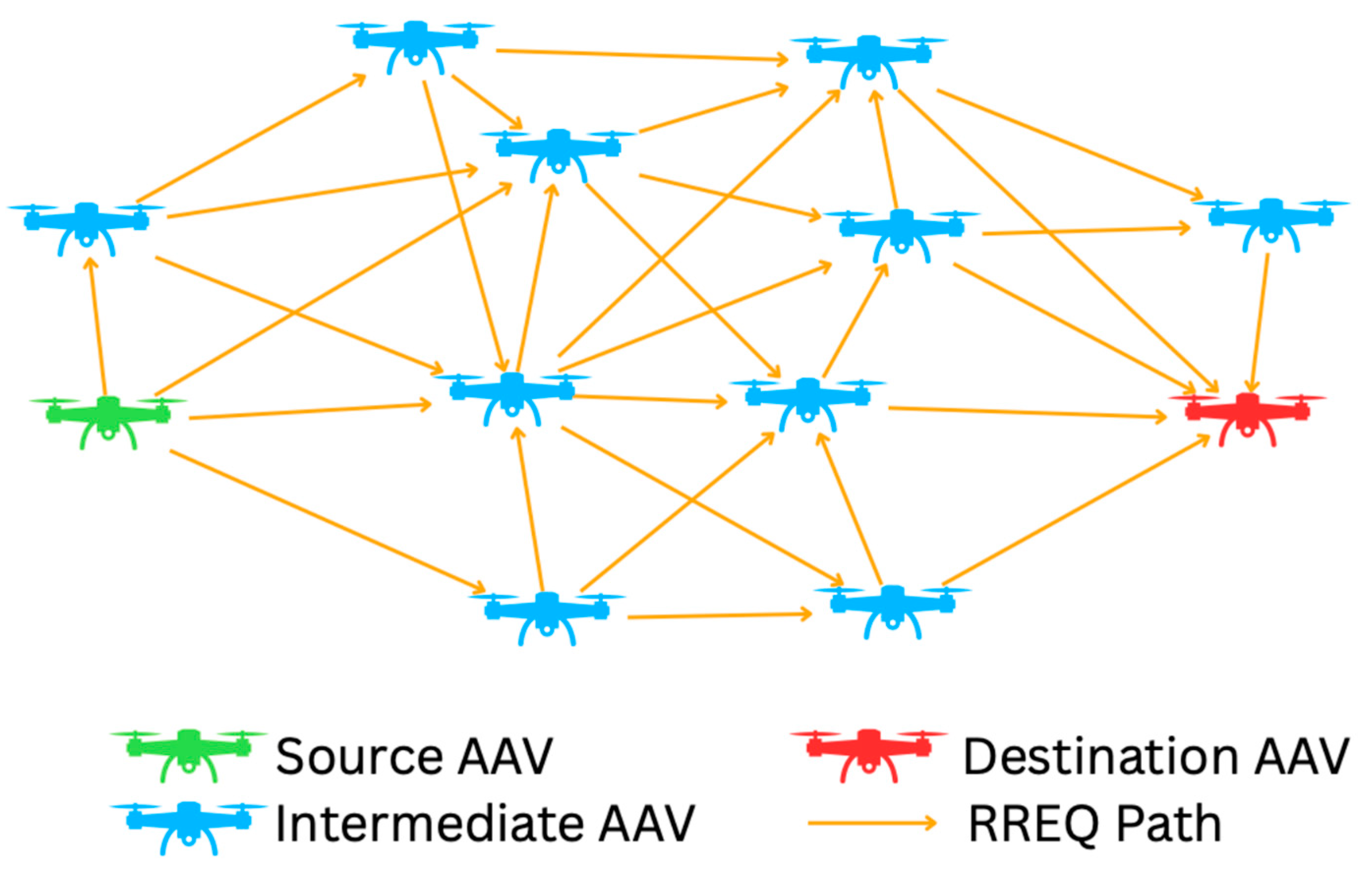
- The “broadcast storm” phenomenon
- (4)
- Scarce resources
- (1)
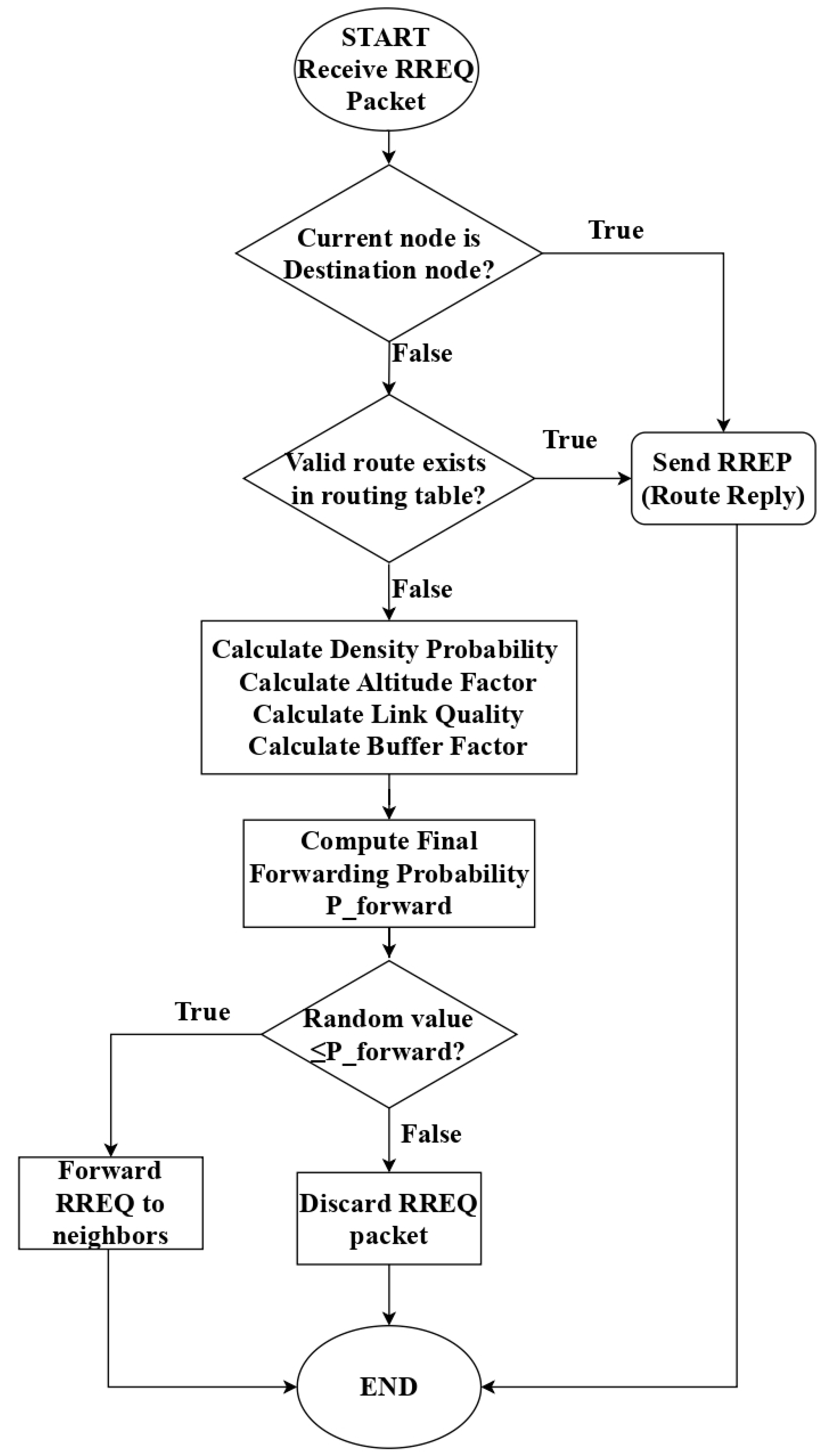
- SHARP-AODV provides an intelligent RREQ dissemination scheme that unites density sensitivity with a multi-parameter probabilistic model. The scheme considers four factors: (1) local neighborhood density via a three-level discrete model based on the optimal-coverage principle; (2) flight altitude to leverage enhanced coverage using higher altitudes; (3) channel quality calculated based on relative velocity and estimated distance; and (4) routing-buffer status using a sliding-window approach to avoid congestion. This approach greatly reduces the broadcast-storm effect in route discovery, reducing redundant control traffic by 70–80% to less than 30%, yet preserves enough coverage to guarantee a high probability of path discovery, especially in dense and high-speed-changing AAV topologies.
- (2)
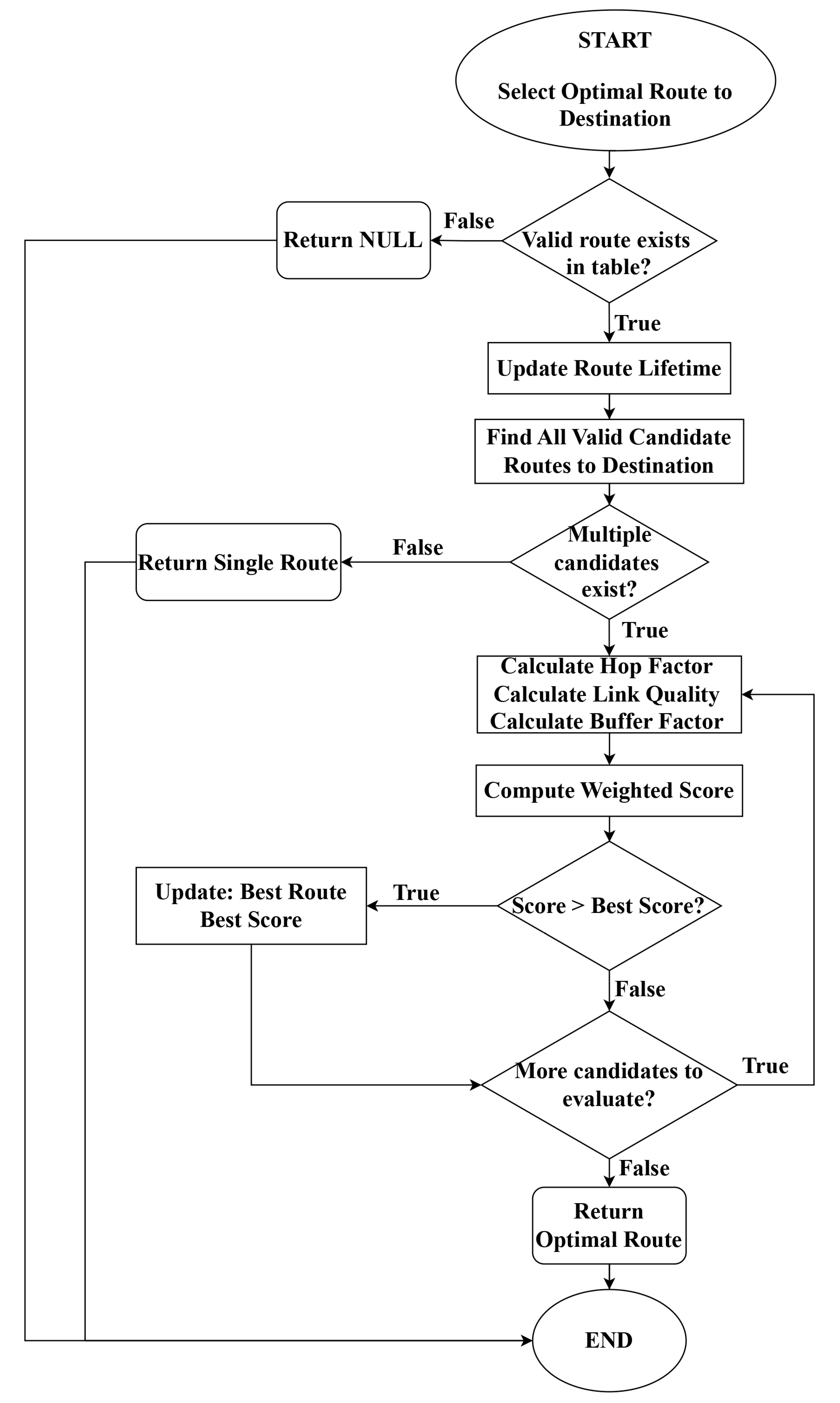
- SHARP-AODV adopts a multi-criteria decision-making (MCDM) route-selection method that employs three important parameters optimized by sensitivity analysis with designated weights: hop count (30%), link quality (50%), and resource state (20%). SHARP-AODV, in contrast to original AODV with a single parameter hop count, maximizes link quality with the highest assigned weight (50%) to ensure route stability, balancing node resource availability and path length. As a result, the protocol selects paths that are not just shorter but more stable and energy-efficient, qualities particularly precious in AAV networks where links are unstable due to high mobility and nodes are flight-time- and energy-constrained.
- (3)
- SHARP-AODV provides new avenues in various emerging application domains. In fog and edge computing, AAVs with SHARP-AODV can serve as mobile edge nodes to collect, process, and exchange data in real-time with low latency and high reliability, supporting applications like real-time video processing, distributed sensor data processing, and federated learning among AAV swarms.
- (4)
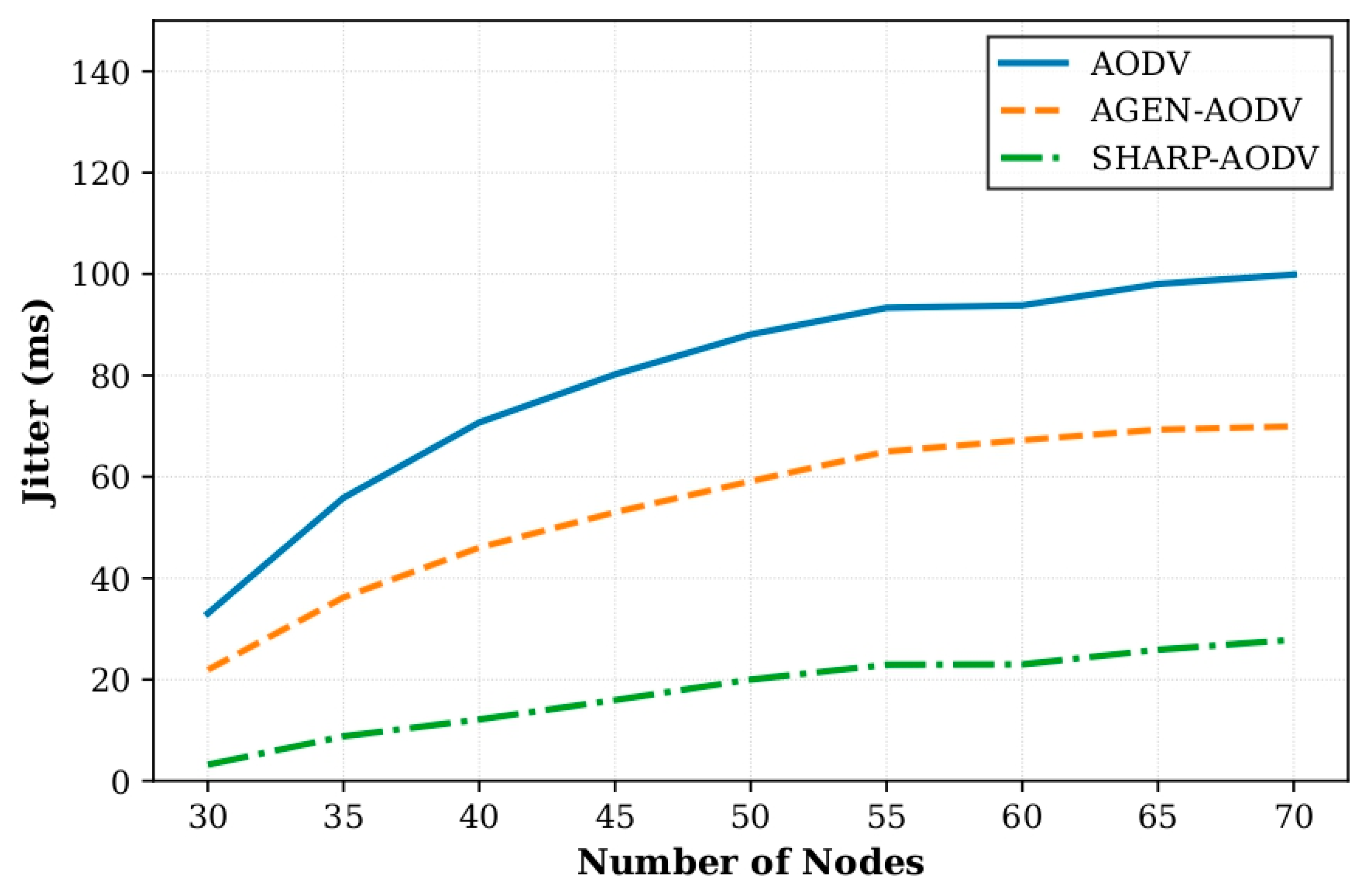
- The proposed protocol also fulfills stringent communications requirements for Metaverse scenarios involving AAVs by enabling high-quality AR/VR streams with low latency (below 100 ms) and stable jitter (below 20 ms), conditions essential for smooth immersive experiences and for mitigating motion sickness. For 6G networks, SHARP-AODV aligns with ultra-reliable low-latency communications (URLLC) and massive machine-type communications (mMTC) objectives by maintaining stable connectivity at very high node densities (107 devices/km2) and reducing routing latency to the tens-of-milliseconds range.
- (5)
- Moreover, by lowering control overhead and selecting energy-efficient routes, SHARP-AODV significantly extends AAV autonomous operation by an estimated 15–25%, which is especially valuable for large-scale, long-duration deployments such as environmental monitoring, disaster management, and augmentation of mobile network infrastructure.
2. Related Work
2.1. Fundamental Operating Principles of AODV
- Route discovery
- Route reply
- Route maintenance
- Route error
2.2. Strengths and Limitations in Autonomous Aerial Vehicle (AAV) Environments
- (a)
- Resource efficiency
- (b)
- Topology adaptivity
- (c)
- No global synchronization
- (a)
- High RREQ overhead
- (b)
- Single-criterion path selection
- (c)
- Slow route recovery
- (d)
- Lack of mobility prediction
3. Proposed Model
3.1. Intelligent Adaptive RREQ-Forwarding Mechanism
3.1.1. Density-Aware Probability
- —forwarding probability for an intermediate node.
- n—current number of neighbors.
- and —lower and upper density thresholds.
3.1.2. Altitude Factor
- —altitude-gain coefficient.
- —current altitude of the AAV.
- —optimal altitude threshold.
3.1.3. Channel-Quality Factor
- —normalized speed.
- —normalized distance.
- —default maximum speed in the scenario.
- —coarse estimate of the separation between the current node and the RREQ source.
- —maximum single-hop link range.
3.1.4. Buffer-State Factor
- —current queue length.
- —buffer capacity.
- and —upper and lower occupancy thresholds.
3.1.5. Composite Forwarding Probability
3.2. Multi-Criteria Path Selection Mechanism
- Lack of channel stability consideration
- Ignoring resource status
- Absence of a multipath scheme
- Low efficiency in QoS parameters
3.2.1. Hop Factor (HF)—Path Length Indicator
- —hop count on route r.
- —is in the range (0, 1].
3.2.2. Link Quality Factor (LQ)—Channel Quality Indicator
- —AAV movement speed on route r (m/s).
- —maximum speed threshold.
- —minimum value, ensuring consideration even for high-speed vehicles.
3.2.3. Buffer Factor (BF)
- —average buffer occupancy of nodes along route r.
- —routing protocol buffer capacity is assumed to be identical across all AAV nodes in the network.
- —takes values in the range [0, 1].
3.2.4. Final Multi-Criteria Function
- —final rating of route r.
- —weight coefficients of factors, with
- —30% significance for hop count metric.
- —50% accounts for channel stability.
- —20% reflects buffer availability.
- A.
- Extension of AodvRoutingProtocol data structure
- m_enableSharpAodv: flag allowing for enabling or disabling SHARP-AODV mechanisms.
- m_maxRelativeSpeed: maximum allowable relative speed for assessing connection stability.
- m_transmissionRange: estimated transmission range for channel quality calculation.
- m_bufferOccupancyHigh and m_bufferOccupancyLow: buffer load threshold levels to prevent congestion.
- B.
- Modification of RREQ processing
- C.
- Change in route selection logic
4. Evaluation Methodology and Simulation
4.1. SHARP-AODV Implementation Model
4.2. Simulation Setup
- I.
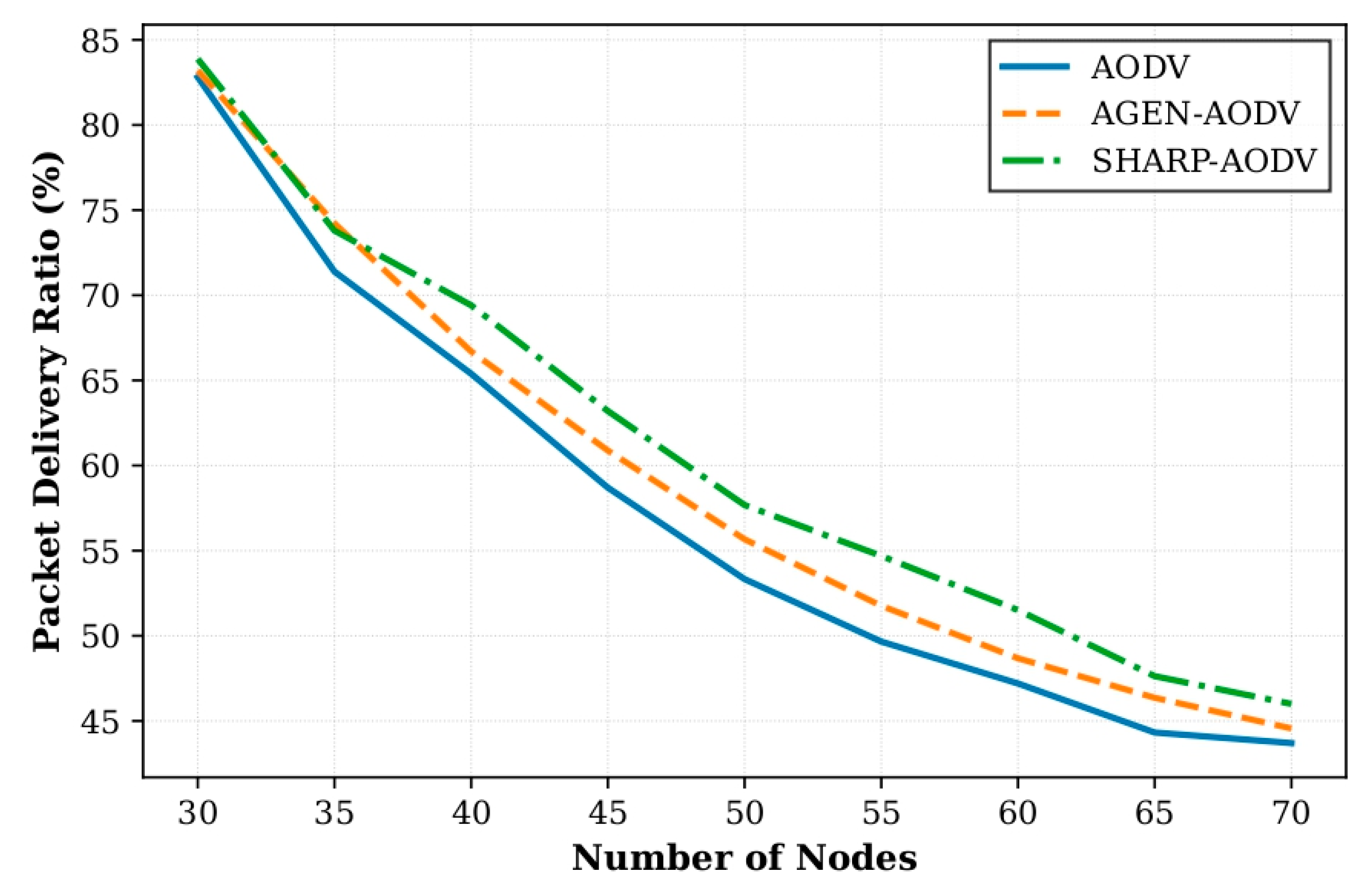
- Packet delivery ratio (PDR)
- II.
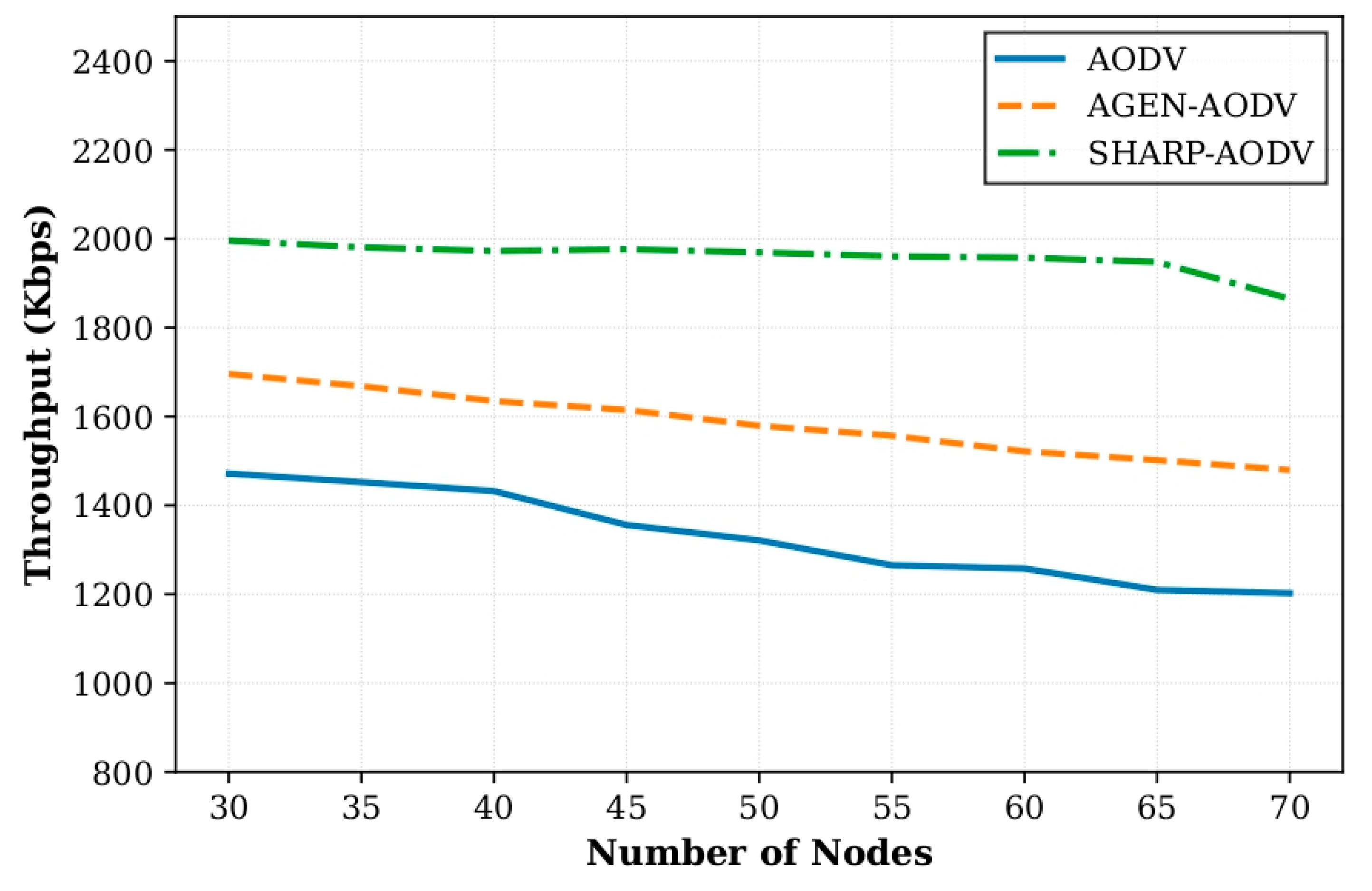
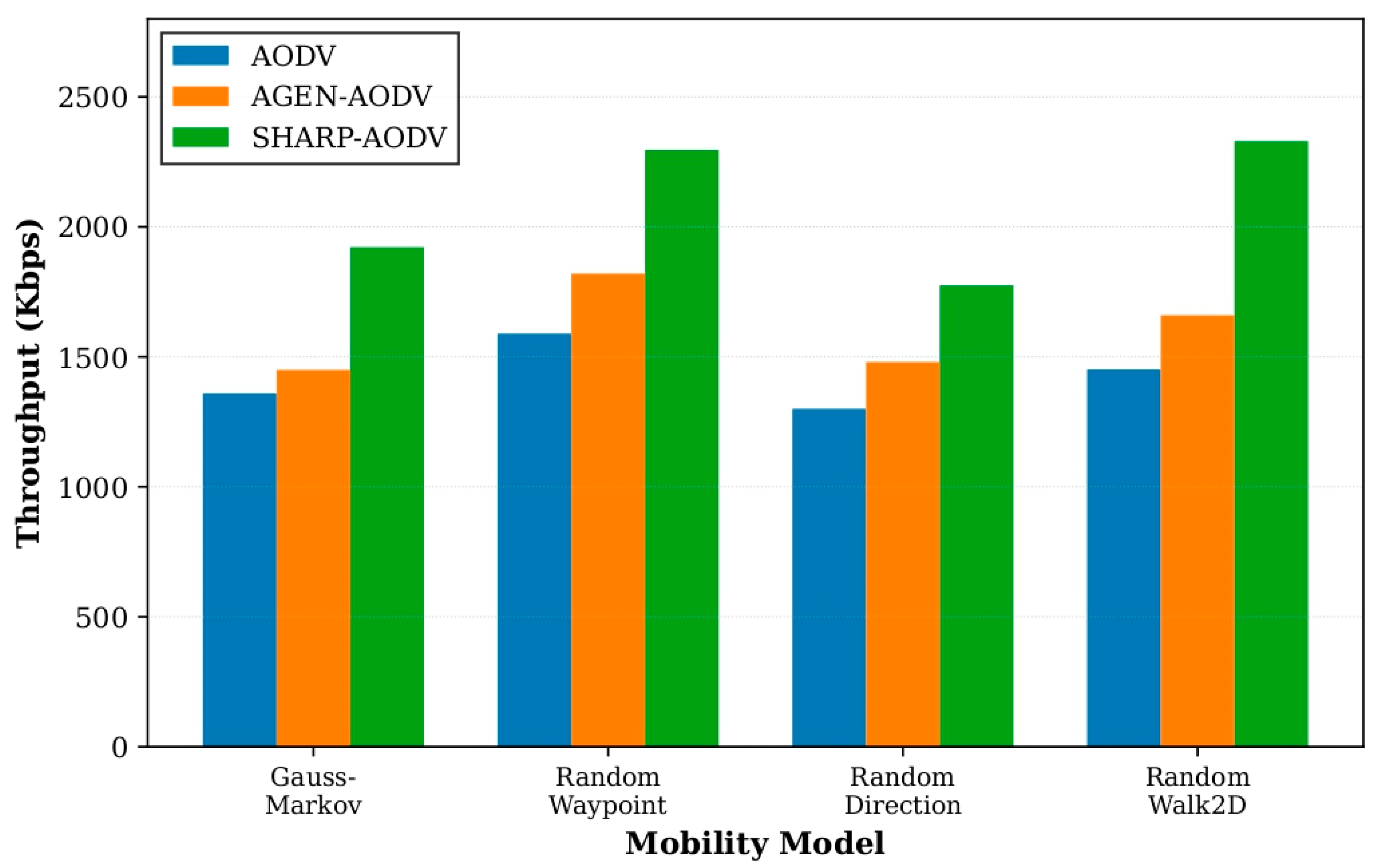
- Throughput
- —Total number of unique data packets successfully received at destination nodes across all communication flows in the network.
- —Total number of data packets generated and transmitted by source nodes across all communication flows
- III.
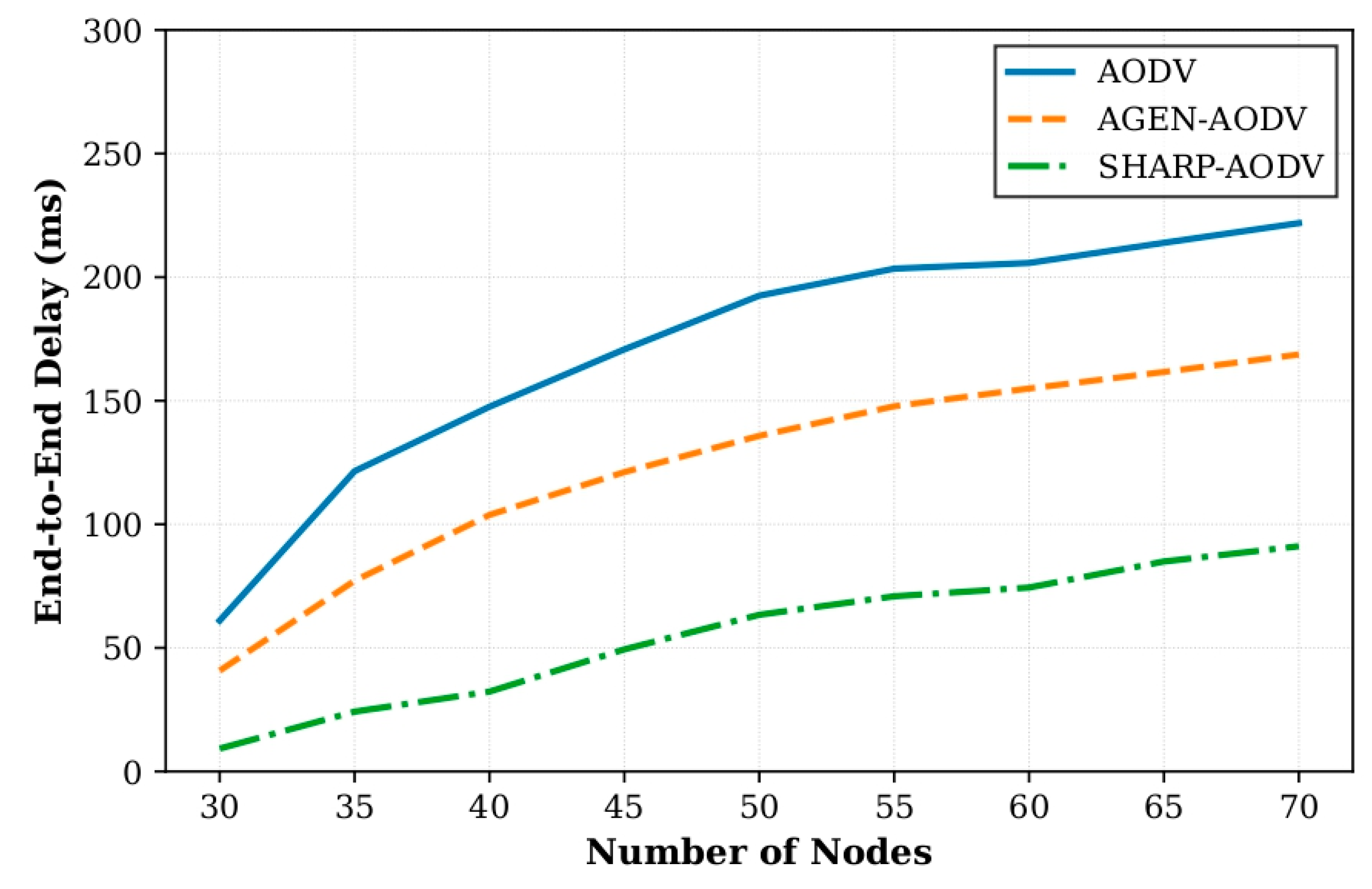
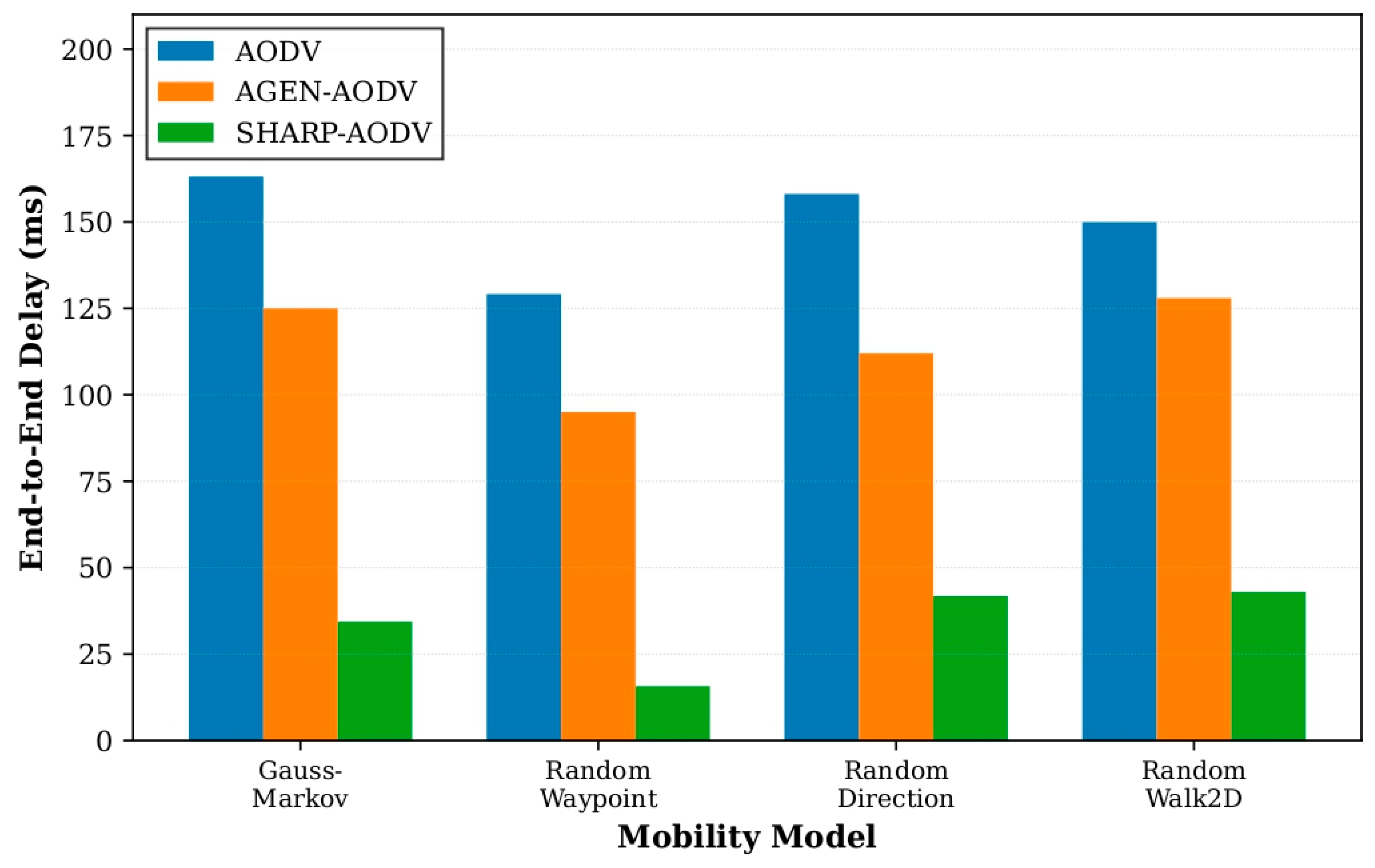
- End-to-end latency
- —Reception time of packet at the destination node.
- —Transmission time of packet at the source node.
- IV.
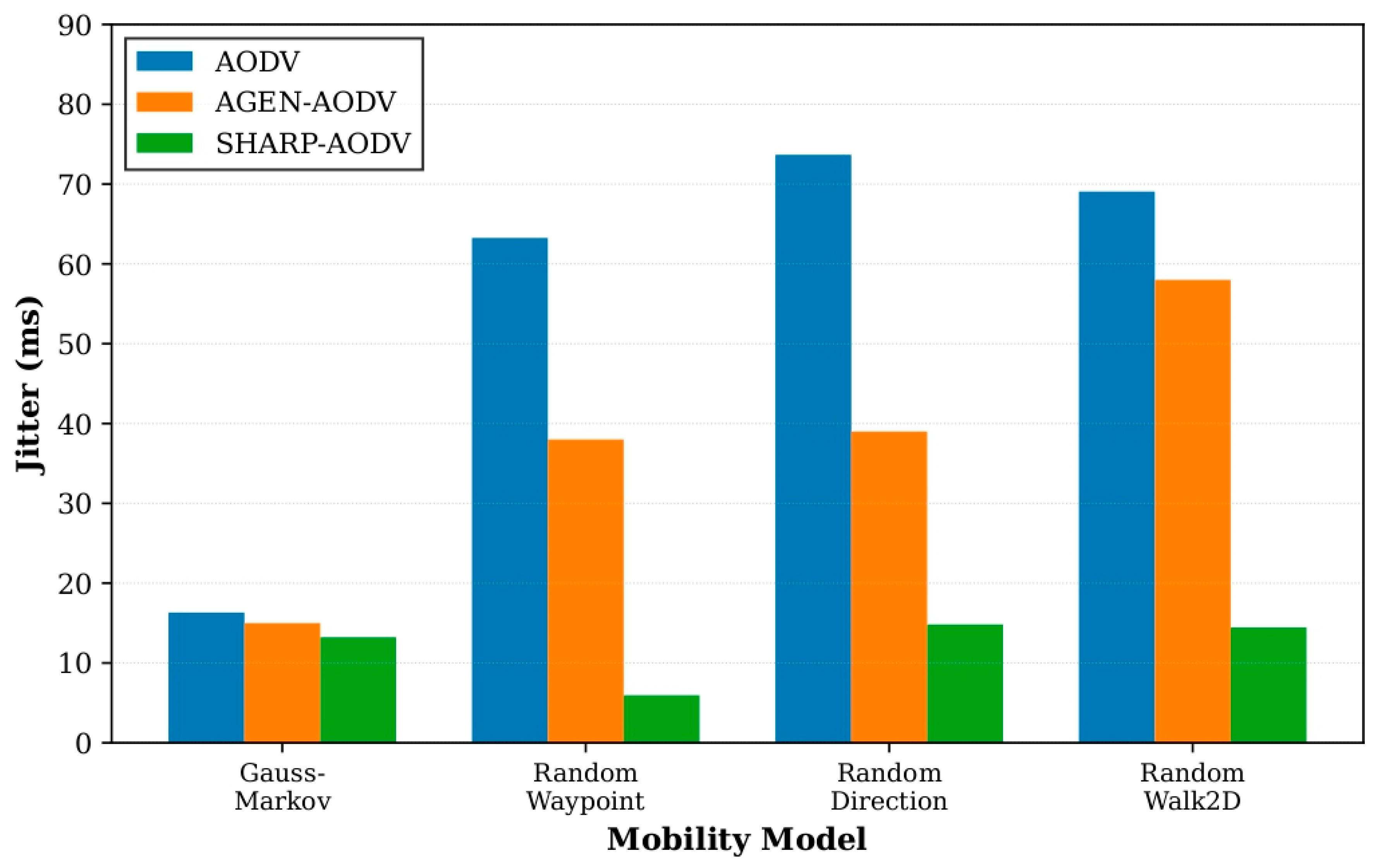
- Jitter
- —End-to-end delay of packet
- Absolute difference in delay between consecutive packets.
4.3. Results
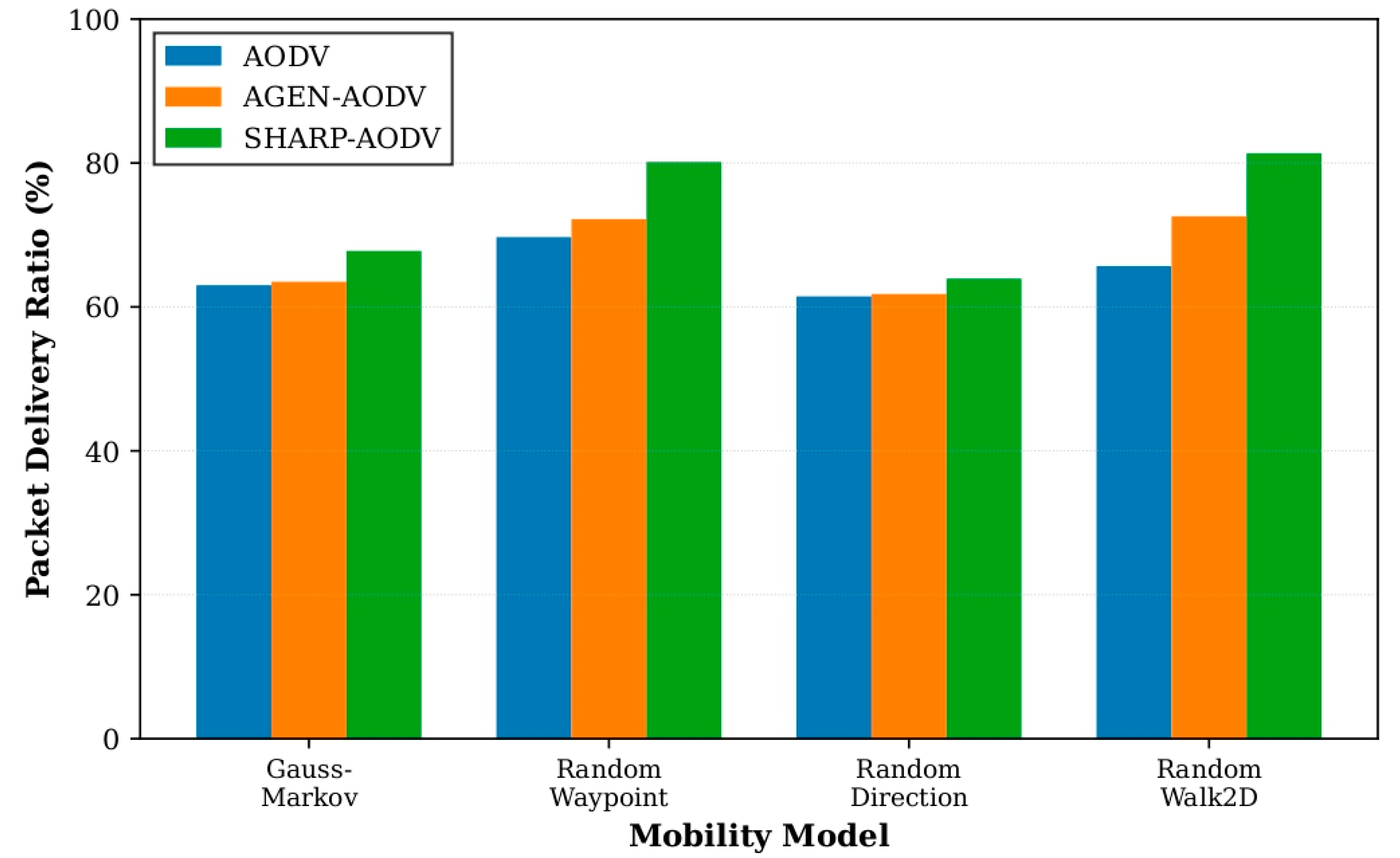
- (a)
- GaussMarkov
- (b)
- RandomWaypoint
- (c)
- RandomDirection
- (d)
- RandomWalk2D
5. Conclusions and Future Work
Author Contributions
Funding
Institutional Review Board Statement
Informed Consent Statement
Data Availability Statement
Acknowledgments
Conflicts of Interest
References
- Yang, X.; Wang, L.; Xu, L.; Zhang, Y.; Fei, A. Boids Swarm-based UAV Networking and Adaptive Routing Schemes for Emergency Communication. In Proceedings of the IEEE INFOCOM 2023—IEEE Conference on Computer Communications Workshops (INFO-COM WKSHPS), Hoboken, NJ, USA, 20 May 2023; pp. 1–6. [Google Scholar] [CrossRef]
- Erdelj, M.; Natalizio, E.; Chowdhury, K.R.; Akyildiz, I.F. Help from the Sky: Leveraging UAVs for Disaster Management. IEEE Pervasive Comput. 2017, 16, 24–32. [Google Scholar] [CrossRef]
- Yamazaki, Y.; Tamaki, M.; Premachandra, C.; Perera, C.J.; Sumathipala, S.; Sudantha, B.H. Victim Detection Using UAV with On-board Voice Recognition System. In Proceedings of the 2019 Third IEEE International Conference on Robotic Computing (IRC), Naples, Italy, 25–27 February 2019; pp. 555–559. [Google Scholar] [CrossRef]
- Etikasari, B.; Husin; Kautsar, S.; Riskiawan, H.Y.; Setyohadi, D.P.S. Wireless sensor network development in un-manned aerial vehicle (uav) for water quality monitoring system. IOP Conf. Ser. Earth Environ. Sci. 2020, 411, 012061. [Google Scholar] [CrossRef]
- Ya’acob, N.; Zolkapli, M.; Johari, J.; Yusof, A.L.; Sarnin, S.S.; Asmadinar, A.Z. UAV environment monitoring system. In Proceedings of the 2017 International Conference on Electrical, Electronics and System Engineering (ICEESE), Kanazawa, Japan, 9–10 November 2017; pp. 105–109. [Google Scholar] [CrossRef]
- Sharma, R.; Arya, R. UAV based long range environment monitoring system with Industry 5.0 perspectives for smart city infrastructure. Comput. Ind. Eng. 2022, 168, 108066. [Google Scholar] [CrossRef]
- Owaid, S.; Miry, A.; Salman, T. Survey on UAV Communications: Systems, Communication Technologies, Networks, Application. Univ. Thi-Qar J. Eng. Sci. 2023, 13, 136–145. [Google Scholar] [CrossRef] [PubMed]
- Alzenad, M.; El-Keyi, A.; Lagum, F.; Yanikomeroglu, H. 3-D Placement of an Unmanned Aerial Vehicle Base Station (UAV-BS) for Energy-Efficient Maximal Coverage. IEEE Wirel. Commun. Lett. 2017, 6, 434–437. [Google Scholar] [CrossRef]
- Li, J.; Sun, G.; Liang, S.; Wang, Y.; Wang, A. Multi-objective uplink data transmission optimization for edge computing in UAV-assistant mobile wireless sensor networks. J. Syst. Archit. 2022, 132, 102744. [Google Scholar] [CrossRef]
- Yao, Y.; Dong, D.; Cai, C.; Huang, S.; Yuan, X.; Gong, X. Multi-UAV-assisted Internet of Remote Things communication within satellite–aerial–terrestrial integrated network. EURASIP J. Adv. Signal Process. 2024, 2024, 10. [Google Scholar] [CrossRef]
- Peng, C.; Wang, Q.; Zhang, D. Efficient dynamic task offloading and resource allocation in UAV-assisted MEC for large sport event. Sci. Rep. 2025, 15, 11828. [Google Scholar] [CrossRef] [PubMed]
- Perkins, C.E.; Royer, E.M. Ad-hoc on-demand distance vector routing. In Proceedings of the Proceedings WMCSA’99, Second IEEE Workshop on Mobile Computing Systems and Applications, New Orleans, LA, USA, 25–26 February 1999; IEEE: New York, NY, USA, 2002; pp. 90–100. [Google Scholar] [CrossRef]
- Zhang, D.; Gong, C.; Zhang, T.; Zhang, J.; Piao, M. A new algorithm of clustering AODV based on edge computing strategy in IOV. Wirel. Netw. 2021, 27, 2891–2908. [Google Scholar] [CrossRef]
- Kim, C.; Talipov, E.; Ahn, B. A Reverse AODV Routing Protocol in Ad Hoc Mobile Networks. In Emerging Directions in Embedded and Ubiquitous Computing; Zhou, X., Sokolsky, O., Yan, L., Jung, E.-S., Shao, Z., Mu, Y., Lee, D.C., Kim, D.Y., Jeong, Y.-S., Xu, C.-Z., Eds.; Springer: Berlin/Heidelberg, Germany, 2006; pp. 522–531. [Google Scholar] [CrossRef]
- Tamizharasu, S. An intelligent AODV routing with energy efficient weight based clustering algorithm (EEWCA) in wire-less Ad hoc network (WANET). Wireless Netw. 2023, 29, 2703–2716. [Google Scholar] [CrossRef]
- Jiang, Y.; Sun, H.; Yang, M. AODV-EOCW: An Energy-Optimized Combined Weighting AODV Protocol for Mobile Ad Hoc Networks. Sensors 2023, 23, 6759. [Google Scholar] [CrossRef] [PubMed]
- Reddy, P.B.; Reddy, B.B.; Dhananjaya, B. The AODV routing protocol with built-in security to counter blackhole attack in MANET. Mater. Today Proc. 2022, 50, 1152–1158. [Google Scholar] [CrossRef]
- Ni, S.-Y.; Tseng, Y.-C.; Chen, Y.-S.; Sheu, J.-P. The broadcast storm problem in a mobile ad hoc network. In Proceedings of the 5th Annual ACM/IEEE International Conference on Mobile Computing and Networking, 15–19 August 1999; ACM: New York, NY, USA, 1999; pp. 151–162. [Google Scholar] [CrossRef]
- Nabati, M.; Maadani, M.; Pourmina, M.A. AGEN-AODV: An Intelligent Energy-Aware Routing Protocol for Heterogeneous Mobile Ad-Hoc Networks. Mob. Netw. Appl. 2022, 27, 576–587. [Google Scholar] [CrossRef]
- 802.11g-2003; IEEE Standard for Information technology—Local and metropolitan area networks—Specific requirements—Part 11: Wireless LAN Medium Access Control (MAC) and Physical Layer (PHY) Specifications: Further Higher Data Rate Extension in the 2.4 GHz Band. IEEE Standard: Piscataway, NJ, USA. Available online: https://ieeexplore.ieee.org/document/1210624 (accessed on 8 December 2025).
- Yu, H.; Shokrnezhad, M.; Taleb, T.; Li, R.; Song, J. Towards 6G-based Metaverse: Supporting Highly-Dynamic Deterministic Multi-User Extended Reality Services. IEEE Netw. 2023, 37, 30–38. [Google Scholar] [CrossRef]
- Ma, M.; Wang, Z. Distributed Offloading for Multi-UAV Swarms in MEC-Assisted 5G Heterogeneous Networks. Drones 2023, 7, 226. [Google Scholar] [CrossRef]
- Singh, J.; Bello, Y.; Hussein, A.R.; Erbad, A.; Mohamed, A. Hierarchical Security Paradigm for IoT Multiaccess Edge Computing. IEEE Internet Things J. 2021, 8, 5794–5805. [Google Scholar] [CrossRef]
- Sun, G.; Wang, Z.; Su, H.; Yu, H.; Lei, B.; Guizani, M. Profit Maximization of Independent Task Offloading in MEC-Enabled 5G Internet of Vehicles. IEEE Trans. Intell. Transp. Syst. 2024, 25, 16449–16461. [Google Scholar] [CrossRef]
- Han, C.; Wu, Y.; Chen, Z.; Wang, X. Terahertz Communications (TeraCom): Challenges and Impact on 6G Wireless Systems. arXiv 2019, arXiv:1912.06040. [Google Scholar] [CrossRef]
- Guo, H.; Li, J.; Liu, J.; Tian, N.; Kato, N. A Survey on Space-Air-Ground-Sea Integrated Network Security in 6G. IEEE Commun. Surv. Tutor. 2022, 24, 53–87. [Google Scholar] [CrossRef]
- Rovira-Sugranes, A.; Razi, A.; Afghah, F.; Chakareski, J. A Review of AI-enabled Routing Protocols for UAV Networks: Trends, Challenges, and Future Outlook. arXiv 2021, arXiv:2104.01283. [Google Scholar] [CrossRef]





| Network Generation | Throughput | Latency | Connection Density | Key AAV Applications |
|---|---|---|---|---|
| 4G (LTE) | <100 Mbps | ~50 ms | devices/km2 | Video recording, photography, and basic monitoring |
| 5G | <10 Gbps | <5 ms | devices/km2 | Cargo delivery, real-time monitoring, and HD live streaming |
| 6G | <1 Tbps | <100 µs | devices/km2 | AAV swarms, Metaverse AR/VR, and Digital Twin |
| Parameter | Value |
|---|---|
| Routing Protocol | AODV/SHARP-AODV |
| Wi-Fi Standard | IEEE 802.11g [20] |
| Propagation Model | LogDistance |
| Packet Size | 512 bytes |
| Simulation Time | 300 s |
| Simulation runs | 20 per configuration |
| Simulation area | 800 m × 800 m × 100 m |
| AAV Transmission Range | 250 m |
| Traffic Type | Constant Bit Rate (CBR) |
| Data rate | 1024 kbps |
| Transmission power | 18 dBm |
| Reception threshold | −85 dBm |
Disclaimer/Publisher’s Note: The statements, opinions and data contained in all publications are solely those of the individual author(s) and contributor(s) and not of MDPI and/or the editor(s). MDPI and/or the editor(s) disclaim responsibility for any injury to people or property resulting from any ideas, methods, instructions or products referred to in the content. |
© 2025 by the authors. Licensee MDPI, Basel, Switzerland. This article is an open access article distributed under the terms and conditions of the Creative Commons Attribution (CC BY) license (https://creativecommons.org/licenses/by/4.0/).
Share and Cite
Tu, N.D.; Muthanna, A.; Khakimov, A.; Kochetkova, I.; Samouylov, K.; Ateya, A.A.; Koucheryavy, A. SHARP-AODV: An Intelligent Adaptive Routing Protocol for Highly Mobile Autonomous Aerial Vehicle (AAV) Networks. Sensors 2025, 25, 7522. https://doi.org/10.3390/s25247522
Tu ND, Muthanna A, Khakimov A, Kochetkova I, Samouylov K, Ateya AA, Koucheryavy A. SHARP-AODV: An Intelligent Adaptive Routing Protocol for Highly Mobile Autonomous Aerial Vehicle (AAV) Networks. Sensors. 2025; 25(24):7522. https://doi.org/10.3390/s25247522
Chicago/Turabian StyleTu, Nguyen Duc, Ammar Muthanna, Abdukodir Khakimov, Irina Kochetkova, Konstantin Samouylov, Abdelhamied A. Ateya, and Andrey Koucheryavy. 2025. "SHARP-AODV: An Intelligent Adaptive Routing Protocol for Highly Mobile Autonomous Aerial Vehicle (AAV) Networks" Sensors 25, no. 24: 7522. https://doi.org/10.3390/s25247522
APA StyleTu, N. D., Muthanna, A., Khakimov, A., Kochetkova, I., Samouylov, K., Ateya, A. A., & Koucheryavy, A. (2025). SHARP-AODV: An Intelligent Adaptive Routing Protocol for Highly Mobile Autonomous Aerial Vehicle (AAV) Networks. Sensors, 25(24), 7522. https://doi.org/10.3390/s25247522