An Edge AI Approach for Low-Power, Real-Time Atrial Fibrillation Detection on Wearable Devices Based on Heartbeat Intervals
 ,
,  ,
,  , ,
, ,  ,
,  ,
,  and
and 
Abstract
1. Introduction
2. Materials and Methods
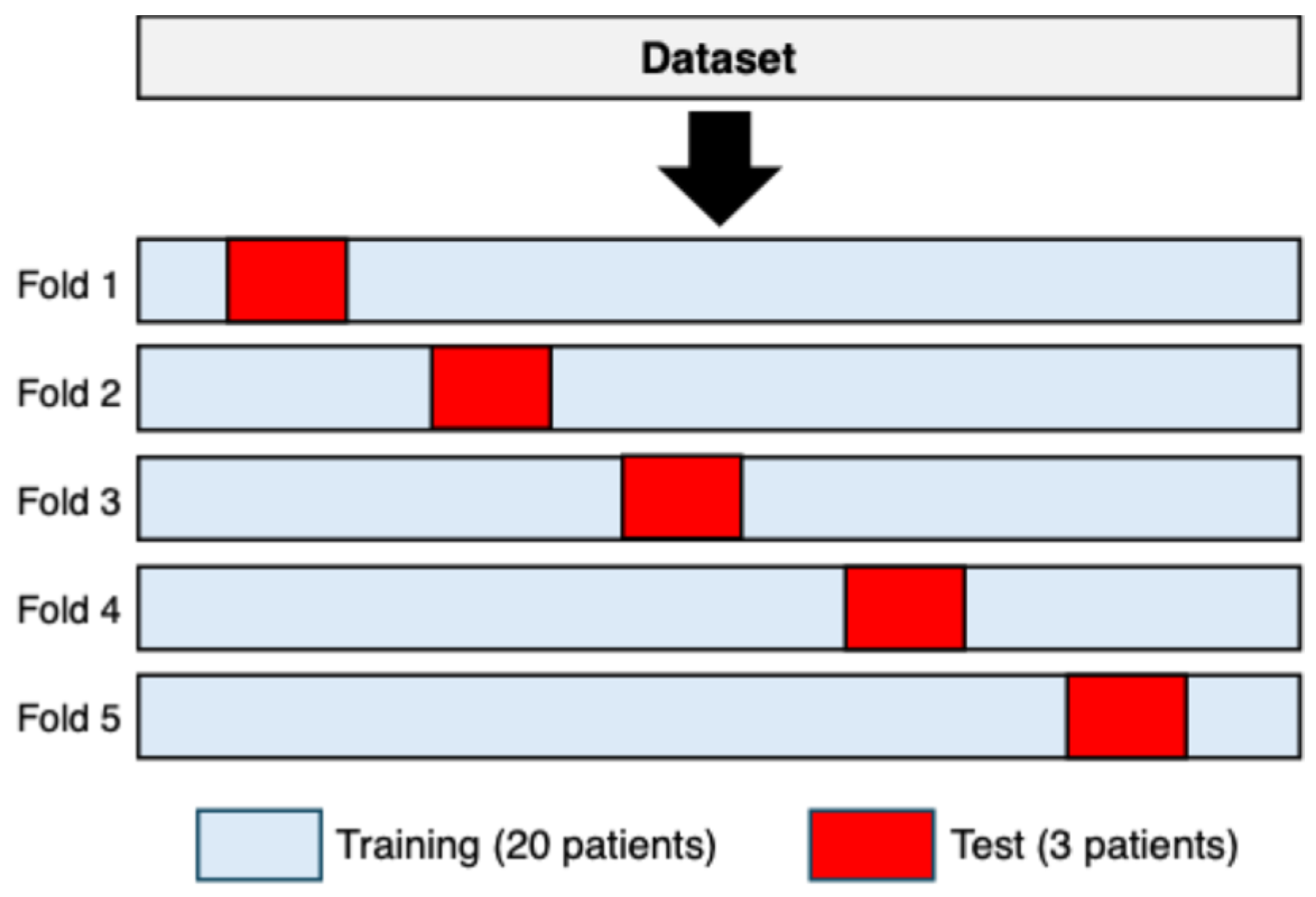
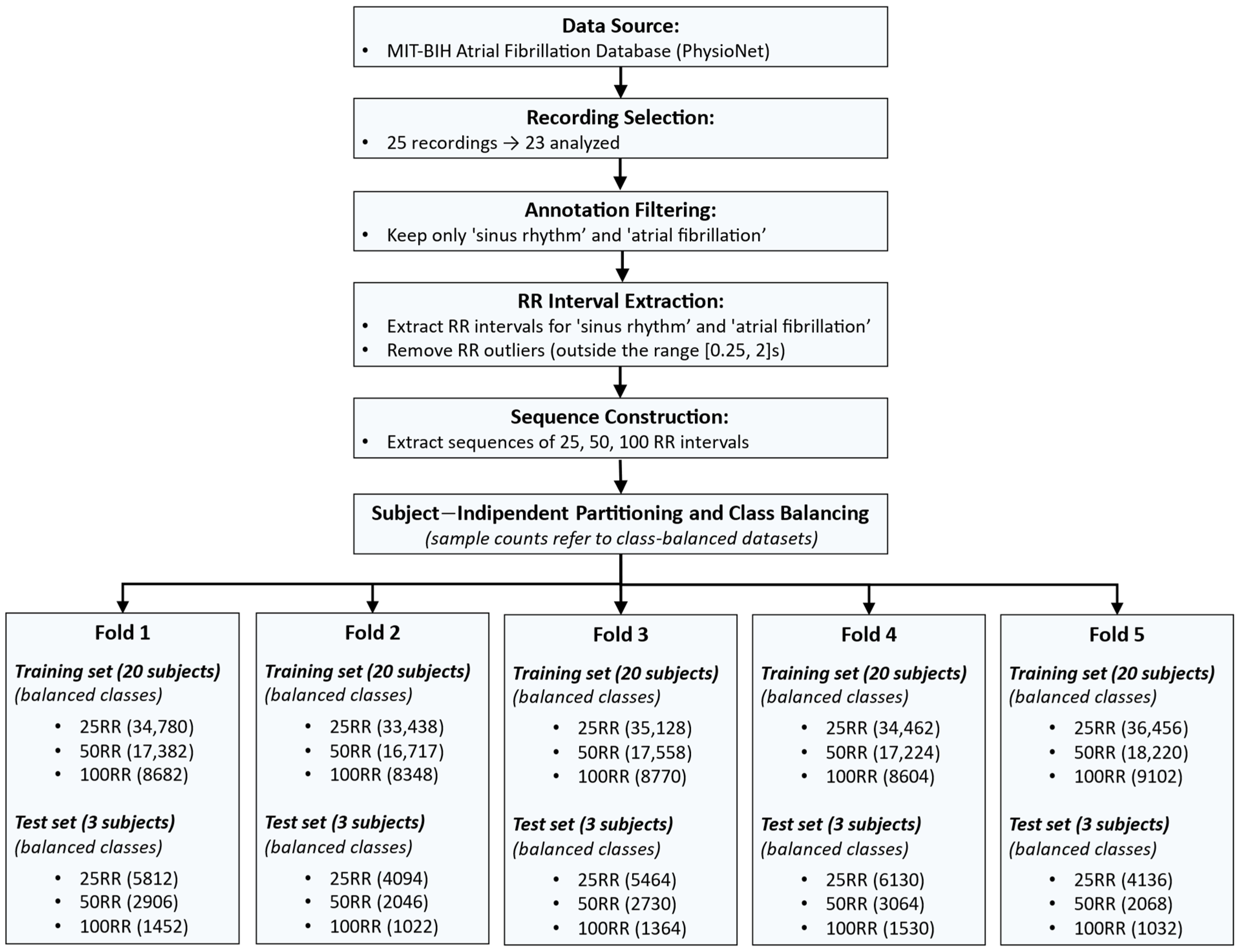
2.1. Dataset Building
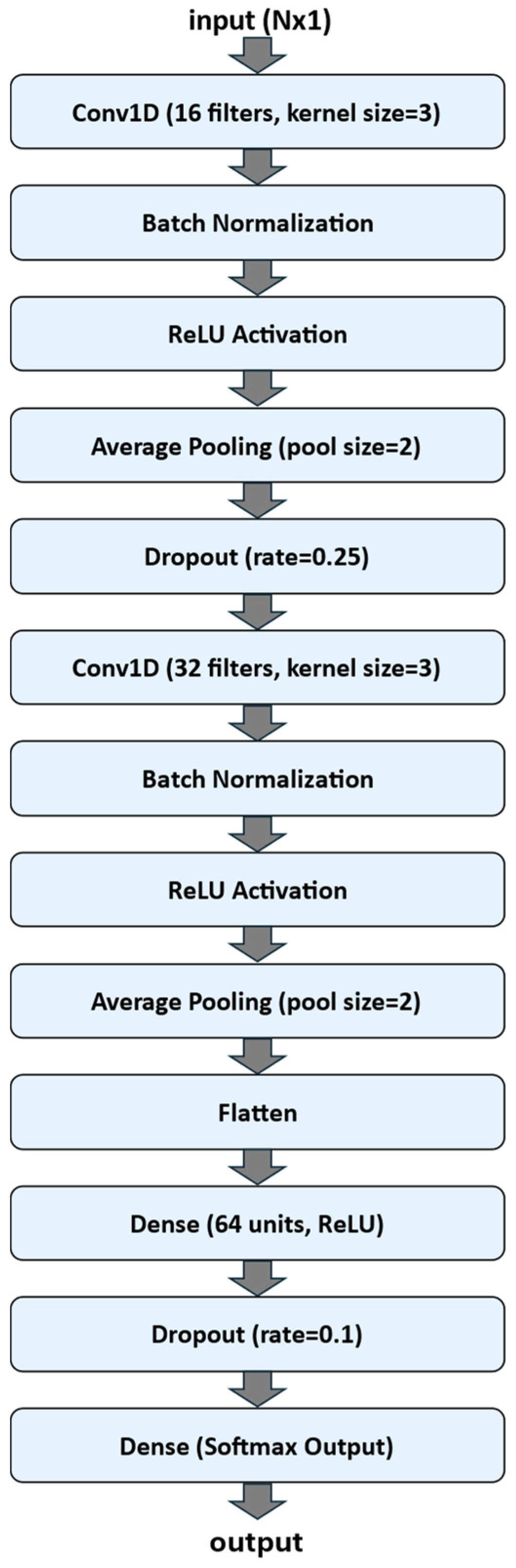
2.2. Design of a Neural Network in Edge Impulse Environment
2.3. Hardware and Software Architecture for Real-Time Testing
2.3.1. Hardware Setup for Simulating Realistic ECG Signals
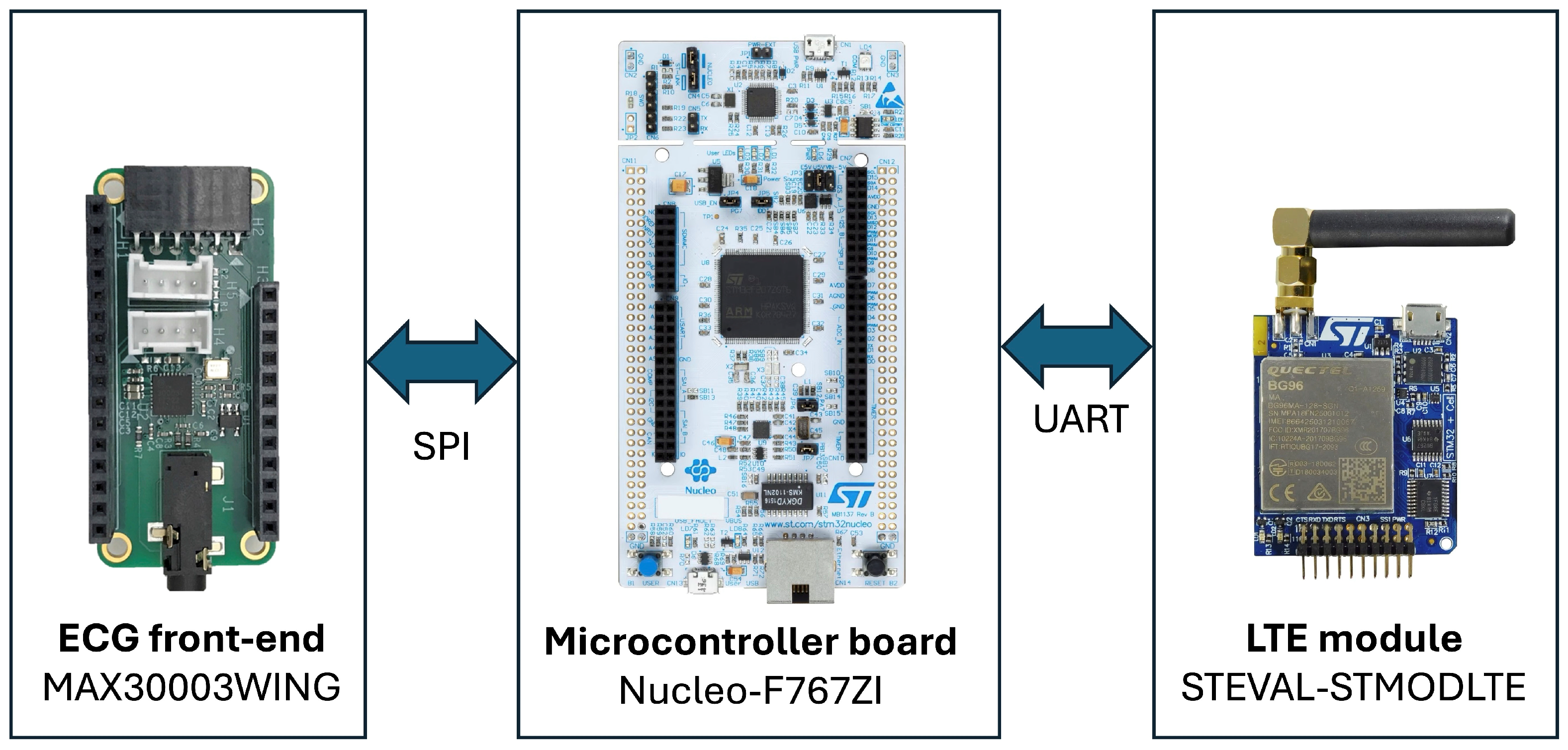
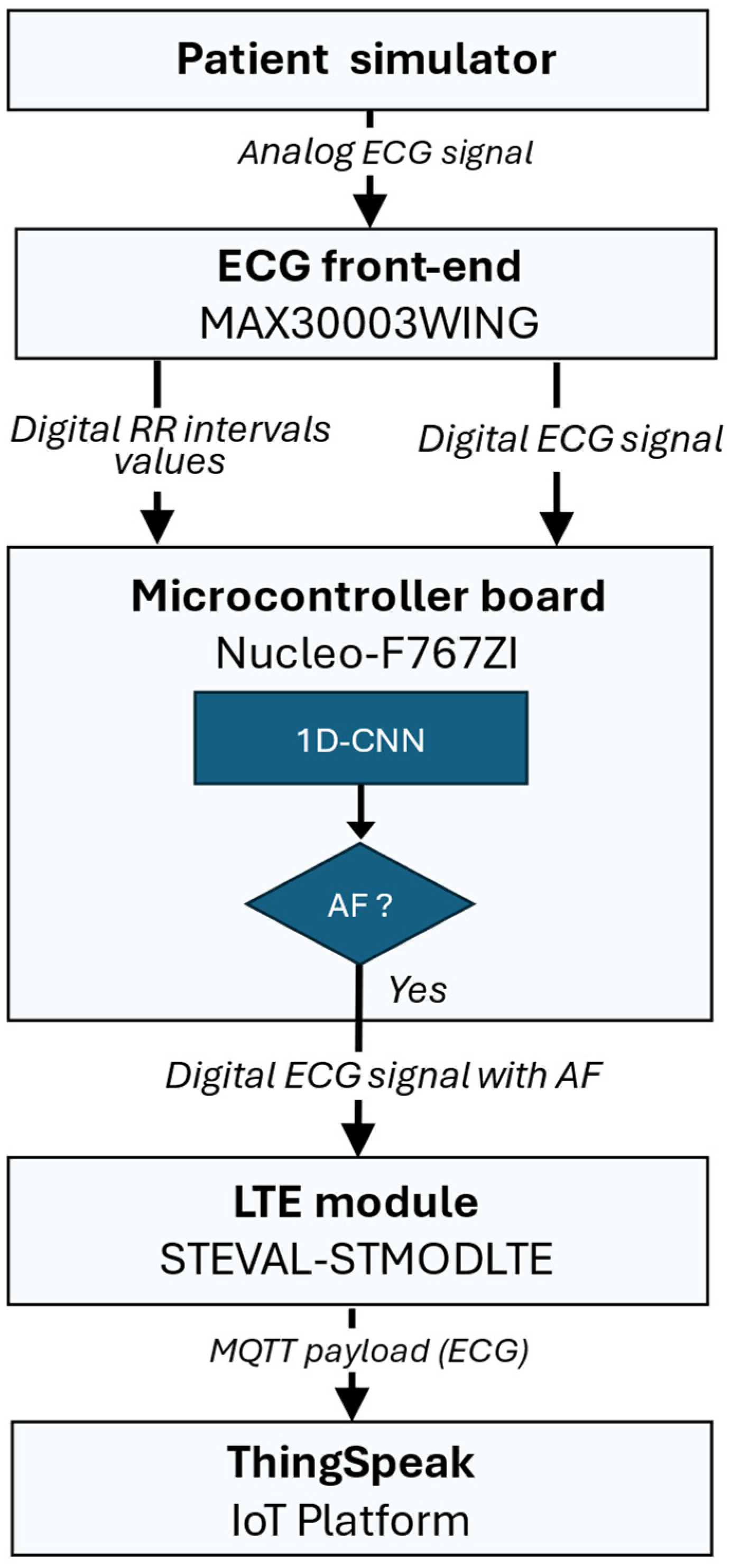
2.3.2. Hardware Setup for Real-Time AF Detection and Data Transmission
- ECG front-end: MAX30003WING (Analog Devices, Wilmington, MA, USA), based on the MAX30003 analog front-end for ECG monitoring. This chip integrates both analog and digital processing, including programmable gain, filtering options, and a built-in Pan–Tompkins QRS detection algorithm. It provides RR inter-beat interval estimation with minimal power consumption (~85 μW at 1.1 V).
- Control unit: Nucleo-F767ZI (STMicroelectronics, Coppell, TX, USA), featuring an STM32F767ZIT6 microcontroller with a 32-bit ARM Cortex-M7 core (up to 216 MHz). It receives data from the ECG front-end via SPI and transmits them to the communication module through UART.
- Wireless communication unit: STEVAL-STMODLTE (STMicroelectronics, Coppell, TX, USA), integrating a Quectel BG96 LTE Cat M1/NB1/EGPRS modem. This module provides low-power cellular connectivity for data upload to the cloud through Narrow Band-IoT protocols.

2.3.3. Software Architecture for Real-Time AF Detection and Data Transmission
- Data Acquisition and Buffering: ECG signals are continuously sampled at 125 Hz with 18-bit resolution using the MAX30003 front-end (internally operating at 32 KHz), with an ECG gain of about 160 V/V and a bandwidth of 0.5–40 Hz. Both raw ECG samples and computed RR intervals are stored in independent memory buffers.
- Neural Inference: when the RR buffer reaches the predefined window size (e.g., 25, 50, or 100 samples), the firmware preprocesses the data and invokes the Edge Impulse inference engine compiled directly into the microcontroller firmware. The model outputs the result of the inference.
- Connectivity and Data Publication: if a sequence of RR intervals is classified as an AF event, the system transmits the corresponding ECG window to ThingSpeak cloud service [47] for physician validation. In details, a cellular connection is established through the LTE module (STEVAL-STMODLTE) using the Mbed OS Cellular stack and the MQTT protocol is used to publish a JSON-formatted payload containing the ECG window. When a normal rhythm is detected, the data buffers are cleared, and a new acquisition cycle begins.

2.4. Real-Time Performances
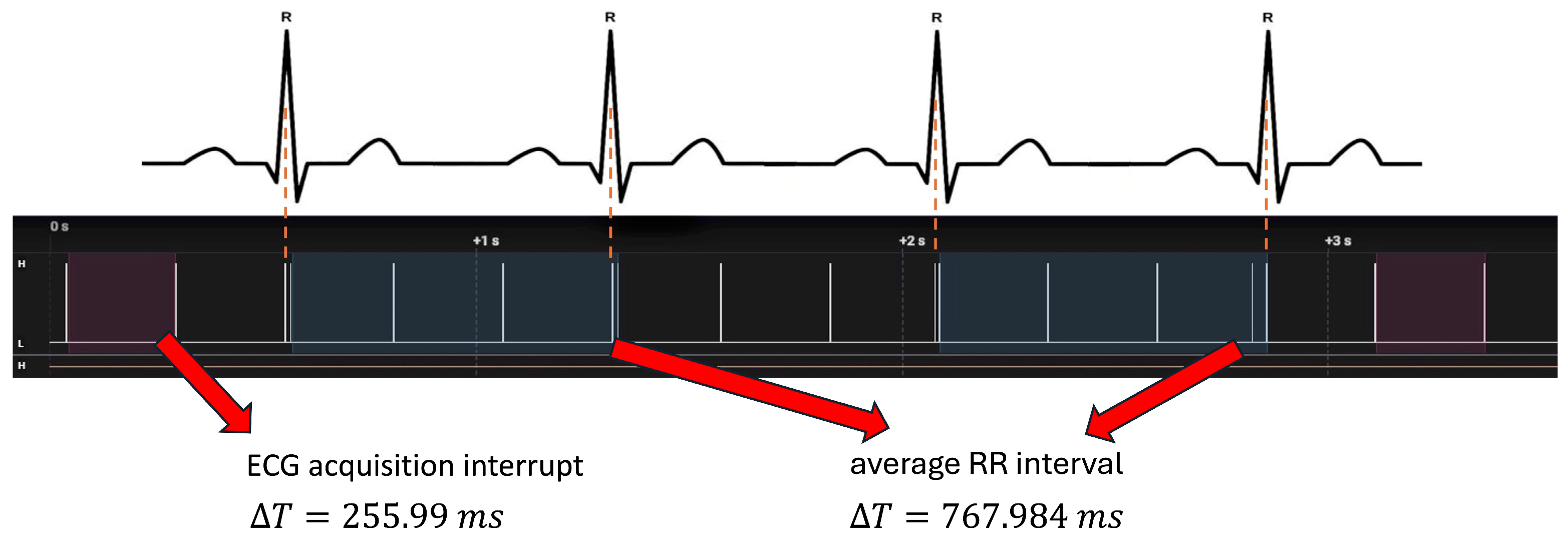
2.4.1. Temporal Measurements
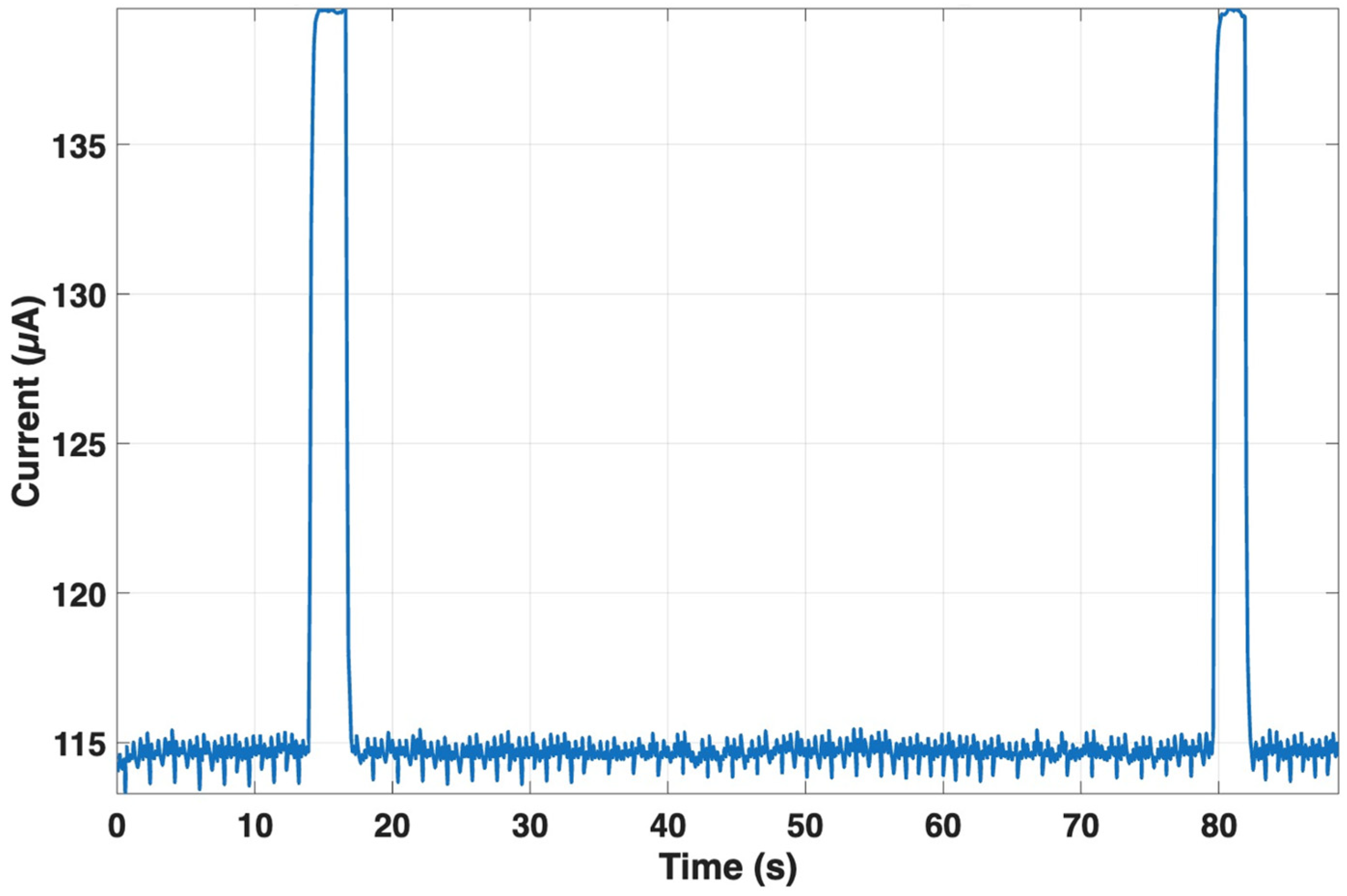
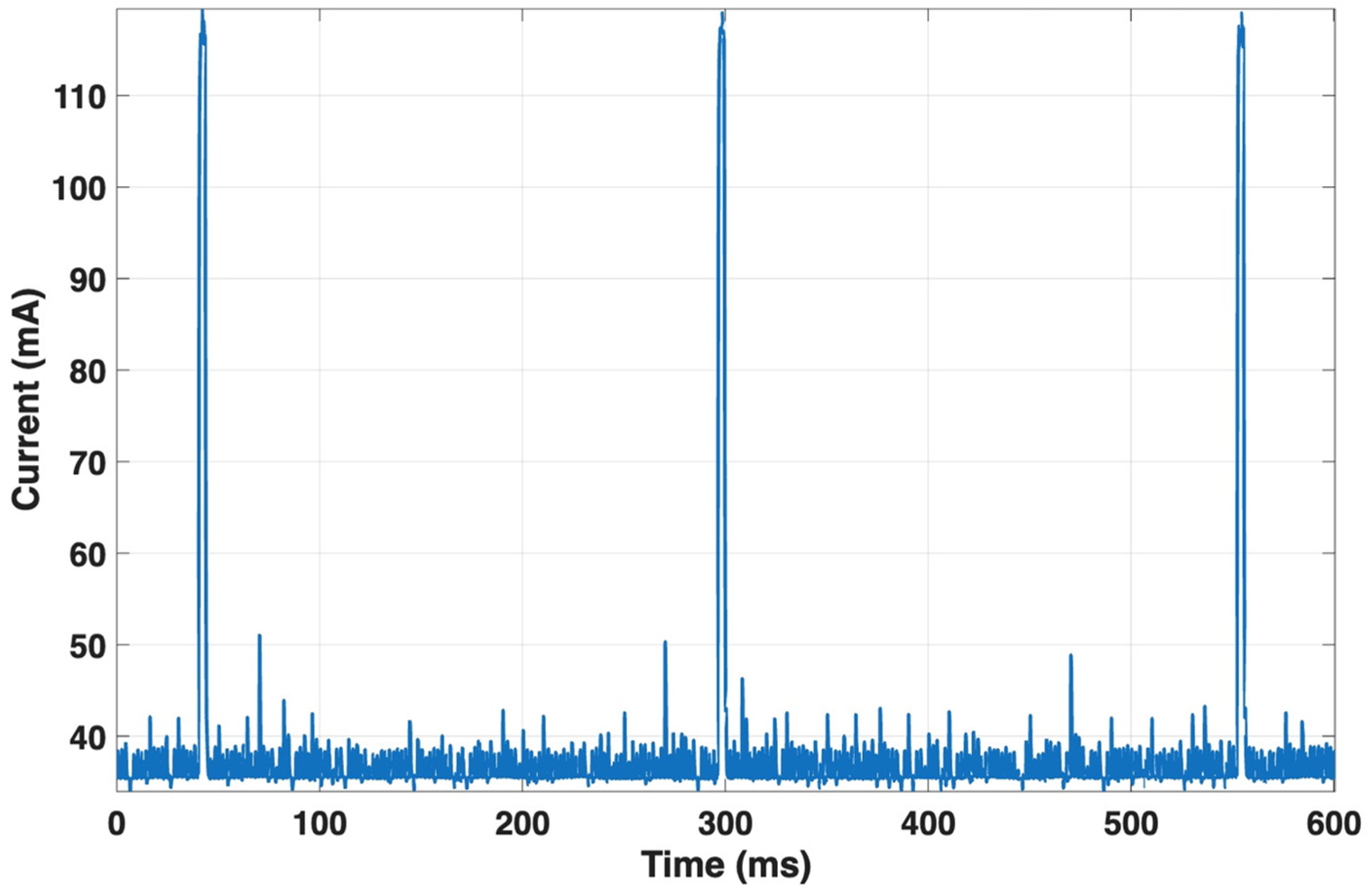
2.4.2. Power Consumption Measurements
- the MAX30003 ECG front-end;
- the NUCLEO-F767ZI microcontroller board;
- the STEVAL-STMODLTE LTE communication module.
3. Results
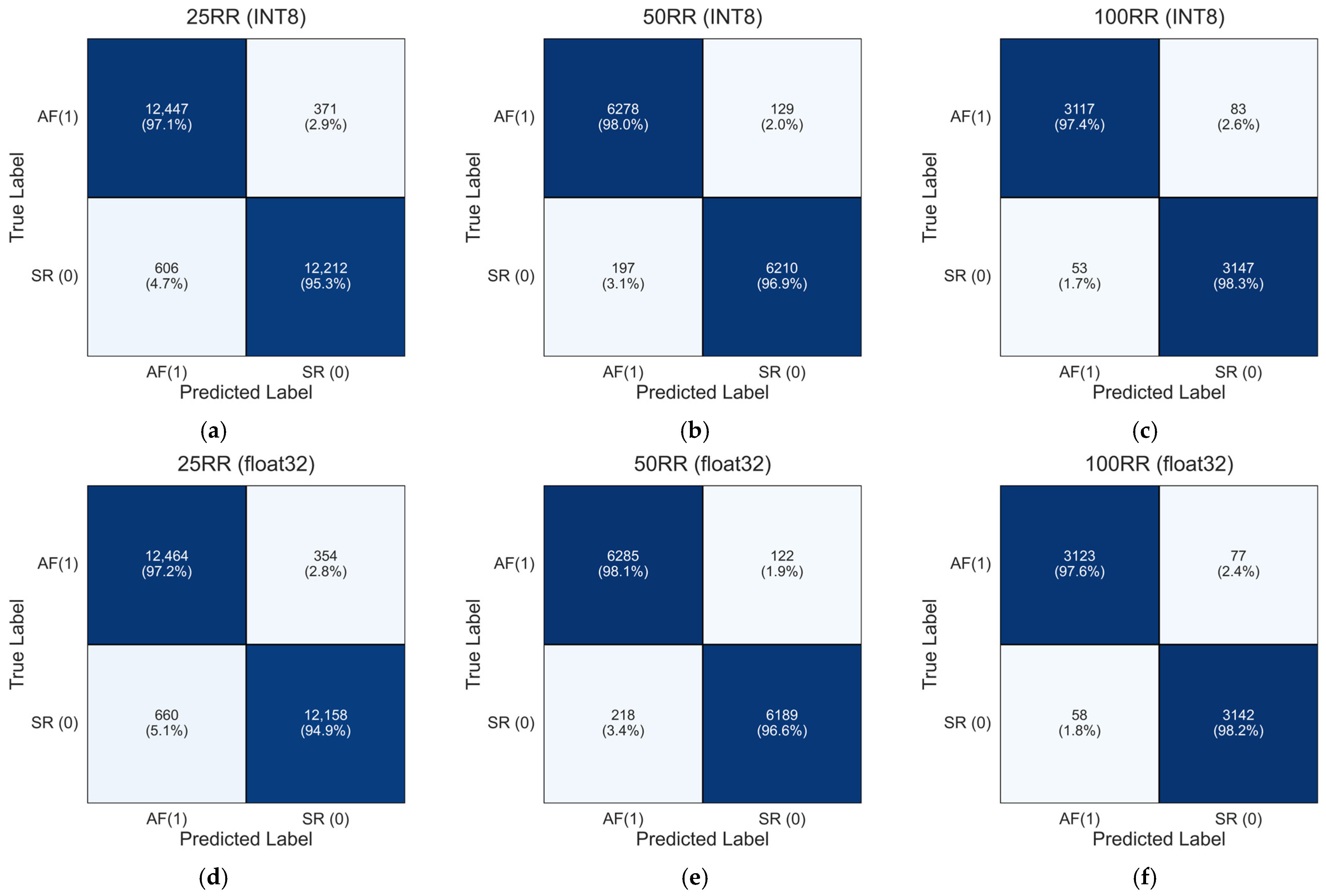
3.1. Performance of the Quantized (INT8) and Float32 1D-CNN Models Across the Five Validation Folds
3.2. Performance of the Quantized (INT8) and float32 1D-CNN Models Across the Five Test Folds
3.3. Results of Real-Time Testing
3.3.1. Temporal Performance
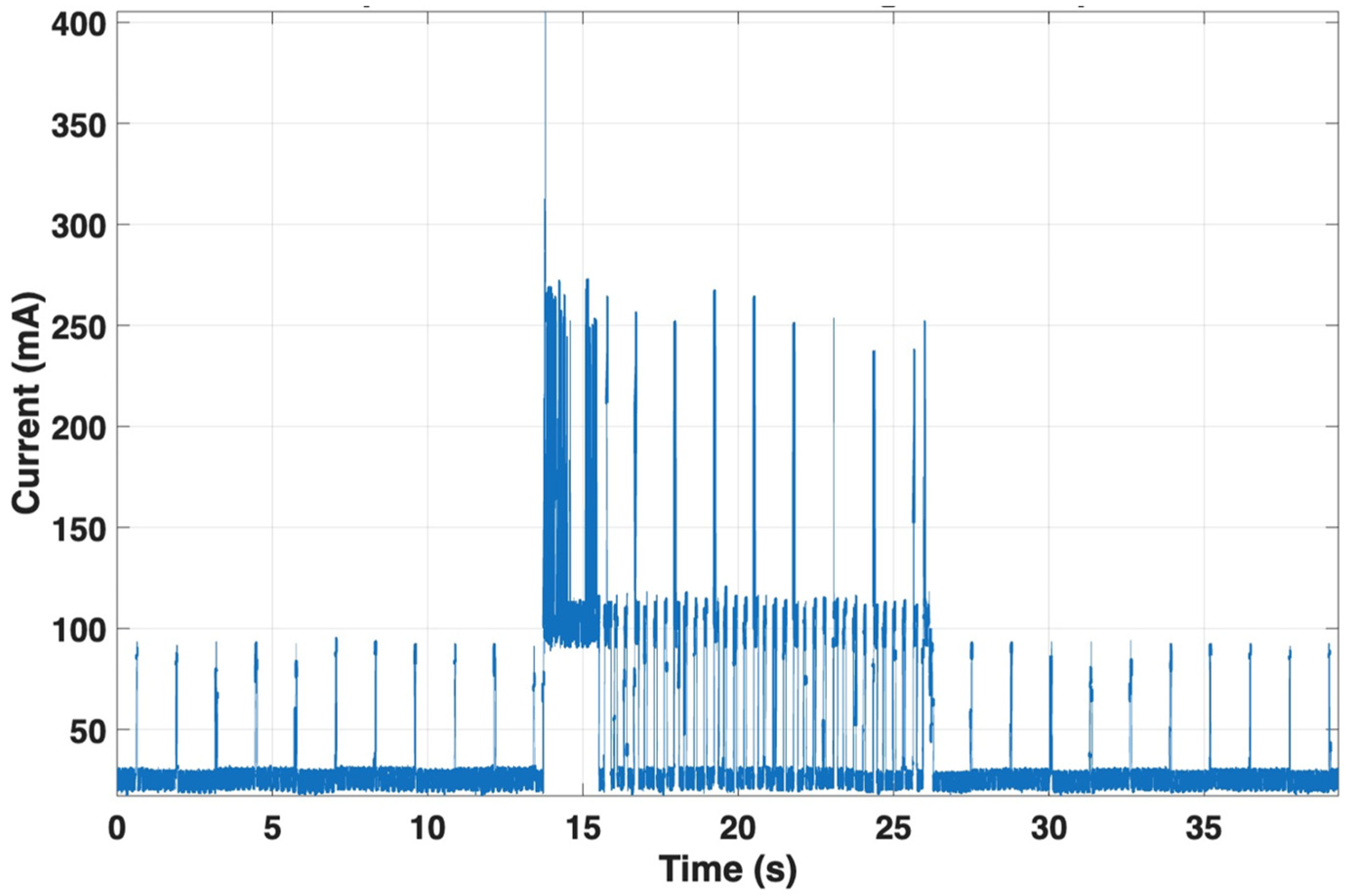
3.3.2. Power Consumption Analysis
4. Discussion and Conclusions
Author Contributions
Funding
Institutional Review Board Statement
Informed Consent Statement
Data Availability Statement
Acknowledgments
Conflicts of Interest
References
- Linz, D.; Gawalko, M.; Betz, K.; Hendriks, J.M.; Lip, G.Y.H.; Vinter, N.; Guo, Y.; Johnsen, S. Atrial Fibrillation: Epidemiology, Screening and Digital Health. Lancet Reg. Health–Eur. 2024, 37, 100786. [Google Scholar] [CrossRef]
- Karamitanha, F.; Ahmadi, F.; Fallahabadi, H. Difference Between Various Countries in Mortality and Incidence Rate of the Atrial Fibrillation Based on Human Development Index in Worldwide: Data from Global Burden of Disease 2010–2019. Curr. Probl. Cardiol. 2023, 48, 101438. [Google Scholar] [CrossRef] [PubMed]
- Kornej, J.; Börschel, C.S.; Benjamin, E.J.; Schnabel, R.B. Epidemiology of Atrial Fibrillation in the 21st Century. Circ. Res. 2020, 127, 4–20. [Google Scholar] [CrossRef]
- Wu, J.; Nadarajah, R.; Nakao, Y.M.; Nakao, K.; Wilkinson, C.; Mamas, M.A.; Camm, A.J.; Gale, C.P. Temporal Trends and Patterns in Atrial Fibrillation Incidence: A Population-Based Study of 3·4 Million Individuals. Lancet Reg. Health–Eur. 2022, 17, 100386. [Google Scholar] [CrossRef]
- Schnabel, R.B.; Yin, X.; Gona, P.; Larson, M.G.; Beiser, A.S.; McManus, D.D.; Newton-Cheh, C.; Lubitz, S.A.; Magnani, J.W.; Ellinor, P.T.; et al. 50 Year Trends in Atrial Fibrillation Prevalence, Incidence, Risk Factors, and Mortality in the Framingham Heart Study: A Cohort Study. Lancet 2015, 386, 154–162. [Google Scholar] [CrossRef]
- Vinciguerra, M.; Dobrev, D.; Nattel, S. Atrial Fibrillation: Pathophysiology, Genetic and Epigenetic Mechanisms. Lancet Reg. Health–Eur. 2024, 37, 100785. [Google Scholar] [CrossRef] [PubMed]
- Benjamin, E.J.; Wolf, P.A.; D’Agostino, R.B.; Silbershatz, H.; Kannel, W.B.; Levy, D. Impact of Atrial Fibrillation on the Risk of Death. Circulation 1998, 98, 946–952. [Google Scholar] [CrossRef]
- Buja, A.; Rebba, V.; Montecchio, L.; Renzo, G.; Baldo, V.; Cocchio, S.; Ferri, N.; Migliore, F.; Zorzi, A.; Collins, B.; et al. The Cost of Atrial Fibrillation: A Systematic Review. Value Health 2024, 27, 527–541. [Google Scholar] [CrossRef]
- Dilaveris, P.E.; Kennedy, H.L. Silent Atrial Fibrillation: Epidemiology, Diagnosis, and Clinical Impact. Clin. Cardiol. 2017, 40, 413–418. [Google Scholar] [CrossRef] [PubMed]
- Patten, M.; Pecha, S.; Aydin, A. Atrial Fibrillation in Hypertrophic Cardiomyopathy: Diagnosis and Considerations for Management. J. Atr. Fibrillation 2018, 10, 1556. [Google Scholar] [CrossRef]
- Siontis, K.C.; Gersh, B.J.; Killian, J.M.; Noseworthy, P.A.; McCabe, P.; Weston, S.A.; Roger, V.L.; Chamberlain, A.M. Typical, Atypical, and Asymptomatic Presentations of New-Onset Atrial Fibrillation in the Community: Characteristics and Prognostic Implications. Heart Rhythm. 2016, 13, 1418–1424. [Google Scholar] [CrossRef]
- Hindricks, G.; Potpara, T.; Dagres, N.; Arbelo, E.; Bax, J.J.; Blomström-Lundqvist, C.; Boriani, G.; Castella, M.; Dan, G.-A.; Dilaveris, P.E.; et al. 2020 ESC Guidelines for the Diagnosis and Management of Atrial Fibrillation Developed in Collaboration with the European Association for Cardio-Thoracic Surgery (EACTS): The Task Force for the diagnosis and management of atrial fibrillation of the European Society of Cardiology (ESC) Developed with the special contribution of the European Heart Rhythm Association (EHRA) of the ESC. Eur. Heart J. 2021, 42, 373–498. [Google Scholar] [CrossRef] [PubMed]
- Schnabel, R.B.; Marinelli, E.A.; Arbelo, E.; Boriani, G.; Boveda, S.; Buckley, C.M.; Camm, A.J.; Casadei, B.; Chua, W.; Dagres, N.; et al. Early Diagnosis and Better Rhythm Management to Improve Outcomes in Patients with Atrial Fibrillation: The 8th AFNET/EHRA Consensus Conference. Europace 2023, 25, 6–27. [Google Scholar] [CrossRef] [PubMed]
- Santala, O.E.; Lipponen, J.A.; Jäntti, H.; Rissanen, T.T.; Tarvainen, M.P.; Väliaho, E.-S.; Rantula, O.A.; Naukkarinen, N.S.; Hartikainen, J.E.K.; Martikainen, T.J.; et al. Novel Technologies in the Detection of Atrial Fibrillation: Review of Literature and Comparison of Different Novel Technologies for Screening of Atrial Fibrillation. Cardiol. Rev. 2024, 32, 440–447. [Google Scholar] [CrossRef] [PubMed]
- Svennberg, E.; Tjong, F.; Goette, A.; Akoum, N.; Di Biase, L.; Bordachar, P.; Boriani, G.; Burri, H.; Conte, G.; Deharo, J.C.; et al. How to Use Digital Devices to Detect and Manage Arrhythmias: An EHRA Practical Guide. Europace 2022, 24, 979–1005. [Google Scholar] [CrossRef]
- Kamel Boulos, M.N.; Haywood, G. Opportunistic Atrial Fibrillation Screening and Detection in “Self-Service Health Check-up Stations”: A Brief Overview of Current Technology Potential and Possibilities. Mhealth 2021, 7, 12. [Google Scholar] [CrossRef]
- Taggar, J.S.; Coleman, T.; Lewis, S.; Heneghan, C.; Jones, M. Accuracy of Methods for Detecting an Irregular Pulse and Suspected Atrial Fibrillation: A Systematic Review and Meta-Analysis. Eur. J. Prev. Cardiol. 2016, 23, 1330–1338. [Google Scholar] [CrossRef]
- Gragnaniello, M.; Borghese, A.; Marrazzo, V.R.; Maresca, L.; Breglio, G.; Irace, A.; Riccio, M. Real-Time Myocardial Infarction Detection Approaches with a Microcontroller-Based Edge-AI Device. Sensors 2024, 24, 828. [Google Scholar] [CrossRef]
- Gragnaniello, M.; Marrazzo, V.R.; Borghese, A.; Maresca, L.; Breglio, G.; Riccio, M. Edge-AI Enabled Wearable Device for Non-Invasive Type 1 Diabetes Detection Using ECG Signals. Bioengineering 2025, 12, 4. [Google Scholar] [CrossRef]
- Biersteker, T.E.; Schalij, M.J.; Treskes, R.W. Impact of Mobile Health Devices for the Detection of Atrial Fibrillation: Systematic Review. JMIR Mhealth Uhealth 2021, 9, e26161. [Google Scholar] [CrossRef]
- Lubitz, S.A.; Faranesh, A.Z.; Selvaggi, C.; Atlas, S.J.; McManus, D.D.; Singer, D.E.; Pagoto, S.; McConnell, M.V.; Pantelopoulos, A.; Foulkes, A.S. Detection of Atrial Fibrillation in a Large Population Using Wearable Devices: The Fitbit Heart Study. Circulation 2022, 146, 1415–1424. [Google Scholar] [CrossRef]
- Perez, M.V.; Mahaffey, K.W.; Hedlin, H.; Rumsfeld, J.S.; Garcia, A.; Ferris, T.; Balasubramanian, V.; Russo, A.M.; Rajmane, A.; Cheung, L.; et al. Large-Scale Assessment of a Smartwatch to Identify Atrial Fibrillation. N. Engl. J. Med. 2019, 381, 1909–1917. [Google Scholar] [CrossRef]
- Briosa e Gala, A.; Sharp, A.J.; Schramm, D.; Pope, M.T.B.; Leo, M.; Varini, R.; Banerjee, A.; Win, K.Z.; Kalla, M.; Paisey, J.; et al. Diagnostic Performance of Single-Lead Electrocardiograms from a Smartwatch and a Smartring for Cardiac Arrhythmia Detection. Heart Rhythm. O2 2025, 6, 808–817. [Google Scholar] [CrossRef] [PubMed]
- Kane, S.A.; Blake, J.R.; McArdle, F.J.; Langley, P.; Sims, A.J. Opportunistic Detection of Atrial Fibrillation Using Blood Pressure Monitors: A Systematic Review. Open Heart 2016, 3, e000362. [Google Scholar] [CrossRef] [PubMed]
- Cinotti, E.; Centracchio, J.; Parlato, S.; Esposito, D.; Fratini, A.; Bifulco, P.; Andreozzi, E. Accuracy of the Instantaneous Breathing and Heart Rates Estimated by Smartphone Inertial Units. Sensors 2025, 25, 1094. [Google Scholar] [CrossRef] [PubMed]
- Parlato, S.; Esposito, D.; Centracchio, J.; Andreozzi, E.; Gragnaniello, M.; Riccio, M.; Bifulco, P. A New, Simple Wrist-Mounted PVDF Sensor for Continuous Heart Rate Monitoring. In Proceedings of the 2024 IEEE Sensors Applications Symposium (SAS), Naples, Italy, 23–25 July 2024; pp. 1–6. [Google Scholar]
- Avram, R.; Ramsis, M.; Cristal, A.D.; Nathan, V.; Zhu, L.; Kim, J.; Kuang, J.; Gao, A.; Vittinghoff, E.; Rohdin-Bibby, L.; et al. Validation of an Algorithm for Continuous Monitoring of Atrial Fibrillation Using a Consumer Smartwatch. Heart Rhythm. 2021, 18, 1482–1490. [Google Scholar] [CrossRef]
- Zhao, Z.; Li, Q.; Li, S.; Guo, Q.; Bo, X.; Kong, X.; Xia, S.; Li, X.; Dai, W.; Guo, L.; et al. Evaluation of an Algorithm-Guided Photoplethysmography for Atrial Fibrillation Burden Using a Smartwatch. Pacing Clin. Electrophysiol. 2024, 47, 511–517. [Google Scholar] [CrossRef]
- Wouters, F.; Gruwez, H.; Smeets, C.; Pijalovic, A.; Wilms, W.; Vranken, J.; Pieters, Z.; Herendael, H.V.; Nuyens, D.; Rivero-Ayerza, M.; et al. Comparative Evaluation of Consumer Wearable Devices for Atrial Fibrillation Detection: Validation Study. JMIR Form. Res. 2025, 9, e65139. [Google Scholar] [CrossRef]
- Kuang, R.; Wang, Z.; Ma, L.; Wang, H.; Chen, Q.; Junior, A.L.; Kumar, S.; Li, X.; Marques, C.; Min, R. Smart Photonic Wristband for Pulse Wave Monitoring. Opto-Electron. Sci. 2024, 3, 240009. [Google Scholar] [CrossRef]
- Parlato, S.; Centracchio, J.; Esposito, D.; Bifulco, P.; Andreozzi, E. Heartbeat Detection in Gyrocardiography Signals without Concurrent ECG Tracings. Sensors 2023, 23, 6200. [Google Scholar] [CrossRef]
- Centracchio, J.; Parlato, S.; Esposito, D.; Andreozzi, E. Accurate Localization of First and Second Heart Sounds via Template Matching in Forcecardiography Signals. Sensors 2024, 24, 1525. [Google Scholar] [CrossRef]
- Parlato, S.; Centracchio, J.; Esposito, D.; Bifulco, P.; Andreozzi, E. Fully Automated Template Matching Method for ECG-Free Heartbeat Detection in Cardiomechanical Signals of Healthy and Pathological Subjects. Phys. Eng. Sci. Med. 2025, 48, 649–664. [Google Scholar] [CrossRef]
- Parlato, S.; Centracchio, J.; Esposito, D.; Bifulco, P.; Andreozzi, E. ECG-Free Heartbeat Detection in Seismocardiography and Gyrocardiography Signals Provides Acceptable Heart Rate Variability Indices in Healthy and Pathological Subjects. Sensors 2023, 23, 8114. [Google Scholar] [CrossRef] [PubMed]
- Sarkar, S.; Ritscher, D.; Mehra, R. A Detector for a Chronic Implantable Atrial Tachyarrhythmia Monitor. IEEE Trans. Biomed. Eng. 2008, 55, 1219–1224. [Google Scholar] [CrossRef]
- Mainardi, L.; Sörnmo, L.; Cerutti, S. Understanding Atrial Fibrillation: The Signal Processing Contribution, Part II; Springer Nature: London, UK, 2022; ISBN 978-3-031-01632-5. [Google Scholar]
- Babaeizadeh, S.; Gregg, R.E.; Helfenbein, E.D.; Lindauer, J.M.; Zhou, S.H. Improvements in Atrial Fibrillation Detection for Real-Time Monitoring. J. Electrocardiol. 2009, 42, 522–526. [Google Scholar] [CrossRef]
- Lake, D.E.; Moorman, J.R. Accurate Estimation of Entropy in very Short Physiological Time Series: The Problem of Atrial Fibrillation Detection in Implanted Ventricular Devices. Am. J. Physiol. Heart Circ. Physiol. 2011, 300, H319–H325. [Google Scholar] [CrossRef]
- Cinotti, E.; Centracchio, J.; Parlato, S.; Andreozzi, E.; Esposito, D.; Muto, V.; Bifulco, P.; Riccio, M. A Narrowband IoT Personal Sensor for Long-Term Heart Rate Monitoring and Atrial Fibrillation Detection. Sensors 2024, 24, 4432. [Google Scholar] [CrossRef] [PubMed]
- Manetas-Stavrakakis, N.; Sotiropoulou, I.M.; Paraskevas, T.; Maneta Stavrakaki, S.; Bampatsias, D.; Xanthopoulos, A.; Papageorgiou, N.; Briasoulis, A. Accuracy of Artificial Intelligence-Based Technologies for the Diagnosis of Atrial Fibrillation: A Systematic Review and Meta-Analysis. J. Clin. Med. 2023, 12, 6576. [Google Scholar] [CrossRef]
- Selder, J.L.; Kolste, H.J.T.; Twisk, J.; Schijven, M.; Gielen, W.; Allaart, C.P. Accuracy of a Standalone Atrial Fibrillation Detection Algorithm Added to a Popular Wristband and Smartwatch: Prospective Diagnostic Accuracy Study. J. Med. Internet Res. 2023, 25, e44642. [Google Scholar] [CrossRef] [PubMed]
- Papalamprakopoulou, Z.; Stavropoulos, D.; Moustakidis, S.; Avgerinos, D.; Efremidis, M.; Kampaktsis, P.N. Artificial Intelligence-Enabled Atrial Fibrillation Detection Using Smartwatches: Current Status and Future Perspectives. Front. Cardiovasc. Med. 2024, 11, 1432876. [Google Scholar] [CrossRef]
- Goldberger, A.L.; Amaral, L.A.; Glass, L.; Hausdorff, J.M.; Ivanov, P.C.; Mark, R.G.; Mietus, J.E.; Moody, G.B.; Peng, C.K.; Stanley, H.E. PhysioBank, PhysioToolkit, and PhysioNet: Components of a New Research Resource for Complex Physiologic Signals. Circulation 2000, 101, E215–E220. [Google Scholar] [CrossRef]
- Goodfellow, I.; Bengio, Y.; Courville, A. Deep Learning; Adaptive Computation and Machine Learning Series; MIT Press: Cambridge, MA, USA, 2016; ISBN 978-0-262-03561-3. [Google Scholar]
- Edge Impulse—The Leading Edge AI Platform. Available online: https://edgeimpulse.com (accessed on 18 October 2025).
- Mbed OS|Mbed. Available online: https://os.mbed.com/mbed-os/ (accessed on 22 October 2025).
- IoT Analytics—ThingSpeak Internet of Things. Available online: https://thingspeak.mathworks.com/ (accessed on 22 October 2025).
- Power Profiler Kit II. Available online: https://www.nordicsemi.com/Products/Development-hardware/Power-Profiler-Kit-2 (accessed on 23 October 2025).
- Witten, I.H.; Frank, E.; Hall, M.A.; Pal, C.J. Data Mining: Practical Machine Learning Tools and Techniques; Morgan Kaufmann: San Francisco, CA, USA, 2016; ISBN 978-0-12-804357-8. [Google Scholar]
- Kohavi, R. A Study of Cross-Validation and Bootstrap for Accuracy Estimation and Model Selection. In Proceedings of the Proceedings of the 14th International Joint Conference on Artificial Intelligence, Montreal, QC, Canada, 20–25 August 1995; Morgan Kaufmann Publishers Inc.: San Francisco, CA, USA, 1995; Volume 2, pp. 1137–1143. [Google Scholar]
- Hsieh, C.-H.; Li, Y.-S.; Hwang, B.-J.; Hsiao, C.-H. Detection of Atrial Fibrillation Using 1D Convolutional Neural Network. Sensors 2020, 20, 2136. [Google Scholar] [CrossRef] [PubMed]
- Lai, D.; Zhang, X.; Zhang, Y.; Bin Heyat, M.B. Convolutional Neural Network Based Detection of Atrial Fibrillation Combing R-R Intervals and F-Wave Frequency Spectrum. In Proceedings of the 2019 41st Annual International Conference of the IEEE Engineering in Medicine and Biology Society (EMBC), Berlin, Germany, 23–27 July 2019; pp. 4897–4900. [Google Scholar] [CrossRef]
- Xie, C.; Wang, Z.; Yang, C.; Liu, J.; Liang, H. Machine Learning for Detecting Atrial Fibrillation from ECGs: Systematic Review and Meta-Analysis. Rev. Cardiovasc. Med. 2024, 25, 8. [Google Scholar] [CrossRef] [PubMed]
- Novac, P.-E.; Boukli Hacene, G.; Pegatoquet, A.; Miramond, B.; Gripon, V. Quantization and Deployment of Deep Neural Networks on Microcontrollers. Sensors 2021, 21, 2984. [Google Scholar] [CrossRef] [PubMed]



| Dataset | Model | Accuracy | Precision | Recall | F1-score | AUC-ROC | Validation Loss |
|---|---|---|---|---|---|---|---|
| 25 RR | INT8 | 0.979 ± 0.003 | 0.979 ± 0.003 | 0.979 ± 0.003 | 0.979 ± 0.003 | 0.979 ± 0.003 | 0.088 ± 0.011 |
| Float32 | 0.979 ± 0.004 | 0.979 ± 0.004 | 0.979 ± 0.004 | 0.979 ± 0.004 | 0.979 ± 0.004 | 0.069 ± 0.013 | |
| 50 RR | INT8 | 0.986 ± 0.003 | 0.986 ± 0.003 | 0.986 ± 0.003 | 0.986 ± 0.003 | 0.986 ± 0.003 | 0.061 ± 0.026 |
| Float32 | 0.986 ± 0.003 | 0.986 ± 0.003 | 0.986 ± 0.003 | 0.986 ± 0.003 | 0.986 ± 0.003 | 0.047 ± 0.014 | |
| 100 RR | INT8 | 0.989 ± 0.003 | 0.989 ± 0.003 | 0.989 ± 0.003 | 0.989 ± 0.003 | 0.989 ± 0.003 | 0.055 ± 0.016 |
| Float32 | 0.989 ± 0.003 | 0.989 ± 0.003 | 0.989 ± 0.003 | 0.989 ± 0.003 | 0.989 ± 0.003 | 0.040 ± 0.011 |
| Dataset | Model | Peak RAM Usage [KB] | Flash Usage [KB] |
|---|---|---|---|
| 25 RR | INT8 | 6.1 | 48.6 |
| Float32 | 6.6 | 69.9 | |
| 50 RR | INT8 | 6.9 | 62.5 |
| Float32 | 9.7 | 125.8 | |
| 100 RR | INT8 | 8.5 | 86.6 |
| Float32 | 16.0 | 221.9 |
| Dataset | Model | Accuracy | Precision | Recall | F1-score | AUC-ROC | Test Loss |
|---|---|---|---|---|---|---|---|
| 25 RR | INT8 | 0.963 ± 0.031 | 0.964 ± 0.031 | 0.963 ± 0.031 | 0.963 ± 0.031 | 0.963 ± 0.031 | 0.178 ± 0.160 |
| Float32 | 0.962 ± 0.031 | 0.962 ± 0.031 | 0.962 ± 0.031 | 0.962 ± 0.031 | 0.962 ± 0.031 | 0.118 ± 0.091 | |
| 50 RR | INT8 | 0.976 ± 0.022 | 0.976 ± 0.022 | 0.976 ± 0.022 | 0.976 ± 0.022 | 0.976 ± 0.022 | 0.108 ± 0.078 |
| Float32 | 0.975 ± 0.022 | 0.975 ± 0.022 | 0.975 ± 0.022 | 0.975 ± 0.022 | 0.975 ± 0.022 | 0.077 ± 0.055 | |
| 100 RR | INT8 | 0.980 ± 0.023 | 0.980 ± 0.022 | 0.980 ± 0.023 | 0.980 ± 0.023 | 0.980 ± 0.023 | 0.177 ± 0.210 |
| Float32 | 0.980 ± 0.021 | 0.980 ± 0.020 | 0.980 ± 0.021 | 0.980 ± 0.021 | 0.980 ± 0.021 | 0.081 ± 0.088 |
| Operation | Duration of Measurement | Average Current (mA) | Peak Current (mA) |
|---|---|---|---|
| Acquisition Interrupt | 256 ms | 96.7 | 119.7 |
| RR Interval | 752 ms | 96.7 | 120.1 |
| Inference | 2 ms | 113.6 | 119.7 |
| MQTT Publication | 2.43 s | 57.4 | 111.3 |
| Between Publications | 56.4 s | 95.3 | 120.7 |
Disclaimer/Publisher’s Note: The statements, opinions and data contained in all publications are solely those of the individual author(s) and contributor(s) and not of MDPI and/or the editor(s). MDPI and/or the editor(s) disclaim responsibility for any injury to people or property resulting from any ideas, methods, instructions or products referred to in the content. |
© 2025 by the authors. Licensee MDPI, Basel, Switzerland. This article is an open access article distributed under the terms and conditions of the Creative Commons Attribution (CC BY) license (https://creativecommons.org/licenses/by/4.0/).
Share and Cite
Cinotti, E.; Gragnaniello, M.; Parlato, S.; Centracchio, J.; Andreozzi, E.; Bifulco, P.; Riccio, M.; Esposito, D. An Edge AI Approach for Low-Power, Real-Time Atrial Fibrillation Detection on Wearable Devices Based on Heartbeat Intervals. Sensors 2025, 25, 7244. https://doi.org/10.3390/s25237244
Cinotti E, Gragnaniello M, Parlato S, Centracchio J, Andreozzi E, Bifulco P, Riccio M, Esposito D. An Edge AI Approach for Low-Power, Real-Time Atrial Fibrillation Detection on Wearable Devices Based on Heartbeat Intervals. Sensors. 2025; 25(23):7244. https://doi.org/10.3390/s25237244
Chicago/Turabian StyleCinotti, Eliana, Maria Gragnaniello, Salvatore Parlato, Jessica Centracchio, Emilio Andreozzi, Paolo Bifulco, Michele Riccio, and Daniele Esposito. 2025. "An Edge AI Approach for Low-Power, Real-Time Atrial Fibrillation Detection on Wearable Devices Based on Heartbeat Intervals" Sensors 25, no. 23: 7244. https://doi.org/10.3390/s25237244
APA StyleCinotti, E., Gragnaniello, M., Parlato, S., Centracchio, J., Andreozzi, E., Bifulco, P., Riccio, M., & Esposito, D. (2025). An Edge AI Approach for Low-Power, Real-Time Atrial Fibrillation Detection on Wearable Devices Based on Heartbeat Intervals. Sensors, 25(23), 7244. https://doi.org/10.3390/s25237244