Article

AI-Driven Cybersecurity in IoT: Adaptive Malware Detection and Lightweight Encryption via TRIM-SEC Framework


by
Ibrahim Mutambik
Department of Computer Science and Engineering, College of Applied Studies, King Saud University, Riyadh P.O. Box 11451, Saudi Arabia
Sensors 2025, 25(22), 7072; https://doi.org/10.3390/s25227072
Submission received: 15 June 2025 / Revised: 19 August 2025 / Accepted: 26 August 2025 / Published: 19 November 2025

Abstract

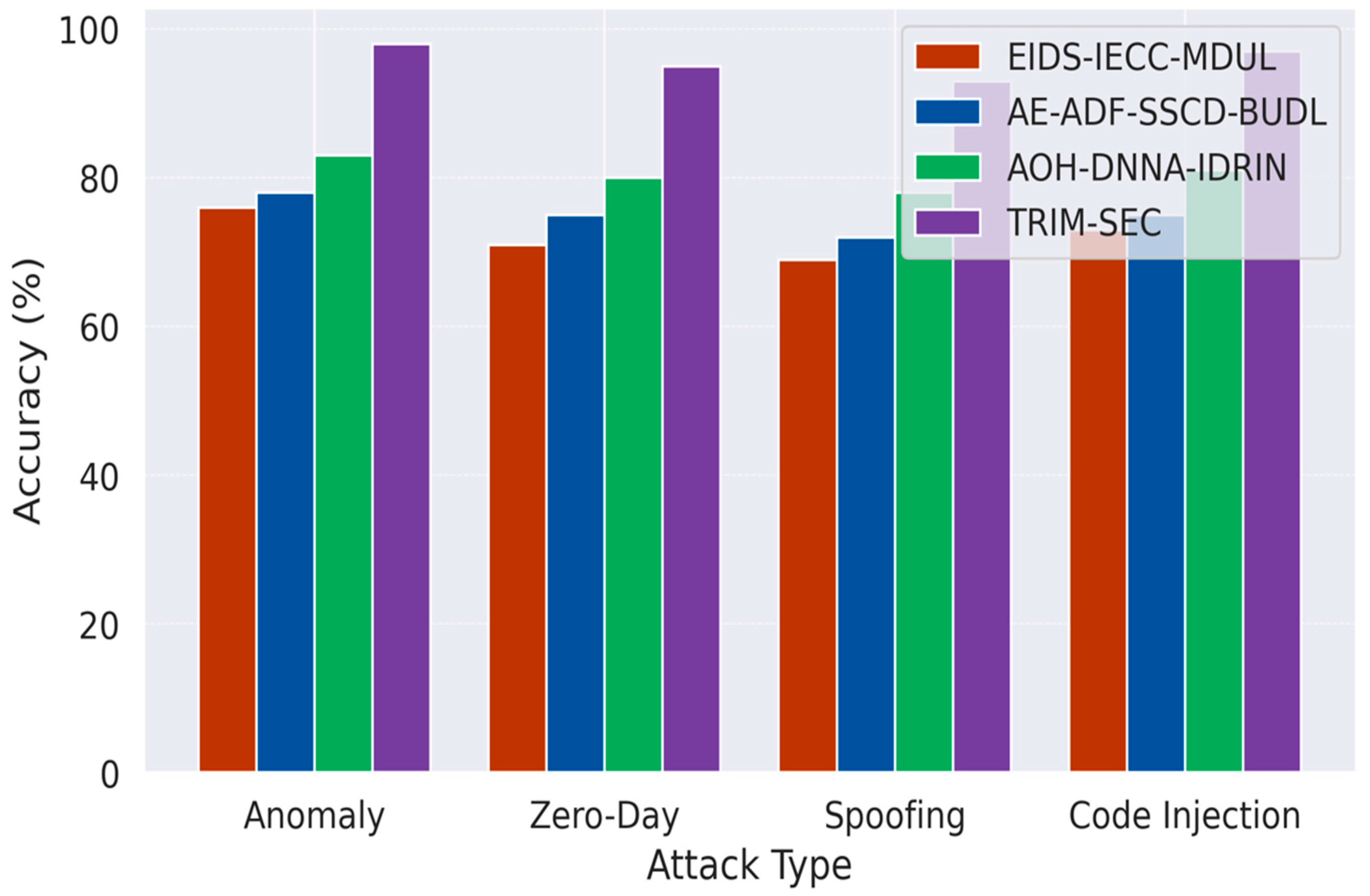
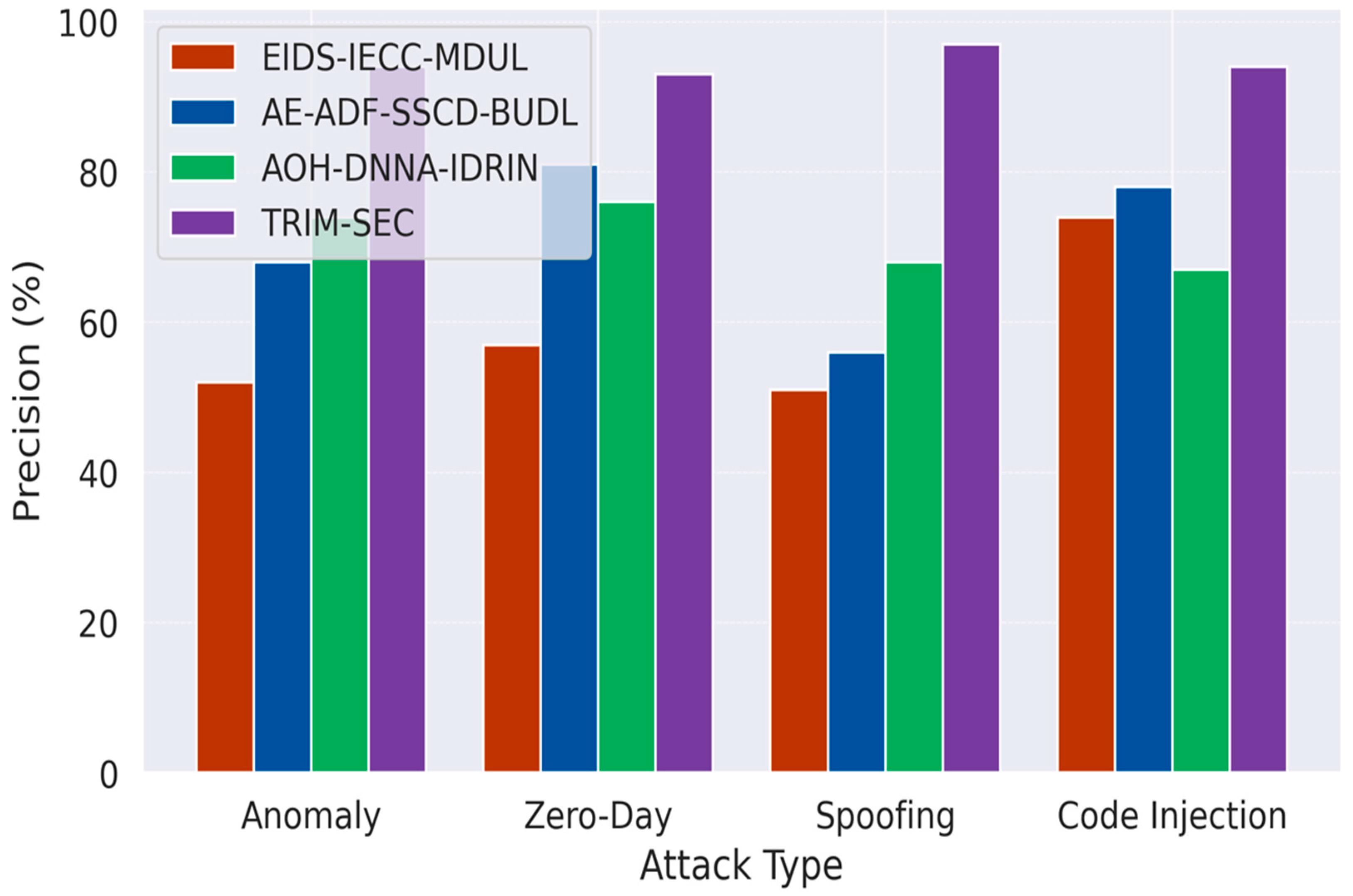
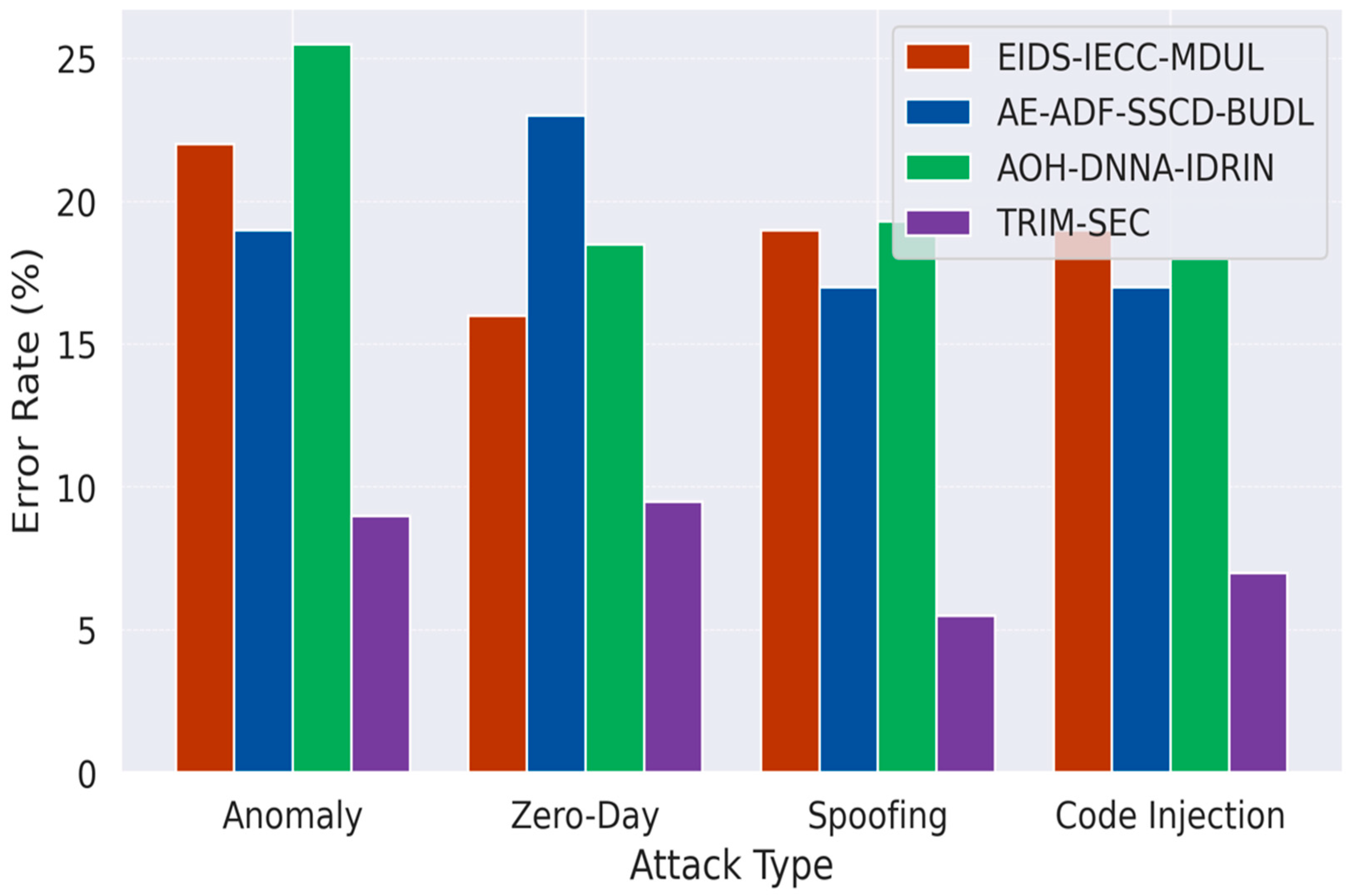
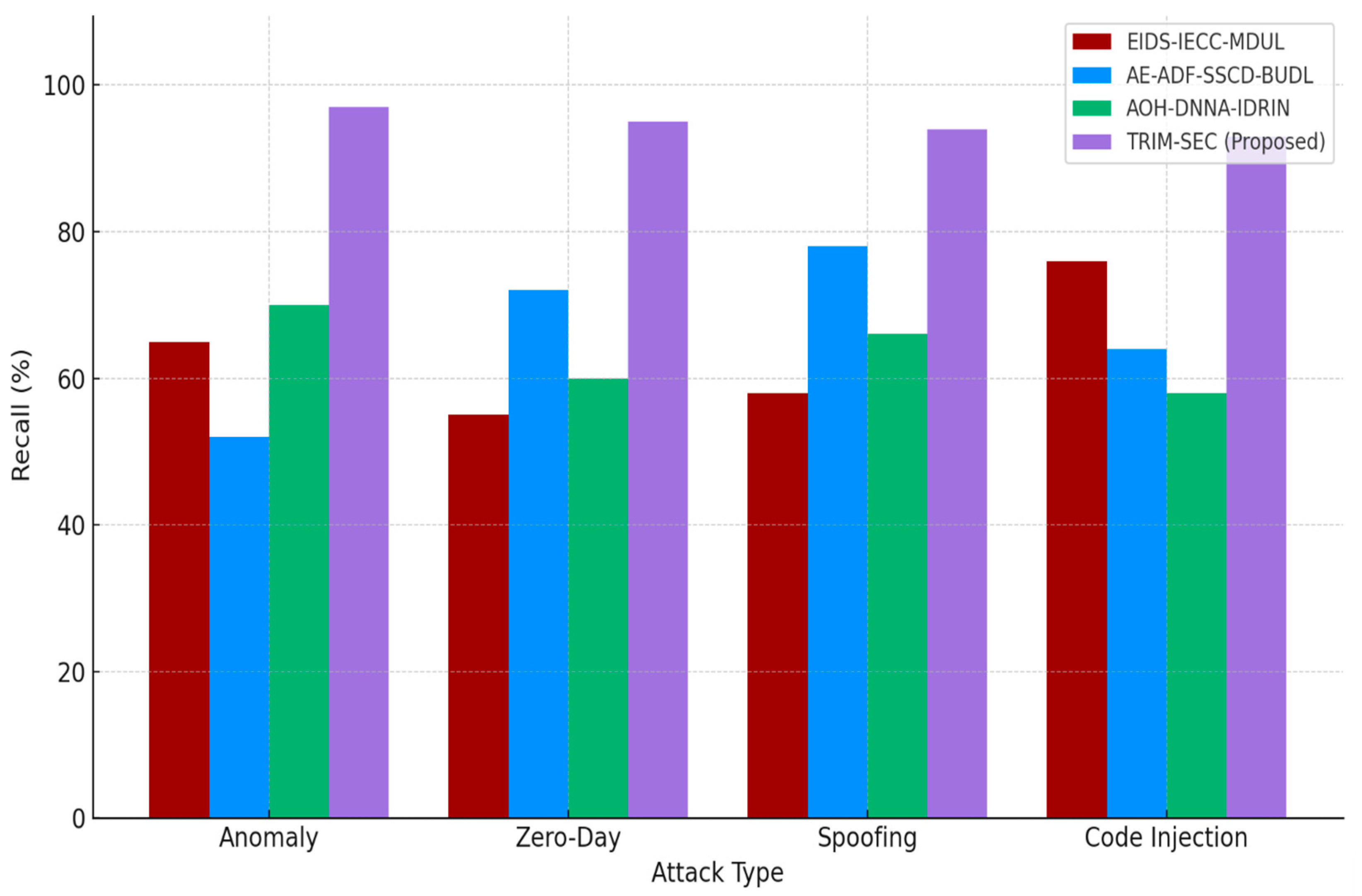
The explosive growth in Internet of Things (IoT) technologies has given rise to significant security concerns, especially with the emergence of sophisticated and zero-day malware attacks. Conventional malware detection methods based on static or dynamic analysis often fail to meet the real-time operational needs and limited-resource constraints typical of IoT systems. This paper proposes TRIM-SEC (Transformer-Integrated Malware Security and Encryption for IoT), a lightweight and scalable framework that unifies intelligent threat detection with secure data transmission. The framework begins with Autoencoder-Based Feature Denoising (AEFD) to eliminate noise and enhance input quality, followed by Principal Component Analysis (PCA) for efficient dimensionality reduction. Malware classification is performed using a Transformer-Augmented Neural Network (TANN), which leverages multi-head self-attention to capture both contextual and temporal dependencies, enabling accurate detection of diverse threats such as Zero-Day, botnets, and zero-day exploits. For secure communication, TRIM-SEC incorporates Lightweight Elliptic Curve Cryptography (LECC), enhanced with Particle Swarm Optimization (PSO) to generate cryptographic keys with minimal computational burden. The framework is rigorously evaluated against advanced baselines, including LSTM-based IDS, CNN-GRU hybrids, and blockchain-enhanced security models. Experimental results show that TRIM-SEC delivers higher detection accuracy, fewer false alarms, and reduced encryption latency, which makes it well-suited for real-time operation in smart IoT ecosystems. Its balanced integration of detection performance, cryptographic strength, and computational efficiency positions TRIM-SEC as a promising solution for securing next-generation IoT environments.
Keywords: IoT security; malware detection; transformer neural networks; lightweight cryptography; real-time threat detection IoT security; malware detection; transformer neural networks; lightweight cryptography; real-time threat detection