Systematic Review

From Fingerprinting to Advanced Machine Learning: A Systematic Review of Wi-Fi and BLE-Based Indoor Positioning Systems

by
Sara Martín-Frechina
1,
Esther Dura
1,
Ignacio Miralles
1 and
Joaquín Torres-Sospedra
1,2,*
1
Department of Computer Science, ETSE, University of Valencia, Avda. de la Universidad, S/N, 46100 Burjassot, Valencia, Spain
2
Valencian Graduate School and Research Network of Artificial Intelligence (VALGRAI), Camí de Vera S/N, Edificio 3Q, 40022 Valencia, Spain
*
Author to whom correspondence should be addressed.
Sensors 2025, 25(22), 6946; https://doi.org/10.3390/s25226946
Submission received: 16 October 2025 / Revised: 7 November 2025 / Accepted: 10 November 2025 / Published: 13 November 2025
(This article belongs to the Special Issue Development and Challenges of Indoor Positioning and Localization)

Abstract

The Indoor Positioning System (IPS) is used to locate devices and people in smart environments. In recent years, position determination methods have evolved from simple Received Signal Strength Indicator (RSSI) measurements to more advanced approaches such as Channel State Information (CSI), Round Trip Time (RTT), and Angle of Arrival (AoA), increasingly combined with Machine Learning (ML). This article presents a systematic review of the literature on ML-based IPS using IEEE 802.11 Wireless LAN (Wi-Fi) and Bluetooth Low Energy (BLE), including studies published between 2020 and 2024 under the Preferred Reporting Items for Systematic Reviews and Meta-Analyse (PRISMA) methodology. This study examines the techniques used to collect measurements and the ML models used, and discusses the growing use of Deep Learning (DL) approaches. This review identifies some challenges that remain for the implementation of these systems, such as environmental variability, device heterogeneity, and the need for calibration. Future research should expand ML applications to RTT and AoA, explore hybrid multimetric systems, and design lightweight, adaptive DL models. Advances in wireless standards and emerging technologies are also expected to further enhance accuracy and scalability in next-generation IPS.

1. Introduction

In recent years, the Indoor Positioning System (IPS) has attracted considerable attention due to its numerous applications, including asset tracking, emergency response, smart environments, and navigation in large buildings. However, the lack of Line-of-Sight (LOS) in complex indoor environments, multipath propagation, and signal degradation make indoor localization a difficult challenge in contrast to outdoor positioning, which is consistently supported by satellite-based systems such as Global Positioning System (GPS).
The development of indoor positioning systems began to take shape with the introduction of RADAR [1] in 2000, one of the first Radio Frequency (RF)-based location systems that introduced the K-Nearest Neighbour (KNN) and Wi-Fi Received Signal Strength Indicator (RSSI) fingerprinting approach. This approach demonstrated the feasibility of indoor positioning using signal strength patterns. Years later, with the advent of Bluetooth Low Energy (BLE) [2] in around 2015, similar fingerprinting strategies were adapted to BLE beacons, taking advantage of the technology’s low power consumption and its compatibility with mobile devices. For several years, fingerprinting using RSSI and KNN has been the dominant approach in the field due to its simplicity and low deployment cost. RSSI-based identification combined with simple algorithms like KNN proved effective thanks to the low dimensionality of the measurements and their ease of implementation. However, as more complex signal measurements (CSI, RTT, AoA) became available, the need for more advanced ML models became evident, since traditional algorithms are not well-suited for capturing their complexity.
However, in recent years, this approach has declined in prominence due to its limitations in dynamic and multipath environments. Advanced signal measurements such as Channel State Information (CSI), Round Trip Time (RTT), and Angle of Arrival (AoA) have gained increasing attention, allowing for more accurate and robust localization. For example, CSI-based DL models have achieved sub-metre accuracy by leveraging the detailed multipath information provided by CSI to distinguish locations in complex indoor environments [3]. Similarly, RTT-based approaches that leverage the IEEE 802.11mc protocol offer increased robustness in complex indoor settings by using precise timing measurements to estimate distances, thereby improving accuracy in multipath environments [4]. BLE 5.1 AoA-based systems have also demonstrated significant improvements in indoor localization, leveraging direction-finding techniques to achieve precise angle estimation and sub-metre accuracy [5]. These advances, combined with the rise of more sophisticated ML techniques, have led to a paradigm shift in the design of indoor positioning systems.
Among the various technologies explored for indoor localization, BLE and IEEE 802.11 Wireless LAN (Wi-Fi) have emerged as two of the most prominent options, primarily due to their widespread availability in consumer devices, cost-effectiveness, and energy efficiency. These technologies provide signal measurements such as the RSSI, CSI, RTT, Direction of Arrival (DoA) and AoA, which can be exploited to estimate the position of a device within an indoor space.
With increasing demand for indoor positioning systems in applications such as asset tracking, navigation, and smart environments, studies that synthesize advances in technologies like BLE and Wi-Fi are critical. In parallel, the rapid evolution of ML techniques has opened new possibilities for enhancing the performance of IPS. By leveraging ML algorithms, it is possible to model complex signal behaviors, mitigate measurement noise, and improve positioning accuracy in dynamic and Non Line-of-Sight (NLOS) environments. Therefore, the integration of ML with BLE and Wi-Fi-based positioning has emerged as a major research focus over the past five years.
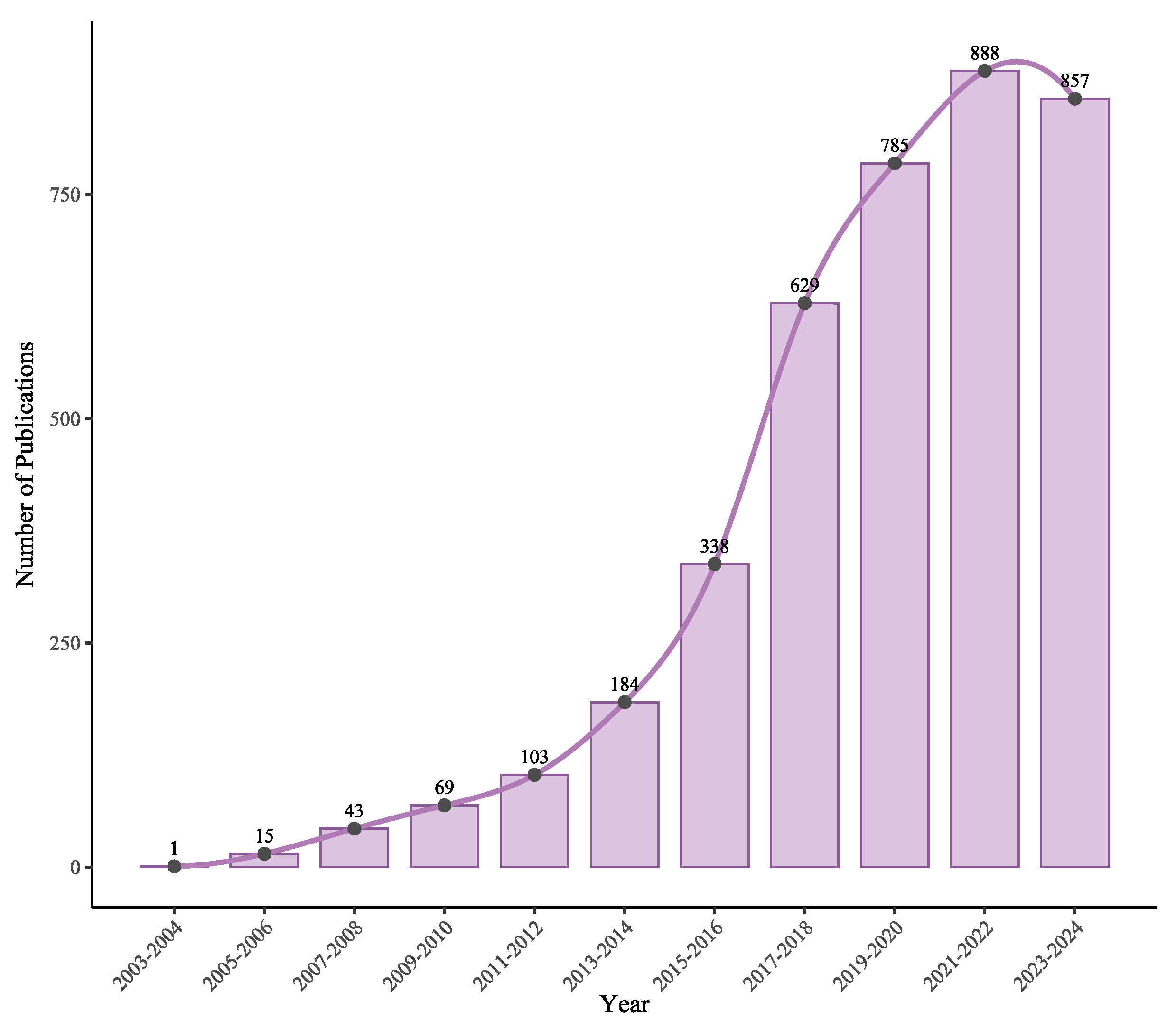
Despite the growing body of literature in this field (see Figure 1), there is currently no comprehensive survey or review that encompasses the most recent developments. Therefore, a systematic analysis and synthesis of recent research are necessary to capture the current state of the art, identify dominant techniques and emerging trends, and reveal existing knowledge gaps. This Systematic Literature Review (SLR) aims to address this need by providing a comprehensive overview of ML-based indoor positioning approaches using BLE and Wi-Fi technologies from 2020 to 2024, following the Preferred Reporting Items for Systematic Reviews and Meta-Analyse (PRISMA) [6] methodology.
The objective of this study is to examine the evolution of Wi-Fi- and Bluetooth Low Energy (BLE)-based Indoor Positioning System (IPS) in terms of the signal measurements employed—namely, Received Signal Strength Indicator (RSSI), Channel State Information (CSI), Round Trip Time (RTT), and Angle of Arrival (AoA)—and the Machine Learning (ML) methods used to process these measurements. The main contribution of this work is to provide a systematic and up-to-date review of ML-based indoor positioning solutions that rely on Wi-Fi and BLE as the primary technologies, with a particular focus on recent advances in positioning techniques leveraging AoA, CSI, and RTT. The results of the analysis indicate that ML-based IPS have progressively shifted from traditional algorithms—such as K-Nearest Neighbour (KNN), Supported Vector Machine (SVM), and Decision Tree (DT)—toward Deep Learning (DL) architectures, including Convolutional Neural Networks (CNNs), Deep Neural Networks (DNNs), and Long Short-Term Memory (LSTM) models. A clear trend has emerged toward exploiting advanced signal measurements (CSI, RTT, and AoA) to achieve sub-meter accuracy. In particular, BLE AoA and Wi-Fi RTT have demonstrated significant improvements compared to conventional RSSI-based approaches, while CSI-based methods, though less extensively studied, have shown promising results when combined with neural networks. These findings highlight both the maturity of RSSI-based research and the emerging potential of next-generation measurements for achieving more reliable and scalable indoor localization.
The rest of this document is organized as follows. Section 2 introduces the related work in terms of previous surveys/analysis, providing the context for this updated systematic review. Section 3 describes the systematic literature review process, including the search strategy, inclusion and exclusion criteria, and classification framework based on the PRISMA methodology [6]. Section 4 presents the main findings in response to the defined research questions, covering the use of ML techniques in RSSI, CSI, RTT, and AoA-based positioning systems. Section 5 discusses the main findings, synthesizes answers to research questions, and explores ongoing challenges and open issues in the field. Finally, Section 6 summarizes key findings, draws conclusions, and discusses potential directions for future research directions.

2. Related Work

Over the last decade, numerous surveys and review articles have addressed the growing field of IPS. These studies have explored various technologies such as Wi-Fi, BLE, Radio Frequency Identification (RFID), Ultra-Wideband (UWB), and Visible Light Communication (VLC), alongside signal metrics like RSSI. Earlier works primaly introduced classical Machine Learning (ML) approaches for location estimation, while more recent works incorporate Deep Learning (DL) models to achieve enhanced positioning accuracy and robustness.
It is important to point out that Deep Learning (DL) is a subfield of Machine Learning (ML). Unlike classic ML methods, which often rely on manually created features and basic models, DL approaches are characterized by the use of deeper neural network architectures capable of automatically automatically extracting complex features from raw signal data.
In the following, we provide a chronological analysis of the most relevant surveys in this area. For each study, we highlight their main contributions as well as their weaknesses, especially focusing on the areas that remain unexplored. This comparative perspective allows us to contextualize the contribution of the present study in relation to the available literature. Table 1 summarizes these surveys, providing an overview of their scope, focus, and limitations.
An early study by Ding et al. [7] focuses on RSSI-based fingerprinting in WLAN environments, addressing challenges, such as RSSI variability, and proposing classical solutions like probabilistic modeling and sensor fusion. Similarly, Sakpere et al. [8] provide a review of positioning technologies, including infrared, ultrasound, RFID, and visible light, comparing their accuracy, cost, and privacy. Despite their valuable contributions, both works were published before the emergence of Wi-Fi RTT, BLE AoA, and DL. Consequently, these aspects, which form the focus of this study, remain unexplored in their analyses.
A survey of non-GPS positioning by Tariq et al. [9] examines BLE and Wi-Fi and hybrid approaches. While informative, the review is limited to traditional ML models and omits recent signal metrics such as AoA, CSI, and advances DL methods like CNNs or transformers. Similarly, Zafari et al. [10] presents a comprehensive overview of IPS technologies and their applications in Internet of Things (IoT) environments. Although they address Wi-Fi and BLE, the analysis remains focused on deterministic and classical ML models, with no coverage of DL architectures. SimilarlyObeidat et al. [11] extend the scope to include UWB and evaluate multiple factors such as accuracy, coverage, and energy efficiency. However, their work is still confined to traditional algorithms such as KNN and overlooks key advances in signal metrics and DL. These surveys, while valuable for understanding the early stages of ML in indoor localization, do not capture the paradigm shift introduced by recent technologies like Wi-Fi RTT, BLE 5.1 AoA, or DL-based approaches, dimensions that our review integrates in depth.
Singh et al. [12] focus their analysis on Wi-Fi RSSI fingerprinting with ML, providing useful information on preprocessing and the use of neural networks. However, the review does not explore emerging metrics, like RTT or AoA, and does not consider recent DL approaches or a cross-technology analysis. In contrast, the 3D indoor localization survey by Sesyuk et al. [13] addresses Wi-Fi and BLE, explicitly reporting results with RSSI-based methods for both. Nevertheless, it does not analyze Wi-Fi RTT, BLE AoA, or CSI, and it offers only a limited discussion of recent DL approaches.
Feng et al. [14] present a review of Wi-Fi-based indoor positioning that emphasizes the use of DL approaches for processing CSI, with applications in Human Activity Recognition(HAR). Although the study highlights the potential of DL, it omits BLE AoA, and Wi-Fi RTT. Simelane et al. [15] provide a broad overview of RF-based IPS, covering Wi-Fi and BLE, focusing on techniques such as fingerprinting and trilateration, with applications in navigation. While their review includes a discussion on ML, it does not specifically address DL methods, an area that this study explores in greater depth.
More recent surveys have begun to explore modern approaches, yet important gaps remain. For instance, Dai et al. [16] classify Wi-Fi-based IPS solutions using RSSI and Fine Timing Measurement (FTM) ranging, incorporating some DL models. However, their reviews omit BLE AoA and restrict their scope exclusively to Wi-Fi systems. Similarly, Park et al. [17] evaluate ML models like XGBoost and Random Forest (RF) for Wi-Fi RSSI-based localization, but they do not address advanced signal metrics or DL, nor include BLE-based approaches.
Bastiaens et al. [18] present a review on Visible Light Positioning (VLP), which is considered as one of the next-generation indoor positioning technologies. The study offers a detailed description of the fundamentals, components, and architectures of VLP systems, analyzing both hardware aspects and localization algorithms. Although this work represents a valuable contribution, its analysis focuses on the technical aspects of visible light and does not address Wi-Fi and BLE technologies or the incorporation of ML, which constitutes the main focus of this review.
Morgan [19] also study BLE-based systems, discussing ML techniques and challenges such as multipath. However, their work does not address DL models.
Singh et al. [20] conduct a systematic review of IPS, proposing a taxonomy that organizes technologies, techniques, and algorithms. They also discuss key issues related to security, privacy, and practical challenges for adoption in real-world settings. However, although the review acknowledges the role of ML, it does not explore the emerging metrics that constitute the focus of this research.
Lin et al. [21] presents a review focused on Wi-Fi-based indoor localization systems, with particular emphasis on DL models. The article classifies architectures, such as CNNs, Recurrent Neural Networks (RNNs), autoencoders, and hybrid models, and also analyzes data preprocessing strategies and noise reduction techniques applied to RSSI and CSI. Although it stands as one of the most comprehensive contributions in the field of DL for Wi-Fi, it does not address BLE or emerging measurement approaches.
Some recent work focuses specifically on BLE. For instance, Shi and Gong [22] investigate BLE-based localization, discussing ML techniques and applications for indoor navigation. However, their analysis does not consider Wi-Fi RTT, DL approaches, or comparative evaluations across technologies.
Finally, Ahmad et al. [23] presents one of the few reviews integrating DL models for HAR using CSI. While valuable, their review omits BLE AoA and Wi-Fi RTT.
As the chronological analysis and the summary in Table 1 demonstrate, previous reviews have provided valuable but fragmented perspectives. They tend to focus on a single technology (Wi-Fi or BLE), a single signal metric (RSSI or CSI), or a limited time frame that misses the recent explosion in advanced techniques. To our knowledge, no prior work has conducted a systematic review that simultaneously synthesizes the evolution of both Wi-Fi and BLE-based systems while covering the full spectrum of modern signal metrics, CSI, RTT, and AoA, alongside the rise of DL.
This study fills this critical gap. Our unique contribution is this holistic and up-to-date synthesis, covering the years 2020 to 2024. By analyzing these technologies and metrics in parallel, we provide a comprehensive understanding of the current state of the art, identify cross-technology trends, and highlight the specific research frontiers for the next generation of indoor positioning systems.
While this review focuses on Wi-Fi and BLE technologies due to their ubiquity and cost-effectiveness, it is important to position them within the broader landscape of indoor positioning solutions. Other prominent technologies offer different trade-offs. For instance, UWB systems are renowned for their centimeter-level accuracy but require the deployment of dedicated infrastructure, increasing costs and complexity. Similarly, VLC offers high-precision positioning and is immune to radio frequency interference; however, its reliance on LOS between transmitters (LED lights) and receivers limits its applicability in cluttered environments.
Furthermore, Inertial Measurement Units (IMUs), integrated into most smartphones, provide a powerful means for dead-reckoning but suffer from cumulative drift error over time. Consequently, IMUs are rarely used in isolation and are most effective when fused with RFID-based technologies like Wi-Fi or BLE to periodically correct their position estimates. Therefore, the focus of this review on Wi-Fi and BLE reflects their unique balance of acceptable accuracy, widespread infrastructure availability, and low deployment cost, making them a dominant area of research for scalable, real-world applications.

3. Research Methodology

This section outlines the methodology and process followed to conduct the systematic review on IPSs based on Bluetooth Low Energy (BLE) and Wi-Fi technologies. The Preferred Reporting Items for Systematic Reviews and Meta-Analyse (PRISMA) methodology has been selected for its clarity and reproducibility, enabling other researchers to replicate the process and obtain comparable results. It aims to comprehensively analyze the existing literature, identify current techniques and trends, and uncover potential research gaps within the domain of indoor localization.

3.1. PRISMA Workflow

To guide this review, we adhered to the PRISMA guidelines [6] in Supplementary Material. These guidelines provide a structured approach for conducting systematic reviews and include a twenty-seven-item checklist along with a flow diagram, divided into four phases: identification, screening, eligibility, and inclusion.
The review protocol begins with the formulation of research questions that define the scope and objectives of the study. Based on these questions, a set of inclusion and exclusion criteria were established to ensure that only relevant and high-quality studies were selected for analysis.
The study selection process involved defining relevant search queries tailored to the topic of indoor positioning systems and the scientific dataset. The initial search results were combined, and duplicate records were removed. The remaining articles were then screened using the predefined inclusion and exclusion criteria to identify the final set of relevant studies.
Once the final set of articles was identified, each study was carefully analyzed, categorized, and mapped according to the established research questions. This process involved extracting key features, including the positioning techniques employed and the evaluation metrics used.
The following subsections provide a detailed description of the research questions (Section 3.2), the inclusion and exclusion criteria (Section 3.3), the query (Section 3.4), and an overview of the results in our case study (Section 3.5).

3.2. Research Questions

Defining research questions is a fundamental step in any systematic review, as it establishes the main objectives of the analysis. In this work, the review focuses on indoor localization using BLE and Wi-Fi technologies.
To guide the process, a Main Research Question (MRQ) was defined which acts as the central axis of the research.
  • MRQ: How have ML-based methods applied to Wi-Fi or BLE-based indoor positioning systems evolved over the last five years?
As this main question is generic, it is divided into the following specific Research Questions (RQs):
  • RQ1: What ML methods have been used in positioning systems based on individual Wi-Fi and BLE using RSSI?
  • RQ2: What ML methods are currently used in Wi-Fi CSI, Wi-Fi RTT, and BLE AoA for indoor positioning?
  • RQ3: What have been the main accuracy improvements in moving from RSSI-based techniques to techniques such as CSI, RTT, and AoA in Wi-Fi and BLE?
  • RQ4: What are the main challenges and limitations in Wi-Fi and BLE-based positioning systems?
  • RQ5: What are the least explored areas in the application of ML algorithms in these indoor positioning technologies?

3.3. Selection Criteria

Carefully defined Inclusion Criteria (IC) and Exclusion Criteria (EC) were established to filter the records, ensuring that only relevant high-quality studies addressing IPS based on BLE, Wi-Fi, and ML were included for further analysis.
  • IC1: Any full primary research article written in English.
  • IC2: Any article published in international peer-reviewed journals or international peer-reviewed conference proceedings.
  • IC3: Studies that analyze algorithms applied to indoor positioning systems based on Wi-Fi or BLE.
  • EC1: Articles that do not employ RSSI, CSI, RTT, AoA or DoA as primary positioning techniques or primarily rely on other technologies or studies that use hybrid positioning approaches.
  • EC2: Articles that do not use ML in the positioning process.
  • EC3: Articles that do not focus exclusively on indoor positioning, addressing other topics such as posture recognition, movement direction detection, or activity classification.
  • EC4: Articles that do not include real-world validation, relying solely on simulations without experimental verification in real environments.
  • EC5: Articles lacking sufficient data for reproducibility due to missing critical experimental details, such as surface area, localization error, or other essential parameters.
By applying these criteria, the review ensures that only relevant and high-quality studies are included, addressing the research objectives.

3.4. Search Queries

The core of the generic search query was designed to identify studies related to indoor positioning systems based on BLE and Wi-Fi technologies. For this purpose, two well-established scientific databases—Scopus and Web of Science—were selected, as they index the majority of venues relevant to the positioning domain. The generic query was subsequently adapted to the syntax of each database. The specific search strings used, along with the number of retrieved documents, are summarized in Table 2.
Both queries returned a comprehensive list of works from 2020 to 2024, including journal papers, conference papers, and other types of publications. As shown in the table, 1081 documents were retrieved from Scopus, while 537 documents were retrieved from Web of Science. Although many of the recovered records were relevant to the research topic, some did not meet the inclusion criteria established for this review, as detailed in the following sections.

3.5. PRISMA Process Overview and Results

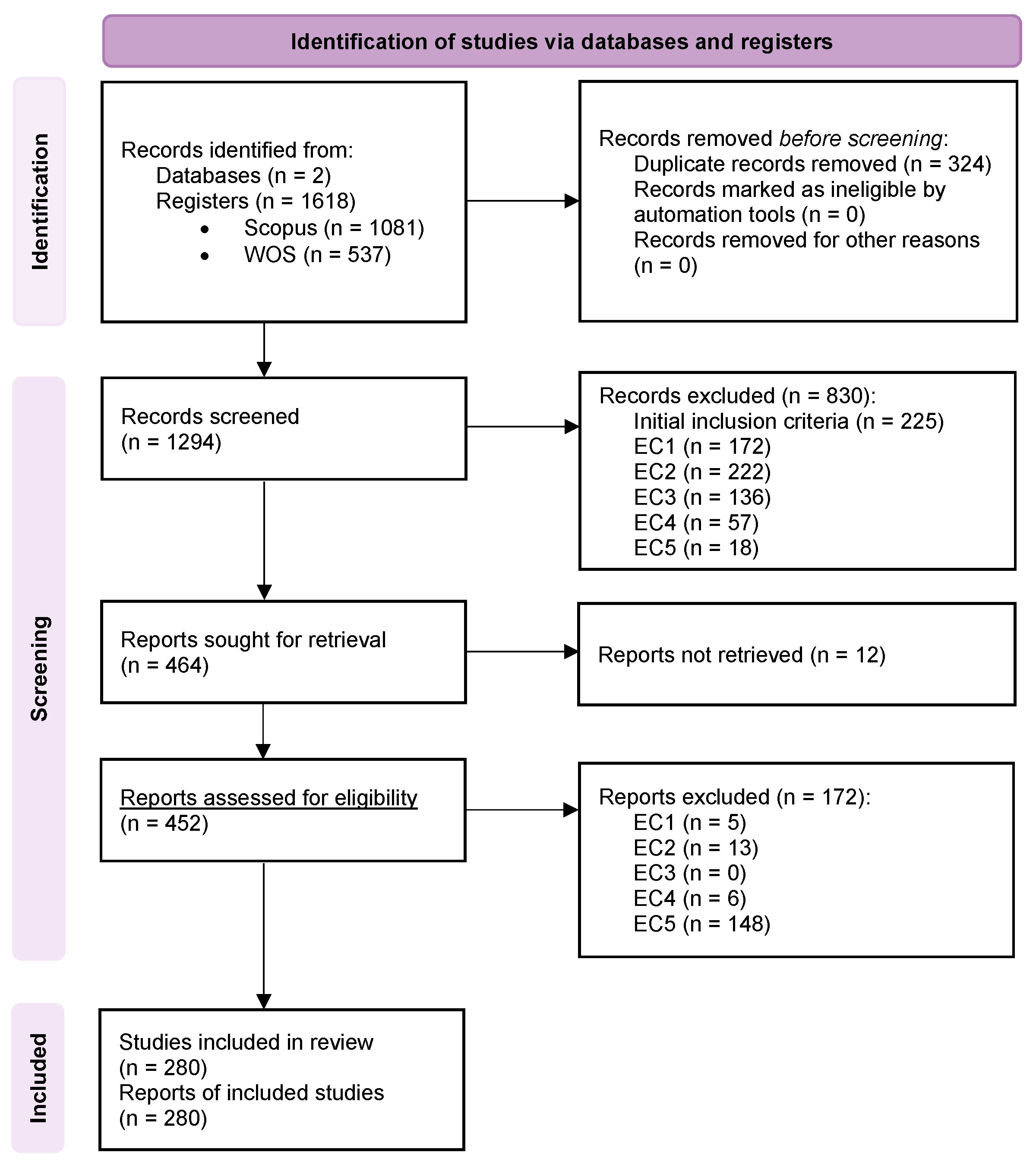
Figure 2 illustrates the flow diagram of our systematic literature review, following the PRISMA 2020 statement. The process began with the identification of records from two widely recognized scientific databases. As detailed in Table 2, our search queries retrieved a total of 1618 records published between 2020 and 2024: 1081 from Scopus and 537 from Web of Science.
In the first step of the screening phase, 324 duplicate records were identified and removed using the reference management software Zotero to ensure that each study was considered only once. This left 1294 unique articles for title and abstract screening. During this stage, 830 records were excluded because they did not meet the predefined inclusion criteria (wrong topic, incorrect publication type) or met one of the exclusion criteria (a detailed breakdown is provided in Figure 2).
This left 464 records for full-text retrieval. We were unable to retrieve 12 articles, resulting in 452 reports evaluated for eligibility. In the final stage, after a thorough evaluation of the full text, another 172 studies were excluded because they met one of the exclusion criteria.
This rigorous screening process resulted in a final set of 280 studies that were included in our comprehensive analysis.

3.6. Quality Assessment and Risk of Bias

To ensure the methodological rigor of this review and assess the reliability of the included studies, a quality assessment was performed on all articles that passed the full-text screening. While formal risk-of-bias tools, such as those used in clinical reviews, are not standard practice in this engineering domain, we adopted a qualitative quality checklist based on established systematic review principles. Each included study was evaluated against the following criteria:
  • Clarity of Objectives and Methodology: The study must clearly state its research questions, objectives, and the methodology used to address them.
  • Completeness of Experimental Setup: The description of the experimental environment (area size, layout, number of Access Points (APs)/beacons) and hardware (device models) must be sufficiently detailed.
  • Reproducibility of Results: The performance metrics used (mean error, RMSE) must be clearly defined, and the evaluation process should be transparent enough to allow for conceptual replication.
  • Presence of a Baseline for Comparison: The study should compare its proposed method against at least one established baseline or state-of-the-art approach to contextualize its performance.
Studies that failed to meet these fundamental quality standards were excluded, as noted in the PRISMA flow diagram (Figure 2). Furthermore, the primary risk of bias identified across the body of literature is related to the generalizability of findings. Many studies are conducted in controlled, small-scale laboratory or office environments, which may lead to an optimistic estimation of performance that is not replicable in larger, more dynamic real-world scenarios such as shopping malls or airports. By explicitly considering these quality criteria and acknowledging this potential bias, our review aims to provide a balanced and critical synthesis of the field.

4. Results

This section analyzes insights from 280 studies to address research questions in Section 3.2. It examines the evolution of ML-based methods in indoor BLE and Wi-Fi positioning systems, focusing on signal metrics, algorithmic performance, and practical challenges.

4.1. Characterization and Analysis of Included Literature

From the initial records identified through the PRISMA process (see Figure 2), 280 studies met the criteria for our systematic literature review on BLE and Wi-Fi-based Indoor Positioning System (IPS) using Machine Learning (ML), which forms the basis of our investigation.
Figure 3 presents the publication timeline of these studies from 2020 to 2024, breaking down the included works into 97 conference papers and 183 journal articles. The significant proportion of publications in peer-reviewed journals underscores the maturity of the research field. In our review, both publication types were assessed against the same inclusion and quality criteria outlined in Section 3.3, ensuring that all included studies met a consistent standard of scientific rigor.
Research activity peaked in 2021 with 68 publications and declined to 42 in 2023. This five-year fluctuation indicates varying levels of interest in the field, potentially influenced by post-pandemic recovery challenges or a shift toward related application areas.
To characterize the technological focus of the selected literature, we analyzed the distribution of the 280 studies included in this review. As shown in Figure 4, 82% of the studies employed Wi-Fi, while 18% focused on BLE, highlighting the dominant role of Wi-Fi in IPS research. Furthermore, Figure 5 illustrates that 70% of the studies (196 out of 280) utilized RSSI, 19.6% (55 out of 280) relied on CSI, 5.7% (16 out of 280) adopted RTT, and 1.1% (3 out of 280) incorporated AoA. In addition, 2.1% (6 out of 280) combined RSSI and RTT, 0.7% (2 out of 280) combined RSSI and CSI, and 0.7% (2 out of 280) combined RSSI and AoA, confirming the prevalence of RSSI as the most widely used signal metric.
The systematically compiled data encompass the utilization of signal metrics (RSSI, CSI, RTT, and AoA); the application of ML algorithms such as KNN, CNNs, and LSTM; testing environments; reported performance indicators; and key challenges or advancements noted by the authors. These findings, derived from studies published between 2020 and 2024, address the research questions outlined in Section 3.2 and are further detailed in Section 4. Together, the technological and signal metric distributions provide a foundational overview of the current state of the field.

4.2. Machine Learning Methods Employed in Wi-Fi and BLE-Based Indoor Positioning Systems Using RSSI (RQ1)

To address RQ1, we analyzed Machine Learning (ML) methods applied to an RSSI-based Indoor Positioning System (IPS) using Wi-Fi and Bluetooth Low Energy (BLE) technologies. RSSI, valued for its simplicity and widespread availability, serves as a key input for IPS, with a significant focus on Wi-Fi and BLE implementations between 2020 and 2024.

4.2.1. Wi-Fi RSSI-Based Indoor Positioning Systems

The analysis of Wi-Fi-based systems revealed a wide variety of ML approaches, summarized and illustrated in Table 3.
Table 3 summarizes the different ML algorithms identified in the selected studies, applied to indoor positioning systems based exclusively on Wi-Fi RSSI. A total of 23 different types of methods were recorded, classified according to the stage of the process in which they are applied (positioning, pre-processing, aggregation, etc.), the number of appearances in the studies, and their bibliographic references. The “occurrences” column represents the number of studies in which each ML method was applied, providing a measure of the prevalence of different approaches within the Wi-Fi RSSI-based indoor positioning literature.
The most commonly applied family of methods was the KNN-based algorithms, which appeared in a total of 54 studies. This group includes 31 occurrences of standard KNN [36,37,38,39,40,41,42,43,44,45,46,47,48,49,50,51,52,53,54,55,56,57,58,59,60,61,62,63,64,65,66], 17 of its weighted variant Weighted K-Nearest Neighbour (WKNN) [67,68,69,70,71,72,73,74,75,76,77,78,79,80,81,82,83], and 6 of Improved K-Nearest Neighbour (IKNN) [84,85,86,87,88,89], confirming its predominant role as a baseline positioning technique in fingerprinting systems.
It is followed by other classical supervised learning methods such as Random Forest (RF) [40,41,46,48,52,55,57,61,62,82,107,108,109,110,111,112,113,114,115,116,117] and Supported Vector Machine (SVM) [40,52,57,59,61,62,116,127,143,144,145,146], as well as other approaches including XGBoost [40,74,107,108,144,156,157], Decision Tree (DT) [41,52,62,111], and Naive Bayes (NB) [55], although these appear less frequently.
There is also a strong presence of DL methods, particularly in recent years. Convolutional Neural Networks (CNNs) were identified in 20 studies [25,27,29,31,33,72,90,91,92,93,94,95,96,97,99,101,102,103,104,106], mainly applied to spatial feature extraction from RSSI fingerprints. LSTM [32,35,53,118,119,120,121,122,123,124,125,126,127,128,129,130], Deep Neural Networks (DNNs) [24,26,34,116,131,132,133,134,135,137,138,139,141,142], and Multilayer Perceptrons (MLPs) [28,59,62,123,134,136,140,141,147,148,149,150,151,152] were also commonly used, suggesting a growing trend toward sequence modeling and the use of complex architectures capable of learning abstract representations from RSSI data.
In the preprocessing stage, several studies have explored alternatives to standard CNNs and DNNs, including autoencoders [24,25,26,27,28,29,30,31,32,33,34,35], which were frequently used for dimensionality reduction or noise removal. In the aggregation stage, clustering methods such as K-means or DBSCAN [44,45,49,64,65,89,106,119,124,158,163] were identified, along with ensemble learning techniques [66,142,150,151,152,153,154,155] that combine multiple models to improve robustness and accuracy.
Furthermore, although less frequent, more recent and complex approaches such as Transformer-based methods [100,173,174,175,176] and domain adaptation or adversarial networks (DANN/GANs) [30,138,168,169,170,171] were also identified, indicating an increasing interest in advanced architectures.
In summary, most of the algorithms are applied directly to the positioning stage of the system, with fewer focused on earlier phases such as pre-processing or result aggregation. This reflects the current research trend toward developing intelligent algorithms that can handle the high variability and uncertainty of RSSI signals.

4.2.2. BLE RSSI-Based Indoor Positioning Systems

The analysis of BLE-based systems revealed a more concentrated set of ML approaches, as summarized and illustrated in Table 4. This table lists the 22 distinct ML algorithm families identified in the selected studies that focus exclusively on BLE RSSI. Each method is classified by its role in the pipeline (positioning, pre-processing, aggregation), the number of appearances, and the relevant references. The “occurrences” column represents the number of studies in which each ML method was applied, providing a measure of the prevalence of different approaches within the BLE RSSI-based indoor positioning literature.
The family most frequently used was KNN-based algorithms, recorded in 22 studies, comprising 18 standard KNN [63,188,189,190,191,192,193,194,195,196,197,198,199,200,201,202,203,204], 7 WKNN [186,188,193,194,204,205,206], and 1 IKNN [207]. This prevalence confirms the enduring popularity of KNN for BLE fingerprinting, attributed to its conceptual simplicity, minimal computational requirements, and reliable performance in low-power environments.
DL techniques, though less widespread, were also present. Convolutional Neural Networks (CNNs) [186,188,194,208,209,210] and other feed-forward neural variants [185,196,211,212,213,214] were each used in six studies, predominantly for positioning tasks involving spatial RSSI pattern extraction. Multilayer Perceptrons (MLPs) [189,203,215,216,217] and Random Forest (RF) [191,199,201,203,207] appeared in five studies each, also focused on positioning. Regression-oriented methods such as Support Vector Regression (SVR) [189,196,218,219] were employed in four studies, followed by Supported Vector Machines (SVMs) [200,203,218], Deep Neural Networks (DNNs) [186,192,220,221], Autoencoders [185,186,187], and Gaussian Process Regression (GPR) [206,219,222], with three appearances each.
Autoencoders were occasionally used during the pre-processing stage, aimed at denoising or dimensionality reduction of RSSI data. For the aggregation stage, K-means clustering [229] was observed in a small number of works, typically to group similar signal patterns or locations before applying a classifier.
Less frequent methods included Feed-Forward Neural Networks (FFNNs) [187,208] and Naive Bayes (NB) [194,199], along with isolated appearances of more specialized or hybrid approaches such as Trilateration [189,223], XGBoost [201], Boosted/Bagged Trees [222], Decision Tree (DT) [200], K-Means [229], Hidden Markov Models (HMMs) [192], Particle Swarm Optimization (PSO) [224], Principal Component Analysis (PCA) [225], Long Short-Term Memory (LSTM) [130], and Transformer-based models [221] (one study each). Additionally, an “Other Methods” [184,219,226,227,228] category grouped five unique techniques that did not fit the standard taxonomies.
In summary, most algorithms are applied during the positioning phase of BLE-based systems, with comparatively few dedicated to preprocessing or result aggregation. This pattern reflects a continuing trend in BLE research toward enhancing positioning accuracy through lightweight and hybrid ML approaches that effectively adapt to the inherent variability of BLE RSSI signals.

4.2.3. Architectural Analysis of CNN and DNN Models Used in Wi-Fi-Based Systems

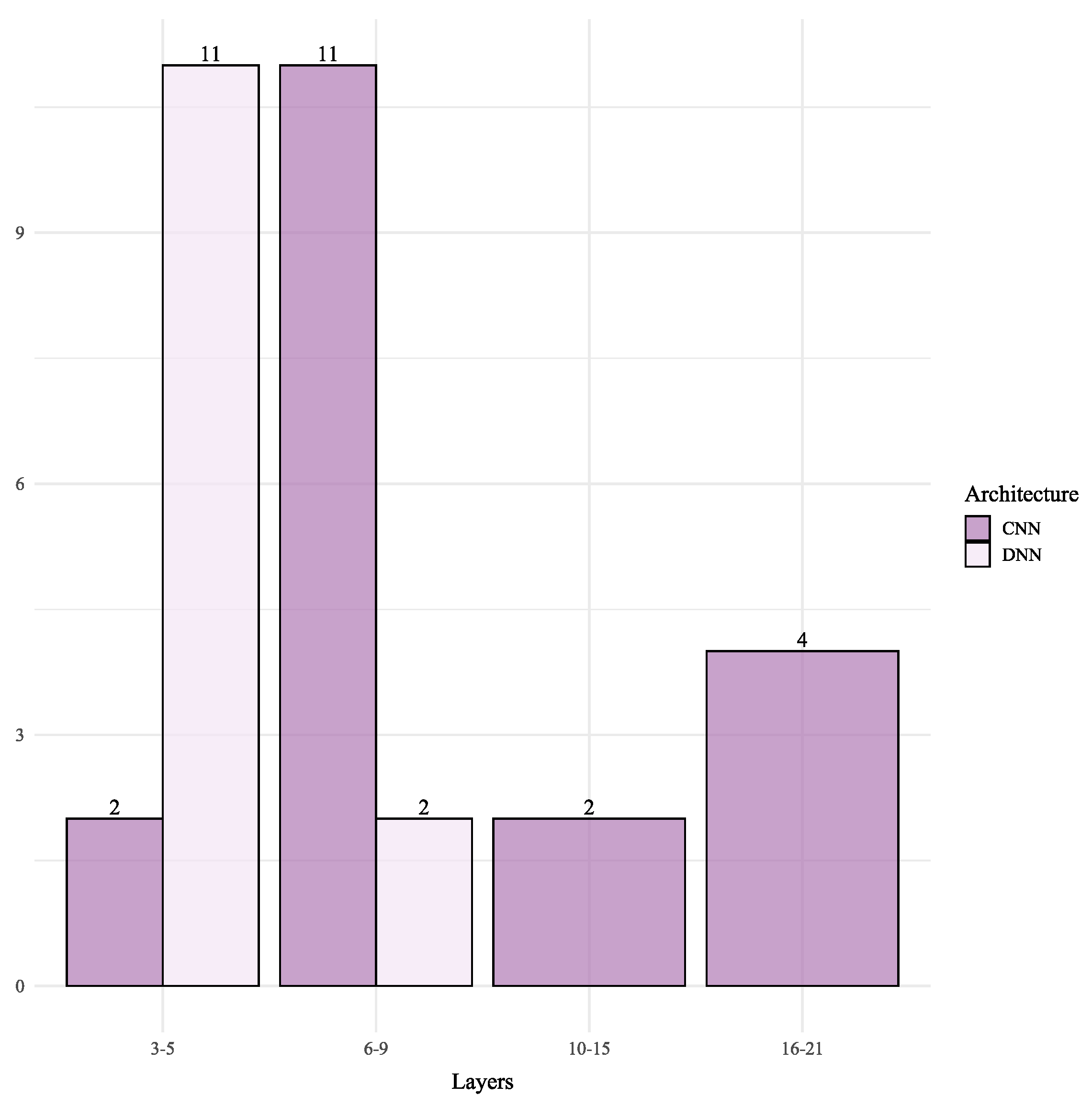
The architectural design of DL models for Wi-Fi RSSI, detailed in Table 5, reveals a complex interplay between modeling approach, dataset nature, and the trade-off between accuracy and scale. The distribution analysis (Figure 6) shows that Wi-Fi architectures are generally deep, with CNNs often ranging from 7 to 21 layers, while DNNs remain shallower (3–8 layers).
A dominant pattern emerging from the data is that impressive sub-meter accuracy is almost exclusively achieved in highly controlled, small-scale environments. For instance, a 1D-CNN [92] achieved a remarkable 0.058 m error in a small 37.6 m2 space, and a regression-focused DL model [132] reported 0.888 m accuracy in a 26 m2 office. However, when these architectures are applied to large-scale, real-world public datasets like UJIIndoorLoc, the error increases significantly. For example, a CDAE-CNN hybrid [27] which achieved a 1.05 m error in a small testbed saw its error grow to 12.4 m on the UJIIndoorLoc dataset. Similarly, a DAE-based DNN [26] reported a 6.01 m error on the same large-scale dataset. This clearly indicates that performance metrics cannot be divorced from their environmental context; high accuracy in a lab does not guarantee success in a large, dynamic space.
Another key insight is the effectiveness of hybrid architectures that combine different models or include explicit preprocessing stages. These designs often yield a better balance of accuracy and robustness in challenging environments. For example, the DCCA framework that fuses RSSI with RTT data [141] achieved sub-meter accuracy (0.59–0.51 m) in moderately sized office and lab environments (141–629 m2), demonstrating that enriching the input data is a powerful strategy. Similarly, many of the deepest models are pipelines. For instance, the CDAE-CNN [27] and the semi-supervised DAE-CNN [33] use autoencoders to clean the noisy raw RSSI data before the main positioning task, with the latter achieving a median error of just 0.66 m. This demonstrates that the quality of the input data is as important as the positioning model itself.
The choice of architecture is also guided by the intended modeling approach. CNNs are predominantly used to model RSSI fingerprints as spatial data, treating them as 1D signals or 2D images. This approach can be highly effective, as seen in a LeNet-5-inspired model [72] that achieved 1.0–1.8 m accuracy in an 800 m2 area. In contrast, models like CNN-LSTM [96] or those combining CNNs with GRUs [90] explicitly model both spatial and temporal dependencies. The latter, for example, achieved a 1.04 m error in a large, multi-floor building of over 9000 m2, showcasing the power of temporal modeling for large-scale scenarios. DNNs, typically fully connected networks, tend to be shallower (3–8 layers) and are often applied to regression tasks. Their performance varies widely based on the environment, from 2.7 m in a 78 m2 lab to over 9 m in the UJIIndoorLoc dataset [24], suggesting they are more sensitive to scale and environmental complexity than specialized architectures.
In summary, the architectural analysis indicates that there is no straightforward correlation between network depth and positioning accuracy. The most effective approaches are those tailored to their specific application context. Factors such as the scale and dynamism of the environment, the availability of complementary data (e.g., RTT), and the explicit handling of signal noise through preprocessing are considerably more predictive of performance than network complexity alone. The current trend is shifting from simple, monolithic architectures toward more sophisticated, context-aware pipelines that directly address the inherent challenges of RSSI-based data.

4.2.4. Architectural Analysis of CNN and DNN Models Used in BLE-Based Systems

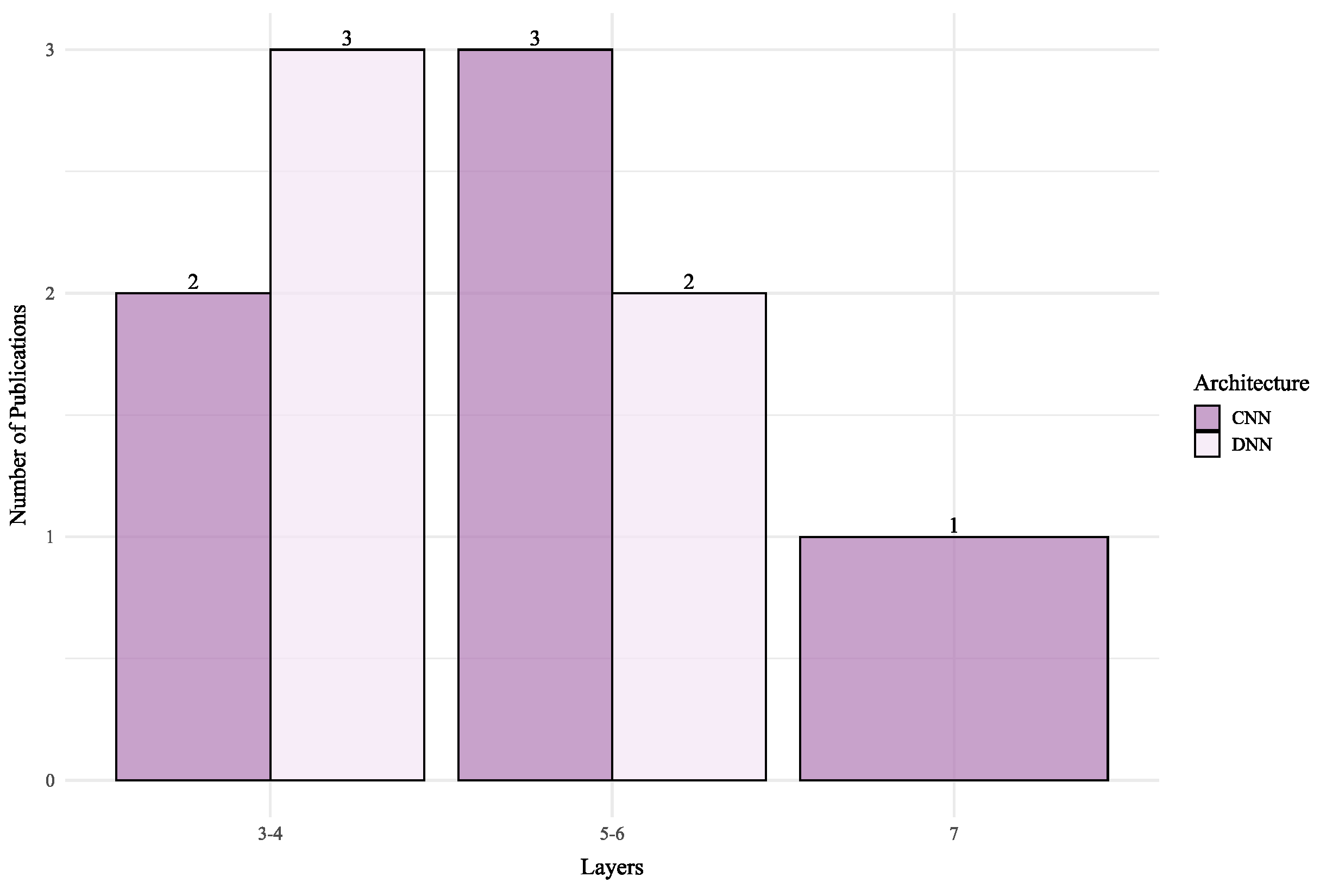
The application of DL in BLE RSSI systems, summarized in Table 6, follows a distinct trend driven by the technology’s constraints: a focus on lightweight, efficient architectures for small to medium-sized environments. This is reflected in the network depth (Figure 7), where BLE architectures are consistently shallower than their Wi-Fi counterparts to prioritize low latency and computational efficiency.
Shallow CNNs are the most common approach, consistently delivering strong performance. For example, a simple 1D-CNN [209] achieved an exceptional 0.25 m error in a 24 m2 room, while a 3D-CNN [208] reported a 0.72 m mean error in a 30 m2 space. Even in slightly larger areas, a baseline CNN [188,194] maintained a respectable 1.2–1.3 m error in a 72 m2 setup. This demonstrates that, for BLE, simple and well-tuned CNNs are highly effective in typical room or office sized deployments.
The use of DNNs and attention-based models in BLE is often geared towards specific tasks or data types. A DNN focused on movement estimation [220] achieved 0.41 m accuracy in a 40 m2 area. The DRVAT model [221], using a Transformer-based attention mechanism, reported a 0.88 m error in a 400 m2 environment, showcasing the potential of temporal modeling for improving accuracy in larger BLE deployments. These findings suggest that, while CNNs are the preferred choice for static spatial positioning, more advanced architectures are being explored to handle mobility and larger scales.
In summary, the architectural design in BLE is driven more by the application context and hardware constraints than by a push for maximum complexity. The literature shows a clear preference for shallow CNNs that provide excellent accuracy in controlled spaces. While more complex models are being explored for mobility, the overarching theme is a pragmatic balance between performance and efficiency, making CNNs the dominant choice for robust spatial feature extraction and DNNs a fast, efficient solution when computational simplicity is the priority.

4.3. Machine Learning Approaches Utilized in Wi-Fi CSI for Indoor Positioning (RQ2)

The analysis of Wi-Fi CSI-based systems revealed a diverse set of ML approaches, summarized in Table 7. This table summarizes the different ML algorithms identified in the selected studies, applied to indoor positioning systems based exclusively on Wi-Fi CSI. A total of 15 different types of methods were recorded, classified according to the stage of the process in which they are applied (positioning, pre-processing, aggregation, etc.), the number of appearances in the studies, and their bibliographic references. The “occurrences” column represents the number of studies in which each ML method was applied, providing a measure of the prevalence of different approaches within the Wi-Fi CSI-based indoor positioning literature.
The most frequently applied family of methods were Convolutional Neural Networks (CNNs), appearing in 23 studies [105,232,233,234,235,236,237,238,239,240,241,242,243,244,245,246,247,248,249,250,251,252,253], mainly applied for extracting spatial and temporal features from CSI matrices. Other classical algorithms such as KNN [83,230,254,255,256,257,258,259], SVM [268,273], and clustering techniques [255,284] were also identified, and these were typically used as baselines.
Several DL models beyond CNN were found, including Deep Neural Networks (DNNs) [260,261,262,263,264,265], Long Short-Term Memorys (LSTMs) [237,239,248,271], Multilayer Perceptron(MLP) [240], and even RNNs [271]. Transfer learning approaches [230,231,236,241,241] and domain adaptation or adversarial networks (GANs) [233,252,270,272] were also reported, showing a growing interest in robust methods that generalize across different environments.
Other techniques, such as ensemble methods [266,267,268,269,270], Transformer-based models [275,276], Bayesian methods [256,274], Gaussian Mixture Model (GMM) [258], and Genetic Algorithms (GA) for optimization [277], complement the landscape and are often applied to specialized scenarios or hybrid pipelines.
In summary, Wi-Fi CSI studies show a dominant trend towards DL, especially CNN-based solutions, complemented by transfer learning and domain adaptation strategies aimed at improving robustness and reducing the need for environment-specific calibration.

4.4. Machine Learning Approaches Utilized in Wi-Fi RTT and BLE AoA for Indoor Positioning (RQ2)

This section presents the results of Machine Learning (ML) approaches applied to Wi-Fi Round Trip Time (RTT) and Bluetooth Low Energy (BLE) Angle of Arrival (AoA) for Indoor Positioning System (IPS). Wi-Fi RTT uses time-of-flight measurements to enhance localization precision, while BLE AoA employs angular data to determine device orientation, both of which offer distinct advantages over traditional RSSI-based methods.
The analysis explores the ML techniques employed in these technologies, derived from the studies summarized in Table 8 for Wi-Fi RTT and Table 9 for BLE AoA. These results address RQ2 by highlighting the diversity and application of ML methods tailored to the unique characteristics of RTT and AoA data.

4.4.1. Wi-Fi RTT-Based Indoor Positioning Systems

The analysis of the selected studies reveals a moderately diverse set of Machine Learning (ML) methods applied to Wi-Fi Round Trip Time (RTT)-based Indoor Positioning System (IPS). Deep Neural Networks (DNNs) are the most frequently used technique, appearing in six studies [285,286,287,288,289,290], due to their strong capacity to model complex spatio-temporal patterns from RTT measurements. Convolutional Neural Networks (CNNs) follow, with three occurrences [286,291,292], demonstrating their effectiveness in extracting spatial features from time-of-flight data.
Other neural-based models include Autoencoders (such as DAE, CAE, and SAE), which were employed in two studies [285,286] for feature extraction and denoising. Additionally, Recurrent Neural Networks (RNNs) [292] and Multilayer Perceptrons (MLPs) [286] were adopted, each appearing once.
Among traditional ML techniques, Random Forest (RF) and Support Vector Regression(SVR) were both used in two studies, [286,289] and [286,293], respectively. These methods provide interpretable models and strong regression capabilities. Gaussian Process Regression (GPR) also appeared in two studies [294,295], offering a probabilistic approach to positioning. Less frequently used methods include K-Nearest Neighbour (KNN) [286], Supported Vector Machine (SVM) [297], and Bayesian Networks or probabilistic methods [298], each cited once. Finally, two studies [299,300] explored alternative methods that cannot be classifiable in standard ML categories.
These results are detailed and visually summarized in Table 8.

4.4.2. BLE AoA-Based Indoor Positioning Systems (IPS)

In contrast, the application of ML to Bluetooth Low Energy (BLE) Angle of Arrival (AoA)-based positioning systems remains limited, with only a few studies exploring this domain. Among these, CNNs emerge as the leading approach, appearing in two studies [210,301], primarily due to their capacity to effectively process spatial and angular information.
Other neural network architectures have been explored in isolated cases. For instance, one study applied a general neural network model [302], while another employed AnFIPNet [303], an architecture that integrates CNNs with fully connected layers and attentional filtering to enhance positioning accuracy. Additionally, a hybrid approach combining RFs and IKNNs was adopted in one study [207], demonstrating the potential of integrating ensemble and distance-based learning methods.
These methods and their corresponding studies are summarized and illustrated in Table 9.

4.5. Main Accuracy Improvements Achieved by Transitioning from RSSI to RTT and AoA Techniques in Wi-Fi and BLE-Based Indoor Positioning Systems (RQ3)

This section addresses RQ3 by examining the improvements in positioning accuracy achieved when transitioning from traditional RSSI-based techniques to more advanced approaches—specifically, CSI and RTT in Wi-Fi, and AoA in BLE. The analysis is organized by technology, beginning with Wi-Fi-based systems and followed by BLE, taking into account both the reported error ranges and the dimensions of the experimental environments.

4.5.1. Accuracy of Wi-Fi-Based Systems Using RSSI, CSI and RTT

In the case of Wi-Fi-based indoor positioning systems, a substantial improvement is also observed when switching from traditional RSSI-based techniques to more advanced accsi and RTT-based approaches.
A total of 161 studies using RSSI, 57 using CSI and 22 using RTT were initially identified. However, not all of them were included in the quantitative comparison presented in Table 10. Specifically, 29 RSSI-based studies, 3 using CSI, and 1 RTT-based study were excluded from the statistical analysis because they did not report the mean positioning error in meters or did not provide information on the experimental area. However, these studies were retained in the broader literature review due to their scientific relevance, whether for their methodological innovation, the use of alternative evaluation metrics (such as classification accuracy), or contributions to system design and deployment.
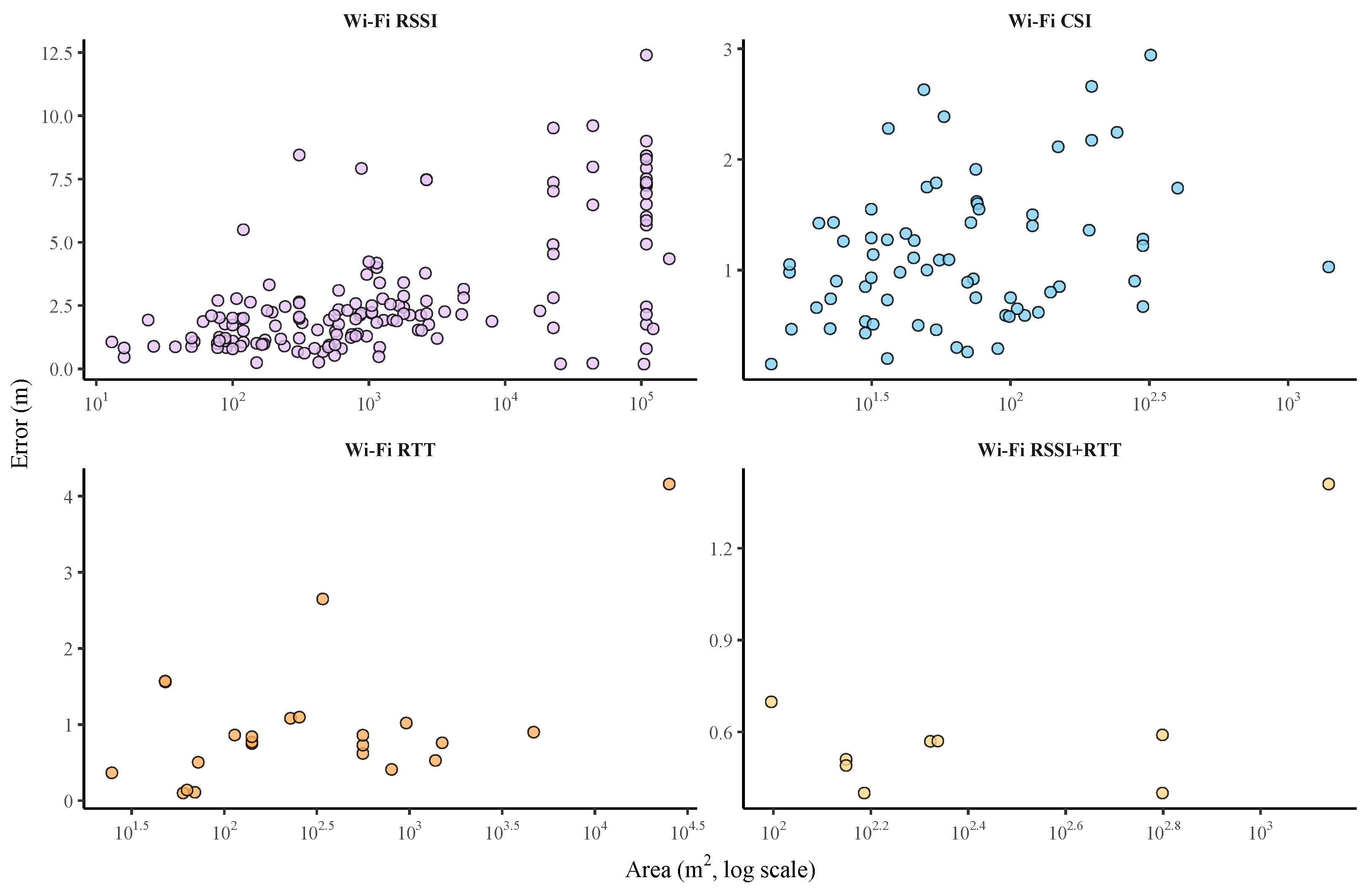
As shown in Table 10, the systems based on Wi-Fi RSSI present errors ranging from 0.058 m to 12.4 m, in experimental areas ranging from 12.25 m2 to 160,000 m2. This large variability is influenced by the characteristics of the environment and the fluctuating nature of the signal strength.
In contrast, CSI-based systems show significantly improved and more stable results, with errors ranging from 0.15 m to 2.943 m and experimental areas from 12.4 m2 to 1400 m2. CSI leverages detailed channel state information at the subcarrier level, which captures multipath effects and phase information, enabling finer-grained positioning than RSSI.
Finally, RTT-based systems report lower and more stable errors, ranging from 0.10 m to 4.16 m, and experimental areas ranging from 24.75 m2 to 25,200 m2. RTT is based on Time of Arrival (ToA) measurement rather than signal strength, following more accurate distance estimates, especially in complex environments.
Figure 8 illustrates the relationship between positioning error and experimental area in Wi-Fi-based systems, separated by technique. The subplot corresponding to Wi-Fi RSSI immediately stands out due to its wide vertical dispersion, with errors spanning the entire range up to 12.4 m, graphically confirming its high variance and sensitivity to environmental factors. In contrast, the subplots for Wi-Fi CSI and Wi-Fi RTT show points clustered in the low-error region, with Y-axes rarely exceeding 3–4 m. This powerful visual comparison underscores the significant and consistent improvements in accuracy offered by these advanced metrics. Furthermore, the X-axis reveals that while RSSI is applied across all scales, most CSI and RTT studies are concentrated in smaller areas, highlighting the relationship between accuracy and scale.

4.5.2. Accuracy of BLE-Based Systems Using RSSI and AoA

In BLE-based indoor positioning systems, the transition from RSSI to AoA-based techniques has shown significant improvements in accuracy.
A total of 48 studies using RSSI and 5 studies using AoA were identified. Of these, only 41 RSSI-based studies were included in the comparative analysis, as they explicitly reported positioning error in meters. The remaining seven studies were excluded from this comparison because they employed alternative performance metrics—such as classification accuracy, cumulative distribution functions, or floor-level detection—that do not permit direct comparison in terms of mean positioning error. Nonetheless, these studies were retained in the overall review due to their methodological contributions or the innovative use of BLE technology.
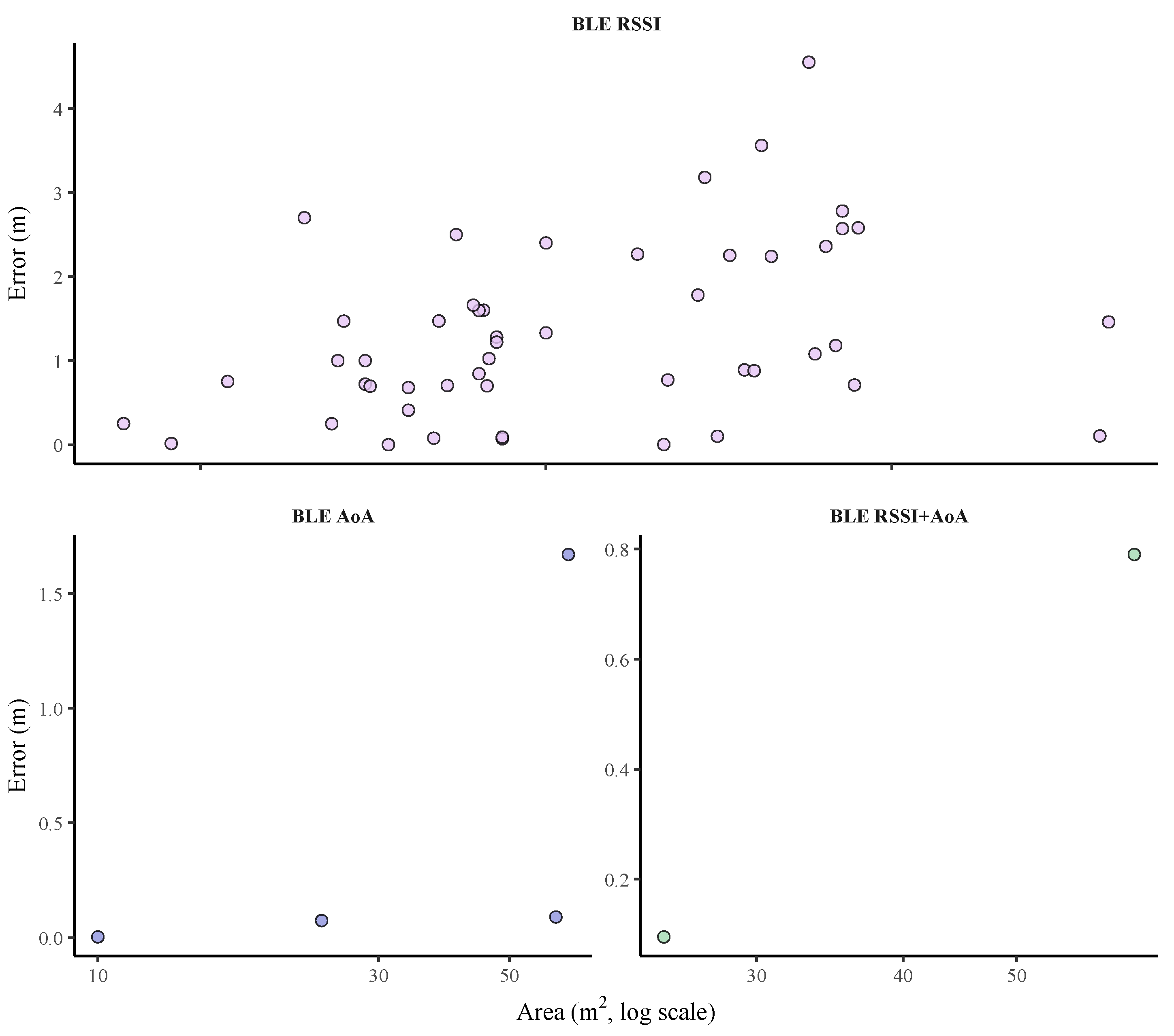
As shown in Table 11, reported positioning errors for RSSI-based BLE systems range from 0.00023 m to 6.01 m, with experimental areas ranging from 8.24 m2 to 800 m2. This wide variability reflects the inherent limitations of RSSI, which is highly sensitive to factors such as signal attenuation, interference, and multipath propagation. Notably, the lowest error in our review, an exceptional 0.00023 m, was achieved with a Random Forest (RF) model in a controlled 35 m2 corridor environment [203], highlighting the high performance possible under ideal conditions.
In contrast, studies based on BLE AoA have significantly smaller errors, ranging between 0.0032 m and 1.67 m, evaluated in smaller and more controlled settings, with experimental areas ranging from 10 m2 to 63 m2. The AoA technique allows for more consistent estimates due to its ability to calculate the direction of arrival of the signal, improving the geometric robustness of the system.
Figure 9 illustrates the relationship between positioning error and experimental area in BLE-based systems, separated by technique. The top panel shows that BLE RSSI results are highly dispersed, with errors reaching over 4 m. The bottom panels for BLE AoA and BLE RSSI+AoA, with their much smaller y-axis scales, dramatically illustrate the leap in precision. The results for these advanced techniques form tight, low-error clusters, with nearly all reported errors falling below 1 m. This visual contrast powerfully demonstrates the stability and accuracy gains of moving to a geometry-based principle. At the same time, the x-axis highlights the current place application of AoA, with all validations occurring in small, controlled environments under 100 m2.

4.6. Primary Challenges and Limitations Identified in Wi-Fi and BLE-Based Indoor Positioning Systems (RQ4)

Indoor Positioning System (IPS) based on Wi-Fi and Bluetooth Low Energy (BLE) have been widely studied due to their ability to leverage existing infrastructures and their compatibility with mobile devices. However, they face multiple challenges related to accuracy, stability, scalability, power consumption, security, privacy, and feasibility of implementation in real environments. This section analyzes these limitations based on a systematic review of recent literature, highlighting the main technical and practical obstacles.
One of the main challenges faced by Wi-Fi and BLE-based IPSs is their limited positioning accuracy, particularly when relying on Received Signal Strength Indicator (RSSI). Signal propagation in indoor environments is influenced by phenomena such as multipath effects, attenuation, and interference—especially in Non Line-of-Sight (NLOS) scenarios involving obstacles, furniture, and moving users. RSSI-based Wi-Fi systems report positioning errors ranging from 0.08 to 8 m, depending on the size of the environment (from 8.24 to 4240 m2), while BLE demonstrates slightly better accuracy, with errors between 0.00023 and 0.01 m under controlled conditions. However, the high sensitivity of RSSI to environmental variations necessitates calibration and filtering procedures, which increase system complexity and reduce scalability.
Advanced techniques such as Channel State Information (CSI) and Round Trip Time (RTT) for Wi-Fi and Angle of Arrival (AoA) for BLE have shown significant improvements, with submeter errors in controlled environments. Nevertheless, these approaches also present their own limitations. Channel State Information (CSI) provides fine-grained information about the wireless channel, enabling more accurate multipath modeling and improved positioning; however, its use is limited by the need to access raw physical-layer data, which is often restricted in commercial devices, as well as by the higher computational complexity of processing multidimensional Channel State Information (CSI) data. Round Trip Time (RTT), on the other hand, relies on IEEE 802.11mc support, restricting its adoption to modern devices and compatible access points, while Angle of Arrival (AoA) requires antenna arrays and careful calibration. These dependencies hinder the integration of Channel State Information (CSI), Round Trip Time (RTT), and Angle of Arrival (AoA)-based systems into heterogeneous multi-vendor environments and complicate their deployment in large infrastructures such as airports or shopping malls.
Other limitations include scalability and cost of implementation. Bluetooth Low Energy (BLE), although more economical and energy-efficient, has limited coverage and requires a high density of beacons to ensure accurate positioning, increasing installation and maintenance costs. Fingerprinting-based approaches also require periodic database updates, which becomes operationally intensive in dynamic environments. Power consumption remains another challenge, especially for IEEE 802.11 Wireless LAN (Wi-Fi)-based systems, which require continuous signal scanning, impacting battery life in mobile devices.
Security and privacy issues add further complexity. The continuous transmission of location information in Wi-Fi and BLE systems can expose users to risks of unauthorized tracking, especially in environments regulated by regulations such as General Data Protection Regulation (GDPR) [304], which require explicit consent and data anonymization. Wi-Fi systems are vulnerable to spoofing attacks, while BLE beacons often broadcast identifiers without encryption, and CSI-based measurements can reveal device-specific characteristics, posing new privacy risks. In addition, fingerprinting techniques store detailed information about users and physical infrastructure, requiring anonymization and encryption techniques that increase latency and system complexity.
The implementation of IPS in real environments faces significant barriers. Most of the studies analyzed have been validated in controlled environments with ideal conditions, so their performance in heterogeneous and dynamic spaces, such as hospitals or shopping centers, is not always replicable. The need for environment-specific calibrations, the lack of interoperability between standards, and user resistance due to privacy concerns or unintuitive interfaces are additional obstacles. Overcoming these barriers requires advances in ML algorithms, efficient hardware, and robust security protocols.
Despite the limitations described above, recent advances show remarkable progress toward more accurate, robust, and efficient IPS systems. Techniques that combine RSSI, CSI, RTT, and AoA, along with DL-based algorithms, are gaining interest due to their ability to mitigate reliance on manual calibrations and improve model generalization in complex environments. These solutions promise to address challenges of scalability, power consumption, and privacy, but require further research to ensure their feasibility in practical applications.
In conclusion, Wi-Fi and BLE-based IPS systems offer great potential for indoor applications, but face significant challenges in terms of accuracy, stability, scalability, power consumption, security, and practical feasibility. High signal variability, specialized hardware requirements, impact on device autonomy, and privacy concerns limit their widespread adoption. However, advances in hybrid techniques and DL algorithms represent an active line of research that could overcome these limitations, making IPS more robust and accessible for a wide range of applications in the future.

4.7. Least Explored Areas in the Application of Machine Learning Algorithms for Wi-Fi and BLE-Based Indoor Positioning Technologies (RQ5)

The systematic review shows that, although the use of Machine Learning (ML) in indoor positioning systems has advanced significantly, there are still key areas with a low degree of exploration. First, there is little integration of ML with Wi-Fi systems based on Channel State Information (CSI). CSI has proven to provide more detailed multipath information and higher positioning accuracy than RSSI; however, its combination with ML algorithms remains underexplored, especially in large-scale and dynamic real-world scenarios. Most CSI-based ML studies focus on controlled laboratory environments, often using modified hardware or special firmware to access physical-layer data, which limits their reproducibility in commercial deployments. Furthermore, the high dimensionality of CSI data poses additional challenges for ML models, requiring advanced preprocessing and feature extraction techniques. This gap represents a clear opportunity for research into scalable and robust ML methods for CSI-based positioning.
Secondly, there is limited exploration of of ML in Wi-Fi systems based on Round Trip Time (RTT). Although the IEEE 802.11mc standard offers significantly higher accuracy capability over RSSI-based approaches, the available scientific literature combining RTT with ML algorithms is very limited. Existing studies have mainly been developed in small-scale controlled laboratory environments, without validation in complex real-world scenarios or analysis of robustness to interference or high user density. This lack of practical adoption and generalization studies of ML models with temporal metrics such as RTT represents a clear opportunity for future research.
Thirdly, the use of ML in Bluetooth Low Energy (BLE) based systems using the Angle of Arrival (AoA) parameter remains limited. Although AoA has the potential to provide submeter accuracy by exploiting the angular information of the signal, most of the identified works focus on simulations or highly controlled laboratory environments, with no real applications or large-scale deployments. Furthermore, there is no evidence of research that combines AoA with advanced DL architectures capable of improving robustness in dynamic or high interference environments, which makes this line of research an area of great interest for the future.
Finally, the application of security and privacy oriented ML in these systems is also an area that has been little addressed. Most studies prioritize improving accuracy, leaving the protection of location data in the background. There are very few proposals that integrate privacy-preserving techniques such as federated learning or differential privacy, despite the fact that indoor location involves sensitive information susceptible to misuse.
These areas, Wi-Fi CSI and RTT with ML, BLE AoA with ML, and security and privacy in ML environments, are clear research gaps that, if addressed, could strengthen the accuracy, robustness and reliability of indoor positioning systems.

5. Discussion

This section synthesizes and interprets the findings presented in Section 4. The following discussion aims to provide a deeper analysis of the underlying trends and challenges in the field. By addressing the research questions defined in Section 3.2, we highlight the key insights derived from our systematic review, contextualize the evolution of ML-based positioning, and identify critical knowledge gaps.

5.1. Discussion on Machine Learning Methods Employed in Wi-Fi and BLE-Based Indoor Positioning Systems Using RSSI (RQ1)

This section discusses the findings presented in Section 4.2 and analyzes the ML methods used in Wi-Fi and BLE RSSI-based Indoor Positioning Systems (IPSs). The comparative study focuses on algorithm prevalence, methodological diversity, and the influence of technological constraints on model selection.

5.1.1. Wi-Fi RSSI-Based Indoor Positioning Systems (IPS)

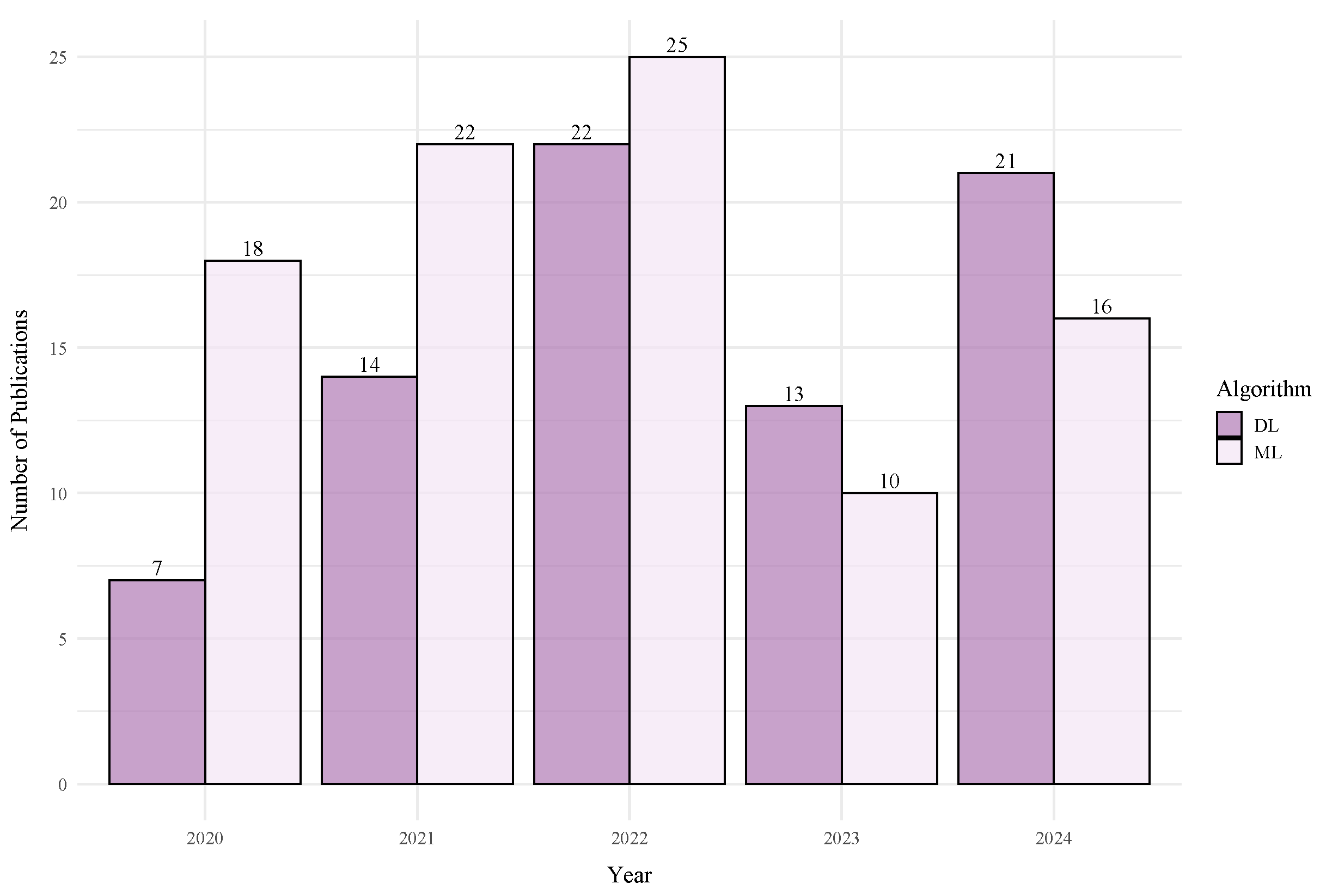
The evolution from traditional methods to more sophisticated DL architectures is one of the most significant trends identified in this review. As illustrated in Figure 10, while classical ML algorithms remain a consistent baseline, there has been a marked increase in the adoption of DL models. The data clearly show that, since 2022, the number of studies investigating DL has nearly equaled or surpassed those focusing on classical ML, underscoring a clear paradigm shift in the field. It is important to note that this figure includes all ML/DL methods applied in the positioning process stage.
The continued prevalence of K-Nearest Neighbour (KNN) is not merely a preference but an indicator of the maturity of fingerprinting, establishing it as a robust and ubiquitous baseline against which new, more complex models are benchmarked. Its simplicity and low computational cost make it an effective starting point. However, its strong dependence on data density and vulnerability to environmental noise are precisely the limitations that have spurred the adoption of more advanced models.
The emergence of DL techniques reflects a fundamental shift towards models that can automatically learn feature representations directly for the positioning task. CNNs, in particular, are effectively adapted to treat RSSI fingerprints as 2D spatial “images,” allowing them to learn location-dependent features. LSTMs, on the other hand, model temporal sequences, making them suitable for tracking user movement. The recent inclusion of Transformer-based architectures and domain adaptation techniques (GANs) signals the latest frontier: addressing the challenge of generalization across different environments and devices.
In general, the wide range of algorithms applied reveals that there is no universally superior method. The choice depends largely on the specific characteristics of the deployment environment, the availability of labeled data, the complexity of the space, and computational constraints. The trends observed also indicate a continuous evolution of the field, from traditional methods to more sophisticated approaches that attempt to overcome the inherent limitations of RSSI as a positioning signal.

5.1.2. BLE RSSI-Based Indoor Positioning Systems (IPS)

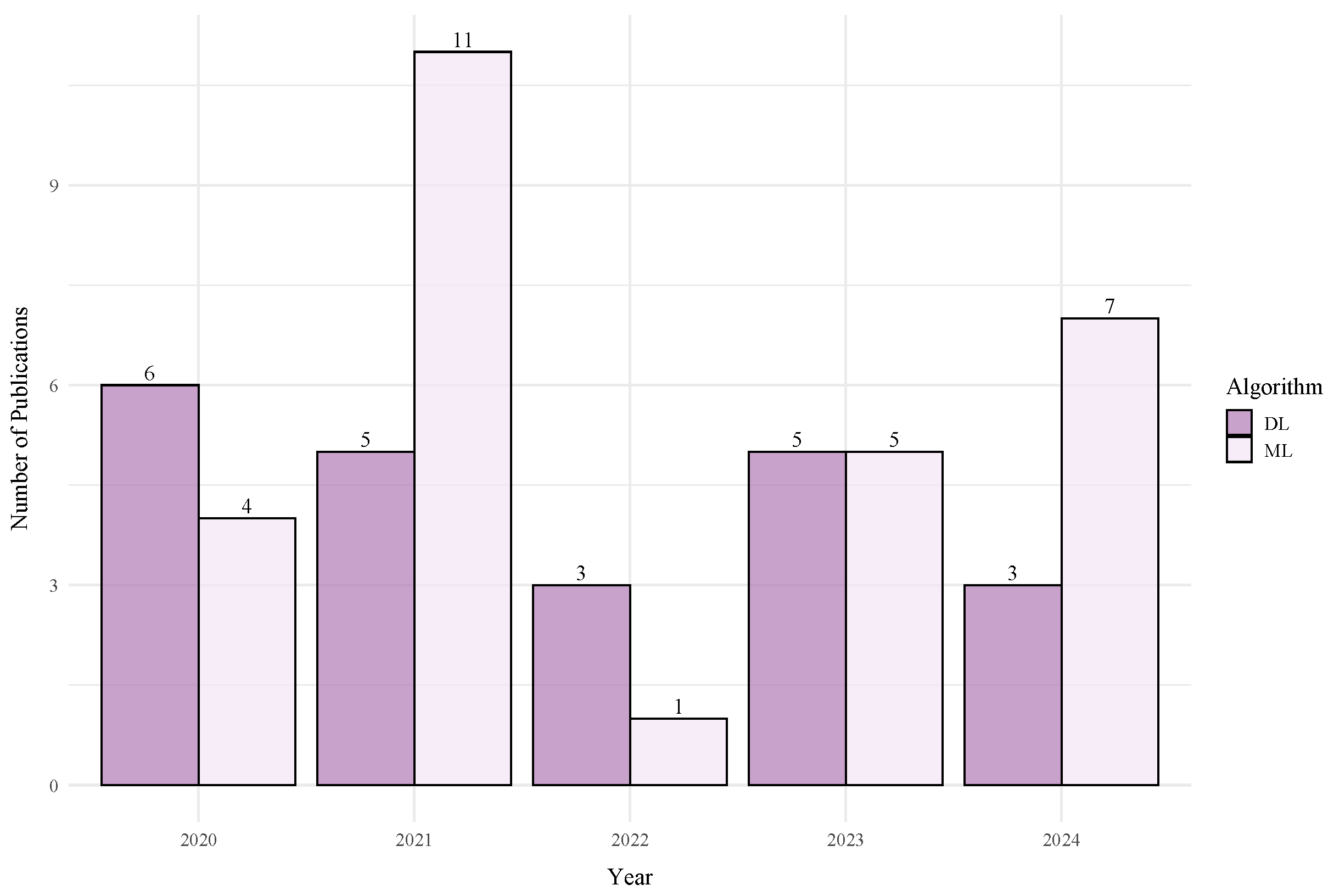
In contrast to the clear paradigm shift observed in Wi-Fi, the algorithmic landscape for the BLE RSSI positioning stage remains more conservative, as visualized in Figure 11. The number of studies incorporating DL is not only lower but has also remained stable and minoritarian, without the significant growth trend seen in Wi-Fi. This visual evidence supports the conclusion that BLE research continues to prioritize lightweight, energy-efficient classical algorithms for the core positioning task.
The analysis confirms that K-Nearest Neighbour (KNN) and its variants are the undisputed backbone of BLE positioning. This is a direct consequence of the primary constraints of technology: the need for computational efficiency and low power consumption in battery-powered devices. These characteristics make lightweight, interpretable algorithms the natural choice.
While DL techniques are present, their integration for the positioning task remains limited and appears more exploratory. The scarcity of sequence modeling methods like LSTM further indicates that capturing temporal dependencies in the highly volatile BLE signal remains a significant, largely unaddressed challenge for positioning algorithms.

5.1.3. Comparative Analysis Between Wi-Fi and BLE RSSI Approaches

The algorithmic divergence between Wi-Fi RSSI and BLE systems for positioning tasks, clearly illustrated by comparing the trends in Figure 10 and Figure 11, is not arbitrary. The higher data rates and more stable signal environment of Wi-Fi provide richer datasets that favor complex DL models requiring large amounts of data. In contrast, the design philosophy of BLE prioritizes low power consumption and efficiency, which naturally favors lightweight algorithms with low computational complexity.
While KNN serves as a common benchmark for both, the experimental frontier is vastly different. In Wi-Fi, the research has pushed towards advanced generalization techniques. In BLE, the innovation remains focused on optimizing the classical fingerprinting pipeline. To synthesize this comparative discussion, Table 12 provides a compact summary of the main challenges, dominant positioning models, and key research trends for both Wi-Fi and BLE RSSI-based systems.

5.2. Discussion on Machine Learning Approaches Utilized in Wi-Fi CSI, RTT and BLE AoA for Indoor Positioning Systems (IPS) (RQ2)

This section discusses the findings presented in Section 4.3 and Section 4.4 and provides a comparative analysis of the ML approaches employed in Wi-Fi CSI, Wi-Fi RTT, and BLE AoA-based Indoor Positioning Systems (IPSs). Differences in methodological diversity and technological constraints are analyzed, showing how each technique influences algorithm choice and research directions. The analysis focuses on how the intrinsic characteristics of each type of signal (the dimensionality of CSI, the temporal nature of RTT, and the geometric information of AoA) directly influence the choice of ML models and define the maturity of each research area.

5.2.1. Wi-Fi CSI-Based Indoor Positioning Systems (IPS)

The algorithmic landscape of Wi-Fi CSI is unequivocally dominated by DL, a direct consequence of the nature of the signal. CSI provides a rich, multi-dimensional tensor of amplitude and phase information across multiple subcarriers, which is structurally analogous to an image. This explains the clear predominance of Convolutional Neural Networks (CNNs), as they are expertly designed to process such spatial or time-frequency representations and automatically extract potent, location-specific features that are nearly impossible to model with traditional algorithms. Deep Neural Networks (DNNs) and Long Short-Term Memorys (LSTMs) further extend this by capturing complex, non-linear relationships and temporal dependencies, respectively.
This focus on advanced models marks a clear departure from RSSI-based research. While RSSI systems still rely heavily on KNN, the CSI field has largely moved on to sophisticated architectures like Transformers and domain adaptation techniques (GANs). This shift is driven by necessity: the high sensitivity of CSI to specific hardware and environments makes generalization a critical problem. As a result, classical algorithms like KNN and SVM appear in the CSI literature almost exclusively as performance benchmarks, rather than as primary solution candidates.
However, the high dimensionality of CSI, which enables high accuracy, also poses challenges in terms of computational overhead and dimensionality. This explains why our review found consistent use of autoencoders for dimensionality reduction and noise removal, highlighting that robust preprocessing is a fundamental prerequisite for successful CSI-based positioning. This technical barrier, combined with the limited availability of commercial devices that expose raw CSI data, currently limits its large-scale adoption, despite its proven sub-meter accuracy in controlled environments.

5.2.2. Wi-Fi RTT-Based Indoor Positioning Systems (IPS)

Unlike the image-like data of CSI, Wi-Fi RTT provides numerical ToA measurements, leading to a more balanced and diverse algorithmic landscape. The predominance of DNNs and CNNs reflects their powerful ability to model the complex, non-linear relationship between RTT measurements and true distance, especially in multipath-rich environments.
However, traditional ML methods like Random Forest (RF) and SVR retain significant relevance. This is because the main task is fundamentally a regression problem with more interpretable features (time/distance) than raw CSI. These classical models offer excellent performance with faster training and greater interpretability, making them a pragmatic choice for many scenarios.
A key finding in the RTT literature is the common use of probabilistic models like GPR. This shows that researchers are interested in more than just predicting a location; they also want to quantify the uncertainty of that prediction. Knowing how reliable a location estimate is can be critical for navigation, especially since real-world ToA measurements can be noisy. The use of these uncertainty-aware models, alongside a variety of other established methods, suggests that RTT-based positioning is a relatively mature and versatile research area.

5.2.3. BLE AoA-Based Indoor Positioning Systems

Research on BLE AoA represents the most emerging stage among advanced metrics, with an algorithmic landscape that is still emerging. The limited number of studies naturally restricts methodological diversity, but a clear pattern is already emerging: CNNs are the predominant choice. This is a logical starting point, as the angular information derived from AoA antenna arrays can be processed as image-like data, making convolutional layers an effective tool for feature extraction.
Despite the focus on CNNs, early signs of exploration are already visible. The introduction of attention-based architectures (AnFIPNet) suggests a trend toward more sophisticated DL, while the use of hybrid models such as RF + IKNN indicates that combining classifiers with distance-based algorithms remains a viable strategy, especially in scenarios with limited data. Overall, the current literature shows that ML applications in BLE AoA remain exploratory, with significant scope for the development and validation of more diverse and robust models.

5.2.4. Comparative Analysis Between Wi-Fi CSI, RTT and BLE AoA

The comparative analysis reveals that Wi-Fi CSI, Wi-Fi RTT, and BLE AoA each have distinct research profiles and levels of maturity, shaped by their signal characteristics, data availability, and deployment challenges.
  • Wi-Fi CSI is the most methodologically sophisticated, heavily reliant on complex, data-hungry architectures (CNNs, Transformers, GANs) to harness its high-dimensional data. Its development stage is advanced, but it faces the most significant practical deployment hurdles.
  • Wi-Fi RTT leverages a balanced mix of traditional regression models (RFs, SVRs) and DL (DNNs). The numerical nature of its data makes it amenable to both approaches, and the strong presence of probabilistic models like GPRs indicates a mature focus on reliability.
  • BLE AoA is the most emerging of the three, its algorithmic landscape is the least diverse. The research is currently dominated by CNNs as a natural fit for processing geometric data, with the field still in an active, experimental phase.
Despite their differences, a powerful point of convergence is the universal adoption of CNNs in all three techniques, underscoring its versatility in learning spatial features from various types of data, whether CSI matrices, RTT time series, or AoA angular patterns. However, the key differences offer a clear picture of three technologies at different stages of their research lifecycle, each with its own set of challenges and opportunities.

5.3. Discussion on Main Accuracy Improvements Achieved by Transitioning from RSSI to RTT and AoA Techniques in Wi-Fi and BLE-Based Indoor Positioning Systems (IPS) (RQ3)

One of the clearest findings of this systematic review is the substantial and consistent accuracy improvement gained by transitioning from RSSI to advanced signal metrics. However, our analysis reveals that this performance gain comes with significant trade-offs in terms of deployment complexity, hardware dependency, and the generalizability of the reported results. This section dissects this critical accuracy-practicality balance.

5.3.1. Discussion on the Accuracy of Wi-Fi-Based Systems Using RSSI, CSI and RTT

The transition from RSSI to CSI and RTT in Wi-Fi systems yields undeniable improvements in positioning accuracy. The reason is fundamental: these techniques leverage more robust physical properties of the signal.
  • CSI achieves lower and more stable errors by exploiting fine-grained channel information, allowing for better modeling of multipath effects and reducing sensitivity to environmental fluctuations.
  • RTT, by measuring the signal’s Time of Flight (ToF) rather than its intensity, provides inherent robustness against signal power variations and interference, leading to stable sub-meter or few-meter accuracy in dynamic scenarios.
However, this superior accuracy must be contextualized. Our review shows that CSI and RTT-based experiments are predominantly conducted in smaller, more controlled environments (labs, offices), whereas RSSI-based studies cover a much wider and more challenging range of large-scale deployments (malls, universities). While the accuracy improvement is primarily due to the superior measurement principles, the impressive sub-meter figures reported for CSI and RTT are also a reflection of these controlled testbeds.
Furthermore, these techniques face significant deployment barriers. CSI requires access to raw physical-layer data, which is not exposed by most commercial Wi-Fi chipsets. RTT, in turn, depends on IEEE 802.11mc compatibility, limiting it to modern devices and access points. These hardware dependencies explain why RSSI, despite its flaws, remains the most widely implemented method due to its simplicity and backward compatibility.

5.3.2. Discussion on the Accuracy of BLE-Based Systems Using RSSI and AoA

A similar trend is observed in BLE, where AoA offers a leap in accuracy over RSSI. By leveraging the direction of arrival of the signal, AoA-based systems provide geometrically robust estimates, and most of the studies reviewed achieve sub-meter or even decimeter accuracy. This makes AoA a very promising technique for high-precision applications.
However, this impressive accuracy is currently largely limited to a very specific context. The vast majority of studies on AoA are conducted in small, controlled spaces (often <100 m2) with specialized antenna arrays. This controlled environment minimizes signal scattering and simplifies position calculation, contributing to the excellent results. Therefore, although the potential of AoA is evident, the generalization of its performance to large, complex, and dynamic real-world scenarios remains an open and critical research question. The technical and economic challenges posed by the deployment and calibration of the necessary specialized hardware are significant obstacles to its widespread adoption.

5.3.3. Comparative Analysis Between the Accuracy of Wi-Fi and BLE Technologies

The results of this review do not suggest that one technology is universally better than another. On the contrary, they highlight a clear range of options, each with an optimum point defined by the balance between accuracy requirements and practical constraints. Therefore, the transition from RSSI to more sophisticated techniques is a matter of choosing the right tool for a specific application context.
  • RSSI remains the pragmatic choice for low-cost, large-scale applications where sufficient accuracy at the room or zone level is sufficient and leveraging existing infrastructure is a priority.
  • BLE AoA is the high-accuracy choice for specialized, small-scale use cases where decimeter-level accuracy is critical and the cost of dedicated hardware and a controlled environment is justifiable.
  • Wi-Fi CSI excels in complex indoor environments where multipath is a major challenge. It is best suited for applications where high accuracy is required and where the hardware can be controlled to extract the necessary channel data.
  • Wi-Fi RTT is emerging as the most promising scalable, high-precision solution for the future. It offers a great balance between robustness and ease of integration, as more and more commercial devices and access points adopt the IEEE 802.11mc standard.
In conclusion, although going beyond RSSI offers substantial improvements in positioning accuracy, it requires careful evaluation of the specific needs of the application against the costs and limitations of each advanced technology.

5.4. Discussion on Performance of ML Models in Different Environmental Topologies

A crucial aspect of this review, synthesized from the data presented in Table 10 and Table 11, is to assess how the performance of ML models varies across different real-world environments. While a direct quantitative comparison is impeded by study heterogeneity, our analysis reveals distinct trends regarding the suitability of different ML architectures for specific topologies:
  • Structured Office and Laboratory Environments: These are the most common testbeds, characterized by stable signal propagation and typically smaller areas. In these controlled conditions, models can achieve their highest accuracy. We found numerous examples of sub-meter performance, such as a 1D-CNN achieving a remarkable 0.058 m error in a 37.6 m2 space [92]. The absolute best-case result in our review was found here: a Random Forest (RF) model for BLE RSSI reported an exceptional 0.00023 m error in a 35 m2 corridor [203]. These results demonstrate that under ideal conditions, ML can achieve near-perfect accuracy, suggesting that the main challenge is not the models themselves, but their robustness to environmental changes.
  • Dynamic, Large-Scale Public Spaces (Malls, University Campus): As the scale and dynamism of the environment increase, performance degrades significantly. This is most evident in studies validated on large-scale public benchmark datasets like UJIIndoorLoc (108,703 m2), Tampere University (22,570 m2), or custom deployments in areas up to 160,000 m2 [100]. In these scenarios, reported errors frequently exceed 5 m, with some reaching as high as 12.4 m [27]. The literature indicates that models capable of capturing temporal dependencies, like LSTMs and Transformers, offer superior robustness here. For example, an Attention-guided LSTM [130] achieved a 2.58 m error in a large, heterogeneous 800 m2 environment, outperforming purely static models.
  • Harsh Industrial Environments (Warehouses, Factories): These topologies with severe multipath are the most challenging. Here, model robustness is more critical than sheer complexity. Tree-based ensemble methods like Random Forest and XGBoost often show reliable performance due to their ability to handle noisy and outlier data. While fewer studies explicitly target these environments, a hybrid RF+IKNN model for BLE AoA achieved 0.4214 m accuracy in a cluttered lab [207], demonstrating the power of combining robust classifiers with geometric data in challenging environments. Achieving consistent accuracy below 3 m is considered a strong result in these settings.
In summary, our review indicates that there is no single best ML model. The optimal choice is highly context-dependent, defined by a trade-off between the desired accuracy and the complexity of the operational environment. Simple CNNs excel in stable labs, LSTMs are essential for robustness in large, dynamic spaces, and robust ensemble methods are a pragmatic choice for the harshest industrial settings.

5.5. Discussion on Practical Deployment Challenges and Considerations

Beyond algorithmic performance, the practical viability of Wi-Fi and BLE-based IPSs is dictated by several real-world deployment challenges identified throughout our review. These considerations often determine the choice of technology and methodology for a given application:
  • Deployment and Maintenance Costs: A primary advantage of Wi-Fi-based systems is their ability to leverage existing network infrastructure, minimizing initial hardware costs. However, this is often offset by the significant hidden cost of creating and maintaining radio maps. The upkeep of these radio maps is a major operational load, as they require frequent recalibration when the physical environment changes (furniture is moved). BLE systems, while requiring the purchase and installation of beacons, introduce the recurring cost of battery replacement and hardware maintenance.
  • Calibration Effort: The majority of high-accuracy systems reviewed, particularly those based on RSSI fingerprinting, rely on a time-consuming and labor-intensive calibration phase. This process, which involves collecting detailed signal measurements at numerous known locations, represents a significant barrier to scalability. The high initial effort makes deploying such systems in large, multi-floor buildings prohibitively expensive and slow, which explains the strong research interest in calibration-free or calibration-light methods.
  • Scalability and Energy Consumption: Scalability is not only limited by calibration but also by operational factors. In BLE systems, achieving high accuracy often requires a high density of beacons, increasing both hardware and maintenance costs. For the end-user device, energy consumption is a critical concern. Continuous Wi-Fi or BLE scanning for positioning purposes can significantly drain the battery of mobile devices, impacting user experience. This trade-off between positioning update frequency (and thus, real-time accuracy) and battery life remains a key challenge, particularly for applications requiring continuous tracking or roaming between different areas.
In summary, while the literature often focuses on improving accuracy, these practical challenges related to cost, labor, and energy consumption are frequently the deciding factors in real-world adoption. Future research must therefore increasingly focus on solutions that are not only accurate but also scalable, cost-effective, and sustainable to maintain.

5.6. Discussion on Benchmarking and Reproducibility

A key finding of this systematic review is not just the evolution of ML methods but the persistent and serious deficiency of a shared assessment framework in the indoor positioning field. Although numerous studies report impressive sub-meter accuracy, it is nearly impossible to compare these approaches directly and fairly. As our analysis shows, results are frequently obtained under highly specific, controlled, and heterogeneous conditions that are rarely replicated.
This problem, which is frequently disregarded, stands in the way of both scientific advancement and practical application. Our analysis shows that heterogeneity exists on multiple levels: the size, shape, and construction materials of the experimental area, as well as human traffic and environmental dynamics, can all significantly affect performance metrics. An algorithm designed for a 50 m2 static office is probably not going to work as well in a 10,000 m2 dynamic shopping center with multiple floors.
The use of different metrics, such as mean error, median error, 75th percentile error, or room-level accuracy, prevents a standardized comparison of positioning accuracy. While a few widely adopted, large-scale benchmark datasets exist, such as UJIIndoorLoc, Tampere University, and UTSIndoorLoc, our review shows that a significant portion of studies still rely on generating their own smaller, private datasets. This practice, while necessary for exploring novel scenarios, perpetuates the problem of non-comparability and makes it difficult to fairly assess the true progress in the field.
As a consequence, some reported results may overestimate practical performance or fail to generalize outside the experimental setting. To advance the field, there is a pressing need for standardized evaluation protocols and best practices for benchmarking, including clearly defined datasets, reproducible experimental conditions, and consistent reporting of metrics. Establishing such guidelines would not only improve comparability but also strengthen the credibility and practical relevance of research outcomes.

6. Conclusions and Future Directions

This paper presents a systematic review of the literature on indoor positioning systems based on ML using Wi-Fi and BLE technologies, encompassing research published between 2020 and 2024. Following the PRISMA methodology, a total of 280 studies were analyzed and classified according to the signal metrics employed (RSSI, CSI, RTT, and AoA), the ML methods were applied, and the evaluation parameters were reported.
The analysis reveals that Wi-Fi remains the dominant technology and that RSSI-based digital fingerprinting continues to be widely studied due to its simplicity and compatibility with existing infrastructures. However, its known sensitivity to environmental dynamics and multipath have driven growing research interest in advanced measurements such as CSI, RTT, and AoA. The combination of CSI with deep neural networks, RTT with probabilistic and regression-based models, and BLE AoA with angle-based estimation approaches has shown remarkable improvements in accuracy, often achieving submeter accuracy under controlled conditions.
From a methodological perspective, this review reveals a clear evolution from traditional algorithms—such as KNN, SVM, and decision trees—toward DL-based approaches, particularly CNNs, DNNs, LSTMs, and hybrid models. These techniques have demonstrated greater capacity to capture complex spatio-temporal dependencies in noisy indoor environments. However, the reported results remain highly heterogeneous across studies, as error metrics, implementation scales, and experimental conditions vary substantially, which limits the comparability and generalization of findings.
Despite these advances, several challenges remain unresolved. Current IPS research continues to face issues of scalability in large dynamic environments, high calibration costs, device heterogeneity, and the absence of standardized open datasets for fair benchmarking. These limitations prevent the smooth transition of many promising solutions from controlled testbeds to large-scale real-world deployments. Looking ahead, several promising directions for future research can be identified:
  • Advances in research on high-precision metrics: It is a priority to expand studies on ML regarding BLE AoA and Wi-Fi RTT. These metrics represent a minority of the literature, despite their proven advantages in terms of precision. Future work should validate their performance in large-scale dynamic environments and focus on developing lightweight and generalizable models suitable for implementation in commercial mobile and IoT devices.
  • Addressing data heterogeneity and standardization: A critical barrier is the absence of standardized, open, large-scale datasets, particularly for CSI, RTT, and AoA. It is essential to prioritize their creation to enable fair benchmarking and train robust and adaptable ML models capable of functioning in changing environments without the need for costly recalibrations.
  • ML that preserves security and privacy: A crucial and under-explored area is the application of ML to protect location data. Future research should integrate techniques such as Federated Learning or Differential Privacy directly into IPS algorithms to ensure user privacy and compliance with regulations such as the GDPR, going beyond accuracy as the sole optimization metric.
  • Multimetric fusion: Research into hybrid and multimetric systems that combine RSSI, CSI, RTT, and AoA is a promising frontier. The challenge lies in designing sophisticated fusion algorithms, likely based on DL, that can intelligently weight the contribution of each metric to leverage their complementary strengths and mitigate their individual weaknesses.
  • Optimization: The design of lightweight architectures for real-time implementation on mobile devices and the IoT remains a key challenge. Future research should explore techniques for creating efficient models that ensure low latency and low energy consumption without significantly sacrificing accuracy.
Furthermore, the evolution of wireless standards (Wi-Fi 802.11az and BLE 5.1) and the emergence of 6G communications will provide the technical basis for a paradigm shift. Future 6G networks are expected to feature Integrated Sensors and Communications (ISAC), where positioning becomes a native network service. Technologies such as Terahertz (THz) communication and large-scale antenna arrays (ELAAs)/massive MIMO will offer unprecedented bandwidth and spatial resolution, enabling centimeter-accurate localization. The research challenge will be to develop novel methods based on ML, such as distributed or federated learning models, that can process the enormous amounts of data generated by these systems in real time while preserving user privacy and adapting to the unique characteristics of the THz band channel.
In conclusion, while RSSI-based solutions remain the backbone of Wi-Fi and BLE positioning, the transition to advanced measurements and DL methods signals a paradigm shift in this field. Continued efforts to expand research on ML in less explored signal metrics, such as AoA and RTT, along with advances in robustness, scalability, and standardization, will be essential to unlocking the full potential of ML-based IPS in real-world applications.


Supplementary Materials

The following supporting information can be downloaded at: https://www.mdpi.com/article/10.3390/s25226946/s1, Table S1: PRISMA 2020 Checklist.

Author Contributions

Conceptualization, S.M.-F. and J.T.-S.; methodology, S.M.-F., I.M. and J.T.-S.; validation, S.M.-F.; and E.D.; formal analysis, S.M.-F., E.D. and J.T.-S.; investigation, S.M.-F.; resources, S.M.-F. and E.D.; writing—original draft preparation, S.M.-F.; writing—review and editing, E.D., I.M. and J.T.-S.; visualization, S.M.-F.; supervision, E.D. and J.T.-S.; project administration, J.T.-S.; funding acquisition, J.T.-S. All authors have read and agreed to the published version of the manuscript.

Funding

The authors gratefully acknowledge funding from Generalitat Valenciana (CIDEXG/2023/17, Conselleria d’Educació, Universitats i Ocupació).

Institutional Review Board Statement

Not applicable.

Informed Consent Statement

Not applicable.

Data Availability Statement

No new data were created or analyzed in this study.

Conflicts of Interest

The authors declare no conflicts of interest. The funders had no role in the design of this study; in the collection, analyses, or interpretation of data; in the writing of the manuscript; or in the decision to publish the results.

Abbreviations

The following abbreviations are used in this manuscript:
AoAAngle of Arrival
APAccess Point
BLEBluetooth Low Energy
CNNConvolutional Neural Network
CSIChannel State Information
DLDeep Learning
DNNDeep Neural Network
DoADirection of Arrival
DTDecision Tree
ECExclusion Criteria
FFNNFeed-Forward Neural Network
FTMFine Timing Measurement
GAGenetic Algorithms
GDPRGeneral Data Protection Regulation
GMMGaussian Mixture Model
GPSGlobal Positioning System
GPRGaussian Process Regression
HARHuman Activity Recognition
HMMHidden Markov Model
ICInclusion Criteria
IKNNImproved K-Nearest Neighbour
IMUInertial Measurement Unit
IoTInternet of Things
IPSIndoor Positioning System
KNNK-Nearest Neighbour
LOSLine-of-Sight
LSTMLong Short-Term Memory
MLMachine Learning
MLPMultilayer Perceptron
MRQMain Research Question
NBNaive Bayes
NLOSNon Line-of-Sight
PCAPrincipal Component Analysis
PRISMAPreferred Reporting Items for Systematic Reviews and Meta-Analyse
PSOParticle Swarm Optimization
RFRandom Forest
RFRadio Frequency
RFIDRadio Frequency Identification
RNNRecurrent Neural Network
RQResearch Question
RSSIReceived Signal Strength Indicator
RTTRound Trip Time
SLRSystematic Literature Review
SVMSupported Vector Machine
SVRSupport Vector Regression
ToATime of Arrival
ToFTime of Flight
UWBUltra-Wideband
VLCVisible Light Communication
VLPVisible Light Positioning
Wi-FiIEEE 802.11Wireless LAN
WKNNWeighted K-Nearest Neighbour

References

  1. Bahl, P.; Padmanabhan, V.N. RADAR: An in-building RF-based user location and tracking system. In Proceedings of the IEEE INFOCOM 2000, The Conference on Computer Communications, Nineteenth Annual Joint Conference of the IEEE Computer and COMMUNICATIONS societies (Cat. No. 00CH37064), Tel Aviv, Israel, 26–30 March 2000; IEEE: Piscataway, NJ, USA, 2000; Volume 2, pp. 775–784. [Google Scholar]
  2. Faragher, R.; Harle, R. Location fingerprinting with bluetooth low energy beacons. IEEE J. Sel. Areas Commun. 2015, 33, 2418–2428. [Google Scholar] [CrossRef]
  3. Yang, Z.; Zhou, Z.; Liu, Y. From RSSI to CSI: Indoor localization via channel response. ACM Comput. Surv. (CSUR) 2013, 46, 1–32. [Google Scholar] [CrossRef]
  4. Gentner, C.; Ulmschneider, M.; Kuehner, I.; Dammann, A. WiFi-RTT indoor positioning. In Proceedings of the 2020 IEEE/ION Position, Location and Navigation Symposium (PLANS), Portland, OR, USA, 20–23 April 2020; pp. 1029–1035. [Google Scholar]
  5. Pau, G.; Arena, F.; Gebremariam, Y.E.; You, I. Bluetooth 5.1: An analysis of direction finding capability for high-precision location services. Sensors 2021, 21, 3589. [Google Scholar] [CrossRef]
  6. Page, M.J. The PRISMA 2020 statement: An updated guideline for reporting systematic reviews. BMJ 2021, 372, n71. [Google Scholar] [CrossRef]
  7. Ding, G.; Zhang, J.; Zhang, L.; Tan, Z. Overview of received signal strength based fingerprinting localization in indoor wireless LAN environments. In Proceedings of the 2013 5th IEEE International Symposium on Microwave, Antenna, Propagation and EMC Technologies for Wireless Communications, Chengdu, China, 29–31 October 2013; pp. 160–164. [Google Scholar] [CrossRef]
  8. Sakpere, W.; Adeyeye-Oshin, M.; Mlitwa, N.B. A state-of-the-art survey of indoor positioning and navigation systems and technologies. S. Afr. Comput. J. 2017, 29, 145–197. [Google Scholar] [CrossRef]
  9. Tariq, Z.B.; Cheema, D.M.; Kamran, M.Z.; Naqvi, I.H. Non-GPS positioning systems: A survey. ACM Comput. Surv. 2018, 50, 1–34. [Google Scholar] [CrossRef]
  10. Zafari, F.; Gkelias, A.; Leung, K.K. A Survey of Indoor Localization Systems and Technologies. IEEE Commun. Surv. Tutor. 2019, 21, 2568–2599. [Google Scholar] [CrossRef]
  11. Obeidat, H.; Shuaieb, W.; Obeidat, O.; Abd-Alhameed, R. A Review of Indoor Localization Techniques and Wireless Technologies. Wirel. Pers. Commun. 2021, 119, 289–327. [Google Scholar] [CrossRef]
  12. Singh, N.; Choe, S.; Punmiya, R. Machine Learning Based Indoor Localization Using Wi-Fi RSSI Fingerprints: An Overview. IEEE Access 2021, 9, 127150–127174. [Google Scholar] [CrossRef]
  13. Sesyuk, A.; Ioannou, S.; Raspopoulos, M. A Survey of 3D Indoor Localization Systems and Technologies. Sensors 2022, 22, 9380. [Google Scholar] [CrossRef] [PubMed]
  14. Feng, X.; Nguyen, K.A.; Luo, Z. A survey of deep learning approaches for WiFi-based indoor positioning. J. Inf. Telecommun. 2022, 6, 163–216. [Google Scholar] [CrossRef]
  15. Simelane, T.; Mathaba, T.N.; Otunniyi, T.O. A Review Paper: Indoor Positioning Systems Using Radio Frequency Technology. In Proceedings of the 2023 International Conference on Electrical, Computer and Energy Technologies (ICECET), Cape Town, South Africa, 16–17 November 2023. [Google Scholar] [CrossRef]
  16. Dai, J.; Wang, M.; Wu, B.; Shen, J.; Wang, X. A Survey of Latest Wi-Fi Assisted Indoor Positioning on Different Principles. Sensors 2023, 23, 7961. [Google Scholar] [CrossRef]
  17. Park, K.; Lee, G.; Lee, Y.; Yoon, D.; Seo, S.; Yoo, J.; Kim, M.J. Study on WiFi-based Indoor Positioning Prediction using Machine Learning Techniques. In Proceedings of the 2023 14th International Conference on Information and Communication Technology Convergence (ICTC), Jeju Island, Republic of Korea, 11–13 October. [CrossRef]
  18. Bastiaens, S.; Alijani, M.; Joseph, W.; Plets, D. Visible light positioning as a next-generation indoor positioning technology: A tutorial. IEEE Commun. Surv. Tutor. 2024, 26, 2867–2913. [Google Scholar] [CrossRef]
  19. Morgan, A.A. On the accuracy of BLE indoor localization systems: An assessment survey. Comput. Electr. Eng. 2024, 118, 109455. [Google Scholar] [CrossRef]
  20. Singh, J.; Tyagi, N.; Singh, S.; Ali, F.; Kwak, D. A systematic review of contemporary indoor positioning systems: Taxonomy, techniques, and algorithms. IEEE Internet Things J. 2024, 11, 34717–34733. [Google Scholar] [CrossRef]
  21. Lin, Y.; Yu, K.; Zhu, F.; Bu, J.; Dua, X. The state of the art of deep learning-based wi-fi indoor positioning: A review. IEEE Sens. J. 2024, 24, 27076–27098. [Google Scholar] [CrossRef]
  22. Shi, T.; Gong, W. A Survey of Bluetooth Indoor Localization. In Proceedings of the 2024 IEEE 10th Conference on Big Data Security on Cloud (BigDataSecurity), New York, NY, USA, 10–12 May 2024; pp. 71–77. [Google Scholar] [CrossRef]
  23. Ahmad, I.; Ullah, A.; Choi, W. WiFi-Based Human Sensing with Deep Learning: Recent Advances, Challenges, and Opportunities. IEEE Open J. Commun. Soc. 2024, 5, 3595–3623. [Google Scholar] [CrossRef]
  24. Jia, B.; Zong, Z.; Huang, B.; Baker, T. A DNN-based WiFi-RSSI Indoor Localization Method in IoT. In International Conference on Communications and Networking in China; Gao, H., Fan, P., Wun, J., Xue, X., Yu, J., Wang, Y., Eds.; Springer International Publishing: Cham, Switzerland, 2021; Volume 352, pp. 200–211. [Google Scholar] [CrossRef]
  25. Kumrai, T.; Korpela, J.; Zhang, Y.; Ohara, K.; Murakami, T.; Abeysekera, H.; Maekawa, T. Automated construction of Wi-Fi-based indoor logical location predictor using crowd-sourced photos with Wi-Fi signals. Pervasive Mob. Comput. 2023, 89, 101742. [Google Scholar] [CrossRef]
  26. Yang, J.; Deng, S.; Xu, L.; Zhang, W. Calibration-Free 3D Indoor Positioning Algorithms Based on DNN and DIFF. Sensors 2022, 22, 5891. [Google Scholar] [CrossRef]
  27. Qin, F.; Zuo, T.; Wang, X. Ccpos: Wifi fingerprint indoor positioning system based on cdae-cnn. Sensors 2021, 21, 1114. [Google Scholar] [CrossRef] [PubMed]
  28. Mahali, M.; Leu, J.S.; Achmad Sulistyo Putro, N.; Widyawan Prakosa, S.; Avian, C. DeepFuzzLoc Positioning: A Unified Fusion of Fuzzy Clustering and Deep Learning for Scalable Indoor Localization Using Wi-Fi RSSI. In Proceedings of the 2024 Joint 13th International Conference on Soft Computing and Intelligent Systems and 25th International Symposium on Advanced Intelligent Systems (SCIS&ISIS), Himeji, Japan, 9–12 November 2024. [Google Scholar] [CrossRef]
  29. Panja, A.; Biswas, S.; Neogy, S.; Chowdhury, C. Dimensionality Reduction Through Multiple Convolutional Channels for RSS-Based Indoor Localization. IEEE Sens. J. 2024, 24, 37482–37491. [Google Scholar] [CrossRef]
  30. Prasad, G.; Pandey, A.; Kumar, S. Domain Adaptation for Localization Using Combined Autoencoder and Gradient Reversal Layer in Dynamic IoT Environment. IEEE Trans. Netw. Sci. Eng. 2024, 11, 685–695. [Google Scholar] [CrossRef]
  31. Alitaleshi, A.; Jazayeriy, H.; Kazemitabar, J. EA-CNN: A smart indoor 3D positioning scheme based on Wi-Fi fingerprinting and deep learning. Eng. Appl. Artif. Intell. 2023, 117, 105509. [Google Scholar] [CrossRef]
  32. Cao, W.; Huang, J.; Zeng, M. RSSI-Based Trajectory Prediction for Intelligent Indoor Localization. In Proceedings of the International Conference on Communication Technology (ICCT), Wuxi, China, 20–22 October 2023; pp. 445–450. [Google Scholar] [CrossRef]
  33. Ye, Q.; Fan, X.; Bie, H.; Puthal, D.; Wu, T.; Song, X.; Fang, G. SE-Loc: Security-Enhanced Indoor Localization with Semi-Supervised Deep Learning. IEEE Trans. Netw. Sci. Eng. 2023, 10, 2964–2977. [Google Scholar] [CrossRef]
  34. Bai, J.; Sun, Y.; Zhang, Q. Stacked Sparse Autoencoder-Based WLAN Fingerprinting Localization. In Smart Communications, Intelligent Algorithms and Interactive Methods: Proceedings of 4th International Conference on Wireless Communications and Applications (ICWCA 2020); Jain, L.C., Kountchev, R., Hu, B., Kountcheva, R., Eds.; Springer: Singapore, 2022; Volume 257, pp. 307–313. [Google Scholar] [CrossRef]
  35. Ayinla, S.; Aziz, A.; Drieberg, M. SALLoc: An Accurate Target Localization in WiFi-Enabled Indoor Environments via SAE-ALSTM. IEEE Access 2024, 12, 19694–19710. [Google Scholar] [CrossRef]
  36. Aminah, N.; Ichwanda, A.; Djamal, D.; Budiharto, Y.; Budiman, M. A Low-Cost Indoor Navigation and Tracking System Based on Wi-Fi-RSSI. Wirel. Pers. Commun. 2024, 136, 1791–1809. [Google Scholar] [CrossRef]
  37. Zhang, H.; Liu, K.; Jin, F.; Feng, L.; Lee, V.; Ng, J. A scalable indoor localization algorithm based on distance fitting and fingerprint mapping in Wi-Fi environments. NEural Comput. Appl. 2020, 32, 5131–5145. [Google Scholar] [CrossRef]
  38. Yang, Y.; Dai, P.; Huang, H.; Wang, M.; Kuang, Y. A semi-simulated rss fingerprint construction for indoor Wi-Fi positioning. Electronics 2020, 9, 1568. [Google Scholar] [CrossRef]
  39. Li, S.; Zhao, Q.; Li, H.; Wang, S.; Huang, T.; Liu, J. Adaptive Density Graph-Based Manifold Alignment for Fingerprinting Indoor Localization. IEEE Access 2020, 8, 4944–4953. [Google Scholar] [CrossRef]
  40. Niang, M.; Canalda, P.; Ndong, M.; Spies, F.; Dioum, I.; Diop, I.; Ghany, M. An adapted machine learning algorithm based-Fingerprints using RLS to improve indoor Wi-fi localization systems. In Proceedings of the 2022 4th International Conference on Emerging Trends in Electrical, Electronic and Communications Engineering (ELECOM), Online, 22–24 November 2022; Pudaruth, S., Mungur, A., Rajkumarsingh, B., Chooramun, N., Ah King, R.T.F., Fowdur, T.P., Hurbu, V., Eds.; IEEE: Piscataway, NJ, USA, 2022. [Google Scholar] [CrossRef]
  41. Nakpaen, L.; Wongsekleo, P.; Cherntanomwong, P.; Pattiyanon, C. Building RSSI-based Indoor Positioning Fingerprint Maps using Android-based Coordination. In Proceedings of the 19th International Joint Symposium on Artificial Intelligence and Natural Language Processing (iSAI-NLP), Chonburi, Thailand, 11–15 November 2024. [Google Scholar] [CrossRef]
  42. Yoo, J. Change Detection of RSSI Fingerprint Pattern for Indoor Positioning System. IEEE Sens. J. 2020, 20, 2608–2615. [Google Scholar] [CrossRef]
  43. Tang, S.; Ibrahim, S.; Md Zain, A.; Tantiviwat, S. Comparative Analysis of Trilateration and Fingerprinting for Wi-Fi-Based Human Localization. In Proceedings of the ICoCET—IEEE 1st International Conference on Communication Engineering and Emerging Technologies (ICoCET), Kepala Batas, Malaysia, 2–3 September 2024. [Google Scholar] [CrossRef]
  44. Zhao, Y.; Wong, W.C.; Feng, T.; Garg, H. Efficient and Scalable Calibration-Free Indoor Positioning Using Crowdsourced Data. IEEE Internet Things J. 2020, 7, 160–175. [Google Scholar] [CrossRef]
  45. Khoo, H.; Ng, Y.; Tan, C. Enhanced Radio Map Interpolation Methods Based on Dimensionality Reduction and Clustering. Electronics 2022, 11, 2581. [Google Scholar] [CrossRef]
  46. Nimnaul, T.; Bureetes, N.; Siriwat, S.; Wongwirat, O. Enhancing Wi-Fi-based Fingerprint Technique for Indoor Positioning System. In Proceedings of the 2024 6th International Conference on Computer Communication and the Internet (ICCCI), Tokyo, Japan, 14–16 June 2024; pp. 150–155. [Google Scholar] [CrossRef]
  47. Mendoza-Silva, G.; Costa, A.; Torres-Sospedra, J.; Painho, M.; Huerta, J. Environment-Aware Regression for Indoor Localization Based on WiFi Fingerprinting. IEEE Sens. J. 2022, 22, 4978–4988. [Google Scholar] [CrossRef]
  48. Mane, S.; Kulkarni, M.; Gupta, S. Hyperparameter Optimization for Indoor Localization in Wi-Fi IoT Application. Wirel. Pers. Commun. 2024, 139, 2601–2629. [Google Scholar] [CrossRef]
  49. Quezada-Gaibor, D.; Klus, L.; Torres-Sospedra, J.; Lohan, E.; Nurmi, J.; Huerta, J. Improving DBSCAN for Indoor Positioning Using Wi-Fi Radio Maps in Wearable and IoT Devices. In Proceedings of the 2020 12th International Congress on Ultra Modern Telecommunications and Control Systems and Workshops (ICUMT), Brno, Czech Republic, 5–7 October 2020; pp. 208–213. [Google Scholar] [CrossRef]
  50. Bravenec, T.; Gould, M.; Fryza, T.; Torres-Sospedra, J. Influence of Measured Radio Map Interpolation on Indoor Positioning Algorithms. IEEE Sens. J. 2023, 23, 20044–20054. [Google Scholar] [CrossRef]
  51. Zhang, L.; Meng, X.; Fang, C. Linear Regression Algorithm against Device Diversity for the WLAN Indoor Localization System. Wirel. Commun. Mob. Comput. 2021, 2021, 5530396. [Google Scholar] [CrossRef]
  52. Alqahtani, A.; Choudhury, N. Machine Learning for Location Prediction Using RSSI on Wi-Fi 2.4 GHz Frequency Band. In Proceedings of the 12th Annual Information Technology, Electronics and Mobile Communication Conference (IEMCON), Vancouver, BC, Canada, 27–30 October 2021; Chakrabarti, S., Paul, R., Eds.; IEEE: Piscataway, NJ, USA, 2021; pp. 336–342. [Google Scholar] [CrossRef]
  53. Fahmy, I.; Ayman, S.; Rizk, H.; Youssef, M. MonoFi: Efficient Indoor Localization based on Single Radio Source and Minimal Fingerprinting. In Proceedings of the 29th International Conference on Advances in Geographic Information Systems, Beijing, China, 2–5 November 2021; Meng, X., Wang, F., Lu, C.-T., Huang, Y., Shekhar, S., Xie, X., Eds.; ACM: New York, NY, USA, 2021; pp. 674–675. [Google Scholar] [CrossRef]
  54. Ko, D.; Kim, M.; Son, K.; Han, D. Passive Fingerprinting Reinforced by Active Radiomap for WLAN Indoor Positioning System. IEEE Sens. J. 2022, 22, 5238–5247. [Google Scholar] [CrossRef]
  55. Guo, X.; Elikplim, N.; Ansari, N.; Li, L.; Wang, L. Robust WiFi Localization by Fusing Derivative Fingerprints of RSS and Multiple Classifiers. IEEE Trans. Ind. Inform. 2020, 16, 3177–3186. [Google Scholar] [CrossRef]
  56. Ren, X.; Tao, W.; Own, C.M. RSS remeasurement estimation for indoor positioning system with generative adversarial network model. In Proceedings of the 2021 2nd International Conference on Computing, Networks and Internet of Things, Stanford, CA, USA, 28–29 January 2021. [Google Scholar] [CrossRef]
  57. Bi, J.; Wang, Y.; Yu, B.; Cao, H.; Shi, T.; Huang, L. Supplementary open dataset for WiFi indoor localization based on received signal strength. Satell. Navig. 2022, 3, 25. [Google Scholar] [CrossRef]
  58. Shen, Q.; Cui, Y. WIFI Fingerprint Correction for Indoor Localization Based on Distance Metric Learning. IEEE Sens. J. 2024, 24, 36167–36177. [Google Scholar] [CrossRef]
  59. Careem, A.; Ali, W.; Jasim, M. Wirelessly Indoor Positioning System based on RSS Signal. In Proceedings of the 2020 International Conference on Computer Science and Software Engineering (CSASE), Duhok, Iraq, 16–18 April 2020; pp. 238–243. [Google Scholar] [CrossRef]
  60. Altaf Khattak, S.; Nasralla, M.; Esmail, M.; Mostafa, H.; Jia, M. WLAN RSS-Based Fingerprinting for Indoor Localization: A Machine Learning Inspired Bag-of-Features Approach. Sensors 2022, 22, 5236. [Google Scholar] [CrossRef]
  61. Liu, N.; Liu, Z.; Gao, J.; Yuan, Y.; Yan Chan, K. Wi-Fi fingerprint-based indoor location: Multiple fingerprints and multiple classifiers with two-layer fusion weights. Int. J. Commun. Syst. 2024, 37, e5828. [Google Scholar] [CrossRef]
  62. Gonzalez Díaz, N.; Zola, E.; Martin-Escalona, I. Assessing the Impact of Coupling RTT and RSSI Measurements in Fingerprinting Wi-Fi Indoor Positioning. In Proceedings of the Int’l ACM Conference on Modeling Analysis and Simulation of Wireless and Mobile Systems, Montreal, QC, Canada, 30 October–3 November 2023; pp. 19–26. [Google Scholar] [CrossRef]
  63. Torres-Sospedra, J.; Pendao, C.; Silva, I.; Meneses, F.; Quezada-Gaibor, D.; Montoliu, R.; Crivello, A.; Barsocchi, P.; Perez-Navarro, A.; Moreira, A. Let’s Talk about k-NN for Indoor Positioning: Myths and Facts in RF-based Fingerprinting. In Proceedings of the 2023 13th International Conference on Indoor Positioning and Indoor Navigation (IPIN), Nuremberg, Germany, 25–28 September 2023. [Google Scholar] [CrossRef]
  64. Sadhukhan, P.; Dahal, K.; Das, P. A Novel Weighted Fusion Based Efficient Clustering for Improved Wi-Fi Fingerprint Indoor Positioning. IEEE Trans. Wirel. Commun. 2023, 22, 4461–4474. [Google Scholar] [CrossRef]
  65. Sadhukhan, P.; Gain, S.; Dahal, K.; Chattopadhyay, S.; Garain, N.; Wang, X. An efficient clustering with robust outlier mitigation for Wi-Fi fingerprint based indoor positioning. Appl. Soft Comput. 2021, 109, 107549. [Google Scholar] [CrossRef]
  66. Aziz, T.; Camana, M.; Garcia, C.; Hwang, T.; Koo, I. REM-Based Indoor Localization with an Extra-Trees Regressor. Electronics 2023, 12, 4350. [Google Scholar] [CrossRef]
  67. Peng, X.; Chen, R.; Yu, K.; Guo, G.; Ye, F.; Xue, W. A new Wi-Fi dynamic selection of nearest neighbor localization algorithm based on RSS characteristic value extraction by hybrid filtering. Meas. Sci. Technol. 2021, 32, 034003. [Google Scholar] [CrossRef]
  68. Zhang, W.; Yu, K.; Wang, W.; Li, X. A Self-Adaptive AP Selection Algorithm Based on Multiobjective Optimization for Indoor WiFi Positioning. IEEE Internet Things J. 2021, 8, 1406–1416. [Google Scholar] [CrossRef]
  69. Zhou, R.; Meng, F.; Zhou, J.; Teng, J. A Wi-Fi Indoor Positioning Method Based on an Integration of EMDT and WKNN. Sensors 2022, 22, 5411. [Google Scholar] [CrossRef]
  70. Xue, J.; Liu, J.; Sheng, M.; Shi, Y.; Li, J. A WiFi fingerprint based high-adaptability indoor localization via machine learning. China Commun. 2020, 17, 247–259. [Google Scholar] [CrossRef]
  71. Ezhumalai, B.; Song, M.; Park, K. An efficient indoor positioning method based on wi-fi rss fingerprint and classification algorithm. Sensors 2021, 21, 3418. [Google Scholar] [CrossRef]
  72. Hou, C.; Xie, Y.; Zhang, Z. An improved convolutional neural network based indoor localization by using Jenks natural breaks algorithm. China Commun. 2022, 19, 291–301. [Google Scholar] [CrossRef]
  73. Cheng, C.; Guan, J.; Wang, C.; Wang, P.; Shi, F. An Improved Indoor Positioning Method Based on Received Signal Strengths. In Proceedings of the International Conference on Measuring Technology and Mechatronics Automation (ICMTMA), Changsha, China, 15–16 January 2022; pp. 317–321. [Google Scholar] [CrossRef]
  74. Lu, H.; Zhang, L.; Chen, H.; Zhang, S.; Wang, S.; Peng, H.; Zou, J. An Indoor Fingerprint Positioning Algorithm Based on WKNN and Improved XGBoost. Sensors 2023, 23, 3952. [Google Scholar] [CrossRef] [PubMed]
  75. Chen, P.; Zhang, S. DeepMetricFi: Improving Wi-Fi Fingerprinting Localization by Deep Metric Learning. IEEE Internet Things J. 2024, 11, 6961–6971. [Google Scholar] [CrossRef]
  76. Isa, A.; Akanni, J.; Abdulrahman, A.; Alao, R. Enhancing Indoor Positioning Systems Accuracy with Optimal Placement of Wi-Fi Access Points. Jordan J. Electr. Eng. 2024, 10, 48–59. [Google Scholar] [CrossRef]
  77. Hou, C.; Xie, Y.; Zhang, Z. FCLoc: A Novel Indoor Wi-Fi Fingerprints Localization Approach to Enhance Robustness and Positioning Accuracy. IEEE Sens. J. 2023, 23, 7153–7167. [Google Scholar] [CrossRef]
  78. Liu, S.; De Lacerda, R.; Fiorina, J. Hierarchical fingerprinting and feature extraction for indoor localization. In Proceedings of the IEEE International Conference on Communications, Seoul, Republic of Korea, 16–20 May 2022; pp. 4637–4642. [Google Scholar] [CrossRef]
  79. Zhang, L.; Zheng, X.; Chen, Y.; Lu, H.; Zhang, C. Indoor fingerprint localization algorithm based on WKNN and LightGBM-GA. Meas. Sci. Technol. 2024, 35, 116313. [Google Scholar] [CrossRef]
  80. Chen, P.; Shang, J.; Gu, F. Learning RSSI Feature via Ranking Model for Wi-Fi Fingerprinting Localization. IEEE Trans. Veh. Technol. 2020, 69, 1695–1705. [Google Scholar] [CrossRef]
  81. Liu, S.; De Lacerda, R.; Fiorina, J. Performance analysis of adaptive K for weighted K-nearest neighbor based indoor positioning. In Proceedings of the IEEE Vehicular Technology Conference, Helsinki, Finland, 19–22 June 2022. [Google Scholar] [CrossRef]
  82. Zhou, Z.; Liu, Y.; Zhu, G.; Li, S. Study on Weighted K-Nearest Neighbors Indoor Location Algorithm Based on Random Forest Access Point Selection. In Proceedings of the IEEE MTT S International Wireless Symposium (IWS), Qingdao, China, 14–17 May 2023. [Google Scholar] [CrossRef]
  83. Wang, J.; Park, J. An enhanced indoor positioning algorithm based on fingerprint using fine-grained csi and rssi measurements of ieee 802.11n wlan. Sensors 2021, 21, 2769. [Google Scholar] [CrossRef]
  84. Luo, J.; Li, C. An improved indoor localization algorithm based on SOM and WKNN. In Proceedings of the SPIE–the International Society for Optical Engineering, Wuhan, China, 18–19 December 2021; Lu, Y., Cheng, C., Eds.; Volume 12260. [Google Scholar] [CrossRef]
  85. Lei, P.; Li, Y.; Yuan, L.; Liao, M.; Zheng, W. An improved WiFi fingerprint location method for indoor positioning. In Proceedings of the 2022 Chinese Automation Congress, CAC, Beijing, China, 15–16 October 2022; pp. 423–427. [Google Scholar] [CrossRef]
  86. Zhou, R.; Yang, Y.; Chen, P. An rss transform—Based wknn for indoor positioning. Sensors 2021, 21, 5685. [Google Scholar] [CrossRef]
  87. Rong, R.; Fu, Y.; Zhang, X.; Xu, J.; Xiong, S. ANN Feature Scaling based k-Nearest Neighbor Algorithm for Indoor Localization. In Proceedings of the International Conference on Measuring Technology and Mechatronics Automation, Beihai, China, 16–17 January 2021; pp. 266–271. [Google Scholar] [CrossRef]
  88. Zibaei, S.; Ali Abbaspour, R. Evaluation of Improved K-Nearest Neighbors for Indoor Positioning System in Real Complex Buildings. In Proceedings of the International Conference on Web Research (ICWR 2023), Tehran, Iran, 3–4 May 2023; pp. 12–19. [Google Scholar] [CrossRef]
  89. Li, H.; Qian, Z.; Tian, C.; Wang, X. TILoc: Improving the Robustness and Accuracy for Fingerprint-Based Indoor Localization. IEEE Internet Things J. 2020, 7, 3053–3066. [Google Scholar] [CrossRef]
  90. Liu, M.; Liao, X.; Zhang, Y.; Gao, Z. A Multiscale Spatial-Temporal Features Fusion Framework for Indoor Localization. IEEE Sens. J. 2024, 24, 23098–23107. [Google Scholar] [CrossRef]
  91. Ssekidde, P.; Eyobu, O.; Han, D.; Oyana, T. Augmented cwt features for deep learning-based indoor localization using wifi rssi data. Appl. Sci. 2021, 11, 1806. [Google Scholar] [CrossRef]
  92. Chu, H.C.; Lai, H.C.; Wang, M.Y.; Wu, S.J. CNN Distance Estimation Based on Received Signal Strength Indicator. In Proceedings of the IEEE International Conference on Systems, Man and Cybernetics, Kuching, Malaysia, 6–10 October 2024; pp. 2103–2107. [Google Scholar] [CrossRef]
  93. Liu, J.; Jia, B.; Guo, L.; Huang, B.; Wang, L.; Baker, T. CTSLoc: An indoor localization method based on CNN by using time-series RSSI. Clust. Comput. 2022, 25, 2573–2584. [Google Scholar] [CrossRef]
  94. Li, S.; Kim, K.; Tang, Z.; Smith, J. Hierarchical Stage-Wise Training of Linked Deep Neural Networks for Multi-Building and Multi-Floor Indoor Localization Based on Wi-Fi RSSI Fingerprinting. IEEE Sens. J. 2024, 25, 23341–23351. [Google Scholar] [CrossRef]
  95. Xiong, T.; Yang, B.; Jia, X. High-Precision Indoor Positioning for Drone Based on EfficientNetV2 and CNN. In Proceedings of the International Conference on Intelligent Autonomous Systems (ICoIAS 2023), Qinhuangdao, China, 22–24 September 2023; pp. 112–117. [Google Scholar] [CrossRef]
  96. Poulose, A.; Han, D. Hybrid deep learning model based indoor positioning using wi-fi RSSI heat maps for autonomous applications. Electronics 2021, 10, 2. [Google Scholar] [CrossRef]
  97. Zhang, H.; Shen, K.; Sun, H. Indoor Localization System Based on WiFi RSSI using Wavelet-CNN Architecture. In Proceedings of the 2023 China Automation Congress, CAC, Chongqing, China, 17–19 November 2023; pp. 2305–2309. [Google Scholar] [CrossRef]
  98. Javed, A.; Ul Hassan, N. Low-Effort Deep Learning Method Trained through Virtual Trajectories for Indoor Tracking. In Proceedings of the IEEE International Symposium on Personal, Indoor and Mobile Radio Communications (PIMRC 2021), Helsinki, Finland, 13–16 September 2021; pp. 1546–1551. [Google Scholar] [CrossRef]
  99. Xu, Y.; Zhao, Y.; Yang, Y.; Zhang, D. Multi-floor Indoor Location Method Based on Fusion-CNN. In Proceedings of the IEEE International Conference on Wireless Communications and Signal Processing (WCSP 2022), Nanjing, China, 1–3 November 2022; pp. 1064–1069. [Google Scholar] [CrossRef]
  100. Pei, F.; Shi, M.; Kong, X. Multi-Level Feature Extraction and Autoregressive Prediction Based Wi-Fi Indoor Fingerprint Localization. In Proceedings of the China Automation Congress (CAC 2023), Chongqing, China, 17–19 November 2023; pp. 1424–1428. [Google Scholar] [CrossRef]
  101. Zhang, S.; Zhang, G.; Chen, R.; Wang, Y. Multiple Similarity Analysis-Based Deep Metric Learning for Enhancing Wi-Fi Fingerprint Indoor Localization. IEEE Internet Things J. 2024, 11, 35681–35688. [Google Scholar] [CrossRef]
  102. Abkari, S.; Jilbab, A.; Mhamdi, J. RSS-based Indoor Positioning Using Convolutional Neural Network. Int. J. Online Biomed. Eng. 2020, 16, 82–93. [Google Scholar] [CrossRef]
  103. Lan, T.; Ye, Y.; Zhang, S. ZSFA: Zero-Shot Fingerprint Augmentation for WiFi Fingerprint Based Indoor Localization. In Proceedings of the IEEE International Conference on Wireless Communications and Signal Processing (WCSP 2022), Nanjing, China, 1–3 November 2022; pp. 55–59. [Google Scholar] [CrossRef]
  104. Sun, H.; Zhu, X.; Liu, Y.; Liu, W. Construction of hybrid dual radio frequency RSSI (HDRF-RSSI) fingerprint database and indoor location method. Sensors 2020, 20, 2981. [Google Scholar] [CrossRef] [PubMed]
  105. Mundlamuri, R.; Inupakutika, D.; Ayyagari, K.; Gunnam, G.; Akopian, D. A Robust Indoor Localization Approach Exploiting Multipath. In Proceedings of the International Symposium on Electronic Imaging Science and Technology, Online, 17–26 January 2022; Volume 34. [Google Scholar] [CrossRef]
  106. Liu, S.Z.; Sinha, R.; Hwang, S.H. Clustering-based noise elimination scheme for data pre-processing for deep learning classifier in fingerprint indoor positioning system. Sensors 2021, 21, 4349. [Google Scholar] [CrossRef] [PubMed]
  107. Niang, M.; Ndong, M.; Dioum, I.; Diop, I.; Mashaly, M.; Ghany, M. Comparison of Random Forest and Extreme Gradient Boosting Fingerprints to Enhance an indoor Wifi Localization System. In Proceedings of the International Mobile, Intelligent, and Ubiquitous Computing Conference (MIUCC), Cairo, Egypt, 26–27 May 2021; Bahaa-Eldin, A., AbdelRaouf, A., Shorim, N.A.M., Osama Mohamed Rashad, R., Elbohy, S.E., Eds.; pp. 143–148. [Google Scholar] [CrossRef]
  108. Narasimman, S.; Alphones, A. DumbLoc: Dumb Indoor Localization Framework Using Wi-Fi Fingerprinting. IEEE Sens. J. 2024, 24, 14623–14630. [Google Scholar] [CrossRef]
  109. Yean, S.; Lee, B.S.; Oh, H. Feature Engineering for Grid-based Multi-Floor Indoor Localisation using Machine Learning. In Proceedings of the International Conference on Intelligent Data Science Technologies and Applications (IDSTA 2020), Valencia, Spain, 19–22 October 2020; Alsmirat, M., Jararweh, Y., Lloret Mauri, J., Aloqaily, M., Eds.; pp. 142–148. [Google Scholar] [CrossRef]
  110. Suroso, D.; Krisnawan, A.; Rupaksi, R.; Hawibowo, S. Implementation of Range-Based and Range-Free 3D Indoor Localization in Multi-Story Building Based on Rssi. ASEAN Eng. J. 2022, 12, 93–103. [Google Scholar] [CrossRef]
  111. Paudel, K.; Kadel, R.; Guruge, D. Machine-Learning-Based Indoor Mobile Positioning Using Wireless Access Points with Dual SSIDs—An Experimental Study. J. Sens. Actuator Netw. 2022, 11, 42. [Google Scholar] [CrossRef]
  112. Hou, B.; Wang, Y. RF-KELM indoor positioning algorithm based on WiFi RSS fingerprint. Meas. Sci. Technol. 2024, 35, 045004. [Google Scholar] [CrossRef]
  113. Pandey, A.; Sequeira, R.; Kumar, S. SELE: RSS-Based Siamese Embedding Location Estimator for a Dynamic IoT Environment. IEEE Internet Things J. 2022, 9, 3672–3683. [Google Scholar] [CrossRef]
  114. Luo, M.; Zheng, J.; Sun, W.; Zhang, X. WiFi-based Indoor Localization Using Clustering and Fusion Fingerprint. In Proceedings of the Chinese Control Conference (CCC 2021), Shanghai, China, 26–28 July 2021; Peng, C., Sun, J., Eds.; pp. 3480–3485. [Google Scholar] [CrossRef]
  115. Feng, X.; Nguyen, K.; Luo, Z. A dynamic model switching algorithm for WiFi fingerprinting indoor positioning. In Proceedings of the International Conference on Indoor Positioning and Indoor Navigation (IPIN 2023), Nuremberg, Germany, 25–28 September 2023. [Google Scholar] [CrossRef]
  116. Dong, Y.; Arslan, T.; Yang, Y. Real-Time NLOS/LOS Identification for Smartphone-Based Indoor Positioning Systems Using WiFi RTT and RSS. IEEE Sens. J. 2022, 22, 5199–5209. [Google Scholar] [CrossRef]
  117. Feng, X.; Nguyen, K.; Luo, Z. WiFi Access Points Line-of-Sight Detection for Indoor Positioning Using the Signal Round Trip Time. Remote Sens. 2022, 14, 6052. [Google Scholar] [CrossRef]
  118. Nguyen, D.; Nguyen, L.; Hoang, M. A Bayesian Optimization Based Deep Learning Model for Wi-Fi Fingerprinting based Indoor Positioning. J. Commun. 2024, 19, 458–465. [Google Scholar] [CrossRef]
  119. Kumar, R.; Singh, S.; Chaurasiya, V. A Low-Cost and Efficient Spatial-Temporal Model for Indoor Localization ‘H-LSTMF’. IEEE Sens. J. 2023, 23, 6117–6128. [Google Scholar] [CrossRef]
  120. Zhao, Y.; Gong, W.; Li, L.; Zhang, B.; Li, C. An Efficient and Robust Fingerprint-Based Localization Method for Multiflloor Indoor Environment. IEEE Internet Things J. 2024, 11, 3927–3941. [Google Scholar] [CrossRef]
  121. Dong, Y.; Arslan, T.; Yang, Y. An Encoded LSTM Network Model for WiFi-based Indoor Positioning. In Proceedings of the International Conference on Indoor Positioning and Indoor. Navigation (IPIN 2022), Beijing, China, 5–7 September 2022. [Google Scholar] [CrossRef]
  122. Liu, Y.T.; Chen, J.J.; Tseng, Y.C.; Li, F. Combining Auto-Encoder with LSTM for WiFi-Based Fingerprint Positioning. In Proceedings of the International Conference on Computing and Communication Networks (ICCCN 2021), Virtually, 19–22 July 2021. [Google Scholar] [CrossRef]
  123. Karakusak, M.; Kivrak, H.; Watson, S.; Ozdemir, M. Cyber-WISE: A Cyber-Physical Deep Wireless Indoor Positioning System and Digital Twin Approach. Sensors 2023, 23, 9903. [Google Scholar] [CrossRef]
  124. Shin, H.G.; Choi, Y.H.; Yoon, C.P. Movement path data generation from wi-fi fingerprints for recurrent neural networks. Sensors 2021, 21, 2823. [Google Scholar] [CrossRef] [PubMed]
  125. Tang, Z.; Li, S.; Kim, K.; Smith, J. Multi-Output Gaussian Process-Based Data Augmentation for Multi-Building and Multi-Floor Indoor Localization. In Proceedings of the IEEE International Conference on Communications Workshops (ICC Workshops 2022), Seoul, Republic of Korea, 16–20 May 2022; pp. 361–366. [Google Scholar] [CrossRef]
  126. Nguyen, D.; Duong, T.; Nguyen, L.; Hoang, M. Performance Enhancement of Wi-Fi Fingerprinting-based Indoor Positioning using Truncated Singular Value Decomposition and LSTM Model. Int. J. Adv. Comput. Sci. Appl. 2024, 15, 281–288. [Google Scholar] [CrossRef]
  127. Abbas, H.; Boskany, N.; Ghafoor, K.; Rawat, D. Wi-Fi Based Accurate Indoor Localization System using SVM and LSTM Algorithms. In Proceedings of the International Conference on Information Reuse and Integration for Data Science (IRI), Las Vegas, NV, USA, 10–12 August 2021; pp. 416–422. [Google Scholar] [CrossRef]
  128. Chen, Z.; Zou, H.; Yang, J.; Jiang, H.; Xie, L. WiFi Fingerprinting Indoor Localization Using Local Feature-Based Deep LSTM. IEEE Syst. J. 2020, 14, 3001–3010. [Google Scholar] [CrossRef]
  129. Dong, W.; Deng, Z.; Li, T.; Chen, X. WiFi Indoor Localization Based on Enhanced Dual-layer BiLSTM Network. In Proceedings of the International. Conference on Electronics. Information and Emergency. Communication (ICEIEC 2024), Beijing, China, 24–25 May 2024; pp. 128–132. [Google Scholar] [CrossRef]
  130. Yang, X.; Zhuang, Y.; Gu, F.; Shi, M.; Cao, X.; Li, Y.; Zhou, B.; Chen, L. DeepWiPos: A Deep Learning-Based Wireless Positioning Framework to Address Fingerprint Instability. IEEE Trans. Veh. Technol. 2023, 72, 8018–8034. [Google Scholar] [CrossRef]
  131. Dou, F.; Lu, J.; Xu, T.; Huang, C.H.; Bi, J. A Bisection Reinforcement Learning Approach to 3-D Indoor Localization. IEEE Internet Things J. 2021, 8, 6519–6535. [Google Scholar] [CrossRef]
  132. Narita, Y.; Lu, S.; Kamabe, H. Accuracy Evaluation of Indoor Positioning by Received Signal Strength using Deep Learning. In Proceedings of the International Conference on Advanced Communication Technology (ICACT), Pyeongchang, Republic of Korea, 13–16 February 2022; pp. 132–136. [Google Scholar] [CrossRef]
  133. Fu, Q.; Liu, W.; Chen, Y.; Deng, Z. An Attention Auxiliary Network-Based Method for WiFi Fingerprint Indoor Localization. In Proceedings of the International Conference on Intelligent Computing and Signal Processing (ICSP), Xi’an, China, 19–21 April 2024; pp. 554–558. [Google Scholar] [CrossRef]
  134. Fei, R.; Guo, Y.; Li, J.; Hu, B.; Yang, L. An Improved BPNN Method Based on Probability Density for Indoor Location. IEICE Trans. Inf. Syst. 2023, E106.D, 773–785. [Google Scholar] [CrossRef]
  135. Tilwari, V.; Pack, S.; Maduranga, M.; Lakmal, H. An Improved Wi-Fi RSSI-Based Indoor Localization Approach Using Deep Randomized Neural Network. IEEE Trans. Veh. Technol. 2024, 73, 18593–18604. [Google Scholar] [CrossRef]
  136. Lin, Y.; Yu, K.; Hao, L.; Wang, J.; Bu, J. An Indoor Wi-Fi Localization Algorithm Using Ranging Model Constructed with Transformed RSSI and BP Neural Network. IEEE Trans. Commun. 2022, 70, 2163–2177. [Google Scholar] [CrossRef]
  137. Chong, A.M.S.; Yeo, B.C.; Lim, W.S. Automatic data acquisition system for wi-fi fingerprint-based indoor positioning system. Int. J. Innov. Comput. Inf. Control 2022, 18, 231–252. [Google Scholar] [CrossRef]
  138. Njima, W.; Bazzi, A.; Chafii, M. DNN-Based Indoor Localization Under Limited Dataset Using GANs and Semi-Supervised Learning. IEEE Access 2022, 10, 69896–69909. [Google Scholar] [CrossRef]
  139. Yoo, J. Multiple Fingerprinting Localization by an Artificial Neural Network. Sensors 2022, 22, 7505. [Google Scholar] [CrossRef]
  140. Sulaiman, B.; Natsheh, E.; Tarapiah, S. Towards a better indoor positioning system: A location estimation process using artificial neural networks based on a semi-interpolated database. Pervasive Mob. Comput. 2022, 81, 101548. [Google Scholar] [CrossRef]
  141. Rizk, H.; Elmogy, A.; Yamaguchi, H. A Robust and Accurate Indoor Localization Using Learning-Based Fusion of Wi-Fi RTT and RSSI. Sensors 2022, 22, 2700. [Google Scholar] [CrossRef]
  142. Zhang, L.; Chen, Z.; Cui, W.; Li, B.; Chen, C.; Cao, Z.; Gao, K. WiFi-Based Indoor Robot Positioning Using Deep Fuzzy Forests. IEEE Internet Things J. 2020, 7, 10773–10781. [Google Scholar] [CrossRef]
  143. Pasha, M.; Umair, M.; Mirza, A.; Rao, F.; Wakeel, A.; Akram, S.; Subhan, F.; Khan, W. Enhanced fingerprinting based indoor positioning using machine learning. Comput. Mater. Contin. 2021, 69, 1631–1652. [Google Scholar] [CrossRef]
  144. Pham, T.; Chu, M.; Pham, D.; Pham, T.; Hoang, D. Enhanced RSSI Based Indoor Positioning System by a Fusion of Multiple Machine Learning Algorithms. In Proceedings of the nternational Conference on Green Technology and Sustainable Development, GTSD, Ho Chi Minh City, Vietnam, 25–26 July 2024; pp. 522–527. [Google Scholar] [CrossRef]
  145. Zhang, C.; Qin, N.; Xue, Y.; Yang, L. Received signal strength-based indoor localization using hierarchical classification. Sensors 2020, 20, 1067. [Google Scholar] [CrossRef] [PubMed]
  146. Huang, H.; Erickson, V. RSSI and Machine Learning-Based Positioning System with Sub-Meter Accuracy. In Proceedings of the International Conference on Computational Science and Computational Intelligence (CSCI), Las Vegas, NV, USA, 14–16 December 2022; pp. 1187–1192. [Google Scholar] [CrossRef]
  147. Mane, S.; Kulkarni, M.; Gupta, S. Effectiveness of Multilayer Perceptron for Indoor Localization in Wi-Fi Enabled IoT Environments. J. Inst. Eng. (India) Ser. B 2024, 106, 1431–1443. [Google Scholar] [CrossRef]
  148. Shen, G.; Sun, Y.; Lu, F. Enhancing Wi-Fi RSS-Based Indoor Positioning under Dynamic AP Availability: Leveraging Virtual Feature Maps and Contrastive Learning. IEEE Sens. J. 2024, 24, 27902–27913. [Google Scholar] [CrossRef]
  149. Sugasaki, M.; Shimosaka, M. Robustifying Wi-Fi Localization by Between-Location Data Augmentation. IEEE Sens. J. 2022, 22, 5407–5416. [Google Scholar] [CrossRef]
  150. Panja, A.; Karim, S.; Neogy, S.; Chowdhury, C. A novel feature based ensemble learning model for indoor localization of smartphone users. Eng. Appl. Artif. Intell. 2022, 107, 104538. [Google Scholar] [CrossRef]
  151. Roy, P.; Chowdhury, C. Designing an ensemble of classifiers for smartphone-based indoor localization irrespective of device configuration. Multimed. Tools Appl. 2021, 80, 20501–20525. [Google Scholar] [CrossRef]
  152. Tinh, P.; Mai, T. Ensemble learning model for wifi indoor positioning systems. IAES Int. J. Artif. Intell. 2021, 10, 200–206. [Google Scholar] [CrossRef]
  153. Roy, P.; Chowdhury, C.; Kundu, M.; Ghosh, D.; Bandyopadhyay, S. Novel weighted ensemble classifier for smartphone based indoor localization. Expert Syst. Appl. 2021, 164, 113758. [Google Scholar] [CrossRef]
  154. Zhao, M.; Qin, D.; Guo, R.; Xu, G. Research on Crowdsourcing network indoor localization based on Co-Forest and Bayesian Compressed Sensing. Ad Hoc Netw. 2020, 105, 102176. [Google Scholar] [CrossRef]
  155. Jin, S.; Kim, D. WiFi Fingerprint Indoor Localization Employing Adaboost and Probability-One Access Point Selection for Multi-Floor Campus Buildings. Future Internet 2024, 16, 466. [Google Scholar] [CrossRef]
  156. Cao, X.; Zhuang, Y.; Yang, X.; Sun, X.; Wang, X. A universal Wi-Fi fingerprint localization method based on machine learning and sample differences. Satell. Navig. 2021, 2, 27. [Google Scholar] [CrossRef]
  157. Singh, N.; Choe, S.; Punmiya, R.; Kaur, N. XGBLoc: XGBoost-Based Indoor Localization in Multi-Building Multi-Floor Environments. Sensors 2022, 22, 6629. [Google Scholar] [CrossRef]
  158. Tao, Y.; Zhao, L. AIPS: An Accurate Indoor Positioning System with Fingerprint Map Adaptation. IEEE Internet Things J. 2022, 9, 3062–3073. [Google Scholar] [CrossRef]
  159. Menon, R.; Lakhdari, A.; Abusafia, A.; He, Q.; Bouguettaya, A. Diy-ips: Towards an off-the-shelf accurate indoor positioning system. In Proceedings of the Annual International Conference on Mobile Computing And Networking, Sydney, Australia, 17–21 October 2022; pp. 778–780. [Google Scholar] [CrossRef]
  160. Wei, Y.; Zheng, R. Efficient Wi-Fi Fingerprint Crowdsourcing for Indoor Localization. IEEE Sens. J. 2022, 22, 5055–5062. [Google Scholar] [CrossRef]
  161. Wang, X.; Wang, X.; Mao, S.; Zhang, J.; Periaswamy, S.; Patton, J. Indoor Radio Map Construction and Localization with Deep Gaussian Processes. IEEE Internet Things J. 2020, 7, 11238–11249. [Google Scholar] [CrossRef]
  162. Yu, D.; Li, C. An Accurate WiFi Indoor Positioning Algorithm for Complex Pedestrian Environments. IEEE Sens. J. 2021, 21, 24440–24452. [Google Scholar] [CrossRef]
  163. Yang, X.; Liu, Z.; Nie, W.; He, W.; Pu, Q. AP Optimization for Wi-Fi Indoor Positioning-Based on RSS Feature Fuzzy Mapping and Clustering. IEEE Access 2020, 8, 153599–153609. [Google Scholar] [CrossRef]
  164. Alhammadi, A.; Shamsan, Z.; De, A. Enhancing Indoor User Localization: An Adaptive Bayesian Approach for Multi-Floor Environments. Comput. Mater. Contin. 2024, 80, 1889–1905. [Google Scholar] [CrossRef]
  165. Zhang, X.; Sun, W.; Zheng, J.; Lin, A.; Liu, J.; Ge, S. Wi-Fi-Based Indoor Localization With Interval Random Analysis and Improved Particle Swarm Optimization. IEEE Trans. Mob. Comput. 2024, 23, 9120–9134. [Google Scholar] [CrossRef]
  166. Unlersen, M. ABC-ANN Based Indoor Position Estimation Using Preprocessed RSSI. Electronics 2022, 11, 4054. [Google Scholar] [CrossRef]
  167. Lee, B.H.; Ham, D.; Choi, J.; Kim, S.C.; Kim, Y.H. Genetic Algorithm for Path Loss Model Selection in Signal Strength-Based Indoor Localization. IEEE Sens. J. 2021, 21, 24285–24296. [Google Scholar] [CrossRef]
  168. Song, Y.; Guo, X. An adaptive and robust model for WiFi-based localization. In Proceedings of the ACM International Conference Proceeding Series, Seattle, WA, USA, 12–16 October 2020; pp. 107–111. [Google Scholar] [CrossRef]
  169. Li, D.; Xu, J.; Yang, Z.; Tang, C. Train Once, Locate Anytime for Anyone: Adversarial Learning-based Wireless Localization. ACM Trans. Sens. Netw. 2024, 20, 1–21. [Google Scholar] [CrossRef]
  170. Li, D.; Xu, J.; Yang, Z.; Wu, C.; Li, J.; Lane, N. Wireless Localization with Spatial-Temporal Robust Fingerprints. ACM Trans. Sens. Netw. 2021, 18, 1–23. [Google Scholar] [CrossRef]
  171. Rizk, H.; Elmogy, A.; Rihan, M.; Yamaguchi, H. A Precise and Scalable Indoor Positioning System Using Cross-Modal Knowledge Distillation. Sensors 2024, 24, 7322. [Google Scholar] [CrossRef]
  172. Li, X.; Yu, G. Indoor Positioning System Based on Standardizing Waveform Tendency. J. Sens. 2021, 2021, 8291773. [Google Scholar] [CrossRef]
  173. Ma, Z.; Shi, K. Few-Shot Learning for WiFi Fingerprinting Indoor Positioning. Sensors 2023, 23, 8458. [Google Scholar] [CrossRef]
  174. Wang, S.; Zhang, S.; Ma, J.; Dobre, O. Graph-Neural-Network-Based WiFi Indoor Localization System with Access Point Selection. IEEE Internet Things J. 2024, 11, 33550–33564. [Google Scholar] [CrossRef]
  175. Nasir, M.; Esguerra, K.; Faye, I.; Tang, T.; Yahya, M.; Tumian, A.; Ho, E. HyTra: Hyperclass Transformer for WiFi Fingerprinting-based Indoor Localization. Trans. Energy Syst. Eng. Appl. 2024, 5, 1–24. [Google Scholar] [CrossRef]
  176. Jia, B.; Liu, J.; Feng, T.; Huang, B.; Baker, T.; Tawfik, H. TTSL: An indoor localization method based on Temporal Convolutional Network using time-series RSSI. Comput. Commun. 2022, 193, 293–301. [Google Scholar] [CrossRef]
  177. Varma, P.; Anand, V. Fault-Tolerant indoor localization based on speed conscious recurrent neural network using Kullback–Leibler divergence. Peer-to-Peer Netw. Appl. 2022, 15, 1370–1384. [Google Scholar] [CrossRef] [PubMed]
  178. Tang, Z.; Li, S.; Kim, K.; Smith, J. Multi-Dimensional Wi-Fi Received Signal Strength Indicator Data Augmentation Based on Multi-Output Gaussian Process for Large-Scale Indoor Localization †. Sensors 2024, 24, 1026. [Google Scholar] [CrossRef]
  179. Alfakih, M.; Keche, M.; Benoudnine, H.; Meche, A. Improved Gaussian mixture modeling for accurate Wi-Fi based indoor localization systems. Phys. Commun. 2020, 43, 101218. [Google Scholar] [CrossRef]
  180. Ye, Q.; Fan, X.; Fang, G.; Bie, H.; Song, X.; Shankaran, R. CapsLoc: A Robust Indoor Localization System with WiFi Fingerprinting Using Capsule Networks. In Proceedings of the IEEE International Conference on Communications, Dublin, Ireland, 7–11 June 2020. [Google Scholar] [CrossRef]
  181. Ye, Q.; Bie, H.; Li, K.C.; Fan, X.; Gong, L.; He, X.; Fang, G. EdgeLoc: A Robust and Real-Time Localization System Toward Heterogeneous IoT Devices. IEEE Internet Things J. 2022, 9, 3865–3876. [Google Scholar] [CrossRef]
  182. Zhou, M.; Li, X.; Wang, Y.; Li, S.; Ding, Y.; Nie, W. 6G Multisource-Information-Fusion-Based Indoor Positioning via Gaussian Kernel Density Estimation. IEEE Internet Things J. 2021, 8, 15117–15125. [Google Scholar] [CrossRef]
  183. Le, Y.; Jin, S.; Zhang, H.; Shi, W.; Yao, H. Fingerprinting Indoor Positioning Method Based on Kernel Ridge Regression with Feature Reduction. Wirel. Commun. Mob. Comput. 2021, 2021, 6631585. [Google Scholar] [CrossRef]
  184. Kerdjidj, O.; Himeur, Y.; Atalla, S.; Copiaco, A.; Amira, A.; Fadli, F.; Sohail, S.; Mansoor, W.; Gawanmeh, A.; Miniaoui, S. Exploiting 2-D Representations for Enhanced Indoor Localization: A Transfer Learning Approach. IEEE Sens. J. 2024, 24, 19745–19755. [Google Scholar] [CrossRef]
  185. Kim, K.; Lee, J. Adaptive Scheme of Denoising Autoencoder for Estimating Indoor Localization Based on RSSI Analytics in BLE Environment. Sensors 2023, 23, 5544. [Google Scholar] [CrossRef]
  186. Lawu, B.; Kusuma, G. Combined techniques of indoor positioning system using bluetooth low energy. J. Theor. Appl. Inf. Technol. 2021, 99, 3987–4002. [Google Scholar]
  187. Molina, M.; Ahriz, I.; Galle, C.; Terre, M. Enhancing Precision and Robustness in Indoor Localization Using Temporal and Spatial Features for BLE Fingerprinting. In Proceedings of the IEEE Annual Ubiquitous Computing, Electronics & Mobile Communication Conference (UEMCON), New York, NY, USA, 12–14 October 2023; Chakrabarti, S., Paul, R., Eds.; pp. 472–476. [Google Scholar] [CrossRef]
  188. Wu, C.; Wang, Y.; Ke, W.; Yang, X. A Comparative Study of Bluetooth Indoor Positioning Using RSS and Machine Learning Algorithms. In Proceedings of the ACM International Conference Proceeding Series, Ottawa, ON, Canada, 29 October–3 November 2023; pp. 478–483. [Google Scholar] [CrossRef]
  189. Cannizzaro, D.; Zafiri, M.; Pagliari, D.; Patti, E.; Macii, E.; Poncino, M.; Acquaviva, A. A comparison analysis of ble-based algorithms for localization in industrial environments. Electronics 2020, 9, 44. [Google Scholar] [CrossRef]
  190. Li, X.; Dai, Z.; He, L. A K-nearest neighbor indoor fingerprint location method based on coarse positioning circular domain and the highest similarity threshold. Meas. Sci. Technol. 2022, 34, 015108. [Google Scholar] [CrossRef]
  191. Doctor, A.; Salinas, E.; Sy, P.; Teola, L.; Co, P.; Rosales, M.; Hizon, J. Analysis of a Bluetooth Low Energy-Indoor Localization System (BLE-ILS) on BLE 5.0 and Bluetooth 3.0. In Proceedings of the International Conference on Electronics Circuits and Systems, Nancy, France, 18–20 November 2024. [Google Scholar] [CrossRef]
  192. Ramadhan, H.; Yustiawan, Y.; Kwon, J. Applying movement constraints to BLE RSSI-based indoor positioning for extracting valid semantic trajectories. Sensors 2020, 20, 527. [Google Scholar] [CrossRef] [PubMed]
  193. Ramires, M.; Campanico, A.; Meneses, F.; Moreira, A. Assessing BLE RSSI Fingerprinting for Product Tracking in a Warehouse. In Proceedings of the IEEE International Symposium on Personal, Indoor and Mobile Radio Communications (PIMRC 2024), Valencia, Spain, 2–5 September 2024. [Google Scholar] [CrossRef]
  194. Wu, C.; Wong, I.C.; Wang, Y.; Ke, W.; Yang, X. Experimental Study of Bluetooth Indoor Positioning Using RSS and Deep Learning Algorithms. Mathematics 2024, 12, 1386. [Google Scholar] [CrossRef]
  195. Qian, J.; Li, J.; Komuro, N.; Kim, W.S.; Yoo, Y. Improved Particle Filter in Machine Learning-Based BLE Fingerprinting Method to Reduce Indoor Location Estimation Errors. Future Internet 2024, 16, 211. [Google Scholar] [CrossRef]
  196. Qian, J.; Komuro, N.; Kim, W.S. Improving position estimation accuracy method by reducing RSSI offsets in BLE fingerprinting-based indoor positioning. In Proceedings of the GCCE—Global Conference on Consumer Electronics, Nara, Japan, 10–13 October 2023; pp. 43–46. [Google Scholar] [CrossRef]
  197. Assayag, Y.; Oliveira, H.; Souto, E.; Barreto, R.; Pazzi, R. Indoor Positioning System Using Synthetic Training and Data Fusion. IEEE Access 2021, 9, 115687–115699. [Google Scholar] [CrossRef]
  198. Lie, K.; Yeo, K.; Ngoh Ting, A.; Tze Chieng, D. Indoor Tracking with Bluetooth Low Energy Devices Using K-Nearest Neighbour Algorithm. In Proceedings of the ISCAIE—Symposium on Computer Applications & Industrial Electronics, Penang, Malaysia, 18–19 April 2020; pp. 155–159. [Google Scholar] [CrossRef]
  199. Rithanasophon, T.; Wannaboon, C. Integration of Machine Learning and Kalman Filter Approach for Fingerprint Indoor Positioning. In Proceedings of the International Conference on Electrical Engineering/Electronics, Computer, Telecommunications and Information Technology (ECTI-CON), Nakhonphanom, Thailand, 9–12 May 2023. [Google Scholar] [CrossRef]
  200. Subhan, F.; Saleem, S.; Bari, H.; Khan, W.; Hakak, S.; Ahmad, S.; El-Sherbeeny, A. Linear discriminant analysis-based dynamic indoor localization using bluetooth low energy (BLE). Sustainability 2020, 12, 10627. [Google Scholar] [CrossRef]
  201. Jain, C.; Sashank, G.; Venkateswaran, N.; Markkandan, S. Low-cost BLE based Indoor Localization using RSSI Fingerprinting and Machine Learning. In Proceedings of the International Conference on Wireless Communications, Signal Processing and Networking (WiSPNET 2021), Chennai, India, 25–27 March 2021; pp. 363–367. [Google Scholar] [CrossRef]
  202. Duong, N.S.; Dinh, T.M. On the accuracy of iBeacon-based Indoor Positioning System in the iOS platform. In Proceedings of the IEEE International Multi-Conference on Systems, Signals & Devices, SSD 2021, Monastir, Tunisia, 22–25 March 2021; pp. 58–62. [Google Scholar] [CrossRef]
  203. Polak, L.; Rozum, S.; Slanina, M.; Bravenec, T.; Fryza, T.; Pikrakis, A. Received signal strength fingerprinting-based indoor location estimation employing machine learning. Sensors 2021, 21, 4605. [Google Scholar] [CrossRef] [PubMed]
  204. Aranda, F.; Parralejo, F.; Aguilera, T.; Alvarez, F.; Torres-Sospedra, J. RSS Channel-Based Integration for BLE Fingerprinting Positioning. In Proceedings of the International Conference on Indoor Positioning and Indoor Navigation, IPIN, Nuremberg, Germany, 25–28 September 2023. [Google Scholar] [CrossRef]
  205. Cortesi, S.; Dreher, M.; Magno, M. Design and Implementation of an RSSI-Based Bluetooth Low Energy Indoor Localization System. In Proceedings of the International Conference on Wireless and Mobile Computing, Networking and Communications (WiMob), Virtual Conference, 11–13 October 2021; pp. 163–168. [Google Scholar] [CrossRef]
  206. Nguyen, D.; Thuy Le, M. Enhanced Indoor Localization Based BLE Using Gaussian Process Regression and Improved Weighted kNN. IEEE Access 2021, 9, 143795–143806. [Google Scholar] [CrossRef]
  207. Sun, D.; Zhang, Y.; Xia, W.; Geng, Z.; Yan, F.; Shen, L.; Gao, Y. A BLE Indoor Positioning Algorithm based on Weighted Fingerprint Feature Matching Using AOA and RSSI. In Proceedings of the International Conference on Wireless Communications and Signal Processing proceedings (WCSP 2021), Changsha, China, 20–22 October 2021. [Google Scholar] [CrossRef]
  208. Tasaki, K.; Takahashi, T.; Ibi, S.; Sampei, S. 3D Convolutional Neural Network-Aided Indoor Positioning Based on Fingerprints of BLE RSSI. In Proceedings of the Asia-Pacific Signal and Information Processing Association Annual Summit and Conference (APSIPA ASC), Auckland, New Zealand, 7–10 December 2020; pp. 1483–1489. [Google Scholar]
  209. Yang, S.; Sun, C.; Kim, Y. Indoor 3d localization scheme based on BLE signal fingerprinting and 1D convolutional neural network. Electronics 2021, 10, 1758. [Google Scholar] [CrossRef]
  210. Wu, C.; Wang, Y.; Ke, W.; Yang, X. A Dual-Branch Convolutional Neural Network-Based Bluetooth Low Energy Indoor Positioning Algorithm by Fusing Received Signal Strength with Angle of Arrival. Mathematics 2024, 12, 2658. [Google Scholar] [CrossRef]
  211. Kotrotsios, K.; Orphanoudakis, T. Accurate Gridless Indoor Localization Based on Multiple Bluetooth Beacons and Machine Learning. In Proceedings of the International Conference on Automation, Robotics and Applications (ICARA 2021), Prague, Czech Republic, 4–6 February 2021; pp. 190–194. [Google Scholar] [CrossRef]
  212. Milano, F.; da Rocha, H.; Laracca, M.; Ferrigno, L.; Espírito Santo, A.; Salvado, J.; Paciello, V. BLE-Based Indoor Localization: Analysis of Some Solutions for Performance Improvement. Sensors 2024, 24, 376. [Google Scholar] [CrossRef]
  213. Yang, X.; Wu, Z.; Zhang, Q. Bluetooth Indoor Localization with Gaussian-Bernoulli Restricted Boltzmann Machine Plus Liquid State Machine. IEEE Trans. Instrum. Meas. 2022, 71, 1000208. [Google Scholar] [CrossRef]
  214. Marin, I.; Bocicor, M.I.; Molnar, A.J. Indoor Localization Techniques Within a Home Monitoring Platform. In Proceedings of the Communications in Computer and Information Science; Damiani, E., Spanoudakis, G., Maciaszek, L.A., Maciaszek, L.A., Eds.; Springer: Cham, Switzerland, 2020; Volume 1172 CCIS, pp. 378–401. [Google Scholar] [CrossRef]
  215. Pascacio, P.; Torres-Sospedra, J.; Casteleyn, S.; Lohan, E. A Collaborative Approach Using Neural Networks for BLE-RSS Lateration-Based Indoor Positioning. In Proceedings of the International Joint Conference on Neural Networks, Padua, Italy, 18–23 July 2022. [Google Scholar] [CrossRef]
  216. Puckdeevongs, A.; Tripathi, N.; Witayangkurn, A.; Saengudomlert, P. Classroom attendance systems based on bluetooth low energy indoor positioning technology for smart campus. Information 2020, 11, 329. [Google Scholar] [CrossRef]
  217. Naghdi, S.; O’Keefe, K. Detecting and correcting for human obstacles in BLE trilateration using artificial intelligence. Sensors 2020, 20, 1350. [Google Scholar] [CrossRef]
  218. Wu, H.; Junginger, S.; Roddelkopf, T.; Liu, H.; Thurow, K. BLE beacons for sample position estimation in a life science automation laboratory. Transp. Saf. Environ. 2024, 6, tdad033. [Google Scholar] [CrossRef]
  219. Parralejo, F.; Aranda, F.; Paredes, J.; Álvarez, F.; Morera, J. Comparative Study of Different BLE Fingerprint Reconstruction Techniques. In Proceedings of the International Conference on Indoor Positioning and Indoor Navigation (IPIN 2021), Lloret de Mar, Spain, 29 November–2 December 2021. [Google Scholar] [CrossRef]
  220. Echizenya, K.; Kondo, K. Comparison of RSSI Processing Methods for Improved Estimation Accuracy in BLE Indoor Position and Movement Direction Estimation System Using DNN. In Proceedings of the IEEE Global Conference on Consumer Electronics (GCCE), Kyoto, Japan, 12–15 October 2021; pp. 58–59. [Google Scholar] [CrossRef]
  221. Ai, H.; Sun, X.; Tao, J.; Liu, M.; Li, S. DRVAT: Exploring RSSI series representation and attention model for indoor positioning. Int. J. Intell. Syst. 2022, 37, 4065–4091. [Google Scholar] [CrossRef]
  222. Khor, C.; Ahmad, N. A Comparative Analysis of BLE-Based Indoor Localization with Machine Learning Regression Techniques. In Lecture Notes in Electrical Engineering; Ahmad, N.S., Mohamad-Saleh, J., Teh, J., Eds.; Springer: Cham, Switzerland, 2024; Volume 1123 LNEE, pp. 357–362. [Google Scholar] [CrossRef]
  223. Ramirez, R.; Huang, C.Y.; Liao, C.A.; Lin, P.T.; Lin, H.W.; Liang, S.H. A practice of BLE RSSI measurement for indoor positioning. Sensors 2021, 21, 5181. [Google Scholar] [CrossRef]
  224. Assayag, Y.; Oliveira, H.; Souto, E.; Barreto, R.; Pazzi, R. A Model-Based BLE Indoor Positioning System Using Particle Swarm Optimization. IEEE Sens. J. 2024, 24, 6898–6908. [Google Scholar] [CrossRef]
  225. Jiang, J.R.; Subakti, H.; Liang, H.S. Fingerprint feature extraction for indoor localization †. Sensors 2021, 21, 5434. [Google Scholar] [CrossRef] [PubMed]
  226. Serhan Danis, F.; Taylan Cemgil, A.; Ersoy, C. Adaptive Sequential Monte Carlo Filter for Indoor Positioning and Tracking with Bluetooth Low Energy Beacons. IEEE Access 2021, 9, 37022–37038. [Google Scholar] [CrossRef]
  227. Yeh, S.C.; Wang, C.H.; Hsieh, C.H.; Chiou, Y.S.; Cheng, T.P. Cost-Effective Fitting Model for Indoor Positioning Systems Based on Bluetooth Low Energy. Sensors 2022, 22, 6007. [Google Scholar] [CrossRef]
  228. Goharfar, A.; Babaki, J.; Rasti, M.; Nardelli, P. Indoor Positioning via Gradient Boosting Enhanced with Feature Augmentation using Deep Learning. In Proceedings of the IEEE Vehicular Technology Conference, London, UK, 26–29 September 2022. [Google Scholar] [CrossRef]
  229. Pinto, B.; Barreto, R.; Souto, E.; Oliveira, H. Robust RSSI-Based Indoor Positioning System Using K-Means Clustering and Bayesian Estimation. IEEE Sens. J. 2021, 21, 24462–24470. [Google Scholar] [CrossRef]
  230. Gao, Z.; Gao, Y.; Wang, S.; Li, D.; Xu, Y. CRISLoc: Reconstructable CSI Fingerprinting for Indoor Smartphone Localization. IEEE Internet Things J. 2021, 8, 3422–3437. [Google Scholar] [CrossRef]
  231. Gidey, H.; Guo, X.; Zhong, K.; Li, L.; Zhang, Y. Data Fusion Methods for Indoor Positioning Systems Based on Channel State Information Fingerprinting. Sensors 2022, 22, 8720. [Google Scholar] [CrossRef] [PubMed]
  232. Xiao, Y.; Cui, Z.; Lu, X.; Wang, H. A passive Indoor Localization with Convolutional Neural Network Approach. In Proceedings of the Chinese Automation Congress (CAC 2020), Shanghai, China, 6–8 November 2020; pp. 1140–1145. [Google Scholar] [CrossRef]
  233. Li, Q.; Qu, H.; Liu, Z.; Zhou, N.; Sun, W.; Sigg, S.; Li, J. AF-DCGAN: Amplitude Feature Deep Convolutional GAN for Fingerprint Construction in Indoor Localization Systems. IEEE Trans. Emerg. Top. Comput. Intell. 2021, 5, 468–480. [Google Scholar] [CrossRef]
  234. Hiruma, H.; Inoue, Y.; Sato, T.; Ohashi, H. CSI-fingerprinting Based Human Indoor Localization in Noisy Environment using Time-Invariant CNN. In Proceedings of the International Conference on Indoor Positioning and Indoor Navigation, Kowloon, Hong Kong, 14–17 October 2024. [Google Scholar] [CrossRef]
  235. Zhang, Z.; Lee, M.; Choi, S. Deep Learning-based Indoor Positioning System Using Multiple Fingerprints. In Proceedings of the International Conference on ICT Convergence, Jeju Islan, Republic of Korea, 21–23 October 2020; pp. 491–493. [Google Scholar] [CrossRef]
  236. Li, P.; Cui, H.; Khan, A.; Raza, U.; Piechocki, R.; Doufexi, A.; Farnham, T. Deep Transfer Learning for WiFi Localization. In Proceedings of the IEEE National Radar Conference, Atlanta, GA, USA, 8–14 May 2021. [Google Scholar] [CrossRef]
  237. Zhang, Z.; Lee, M.; Choi, S. Deep-learning-based Wi-Fi indoor positioning system using continuous CSI of trajectories. Sensors 2021, 21, 5776. [Google Scholar] [CrossRef]
  238. Han, C.; Xun, W.; Sun, L.; Lin, Z.; Guo, J. DSCP: Depthwise Separable Convolution-Based Passive Indoor Localization Using CSI Fingerprint. Wirel. Commun. Mob. Comput. 2021, 2021, 8821129. [Google Scholar] [CrossRef]
  239. Wang, G.; Abbasi, A.; Liu, H. Dynamic Phase Calibration Method for CSI-based Indoor Positioning. In Proceedings of the IEEE Annual Computing and Communication Workshop and Conference (CCWC), Virtual Conference, 27–30 January 2021; Paul, R., Ed.; IEEE: Piscataway, NJ, USA, 2021; pp. 108–113. [Google Scholar] [CrossRef]
  240. Nagia, N.; Rahman, M.; Valaee, S. Federated Learning for WiFi Fingerprinting. In Proceedings of the IEEE International Conference on Communications 2022 (ICC 2022), Seoul, Republic of Korea, 16–20 May 2022; pp. 4968–4973. [Google Scholar] [CrossRef]
  241. Guo, J.; Ho, I.H.; Hou, Y.; Li, Z. FedPos: A Federated Transfer Learning Framework for CSI-Based Wi-Fi Indoor Positioning. IEEE Syst. J. 2023, 17, 4579–4590. [Google Scholar] [CrossRef]
  242. Chang, B.Y.; Sheu, J.P. Indoor Localization with CSI Fingerprint Utilizing Depthwise Separable Convolution Neural Network. In Proceedings of the IEEE International Symposium on Personal, Indoor and Mobile Radio Communications (IEEE PIMRC 2022), Virtually, 12–15 September 2022; pp. 1276–1281. [Google Scholar] [CrossRef]
  243. Zhang, Y.; Fan, M.; Xu, C. Intelligent indoor localization based on CSI via radio images and deep learning. Meas. Sci. Technol. 2023, 34, 085002. [Google Scholar] [CrossRef]
  244. Qi, H.; Song, X.; Zhang, Y.; Xu, S.; Liu, X. Multi-Scale Sensing Network for WIFI Indoor Localization. In Proceedings of the International Conference on Communication Technology (ICCT), Wuxi, China, 20–22 October 2023; pp. 1087–1092. [Google Scholar] [CrossRef]
  245. Mahmoud, M.; Shoudha, S.; Abdallah, M.; Al-Dhahir, N. OpenPose-Inspired Reduced-Complexity CSI-Based Wi-Fi Indoor Localization. IEEE Commun. Lett. 2024, 28, 2066–2070. [Google Scholar] [CrossRef]
  246. Wang, Q.; Yao, Q.; Li, Y.; Zhang, Y.; Xu, C. PLAP: CSI-Based Passive Localization with Amplitude and Phase Information Using CNN and BGRU. Mob. Inf. Syst. 2023, 2023, 1684490. [Google Scholar] [CrossRef]
  247. Liu, A.; Cheng, L.; Yu, C. SASMOTE: A Self-Attention Oversampling Method for Imbalanced CSI Fingerprints in Indoor Positioning Systems. Sensors 2022, 22, 5677. [Google Scholar] [CrossRef]
  248. Wang, G.; Abbasi, A.; Liu, H. WiFi-based Environment Adaptive Positioning with Transferable Fingerprint Features. In Proceedings of the IEEE Annual Computing and Communication Workshop and Conference (CCWC), Virtual Conference, 27–30 January 2021; Paul, R., Ed.; IEEE: Piscataway, NJ, USA, 2021; pp. 123–128. [Google Scholar] [CrossRef]
  249. Xun, W.; Sun, L.; Han, C.; Lin, Z.; Guo, J. Depthwise Separable Convolution based Passive Indoor Localization using CSI Fingerprint. In Proceedings of the IEEE Wireless Communications and Networking Conference (WCNC 2020), Seoul, Republic of Korea, 25–28 May 2020. [Google Scholar] [CrossRef]
  250. Zhou, Z.; Yu, J.; Yang, Z.; Gong, W. MobiFi: Fast Deep-Learning Based Localization Using Mobile WiFi. In Proceedings of the Global Communications Conference, GLOBECOM, Taipei, Taiwan, 7–11 December 2020. [Google Scholar] [CrossRef]
  251. Wang, X.; Wang, X.; Mao, S. Deep Convolutional Neural Networks for Indoor Localization with CSI Images. IEEE Trans. Netw. Sci. Eng. 2020, 7, 316–327. [Google Scholar] [CrossRef]
  252. Wang, X.; Wang, X.; Mao, S.; Zhang, J.; Periaswamy, S.; Patton, J. Adversarial Deep Learning for Indoor Localization With Channel State Information Tensors. IEEE Internet Things J. 2022, 9, 18182–18194. [Google Scholar] [CrossRef]
  253. Kim, M.; Kim, C.; Han, D.; Rhee, J.K. CompFi: Partially Connected Neural Network Using Complex CSI Data for Indoor Localization. In Proceedings of the IEEE Vehicular Technology Conference, Antwerp, Belgium, 25–28 May 2020. [Google Scholar] [CrossRef]
  254. Wang, J.; Park, J. A Novel Fingerprint Localization Algorithm Based on Modified Channel State Information Using Kalman Filter. J. Electr. Eng. Technol. 2020, 15, 1811–1819. [Google Scholar] [CrossRef]
  255. Zhuang, Y.; Tian, Y.; Li, W. A Novel Non-Contact Multi-User Online Indoor Positioning Strategy Based on Channel State Information. Sensors 2024, 24, 6896. [Google Scholar] [CrossRef] [PubMed]
  256. Yin, Y.; Yang, X.; Li, P.; Zhang, K.; Chen, P.; Niu, Q. Localization with transfer learning based on fine-grained subcarrier information for dynamic indoor environments. Sensors 2021, 21, 1015. [Google Scholar] [CrossRef] [PubMed]
  257. Shang, J.; Yao, Z. Study in CSI Correction Localization Algorithm with DenseNet. IEICE Trans. Commun. 2022, E105B, 76–84. [Google Scholar] [CrossRef]
  258. Jiang, M.; Yuan, J. A WiFi Indoor Localization Method Based on Gaussian Mixture Distribution Model. In Proceedings of the International Conference on Electronic Engineering and Informatics, EEI, Chongqing, China, 28–30 June 2024; pp. 1695–1698. [Google Scholar] [CrossRef]
  259. Che, R.; Chen, H. Channel State Information Based Indoor Fingerprinting Localization. Sensors 2023, 23, 5830. [Google Scholar] [CrossRef]
  260. Astafiev, A.; Privezentsev, D.; Erofeev, A.; Karpycheva, L.; Belyakova, A. A Novel Approach to Device-based Indoor Positioning using Channel State Information. In Proceedings of the 2024 Dynamics of Systems, Mechanisms and Machines (Dynamics), Omsk, Russia, 12–14 November 2024; Alexandrovich, K.P., Ed.; IEEE: Piscataway, NJ, USA, 2024. [Google Scholar] [CrossRef]
  261. Dang, X.; Tang, X.; Hao, Z.; Ren, J. Discrete Hopfield neural network based indoor Wi-Fi localization using CSI. Eurasip J. Wirel. Commun. Netw. 2020, 2020, 76. [Google Scholar] [CrossRef]
  262. Guo, D.; Zhang, D.; Jin, X.; Lu, S. Improve Indoor Localization Accuracy by Enriching CSI Fingerprints with CDPM. In Proceedings of the Control and Decision Conference (CCDC 2023), Yichang, China, 20–22 May 2023; pp. 1451–1457. [Google Scholar] [CrossRef]
  263. Kim, M.; Han, D.; Rhee, J.K. Multiview Variational Deep Learning with Application to Practical Indoor Localization. IEEE Internet Things J. 2021, 8, 12375–12383. [Google Scholar] [CrossRef]
  264. Li, Z.; Rao, X. Toward Long-Term Effective and Robust Device-Free Indoor Localization via Channel State Information. IEEE Internet Things J. 2022, 9, 3599–3611. [Google Scholar] [CrossRef]
  265. Wang, G.; Zhang, D.; Zhang, T.; Yang, S.; Sun, Q.; Chen, Y. Learning Domain-Invariant Model for WiFi-Based Indoor Localization. IEEE Trans. Mob. Comput. 2024, 23, 13898–13913. [Google Scholar] [CrossRef]
  266. Zhang, Y.; Wu, C.; Chen, Y. A Low-Overhead Indoor Positioning System Using CSI Fingerprint Based on Transfer Learning. IEEE Sens. J. 2021, 21, 18156–18165. [Google Scholar] [CrossRef]
  267. Yong, Z.; Chengbin, W. An indoor positioning system using Channel State Information based on TrAdaBoost tranfer learning. In Proceedings of the International Conference on Advanced Electronic Materials, Computers and Software Engineering (AEMCSE), Changsha, China, 26–28 March 2021; pp. 1286–1293. [Google Scholar] [CrossRef]
  268. Li, S.; Huang, X. Indoor Fingerprint Positioning Based on WiFi Channel State Information. In Proceedings of the Chinese Control Conference (CCC 2023), Tianjin, China, 24–26 July 2023; pp. 3526–3531. [Google Scholar] [CrossRef]
  269. Ding, J.; Wang, Y.; Fu, S.; Si, H.; Zhang, J.; Gao, S. Multiview Features Fusion and AdaBoost Based Indoor Localization on WiFi Platform. IEEE Sens. J. 2022, 22, 16607–16616. [Google Scholar] [CrossRef]
  270. Cui, W.; Zhang, L.; Li, B.; Chen, Z.; Wu, M.; Li, X.; Kang, J. Semi-Supervised Deep Adversarial Forest for Cross-Environment Localization. IEEE Trans. Veh. Technol. 2022, 71, 10215–10219. [Google Scholar] [CrossRef]
  271. Ding, J.; Wang, Y.; Si, H.; Gao, S.; Xing, J. Three-Dimensional Indoor Localization and Tracking for Mobile Target Based on WiFi Sensing. IEEE Internet Things J. 2022, 9, 21687–21701. [Google Scholar] [CrossRef]
  272. Rao, X.; Du, Y.; Qin, L.; Luo, Y.; Yi, Y. Novel Robust Wi-Fi Based Device-Free Passive Multi-Target Indoor Localization Using Multi-Label Learning and Unsupervised Domain Adaptation. IEEE Internet Things J. 2024, 12, 8394–8405. [Google Scholar] [CrossRef]
  273. Rao, X.; Li, Z.; Yang, Y.; Wang, Y. Device-free passive wireless localization system with weighted transferable discriminative dimensionality reduction method. Telecommun. Syst. 2020, 75, 15–29. [Google Scholar] [CrossRef]
  274. Wang, W.; Marelli, D.; Fu, M. Fingerprinting-based indoor localization using interpolated preprocessed csi phases and bayesian tracking. Sensors 2020, 20, 2854. [Google Scholar] [CrossRef]
  275. Nkabiti, K.; Chen, Y. Application of solely self-attention mechanism in CSI-fingerprinting-based indoor localization. Neural Comput. Appl. 2021, 33, 9185–9198. [Google Scholar] [CrossRef]
  276. Zhang, Z.; Du, H.; Choi, S.; Cho, S. TIPS: Transformer Based Indoor Positioning System Using Both CSI and DoA of WiFi Signal. IEEE Access 2022, 10, 111363–111376. [Google Scholar] [CrossRef]
  277. Zhou, M.; Long, Y.; Zhang, W.; Pu, Q.; Wang, Y.; Nie, W.; He, W. Adaptive Genetic Algorithm-Aided Neural Network with Channel State Information Tensor Decomposition for Indoor Localization. IEEE Trans. Evol. Comput. 2021, 25, 913–927. [Google Scholar] [CrossRef]
  278. Zhang, Y.; Liu, W.; Deng, Z.; Ren, H.; Song, X. DR-FSL: Distribution Relation Based Few-Shot Learning for Indoor Localization With CSI. In Proceedings of the Work-in-Progress Papers at the 13th International Conference on Indoor Positioning and Indoor Navigation (IPIN-WiP 2023), Nuremberg, Germany, 25–28 September 2023; Kaiser, S., Franke, N., Mutschler, C., Eds.; CEUR Workshop Proceedings, . Volume 3581. [Google Scholar]
  279. Wang, Y.; Wang, Y.; Liu, Q.; Zhang, Y. Dynamic WiFi indoor positioning based on the multi-scale metric learning. Comput. Commun. 2024, 213, 49–60. [Google Scholar] [CrossRef]
  280. Wu, C.; Qiu, T.; Zhang, C.; Qu, W.; Wu, D. Ensemble Strategy Utilizing a Broad Learning System for Indoor Fingerprint Localization. IEEE Internet Things J. 2022, 9, 3011–3022. [Google Scholar] [CrossRef]
  281. Gu, H.; Yang, J.; He, Z.; Gui, G.; Gacanin, H. Graph Convolutional Network Empowered Indoor Localization Method via Aggregating MIMO CSI. In Proceedings of the Global Communications Conference (GLOBECOM), Rio de Janeiro, Brazil, 4–8 December 2022; pp. 6481–6486. [Google Scholar] [CrossRef]
  282. Ding, J.; Wang, Y.; Dong, M.; Ota, K. Multi-Antenna Information Fusion-Based Indoor Localization Using Signals Reflections. IEEE Commun. Lett. 2023, 27, 3220–3224. [Google Scholar] [CrossRef]

  283. Liu, W.; Chen, Y.; Zhang, H. SiFi: Siamese Networks Based CSI Fingerprint Indoor Localization with WiFi. In Proceedings of the IEEE Wireless Communications and Networking Conference (WCNC), Dubai, United Arab Emirates, 21–24 April 2024. [Google Scholar] [CrossRef]
  284. Karmanov, I.; Zanjani, F.; Kadampot, I.; Merlin, S.; Dijkman, D. WiCluster: Passive Indoor 2D/3D Positioning using WiFi without Precise Labels. In Proceedings of the IEEE Global Communications Conference, GLOBECOM 2021, Madrid, Spain, 7–11 December 2021. [Google Scholar] [CrossRef]
  285. Mohsen, M.; Rizk, H.; Yamaguchi, H.; Youssef, M. TimeSense: Multiperson Device-Free Indoor Localization via RTT. IEEE Internet Things J. 2024, 11, 39593–39605. [Google Scholar] [CrossRef]
  286. Feng, X.; Nguyen, K.; Luo, Z. WiFi round-trip time (RTT) fingerprinting: An analysis of the properties and the performance in non-line-of-sight environments. J. Locat. Based Serv. 2023, 17, 307–339. [Google Scholar] [CrossRef]
  287. Hashem, O.; Harras, K.; Youssef, M. DeepNar: Robust Time-based Sub-meter Indoor Localization using Deep Learning. In Proceedings of the Annual Communications Society Conference on Sensor, Mesh and Ad Hoc Communications and Networks Workshops, Como, Italy, 22–25 June 2020. [Google Scholar] [CrossRef]
  288. Choi, J. Enhanced Wi-Fi RTT Ranging: A Sensor-Aided Learning Approach. IEEE Trans. Veh. Technol. 2022, 71, 4428–4437. [Google Scholar] [CrossRef]
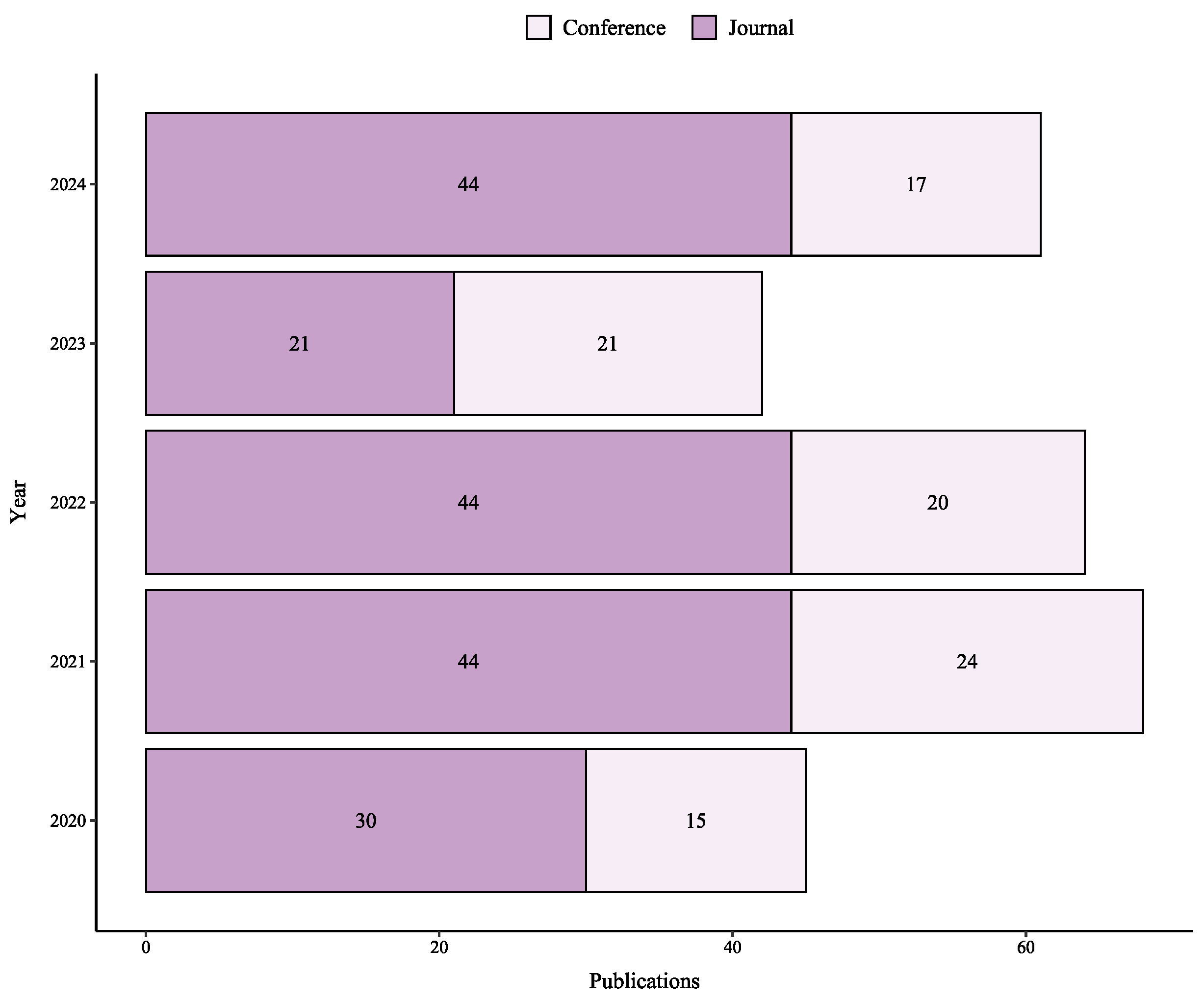
  289. Rana, L.; Dong, J.; Cui, S.; Li, J.; Hwang, J.; Park, J. Indoor Positioning using DNN and RF Method Fingerprinting-based on Calibrated Wi-Fi RTT. In Proceedings of the International Conference on Indoor Positioning and Indoor Navigation (IPIN), Nuremberg, Germany, 25–28 September 2023. [Google Scholar] [CrossRef]
  290. Mohsen, M.; Rizk, H.; Yamaguchi, H.; Youssef, M. LocFree: WiFi RTT-based Device-Free Indoor Localization System. In Proceedings of the GeoIndustry–SIGSPATIAL International Workshop on Spatial Big Data and AI for Industrial Applications, Hamburg, Germany, 13 November 2023; Rao, J., Gao, S., Aly, H., Eftelioglu, E., Li, Y., Xie, Y., Eds.; 2023; pp. 32–40. [Google Scholar] [CrossRef]
  291. Huang, L.; Yu, B.; Li, J.; Zhang, H.; Li, S.; Jia, H. A Real-Time Indoor Positioning System Based on Wi-Fi RTT and Multi-source Information. In Lecture Notes in Electrical Engineering; Yang, C., Xie, J., Eds.; Springer: Singapore, 2021; Volume 772 LNEE, pp. 439–449. [Google Scholar] [CrossRef]
  292. Seong, J.H.; Lee, S.H.; Kim, W.Y.; Seo, D.H. High-precision rtt-based indoor positioning system using rcdn and rpn. Sensors 2021, 21, 3701. [Google Scholar] [CrossRef]
  293. Dong, J.; Rana, L.; Li, J.; Hwang, J.; Park, J. Indoor Positioning Using Wi-Fi RTT Based on Stacked Ensemble Model. In Proceedings of the International Conference on Computer and Communication Systems (ICCCS 2024), Malaga, Spain, 2–4 July 2024; pp. 1021–1026. [Google Scholar] [CrossRef]
  294. Cao, H.; Wang, Y.; Bi, J.; Xu, S.; Si, M.; Qi, H. Indoor positioning method using WiFi RTT based on LOS identification and range calibration. ISPRS Int. J. -Geo-Inf. 2020, 9, 627. [Google Scholar] [CrossRef]
  295. Cao, H.; Wang, Y.; Bi, J.; Xu, S.; Qi, H.; Si, M.; Yao, G. WiFi RTT Indoor Positioning Method Based on Gaussian Process Regression for Harsh Environments. IEEE Access 2020, 8, 215777–215786. [Google Scholar] [CrossRef]
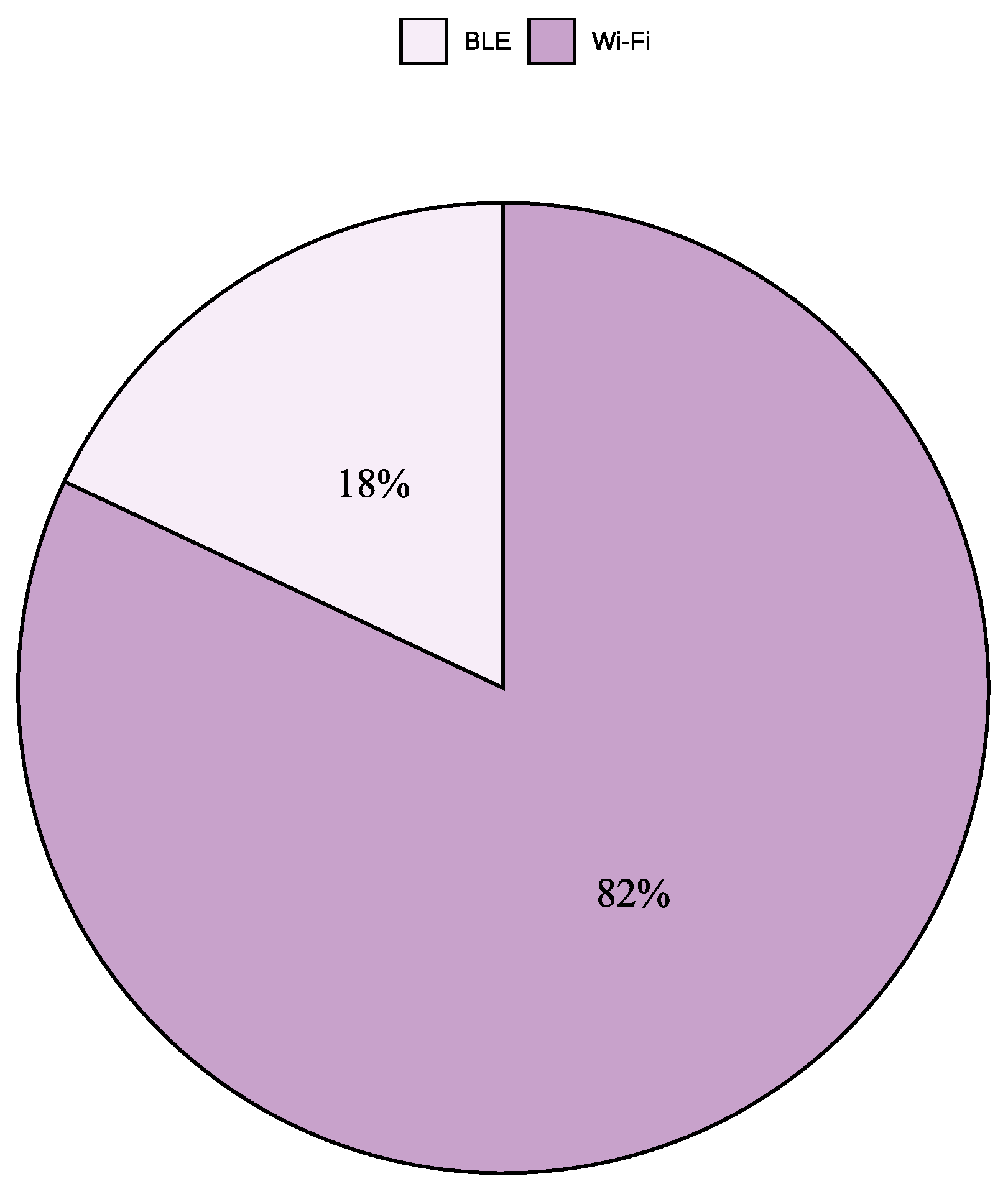
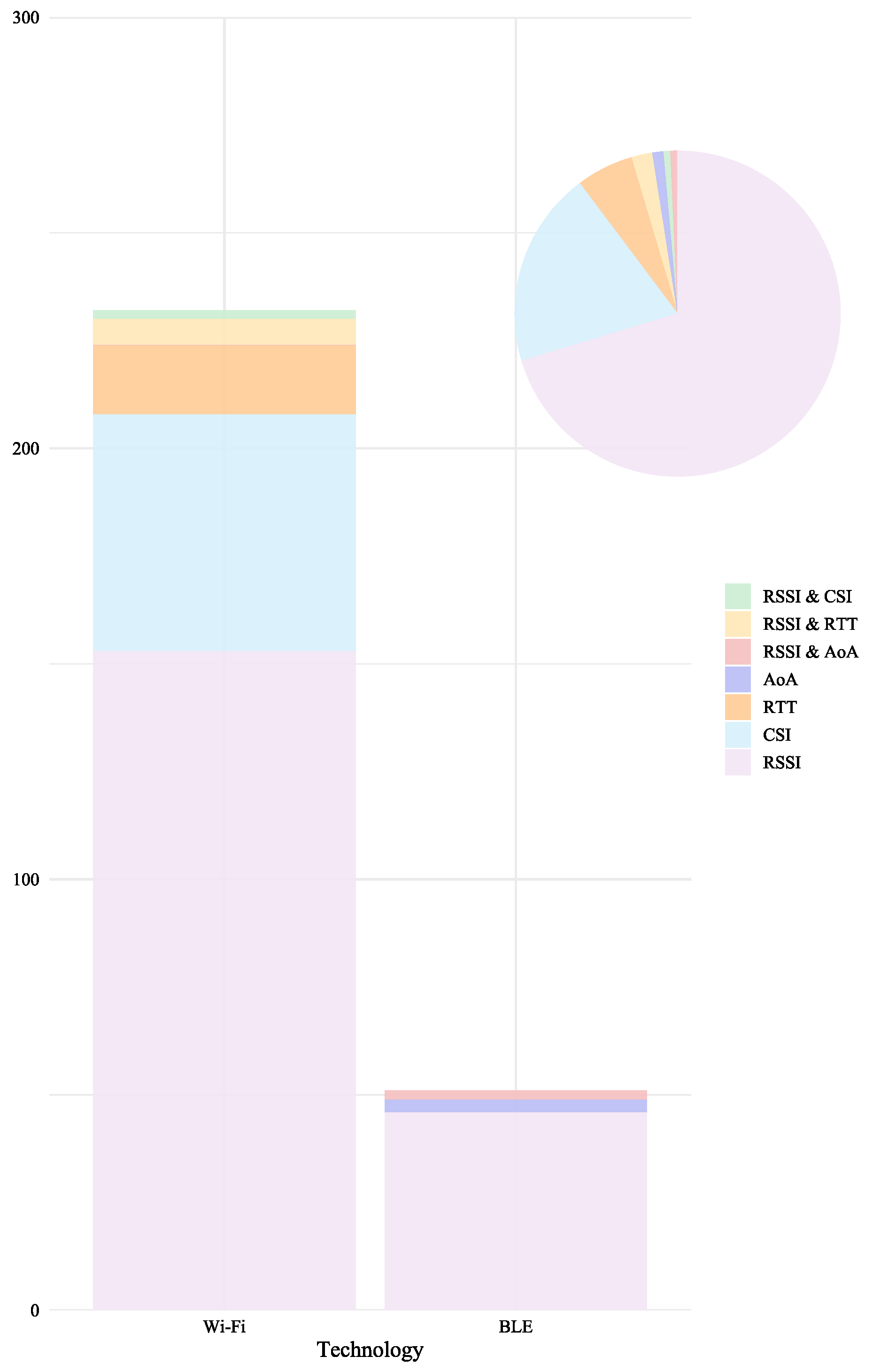
  296. Hashem, O.; Harras, K.; Youssef, M. Accurate indoor positioning using IEEE 802.11mc round trip time. Pervasive Mob. Comput. 2021, 75, 101416. [Google Scholar] [CrossRef]
  297. Cao, H.; Wang, Y.; Bi, J.; Zhang, Y.; Yao, G.; Feng, Y.; Si, M. LOS compensation and trusted NLOS recognition assisted WiFi RTT indoor positioning algorithm. Expert Syst. Appl. 2024, 243, 122867. [Google Scholar] [CrossRef]
  298. Horn, B. Round-Trip Time Ranging to Wi-Fi Access Points Beats GNSS Localization. Appl. Sci. 2024, 14, 7805. [Google Scholar] [CrossRef]
  299. Liang, Q.; Zhang, G.; Hsu, L.T. An empirical multi-wall NLOS ranging model for Wi-Fi RTT indoor positioning. In Proceedings of the International Conference on Indoor Positioning and Indoor Navigation, Nuremberg, Germany, 25–28 September 2023. [Google Scholar] [CrossRef]
  300. Hashem, O.; Youssef, M.; Harras, K.A. WiNar: RTT-based sub-meter indoor localization using commercial devices. In Proceedings of the 2020 IEEE International Conference on Pervasive Computing and Communications (PerCom), Austin, TX, USA, 23–27 March 2020; IEEE: Piscataway, NJ, USA, 2020; pp. 1–10. [Google Scholar]
  301. Akhondi-Meybodi, Z.; Salimibeni, M.; Mohammadi, A.; Plataniotis, K. Bluetooth low energy and CNN-based angle of arrival localization in presence of Rayleigh fading. In Proceedings of the ICASSP IEEE International Conference on Acoustics, Speech and Signal Processing, Toronto, ON, Canada, 6–11 June 2021; pp. 7913–7917. [Google Scholar] [CrossRef]
  302. Srinivasan, S.; Singh, S.; Singh, P.; Kumar, M. BLIPS: Bluetooth locator for an Indoor Positioning System in Realtime. In Proceedings of the COMPASS—ACM SIGCAS/SIGCHI Conference on Computing and Sustainable Societies, New Delhi, India, 8–11 July 2024; pp. 18–29. [Google Scholar] [CrossRef]
  303. Lyu, Z.; Chan, T.L.; Hung, T.T.; Ji, H.; Leung, G.; Lun, D.K. Deep Learning-Based Bluetooth Low-Energy 5.1 Multianchor Indoor Positioning with Attentional Data Filtering. Adv. Intell. Syst. 2024, 6, 2300292. [Google Scholar] [CrossRef]
  304. Georgiadou, Y.; de By, R.A.; Kounadi, O. Location Privacy in the Wake of the GDPR. ISPRS Int. J. Geo-Inf. 2019, 8, 157. [Google Scholar] [CrossRef]
Figure 1. Number of publications per two-year interval in the Scopus database on BLE/Wi-Fi Indoor Positioning using Machine Learning. Data were retrieved using the following query: (TITLE-ABS-KEY (“Indoor Position*” OR “Indoor Track*” OR “Indoor Locati*” OR “Indoor Locali*” OR “Indoor Navigat*”) AND TITLE-ABS-KEY (“BLE” OR “Bluetooth Low Energy” OR “Wi-Fi” OR “WLAN” OR “Wifi” OR “802.11”) AND ALL (“Machine Learning” OR “ML” OR “Deep Learning” OR “DL” OR “Neural Networks” OR “NN” OR “KNN” OR “K-nearest” OR “SVM” OR “Support Vector Machine”)).
Sensors 25 06946 g001
Figure 2. PRISMA flow diagram.
Sensors 25 06946 g002
Figure 3. Distribution of selected studies by publication type and year.
Sensors 25 06946 g003
Figure 4. Percentage of Studies by Technology.
Sensors 25 06946 g004
Figure 5. Percentage of studies by signal metric.
Sensors 25 06946 g005
Figure 6. Distribution of CNN and DNN depth in Wi-Fi-based indoor positioning studies.
Sensors 25 06946 g006
Figure 7. Distribution of CNN and DNN depth in BLE-based indoor positioning studies.
Sensors 25 06946 g007
Figure 8. Relationship between Wi-Fi systems error and experimental area, separated by technique. The different colors indicate the Wi-Fi-based techniques employed: RSSI, CSI, RTT and RSSI+RTT.
Sensors 25 06946 g008
Figure 9. Relationship between BLE systems error and experimental area, separated by technique. The different colors indicate the BLE-based techniques employed: RSSI, AoA, and RSSI+AoA.
Sensors 25 06946 g009
Figure 10. Algorithmic trends for the positioning stage in Wi-Fi RSSI-based systems (2020–2024), showing the number of unique studies per year that utilize Classical ML and Deep Learning methods.
Sensors 25 06946 g010
Figure 11. Algorithmic trends for the positioning stage in BLE RSSI-based systems (2020–2024).
Sensors 25 06946 g011
Table 1. Comparison of existing reviews on Indoor Positioning Systems.
WorkYears CoveredBLE RSSIWi-Fi RSSIWi-Fi RTTBLE AoAWi-Fi CSIMLDLApplications
Ding et al. [7]2008–2013
Sakpere et al. [8]2000–2017
Tariq et al. [9]N/S–2018
Zafari et al. [10]2005–2018
Obeidat et al. [11]2010–2021
Singh et al. [12]2015–2021
Sesyuk et al. [13]2014–2022
Feng et al. [14]2016–2022
Simelane et al. [15]2016–2023
Dai et al. [16]2017–2023
Park et al. [17]2018–2023
Bastiaens et al. [18]2007–2024
Morgan [19]2010–2024
Singh et al. [20]2010–2024
Lin et al. [21]2015–2024
Shi and Gong [22]2018–2024
Ahmad et al. [23]2018–2024
Our Review2020–2024
✓ = Included ✗ = Not included
Table 2. Scopus and Web of Science search queries, where the symbol ‘*’ stands for a wildcard.
DatabaseQueryDocuments
Web of ScienceTS = (“Indoor Position*” OR “Indoor Track*” OR “Indoor Locati*” OR “Indoor Locali*” OR “Indoor Navigat*”) AND TS = (“BLE” OR “Bluetooth Low Energy” OR “Wi-Fi” OR “WLAN” OR “Wifi” OR “802.11”) AND TS = (“RTT” OR “Round-trip time” OR “round trip time” OR “AoA” OR “Angle of arrival” OR “Direction of Arrival” OR “DoA” OR “RSS” OR “RSSI” OR “Received signal strength” OR “CSI” “Channel state information”) AND TS = (“Machine Learning” OR “ML” OR “Deep Learning” OR “DL” OR “Neural Networks” OR “NN” OR “KNN” OR “K-nearest” OR “SVM” OR “Support Vector Machine”) and 2020 or 2021 or 2022 or 2023 or 2024 (Publication Years)537
SCOPUS( TITLE-ABS-KEY ( “Indoor Position*” OR “Indoor Track*” OR “Indoor Locati*” OR “Indoor Locali*” OR “Indoor Navigat*” ) AND TITLE-ABS-KEY ( “BLE” OR “Bluetooth Low Energy” OR “Wi-Fi” OR “WLAN” OR “Wifi” OR “802.11” ) AND TITLE-ABS-KEY ( “RTT” OR “Round-trip time” OR “round trip time” OR “AoA” OR “Angle of arrival” OR “Direction of Arrival” OR “DoA” OR “RSS” OR “RSSI” OR “Received signal strength” OR “CSI” OR “Channel state information” ) AND ALL ( “Machine Learning” OR “ML” OR “Deep Learning” OR “DL” OR “Neural Networks” OR “NN” OR “KNN” OR “K-nearest” OR “SVM” OR “Support Vector Machine” ) ) AND PUBYEAR > 2019 AND PUBYEAR < 20251081
Table 3. Machine Learning Methods in systems based on Wi-Fi RSSI.
Machine Learning MethodProcess StageOccurrencesStudy References
Autoencoders (DAE, CAE, AE, SSAE)PreprocessingSensors 25 06946 i001[24,25,26,27,28,29,30,31,32,33,34,35]
K-Nearest NeighborsPositioningSensors 25 06946 i002[36,37,38,39,40,41,42,43,44,45,46,47,48,49,50,51,52,53,54,55,56,57,58,59,60,61,62,63,64,65,66,67,68,69,70,71,72,73,74,75,76,77,78,79,80,81,82,83,84,85,86,87,88,89]
Convolutional Neural NetworkSensors 25 06946 i003[25,27,29,31,33,72,90,91,92,93,94,95,96,97,98,99,100,101,102,103,104,105,106]
Random ForestSensors 25 06946 i004[40,41,46,48,52,55,57,61,62,82,107,108,109,110,111,112,113,114,115,116,117]
Long Short-Term MemorySensors 25 06946 i005[32,35,53,118,119,120,121,122,123,124,125,126,127,128,129,130]
Deep Neural NetworkSensors 25 06946 i005[24,26,34,116,131,132,133,134,135,136,137,138,139,140,141,142]
Support Vector MachineSensors 25 06946 i001[40,52,57,59,61,62,116,127,143,144,145,146]
Multilayer PerceptronSensors 25 06946 i001[28,59,62,123,134,140,147,148,149,150,151,152]
Ensemble MethodsSensors 25 06946 i006[66,142,150,151,152,153,154,155]
XGBoostSensors 25 06946 i007[40,74,107,108,144,156,157]
Gaussian Process RegressionSensors 25 06946 i008[48,50,158,159,160,161]
Bayesian Networks/MethodsSensors 25 06946 i008[153,154,162,163,164,165]
Genetic Algorithms and OptimizationSensors 25 06946 i009[136,150,165,166,167]
Domain Adaptation/Adversarial NetworksSensors 25 06946 i009[30,168,169,170,171]
Decision TreeSensors 25 06946 i010[41,52,62,111]
Support Vector RegressionSensors 25 06946 i010[47,48,111,172]
Transformer-based MethodsSensors 25 06946 i010[173,174,175,176]
Recurrent Neuronal NetworkSensors 25 06946 i011[125,177,178]
Gradient BoostingSensors 25 06946 i012[41,156]
Gaussian Mixture ModelSensors 25 06946 i012[114,179]
Capsule NetworksSensors 25 06946 i012[180,181]
Naive BayesSensors 25 06946 i013[55]
Other MethodsSensors 25 06946 i009[65,105,155,182,183,184]
Clustering (K-means, DBSCAN, HDBSCAN, RPCA)AggregationSensors 25 06946 i014[44,45,49,64,65,89,106,119,124,158,163]
Table 4. Machine Learning Methods in systems based on BLE RSSI.
Machine Learning MethodProcess StageOccurrencesStudy References
Autoencoders (DAE, CAE, AE)PreprocessingSensors 25 06946 i011[185,186,187]
K-Nearest NeighborsPositioningSensors 25 06946 i015[63,186,188,189,190,191,192,193,194,195,196,197,198,199,200,201,202,203,204,205,206,207]
Convolutional Neural NetworkSensors 25 06946 i008[186,188,194,208,209,210]
Other Neural Networks (BPNN, FNN...)Sensors 25 06946 i008[185,196,211,212,213,214]
Multilayer PerceptronSensors 25 06946 i009[189,203,215,216,217]
Random ForestSensors 25 06946 i009[191,199,201,203,207]
Support Vector RegressionSensors 25 06946 i010[189,196,218,219]
Deep Neural NetworkSensors 25 06946 i011[192,220,221]
Support Vector MachineSensors 25 06946 i011[200,203,218]
Gaussian Process RegressionSensors 25 06946 i011[206,219,222]
Feed-Forward Neural NetworkSensors 25 06946 i012[187,208]
Naive BayesSensors 25 06946 i012[194,199]
Trilateration-based MethodsSensors 25 06946 i012[189,223]
XGBoostSensors 25 06946 i013[201]
Boosted/Bagged TreesSensors 25 06946 i013[222]
Decision TreeSensors 25 06946 i013[200]
Hidden Markov ModelSensors 25 06946 i013[192]
Particle Swarm OptimizationSensors 25 06946 i013[224]
Principal Component AnalysisSensors 25 06946 i013[225]
Long Short-Term MemorySensors 25 06946 i013[130]
Transformer-based MethodsSensors 25 06946 i013[221]
Other MethodsSensors 25 06946 i009[184,219,226,227,228]
K-MeansAggregationSensors 25 06946 i013[229]
Table 5. Summary of CNN and DNN architectures for Wi-Fi RSSI-based Indoor Positioning Systems.
Study ReferenceDL ArchitecturesDetails of the ArchitectureDepth
[72]CNNLeNet-5: 2 conv. + 2 pool. + 3 FC7 layers
[90]CNN3 submodules: 2 conv. + multi-scale + BN + pool.8 layers
[91]CNN2–3 conv. + 1–2 pool. + 15 FC + softmax; dropout, BN18–20 layers
[25]CNN2 conv. + 2 FC + symmetric deconv. in decoder4–6 layers
[92]CNN2 conv. + 2 pool. + 1 FC (softmax)4 layers
[93]CNN3 conv. + 2 pool. + flatten + 3 FC8 layers
[29]CNN1D-CNN: 4 conv. + pool. + FC6–9 layers
[31]CNN1D-CNN: 4 conv. + 2–3 pool. + FC + ELM-AE7–9 layers
[94]CNN1D-CNN + SAE; classification and regression branches7 layers
[95]CNN2D-CNN: 3 conv. + 3 pool. + 1 FC; with EfficientNetV27 layers
[96]CNNCNN (2 conv. + 2 pool. + 1 FC) + LSTM (1 + 1 FC)7 layers
[97]CNNWavelet-CNN: 2–3 conv. + 2–3 pool. + 1 FC; BN7–10 layers
[99]CNN1D-CNN: 5 conv. + 5 pool. + 5 BN + 2 FC + softmax18 layers
[101]CNN2D-CNN: 2 conv. + pool. + flatten + 2 FC + 3 BN9 layers
[102]CNN3 models: conv. + FC; output: softmax or linearNot specified
[103]CNNFully convolutional: 8 conv. layers (64 filters, ReLU)8 layers
[104]CNNCIFAR-10-style CNN: 3 conv. + 3 pool. + 2 FC + softmax13 layers
[27]CNNCDAE-CNN: CDAE (3 conv. + pool. + deconv., dropout)
+ CNN (4–7 conv., pool., flatten, FC)
16–21 layers
[33]CNNDAE-CNN (semi-supervised):
DAE (3 conv. + 3 pool. + 3 deconv. + upsampling)
CNN (4 conv. + 4 pool. + upsampling + FC)
21 layers
[106]CNN3 Conv2D + 2 MaxPooling + 3 FC (3072, 1024, 74)8 layers
[116]DNN4 FC layers (128, 64, 32, 1 nodes); input: LOS/NLOS features4 layers
[131]DNNDRL (DDQN): 3 FC layers (256, 128, 8); Q-values for 3D bisection3 layers
[24]DNNSAE (3 FC) + DNN with 7 hidden FC + output; softmax regression8 layers
[132]DNN5 FC (500 nodes, ReLU) + output FC (2 nodes, linear)6 layers
[133]DNNAttention layer + two DNN branches (3 FC each + output)5 layers
[134]DNNPDF-BPNN: 2 hidden FC + output4 layers
[135]DNNRandNN-IAUKF: 2–3 hidden FC + output; IAUKF filtering5 layers (estimated)
[137]DNN3 hidden FC layers; regression output5 layers
[26]DNNDIFF with ReLU and softmax; architecture not detailedNot specified
[138]DNNGAN (1 hidden FC, sigmoid) + DNN (2–3 hidden FC, ReLU)GAN: 3 layers; DNN: 4–5 layers
[139]DNN1 hidden FC (220 nodes, ReLU); Xavier init.; RMSE loss3 layers
[141]DNNDCCA: 2 fully connected DNNs (sigmoid); + MLP with ReLUDCCA: 3 layers each; MLP: 3 layers
[34]DNNSSAE: 2 hidden FC (100–200 nodes); linear output regression4 layers
[142]DNNDNN (1 input, 2 hidden, 1 output)4 DNN layers
Table 6. Summary of CNN and DNN architectures for BLE RSSI-based Indoor Positioning Systems.
Study ReferenceDL MethodArchitectureDepth
[188]CNN2 conv. + 1 FC + output4 layers
[208]CNNAutoencoder: encoder + 1 latent + 1 decoder3 layers
[209]CNN2 conv. + max-pooling + dropout + 1 FC + softmax5 layers
[210]CNNDual-branch CNN: each branch with 2 conv. + 2 pooling + 2 FC + softmax7 layers per branch
[192]DNN4 hidden FC layers + softmax output5 layers
[220]DNN4 hidden FC layers + 4 outputs5 layers
[221]DNN1 embedding + 2 encoders + 1 output4 layers
[194]CNN and DNNDNN: FC
CNN: input, 2 conv. + 2 pooling + FC + output
DNN: 3 layers; CNN: 6 layers
[186]CNN and DNNDNN (RSS-NN): 1 hidden FC + output
CNN: 2 conv. + 2 pooling + flatten + FC + output
DNN: 3 layers; CNN: 6 layers
Table 7. Machine Learning methods in systems based on Wi-Fi CSI.
Machine Learning MethodProcess StageOccurrencesStudy References
Transfer LearningPreprocessingSensors 25 06946 i012[230,231]
Convolutional Neural NetworkPositioningSensors 25 06946 i003[105,232,233,234,235,236,237,238,239,240,241,242,243,244,245,246,247,248,249,250,251,252,253]
K-Nearest NeighborsSensors 25 06946 i006[83,230,254,255,256,257,258,259]
Deep Neural NetworkSensors 25 06946 i008[260,261,262,263,264,265]
Ensemble MethodsSensors 25 06946 i009[266,267,268,269,270]
Long Short-Term MemorySensors 25 06946 i010[237,239,248,271]
Domain Adaptation/Adversarial NetworksSensors 25 06946 i010[233,252,270,272]
Transfer LearningSensors 25 06946 i011[236,241,248]
Support Vector MachineSensors 25 06946 i012[268,273]
Bayesian Networks/MethodsSensors 25 06946 i012[256,274]
Transformer-based MethodsSensors 25 06946 i012[275,276]
Multilayer PerceptronSensors 25 06946 i013[240]
Recurrent Neuronal NetworkSensors 25 06946 i013[271]
Gaussian Mixture ModelSensors 25 06946 i013[258]
Genetic AlgorithmsSensors 25 06946 i013[277]
Other MethodsSensors 25 06946 i007[231,278,279,280,281,282,283]
Clustering (K-means, DBSCAN, HDBSCAN)AggregationSensors 25 06946 i012[255,284]
Table 8. Machine Learning methods in systems based on Wi-Fi RTT.
Machine Learning MethodProcess StageOccurrencesStudy References
Autoencoders (DAE, CAE, AE)PreprocessingSensors 25 06946 i012[285,286]
Deep Neural NetworkPositioningSensors 25 06946 i008[285,286,287,288,289,290]
Convolutional Neural NetworkSensors 25 06946 i011[286,291,292]
Random ForestSensors 25 06946 i012[286,289]
Support Vector RegressionSensors 25 06946 i012[286,293]
Gaussian Process RegressionSensors 25 06946 i012[294,295]
K-Nearest NeighborsSensors 25 06946 i012[286,296]
Multilayer PerceptronSensors 25 06946 i013[286]
Recurrent Neural NetworkSensors 25 06946 i013[292]
Support Vector MachineSensors 25 06946 i013[297]
Bayesian Networks/MethodsSensors 25 06946 i013[298]
Other MethodsSensors 25 06946 i012[299,300]
Table 9. Machine Learning Methods in systems based on BLE AoA.
Machine Learning MethodProcess StageOccurrencesStudy References
Convolutional Neural NetworkPositioningSensors 25 06946 i012[210,301]
Neural NetworkSensors 25 06946 i013[302]
AnFIPNetSensors 25 06946 i013[303]
Random Forest + Improved KNNSensors 25 06946 i013[207]
Table 10. Comparison of positioning accuracy in Wi-Fi-based systems using RSSI, CSI, and RTT techniques.
TechniqueStudiesError Range (m)Experimental Area (m2)Environmental Context
RSSI1320.058 m–12.4 m12.25 m2–160,000 m2Highly Diverse (Labs, Offices, Malls, Large Public Buildings)
CSI540.15 m–2.943 m12.4 m2–1400 m2Controlled Environments (Primarily Labs and Offices)
RTT210.10 m–4.16 m24.75 m2–25,200 m2Modern Infrastructure (Offices and Commercial Spaces)
Table 11. Comparison of positioning accuracy in BLE-based systems using RSSI and AoA techniques.
TechniqueStudiesError Range (m)Experimental Area (m2)Environmental Context
RSSI410.00023 m–6.01 m8.24 m2–4240 m2Diverse Applications (Single Rooms to Office Floors)
AoA50.0032 m–1.67 m10 m2–63 m2Small, Controlled Environments (Primarily Labs)
Table 12. Comparative summary of ML approaches for the positioning stage in RSSI-based systems.
AspectWi-Fi RSSI SystemsBLE RSSI Systems
Dominant AlgorithmsKNN serves as a strong baseline, but there is a clearDominated by lightweight algorithms,
and diverse adoption of DL (CNNs, LSTMs,primarily KNN and its variants (WKNN, IKNN).
DNNs).
Algorithmic DiversityHigh. Includes a wide range of supervised, ensembleLow. Exploration of DL models for positioning is limited
(RF, XGBoost), and advanced DL modelsand largely in an early, exploratory stage. The focus
(Transformers, GANs).remains on efficiency.
Primary ChallengesSignal instability in dynamic environments, deviceHigh signal volatility and lower data granularity, which
heterogeneity, and the high cost of radio mapcomplicates feature extraction. Energy efficiency is a key
maintenance.design constraint.
Key Research TrendA clear shift towards end-to-end DL models andBalancing performance with energy efficiency. The focus
domain adaptation to improve generalization and reduceremains on optimizing classical positioning algorithms.
calibration dependency.
Disclaimer/Publisher’s Note: The statements, opinions and data contained in all publications are solely those of the individual author(s) and contributor(s) and not of MDPI and/or the editor(s). MDPI and/or the editor(s) disclaim responsibility for any injury to people or property resulting from any ideas, methods, instructions or products referred to in the content.