Article

Feasibility of Initial Bias Estimation in Real Maritime IMU Data Including X- and Y-Axis Accelerometers


Department of Maritime Systems Engineering, Tokyo University of Marine Science and Technology, Tokyo 135-8533, Japan
*
Author to whom correspondence should be addressed.
Sensors 2025, 25(21), 6804; https://doi.org/10.3390/s25216804
Submission received: 20 September 2025 / Revised: 26 October 2025 / Accepted: 5 November 2025 / Published: 6 November 2025
(This article belongs to the Collection Position Sensor)

Abstract

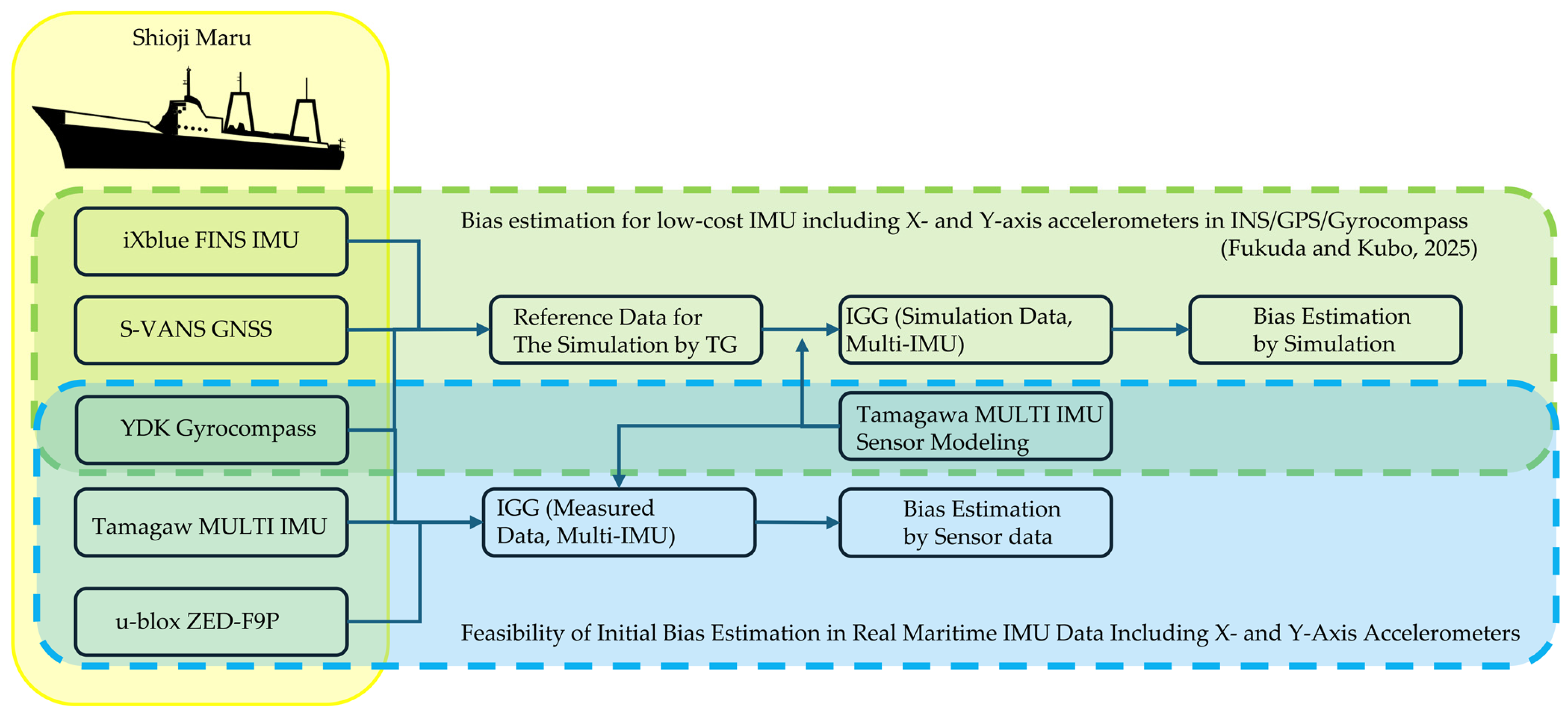
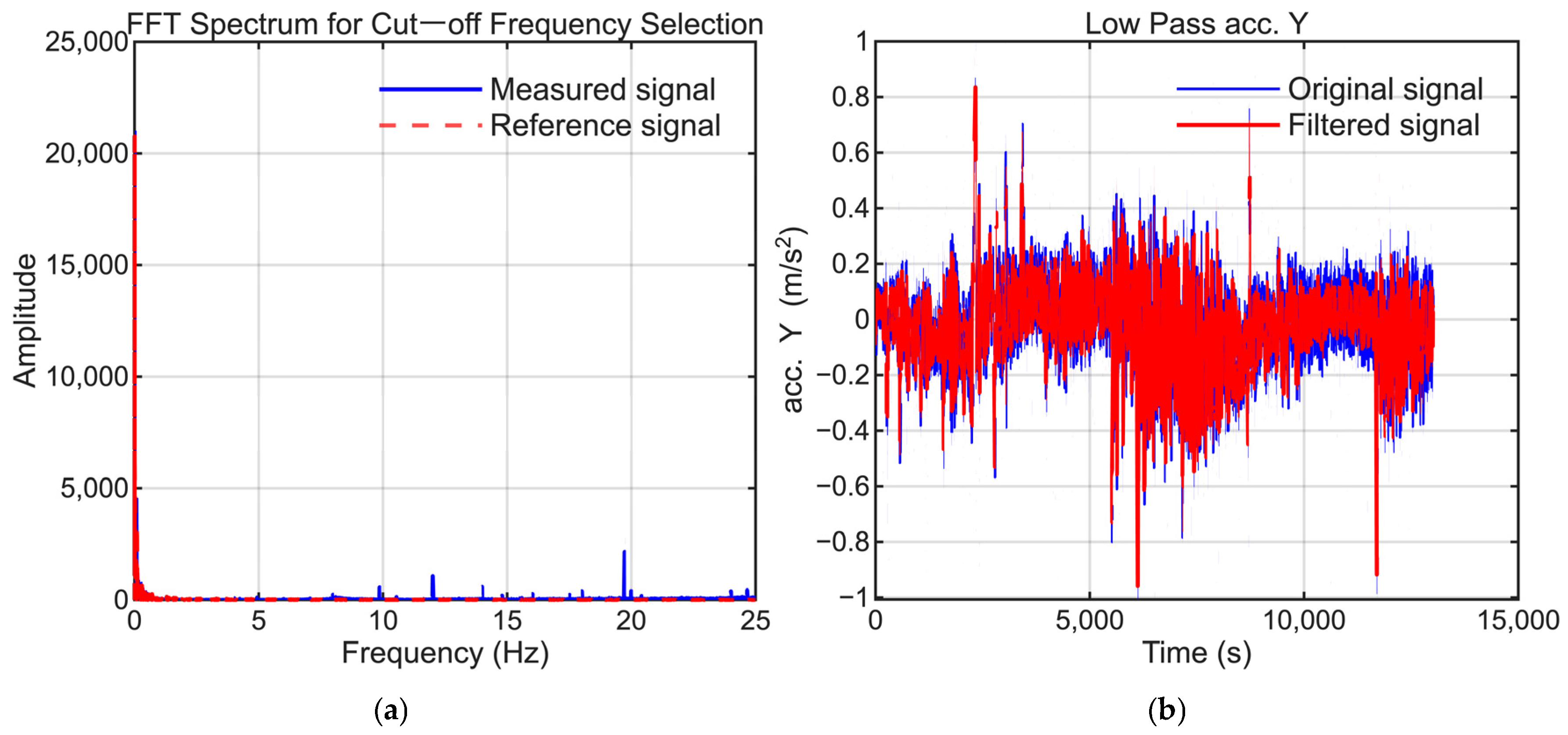
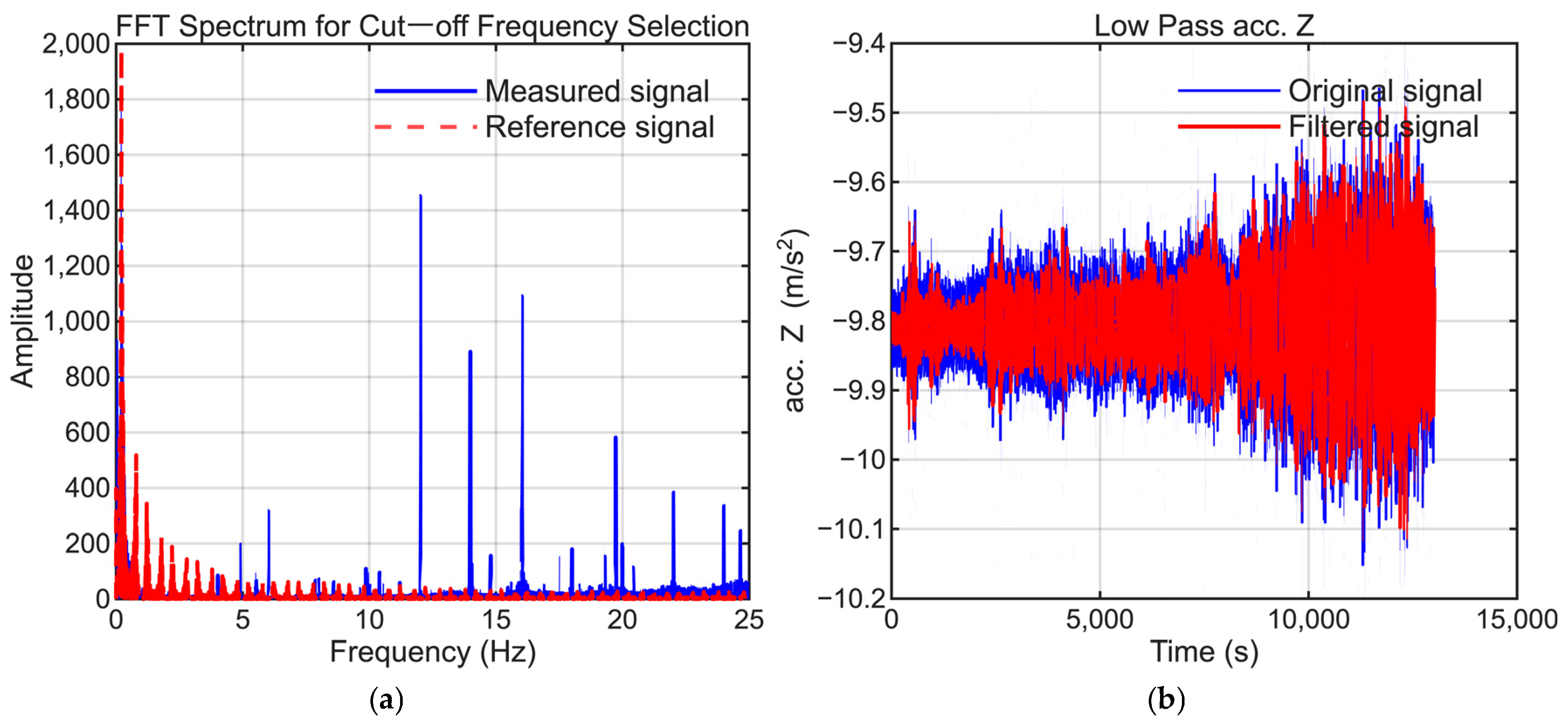
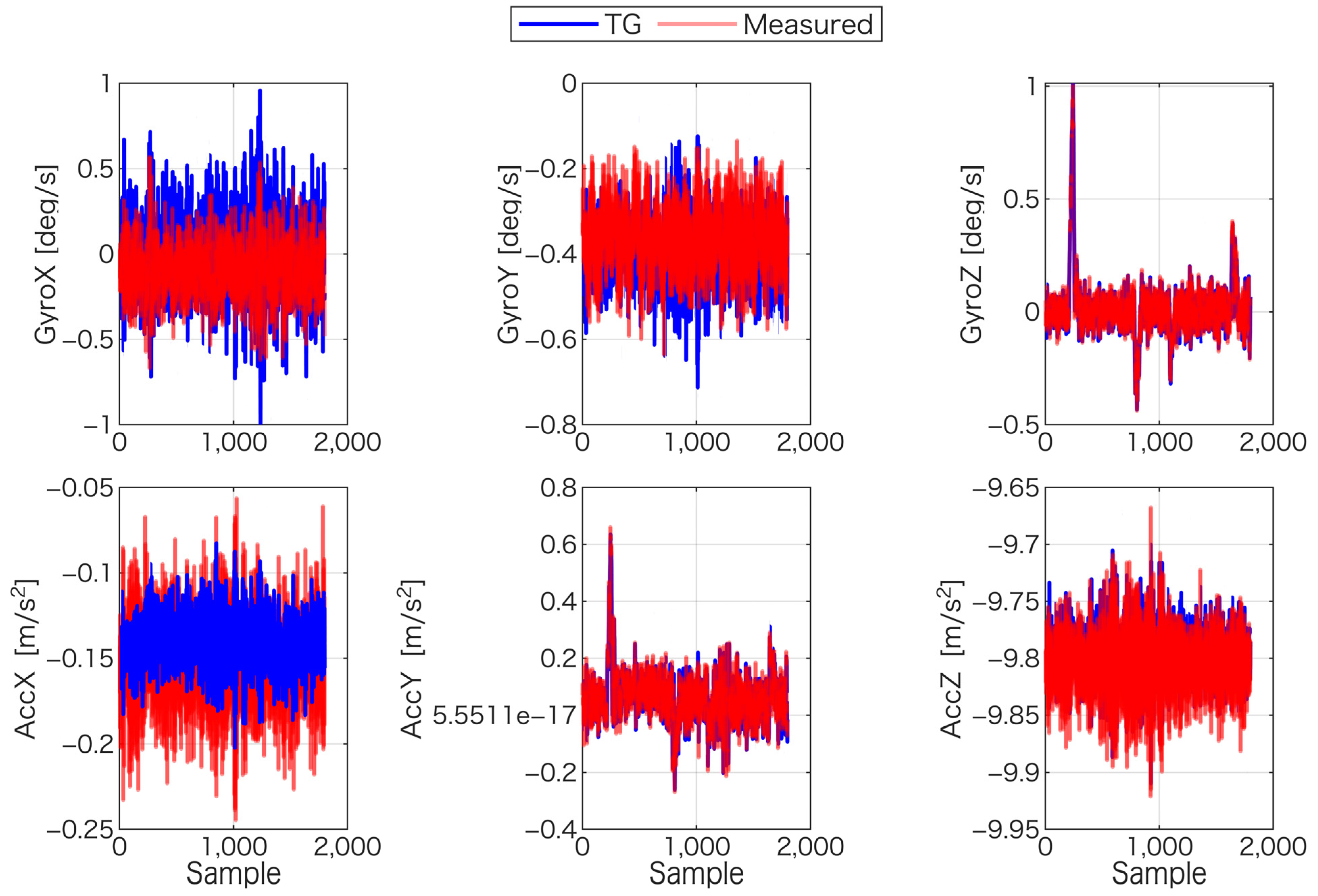
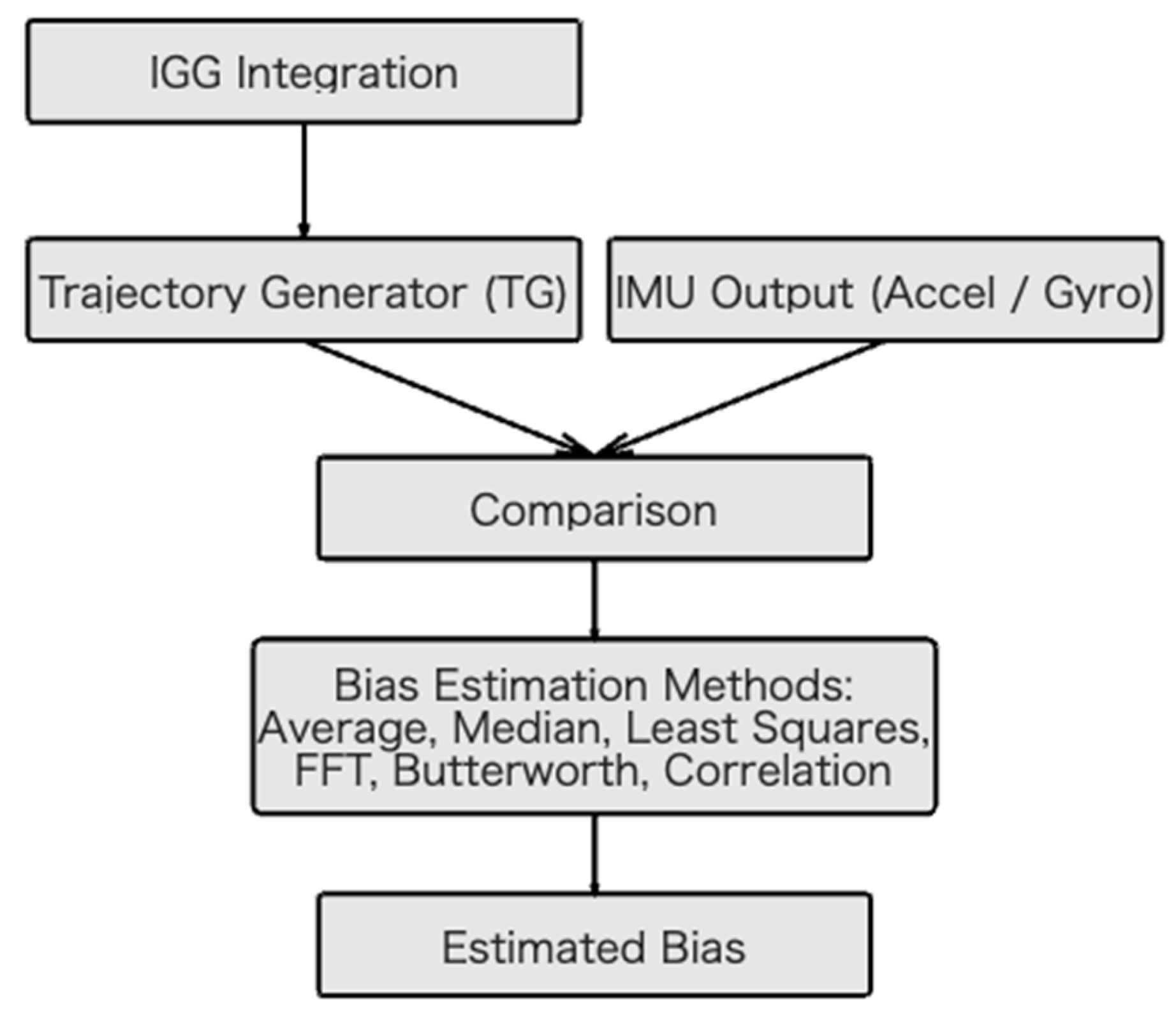
This study aimed to validate a bias estimation framework for low-cost maritime IMUs by applying it to real-world shipborne data. Six estimation methods—including statistical (mean, median), model-based (least squares, cross-correlation), and signal-processing approaches (FFT, Butterworth filter)—were compared. The results demonstrated that the low-frequency Butterworth filter achieved the smallest residuals, with RMS residuals below 0.038 m/s2 for accelerometers and 0.0035 deg/s for gyroscopes. In particular, AccX and AccZ residuals converged to 3.04 × 10⁻² m/s2 and 2.30 × 10⁻² m/s2, respectively, while GyroZ achieved 5.58 × 10⁻⁴ deg/s. Estimated accelerometer biases were 0.0405 m/s2 (X-axis) and 0.1615 m/s2 (Y-axis), and the optimization successfully converged with an objective function value of 9.314. The findings confirm that the previously proposed bias estimation method, originally validated in simulation, is effective under real-world maritime conditions. However, as ground truth bias values cannot be obtained in shipborne experiments, verification relied on residual statistics and cross-correlation analysis. This limitation has been explicitly stated in the conclusion, and future studies should incorporate sensitivity analyses and controlled experiments to further quantify error sources.
Keywords: inertial measurement unit (IMU); bias estimation; trajectory generator (TG); altitude-based calibration; maritime navigation inertial measurement unit (IMU); bias estimation; trajectory generator (TG); altitude-based calibration; maritime navigation