Article

Aquila: Efficient In-Kernel System Call Telemetry for Cloud-Native Environments

by
Juyong Shin
1,
Jisu Kim
1 and
Jaehyun Nam
2,*
1
Department of AI-Based Convergence, Dankook University, 152, Jukjeon-ro, Suji-gu, Yongin-si 16890, Republic of Korea
2
Department of Computer Engineering, Dankook University, 152, Jukjeon-ro, Suji-gu, Yongin-si 16890, Republic of Korea
*
Author to whom correspondence should be addressed.
Sensors 2025, 25(21), 6511; https://doi.org/10.3390/s25216511
Submission received: 29 August 2025 / Revised: 18 October 2025 / Accepted: 20 October 2025 / Published: 22 October 2025
(This article belongs to the Section Internet of Things)

Abstract

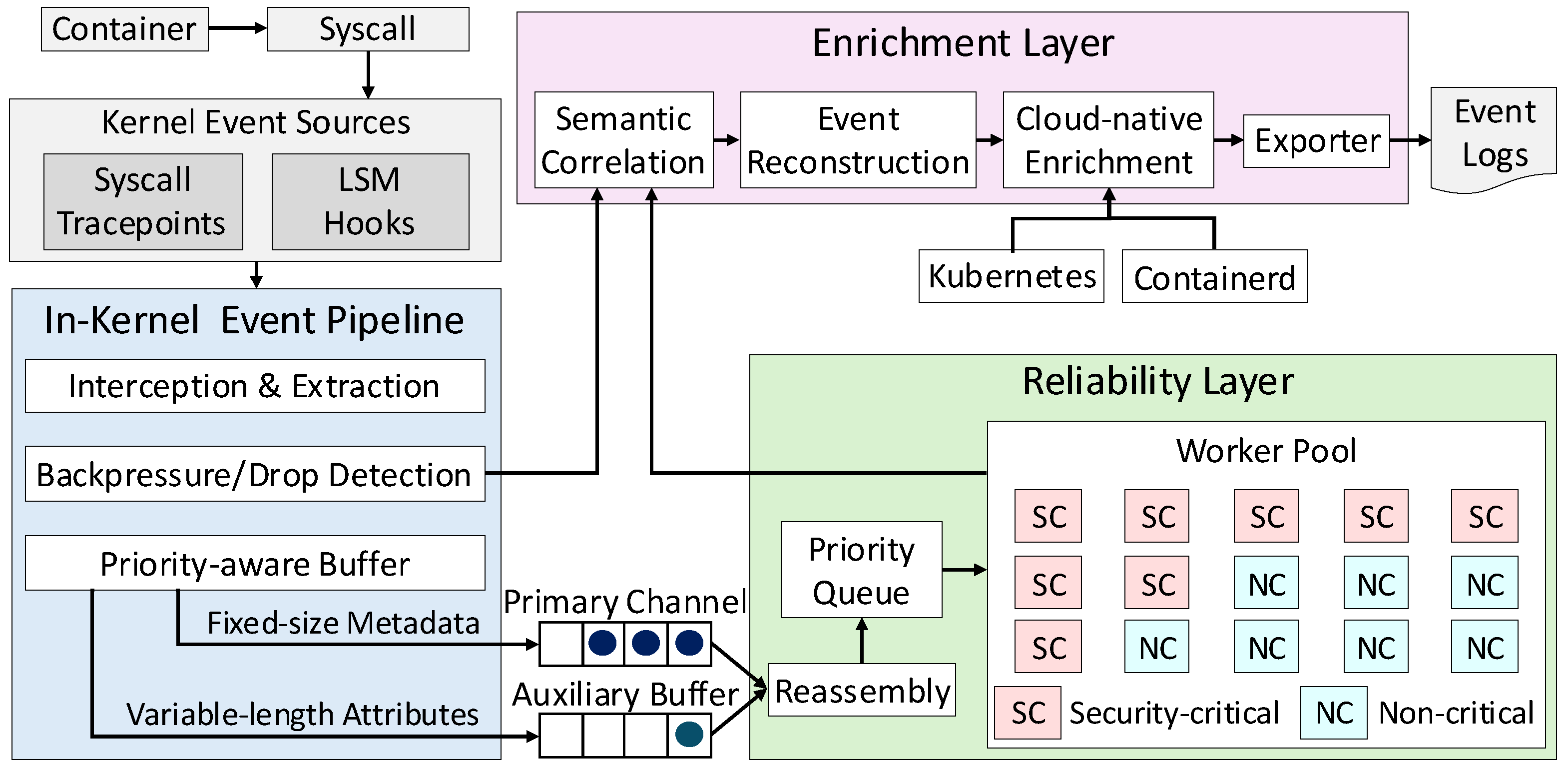
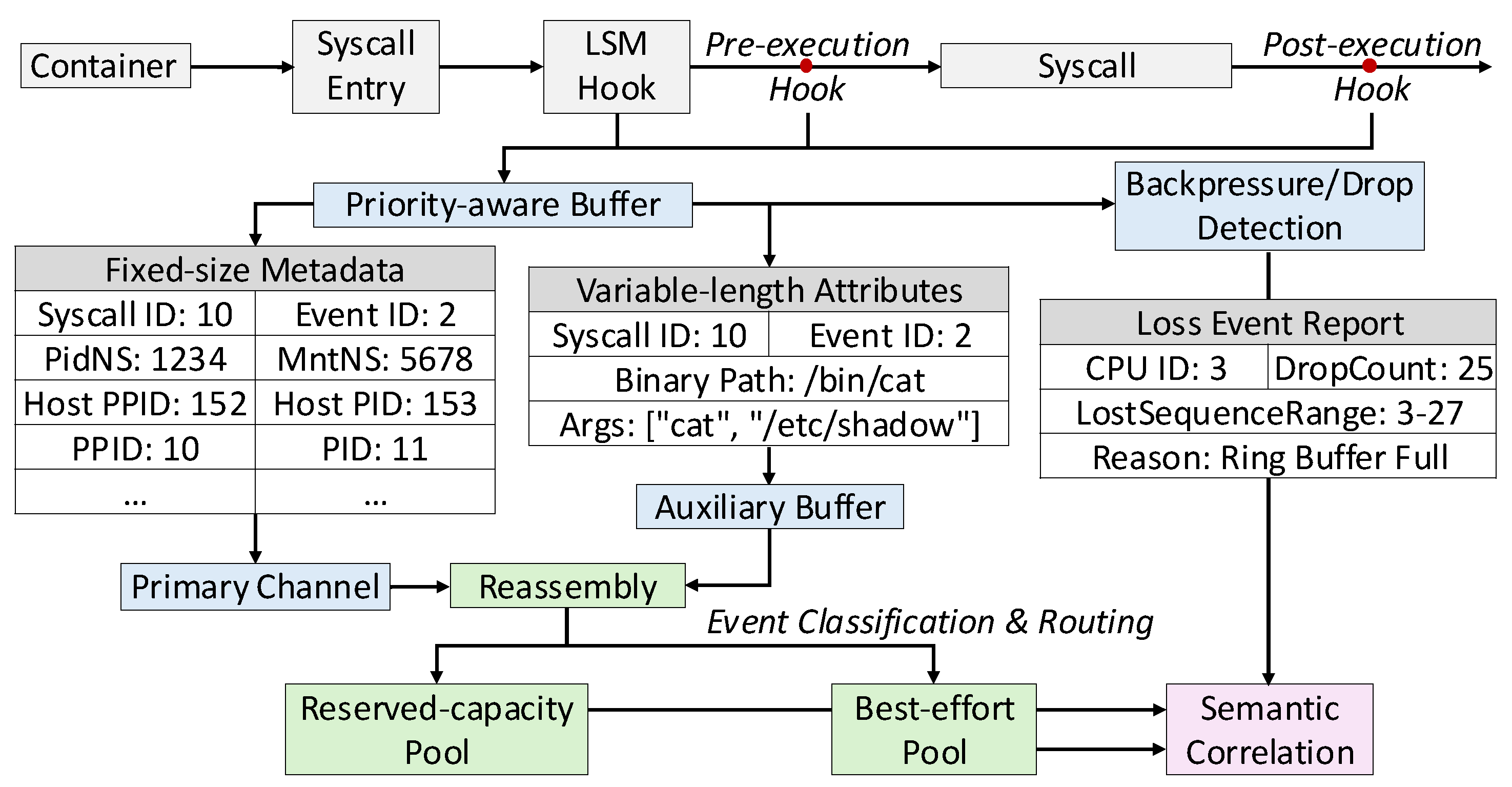
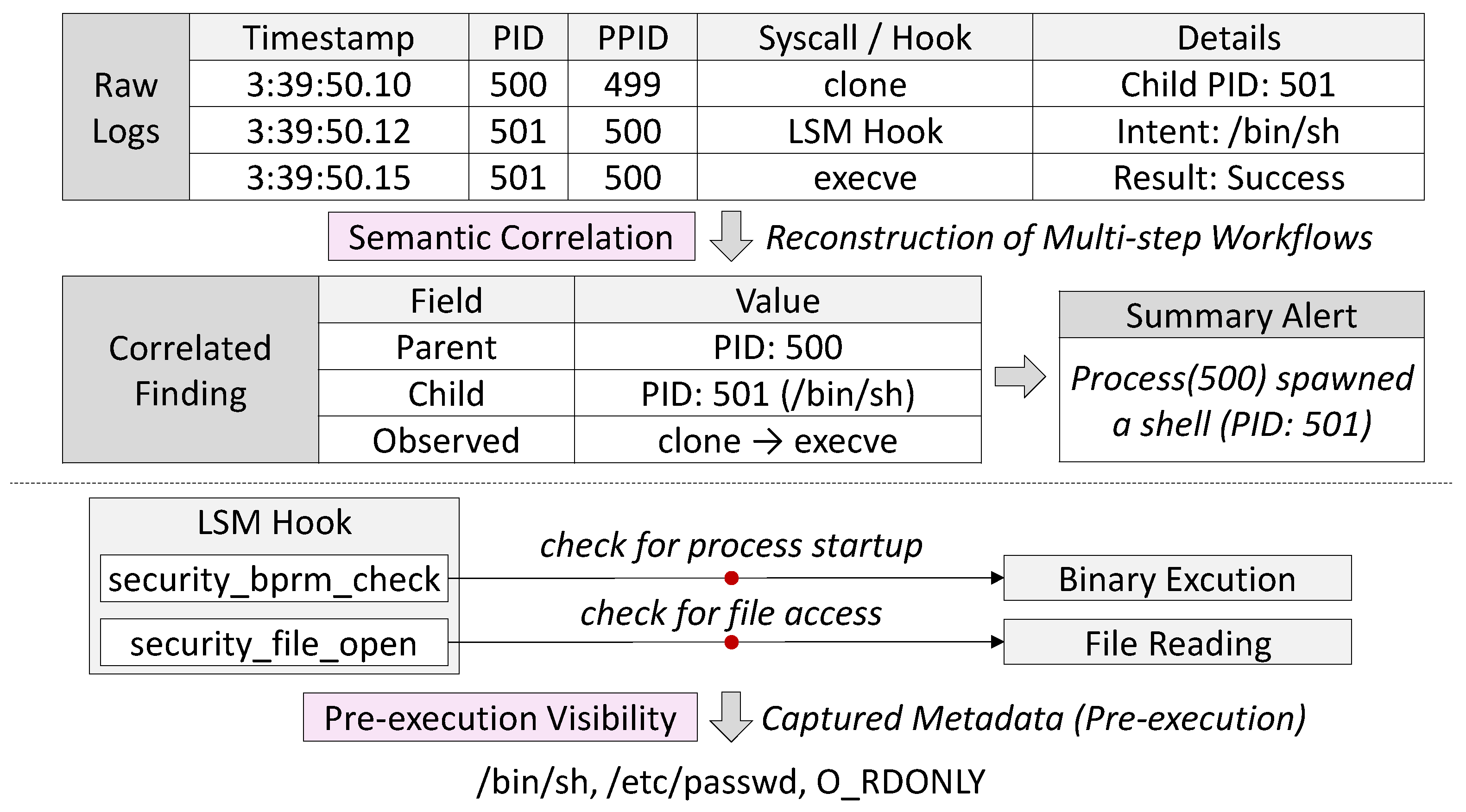
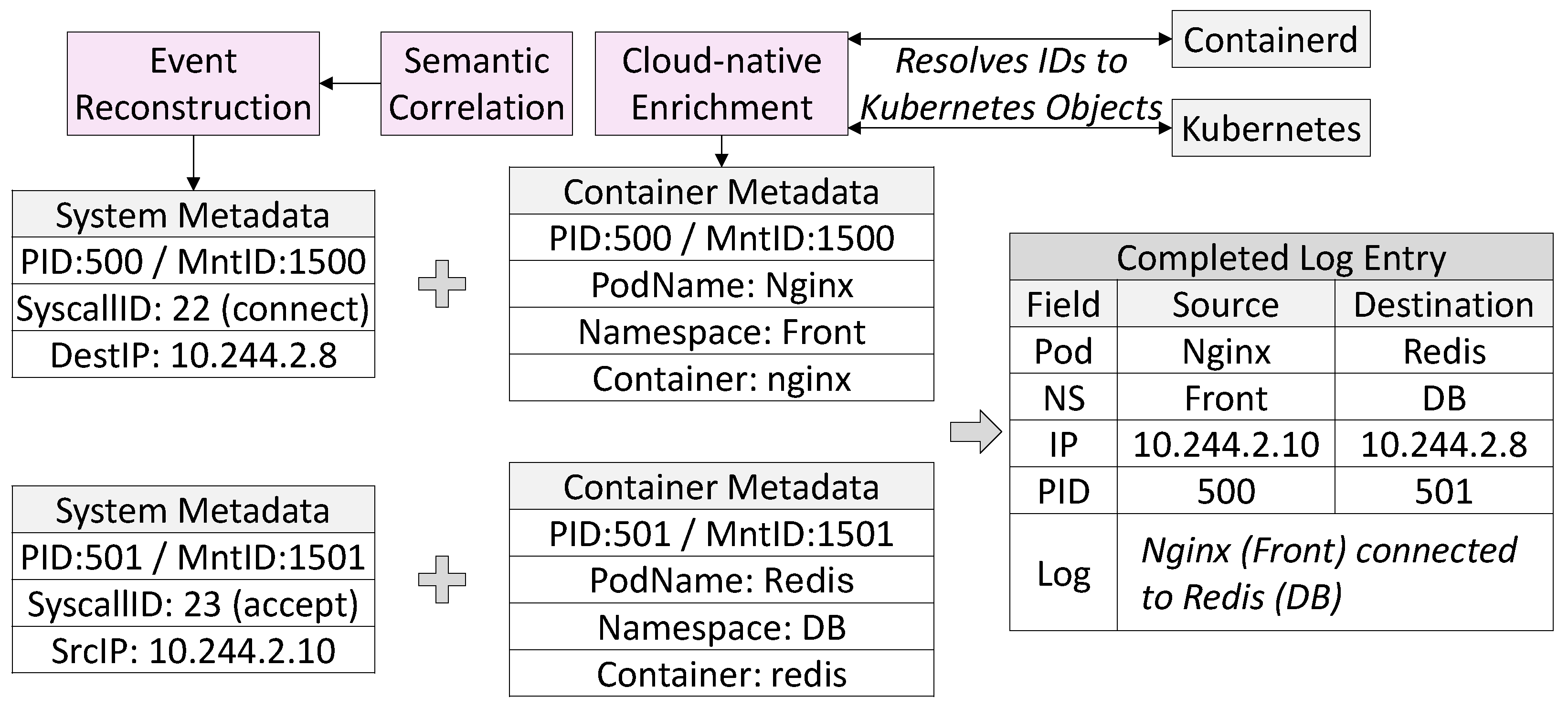
System call telemetry is essential for understanding runtime behavior in cloud-native infrastructures, but existing eBPF-based monitors suffer from high per-event overhead, unreliable delivery under load, and limited context for correlating multi-step activities. These issues reduce scalability, create blind spots in telemetry streams, and complicate the analysis of complex workload behaviors. This work presents Aquila, a lightweight telemetry framework that emphasizes efficiency, reliability, and semantic fidelity. Aquila employs a dual-path kernel pipeline that separates fixed-size metadata from variable-length attributes, reducing serialization costs and enabling high-throughput event processing. It introduces priority-aware buffering and explicit drop detection to retain loss-sensitive events while providing visibility into overload conditions. In the user space, kernel traces are enriched with Kubernetes metadata, mapping low-level system calls to pods, containers, and namespaces. Evaluation under representative workloads shows that Aquila improves scalability, reduces event loss, and enhances the semantic completeness of system call telemetry compared with existing approaches.
Keywords: cloud-native security; system call telemetry; eBPF monitoring cloud-native security; system call telemetry; eBPF monitoring