Robotic Ankle Assessment Post-Stroke: Reliability, Comparison to Therapists, and Benchmark Dataset Development

 , , ,
, , ,  , ,
, ,
Abstract
1. Introduction
2. Materials and Methods
2.1. Participants
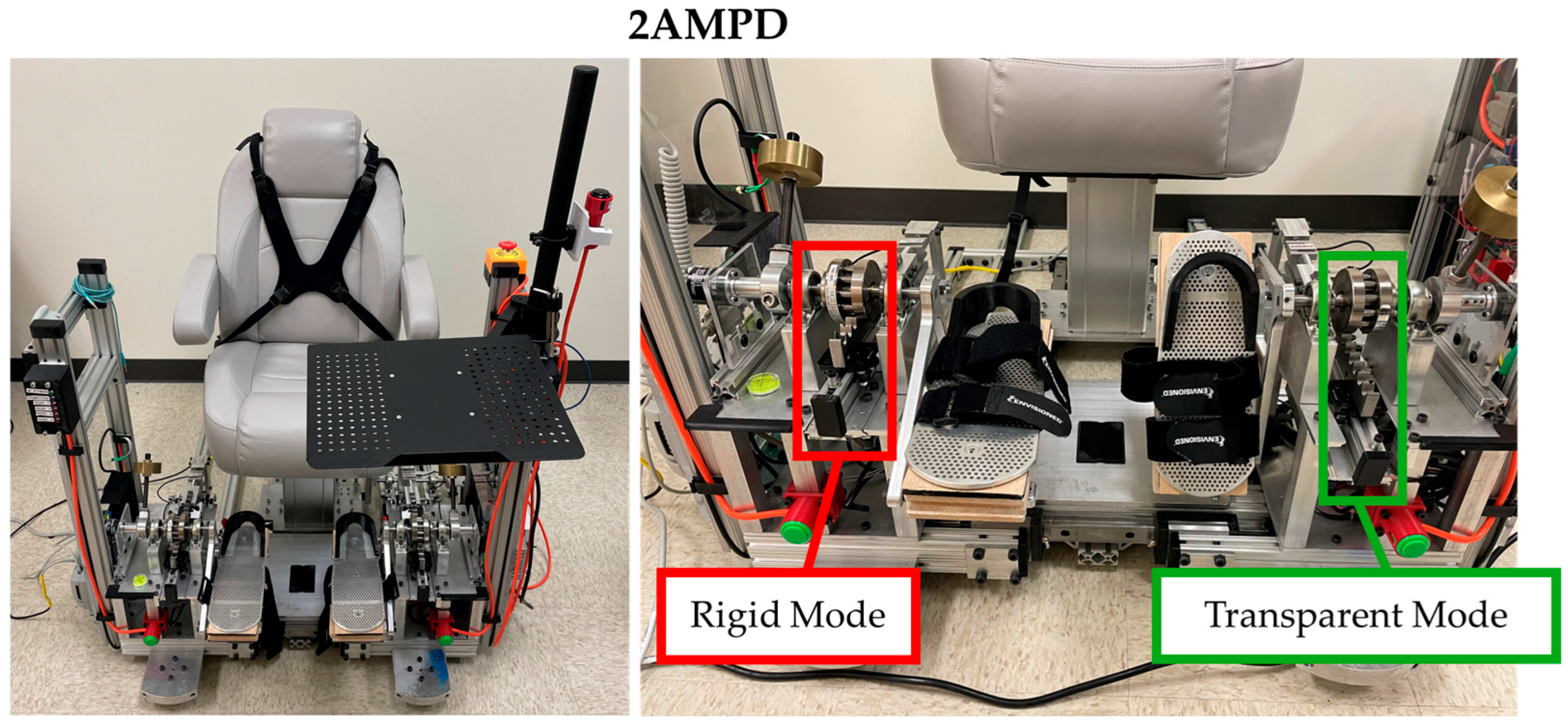
2.2. Robotic Device
2.3. Robotic Assessments
2.4. Clinical Assessments (Only Stroke)
2.5. Statistical Analysis
3. Results
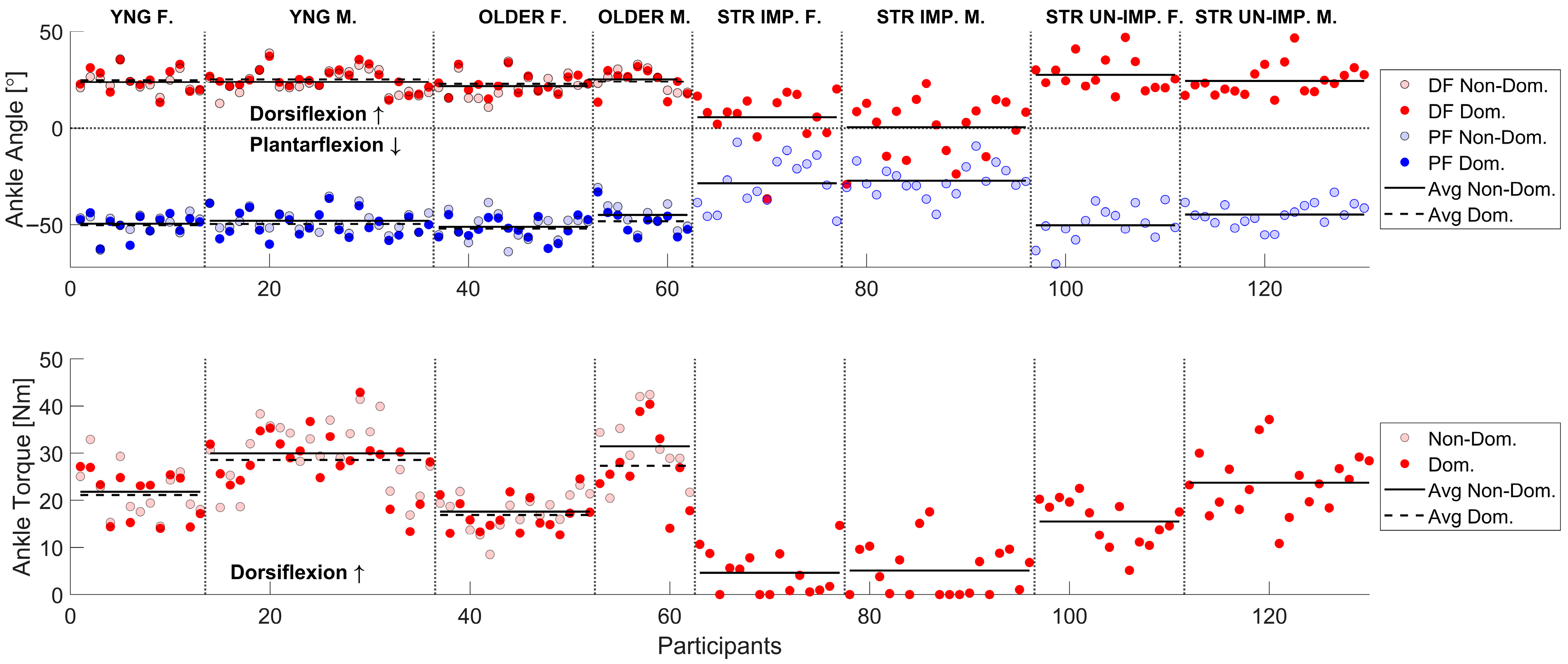
3.1. Overview of Measurements and Effect of Stroke
3.2. Test–Retest Reliability of Robot- and Therapist-Based Measurement of Ankle ROM and MVC
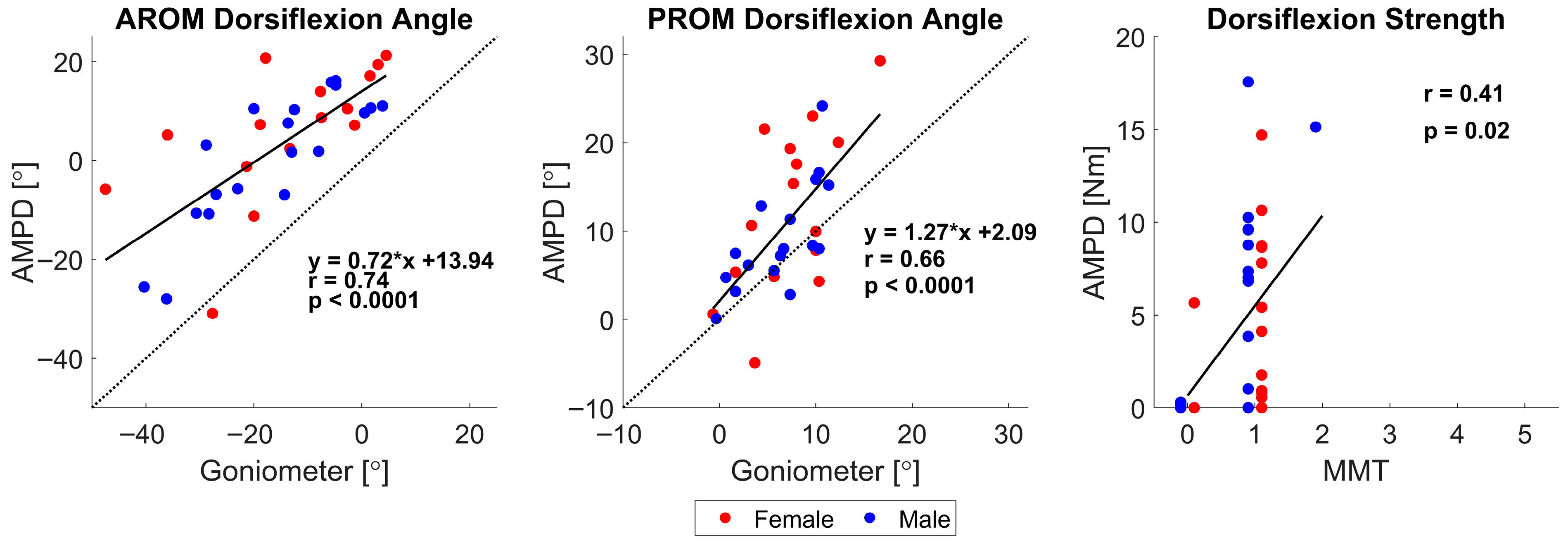
3.3. Validity of Robot-Based Compared to Therapist-Based Measurement
3.4. Reliability of Robotic Measures for Unimpaired Participants
3.5. Comparison of First- and Second-Session Measurements
3.6. Comparison of Older to Younger Unimpaired Adults and Effect of Leg Dominance
4. Discussion
4.1. Considerations in Using Sensorized, Robotic Platforms as Ankle Assessment Tools
4.2. Bilateral Strength Deficits After Stroke
4.3. Limitations and Directions for Future Research
5. Conclusions
Supplementary Materials
Author Contributions
Funding
Institutional Review Board Statement
Informed Consent Statement
Data Availability Statement
Acknowledgments
Conflicts of Interest
References
- Donkor, E.S. Stroke in the 21st Century: A Snapshot of the Burden, Epidemiology; Quality of Life. Stroke Res. Treat. 2018, 2018, 3238165. [Google Scholar] [CrossRef]
- Carod-Artal, J.; Egido, J.A.; Gonza, J.L.; de Seijas, E.V. Quality of Life Among Stroke Survivors Evaluated 1 Year After Stroke. Stroke 2000, 31, 2995–3000. [Google Scholar] [CrossRef]
- Lin, P.Y.; Yang, Y.R.; Cheng, S.J.; Wang, R.Y. The Relation Between Ankle Impairments and Gait Velocity and Symmetry in People with Stroke. Arch. Phys. Med. Rehabil. 2006, 87, 562–568. [Google Scholar] [CrossRef]
- Ng, S.S.; Hui-Chan, C.W. Contribution of Ankle Dorsiflexor Strength to Walking Endurance in People with Spastic Hemiplegia After Stroke. Arch. Phys. Med. Rehabil. 2012, 93, 1046–1051. [Google Scholar] [CrossRef] [PubMed]
- Kunkel, D.; Potter, J.; Mamode, L. A cross-sectional observational study comparing foot and ankle characteristics in people with stroke and healthy controls. Disabil. Rehabil. 2017, 39, 1149–1154. [Google Scholar] [CrossRef] [PubMed]
- Alawna, M.A.; Unver, B.H.; Yuksel, E.O. The Reliability of a Smartphone Goniometer Application Compared with a Traditional Goniometer for Measuring Ankle Joint Range of Motion. J. Am. Podiatr. Med. Assoc. 2019, 109, 22–29. [Google Scholar] [CrossRef] [PubMed]
- Rabelo, M.; Nunes, G.S.; Da Costa Amante, N.M.; De Noronha, M.; Fachin-Martins, E. Reliability of muscle strength assessment in chronic post-stroke hemiparesis: A systematic review and meta-analysis. Top. Stroke Rehabil. 2016, 23, 26–35. [Google Scholar] [CrossRef]
- Wilken, J.; Smita, R.; Estin, M.; Saltzman, C.; Yack, H.J. A new device for assessing ankle dorsiflexion motion: Reliability and validity. J. Orthop. Sports Phys. Ther. 2011, 41, 274–280. [Google Scholar] [CrossRef]
- Konor, M.M.; Morton, S.; Eckerson, J.M.; Grindstaff, T.L. Reliability of Three Measures of Ankle Dorsiflexion Range of Motion. Int. J. Sports Phys. Ther. 2012, 7, 279–287. [Google Scholar] [PubMed Central]
- Cho, S.Y.; Myong, Y.; Park, S.; Cho, M.; Kim, S. A portable articulated dynamometer for ankle dorsiflexion and plantar flexion strength measurement: A design, validation; user experience study. Sci. Rep. 2023, 13, 22221. [Google Scholar] [CrossRef]
- Bittmann, F.N.; Dech, S.; Aehle, M.; Schaefer, L.V. Manual Muscle Testing—Force Profiles and Their Reproducibility. Diagnostics 2020, 10, 996. [Google Scholar] [CrossRef]
- Zhang, M.; Davies, T.C.; Zhang, Y.; Xie, S. Reviewing effectiveness of ankle assessment techniques for use in robot-assisted therapy. J. Rehabil. Res. Dev. 2014, 51, 517–534. [Google Scholar] [CrossRef]
- Lambercy, O.; Maggioni, S.; Lünenburger, L.; Gassert, R.; Bolliger, M. Robotic and Wearable Sensor Technologies for Measurements/Clinical Assessments. In Neurorehabilitation Technology; Springer: Cham, Switzerland, 2016; pp. 183–207. [Google Scholar] [CrossRef]
- Mehrholz, J.; Thomas, S.; Werner, C.; Kugler, J.; Pohl, M.; Elsner, B. Electromechanical-assisted training for walking after stroke. Cochrane Database Syst. Rev. 2017, 5, CD006185. [Google Scholar] [CrossRef] [PubMed]
- Díaz, I.; Gil, J.J.; Sánchez, E. Lower-Limb Robotic Rehabilitation: Literature Review and Challenges. J. Robot. 2011, 2011, 759764. [Google Scholar] [CrossRef]
- Maggioni, S.; Melendez-Calderon, A.; van Asseldonk, E.; Klamroth-Marganska, V.; Lünenburger, L.; Riener, R.; van der Kooij, H. Robot-aided assessment of lower extremity functions: A review. J. Neuroeng. Rehabil. 2016, 13, 72. [Google Scholar] [CrossRef]
- Duncan, E.A.; Murray, J. The barriers and facilitators to routine outcome measurement by allied health professionals in practice: A systematic review. BMC Health Serv. Res. 2012, 12, 96. [Google Scholar] [CrossRef]
- Biswas, P.; Dodakian, L.; Wang, P.T.; Johnson, C.A.; See, J.; Chan, V.; Chou, C.; Lazouras, W.; McKenzie, A.L.; Reinkensmeyer, D.J.; et al. A single-center, assessor-blinded, randomized controlled clinical trial to test the safety and efficacy of a novel brain-computer interface controlled functional electrical stimulation (BCI-FES) intervention for gait rehabilitation in the chronic stroke population. BMC Neurol. 2024, 24, 200. [Google Scholar] [CrossRef]
- van Melick, N.; Meddeler, B.M.; Hoogeboom, T.J.; der Sanden, M.W.G.N.-V.; van Cingel, R.E.H. How to determine leg dominance: The agreement between self-reported and observed performance in healthy adults. PLoS ONE 2017, 12, e0189876. [Google Scholar] [CrossRef]
- Johnson, C.A.; Reinsdorf, D.S.; Reinkensmeyer, D.J.; Farrens, A.J. Robotically Quantifying Finger and Ankle Proprioception: Role of Range, Speed, Anticipatory Errors; Learning. Available online: https://arinex.com.au/EMBC/pdf/full-paper_1006.pdf (accessed on 15 November 2023).
- Gandbhir, V.N.; Cunha, B. Goniometer. In StatPearls; StatPearls Publishing: Treasure Island, FL, USA, 2025. [Google Scholar] [PubMed]
- Kawamura, H.; Tasaka, S.; Ikeda, A.; Harada, T.; Higashimoto, Y.; Fukuda, K. Ability to categorize end-feel joint movement according to years of clinical experience: An experiment with an end-feel simulator. J. Phys. Ther. Sci. 2020, 32, 297–302. [Google Scholar] [CrossRef] [PubMed][Green Version]
- Tuominen, J.; Leppänen, M.; Jarske, H.; Pasanen, K.; Vasankari, T.; Parkkari, J. Test−Retest Reliability of Isokinetic Ankle, Knee and Hip Strength in Physically Active Adults Using Biodex System 4 Pro. Methods Protoc. 2023, 6, 26. [Google Scholar] [CrossRef] [PubMed]
- Hsu, A.-L.; Tang, P.-F.; Jan, M.-H. Test-retest reliability of isokinetic muscle strength of the lower extremities in patients with stroke. Arch. Phys. Med. Rehabil. 2002, 83, 1130–1137. [Google Scholar] [CrossRef][Green Version]
- Menz, H.B.; Tiedemann, A.; Kwan, M.M.-S.; Latt, M.D.; Sherrington, C.; Lord, S.R. Reliability of Clinical Tests of Foot and Ankle Characteristics in Older People. J. Am. Podiatr. Med. Assoc. 2003, 93, 380–387. [Google Scholar] [CrossRef] [PubMed]
- Conley, K.A.; Geist, K.; Shaw, J.N.; Labib, S.A.; Johanson, M.A. The Effect of Goniometric Alignment on Passive Ankle Dorsiflexion Range of Motion among Patients Following Ankle Arthrodesis or Arthroplasty. Foot Ankle Spéc. 2012, 5, 175–179. [Google Scholar] [CrossRef]
- Kleyweg, R.P.; Van Der Meché, F.G.A.; Schmitz, P.I.M. Interobserver agreement in the assessment of muscle strength and functional abilities in Guillain-Barré syndrome. Muscle Nerve 1991, 14, 1103–1109. [Google Scholar] [CrossRef] [PubMed]
- Koo, T.K.; Li, M.Y. A Guideline of Selecting and Reporting Intraclass Correlation Coefficients for Reliability Research. J. Chiropr. Med. 2016, 15, 155–163. [Google Scholar] [CrossRef]
- Weir, J.P. Quantifying Test-Retest Reliability Using the Intraclass Correlation Coefficient and the Sem. J. Strength Cond. Res. 2005, 19, 231–240. [Google Scholar] [CrossRef] [PubMed]
- Cohen, J. Statistical Power Analysis for the Behavioral Sciences; Routledge: New York, NY, USA, 2013. [Google Scholar] [CrossRef]
- Kasner, S.E. Clinical interpretation and use of stroke scales. Lancet Neurol. 2006, 5, 603–612. [Google Scholar] [CrossRef]
- Page, S.J.; Hade, E.; Persch, A. Psychometrics of the wrist stability and hand mobility subscales of the Fugl-Meyer assessment in moderately impaired stroke. Phys. Ther. 2015, 95, 103–108. [Google Scholar] [CrossRef]
- Lee, G.; An, S.; Lee, Y.; Lee, D.; Park, D.S. Predictive factors of hypertonia in the upper extremity of chronic stroke survivors. J. Phys. Ther. Sci. 2015, 27, 2545–2549. [Google Scholar] [CrossRef] [PubMed][Green Version]
- Flansbjer, U.B.; Holmbäck, A.M.; Downham, D.; Patten, C.; Lexell, J. Reliability of gait performance tests in men and women with hemiparesis after stroke. J. Rehabil. Med. 2005, 37, 75–82. [Google Scholar] [CrossRef]
- Severinsen, K.; Jakobsen, J.K.; Overgaard, K.; Andersen, H. Normalized muscle strength, Aaerobic capacity, and walking performance in chronic stroke: A population-based study on the potential for endurance and resistance training. Arch. Phys. Med. Rehabil. 2011, 92, 1663–1668. [Google Scholar] [CrossRef] [PubMed]
- Cumming, T.B.; Lowe, D.; Linden, T.; Bernhardt, J. The AVERT MoCA Data: Scoring Reliability in a Large Multicenter Trial. Assessment 2020, 27, 976–981. [Google Scholar] [CrossRef] [PubMed]
- Saglia, J.A.; Tsagarakis, N.G.; Dai, J.S.; Caldwell, D.G. Control strategies for patient-assisted training using the ankle rehabilitation robot (ARBOT). IEEE/ASME Trans. Mechatron. 2013, 18, 1799–1808. [Google Scholar] [CrossRef]
- Farjadian, A.B.; Nabian, M.; Hartman, A.; Yen, S.-C. Vi-RABT: A Platform-Based Robot for Ankle and Balance Assessment and Training. J. Med. Biol. Eng. 2018, 38, 556–572. [Google Scholar] [CrossRef]
- Zhou, Z.; Zhou, Y.; Wang, N.; Gao, F.; Wei, K.; Wang, Q. A proprioceptive neuromuscular facilitation integrated robotic ankle–foot system for post stroke rehabilitation. Robot. Auton. Syst. 2015, 73, 111–122. [Google Scholar] [CrossRef]
- Taylor, N.A.S.; Sanders, R.H.; Howick, E.I.; Stanley, S.N. Static and dynamic assessment of the Biodex dynamometer. Eur. J. Appl. Physiol. Occup. Physiol. 1991, 62, 180–188. [Google Scholar] [CrossRef]
- Tavares, P.; Landsman, V.; Wiltshire, L. Intra-examiner reliability of measurements of ankle range of motion using a modified inclinometer: A pilot study. J. Can. Chiropr. Assoc. 2017, 61, 121–127. [Google Scholar] [PubMed]
- Jung, I.-G.; Yu, I.-Y.; Kim, S.-Y.; Lee, D.-K.; Oh, J.-S. Reliability of ankle dorsiflexion passive range of motion measurements obtained using a hand-held goniometer and Biodex dynamometer in stroke patients. J. Phys. Ther. Sci. 2015, 27, 1899–1901. [Google Scholar] [CrossRef] [PubMed]
- Wang, C.Y.; Olson, S.L.; Protas, E.J. Test-retest strength reliability: Hand-held dynamometry in community-dwelling elderly fallers. Arch. Phys. Med. Rehabil. 2002, 83, 811–815. [Google Scholar] [CrossRef]
- Youdas, J.W.; Bogard, C.L.; Suman, V.J. Reliability of goniometric measurements and visual estimates of ankle joint active range of motion obtained in a clinical setting. Arch. Phys. Med. Rehabil. 1993, 74, 1113–1118. [Google Scholar] [CrossRef] [PubMed]
- Choi, J.T.; Lundbye-Jensen, J.; Leukel, C.; Nielsen, J.B. Cutaneous mechanisms of isometric ankle force control. Exp. Brain Res. 2013, 228, 377–384. [Google Scholar] [CrossRef][Green Version]
- Neckel, N.D.; Blonien, N.; Nichols, D.; Hidler, J. Abnormal joint torque patterns exhibited by chronic stroke subjects while walking with a prescribed physiological gait pattern. J. Neuroeng. Rehabil. 2008, 5, 19. [Google Scholar] [CrossRef]
- Brunnstrom, S. Movement Therapy in Hemiplegia. A Neurophysiological Approach; Harper & Row: New York, NY, USA, 1970; Available online: https://cir.nii.ac.jp/crid/1574231875545213568 (accessed on 4 May 2024).
- Luce, R.D.; Narens, L. Measurement Scales on the Continuum. Science 1987, 236, 1527–1532. [Google Scholar] [CrossRef] [PubMed][Green Version]
- Cleland, B.T.; Madhavan, S. Ipsilateral motor pathways and transcallosal inhibition during lower limb movement after stroke. Neurorehabilit. Neural Repair 2021, 35, 367–378. [Google Scholar] [CrossRef] [PubMed]
- Sivaramakrishnan, A.; Madhavan, S. Reliability of transcallosal inhibition measurements for the lower limb motor cortex in stroke. Neurosci. Lett. 2020, 743, 135558. [Google Scholar] [CrossRef]
- Dorsch, S.; Ada, L.; Canning, C.G. Lower limb strength is significantly impaired in all muscle groups in ambulatory people with chronic stroke: A cross-sectional study. Arch. Phys. Med. Rehabil. 2016, 97, 522–527. [Google Scholar] [CrossRef]
- Sánchez, N.; Acosta, A.M.; Lopez-Rosado, R.; Stienen, A.H.A.; Dewald, J.P.A. Lower extremity motor impairments in ambulatory chronic hemiparetic stroke: Evidence for lower extremity weakness and abnormal muscle and joint torque coupling patterns. Neurorehabilit. Neural Repair 2017, 31, 814–826. [Google Scholar] [CrossRef] [PubMed]
- Murase, N.; Duque, J.; Mazzocchio, R.; Cohen, L.G. Influence of interhemispheric interactions on motor function in chronic stroke. Ann. Neurol. 2004, 55, 400–409. [Google Scholar] [CrossRef]
- Casula, E.P.; Pellicciari, M.C.; Bonnì, S.; Spanò, B.; Ponzo, V.; Salsano, I.; Giulietti, G.; Martino Cinnera, A.; Maiella, M.; Borghi, I.; et al. Evidence for interhemispheric imbalance in stroke patients as revealed by combining transcranial magnetic stimulation and electroencephalography. Hum. Brain Mapp. 2021, 42, 1343–1358. [Google Scholar] [CrossRef]
- Cheung, V.C.-K.; Turolla, A.; Agostini, M.; Silvoni, S.; Bennis, C.; Kasi, P.; Paganoni, S.; Bonato, P.; Bizzi, E. Muscle synergy patterns as physiological markers of motor cortical damage. Proc. Natl. Acad. Sci. USA 2012, 109, 14652–14656. [Google Scholar] [CrossRef]
- Ballester, B.R.; Maier, M.; Mozo, R.M.S.S.; Castañeda, V.; Duff, A.; Verschure, P.F.M.J. Counteracting learned non-use in chronic stroke patients with reinforcement-induced movement therapy. J. Neuroeng. Rehabil. 2016, 13, 74. [Google Scholar] [CrossRef]
- Eng, J.J.; Lomaglio, M.J.; MacIntyre, D.L. Muscle torque preservation and physical activity in individuals with stroke. Med. Sci. Sports Exerc. 2009, 41, 1353–1360. [Google Scholar] [CrossRef] [PubMed][Green Version]
- Hardy, E.J.O.; Inns, T.B.; Hatt, J.; Doleman, B.; Bass, J.J.; Atherton, P.J.; Lund, J.N.; Phillips, B.E. The time course of disuse muscle atrophy of the lower limb in health and disease. J. Cachex Sarcopenia Muscle 2022, 13, 2616–2629. [Google Scholar] [CrossRef] [PubMed]
- Ryan, A.S.; Buscemi, A.; Forrester, L.; Hafer-Macko, C.E.; Ivey, F.M. Atrophy and intramuscular fat in specific muscles of the thigh: Associated weakness and hyperinsulinemia in stroke survivors. Neurorehabilit. Neural Repair 2011, 25, 865–872. [Google Scholar] [CrossRef] [PubMed]
- Scherbakov, N.; Von Haehling, S.; Anker, S.D.; Dirnagl, U.; Doehner, W. Stroke induced Sarcopenia: Muscle wasting and disability after stroke. Int. J. Cardiol. 2013, 170, 89–94. [Google Scholar] [CrossRef]
- Munteanu, S.E.; Strawhorn, A.B.; Landorf, K.B.; Bird, A.R.; Murley, G.S. A weightbearing technique for the measurement of ankle joint dorsiflexion with the knee extended is reliable. J. Sci. Med. Sport 2009, 12, 54–59. [Google Scholar] [CrossRef]



| Average ± SD | [Min–Max] | |
|---|---|---|
| Age | 60 ± 12 | [27 78] |
| Days Post-Stroke | 1138 ± 1027 | [201 4085] |
| [31] NIH Stroke Severity Scale [0 42] | 6 ± 3 | [2 16] |
| [32] Lower Extremity Fugl Meyer [0 34] | 20 ± 4 | [12 28] |
| [33] Modified Ashworth Score [0 4] | 1.56 ± 0.46 | [0 2] |
| [34] 6 min walk distance (meters) | 107.9 ± 66.2 | [0.20 298.50] |
| [35] 10 Meter Walk Test (m/s) | 0.36 ± 0.24 | [0 0.76] |
| [36] Montreal Cognitive Assessment [0 30] | 22 ± 6 | [1 30] |
| Ischemic/Hemorrhagic/Both | 16/16/2 | |
| Number of Participants | Age [Min–Max] | Sex | Dominance | |
|---|---|---|---|---|
| Young | 36 | 25 ± 4 [19 33] | 23M/13F | 34R/2L |
| Older | 26 | 64 ± 10 [50 84] | 10M/16F | 22R/4L |
| Young | Old | Stroke | ||||
|---|---|---|---|---|---|---|
| Dom. | Non-Dom. | Dom. | Non-Dom. | Impaired | Unimpaired | |
| AROM Dorsiflexion Angle [°] | ||||||
| Session 1 | A: 25.04° ± 5.8 | A: 23.8° ± 6.0° | A: 23.2° ± 6.0° | A: 23.0° ± 6.1 | A: 2.7° ± 7.8° | A: 25.8° ± 8.2 |
| F: 24.8° ± 6.4° | F: 23.7° ± 5.2° | F: 22.8° ± 5.6° | F: 21.6° ± 6.3° | F: 5.6° ± 14.2° | F: 27.6° ± 8.6° | |
| M: 25.2° ± 5.6° | M: 23.8° ± 6.5° | M:24.0° ± 6.7° | M: 25.2° ± 5.4° | M: 0.4° ± 14.7° | M: 24.4° ± 7.9° | |
| Session 2 | A: 26.4° ± 5.9° | A: 25.0° ± 6.4° | A: 24.7° ± 7.0° | A: 24.0° ± 6.7° | A: 3.3° ± 13.6° | A: 25.5° ± 7.5° |
| F: 25.8° ± 6.4° | F: 25.1°± 7.1° | F: 24.9° ± 7.8° | F: 23.1° ± 7.0° | F: 5.6° ± 14.6° | F: 25.7° ± 8.4° | |
| M: 26.7° ± 5.7° | M: 24.9° ± 6.2° | M: 24.3° ± 5.8° | M: 25.4° ± 6.3° | M: 1.5° ± 12.9° | M: 25.4° ± 6.9° | |
| Change in mean | A: 1.3° ± 2.7° | A: 1.2 °± 3.7° | A: 1.3° ± 2.8° | A: 1.0° ± 2.1° | A: 0.6° ± 7.8° | A: −0.3° ± 2.7° |
| F: 1.0° ± 3.5° | F: 1.3° ± 4.7° | F: 2.1° ± 2.9° | F: 2.1° ± 2.9° | F: 0.0° ± 7.6° | F: −1.9° ± 4.2° | |
| M: 1.5° ± 2.2° | M: 1.1° ± 3.1° | M: 0.4° ± 1.6° | M: 0.2° ± 2.5° | M: 1.1° ± 8.1° | M: 1.0° ± 4.1° | |
| AROM Plantarflexion Angle [°] | ||||||
| Session 1 | A: −49.8° ± 6.3° | A: −48.5° ± 5.5° | A: −50.5° ± 6.3° | A: −48.7° ± 7.6° | A: −27.9° ± 10.5° | A: −47.2° ± 8.0° |
| F: −50.2° ± 5.9° | F: −49.5° ± 5.3° | F: −51.9° ± 5.5° | F: −51.1° ± 6.9° | F: −28.7° ± 13.2° | F: −50.3° ± 9.4° | |
| M: −49.6° ± 6.6° | M: −48.0° ± 5.7° | M −48.2° ± 7.1° | M: −45.0° ± 7.4° | M: −27.2° ± 8.0° | M: −44.8° ± 5.8° | |
| Session 2 | A: −49.75° ± 7.0° | A: −48.3° ± 6.2° | A: −49.2° ± 5.3° | A: −48.6° ± 6.1° | A: −28.1° ± 12.0° | A: −46.8° ± 8.4° |
| F: −49.8° ± 7.6° | F: −49.9° ± 6.1° | F: −50.3° ± 5.3° | F: 50.1° ± 6.1° | F: −27.0° ± 15.6° | F: −49.4° ± 10.3° | |
| M: −49.7° ± 6.8° | M: −47.4° ± 6.2° | M: −47.3° ± 5.0° | M: −46.2° ± 5.5° | M: −28.9° ± 8.5° | M: −44.7° ± 6.0° | |
| Change in mean | A: 0.1° ± 2.8° | A: 0.2° ± 3.4° | A: 1.3° ± 3.3° | A: 0.1° ± 3.2° | A: −0.2° ± 6.4° | A: 0.4° ± 3.5° |
| F: 0.4° ± 2.9° | F: −0.4° ± 3.0° | F: 1.6° ± 3.6° | F: 1.0° ± 3.1° | F: 1.7° ± 6.8° | F: 0.8° ± 3.3° | |
| M: −0.1° ± 2.8° | M: 0.5° ± 3.6° | M: 0.9° ± 2.9° | M: −1.2° ± 3.0° | M: −1.7° ± 5.7° | M: 0.0° ± 3.7° | |
| Dorsiflexion Maximum Strength [Nm] | ||||||
| Session 1 | A: 25.9 ± 7.0 | A: 27.0 ± 7.6 | A: 20.9 ± 7.7 | A: 22.9 ± 8.7 | A: 4.9 ± 5.1 | A: 20.1 ± 7.1 |
| F: 21.1 ± 5.2 | F: 21.8 ± 5.5 | F: 16.9 ± 3.6 | F: 17.6 ± 3.9 | F: 4.7 ± 4.6 | F: 15.5 ± 4.9 | |
| M: 28.6 ± 6.4 | M: 30.0 ± 7.1 | M: 27.3 ± 8.3 | M: 31.4 ± 7.4 | M: 5.1 ± 5.6 | M: 23.8 ± 4.6 | |
| Session 2 | A: 25.9 ± 7.1 | A: 27.1 ± 7.1 | A: 21.3 ± 6.9 | A: 23.2 ± 8.9 | A: 4.3 ± 4.9 | A: 19.1 ± 6.9 |
| F: 21.7 ± 6.2 | F: 22.0 ± 6.1 | F: 18.5 ± 4.2 | F: 18.9 ± 4.8 | F: 4.7 ± 5.4 | F: 15.3 ± 4.9 | |
| M: 28.2 ± 6.6 | M: 29.9 ± 6.0 | M: 25.9 ± 8.0 | M: 30.0 ± 9.8 | M: 4.0 ± 4.6 | M: 22.1 ± 6.9 | |
| Change in mean | A: 0.02 ± 2.7 | A: 0.05 ± 3.0 | A: 0.4 ± 3.5 | A: 0.2 ± 3.9 | A: −0.6 ± 3.2 | A: −1.0 ± 3.9 |
| F: 0.6 ± 2.4 | F: 0.2 ± 2.1 | F: 1.6 ± 2.8 | F: 1.3 ± 2.6 | F: 0.1 ± 2.7 | F: −0.2 ± 2.7 | |
| M: −0.3 ± 2.9 | M: −0.02 ± 3.5 | M: −1.4 ± 3.9 | M: −1.4 ± 5.1 | M: −1.1 ± 3.5 | M: −1.6 ± 4.6 | |
| Stroke | |||
|---|---|---|---|
| Trial | ICC [95% CI] | SEM | MDC |
| AROM Dorsiflexion Angle (Impaired Ankle) | |||
| Avg. of 3 | R: 0.92 [0.84 0.96] | R: 2.2° | R: 6.2° |
| T: 0.95 [0.90 0.98] | T: 1.3° | T: 3.7° | |
| Dorsiflexion MVC (Impaired Ankle) | |||
| First | R: 0.89 [0.78 0.94] | R: 1.0 Nm | R: 2.9 Nm |
| T: 0.86 [0.72 0.93] | T: 0.1 | T: 0.3 levels | |
| Young | Older | Stroke | ||||||
|---|---|---|---|---|---|---|---|---|
| ICC [95% CI] | SEM | MDC | ICC [95% CI] | SEM | MDC | ICC [95% CI] | SEM | MDC |
| AROM Dorsiflexion Angle | ||||||||
| 0.91 [0.85 0.95] | 0.9 | 2.6 | 0.96 [0.90 0.98] | 0.5 | 1.4 | 0.96 [0.94 0.98] | 1.2 | 3.5 |
| AROM Plantarflexion Angle | ||||||||
| 0.94 [0.90 0.96] | 0.6 | 1.8 | 0.93 [0.87 0.96] | 0.9 | 2.5 | 0.96 [0.94 0.98] | 1.0 | 2.7 |
| Dorsiflexion MVC | ||||||||
| 0.96 [0.94 0.98] | 0.6 | 1.6 | 0.95 [0.91 0.97] | 0.9 | 2.4 | 0.96 [0.94 0.98] | 0.7 | 1.8 |
Disclaimer/Publisher’s Note: The statements, opinions and data contained in all publications are solely those of the individual author(s) and contributor(s) and not of MDPI and/or the editor(s). MDPI and/or the editor(s) disclaim responsibility for any injury to people or property resulting from any ideas, methods, instructions or products referred to in the content. |
© 2025 by the authors. Licensee MDPI, Basel, Switzerland. This article is an open access article distributed under the terms and conditions of the Creative Commons Attribution (CC BY) license (https://creativecommons.org/licenses/by/4.0/).
Share and Cite
Johnson, C.A.; Farrens, A.J.; Biswas, P.; Garcia-Fernandez, L.; See, J.; Dodakian, L.; Chan, V.; Wang, P.T.; Cramer, S.C.; Nenadic, Z.; et al. Robotic Ankle Assessment Post-Stroke: Reliability, Comparison to Therapists, and Benchmark Dataset Development. Sensors 2025, 25, 6405. https://doi.org/10.3390/s25206405
Johnson CA, Farrens AJ, Biswas P, Garcia-Fernandez L, See J, Dodakian L, Chan V, Wang PT, Cramer SC, Nenadic Z, et al. Robotic Ankle Assessment Post-Stroke: Reliability, Comparison to Therapists, and Benchmark Dataset Development. Sensors. 2025; 25(20):6405. https://doi.org/10.3390/s25206405
Chicago/Turabian StyleJohnson, Christopher A., Andria J. Farrens, Piyashi Biswas, Luis Garcia-Fernandez, Jill See, Lucy Dodakian, Vicky Chan, Po T. Wang, Steven C. Cramer, Zoran Nenadic, and et al. 2025. "Robotic Ankle Assessment Post-Stroke: Reliability, Comparison to Therapists, and Benchmark Dataset Development" Sensors 25, no. 20: 6405. https://doi.org/10.3390/s25206405
APA StyleJohnson, C. A., Farrens, A. J., Biswas, P., Garcia-Fernandez, L., See, J., Dodakian, L., Chan, V., Wang, P. T., Cramer, S. C., Nenadic, Z., Do, A. H., & Reinkensmeyer, D. J. (2025). Robotic Ankle Assessment Post-Stroke: Reliability, Comparison to Therapists, and Benchmark Dataset Development. Sensors, 25(20), 6405. https://doi.org/10.3390/s25206405