Early Motor Cortex Connectivity and Neuronal Reactivity in Intracerebral Hemorrhage: A Continuous-Wave Functional Near-Infrared Spectroscopy Study
 , , , and
Abstract
Highlights
- A seed-based resting-state functional connectivity (RSFC) and motor-paradigm-based oxygenation change assessment using continuous-wave functional near-infrared spectroscopy is feasible in patients with acute intracerebral hemorrhage (ICH).
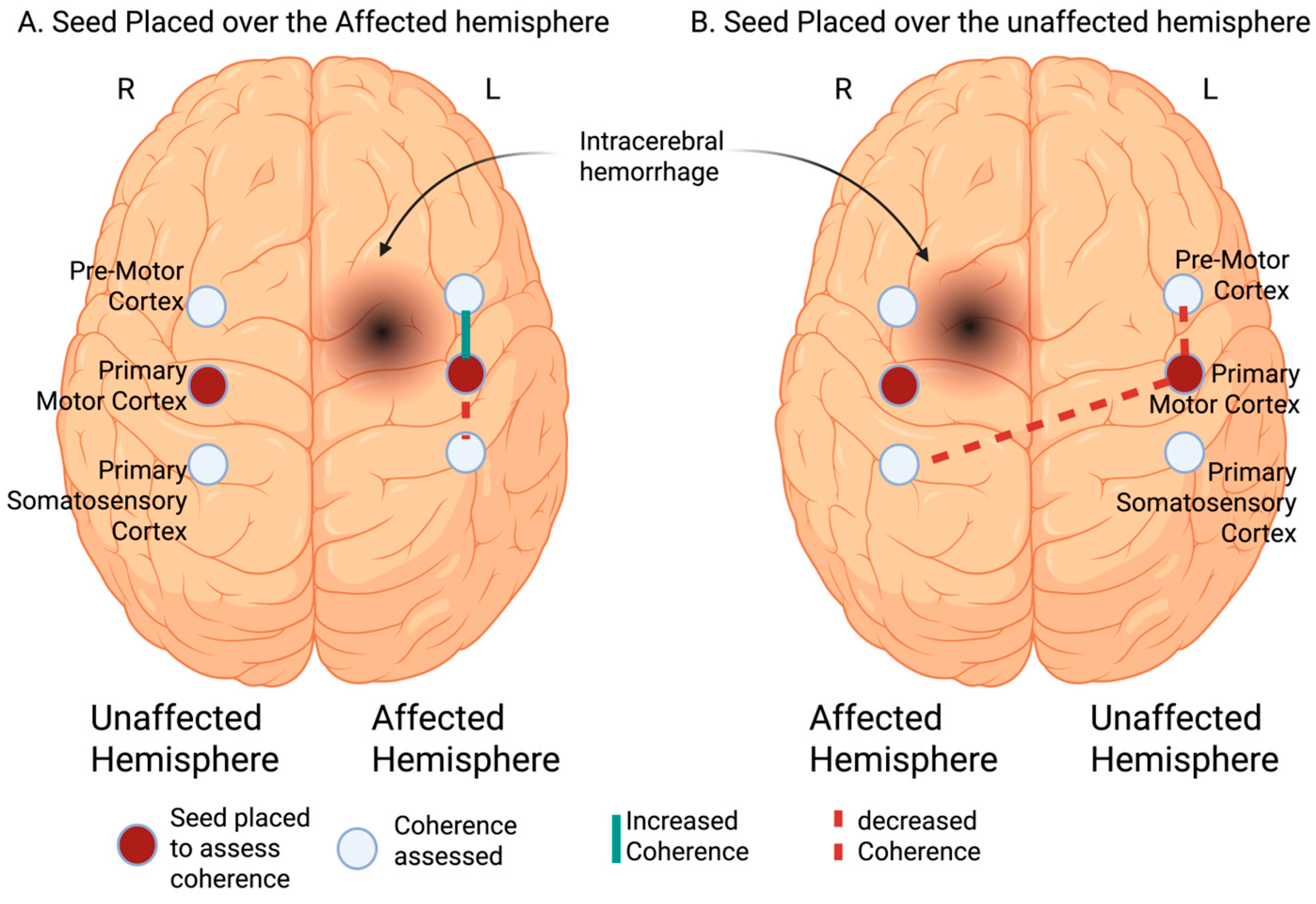
- In patients with left hemispheric ICH, RSFC may be increased between the affected primary motor cortex (priMC) and the affected premotor cortex (preMC). In contrast, in right hemispheric ICH, RSFC may be decreased between the unaffected priMC and the affected somatosensory cortex.
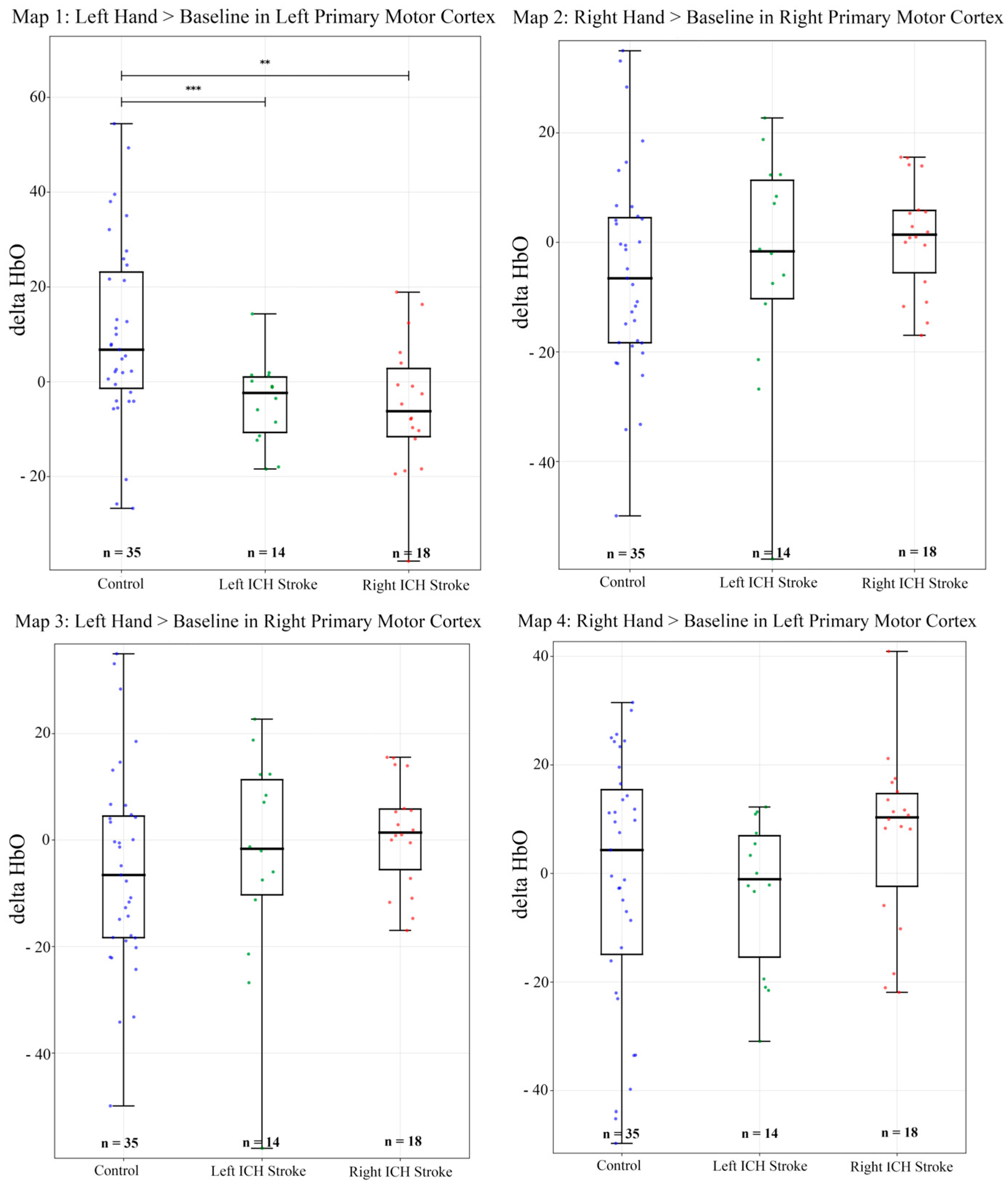
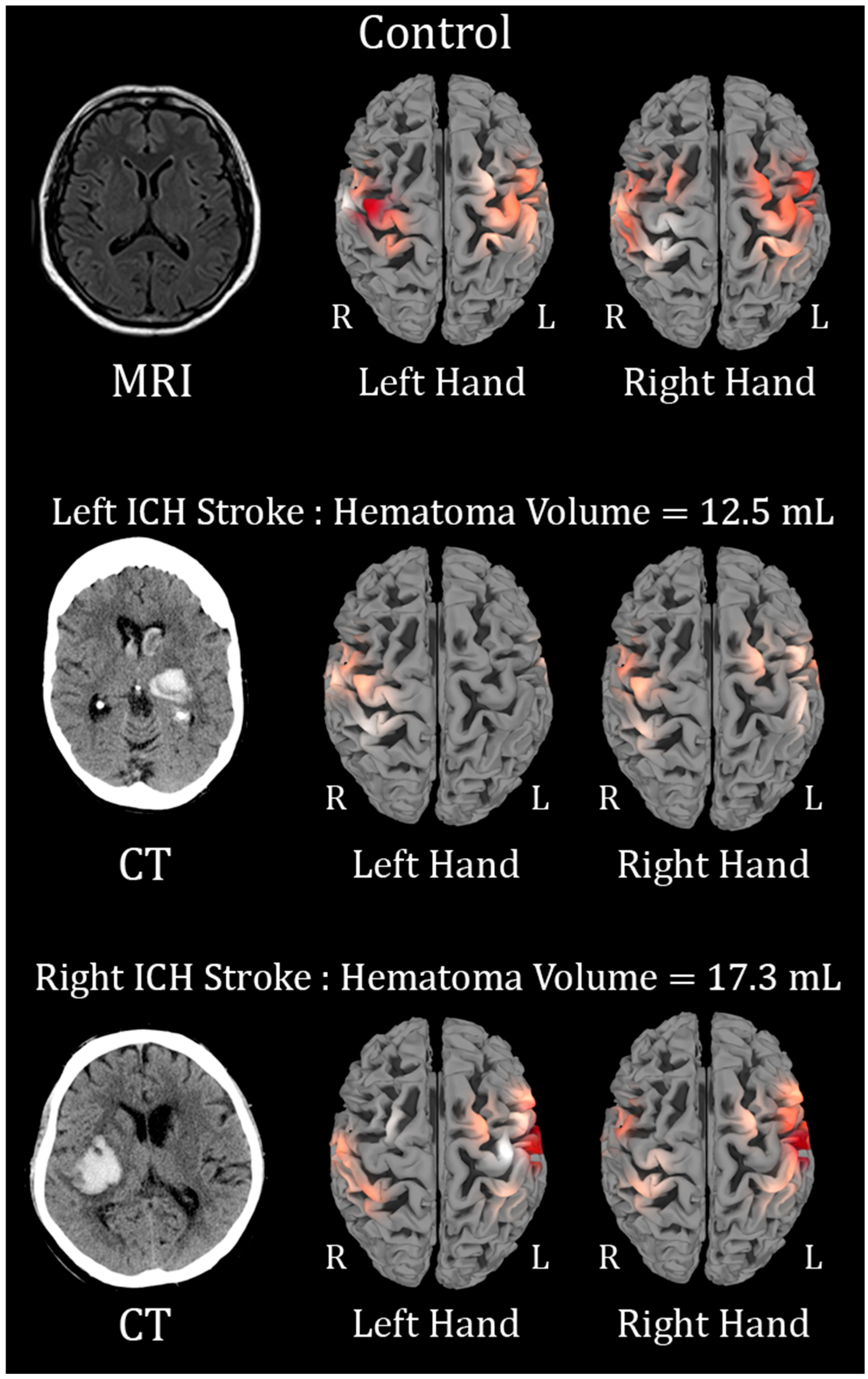
- In patients with right hemispheric ICH with left hand finger tapping, there may be increased oxygenation over the unaffected preMC.
- Motor cortex reorganization in patients with acute ICH is based on the side of the stroke.
- Left preMC connectivity and activity may be affected early in patients with ICH, which may serve as a target for neuromodulation devices.
Abstract
1. Introduction
2. Materials and Methods
2.1. Study Design and Patient Population
2.2. Study Procedures
2.3. fNIRS Data Acquisition
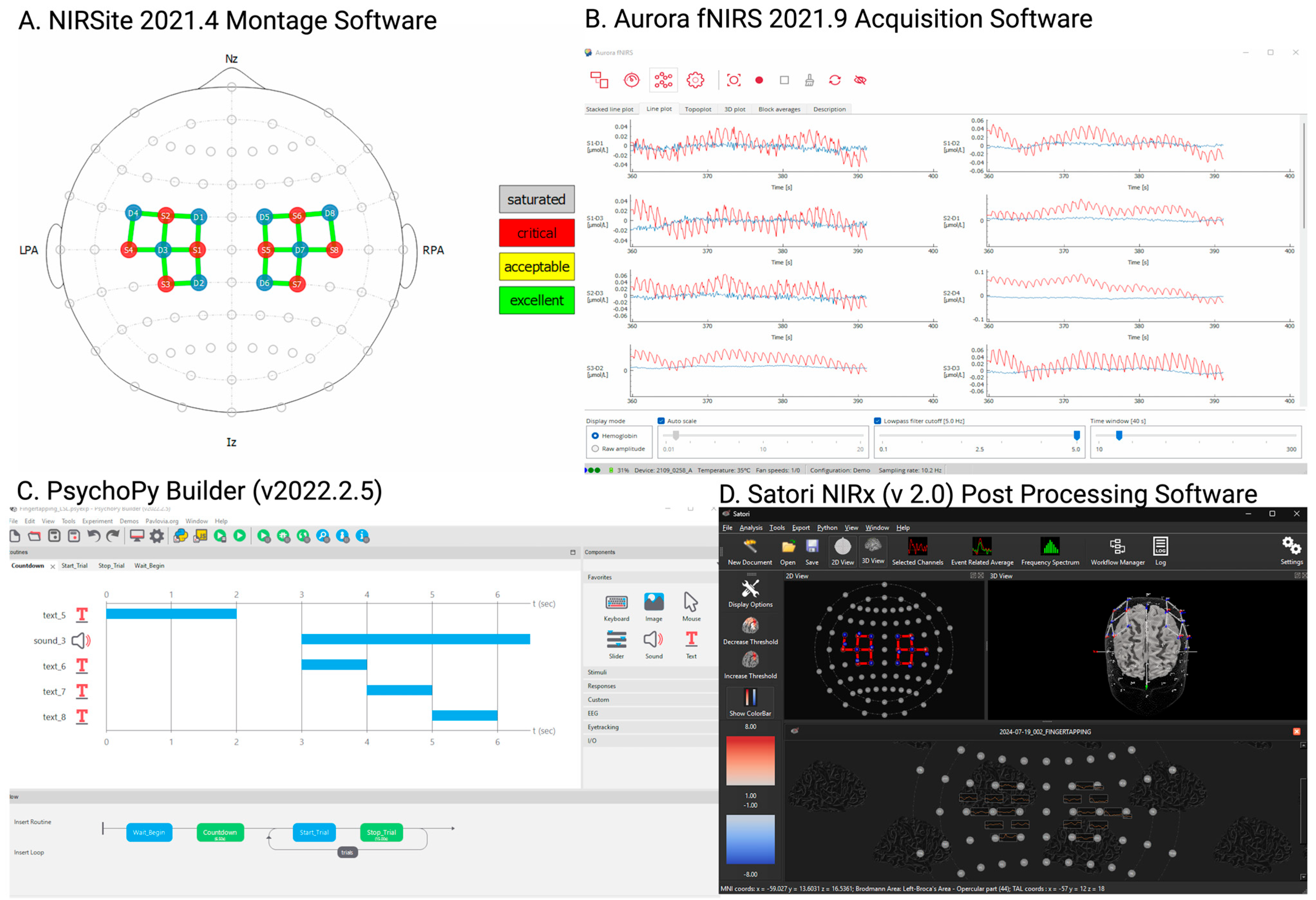
The finger tapping task required participants to sequentially tap each finger to their thumb at a rate of one tap per second. The task alternated between hands, with each hand completing 10 repetitions, resulting in a total of 5 alternations. The entire task lasted 3 min, with a 3 s pause between stimuli to allow brief rest intervals.
2.4. fNIRS Data Processing
2.5. Workflow Manager Data Pipeline
2.6. fNIRS Analyses
2.6.1. Resting-State Analyses
2.6.2. Motor Paradigm Analyses
2.6.3. Outcome Measures
2.7. Statistical Analyses
3. Results
3.1. Patient Characteristics
3.2. Resting State Functional Connectivity Analysis
3.3. Motor Paradigm (Finger-Tapping) Analyses
3.4. Motor Paradigm (Handgrip) Analysis
3.5. Functional Neurological Outcome
4. Discussion
5. Limitations
6. Conclusions
Supplementary Materials
Author Contributions
Funding
Institutional Review Board Statement
Informed Consent Statement
Data Availability Statement
Acknowledgments
Conflicts of Interest
References
- O’Donnell, M.J.; Chin, S.L.; Rangarajan, S.; Xavier, D.; Liu, L.; Zhang, H.; Rao-Melacini, P.; Zhang, X.; Pais, P.; Agapay, S.; et al. Global and Regional Effects of Potentially Modifiable Risk Factors Associated with Acute Stroke in 32 Countries (INTERSTROKE): A Case-Control Study. Lancet 2016, 388, 761–775. [Google Scholar] [CrossRef]
- Magid-Bernstein, J.; Girard, R.; Polster, S.; Srinath, A.; Romanos, S.; Awad, I.A.; Sansing, L.H. Cerebral Hemorrhage: Pathophysiology, Treatment, and Future Directions. Circ. Res. 2022, 130, 1204. [Google Scholar] [CrossRef]
- Baker, W.L.; Sharma, M.; Cohen, A.; Ouwens, M.; Christoph, M.J.; Koch, B.; Moore, T.E.; Frady, G.; Coleman, C.I. Using 30-Day Modified Rankin Scale Score to Predict 90-Day Score in Patients with Intracranial Hemorrhage: Derivation and Validation of Prediction Model. PLoS ONE 2024, 19, e0303757. [Google Scholar] [CrossRef]
- Pożarowszczyk, N.; Kurkowska-Jastrzębska, I.; Sarzyńska-Długosz, I.; Nowak, M.; Karliński, M. Reliability of the Modified Rankin Scale in Clinical Practice of Stroke Units and Rehabilitation Wards. Front. Neurol. 2023, 14, 1064642. [Google Scholar] [CrossRef]
- Sun, L.; Yin, D.; Zhu, Y.; Fan, M.; Zang, L.; Wu, Y.; Jia, J.; Bai, Y.; Zhu, B.; Hu, Y. Cortical Reorganization after Motor Imagery Training in Chronic Stroke Patients with Severe Motor Impairment: A Longitudinal FMRI Study. Neuroradiology 2013, 55, 913–925. [Google Scholar] [CrossRef]
- Sood, I.; Injety, R.J.; Farheen, A.; Kamali, S.; Jacob, A.; Mathewson, K.; Buck, B.H.; Kate, M.P. Quantitative Electroencephalography to Assess Post-Stroke Functional Disability: A Systematic Review and Meta-Analysis. J. Stroke Cerebrovasc. Dis. 2024, 33, 108032. [Google Scholar] [CrossRef]
- Ferrari, M.; Quaresima, V. A Brief Review on the History of Human Functional Near-Infrared Spectroscopy (FNIRS) Development and Fields of Application. Neuroimage 2012, 63, 921–935. [Google Scholar] [CrossRef] [PubMed]
- Leff, D.R.; Orihuela-Espina, F.; Elwell, C.E.; Athanasiou, T.; Delpy, D.T.; Darzi, A.W.; Yang, G.Z. Assessment of the Cerebral Cortex during Motor Task Behaviours in Adults: A Systematic Review of Functional near Infrared Spectroscopy (FNIRS) Studies. Neuroimage 2011, 54, 2922–2936. [Google Scholar] [CrossRef] [PubMed]
- Sun, Z.; Liu, J.; Wang, K.; Zhang, J.; Liu, S.; Xue, F. Feasibility of Noninvasive Near-Infrared Spectroscopy Monitoring in Predicting the Prognosis of Spontaneous Intracerebral Hemorrhage. Front. Neurol. 2024, 15, 1406157. [Google Scholar] [CrossRef] [PubMed]
- Biswal, B.; Zerrin Yetkin, F.; Haughton, V.M.; Hyde, J.S. Functional Connectivity in the Motor Cortex of Resting Human Brain Using Echo-planar Mri. Magn. Reson. Med. 1995, 34, 537–541. [Google Scholar] [CrossRef]
- Rehme, A.K.; Grefkes, C. Cerebral Network Disorders after Stroke: Evidence from Imaging-Based Connectivity Analyses of Active and Resting Brain States in Humans. J. Physiol. 2013, 591, 17–31. [Google Scholar] [CrossRef]
- Elliott, M.L.; Knodt, A.R.; Cooke, M.; Kim, M.J.; Melzer, T.R.; Keenan, R.; Ireland, D.; Ramrakha, S.; Poulton, R.; Caspi, A.; et al. General Functional Connectivity: Shared Features of Resting-State and Task FMRI Drive Reliable and Heritable Individual Differences in Functional Brain Networks. Neuroimage 2019, 189, 516–532. [Google Scholar] [CrossRef]
- Yücel, M.A.; Lühmann, A.v.; Scholkmann, F.; Gervain, J.; Dan, I.; Ayaz, H.; Boas, D.; Cooper, R.J.; Culver, J.; Elwell, C.E.; et al. Best Practices for FNIRS Publications. Neurophotonics 2021, 8, 012101. [Google Scholar] [CrossRef]
- Prodoehl, J.; Yu, H.; Little, D.M.; Abraham, I.; Vaillancourt, D.E. Region of Interest Template for the Human Basal Ganglia: Comparing EPI and Standardized Space Approaches. Neuroimage 2007, 39, 956. [Google Scholar] [CrossRef] [PubMed]
- Hernandez-Sarabia, J.A.; Schmid, A.A.; Sharp, J.L.; Stephens, J.A. Intervention-Induced Changes in Balance and Task-Dependent Neural Activity in Adults with Acquired Brain Injury: A Pilot Randomized Control Trial. Sensors 2024, 24, 4047. [Google Scholar] [CrossRef] [PubMed]
- Fishburn, F.A.; Ludlum, R.S.; Vaidya, C.J.; Medvedev, A.V. Temporal Derivative Distribution Repair (TDDR): A Motion Correction Method for FNIRS. Neuroimage 2018, 184, 171. [Google Scholar] [CrossRef] [PubMed]
- von Au, S.; Helmich, I.; Kieffer, S.; Lausberg, H. Phasic and Repetitive Self-Touch Differ in Hemodynamic Response in the Prefrontal Cortex–An FNIRS Study. Front. Neuroergonomics 2023, 4, 1266439. [Google Scholar] [CrossRef]
- Tak, S.; Ye, J.C. Statistical Analysis of FNIRS Data: A Comprehensive Review. Neuroimage 2014, 85, 72–91. [Google Scholar] [CrossRef]
- von Lühmann, A.; Ortega-Martinez, A.; Boas, D.A.; Yücel, M.A. Using the General Linear Model to Improve Performance in FNIRS Single Trial Analysis and Classification: A Perspective. Front. Hum. Neurosci. 2020, 14, 514061. [Google Scholar] [CrossRef]
- Mikell, C.B.; Banks, G.P.; Frey, H.P.; Youngerman, B.E.; Nelp, T.B.; Karas, P.J.; Chan, A.K.; Voss, H.U.; Sander Connolly, E.; Claassen, J. Frontal Networks Associated with Command Following after Hemorrhagic Stroke. Stroke 2015, 46, 49–57. [Google Scholar] [CrossRef]
- Boren, S.B.; Savitz, S.I.; Ellmore, T.M.; Arevalo, O.D.; Aronowski, J.; Silos, C.; George, S.; Haque, M.E. Longitudinal Resting-State Functional Magnetic Resonance Imaging Study: A Seed-Based Connectivity Biomarker in Patients with Ischemic and Intracerebral Hemorrhage Stroke. Brain Connect. 2023, 13, 498–507. [Google Scholar] [CrossRef] [PubMed]
- Sui, Y.; Kan, C.; Zhu, S.; Zhang, T.; Wang, J.; Xu, S.; Zhuang, R.; Shen, Y.; Wang, T.; Guo, C. Resting-State Functional Connectivity for Determining Outcomes in Upper Extremity Function after Stroke: A Functional near-Infrared Spectroscopy Study. Front. Neurol. 2022, 13, 965856. [Google Scholar] [CrossRef] [PubMed]
- Hu, J.; Du, J.; Xu, Q.; Yang, F.; Zeng, F.; Weng, Y.; Dai, X.J.; Qi, R.; Liu, X.; Lu, G.; et al. Dynamic Network Analysis Reveals Altered Temporal Variability in Brain Regions after Stroke: A Longitudinal Resting-State FMRI Study. Neural Plast. 2018, 2018, 9394156. [Google Scholar] [CrossRef]
- Puig, J.; Blasco, G.; Terceño, M.; Daunis-I-Estadella, P.; Schlaug, G.; Hernandez-Perez, M.; Cuba, V.; Carbó, G.; Serena, J.; Essig, M.; et al. Predicting Motor Outcome in Acute Intracerebral Hemorrhage. AJNR Am. J. Neuroradiol. 2019, 40, 769. [Google Scholar] [CrossRef] [PubMed]


| Intracerebral Hemorrhage, n = 35 | Control or TIA, n = 39 | p-Value | |
|---|---|---|---|
| Median (IQR) Age, Years | 64 (56,83) | 67 (58,75) | 0.5 |
| Female Sex, n (%) | 15 (42.8) | 17 (43.5) | 0.9 |
| Median Premorbid (IQR) mRS | 0 (0,1) | 0 (0,0) | 0.3 |
| Hypertension, n (%) | 29 (82.9) | 24 (64.1) | 0.07 |
| Diabetes mellitus, n (%) | 5 (14.3) | 11 (28.2) | 0.1 |
| Dyslipidemia, n (%) | 19 (54.3) | 30 (76.9) | 0.040 |
| Atrial Fibrillation, n (%) | 6 (17.1) | 5 (12.8) | 0.602 |
| Coronary Artery Disease, n (%) | 2 (5.9) | 3 (7.7) | 0.735 |
| Small Vessel Disease, n (%) | 24 (68.6) | 5 (12.8) | 0.000 |
| Median (IQR) NIHSS at enrollment | 10 (5,17) | - | - |
| Median (IQR) ICH Volume, mL | 18.7 (7.2, 51.7) | - | - |
| Hand Weakness Present, n (%) | 26 (74.3) | - | - |
| Location of ICH: Lobar, n (%) Non-Lobar, n (%) Both, n (%) | 9 (25.7) 22 (62.9) 4 (11.4) | - | - |
| Median NIHSS at Discharge | 5.5 (2.5, 10) | - | - |
| Median Hospital Stay Days | 28 (4, 32) | - | - |
Disclaimer/Publisher’s Note: The statements, opinions and data contained in all publications are solely those of the individual author(s) and contributor(s) and not of MDPI and/or the editor(s). MDPI and/or the editor(s) disclaim responsibility for any injury to people or property resulting from any ideas, methods, instructions or products referred to in the content. |
© 2025 by the authors. Licensee MDPI, Basel, Switzerland. This article is an open access article distributed under the terms and conditions of the Creative Commons Attribution (CC BY) license (https://creativecommons.org/licenses/by/4.0/).
Share and Cite
Kumar, N.; Duba, G.C.; Khan, N.; Kashinkunti, C.; Shuaib, A.; Buck, B.; Kate, M.P. Early Motor Cortex Connectivity and Neuronal Reactivity in Intracerebral Hemorrhage: A Continuous-Wave Functional Near-Infrared Spectroscopy Study. Sensors 2025, 25, 6377. https://doi.org/10.3390/s25206377
Kumar N, Duba GC, Khan N, Kashinkunti C, Shuaib A, Buck B, Kate MP. Early Motor Cortex Connectivity and Neuronal Reactivity in Intracerebral Hemorrhage: A Continuous-Wave Functional Near-Infrared Spectroscopy Study. Sensors. 2025; 25(20):6377. https://doi.org/10.3390/s25206377
Chicago/Turabian StyleKumar, Nitin, Geetha Charan Duba, Nabeela Khan, Chetan Kashinkunti, Ashfaq Shuaib, Brian Buck, and Mahesh Pundlik Kate. 2025. "Early Motor Cortex Connectivity and Neuronal Reactivity in Intracerebral Hemorrhage: A Continuous-Wave Functional Near-Infrared Spectroscopy Study" Sensors 25, no. 20: 6377. https://doi.org/10.3390/s25206377
APA StyleKumar, N., Duba, G. C., Khan, N., Kashinkunti, C., Shuaib, A., Buck, B., & Kate, M. P. (2025). Early Motor Cortex Connectivity and Neuronal Reactivity in Intracerebral Hemorrhage: A Continuous-Wave Functional Near-Infrared Spectroscopy Study. Sensors, 25(20), 6377. https://doi.org/10.3390/s25206377