Article

Adaptive Filtering for Channel Estimation in RIS-Assisted mmWave Systems


1
School of Information and Communication Engineering, Beijing University of Posts and Telecommunications (BUPT), Beijing 100876, China
2
School of Artificial Intelligence, Beijing University of Posts and Telecommunications (BUPT), Beijing 100876, China
*
Authors to whom correspondence should be addressed.
Sensors 2025, 25(2), 297; https://doi.org/10.3390/s25020297
Submission received: 5 November 2024 / Revised: 16 December 2024 / Accepted: 3 January 2025 / Published: 7 January 2025
(This article belongs to the Section Communications)

Abstract

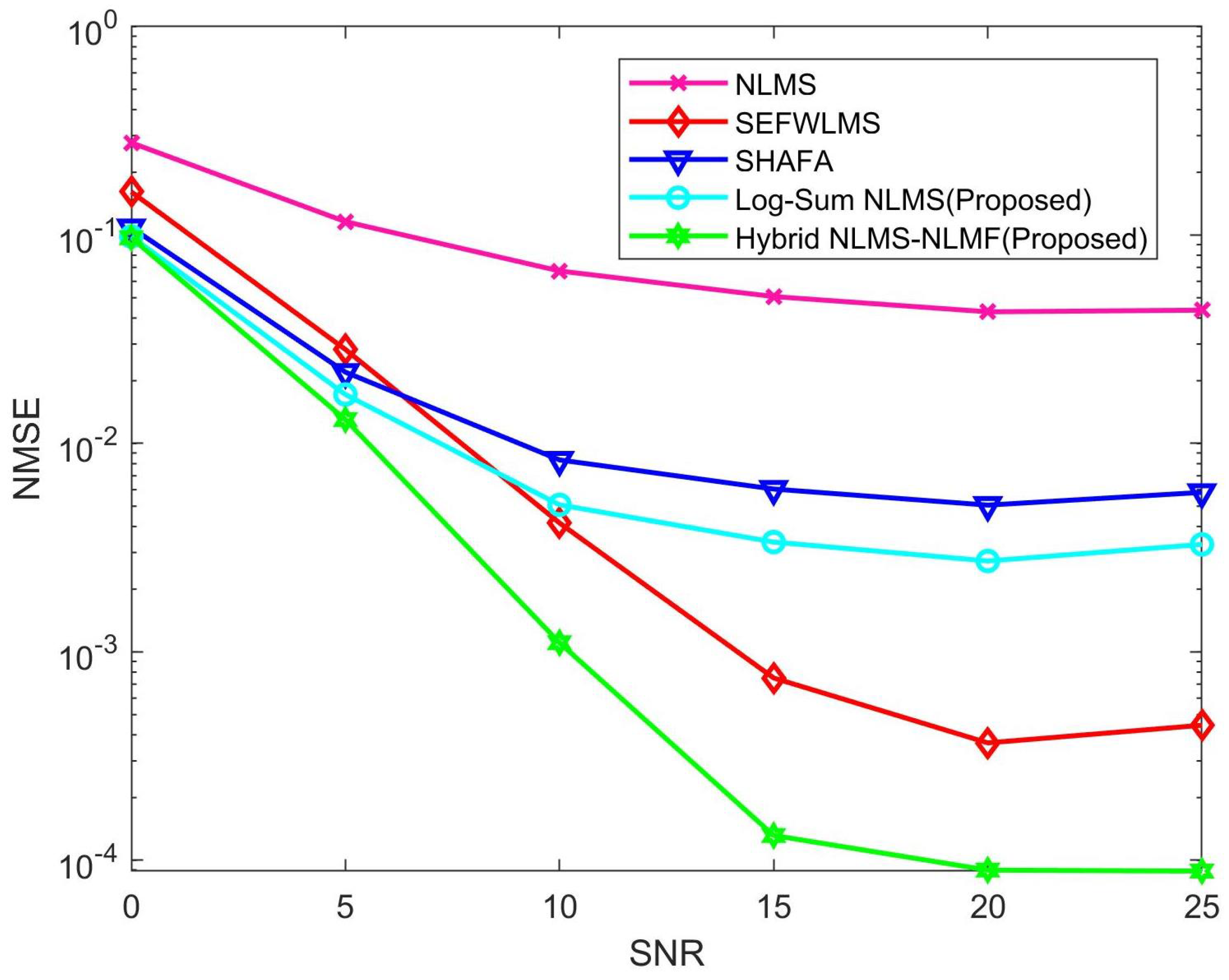
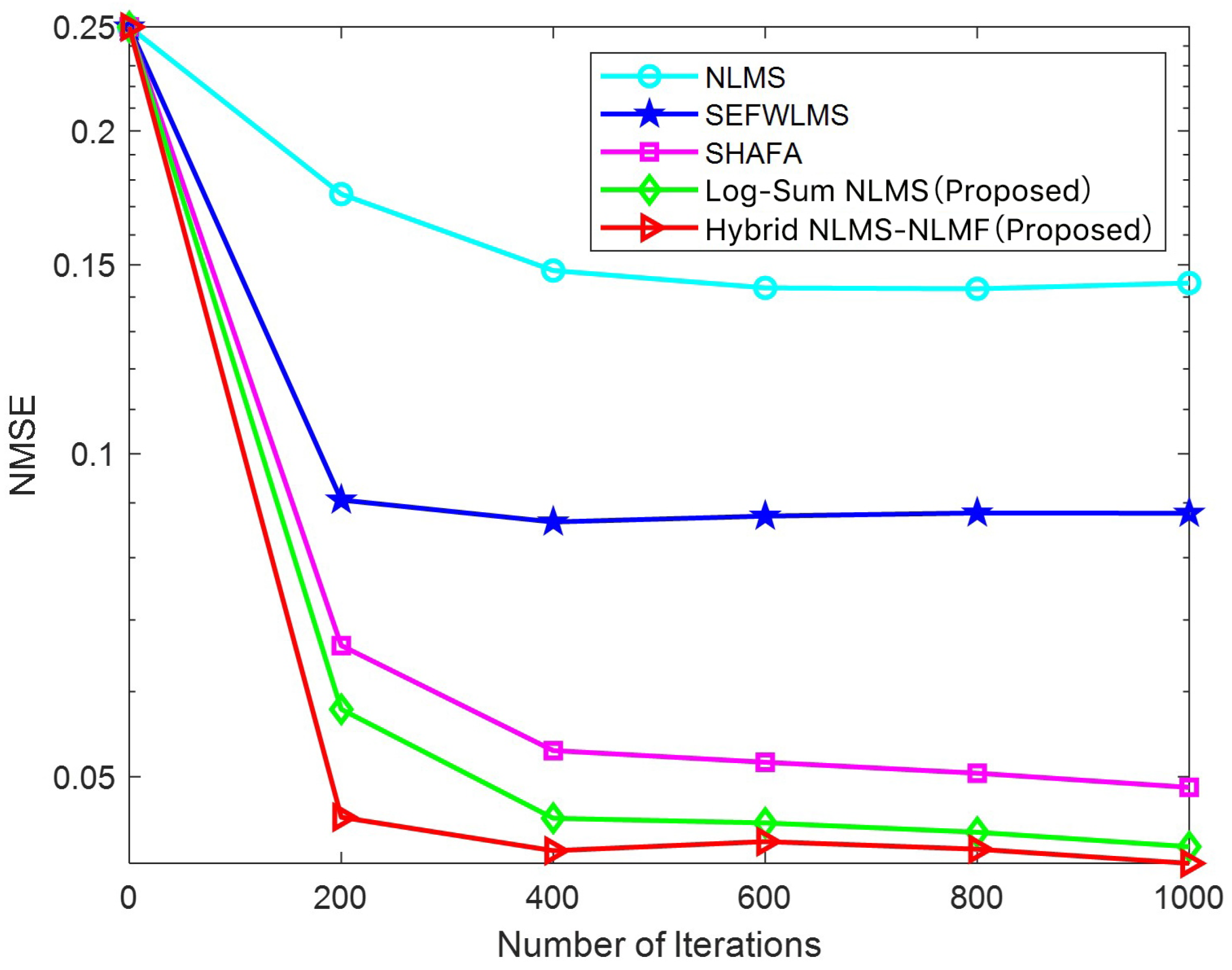
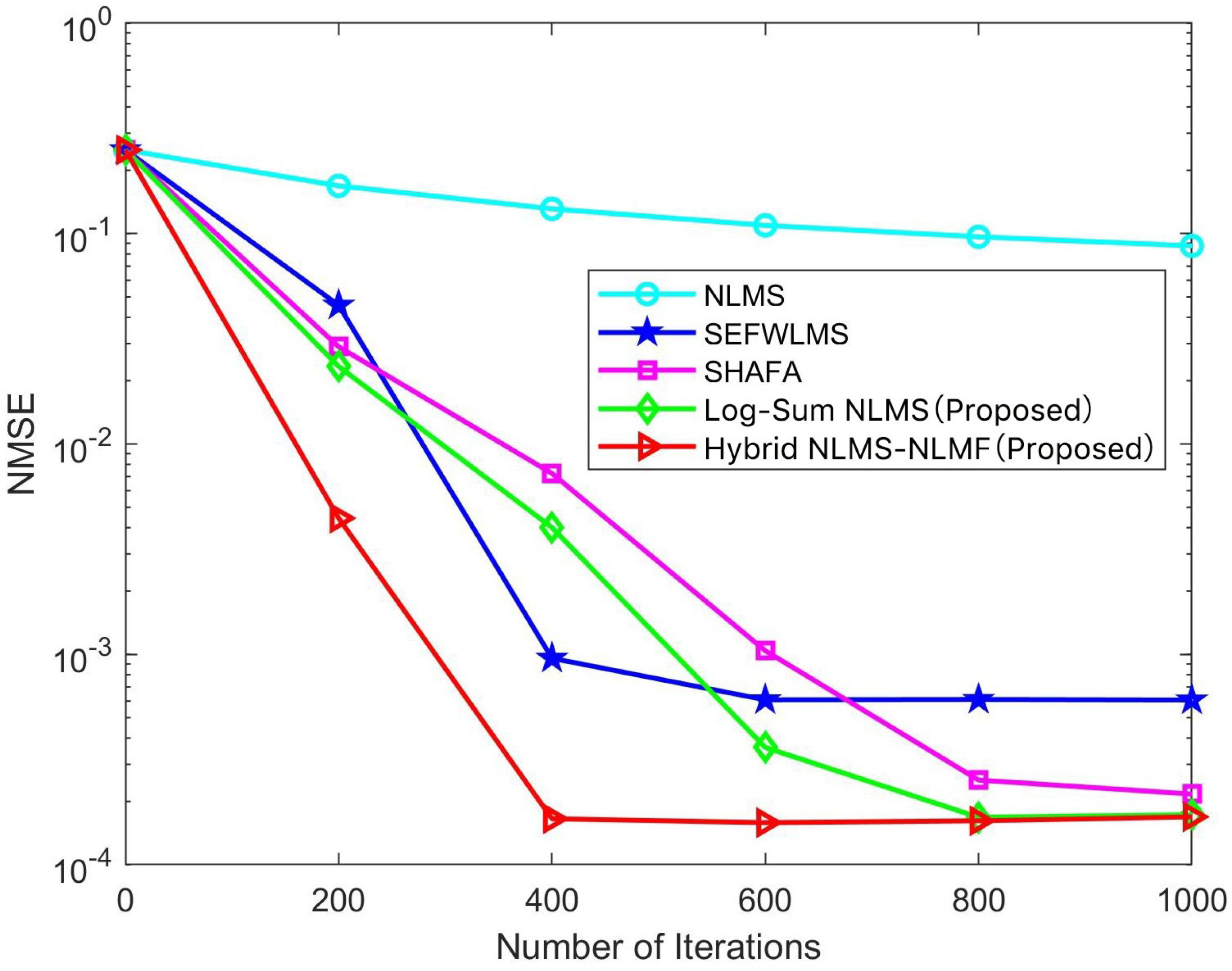
The advent of millimeter-wave (mmWave) massive multiple-input multiple-output (MIMO) systems, coupled with reconfigurable intelligent surfaces (RISs), presents a significant opportunity for advancing wireless communication technologies. This integration enhances data transmission rates and broadens coverage areas, but challenges in channel estimation (CE) remain due to the limitations of the signal processing capabilities of RIS. To address this, we propose an adaptive channel estimation framework comprising two algorithms: log-sum normalized least mean squares (Log-Sum NLMS) and hybrid normalized least mean squares-normalized least mean fourth (Hybrid NLMS-NLMF). These algorithms leverage the sparse nature of mmWave channels to improve estimation accuracy. The Log-Sum NLMS algorithm incorporates a log-sum penalty in its cost function for faster convergence, while the Hybrid NLMS-NLMF employs a mixed error function for better performance across varying signal-to-noise ratio (SNR) conditions. Our analysis also reveals that both algorithms have lower computational complexity compared to existing methods. Extensive simulations validate our findings, with results illustrating the performance of the proposed algorithms under different parameters, demonstrating significant improvements in channel estimation accuracy and convergence speed over established methods, including NLMS, sparse exponential forgetting window least mean square (SEFWLMS), and sparse hybrid adaptive filtering algorithms (SHAFA).
Keywords: channelestimation (CE); reconfigurable intelligent surfaces (RISs); adaptive filtering; sparse mmWave systems channelestimation (CE); reconfigurable intelligent surfaces (RISs); adaptive filtering; sparse mmWave systems