Article

What Is Grazing Time? Insights from the Acoustic Signature of Goat Jaw Activity in Wooded Landscapes


1
Department of Natural Resources, Institute of Plant Sciences, Agricultural Research Organization (ARO), Volcani Center, 68 HaMaccabim Road, P.O. Box 15159, Rishon LeZion 7505101, Israel
2
Rangeland Service, Ministry of Agriculture and Food Security, P.O. Box 30, Rishon LeZion 5025001, Israel
*
Author to whom correspondence should be addressed.
Sensors 2025, 25(1), 8; https://doi.org/10.3390/s25010008
Submission received: 25 November 2024 / Revised: 19 December 2024 / Accepted: 20 December 2024 / Published: 24 December 2024

Abstract

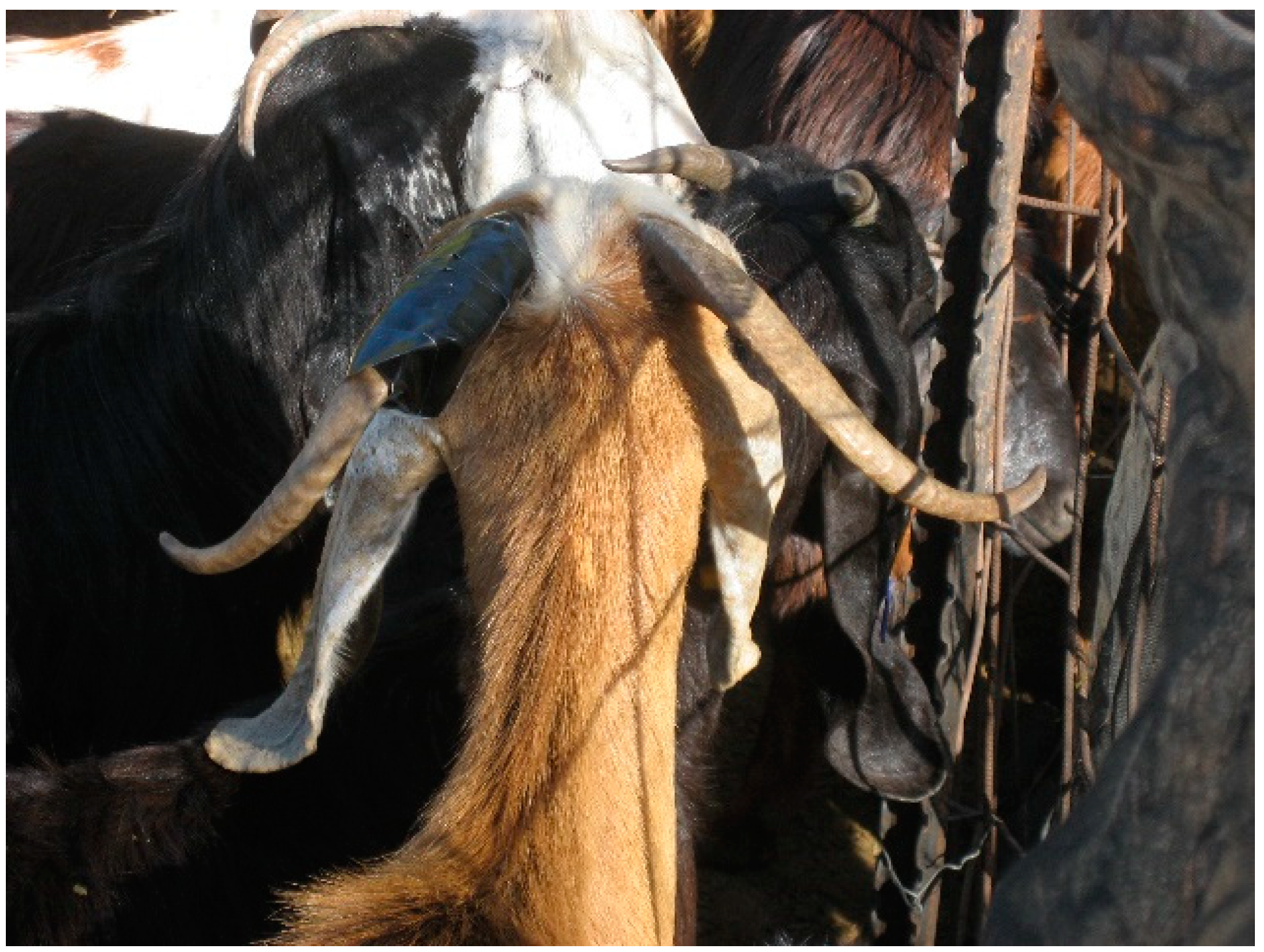
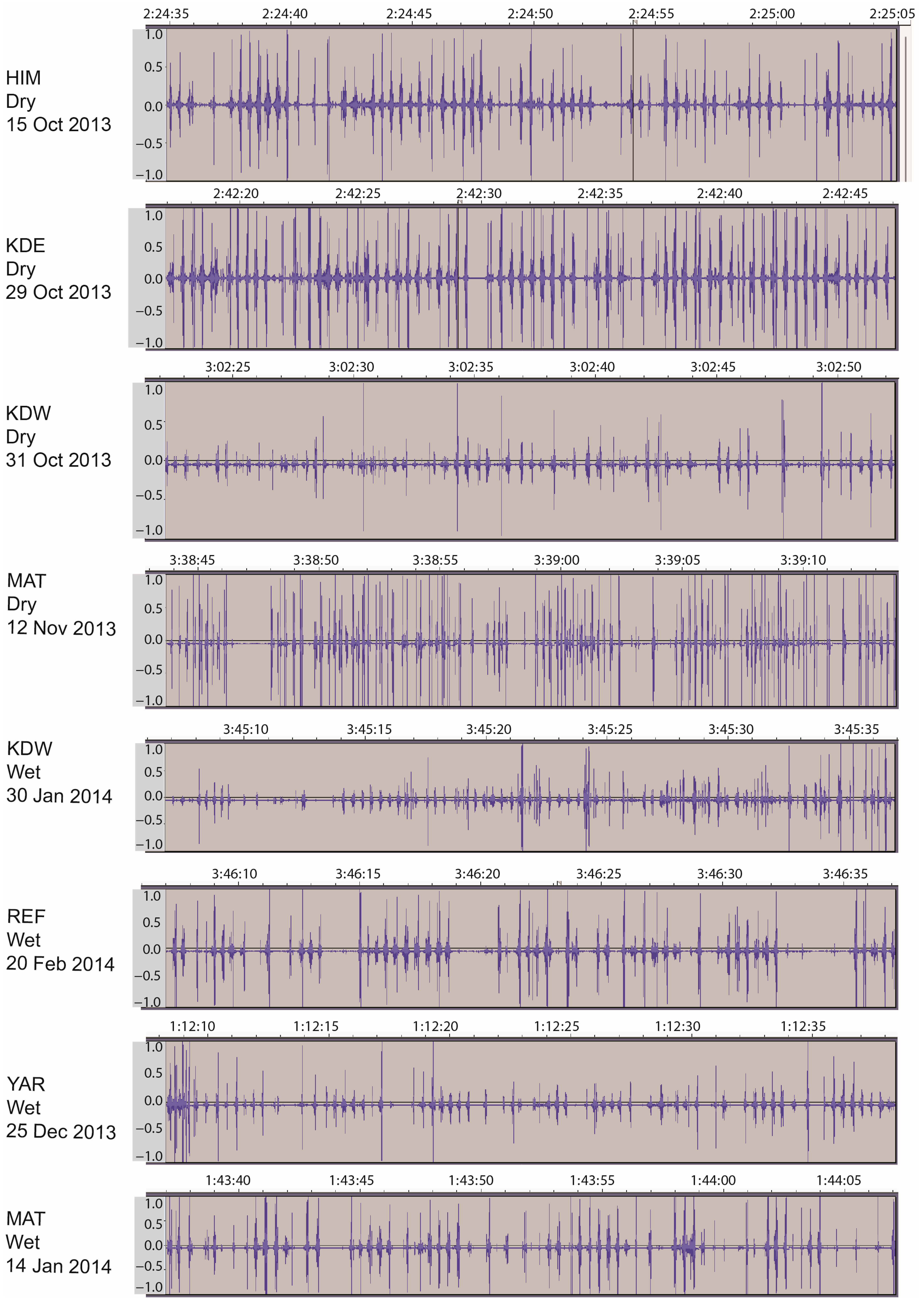
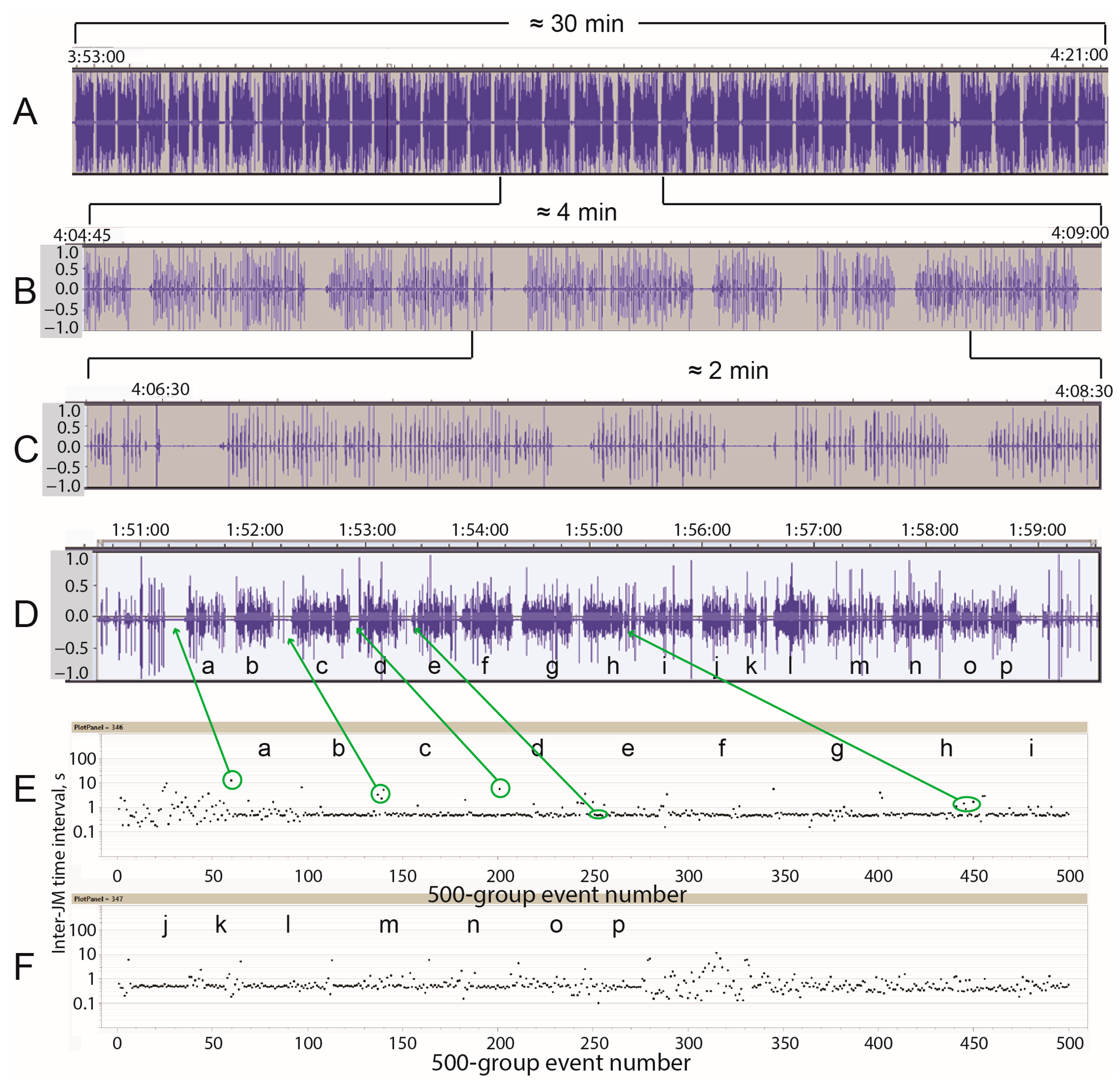
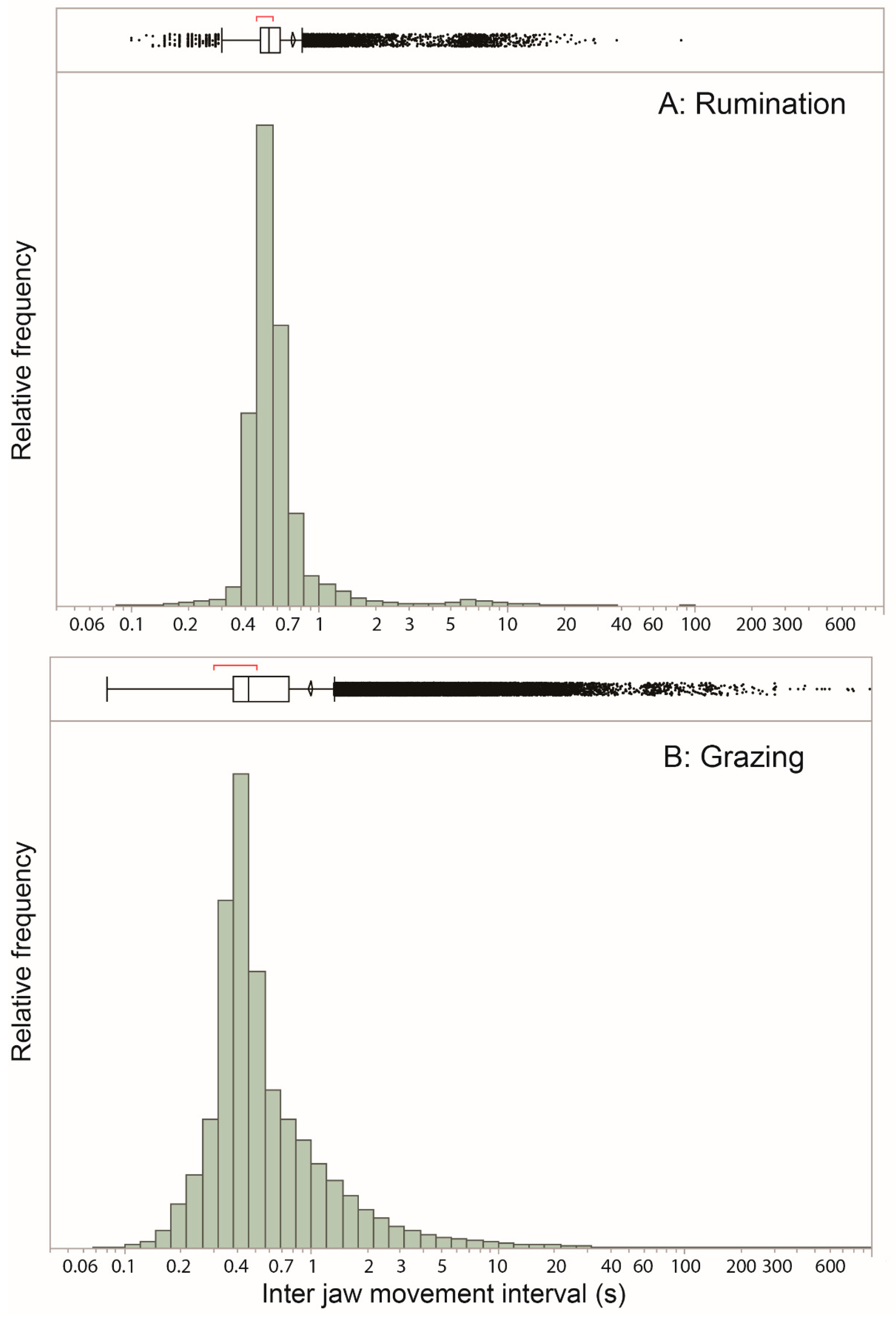
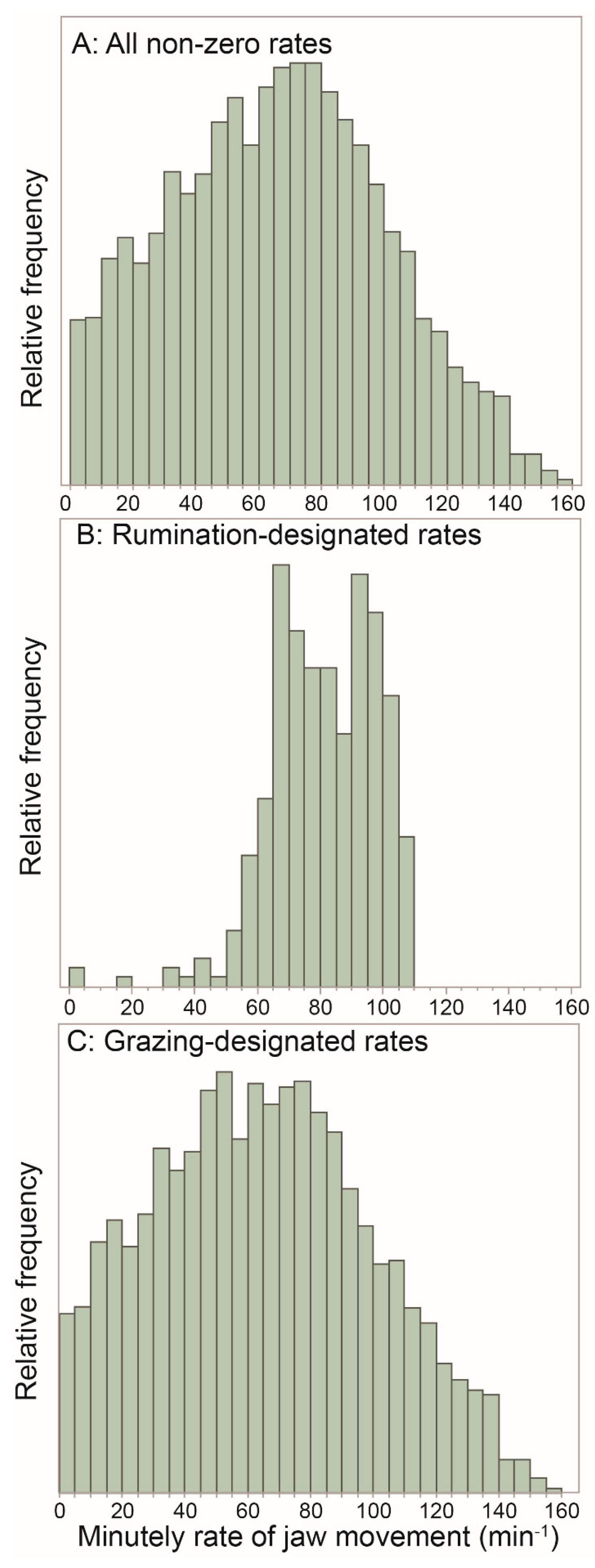
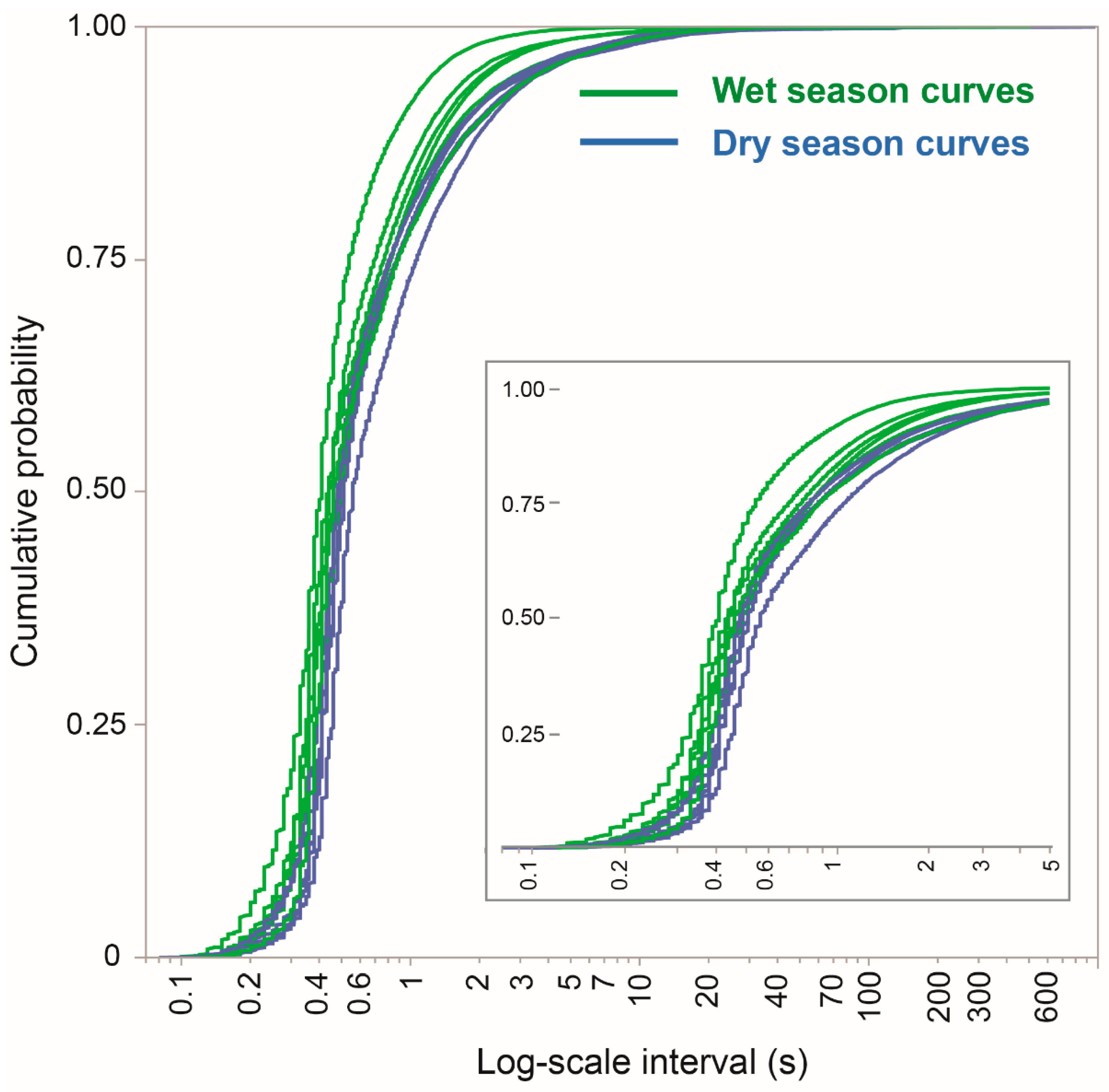
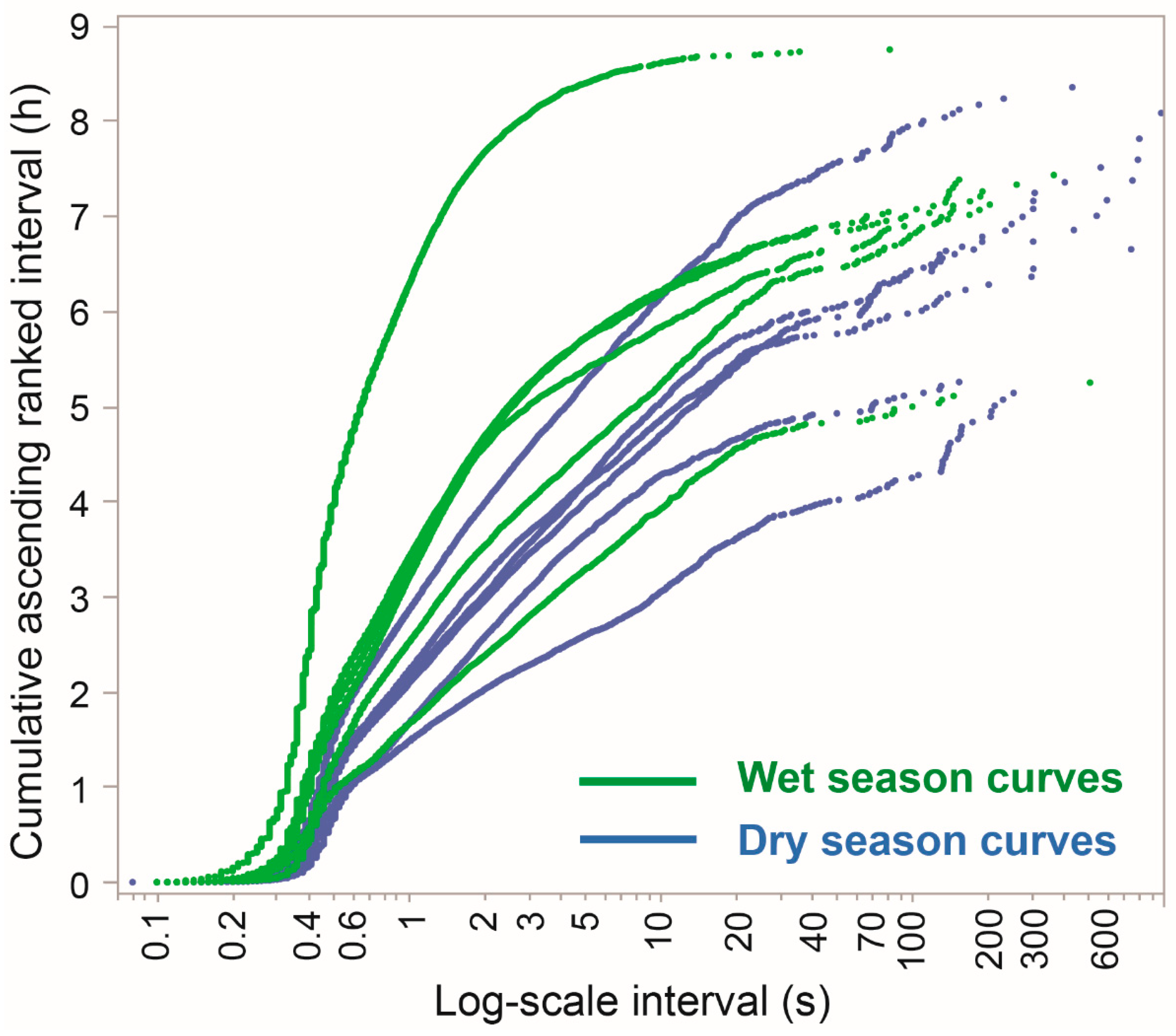
Acoustic monitoring facilitates the detailed study of herbivore grazing by generating a timeline of sound bursts associated with jaw movements (JMs) that perform bite or chew actions. The unclassified stream of JM events was used here in an observational study to explore the notion of “grazing time”. Working with shepherded goat herds in a wooded landscape, a horn-based acoustic sensor with a vibration-type microphone was deployed on a volunteer animal along each of 12 foraging routes. The software-generated timeline of unclassified JMs contained a total of 334,582 events. After excluding rumination bouts, minutely JM rates showed a broad, non-normal distribution, with an overall mean of 61 JM min−1. The frequency distribution of inter-JM interval values scaled logarithmically, with a peak in the region of 0.43 s representing a baseline interval that generates the unconstrained, more-or-less regular, rhythm of jaw movement (≈140 JM min−1). This rhythm was punctuated by interruptions, for which duration scaled logarithmically, and which were primarily related to the search phase of the intake process. The empirical time accumulation curve shows the contribution of the inter-JM interval to the total foraging time and provides a penetrating profile of how the animal interacted with the foraging environment. The sum total of time along a foraging route spent at a near-potential JM rate was only ≈1 h, whereas sub-potential rates containing intervals as long as ≈30 s accounted for the bulk of the foraging route. The dimensionless behavioral grazing intensity was defined as the product of the number of ingestive JMs performed and the baseline interval, divided by the duration of the foraging route (excluding rumination). Values were mostly <0.5 for the foraging routes examined. This has implications for how animal presence should be translated to grazing pressure and for how long animals need to forage to meet their nutritional requirements.
Keywords: foraging; grazing behavior; herbaceous vegetation; intake; Mediterranean; rumination; shrubs; signal processing foraging; grazing behavior; herbaceous vegetation; intake; Mediterranean; rumination; shrubs; signal processing