Article

Robust Multi-Subtype Identification of Breast Cancer Pathological Images Based on a Dual-Branch Frequency Domain Fusion Network


School of Mechanical and Electrical Engineering, China Jiliang University, Hangzhou 310018, China
*
Author to whom correspondence should be addressed.
Sensors 2025, 25(1), 240; https://doi.org/10.3390/s25010240
Submission received: 12 December 2024 / Revised: 27 December 2024 / Accepted: 1 January 2025 / Published: 3 January 2025
(This article belongs to the Special Issue AI-Based Automated Recognition and Detection in Healthcare)

Abstract

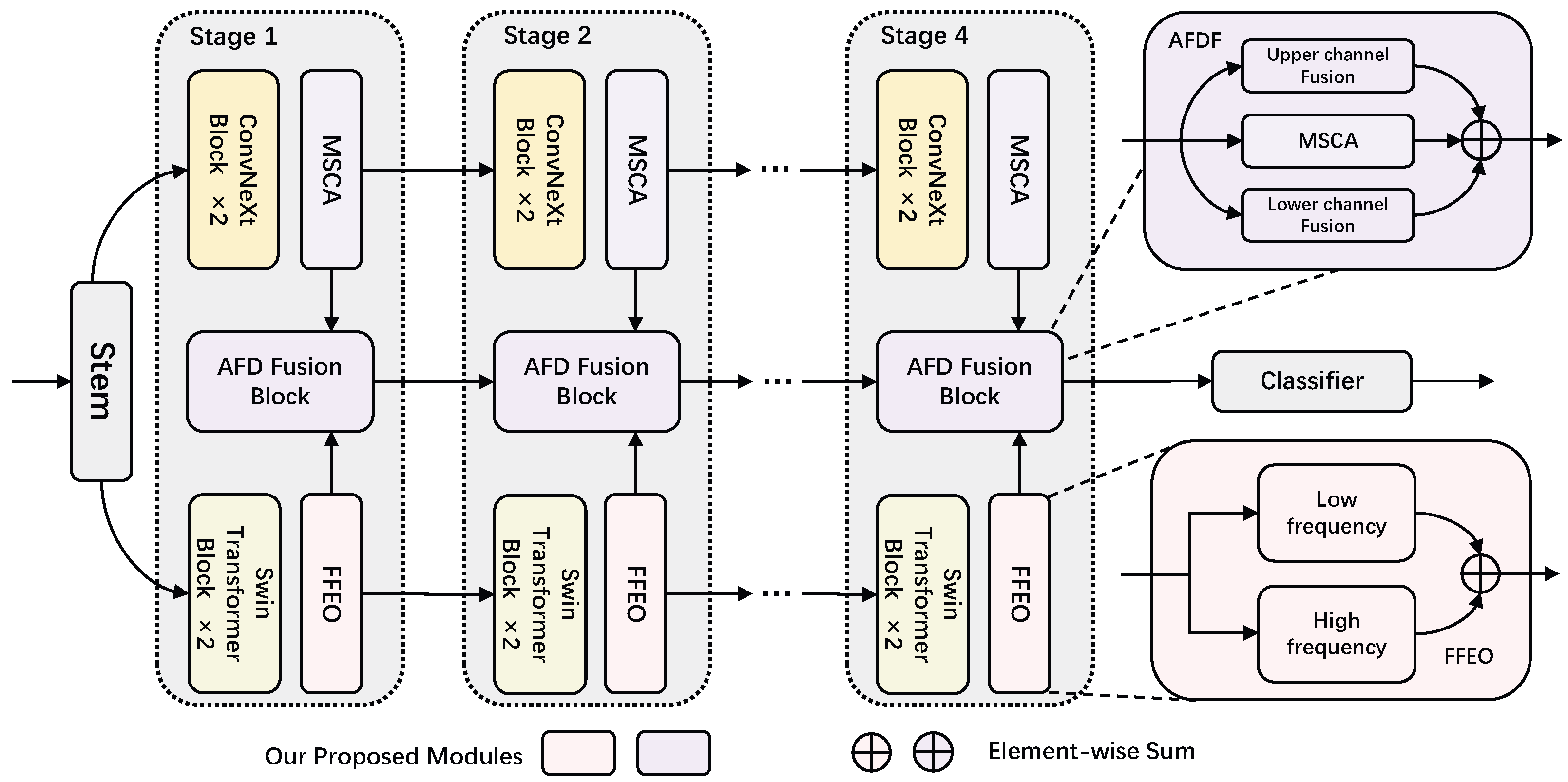
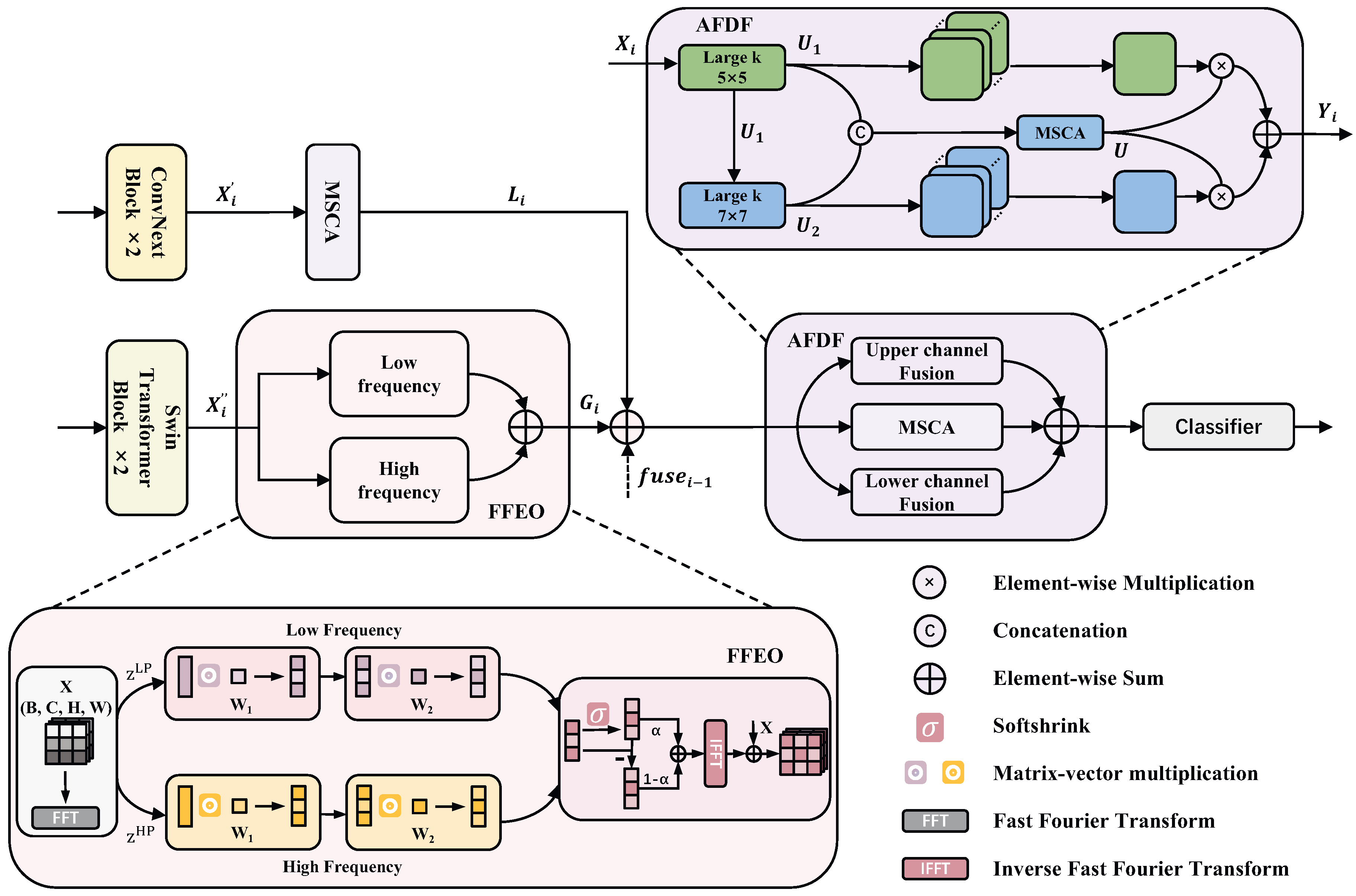
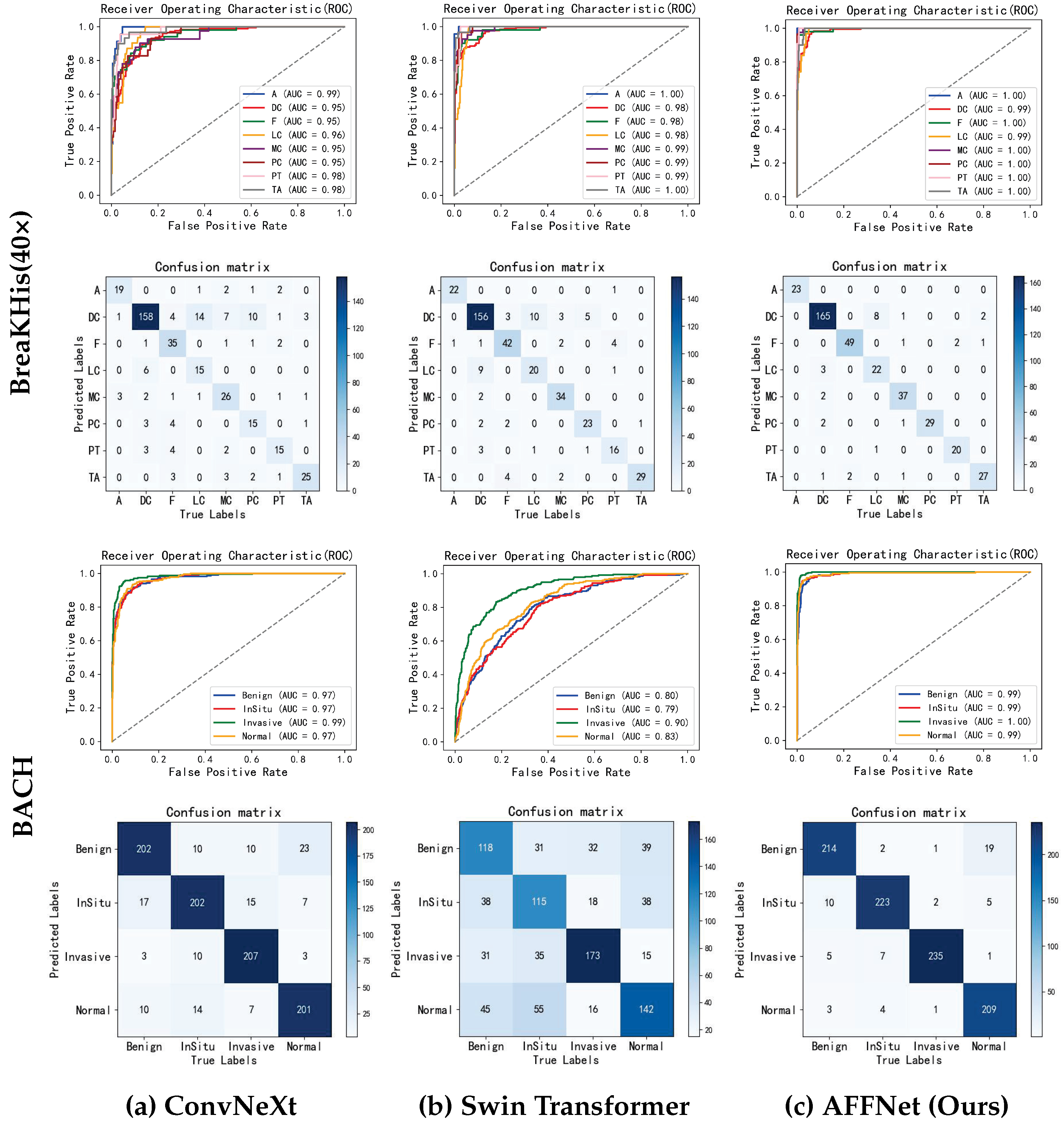
Breast cancer (BC) is one of the most lethal cancers worldwide, and its early diagnosis is critical for improving patient survival rates. However, the extraction of key information from complex medical images and the attainment of high-precision classification present a significant challenge. In the field of signal processing, texture-rich images typically exhibit periodic patterns and structures, which are manifested as significant energy concentrations at specific frequencies in the frequency domain. Given the above considerations, this study is designed to explore the application of frequency domain analysis in BC histopathological classification. This study proposes the dual-branch adaptive frequency domain fusion network (AFFNet), designed to enable each branch to specialize in distinct frequency domain features of pathological images. Additionally, two different frequency domain approaches, namely Multi-Spectral Channel Attention (MSCA) and Fourier Filtering Enhancement Operator (FFEO), are employed to enhance the texture features of pathological images and minimize information loss. Moreover, the contributions of the two branches at different stages are dynamically adjusted by a frequency-domain-adaptive fusion strategy to accommodate the complexity and multi-scale features of pathological images. The experimental results, based on two public BC histopathological image datasets, corroborate the idea that AFFNet outperforms 10 state-of-the-art image classification methods, underscoring its effectiveness and superiority in this domain.
Keywords: frequency domain; feature fusion; histopathological classification; deep learning; breast cancer frequency domain; feature fusion; histopathological classification; deep learning; breast cancer