Article

Assessing the Cloud-RAN in the Linux Kernel: Sharing Computing and Network Resources

1
SimulaMet—Simula Metropolitan Center for Digital Engineering, 0167 Oslo, Norway
2
Faculty of Technology, Art and Design, OsloMet—Oslo Metropolitan University, 0176 Oslo, Norway
3
School of Computing and Engineering, University of Gloucestershir, Cheltenham GL50 2RH, UK
4
Amazon Web Services (AWS), Seattle, WA 98109, USA
*
Author to whom correspondence should be addressed.
Sensors 2024, 24(7), 2365; https://doi.org/10.3390/s24072365
Submission received: 6 February 2024 / Revised: 2 April 2024 / Accepted: 6 April 2024 / Published: 8 April 2024
(This article belongs to the Special Issue Cloud-Edge Continuum in 5G Networks)

Abstract

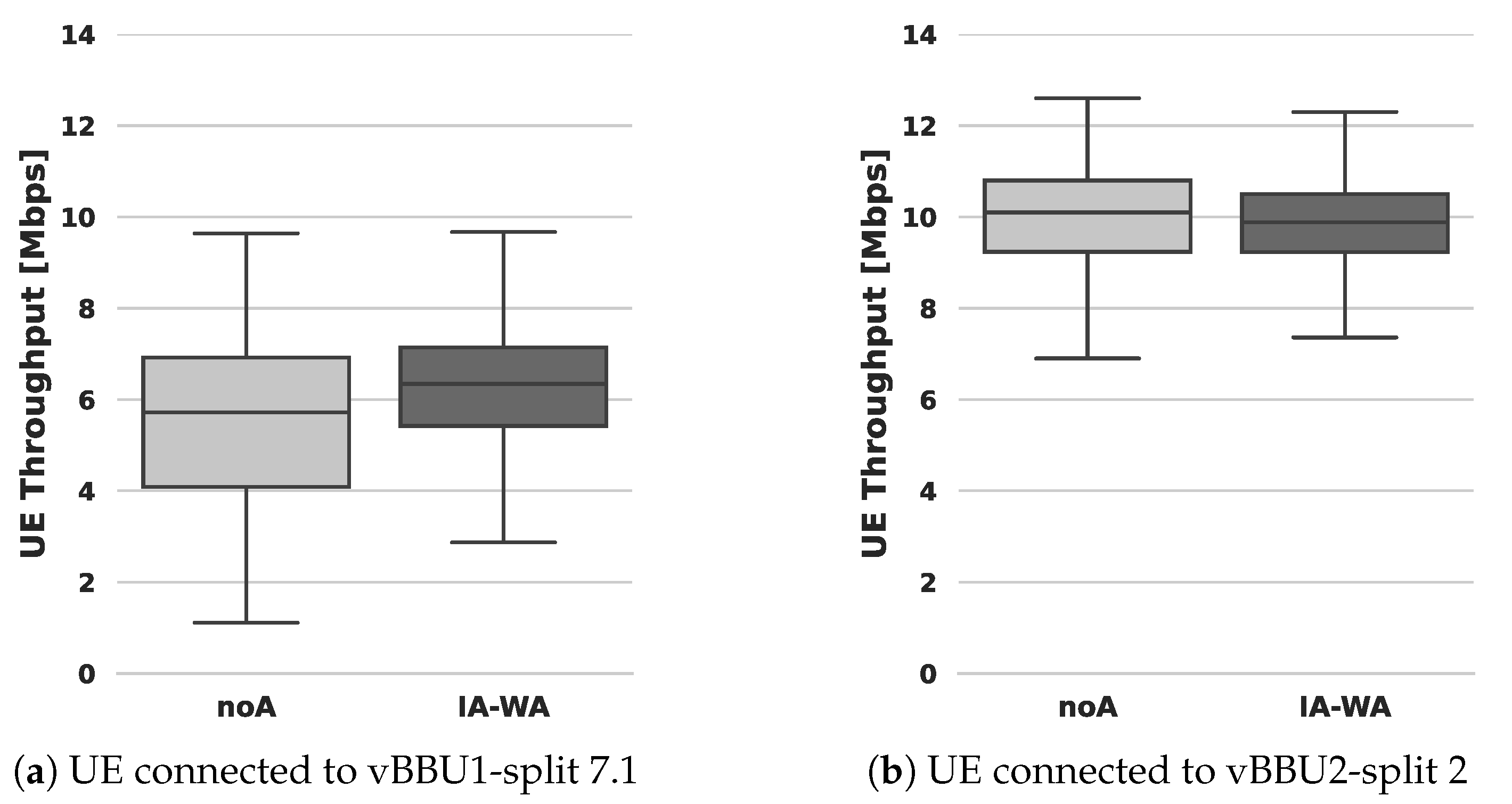
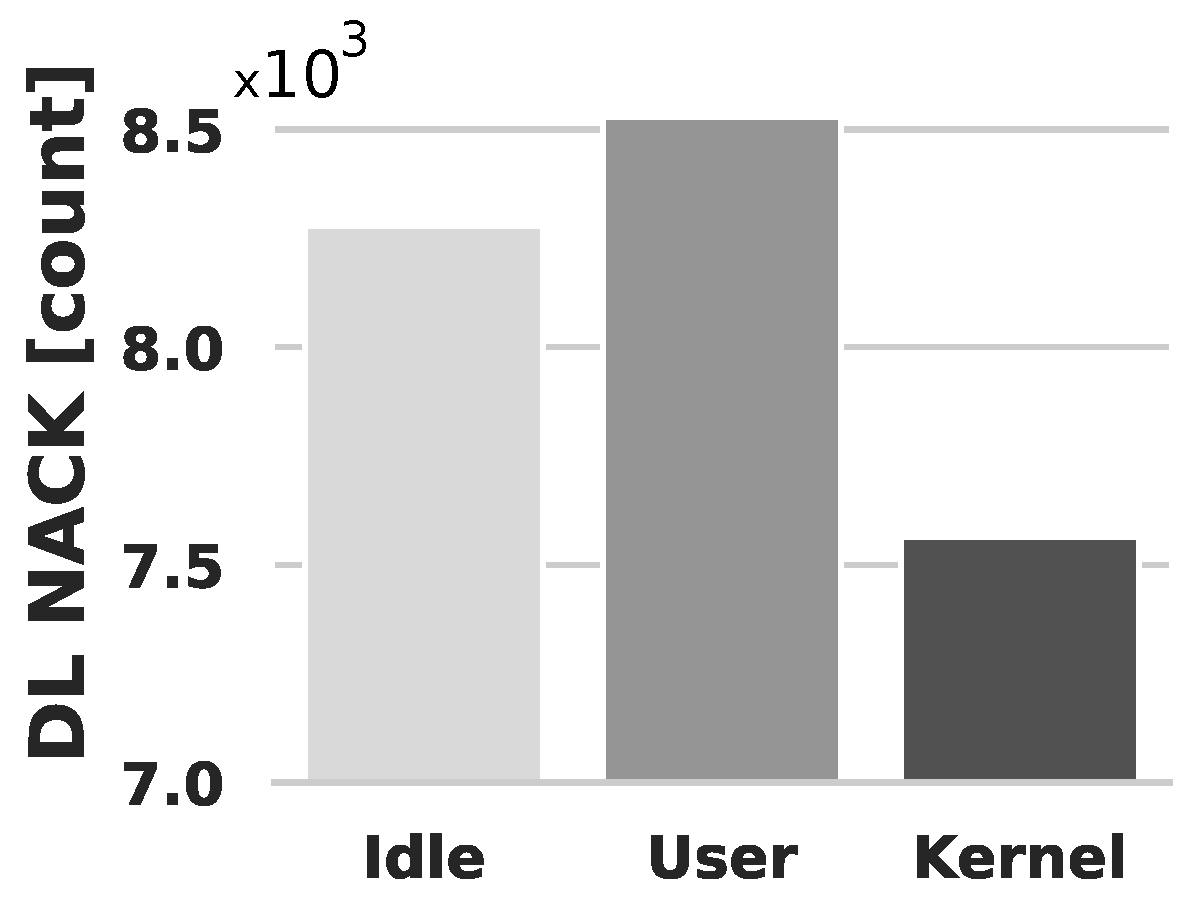
Cloud-based Radio Access Network (Cloud-RAN) leverages virtualization to enable the coexistence of multiple virtual Base Band Units (vBBUs) with collocated workloads on a single edge computer, aiming for economic and operational efficiency. However, this coexistence can cause performance degradation in vBBUs due to resource contention. In this paper, we conduct an empirical analysis of vBBU performance on a Linux RT-Kernel, highlighting the impact of resource sharing with user-space tasks and Kernel threads. Furthermore, we evaluate CPU management strategies such as CPU affinity and CPU isolation as potential solutions to these performance challenges. Our results highlight that the implementation of CPU affinity can significantly reduce throughput variability by up to 40%, decrease vBBU’s NACK ratios, and reduce vBBU scheduling latency within the Linux RT-Kernel. Collectively, these findings underscore the potential of CPU management strategies to enhance vBBU performance in Cloud-RAN environments, enabling more efficient and stable network operations. The paper concludes with a discussion on the efficient realization of Cloud-RAN, elucidating the benefits of implementing proposed CPU affinity allocations. The demonstrated enhancements, including reduced scheduling latency and improved end-to-end throughput, affirm the practicality and efficacy of the proposed strategies for optimizing Cloud-RAN deployments.
Keywords: Cloud radio access network (Cloud-RAN); functional splitting; vRAN; 5G cellular networks; RT Linux Cloud radio access network (Cloud-RAN); functional splitting; vRAN; 5G cellular networks; RT Linux