Article

Exercise Promotion System for Single Households Based on Agent-Oriented IoT Architecture

College of Systems Engineering and Science, Shibaura Institute of Technology, Saitama 337-8570, Japan
*
Author to whom correspondence should be addressed.
Sensors 2024, 24(7), 2029; https://doi.org/10.3390/s24072029
Submission received: 12 December 2023 / Revised: 13 March 2024 / Accepted: 16 March 2024 / Published: 22 March 2024
(This article belongs to the Special Issue Smart Sensing Technology for Human Activity Recognition)

Abstract

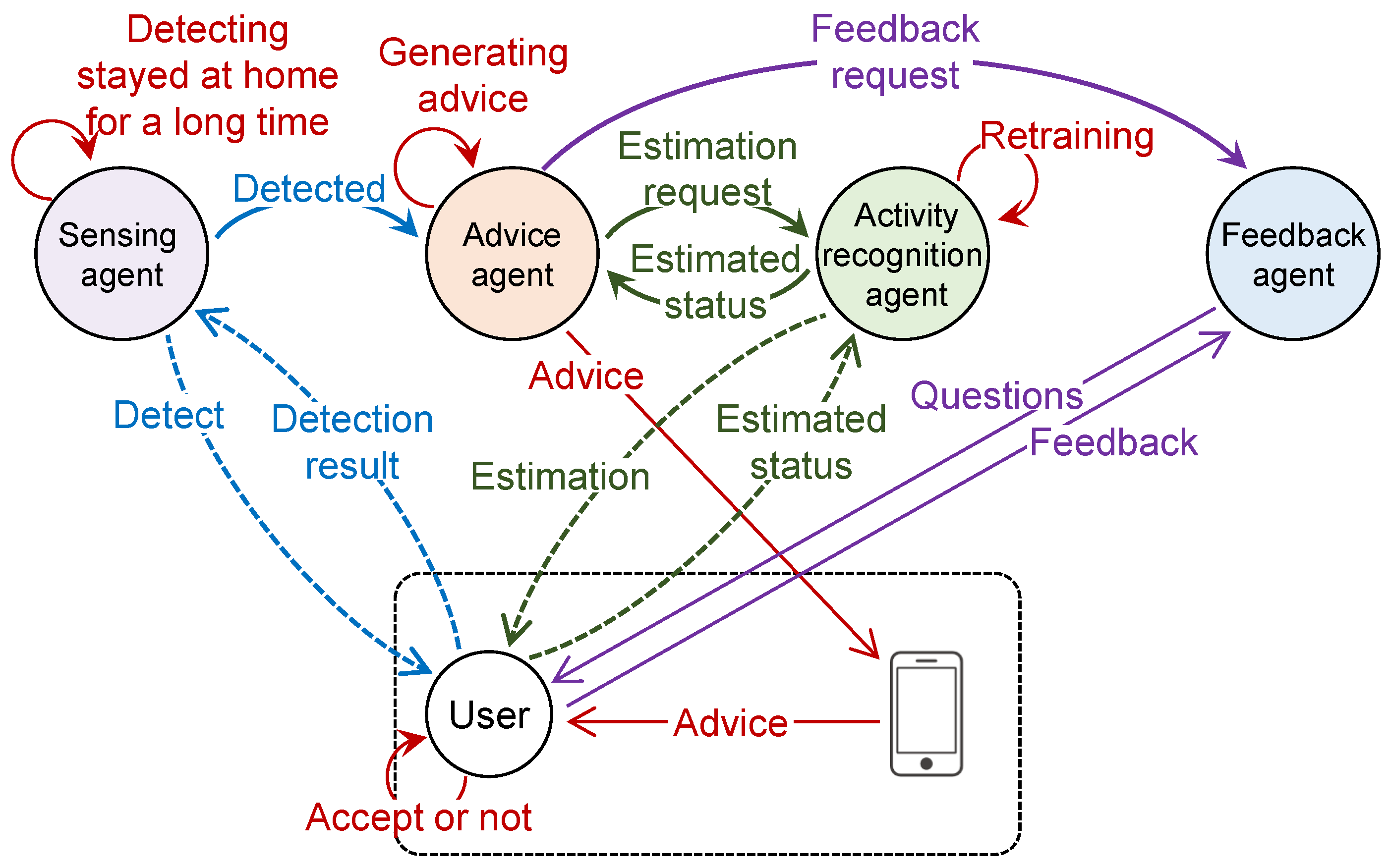
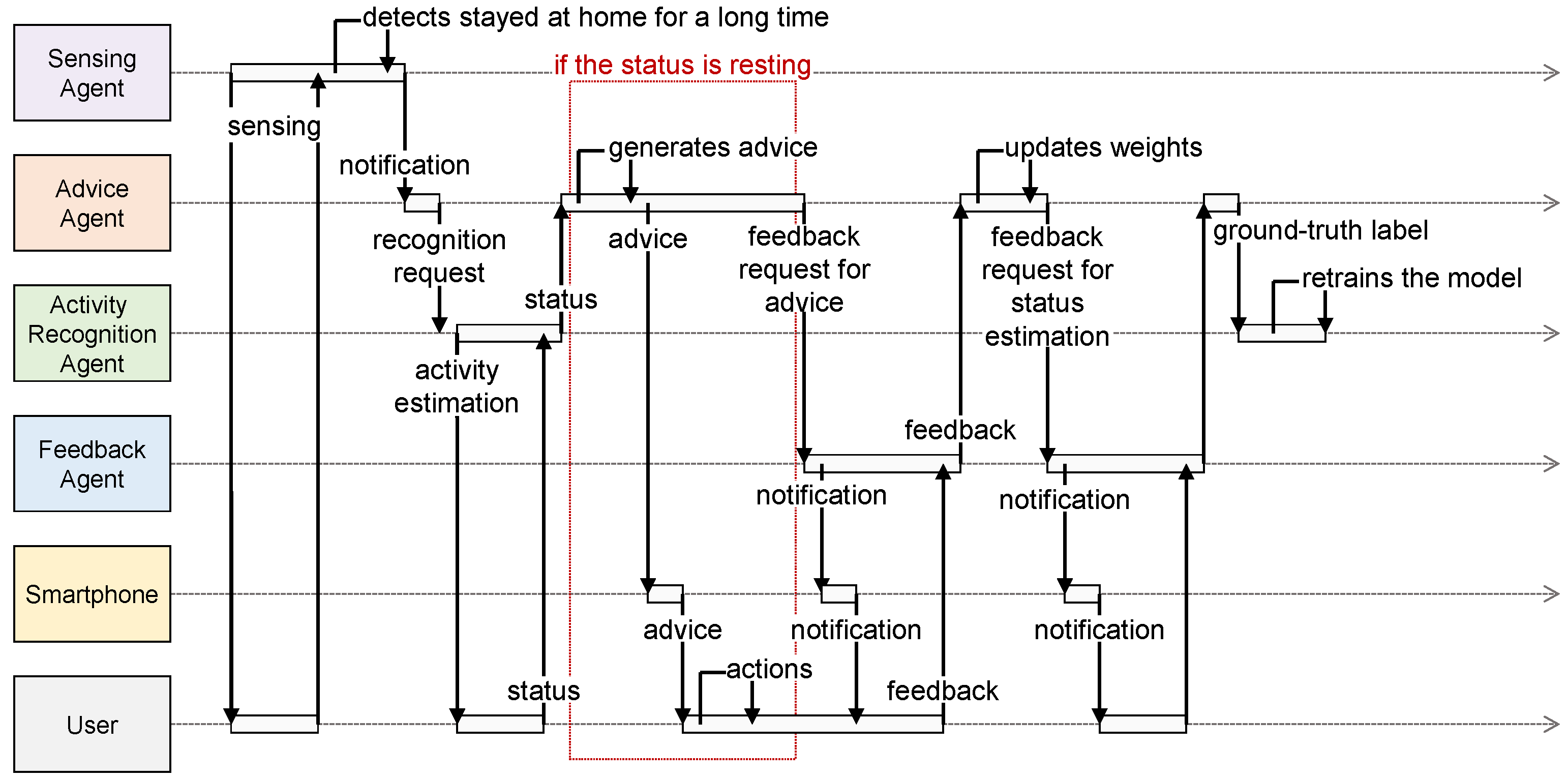
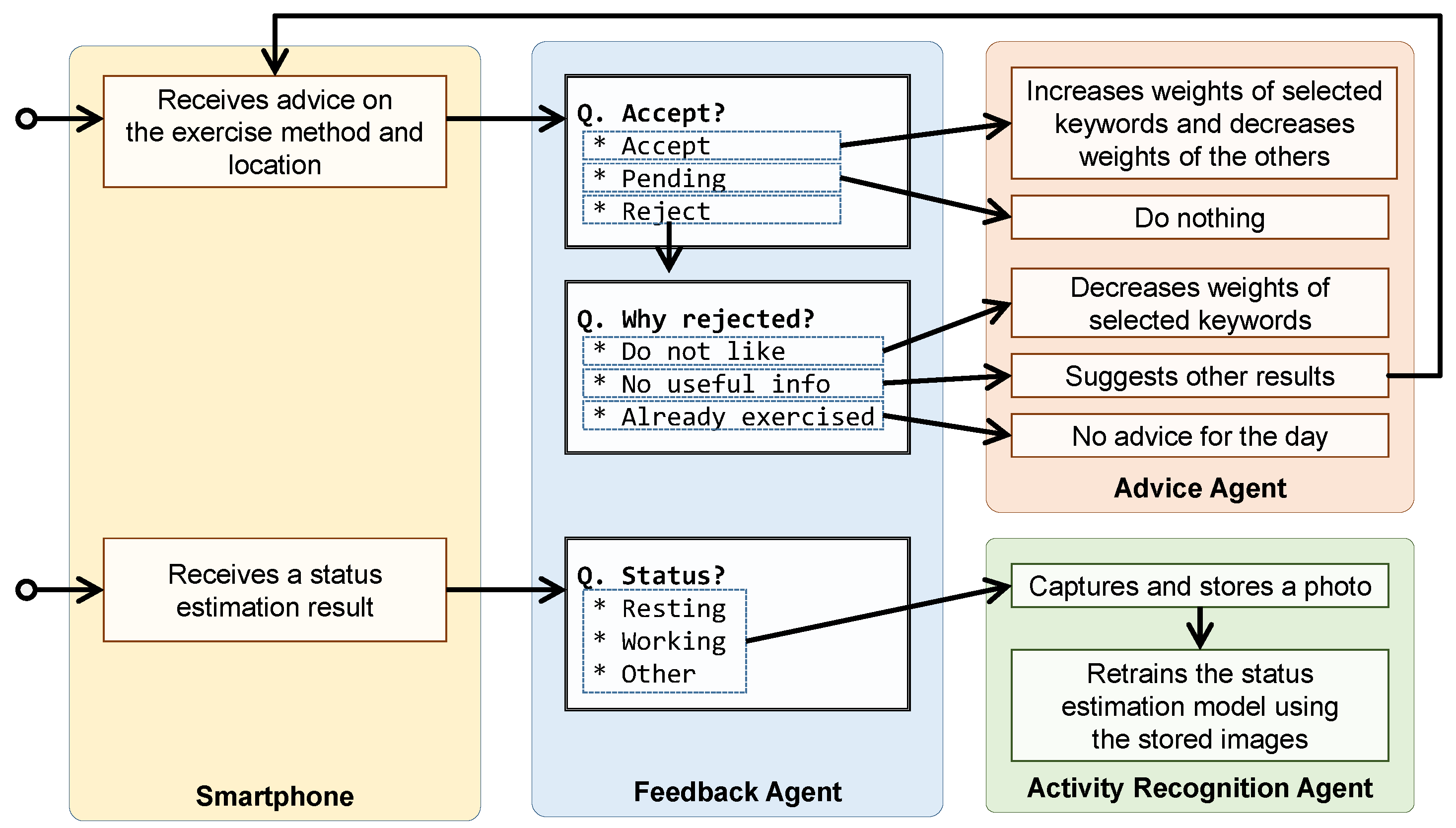
People living alone encounter well-being challenges due to unnoticed personal situations. Thus, it is essential to monitor their activities and encourage them to adopt healthy lifestyle habits without imposing a mental burden, aiming to enhance their overall well-being. To realize such a support system, its components should be simple and loosely coupled to handle various internet of things (IoT)-based smart home applications. In this study, we propose an exercise promotion system for individuals living alone to encourage them to adopt good lifestyle habits. The system comprises autonomous IoT devices as agents and is realized using an agent-oriented IoT architecture. It estimates user activity via sensors and offers exercise advice based on recognized conditions, surroundings, and preferences. The proposed system accepts user feedback to improve status estimation accuracy and offers better advice. The proposed system was evaluated from three perspectives through experiments with subjects. Initially, we demonstrated the system’s operation through agent cooperation. Then, we showed it adapts to user preferences within two weeks. Third, the users expressed satisfaction with the detection accuracy regarding their stay-at-home status and the relevance of the advice provided. They were also motivated to engage in exercise based on a subjective evaluation, as indicated by preliminary results.
Keywords: single household; exercise promotion; internet of things; agent-oriented architecture single household; exercise promotion; internet of things; agent-oriented architecture