Article

Iterative Pulse–Echo Tomography for Ultrasonic Image Correction

1
Institute of Acoustics, Chinese Academy of Sciences, Beijing 100190, China
2
University of Chinese Academy of Sciences, Beijing 100049, China
3
School of Reliability and Systems Engineering, Beihang University, Beijing 100191, China
*
Author to whom correspondence should be addressed.
Sensors 2024, 24(6), 1895; https://doi.org/10.3390/s24061895
Submission received: 17 January 2024 / Revised: 22 February 2024 / Accepted: 5 March 2024 / Published: 15 March 2024
(This article belongs to the Section Sensing and Imaging)

Abstract

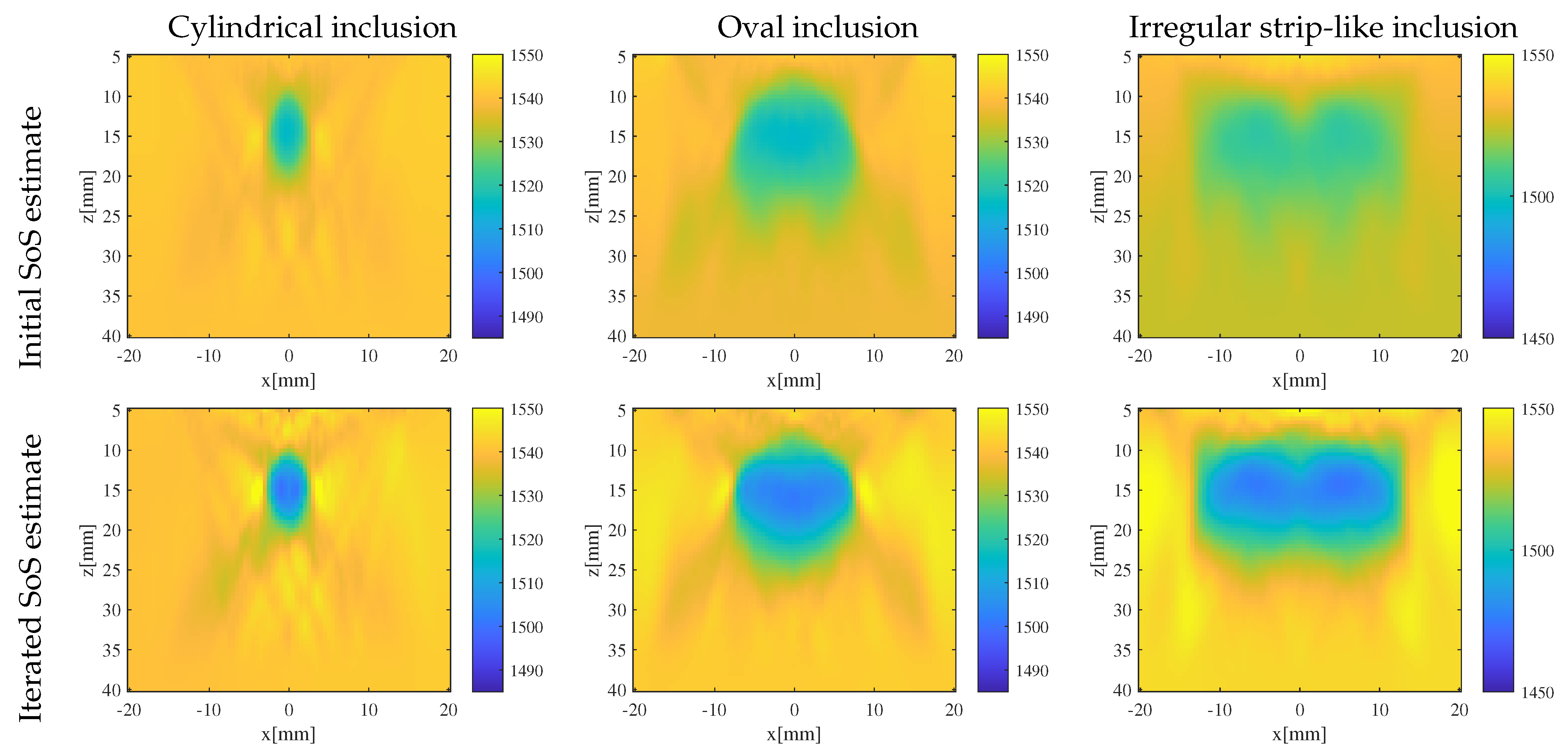
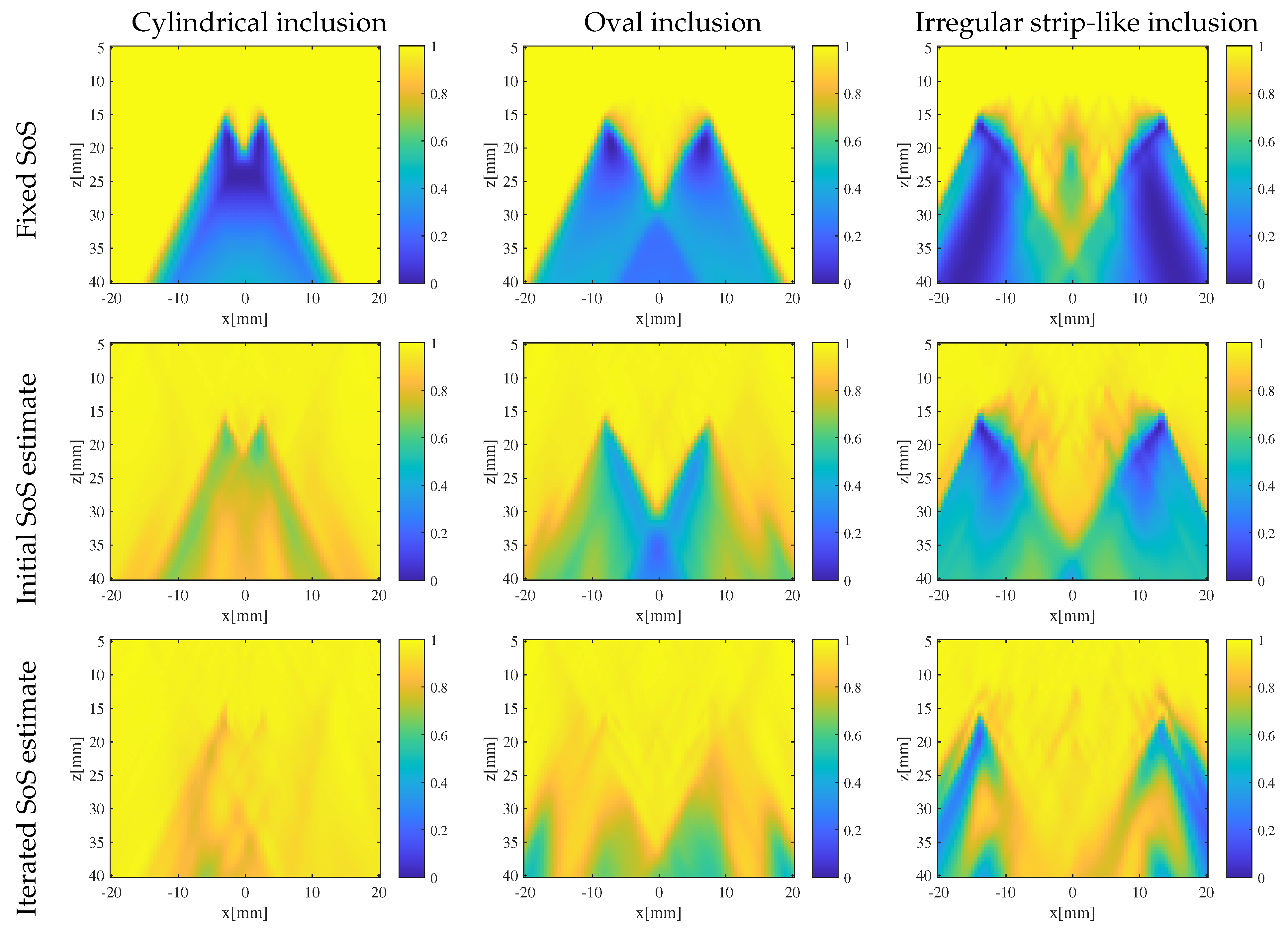
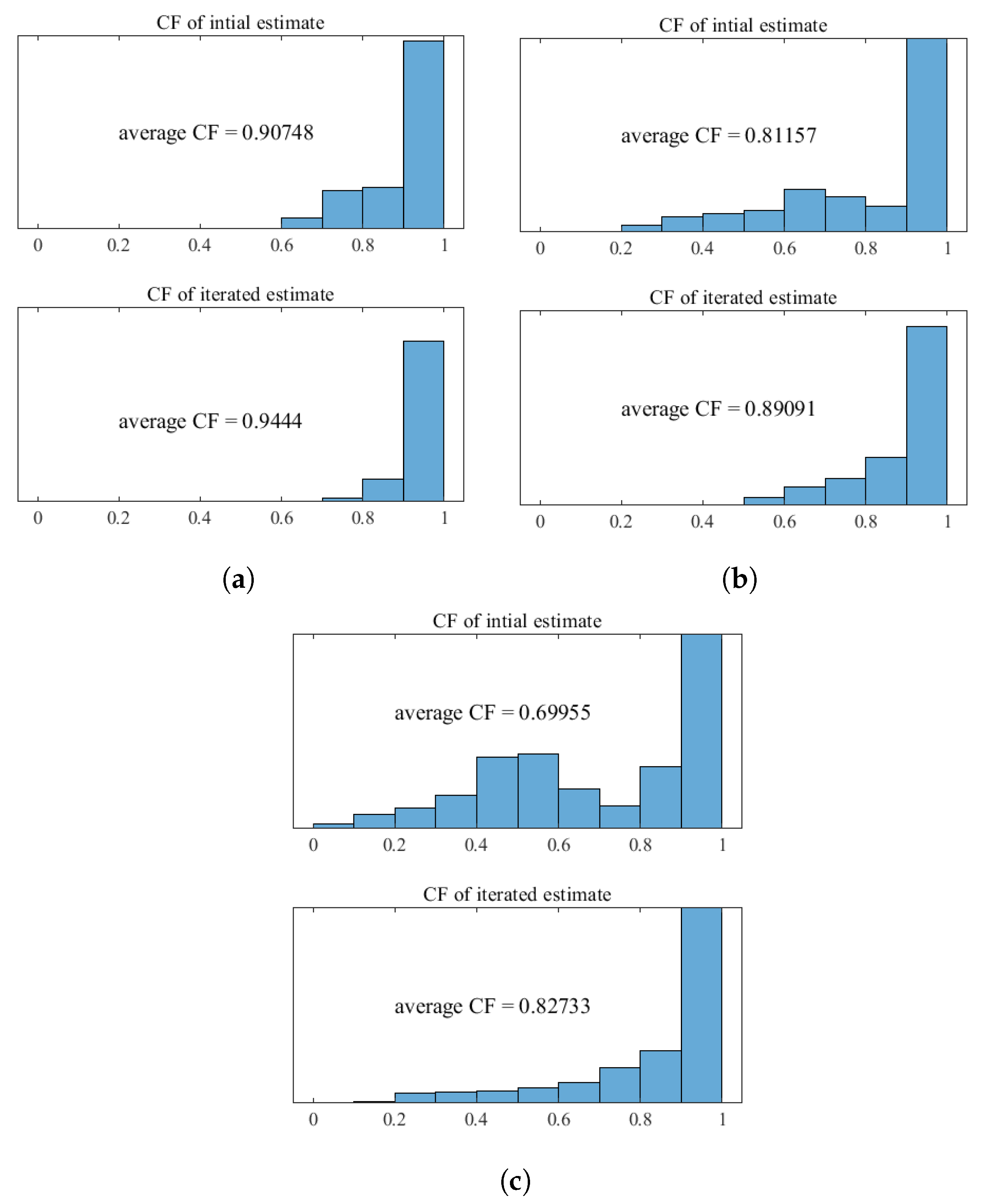
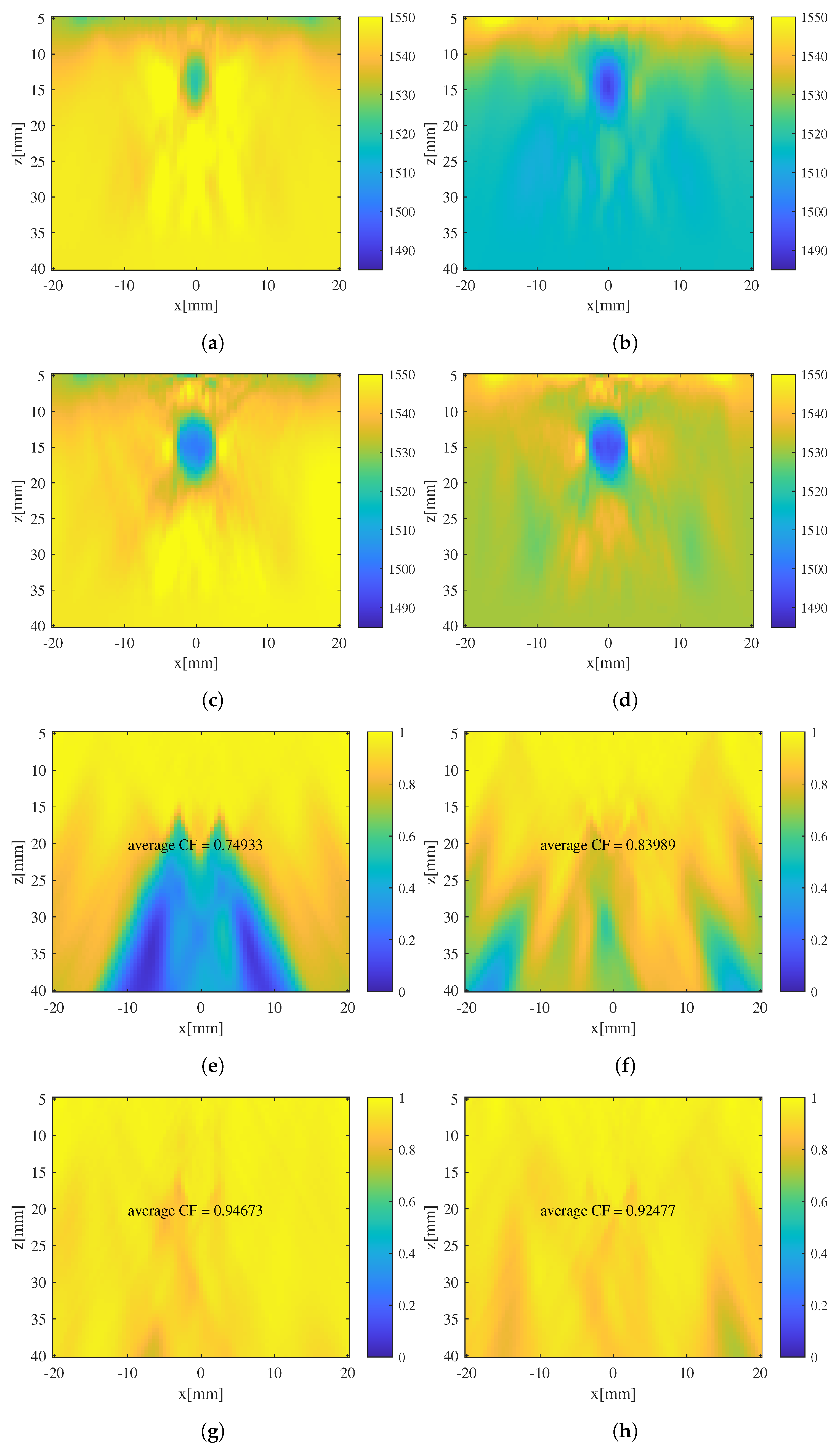
Acoustic aberration, caused by the uneven distribution of tissue speed-of-sound (SoS), significantly reduces the quality of ultrasound imaging. An important approach to mitigate this issue is imaging correction based on local SoS estimation. Computed ultrasound tomography in echo mode (CUTE) is an SoS estimation method that utilizes phase-shift information from ultrasound pulse–echo signals, offering both practical utility and computational efficiency. However, the traditional single-pass CUTE often suffers from poor accuracy and robustness. In this paper, an advanced approach known as iterative CUTE is introduced, which refines SoS estimates through iterative correction of errors and noise, addressing the limitations of traditional single-pass methods. It is argued that traditional precision indicators like root mean square error (RMSE) fall short in adequately reflecting the quality of SoS estimates for imaging correction, and coherence factor (CF) is proposed as a more indicative metric. Performance validation of the iterative CUTE algorithm was conducted using a simulation and agar phantom experiment. The results indicated that the iterative CUTE approach surpasses the single-pass approach, enhancing the average CF for SoS estimates by up to 18.2%. In phantom experiments, imaging corrected with SoS estimates from iterative CUTE reduced the Array Performance Index (API) by up to 40% compared to traditional methods.
Keywords: ultrasound tomography; aberration correction; ultrasound imaging ultrasound tomography; aberration correction; ultrasound imaging