



Voiceprint Fault Diagnosis of Converter Transformer under Load Influence Based on Multi-Strategy Improved Mel-Frequency Spectrum Coefficient and Temporal Convolutional Network

Abstract
1. Introduction
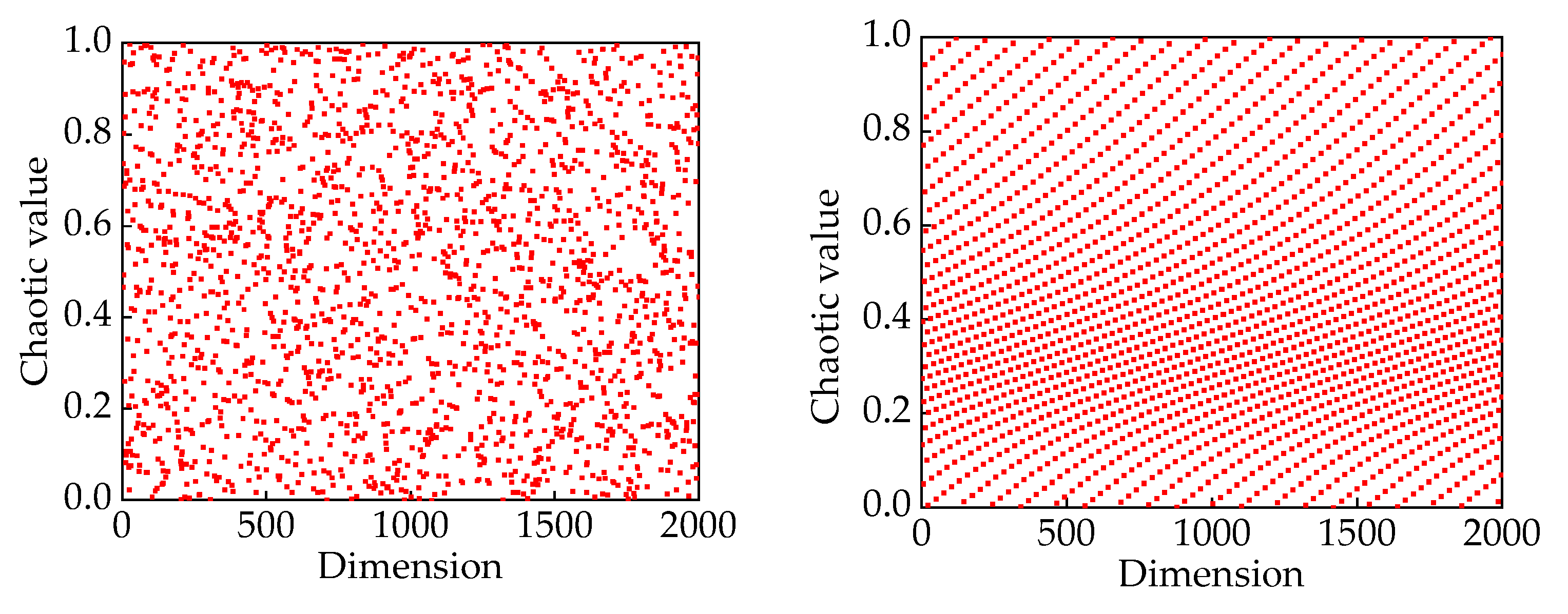
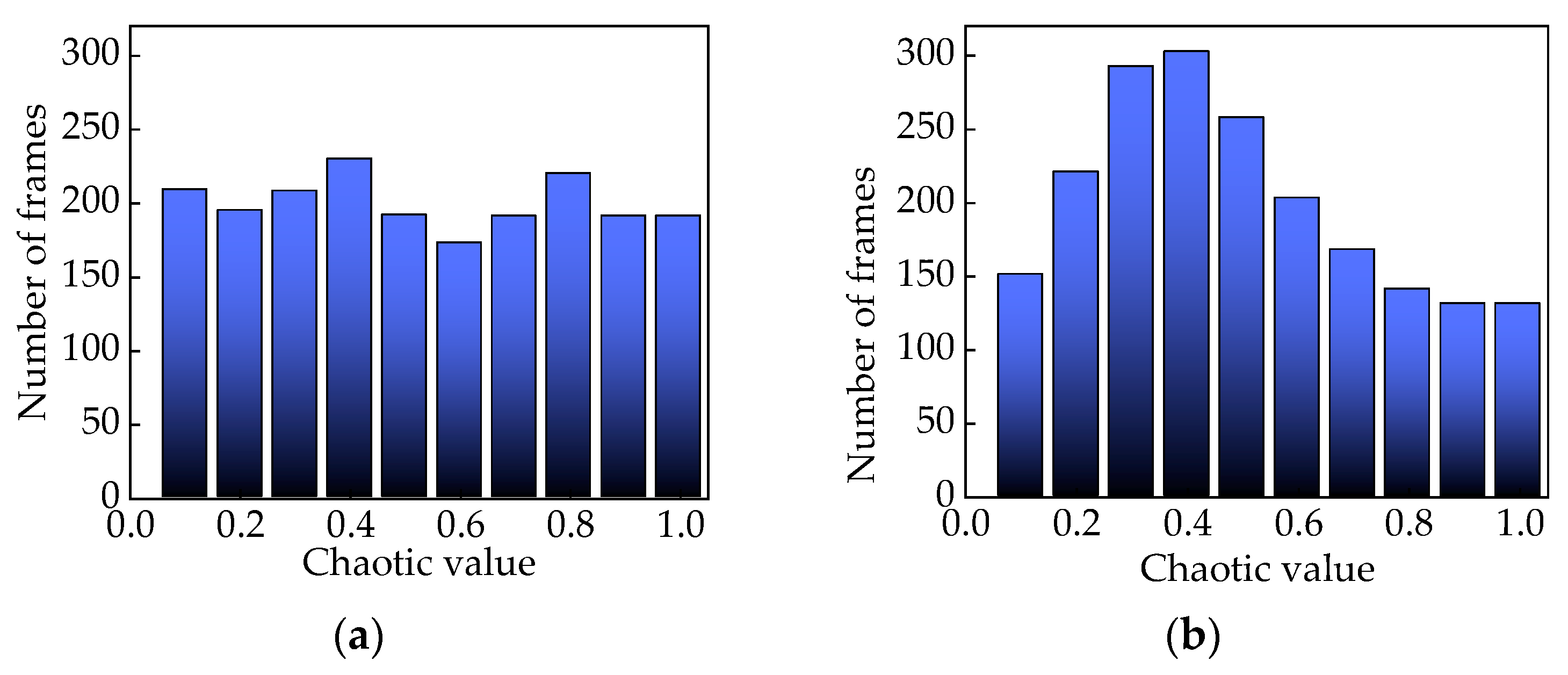
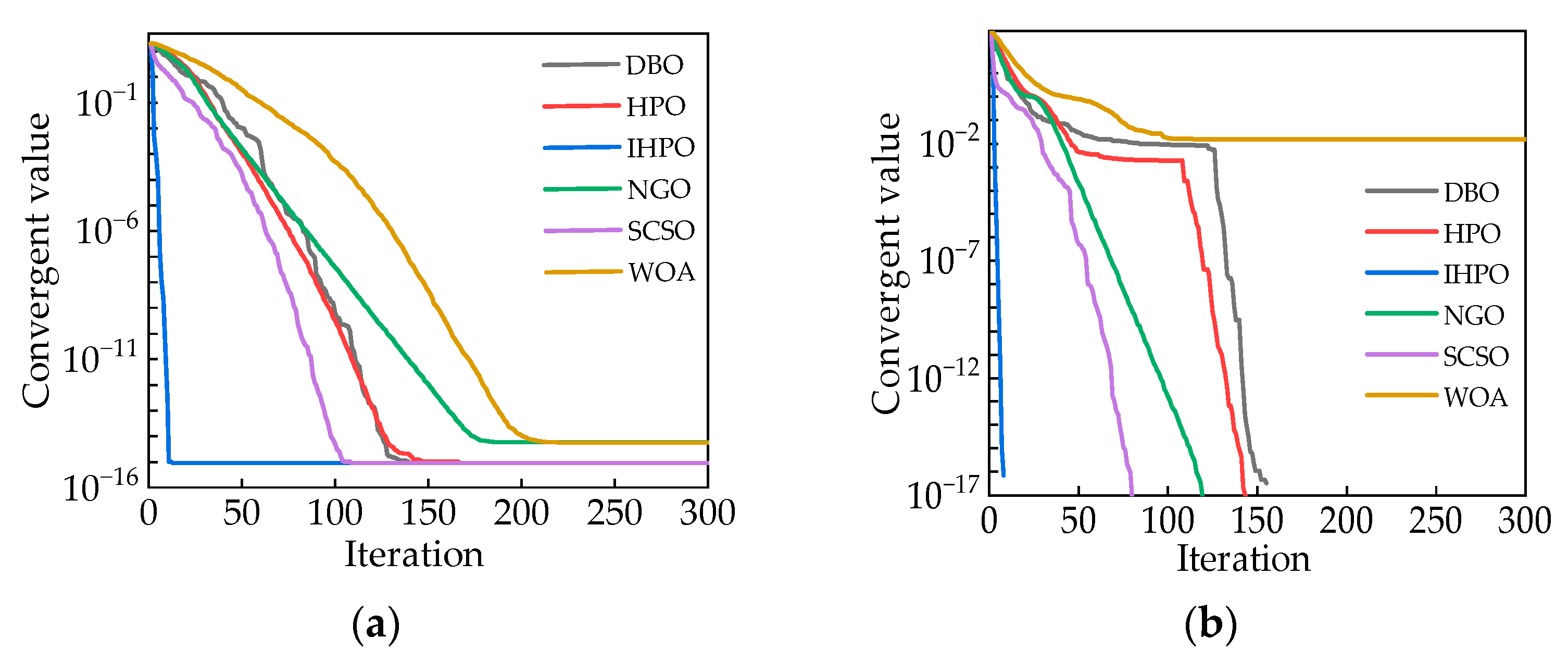
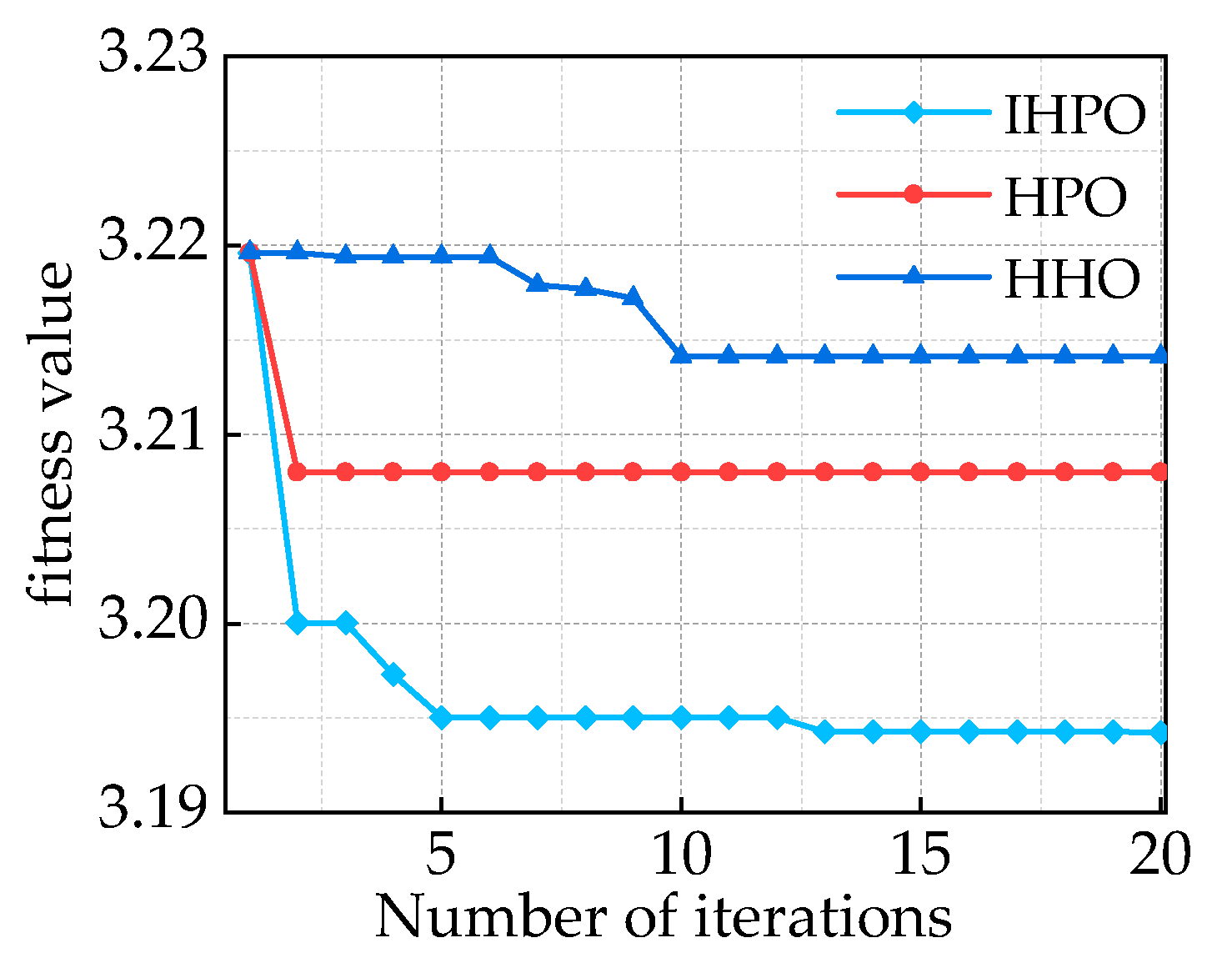
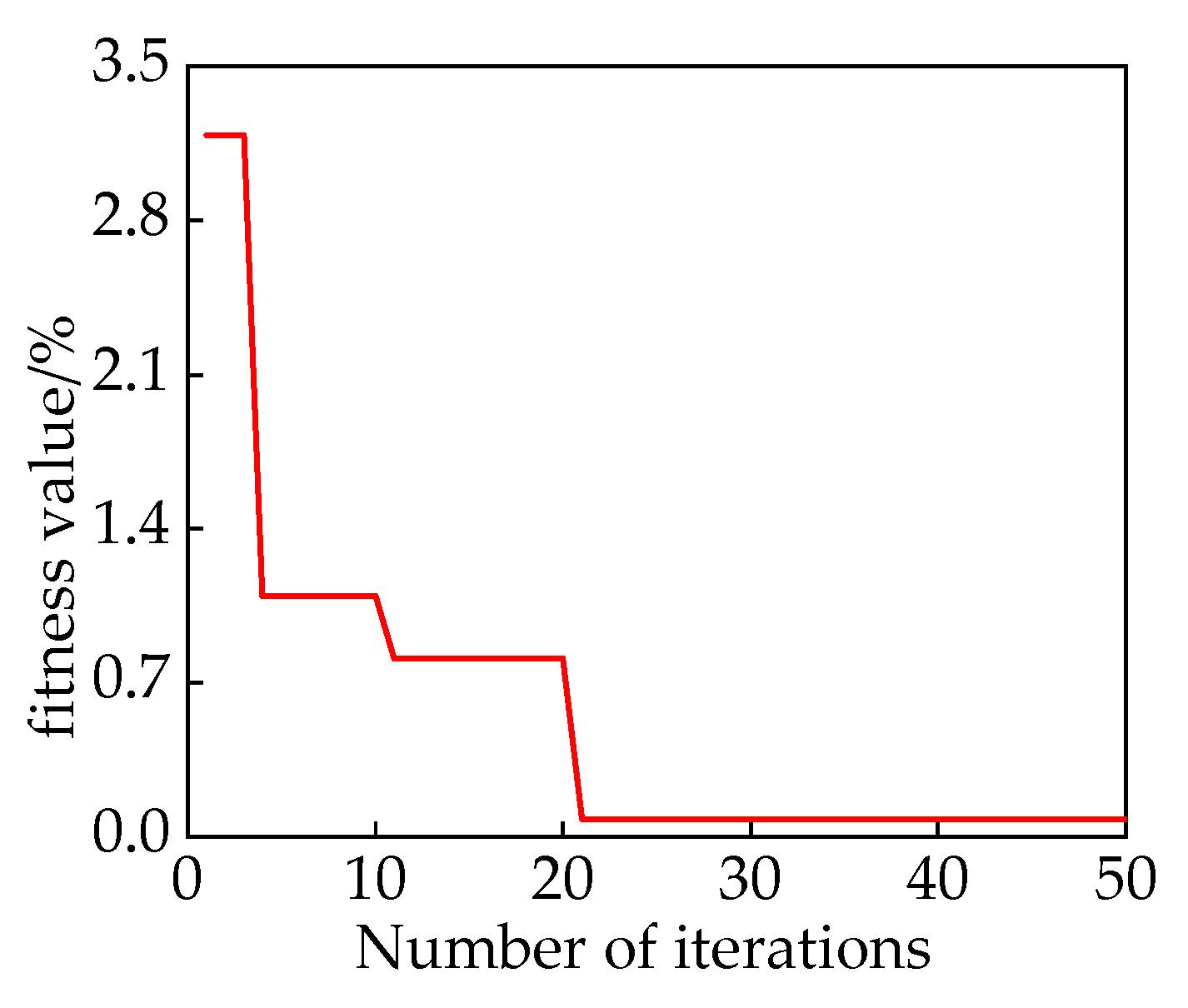
- This paper aims to counteract the problems of the traditional hunter–prey optimization algorithm, which easily falls into the local optimum, and of which the traversal of population initialization is not strong. It is improved via the introduction of SPM chaotic mapping and the Levy flight strategy, which is used for the adaptive selection of parameters in the fault diagnostic model to avoid the interference of the human experience selection.
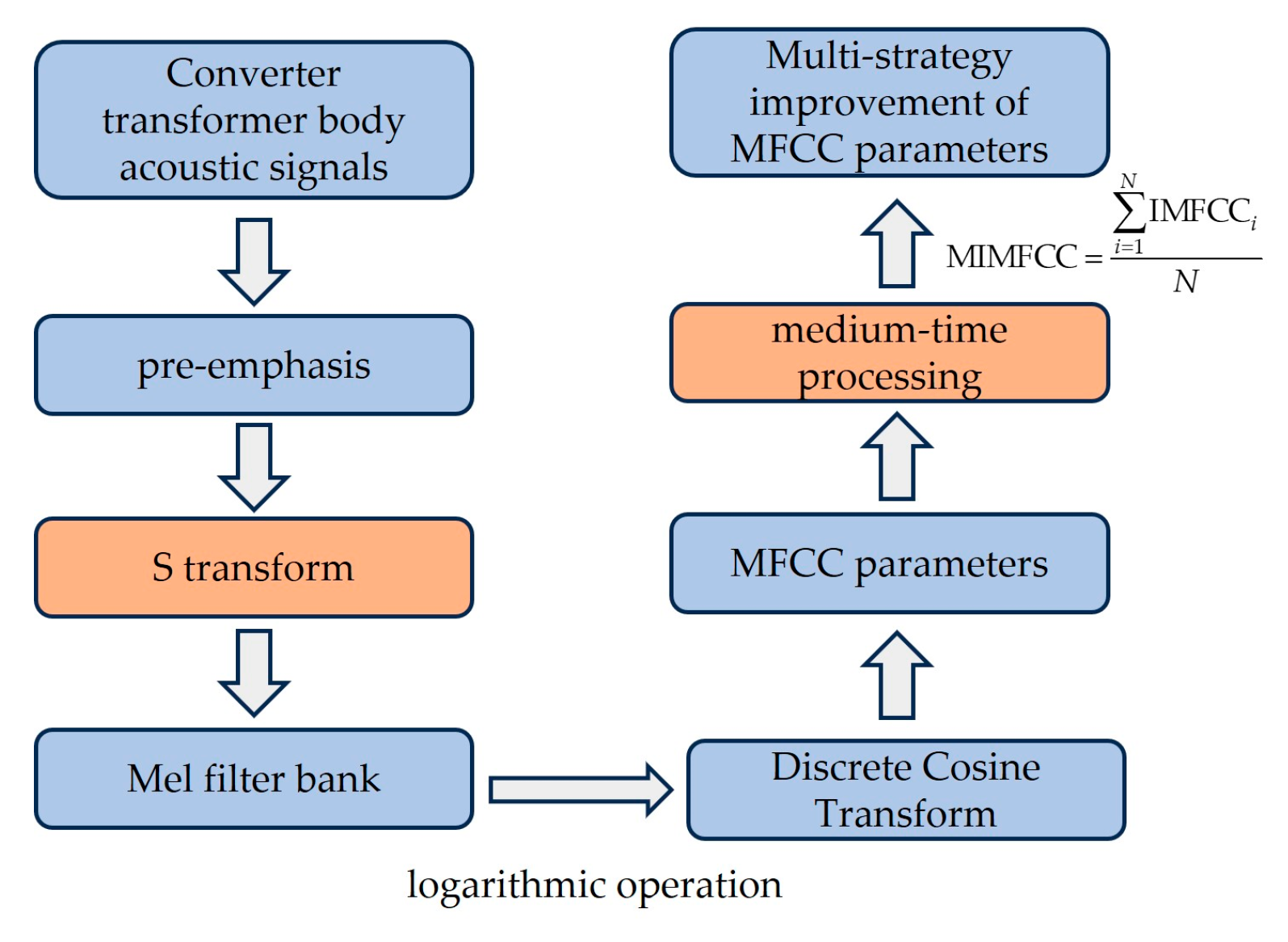
- Multi-strategy improved MFCC is proposed for extracting voiceprint signals from converter transformers. Compared with the traditional voiceprint signal feature extraction method, the proposed approach incorporates the characteristics specific to the voiceprint signals of electric power equipment. It overcomes the interference of redundant information and demonstrates enhanced feature extraction capabilities.
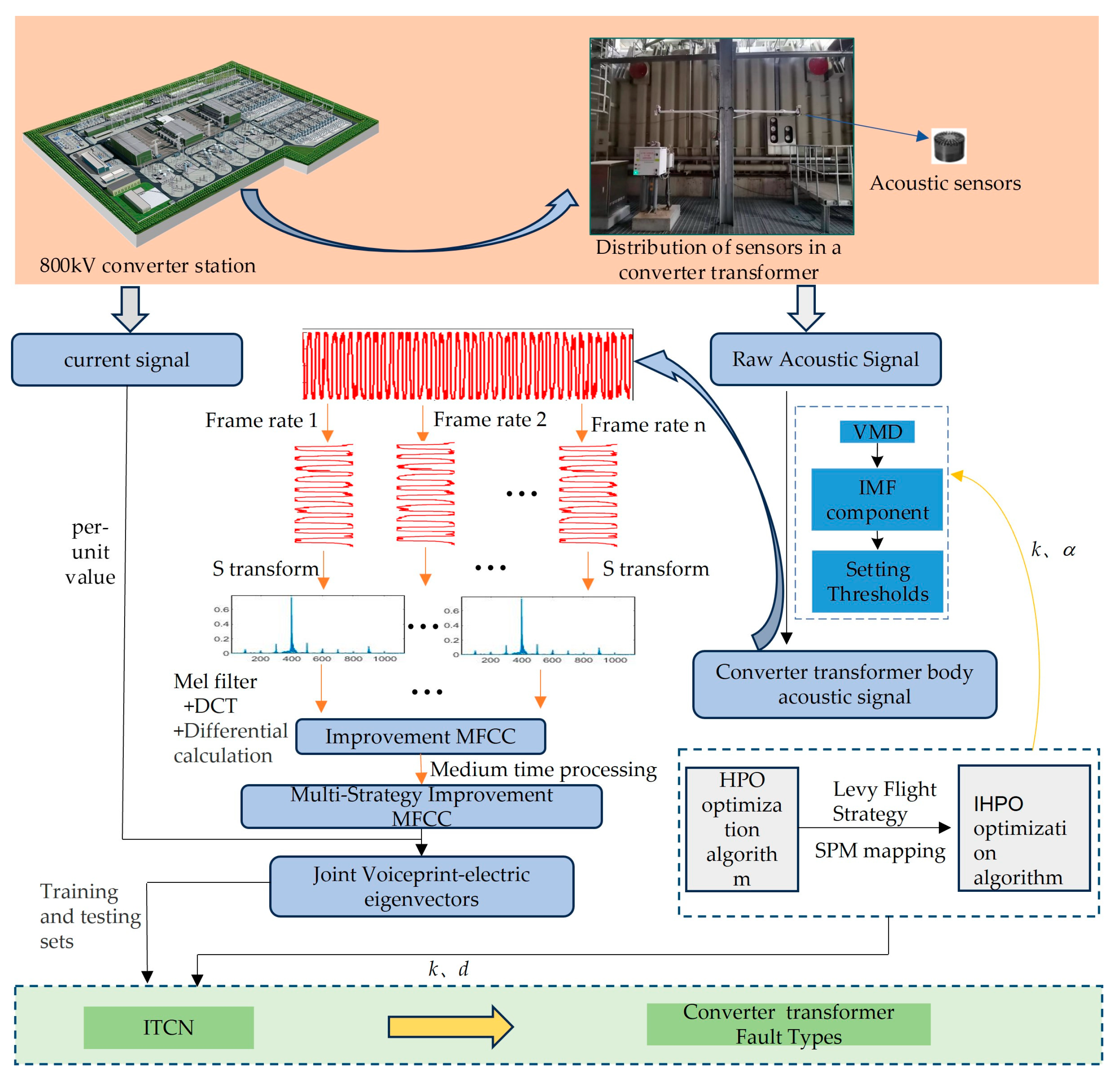
- This paper introduces load signals to segment the operational intervals of converter transformers, realizes fault diagnosis through multiple types of signal sources, and proposes the improved multi-strategy MFCC and IHPO-VMD-ITCN fault diagnostic models. The experimental results demonstrate that the proposed fault diagnostic methods exhibit significant improvements in terms of both accuracy and calculation speed.
2. Analysis of Vibration Mechanism of Converter Transformer
2.1. Winding Vibration Mechanism Analysis
2.2. Core Vibration Mechanism Analysis
2.3. Fault Voiceprint Characterization of Converter Transformers
2.4. Characterization of Voiceprint Pattern Changes under Operating Conditions
3. Description of Fault Diagnosis Algorithms
3.1. Improved Hunter–Prey Optimization Algorithms
- (1)
- Initialization: The conventional HPO algorithm achieves population initialization using Equation (6), as described below:wherein represents the positions of hunters or prey, d represents the problem dimensionality, and , represent the upper and lower bounds of the problem.
- (2)
- Optimization strategy: Hunters select prey that are far away from the group as their search targets, while the prey continuously move to evade hunter attacks and maximize their chances of survival. The position update for hunters and prey can be described by Equations (8) and (9), respectively.wherein represents the position of the ith hunter in the jth dimension at the (t + 1)th iteration, represents the position of the ith hunter at the tth iteration, represents the position of the prey in the jth dimension, represents the balance parameter between exploration and exploitation, and Z is an adaptive parameter.wherein represents the global best position and represents a random number within the range of [−1, 1].
| Algorithm 1 Improve hunter–prey optimization |
| Input: HPO Parameters Output: TargetScore, Best pos, Convergence curve 1: Initialize Hppos 2: Evaluate fitness of each HPpos 3: Set Target as the best HPpos, TargetScore as its fitness 4: for t = 2 to Max_iteration do 5: Update c 6: Update kbest 7: for i = 1 to N do 8: Generate random numbers 9: if rand < B then 10: Calculate xi and dist 11: Set SI as HPpos(idxsortdist(kbest)) 12: Update HPpos(i,:) using formula with levy, l, c, z, SI, xi 13: else 14: for j = 1 to dim do 15: Calculate v and rr 16: Update HPpos(i,j) using formula with z(j), rr, Target(j), HPpos(i,j) 17: end for 18: end if 19: Clip HPpos(i,:) values to be within bounds of lb and ub 20: Evaluate fitness of HPpos(i,:) 21: if HPposFitness(i) < TargetScore then 22: Update Target and TargetScore 23: end if 24: end for 25: Store TargetScore in Convergence curve(t) 26: end for |
3.2. Variational Mode Decomposition
- (1)
- Initialize the parameters , , , set the loop , and iteratively update the parameters according to Equations (17)–(19).
- (2)
- Update .In Equation (17), , , are the Fourier transforms corresponding to , , .
- (3)
- Update .
- (4)
- Update .
- (5)
- Determine convergence.by setting .
- (6)
- Determine whether the iteration condition is satisfied; if not, return to step (2).
3.3. Multi-Strategy Improvement of MFCC for Dimensionality Reduction Extraction of Voiceprint Features
3.3.1. S-Transform
3.3.2. Multi-Strategy Improvement MFCC
- (1)
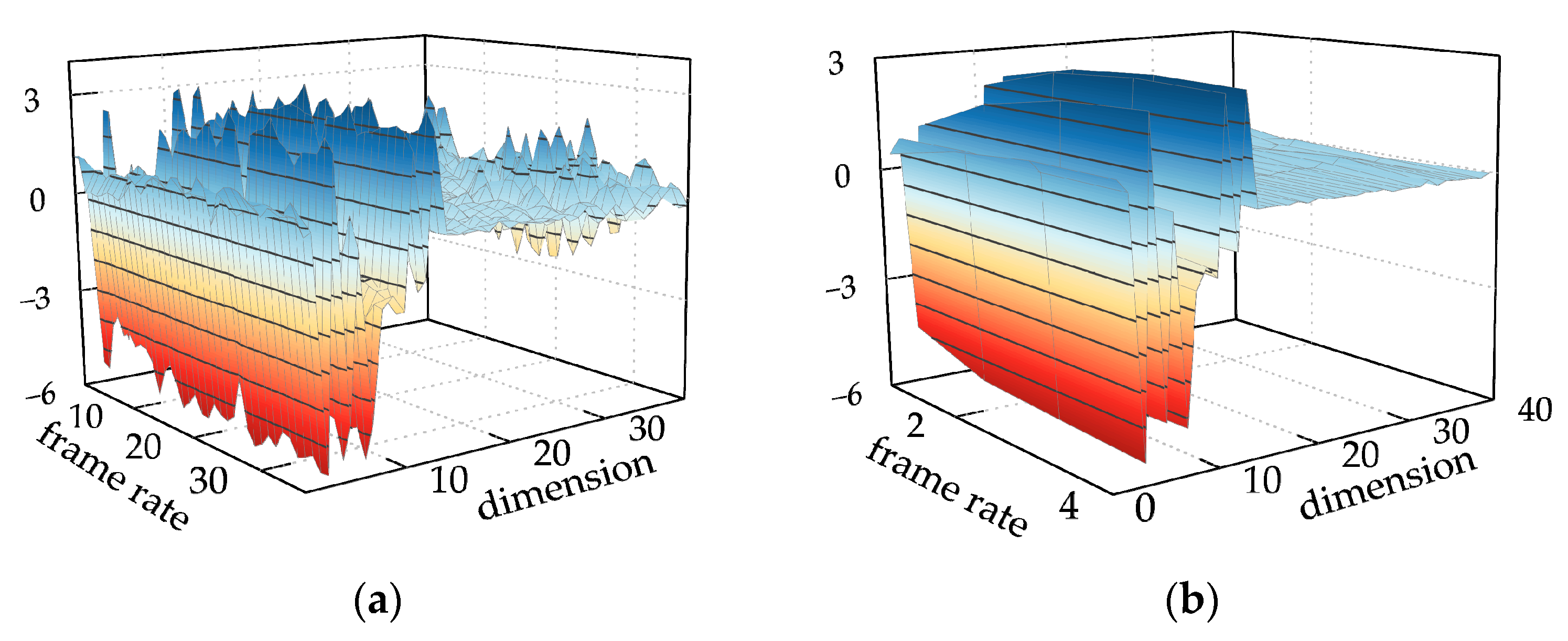
- Framing: the S-transform has a high time complexity, so in order to save time, the original signal is framed with a fixed frame length.
- (2)
- S-transform: the S-transform is performed on each frame by Equation (16) to obtain the time-frequency matrix .
- (3)
- The spectral information is sought, as shown in Equation (26).where is the time-frequency matrix, t is the time corresponding to the S-transform matrix, and f is the frequency.
- (4)
- Bandpass filtering is performed, as in Equation (27).where is the Mel filter output and is the filter bank.
- (5)
- A discrete cosine transform is performed as in Equation (28) to obtain the first set of voiceprint characterization coefficients .
- (6)
- We perform first-order and second-order differentiation operations on to obtain the second and third sets of parameters , of the improved MFCC eigenvectors.
- (7)
- We splice the three sets of parameters to form the feature vector .
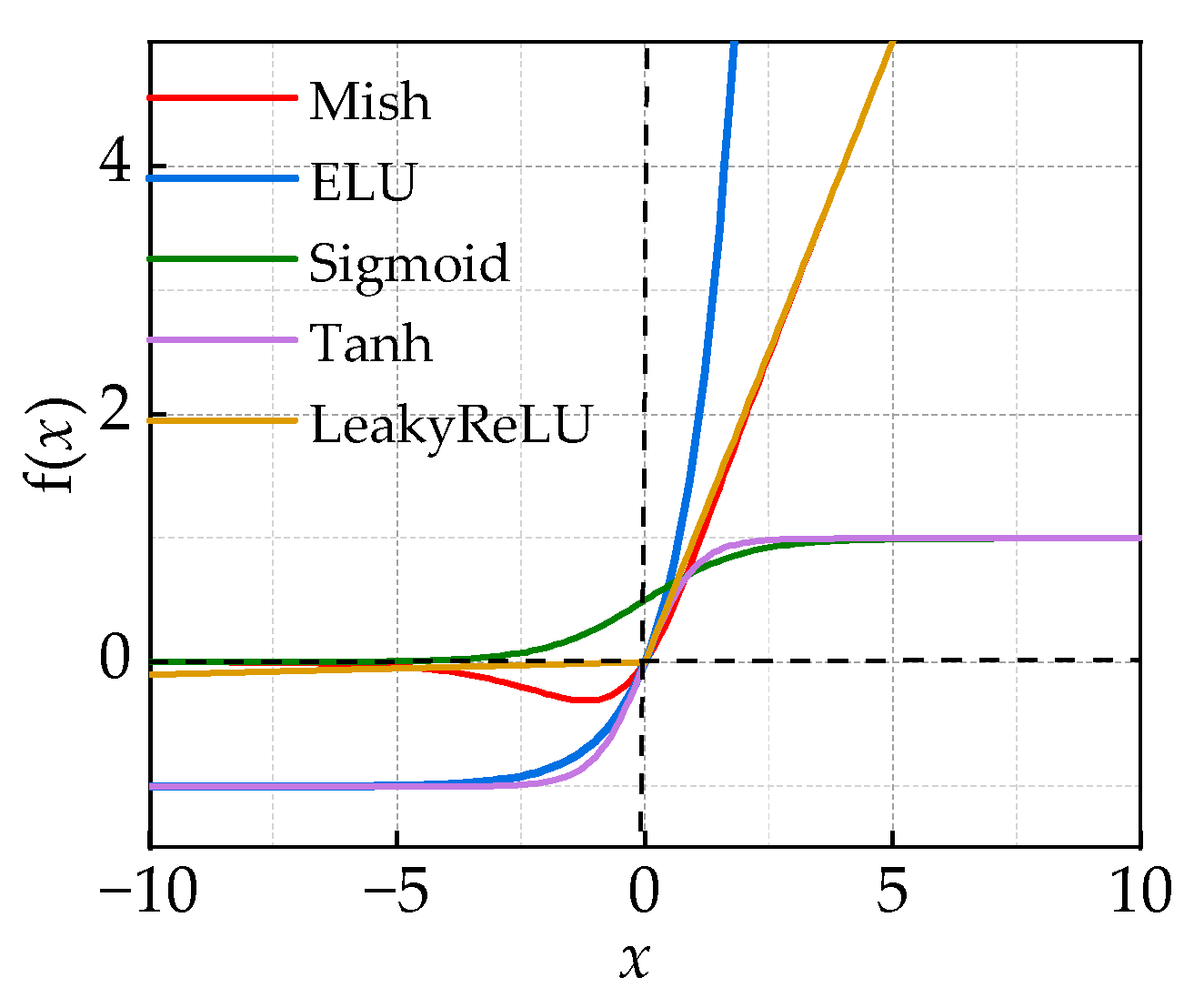
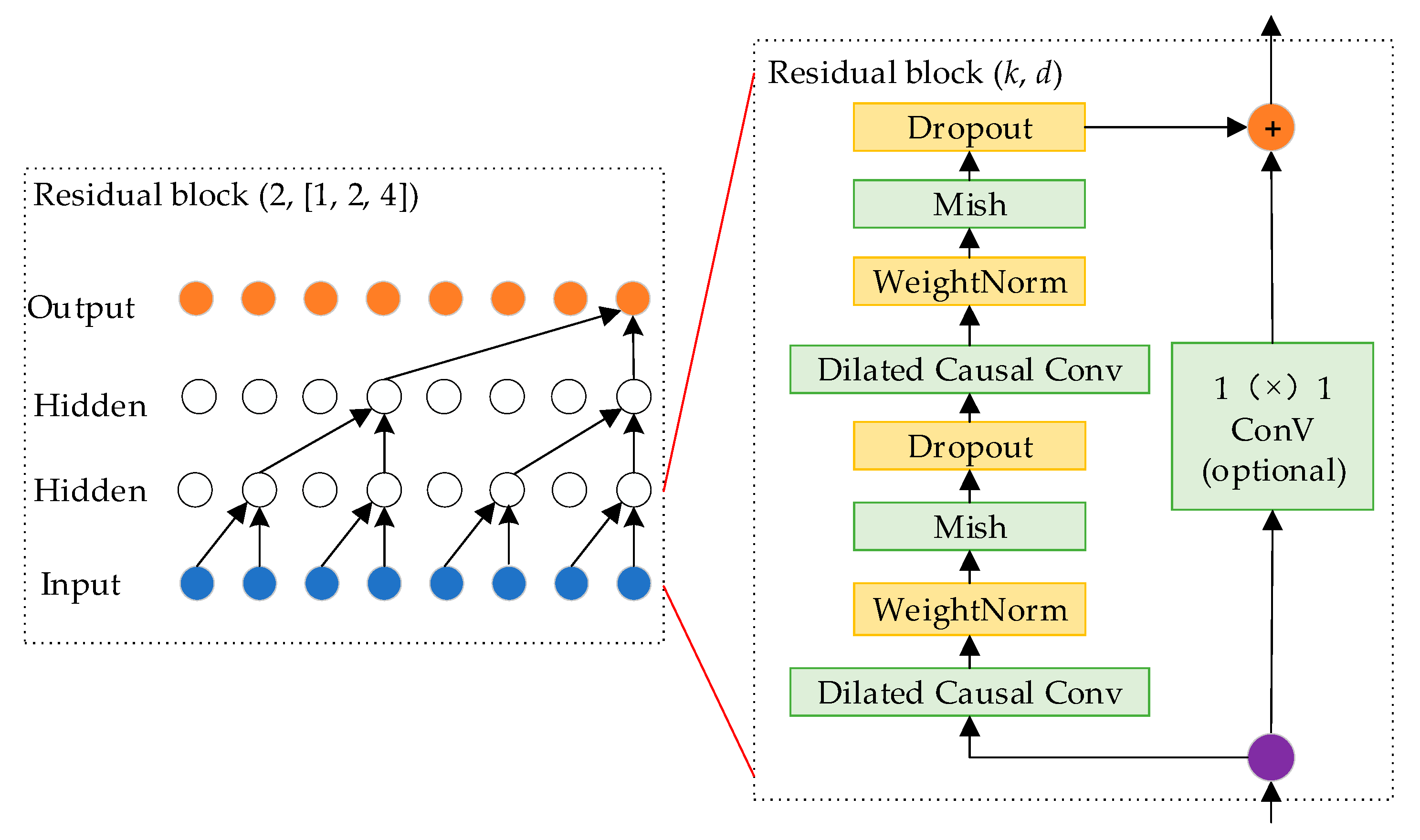
3.4. Improved Temporal Convolutional Neural Networks
| Algorithm 2 improved Temporal Convolutional Network |
| Input: Input sequence X with length T, Number of residual blocks K, Stack size S, Number of output channels C, Filter size f, Initial dilation value d0, Learning rate η Output: Probability distribution over classes 1: Initialize all model parameters 2: Set learning rate to η 3: Set initial dilation value to d0 4: for k = 1 to K do 5: for s = 1 to S do 6: for c = 1 to C do 7: Apply causal convolution to input sequence X with dilation d 8: Apply activation function (e.g., Mish) to the output 9: Apply weight normalization to the output 10: Update output sequence O 11: end for 12: end for 13: Stack the output sequence O with the input sequence X as the new input 14: Increase the dilation value d exponentially 15: end for 16: Apply a fully connected layer to the final output sequence O 17: Apply softmax function to obtain probability distribution over classes |
3.5. Multi-Strategy Improved MFCC-IHPO-VMD-ITCN Combined Fault Diagnosis Modeling
4. Calculus Analysis
4.1. Noise Reduction Processing for Voiceprint Signals
4.2. Joint Feature Vector Extraction
4.3. Description of Experimental Objects and Measurement Points
4.4. Comparative Analysis of Combined Forecasting Methods
5. Conclusions
Author Contributions
Funding
Institutional Review Board Statement
Informed Consent Statement
Data Availability Statement
Acknowledgments
Conflicts of Interest
References
- Dai, H.; Li, N.; Han, W.; Song, Z.; Zhang, Y. Research on Fault Diagnosis and Analysis Method of Converter Transformer. In Proceedings of the 2021 IEEE International Conference on Electrical Engineering and Mechatronics Technology, ICEEMT 2021, Qingdao, China, 2–4 July 2021; pp. 314–317. [Google Scholar]
- Sun, W.; Yang, L.; Zare, F.; Xia, Y.; Cheng, L. 3D modeling of an HVDC converter transformer and its application on the electrical field of windings subject to voltage harmonics. Int. J. Electr. Power Energy Syst. 2020, 117, 105581. [Google Scholar] [CrossRef] [Scilit]
- Liu, X.; Sun, W.; Li, H.; Hussain, Z.; Liu, A. The Method of Rolling Bearing Fault Diagnosis Based on Multi-Domain Supervised Learning of Convolution Neural Network. Energies 2022, 15, 4614. [Google Scholar] [CrossRef] [Scilit]
- Wang, C.; Cai, C.; Du, Y.; Ji, Z.; Liu, Y.; Miao, M. Fault Diagnosis of Transformer Winding Looseness Based on Vibration Signal and GOA-KELM Model. J. Phys. Conf. Ser. 2022, 2290, 012089. [Google Scholar] [CrossRef] [Scilit]
- Zhang, P.; Jiang, W.; Zheng, Y.; Zhang, S.; Zhang, S.; Liu, S. Hydraulic-Pump Fault-Diagnosis Method Based on Mean Spectrogram Bar Graph of Voiceprint and ResNet-50 Model Transfer. J. Mar. Sci. Eng. 2023, 11, 1678. [Google Scholar] [CrossRef] [Scilit]
- Jiang, W.; Li, Z.; Li, J.; Zhu, Y.; Zhang, P. Study on a Fault Identification Method of the Hydraulic Pump Based on a Combination of Voiceprint Characteristics and Extreme Learning Machine. Processes 2019, 7, 894. [Google Scholar] [CrossRef] [Scilit]
- Ma, H.; Li, N.; Yang, Q.; Duan, D.; Zhu, H.; He, P. On-line fault diagnosis method of transformer winding looseness based on multi-characteristic voiceprint maps. Electr. Mach. Control 2023, 27, 76–87. [Google Scholar]
- Wang, F.; Wang, S.; Chen, S.; Yuan, G.; Zhang, J. Voiceprint Recognition Model of Power Transformers Based on Improved MFCC and VQ. Proc. Chin. Soc. Electr. Eng. 2017, 37, 1535–1542. [Google Scholar]
- Han, S.; Gao, F.; Wang, B.; Liu, Y.; Wang, K.; Wu, D.; Zhang, C. Audible Sound Identification of on Load Tap Changer Based on Mel Spectrum Filtering and CNN. Power Syst. Technol. 2021, 45, 3609–3617. [Google Scholar]
- Chen, J.; Lin, C.; Yao, B.; Yang, L.; Ge, H. Intelligent fault diagnosis of rolling bearings with low-quality data: A feature significance and diversity learning method. Reliab. Eng. Syst. Saf. 2023, 237, 109343. [Google Scholar] [CrossRef] [Scilit]
- Wang, W.; Li, Y.; Song, Y. Fault diagnosis method of vehicle engine via HOSVD–HOALS hybrid algorithm-based multi-dimensional feature extraction. Appl. Soft Comput. 2022, 16, 108293. [Google Scholar] [CrossRef] [Scilit]
- Wan, H.; Gu, X.; Yang, S.; Fu, Y.A. Sound and Vibration Fusion Method for Fault Diagnosis of Rolling Bearings under Speed-Varying Conditions. Sensors 2023, 23, 3130. [Google Scholar] [CrossRef] [Scilit]
- Tao, H.; Jia, P.; Wang, X.; Wang, L. Real-Time Fault Diagnosis for Hydraulic System Based on Multi-Sensor Convolutional Neural Network. Sensors 2024, 24, 353. [Google Scholar] [CrossRef] [Scilit] [PubMed]
- Deng, C.; Deng, Z.; Lu, S.; He, M.; Miao, J.; Peng, Y. Fault Diagnosis Method for Imbalanced Data Based on Multi-Signal Fusion and Improved Deep Convolution Generative Adversarial Network. Sensors 2023, 23, 2542. [Google Scholar] [CrossRef] [Scilit] [PubMed]
- Zhang, J.; Jiang, Y.; Li, X. Remaining Useful Life Prediction of Lithium-Ion Battery with Adaptive Noise Estimation and Capacity Regeneration Detection. IEEE/ASME Trans. Mechatron. 2023, 28, 632–643. [Google Scholar] [CrossRef] [Scilit]
- Gao, S.; Xu, L.; Zhang, Y. Rolling bearing fault diagnosis based on SSA optimized self-adaptive DBN. ISA Trans. 2022, 128, 482–502. [Google Scholar] [CrossRef] [Scilit] [PubMed]
- Song, Y.; Xie, H.; Zhu, Z. Predicting energy consumption of chiller plant using WOA-BiLSTM hybrid prediction model: A case study for a hospital building. Energy Build. 2023, 300, 113642. [Google Scholar] [CrossRef] [Scilit]
- Wu, S.; Ji, S.; Sun, J.; Liang, N.; Zhao, T.; Dai, S. Vibration Monitoring and Variation Law of Converter Transformer in Operation. High Volt. Eng. 2022, 48, 1561–1570. [Google Scholar]
- Jiang, P.; Zhang, Z.; Zhang, J.; Deng, B.; Pan, Z. Research on vibration characteristics and Multi-parameter state recognition of ± 500 kV converter transformer under fluctuating conditions. Int. J. Electr. Power Energy Syst. 2022, 136, 107748. [Google Scholar] [CrossRef] [Scilit]
- Shi, Y.; Ji, S.; Zhang, F.; Li, J.; Han, S.; Ji, K. Multi-frequency Vibration Mechanism and Characteristics of Transformer Windings. High Volt. Eng. 2021, 47, 2536–2544. [Google Scholar]
- Naruei, I.; Keynia, F.; Sabbagh Molahosseini, A. Hunter–prey optimization: Algorithm and applications. Soft Comput. 2022, 26, 1279–1314. [Google Scholar] [CrossRef] [Scilit]
- Ban, D.; Lv, X.; Wang, X. Efficient Image Encryption Algorithm Based on 1D Chaotic Map. Comput. Sci. 2020, 47, 278–284. [Google Scholar]
- Geng, G.; He, Y.; Zhang, J.; Qin, T.; Yang, B. Short-Term Power Load Forecasting Based on PSO-Optimized VMD-TCN-Attention Mechanism. Energies 2023, 16, 4616. [Google Scholar] [CrossRef] [Scilit]
- Ouyang, M.; Shen, P. Prediction of Remaining Useful Life of Lithium Batteries Based on WOA-VMD and LSTM. Energies 2022, 15, 8918. [Google Scholar] [CrossRef] [Scilit]
- Wan, S.; Dong, F.; Zhang, X.; Wu, W.; Li, J. Fault Voiceprint Signal Diagnosis Method of Power Transformer Based on Mixup Data Enhancement. Sensors 2023, 23, 3341. [Google Scholar] [CrossRef] [Scilit]
- Minh Khoa, N.; Van Dai, L. Detection and Classification of Power Quality Disturbances in Power System Using Modified-Combination between the Stockwell Transform and Decision Tree Methods. Energies 2020, 13, 3623. [Google Scholar] [CrossRef] [Scilit]
- Xu, M.; Li, Z.; Sun, H.; Sheng, G.; Jiang, X. Mechanical Fault Diagnosis Method of GIS Based on Improved MFCC. High Volt. Appar. 2020, 56, 122–128. [Google Scholar]
- Lea, C.; Vidal, R.; Reiter, A.; Hager, G.D. Temporal convolutional networks: A unified approach to action segmentation. In Computer Vision—ECCV 2016 Workshops, Proceedings of the ECCV 2016, Amsterdam, The Netherlands, 11–14 October 2016; Lecture Notes in Computer Science (Including Subseries Lecture Notes in Artificial Intelligence and Lecture Notes in Bioinformatics); Springer: Cham, Switzerland, 2016; Volume 9915 LNCS, pp. 47–54. [Google Scholar]
- Gao, Y.; Wang, W.; Lin, Q. Fault Diagnosis for Power Converters Based on Optimized Temporal Convolutional Network. IEEE Trans. Instrum. Meas. 2021, 70, 3501910. [Google Scholar]
- Misra, D. Mish: A self regularized non-monotonic neural activation function. In Proceedings of the British Machine Vision Conference, Virtual, 7–10 September 2020; pp. 1–13. [Google Scholar]
- Yu, Z.; Zhang, L.; Kim, J. The Performance Analysis of PSO-ResNet for the Fault Diagnosis of Vibration Signals Based on the Pipeline Robot. Sensors 2023, 23, 4289. [Google Scholar] [CrossRef] [Scilit]
- Rezaeianjouybari, B.; Shang, Y. A novel deep multi-source domain adaptation framework for bearing fault diagnosis based on feature-level and task-specific distribution alignment. Measurement 2021, 178, 109359. [Google Scholar] [CrossRef] [Scilit]
- Yang, B.; Lei, Y.; Li, X.; Li, N. Targeted transfer learning through distribution barycenter medium for intelligent fault diagnosis of machines with data decentralization. Expert Syst. Appl. 2024, 244, 122997. [Google Scholar] [CrossRef] [Scilit]
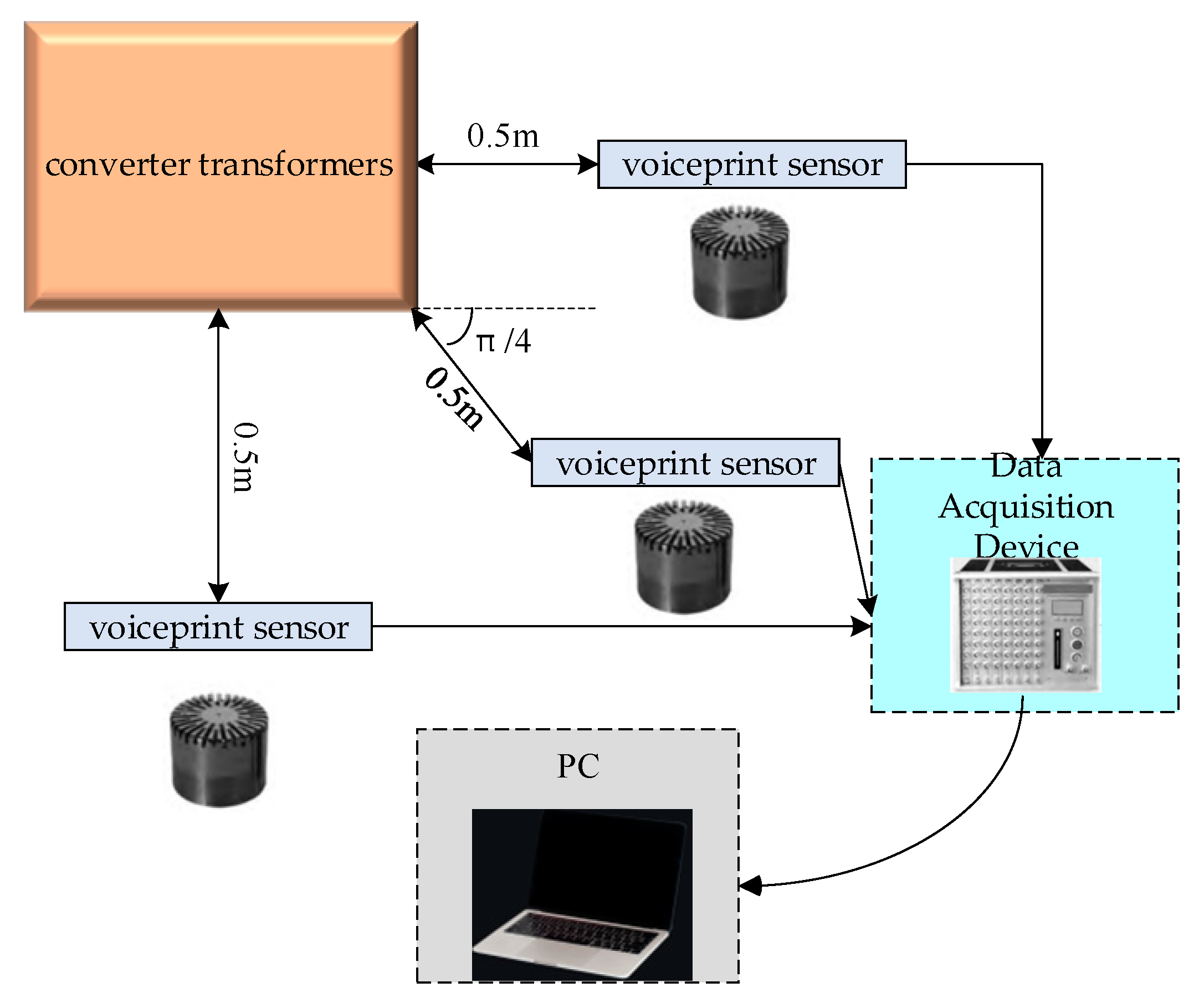
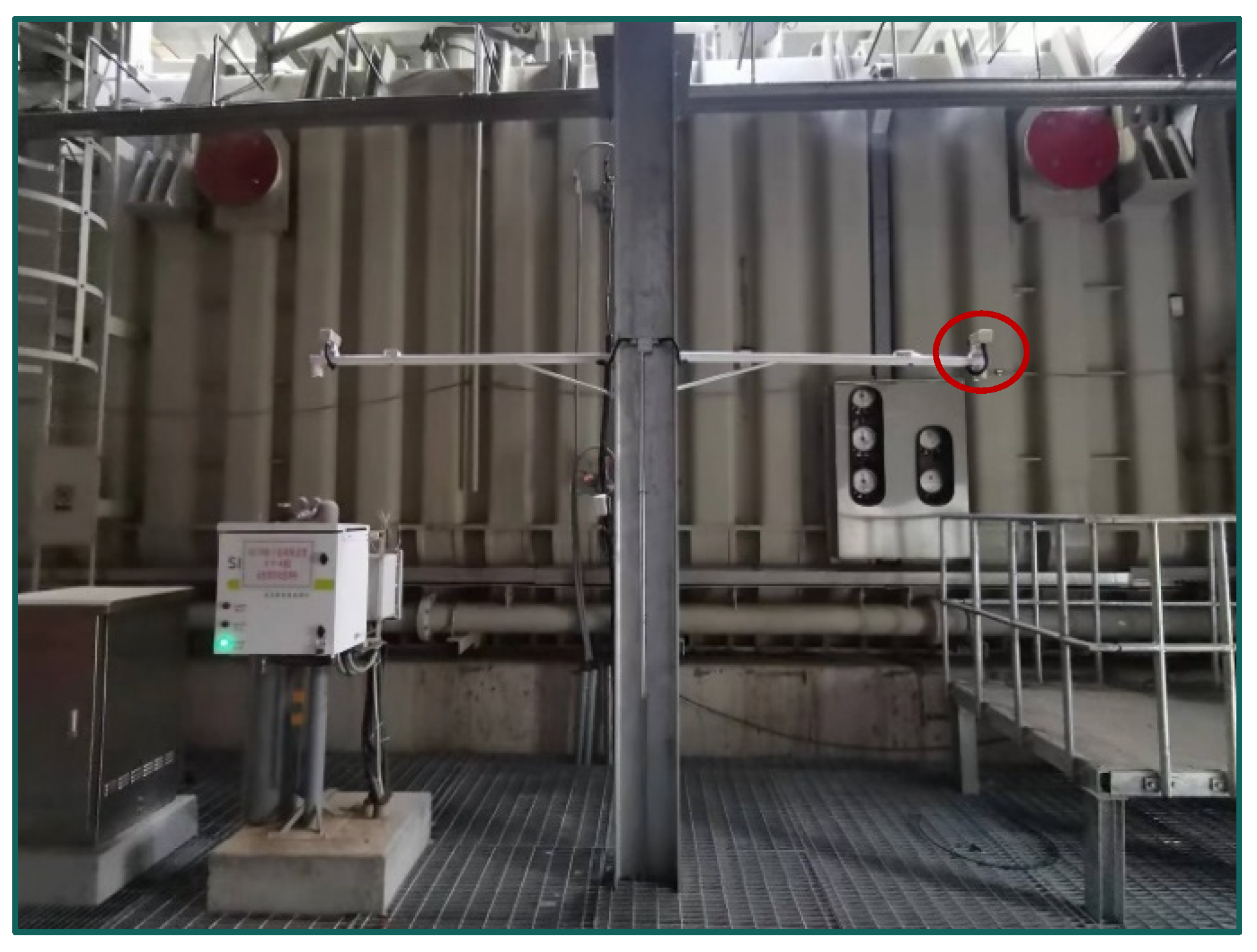
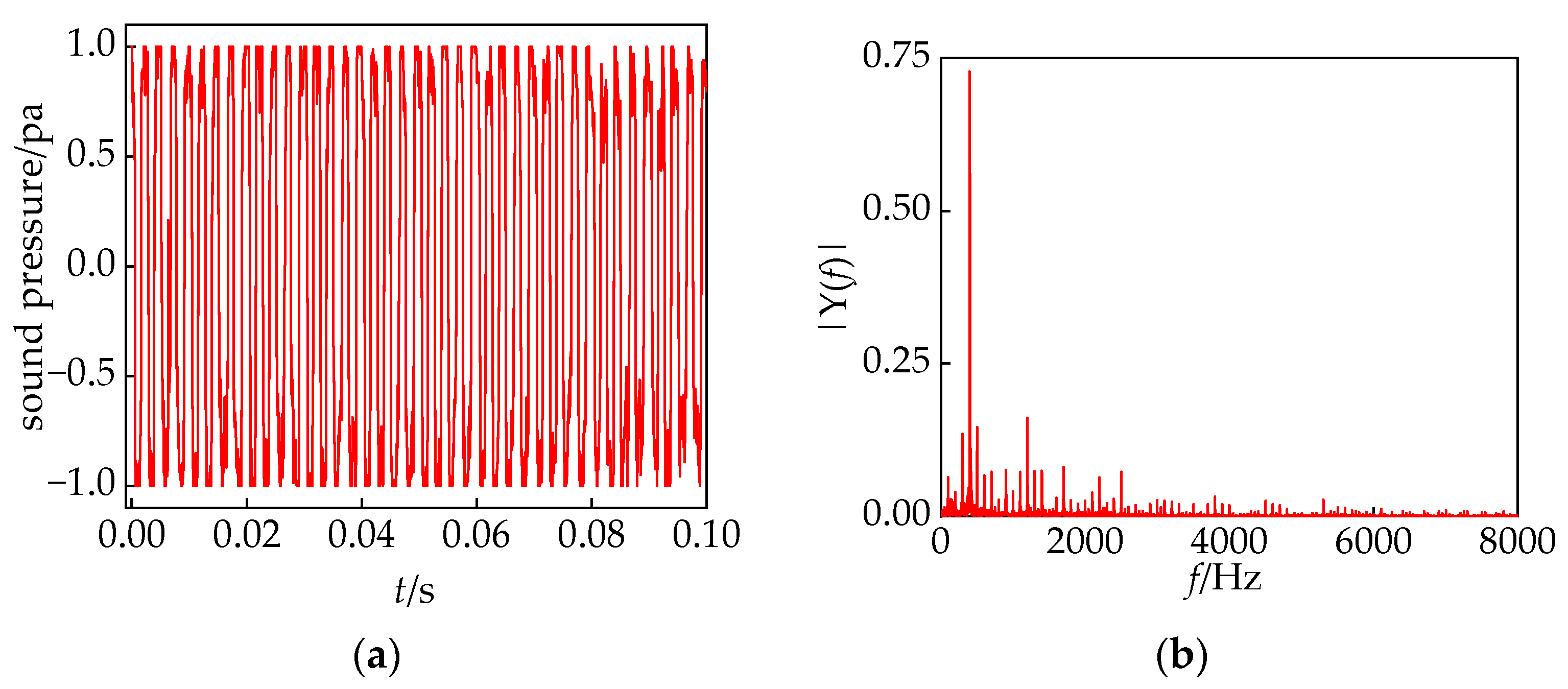

| Parameters | Numerical Value | |
|---|---|---|
| Pole II High-End Y/D Converter | Pole I High-End Y/Y Converter | |
| Model number | ZZDFPZ-412300/600 kV | ZZDFPZ-412300/750/800 |
| Rated capacity/MVA | 412.3 | 412.3 |
| Net side | 933 | 933 |
| Valve side | 2357 | 4083 |
| Operating frequency/Hz | 50 | 50 |
| Cooling method | OFAF | OFAF |
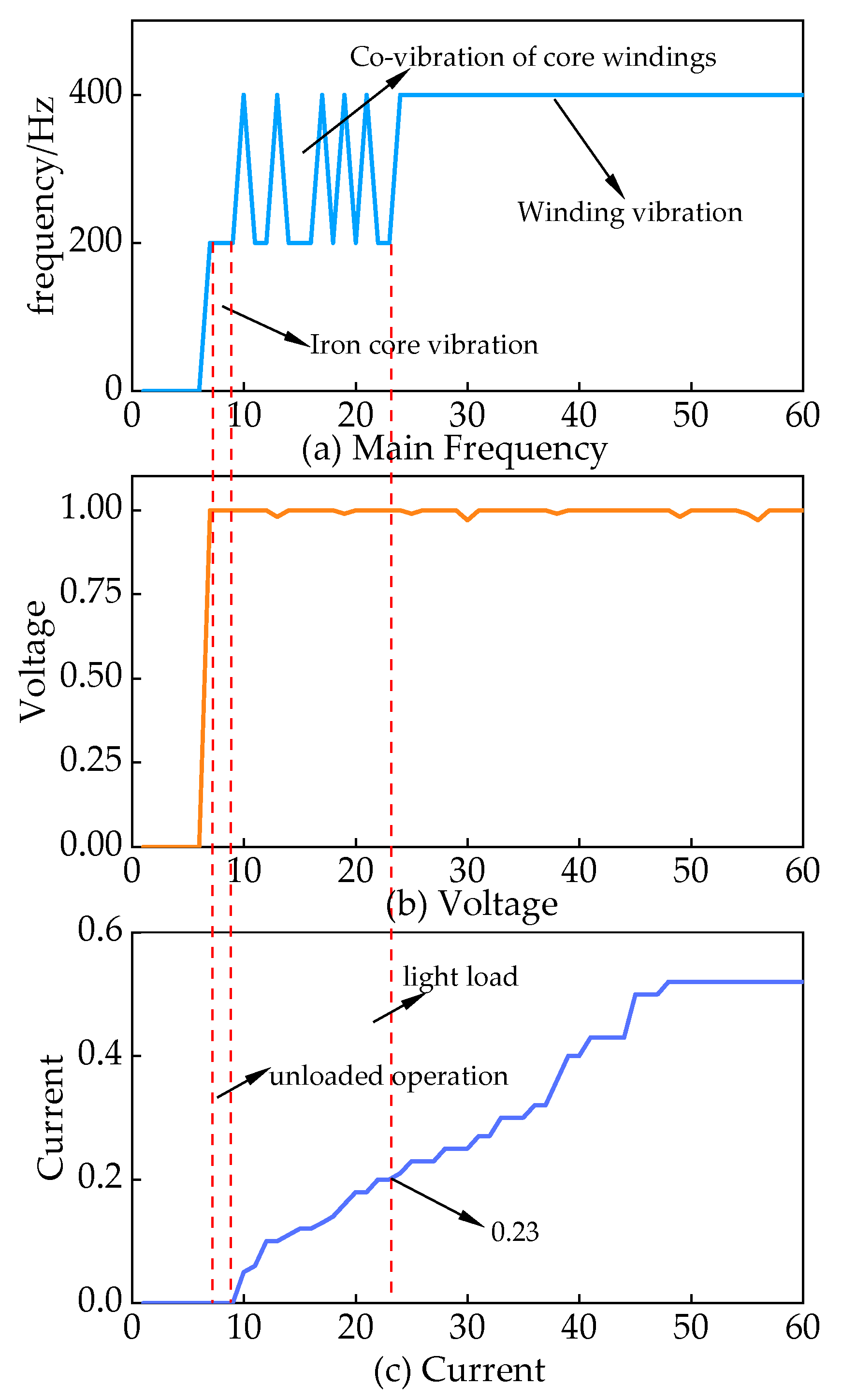
| Operational State | No-Load (I) | Load (II) | Load (III) |
|---|---|---|---|
| Current and voltage signals | U = 1 I = 0 | U = 1 I < 0.23 | U = 1 I > 0.23 |
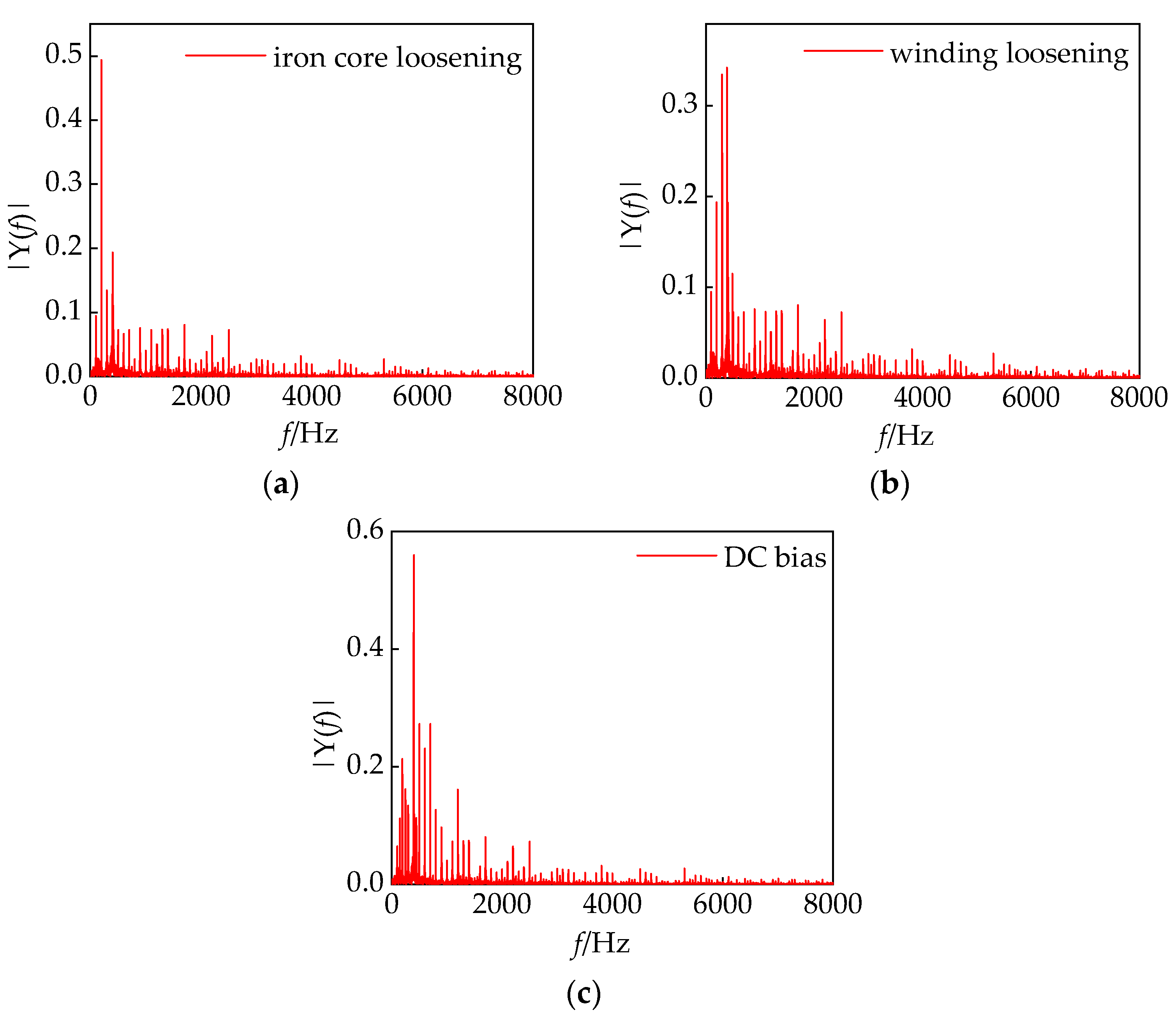
| Voiceprint signal main frequency/Hz | 200 | 200/400 | 400 |
| Conclusion | Iron core vibration dominated | The core windings alternately dominate | Winding vibration dominant |
| Operational State | Serial Number | Training Sets/Each | Test Sets/Each |
|---|---|---|---|
| Normal | 0 | 180 | 20 |
| Iron core loosening | 1 | 180 | 20 |
| Winding loosening | 2 | 180 | 20 |
| DC bias | 3 | 180 | 20 |
| Core or winding fault | 4 | 180 | 20 |
| Characteristic Signal Type | Training Time/s | Convergence to Maximum Accuracy/% |
|---|---|---|
| Traditional MFCC | 50.6 | 92.85 |
| Multi-strategy improvement MFCC | 24.6 | 95.67 |
| Load + multi-strategy improvement MFCC | 25.7 | 100 |
| Load + traditional MFCC | 56.3 | 98.8 |
| Contrast Model | Activation Function | Batch Size | Learning Rate |
|---|---|---|---|
| TCN | Relu | 16 | 0.001 |
| CNN | Relu | 16 | 0.001 |
| LSTM | Relu | 16 | 0.001 |
| GRU | Relu | 16 | 0.001 |
| Contrast Model | Training Time/S | Test Set Accuracy/% |
|---|---|---|
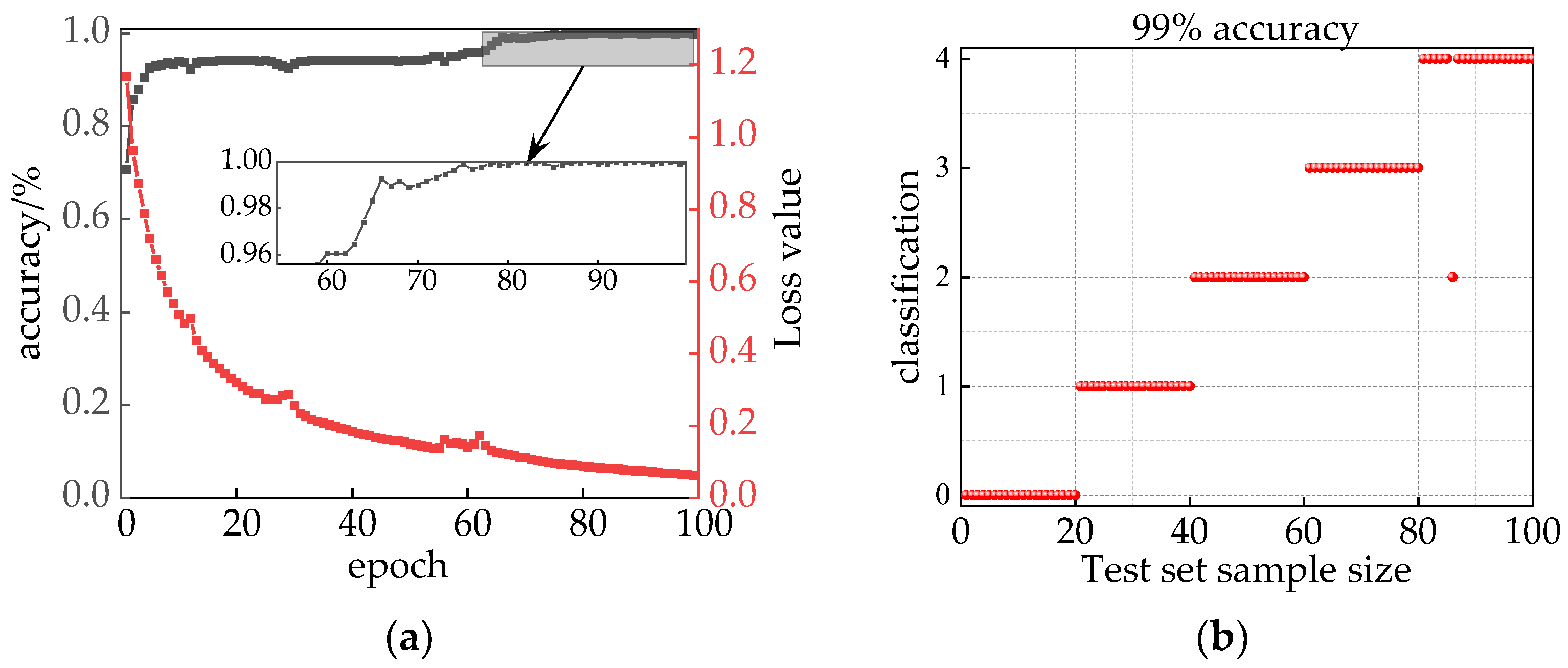
| TCN | 25.7 | 99 |
| CNN | 23.8 | 96 |
| LSTM | 27.9 | 92 |
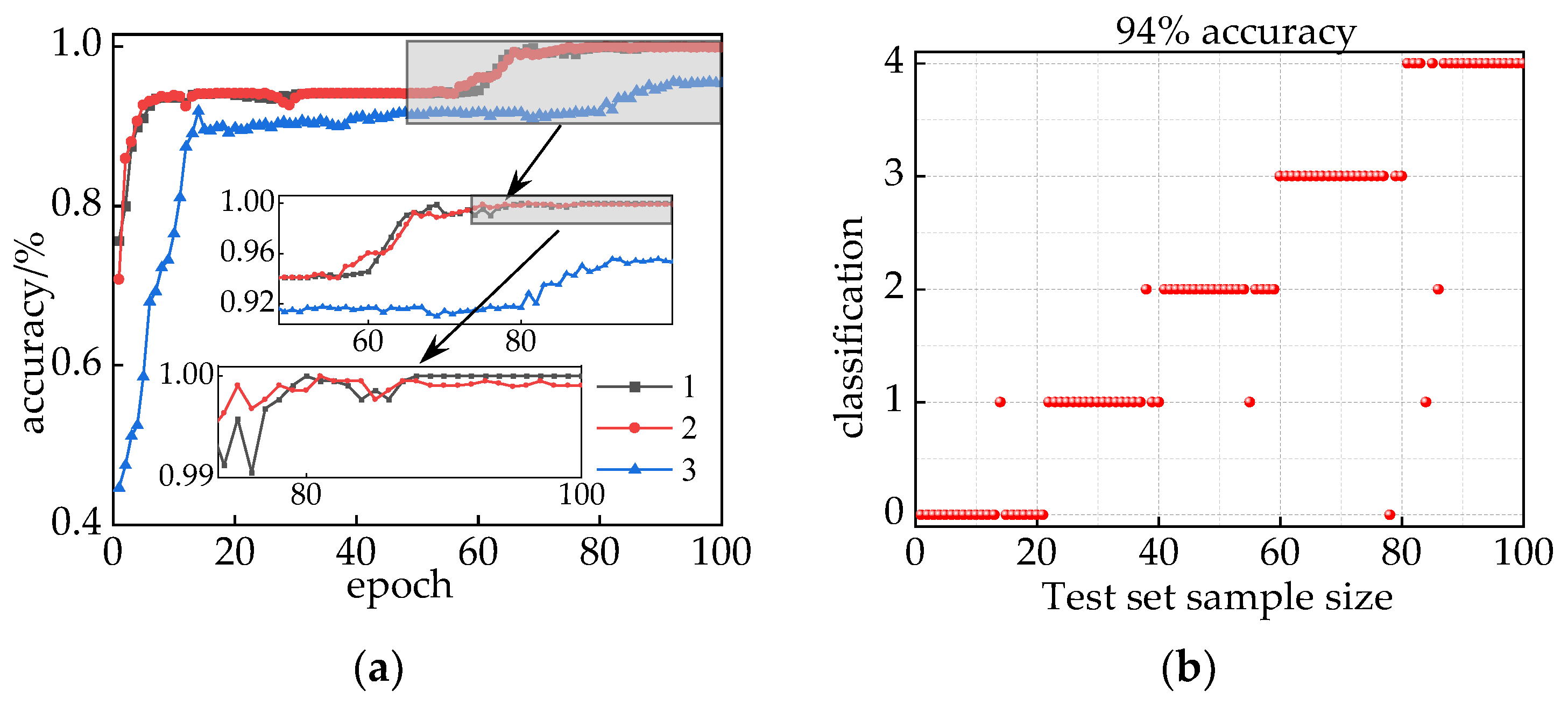
| GRU | 28.4 | 94 |
Disclaimer/Publisher’s Note: The statements, opinions and data contained in all publications are solely those of the individual author(s) and contributor(s) and not of MDPI and/or the editor(s). MDPI and/or the editor(s) disclaim responsibility for any injury to people or property resulting from any ideas, methods, instructions or products referred to in the content. |
© 2024 by the authors. Licensee MDPI, Basel, Switzerland. This article is an open access article distributed under the terms and conditions of the Creative Commons Attribution (CC BY) license (https://creativecommons.org/licenses/by/4.0/).
Share and Cite
Li, H.; Yao, Q.; Li, X. Voiceprint Fault Diagnosis of Converter Transformer under Load Influence Based on Multi-Strategy Improved Mel-Frequency Spectrum Coefficient and Temporal Convolutional Network. Sensors 2024, 24, 757. https://doi.org/10.3390/s24030757
Li H, Yao Q, Li X. Voiceprint Fault Diagnosis of Converter Transformer under Load Influence Based on Multi-Strategy Improved Mel-Frequency Spectrum Coefficient and Temporal Convolutional Network. Sensors. 2024; 24(3):757. https://doi.org/10.3390/s24030757
Chicago/Turabian StyleLi, Hui, Qi Yao, and Xin Li. 2024. "Voiceprint Fault Diagnosis of Converter Transformer under Load Influence Based on Multi-Strategy Improved Mel-Frequency Spectrum Coefficient and Temporal Convolutional Network" Sensors 24, no. 3: 757. https://doi.org/10.3390/s24030757
APA StyleLi, H., Yao, Q., & Li, X. (2024). Voiceprint Fault Diagnosis of Converter Transformer under Load Influence Based on Multi-Strategy Improved Mel-Frequency Spectrum Coefficient and Temporal Convolutional Network. Sensors, 24(3), 757. https://doi.org/10.3390/s24030757

