Article

Comparative Analysis of Force-Sensitive Resistors and Triaxial Accelerometers for Sitting Posture Classification

1
The Higher Educational Key Laboratory for Measuring and Control Technology and Instrumentations of Heilongjiang Province, Harbin University of Science and Technology, Harbin 150080, China
2
Murdoch University Chiropractic Clinic, Murdoch University, Murdoch 6150, Australia
3
Faculty of Life Science and Education, University of South Wales, Treforest, Pontypridd CF37 1DL, UK
4
Faculty of Health Sciences, Durban University of Technology, Durban 1334, South Africa
*
Author to whom correspondence should be addressed.
Sensors 2024, 24(23), 7705; https://doi.org/10.3390/s24237705
Submission received: 18 October 2024 / Revised: 26 November 2024 / Accepted: 28 November 2024 / Published: 2 December 2024
(This article belongs to the Special Issue Advanced Sensing and Measurement Control Applications)

Abstract

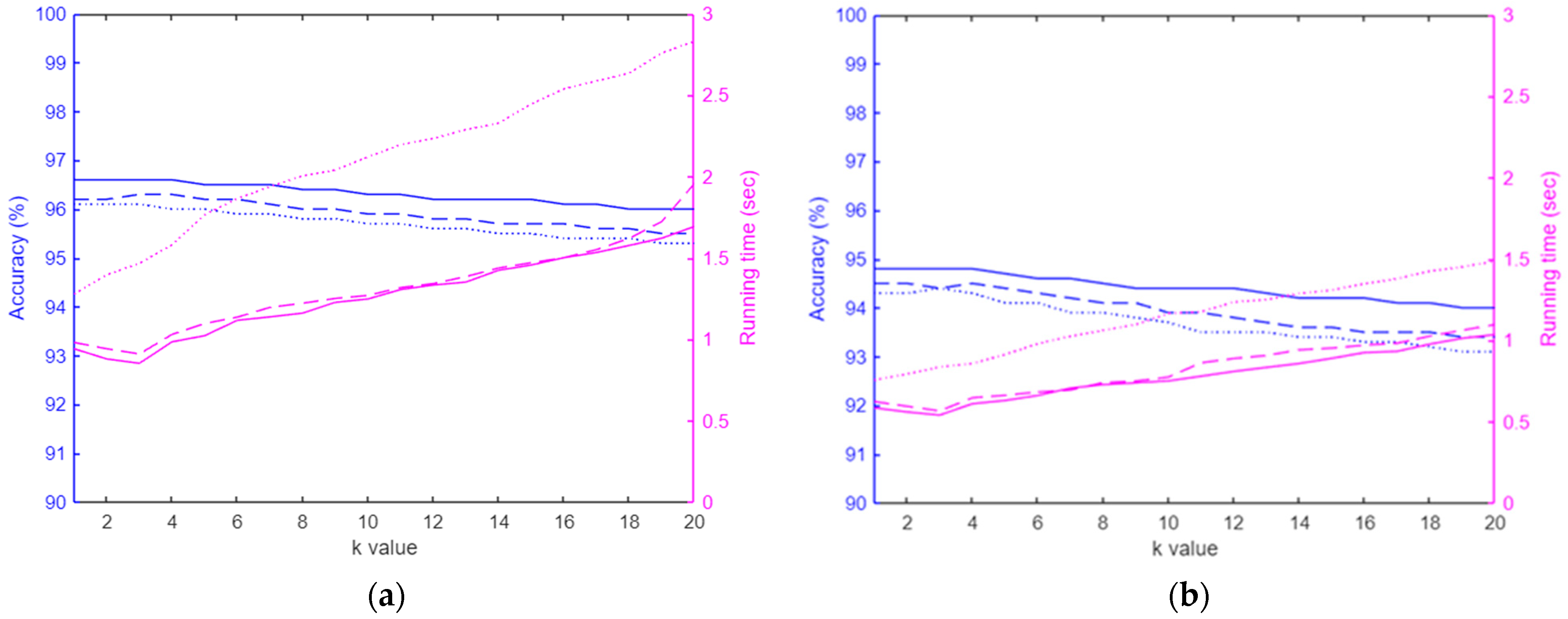
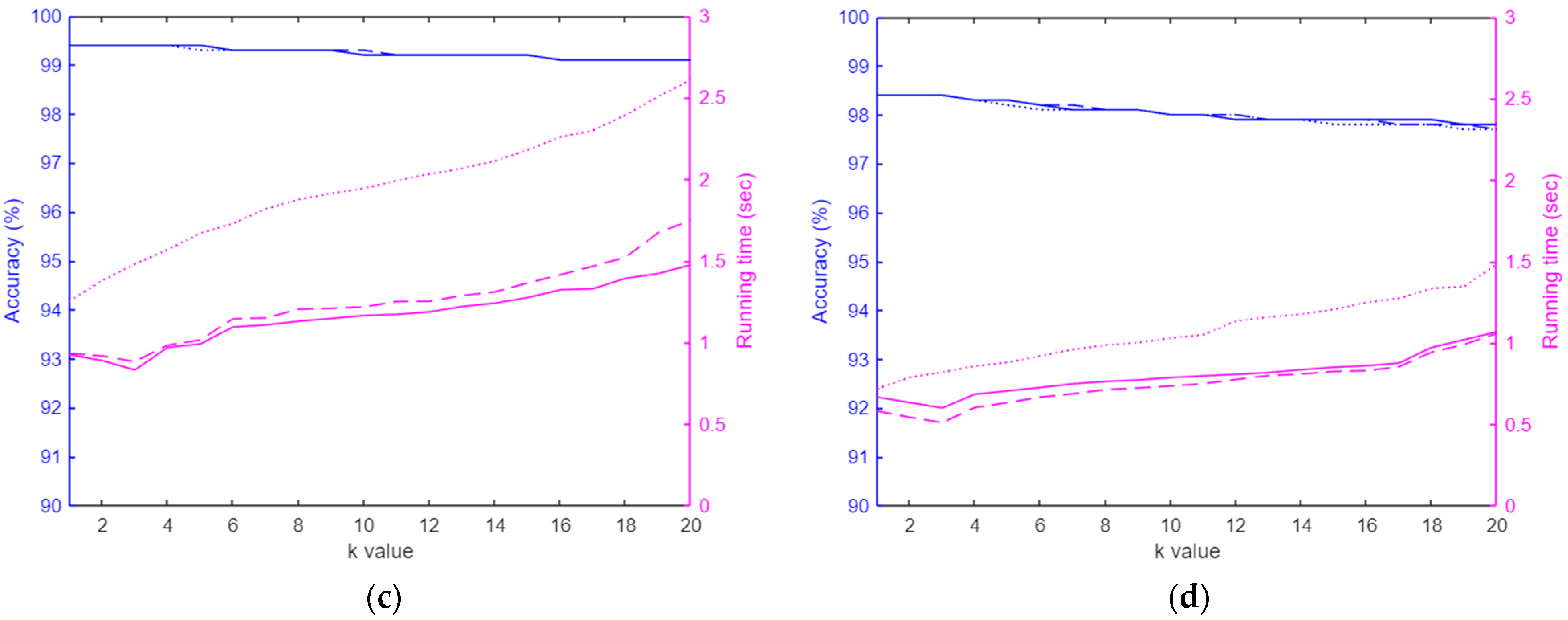
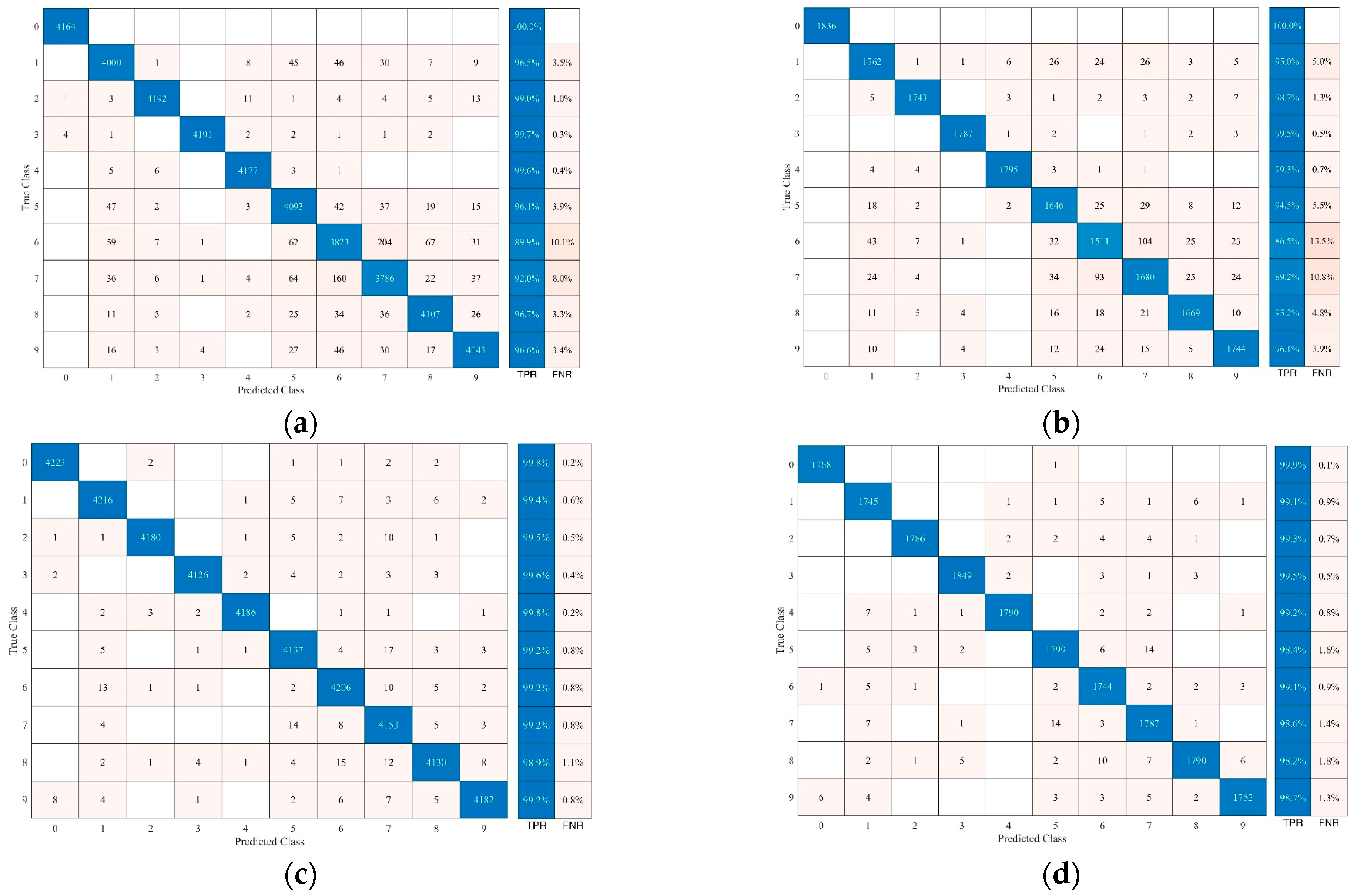
Sedentary behaviors, including poor postures, are significantly detrimental to health, particularly for individuals losing motion ability. This study presents a posture detection system utilizing four force-sensitive resistors (FSRs) and two triaxial accelerometers selected after rigorous assessment for consistency and linearity. We compared various machine learning algorithms based on classification accuracy and computational efficiency. The k-nearest neighbor (KNN) algorithm demonstrated superior performance over Decision Tree, Discriminant Analysis, Naive Bayes, and Support Vector Machine (SVM). Further analysis of KNN hyperparameters revealed that the city block metric with K = 3 yielded optimal classification results. Triaxial accelerometers exhibited higher accuracy in both training (99.4%) and testing (99.0%) phases compared to FSRs (96.6% and 95.4%, respectively), with slightly reduced processing times (0.83 s vs. 0.85 s for training; 0.51 s vs. 0.54 s for testing). These findings suggest that, apart from being cost-effective and compact, triaxial accelerometers are more effective than FSRs for posture detection.
Keywords: sitting posture; force-sensitive resistor; triaxial accelerometers; classification algorithm; sensor verification; accuracy; computational efficiency sitting posture; force-sensitive resistor; triaxial accelerometers; classification algorithm; sensor verification; accuracy; computational efficiency