Article

An Integrated LSTM-Rule-Based Fusion Method for the Localization of Intelligent Vehicles in a Complex Environment


by
Quan Yuan
1,
Fuwu Yan
2,*,
Zhishuai Yin
2,
Chen Lv
3,
Jie Hu
2,
Yue Li
4 and
Jinhai Wang
1
1
Hubei Key Laboratory of Advanced Technology for Automotive Components, Wuhan University of Technology, Wuhan 430070, China
2
Hubei Collaborative Innovation Center for Automotive Components Technology, Wuhan University of Technology, Wuhan 430070, China
3
The Automated Driving and Human-Machine System Group, Nanyang Technological University, Singapore 639798, Singapore
4
Dongfeng Technology Center, Wuhan 430056, China
*
Author to whom correspondence should be addressed.
Sensors 2024, 24(12), 4025; https://doi.org/10.3390/s24124025
Submission received: 8 May 2024 / Revised: 13 June 2024 / Accepted: 19 June 2024 / Published: 20 June 2024
(This article belongs to the Section Intelligent Sensors)

Abstract

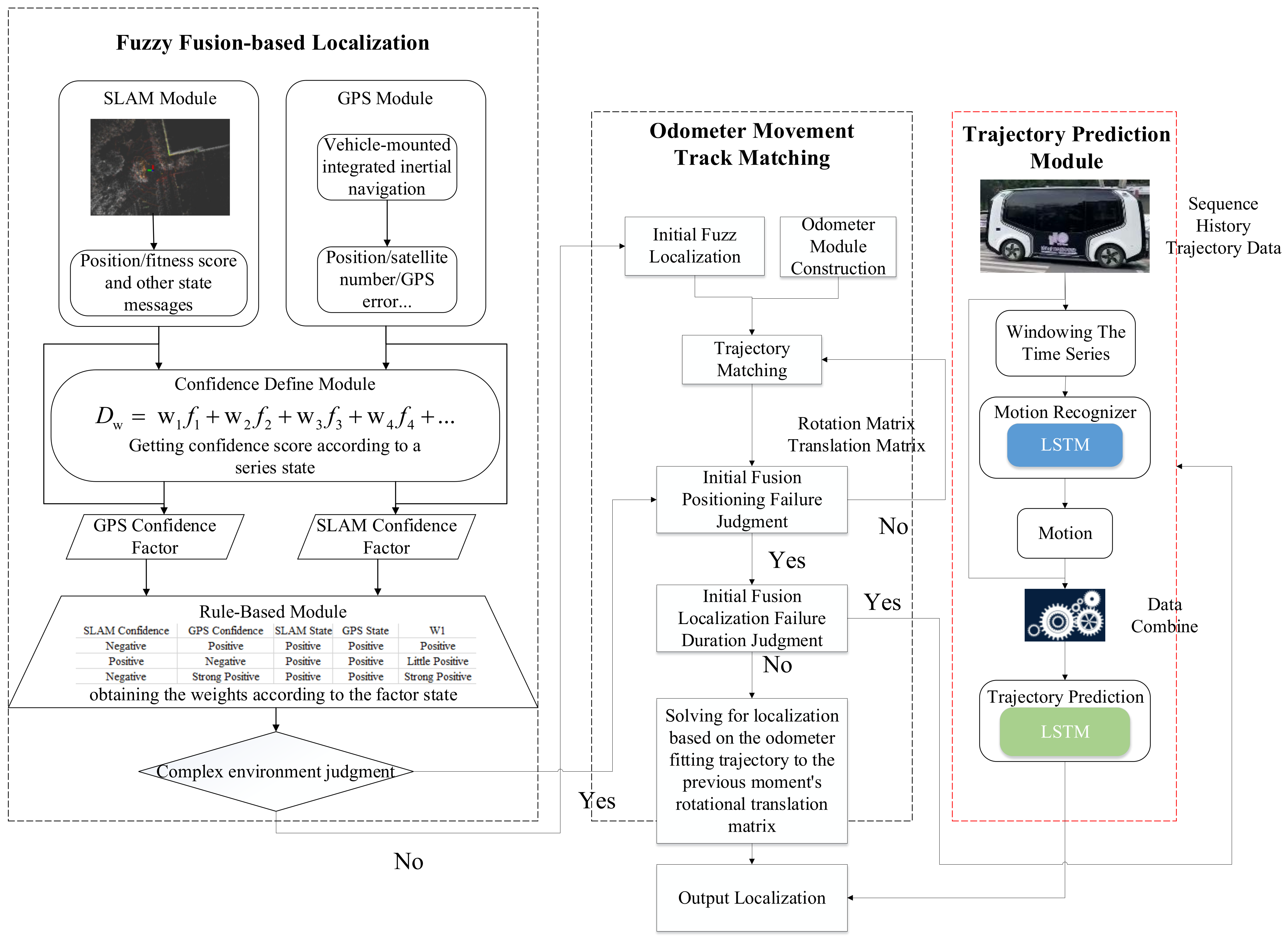
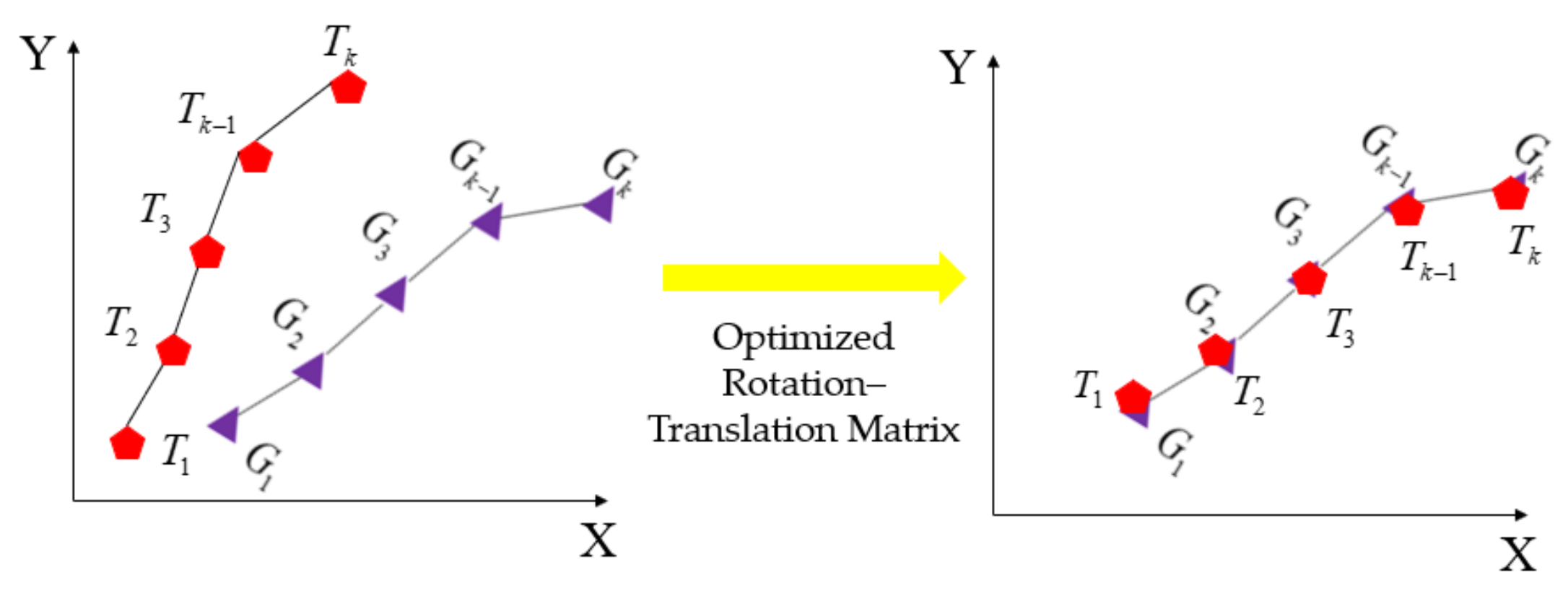
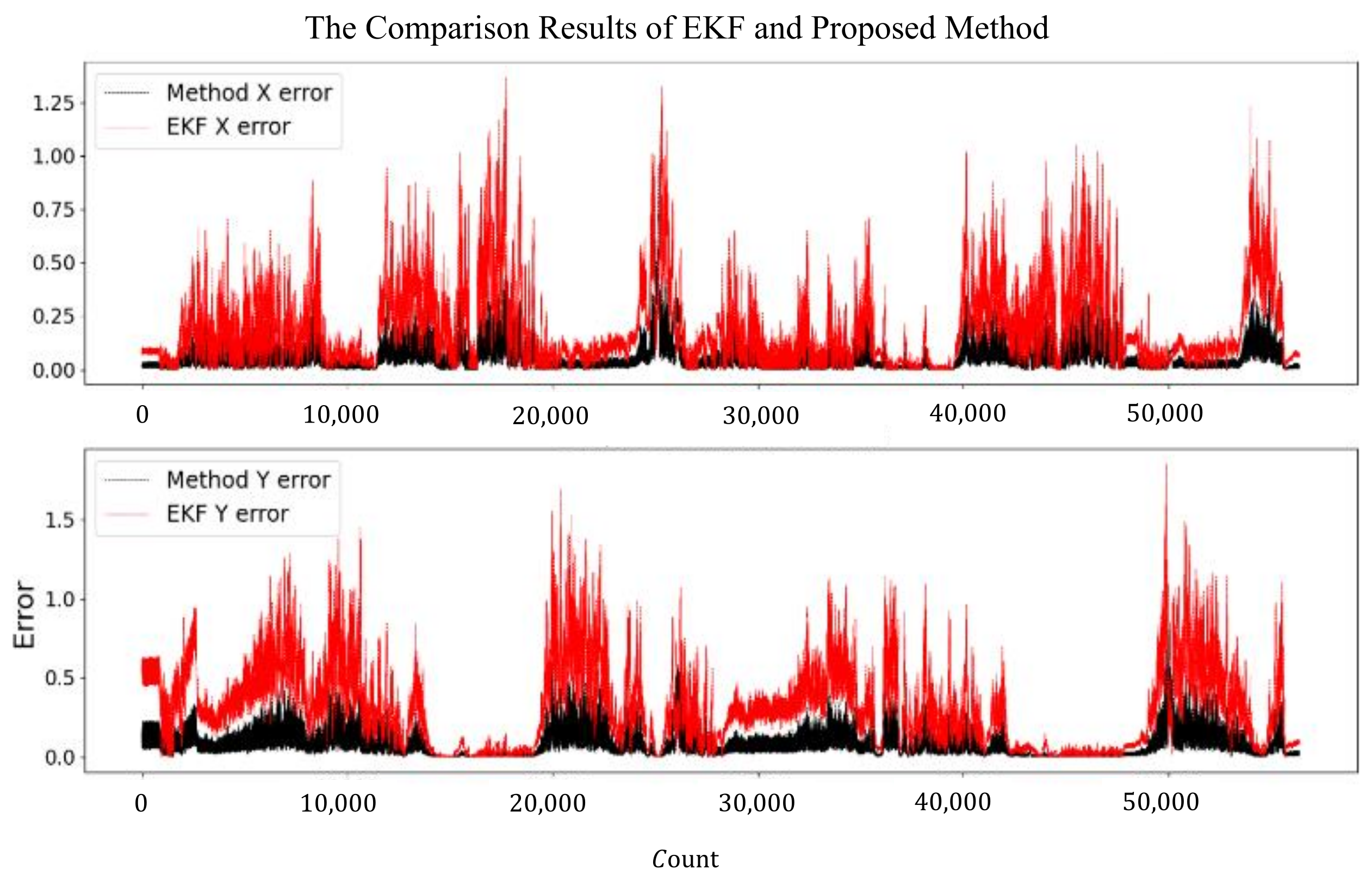
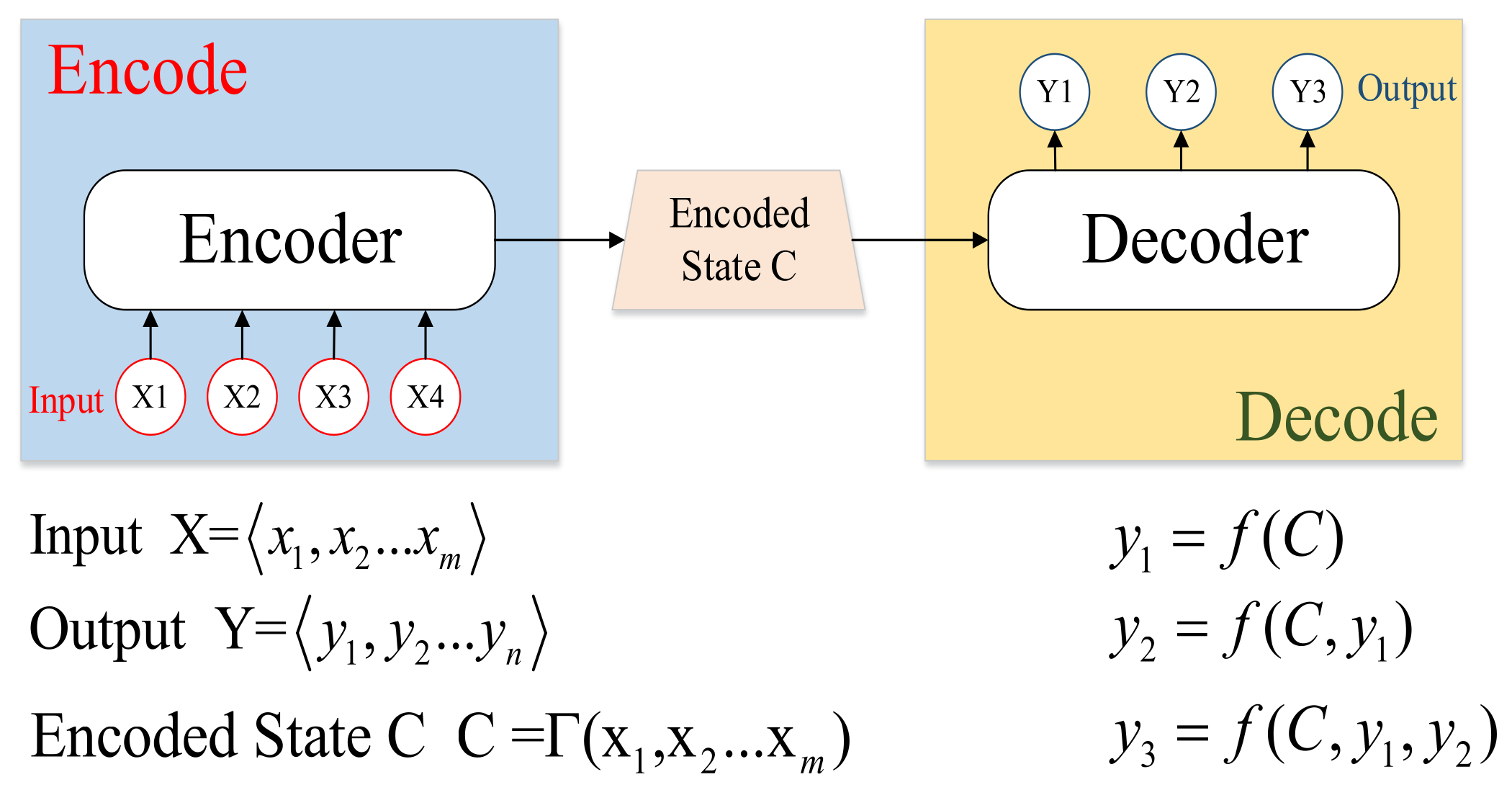
To improve the accuracy and robustness of autonomous vehicle localization in a complex environment, this paper proposes a multi-source fusion localization method that integrates GPS, laser SLAM, and an odometer model. Firstly, fuzzy rules are constructed to accurately analyze the in-vehicle localization deviation and confidence factor to improve the initial fusion localization accuracy. Then, an odometer model for obtaining the projected localization trajectory is constructed. Considering the high accuracy of the odometer’s projected trajectory within a short distance, we used the shape of the projected localization trajectory to inhibit the initial fusion localization noise and used trajectory matching to obtain an accurate localization. Finally, the Dual-LSTM network is constructed to predict the localization and build an electronic fence to guarantee the safety of the vehicle while also guaranteeing the updating of short-distance localization information of the vehicle when the above-mentioned fusion localization is unreliable. Under the limited arithmetic condition of the vehicle platform, accurate and reliable localization is realized in a complex environment. The proposed method was verified by long-time operation on the real vehicle platform, and compared with the EKF fusion localization method, the average root mean square error of localization was reduced by 66%, reaching centimeter-level localization accuracy.
Keywords: multi-source fusion; fuzzy rules; trajectory matching; dual-LSTM multi-source fusion; fuzzy rules; trajectory matching; dual-LSTM