Article

Morphological Autoencoders for Beat-by-Beat Atrial Fibrillation Detection Using Single-Lead ECG

1
Department of Bioengineering (DBE), Instituto Superior Técnico (IST), Av. Rovisco Pais 1, 1049-001 Lisboa, Portugal
2
Instituto de Telecomunicações (IT), Av. Rovisco Pais 1, Torre Norte—Piso 10, 1049-001 Lisboa, Portugal
*
Author to whom correspondence should be addressed.
Sensors 2023, 23(5), 2854; https://doi.org/10.3390/s23052854
Submission received: 30 December 2022 / Revised: 21 February 2023 / Accepted: 4 March 2023 / Published: 6 March 2023
(This article belongs to the Special Issue Advanced Machine Intelligence for Biomedical Signal Processing)

Abstract

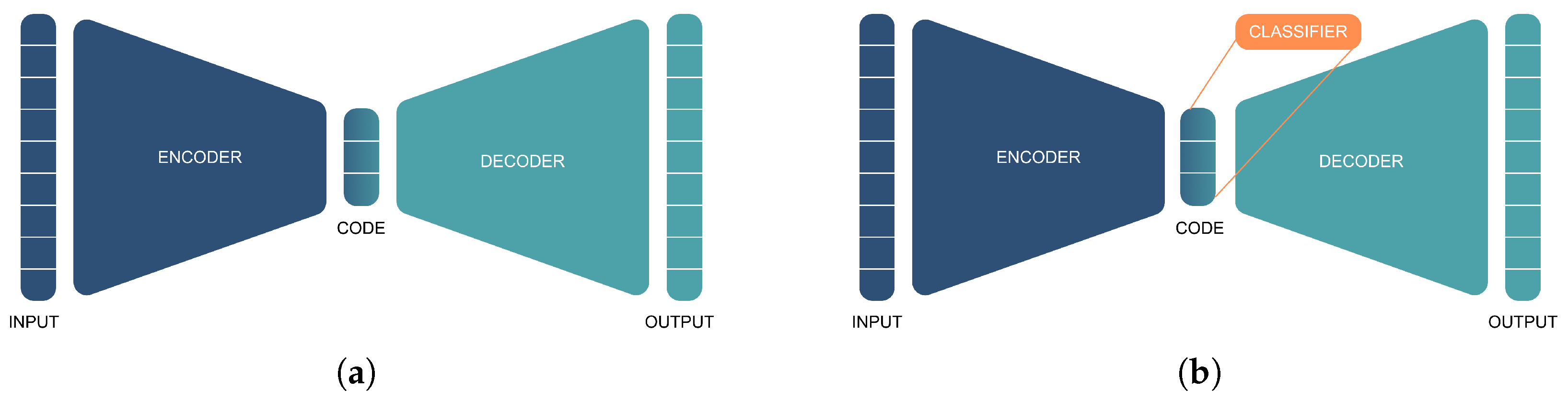
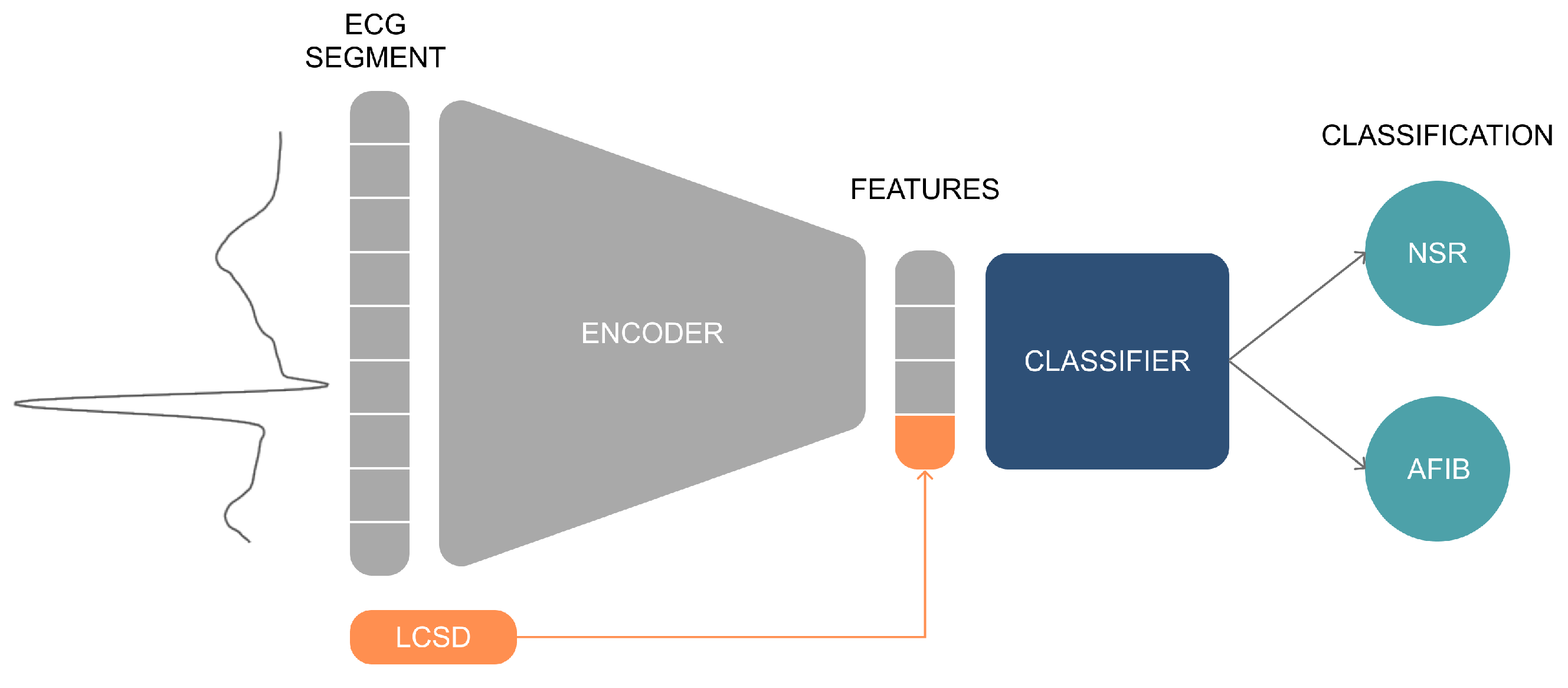
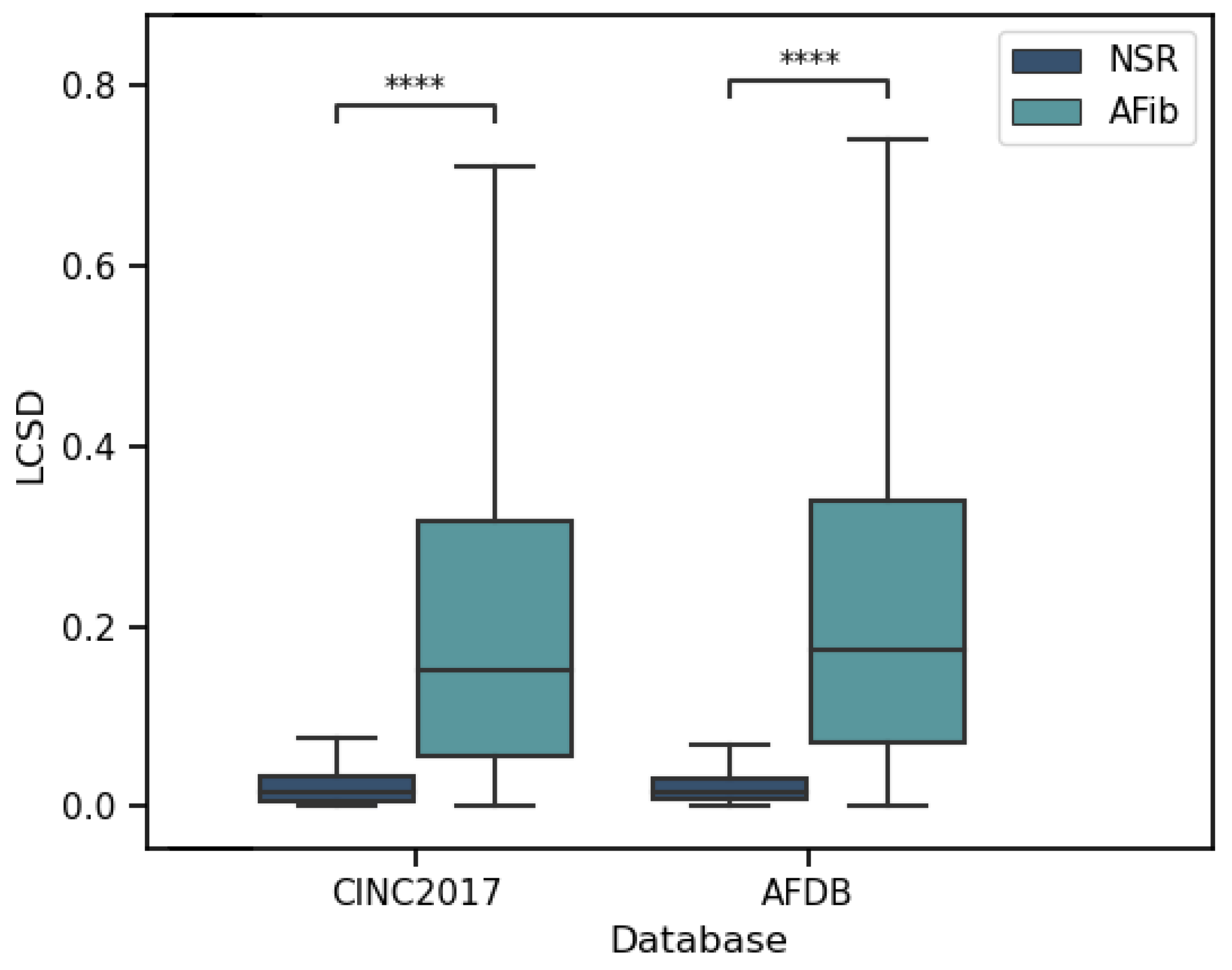
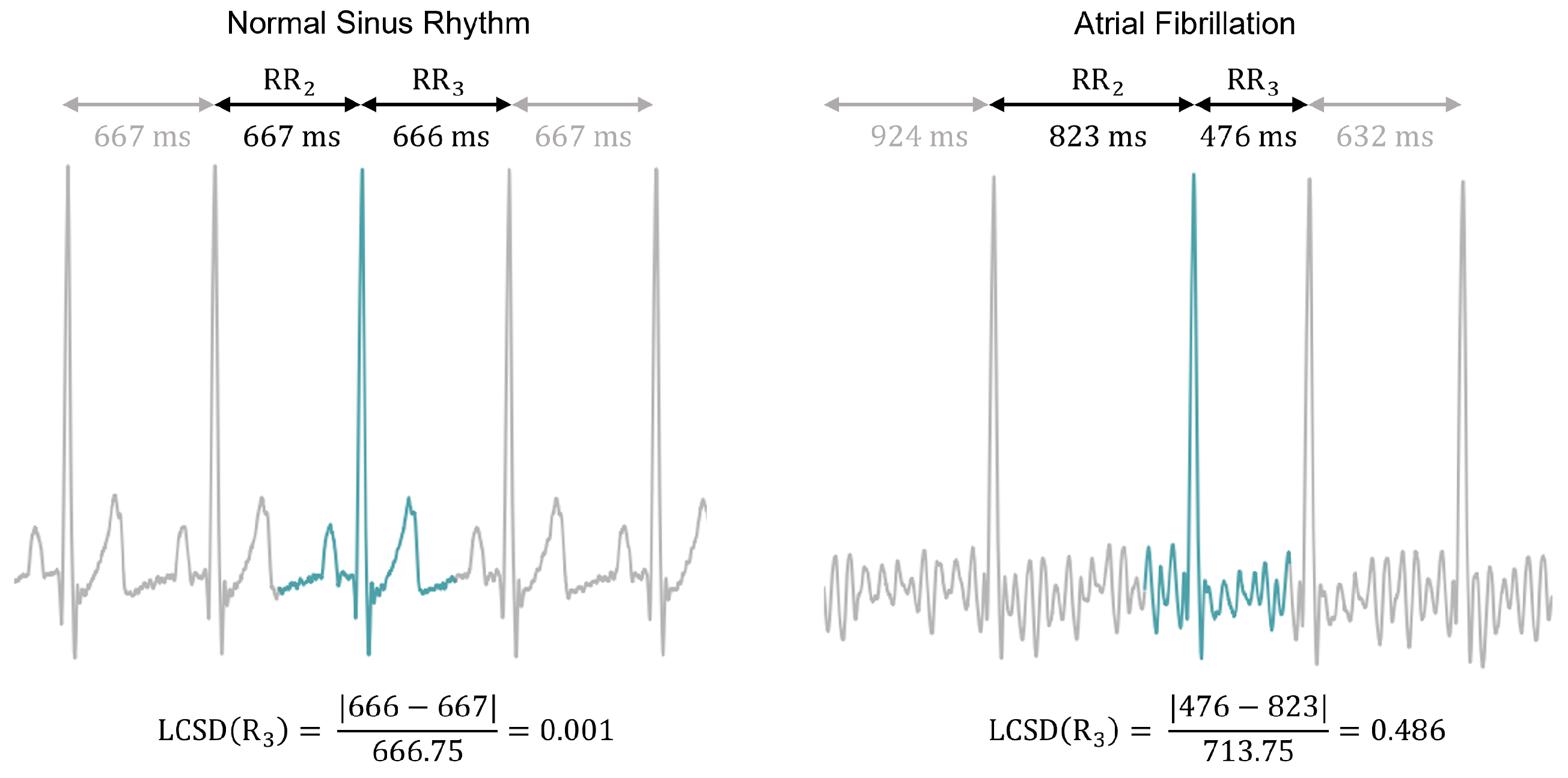
Engineered feature extraction can compromise the ability of Atrial Fibrillation (AFib) detection algorithms to deliver near real-time results. Autoencoders (AEs) can be used as an automatic feature extraction tool, tailoring the resulting features to a specific classification task. By coupling an encoder to a classifier, it is possible to reduce the dimension of the Electrocardiogram (ECG) heartbeat waveforms and classify them. In this work we show that morphological features extracted using a Sparse AE are sufficient to distinguish AFib from Normal Sinus Rhythm (NSR) beats. In addition to the morphological features, rhythm information was included in the model using a proposed short-term feature called Local Change of Successive Differences (LCSD). Using single-lead ECG recordings from two referenced public databases, and with features from the AE, the model was able to achieve an F1-score of 88.8%. These results show that morphological features appear to be a distinct and sufficient factor for detecting AFib in ECG recordings, especially when designed for patient-specific applications. This is an advantage over state-of-the-art algorithms that need longer acquisition times to extract engineered rhythm features, which also requires careful preprocessing steps. To the best of our knowledge, this is the first work that presents a near real-time morphological approach for AFib detection under naturalistic ECG acquisition with a mobile device.
Keywords: atrial fibrillation detection; ECG morphological features; supervised autoencoder; automatic feature extraction atrial fibrillation detection; ECG morphological features; supervised autoencoder; automatic feature extraction