Article

Vision-Based HAR in UAV Videos Using Histograms and Deep Learning Techniques

School of Computer Science and Engineering, VIT-AP University, Amaravati 522237, India
*
Author to whom correspondence should be addressed.
Sensors 2023, 23(5), 2569; https://doi.org/10.3390/s23052569
Submission received: 15 December 2022 / Revised: 17 February 2023 / Accepted: 21 February 2023 / Published: 25 February 2023

Abstract

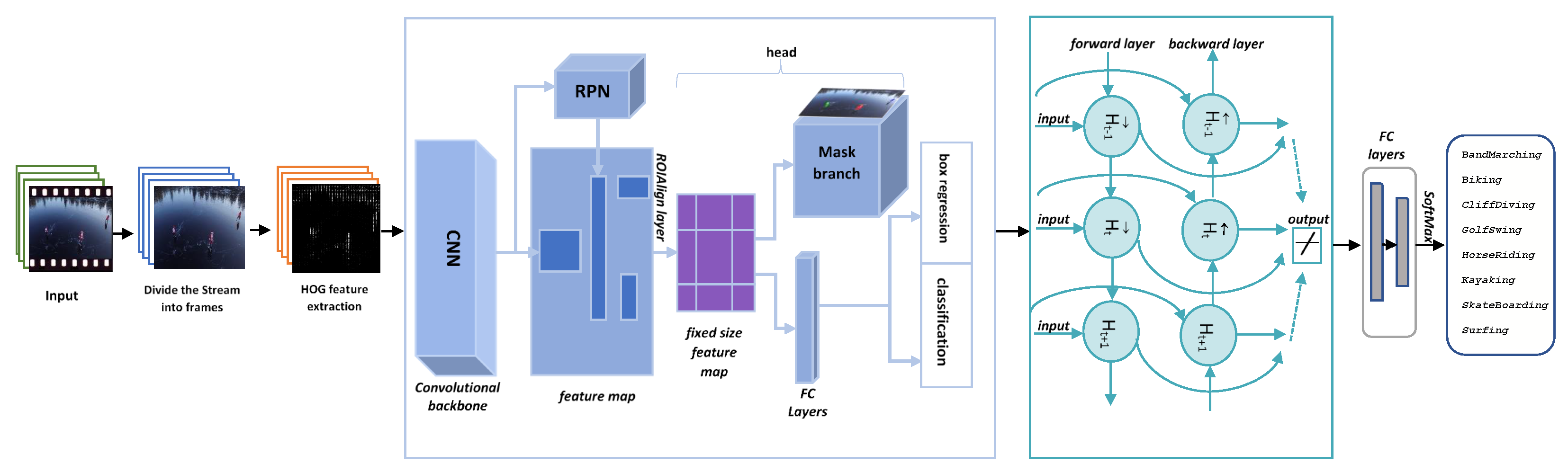
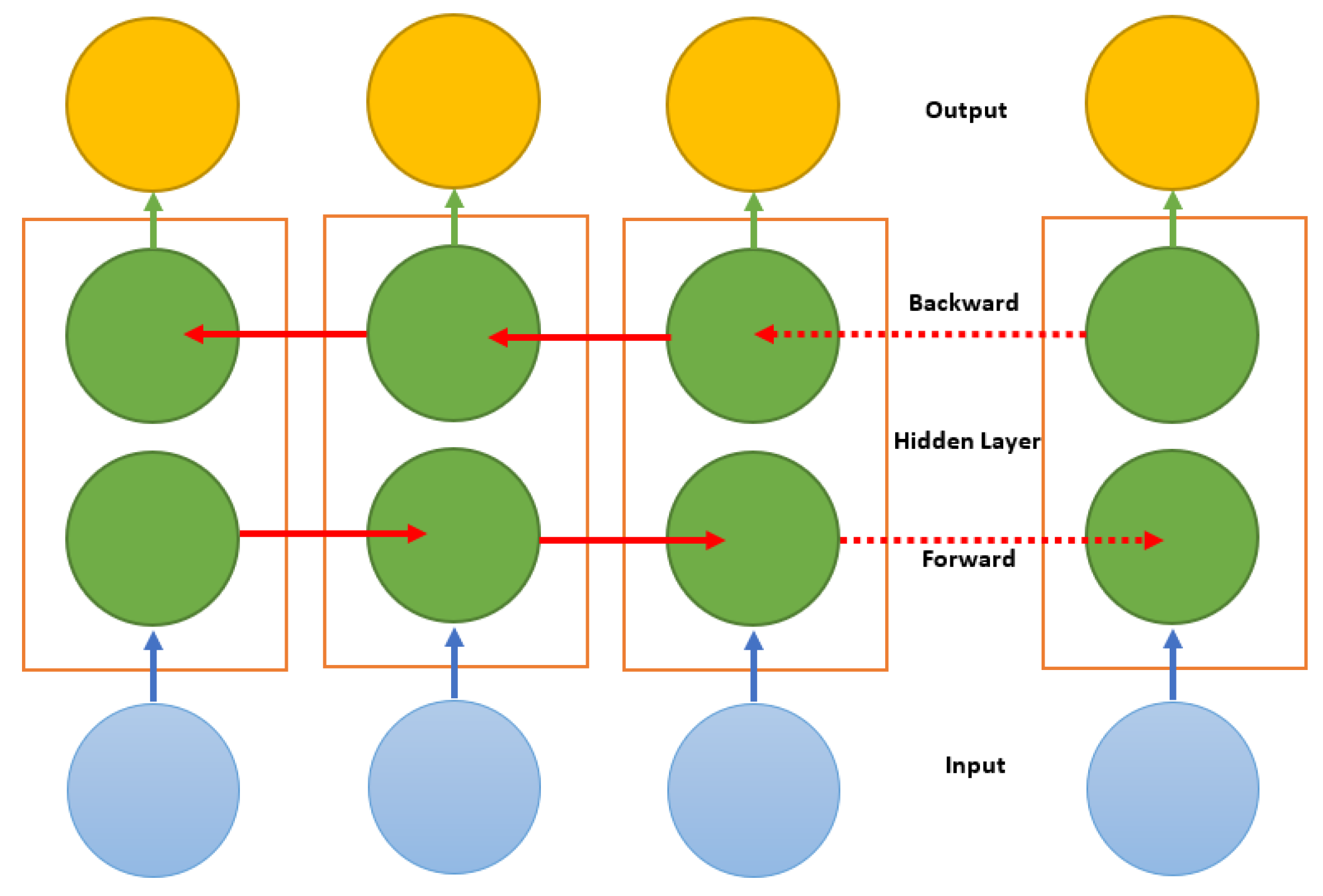
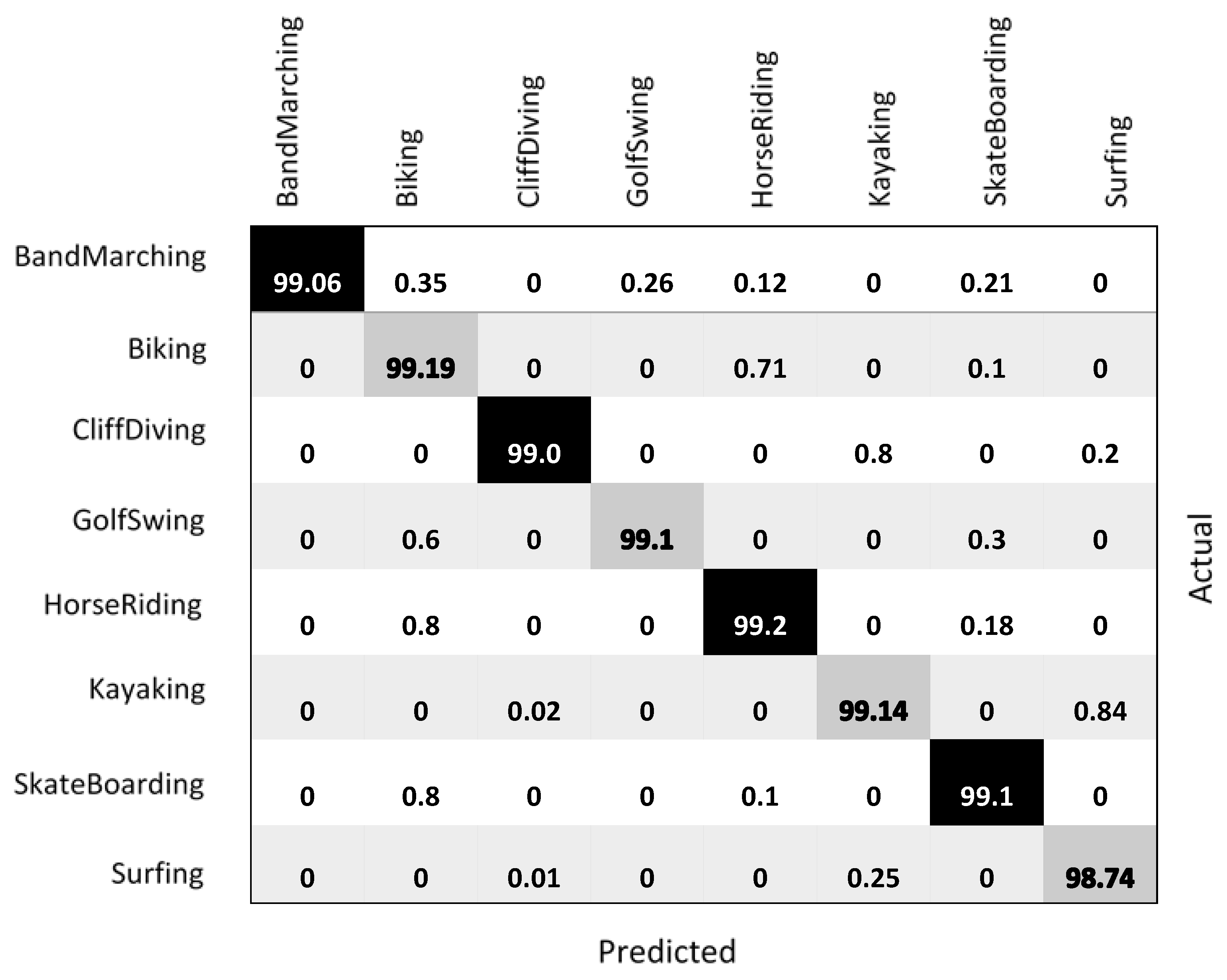
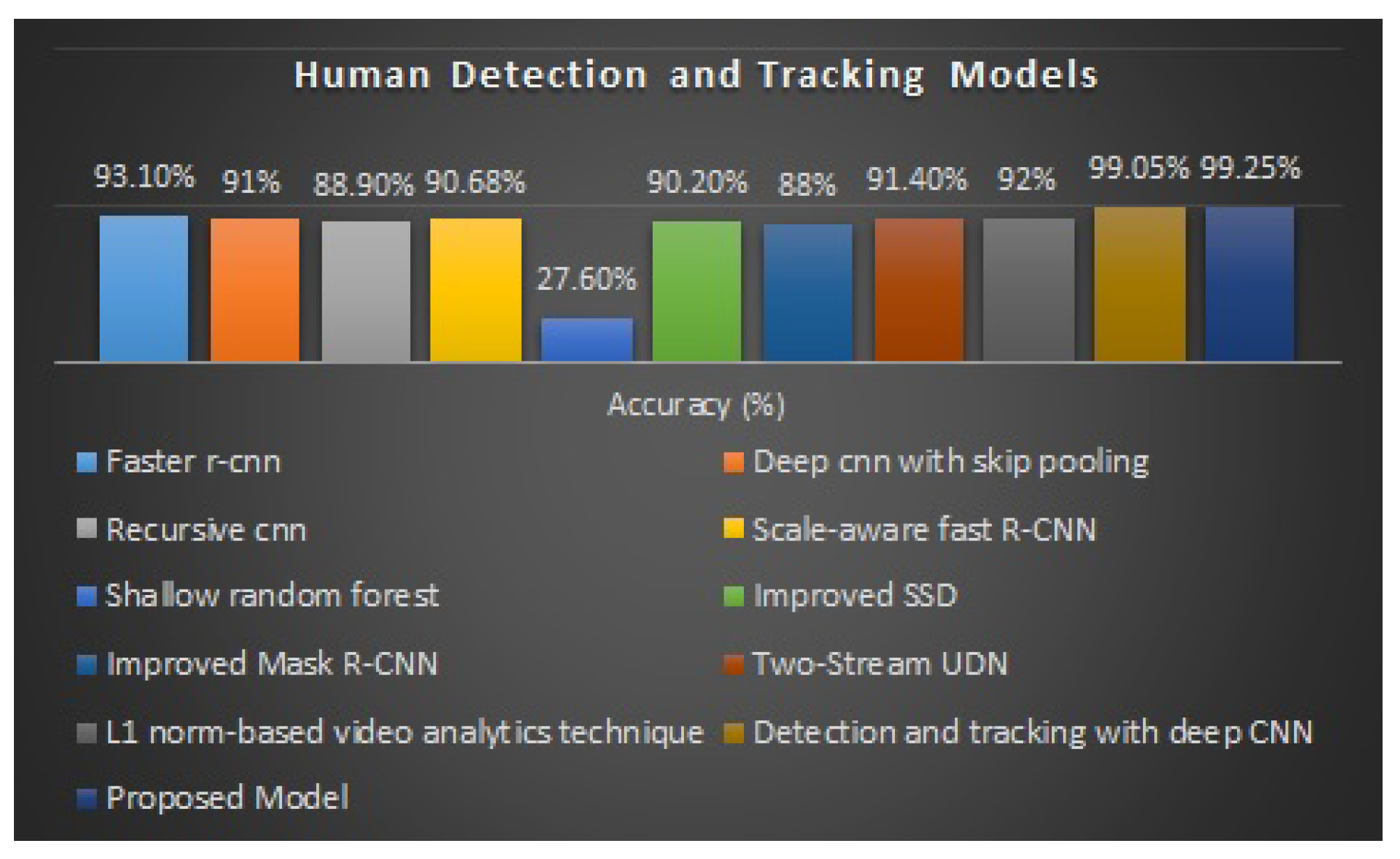
Activity recognition in unmanned aerial vehicle (UAV) surveillance is addressed in various computer vision applications such as image retrieval, pose estimation, object detection, object detection in videos, object detection in still images, object detection in video frames, face recognition, and video action recognition. In the UAV-based surveillance technology, video segments captured from aerial vehicles make it challenging to recognize and distinguish human behavior. In this research, to recognize a single and multi-human activity using aerial data, a hybrid model of histogram of oriented gradient (HOG), mask-regional convolutional neural network (Mask-RCNN), and bidirectional long short-term memory (Bi-LSTM) is employed. The HOG algorithm extracts patterns, Mask-RCNN extracts feature maps from the raw aerial image data, and the Bi-LSTM network exploits the temporal relationship between the frames for the underlying action in the scene. This Bi-LSTM network reduces the error rate to the greatest extent due to its bidirectional process. This novel architecture generates enhanced segmentation by utilizing the histogram gradient-based instance segmentation and improves the accuracy of classifying human activities using the Bi-LSTM approach. Experimental outcomes demonstrate that the proposed model outperforms the other state-of-the-art models and has achieved 99.25% accuracy on the YouTube-Aerial dataset.
Keywords: activity recognition; Bi-LSTM; deep learning techniques; HOG; instance segmentation; Mask-RCNN activity recognition; Bi-LSTM; deep learning techniques; HOG; instance segmentation; Mask-RCNN