Article

Efficacy of Individualized Sensory-Based mHealth Interventions to Improve Distress Coping in Healthcare Professionals: A Multi-Arm Parallel-Group Randomized Controlled Trial

1
Department of Biopsychology and Neuroergonomics, Technical University Berlin, 10623 Berlin, Germany
2
Institute of Human Movement Science, University of Hamburg, 20146 Hamburg, Germany
3
Medical School Hamburg, Institute of Interdisciplinary Exercise Science and Sports Medicine, 20457 Hamburg, Germany
*
Author to whom correspondence should be addressed.
Sensors 2023, 23(4), 2322; https://doi.org/10.3390/s23042322
Submission received: 31 December 2022 / Revised: 6 February 2023 / Accepted: 17 February 2023 / Published: 19 February 2023

Abstract

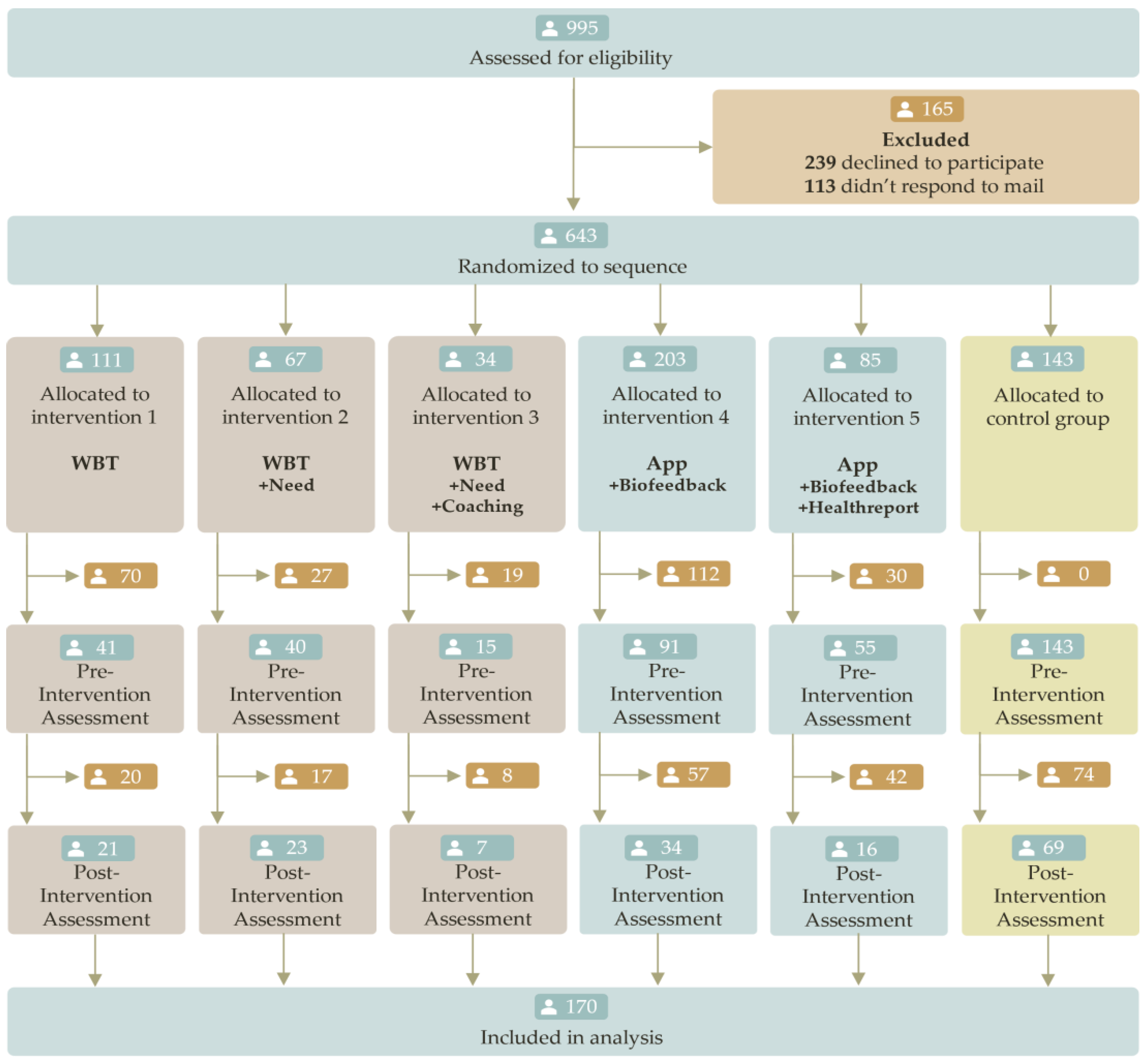
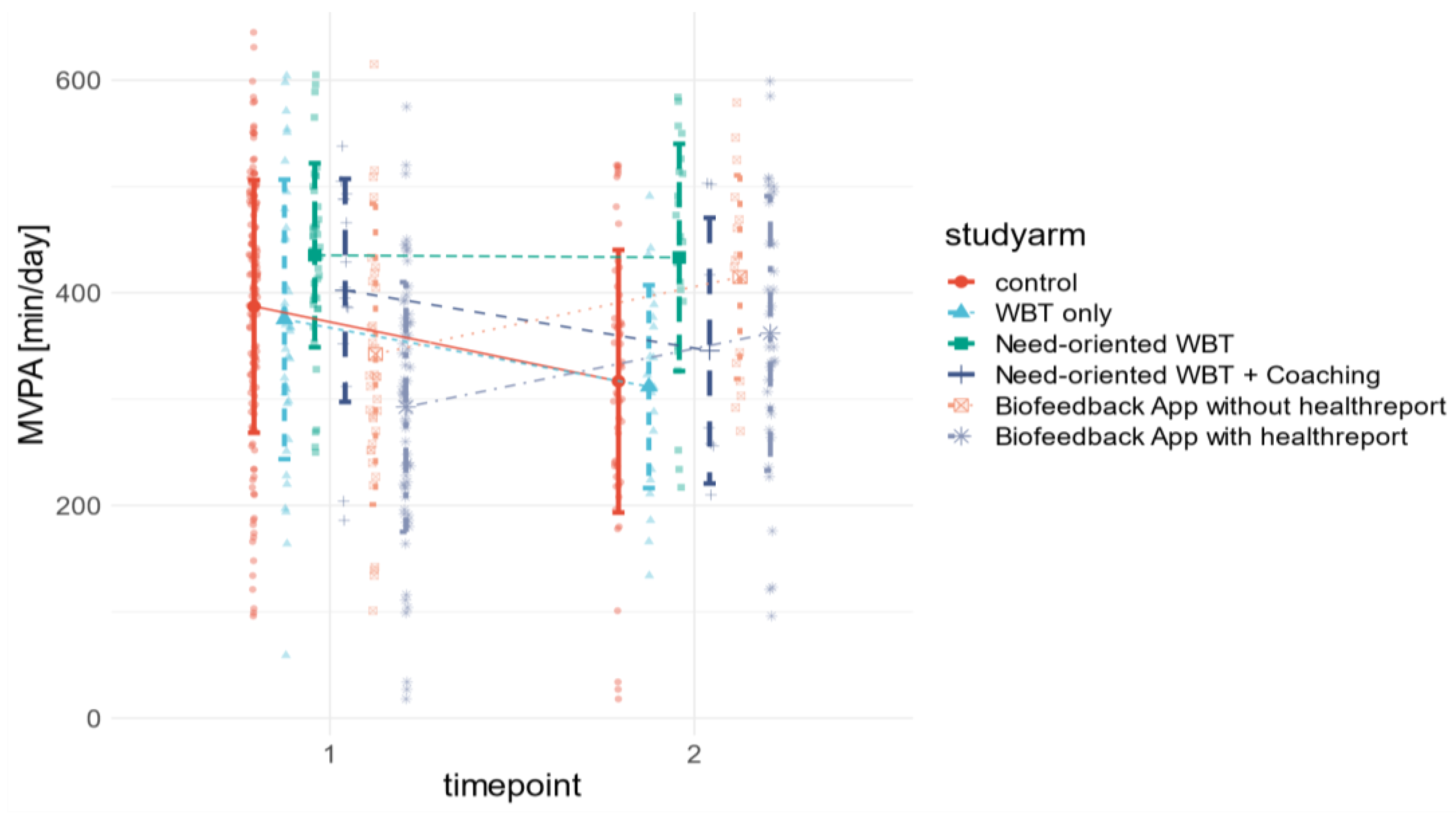
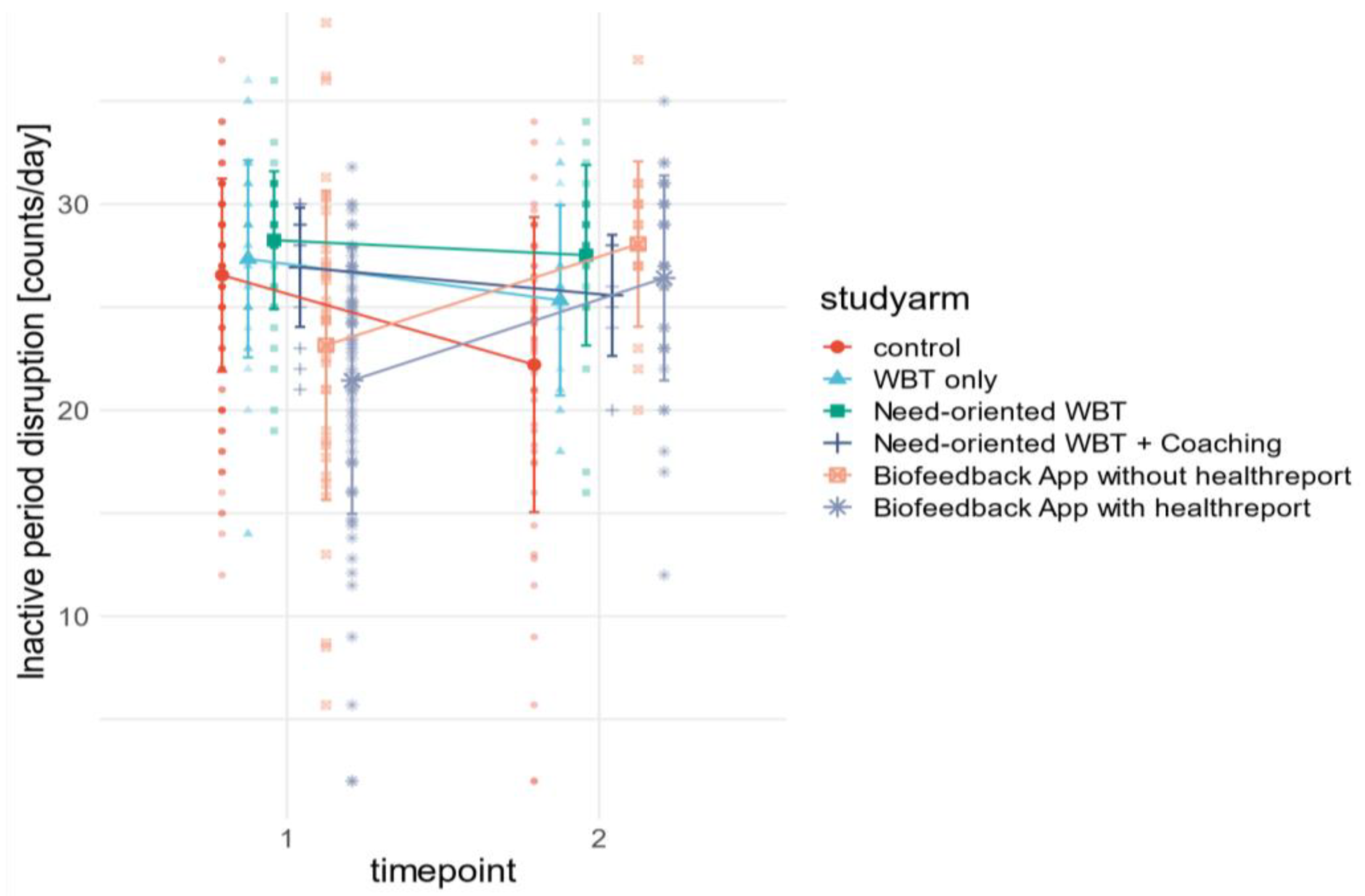
Detrimental effects of chronic stress on healthcare professionals have been well-established, but the implementation and evaluation of effective interventions aimed at improving distress coping remains inadequate. Individualized mHealth interventions incorporating sensor feedback have been proposed as a promising approach. This study aimed to investigate the impact of individualized, sensor-based mHealth interventions focusing on stress and physical activity on distress coping in healthcare professionals. The study utilized a multi-arm, parallel group randomized controlled trial design, comparing five intervention groups (three variations of web-based training and two variations of an app training) that represented varying levels of individualization to a control group. Both self-reported questionnaire data (collected using Limesurvey) as well as electrocardiography and accelerometry-based sensory data (collected using Mesana Sensor) were assessed at baseline and post-intervention (after eight weeks). Of the 995 eligible participants, 170 (26%) completed the post-intervention measurement (Group 1: N = 21; Group 2: N = 23; Group 3: N = 7; Group 4: N = 34; Group 5: N = 16; Control Group: N = 69). MANOVA results indicated small to moderate time-by-group interaction effects for physical activity-related outcomes, including moderate to vigorous physical activity (F(1,5) = 5.8, p = ≤0.001, η2p = 0.057) and inactivity disruption (F(1,5) = 11.2, p = <0.001, η2p = 0.100), in the app-based intervention groups, but not for step counts and inactivity. No changes were observed in stress-related heart rate variability parameters over time. Despite a high dropout rate and a complex study design, the individualized interventions showed initial positive effects on physical activity. However, no significant changes in stress-related outcomes were observed, suggesting that the intervention duration was insufficient to induce physiological adaptations that would result in improved distress coping.
Keywords: biofeedback; tailoring; digital health; nurses; ECG; sensor; eHealth; heart rate variability; accelerometry; health app biofeedback; tailoring; digital health; nurses; ECG; sensor; eHealth; heart rate variability; accelerometry; health app