Article

Geometry Sampling-Based Adaption to DCGAN for 3D Face Generation †

1
Virtual Reality and Interactive Techniques Institute, East China Jiaotong University, Nanchang 330013, China
2
School of Computer Science, Jiangxi Normal University, Nanchang 330022, China
3
School of Information, Xiamen University, Xiamen 361005, China
*
Author to whom correspondence should be addressed.
This paper is an extended version of our paper published in 2020 International Joint Conference on Neural Networks (IJCNN), Glasgow, UK,19–24 July 2020.
Sensors 2023, 23(4), 1937; https://doi.org/10.3390/s23041937
Submission received: 28 December 2022 / Revised: 27 January 2023 / Accepted: 31 January 2023 / Published: 9 February 2023

Abstract

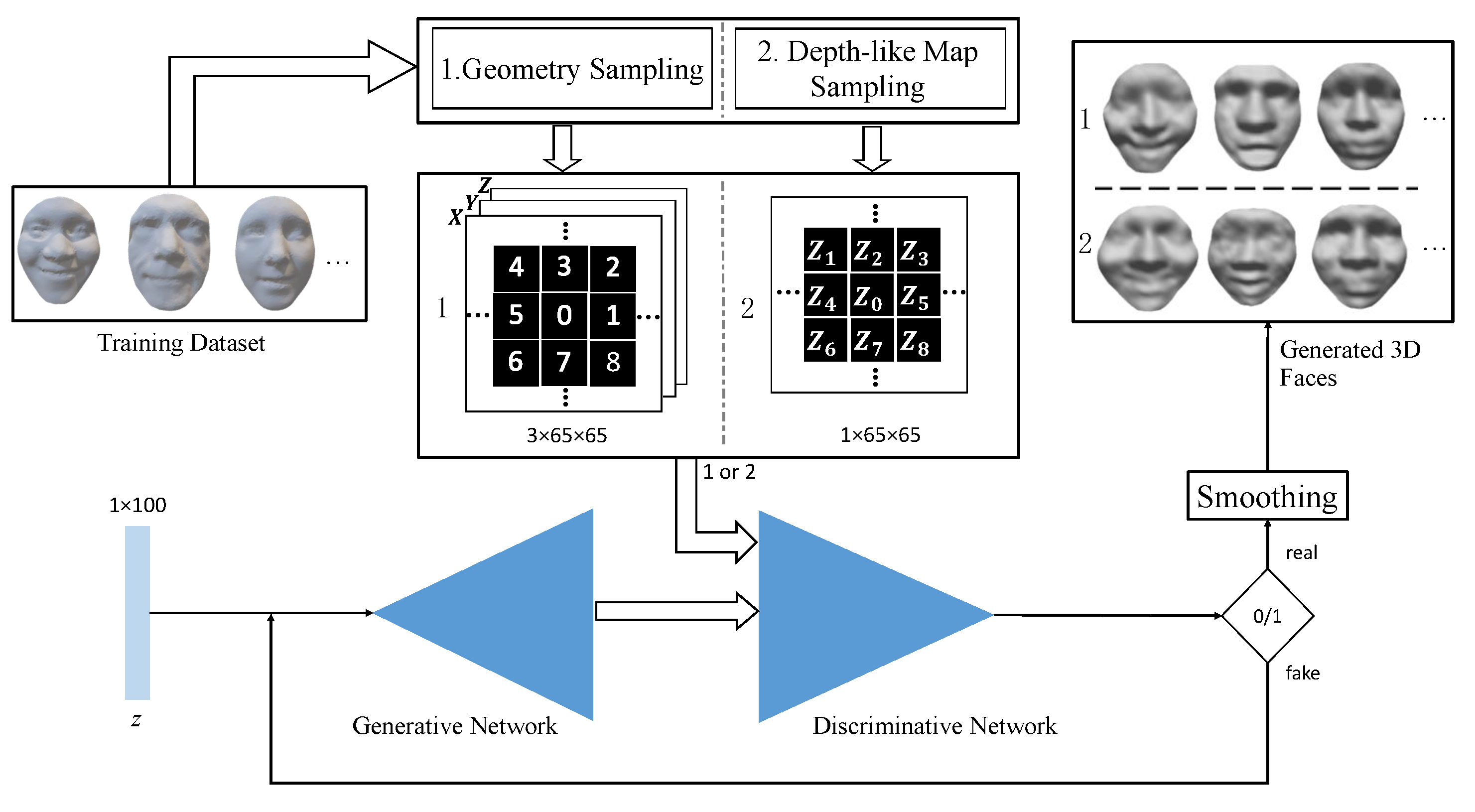
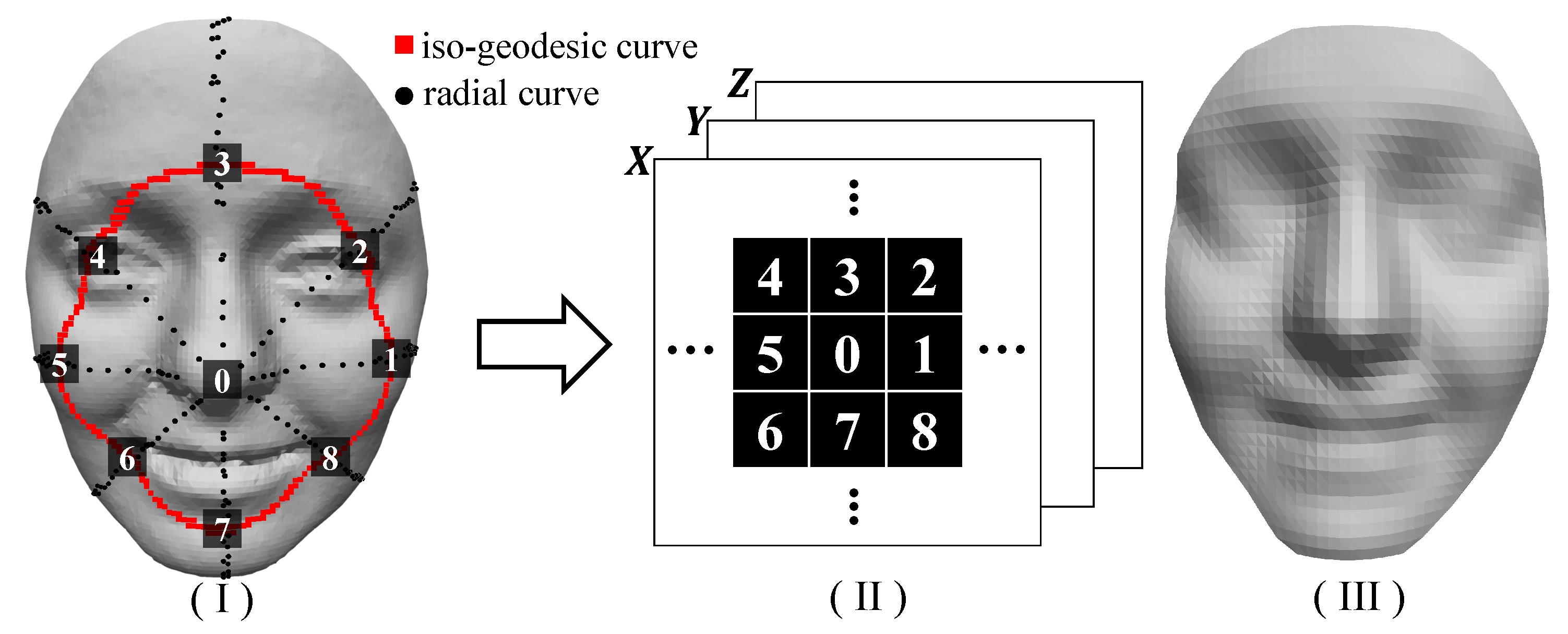
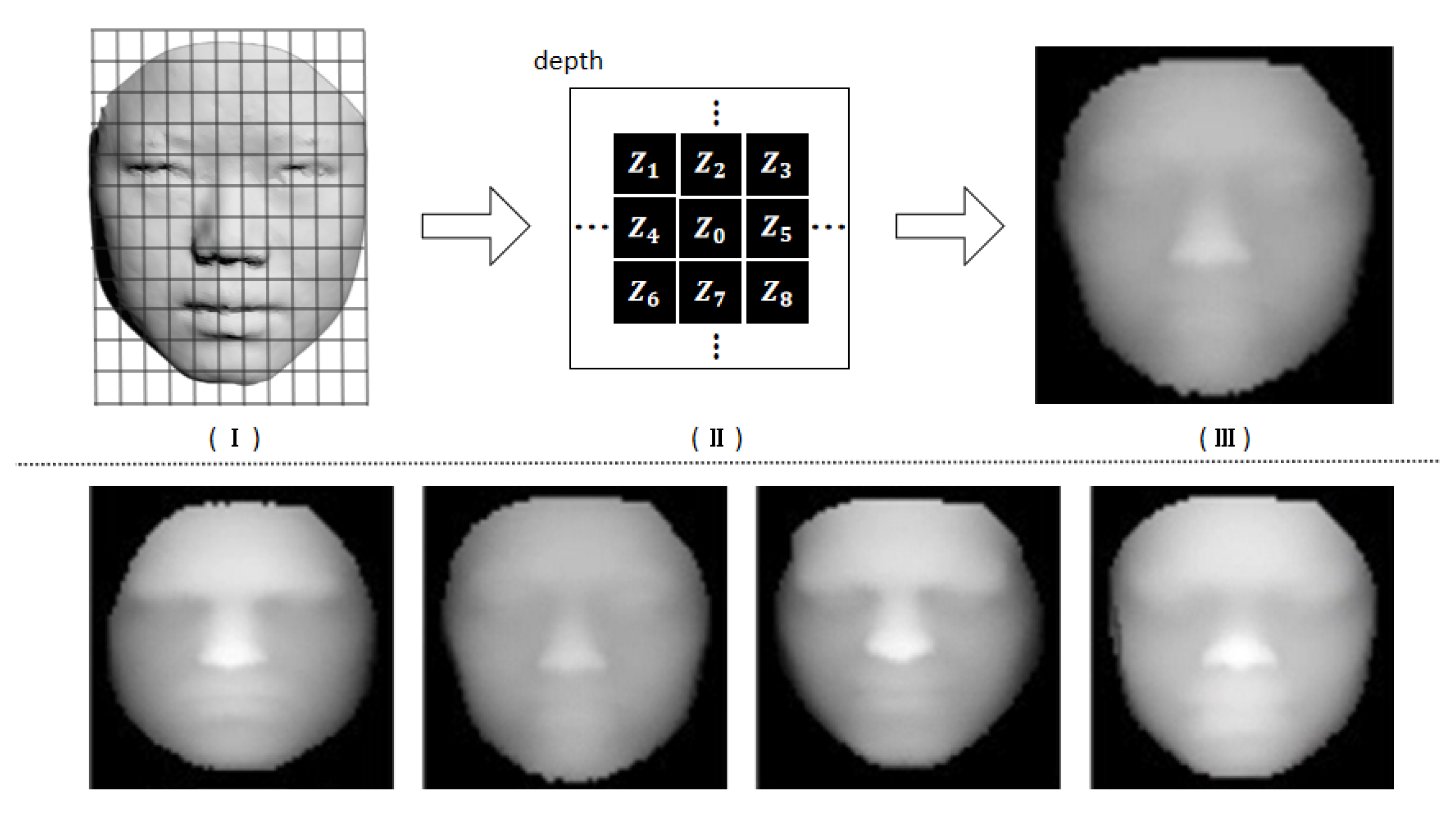
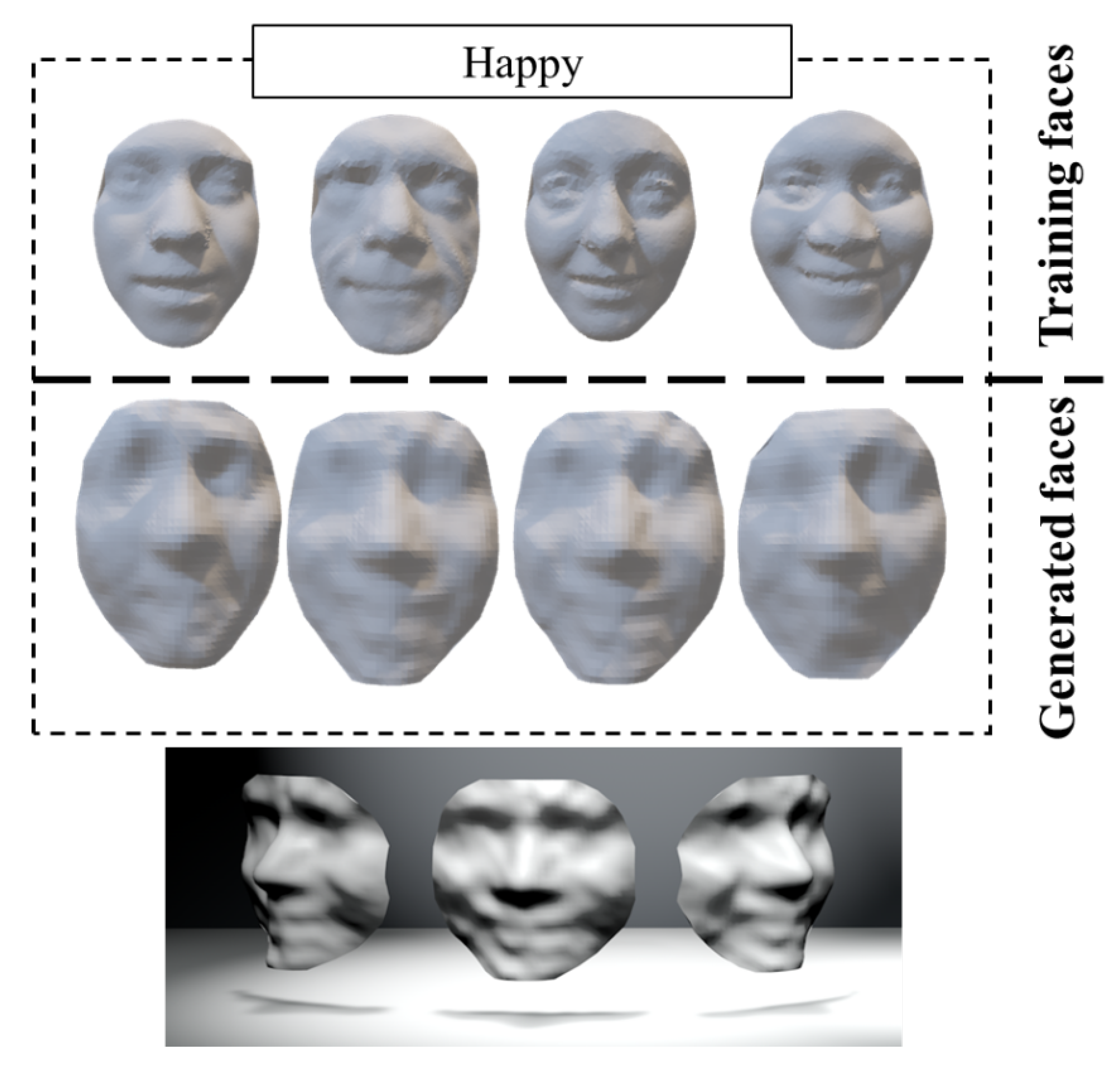
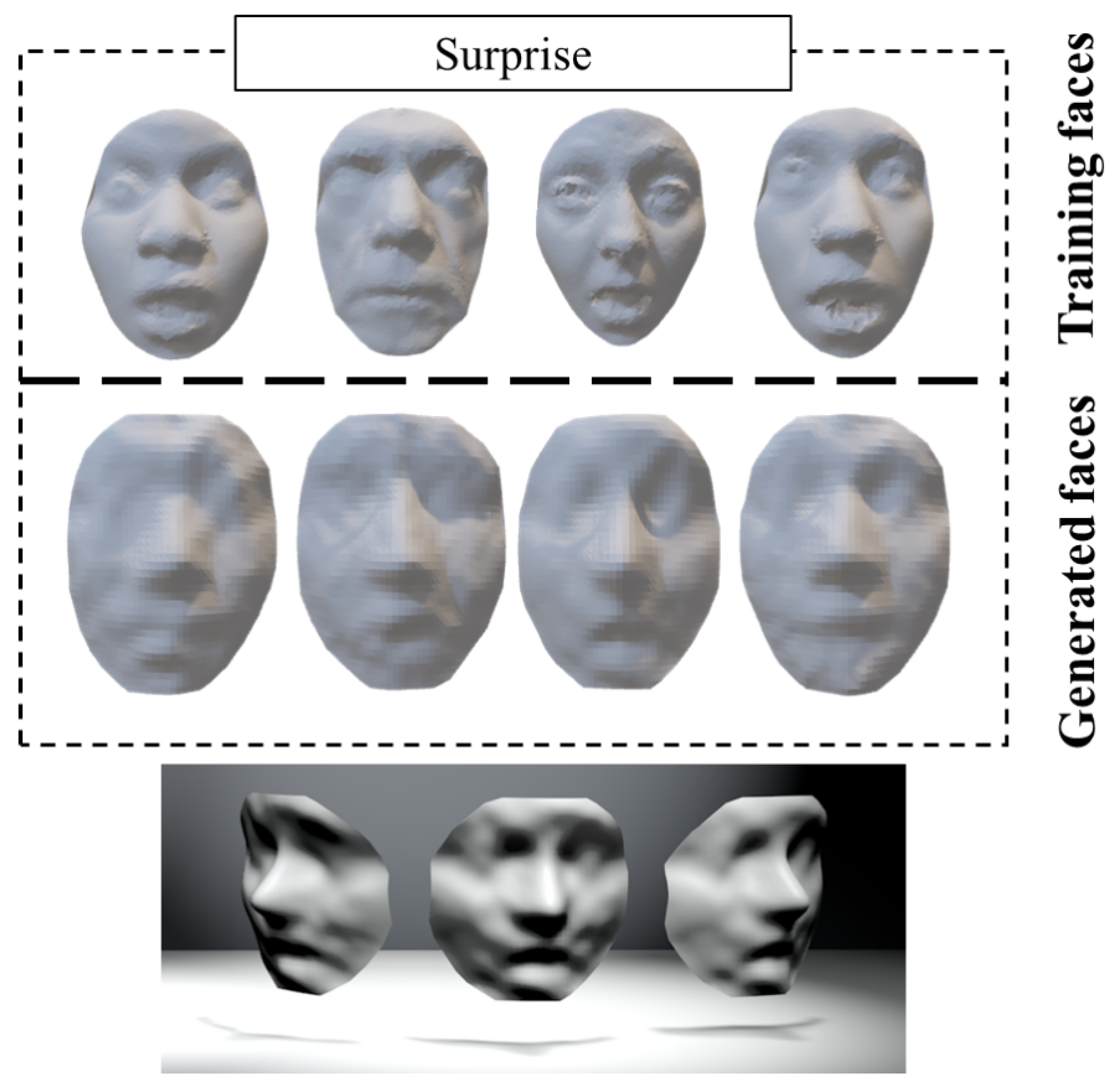
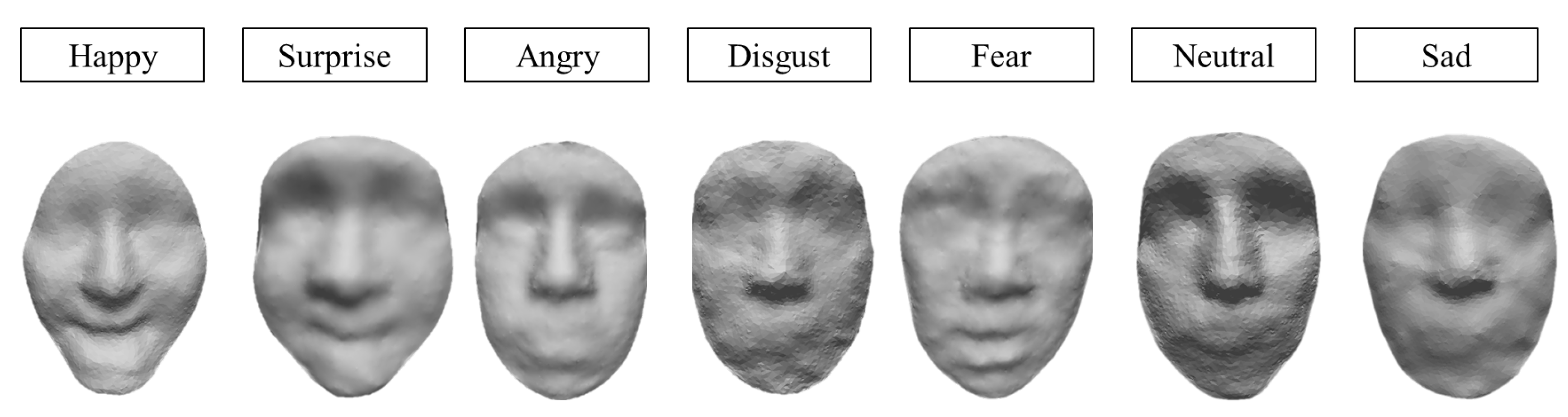
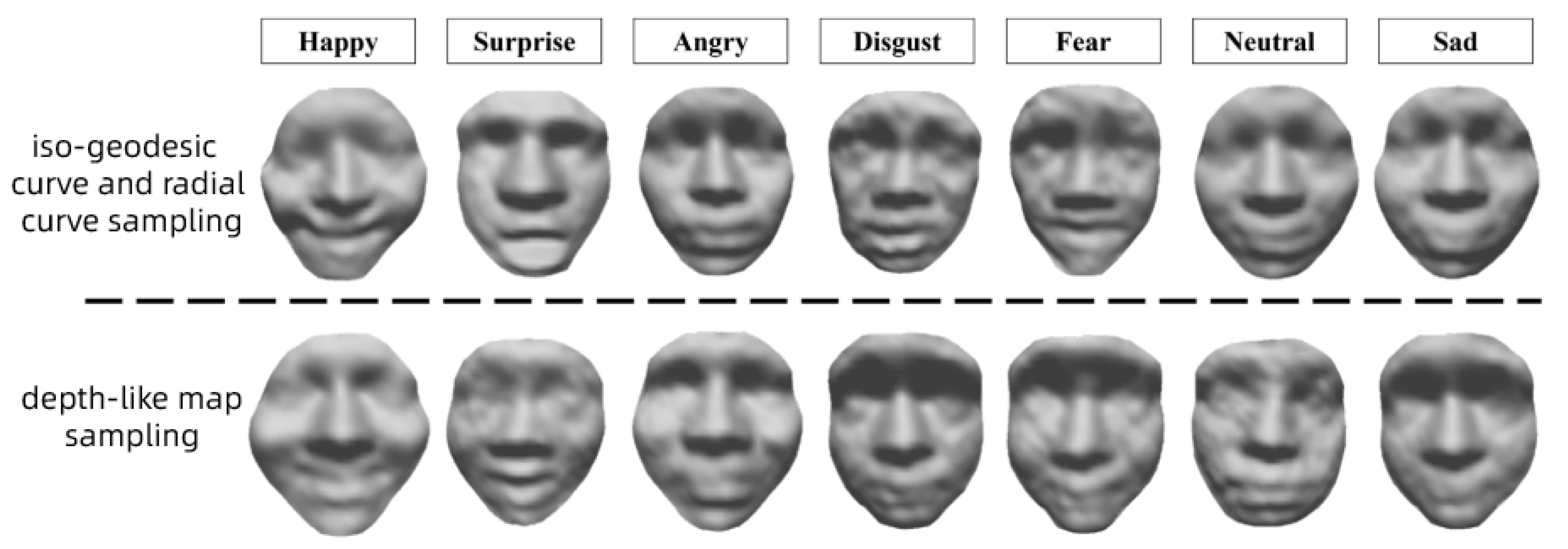
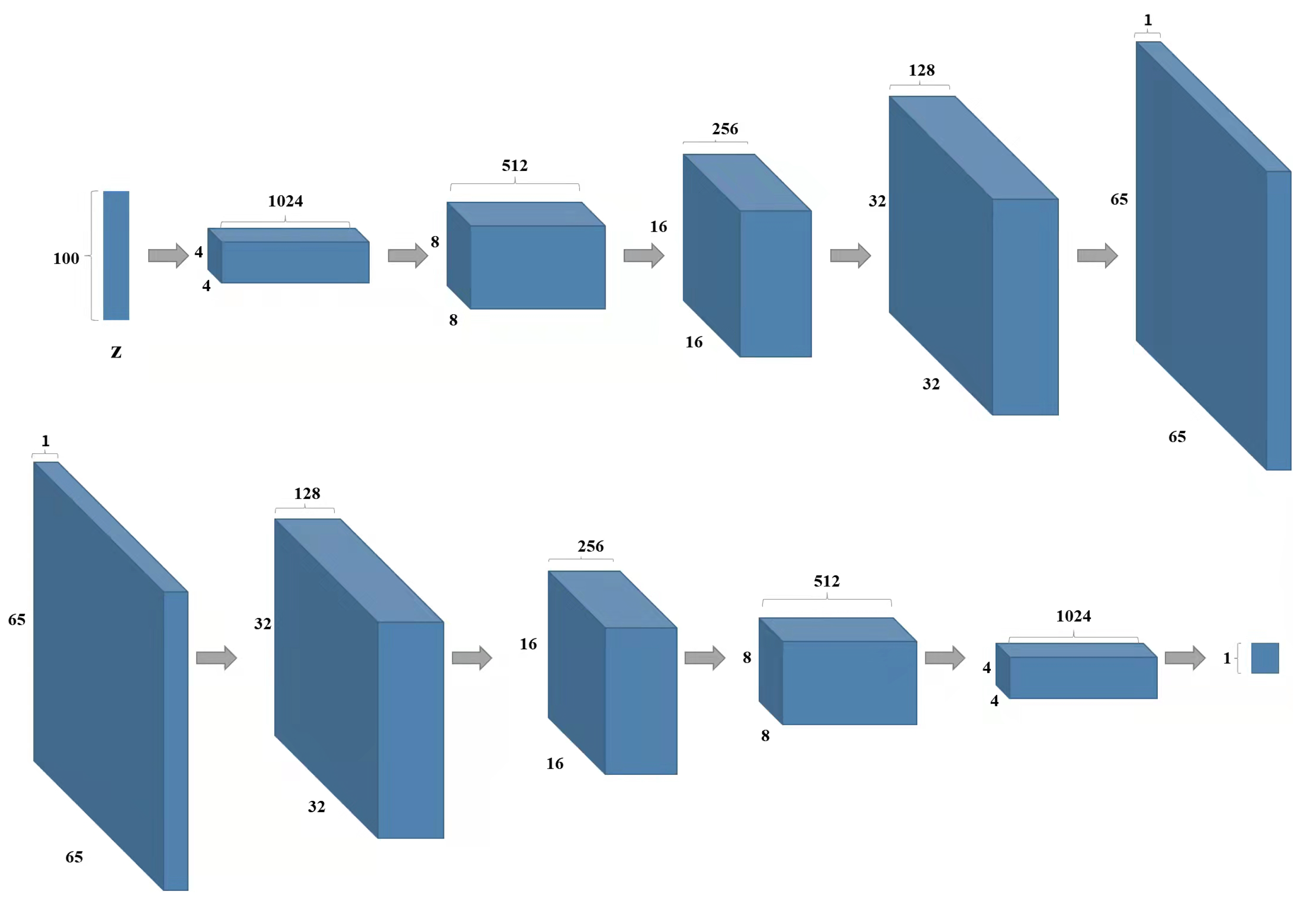
Despite progress in the past decades, 3D shape acquisition techniques are still a threshold for various 3D face-based applications and have therefore attracted extensive research. Moreover, advanced 2D data generation models based on deep networks may not be directly applicable to 3D objects because of the different dimensionality of 2D and 3D data. In this work, we propose two novel sampling methods to represent 3D faces as matrix-like structured data that can better fit deep networks, namely (1) a geometric sampling method for the structured representation of 3D faces based on the intersection of iso-geodesic curves and radial curves, and (2) a depth-like map sampling method using the average depth of grid cells on the front surface. The above sampling methods can bridge the gap between unstructured 3D face models and powerful deep networks for an unsupervised generative 3D face model. In particular, the above approaches can obtain the structured representation of 3D faces, which enables us to adapt the 3D faces to the Deep Convolution Generative Adversarial Network (DCGAN) for 3D face generation to obtain better 3D faces with different expressions. We demonstrated the effectiveness of our generative model by producing a large variety of 3D faces with different expressions using the two novel down-sampling methods mentioned above.
Keywords: geometry sampling; 3D face generation; depth-like map sampling; structured representation; DCGAN geometry sampling; 3D face generation; depth-like map sampling; structured representation; DCGAN