Article

IoMT-Enabled Computer-Aided Diagnosis of Pulmonary Embolism from Computed Tomography Scans Using Deep Learning


1
Department of Computer Science, Bacha Khan University, Charsadda (BKUC), Charsadda 24420, Pakistan
2
Department of Computer Science, Institute of Space Technology, Islamabad 44000, Pakistan
3
Department of Computer Engineering, College of Electrical and Mechanical Engineering, National University of Sciences and Technology (NUST), H12, Islamabad 44000, Pakistan
4
Department of Computer Engineering, Gachon University, Seongnam 13120, Republic of Korea
5
Department of Robotics, Hanyang University, Ansan-si 15588, Republic of Korea
*
Authors to whom correspondence should be addressed.
Sensors 2023, 23(3), 1471; https://doi.org/10.3390/s23031471
Submission received: 17 October 2022 / Revised: 9 January 2023 / Accepted: 11 January 2023 / Published: 28 January 2023
(This article belongs to the Special Issue Artificial Intelligence and Advances in Smart IoT)

Abstract

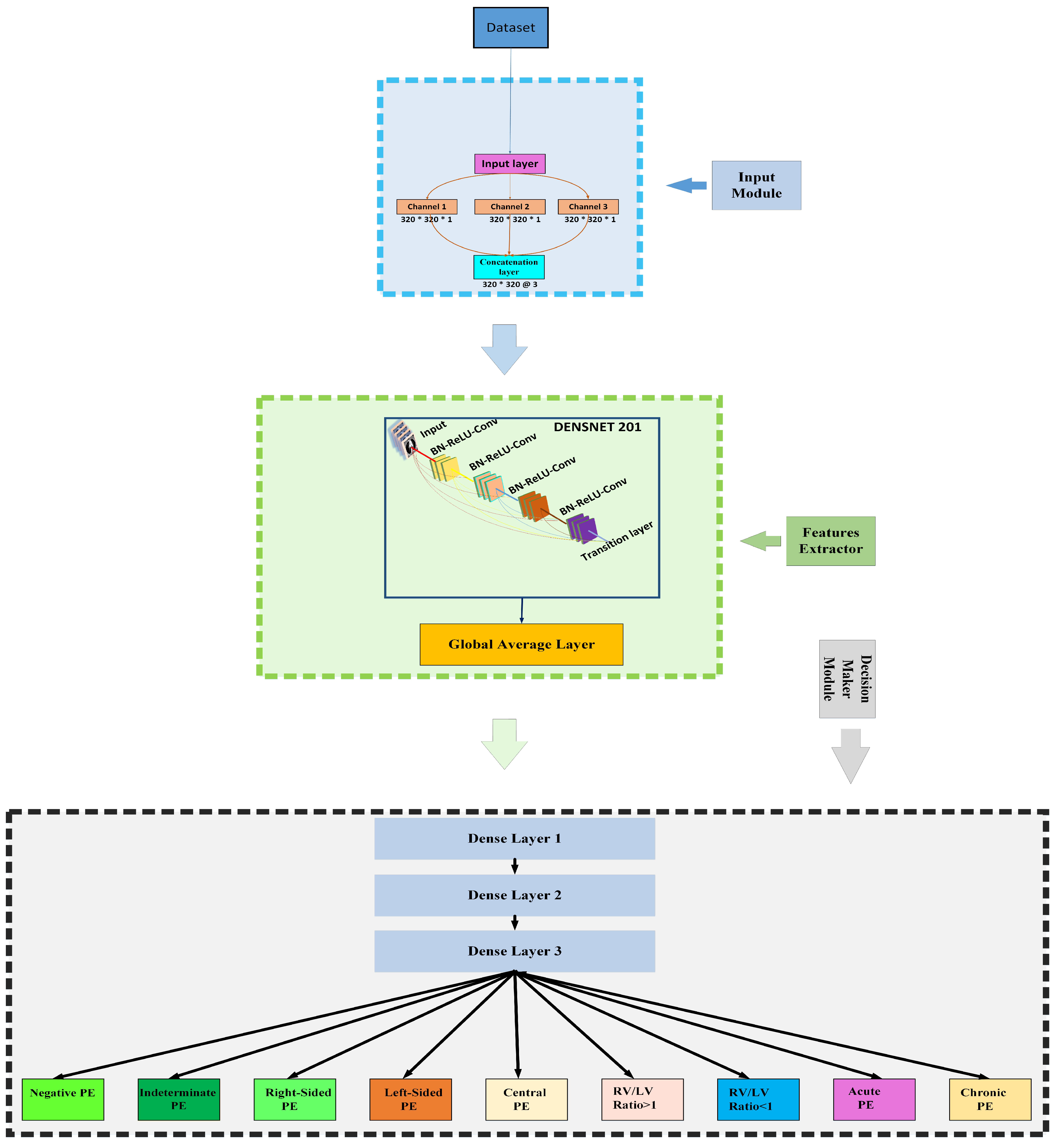
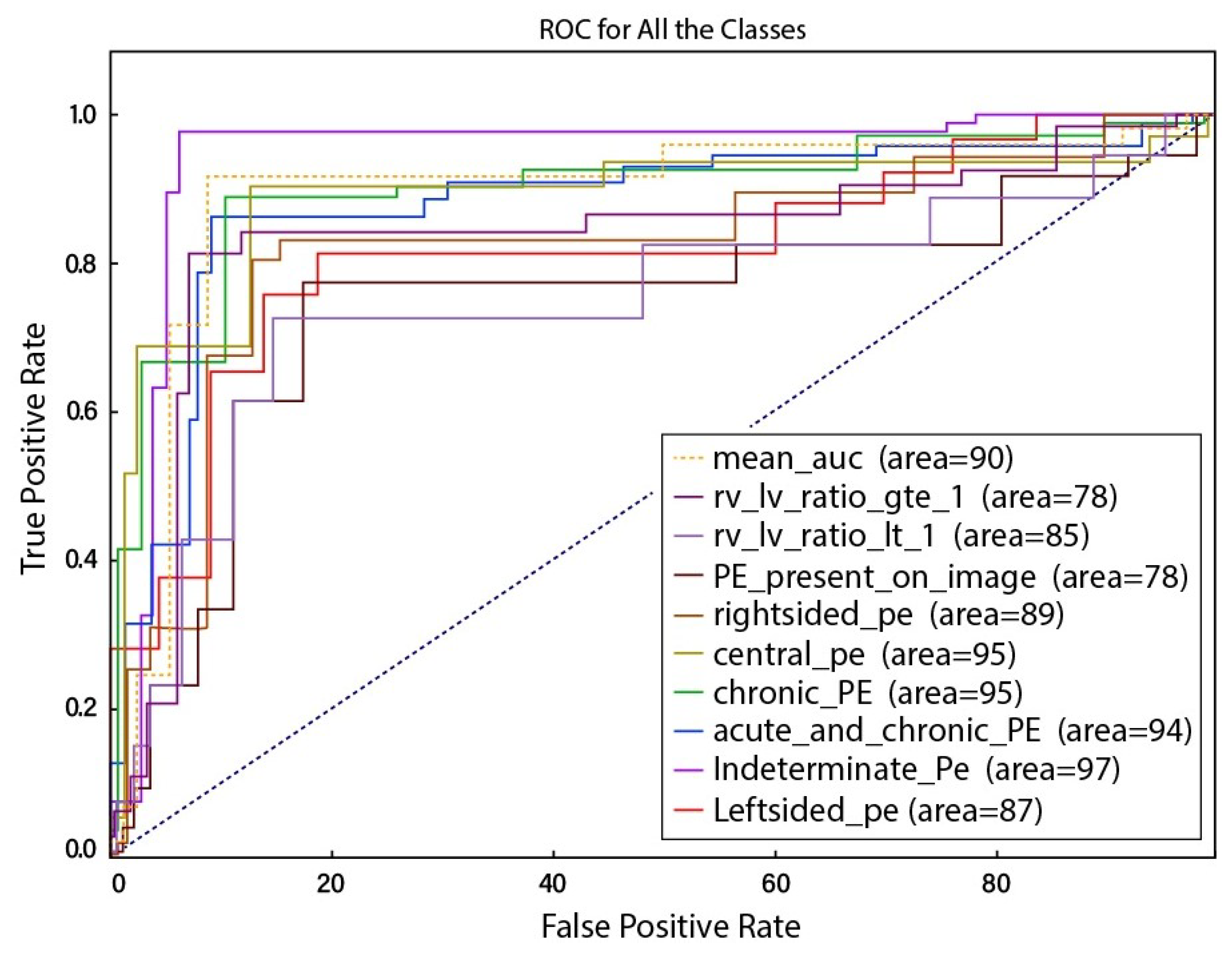
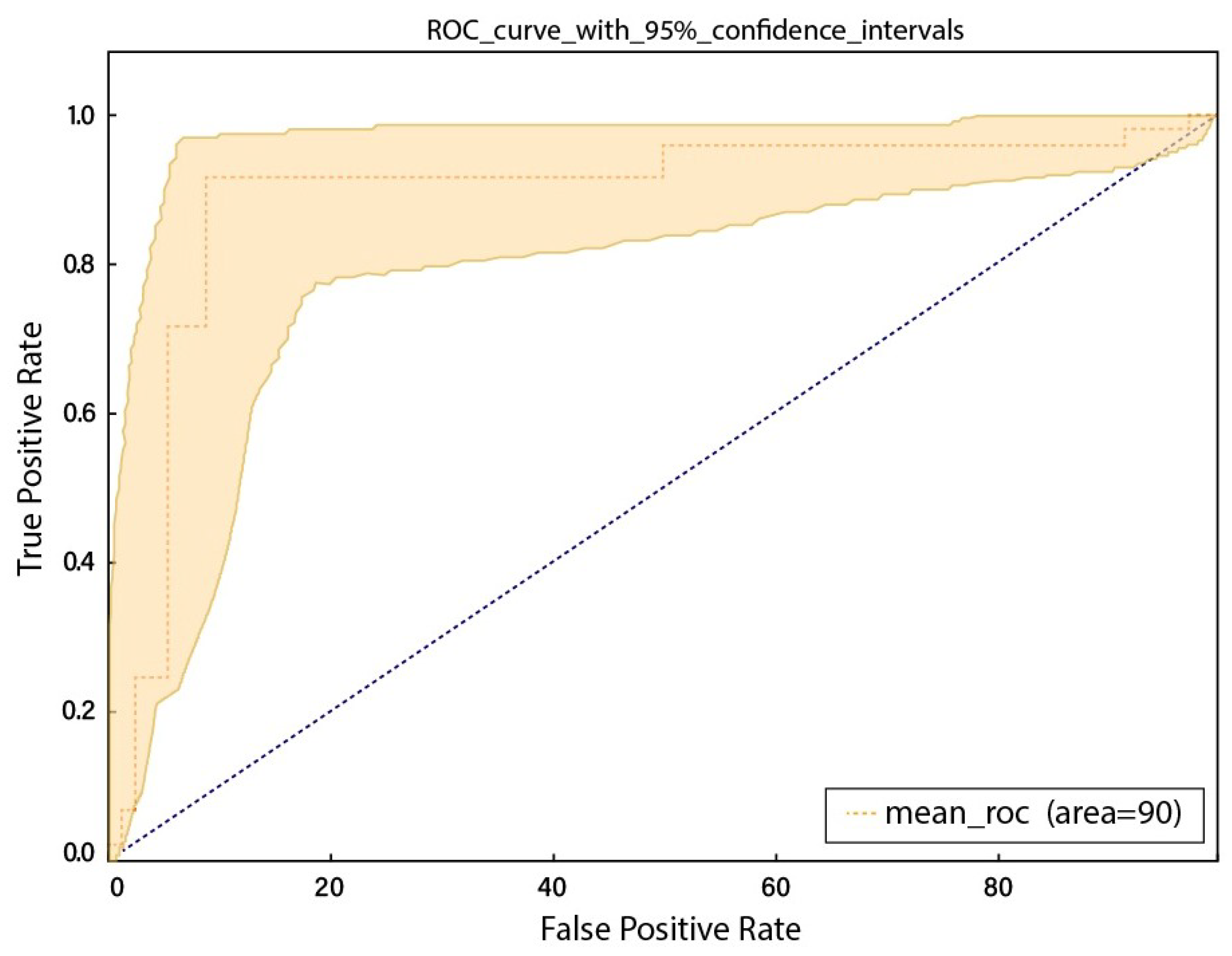
The Internet of Medical Things (IoMT) has revolutionized Ambient Assisted Living (AAL) by interconnecting smart medical devices. These devices generate a large amount of data without human intervention. Learning-based sophisticated models are required to extract meaningful information from this massive surge of data. In this context, Deep Neural Network (DNN) has been proven to be a powerful tool for disease detection. Pulmonary Embolism (PE) is considered the leading cause of death disease, with a death toll of 180,000 per year in the US alone. It appears due to a blood clot in pulmonary arteries, which blocks the blood supply to the lungs or a part of the lung. An early diagnosis and treatment of PE could reduce the mortality rate. Doctors and radiologists prefer Computed Tomography (CT) scans as a first-hand tool, which contain 200 to 300 images of a single study for diagnosis. Most of the time, it becomes difficult for a doctor and radiologist to maintain concentration going through all the scans and giving the correct diagnosis, resulting in a misdiagnosis or false diagnosis. Given this, there is a need for an automatic Computer-Aided Diagnosis (CAD) system to assist doctors and radiologists in decision-making. To develop such a system, in this paper, we proposed a deep learning framework based on DenseNet201 to classify PE into nine classes in CT scans. We utilized DenseNet201 as a feature extractor and customized fully connected decision-making layers. The model was trained on the Radiological Society of North America (RSNA)-Pulmonary Embolism Detection Challenge (2020) Kaggle dataset and achieved promising results of 88%, 88%, 89%, and 90% in terms of the accuracy, sensitivity, specificity, and Area Under the Curve (AUC), respectively.
Keywords: pulmonary embolism; computed tomography scans; computer-aided diagnosis (CAD); deep learning; CNN; DenseNet201 pulmonary embolism; computed tomography scans; computer-aided diagnosis (CAD); deep learning; CNN; DenseNet201