Young Novice Drivers’ Cognitive Distraction Detection: Comparing Support Vector Machines and Random Forest Model of Vehicle Control Behavior

Abstract
1. Introduction
2. Methods
2.1. Apparatus
2.2. Scenario Design
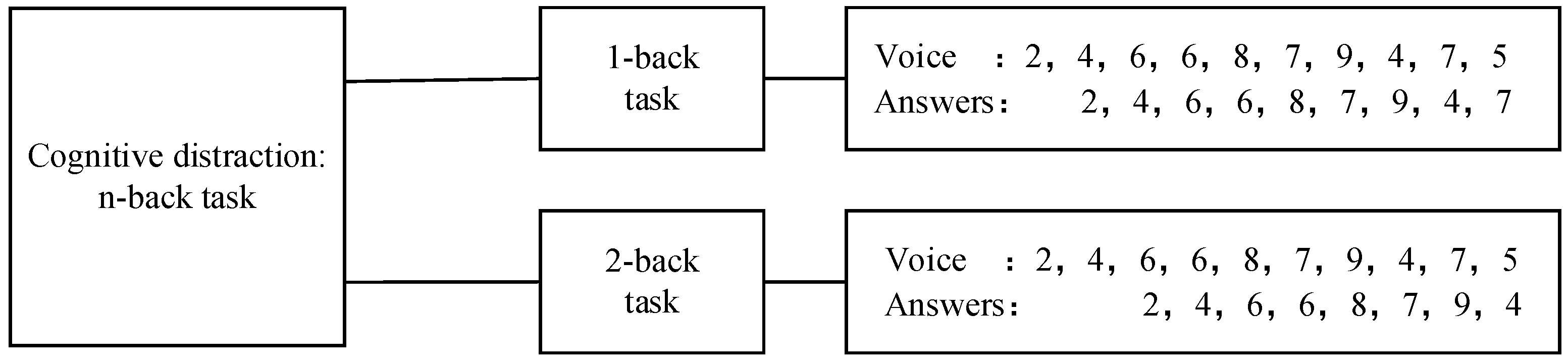
2.3. Secondary Tasks
2.4. Participants and Procedure
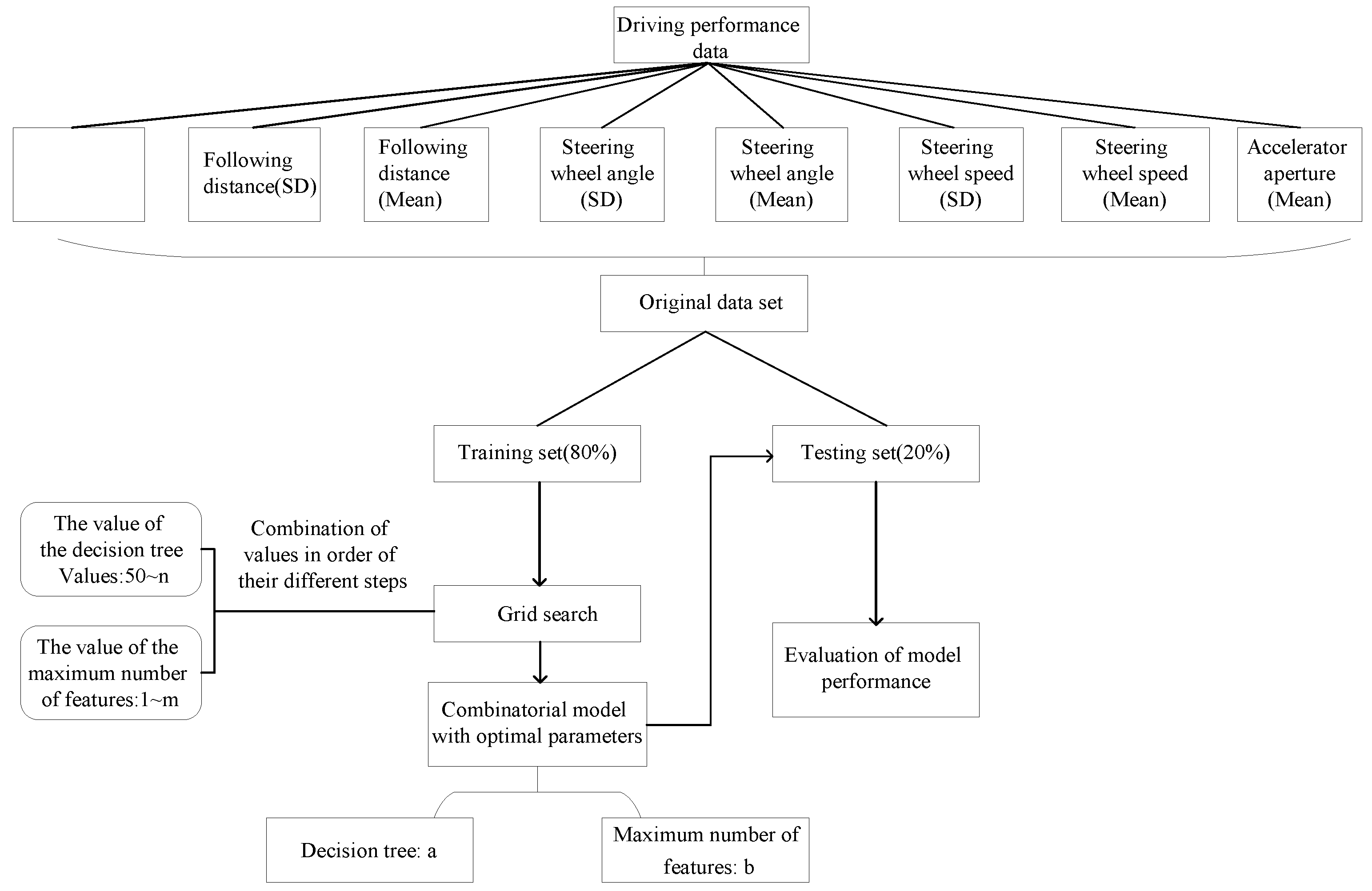
2.5. Model Construction
2.5.1. Support Vector Machines
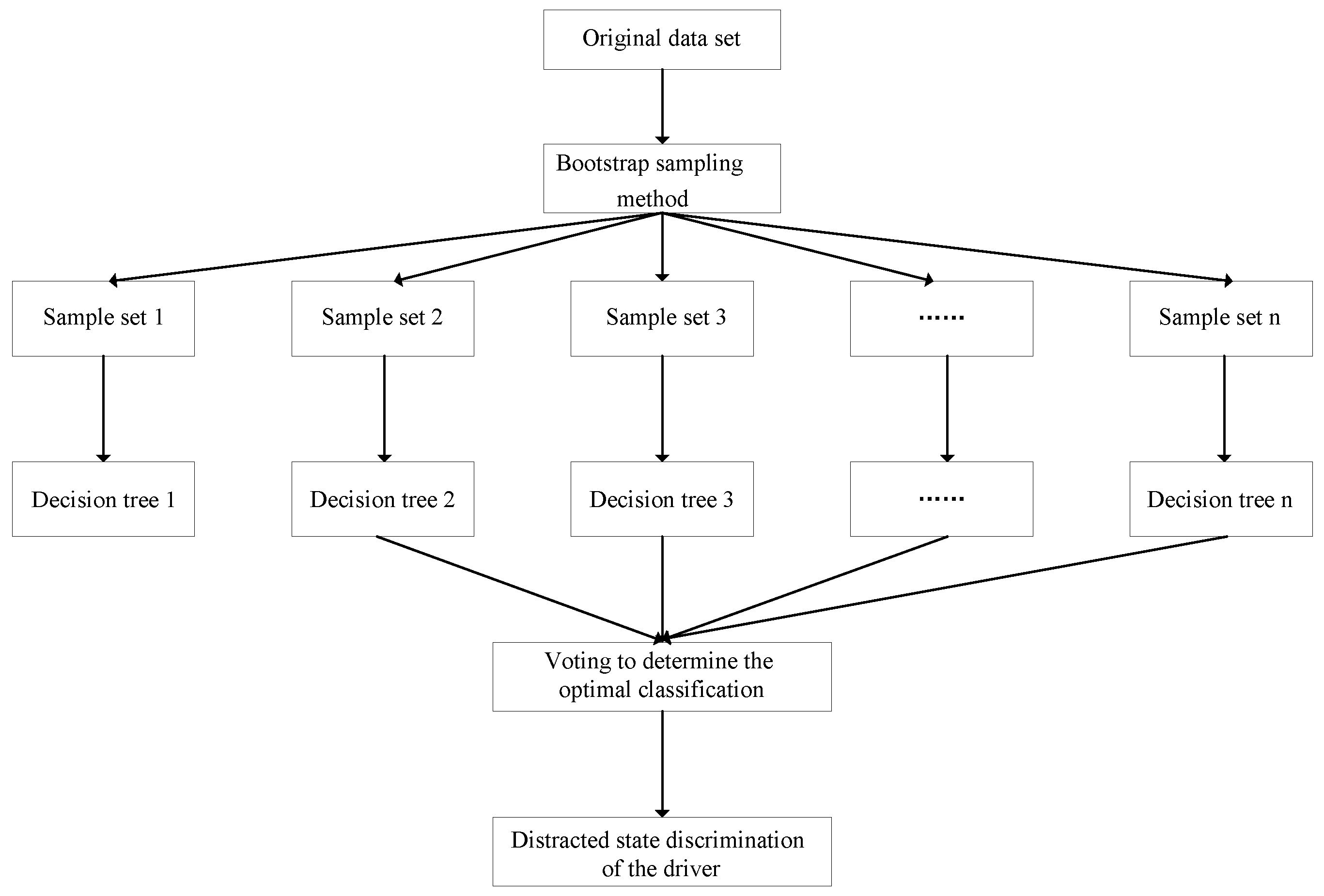
2.5.2. Random Forest Model
2.6. Indicators for Cognitive Distraction Detection
3. Analysis of Significant Differences in Distraction Indicators
3.1. Lateral Driving Performance
3.1.1. Steering Wheel Angle
3.1.2. Steering Wheel Speed
3.2. Longitudinal Driving Performance
3.2.1. Longitudinal Speed
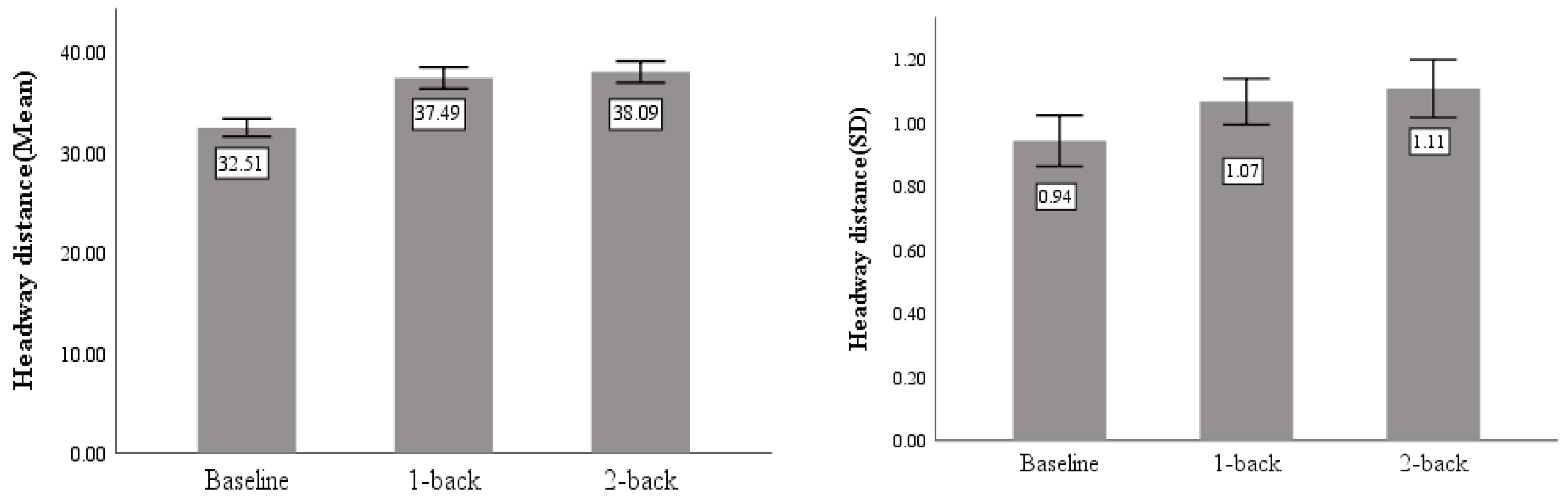
3.2.2. Headway Distance
3.2.3. Throttle Angle
4. Drivers’ Cognitive Distraction Detection
4.1. SVM Model Classification Results
4.2. Random Forest Classification Results
4.3. Comparison of SVM and RF Classification Results
5. Discussion and Conclusions
- (1)
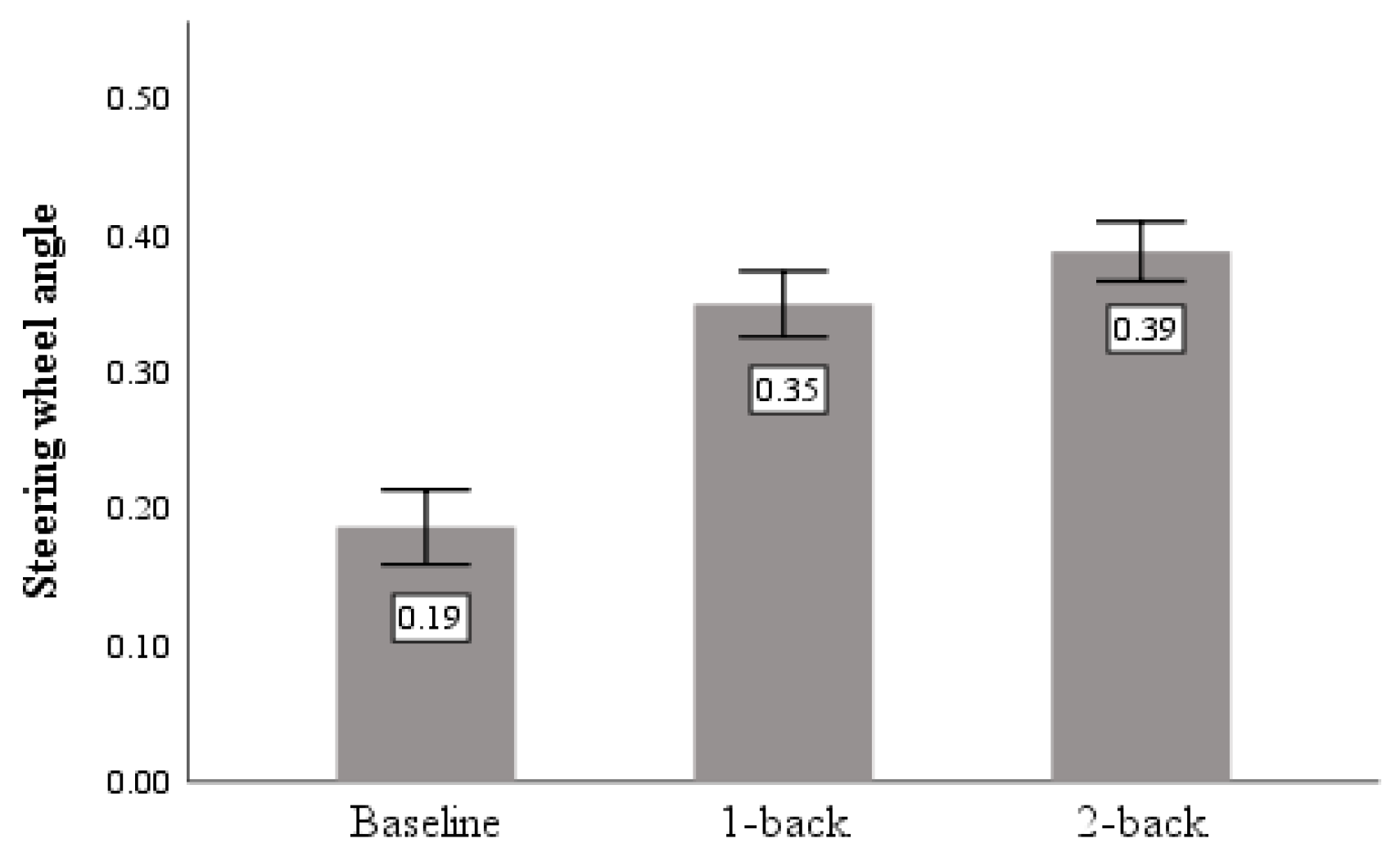
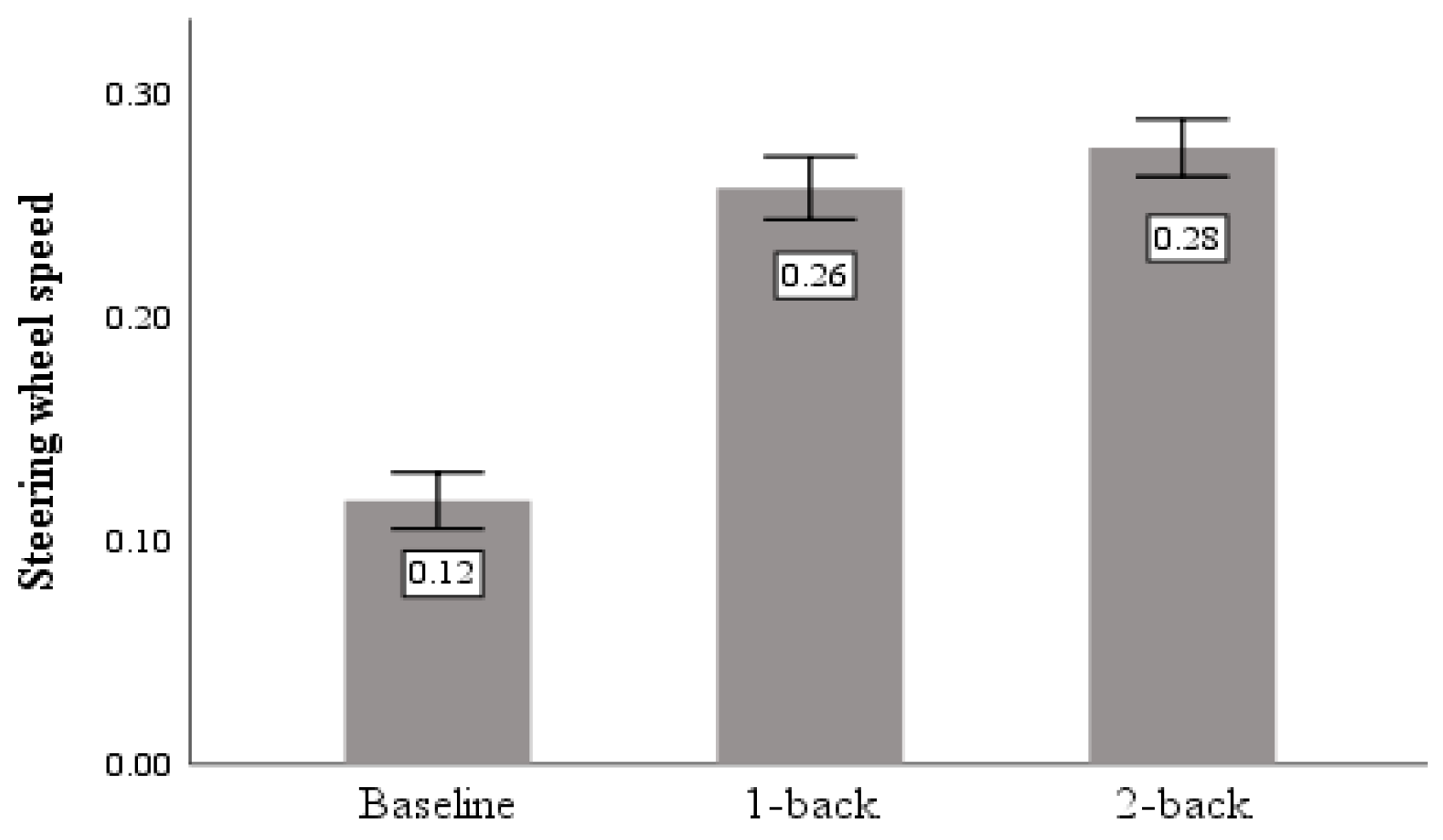
- To investigate the effect of cognitive distraction on the ability of young drivers to control the vehicle in both lateral and longitudinal directions during driving, drivers were provided with two different cognitive loads through an n-back task, and a one-way ANOVA was used to analyze the significance of the extracted feature data, yielding differences in driving performance data between the cognitive load and baseline conditions. For lateral driving performance, consistent with previous studies [18,52], the mean and standard deviation of steering wheel speed became gradually larger as the cognitive load increased and the level of distraction increased. This indicates that drivers were influenced by cognitive distraction during driving and adopted the compensatory behavior of frequently correcting the steering wheel to reduce lateral fluctuations of the vehicle in order to increase lateral safety of the vehicle, and this compensation behavior is positively correlated with the degree of cognitive distraction.
- (2)
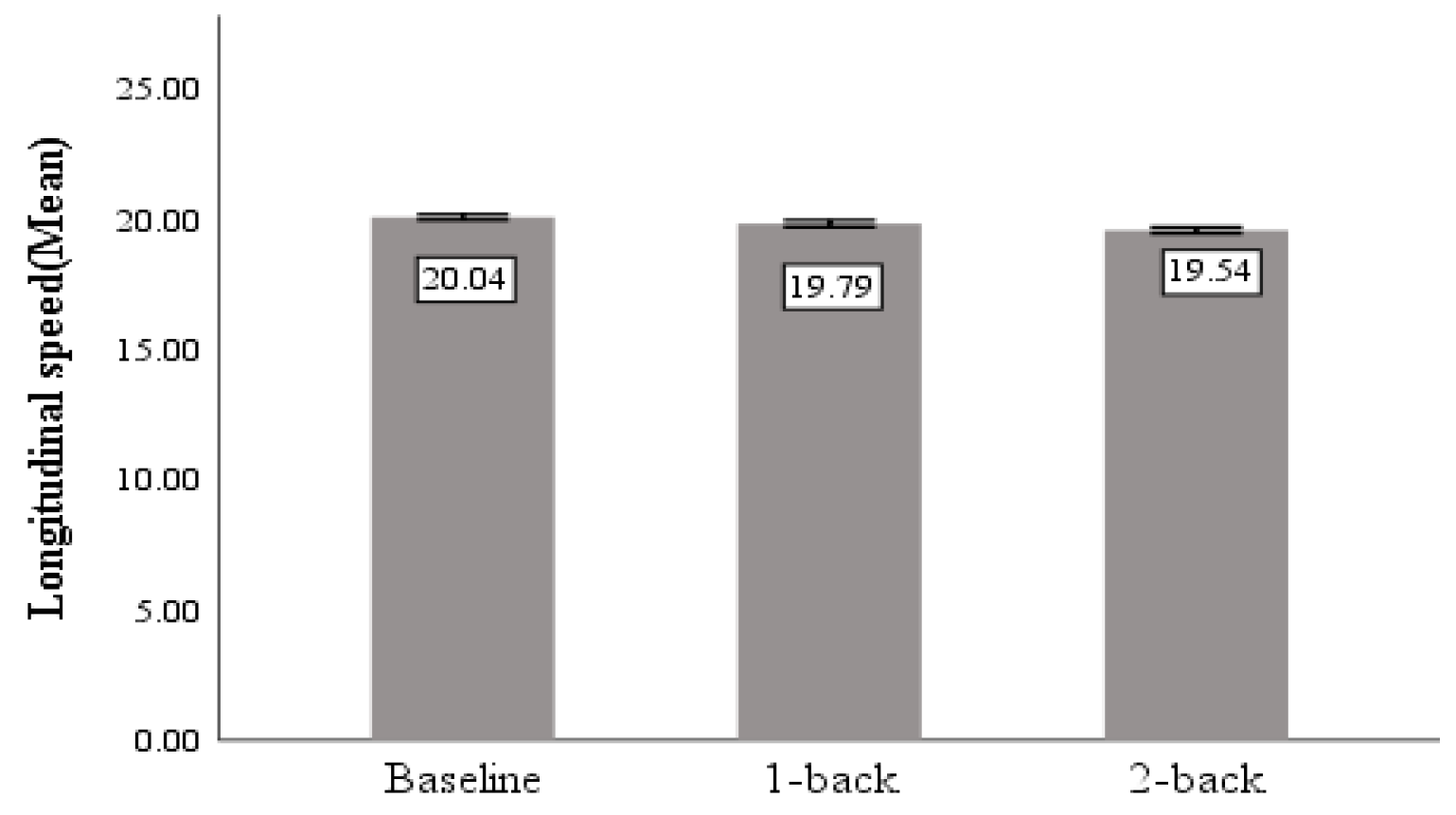
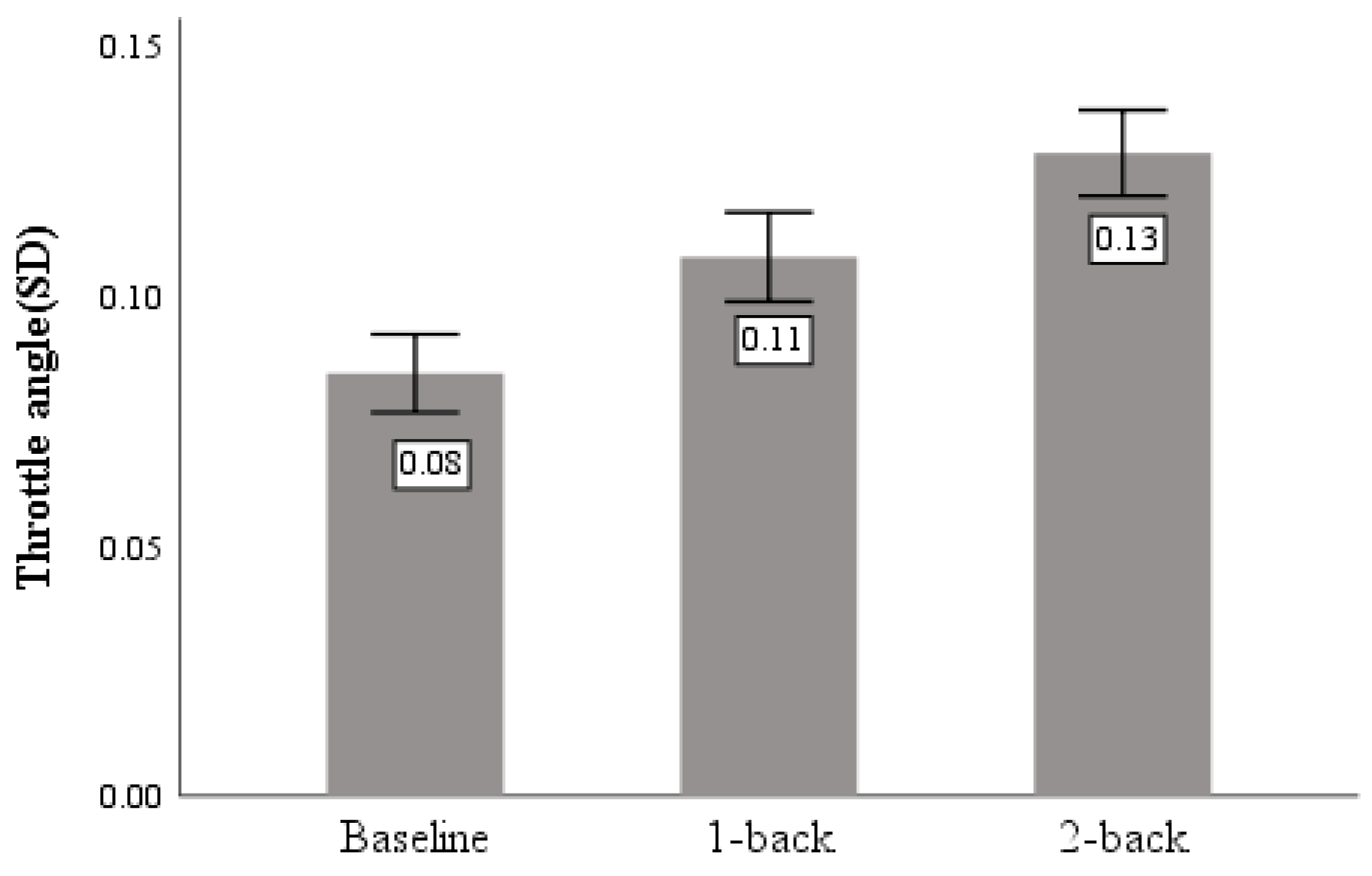
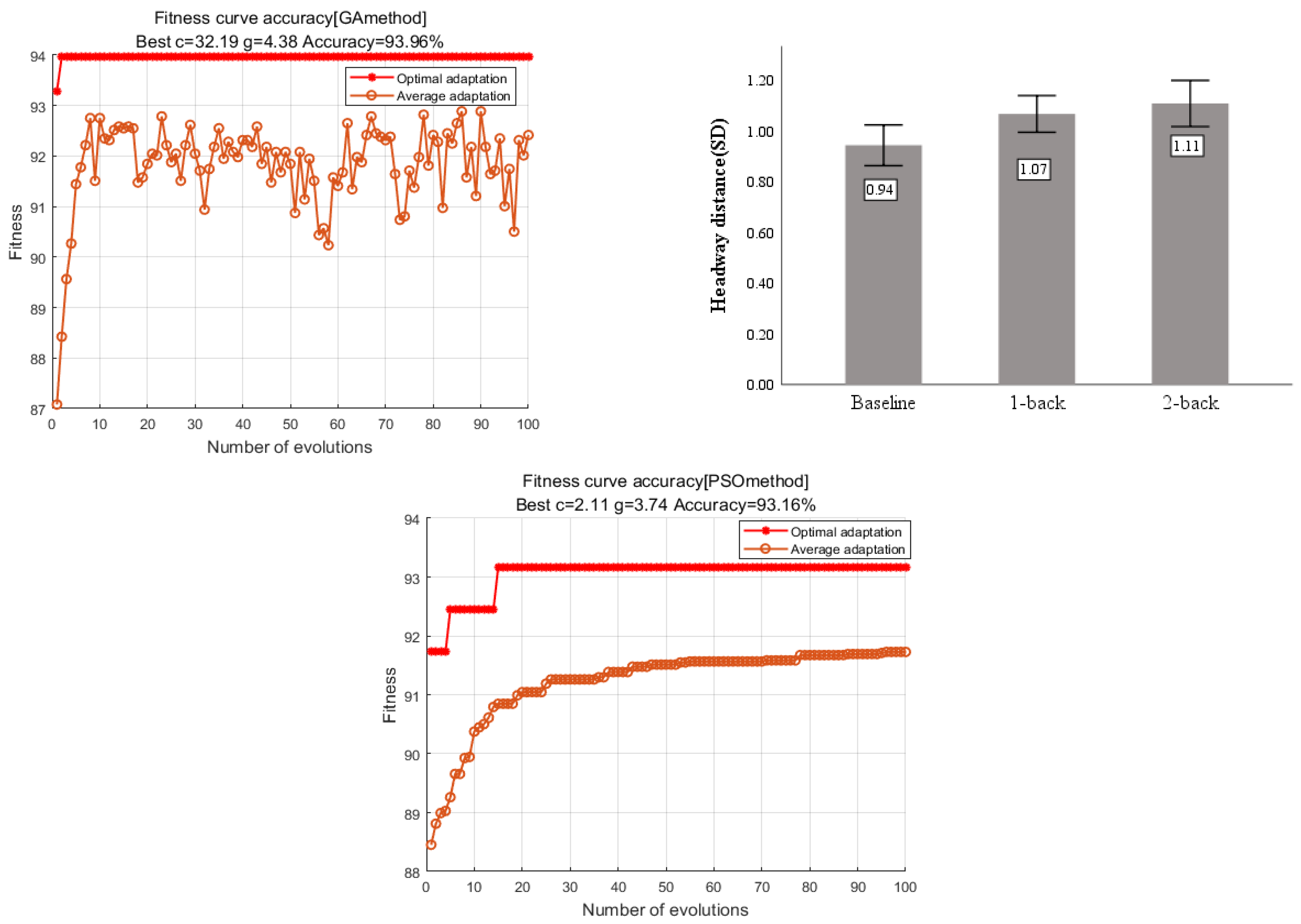
- In terms of longitudinal driving performance, as the difficulty of cognitive dis-traction increased, the standard deviation of the gas pedal increased, the mean value of longitudinal speed tended to decrease, and the mean and standard deviation of headway time distance increased. This indicates that participants’ ability to maneuver the vehicle longitudinally was affected by cognitive distraction, and the safety of vehicle longitudinal following was ensured by adopting frequent control of the gas pedal and reducing the speed, which made the vehicle’s following stability becomes less stable and the headway time distance becomes larger, which remains consistent with previous studies [23,25,26].
- (3)
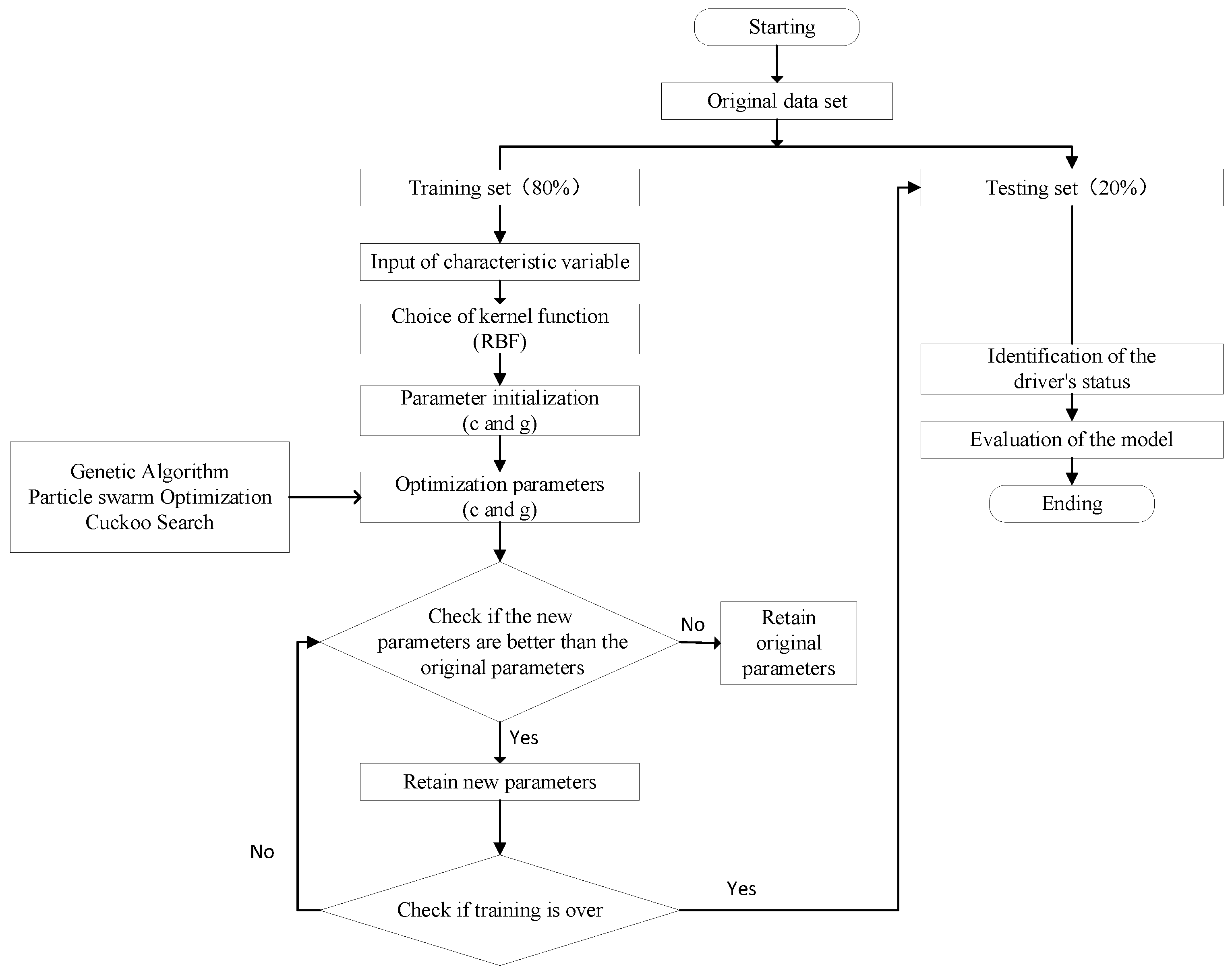
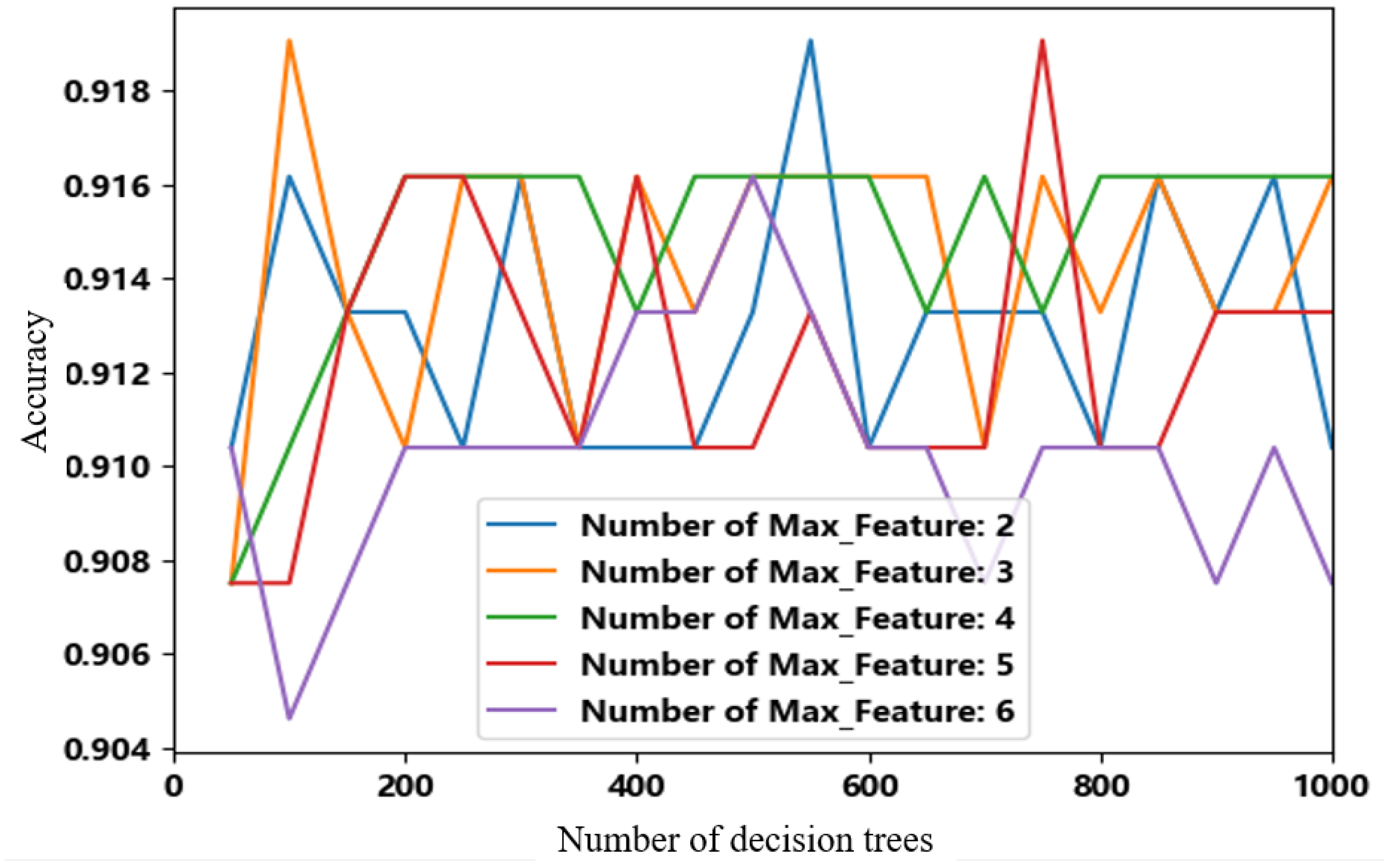
- The data of indicators with significant differences between normal driving states and distracted driving states were divided into two categories: horizontal only and vertical only. A combination of horizontal and vertical indicators were selected as the input of the model, and SVM and random forest discriminant models were used to identify distracted states, respectively, where the SVM model used three different algorithms to optimize the parameters of the model parameters c and g. The results showed that the parameter-optimized SVM model outperforms the random forest model in terms of accuracy, precision, recall, F1 value, and other model performance metrics, with the genetic algorithm having the best parameter optimization. For both lateral and longitudinal indicators, the recognition effect of lateral indicators is better than that of longitudinal indicators, which also indicates that the driver is more inclined to control the lateral operation control of the vehicle in the process of cognitive distraction.
- (1)
- It provides theoretical support for the study of the intrinsic correlation mechanism between distracted driving and driving behavior operations.
- (2)
- It facilitates targeted detection of driver attention and research on distracted warning systems.
- (3)
- It provides model support for intelligent assisted driving and vehicle safety technology.
Author Contributions
Funding
Institutional Review Board Statement
Informed Consent Statement
Data Availability Statement
Conflicts of Interest
References
- World Health Organization. Global Status Report on Road Safety 2015; World Health Organization: Geneve, Switzerland, 2015.
- Nee, M.; Contrand, B.; Orriols, L.; Gil-Jardine, C.; Galera, C.; Lagarde, E. Road safety and distraction, results from a responsibility case-control study among a sample of road users interviewed at the emergency room. Accid. Anal. Prev. 2019, 122, 19–24. [Google Scholar] [CrossRef] [PubMed]
- Beanland, V.; Fitzharris, M.; Young, K.L.; Lenné, M.G. Corrigendum to “Driver inattention and driver distraction in serious casualty crashes: Data from the Australian National Crash In-depth Study”. Accid. Anal. Prev. 2013, 59, 99–107. [Google Scholar] [CrossRef] [PubMed]
- NHTSA. Distracted Driving 2015. In Traffic Safety Facts Research Note; NHTSA: Washington, DC, USA, 2017; pp. 1–6. [Google Scholar]
- Texas Department of Transportation. Crash Records Information System. Retrieved on February 25, 2020. 2020. Available online: https://www.cris.dot.state.tx.us/public/Query (accessed on 3 September 2022).
- Boyu, W.; Jiewei, L. Statistical analysis and countermeasures of traffic accidents in China. Contemp. Econ. 2015, 20, 116–119. [Google Scholar]
- Lee, J.D.; Regan, M.A.; Young, K.L. What drives distraction? Distraction as a breakdown of multilevel control. Driv. Distraction Theory Eff. Mitig. 2008, 41–56. [Google Scholar] [CrossRef]
- Regan, M.A.; Hallett, C.; Gordon, C.P. Driver distraction and driver inattention: Definition, relationship and taxonomy. Accid. Anal. Prev. 2011, 43, 1771–1781. [Google Scholar] [CrossRef] [PubMed]
- Regan, M.A.; Lee, J.D.; Young, K. Driver Distraction; CRC Press: Boca Raton, FL, USA, 2008. [Google Scholar]
- Sullman, M.J.; Prat, F.; Tasci, D.K. A roadside study of observable driver distractions. Traffic Inj. Prev. 2015, 16, 552–557. [Google Scholar] [CrossRef]
- McGehee, D.V. Visual and cognitive distraction metrics in the age of the smart phone: A basic review. Ann. Adv. Automot. Med. 2014, 58, 15–23. [Google Scholar]
- Li, P.H.; Merat, N.; Zheng, Z.X.; Markkula, G.; Li, Y.B.; Wang, Y. Does cognitive distraction improve or degrade lane keeping performance? Analysis of time-to-line crossing safety margins. Transp. Res. Part F-Traffic Psychol. Behav. 2018, 57, 48–58. [Google Scholar] [CrossRef]
- Toledo, T.; Musicant, O.; Lotan, T. In-vehicle data recorders for monitoring and feedback on drivers’ behavior. Transp. Res. Part C-Emerg. Technol. 2008, 16, 320–331. [Google Scholar] [CrossRef]
- Haque, M.M.; Washington, S. Effects of mobile phone distraction on drivers’ reaction times. J. Australas. Coll. Road Saf. 2013, 24, 20–29. [Google Scholar]
- Horrey, W.J.; Lesch, M.F.; Garabet, A.; Simmons, L.; Maikala, R. Distraction and task engagement: How interesting and boring information impact driving performance and subjective and physiological responses. Apll. Ergon. 2017, 58, 342–348. [Google Scholar] [CrossRef] [PubMed]
- Marinescu, A.C.; Sharples, S.; Ritchie, A.C.; Lopez, T.S.; McDowell, M.; Morvan, H.P. Physiological Parameter Response to Variation of Mental Workload. Hum. Factors 2018, 60, 31–56. [Google Scholar] [CrossRef] [PubMed]
- Kountouriotis, G.K.; Spyridakos, P.; Carsten, O.M.J.; Merat, N. Identifying cognitive distraction using steering wheel reversal rates. Accid. Anal. Prev. 2016, 96, 39–45. [Google Scholar] [CrossRef]
- Son, J.; Lee, Y.; Kim, M.H. Impact of Traffic Environment and Cognitive Workload on Older Drivers’ Behavior in Simulated Driving. Int. J. Precis. Eng. Manuf. 2011, 12, 135–141. [Google Scholar] [CrossRef]
- Kaber, D.B.; Liang, Y.L.; Zhang, Y.; Rogers, M.L.; Gangakhedkar, S. Driver performance effects of simultaneous visual and cognitive distraction and adaptation behavior. Transp. Res. Part F Traffic Psychol. Behav. 2012, 15, 491–501. [Google Scholar] [CrossRef]
- Victor, T.W.; Harbluk, J.L.; Engström, J.A. Sensitivity of eye-movement measures to in-vehicle task difficulty. Transp. Res. Part F Traffic Psychol. Behav. 2005, 8, 167–190. [Google Scholar] [CrossRef]
- Wang, Y.; Reimer, B.; Dobres, J.; Mehler, B. The sensitivity of different methodologies for characterizing drivers’ gaze concentration under increased cognitive demand. Transp. Res. Part F Traffic Psychol. Behav. 2014, 26, 227–237. [Google Scholar] [CrossRef]
- Engstrom, J.; Markkula, G.; Victor, T.; Merat, N. Effects of Cognitive Load on Driving Performance: The Cognitive Control Hypothesis. Hum. Factors 2017, 59, 734–764. [Google Scholar] [CrossRef]
- Horrey, W.J.; Simons, D.J. Examining cognitive interference and adaptive safety behaviours in tactical vehicle control. Ergonomics 2007, 50, 1340–1350. [Google Scholar] [CrossRef]
- Liu, Y.C. Comparative study of the effects of auditory, visual and multimodality displays on drivers’ performance in advanced traveller information systems. Ergonomics 2001, 44, 425–442. [Google Scholar] [CrossRef]
- Strayer, D.L.; Drews, F.A. Profiles in driver distraction: Effects of cell phone conversations on younger and older drivers. Hum. Factors 2004, 46, 640–649. [Google Scholar] [CrossRef] [PubMed]
- Strayer, D.L.; Watson, J.M.; Drews, F.A. Cognitive distraction while multitasking in the automobile. In Psychology of Learning and Motivation; Elsevier: Amsterdam, The Netherlands, 2011; Volume 54, pp. 29–58. [Google Scholar]
- Lin, C.-T.; Chen, S.-A.; Ko, L.-W.; Wang, Y.-K. EEG-based brain dynamics of driving distraction. In Proceedings of the 2011 International Joint Conference on Neural Networks, San Jose, CA, USA, 31 July–5 August 2011; IEEE: Piscataway Township, NJ, USA, 2011; pp. 1497–1500. [Google Scholar]
- Miyaji, M.; Kawanaka, H.; Oguri, K. Driver’s cognitive distraction detection using physiological features by the adaboost. In Proceedings of the 2009 12th International IEEE Conference on Intelligent Transportation Systems, St. Louis, MO, USA, 4–7 October 2009; IEEE: Piscataway Township, NJ, USA, 2009; pp. 1–6. [Google Scholar]
- Engström, J.; Johansson, E.; Östlund, J. Effects of visual and cognitive load in real and simulated motorway driving. Transp. Res. Part F Traffic Psychol. Behav. 2005, 8, 97–120. [Google Scholar] [CrossRef]
- Liang, Y.; Lee, J.D. Combining cognitive and visual distraction: Less than the sum of its parts. Accid. Anal. Prev. 2010, 42, 881–890. [Google Scholar] [CrossRef] [PubMed]
- Torkkola, K.; Massey, N.; Wood, C. Driver inattention detection through intelligent analysis of readily available sensors. In Proceedings of the 7th International IEEE Conference on Intelligent Transportation Systems (IEEE Cat. No. 04TH8749), Washington, WA, USA, 3–6 October 2004; IEEE: Piscataway Township, NJ, USA, 2004; pp. 326–331. [Google Scholar]
- Wollmer, M.; Blaschke, C.; Schindl, T.; Schuller, B.; Farber, B.; Mayer, S.; Trefflich, B. Online Driver Distraction Detection Using Long Short-Term Memory. IEEE Trans. Intell. Transp. Syst. 2011, 12, 574–582. [Google Scholar] [CrossRef]
- Liang, Y.L.; Lee, J.D. A hybrid Bayesian Network approach to detect driver cognitive distraction. Transp. Res. Part C-Emerg. Technol. 2014, 38, 146–155. [Google Scholar] [CrossRef]
- Wu, H.; Huang, Q.; Wang, D.; Gao, L. A CNN-SVM combined model for pattern recognition of knee motion using mechanomyography signals. J. Electromyogr. Kinesiol. 2018, 42, 136–142. [Google Scholar] [CrossRef]
- Chao, L.; Zhipeng, J.; Yuanjie, Z. A novel reconstructed training-set SVM with roulette cooperative coevolution for financial time series classification. Expert Syst. Appl. 2019, 123, 283–298. [Google Scholar] [CrossRef]
- Kouziokas, G.N. A new W-SVM kernel combining PSO-neural network transformed vector and Bayesian optimized SVM in GDP forecasting. Eng. Appl. Artif. Intell. 2020, 92, 103650. [Google Scholar] [CrossRef]
- Maldonado, S.; Lopez, J.; Jimenez-Molina, A.; Lira, H. Simultaneous feature selection and heterogeneity control for SVM classification: An application to mental workload assessment. Expert Syst. Appl. 2020, 143, 112988. [Google Scholar] [CrossRef]
- Liang, Y.L.; Reyes, M.L.; Lee, J.D. Real-time detection of driver cognitive distraction using support vector machines. IEEE Trans. Intell. Transp. Syst. 2007, 8, 340–350. [Google Scholar] [CrossRef]
- Fang, K.; Wu, J.; Zhu, J.; Xie, B. A Review of Technologies on Random Forests; Statistics & Information Forum: Shanxi, China, 2011; pp. 32–38. [Google Scholar]
- Harbluk, J.L.; Noy, Y.I.; Trbovich, P.L.; Eizenman, M. An on-road assessment of cognitive distraction: Impacts on drivers’ visual behavior and braking performance. Accid. Anal. Prev. 2007, 39, 372–379. [Google Scholar] [CrossRef] [PubMed]
- Muhrer, E.; Vollrath, M. The effect of visual and cognitive distraction on driver’s anticipation in a simulated car following scenario. Transp. Res. Part F-Traffic Psychol. Behav. 2011, 14, 555–566. [Google Scholar] [CrossRef]
- Reimer, B.; Gulash, C.; Mehler, B.; Foley, J.P.; Arredondo, S.; Waldmann, A. The MIT AgeLab n-back: A multi-modal android application implementation. In Proceedings of the 6th International Conference on Automotive User Interfaces and Interactive Vehicular Applications, Seattle, WA, USA, 17–19 September 2014; pp. 1–6. [Google Scholar]
- Reimer, B.; Mehler, B. The impact of cognitive workload on physiological arousal in young adult drivers: A field study and simulation validation. Ergonomics 2011, 54, 932–942. [Google Scholar] [CrossRef] [PubMed]
- Hsu, C.-W.; Chang, C.-C.; Lin, C.-J. A Practical Guide to Support Vector Classification; Department of Computer Science National Taiwan University: Taipei, Taiwan, 2003. [Google Scholar]
- Breiman, L. Random forests. Mach. Learn. 2001, 45, 5–32. [Google Scholar] [CrossRef]
- Archer, K.J.; Kirnes, R.V. Empirical characterization of random forest variable importance measures. Comput. Stat. Data Anal. 2008, 52, 2249–2260. [Google Scholar] [CrossRef]
- Sun, Q.Y.; Wang, C.; Fu, R.; Guo, Y.S.; Yuan, W.; Li, Z. Lane change strategy analysis and recognition for intelligent driving systems based on random forest. Expert Syst. Appl. 2021, 186, 115781. [Google Scholar] [CrossRef]
- Papantoniou, P.; Papadimitriou, E.; Yannis, G. Review of driving performance parameters critical for distracted driving research. Transp. Res. Procedia 2017, 25, 1801–1810. [Google Scholar] [CrossRef]
- Sun, Q.; Wang, C.; Guo, Y.; Yuan, W.; Fu, R. Research on a Cognitive Distraction Recognition Model for Intelligent Driving Systems Based on Real Vehicle Experiments. Sensors 2020, 20, 4426. [Google Scholar] [CrossRef]
- Hui, Z.; Dalin, Q.; Chunfu, S.; Qingmin, C.; Qingchao, S. Driver distraction state discrimination in simulated driving environment. China J. Highw. Transp. 2018, 31, 43–51. [Google Scholar] [CrossRef]
- Martensson, H.; Keelan, O.; Ahlstrom, C. Driver Sleepiness Classification Based on Physiological Data and Driving Performance From Real Road Driving. IEEE Trans. Intell. Transp. Syst. 2019, 20, 421–430. [Google Scholar] [CrossRef]
- Shengqing, S. Research on the Quantitative Analysis of Motion for Execution Process of Driving Behavior under Different Degrees of Mental Workload; Beijing University of Technology: Beijing, China, 2014. [Google Scholar]






| Range of Parameter c | Range of Parameter g | Number of Cross-Validation | Maximum Number of Iterations | Number of Populations | Probability of Crossover | Probability of Being Discovered by the Host | Probability of Variation | |
|---|---|---|---|---|---|---|---|---|
| GA | [0, 100] | [0, 100] | 5 | 100 | 20 | 0.4 | ## | 0.01 |
| PSO | [0, 100] | [0, 100] | 5 | 100 | 20 | ## | ## | ## |
| CS | [0, 100] | [0, 100] | 5 | 100 | 20 | ## | 0.25 | ## |
| Indicators | Definition |
|---|---|
| Steering wheel angle (ratio) | The proportion of steering wheel angle that exceeds the set angle within a certain time window, where the set angle here is in the 75th percentile of steering wheel angle within the time window. |
| Steering wheel speed (ratio) | The percentage of steering wheel speed that exceeds the set speed within a certain time window, where the set speed here is in the 75th percentile of steering wheel speed within the time window. |
| Lateral offset distance (m) | The displacement of the main vehicle from the lane centerline within a time window. |
| Lateral speed (m/s) | The speed of the main vehicle traveling in a time window is decomposed into the magnitude of the speed in the normal direction of the road. |
| Lateral acceleration (m/s2) | The acceleration of the main vehicle traveling within a time window is decomposed into the magnitude of the acceleration in the normal direction of the road. |
| Longitudinal speed (m/s) | The speed of the main vehicle traveling in a time window is decomposed into the magnitude of the speed in the tangential direction of the road. |
| Headway distance (m) | The length of the distance between main vehicle and lead vehicle within a time window. |
| Throttle angle (ratio) | Percentage of the main vehicle’s throttle angle during a time window. When the brakes are not applied, the ratio is 0, when the brakes are applied, the ratio is 100%. |
| Longitudinal acceleration (m/s2) | The acceleration of the main vehicle traveling within a time window is decomposed into the magnitude of the acceleration in the tangential direction of the road. |
| Indicator Variable | State of Driving | Mean | S.D. | F-Value | p-Value |
|---|---|---|---|---|---|
| Steering wheel angle | Baseline | 0.186 | 0.334 | 73.486 | 0.000 |
| 1-back | 0.345 | 0.294 | |||
| 2-back | 0.387 | 0.265 | |||
| Steering wheel speed | Baseline | 0.118 | 0.153 | 16.816 | 0.000 |
| 1-back | 0.258 | 0.172 | |||
| 2-back | 0.276 | 0.157 | |||
| Mean longitudinal speed | Baseline | 20.04 | 1.26 | 5.457 | 0.004 |
| 1-back | 19.79 | 1.54 | |||
| 2-back | 19.54 | 1.34 | |||
| Mean headway distance | Baseline | 32.51 | 10.69 | 39.618 | 0.000 |
| 1-back | 37.49 | 13.41 | |||
| 2-back | 38.09 | 13.01 | |||
| Standard deviation of headway distance | Baseline | 0.94 | 0.98 | 10.592 | 0.000 |
| 1-back | 1.07 | 0.88 | |||
| 2-back | 1.17 | 1.11 | |||
| Standard deviation of throttle angle | Baseline | 0.084 | 0.096 | 26.232 | 0.000 |
| 1-back | 0.108 | 0.109 | |||
| 2-back | 0.129 | 0.105 |
| Optimization Model | Parameter c | Parameter g | Accuracy of Cross-Validation | Accuracy of Classification |
|---|---|---|---|---|
| GA-SVM | 32.19 | 4.38 | 93.96 | 94.01 |
| PSO-SVM | 2.11 | 3.74 | 93.16 | 92.28 |
| CS-SVM | 6.21 | 2.44 | 92.45 | 92.08 |
| Indicators | Model | Accuracy (%) | Precision | Recall | F1 Score |
|---|---|---|---|---|---|
| Longitudinal and Lateral | GA-SVM | 94.01 | 0.974 | 0.852 | 0.909 |
| PSO-SVM | 92.28 | 0.937 | 0.841 | 0.886 | |
| CS-SVM | 92.08 | 0.958 | 0.804 | 0.894 | |
| RF | 91.19 | 0.926 | 0.801 | 0.858 | |
| Longitudinal | GA-SVM | 76.62 | 0.767 | 0.698 | 0.731 |
| PSO-SVM | 75.9 | 0.755 | 0.698 | 0.725 | |
| CS-SVM | 75.53 | 0.758 | 0.671 | 0.712 | |
| RF | 73.41 | 0.785 | 0.647 | 0.709 | |
| Lateral | GA-SVM | 81.14 | 0.875 | 0.786 | 0.828 |
| PSO-SVM | 80.78 | 0.821 | 0.792 | 0.806 | |
| CS-SVM | 80.26 | 0.804 | 0.766 | 0.785 | |
| RF | 78.32 | 0.756 | 0.751 | 0.753 |
Disclaimer/Publisher’s Note: The statements, opinions and data contained in all publications are solely those of the individual author(s) and contributor(s) and not of MDPI and/or the editor(s). MDPI and/or the editor(s) disclaim responsibility for any injury to people or property resulting from any ideas, methods, instructions or products referred to in the content. |
© 2023 by the authors. Licensee MDPI, Basel, Switzerland. This article is an open access article distributed under the terms and conditions of the Creative Commons Attribution (CC BY) license (https://creativecommons.org/licenses/by/4.0/).
Share and Cite
Xue, Q.; Wang, X.; Li, Y.; Guo, W. Young Novice Drivers’ Cognitive Distraction Detection: Comparing Support Vector Machines and Random Forest Model of Vehicle Control Behavior. Sensors 2023, 23, 1345. https://doi.org/10.3390/s23031345
Xue Q, Wang X, Li Y, Guo W. Young Novice Drivers’ Cognitive Distraction Detection: Comparing Support Vector Machines and Random Forest Model of Vehicle Control Behavior. Sensors. 2023; 23(3):1345. https://doi.org/10.3390/s23031345
Chicago/Turabian StyleXue, Qingwan, Xingyue Wang, Yinghong Li, and Weiwei Guo. 2023. "Young Novice Drivers’ Cognitive Distraction Detection: Comparing Support Vector Machines and Random Forest Model of Vehicle Control Behavior" Sensors 23, no. 3: 1345. https://doi.org/10.3390/s23031345
APA StyleXue, Q., Wang, X., Li, Y., & Guo, W. (2023). Young Novice Drivers’ Cognitive Distraction Detection: Comparing Support Vector Machines and Random Forest Model of Vehicle Control Behavior. Sensors, 23(3), 1345. https://doi.org/10.3390/s23031345