Review

The Application of Wearable Sensors and Machine Learning Algorithms in Rehabilitation Training: A Systematic Review


1
College of Furnishings and Industrial Design, Nanjing Forestry University, Nanjing 210037, China
2
Co-Innovation Center of Efficient Processing and Utilization of Forest Resources, Nanjing Forestry University, Nanjing 210037, China
*
Author to whom correspondence should be addressed.
Sensors 2023, 23(18), 7667; https://doi.org/10.3390/s23187667
Submission received: 5 August 2023 / Revised: 24 August 2023 / Accepted: 4 September 2023 / Published: 5 September 2023
(This article belongs to the Section Intelligent Sensors)

Abstract

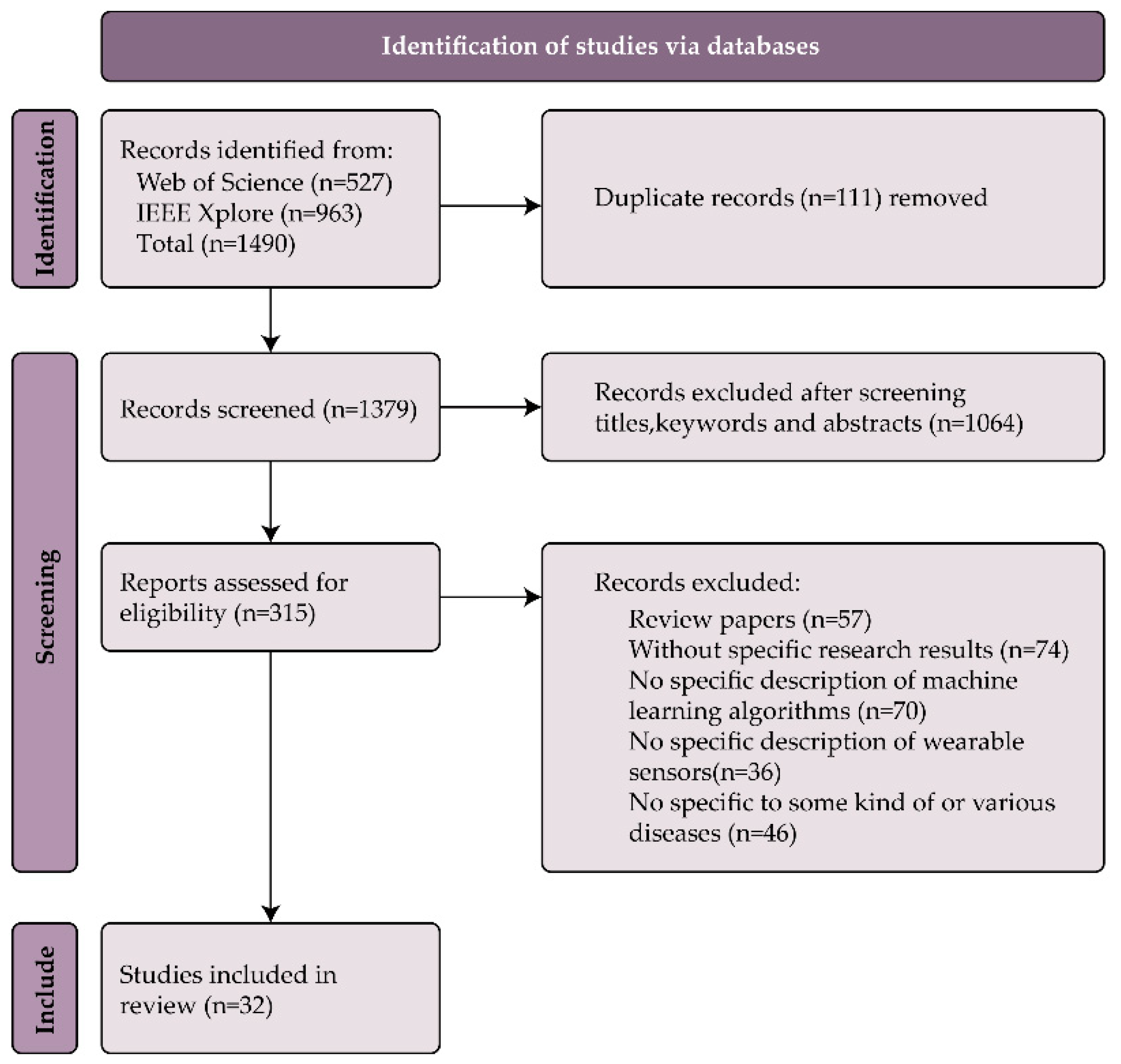
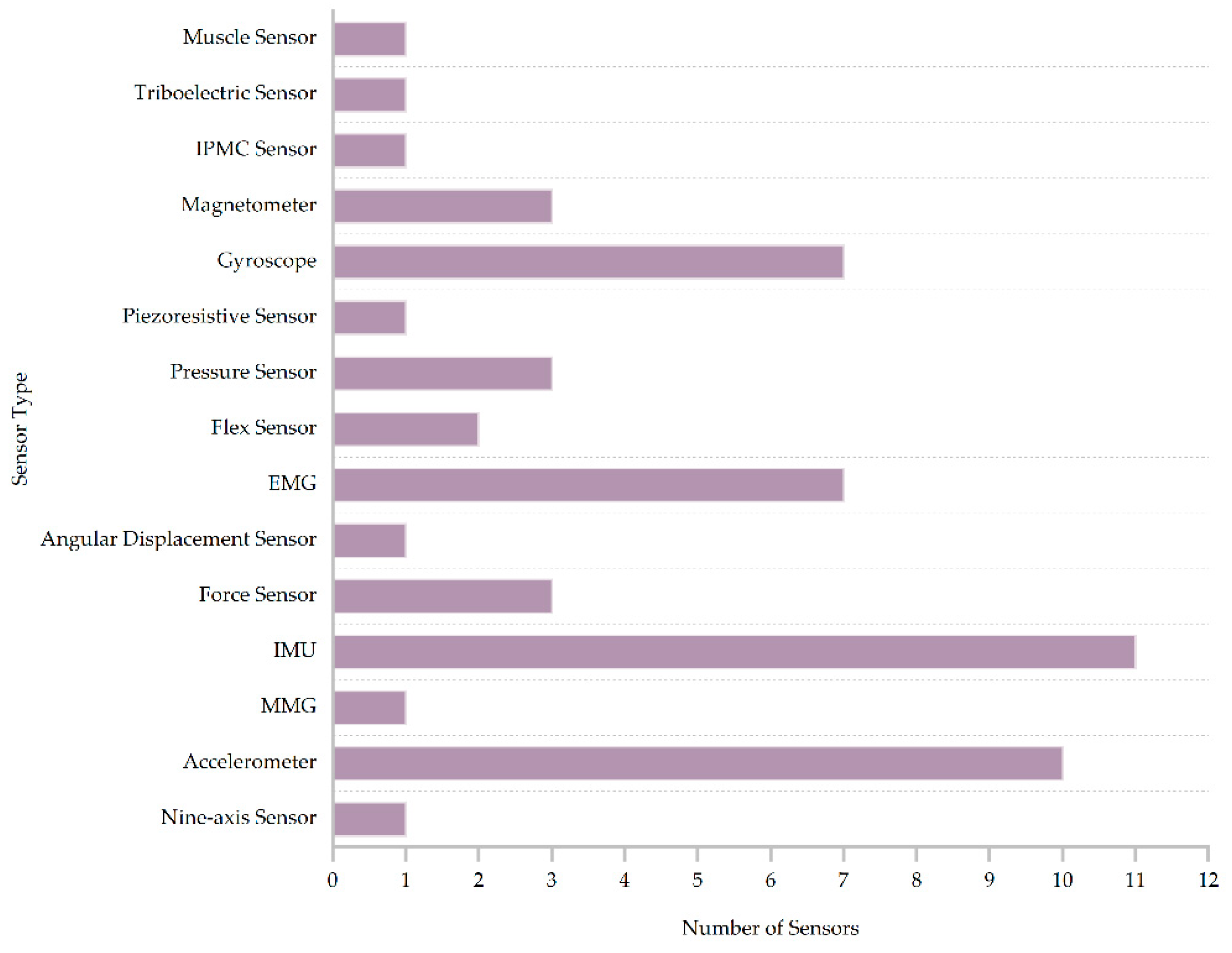
The integration of wearable sensor technology and machine learning algorithms has significantly transformed the field of intelligent medical rehabilitation. These innovative technologies enable the collection of valuable movement, muscle, or nerve data during the rehabilitation process, empowering medical professionals to evaluate patient recovery and predict disease development more efficiently. This systematic review aims to study the application of wearable sensor technology and machine learning algorithms in different disease rehabilitation training programs, obtain the best sensors and algorithms that meet different disease rehabilitation conditions, and provide ideas for future research and development. A total of 1490 studies were retrieved from two databases, the Web of Science and IEEE Xplore, and finally 32 articles were selected. In this review, the selected papers employ different wearable sensors and machine learning algorithms to address different disease rehabilitation problems. Our analysis focuses on the types of wearable sensors employed, the application of machine learning algorithms, and the approach to rehabilitation training for different medical conditions. It summarizes the usage of different sensors and compares different machine learning algorithms. It can be observed that the combination of these two technologies can optimize the disease rehabilitation process and provide more possibilities for future home rehabilitation scenarios. Finally, the present limitations and suggestions for future developments are presented in the study.
Keywords: wearable sensor; machine learning; disease rehabilitation; rehabilitation training wearable sensor; machine learning; disease rehabilitation; rehabilitation training