Article

Three-Dimensional Division of Visible Light Communication Irradiation Area

1
The College of Mechatronics and Control Engineering, Shenzhen University, Shenzhen 518060, China
2
The Shenzhen Key Laboratory of Urban Rail Transit, Shenzhen Technology University, Shenzhen 518118, China
*
Author to whom correspondence should be addressed.
Sensors 2023, 23(1), 94; https://doi.org/10.3390/s23010094
Submission received: 6 November 2022 / Revised: 15 December 2022 / Accepted: 18 December 2022 / Published: 22 December 2022
(This article belongs to the Section Communications)

Abstract

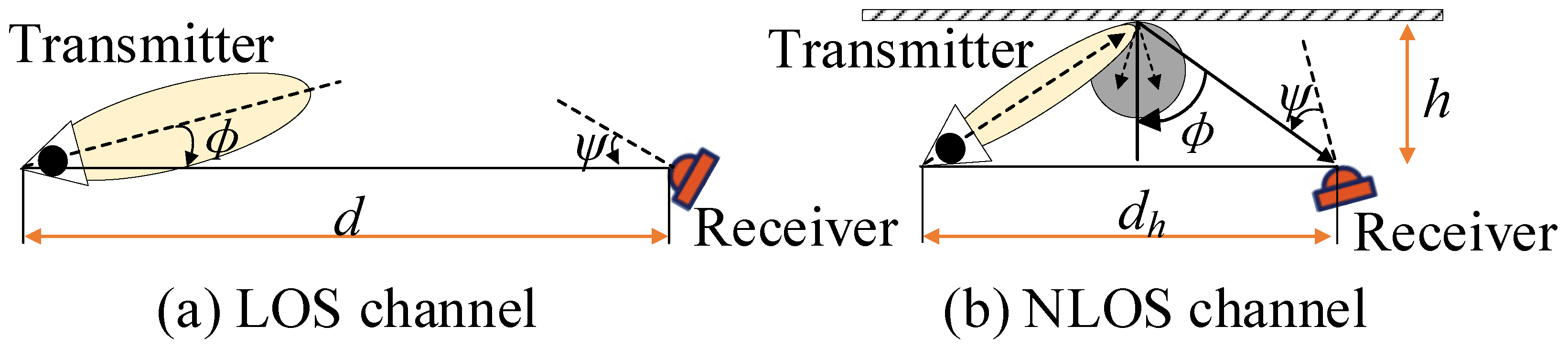
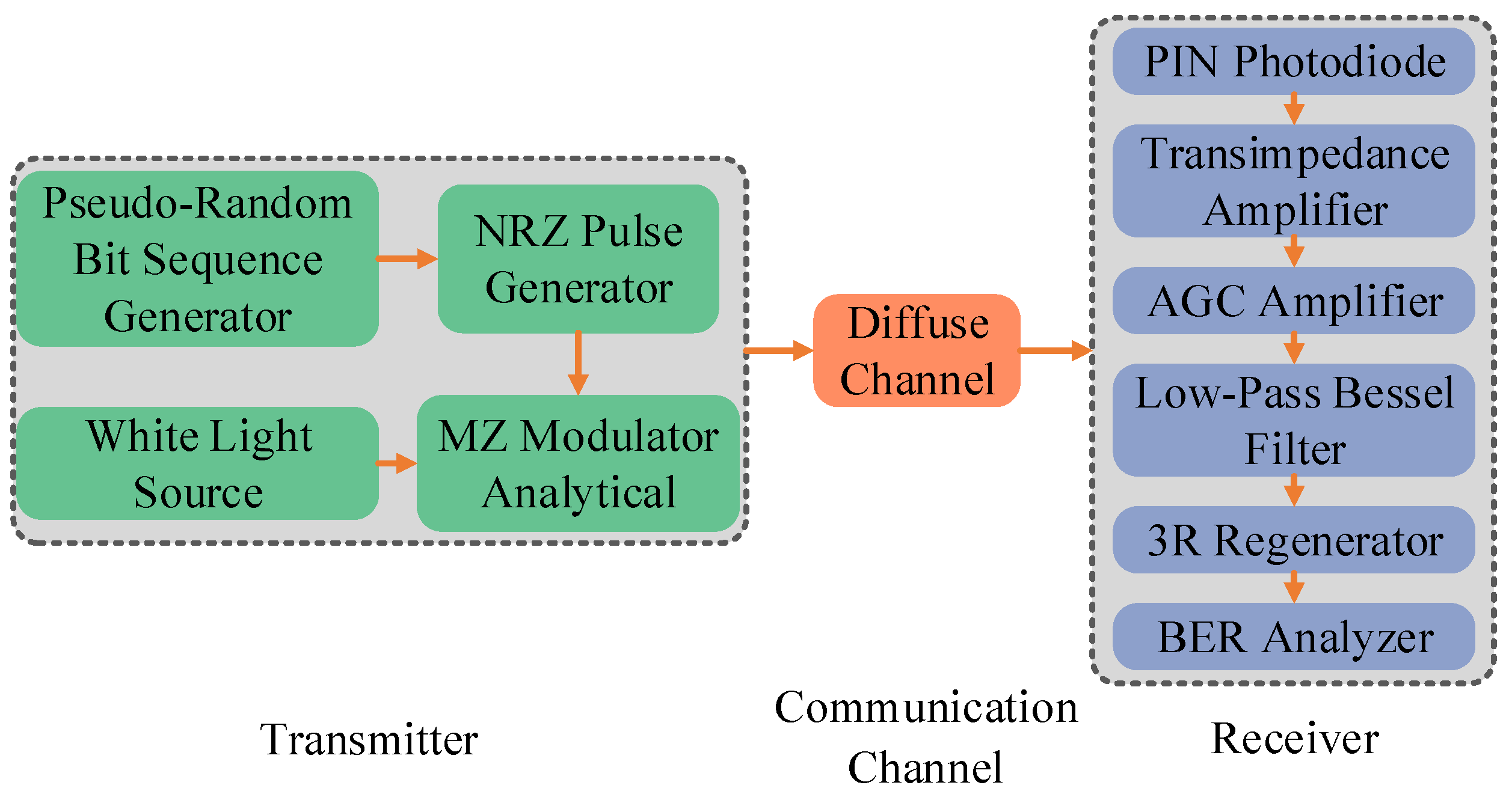
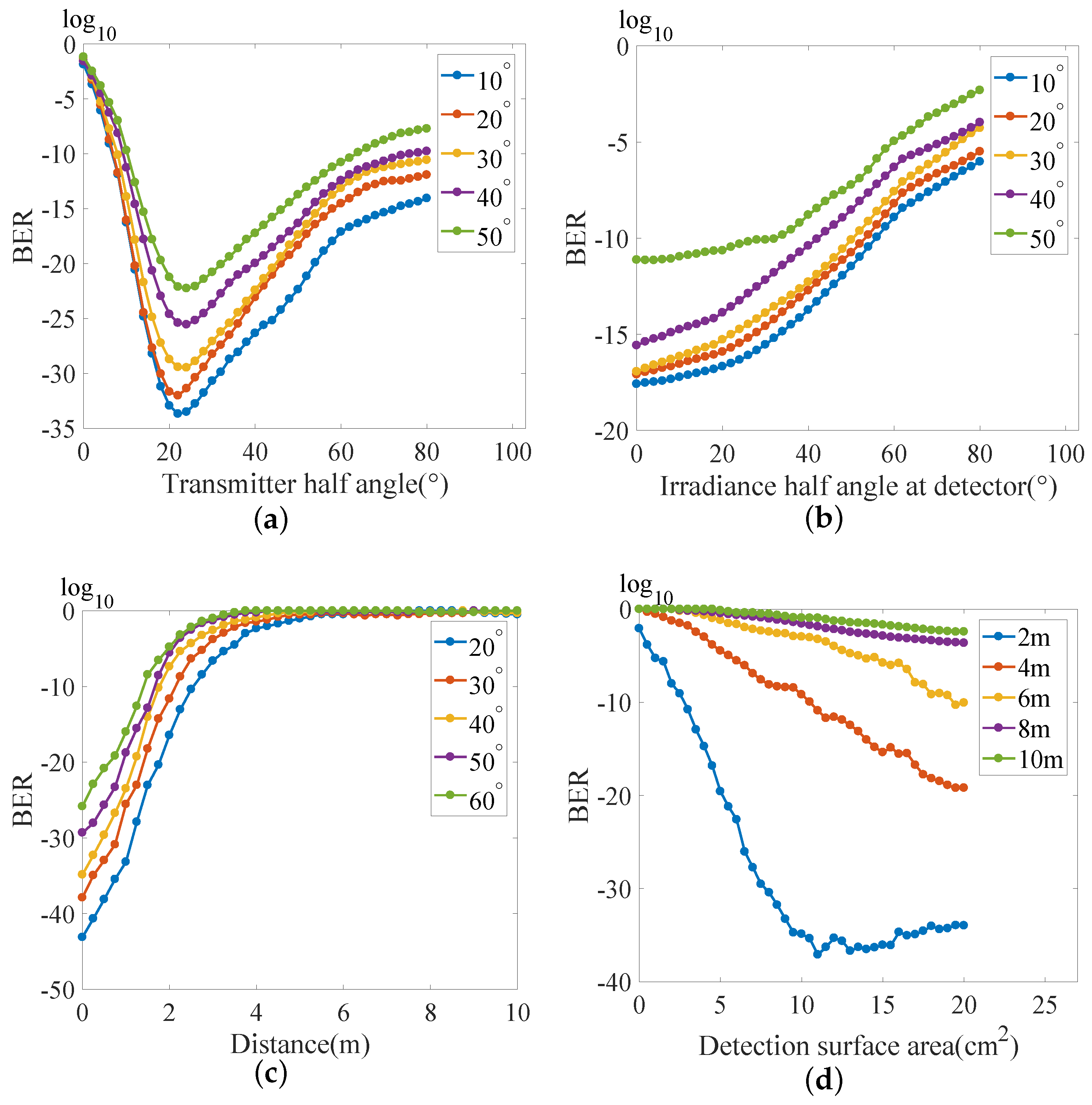
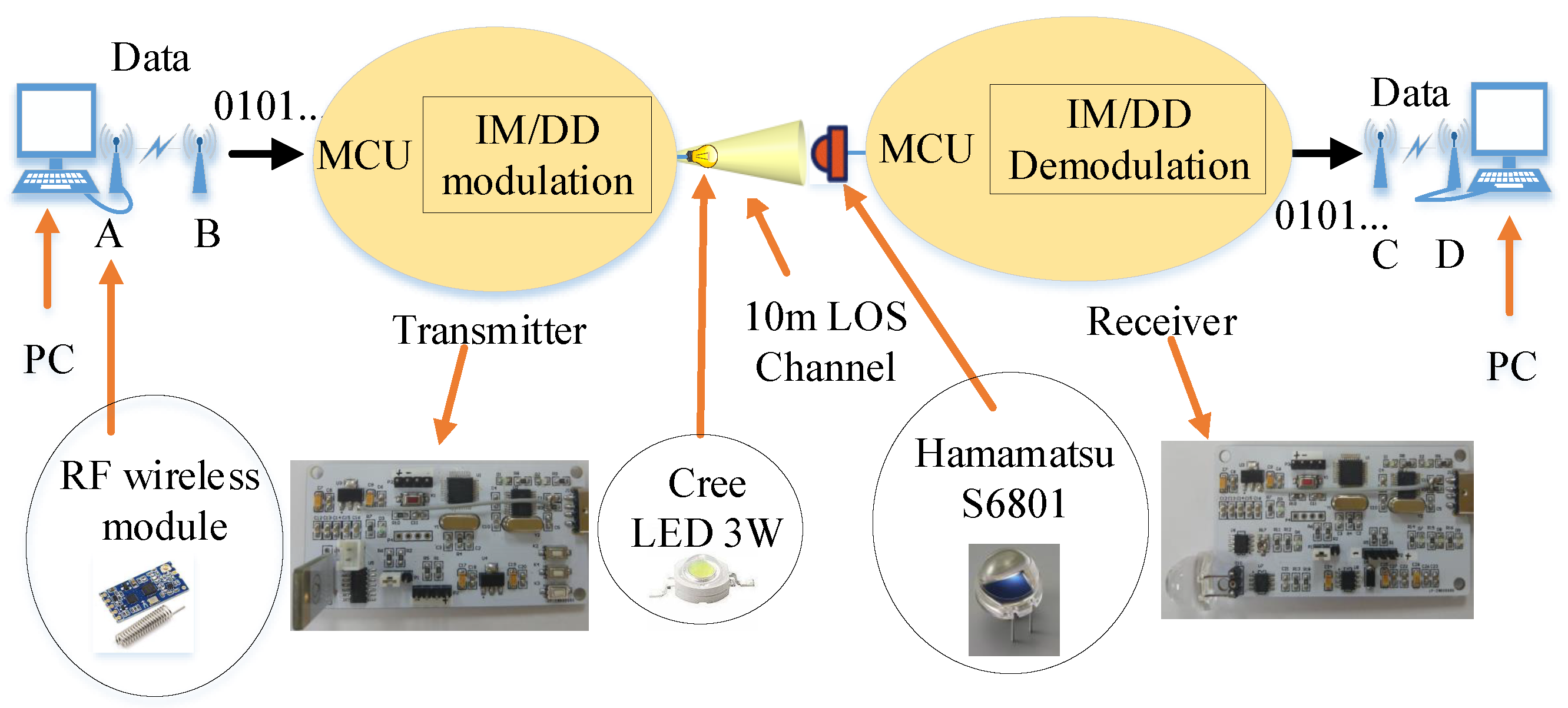
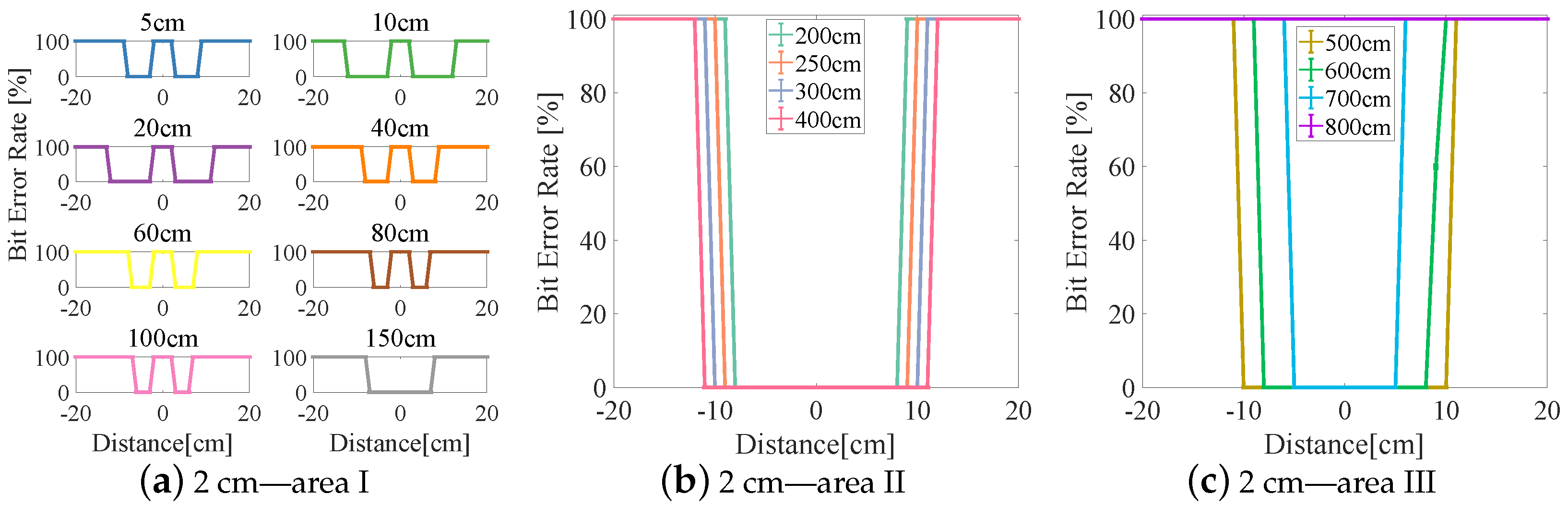
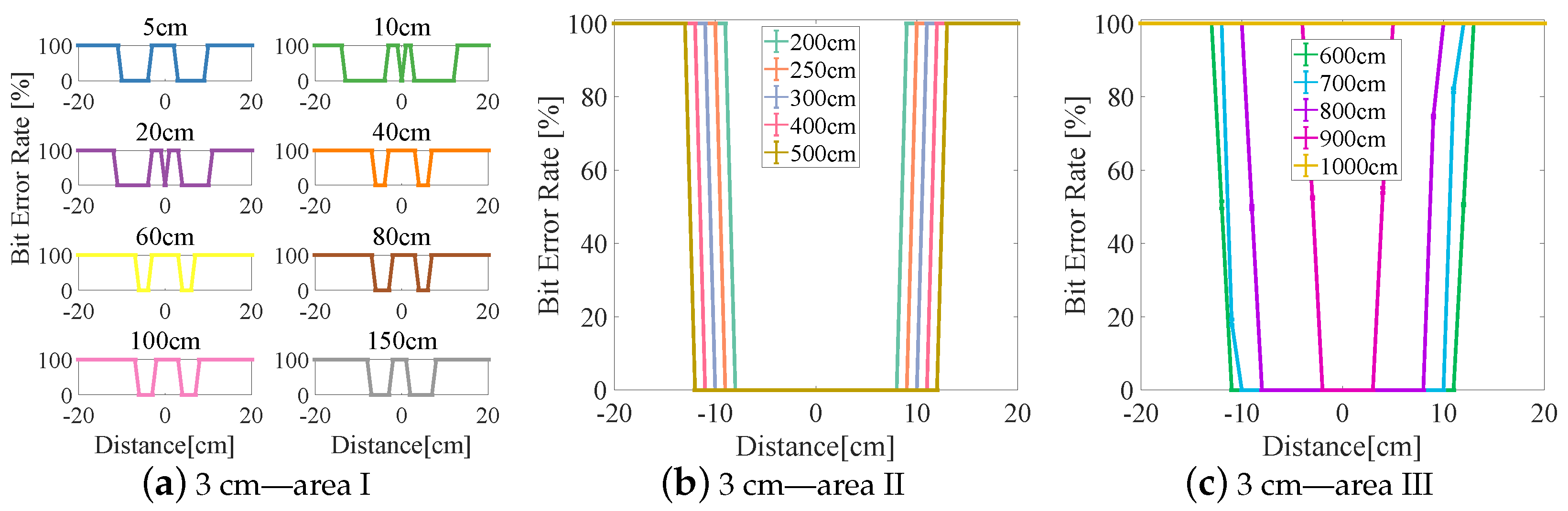
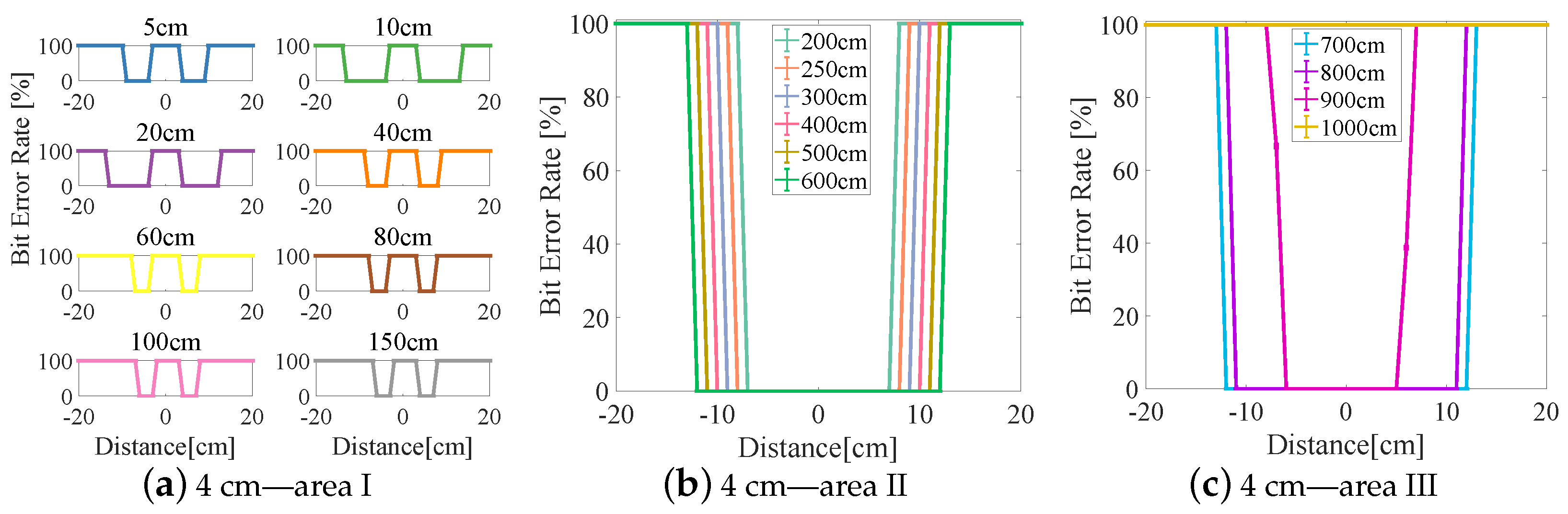
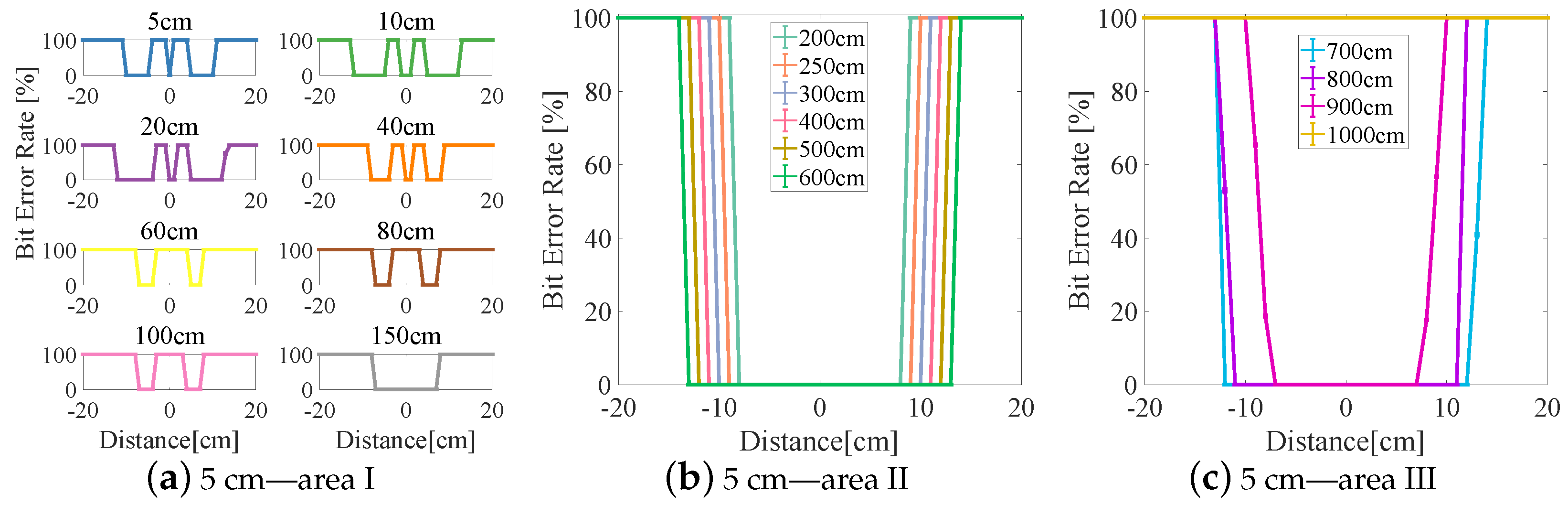
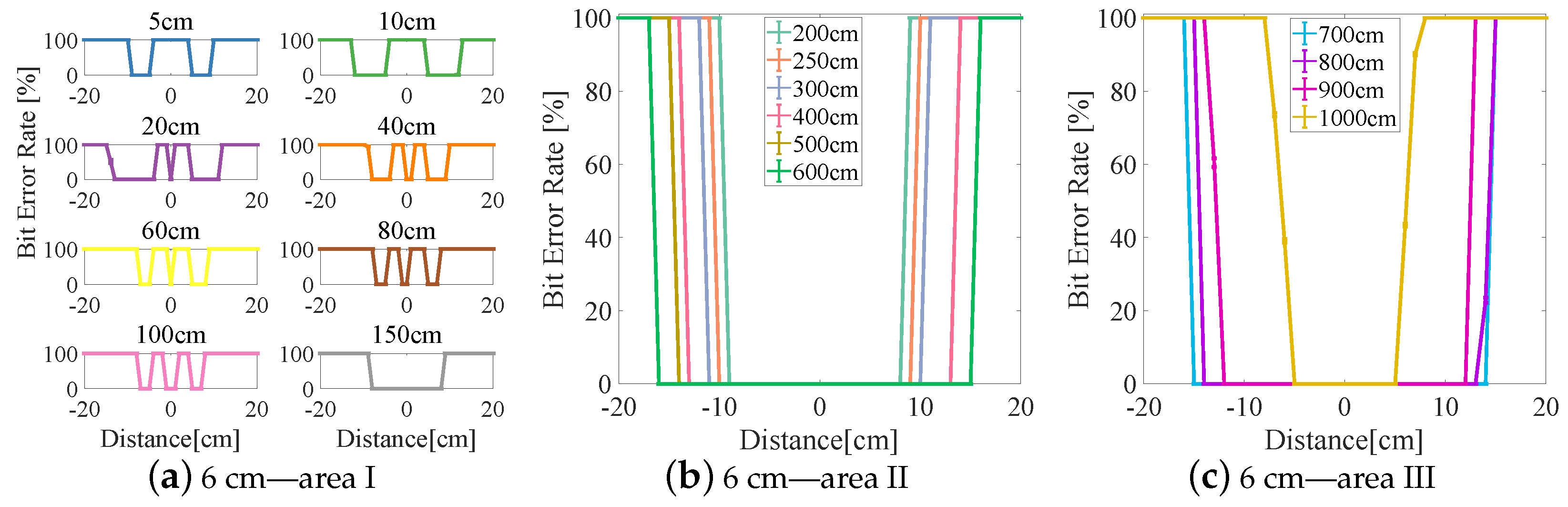
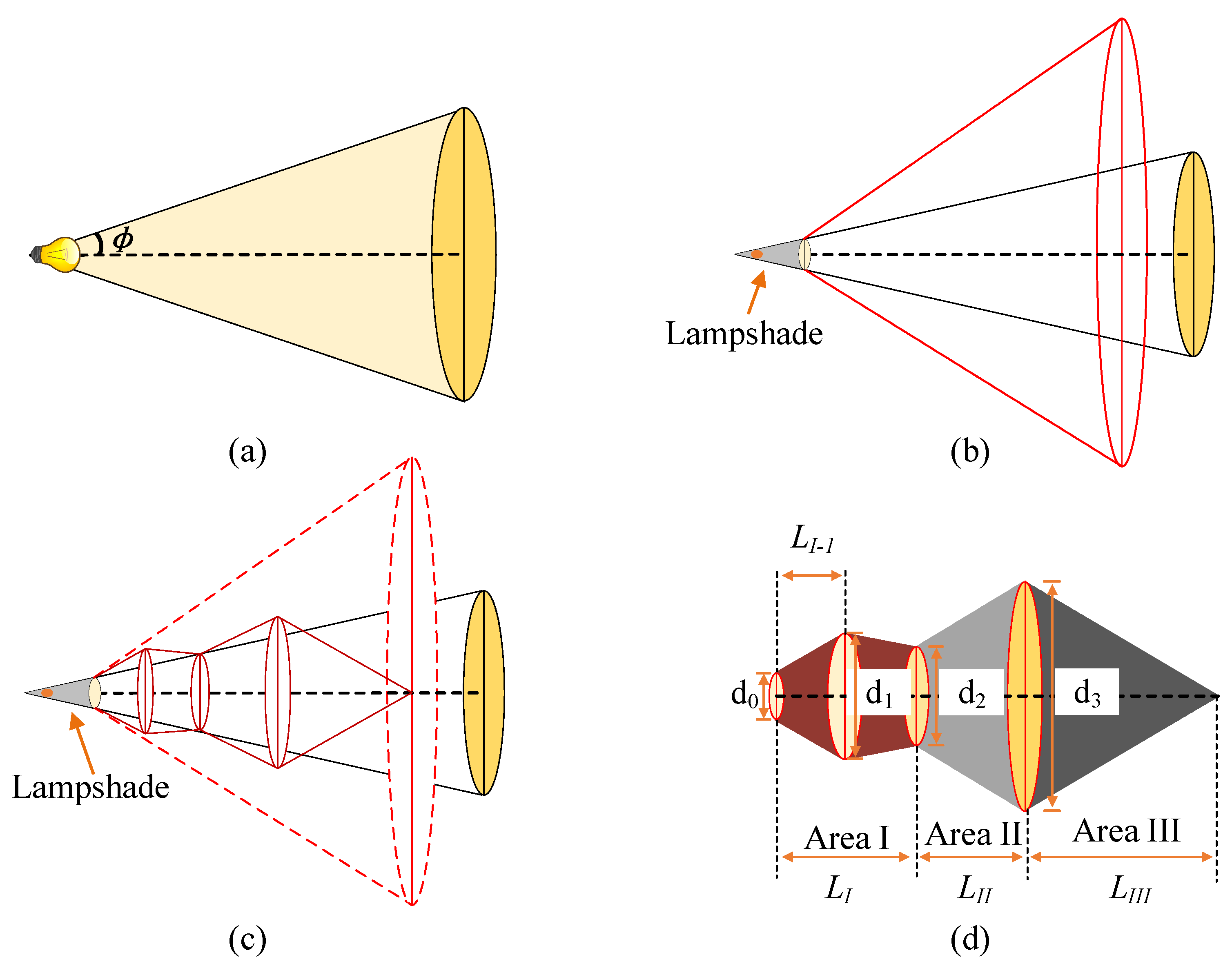
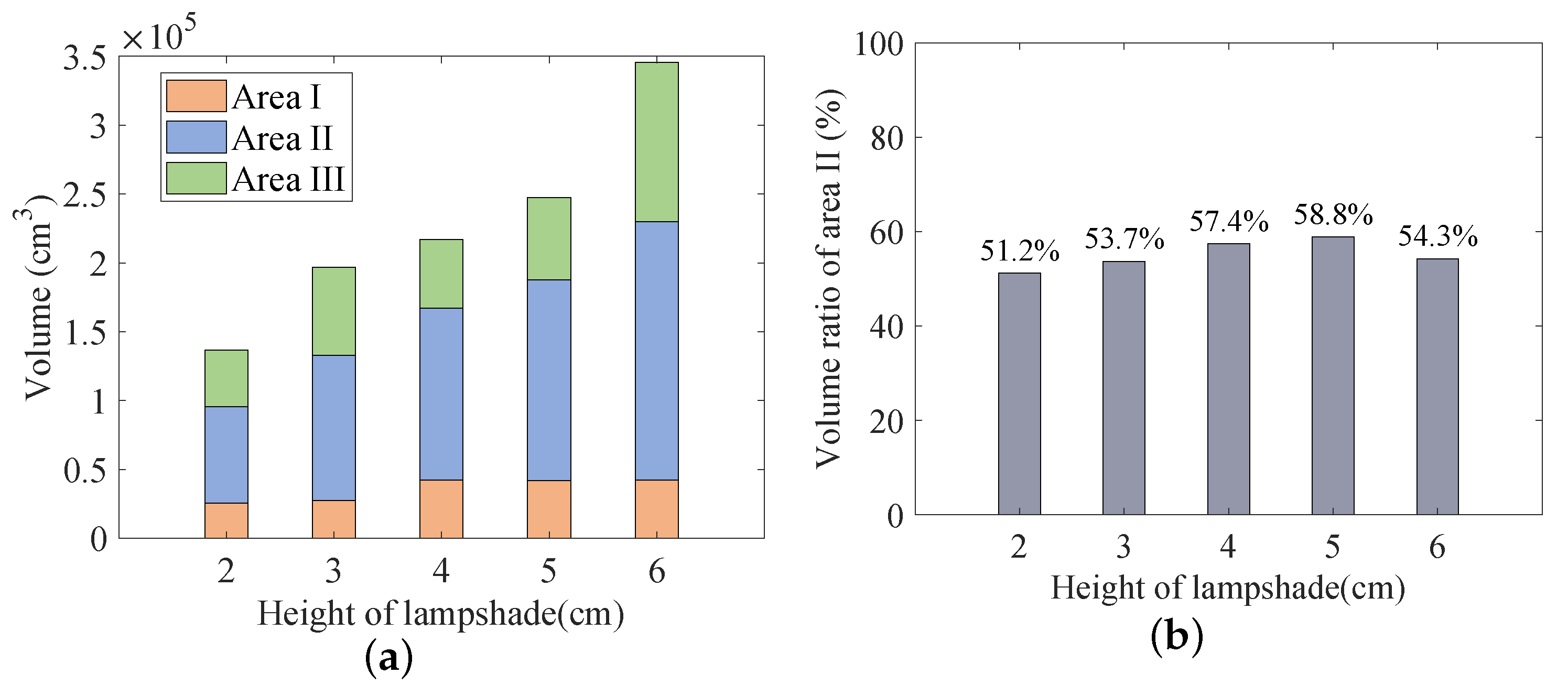
In this article, we divide the irradiated area of visible light communication (VLC) into three parts, according to the influence of diffuse reflection, the irradiance half angle at the source and the communication distance on VLC. We present a volume ratio method to quantitatively analyze each divided part. In this work, based on the Lambertian reflection model of the VLC system in line-of-sight channels, five factors affecting the VLC performance are compared and discussed. A VLC system of a single white-light-emitting diode in a 10 m line-of-sight channel indoors is designed by using the intensity modulation and direct detection technique, and a three-dimensional model of the irradiated area is established.By comparing the distribution of the bit error rate (BER) of the optical signal at different lampshade heights, the volume ratio method is used to calculate the volume percentage of the three irradiated areas. The experimental results show that area II with a volume ratio greater than 50% is the best signal receiving area when compared with areas I and III, having a volume ratio in the range 20∼30%.
Keywords: bit error rate; intensity modulation and direct detection technique; line-of-sight channels; visible light communication; volume ratio bit error rate; intensity modulation and direct detection technique; line-of-sight channels; visible light communication; volume ratio