Article

Threats Detection during Human-Computer Interaction in Driver Monitoring Systems

St. Petersburg Federal Research Center of the Russian Academy of Sciences (SPC RAS), St. Petersburg Institute for Informatics and Automation of the Russian Academy of Sciences, 199178 St. Petersburg, Russia
*
Author to whom correspondence should be addressed.
Sensors 2022, 22(6), 2380; https://doi.org/10.3390/s22062380
Submission received: 16 February 2022 / Revised: 13 March 2022 / Accepted: 18 March 2022 / Published: 19 March 2022
(This article belongs to the Special Issue Smartphone Sensors for Driver Behavior Monitoring Systems)

Abstract

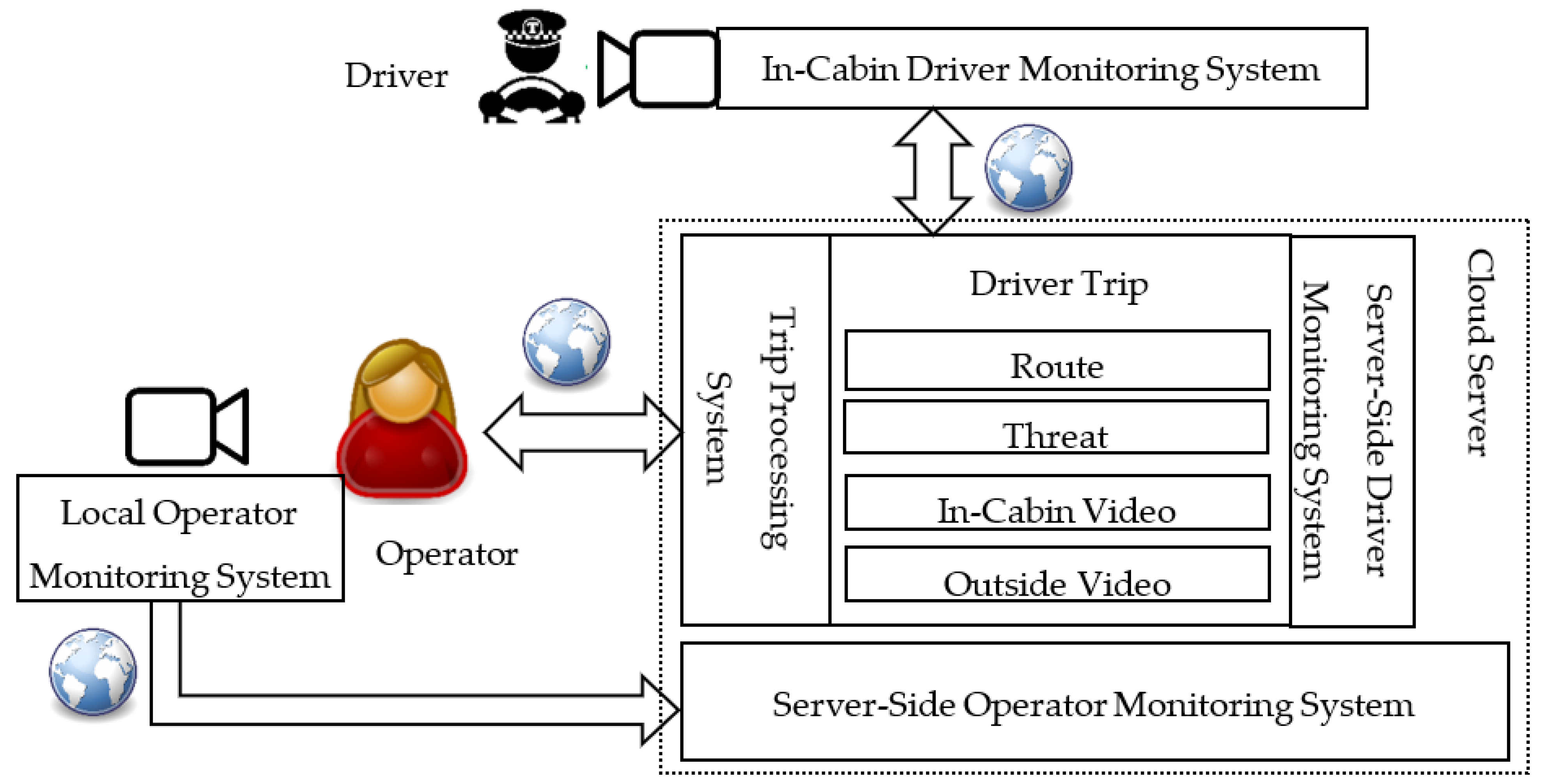
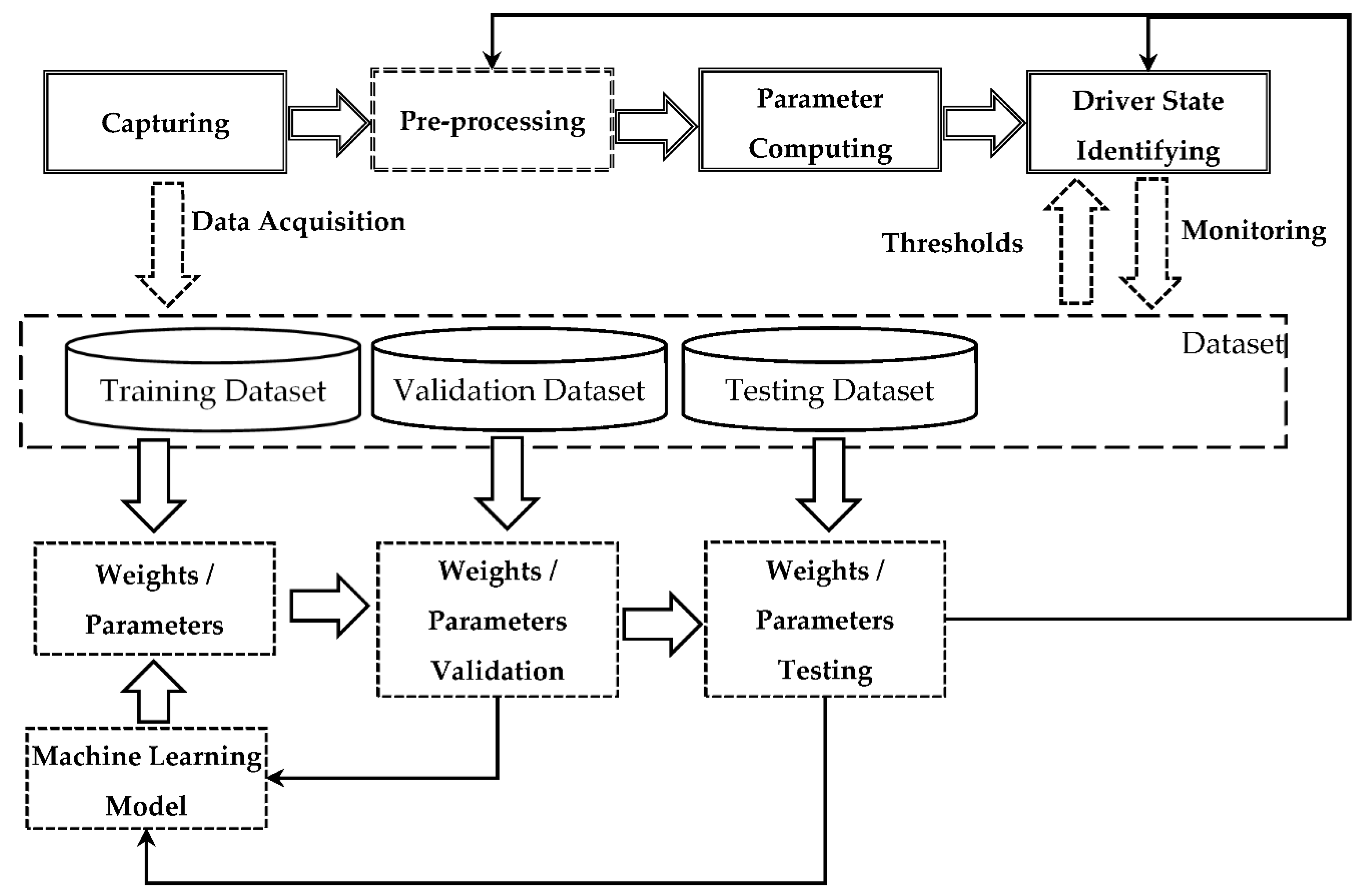
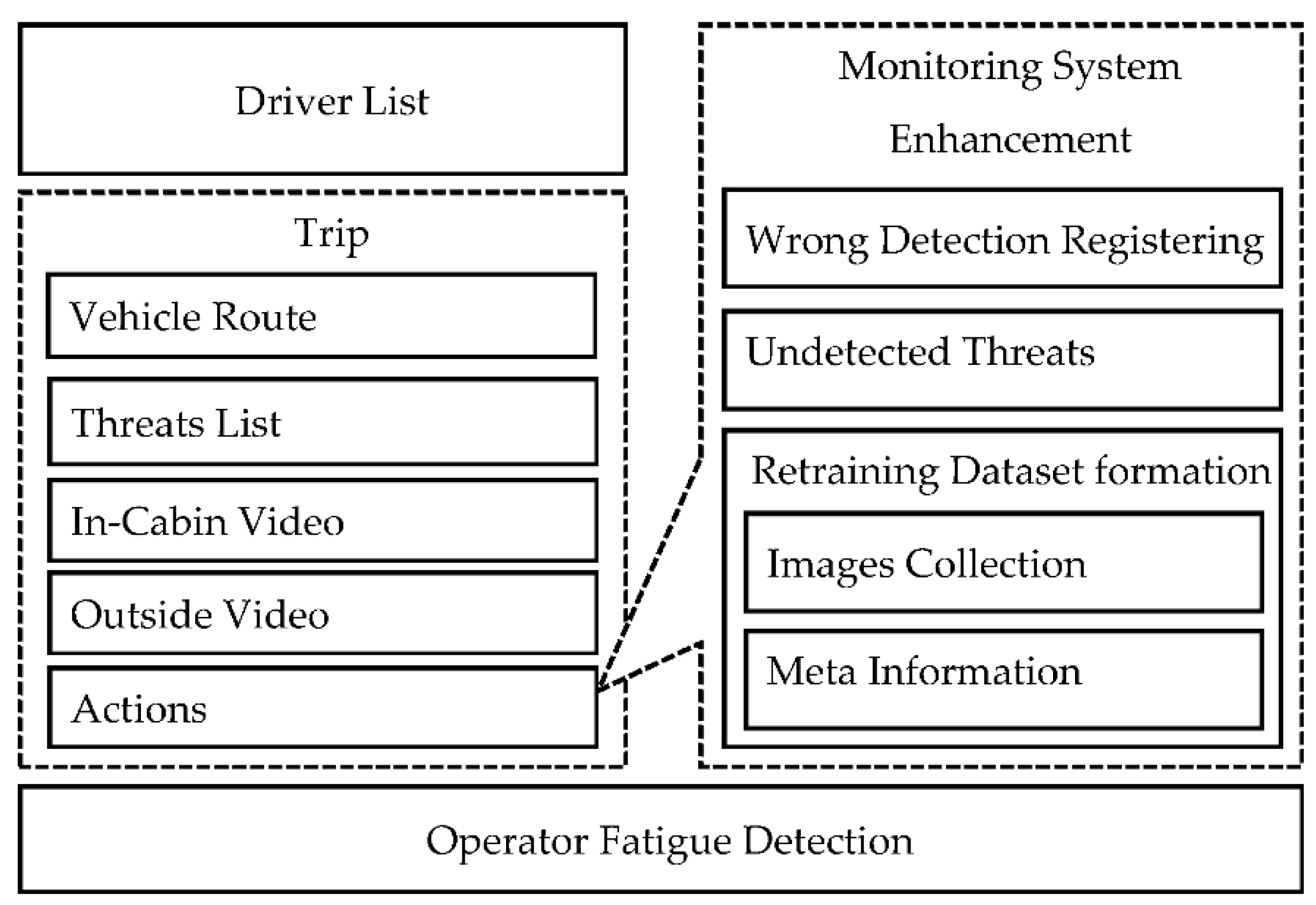
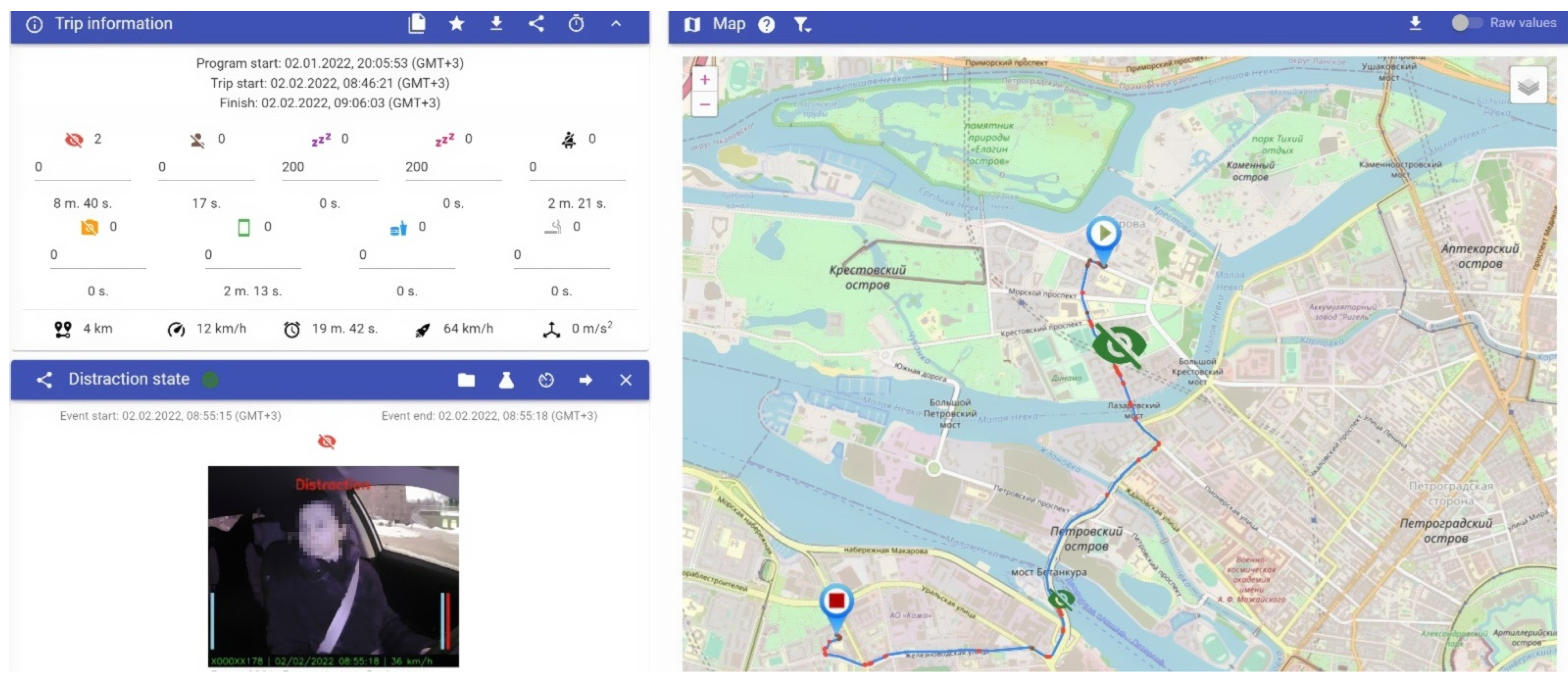
This paper presents an approach and a case study for threat detection during human–computer interaction, using the example of driver–vehicle interaction. We analyzed a driver monitoring system and identified two types of users: the driver and the operator. The proposed approach detects possible threats for the driver. We present a method for threat detection during human–system interactions that generalizes potential threats, as well as approaches for their detection. The originality of the method is that we frame the problem of threat detection in a holistic way: we build on the driver–ITS system analysis and generalize existing methods for driver state analysis into a threat detection method covering the identified threats. The developed reference model of the operator–computer interaction interface shows how the driver monitoring process is organized, and what information can be processed automatically, and what information related to the driver behavior has to be processed manually. In addition, the interface reference model includes mechanisms for operator behavior monitoring. We present experiments that included 14 drivers, as a case study. The experiments illustrated how the operator monitors and processes the information from the driver monitoring system. Based on the case study, we clarified that when the driver monitoring system detected the threats in the cabin and notified drivers about them, the number of threats was significantly decreased.
Keywords: intelligent transportation systems; threats detection; smartphone sensors intelligent transportation systems; threats detection; smartphone sensors