Article

Flexible Inkjet-Printed Heaters Utilizing Graphene-Based Inks

by
Dimitris Barmpakos
1,*,
Vassiliki Belessi
2,
Nikolaos Xanthopoulos
3,
Christoforos A. Krontiras
3 and
Grigoris Kaltsas
1
1
microSENSES Laboratory, Department of Electrical and Electronics Engineering, University of West Attica, 122 43 Athens, Greece
2
Department of Graphic Design and Visual Communication, University of West Attica, 122 43 Athens, Greece
3
Physics Department, University of Patras, 265 04 Patras, Greece
*
Author to whom correspondence should be addressed.
Sensors 2022, 22(3), 1173; https://doi.org/10.3390/s22031173
Submission received: 30 December 2021 / Revised: 28 January 2022 / Accepted: 31 January 2022 / Published: 3 February 2022
(This article belongs to the Section Electronic Sensors)

Abstract

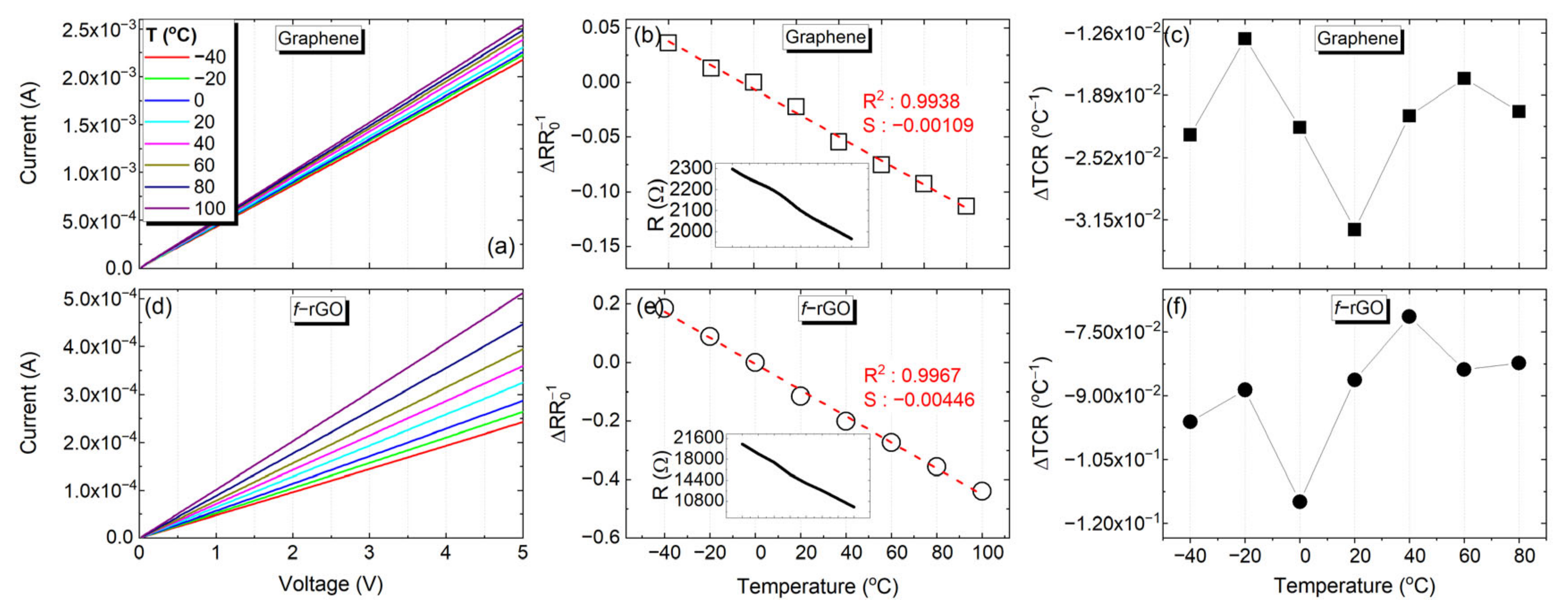
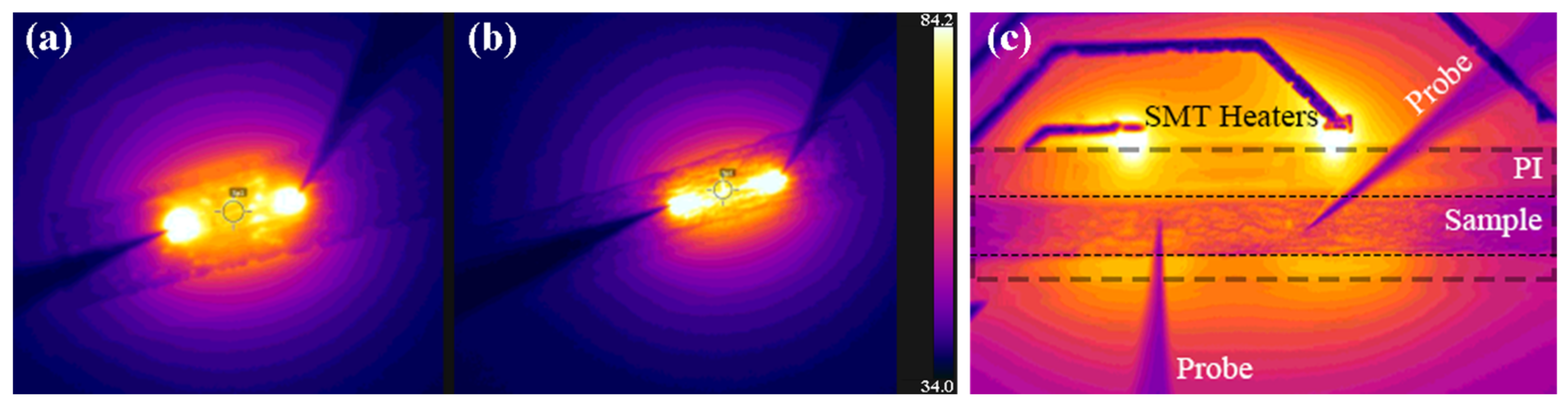
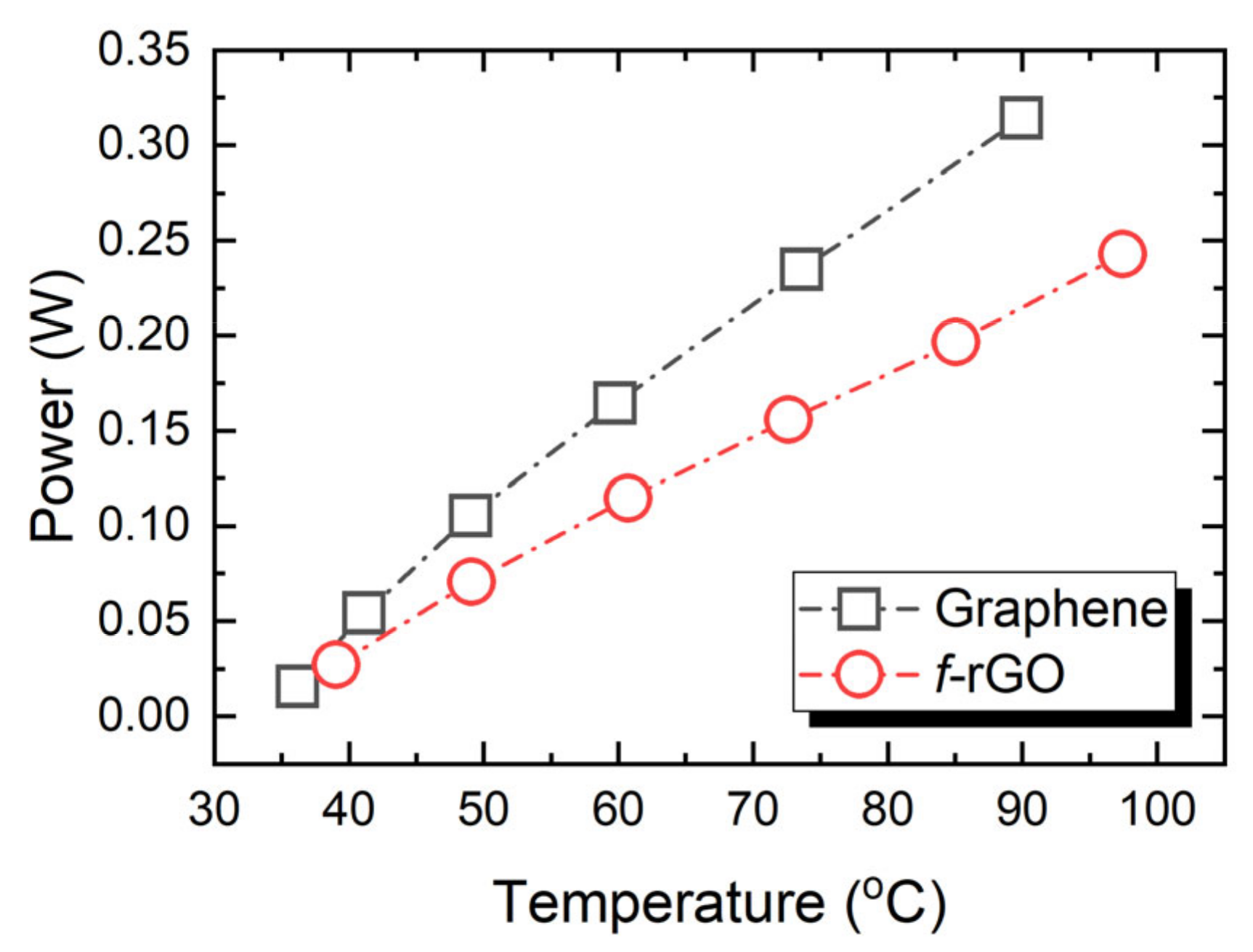
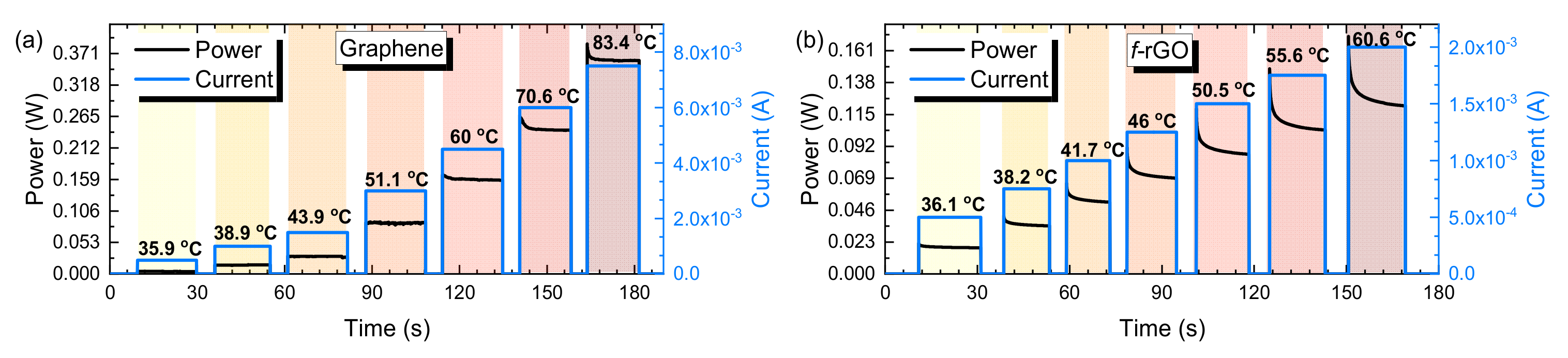
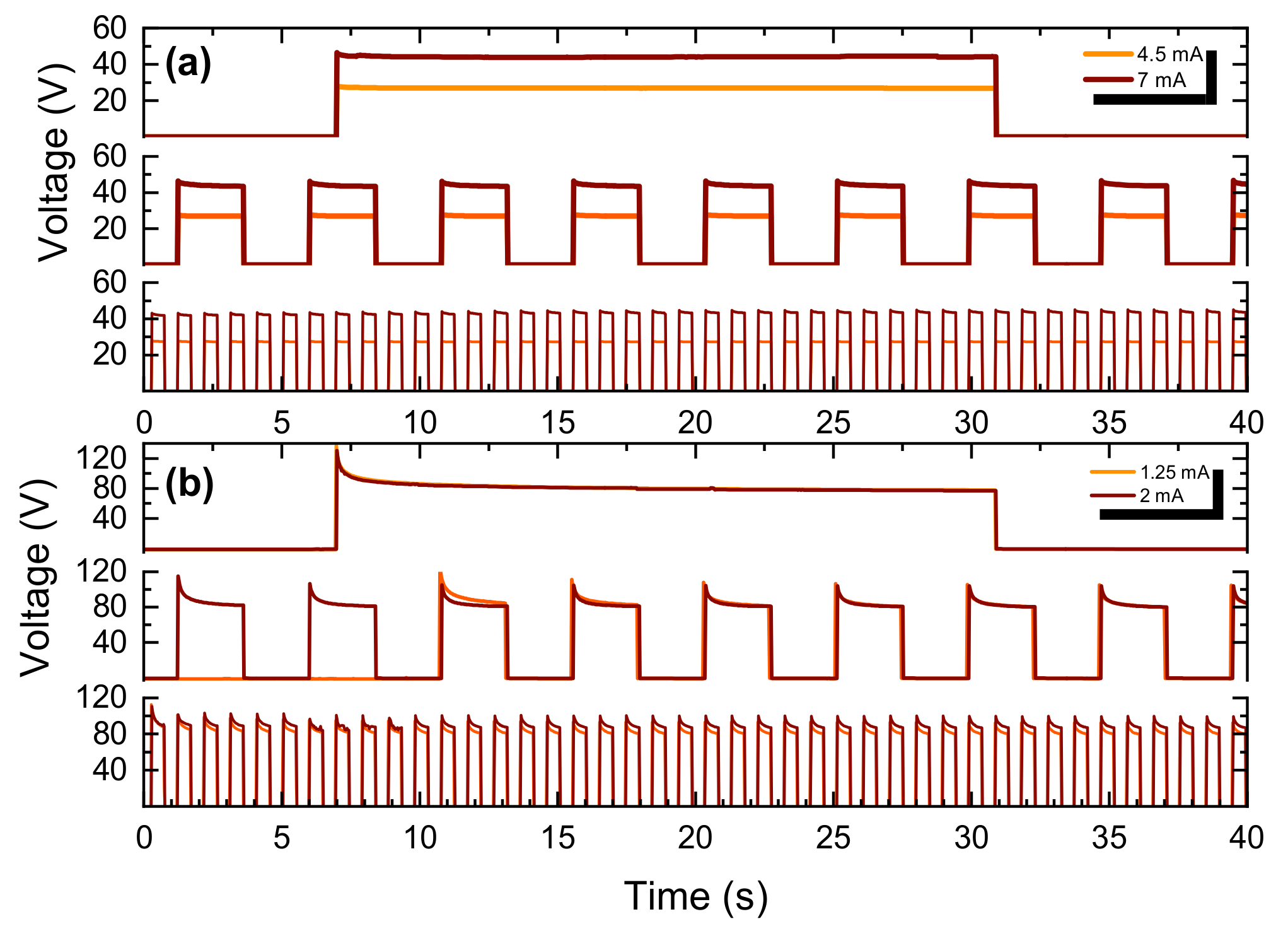
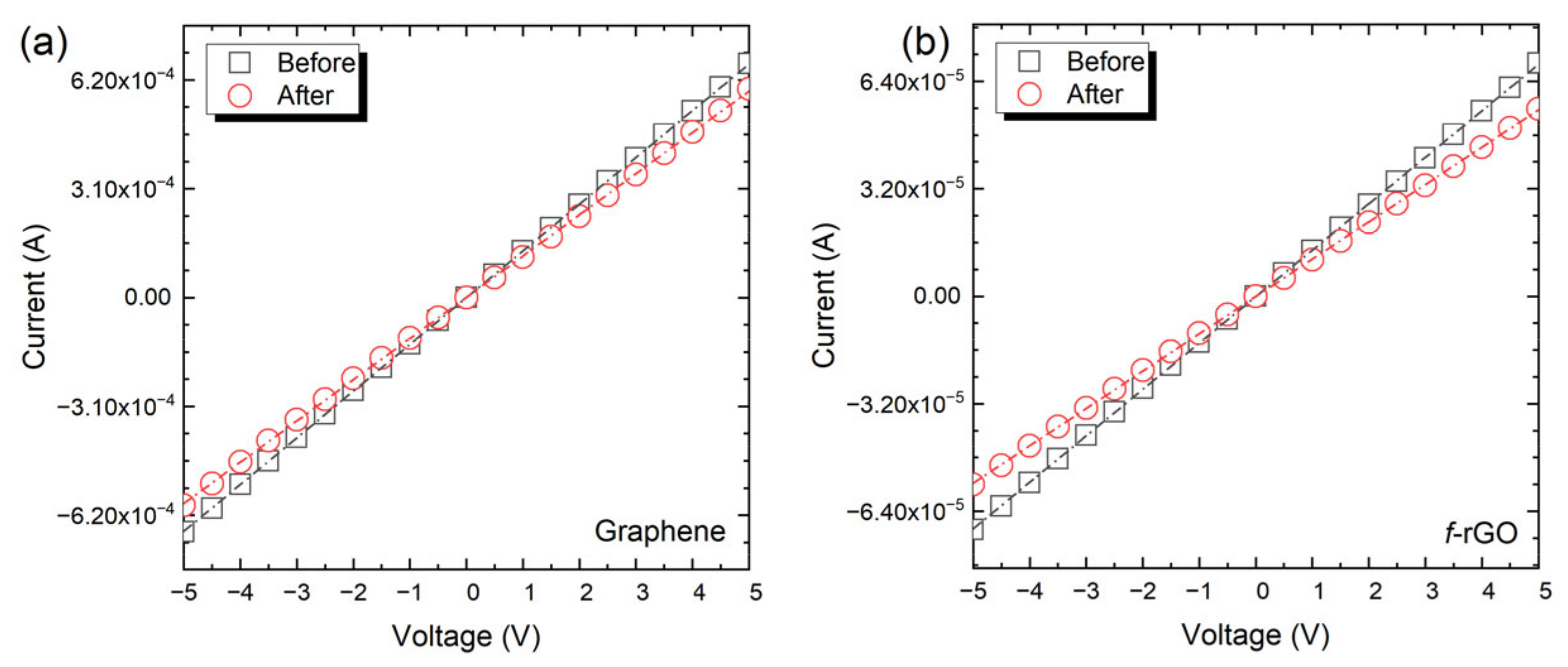
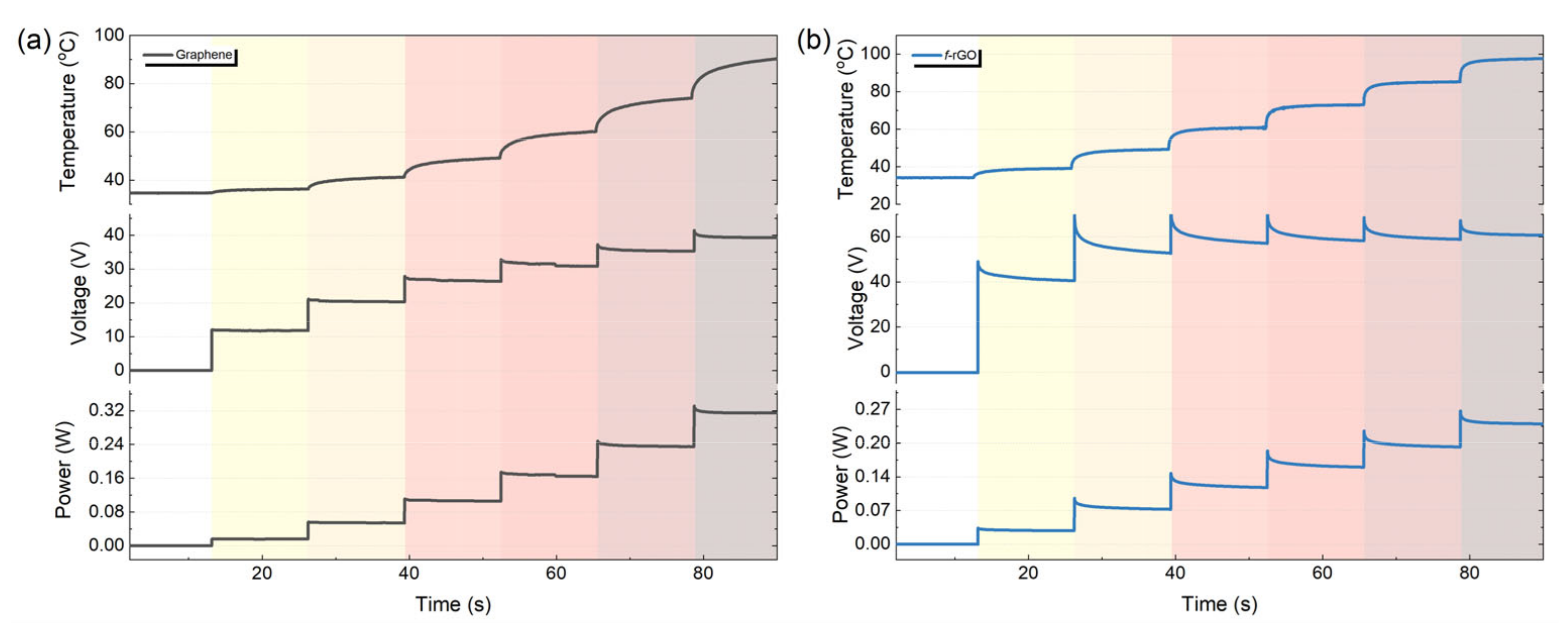
Thermal sensors are mainly based on the selective heating of specific areas, which in most cases is a critical feature for both the operation and the performance of the thermal device. In this work, we evaluate the thermoelectrical response of two graphitic materials, namely (a) a commercial 2.4%wt graphene–ethyl cellulose dispersion in cycloxehanone and terpineol (G) and (b) a custom functionalized reduced graphene oxide (f-rGO) ink in the range of −40 to 100 °C. Both inks were printed on a flexible polyimide substrate and the Thermal Coefficients of Resistance (TCR) were extracted as TCRG = −1.05 × 10⁻³ °C−1 (R2 = 0.9938) and TCRf-rGO = −3.86 × 10⁻³ °C−1 (R2 = 0.9967). Afterward, the inkjet-printed devices were evaluated as microheaters, in order to exploit their advantage for cost-effective production with minimal material waste. f-rGO and G printed heaters reached a maximum temperature of 97.5 °C at 242 mW and 89.9 °C at 314 mW, respectively, applied by a constant current source and monitored by an infrared camera. Repeatability experiments were conducted, highlighting the high robustness in long-term use. The power–temperature behavior was extracted by self-heating experiments to demonstrate the ability of the devices to serve as heaters. Both static and dynamic evaluation were performed in order to study the device behaviors and extract the corresponding parameters. After all the experimental processes, the resistance of the samples was again evaluated and found to differ less than 13% from the initial value. In this work, fabrication via inkjet printing and demonstration of efficient and stable microheaters utilizing a custom ink (f-rGO) and a commercial graphene ink are presented. This approach is suitable for fabricating selectively heated geometries on non-planar substrate with high repeatability and endurance in heat cycles.
Keywords: flexible heater; printed heater; graphene electronics; functionalized reduced graphene oxide; flexible electronics flexible heater; printed heater; graphene electronics; functionalized reduced graphene oxide; flexible electronics