Article

Quantification of DAS VSP Quality: SNR vs. Log-Based Metrics
1
Department of Geophysics, Colorado School of Mines, Golden, CO 80401, USA
2
Aramco Americas—Houston Research Center, Houston, TX 77084, USA
3
EXPEC Advanced Research Center, Dhahran 34465, Saudi Arabia
*
Authors to whom correspondence should be addressed.
Sensors 2022, 22(3), 1027; https://doi.org/10.3390/s22031027
Submission received: 20 December 2021 / Revised: 21 January 2022 / Accepted: 24 January 2022 / Published: 28 January 2022
(This article belongs to the Special Issue Distributed Optical Fiber Sensors: Applications and Technology)

Abstract

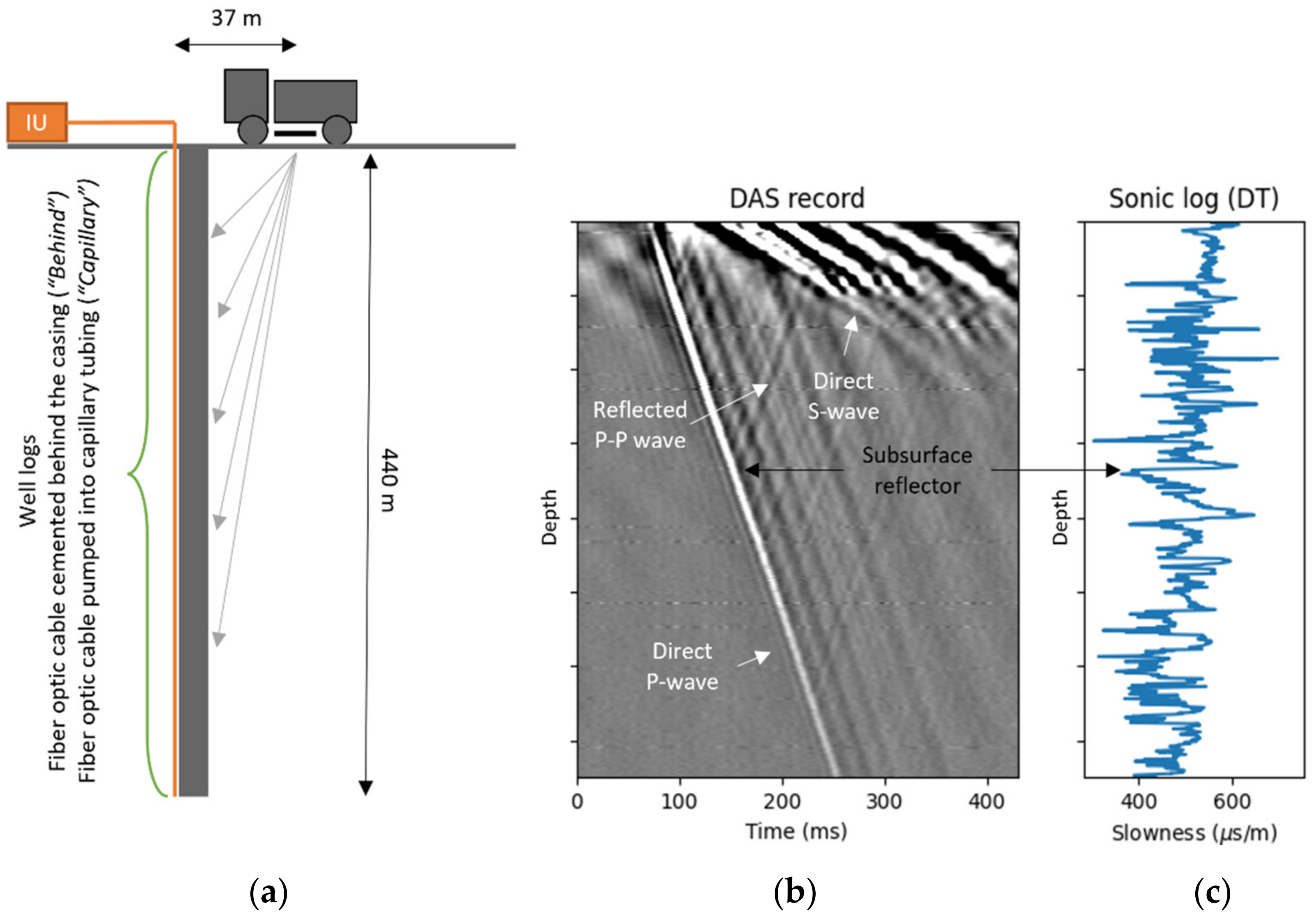
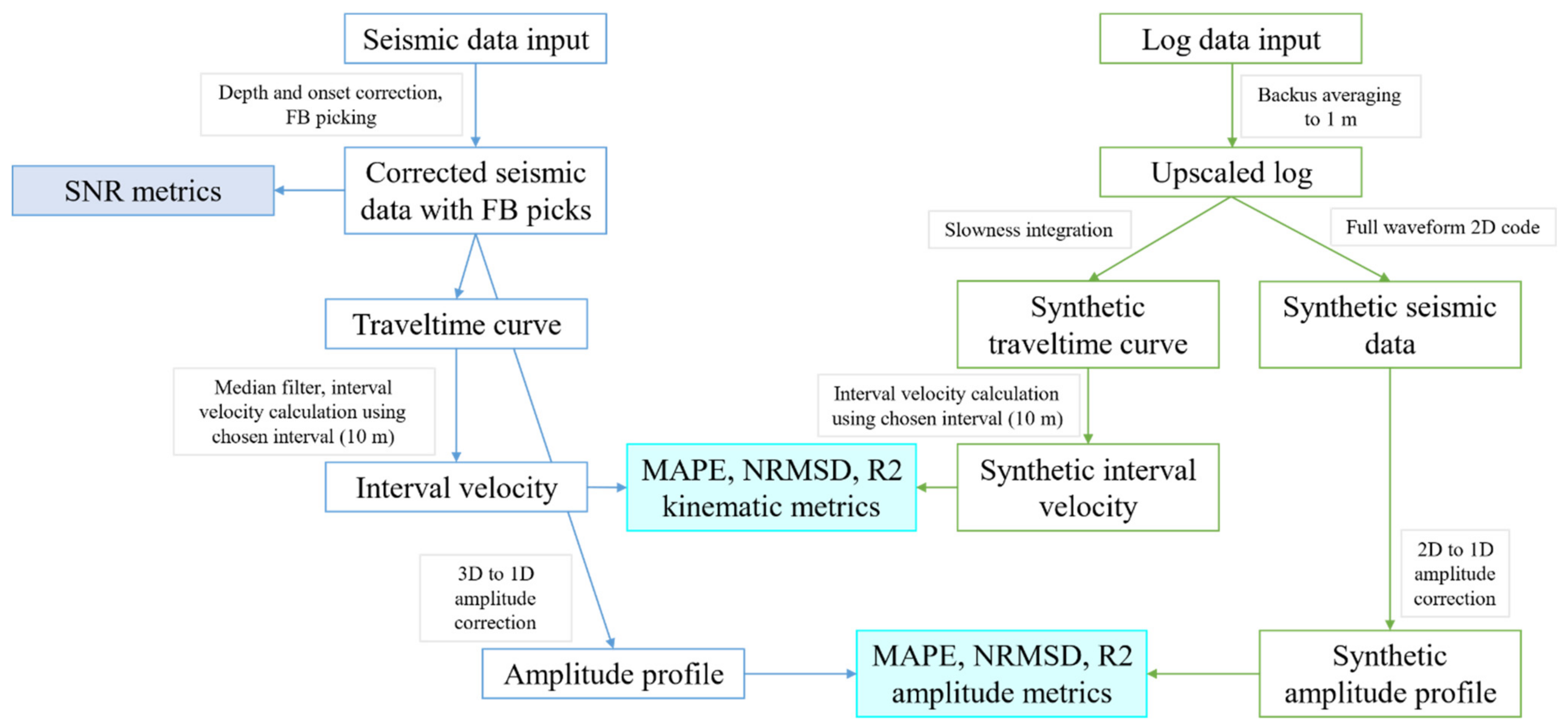
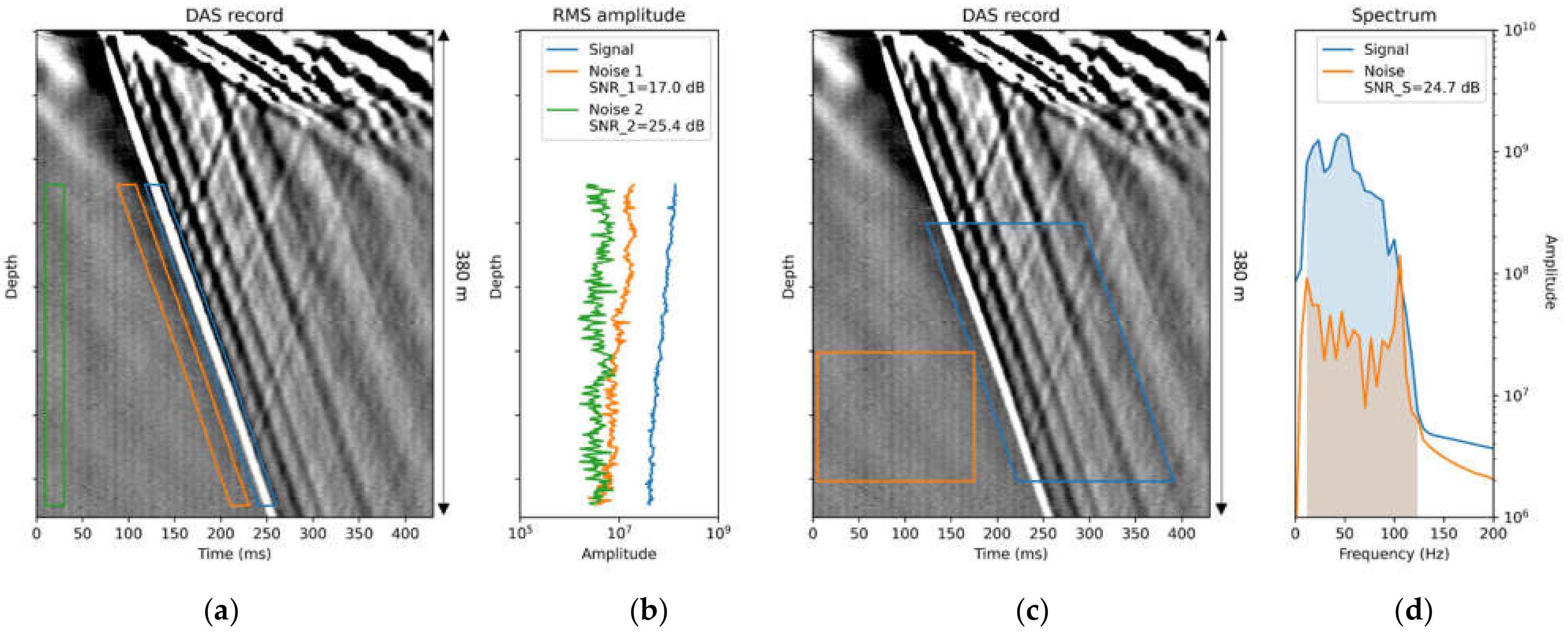
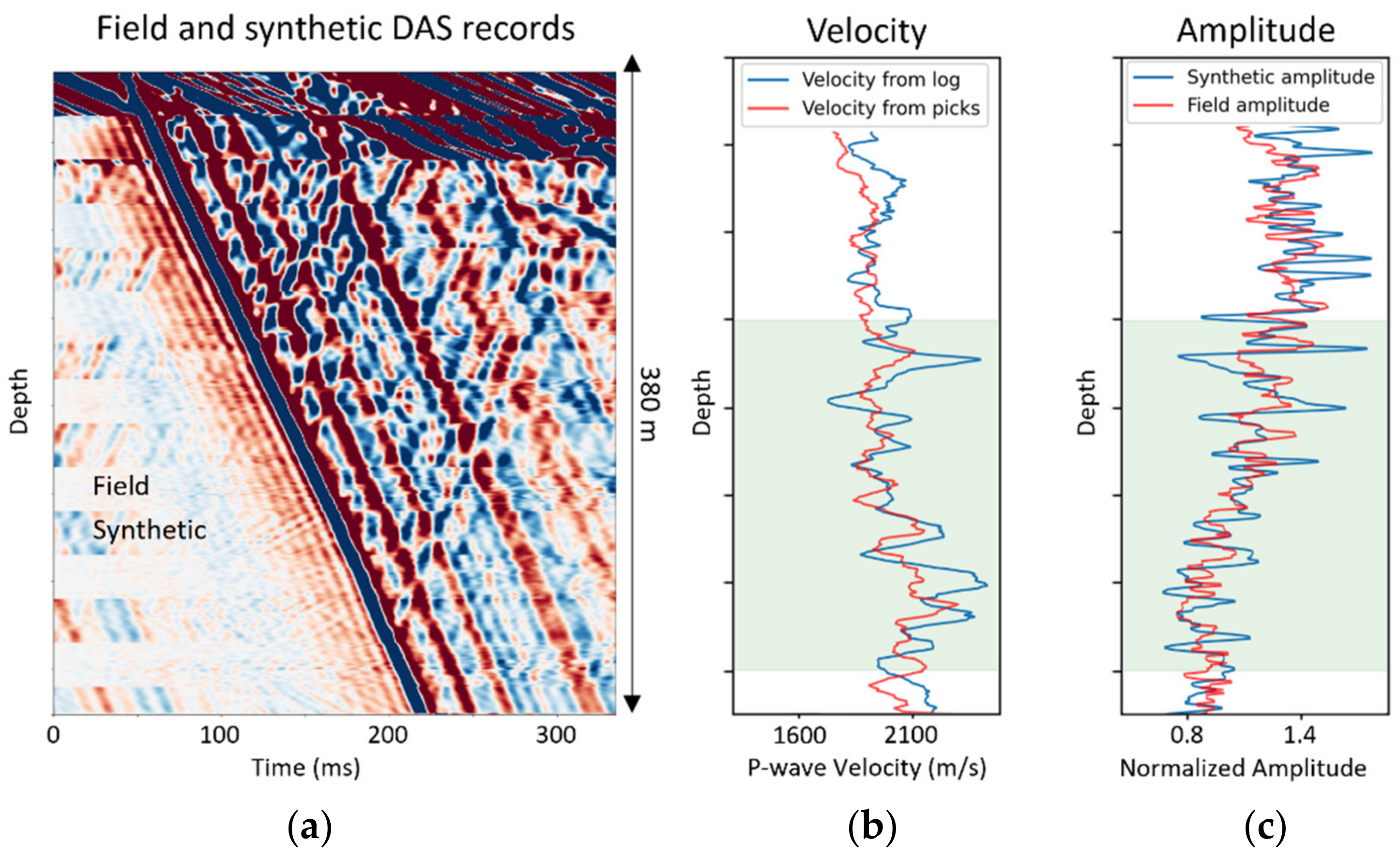
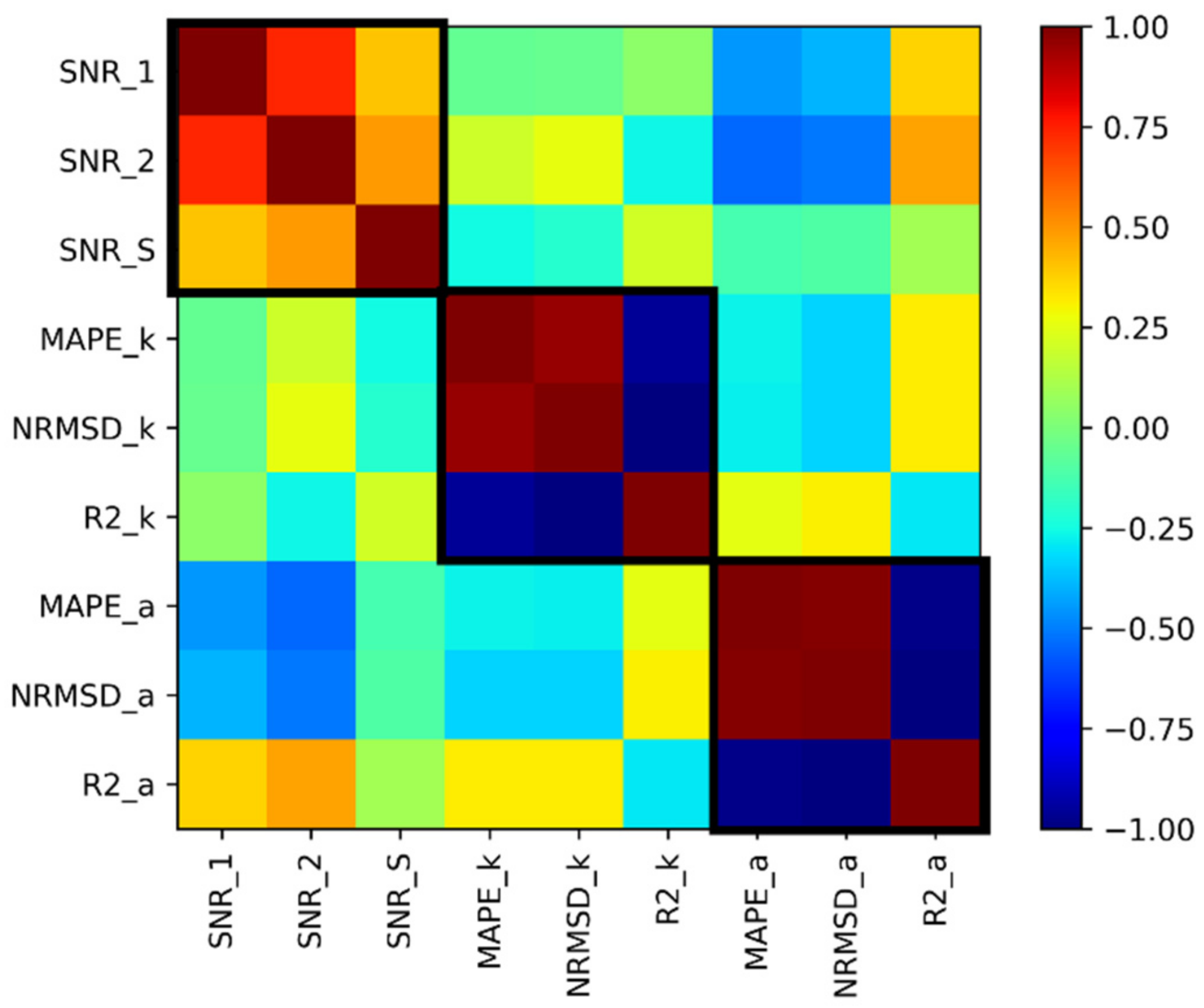
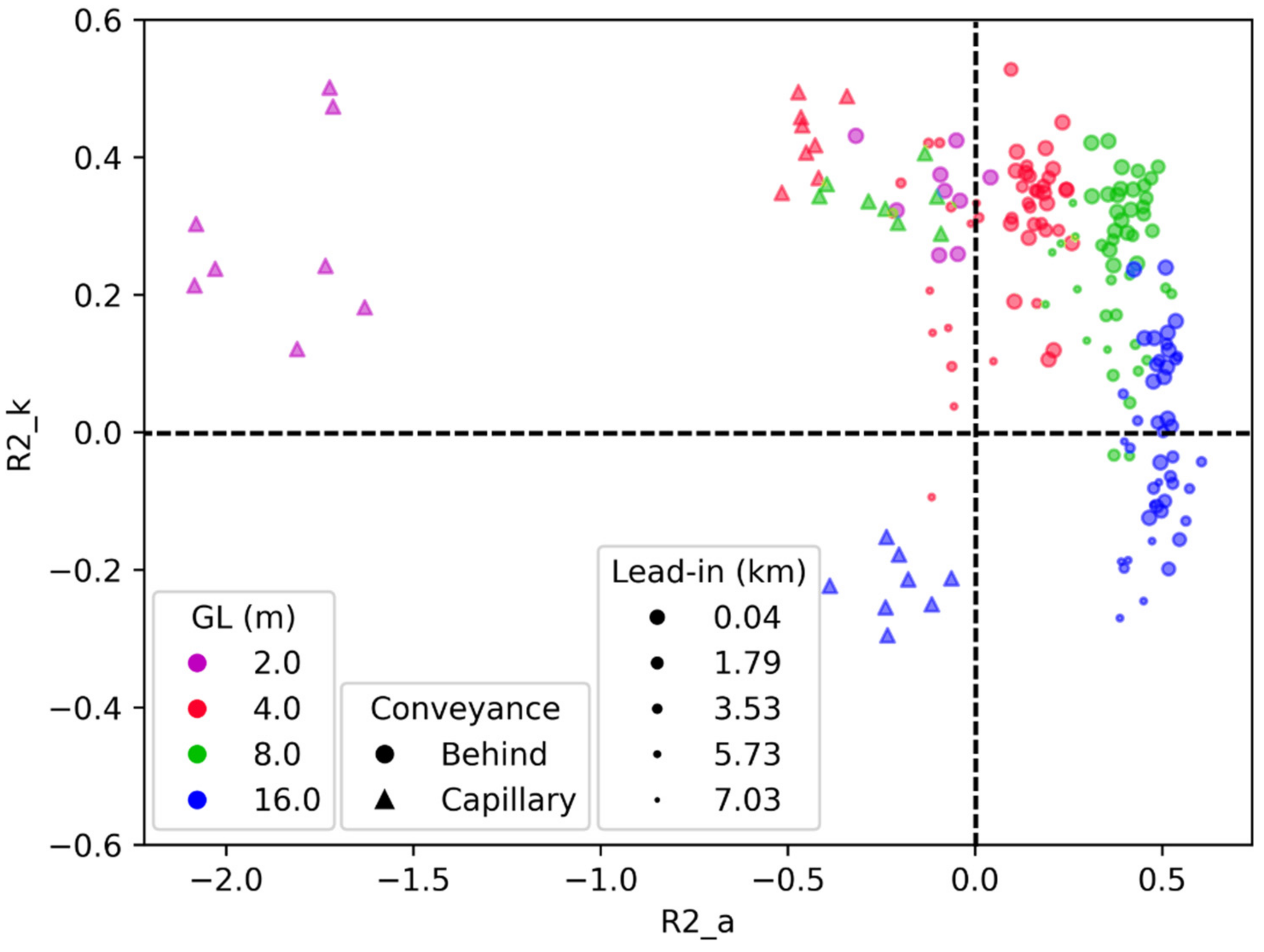
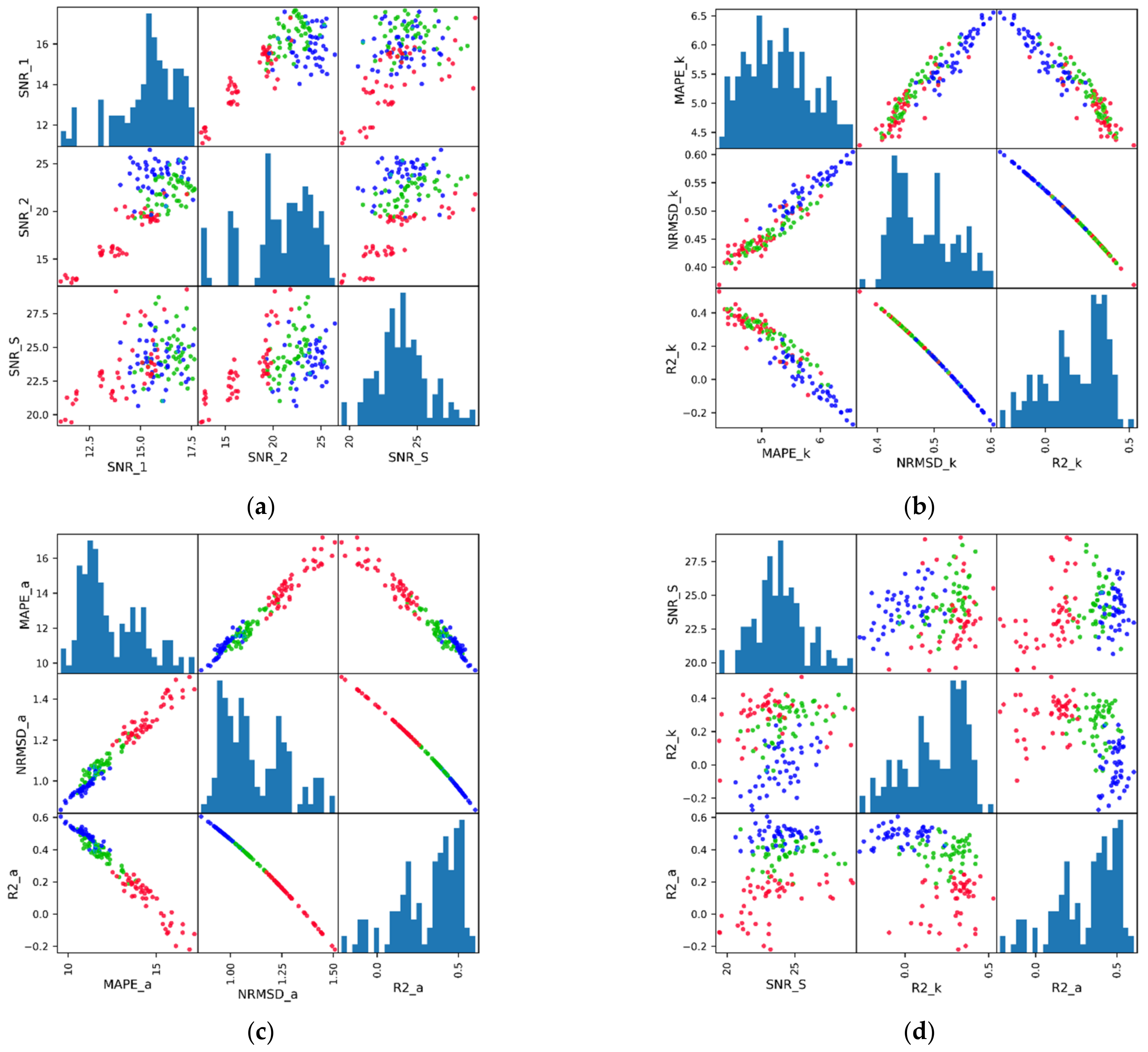
The initial quantification of data quality is an important step in seismic data acquisition design, including the choice of sensing strategy. The signal-to-noise ratio (SNR) often drives the choice of distributed acoustic sensing (DAS) parameters in vertical seismic profiling (VSP). We compare this established approach for data quality assessment with metrics comparing DAS data products to available well logs. First, we create kinematic and dynamic data products derived from original seismic data, such as the interval velocity and amplitude of P-wave arrivals. Next, we quantify the quality of derived data products using well log data by calculating various statistical metrics. Using a large dataset of 220 different VSP experiments with a fixed source location and various DAS acquisition parameters, such as gauge length (GL), conveyance type, and lead-in length, we analyzed the statistical distribution of various metrics. The results indicate the decoupling between seismic-based and log-based metrics as well as between the quality of dynamic and kinematic data-products for the same record. Therefore, we propose using fit-for-purpose metrics to optimize the acquisition cost. In particular, for ray-based tomographic processing, it is sufficient to use traveltime-based metrics. On the other hand, for advanced dynamic analysis, amplitude-based metrics define the quality of final processing products. Hence, it is crucial to use fit-for-purpose metrics to optimize DAS VSP acquisition.
Keywords: distributed acoustic sensing (DAS); vertical seismic profiling (VSP); data metrics distributed acoustic sensing (DAS); vertical seismic profiling (VSP); data metrics