Article

Spatiotemporal Dynamics of Surface Ozone and Its Relationship with Meteorological Factors over the Beijing–Tianjin–Tangshan Region, China, from 2016 to 2019

1
International Research Center of Big Data for Sustainable Development Goals, Beijing 100094, China
2
Key Laboratory of Digital Earth Science, Aerospace Information Research Institute, Chinese Academy of Sciences, Beijing 100094, China
3
Agricultural Information Institute, Chinese Academy of Agricultural Sciences, Beijing 100081, China
4
College of Geometics, Xi’an University of Science and Technology, Xi’an 710054, China
*
Author to whom correspondence should be addressed.
Sensors 2022, 22(13), 4854; https://doi.org/10.3390/s22134854
Submission received: 15 April 2022 / Revised: 9 June 2022 / Accepted: 15 June 2022 / Published: 27 June 2022
(This article belongs to the Special Issue Sensors for Environmental Threats)

Abstract

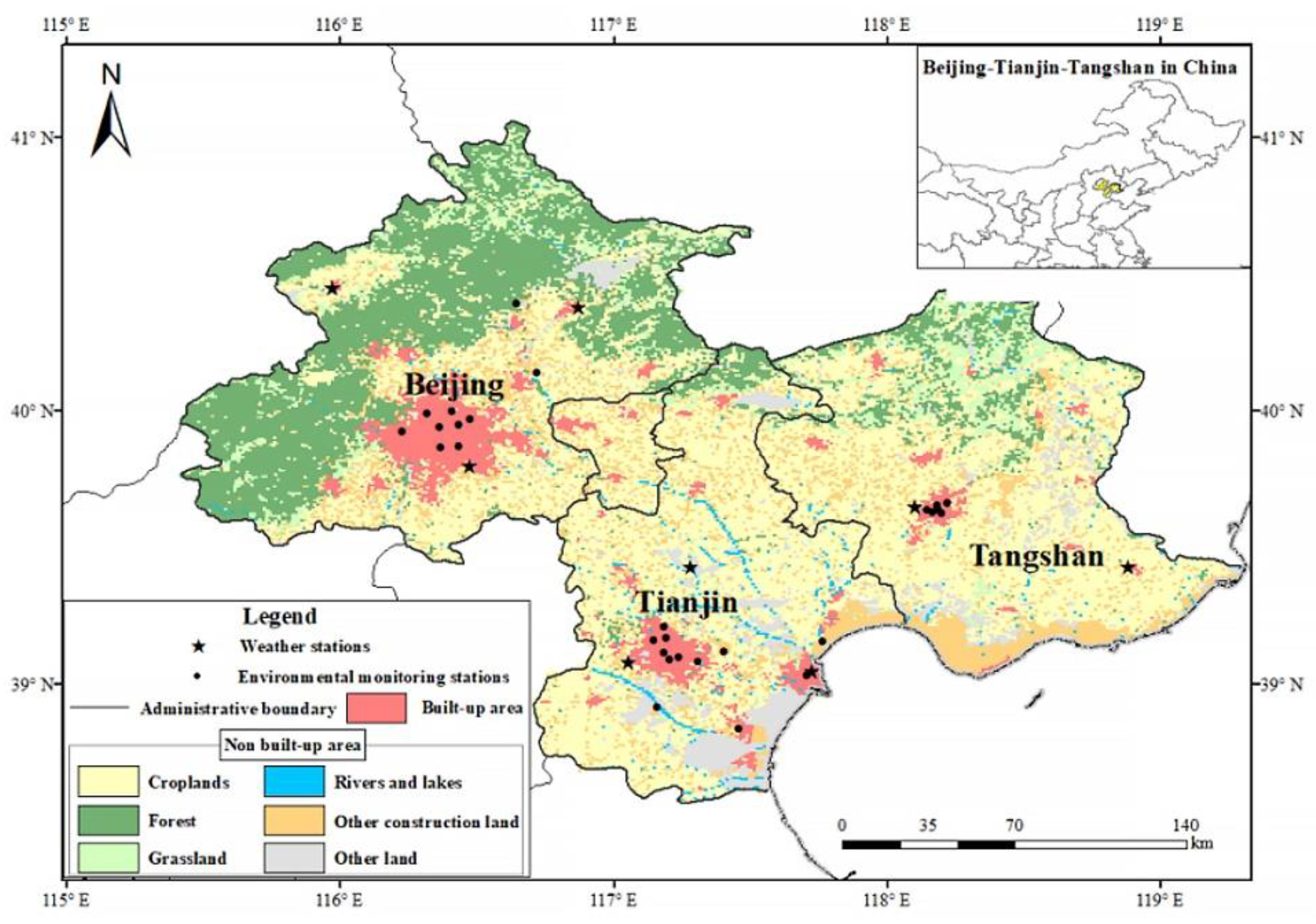
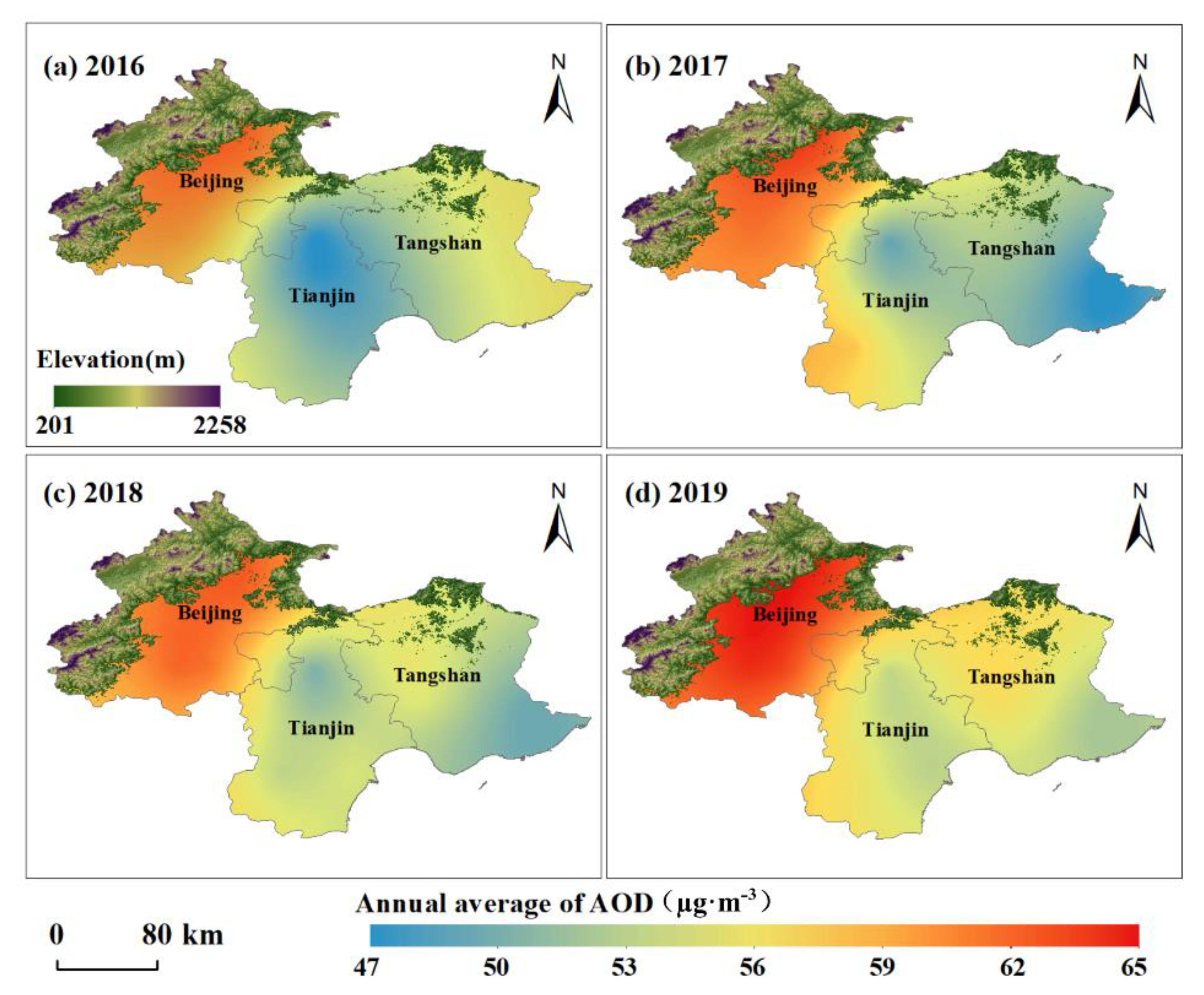
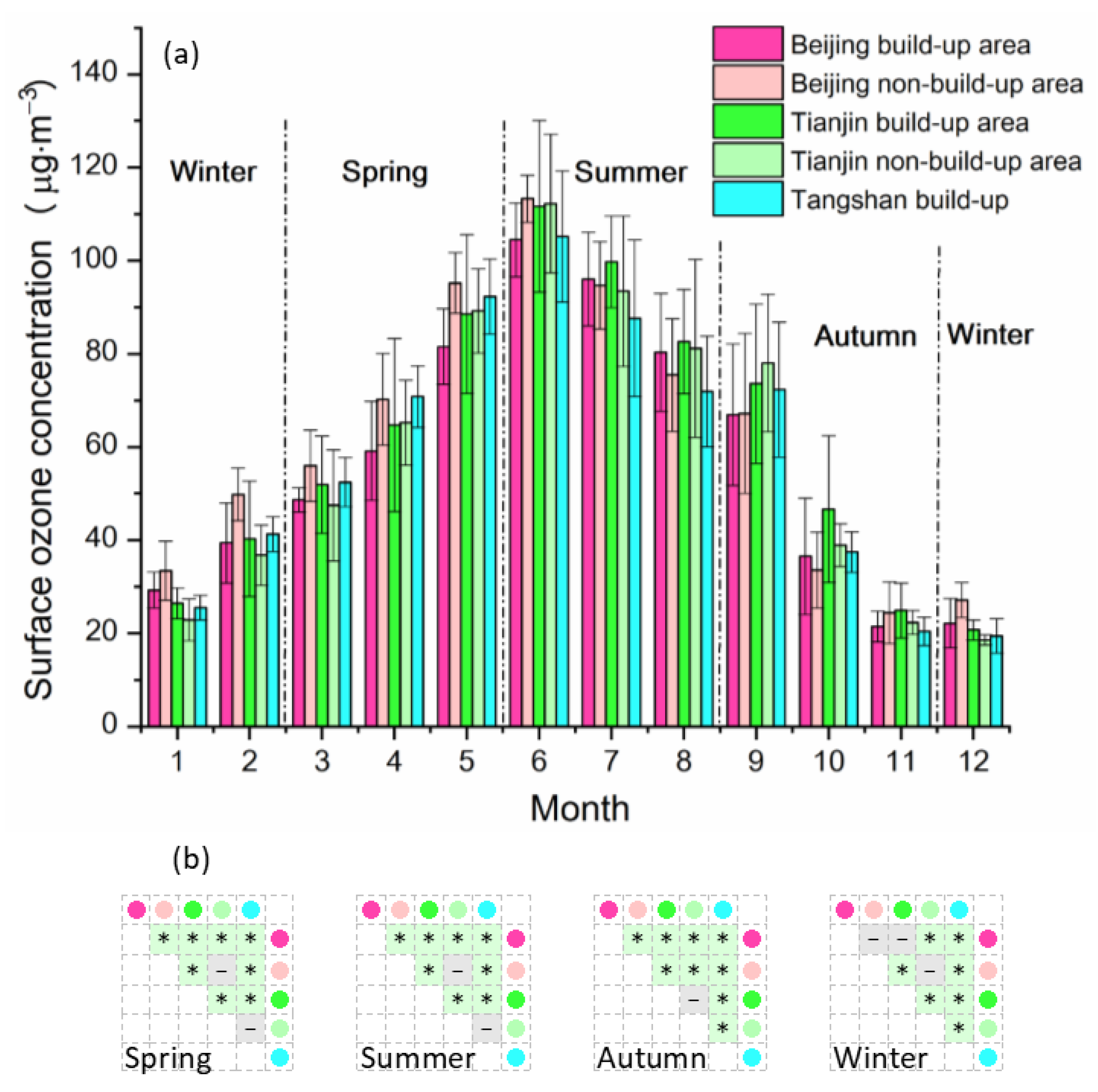
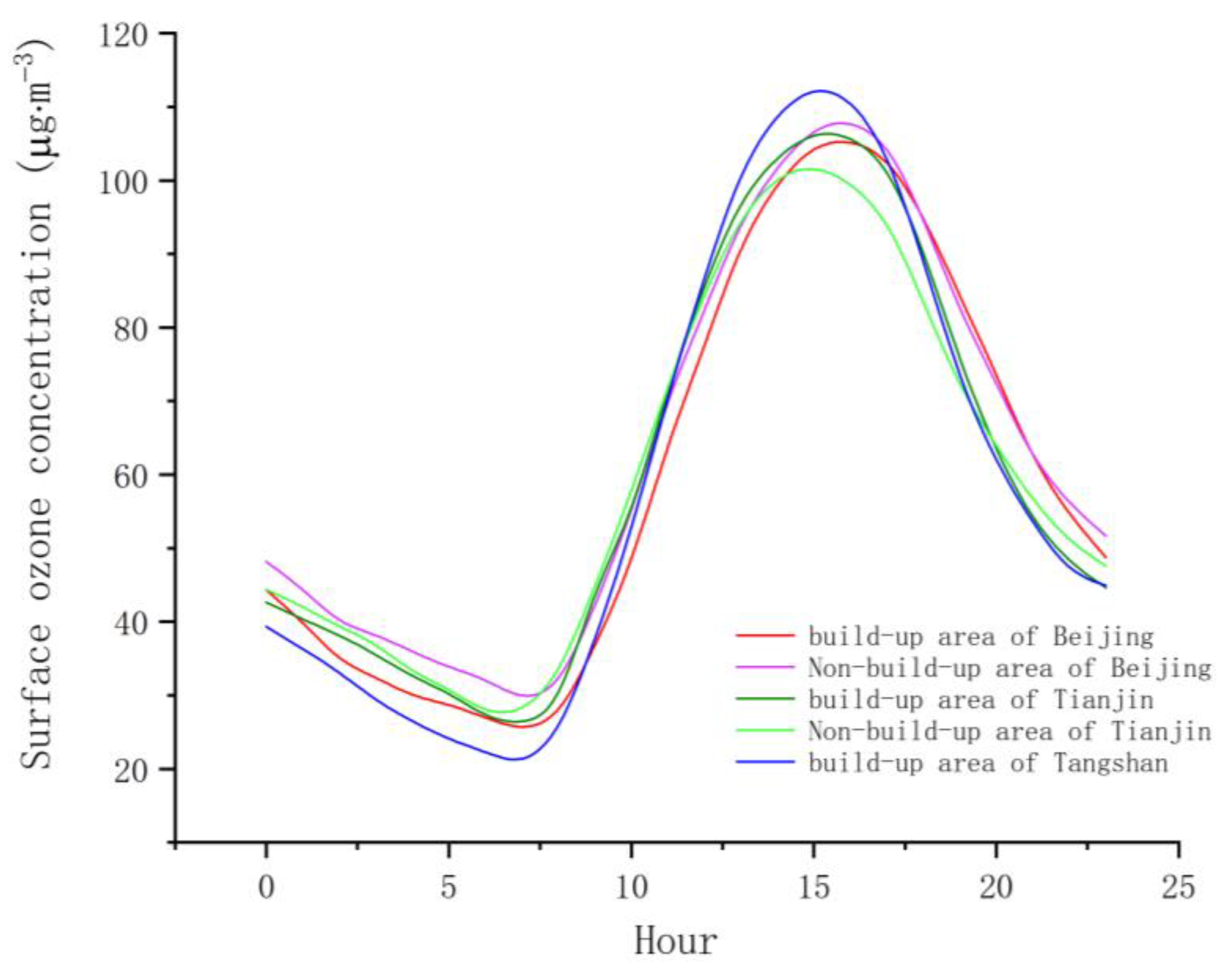
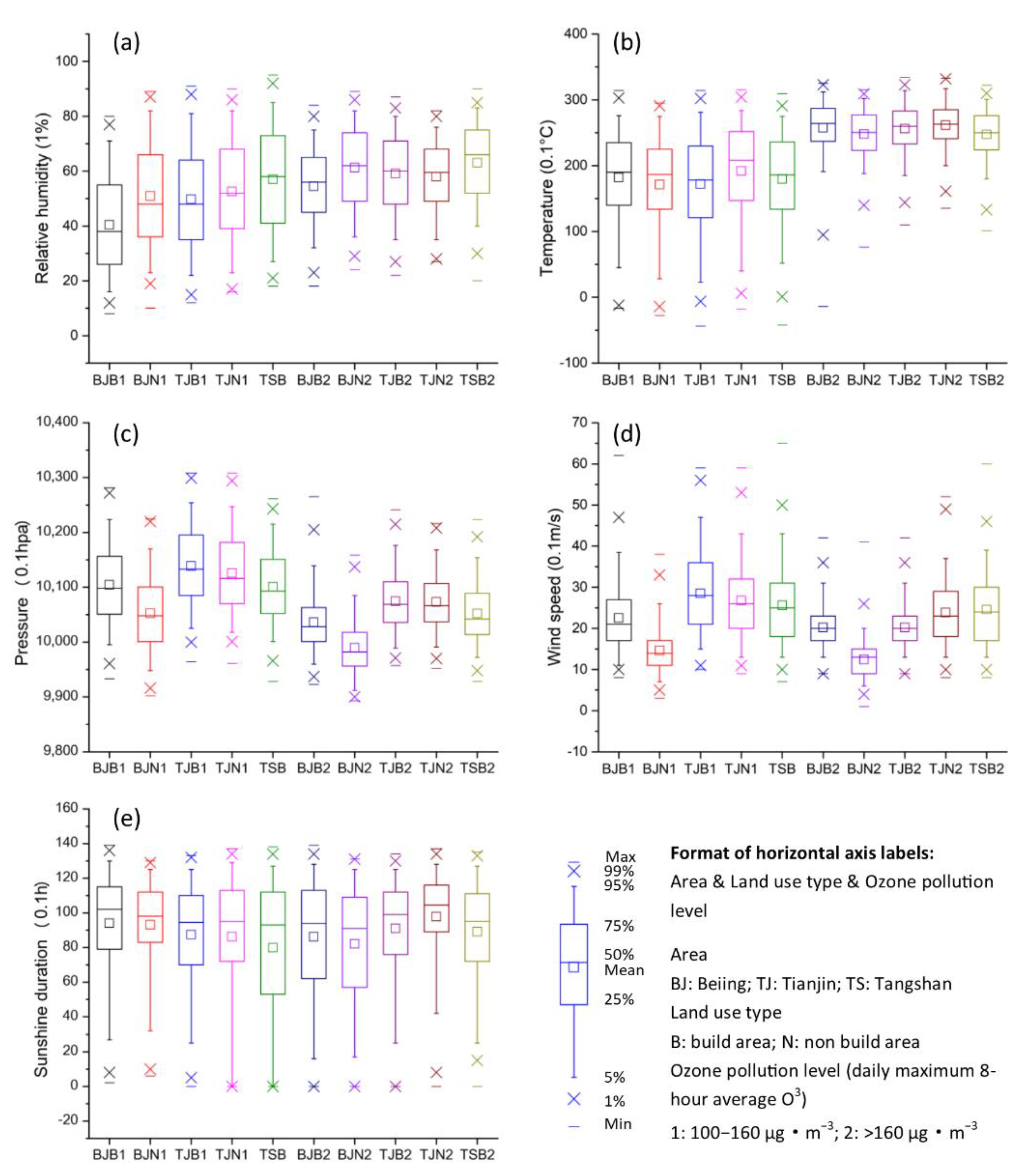
In recent years, ozone pollution has been increasing in some parts of the world. In this study, we used the Beijing–Tianjin–Tangshan (BJ-TJ-TS) urban agglomeration region as a case study and used satellite remotely sensed inversion data and hourly ground monitoring observations of surface ozone concentrations, meteorological data, and other factors from 2016 to 2019 to explore the spatiotemporal dynamic characteristics of surface ozone concentration and its pollution levels. We also investigated their coupling relationships with meteorological factors, including temperature, pressure, relative humidity, wind velocity, and sunshine duration, in order to support the development of effective control measures for regional ozone pollution. The results revealed that the surface ozone concentration throughout the BJ-TJ-TS region from 2016 to 2019 exhibited an overall pattern of high values in the northwest and low values in the southeast, as well as an obvious difference between built-up and non-built-up areas (especially in Beijing). Meanwhile, a notable increasing trend of ozone levels was discovered in the BJ and TJ areas from 2016 to 2019, whereas this upward trend was not evident in the TS area. In all three areas, the highest monthly average ozone values occurred in the summer month of June, while the lowest monthly average levels occurred in the winter month of December. Their diurnal variation values reached a maximum value at approximately 3:00–4:00 p.m. and a minimum value at approximately 7:00 a.m. It is clear that high temperature, long sunshine duration, low atmospheric pressure, and weak wind velocity conditions, as well as certain relative humidity levels, readily led to high-concentration ozone pollution. Meanwhile, the daily average values of the five meteorological factors on days with Grade I and Grade II ozone pollution displayed different characteristics.
Keywords: surface ozone; OMI; spatiotemporal dynamics; meteorological factors surface ozone; OMI; spatiotemporal dynamics; meteorological factors