Article

Device for Identifying the UV Emission Spectrum

by
Robert Jenő Kovács
,
Jenő-Zoltán Kovács
and
Lorant Andras Szolga
*
Optoelectronics Group, Basis of Electronics Department, Faculty of Electronics, Telecommunications and Information Technology, UTCN, 400114 Cluj-Napoca, Romania
*
Author to whom correspondence should be addressed.
Sensors 2022, 22(13), 4852; https://doi.org/10.3390/s22134852
Submission received: 28 December 2021 / Revised: 14 June 2022 / Accepted: 20 June 2022 / Published: 27 June 2022
(This article belongs to the Special Issue UV, Infrared and THz Radiation Sensing System)

Abstract

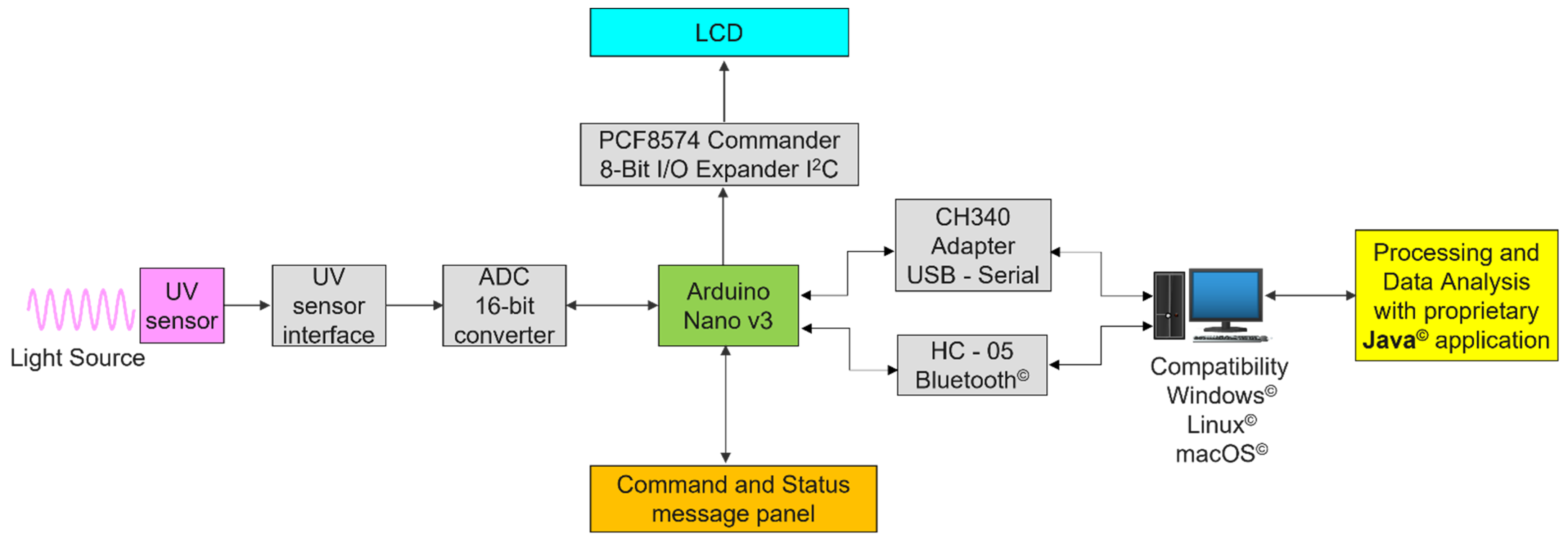
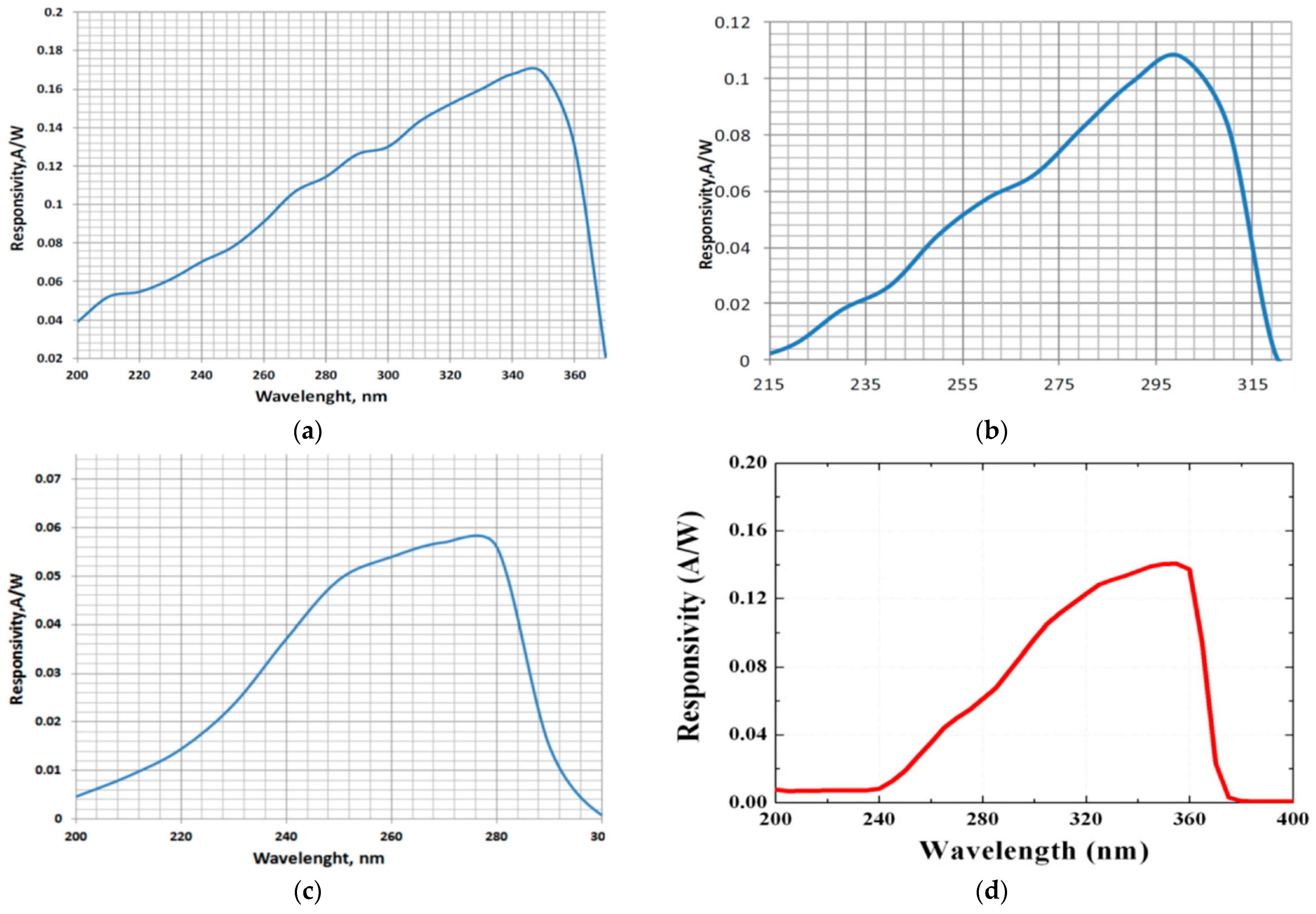
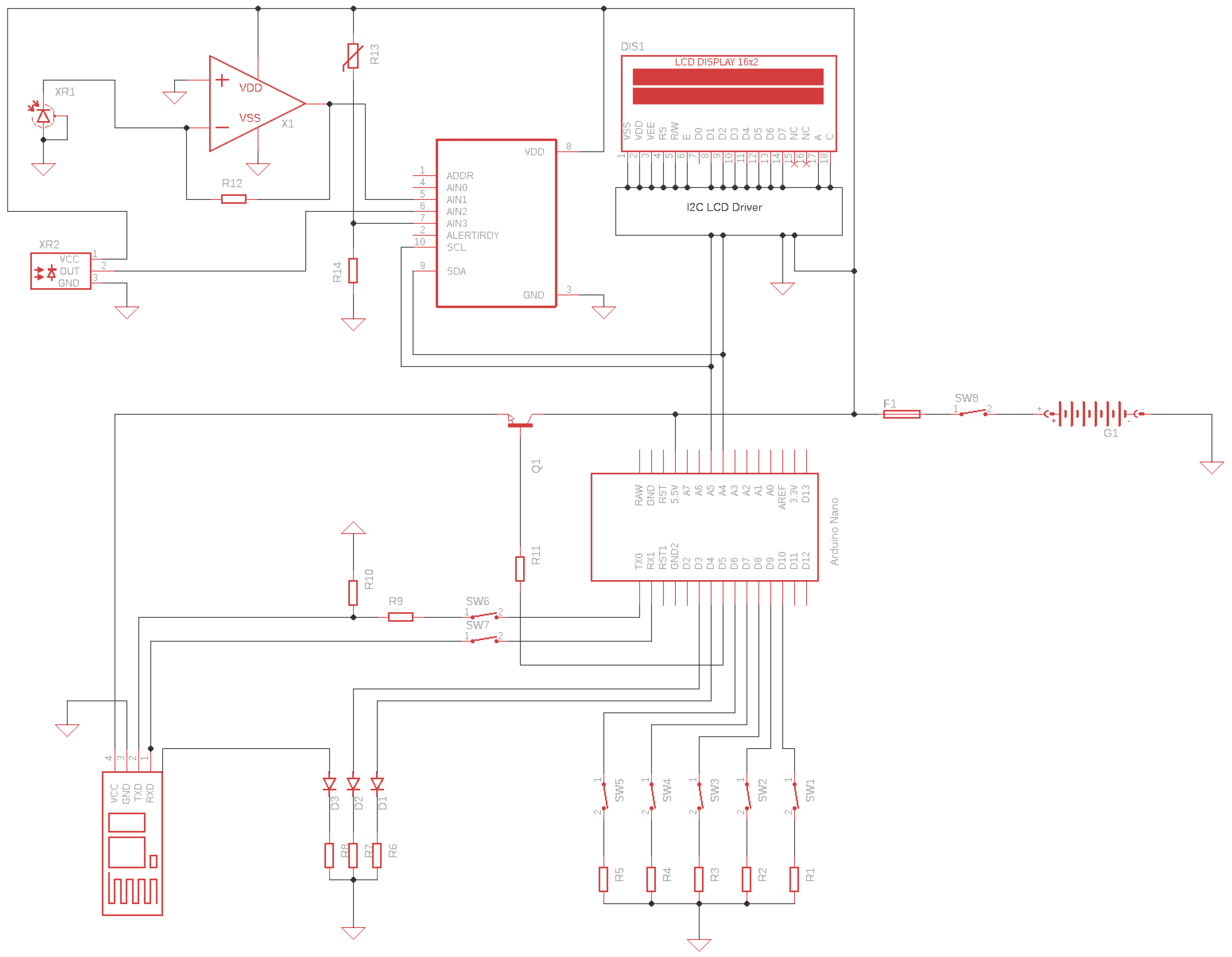
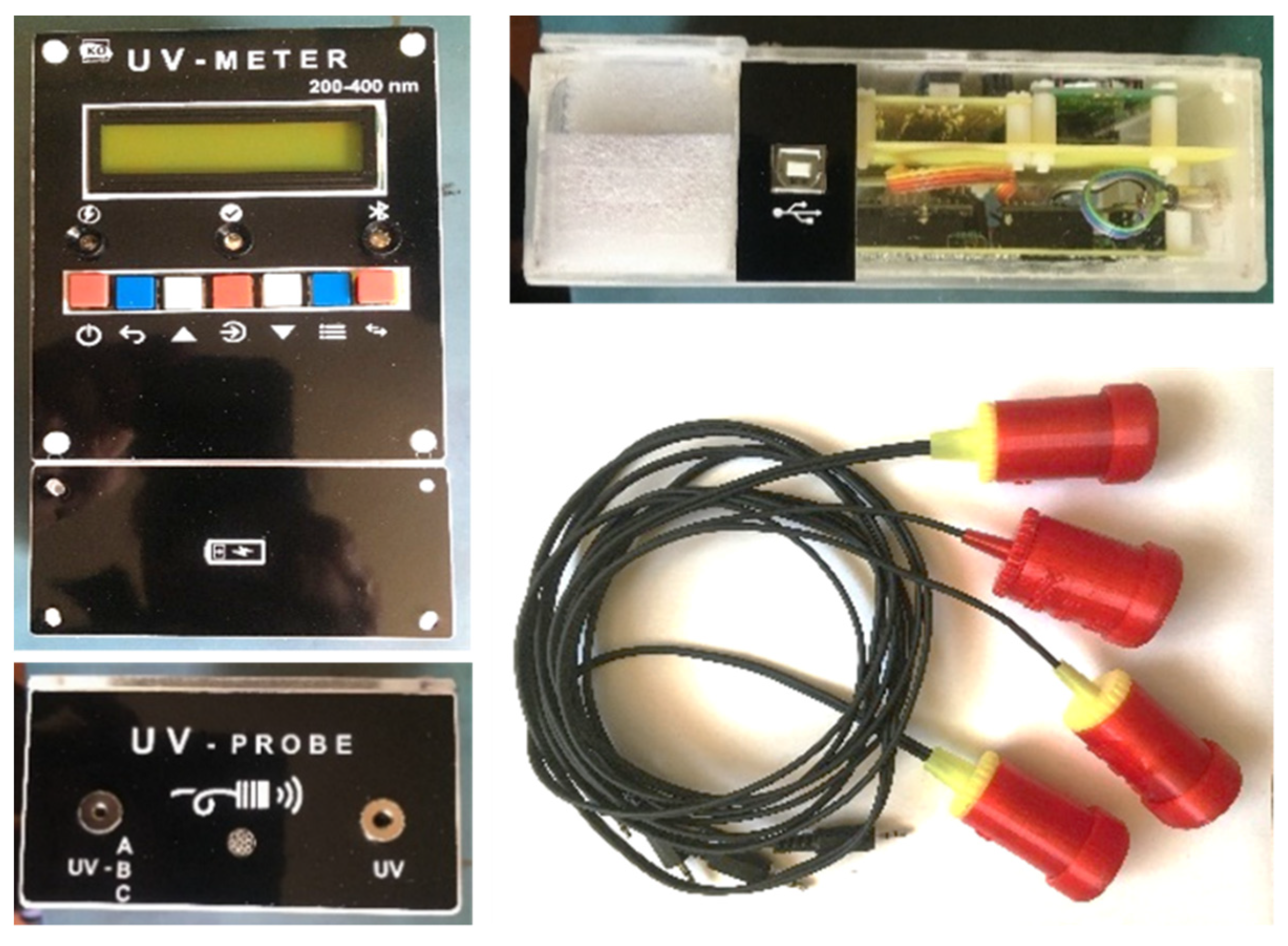
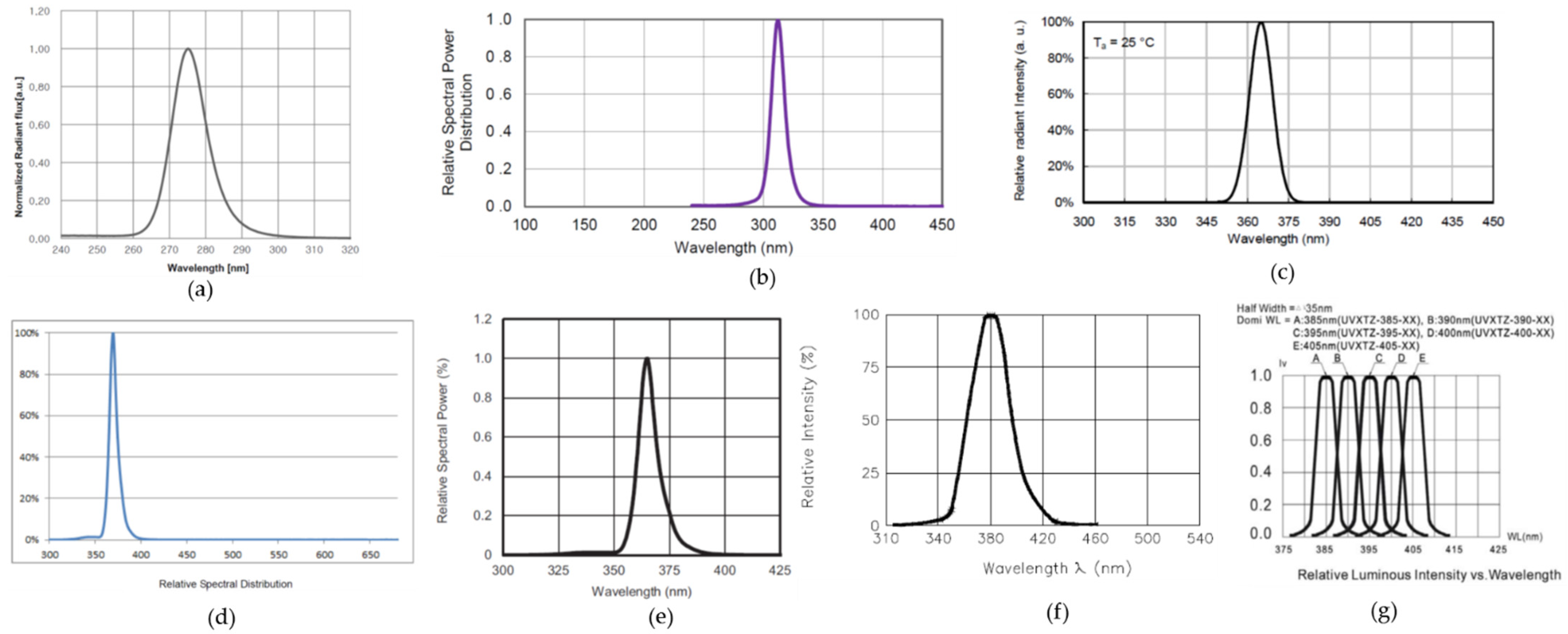
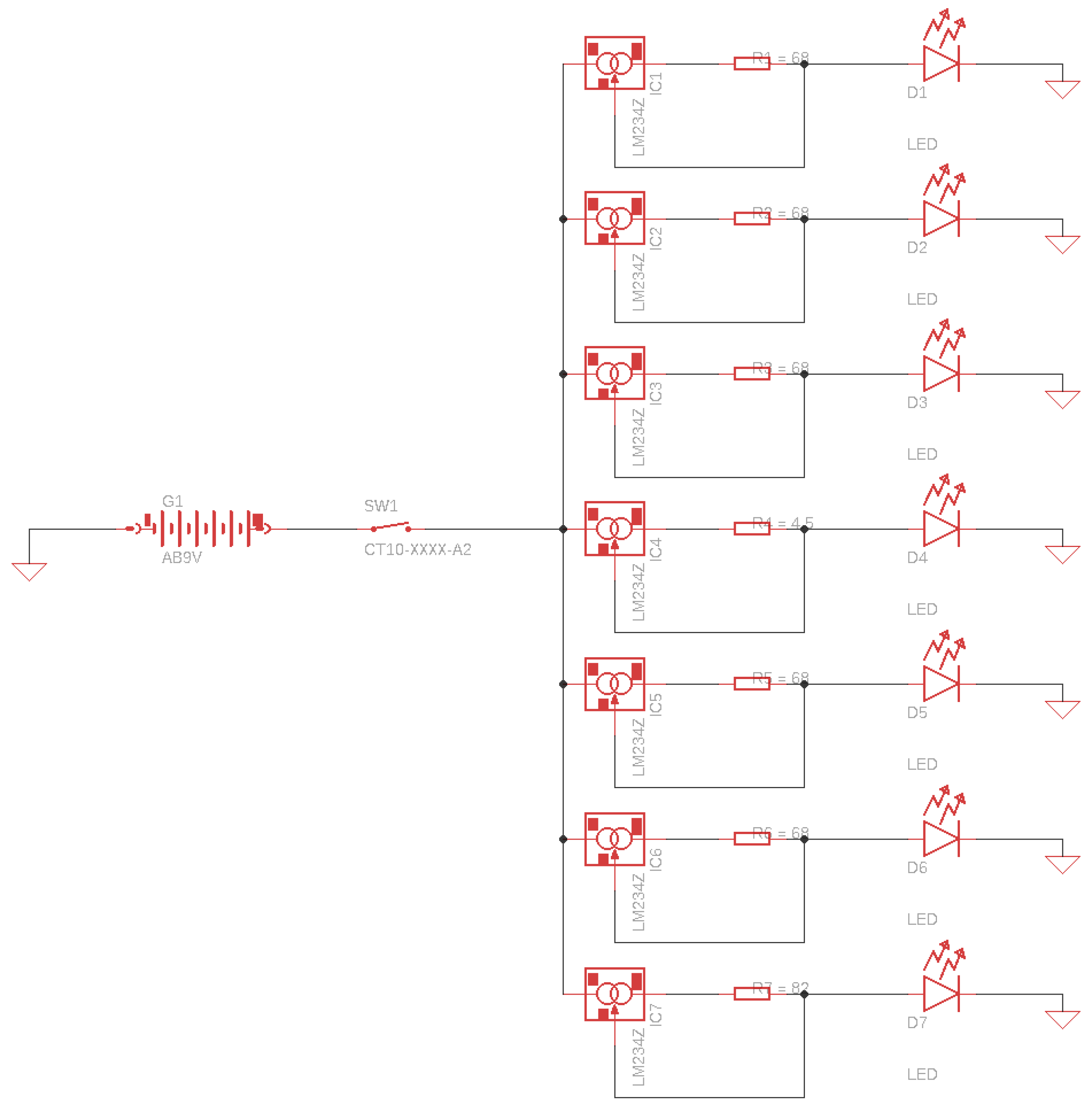
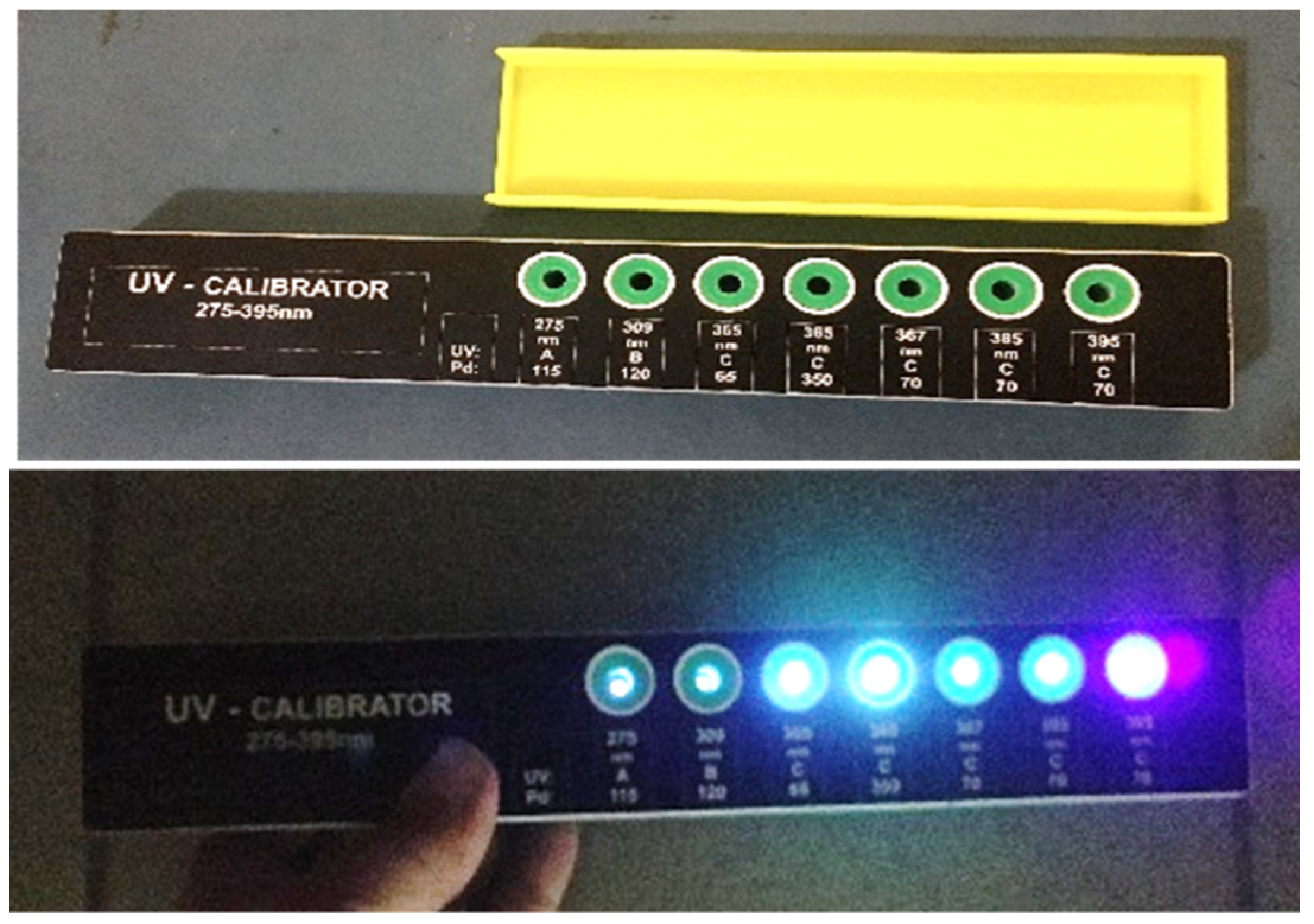
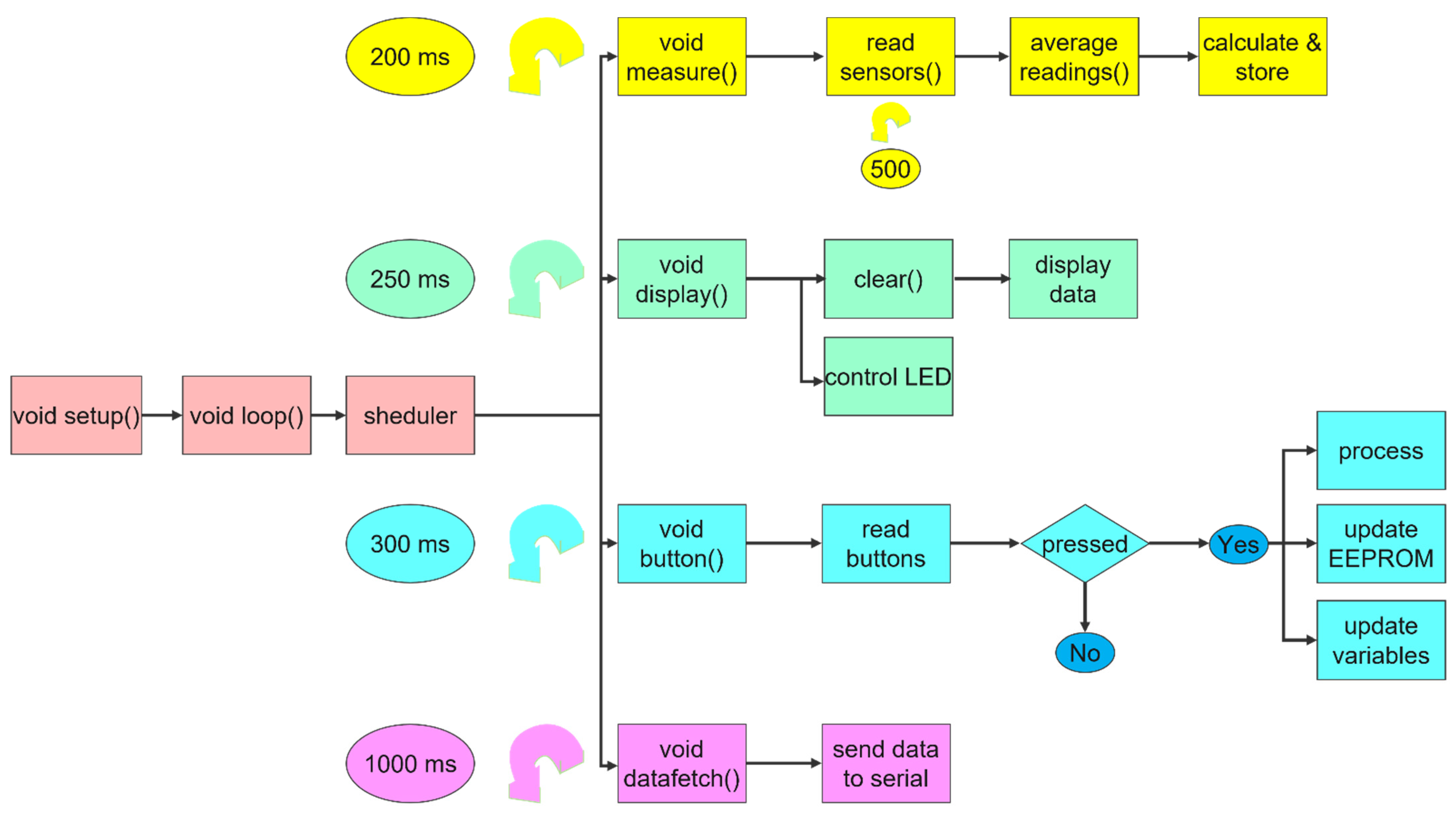
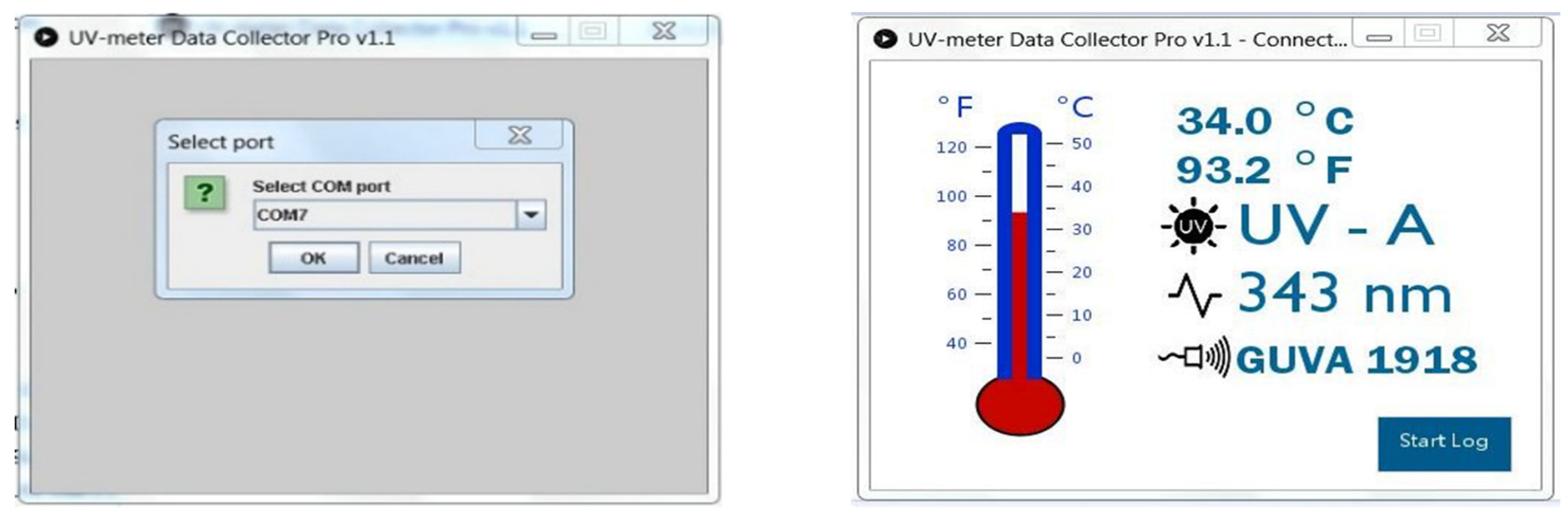
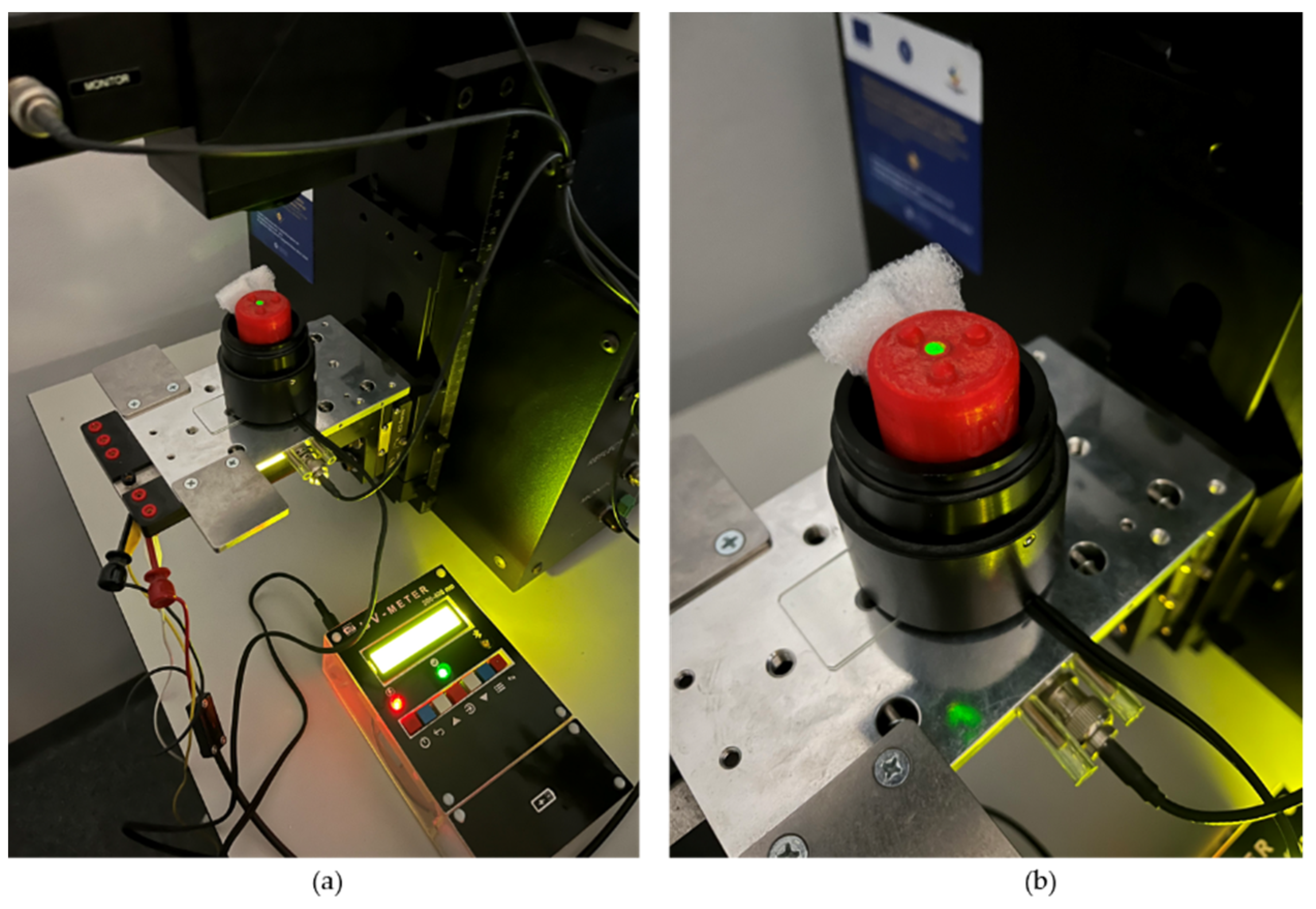
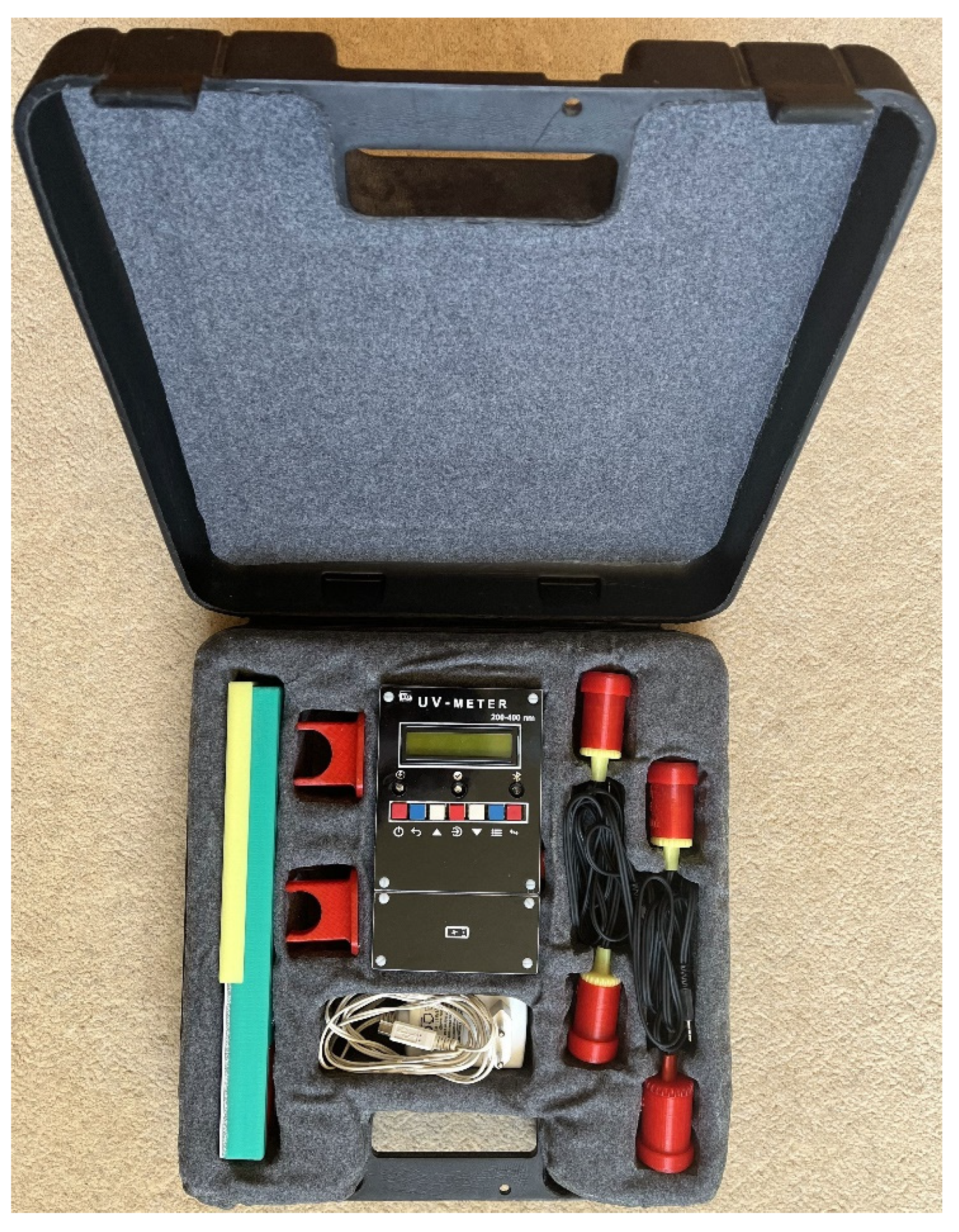
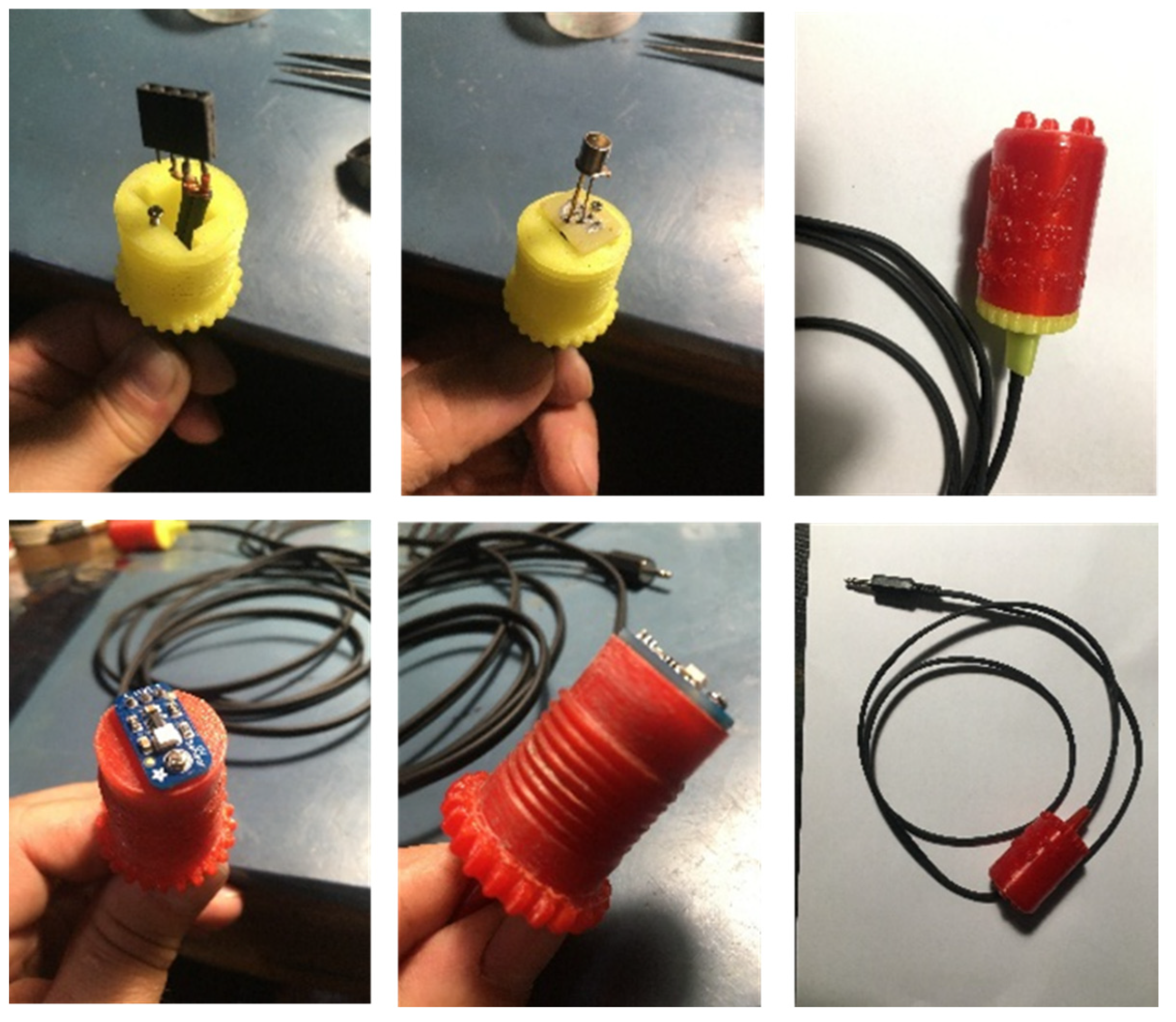
Nowadays, the disinfection of classrooms, shopping malls, and offices has become an important part of our lives. One of the most effective disinfection methods is ultraviolet (UV) radiation. To ensure the disinfection device has the required wavelength spectrum, we need to measure it with dedicated equipment. Thus, in this work, we present the development of a UV spectrum detector capable of identifying UV wavelength spectrums, with a wide range of probes and the ability to transmit data to a PC for later evaluation of the results. The device was developed with four UV sensors: one for UV-A, one for UV-B, one for UV-C, and one with a wide range of detection of UVA, with a built-in transimpedance amplifier. An Arduino Nano development board processes all the acquired data. We developed a custom light source containing seven UV LEDs with different central wavelengths to calibrate the device. For easy visualization of the results, custom PC software was developed in the Processing programming medium. For the two pieces of electronics—the UV detector and calibration device—3D-printed housings were created to be ergonomic for the end-user. From the price point of view, this device is affordable compared to what we can find on the market.
Keywords: UV radiation; UV sensors; UV LED; Arduino; Bluetooth UV radiation; UV sensors; UV LED; Arduino; Bluetooth