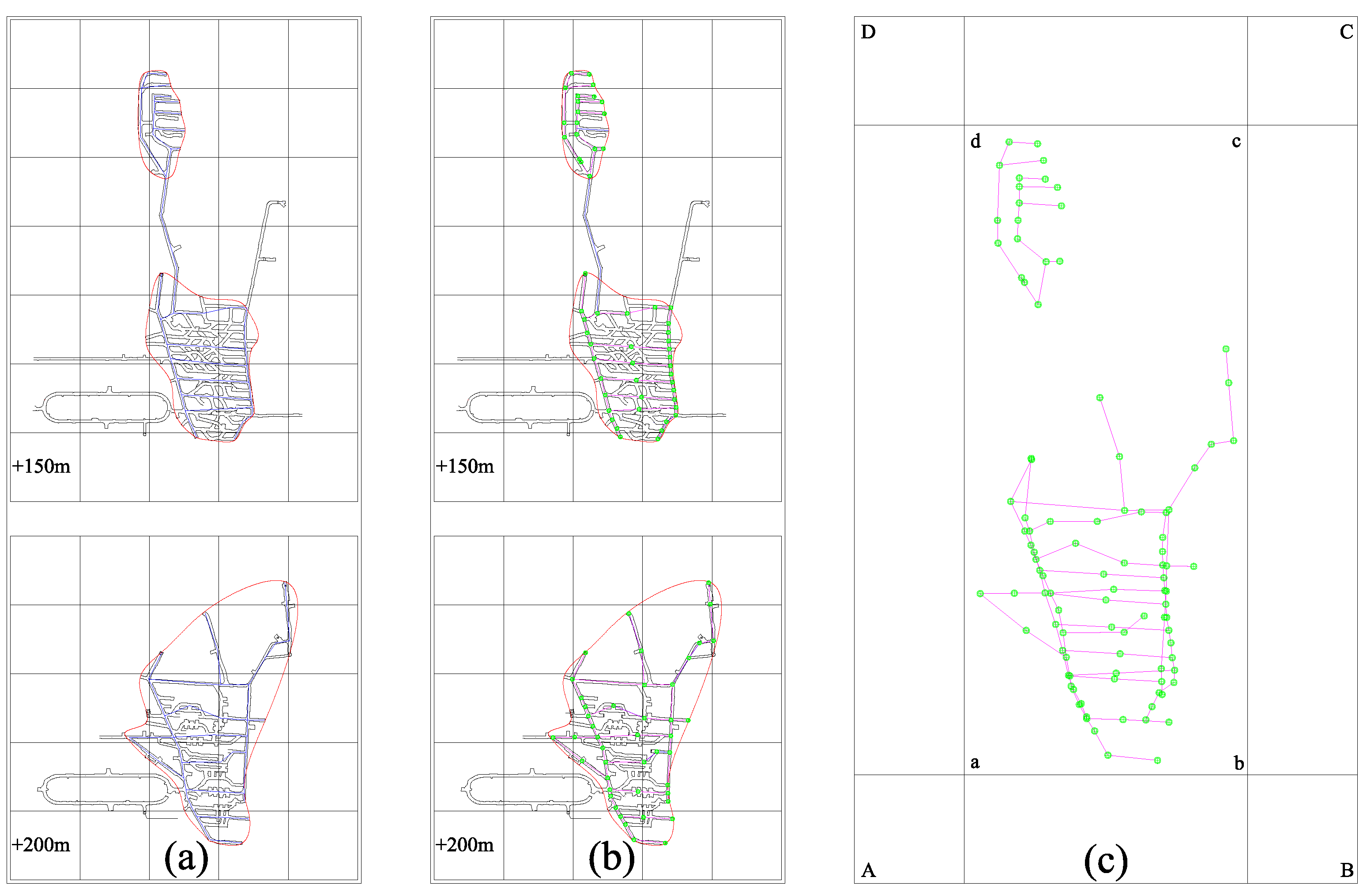
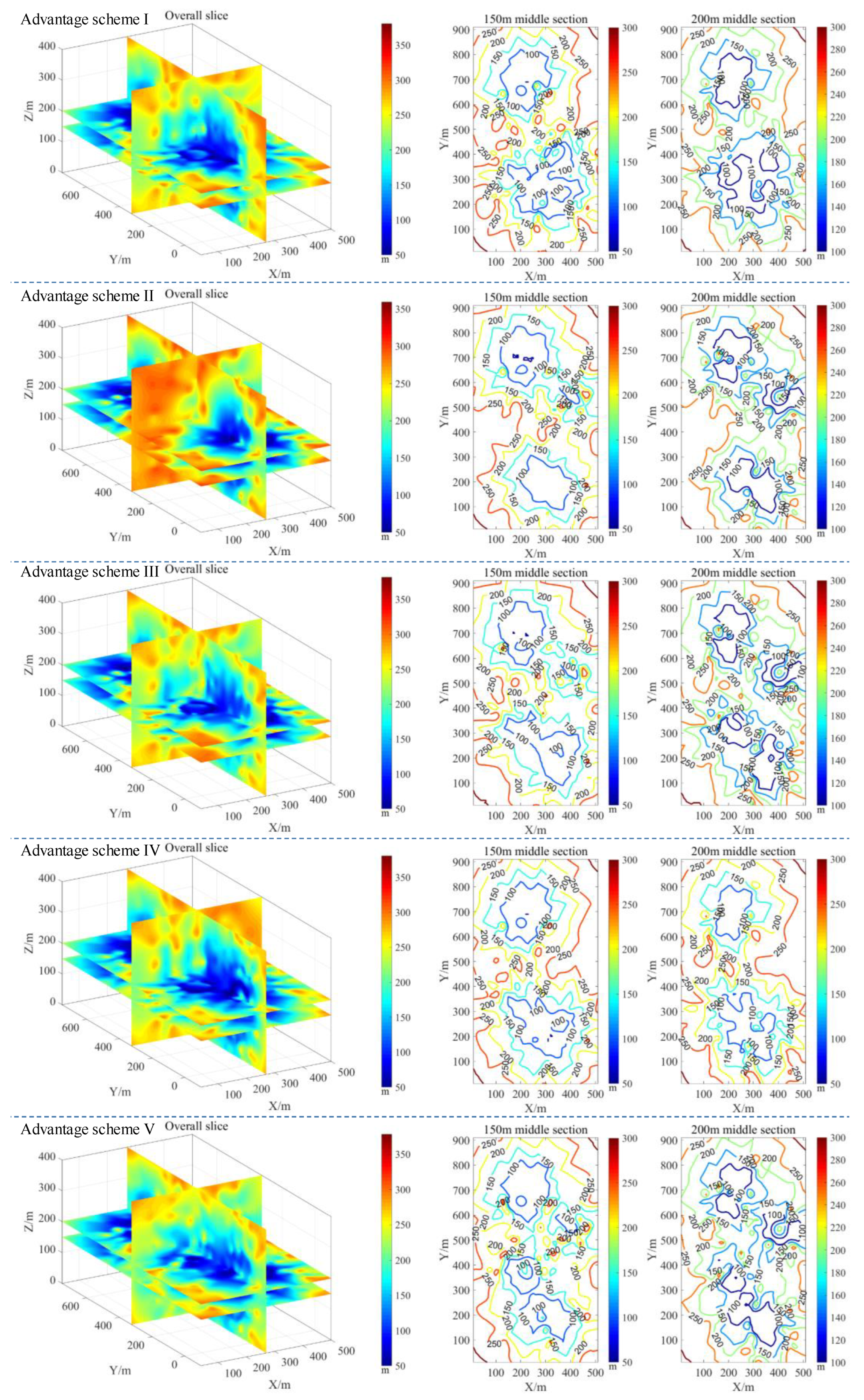
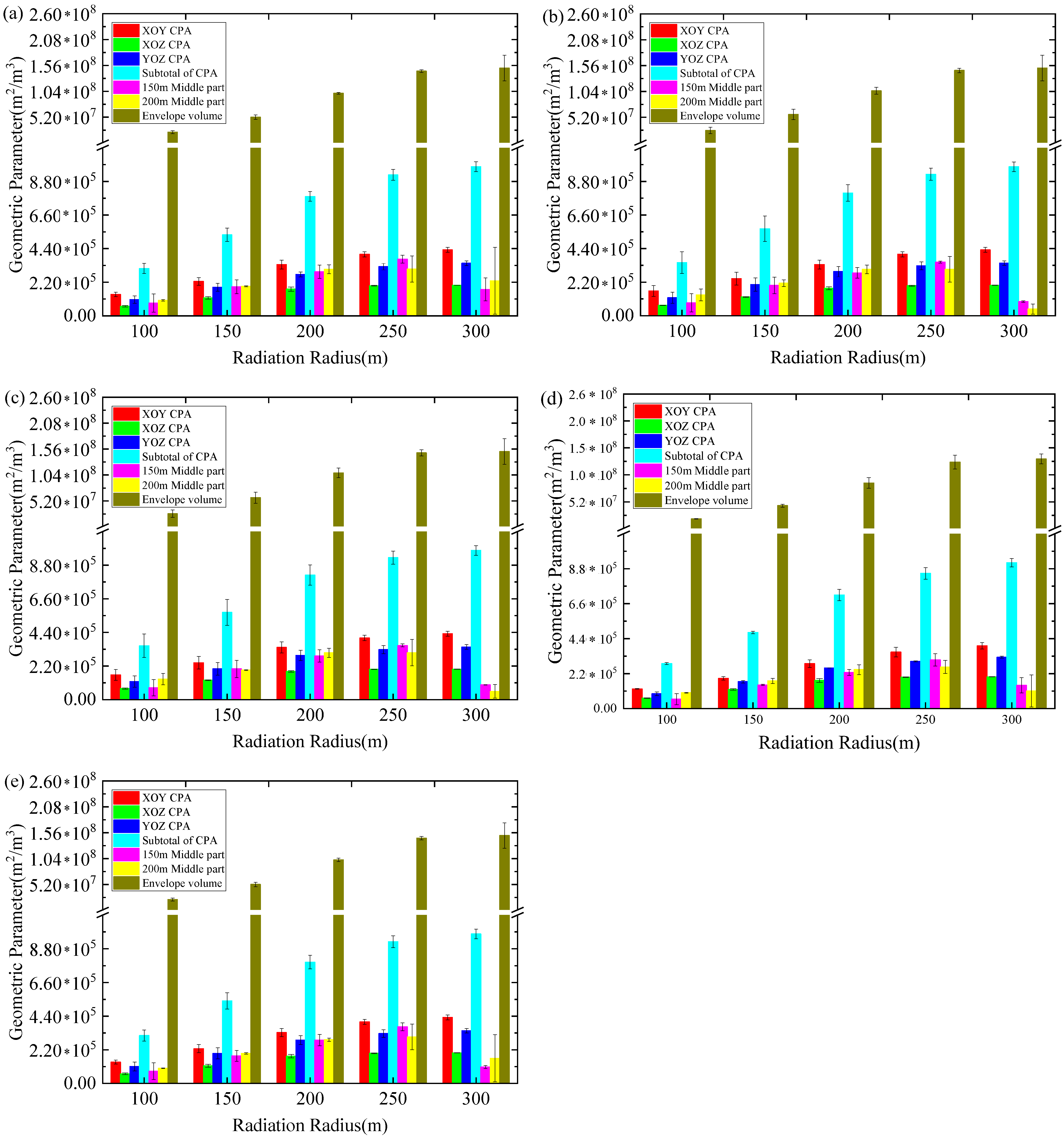
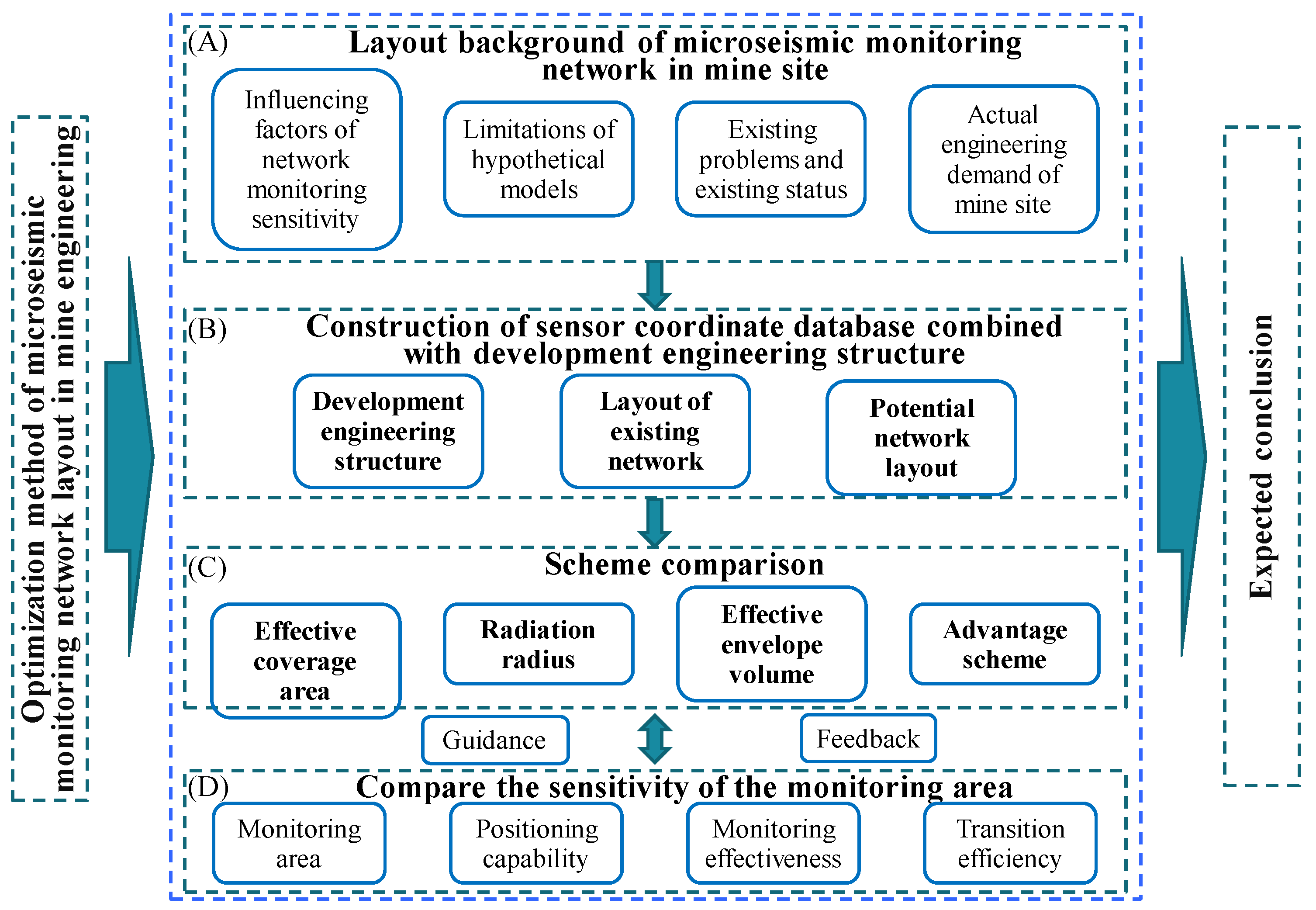
An Optimization Method for the Station Layout of a Microseismic Monitoring System in Underground Mine Engineering

Abstract
1. Introduction
2. Materials and Methods
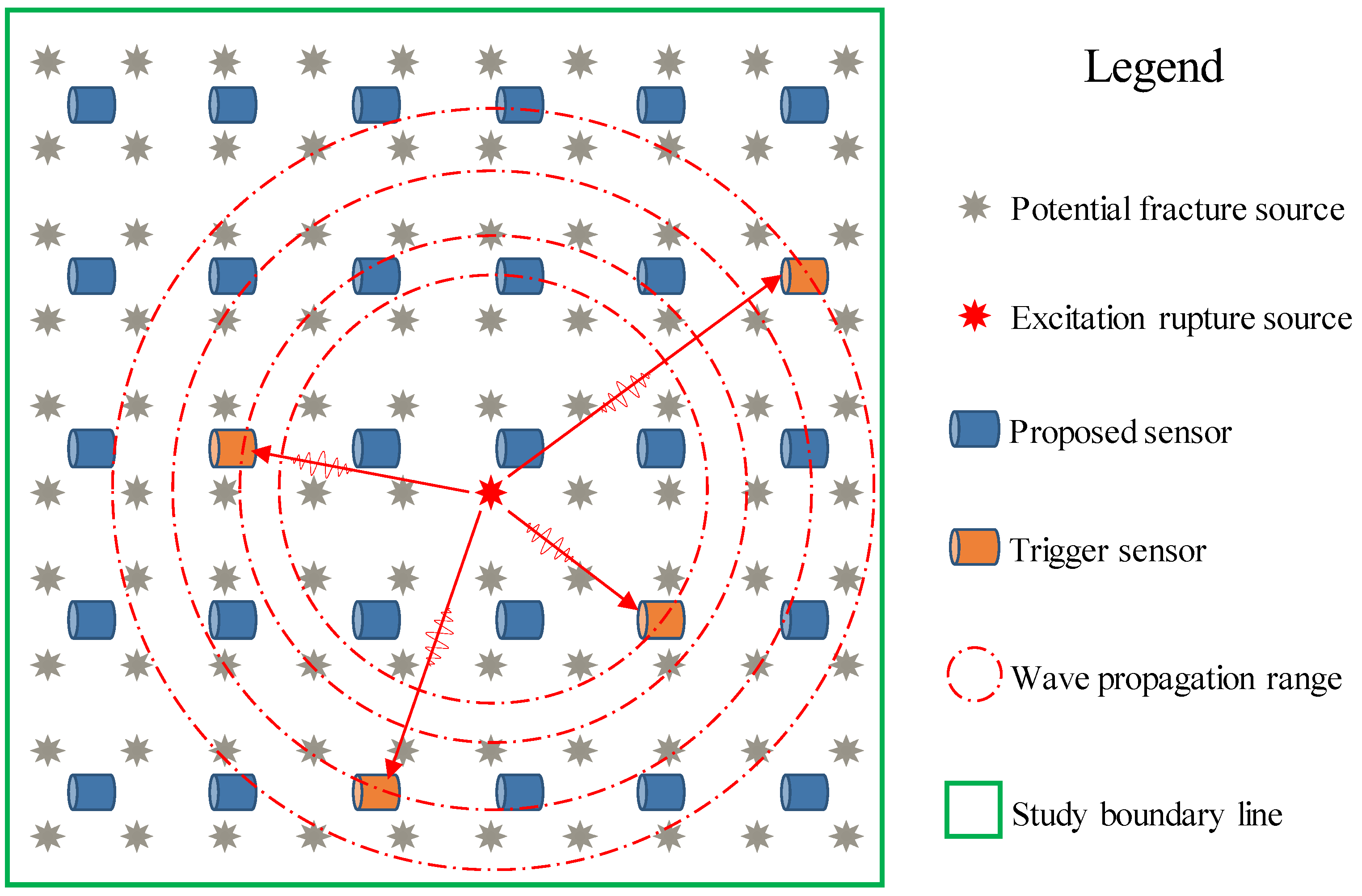
2.1. Principles of Classical Methods and Optimization Basis
2.2. New Indicators for the S-V-E-R-V Model
2.2.1. S + V
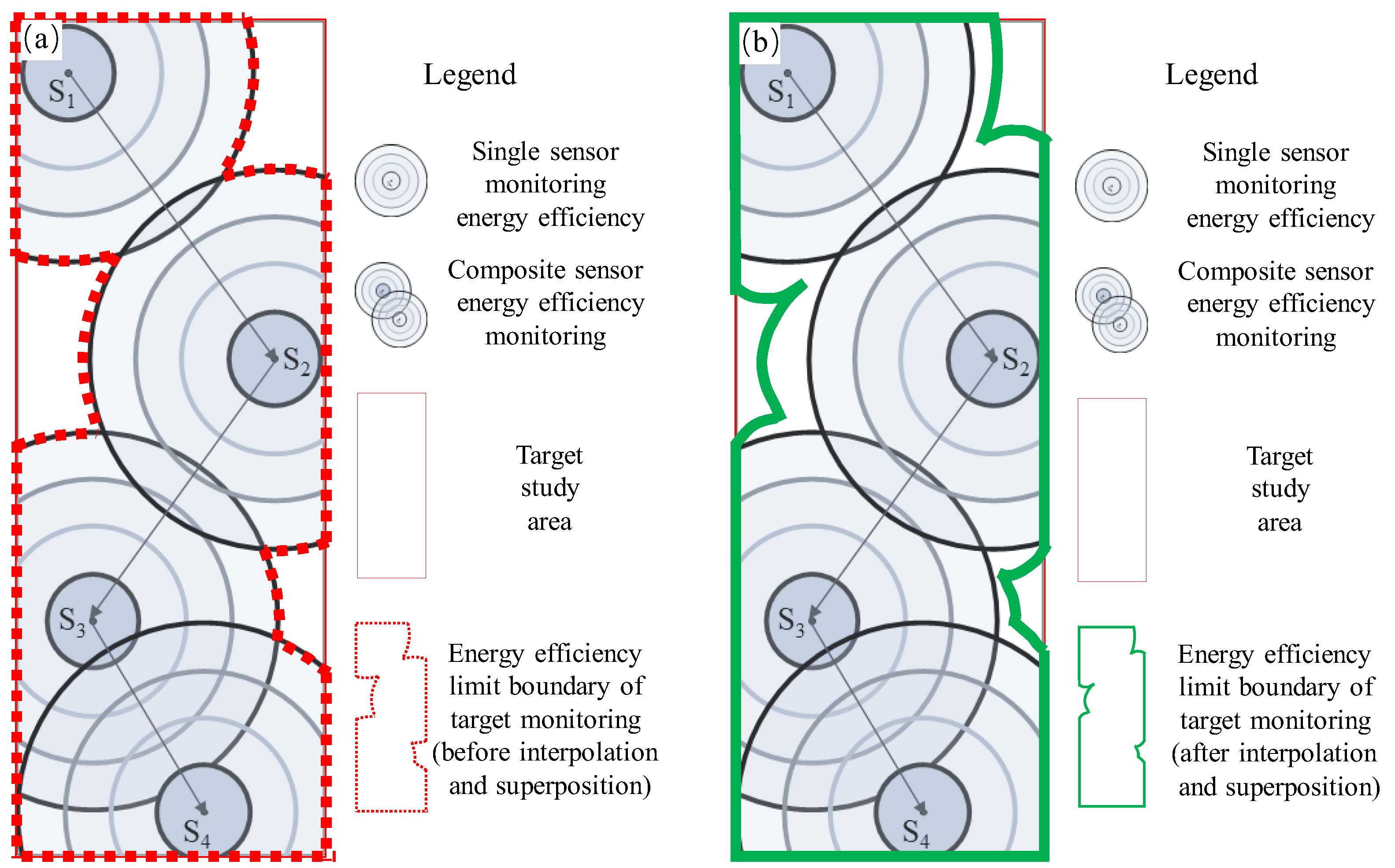
2.2.2. RE + VE
2.3. Formula Optimization
2.4. Solution Process
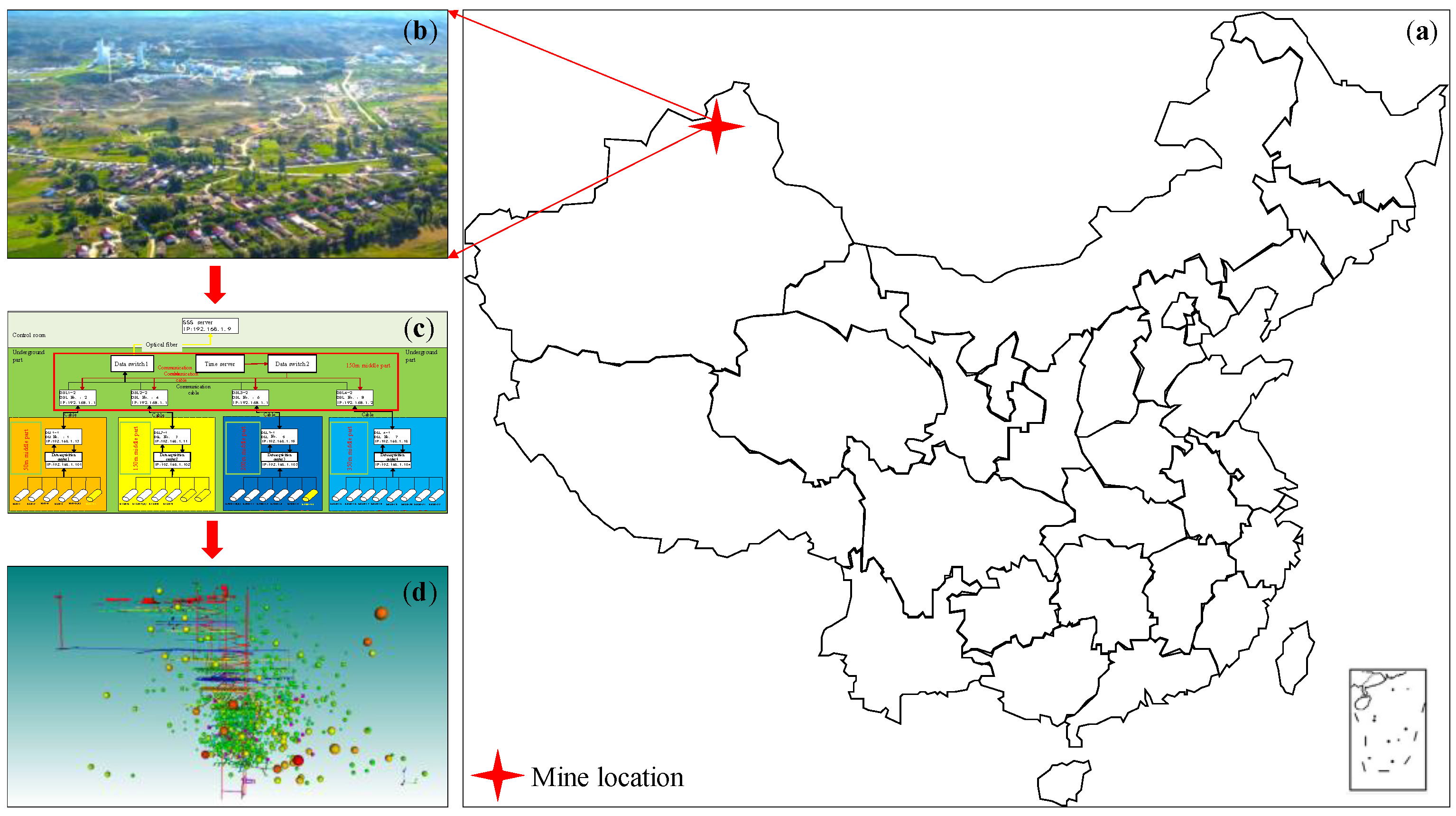
3. Case Analysis
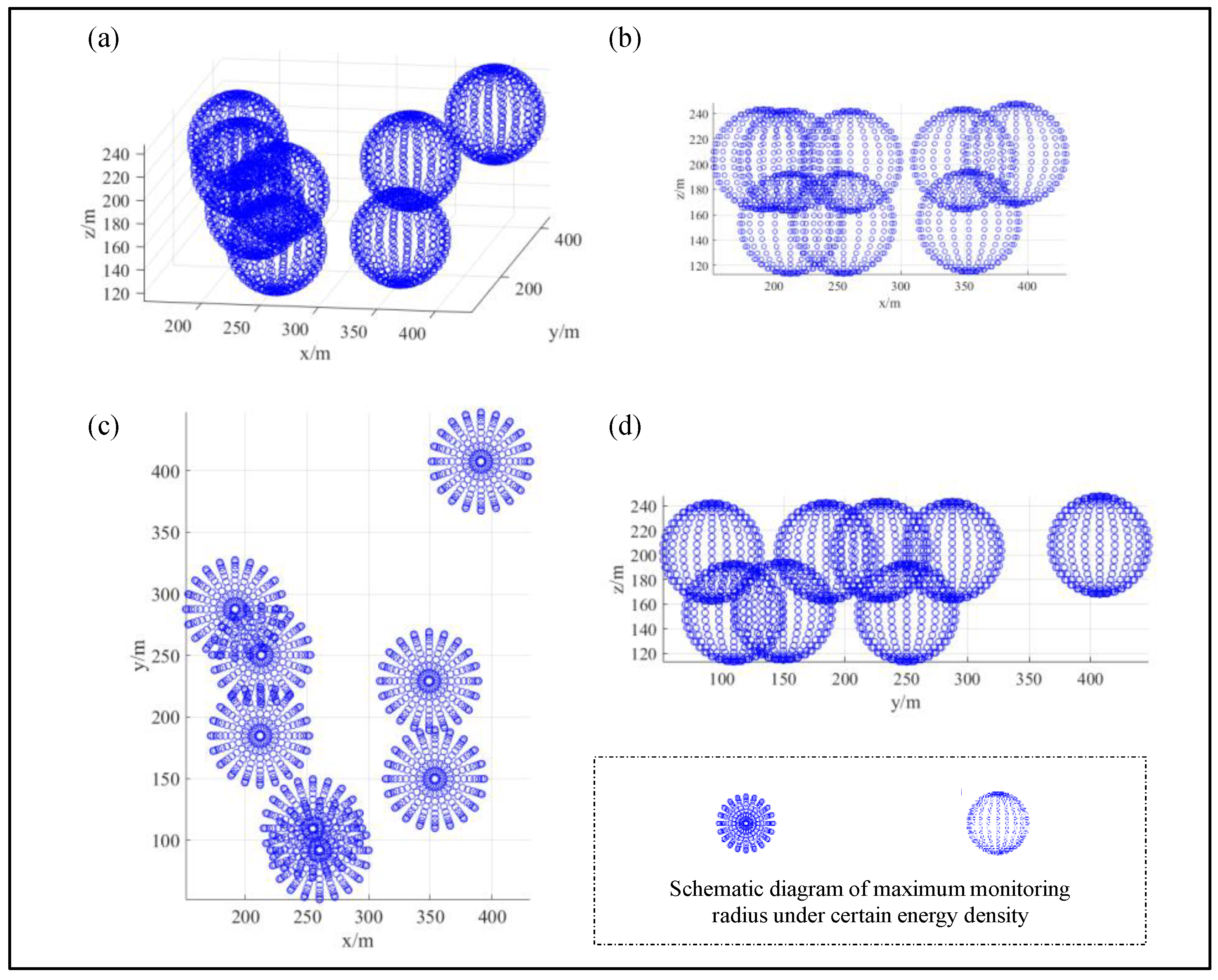
4. Numerical Simulation Analysis
5. Discussion and Conclusions
Author Contributions
Funding
Institutional Review Board Statement
Informed Consent Statement
Data Availability Statement
Conflicts of Interest
References
- Zhou, Z.; Cai, X.; Li, X.; Cao, W.; Du, X. Dynamic response and energy evolution of sandstone under coupled static–dynamic compression: Insights from experimental study into deep rock engineering applications. Rock Mech. Rock Eng. 2020, 53, 1305–1331. [Google Scholar]
- Cai, X.; Cheng, C.; Zhou, Z.; Konietzky, H.; Song, Z.; Wang, S. Rock mass watering for rock-burst prevention: Some thoughts on the mechanisms deduced from laboratory results. Bull. Eng. Geol. Environ. 2021, 80, 8725–8743. [Google Scholar]
- Zhang, C.; Feng, X.T.; Zhou, H.; Qiu, S.; Wu, W. Case histories of four extremely intense rockbursts in deep tunnels. Rock Mech. Rock Eng. 2012, 45, 275–288. [Google Scholar]
- Rehman, H.; Naji, A.M.; Nam, K.; Ahmad, S.; Yoo, H.K. Impact of construction method and ground composition on headrace tunnel stability in the neelum–jhelum hydroelectric project: A case study review from Pakistan. Appl. Sci. 2021, 11, 1655. [Google Scholar]
- Heo, S.; Choi, Y. Case Study of microseismic monitoring system installation based on underground mine communication system. Tunn. Undergr. Space 2022, 32, 120–130. [Google Scholar]
- Liu, Q.-S.; Wu, J.; Zhang, X.-P.; Tang, L.-X.; Bi, C.; Li, W.-W.; Xu, J.-L. Microseismic monitoring to characterize structure-type rockbursts: A case study of a TBM-Excavated tunnel. Rock Mech. Rock Eng. 2020, 53, 2995–3013. [Google Scholar]
- Pu, Y.; Apel, D.B.; Hall, R. Using machine learning approach for microseismic events recognition in underground excavations: Comparison of ten frequently-used models. Eng. Geol. 2020, 268, 105519. [Google Scholar]
- Rahimi, B.; Sharifzadeh, M.; Feng, X.-T. Ground behaviour analysis, support system design and construction strategies in deep hard rock mining—Justified in Western Australian’s mines. J. Rock Mech. Geotech. Eng. 2020, 12, 1–20. [Google Scholar]
- Zhao, J.-S.; Chen, B.-R.; Jiang, Q.; Lu, J.-F.; Hao, X.-J.; Pei, S.-F.; Wang, F. Microseismic monitoring of rock mass fracture response to blasting excavation of large underground caverns under high geostress. Rock Mech. Rock Eng. 2022, 55, 733–750. [Google Scholar]
- Peng, K.; Tang, Z.; Dong, L.; Sun, D. Machine learning based identification of microseismic signals using characteristic parameters. Sensors 2021, 21, 6967. [Google Scholar]
- Namjesnik, D.; Kinscher, J.; Gunzburger, Y.; Poiata, N.; Dominique, P.; Bernard, P.; Contrucci, I. Automatic detection and location of microseismic events from sparse network and its application to post-mining monitoring. Pure Appl. Geophys. 2021, 178, 2969–2997. [Google Scholar] [CrossRef] [Scilit]
- Shaheen, A.; Waheed, U.b; Fehler, M.; Sokol, L.; Hanafy, S. GroningenNet: Deep learning for low-magnitude earthquake detection on a multi-level sensor network. Sensors 2021, 21, 8080. [Google Scholar] [CrossRef] [Scilit] [PubMed]
- Toledo, T.; Jousset, P.; Maurer, H.; Krawczyk, C. Optimized experimental network design for earthquake location problems: Applications to geothermal and volcanic field seismic networks. J. Volcanol. Geotherm. Res. 2020, 391, 106433. [Google Scholar] [CrossRef] [Scilit]
- Skoko, D.; Sato, Y.; Ochi, I.; Dutta, T.K. Accuracy of the determination of earthquake source parameters as determined by monte carlo method.: Observation on Indian network. Bull. Earthq. Res. Inst. 1967, 44, 893–900. [Google Scholar]
- Mitchell, T.J. An algorithm for the construction of “D-Optimal” Experimental Designs. Technometrics 1974, 42, 48–54. [Google Scholar]
- Kijko, A. An algorithm for the optimum distribution of a regional seismic network—I. Pure Appl. Geophys. 1977, 115, 999–1009. [Google Scholar] [CrossRef] [Scilit]
- Kijko, A. An algorithm for the optimum distribution of a regional seismic network—II. An analysis of the accuracy of location of local earthquakes depending on the number of seismic stations. Pure Appl. Geophys. 1977, 115, 1011–1021. [Google Scholar] [CrossRef] [Scilit]
- Kijko, A.; Sellevoll, M.A. A statistical model for estimating the accuracy of event location applied to a network of Scandinavian stations. Pure Appl. Geophys. 1982, 120, 186–196. [Google Scholar] [CrossRef] [Scilit]
- Kijko, A.; Sciocatti, M. Optimal spatial distribution of seismic stations in mines. Int. J. Rock Mech. Min. Sci. Geomech. Abstr. 1995, 32, 607–615. [Google Scholar] [CrossRef] [Scilit]
- Steinberg, D.M.; Rabinowitz, N. Optimal seismic monitoring for event location with application to On Site Inspection of the Comprehensive Nuclear Test Ban Treaty. Metrika 2003, 58, 31–57. [Google Scholar] [CrossRef] [Scilit]
- Uhrhammer, R.A. Analysis of Small Seismographic Station Networks. Bull. Seismol. Soc. Am. 1980, 70, 1369–1379. [Google Scholar] [CrossRef] [Scilit]
- Mendecki, D. Seismic Monitoring in Mines; Chapman & Hall: London, UK, 1996. [Google Scholar]
- Errington, A.F.C. Sensor Placement for Microseismic Event Location. Master’s Thesis, University of Saskatchewan, Saskatoon, SK, Canada, 2006. [Google Scholar]
- Li, H.; Stewart, S.W.; Tang, M. Principles and Applications of Microseismic Networks; Seismological Publishing House: Beijing, China, 1984. [Google Scholar]
- Ge, M. Optimization of Transducer Array Geometry for Acoustic Emission/Microseismic Source Location; The Pennsylvania State University: State College, PA, USA, 1988. [Google Scholar]
- Ge, M. Efficient mine microseismic monitoring. Int. J. Coal Geol. 2005, 64, 44–56. [Google Scholar] [CrossRef] [Scilit]
- Gong, S.Y.; Dou, L.M.; Ma, X.P.; Liu, J. Study on the construction and solution technique of anisotropic velocity model in the location of coal mine tremor. Chin. J. Geophys. 2012, 55, 1757–1763. [Google Scholar]
- Gong, S.Y.; Dou, L.M.; Ma, X.P.; Liu, J. The method to identify the optimal channel numbers for increasing the location accuracy of microseismic events in coal mine. J. China Coal Soc. 2010, 53, 457–465. [Google Scholar]
- Cai, Y.; Zhang, L.; Zhang, D. Design and optimization of microseismic monitoring network based on Sigma-Optimal method. Nonferrous Met. (Min. Sect.) 2019, 71, 79–84. [Google Scholar]
- Li, N.; Wang, E.Y.; Ge, M.; Liu, X.F.; Sun, Z.Y. A comprehensive evaluation model for the reliability of microseismic source location. Chin. J. Coal 2013, 38, 1940–1946. [Google Scholar]
- Iwendi, C.; Anajemba, J.H.; Tang, Y.; Chatterjee, P.; Alnumay, W.S. A secure multi-user privacy technique for wireless iot networks using stochastic privacy optimization. IEEE Internet Things J. 2021, 9, 2566–2577. [Google Scholar]
- Iwendi, C.; Maddikunta, P.; Gadekallu, T.R.; Lakshmanna, K.; Bashir, A.K.; Piran, M.J. A metaheuristic optimization approach for energy efficiency in the IoT networks. Softw. Pract. Exp. 2021, 51, 2558–2571. [Google Scholar] [CrossRef] [Scilit]
- Cia, B.; Samc, D.; Aa, D.; Sk, D.; Sm, E.; Gsf, G. N-Sanitization: A semantic privacy-preserving framework for unstructured medical datasets. Comput. Commun. 2020, 161, 160–171. [Google Scholar]
- Choy, G.L.; Boatwright, J.L. Global patterns of radiated seismic energy and apparent stress. J. Geophys. Res. Solid Earth 1995, 100, 18205–18228. [Google Scholar] [CrossRef] [Scilit]
- Burmin, V.Y.; Shumlianska, L.A. Design of the optimal seismological network in Ukraine. Pure Appl. Geophys. 2020, 177, 3651–3665. [Google Scholar] [CrossRef] [Scilit]
- Burmin, V.Y.; Lu, N.T.; Phuong, T.V. Estimation of efficiency of the modern and planning optimal network of seismic stations within the Vietnam territory. Seism. Instrum. 2010, 46, 27–37. [Google Scholar] [CrossRef] [Scilit]
- Burmin, V.Y.; Shumlianska, L. Estimation of the effectiveness of the seismological network observations in the Carpathian region. J. Seismol. 2020, 24, 1063–1074. [Google Scholar] [CrossRef] [Scilit]
- Antonova LV Aranovich, Z.I.; Kondorskaya, N.V. Magnitude and station efficiency in connection with the problem of optimizing seismic observations. Magnitude and energy clas-sification of earthquakes. IHE AS USSR 1974, 2, 195–202. [Google Scholar]


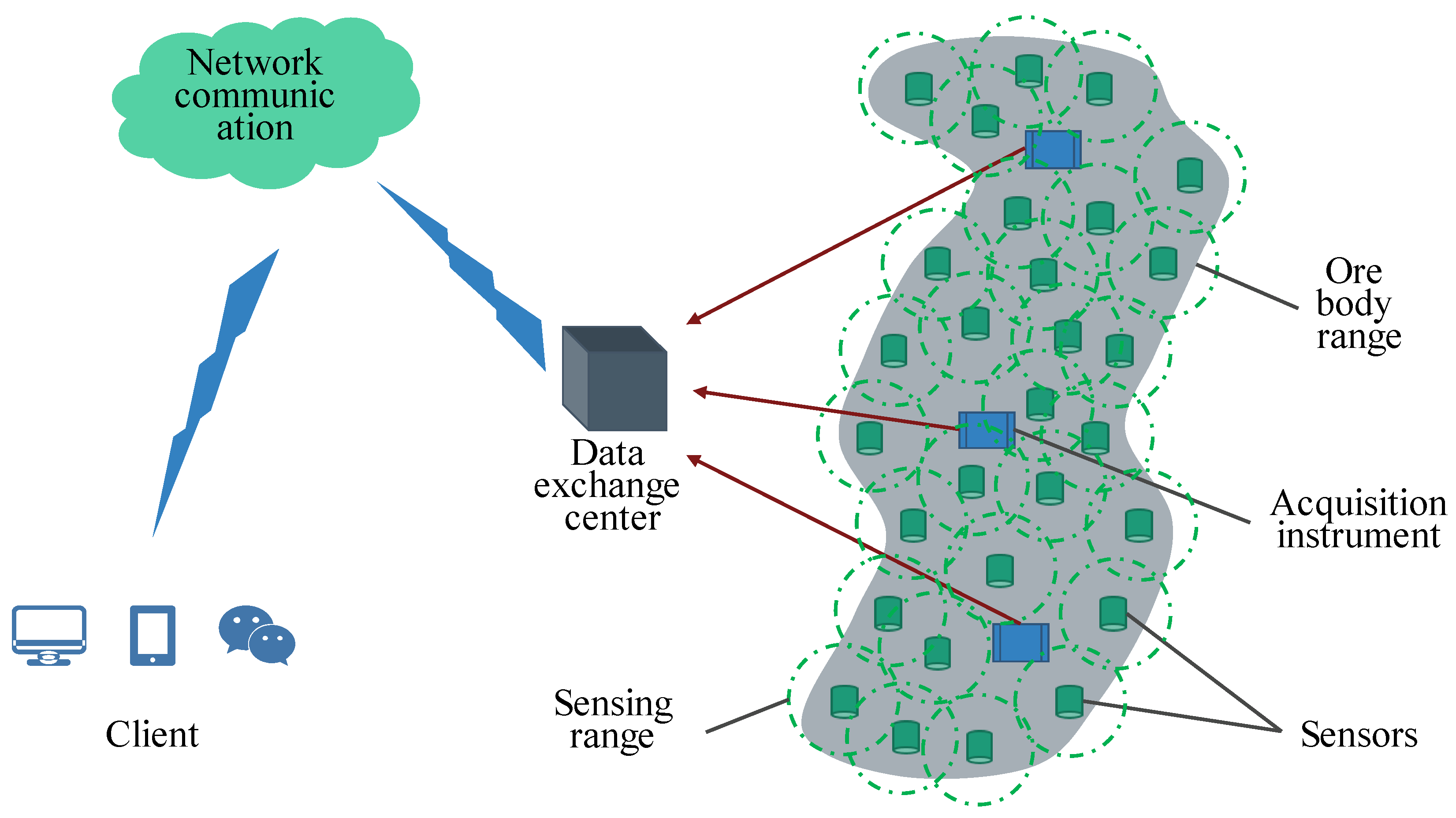

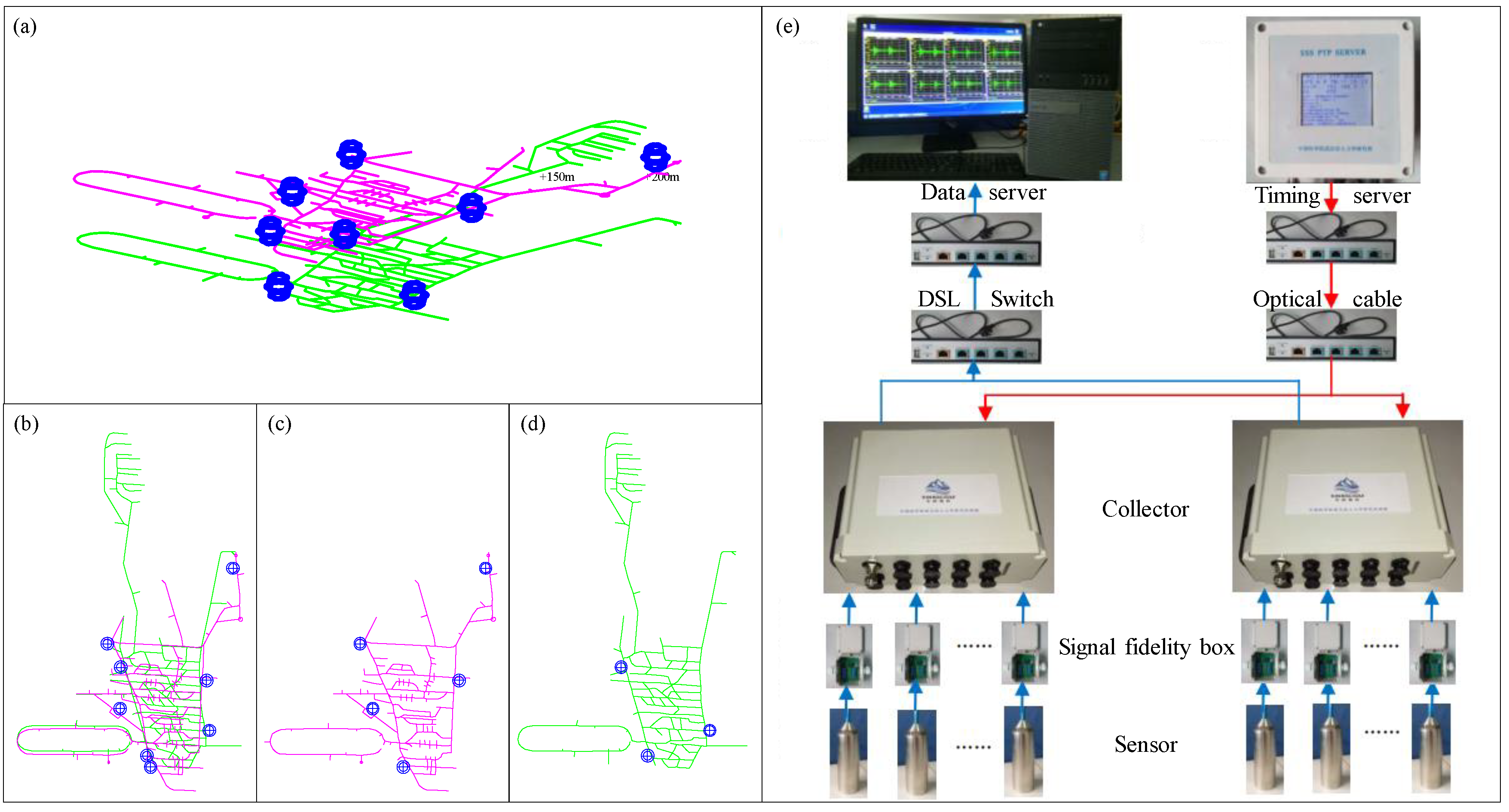


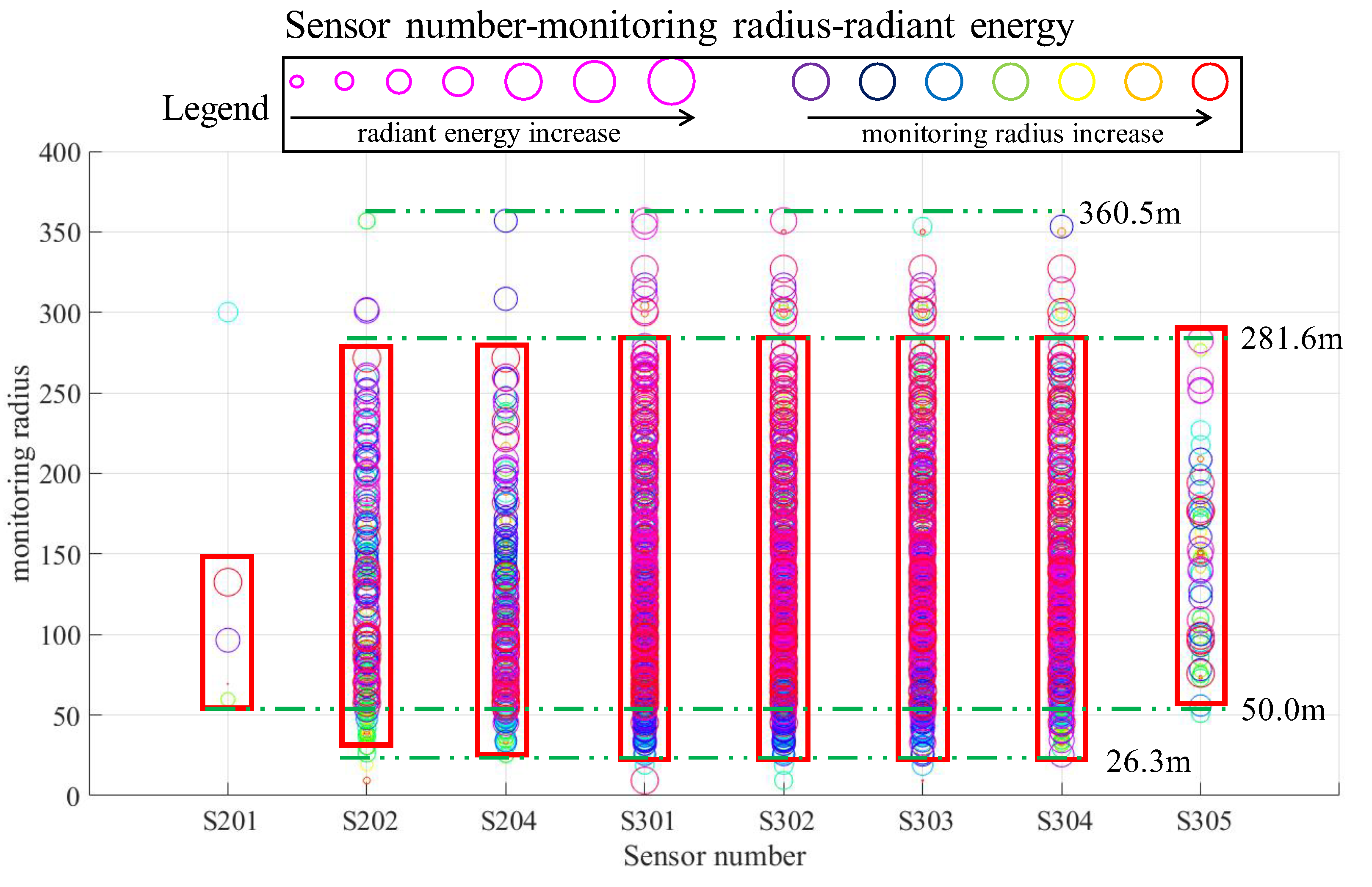



| No. | I | II |
|---|---|---|
| Classification name | Basic mathematical and physics theories and algorithms | Combined with a theoretical basis and engineering practices |
| Method summary | Monte Carlo method [14] D-value optimization algorithm and its improvement method [15,16,17,18,19,20,21] C-value optimal design theory and its improvement method [22] Genetic algorithm [23] Machine learning and deep analysis [24,25,26] | Numerical analysis method [27] Wave speed correction method Engineering location and primary and secondary zoning method [28] Energy decay method Software-corrected inversion method [29] Comprehensive evaluation method [30] |
| Features introduction | Advantages: Realize the local and regional optimization of the network layout, and successfully optimize the positioning efficiency of the engineering site. | |
| Disadvantages: 1. The actual needs of the engineering site determine the sensor deployment area in the network: the existing theoretical optimization methods are limited to theoretical assumption models and calculations at the numerical level, and there is a certain gap in terms of practicability in line with mine engineering sites. 2. The specific quantitative indicators for maximizing the monitoring range are not clear: under the actual conditions of the project site, the actual measurement indicators and evaluation systems are quite different. This needs to be combined with the actual coverage area and envelope volume of the network layout and its monitoring and sensing sensitivity. 3. Continuous changes in different dynamic engineering cycles require more rapid and stylized optimization methods. | ||
| Serial Number | 1 | 2 | 3 | 4 | 5 | 6 | 7 | 8 |
|---|---|---|---|---|---|---|---|---|
| Numbering | S150-6 | S150-7 * | S150-9 | S200-10 * | S200-11 | S200-12 | S200-13 | S200-14 |
| x (m) | 254.71 | 212.83 | 353.7 | 260.09 | 211.8 | 191.53 | 349 | 391.01 |
| y (m) | 109.51 | 250.27 | 149.6 | 91.61 | 184.64 | 287.44 | 229.1 | 407.55 |
| z (m) | 153.2 | 153.1 | 154.6 | 202.5 | 202.7 | 203.7 | 203.8 | 208.2 |
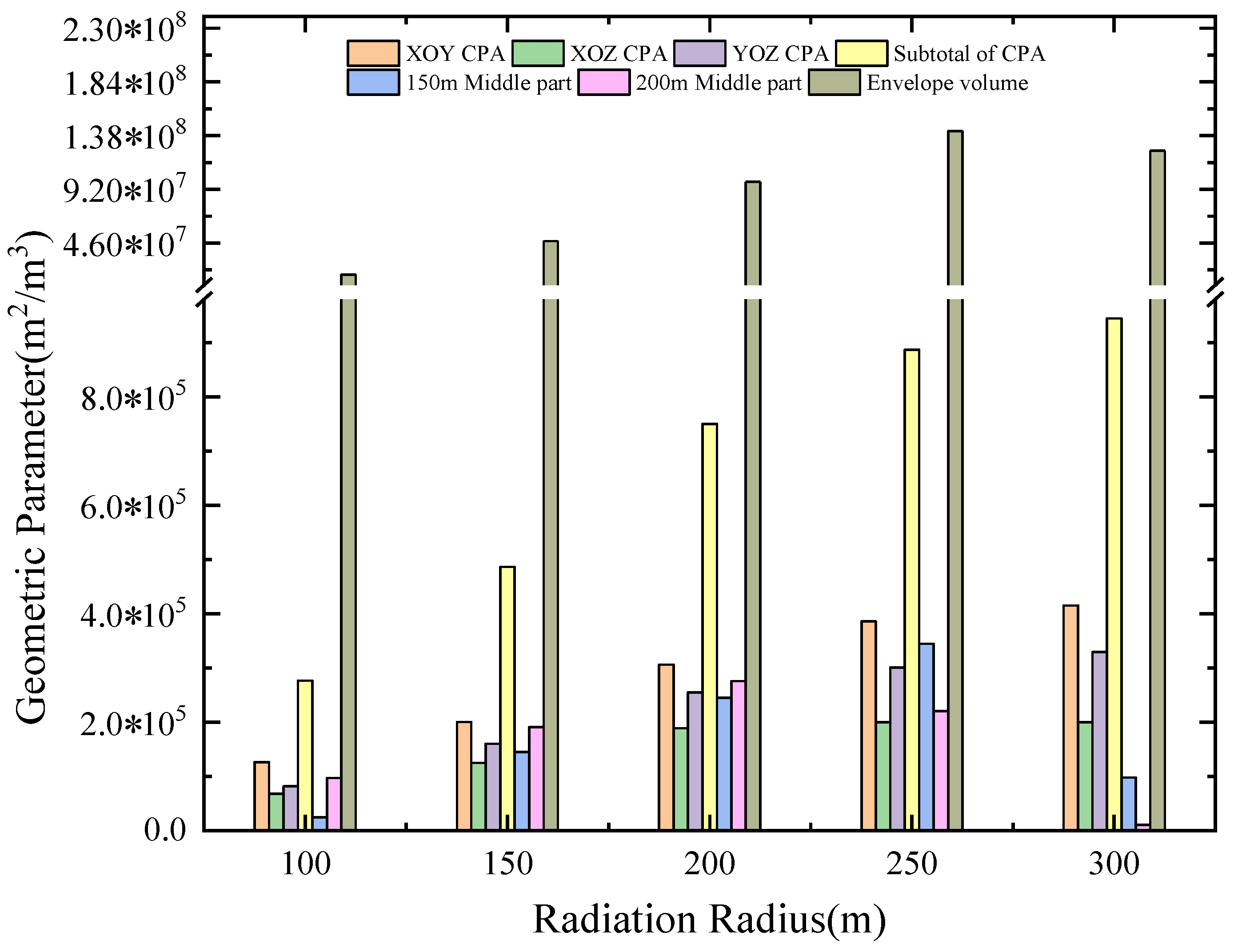
| Radiation Radius/m | Overall Coverage Area/m2 Projection Plane | Coverage Area of Each Middle Section/m2 | Radiation Radius Envelope at All Levels/m3 | ||||
|---|---|---|---|---|---|---|---|
| XOY | XOZ | YOZ | Subtotal | 150 m | 200 m | ||
| 100 | 1.27 ×10⁵ | 6.85 × 10⁴ | 8.18 × 10⁴ | 9.23 × 10⁴ | 2.48 × 10⁴ | 9.71 × 10⁴ | 1.89 × 10⁷ |
| 150 | 2.01 × 10⁵ | 1.25 × 10⁵ | 1.61 × 10⁵ | 1.62 × 10⁵ | 1.45 × 10⁵ | 1.91 × 10⁵ | 4.76 × 10⁷ |
| 200 | 3.06 × 10⁵ | 1.89 × 10⁵ | 2.55 × 10⁵ | 2.50 × 10⁵ | 2.45 × 10⁵ | 2.76 × 10⁵ | 9.83 × 10⁷ |
| 250 | 3.86 × 10⁵ | 2.00 × 10⁵ | 3.01 × 10⁵ | 2.96 × 10⁵ | 3.45 × 10⁵ | 2.21 × 10⁵ | 1.42 × 10⁸ |
| 300 # | 4.15 × 10⁵ | 2.00 × 10⁵ | 3.29 × 10⁵ | 3.15 × 10⁵ | 9.80 × 10⁴ | 1.06 × 10⁴ | 1.25 × 10⁸ |
Publisher’s Note: MDPI stays neutral with regard to jurisdictional claims in published maps and institutional affiliations. |
© 2022 by the authors. Licensee MDPI, Basel, Switzerland. This article is an open access article distributed under the terms and conditions of the Creative Commons Attribution (CC BY) license (https://creativecommons.org/licenses/by/4.0/).
Share and Cite
Zhou, Z.; Zhao, C.; Huang, Y. An Optimization Method for the Station Layout of a Microseismic Monitoring System in Underground Mine Engineering. Sensors 2022, 22, 4775. https://doi.org/10.3390/s22134775
Zhou Z, Zhao C, Huang Y. An Optimization Method for the Station Layout of a Microseismic Monitoring System in Underground Mine Engineering. Sensors. 2022; 22(13):4775. https://doi.org/10.3390/s22134775
Chicago/Turabian StyleZhou, Zilong, Congcong Zhao, and Yinghua Huang. 2022. "An Optimization Method for the Station Layout of a Microseismic Monitoring System in Underground Mine Engineering" Sensors 22, no. 13: 4775. https://doi.org/10.3390/s22134775
APA StyleZhou, Z., Zhao, C., & Huang, Y. (2022). An Optimization Method for the Station Layout of a Microseismic Monitoring System in Underground Mine Engineering. Sensors, 22(13), 4775. https://doi.org/10.3390/s22134775