Article

WiPg: Contactless Action Recognition Using Ambient Wi-Fi Signals
1
College of Computer Science and Engineering, Northwest Normal University, Lanzhou 730070, China
2
Gansu Province Internet of Things Engineering Research Center, Lanzhou 730070, China
*
Author to whom correspondence should be addressed.
Sensors 2022, 22(1), 402; https://doi.org/10.3390/s22010402
Submission received: 24 November 2021 / Revised: 30 December 2021 / Accepted: 31 December 2021 / Published: 5 January 2022

Abstract

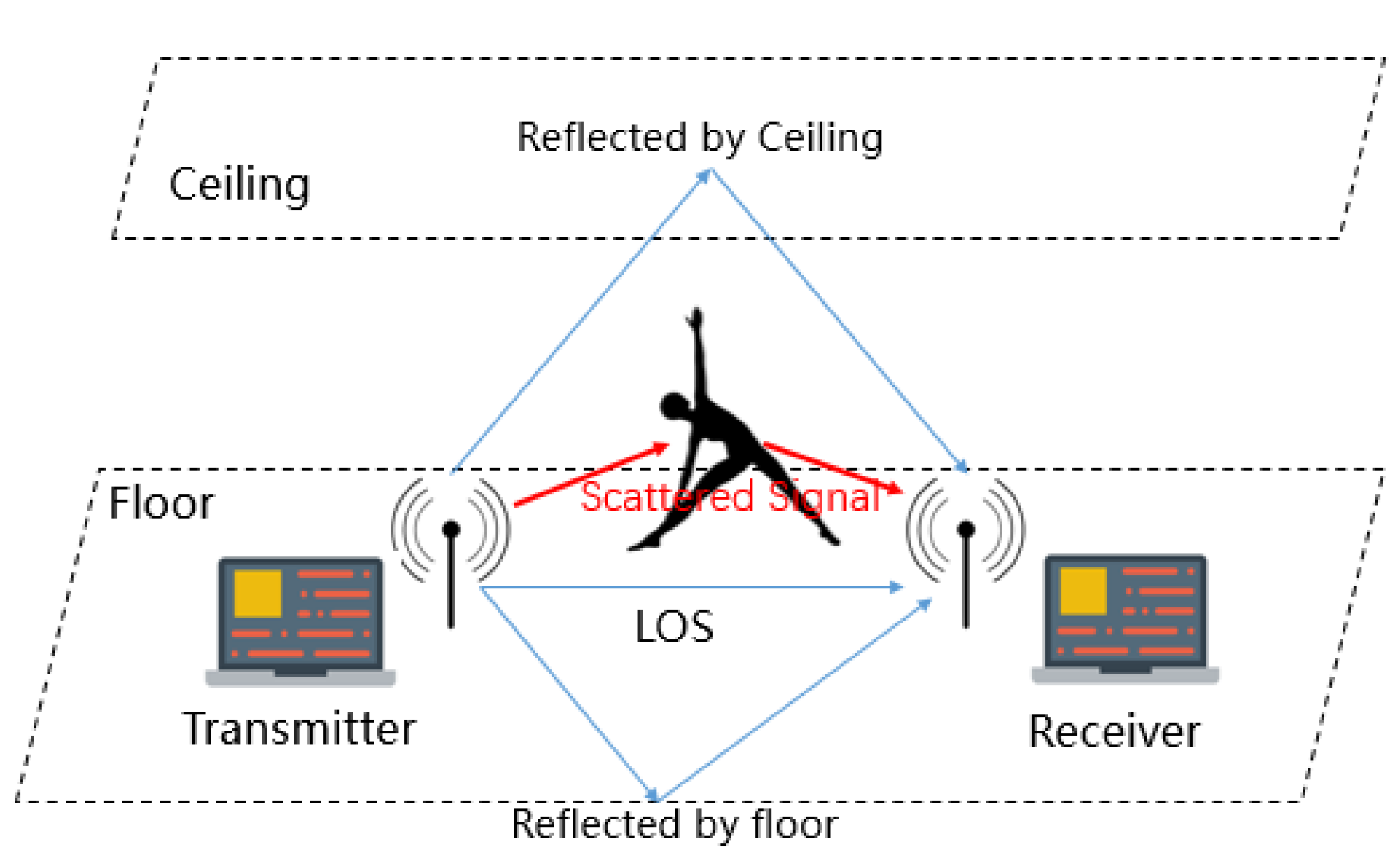
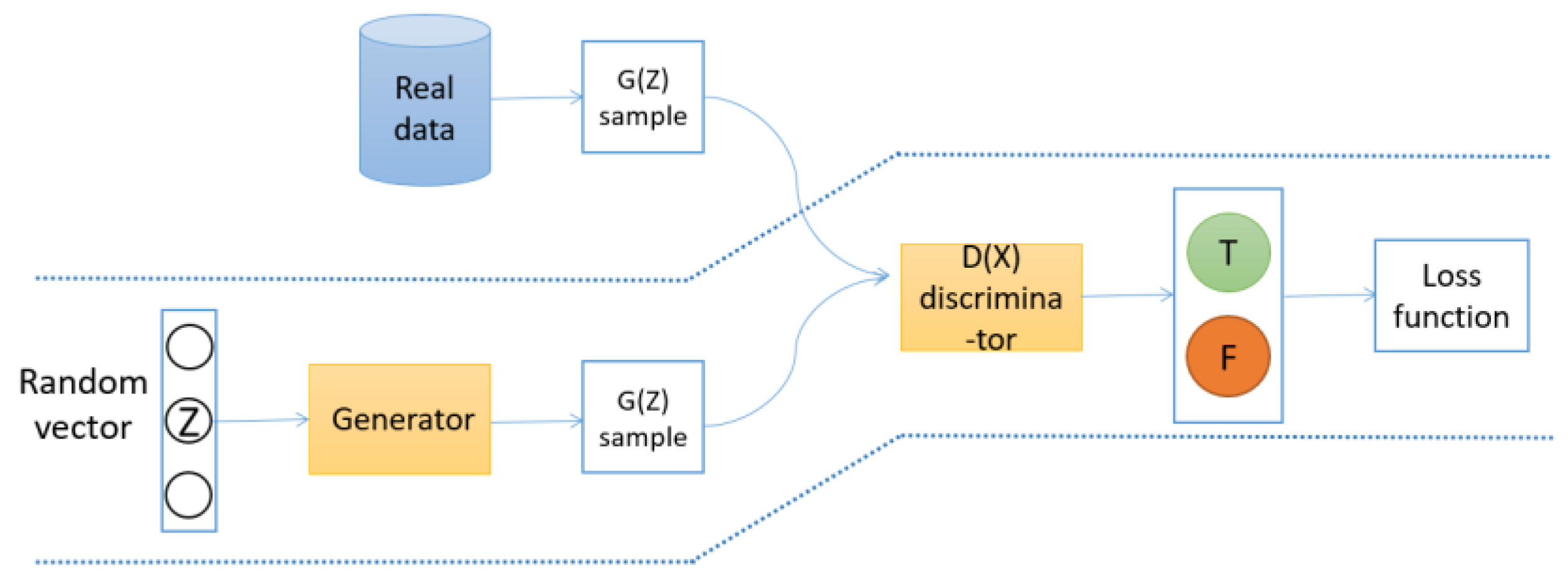
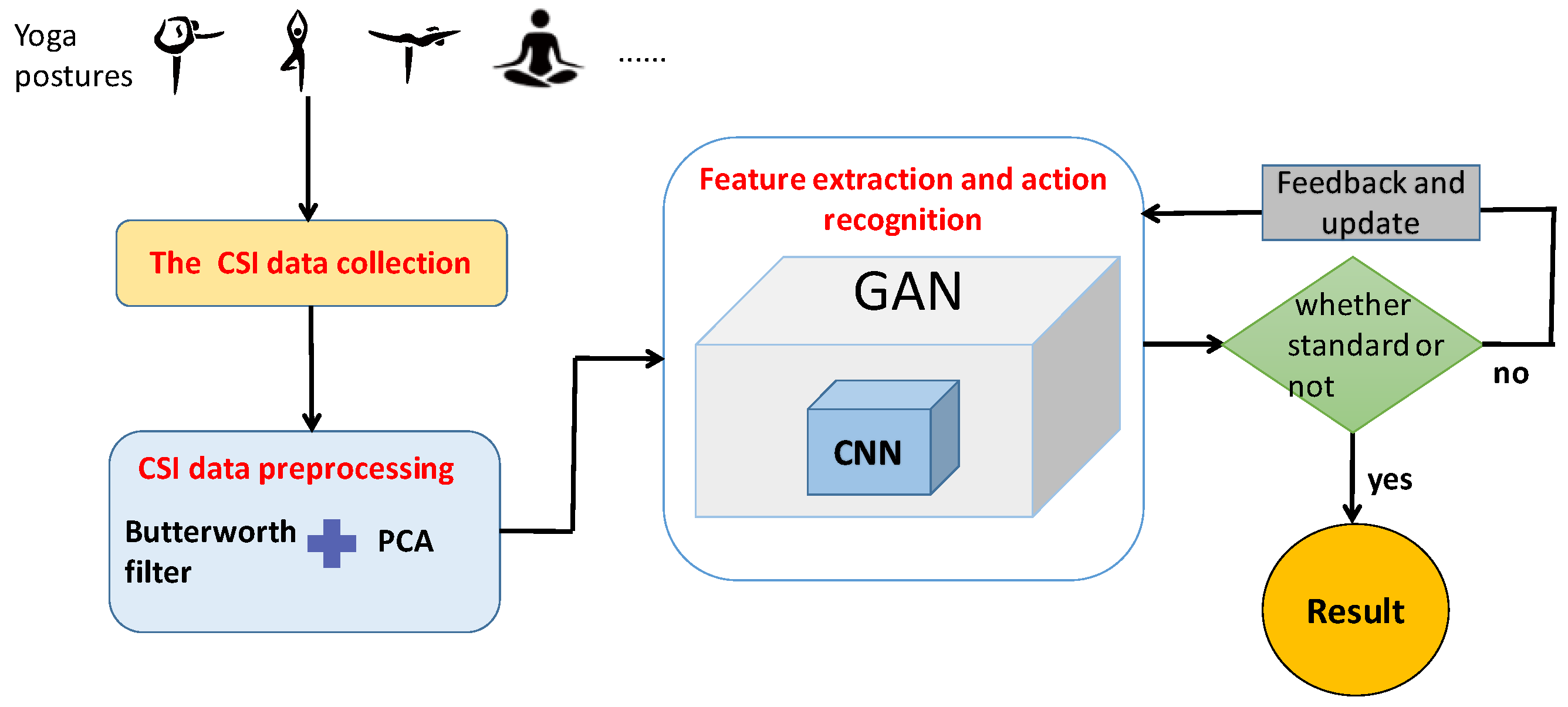
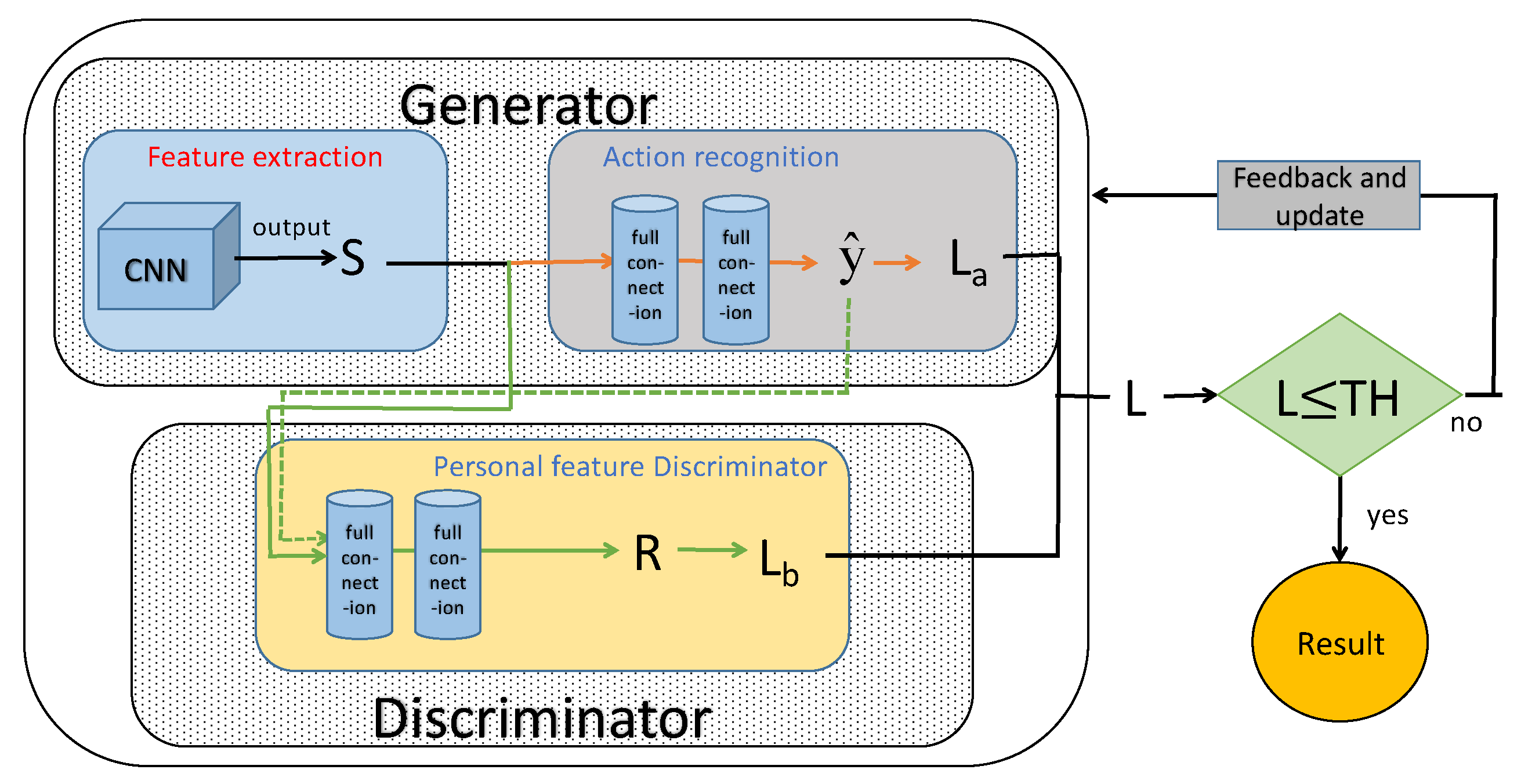
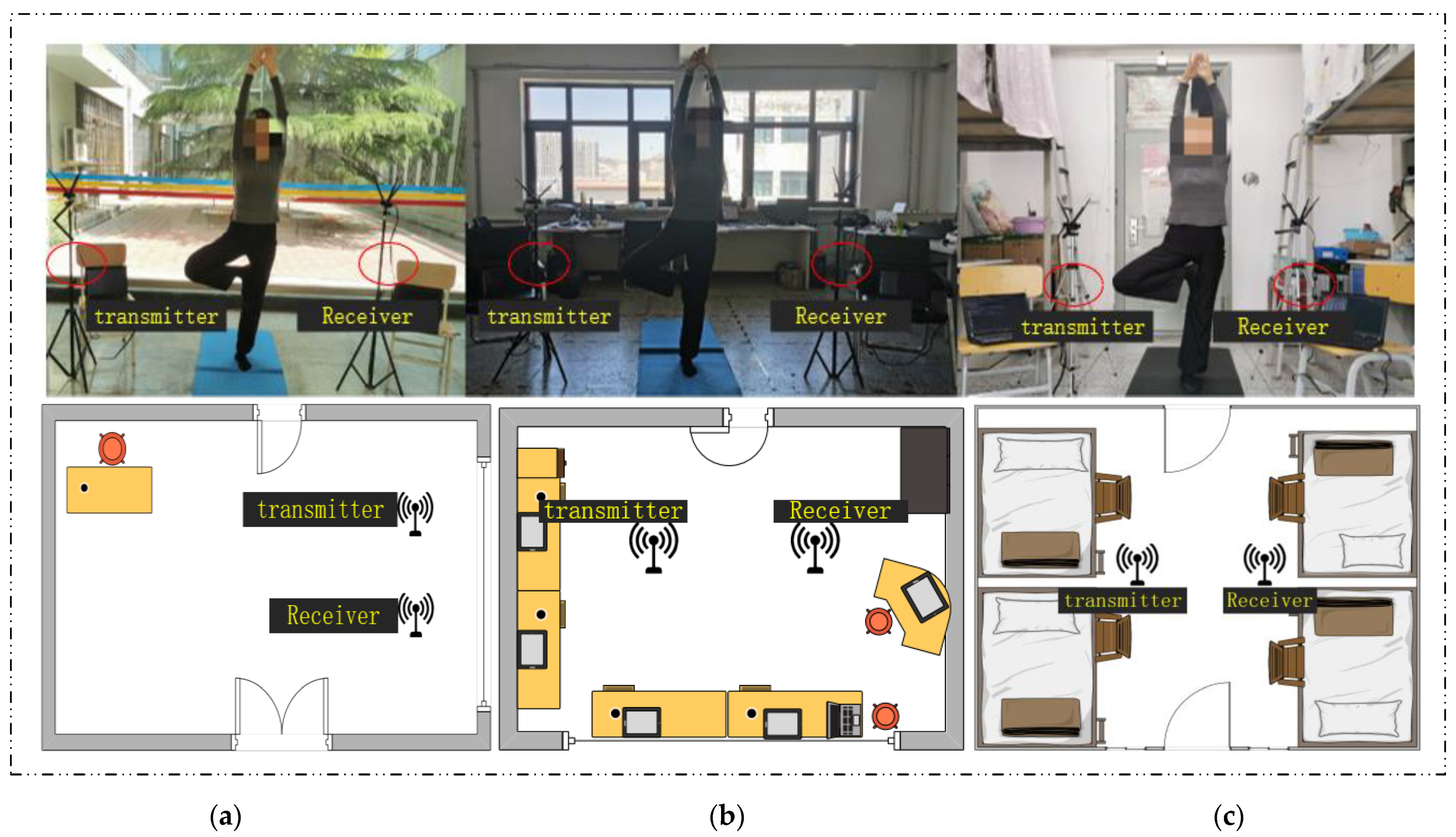
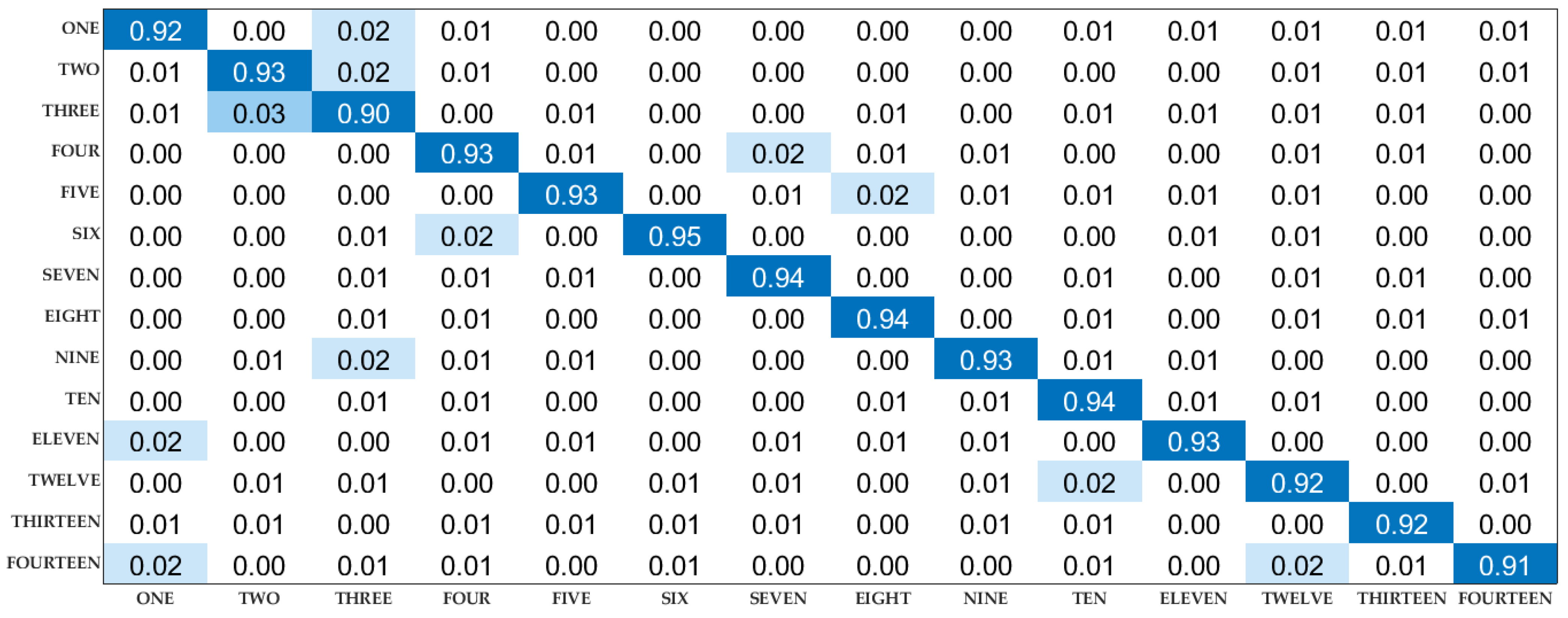
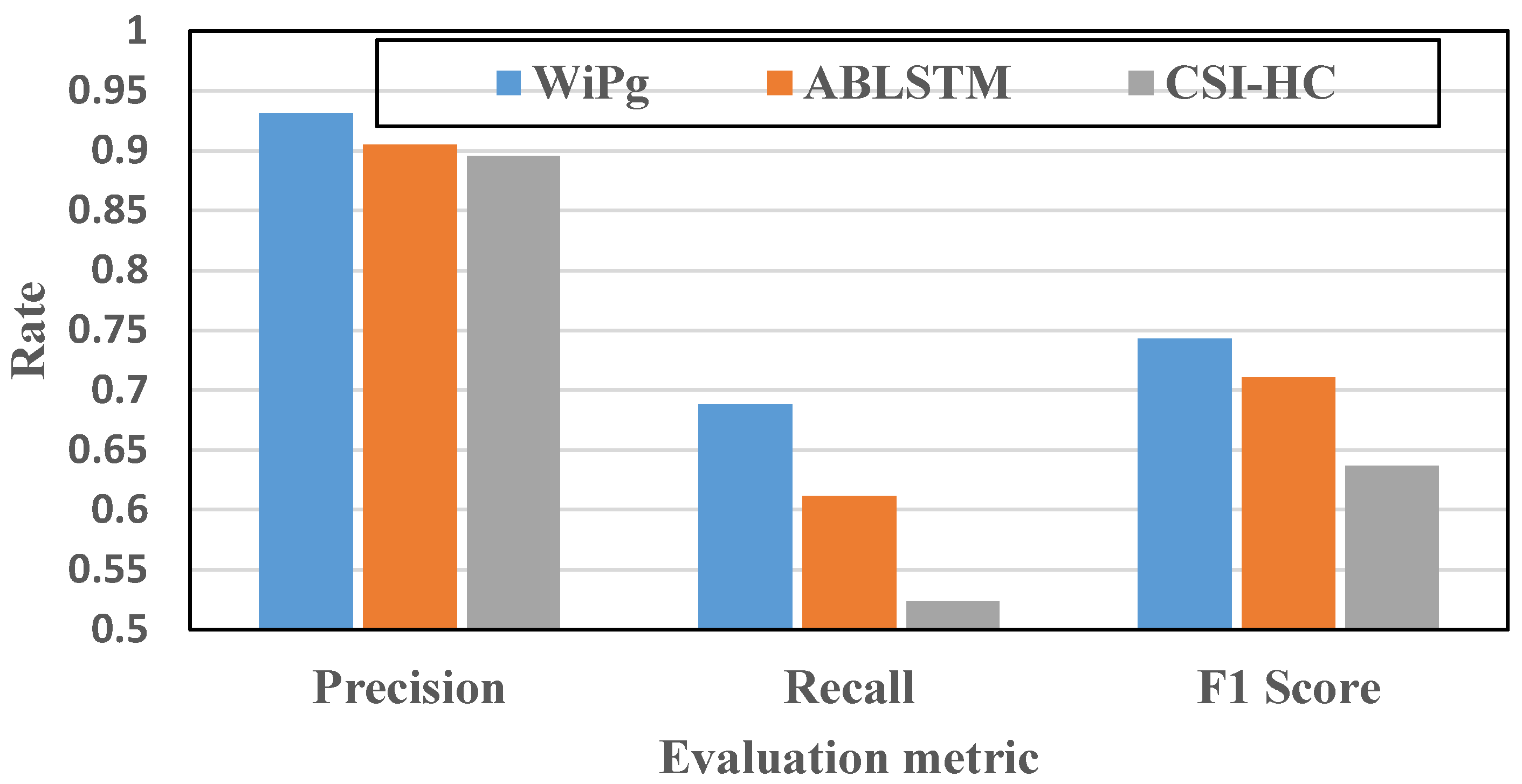
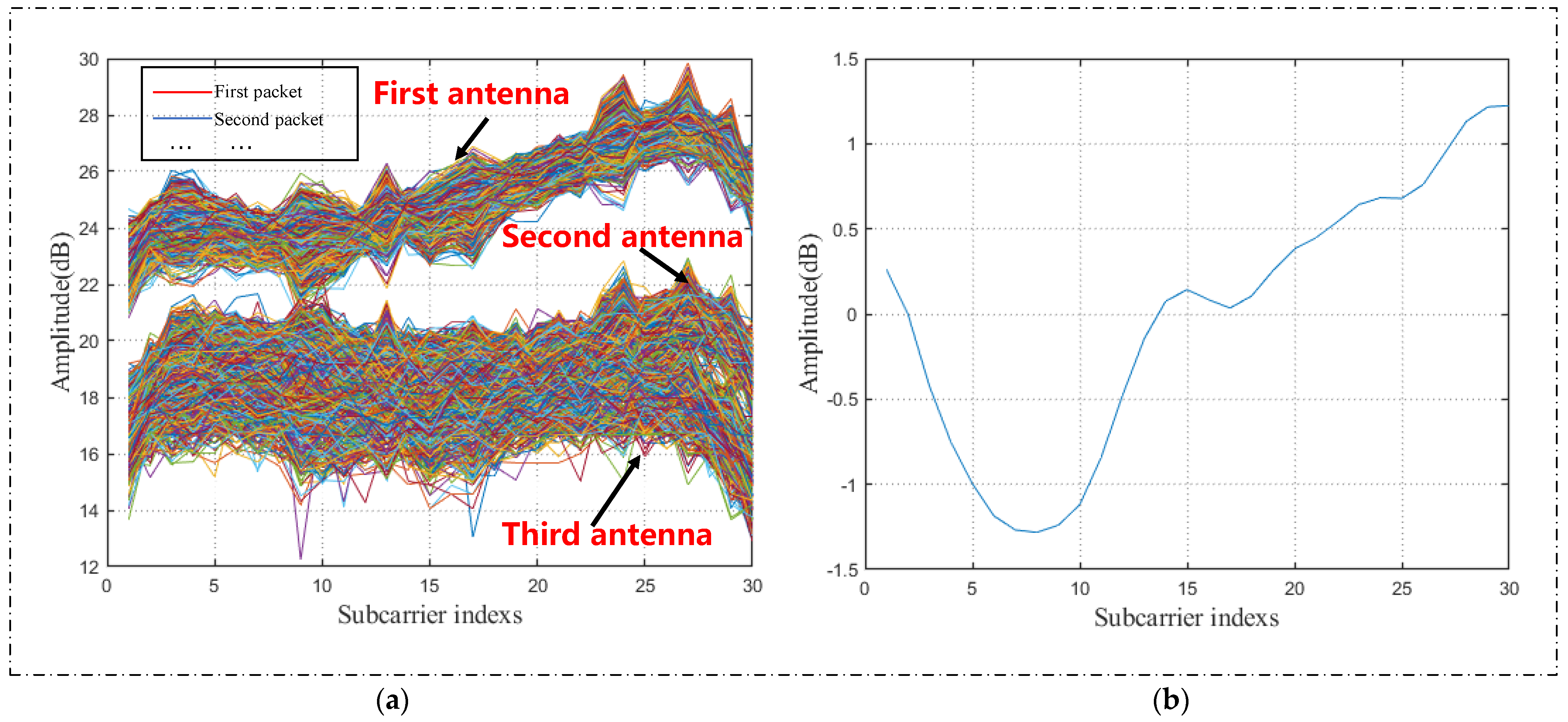
Motion recognition has a wide range of applications at present. Recently, motion recognition by analyzing the channel state information (CSI) in Wi-Fi packets has been favored by more and more scholars. Because CSI collected in the wireless signal environment of human activity usually carries a large amount of human-related information, the motion-recognition model trained for a specific person usually does not work well in predicting another person’s motion. To deal with the difference, we propose a personnel-independent action-recognition model called WiPg, which is built by convolutional neural network (CNN) and generative adversarial network (GAN). According to CSI data of 14 yoga movements of 10 experimenters with different body types, model training and testing were carried out, and the recognition results, independent of bod type, were obtained. The experimental results show that the average correct rate of WiPg can reach 92.7% for recognition of the 14 yoga poses, and WiPg realizes “cross-personnel” movement recognition with excellent recognition performance.
Keywords: device-free sensing; channel state information; human action standard recognition; personnel independence; generative adversarial network; principal component analysis device-free sensing; channel state information; human action standard recognition; personnel independence; generative adversarial network; principal component analysis