Article

Virtual Sensing and Sensors Selection for Efficient Temperature Monitoring in Indoor Environments †
1
Data Science and Automatic Verification Laboratory, University of Udine, Via delle Scienze 206, 33100 Udine, Italy
2
Silicon Austria Labs GmBH, Europastraße 12, A-9524 Villach, Austria
*
Authors to whom correspondence should be addressed.
This paper is an extension of a conference work: Brunello, A.; Kraft, M.; Montanari, A.; Pittino, F.; Urgolo, A. Virtual Sensing of Temperatures in Indoor Environments: A Case Study. In Proceedings of the 2020 International Conference on Data Mining Workshops (ICDMW) (pp. 805–810). Sorrento, Italy, 17–20 November 2020.
These authors contributed equally to this work.
Sensors 2021, 21(8), 2728; https://doi.org/10.3390/s21082728
Submission received: 8 March 2021 / Revised: 2 April 2021 / Accepted: 6 April 2021 / Published: 13 April 2021
(This article belongs to the Section Physical Sensors)

Abstract

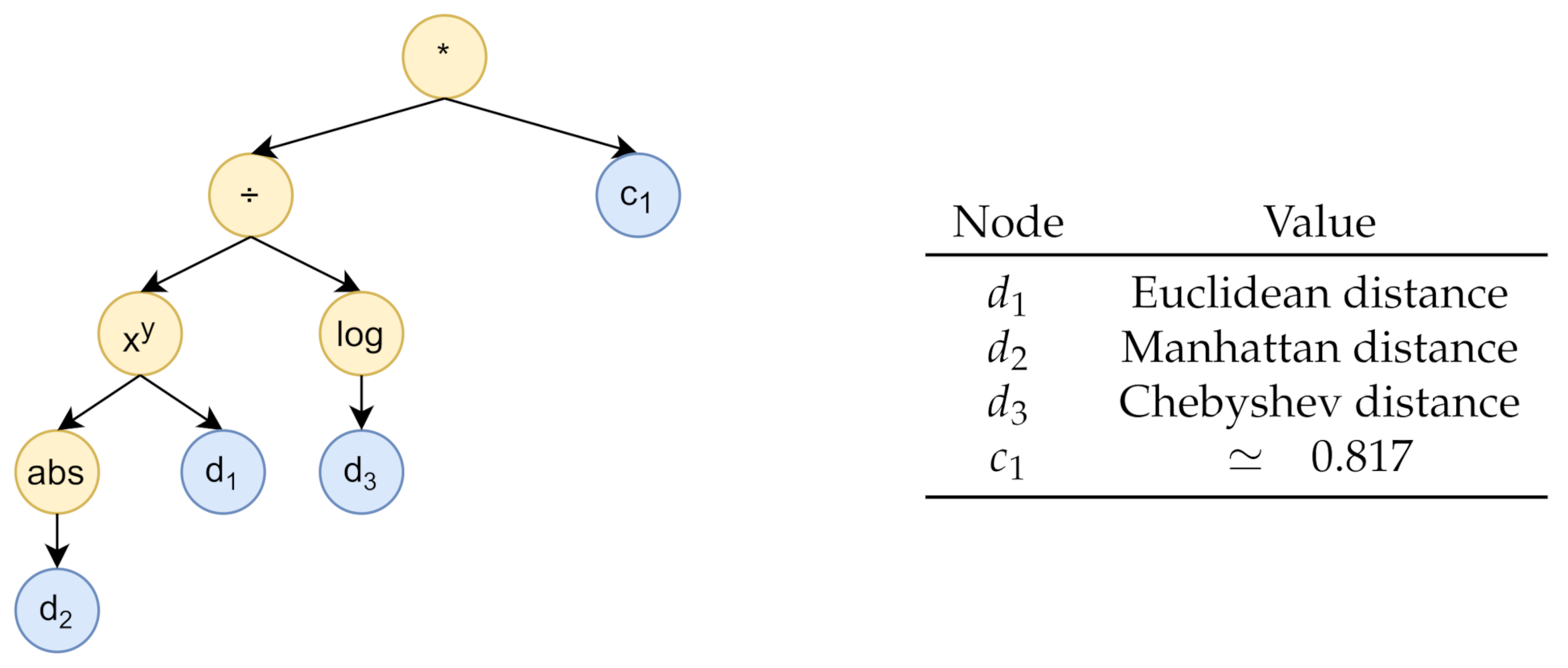
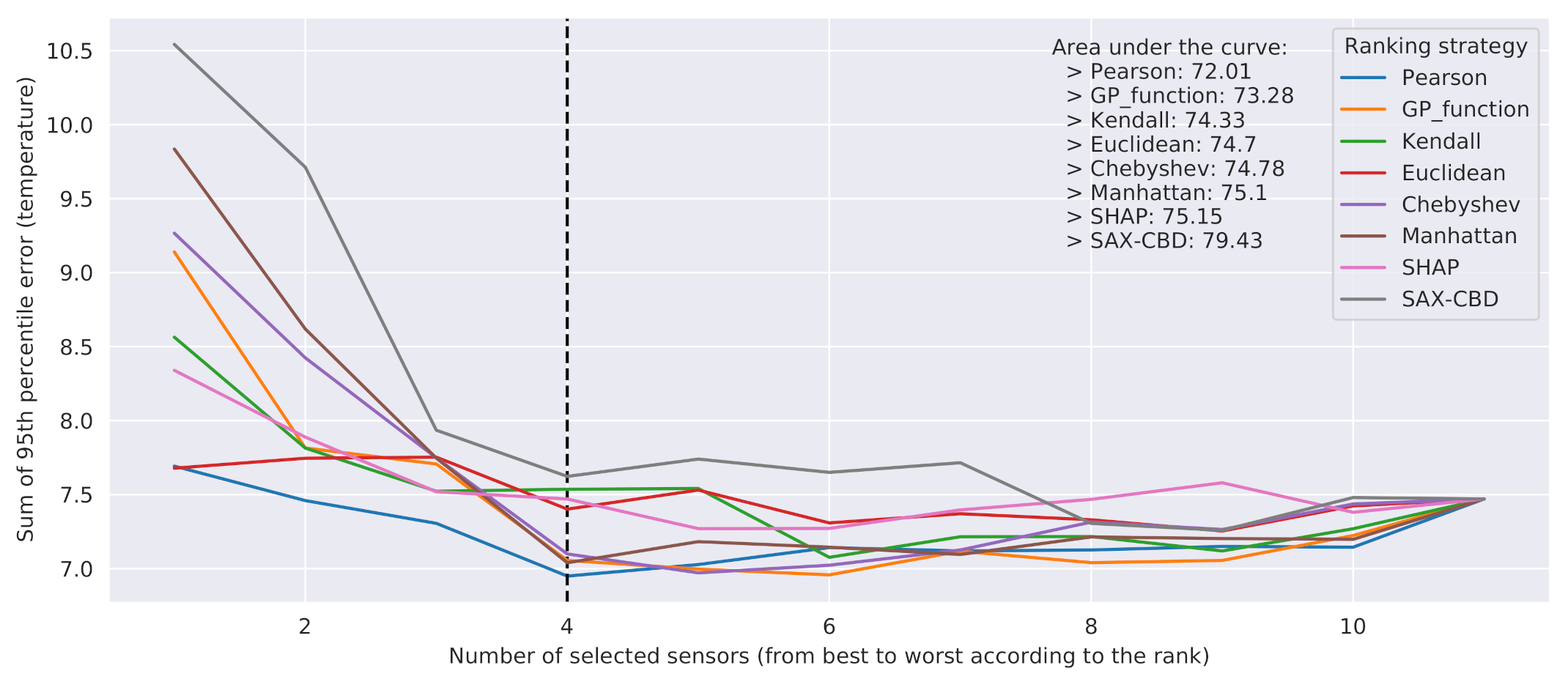
Real-time estimation of temperatures in indoor environments is critical for several reasons, including the upkeep of comfort levels, the fulfillment of legal requirements, and energy efficiency. Unfortunately, setting an adequate number of sensors at the desired locations to ensure a uniform monitoring of the temperature in a given premise may be troublesome. Virtual sensing is a set of techniques to replace a subset of physical sensors by virtual ones, allowing the monitoring of unreachable locations, reducing the sensors deployment costs, and providing a fallback solution for sensor failures. In this paper, we deal with temperature monitoring in an open space office, where a set of physical sensors is deployed at uneven locations. Our main goal is to develop a black-box virtual sensing framework, completely independent of the physical characteristics of the considered scenario, that, in principle, can be adapted to any indoor environment. We first perform a systematic analysis of various distance metrics that can be used to determine the best sensors on which to base temperature monitoring. Then, following a genetic programming approach, we design a novel metric that combines and summarizes information brought by the considered distance metrics, outperforming their effectiveness. Thereafter, we propose a general and automatic approach to the problem of determining the best subset of sensors that are worth keeping in a given room. Leveraging the selected sensors, we then conduct a comprehensive assessment of different strategies for the prediction of temperatures observed by physical sensors based on other sensors’ data, also evaluating the reliability of the generated outputs. The results show that, at least in the given scenario, the proposed black-box approach is capable of automatically selecting a subset of sensors and of deriving a virtual sensing model for an accurate and efficient monitoring of the environment.
Keywords: virtual sensing; sensor selection; temperature monitoring; machine learning; neural networks; particle filters; distance metrics virtual sensing; sensor selection; temperature monitoring; machine learning; neural networks; particle filters; distance metrics