Article

Elastic Wave Monitoring of Cementitious Mixtures Including Internal Curing Mechanisms

by
Gerlinde Lefever
1,*,
Didier Snoeck
1,2,
Nele De Belie
2,
Danny Van Hemelrijck
1 and
Dimitrios G. Aggelis
1
1
Department of Mechanics of Materials and Constructions, Vrije Universiteit Brussel (VUB), Pleinlaan 2, 1050 Brussels, Belgium
2
Magnel-Vandepitte Laboratory for Structural Engineering and Building Materials, Department of Structural Engineering and Building Materials, Faculty of Engineering and Architecture, Ghent University, Tech Lane Ghent Science Park, Technologiepark Zwijnaarde 60, 9052 Ghent, Belgium
*
Author to whom correspondence should be addressed.
Sensors 2021, 21(7), 2463; https://doi.org/10.3390/s21072463
Submission received: 12 March 2021 / Revised: 31 March 2021 / Accepted: 31 March 2021 / Published: 2 April 2021
(This article belongs to the Special Issue Acoustic Emission Sensors for Structural Health Monitoring)

Abstract

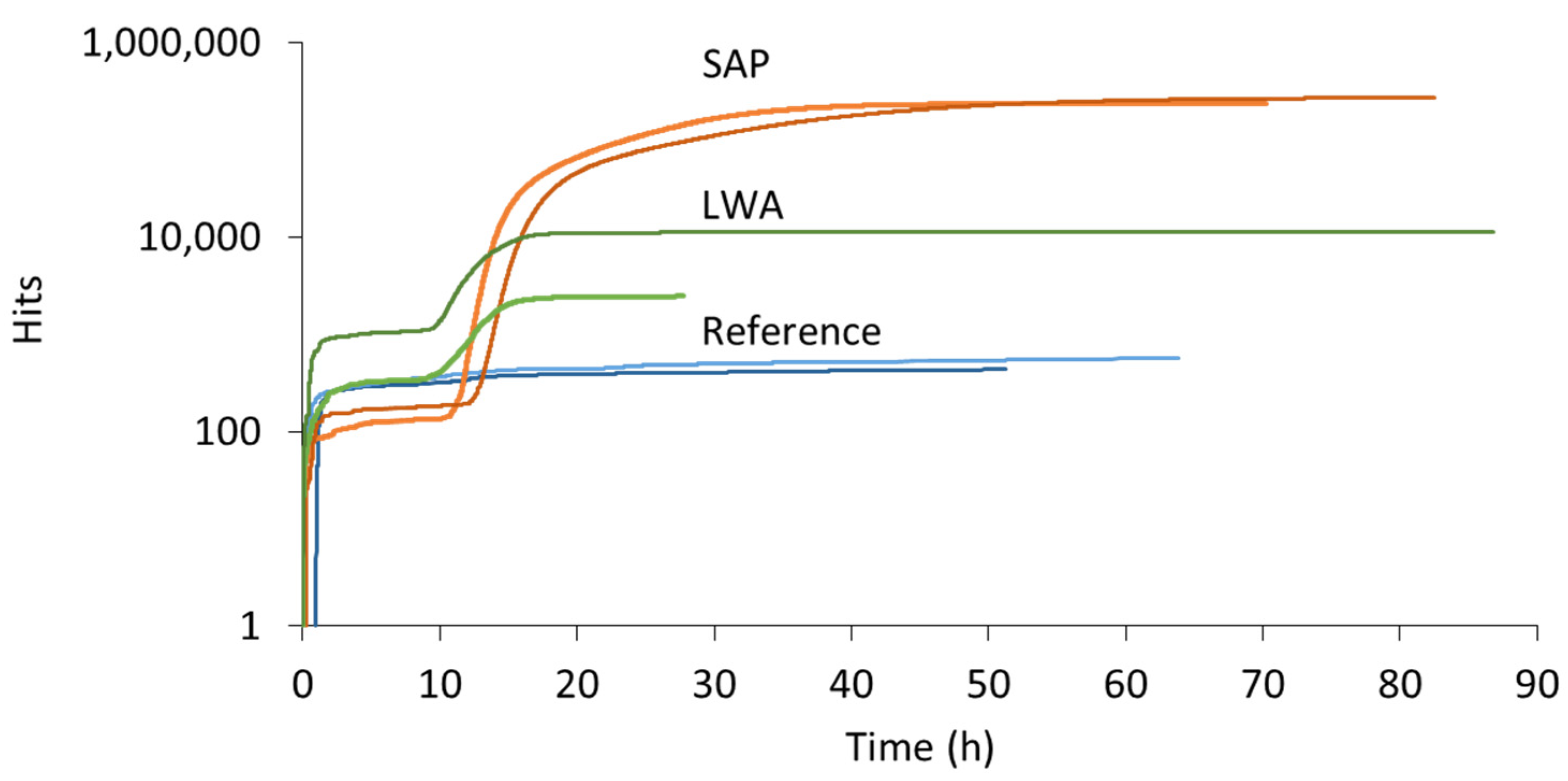
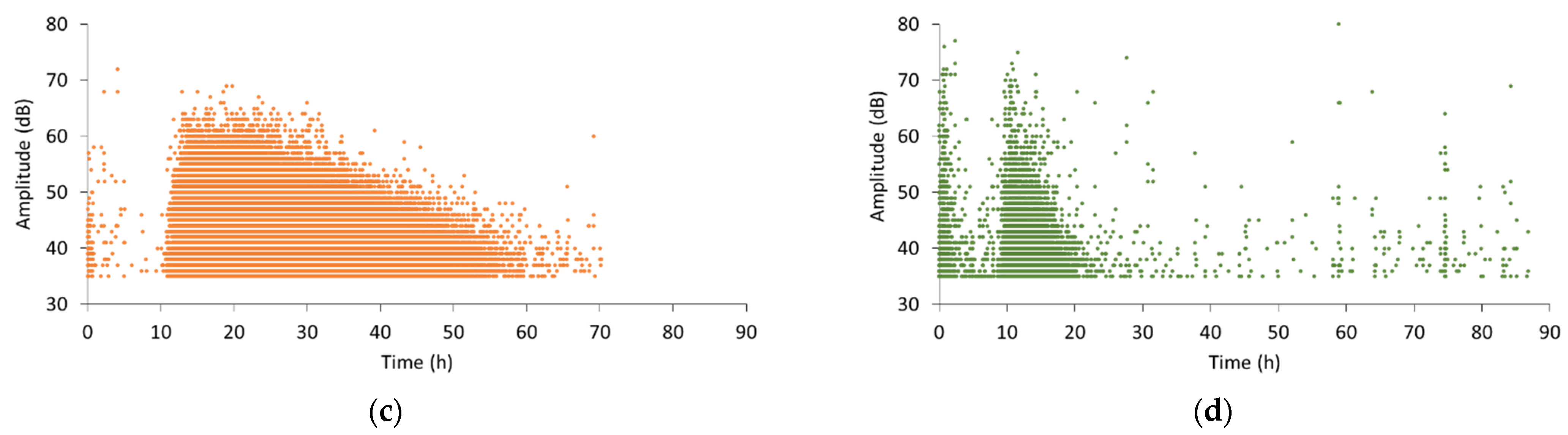
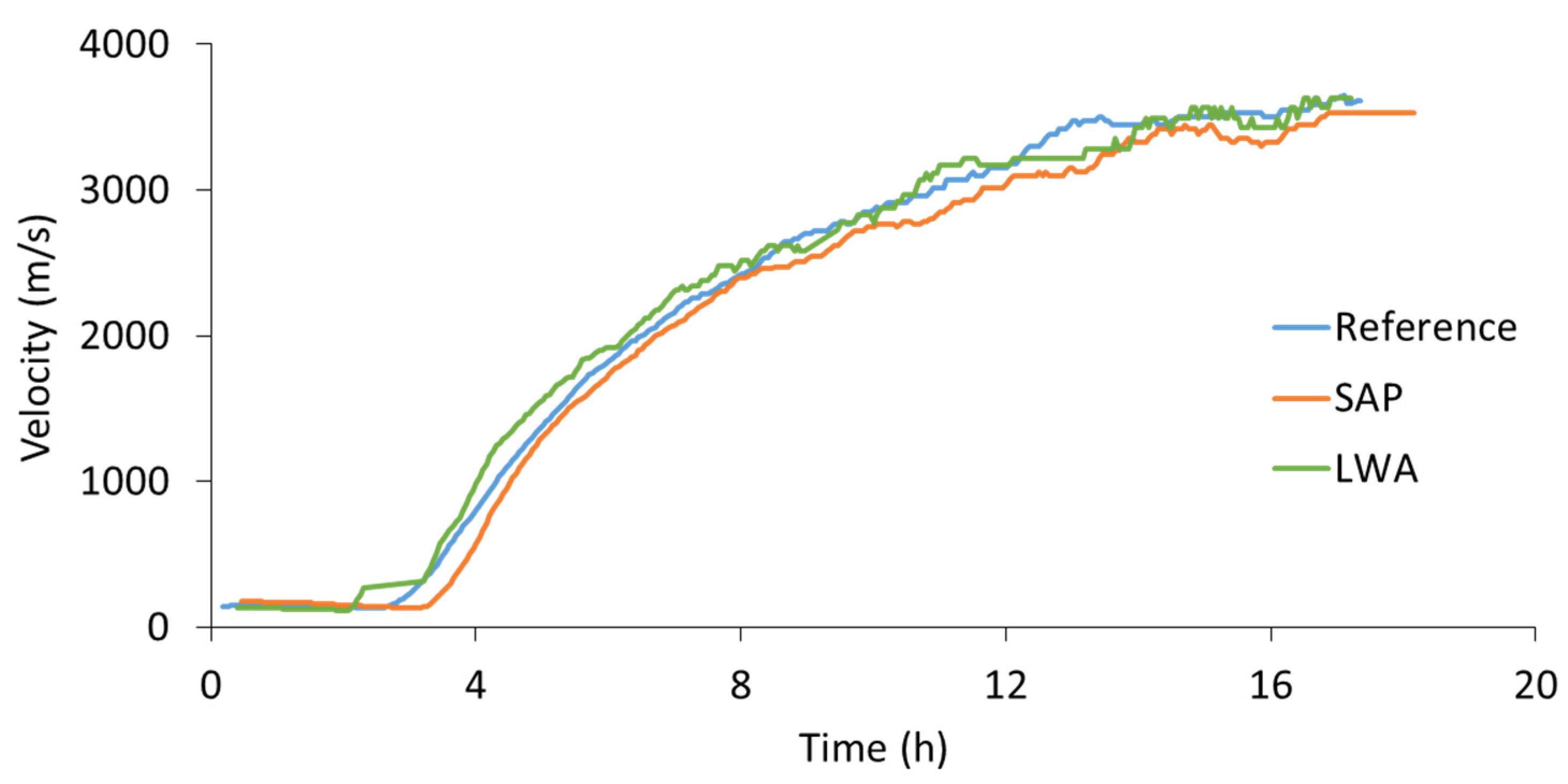
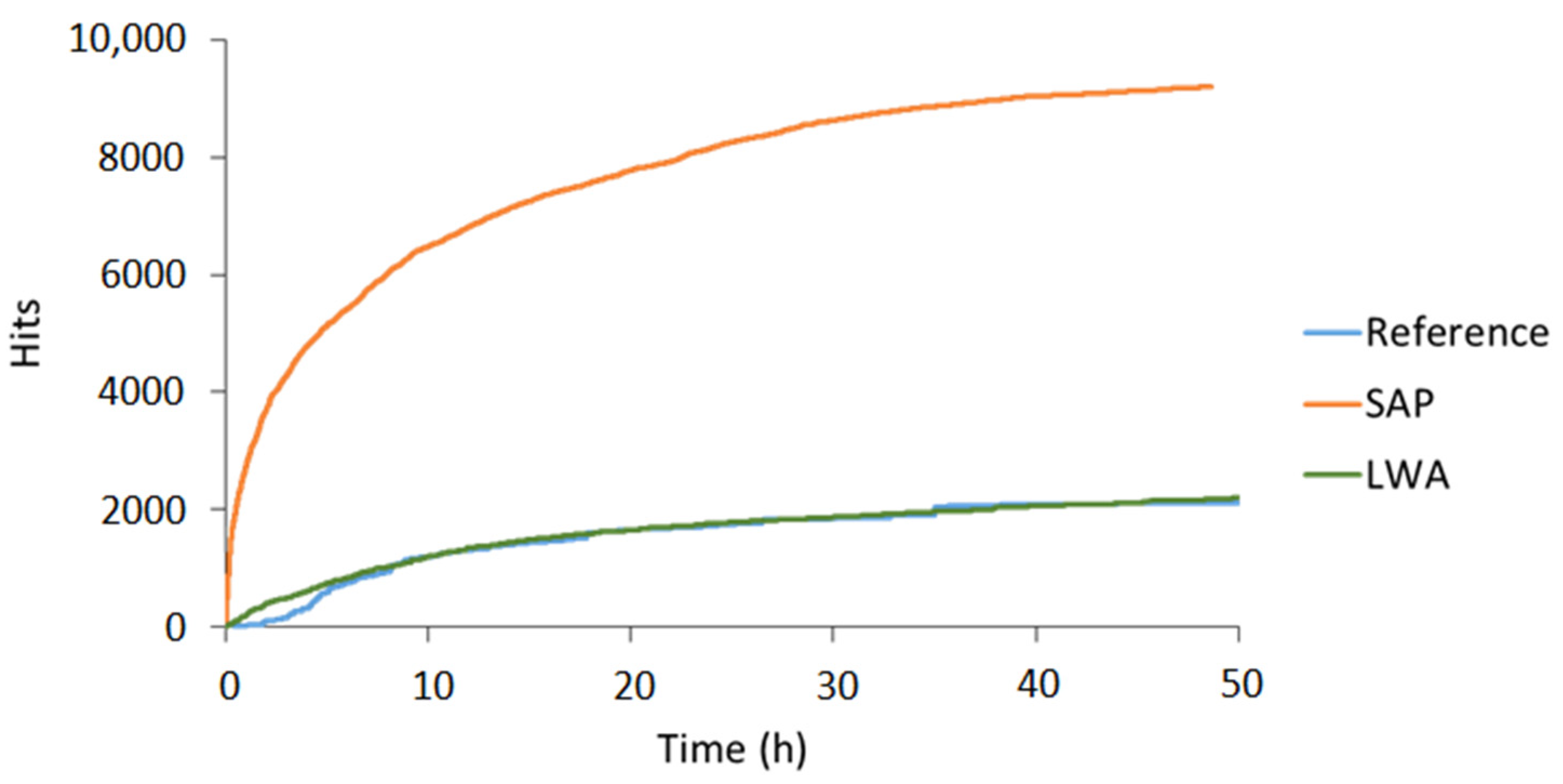
The mitigation of autogenous shrinkage in cementitious materials by internal curing has been widely studied. By the inclusion of water reservoirs, in form of saturated lightweight aggregates or superabsorbent polymers, additional water is provided to the hydrating matrix. The onset of water release is of high importance and determines the efficiency of the internal curing mechanism. However, the monitoring of it poses problems as it is a process that takes place in the microstructure. Using acoustic emission (AE) sensors, the internal curing process is monitored, revealing its initiation and intensity, as well as the duration. In addition, AE is able to capture the water evaporation from saturated specimens. By ultrasonic testing, differences in the hydration kinetics are observed imposed by the different methods of internal curing. The results presented in this paper show the sensitivity of combined AE and ultrasound experiments to various fundamental mechanisms taking place inside cementitious materials and demonstrate the ability of acoustic emission to evaluate internal curing in a non-destructive and easily implementable way.
Keywords: acoustic emission; ultrasound; cement; internal curing; superabsorbent polymers; hydrogels; lightweight aggregates acoustic emission; ultrasound; cement; internal curing; superabsorbent polymers; hydrogels; lightweight aggregates