Article

Using a System-Based Monitoring Paradigm to Assess Fatigue during Submaximal Static Exercise of the Elbow Extensor Muscles

by
Kaci E. Madden
,
Dragan Djurdjanovic
and
Ashish D. Deshpande
*
Department of Mechanical Engineering, The University of Texas at Austin, Austin, TX 78712, USA
*
Author to whom correspondence should be addressed.
Sensors 2021, 21(4), 1024; https://doi.org/10.3390/s21041024
Submission received: 31 December 2020 / Revised: 28 January 2021 / Accepted: 29 January 2021 / Published: 3 February 2021
(This article belongs to the Special Issue On the Applications of EMG Sensors and Signals)

Abstract

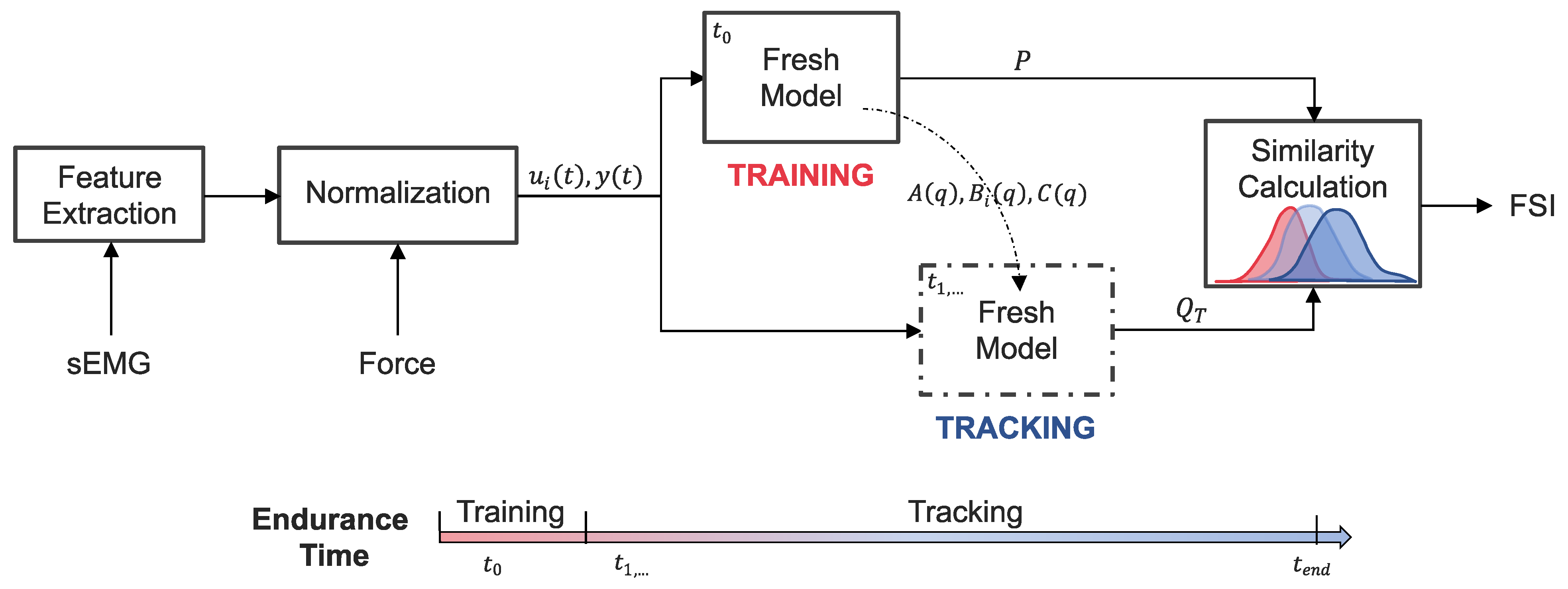
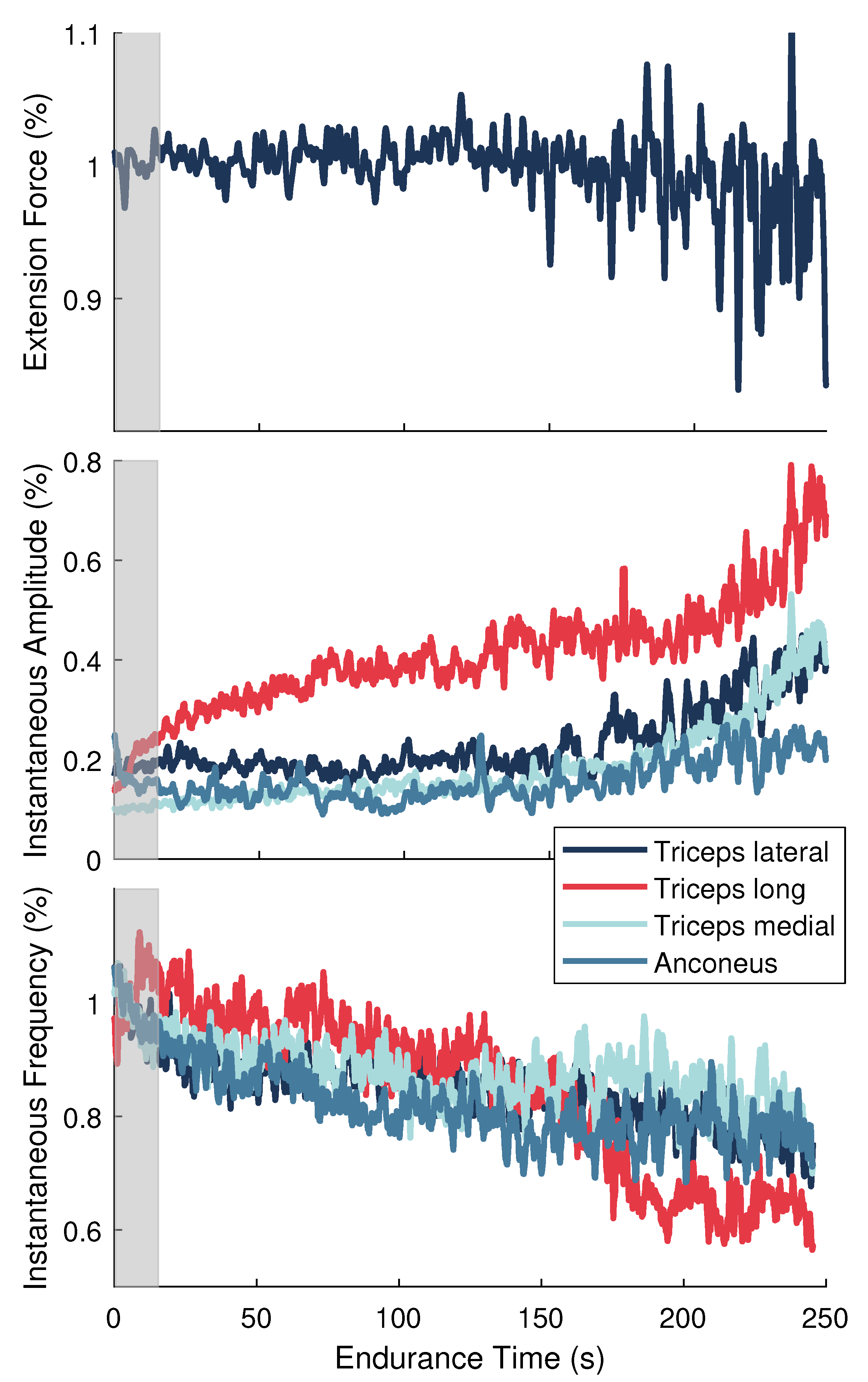
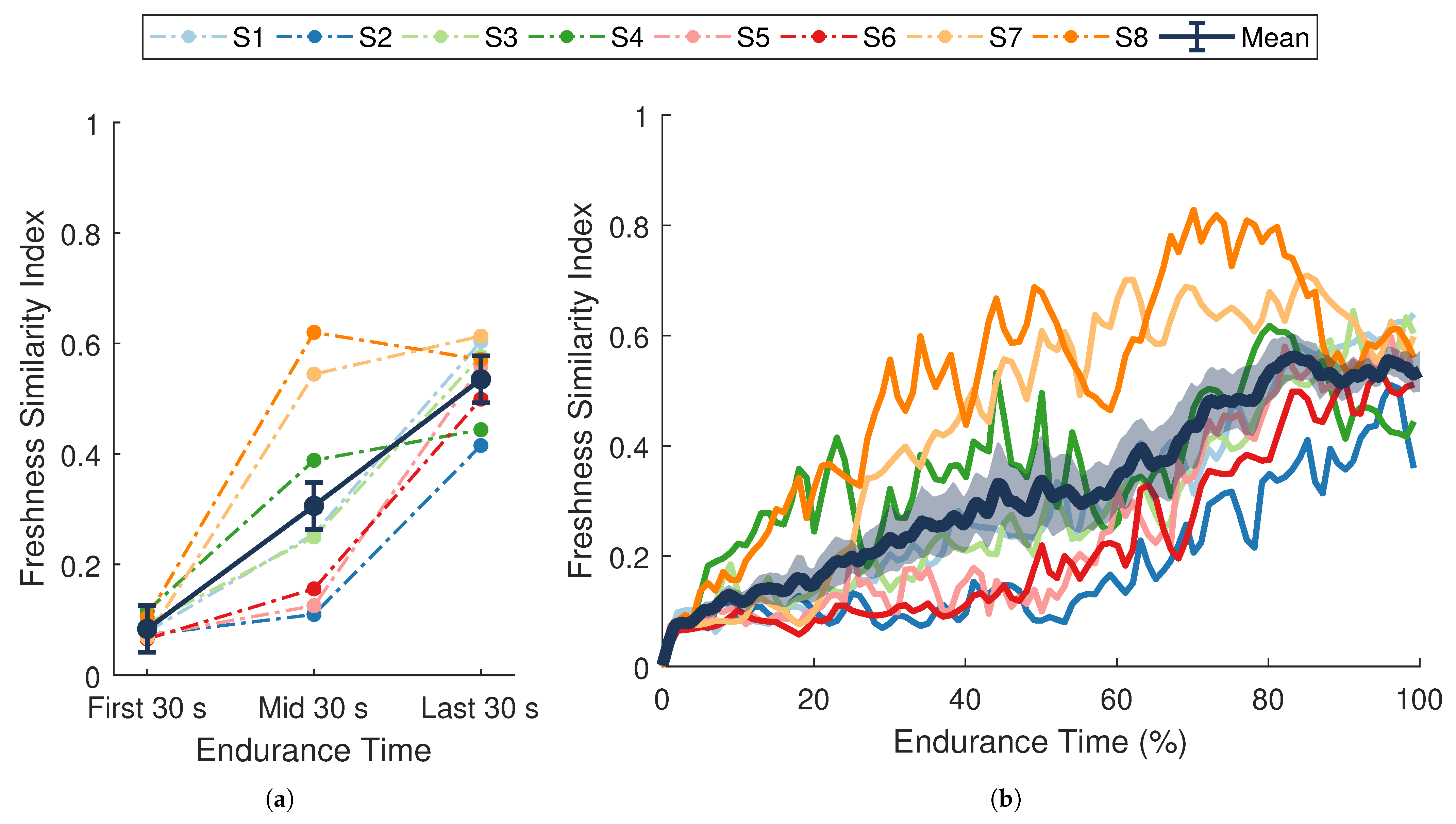
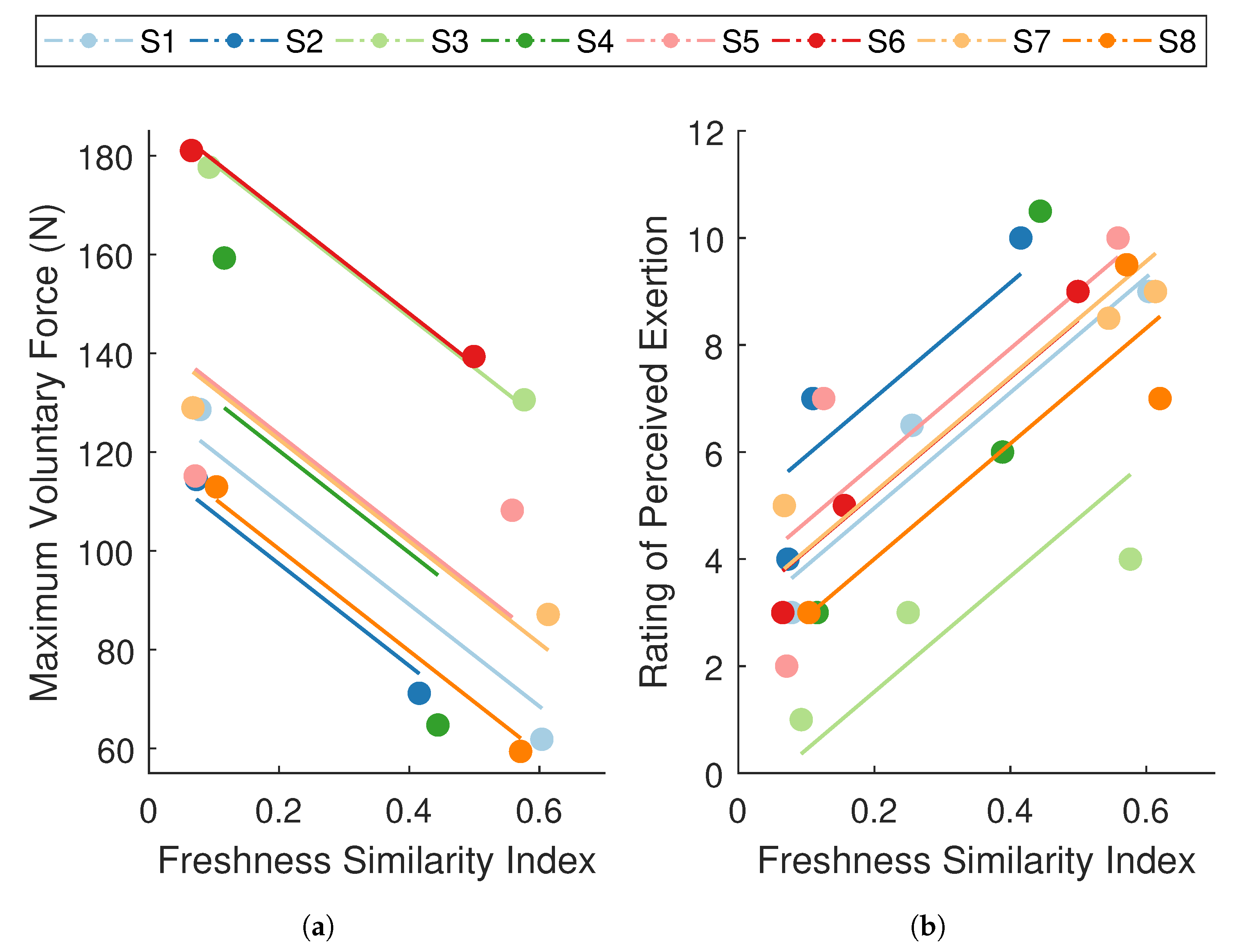
Current methods for evaluating fatigue separately assess intramuscular changes in individual muscles from corresponding alterations in movement output. The purpose of this study is to investigate if a system-based monitoring paradigm, which quantifies how the dynamic relationship between the activity from multiple muscles and force changes over time, produces a viable metric for assessing fatigue. Improvements made to the paradigm to facilitate online fatigue assessment are also discussed. Eight participants performed a static elbow extension task until exhaustion, while surface electromyography (sEMG) and force data were recorded. A dynamic time-series model mapped instantaneous features extracted from sEMG signals of multiple synergistic muscles to extension force. A metric, called the Freshness Similarity Index (FSI), was calculated using statistical analysis of modeling errors to reveal time-dependent changes in the dynamic model indicative of performance degradation. The FSI revealed strong, significant within-individual associations with two well-accepted measures of fatigue, maximum voluntary contraction (MVC) force (rrm=0.86) and ratings of perceived exertion (RPE) (rrm=0.87), substantiating the viability of a system-based monitoring paradigm for assessing fatigue. These findings provide the first direct and quantitative link between a system-based performance degradation metric and traditional measures of fatigue.
Keywords: human fatigue monitoring; neuromuscular fatigue; surface electromyography time-frequency signal analysis; time-series modeling; autoregressive moving average model with exogenous inputs; isometric contraction; elbow extension human fatigue monitoring; neuromuscular fatigue; surface electromyography time-frequency signal analysis; time-series modeling; autoregressive moving average model with exogenous inputs; isometric contraction; elbow extension