An Ultrasonic Laminated Transducer for Viscoelastic Media Detection
 ,
,
Abstract
:1. Introduction
1.1. Purpose and Significance
- Creep: Under constant loading, the deformation will gradually increase.
- Relaxation: Under constant strain, the stress will gradually weaken.
- Hysteresis: The strain response of the material lags behind the stress, causing the stress–strain curve during a loading process to form a hysteresis loop. The area under the hysteresis loop represents the energy loss during loading and unloading.
- Strain sensitivity: Some physical quantities that reflect the mechanical properties of materials, such as the Young’s modulus, shear modulus, and Poisson’s ratio, are generally related to the strain rate (or time).
1.2. Viscoelastic Properties
1.3. Piezoelectric Laminated Transducer
1.4. Contributions of Present Work
- Based on the correspondence principle of simple harmonic waves, the wave equation in viscoelastic media was derived. Since the equation is a function of the angular frequency , ultrasonic waves propagate in viscoelastic media with greater attenuation than that in elastic media.
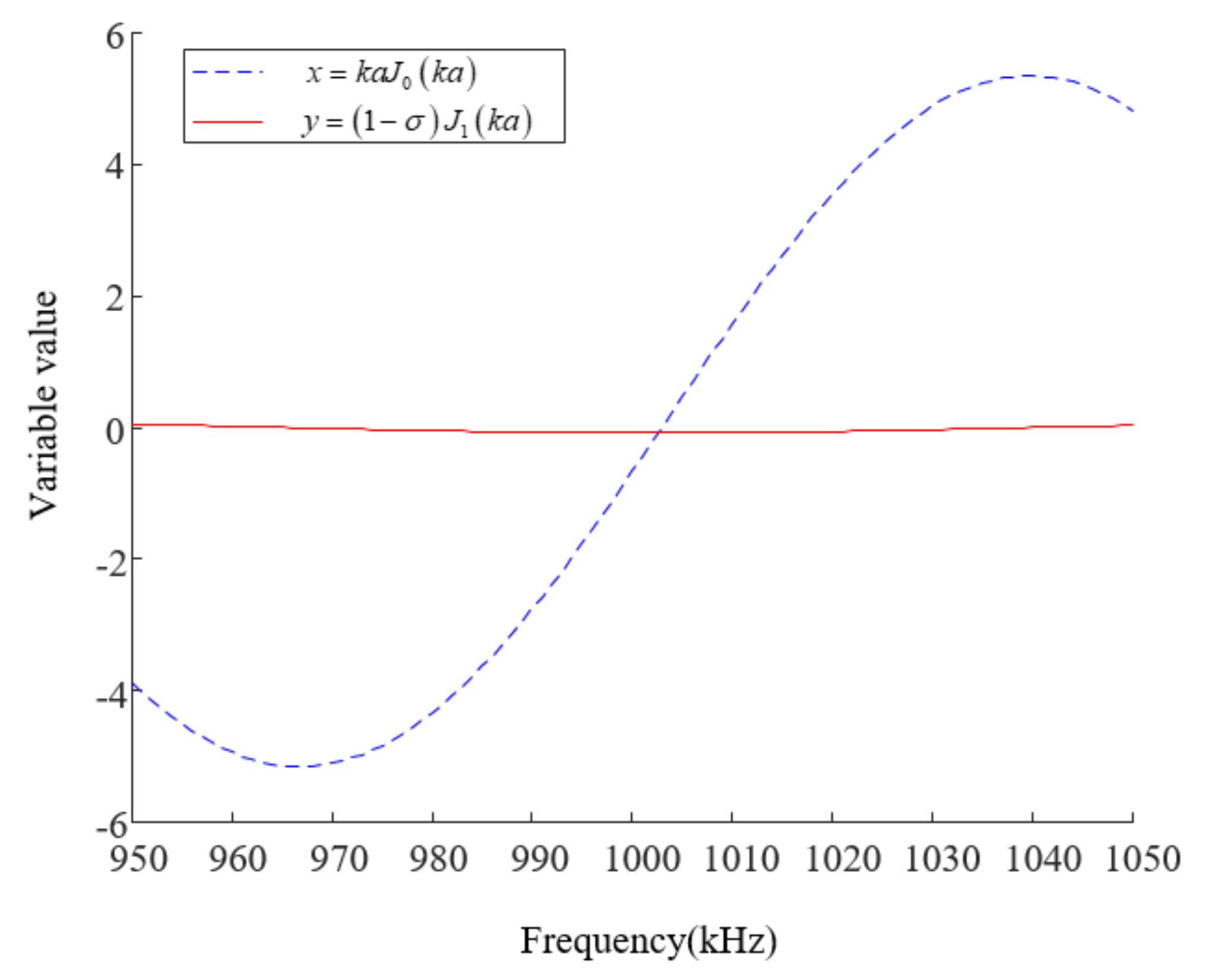
- According to the amplitude–frequency relationship in viscoelastic media, by setting the independent variable range of 950–1050 kHz for the transcendental equation, the 1-MHz resonance frequency of the laminated transducer was obtained by a graphical method.
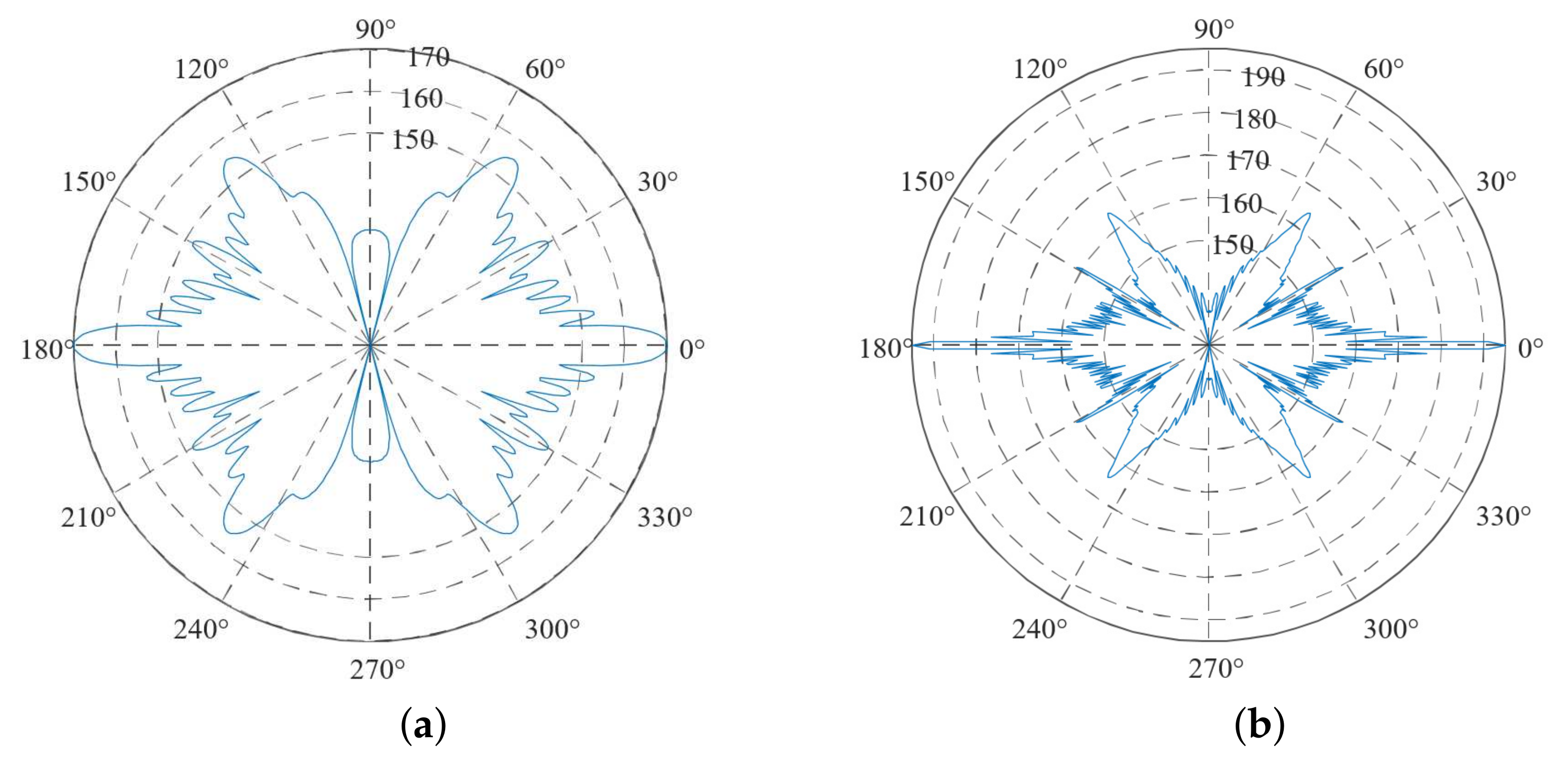
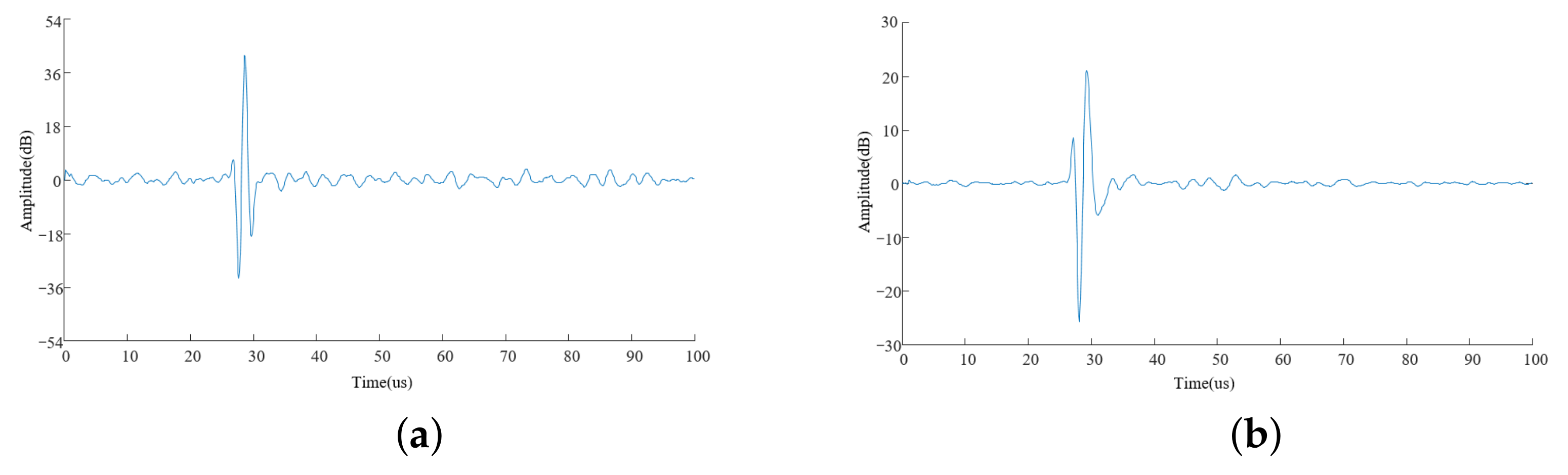
- The sound field simulation and experimental results showed that the gain of the four-laminated transducer was 15 dB higher than that of the single-wafer transducer.
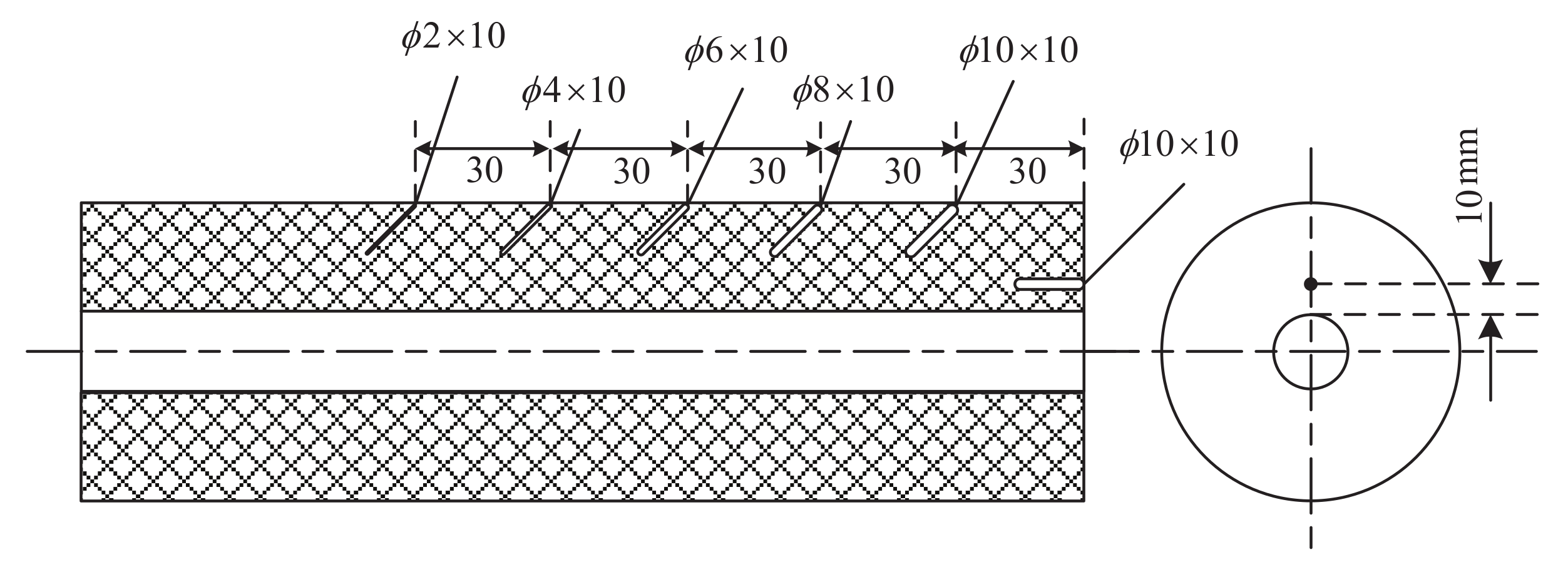
- An ultrasonic feature scanning system was built to realize the qualitative and quantitative detection of the smallest artificial hole (⌀2 mm × 10 mm).
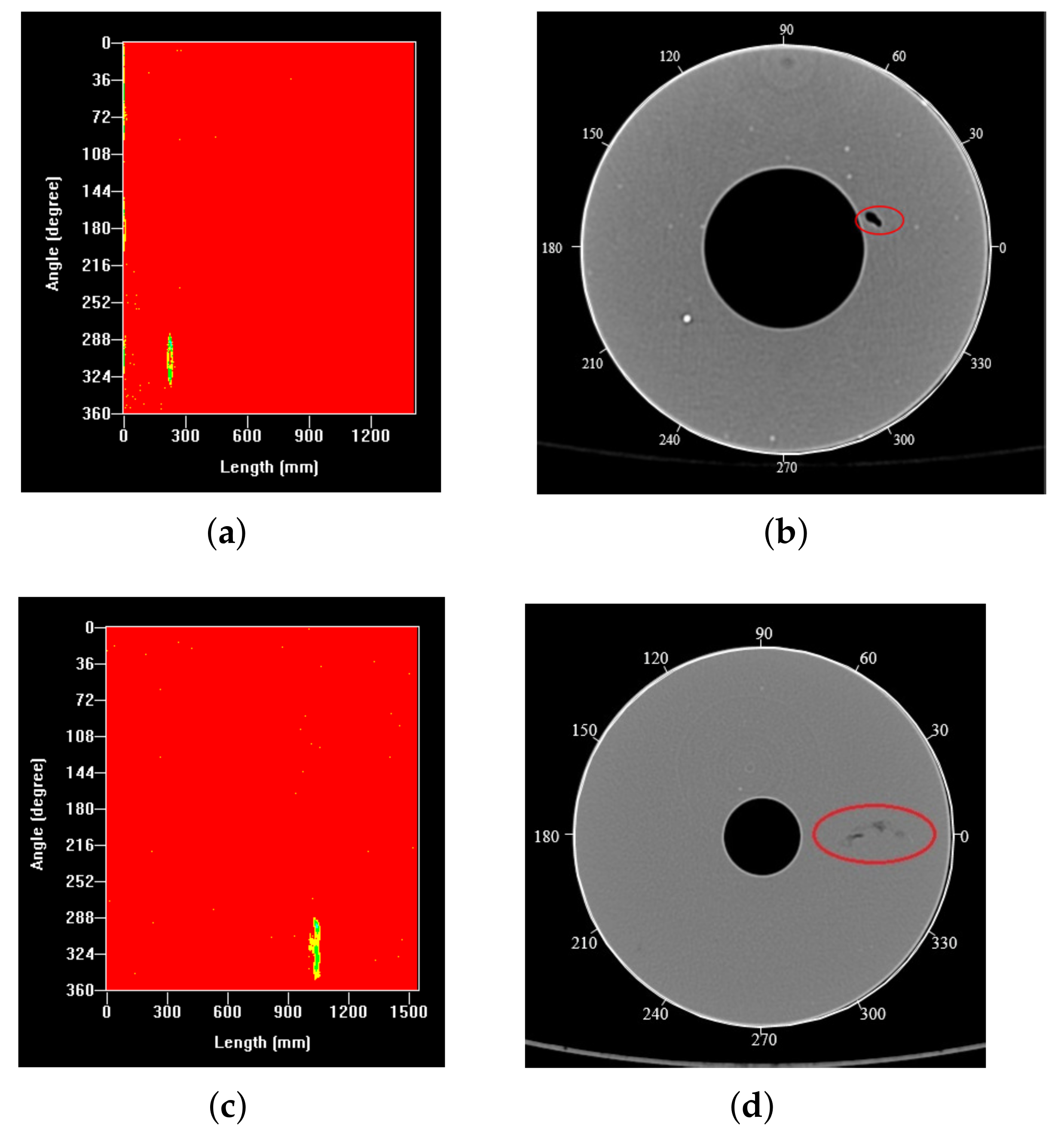
- Two different natural defects were scanned, and the results were compared with those obtained using an industrial CT detection system. The results showed that the ultrasonic method was more accurate in the characterization of the two natural defects. The primary reason was that the industrial CT system was not sensitive to defects parallel to the incident direction of the ray.
2. Principle of Laminated Transducer
2.1. Correspondence Principle of Simple Harmonic Wave
2.2. Wave Equation in Elastic Media
2.3. Wave Equation in Viscoelastic Media
- The velocities of longitudinal and transverse waves in viscoelastic media are denoted as and , respectively. We obtain:where , , , and are functions of the angular frequency . Therefore, when ultrasonic waves propagate in viscoelastic media, frequency dispersion will occur.
- In an ideal elastic medium, the plane wave is not attenuated, while in a viscoelastic medium, the plane wave attenuates as the propagation distance increases. The attenuation coefficients of the longitudinal and transverse wave are denoted as and , respectively, and we have:where represents the real part of the complex number, and represents the imaginary part of the complex number.
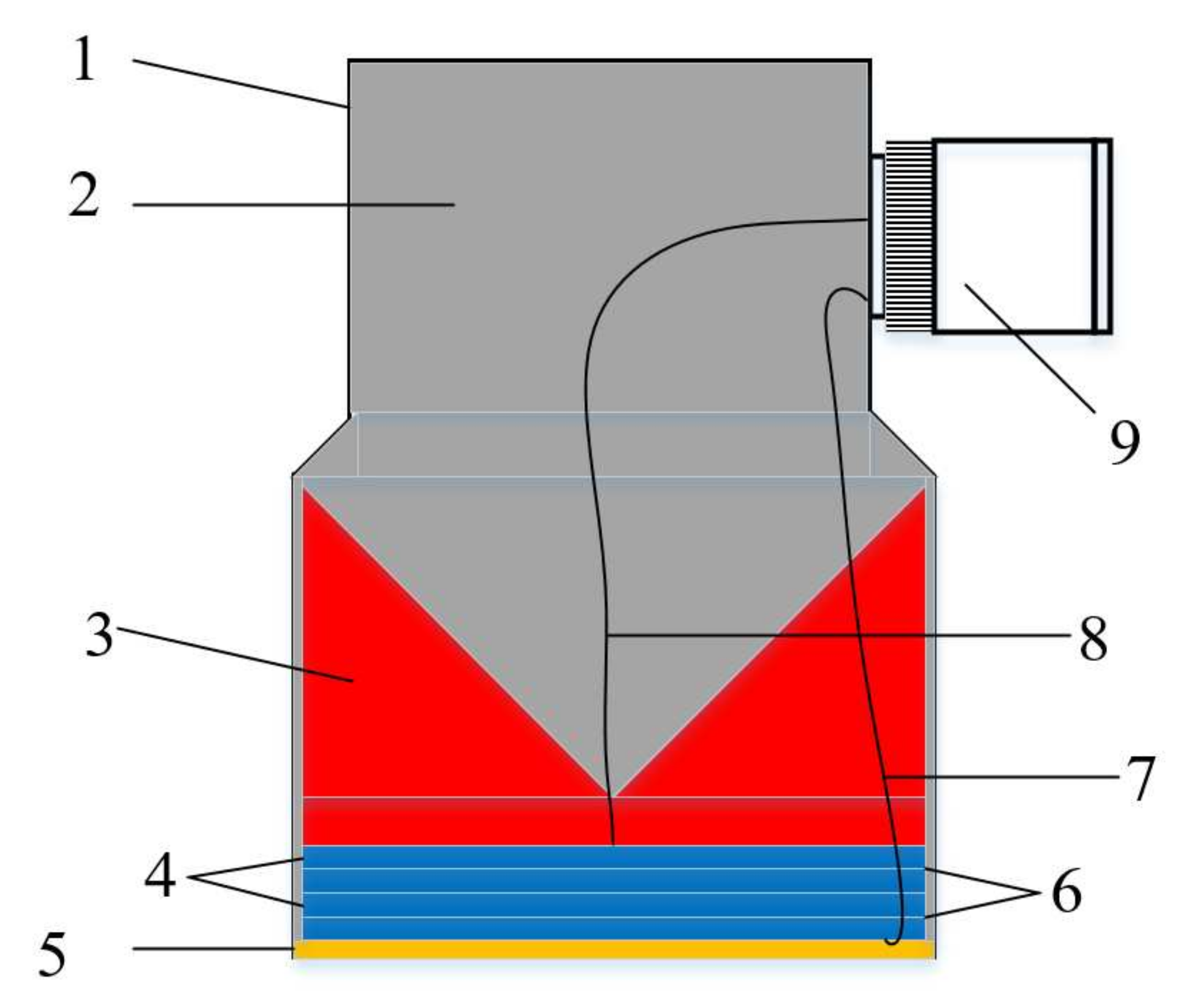
2.4. Structure of Laminated Transducer
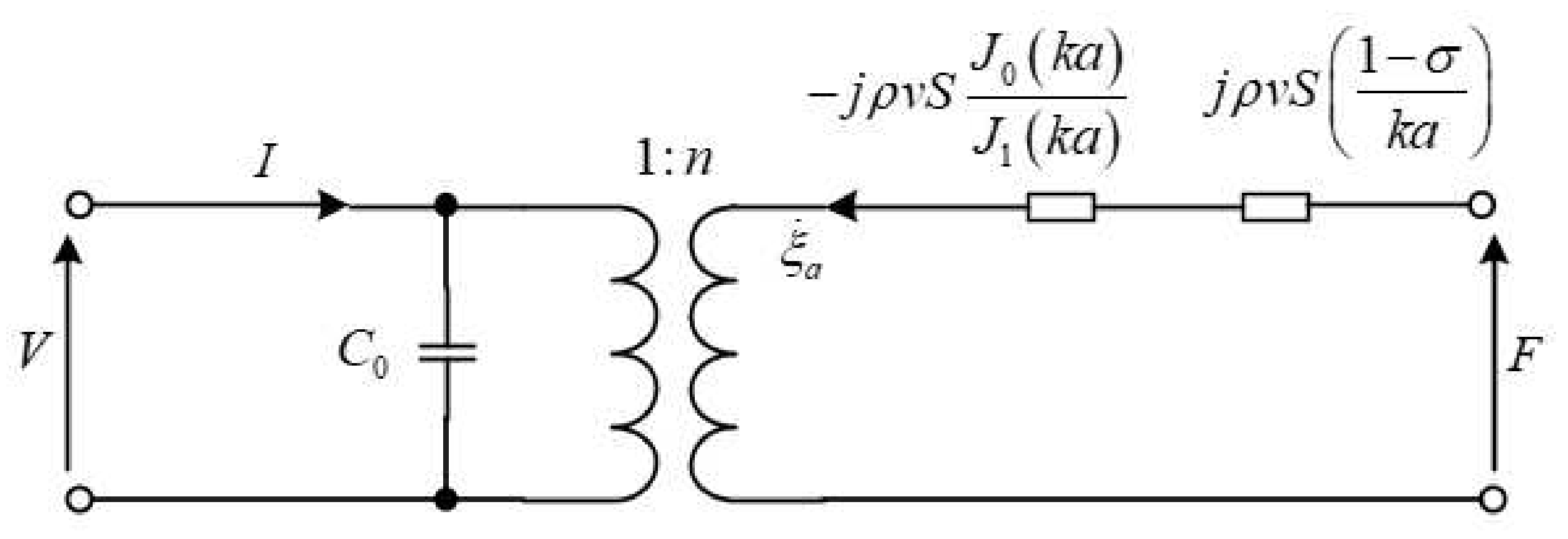
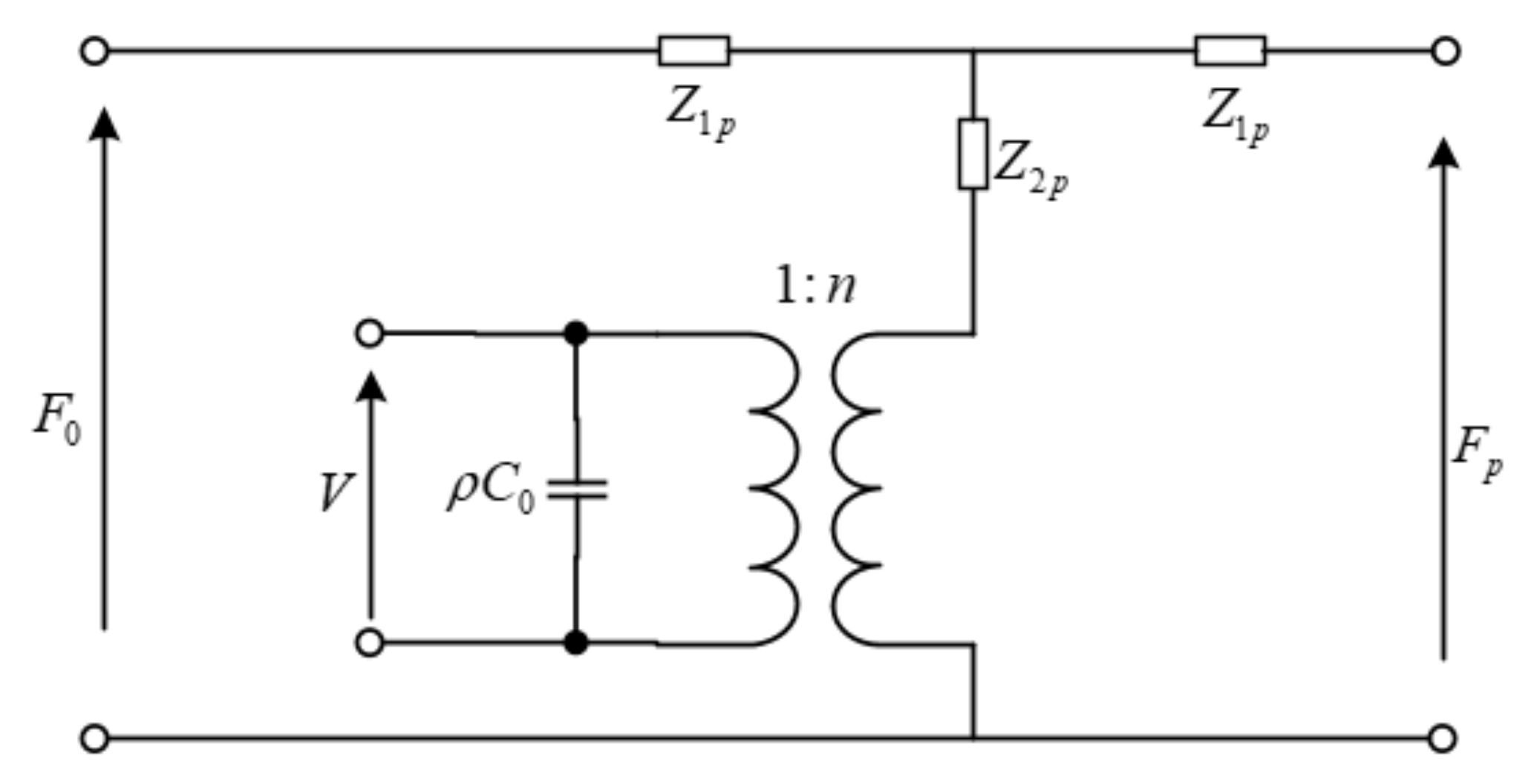
2.5. Resonance Frequency
3. Simulation of Manufacturing and Experiments
3.1. Piezoelectric Materials
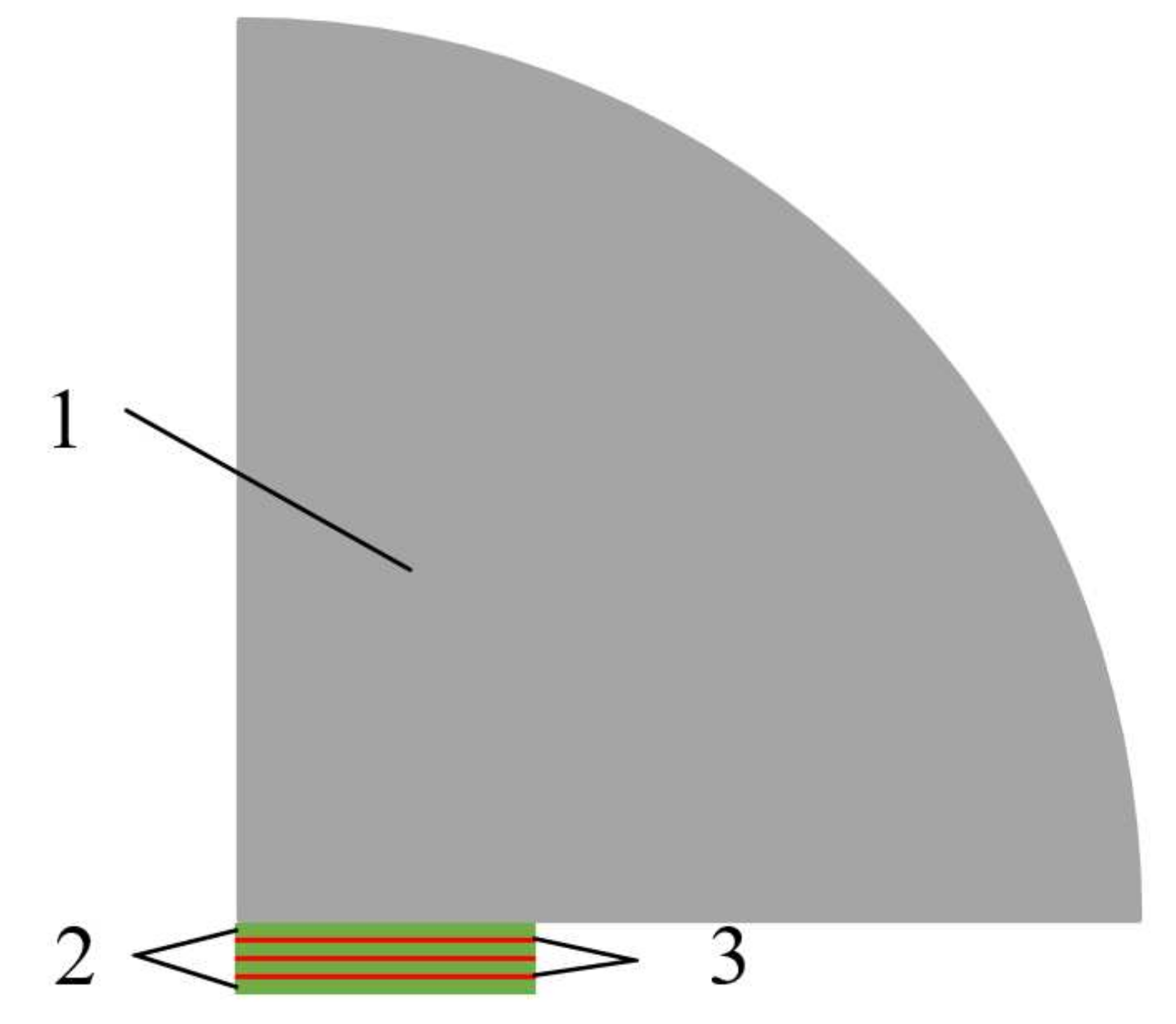
3.2. Simulation of Sound Field
3.3. Piezoelectric Elements and Backing Material Bonding
3.4. Electrode Wire Connections
3.5. Epoxy Potting
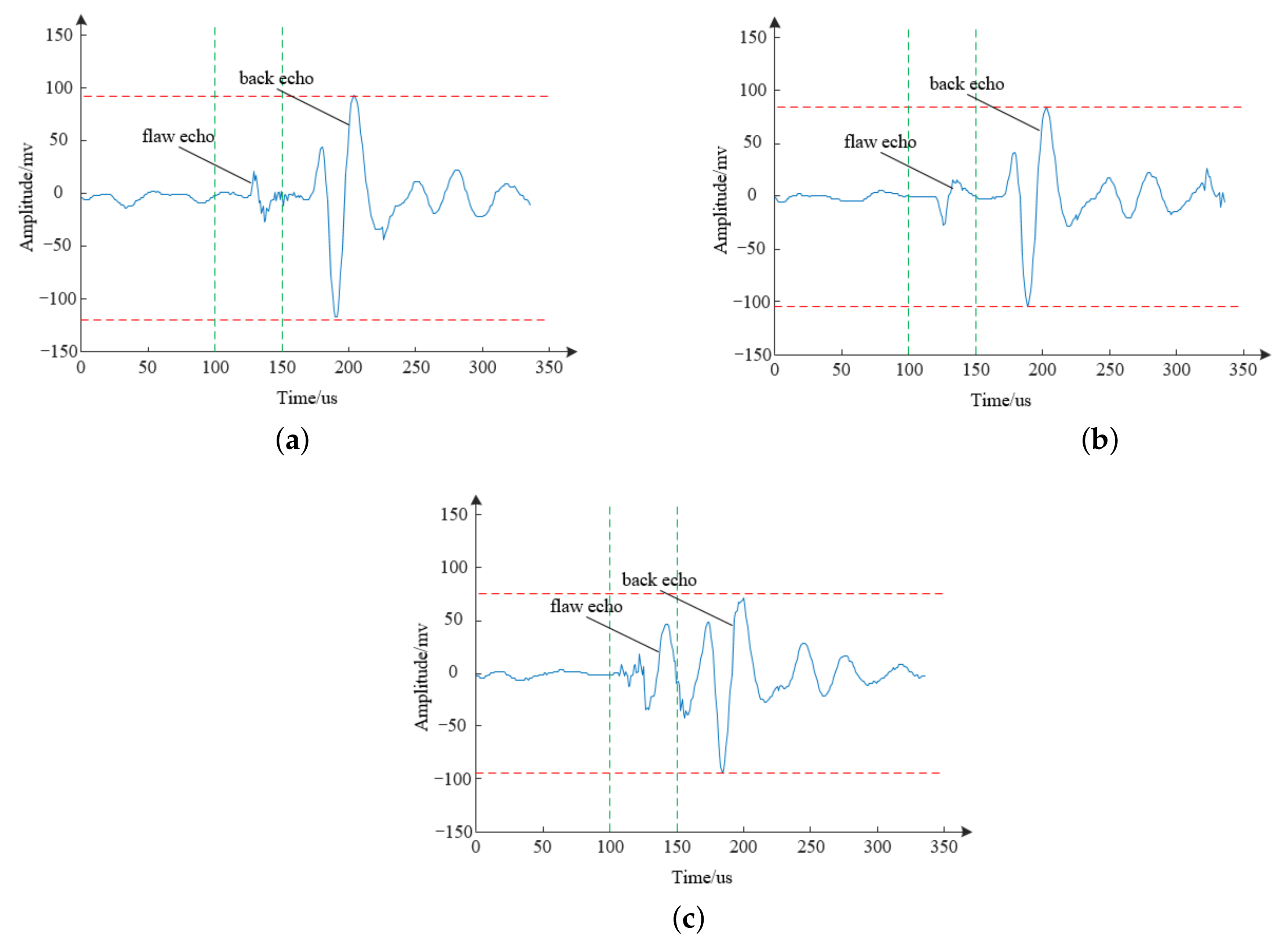
3.6. Experiment of Signal Waveform
4. Testing Equipment
4.1. Dual-Probe Pulse Echo Method
4.2. Testing Equipment
5. Results and Analysis
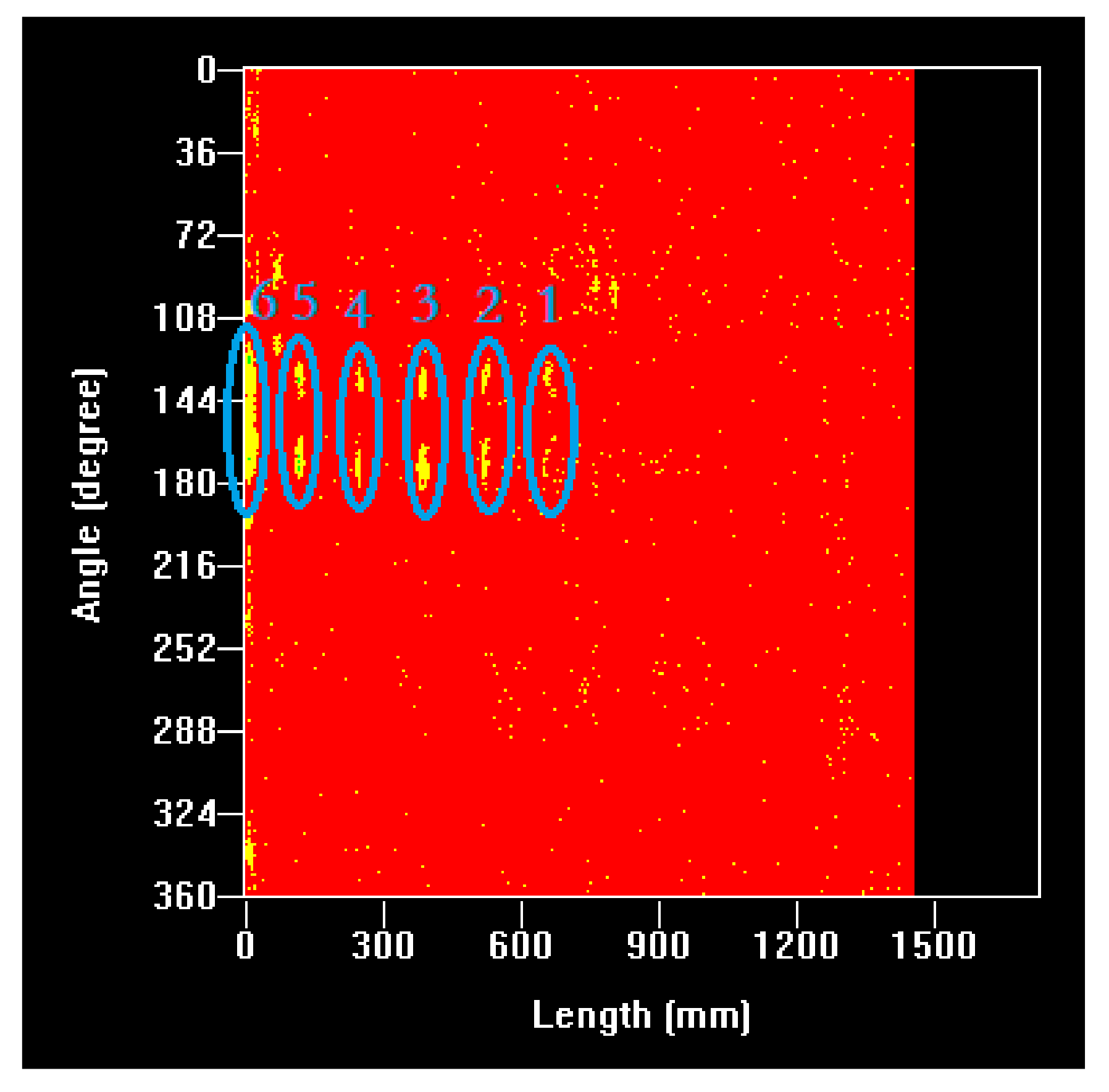
5.1. Features of Artificial Defects
5.2. Artificial Defects
5.3. Natural Defects
6. Conclusions
- Based on the correspondence principle of simple harmonic waves, the wave equation in viscoelastic media was derived. Since the equation is a function of the angular frequency , an ultrasonic wave propagates in a viscoelastic medium with greater attenuation than that in an elastic medium.
- According to the amplitude–frequency relationship in viscoelastic media, by setting the independent variable range of 950–1050 kHz for the transcendental equation, the 1-MHz resonance frequency of the laminated transducer was obtained by a graphical method.
- The sound field simulation and experimental results showed that the gain of the four-stack transducer was 15 dB higher than that of the single-element transducer.
- An ultrasonic feature scanning system was built to realize the qualitative and quantitative detection of the smallest artificial hole (⌀2 mm × 10 mm).
- Two different natural defects were scanned and the results were compared with those obtained using an industrial computed tomography detection system. The results showed that the ultrasonic method was more accurate in the characterization of two natural defects. The primary cause was that the industrial CT was not sensitive to defects parallel to the incident direction of the ray.
Author Contributions
Funding
Institutional Review Board Statement
Informed Consent Statement
Data Availability Statement
Conflicts of Interest
Abbreviations
| CT | Computed tomography |
| UT | Ultrasonic testing |
| PZT | Lead Zirconium Titanate |
| TVR | Transmitting voltage response |
| UPT | Ultrasonic energy transfer |
| PLC | Programmable logic controller |
| FEM | Finite Element Method |
| SH wave | Horizontal Shear wave |
References
- Yang, T.Q.; Luo, W.B.; Xu, P.; Wei, Y.T.; Gang, Q.G. Theory and Application of Viscoelasticity; Science Press: Beijing, China, 2004; pp. 195–221. [Google Scholar]
- Mason, B.P.; Roland, C.M. Solid Propellants. Rubber Chem. Technol. 2019, 92, 1–24. [Google Scholar] [CrossRef] [Green Version]
- Davenas, A. Solid Rocket Propulsion Technology; Pergamon Press, Inc.: New York, NY, USA, 1993; pp. 470–473. [Google Scholar]
- Remakanthan, S.; Moideenkutty, K.K.; Gunasekaran, R.; Thomas, C.; Thomas, C.R. Analysis of Defects In Solid Rocket Motors Using X-ray Radiography. E-J. Nondestruct. Test. 2015, 20, 1–8. [Google Scholar]
- Bahr, A.J. Microwave Nondestructive Testing Methods; Gordon and Breach Science Publishers: New York, NY, USA, 1982; pp. 30–37. [Google Scholar]
- Liu, T.; Zhang, W.; Yan, S. A novel image enhancement algorithm based on stationary wavelet transform for infrared thermography to the de-bonding defect in solid rocket motors. Mech. Syst. Signal Process. 2015, 62–63, 366–380. [Google Scholar] [CrossRef]
- Erikson, W.W.; Cooper, M.A.; Guo, S.; Roberts, S.A.; Bolintineanu, D.S. CT Scan Characterization of Thermally Damaged Energetic Materials; Sandia National Lab. (SNL-NM): Albuquerque, NM, USA, 2018; pp. 1–10. [Google Scholar]
- Yang, S.; Wang, M.; Yang, L. The Rapid Detection Technology of Lamb Wave for Microcracks in Thin-Walled Tubes. Appl. Sci. 2019, 9, 3576. [Google Scholar] [CrossRef] [Green Version]
- Chen, X.; Xu, J.S.; Zheng, J. Viscoelastic Mechanics of Solid Propellants; BeiJing Institute of Technology Press: Beijing, China, 2016; pp. 5–18. [Google Scholar]
- Imperiale, A.; Leymarie, N.; Demaldent, E. Numerical modeling of wave propagation in anisotropic viscoelastic laminated materials in transient regime: Application to modeling ultrasonic testing of composite structures. Int. J. Numer. Methods Eng. 2020, 121, 3300–3338. [Google Scholar] [CrossRef]
- Larcher, N.; Takarli, M.; Angellier, N.; Petit, C.; Sebbah, H. Towards a viscoelastic mechanical characterization of asphalt materials by ultrasonic measurements. Mater. Struct. 2015, 48, 1377–1388. [Google Scholar] [CrossRef]
- Bause, F.; Gravenkamp, H.; Rautenberg, J.; Henning, B. Transient modeling of ultrasonic guided waves in circular viscoelastic waveguides for inverse material characterization. Meas. Sci. Technol. 2015, 26, 095602. [Google Scholar] [CrossRef]
- Aksoy, H.G. Broadband ultrasonic spectroscopy for the characterization of viscoelastic materials. Ultrasonics 2016, 67, 168–177. [Google Scholar] [CrossRef]
- Shih, C.C.; Qian, X.; Ma, T.; Han, Z.; Huang, C.C.; Zhou, Q.; Shung, K.K. Quantitative assessment of thin-layer tissue viscoelastic properties using ultrasonic micro-elastography with Lamb wave model. IEEE Trans. Med. Imaging 2018, 37, 1887–1898. [Google Scholar] [CrossRef] [PubMed]
- Lin, D.Y.; Zhu, L.J.; Zhang, Y.H. Air-coupled ultrasonic evaluation technology for viscoelastic property of materials. J. Mech. Strength 2018, 40, 68–72. [Google Scholar]
- Li, Y.Y.; Chang, J.J.; Huang, L.; Tang, Y.H. Comparative study on viscoelastic evaluation methods of polymer materials based on ultrasonic method. Materials 2019, 12, 2948. [Google Scholar] [CrossRef] [Green Version]
- Lu, G.Y.; Zhang, Z.; Zhu, Z.; Fu, Y.Y. The study on propagation of ultrasonic in concrete viscoelastic medium. Comput. Tech. Geophys. Geochem. Explor. 2019, 41, 299–307. [Google Scholar]
- Hutchins, D.A.; Watson, R.L.; Davis, L.A.; Akanji, L.; Billson, D.R.; Burrascano, P.; Laureti, S.; Ricci, M. Ultrasonic Propagation in Highly Attenuating Insulation Materials. Sensors 2020, 20, 2285. [Google Scholar] [CrossRef] [PubMed] [Green Version]
- Li, H.; Wang, Q.F. Numerical analysis of ultrasonic guided waves propagation in highly attenuative viscoelastic material. Int. J. Smart Sens. Intell. Syst. 2014, 7, 1–6. [Google Scholar]
- Wang, J.; Cai, S.; Qin, L.; Liu, D.; Wei, P.; Tang, L. Modeling and electromechanical performance analysis of frequency-variable piezoelectric stack transducers. J. Intell. Mater. Syst. Struct. 2020, 31, 897–910. [Google Scholar] [CrossRef]
- Meng, X.D.; Lin, S.Y. Analysis of a Cascaded Piezoelectric Ultrasonic Transducer with Three Sets of Piezoelectric Ceramic Stacks. Sensors 2019, 19, 580. [Google Scholar] [CrossRef] [Green Version]
- Gamboa, B.M.; Guo, R.; Bhalla, A. Piezoelectric stacked transducer evaluation and comparison for optimized energy harvesting. Ferroelectrics 2018, 535, 8–17. [Google Scholar] [CrossRef]
- Li, G.; Gong, J.; Wang, T.; Qiu, C.; Xu, Z. Study on the broadband piezoelectric ceramic transducer based on radial enhanced composite structure. Ceram. Int. 2018, 44, S250–S253. [Google Scholar] [CrossRef]
- Wei, X.; Yang, Y.; Yao, W.; Zhang, L. PSpice Modeling of a Sandwich Piezoelectric Ceramic Ultrasonic Transducer in Longitudinal Vibration. Sensors 2017, 17, 2253. [Google Scholar] [CrossRef] [PubMed] [Green Version]
- Piao, C.G.; Kim, J.O. Vibration characteristics of an ultrasonic transducer of two piezoelectric discs. Ultrasonics 2017, 74, 72–80. [Google Scholar] [CrossRef]
- Deng, Y.Y.; Zhang, G.B.; Zhang, X.F. A method to depress the transmitting voltage response fluctuation of a double excitation piezoelectric transducer. Appl. Acoust. 2020, 158, 107066. [Google Scholar] [CrossRef]
- Lin, S.Y. Study on the parallel electric matching of high power piezoelectric transducers. Acta Acust. United Acust. 2017, 103, 385–391. [Google Scholar] [CrossRef]
- Lin, J.Y.; Lin, S.Y.; Xu, J. Analysis and experimental validation of longitudinally composite ultrasonic transducers. J. Acoust. Soc. Am. 2019, 145, 263–271. [Google Scholar] [CrossRef] [PubMed]
- Wang, J.; Li, W.; Qin, L.; Zhang, J.; Wei, P. Effects of electrodes and protective layers on the electromechanical characteristics of piezoelectric stack actuators. Adv. Compos. Lett. 2019, 28, 1–10. [Google Scholar] [CrossRef] [Green Version]
- Rezaie, H.; Hu, A.P.; Tang, L.; Cordell, R. Improving Detachable Ultrasonic Power Transfer System Using Piezoelectric Stack. In Proceedings of the 2018 IEEE Asia-Pacific Conference on Antennas and Propagation (APCAP), Auckland, New Zealand, 5–8 August 2018; pp. 57–61. [Google Scholar]
- Lu, G.; Zhu, X.; Wang, T.; Hao, Z.; Tan, B. Design and Analysis of a Novel Piezoceramic Stack-based Smart Aggregate. Sensors 2020, 20, 6438. [Google Scholar] [CrossRef] [PubMed]
- Meng, X.D.; Lin, S.Y. Analysis on coupled vibration of piezoelectric ceramic stack with two piezoelectric ceramic elements. J. Acoust. Soc. Am. 2019, 146, 2170–2178. [Google Scholar] [CrossRef]
- Tao, C.H.E.N.; Hongbo, L.I.; Qihan, W.A.N.G.; Junpeng, Y.E. Design and Analysis of Ultrasonic Composite Transducer with a Quarter-wave Taper Transition Horn. Arch. Acoust. 2020, 45, 687–697. [Google Scholar]
- Zhou, G.Q.; Liu, X.M. Viscoelastic Theory; Press of University of Science and Technology of China: Hefei, China, 1996; pp. 139–166. [Google Scholar]
- Luan, G.; Zhang, J.; Wang, R. Piezoelectric Transducer and Transducer Array; Peking University Press: Beijing, China, 2005; pp. 146–156. [Google Scholar]
- Rose, J.L. Ultrasonic Waves in Solid Media; Cambridge University Press: Cambridge, UK, 2000; pp. 288–295. [Google Scholar]
- Jiang, W.P.; Fang, J. Ultrasonic Testing; Wuhan University Press: Wuhan, China, 1991; pp. 89–95. [Google Scholar]



| Name | Proposed Transducer | Underwater Transducer |
|---|---|---|
| On wafers | Backing material | Rubber sheet |
| Laminated wafers | Solid wafer | Hollow wafer/Curved wafer |
| Under wafers | Matching layer | Rubber sheet |
| Application | Ultrasonic testing | Communication/Target detection |
| Name | Elastic Media | Viscoelastic Media |
|---|---|---|
| Shear modulus | ||
| Lamé constant | ||
| Bulk modulus | K | |
| Modulus of elasticity | E | |
| Poisson’s ratio |
| Material | |||||||
|---|---|---|---|---|---|---|---|
| Quartz | 2.31 | 5.00 | 0.10 | 5740 | 15.2 | 550 | |
| Lithium sulfate | 16.00 | 17.50 | 0.30 | 5470 | 11.2 | 75 | |
| Lithium iodate | 18.10 | 32.00 | 0.51 | 4130 | 18.5 | <100 | 256 |
| Barium niobate | 6.00 | 2.30 | 0.49 | 7400 | 34.8 | > | 1200 |
| Braium titanate | 190.00 | 1.80 | 0.38 | 5470 | 30.0 | 300 | 115 |
| Lead titanate | 58.00 | 3.30 | 0.43 | 4240 | 32.8 | 1050 | 460 |
| PZT-4 | 289.00 | 2.60 | 0.51 | 4000 | 30.0 | 500 | 328 |
| PZT-5 | 374.00 | 2.48 | 0.49 | 4350 | 33.7 | 75 | 365 |
| PZT-8 | 2.50 | 2.50 | 0.48 | 4350 | 33.0 | 1000 | 300 |
| Material | Density (kg/m) | Velocity (m/s) | Poisson’s Ratio [37] |
|---|---|---|---|
| Solid rocket propellant | 1500 | 2000 | 0.5 |
| Piezoelectric crystal plate (PZT-5) | 7750 | 4350 | 0.34 |
| Copper plate | 8600 | 4700 | 0.37 |
| Name | Brand | Model |
|---|---|---|
| Industrial computer | Advantech | IPC-610-H |
| PLC | MITSUBISHI | FX2N-64MR-001 |
| Squarewave pulser/receiver | PANAMETRICS | 5077PR |
| Servo motor | YASKAWA | SGM7D |
| Rotary encoder | AUTONIC | E40S6 |
Publisher’s Note: MDPI stays neutral with regard to jurisdictional claims in published maps and institutional affiliations. |
© 2021 by the authors. Licensee MDPI, Basel, Switzerland. This article is an open access article distributed under the terms and conditions of the Creative Commons Attribution (CC BY) license (https://creativecommons.org/licenses/by/4.0/).
Share and Cite
Yang, S.; Song, W.; Chen, Y.; Yang, L.; Wang, M.; Lian, Y.; Liu, K. An Ultrasonic Laminated Transducer for Viscoelastic Media Detection. Sensors 2021, 21, 7188. https://doi.org/10.3390/s21217188
Yang S, Song W, Chen Y, Yang L, Wang M, Lian Y, Liu K. An Ultrasonic Laminated Transducer for Viscoelastic Media Detection. Sensors. 2021; 21(21):7188. https://doi.org/10.3390/s21217188
Chicago/Turabian StyleYang, Shunmin, Wenai Song, Yifang Chen, Lu Yang, Mingquan Wang, Yongjian Lian, and Kangchi Liu. 2021. "An Ultrasonic Laminated Transducer for Viscoelastic Media Detection" Sensors 21, no. 21: 7188. https://doi.org/10.3390/s21217188
APA StyleYang, S., Song, W., Chen, Y., Yang, L., Wang, M., Lian, Y., & Liu, K. (2021). An Ultrasonic Laminated Transducer for Viscoelastic Media Detection. Sensors, 21(21), 7188. https://doi.org/10.3390/s21217188