Article

A Coverage Optimization Method for WSNs Based on the Improved Weed Algorithm
School of Computer and Communication Engineering, Northeastern University at Qinhuangdao, Qinhuangdao 066004, China
*
Author to whom correspondence should be addressed.
Sensors 2021, 21(17), 5869; https://doi.org/10.3390/s21175869
Submission received: 17 August 2021 / Revised: 29 August 2021 / Accepted: 30 August 2021 / Published: 31 August 2021
(This article belongs to the Section Sensor Networks)

Abstract

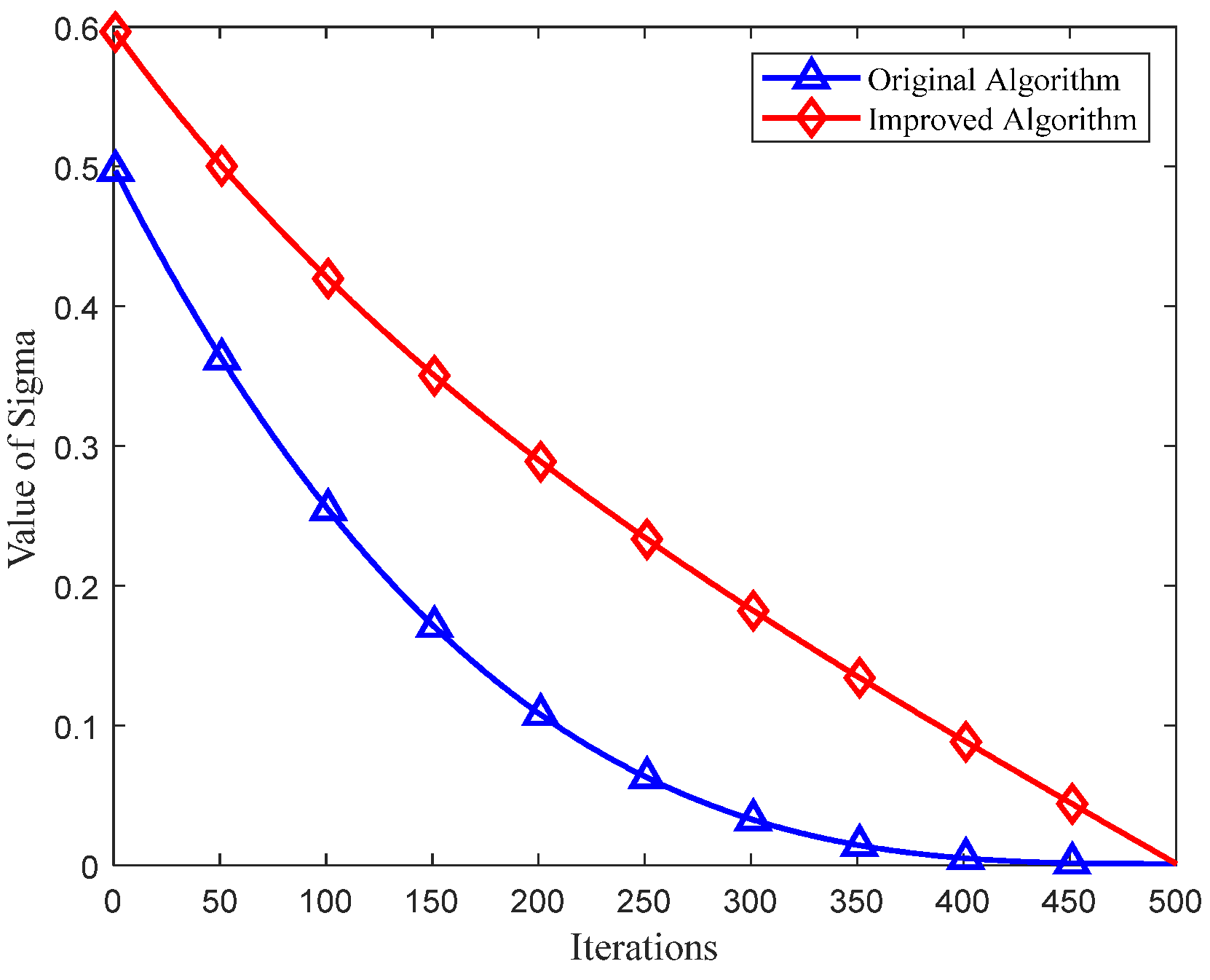
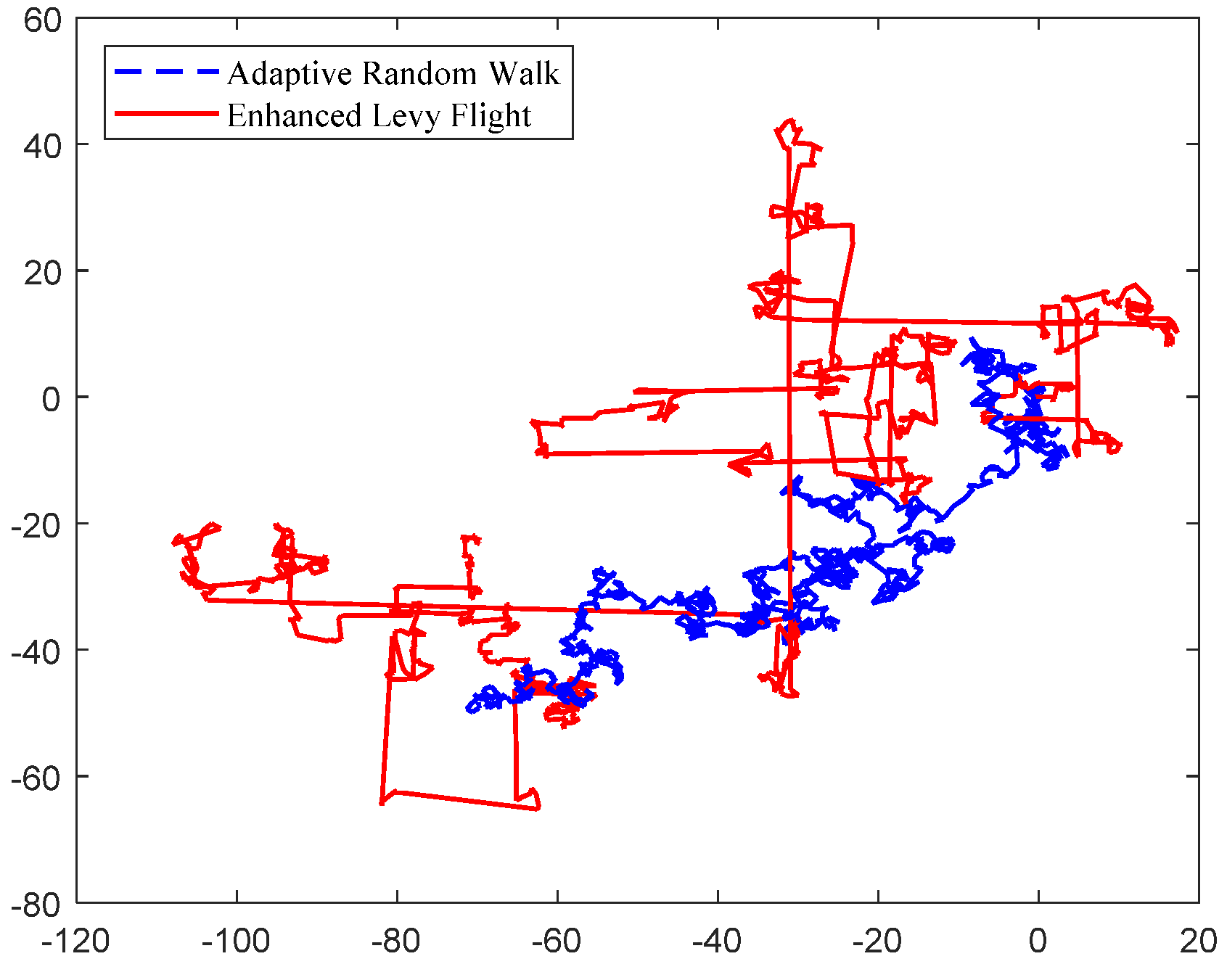
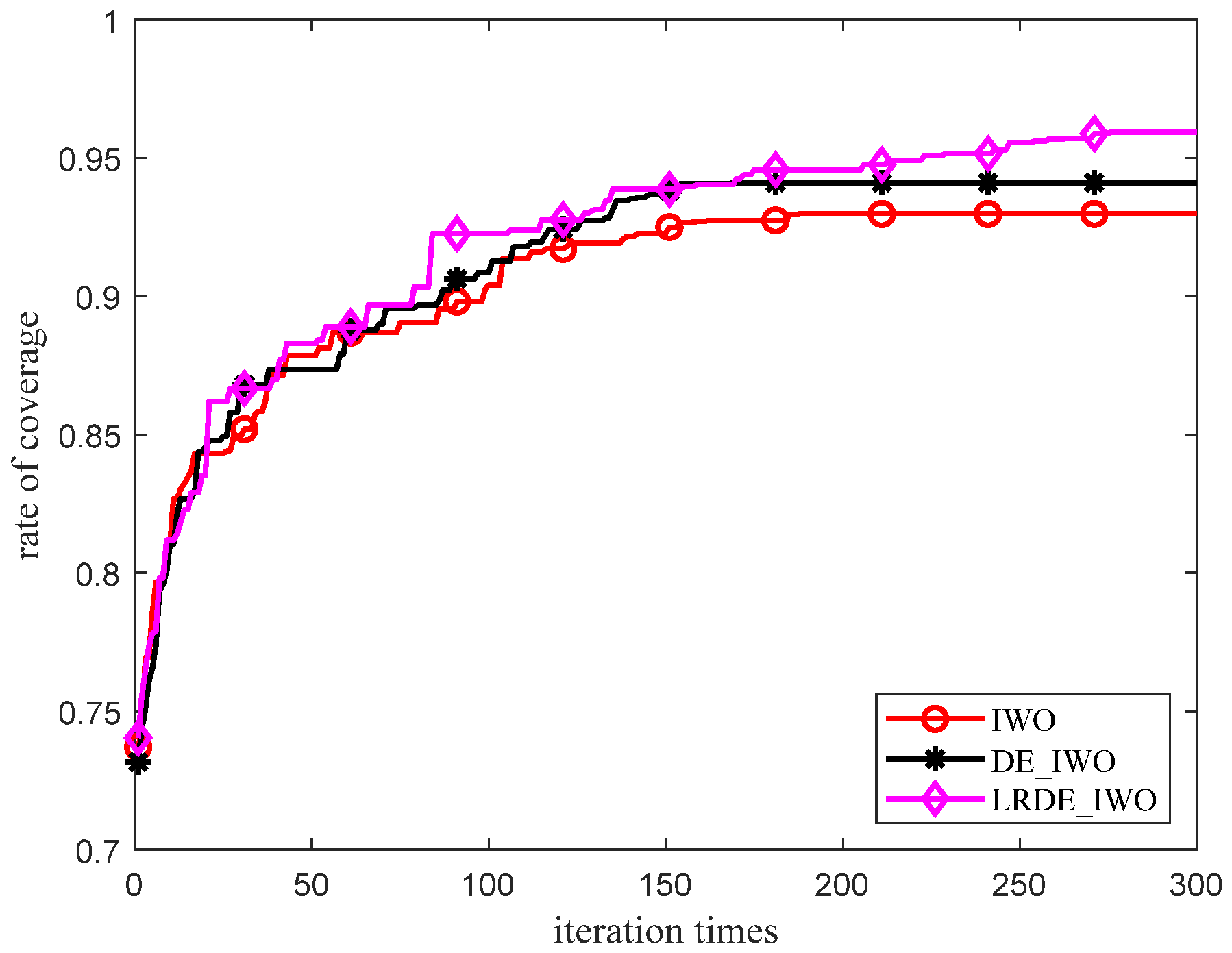
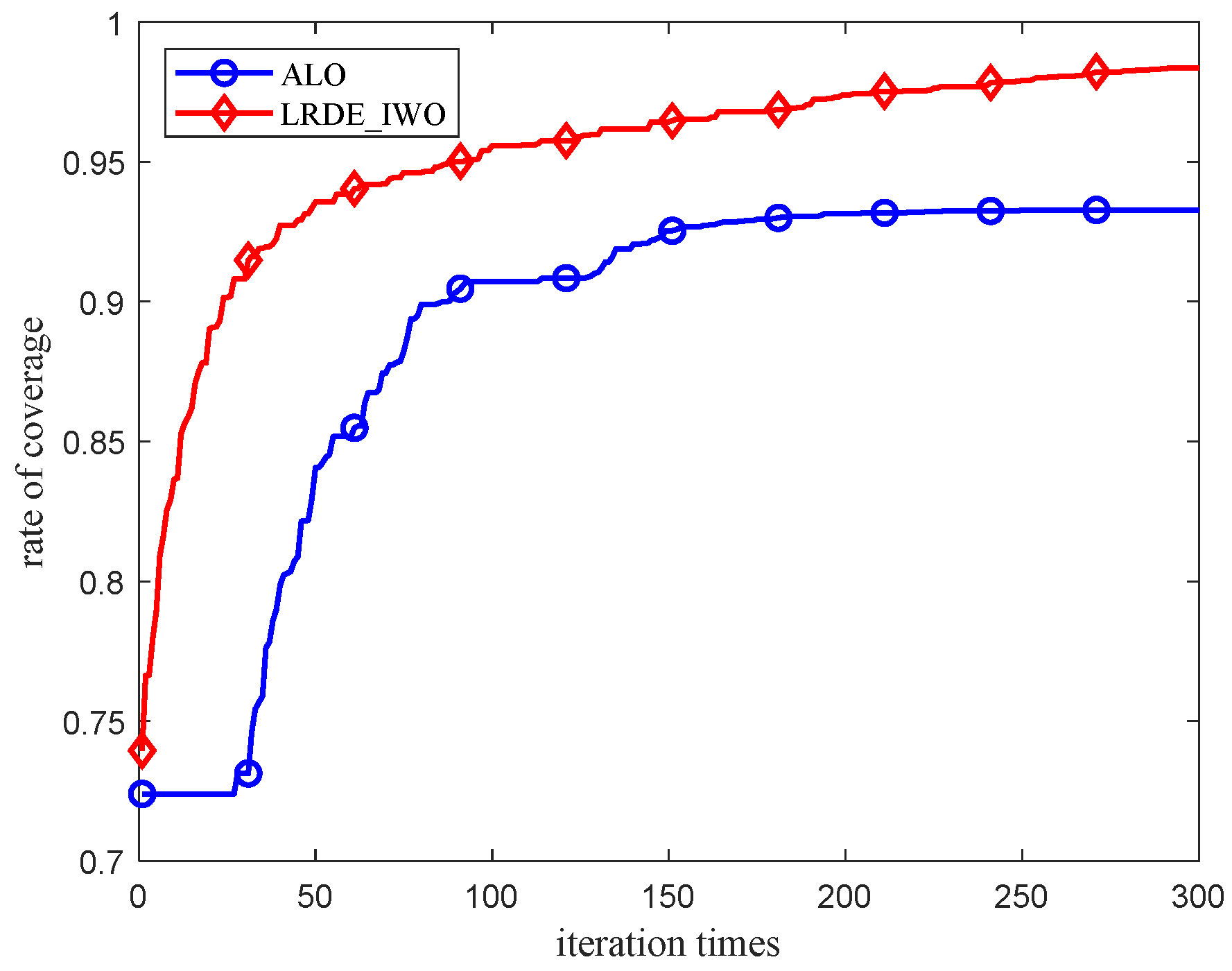
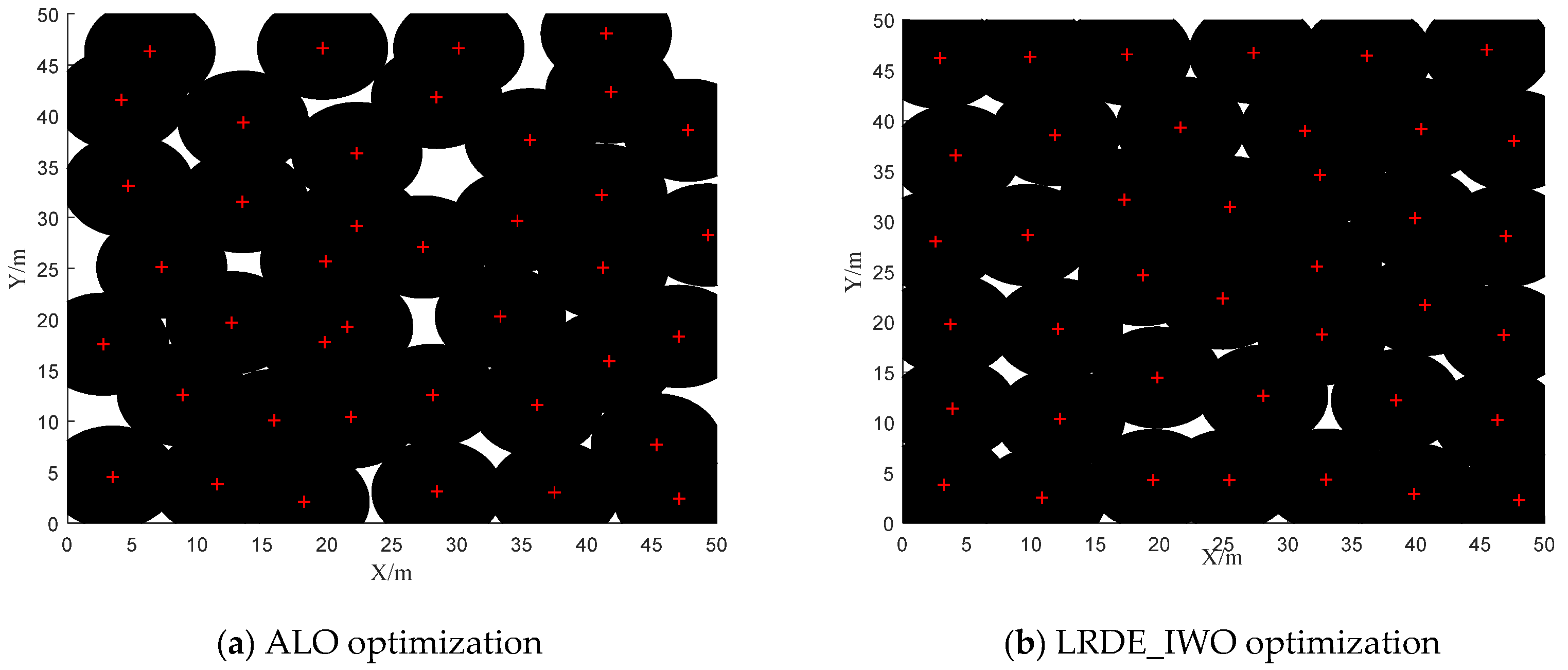
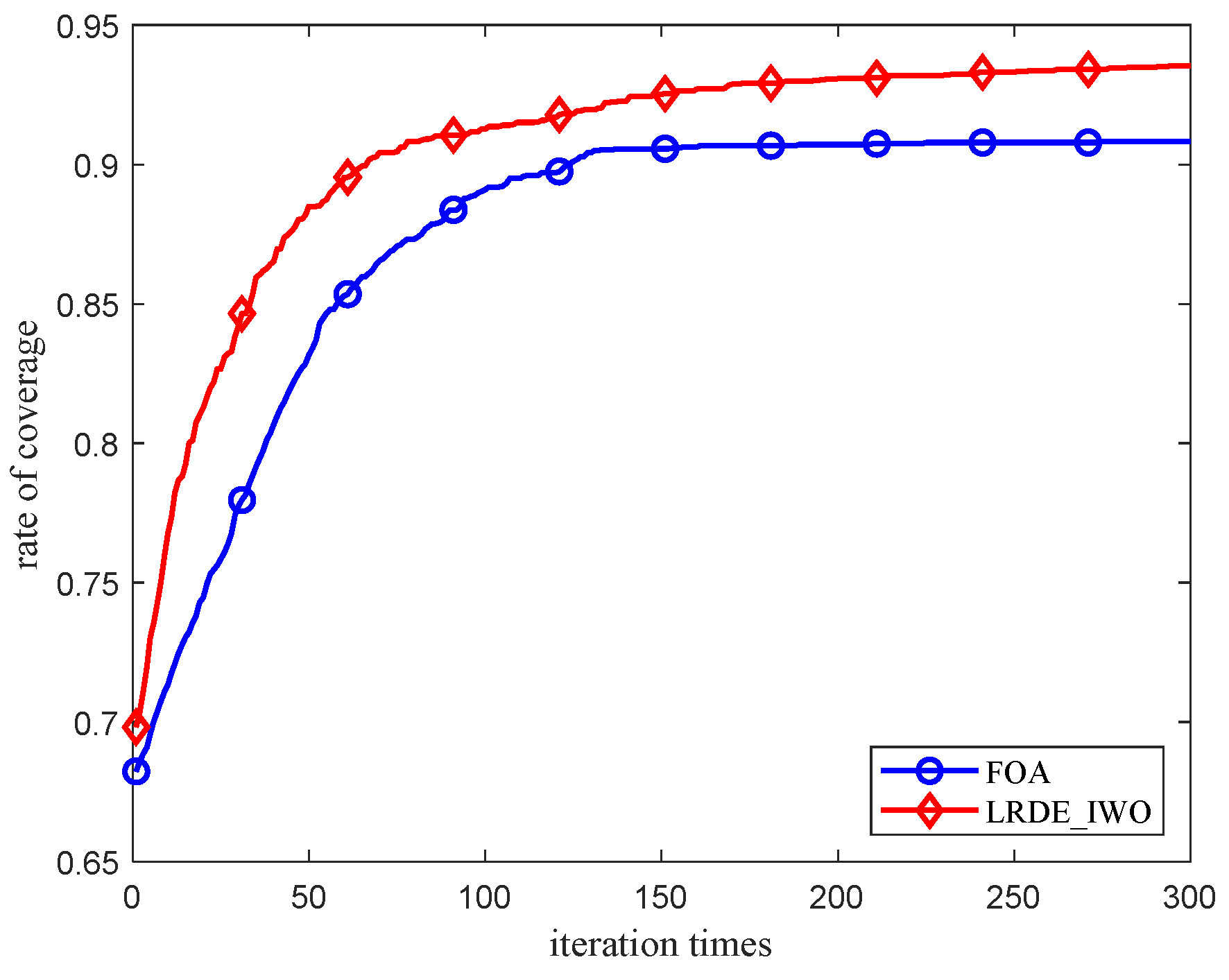
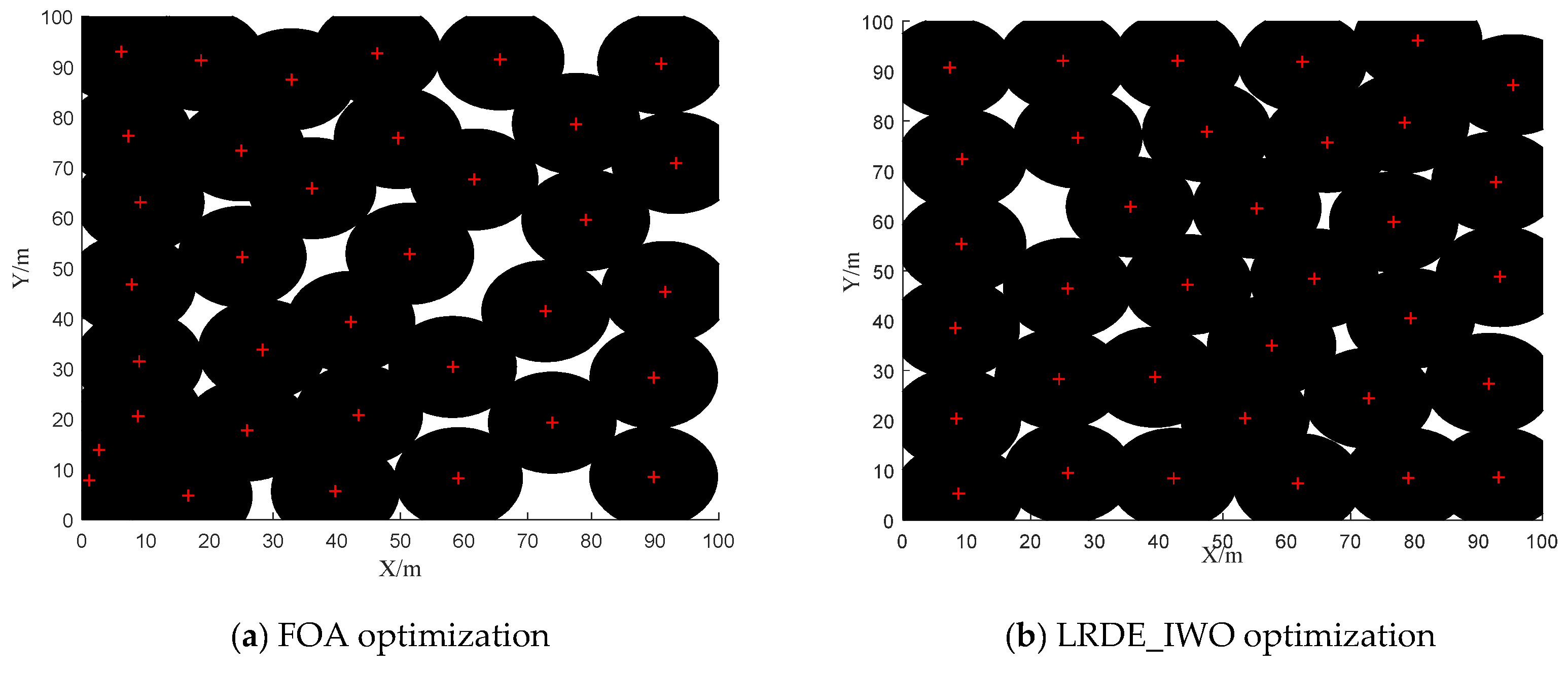
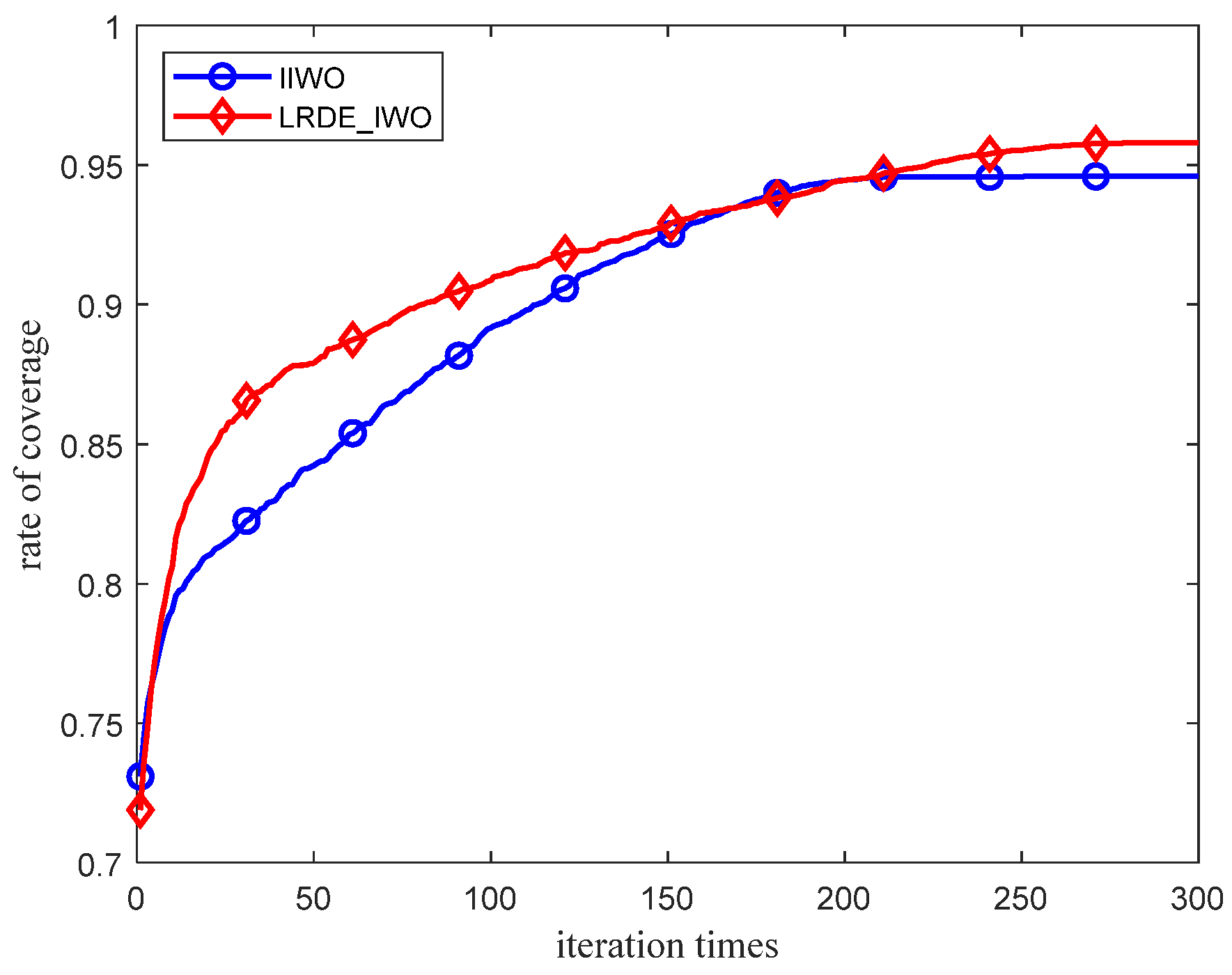
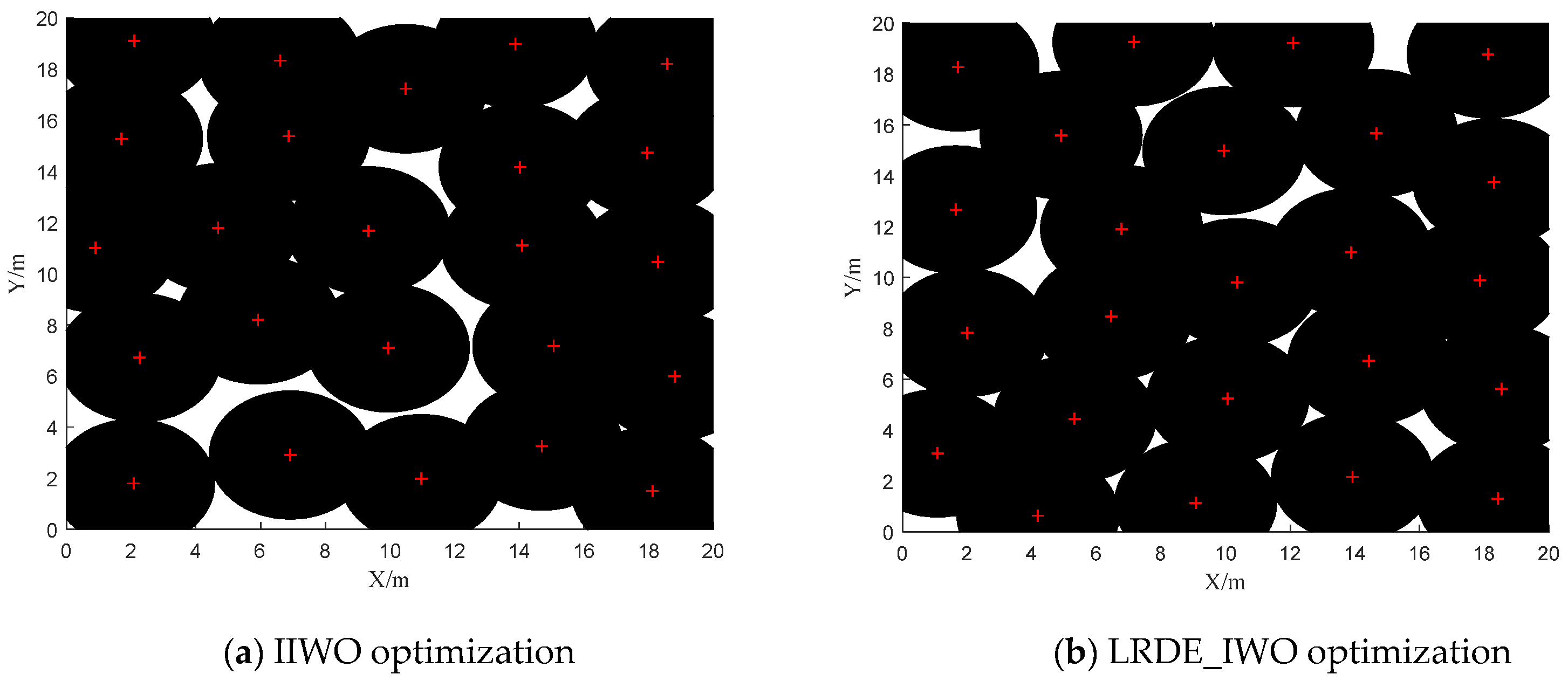
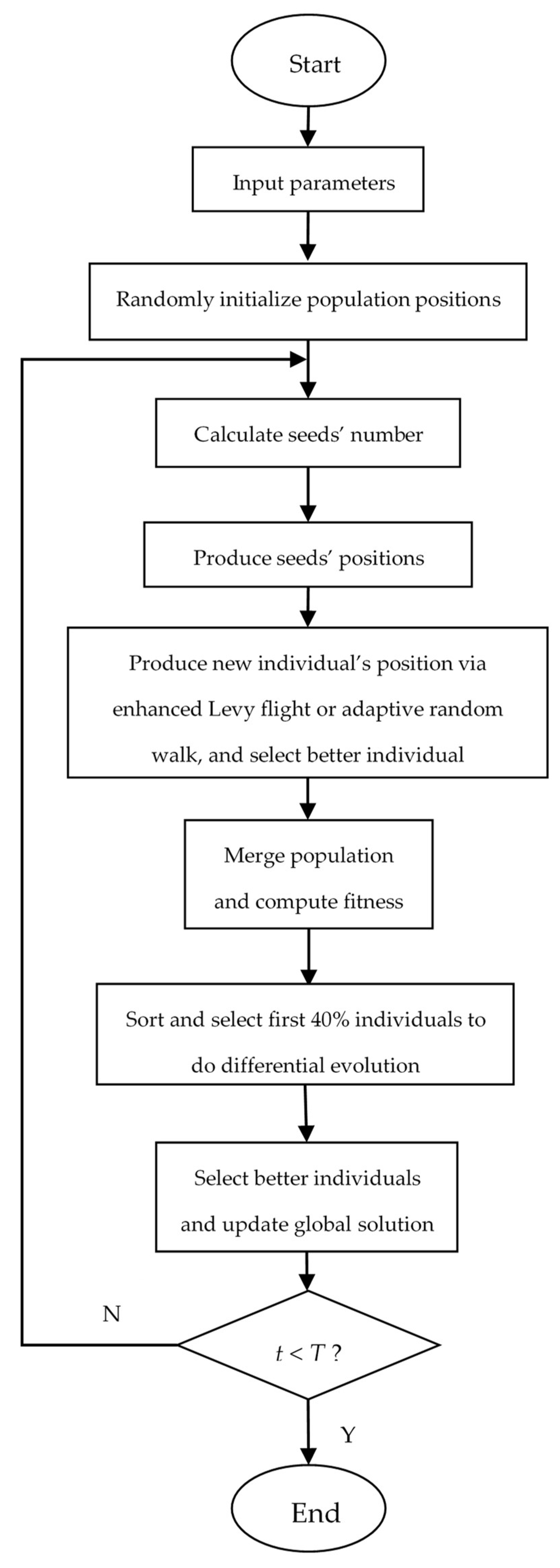
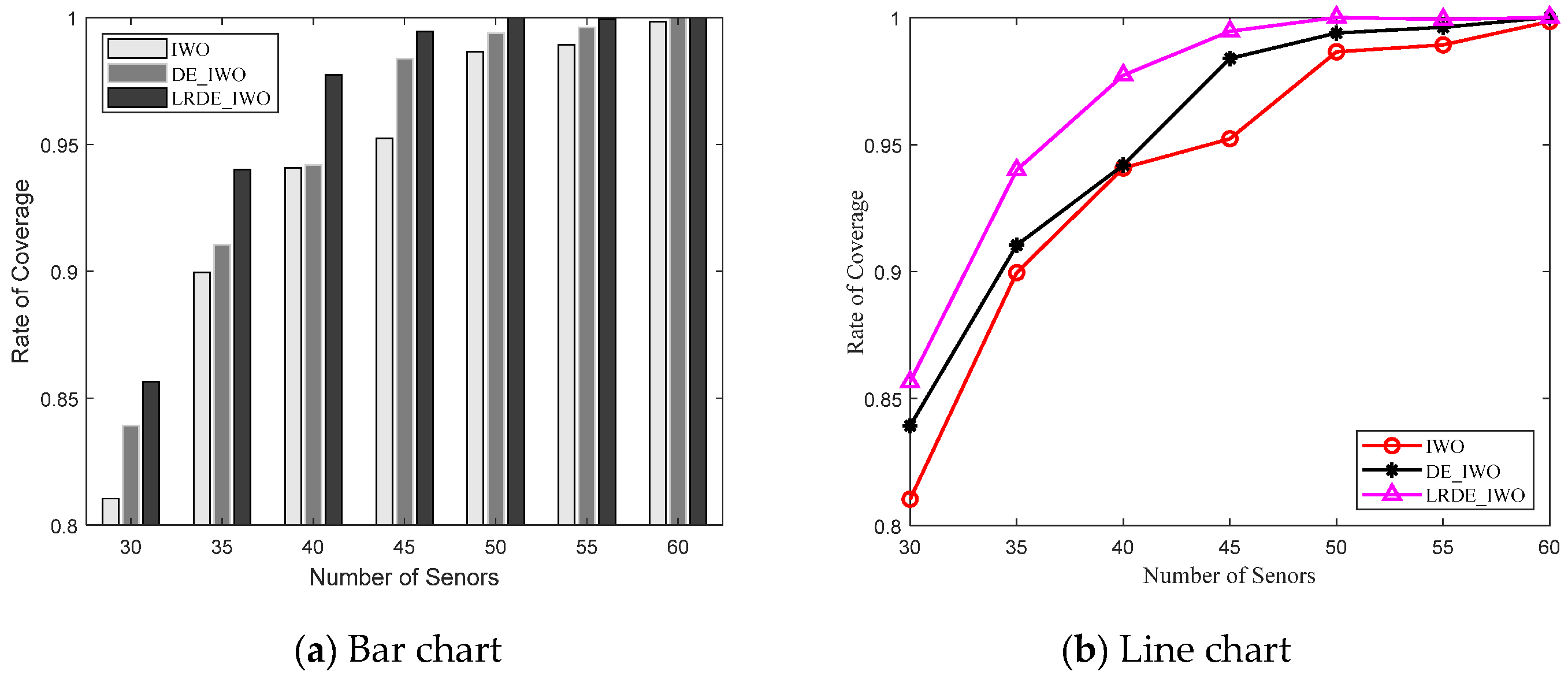
Wireless sensor networks (WSNs) is a multi-hop wireless network composed of a group of static or mobile sensor nodes in the form of self-organization. Uneven distribution of nodes often leads to the problem of over coverage and incomplete coverage of monitoring areas. To solve this problem, this paper establishes a network coverage optimization model and proposes a coverage optimization method based on an improved hybrid strategy weed algorithm (LRDE_IWO). The improvement of the weed algorithm includes three steps. Firstly, the standard deviation of normal distribution based on the tangent function is used as the seed’s new step size in the seed diffusion stage to balance the ability of the global search and local search of weed algorithm. Secondly, to avoid the problem of premature convergence, a disturbance mechanism combining enhanced Levy flight and the adaptive random walk strategy is proposed in the process of seed breeding. Finally, in competition of invasive weed stage, the differential evolution strategy is introduced to optimize the competition operation process and speed up convergence. The improved weed algorithm is applied to coverage optimization of WSNs. The simulation results show that the coverage rate of LRDE_IWO is increased by about 1% to 6% compared with the original invade weed algorithm (IWO) and the differential evolution invasive weed optimization algorithm (DE_IWO), and the coverage rate of the LRDE_IWO algorithm is increased by 4.10%, 2.73% and 1.19%, respectively, compared with the antlion optimization algorithm (ALO), the fruit fly optimization algorithm (FOA) and the gauss mutation weed algorithm (IIWO). The results prove the superiority and validity of the improved weed algorithm for coverage optimization of wireless sensor networks.
Keywords: wireless sensor networks; coverage optimization; Levy flight; random walk; differential evolution wireless sensor networks; coverage optimization; Levy flight; random walk; differential evolution