Article

Research on Energy Efficiency of NOMA–SWIPT Cooperative Relay Network Using GS-DinkelBach Algorithm
1
School of Electronics & Information, Soochow University, Suzhou 215000, China
2
Yangtze Delta Region Institute (Quzhou), University of Electronic Science and Technology of China, Quzhou 324000, China
*
Author to whom correspondence should be addressed.
Sensors 2021, 21(17), 5720; https://doi.org/10.3390/s21175720
Submission received: 20 July 2021 / Revised: 18 August 2021 / Accepted: 24 August 2021 / Published: 25 August 2021
(This article belongs to the Section Internet of Things)

Abstract

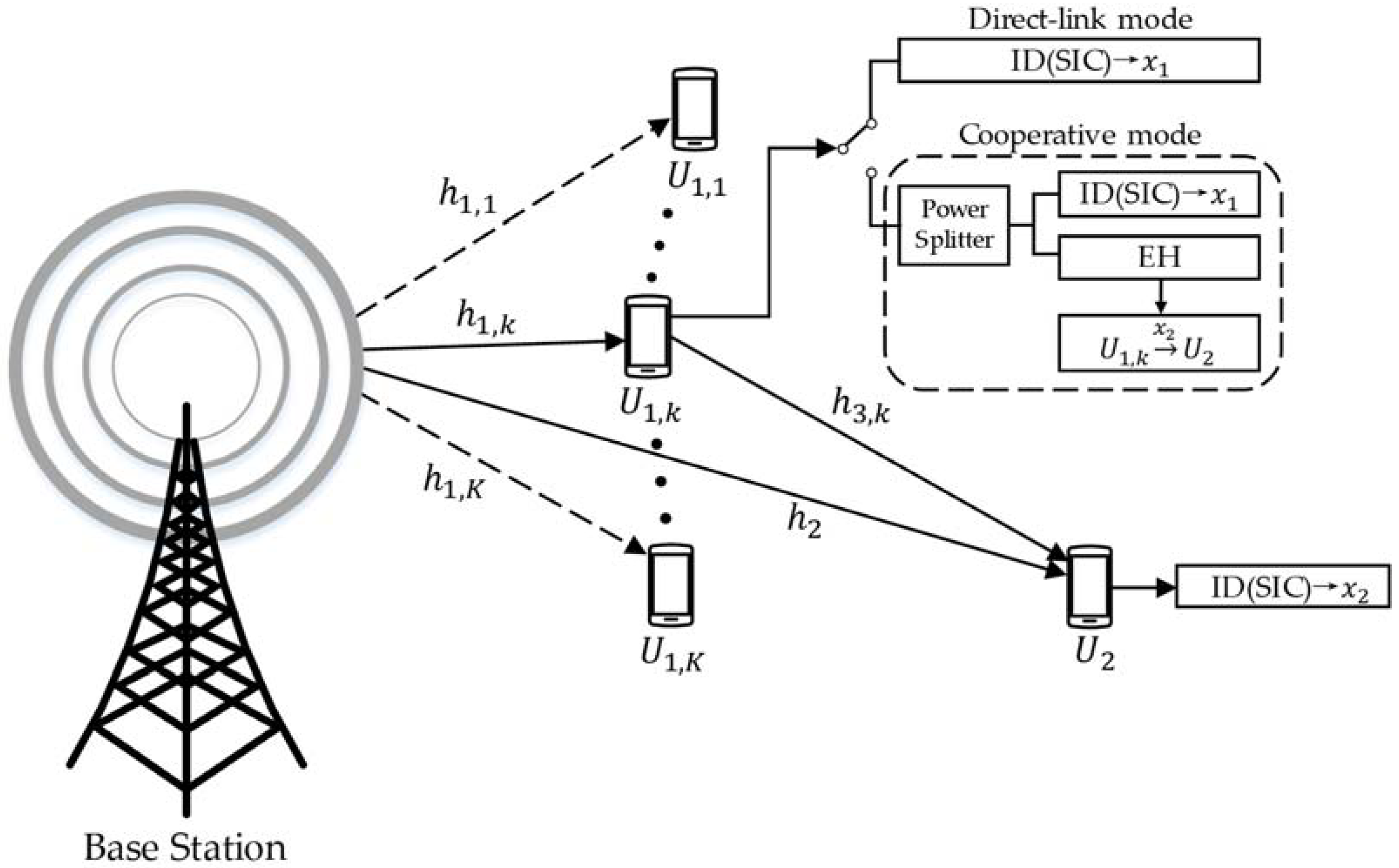
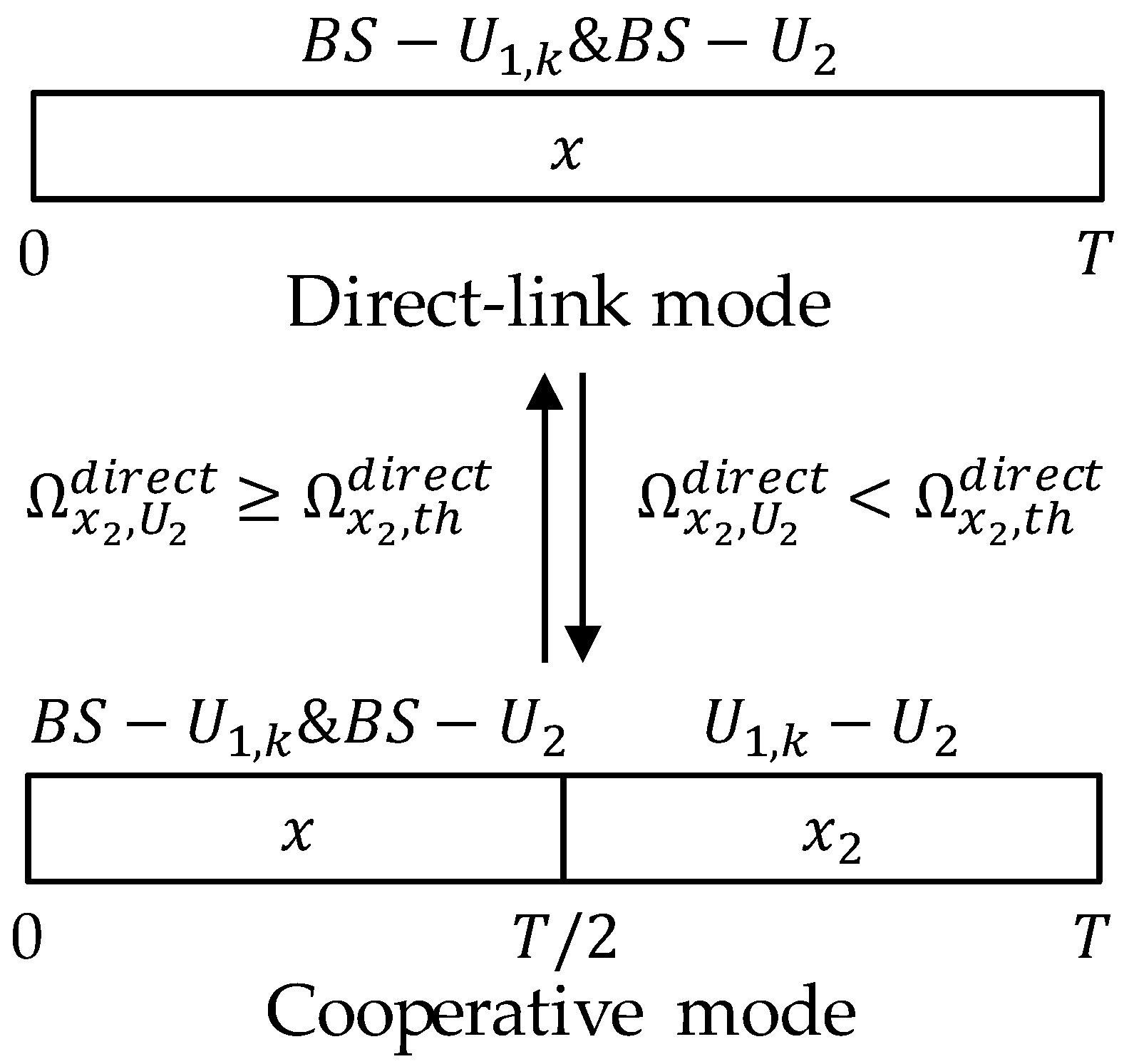
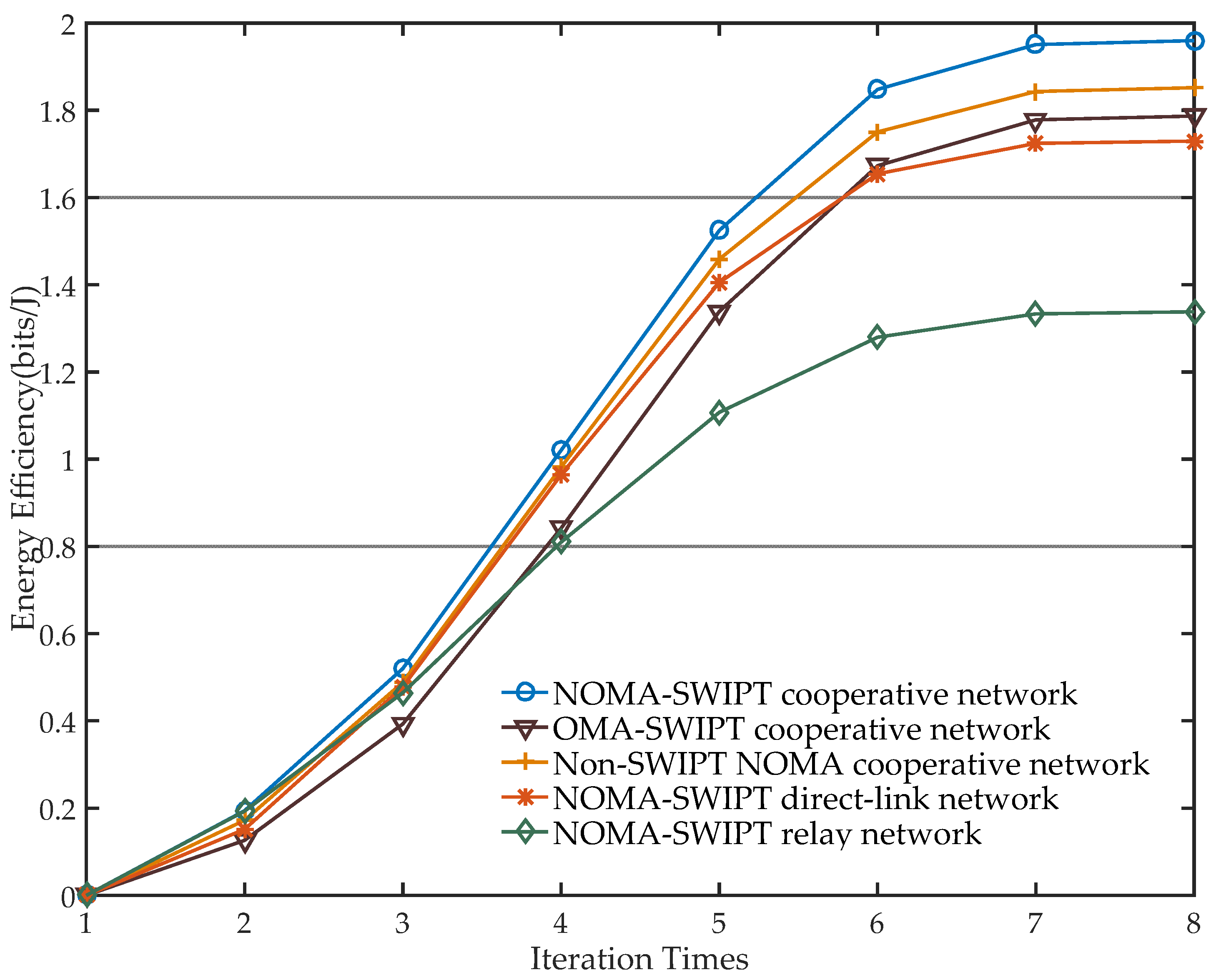
In order to improve the energy efficiency (EE) performance of cooperative networks, this study combines non-orthogonal multiple access (NOMA) with simultaneous wireless information and power transfer (SWIPT) technologies to construct a cooperative relay network composed of one base station (BS), multiple near users, and one far user. Based on the network characteristics, a time-division resource allocation rule is proposed, and EE formulas regarding direct-link mode and cooperative mode are derived. Considering user selection and decoding performance, to obtain the optimal EE, this study utilizes a DinkelBach iterative algorithm based on the golden section (GS-DinkelBach) to solve the EE optimization problem, which is affected by power transmitted from the BS, achievable rates under three communication links, and quality of service (QoS) constraints of users. The simulation results show that the GS-DinkelBach algorithm can obtain precise EE gains with low computational complexity. Compared with the traditional NOMA–SWIPT direct-link network model and the relay network model, the optimal EE of the established network model could be increased by 0.54 dB and 1.66 dB, respectively.
Keywords: simultaneous wireless information and power transfer (SWIPT); non-orthogonal multiple access (NOMA); cooperative network; energy efficiency (EE) simultaneous wireless information and power transfer (SWIPT); non-orthogonal multiple access (NOMA); cooperative network; energy efficiency (EE)