Article

Characterization of Degenerate Configurations in Attitude Determination of Three-Vehicle Heterogeneous Formations

1
Laboratory for Robotics and Engineering Systems, Institute for Systems and Robotics, 1049-001 Lisboa, Portugal
2
Instituto Superior Técnico, Universidade de Lisboa, 1049-001 Lisboa, Portugal
*
Author to whom correspondence should be addressed.
Sensors 2021, 21(14), 4631; https://doi.org/10.3390/s21144631
Submission received: 11 June 2021 / Revised: 30 June 2021 / Accepted: 1 July 2021 / Published: 6 July 2021
(This article belongs to the Special Issue Attitude Estimation Based on Data Processing of Sensors)

Abstract

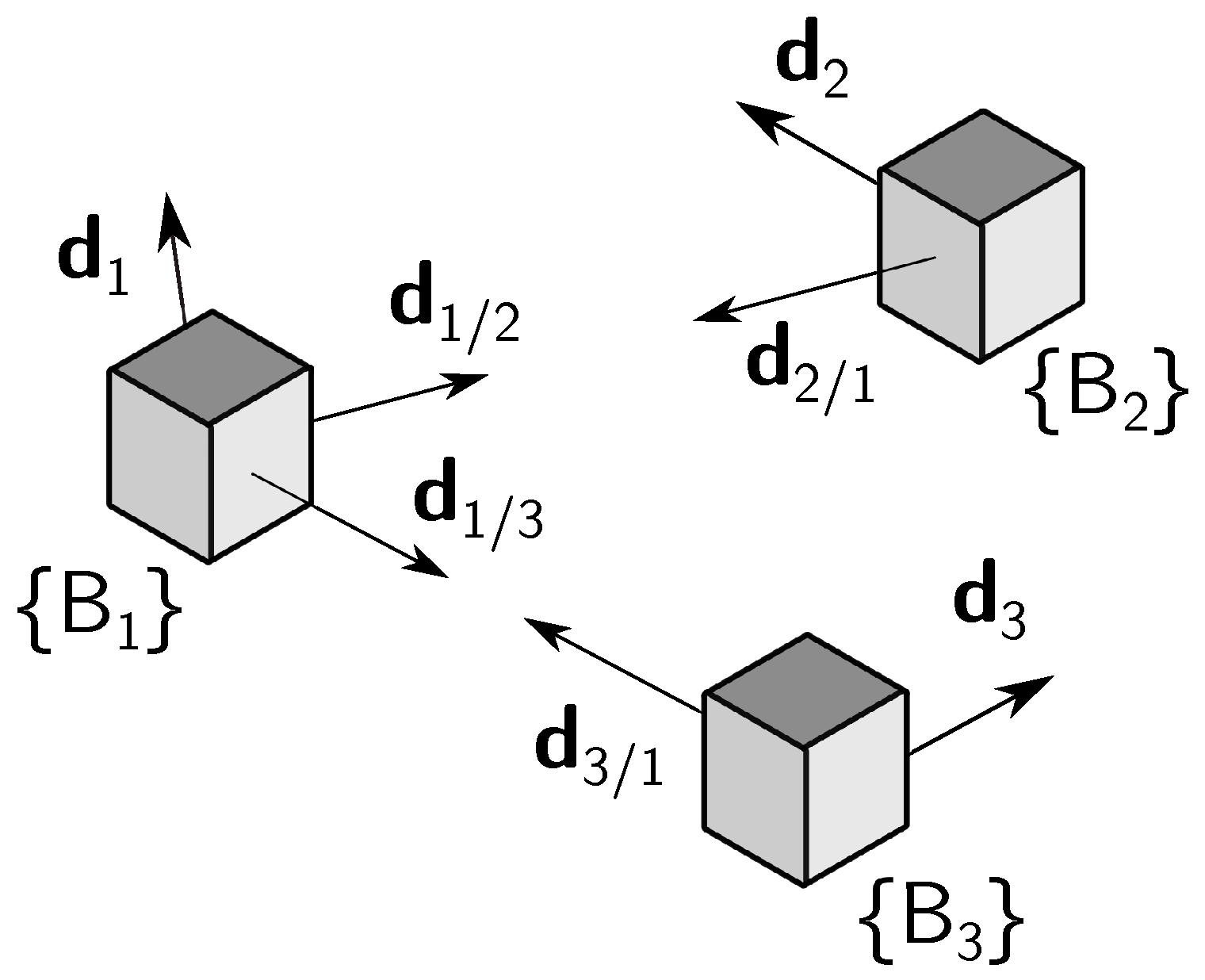
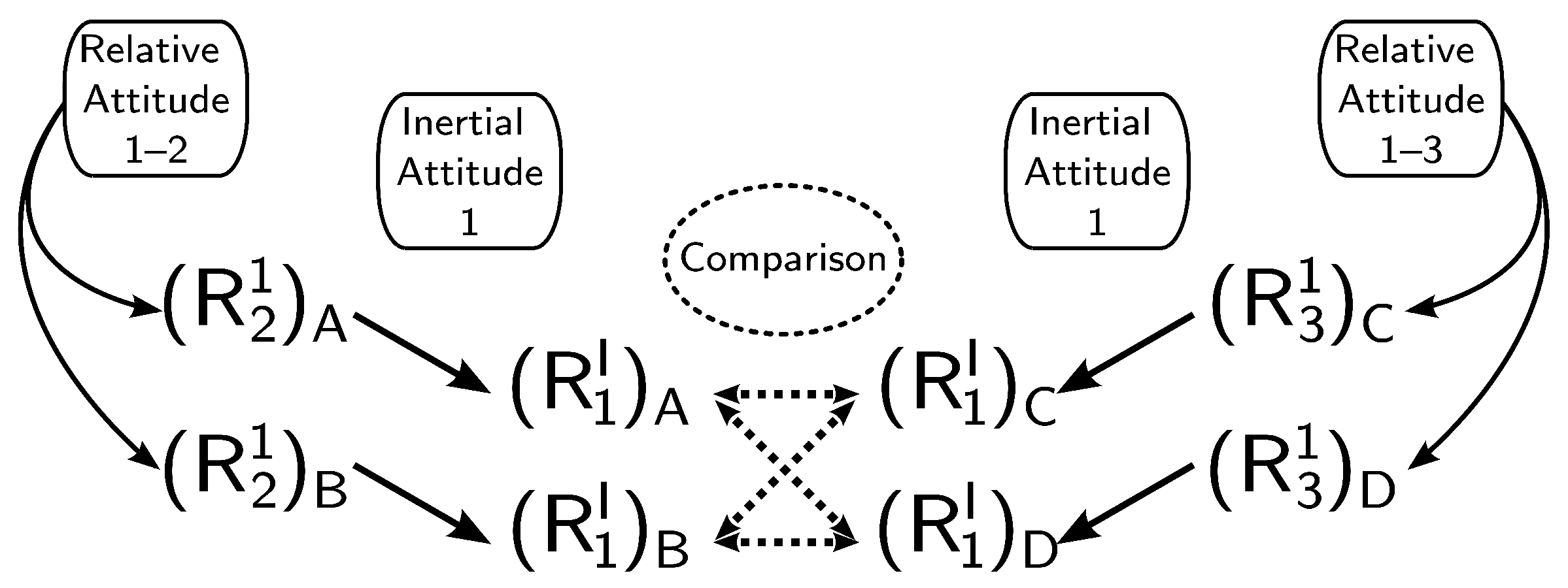
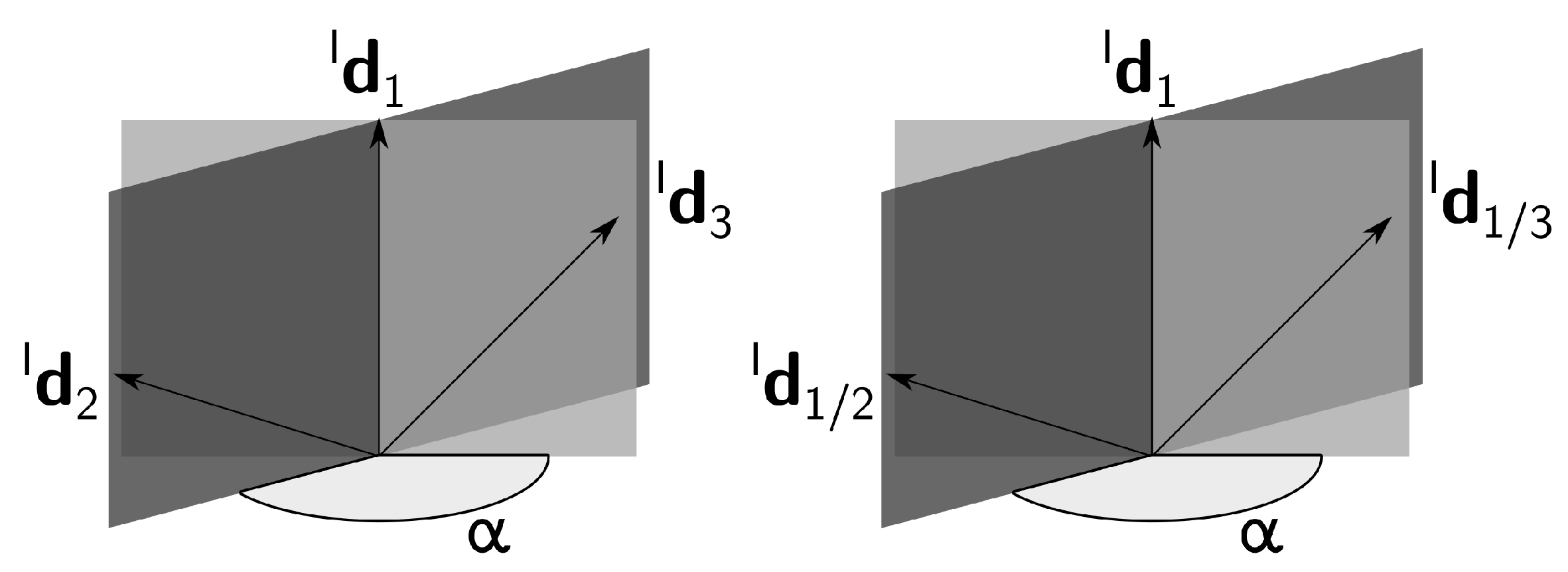
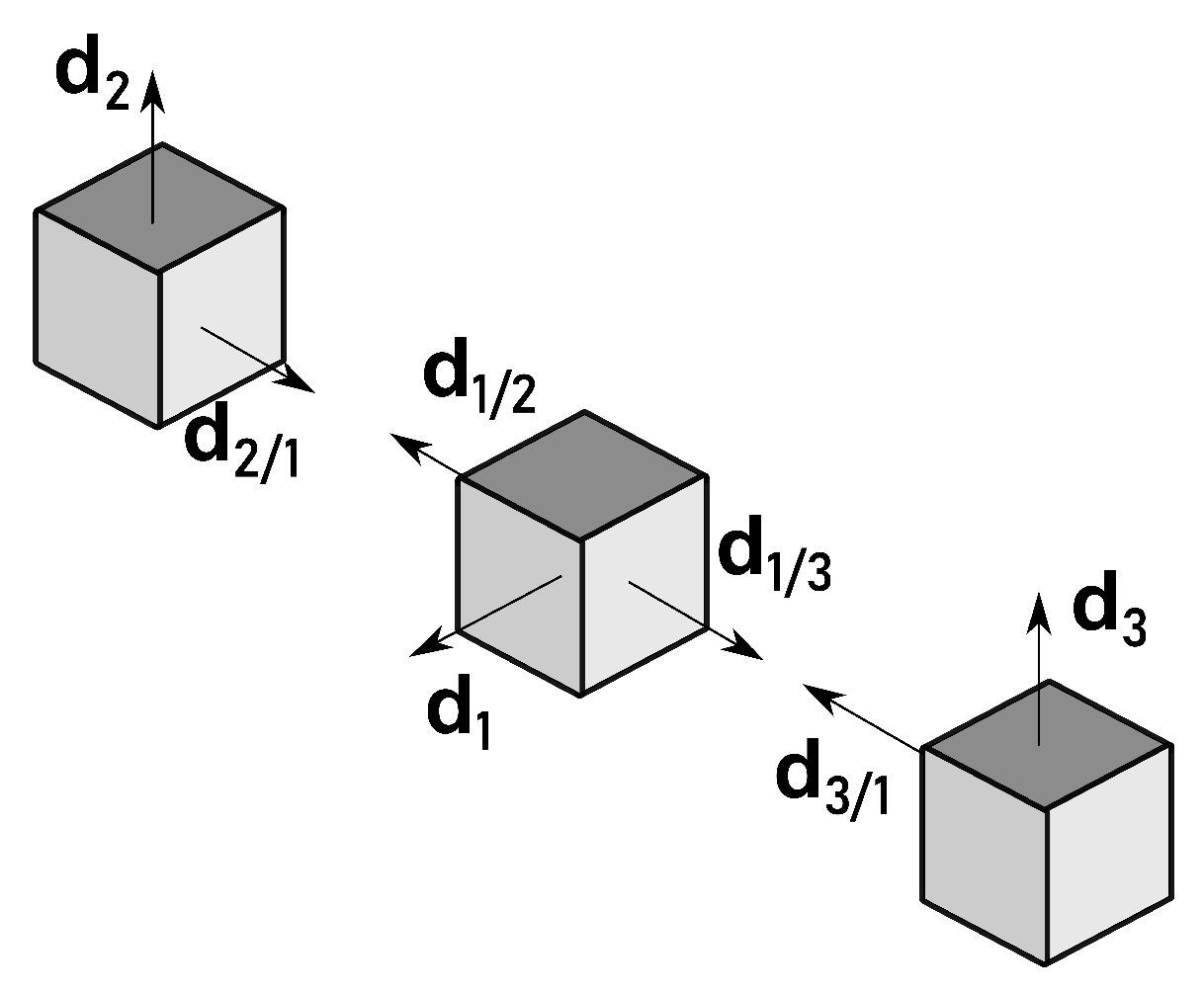
The existence of multiple solutions to an attitude determination problem impacts the design of estimation schemes, potentially increasing the errors by a significant value. It is therefore essential to identify such cases in any attitude problem. In this paper, the cases where multiple attitudes satisfy all constraints of a three-vehicle heterogeneous formation are identified. In the formation considered herein, the vehicles measure inertial references and relative line-of-sight vectors. Nonetheless, the line of sight between two elements of the formation is restricted, and these elements are denoted as deputies. The attitude determination problem is characterized relative to the number of solutions associated with each configuration of the formation. There are degenerate and ambiguous configurations that result in infinite or exactly two solutions, respectively. Otherwise, the problem has a unique solution. The degenerate configurations require some collinearity between independent measurements, whereas the ambiguous configurations result from symmetries in the formation measurements. The conditions which define all such configurations are determined in this work. Furthermore, the ambiguous subset of configurations is geometrically interpreted resorting to the planes defined by specific measurements. This subset is also shown to be a zero-measure subset of all possible configurations. Finally, a maneuver is simulated to illustrate and validate the conclusions. As a result of this analysis, it is concluded that, in general, the problem has one attitude solution. Nonetheless, there are configurations with two or infinite solutions, which are identified in this work.
Keywords: attitude determination; formation of vehicles; heterogeneous formation; ambiguous solution; degenerate solution attitude determination; formation of vehicles; heterogeneous formation; ambiguous solution; degenerate solution