Thermal Model and Countermeasures for Future Smart Glasses †


Abstract
1. Introduction
2. Physical Structural Model of Smart Glasses
2.1. Overview of Smart Glasses
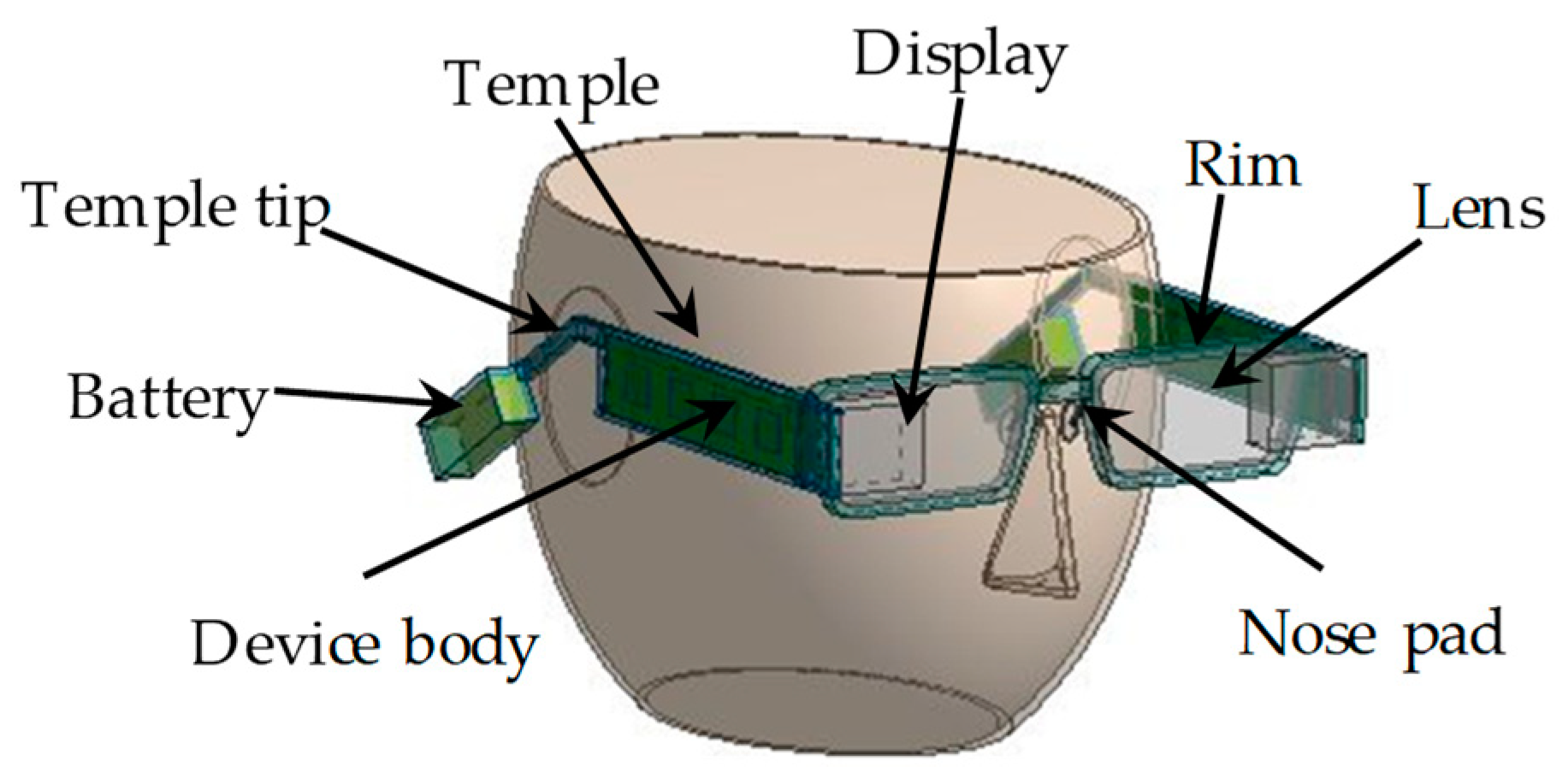
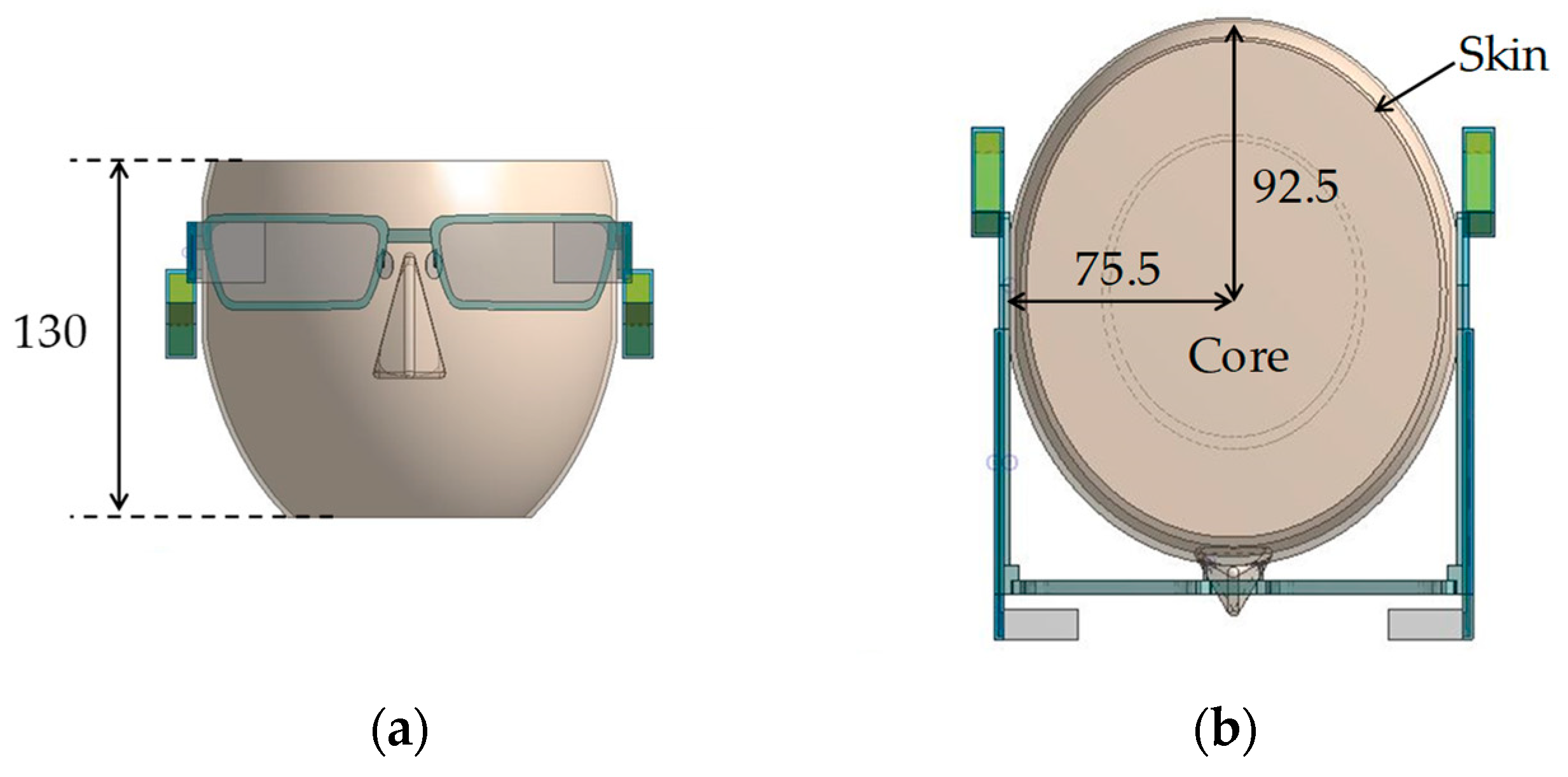
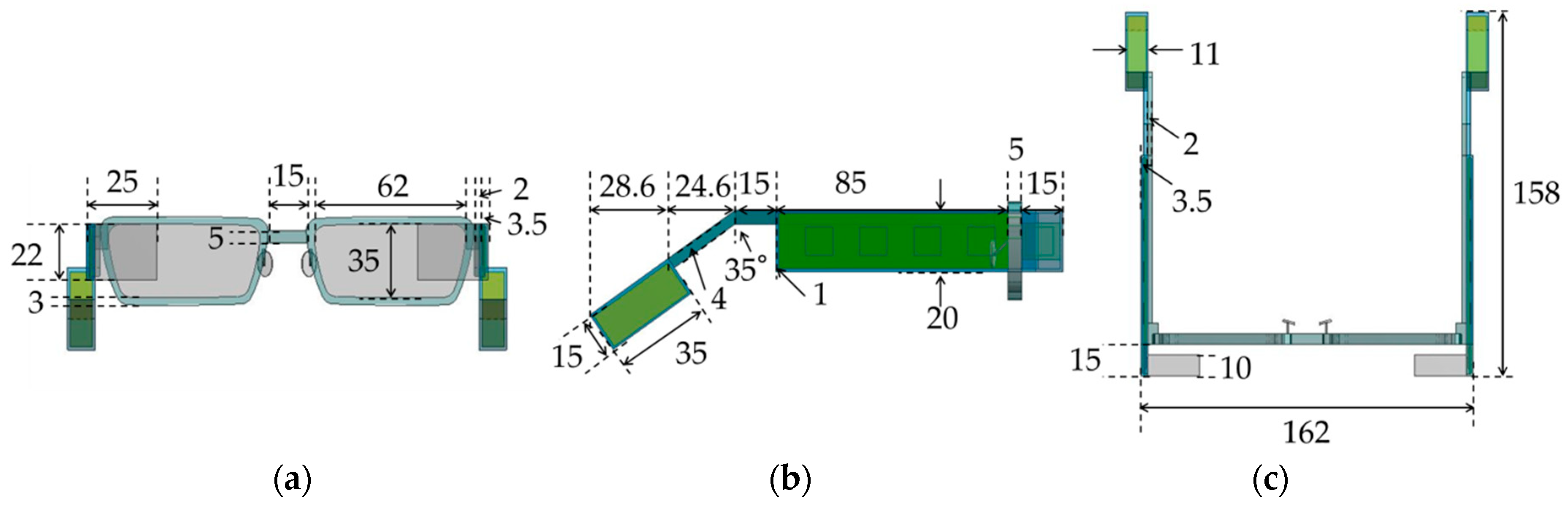
2.2. Structure of Smart Glasses
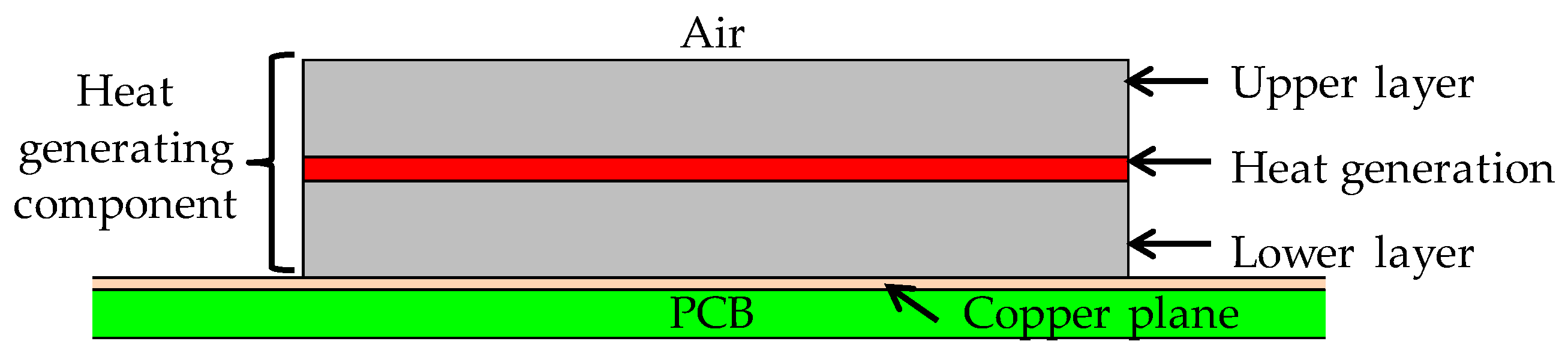
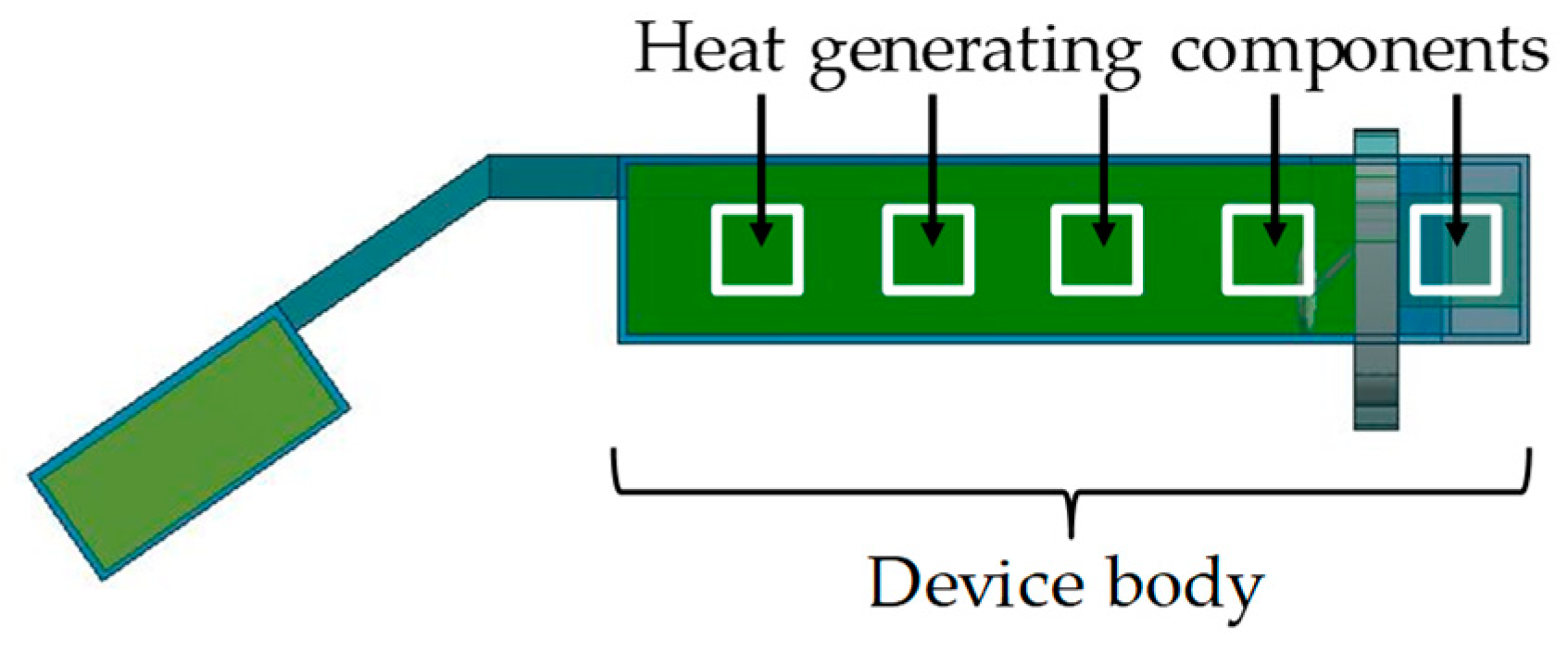
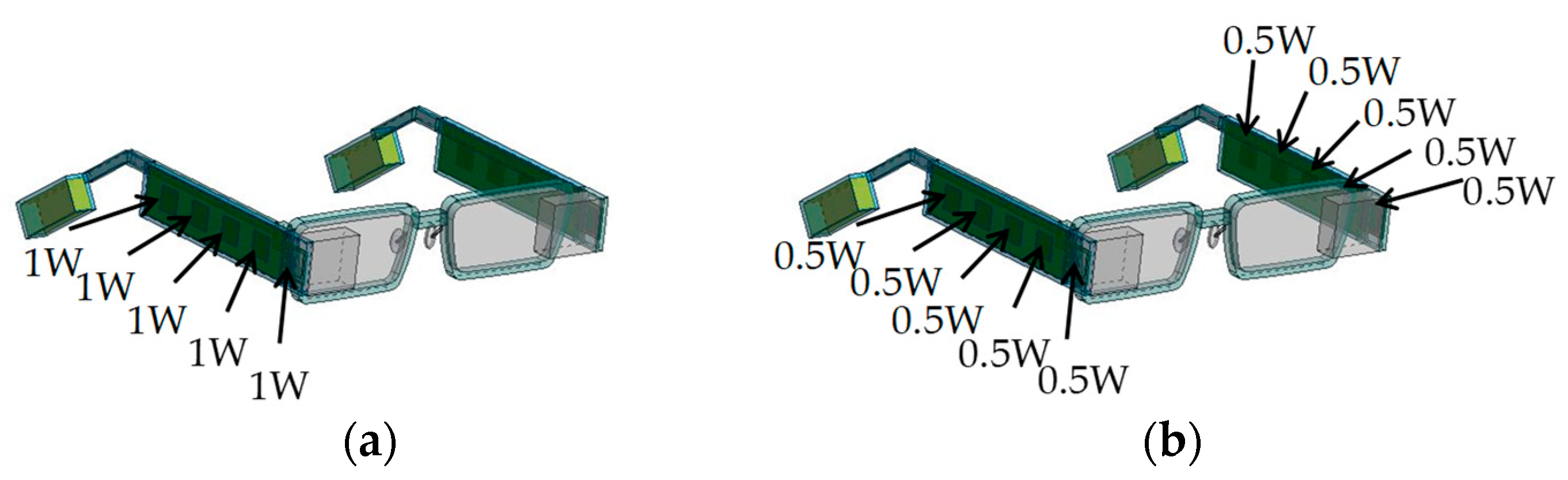
2.3. Heat Generating Components
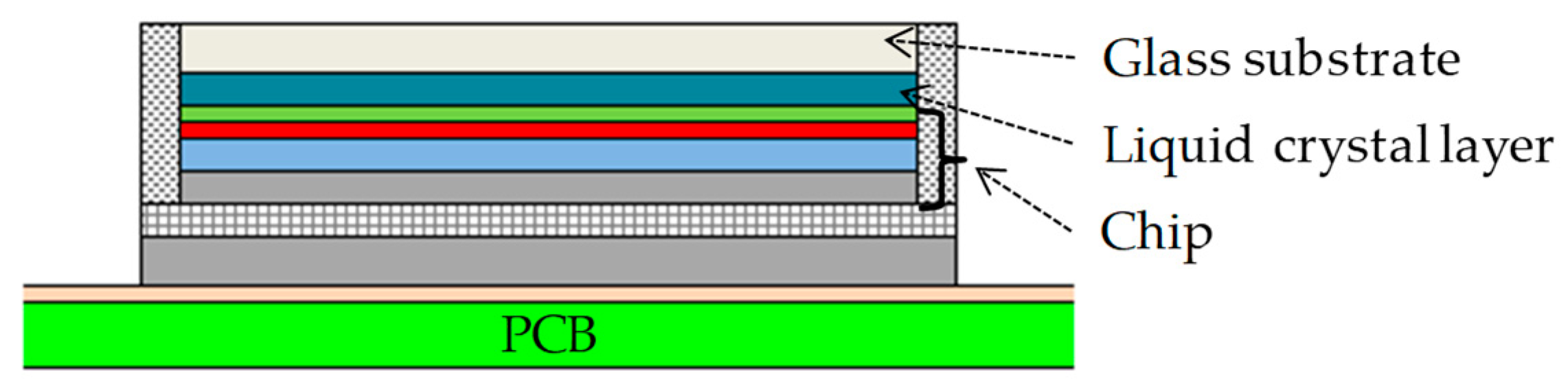
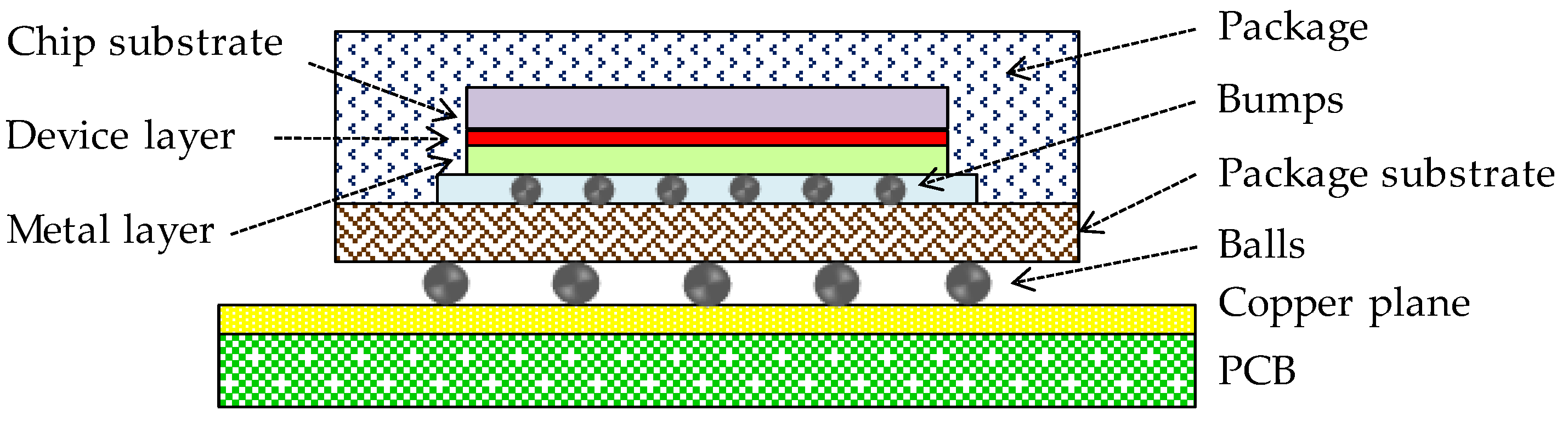
2.4. Structures and Materials of Components
3. Thermal Network Model
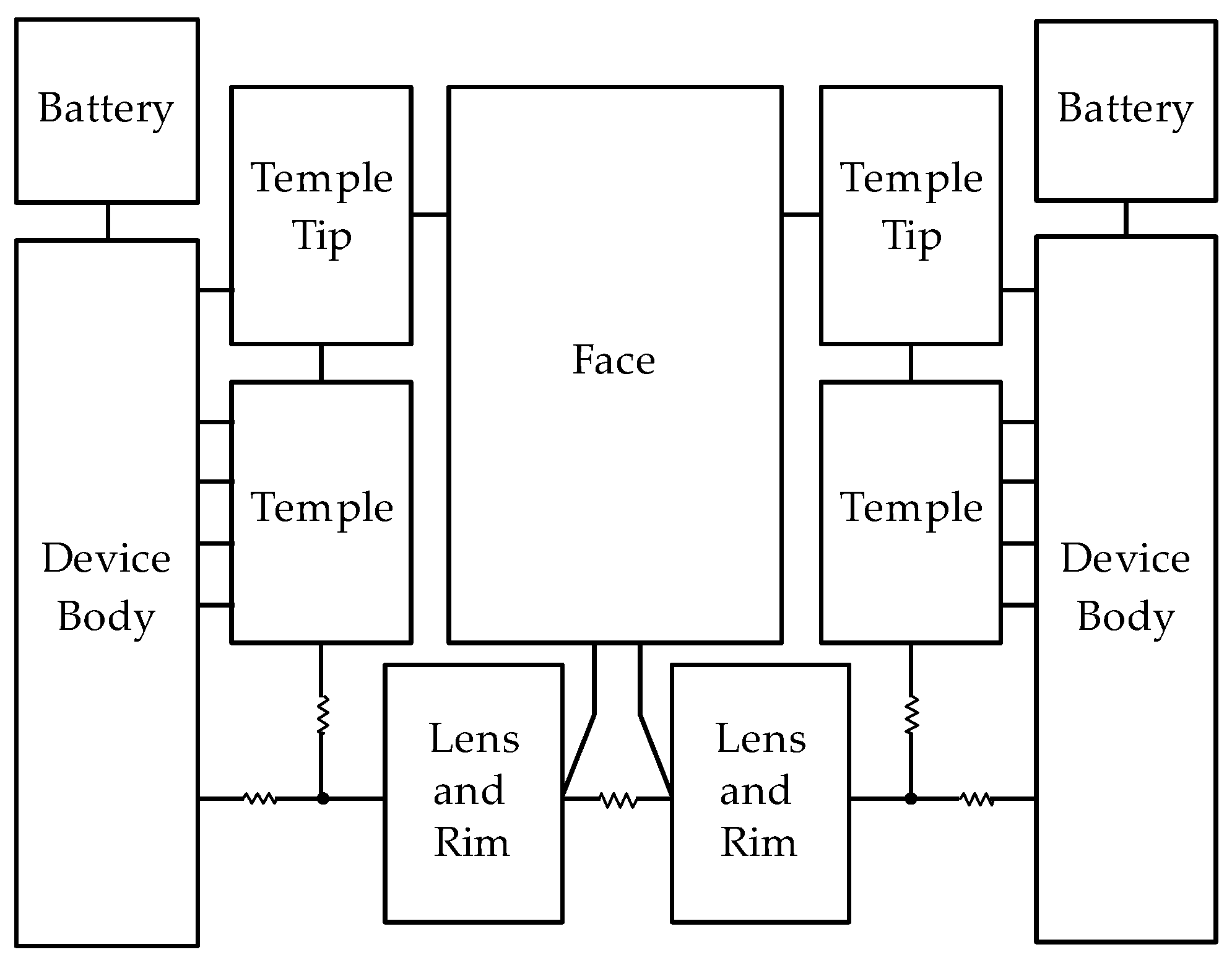
3.1. Block Diagram for Entire Thermal Network
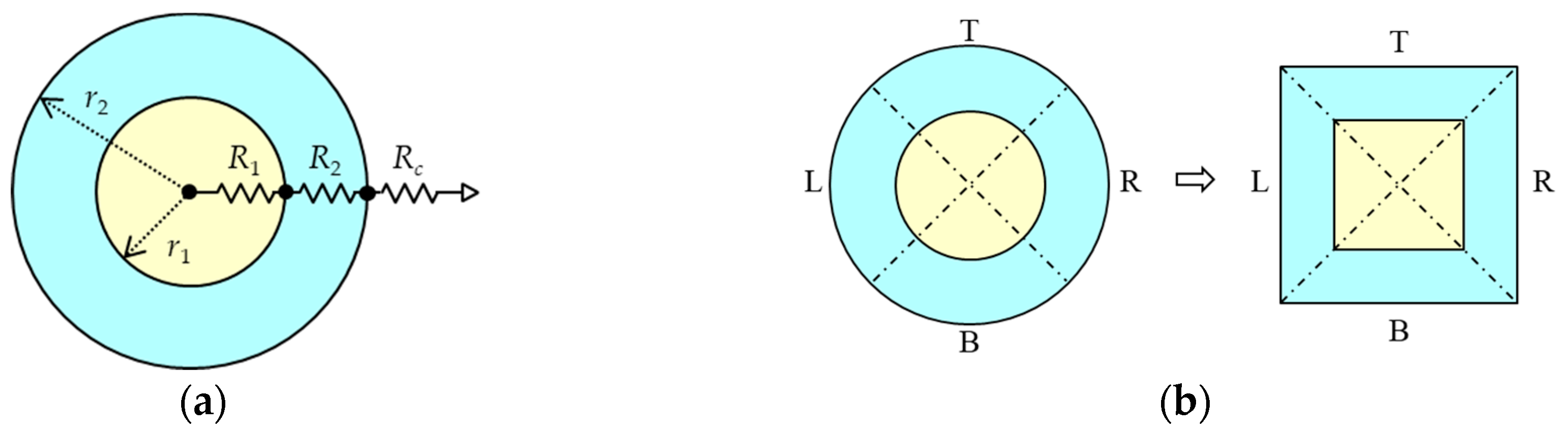
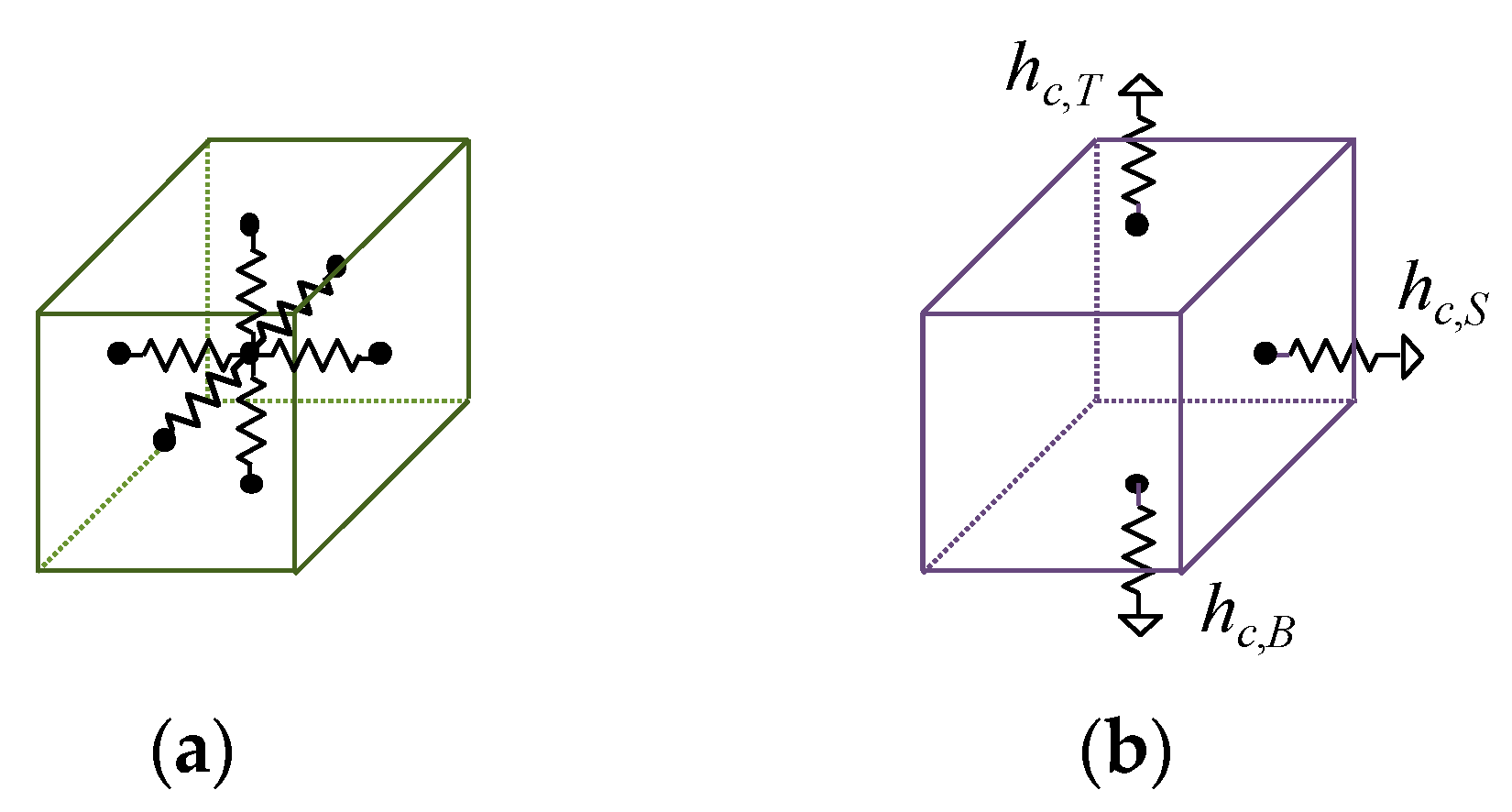
3.2. Basic Thermal Resistance Model
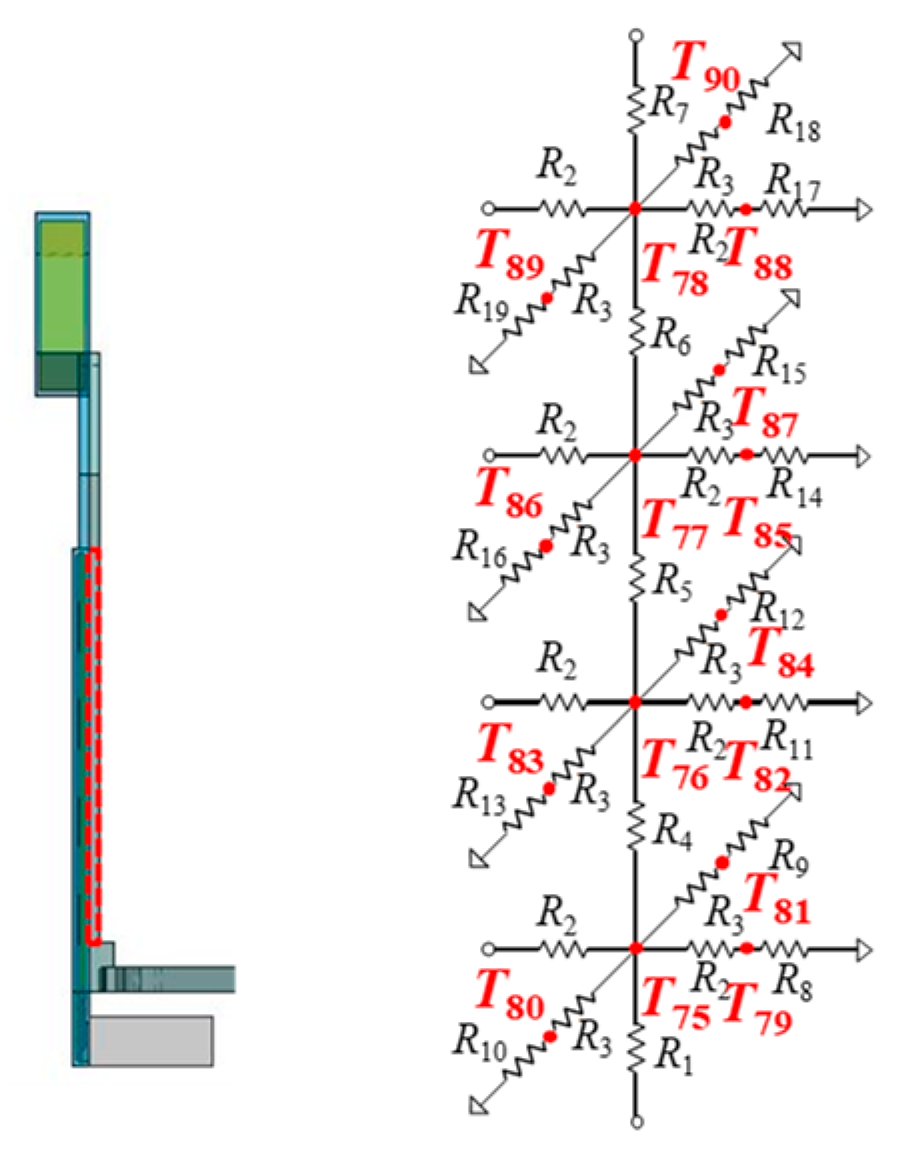
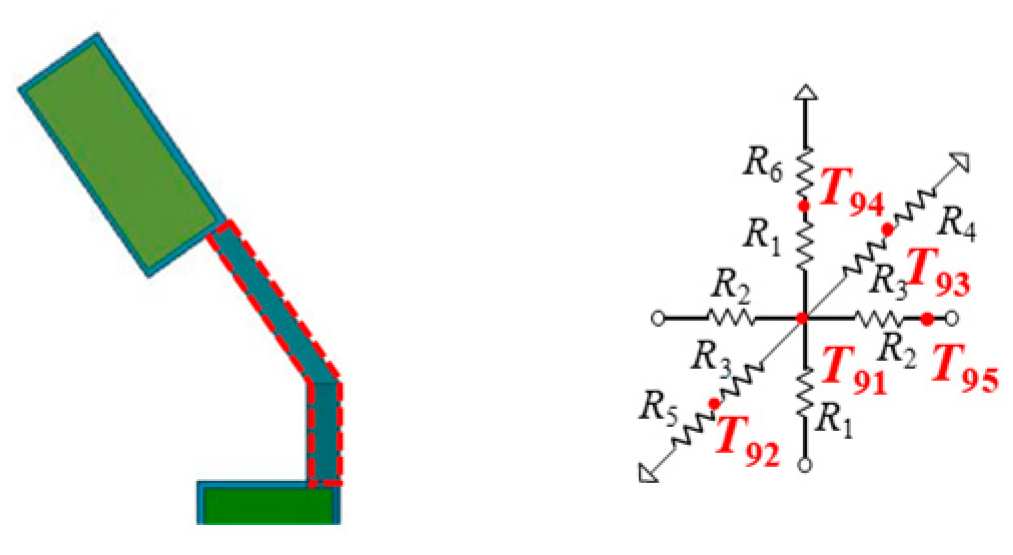
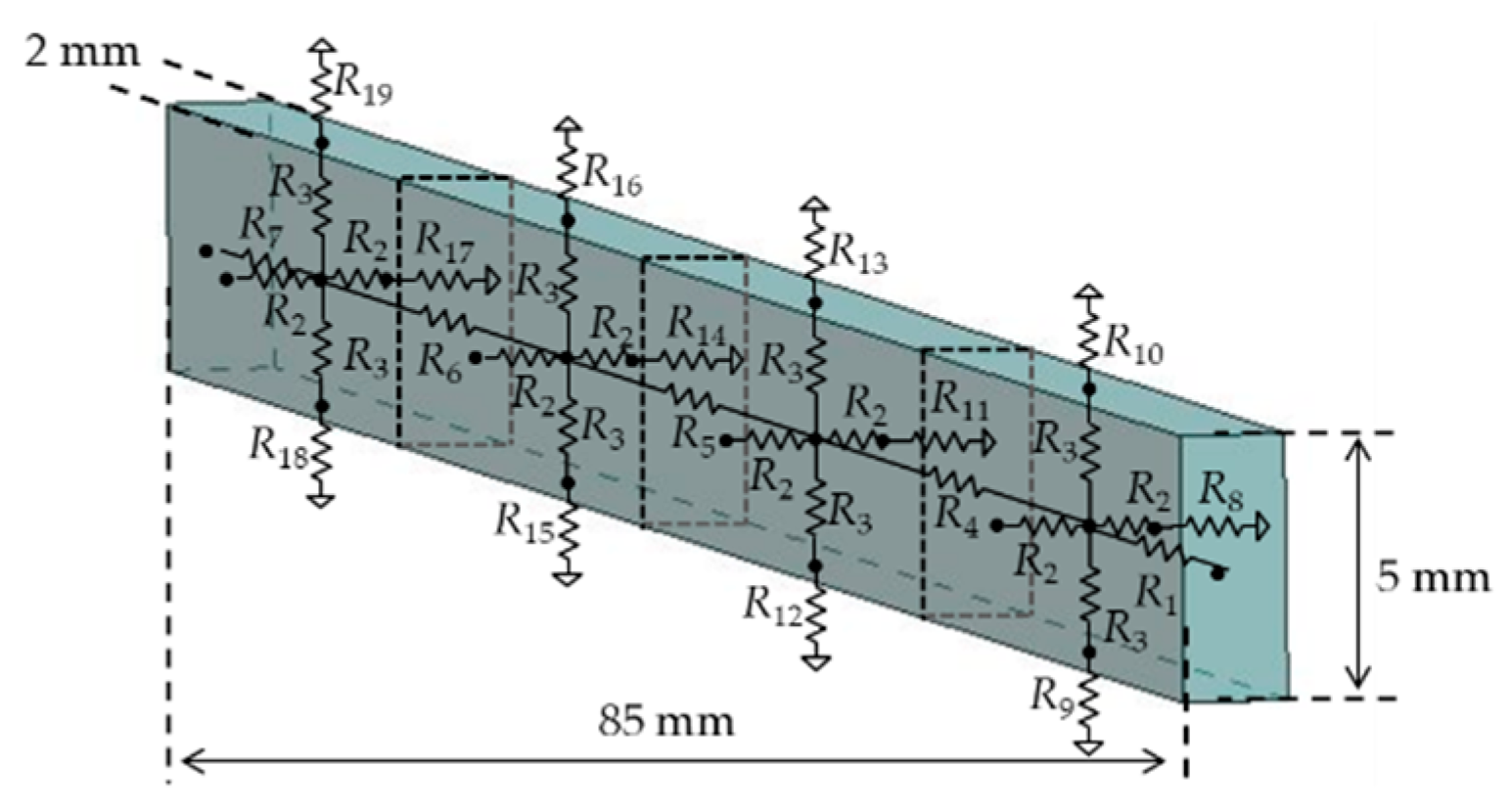
3.3. Thermal Model of the Temple
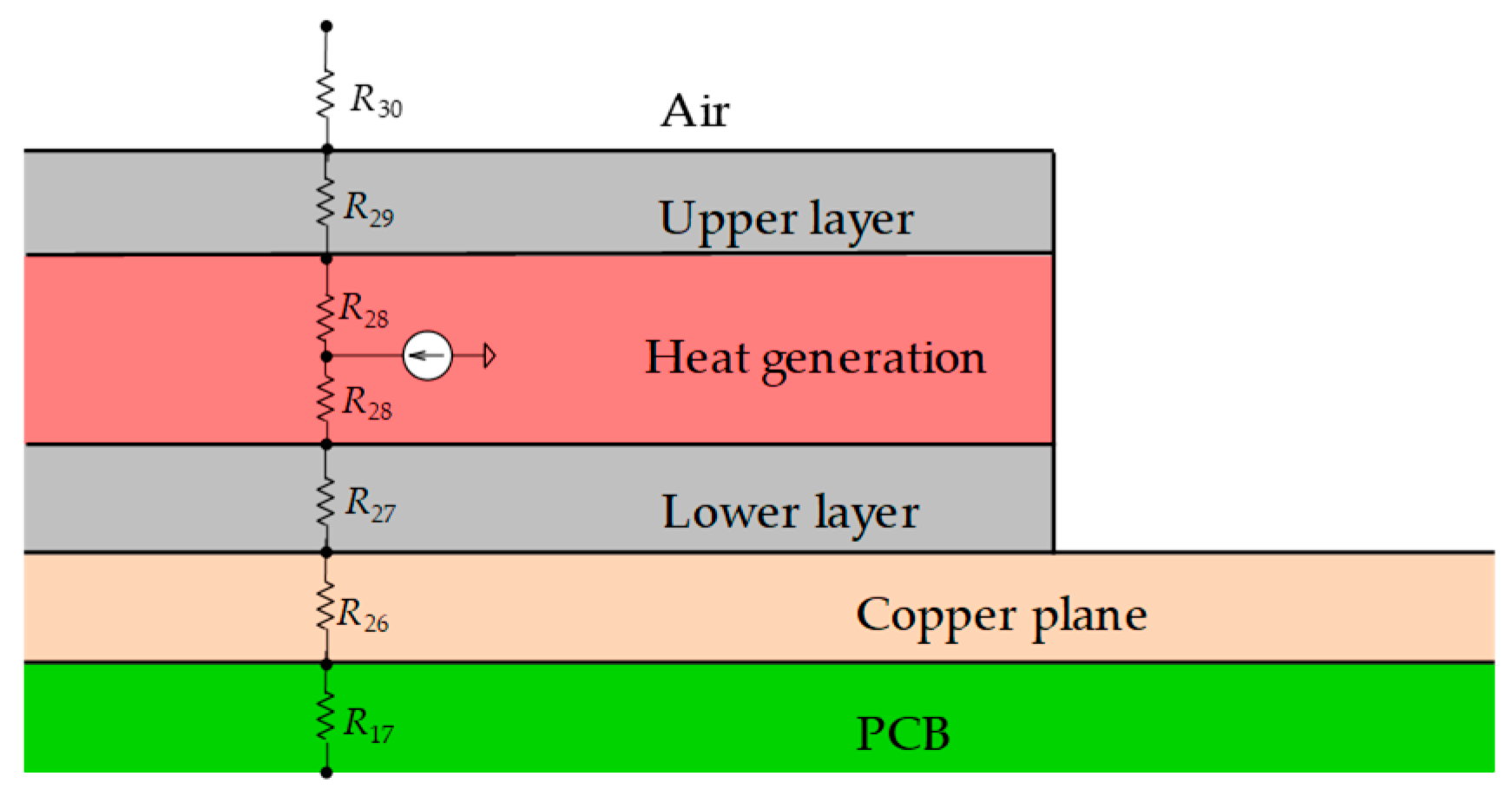
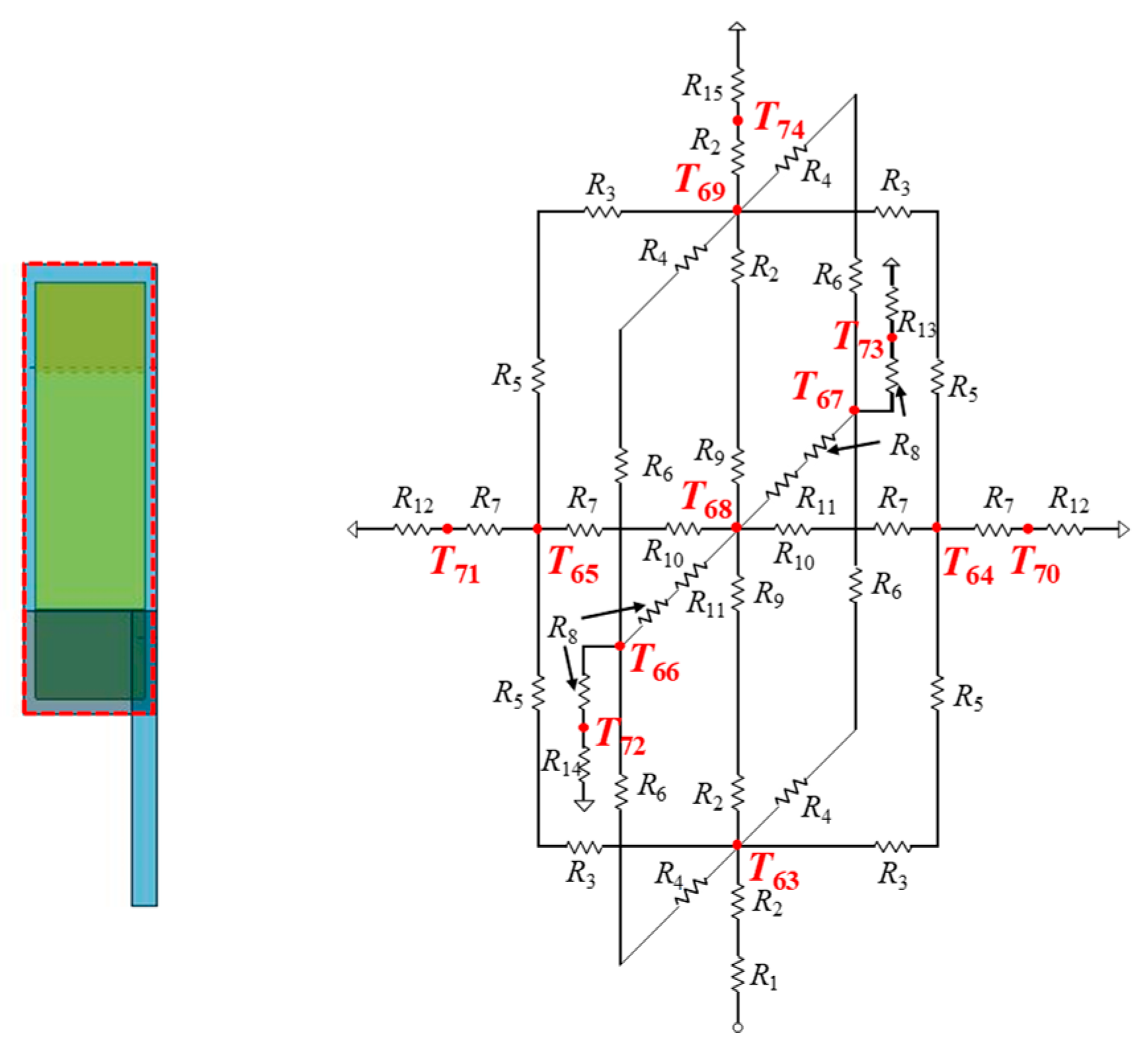
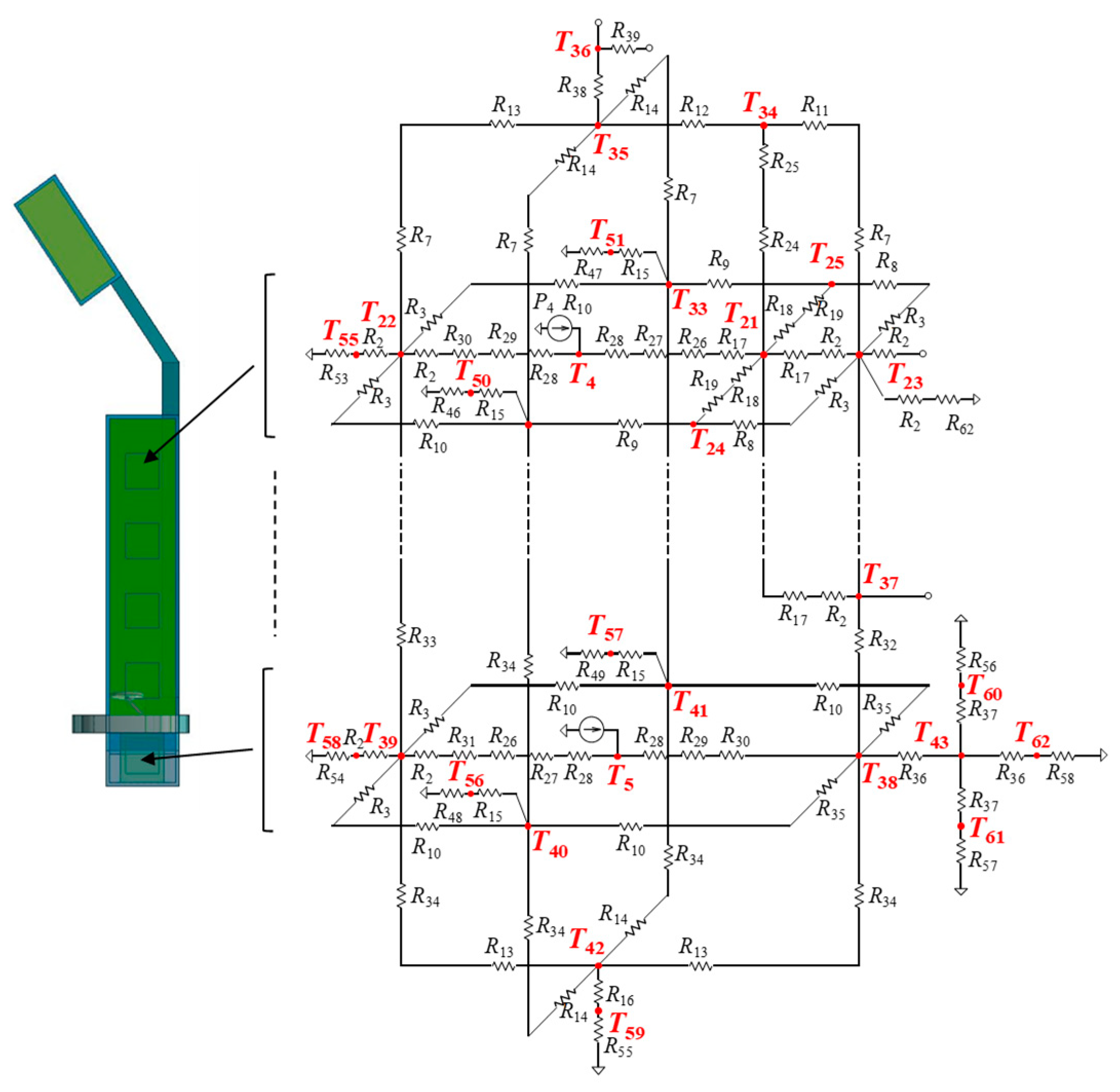
3.4. Thermal Model of Electronic Device Body
3.5. Thermal Model of Temple Tip
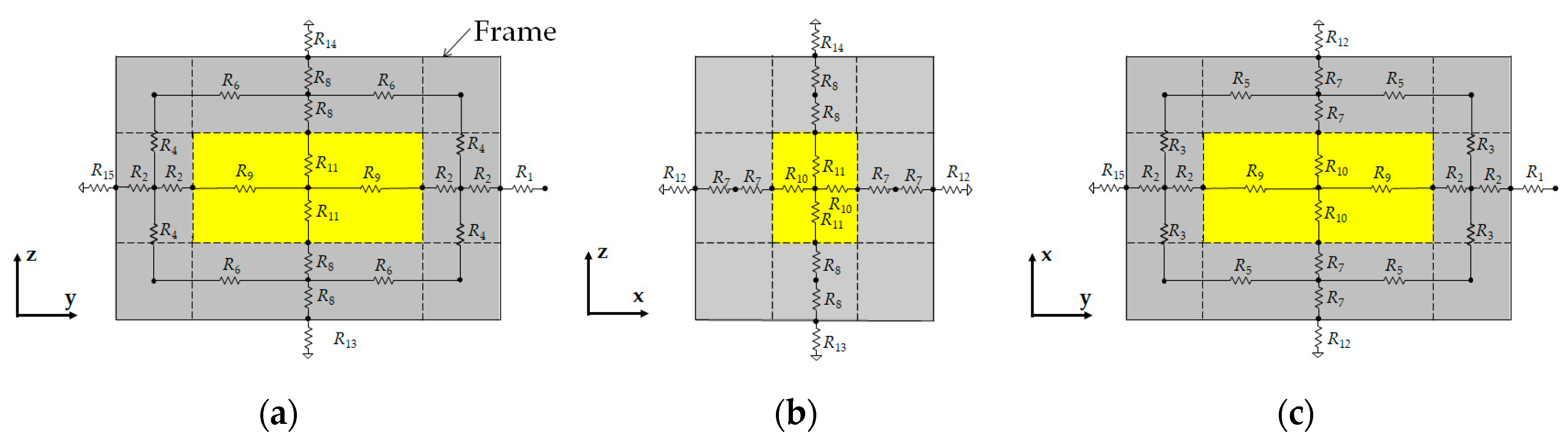
3.6. Thermal Model of Battery
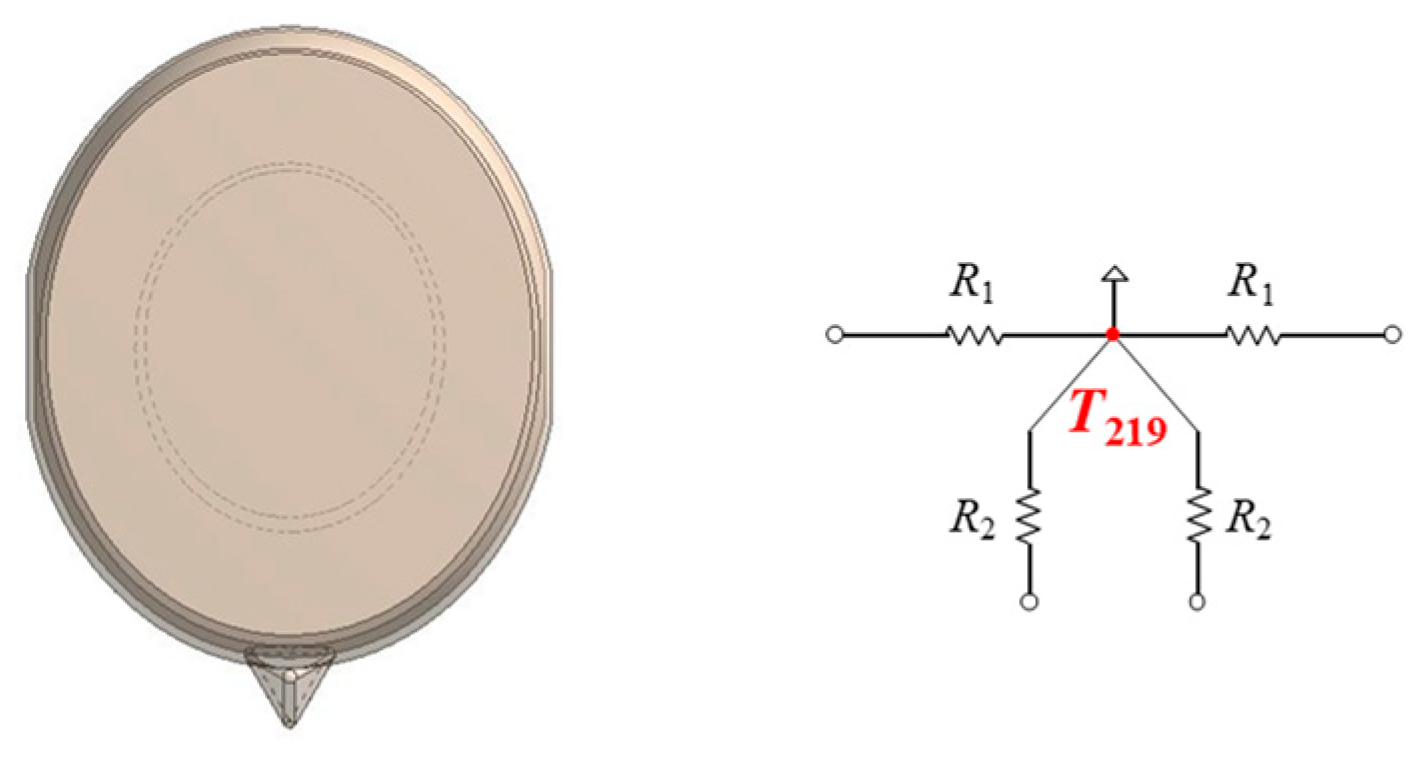
3.7. Thermal Model of Lens and Rim
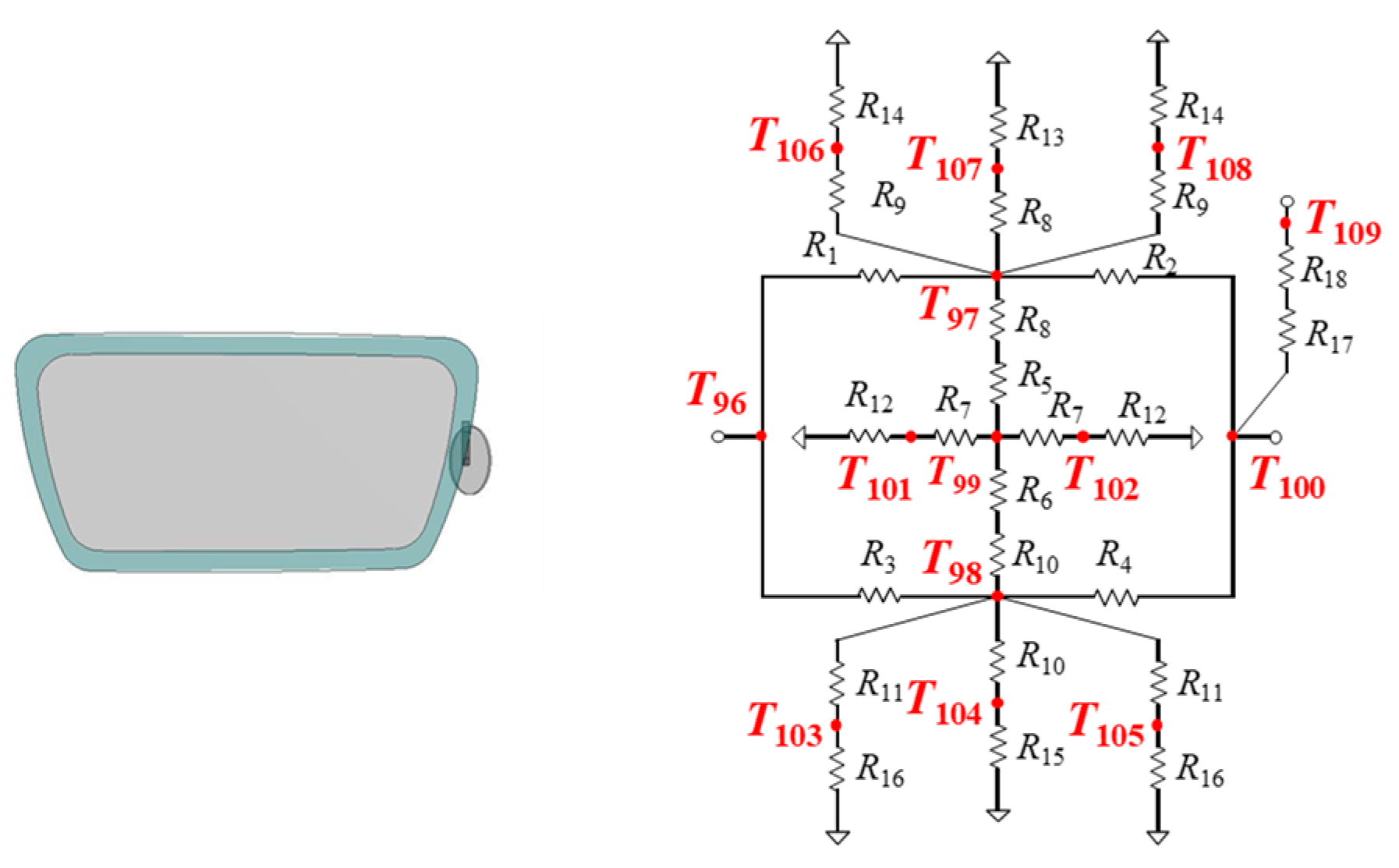
3.8. Thermal Model of the Face Part
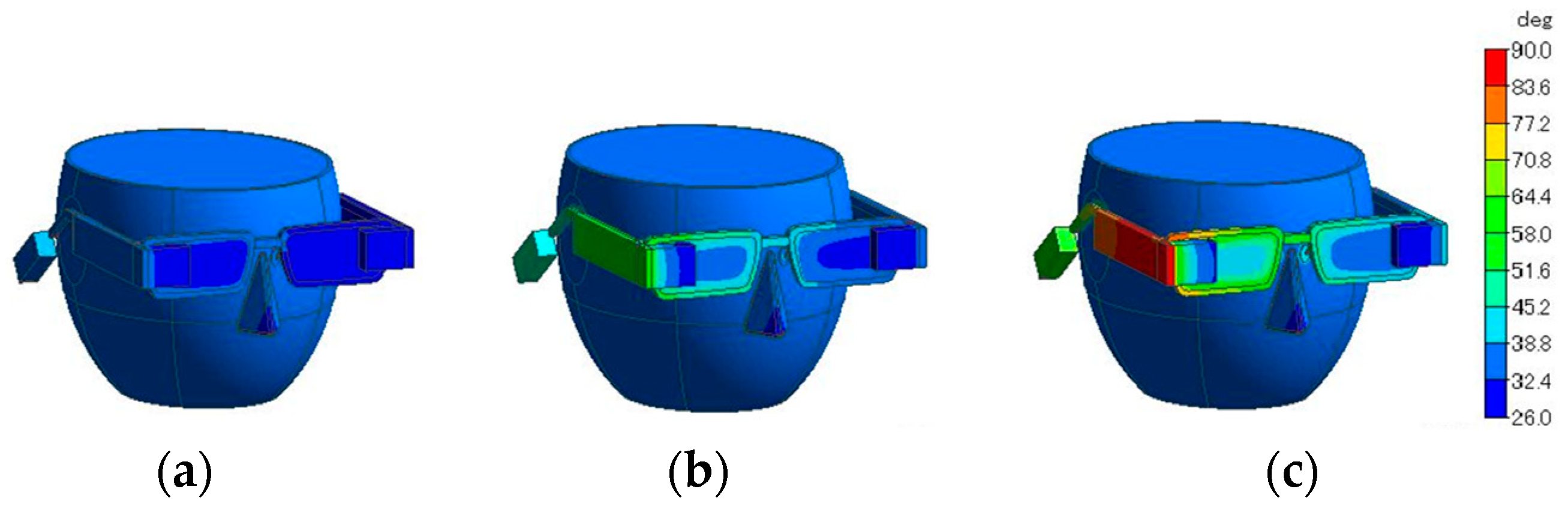
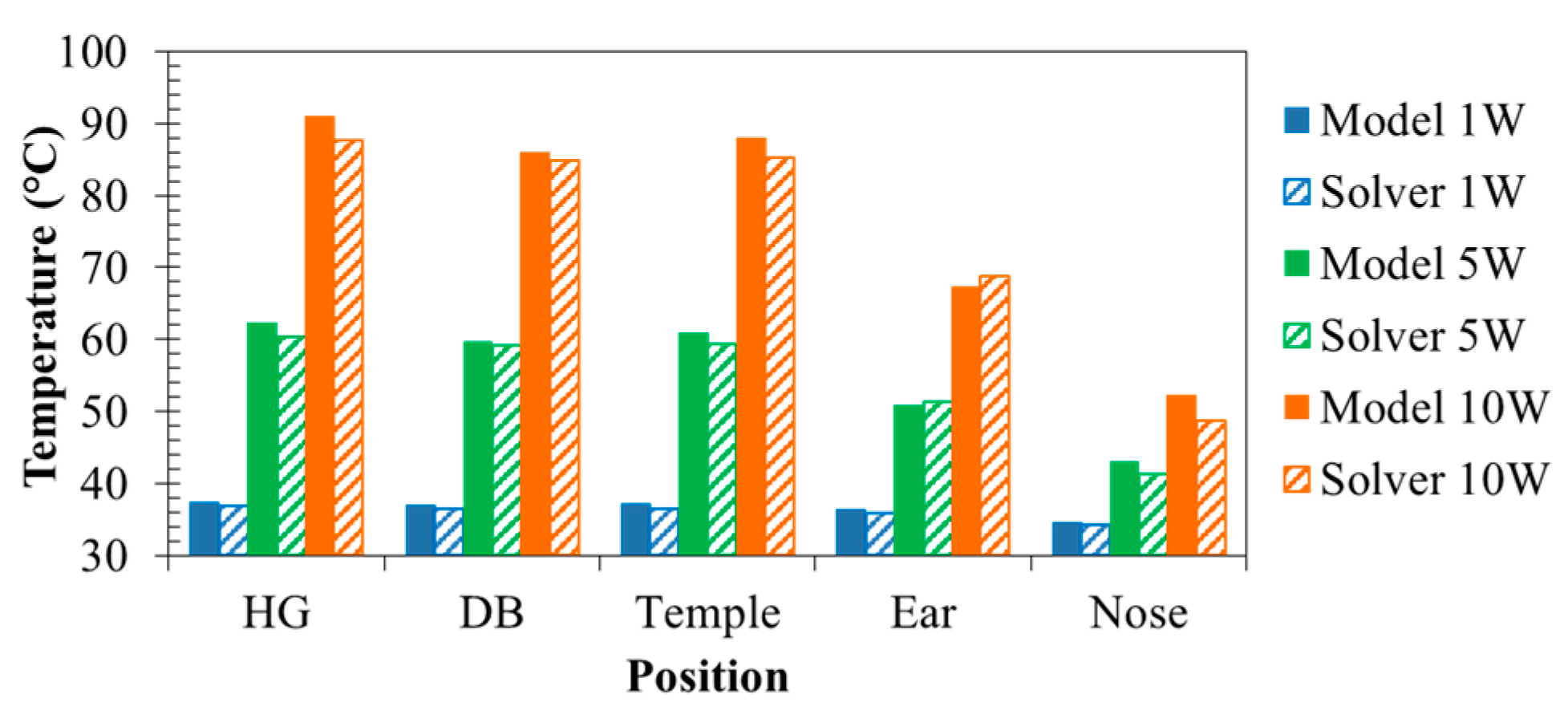
4. Experimental Results
5. Discussions
5.1. Validity of Thermal Network Model
5.2. Advantages of Thermal Network Model
6. Conclusions
Author Contributions
Acknowledgments
Conflicts of Interest
References
- Lee, L.-H.; Hui, P. Interaction methods for smart glasses: A survey. IEEE Access 2018, 6, 28712–28732. [Google Scholar] [CrossRef]
- Syberfeldt, A.; Danielsson, O.; Gustavsson, P. Augmented reality smart glasses in the smart factory: Product evaluation guidelines and review of available products. IEEE Access 2017, 5, 9118–9130. [Google Scholar] [CrossRef]
- Amft, O.; Wahl, F.; Ishimaru, S.; Kunze, K. Making regular eyeglasses smart. Pervasive Comput. 2015, 14, 32–43. [Google Scholar] [CrossRef]
- Rallapalli, S.; Ganesan, A.; Chintalapudi, K.; Padmanabhan, V.N.; Qiu, L. Enabling physical analytics in retail stores using smart glasses. In Proceedings of the 20th Annual International Conference on Mobile Computing and Networking (MobiCom’14), Maui, HI, USA, 7–11 September 2014; pp. 115–126. [Google Scholar]
- Niemöller, C.; Metzger, D.; Fellmann, M.; Thomas, D. Shaping the future of mobile service support systems—Ex-ante evaluation of smart glasses in technical customer service processes. In Proceedings of the INFORMATIC 2016, Klagenfurt, Austria, 26–30 September 2016; pp. 753–767. [Google Scholar]
- Klinker, K.; Berkemeier, L.; Zobel, B.; Wüller, H.; Huck-Fries, V.; Wiesche, M.; Remmers, H.; Thomas, O.; Krcmar, H. Structure for innovations: A use case taxonomy for smart glasses in service processes. In Proceedings of the Multikonferenz Wirtschaftsinformatik 2018, Luneburg, Germany, 6–9 March 2018; pp. 1599–1610. [Google Scholar]
- Due, B.L. The future of smart glasses: An essay about challenges and possibilities with smart glasses. Work. Pap. Interact. Commun. 2014, 1, 1–21. [Google Scholar]
- Mitrasinovic, S.; Camacho, E.; Trivedi, N.; Logan, J.; Campbel, C.; Zilinyi, R.; Lieber, B.; Bruce, E.; Taylor, B.; Martineau, D.; et al. Clinical and surgical applications of smart glasses. Technol. Health Care 2015, 23, 381–401. [Google Scholar] [CrossRef]
- Schaer, R.; Melly, T.; Muller, H.; Widmer, A. Using smart glasses in medical emergency situations, a qualitative pilot study. In Proceedings of the 2016 IEEE Wireless Health (WH), Bethesda, MD, USA, 25–27 October 2016; pp. 54–58. [Google Scholar]
- Follmann, A.; Ohligs, M.; Hochhausen, N.; Beckers, S.K. Technical support by smart glasses during a mass casualty incident: A randomized controlled simulation trial on technically assisted triage and telemedical app use in disaster medicine. J. Med. Internet Res. 2019, 21, 1–10. [Google Scholar] [CrossRef]
- Yi, S.; Qin, Z.; Novak, E.; Yin, Y.; Li, Q. GlassGesture: Exploring head gesture interface of smart glasses. In Proceedings of the 35th Annual IEEE International Conference on Computer Communications (INFOCOM), San Francisco, CA, USA, 10–14 April 2016; pp. 1–9. [Google Scholar]
- Casado, C.A.; López, M.B.; Holappa, J.; Pietikaïnen, M. Face detection and recognition for smart glasses. In Proceedings of the 2015 International Symposium on Consumer Electronics (ISCE), Madrid, Spain, 24–26 June 2015; pp. 1–2. [Google Scholar]
- Kim, Y.; Kaongoen, N.; Jo, S. Hybrid-BCI smart glasses for controlling electrical devices. In Proceedings of the 54th Annual Conference of the Society of Instrument and Control Engineers of Japan (SICE), Hangzhou, China, 28–30 July 2015; pp. 1162–1166. [Google Scholar]
- Peng, G.; Zhou, G.; Nguyen, D.T.; Qi, X.; Yang, Q.; Wang, S. Continuous authentication with touch behavioral biometrics and voice on wearable glasses. IEEE Trans. Hum. Mach. Syst. 2017, 47, 404–416. [Google Scholar] [CrossRef]
- Ruminski, J.; Bujnowski, A.; Czuszynski, K.; Kocejko, T. Estimation of respiration rate using an accelerometer and thermal camera in eGlasses. In Proceedings of the 2016 Federated Conference on Computer Science and Information Systems (FedCSIS), Gdansk, Poland, 11–14 September 2016; pp. 1431–1434. [Google Scholar]
- Firouzian, A.; Kashimoto, Y.; Asghar, Z.; Keranen, N.; Yamamoto, G.; Pulli, P. Speech interface dialog with smart glasses. In Proceedings of the 2017 15th International Conference on Emerging eLearning Technologies and Applications (ICETA), Stary Smokovec, Slovakia, 26–27 October 2017; pp. 1–6. [Google Scholar]
- Zhao, N.; Aldrich, M.; Reinhart, C.F.; Paradiso, J.A. A multidimensional continuous contextual lighting control system using Google Glass. In Proceedings of the 2nd ACM International Conference on Embedded Systems for Energy-Efficient Built Environments (BuildSys’15), Seoul, Korea, 4–5 November 2015; pp. 235–244. [Google Scholar]
- Spitzer, M.; Nanic, I.; Ebner, M. Distance learning and assistance using smart glasses. Educ. Sci. 2018, 8, 21. [Google Scholar] [CrossRef]
- Zhang, Y.; Hu, W.; Xu, W.; Wen, H.; Chou, C. NaviGlass: Indoor localisation using smart glasses. In Proceedings of the 2016 International Conference on Embedded Wireless Systems and Networks (EWSN), Graz, Austria, 15–17 February 2016; pp. 205–216. [Google Scholar]
- Chang, W.-J.; Chen, L.-B.; Chiou, Y.-Z. Design and implementation of a drowsiness-fatigue-detection system based on wearable smart glasses to increase road safety. IEEE Trans. Consum. Electron. 2018, 64, 461–469. [Google Scholar] [CrossRef]
- Ndibwile, J.D.; Luhanga, E.T.; Fall, D.; Miyamoto, D.; Blanc, G.; Kadobashi, Y. An empirical approach to phishing countermeasures through smart glasses and validation agents. IEEE Access 2019, 7, 130758–130771. [Google Scholar] [CrossRef]
- Ahn, D.H.; Chung, H.; Lee, H.-W.; Kang, K.; Ko, P.-W.; Kim, N.S.; Park, T. Smart gait-aid glasses for parkinson’s disease patients. IEEE Trans. Biomed. Eng. 2017, 64, 2394–2402. [Google Scholar] [CrossRef] [PubMed]
- Kuhn, J.; Lukowicz, P.; Hirth, M.; Poxrucker, A.; Weppner, J.; Younas, J. gPhysics—Using smart glasses for head-centered, context-aware learning in physics experiments. IEEE Trans. Learn. Technol. 2016, 9, 304–317. [Google Scholar] [CrossRef]
- Bai, J.; Lian, S.; Liu, Z.; Wang, K.; Liu, D. Smart guiding glasses for visually impaired people in indoor environment. IEEE Trans. Consum. Electron. 2017, 63, 258–266. [Google Scholar] [CrossRef]
- Yang, M.-D.; Su, T.-C.; Lin, H.-Y. Fusion of infrared thermal image and visible image for 3D thermal model reconstruction using smartphone sensors. Sensors 2018, 18, 2003. [Google Scholar] [CrossRef] [PubMed]
- Gu, M.-J.; Yang, S.; Wu, Y.-C.; Chiu, C.-J.; Chen, Y.-B. Designing a thermal radiation oven for smart phone panels. Inventions 2018, 3, 36. [Google Scholar] [CrossRef]
- Jafari, S.; Nikolaidis, T. Thermal management systems for civil aircraft engines: Review, challenges and exploring the future. Appl. Sci. 2018, 8, 2044. [Google Scholar] [CrossRef]
- Zhang, M.; Wen, H.; Pan, X.; Yu, J.; Shao, H.; Ai, F.; Yu, H.; Tang, M.; Gai, L. Study on upconversion and thermal properties of Tm3+/Yb3+co-doped La2O3-Nb2O5-Ta2O5 glasses. Materials 2018, 11, 1352. [Google Scholar] [CrossRef]
- Hong, I.; Bong, K.; Shin, D.; Park, S.; Lee, K.J.; Kim, Y.; Yoo, H.-J. A 2.71 nJ/pixel gaze-activated object recognition system for low-power mobile smart glasses. IEEE J. Solid-State Circuits 2016, 51, 45–55. [Google Scholar] [CrossRef]
- LiKamWa, R.; Wang, Z.; Carroll, A.; Lin, F.X.; Zhong, L. Draining our glass: An energy and heat characterization of Google Glass. In Proceedings of the 5th Asia-Pacific Workshop on Systems (APSys’14), Beijing, China, 25–26 June 2014; pp. 1–7. [Google Scholar]
- Matsuhashi, K.; Kurokawa, A. Thermal countermeasures of glass wearable devices. In Proceedings of the IEEE International Conference on Consumer Electronics-Taiwan (IEEE 2019 ICCE-TW), Yilan, Taiwan, 20–22 May 2019. [Google Scholar]
- Han, A.Q. Thermal management and safety regulation of smart watches. In Proceedings of the 2016 15th IEEE Intersociety Conference on Thermal and Thermomechanical Phenomena in Electronic Systems (ITherm), Las Vegas, NV, USA, 31 May–3 June 2016; pp. 939–944. [Google Scholar]
- Matsuhashi, K.; Kurokawa, A. Thermal resistance model and analysis for future smart glasses. In Proceedings of the 14th International Microsystems, Packaging, Assembly and Circuits Technology Conference (IMPACT 2019), Taipei, Taiwan, 23–25 October 2019. [Google Scholar]
- Zhang, Z.; You, Z.; Chu, D. Fundamentals of phase-only liquid crystal on silicon, LCOS devices. Light Sci. Appl. 2014, 3, 1–10. [Google Scholar] [CrossRef]
- Hakkila, J.; Vahabpour, F.; Colley, A.; Vayrynen, J.; Koskela, T. Design probes study on user perceptions of a smart glasses concept. In Proceedings of the 14th International Conference on Mobile and Ubiquitous Multimedia (MUM’15), Linz, Austria, 30 November–2 December 2015; pp. 223–233. [Google Scholar]
- Klose, E.M.; Schmidt, L. A user-based comparison of two augmented reality glasses. In Proceedings of the 2018 IEEE Conference on Virtual Reality and 3D User Interfaces (VR), Reutlingen, Germany, 18–22 March 2018; pp. 1–2. [Google Scholar]
- Teng, Z.; Hanwu, H.; Yueming, W.; He’en, C.; Yongbin, C. Mixed reality application: A framework of markerless assembly guidance system with HoloLens Glass. In Proceedings of the 2017 International Conference on Virtual Reality and Visualization (ICVRV), Zhengzhou, China, 21–23 October 2017; pp. 433–434. [Google Scholar]
- Liu, Y.; Dong, H.; Zhang, L.; Saddik, A.E. Technical evaluation of HoloLens for multimedia: A first look. IEEE MultiMedia 2018, 25, 8–18. [Google Scholar] [CrossRef]
- Hololens 2 Hardware. Available online: https://docs.microsoft.com/en-us/hololens/hololens2-hardware/ (accessed on 17 January 2020).
- Kim, S.; Park, Y.; Kim, J.; Kim, M.; Lee, W.; Lee, S. Flexible video processing platform for 8K UHD TV. In Proceedings of the 2015 IEEE Hot Chips 27 Symposium (HCS), Cupertino, CA, USA, 22–25 August 2015. [Google Scholar]
- Apple’s New Patents Mark More Territory in AR Hardware and Software. Available online: https://www.roadtovr.com/apples-latest-patents-mark-territory-ar-headset-hardware-software/ (accessed on 17 January 2020).
- Apple AR Glasses Could Land in 2022-According to New Report. Available online: https://www.wareable.com/ar/apple-augmented-reality-ar-smartglasses-3501 (accessed on 17 January 2020).
- Meier, P.; Severin, T. Wearable Information System Having at Least One Camera. U.S. Patent 9,560,273B2, 31 January 2017. [Google Scholar]
- Reichert, C. Apple Files for Patent for Mixed-Reality Headset. Available online: https://www.cnet.com/news/apple-files-patent-for-mixed-reality-headset/ (accessed on 17 January 2020).
- Motta, R.J.; Miller, B.D.; Rick, T.; Srikanth, M.B. Display System Having Sensors. U.S. Patent 2019,0221,044A1, 18 July 2019. [Google Scholar]
- IEEE. Approved Draft Standard Format for LSI-Package-Board Interoperable Design; IEEE: Piscataway, NJ, USA, 2019; pp. 1–301. [Google Scholar]
- Wu, Q.; Li, G.Y.; Chen, W.; Ng, D.W.K.; Schober, R. An overview of sustainable green 5G networks. IEEE Wirel. Commun. 2017, 24, 72–80. [Google Scholar] [CrossRef]
- Chang, J.; Jung, K.; Kim, W.; Moon, S.K.; Freivalds, A.; Simpson, W.T.W.; Baik, S.P. Effects of weight balance on a 3D TV shutter type glasses: Subjective discomfort and physical contact load on the nose. Int. J. Ind. Ergon. 2014, 44, 801–809. [Google Scholar] [CrossRef]
- Zhang, J.; Liu, Y.; Jia, Y.; Huang, Y. User discomfort evaluation research on the weight and wearing mode of head-wearable device. In Proceedings of the International Conference on Applied Human Factors and Ergonomics—Advances in Human Factors in Wearable Technologies and Game Design, Washington, DC, USA, 24–28 July 2019; pp. 98–110. [Google Scholar] [CrossRef]
- Li, H.; Han, C.; Huang, Y.; Huang, Y.; Zhu, M.; Pei, Z.; Xue, Q.; Wang, Z.; Liu, Z.; Tang, Z.; et al. An extremely safe and wearable solid-state zinc ion battery based on a hierarchical structured polymer electrolyte. Energy Environ. Sci. 2018, 11, 941–951. [Google Scholar] [CrossRef]
- Liu, Z.; Li, H.; Zhu, M.; Huang, Y.; Tang, Z.; Pei, Z.; Wang, Z.; Shi, Z.; Liu, J.; Huang, Y.; et al. Towards wearable electronic devices: A quasi-solid-state aqueous lithium ion battery with outstanding stability, flexibility, safety and breathability. Nano Energy 2018, 44, 164–173. [Google Scholar] [CrossRef]
- Kumar, N.M.; Pande, A.S.; Rejoice, P.R. Optical head mounted displays (OHMD’s) in visual inspection of solar and wind power systems. In Proceedings of the International Conference on Green Computing and Internet of Things (ICGCIoT), Bangalore, India, 16–18 August 2018; pp. 133–138. [Google Scholar]
- Sahin, N.T.; Keshav, N.U.; Salisbury, J.P.; Vahabzadeh, A. Safety and lack of negative effects of wearable augmented-reality social communication aid for children and adults with autism. J. Clin. Med. 2018, 7, 188. [Google Scholar] [CrossRef] [PubMed]
- Rokhsaritalemi, S.; Sadeghi-Niaraki, A.; Choi, S.-M. A review on mixed reality: Current trends. Appl. Sci. 2020, 10, 636. [Google Scholar] [CrossRef]
- Fiala, D.; Lomas, K.J.; Stohrer, M. A computer model of human thermoregulation for a wide range of environmental conditions: The passive system. J. Appl. Physiol. 1999, 87, 1957–1972. [Google Scholar] [CrossRef]
- Incropera, F.P.; DeWitt, D.P.; Bergman, T.L.; Lavine, A.S. Principles of Heat and Mass Transfer, 7th ed.; John Wiley: New York, NY, USA, 2018; ISBN-13: 978-8126542734. [Google Scholar]
- Loveridge, F.A.; Powrie, W. Temperature response functions (G-functions) for single pile heat exchangers. Energy 2013, 57, 554–564. [Google Scholar] [CrossRef]
- Khan, S.; Ali, S.; Bermak, A. Recent developments in printing flexible and wearable sensing electronics for healthcare applications. Sensors 2019, 19, 1230. [Google Scholar] [CrossRef]
- Liu, Y.; Wang, H.; Zhao, W.; Zhang, M.; Qin, H.; Xie, Y. Flexible, stretchable sensors for wearable health monitoring: Sensing mechanisms, materials, fabrication strategies and features. Sensors 2018, 18, 645. [Google Scholar] [CrossRef]
- Chen, L.C.; Lehtiniemi, R.; Vandevelde, B.; Arslan, A. Steady state and transient thermal characterization for flip chip interconnection on flexible substrate. In Proceedings of the 7th International Conference on Thermal, Mechanical and Multiphysics Simulation and Experiments in Micro-Electronics and Micro-Systems, Como, Italy, 24–26 April 2006. [Google Scholar]
- Hamadi, M.M.; Mohsein, Z.H. Variation of heat transfer coefficient for inside and outside closed space with respect to temperature gradient for three different metals. Eng. Technol. J. 2017, 35, 537–545. [Google Scholar]
- Femtet® 2019.0 Murata Software Co., Ltd. Available online: http://www.muratasoftware.com/en (accessed on 14 November 2019).
- Li, J.; Tian, Y.; Dan, J.; Bi, Z.; Zheng, J.; Li, B. Simulation-based design and optimization of accelerometers subject to high-temperature and high-impact loads. Sensors 2019, 19, 3759. [Google Scholar] [CrossRef] [PubMed]
- Shahed, A.M.; Saito, Y.; Takahashi, M. High performance ultra thin heat pipe cooling module for mobile hand held electronic devices. Fujikura Techn. Rev. 2017, 47, 40–46. [Google Scholar]
- Xie, Q.; Dousti, M.J.; Pedram, M. Therminator: A thermal simulator for smartphones producing accurate chip and skin temperature maps. In Proceedings of the 2014 IEEE/ACM International Symposium on Low Power Electronics and Design (ISLPED), La Jolla, CA, USA, 11–13 August 2014. [Google Scholar]
- Plesca, A. Thermal analysis of power semiconductor device in steady-state conditions. Energies 2019, 13, 103. [Google Scholar] [CrossRef]
- Nishi, K.; Hatakeyama, T.; Nakagawa, S.; Ishizuka, M. Transient heat transfer of the microprocessor system investigation regarding natural convection with slate style chassis. Trans. Jpn. Inst. Electron. Packag. 2013, 6, 70–77. [Google Scholar] [CrossRef][Green Version]






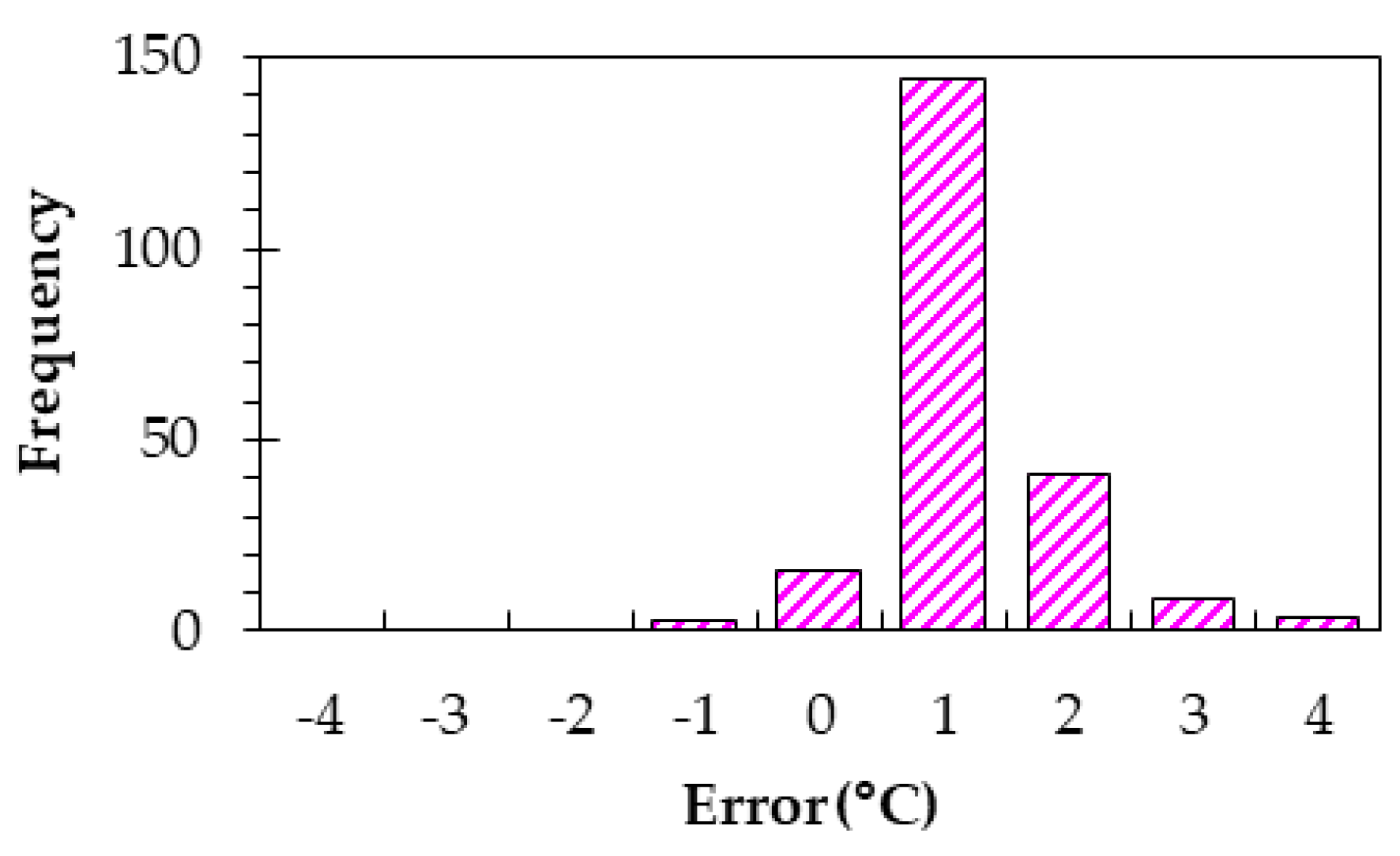


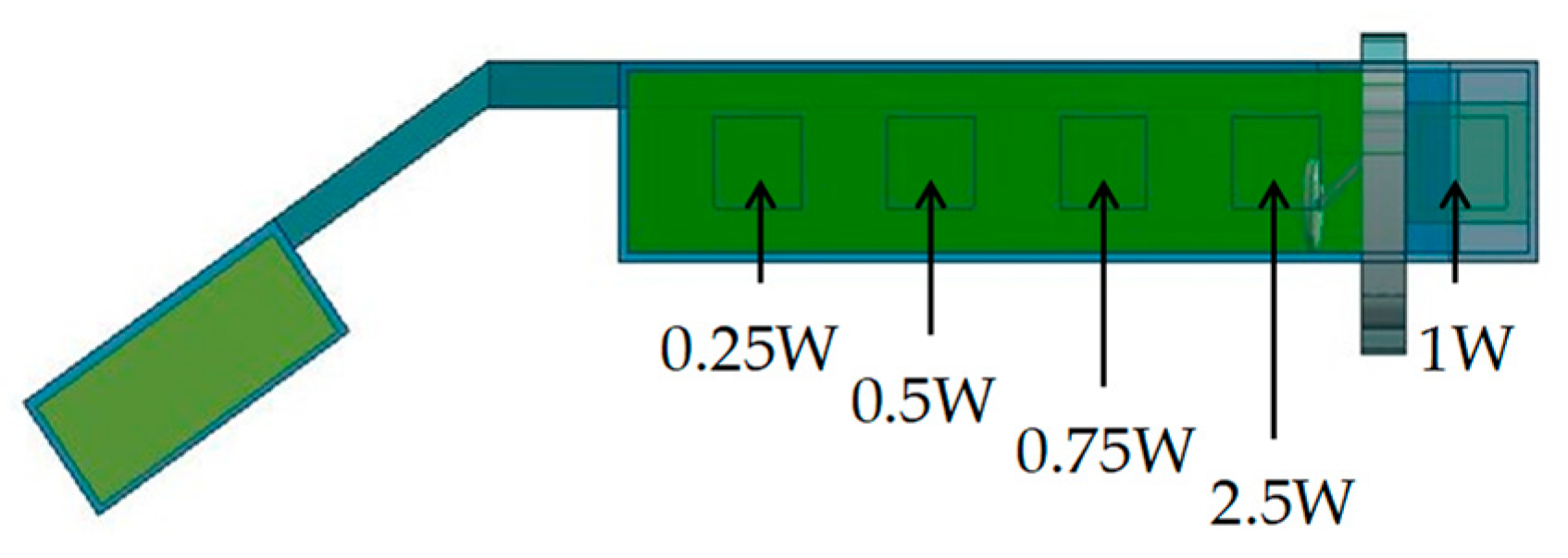

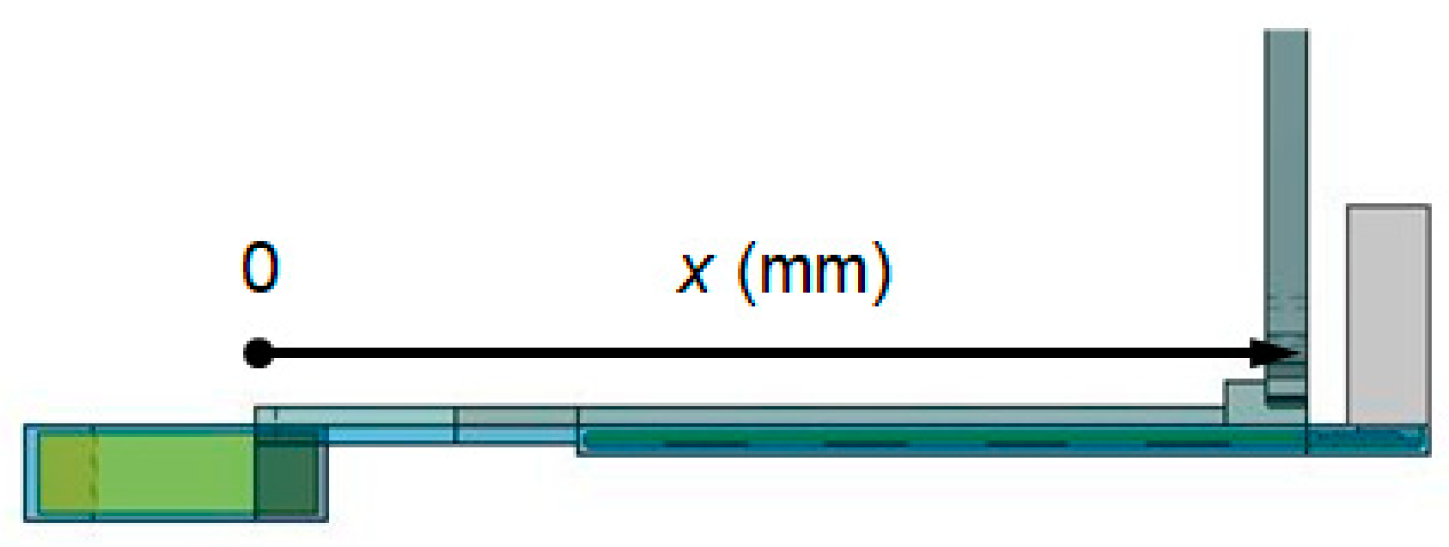
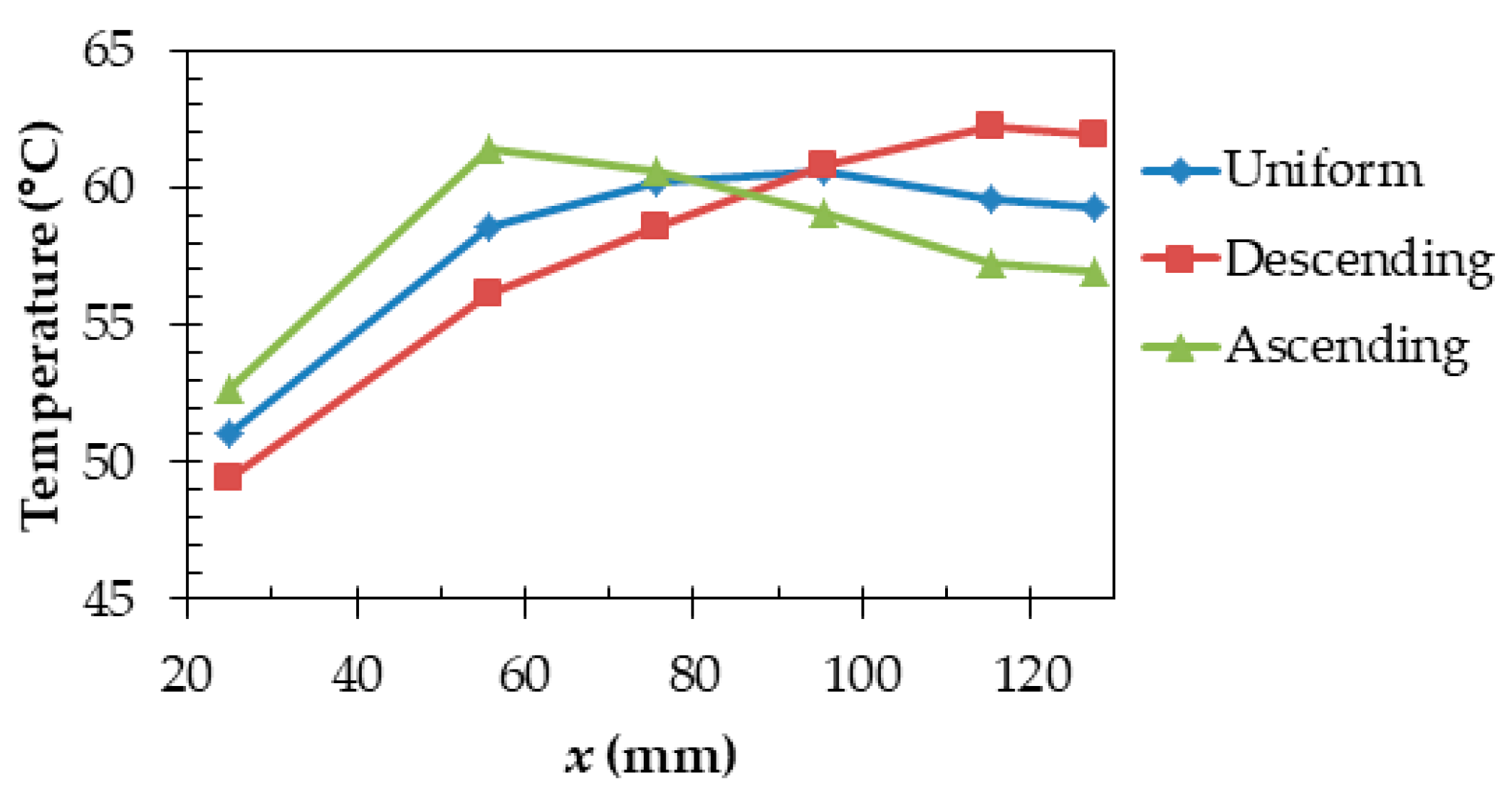



| Parts | Material | Abbreviation | Thermal Conductivity (W/mK) |
|---|---|---|---|
| Frame | Aluminum | Al | 236 |
| Cellulose acetate | CA | 0.2 | |
| Display | Polycarbonate | PC | 0.19 |
| Lens | Polycarbonate | PC | 0.19 |
| Nose pad | Cellulose propionate | CP | 6 |
| Battery | --- | --- | 15 |
| Component | Thermal Conductivity (W/mK) | Thickness (mm) |
|---|---|---|
| Mold | 0.88 | --- |
| Metal layer | 98 | 0.003 |
| Device layer | 149 | 0.001 |
| Si substrate | 149 | 0.1 |
| Bumps | 60 | 0.08 |
| Package substrate | 149 | 0.2 |
| Balls | 33 | 0.35 |
| PCB | 13 | 0.8 |
| Copper plane | 401 | 0.03 |
| Component | Thermal Conductivity (W/mK) | x, y, z (mm) |
|---|---|---|
| Glass substrate | 0.8 | 8, 8, 0.5 |
| Liquid crystal layer | 0.15 | 8, 8, 0.005 |
| Copper plane | 401 | 14, 13, 0.03 |
| PCB | 13 | 14, 13, 0.8 |
| Variable | l (mm) | S (mm2) | Thermal Conductivity (W/mK) | Thermal Resistance (K/W) |
|---|---|---|---|---|
| R1, R7 | 10.625 | 10 | 236 | 4.50 |
| R2 | 1 | 106.25 | 236 | 0.04 |
| R3 | 2.5 | 42.5 | 236 | 0.25 |
| R4, R5, R6 | 21.25 | 10 | 236 | 9.00 |
| Parameter of Air | Value |
|---|---|
| Thermal conductivity (W/mK) | 2.625 × 10⁻² |
| Acceleration of gravity (m/s2) | 9.80665 |
| Thermal expansion coefficient (1/K) | 3.247 × 10⁻³ |
| Prandtl number | 7.268 × 10⁻¹ |
| Kinematic viscosity (m2/s) | 1.655 × 10⁻⁵ |
| K in the vertical direction | 0.56 |
| K in the lower horizontal direction | 0.26 |
| K in the upper horizontal direction | 0.52 |
| Variable | l (mm) | S (mm2) | K | Thermal Resistance (K/W) |
|---|---|---|---|---|
| R8, R11, R14, R17 | 5 | 106 | 0.56 | 1.0 × 10³ |
| R9, R12, R15, R18 | 2 | 42.5 | 0.26 | 4.29 × 10³ |
| R10, R13, R16, R19 | 2 | 42.5 | 0.52 | 2.14 × 10³ |
© 2020 by the authors. Licensee MDPI, Basel, Switzerland. This article is an open access article distributed under the terms and conditions of the Creative Commons Attribution (CC BY) license (http://creativecommons.org/licenses/by/4.0/).
Share and Cite
Matsuhashi, K.; Kanamoto, T.; Kurokawa, A. Thermal Model and Countermeasures for Future Smart Glasses. Sensors 2020, 20, 1446. https://doi.org/10.3390/s20051446
Matsuhashi K, Kanamoto T, Kurokawa A. Thermal Model and Countermeasures for Future Smart Glasses. Sensors. 2020; 20(5):1446. https://doi.org/10.3390/s20051446
Chicago/Turabian StyleMatsuhashi, Kodai, Toshiki Kanamoto, and Atsushi Kurokawa. 2020. "Thermal Model and Countermeasures for Future Smart Glasses" Sensors 20, no. 5: 1446. https://doi.org/10.3390/s20051446
APA StyleMatsuhashi, K., Kanamoto, T., & Kurokawa, A. (2020). Thermal Model and Countermeasures for Future Smart Glasses. Sensors, 20(5), 1446. https://doi.org/10.3390/s20051446