

Review of Microfluidic Devices and Imaging Techniques for Fluid Flow Study in Porous Geomaterials

 , , and
Abstract
1. Introduction
2. Microfluidic Devices (Physical Micromodels of Porous Geomaterials)
2.1. Photoresist-Based Models
2.2. Polymer-Based Models
2.2.1. PDMS Models
2.2.2. PMMA Models
2.2.3. COC Models
2.2.4. Resin-Based Three-Dimensional (3D) Printing
2.3. Glass-Based Micromodels
2.3.1. Glass-Beads
2.3.2. Glass Wafers/Plates
2.4. Silicon-Based Models
2.5. Geomaterial-Based Models
3. Imaging Techniques
3.1. Optical Imaging
3.1.1. Camera & Microscope–Camera
3.1.2. Fluorescent and Confocal Microscopy
3.1.3. Raman Microscopy
3.1.4. Micro Particle Image Velocimetry (µPIV)
3.2. Tomography Techniques
3.2.1. X-ray Computed Tomography (X-ray CT)/X-ray Micro- Computed Tomography (X-ray µCT)
X-ray Imaging Techniques
Types of X-ray CT
Applications of X-ray CT
3.2.2. Neutron Tomography
3.2.3. Positron Emission Tomography (PET)
3.2.4. Nuclear Magnetic Resonance Imaging (NMRI) or Magnetic Resonance Imaging (MRI)
3.2.5. Gamma Radiation
3.3. Electron Microscopy Methods
3.3.1. Transmission Electron Microscopy (TEM)
3.3.2. Focused Ion Beams Scanning Electron Microscopy (FIB-SEM)
4. Applications of Micromodels and Imaging Techniques
4.1. Fluid Flow in Porous Media (Drainage, Imbibition, Front Evolution, Phase Trapping)
4.1.1. Effect of Pore Network Pattern
4.1.2. Front Instability
4.1.3. Saturation Distribution & Trapping Mechanisms
4.1.4. In-Situ Quantitative Measurements
4.2. Flow in Heterogeneous Rocks and Fractures
4.2.1. Fractures Characterization
4.2.2. Drainage & Imbibition in Fractures
4.3. Reactive Transport, Solute and Colloid Transport in Porous Media
4.3.1. Solute Transport
4.3.2. Effect of Pore-scale Heterogeneity
4.3.3. Dissolution & Precipitation
4.3.4. Colloids Transport
4.4. Porous Media (Rock) Characterization & Rock/Soil Deformation
4.4.1. Porosity and Pore Size Distribution
4.4.2. Hydraulic Conductivity
4.4.3. Wettability
4.4.4. Multi-Scale Heterogeneity
4.4.5. Rock and Soil Deformation
5. Summary and Final Remarks
Author Contributions
Funding
Conflicts of Interest
Glossary
| Anodic bonding | A process to seal silicon and glass which involves heating and applying an electrical field. |
| Capillary pressure | The pressure difference between two immiscible fluids across the interface between two static fluids |
| Creeping flow | When the Reynolds number is very small (<<1) where the viscous forces of the fluid dominate the inertial forces. |
| Darcy’s law | An empirical equation that describes the flow of one fluid in a porous media. |
| Delaunay triangulation (in computational geometry) | A triangulation of a given set of vertices such that no vertex in the set is inside the circumcircle of any triangle in the triangulation. |
| Drainage | The displacement of a wetting fluid (phase) by a non-wetting fluid (phase). |
| Enhanced oil recovery | The process of increasing the recovery of oil (hydrocarbon) from an oil reservoir e.g, by injecting a miscible gas. |
| Etch selectivity | The ratio of the etch rate of the unprotected layer to the etch rate of the layer on the projection mask. |
| Forchheimer equation | Darcy’s law is only valid for slow fluid flow in porous media and for flows with Reynolds numbers greater than about 1 to 10, Forchheimer proposed an equation to account for the non-linear effect of turbulence flow on pressure drop. |
| Geo-material | Any material with geological origin, e.g., rocks. |
| Haines jump | Are sudden jumps of the fluid interface in pores which promote fluid redistribution, fingered invasion and fluid trapping in pore-scale. |
| Imbibition | The displacement of a non-wetting fluid (phase) by a wetting fluid (phase). |
| Laminar flow | When a fluid flows in parallel layers and there is no disruption between the layers. For fluid flow in pipes, laminar flow happens when Re < 2300. |
| Micro-scale | In the scale of micrometre. Interchangeably is used with pore-scale. |
| Newtonian fluids | When there is a linear relationship between fluid’s viscosity and shear stress. in Newtonian fluids, at a constant temperature, viscosity remains constant if shear stress increases. |
| Permeability (or absolute permeability) | The capacity of a porous media to transmit a fluid. |
| Photoresist | A light-sensitive material |
| Porosity | A ratio of void space to the total volume of the porous material e.g., rock. |
| Relative permeability | A dimensionless measure of the effective permeability of one fluid in presence of another fluid. It is the ratio of the effective permeability of that fluid to the absolute permeability. |
| Representative elementary volume | Is the smallest volume of a medium which its measured properties e.g., are representative of the whole medium. |
| Reynolds number | A dimensionless number which is the ratio of inertial forces to viscous forces within a fluid. |
| Segmentation | The process of partitioning a digital image into multiple segments in order to simplify the image and locate objects and boundaries. |
| Turbulent flow | When there are irregular changes in pressure and velocity of flow and in contrast to a laminar flow, there are vortices and eddies in the flow. A transition regime separates the laminar and the turbulent flows. This regime covers a wide range of Reynolds number. For fluid flow in pipes, turbulent flow happens when Re > 4000. |
| Voronoi diagrams (in computational geometry) | The partitioning of a 2D plane with a given set of vertices into convex polygons such that each polygon contains exactly one vertex from the set and every point in each polygon is closer to its vertex than to any other vertices. |
| Young-Laplace equation | Defines the capillary pressure across the interface between two static fluids. |
Symbols
| ϕ | porosity |
| k | permeability |
| kr | relative permeability |
| Pc | capillary pressure |
| φ | sphere diameter |
| λ | wavelength |
| Ra | surface roughness |
| I | intensity |
| x | thickness |
| ϵ | linear attenuation coefficient |
| A | cross-sectional area |
| q | flow rate |
| µ | viscosity |
| ρ | density |
| ∇P | pressure gradient |
| g | gravitational acceleration |
Abbreviations
| 2D | two dimensional |
| 2.5D | two dimensional with variation in the third dimension |
| 3D | three-dimensional |
| AM | additive manufacturing |
| CAD | computer aided design |
| CCD | charge coupled device |
| CLSM | confocal laser scanning microscopy |
| CMOS | complementary metal-oxide semiconductor |
| CTE | coefficient of thermal expansion |
| FDM | fused deposition modelling |
| FOV | field of view |
| HNA | solutions: hydrofluoric, nitric, acetic |
| ID | inside diameter |
| IR | image resolution |
| LOM | laminated object manufacturing |
| OD | outside diameter |
| PDMS | poly-di-methyl-siloxane; a type of polymer |
| PIV | particle image velocimetry |
| PMMA | poly-methyl-methacrylate; a type of polymer |
| PVA | polyvinyl alcohol |
| PVI | photoluminescent volumetric imaging |
| REV | representative elementary volume |
| RIM | refractive-index matching |
| SFL | stop-flow-lithography |
| SLA | stereolithography apparatus or simply stereolithography |
| SLM | selective laser melting |
| SLS | selective laser sintering |
| STL | standard tessellation language |
References
- Hu, X.; Huang, S. Physical properties of reservoir rocks. In Physics of Petroleum Reservoirs; Hu, X., Hu, S., Jin, F., Huang, S., Eds.; Petroleum Industry Press: Beijing, China; Springer: Berlin/Heidelberg, Germany, 2017; pp. 7–164. [Google Scholar]
- Manwart, C.; Aaltosalmi, U.; Koponen, A.; Hilfer, R.; Timonen, J. Lattice-Boltzmann and finite-difference simulations for the permeability for three-dimensional porous media. Phys. Rev. E Stat. Phys. Plasmas Fluids Relat. Interdiscip. Top. 2002, 66, 1–11. [Google Scholar] [CrossRef] [PubMed]
- Bultreys, T.; De Boever, W.; Cnudde, V. Imaging and image-based fluid transport modeling at the pore scale in geological materials: A practical introduction to the current state-of-the-art. Earth-Sci. Rev. 2016, 155, 93–128. [Google Scholar] [CrossRef]
- Blunt, M.J.; Bijeljic, B.; Dong, H.; Gharbi, O.; Iglauer, S.; Mostaghimi, P.; Paluszny, A.; Pentland, C. Pore-scale imaging and modelling. Adv. Water Resour. 2013, 51, 197–216. [Google Scholar] [CrossRef]
- Werth, C.J.; Zhang, C.; Brusseau, M.L.; Oostrom, M.; Baumann, T. A review of non-invasive imaging methods and applications in contaminant hydrogeology research. J. Contam. Hydrol. 2010, 113, 1–24. [Google Scholar] [CrossRef] [PubMed]
- Knackstedt, M.A.; Jaime, P.; Butcher, A.; Botha, P.; Middleton, J.; Sok, R. Integrating Reservoir Characterization: 3D Dynamic, Petrophysical and Geological Description of Reservoir Facies. In Proceedings of the SPE Asia Pacific Oil and Gas Conference and Exhibition, Brisbane, Australia, 18–20 October 2010; Society of Petroleum Engineers: Brisbane, Queensland, Australia, 2010. [Google Scholar]
- Tsakiroglou, C.; Vizika-kavvadias, O.; Lenormand, R. Use of Micromodels to Study Multiphase Flow in Porous Media. In Proceedings of the International Symposium of the Society of Core Analysts, Napa Valley, CA, USA, 16–19 September 2013; pp. 1–13. [Google Scholar]
- Karadimitriou, N.K.; Hassanizadeh, S.M. A Review of Micromodels and Their Use in Two-Phase Flow Studies. Vadose Zone J. 2012, 11, vzj2011.0072. [Google Scholar] [CrossRef]
- Corapcioglu, Y.M.; Chowdhury, S.; Roosevelt, S.E. Micromodel visualization and quantification of solute transport in porous media. Water Resour. Res. 1997, 33, 2547–2558. [Google Scholar] [CrossRef]
- Anbari, A.; Chien, H.-T.; Datta, S.S.; Deng, W.; Weitz, D.A.; Fan, J. Microfluidic Model Porous Media: Fabrication and Applications. Small 2018, 14, 1703575. [Google Scholar] [CrossRef] [PubMed]
- Mukherjee, M.; Misra, S. A review of experimental research on Enhanced Coal Bed Methane (ECBM) recovery via CO2 sequestration. Earth Sci. Rev. 2018, 179, 392–410. [Google Scholar] [CrossRef]
- Wildenschild, D.; Sheppard, A.P. X-ray imaging and analysis techniques for quantifying pore-scale structure and processes in subsurface porous medium systems. Adv. Water Resour. 2013, 51, 217–246. [Google Scholar] [CrossRef]
- Halisch, M.; Steeb, H.; Henkel, S.; Krawczyk, C.M. Pore-scale tomography and imaging: Applications, techniques and recommended practice. Solid Earth 2016, 7, 1141–1143. [Google Scholar] [CrossRef]
- Cnudde, V.; Boone, M.N. High-resolution X-ray computed tomography in geosciences: A review of the current technology and applications. Earth Sci. Rev. 2013, 123, 1–17. [Google Scholar] [CrossRef]
- Hsu, S.-Y.; Zhang, Z.-Y.; Tsao, C.-W. Thermoplastic Micromodel Investigation of Two-Phase Flows in a Fractured Porous Medium. Micromachines 2017, 8, 38. [Google Scholar] [CrossRef]
- Auset, M.; Keller, A.A. Pore-scale processes that control dispersion of colloids in saturated porous media. Water Resour. Res. 2004, 40. [Google Scholar] [CrossRef]
- Xu, W.; Ok, J.T.; Xiao, F.; Neeves, K.B.; Yin, X. Effect of pore geometry and interfacial tension on water-oil displacement efficiency in oil-wet microfluidic porous media analogs. Phys. Fluids 2014, 26, 093102. [Google Scholar] [CrossRef]
- Rangel-German, E.R.; Kovscek, A.R. A micromodel investigation of two-phase matrix-fracture transfer mechanisms. Water Resour. Res. 2006, 42. [Google Scholar] [CrossRef]
- Wilson, J.L. Visualization of flow and transport at the pore level. In Transport and Reactive Processes in Aquifers; Balkema: Rotterdam, The Netherlands, 1994; pp. 19–36. [Google Scholar]
- Reichmanis, E.; Thompson, L.F. Polymer materials for microlithography. Chem. Rev. 1989, 89, 1273–1289. [Google Scholar] [CrossRef]
- Thompson, L.F.; Willson, C.G.; Bowden, M.J. Introduction to Microlithography; American Chemical Society: Washington, DC, USA, 1983. [Google Scholar]
- Fiorini, G.S.; Chiu, D.T. Disposable microfluidic devices: Fabrication, function, and application. Biotechniques 2005, 38, 429–450. [Google Scholar] [CrossRef]
- Cheng, J.T.; Giordano, N. Fluid flow through nanometer-scale channels. Phys. Rev. E 2002, 65, 31206. [Google Scholar] [CrossRef]
- Cooper McDonald, J.; Duffy, D.C.; Anderson, J.R.; Chiu, D.T.; Wu, H.; Schueller, O.J.; Whitesides, G.M. Fabrication of microfluidic systems in poly(dimethylsiloxane). Electrophoresis 2000, 21, 27–40. [Google Scholar] [CrossRef]
- Anderson, J.R.; Chiu, D.T.; Jackman, R.J.; Cherniavskaya, O.; McDonald, J.C.; Wu, H.; Whitesides, S.H.; Whitesides, G.M. Fabrication of topologically complex three-dimensional microfluidic systems in PDMS by rapid prototyping. Anal. Chem. 2000, 72, 3158–3164. [Google Scholar] [CrossRef]
- Cooper McDonald, J.; Whitesides, G.M. Poly(dimethylsiloxane) as a material for fabricating microfluidic devices. Acc. Chem. Res. 2002, 35, 491–499. [Google Scholar] [CrossRef]
- Karadimitriou, N.K.; Musterd, M.; Kleingeld, P.J.; Kreutzer, M.T.; Hassanizadeh, S.M.; Joekar-Niasar, V. On the fabrication of PDMS micromodels by rapid prototyping, and their use in two-phase flow studies. Water Resour. Res. 2013, 49, 2056–2067. [Google Scholar] [CrossRef]
- Eddings, M.A.; Johnson, M.A.; Gale, B.K. Determining the optimal PDMS–PDMS bonding technique for microfluidic devices. J. Micromech. Microeng. 2008, 18, 67001. [Google Scholar] [CrossRef]
- Qin, D.; Xia, Y.; Whitesides, G.M. Soft lithography for micro- and nanoscale patterning. Nat. Protoc. 2010, 5, 491–502. [Google Scholar] [CrossRef] [PubMed]
- Schneider, M.H.; Kozlov, B.; Willaime, H.; Tran, Y.; Rezgui, F.; Tabeling, P. Wettability patterning in microfluidic systems by poly(acrylic acid) graft polymerization. In Proceedings of the 14th International Conference on Miniaturized Systems for Chemistry and Life Sciences, MicroTAS 2010, Groningen, The Netherlands, 3–7 October 2010; Volume 3, pp. 1949–1951. [Google Scholar]
- Schneider, M.H.; Tabeling, P. Lab-on-Chip Methodology in the Energy Industry: Wettability Patterns and Their Impact on Fluid Displacement in Oil Reservoir Models. Am. J. Appl. Sci. 2011, 8, 927–932. [Google Scholar] [CrossRef]
- Zhao, B.; MacMinn, C.W.; Juanes, R. Wettability control on multiphase flow in patterned microfluidics. Proc. Natl. Acad. Sci. USA 2016, 113, 10251–10256. [Google Scholar] [CrossRef]
- Gervais, T.; El-Ali, J.; Günther, A.; Jensen, K.F. Flow-induced deformation of shallow microfluidic channels. Lab Chip 2006, 6, 500–507. [Google Scholar] [CrossRef] [PubMed]
- Hardy, B.S.; Uechi, K.; Zhen, J.; Kavehpour, H.P. The deformation of flexible PDMS microchannels under a pressure driven flow. Lab Chip 2009, 9, 935–938. [Google Scholar] [CrossRef]
- Wu, M.; Xiao, F.; Johnson-Paben, R.M.; Retterer, S.T.; Yin, X.; Neeves, K.B. Single-and two-phase flow in microfluidic porous media analogs based on Voronoi tessellation. Lab Chip 2012, 12, 253–261. [Google Scholar] [CrossRef]
- Heng, Q.; Tao, C.; Tie-chuan, Z. Surface roughness analysis and improvement of micro-fluidic channel with excimer laser. Microfluid. Nanofluid. 2006, 2, 357–360. [Google Scholar] [CrossRef]
- Qi, H.; Chen, T.; Yao, L.; Zuo, T. Hydrophilicity modification of poly(methyl methacrylate) by excimer laser ablation and irradiation. Microfluid. Nanofluid. 2008, 5, 139–143. [Google Scholar] [CrossRef]
- Qi, H.; Liu, Y.; Wang, X.; Shen, F.; Yu, Y.; Chen, T.; Zuo, T. Micromachining of passive planar micromixer on poly (methyl methacrylate) substrate with excimer laser ablation. Microsyst. Technol. 2009, 15, 297–300. [Google Scholar] [CrossRef][Green Version]
- Klank, H.; Kutter, J.P.; Geschke, O. CO2-laser micromachining and back-end processing for rapid production of PMMA-based microfluidic systems. Lab Chip 2002, 2, 242–246. [Google Scholar] [CrossRef] [PubMed]
- Cheng, J.Y.; Wei, C.W.; Hsu, K.H.; Young, T.H. Direct-write laser micromachining and universal surface modification of PMMA for device development. Sens. Actuators B Chem. 2004, 99, 186–196. [Google Scholar] [CrossRef]
- Hong, T.-F.; Ju, W.-J.; Wu, M.-C.; Tai, C.-H.; Tsai, C.-H.; Fu, L.-M. Rapid prototyping of PMMA microfluidic chips utilizing a CO2 laser. Microfluid. Nanofluid. 2010, 9, 1125–1133. [Google Scholar] [CrossRef]
- Gomez, D.; Goenaga, I.; Lizuain, I.; Ozaita, M. Femtosecond laser ablation for microfluidics. Opt. Eng. 2005, 44, 51105. [Google Scholar]
- Mohammed, M.I.; Alam, M.N.H.Z.; Kouzani, A.; Gibson, I. Fabrication of microfluidic devices: Improvement of surface quality of CO2 laser machined poly (methylmethacrylate) polymer. J. Micromech. Microeng. 2016, 27, 15021. [Google Scholar] [CrossRef]
- Becker, H.; Locascio, L.E. Polymer microfluidic devices. Talanta 2002, 56, 267–287. [Google Scholar] [CrossRef]
- Ehrfeld, W.; Bley, P.; Gotz, F.; Hagmann, P.; Maner, A.; Mohr, J.; Moser, H.O.; Munchmeyer, D.; Schelb, W.; Schmidt, D. Fabrication of microstructures using the LIGA process. In Proceedings of the IEEE MicroRobots and Teleoperators Workshop, Hyannis, MA, USA, 9–11 November 1987; Volume 160. [Google Scholar]
- Ehrfeld, W.; Lehr, H. Deep X-ray lithography for the production of three-dimensional microstructures from metals, polymers and ceramics. Radiat. Phys. Chem. 1995, 45, 349–365. [Google Scholar] [CrossRef]
- Arnold, J.; Dasbach, U.; Ehrfeld, W.; Hesch, K.; Löwe, H. Combination of excimer laser micromachining and replication processes suited for large scale production. Appl. Surf. Sci. 1995, 86, 251–258. [Google Scholar] [CrossRef]
- Tsakiroglou, C.D.; Avraam, D.G. Fabrication of a new class of porous media models for visualization studies of multiphase flow processes. J. Mater. Sci. 2002, 37, 353–363. [Google Scholar] [CrossRef]
- Tsao, C.-W.; DeVoe, D.L. Bonding of thermoplastic polymer microfluidics. Microfluid. Nanofluid. 2009, 6, 1–16. [Google Scholar] [CrossRef]
- Gokhare, V.G.; Raut, D.N.; Shinde, D.K. A Review paper on 3D-Printing Aspects and Various Processes Used in the 3D-Printing. Int. J. Eng. Res. Technol. 2017, 6, 953–958. [Google Scholar]
- Campbell, T.; Williams, C.; Ivanova, O.; Garrett, B. Could 3D Printing Change the World? Technologies, Potential, and Implications of Additive Manufacturing; Strategic Foresight Report; The Atlantic Council: Washington, DC, USA, 2011. [Google Scholar]
- Ishutov, S.; Hasiuk, F.J.; Fullmer, S.M.; Buono, A.S.; Gray, J.N.; Harding, C. Resurrection of a reservoir sandstone from tomographic data using three-dimensional printing. Am. Assoc. Pet. Geol. Bull. 2017, 101, 1425–1443. [Google Scholar] [CrossRef]
- Ishutov, S.; Hasiuk, F.J.; Jobe, D.; Agar, S. Using Resin-Based 3D Printing to Build Geometrically Accurate Proxies of Porous Sedimentary Rocks. Groundwater 2018, 56, 482–490. [Google Scholar] [CrossRef] [PubMed]
- Ishutov, S.; Jobe, T.D.; Zhang, S.; Gonzalez, M.; Agar, S.M.; Hasiuk, F.J.; Watson, F.; Geiger, S.; Mackay, E.; Chalaturnyk, R. Three-dimensional printing for geoscience: Fundamental research, education, and applications for the petroleum industry. Am. Assoc. Pet. Geol. Bull. 2018, 102, 1–26. [Google Scholar] [CrossRef]
- Watson, F.; Maes, J.; Geiger, S.; Mackay, E.; Singleton, M.; McGravie, T.; Anouilh, T.; Jobe, T.D.; Zhang, S.; Agar, S.; et al. Comparison of Flow and Transport Experiments on 3D Printed Micromodels with Direct Numerical Simulations. Transp. Porous Media 2019, 129, 449–466. [Google Scholar] [CrossRef]
- Comina, G.; Suska, A.; Filippini, D. Low cost lab-on-a-chip prototyping with a consumer grade 3D printer. Lab Chip 2014, 14, 2978–2982. [Google Scholar] [CrossRef]
- Nanoscibe GmbH. Photonic Professional GT2 Make 3D-Printer. 2019. Available online: https://www.nanoscribe.com/en/solutions/photonic-professional-gt2#tab-386 (accessed on 30 November 2019).
- Kitson, P.J.; Rosnes, M.H.; Sans, V.; Dragone, V.; Cronin, L. Configurable 3D-Printed millifluidic and microfluidic “lab on a chip” reactionware devices. Lab Chip 2012, 12, 3267–3271. [Google Scholar] [CrossRef]
- Dimou, A.P.; Maes, J.; McGravie, M.A.S.G.T. About the Use of 3D Printed Micromodels to Investigate Single and Two-phase Flow Processes. In InterPore Book of Abstracts; International Society for Porous Media: Valencia, Spain, 2019. [Google Scholar]
- Head, D.; Vanorio, T. Effects of changes in rock microstructures on permeability: 3-D printing investigation. Geophys. Res. Lett. 2016, 43, 7494–7502. [Google Scholar] [CrossRef]
- Suzuki, A.; Watanabe, N.; Li, K.; Horne, R.N. Fracture network created by 3-D printer and its validation using CT images. J. Am. Water Resour. Assoc. 2017, 53, 6330–6339. [Google Scholar] [CrossRef]
- Ahkami, M.; Roesgen, T.; Saar, M.O.; Kong, X.Z. High-Resolution Temporo-Ensemble PIV to Resolve Pore-Scale Flow in 3D-Printed Fractured Porous Media. Transp. Porous Media 2019, 129, 467–483. [Google Scholar] [CrossRef]
- Cinar, Y.; Riaz, A.; Tchelepi, H.A. Experimental Study of CO2 Injection Into Saline Formations. SPE J. 2009, 588–594. [Google Scholar] [CrossRef]
- Saffman, P.G.; Taylor, G.I. The Penetration of a Fluid into a Porous Medium or Hele-Shaw Cell Containing a More Viscous Liquid. Proc. R. Soc. Lond. 1958, 245, 312–329. [Google Scholar]
- Park, C.W.; Homsy, G.M. Two-phase displacement in Hele Shaw cells: Theory. J. Fluid Mech. 1984, 139, 291–308. [Google Scholar] [CrossRef]
- Eriksen, J.A.; Toussaint, R.; Måløy, K.J.; Flekkøy, E.; Sandnes, B. Numerical approach to frictional fingers. Phys. Rev. E 2015, 92, 32203. [Google Scholar] [CrossRef]
- Sandnes, B.; Flekkøy, E.G.; Knudsen, H.A.; Måløy, K.J.; See, H. Patterns and flow in frictional fluid dynamics. Nat. Commun. 2011, 2, 288. [Google Scholar] [CrossRef] [PubMed]
- Knudsen, H.A.; Sandnes, B.; Flekkøy, E.G.; Måløy, K.J. Granular labyrinth structures in confined geometries. Phys. Rev. E 2008, 77, 21301. [Google Scholar] [CrossRef]
- Sandnes, B.; Knudsen, H.A.; Måløy, K.J.; Flekkøy, E.G. Labyrinth Patterns in Confined Granular-Fluid Systems. Phys. Rev. Lett. 2007, 99, 38001. [Google Scholar] [CrossRef]
- Rashidi, M.; Peurrung, L.; Tompson, A.F.B.; Kulp, T.J. Experimental analysis of pore-scale flow and transport in porous media. Adv. Water Resour. 1996, 19, 163–180. [Google Scholar] [CrossRef]
- Wright, S.F.; Zadrazil, I.; Markides, C.N. A review of solid–fluid selection options for optical-based measurements in single-phase liquid, two-phase liquid–liquid and multiphase solid–liquid flows. Exp. Fluids 2017, 58, 108. [Google Scholar] [CrossRef]
- Rubol, S.; Tonina, D.; Vincent, L.; Sohm, J.A.; Basham, W.; Budwig, R.; Savalia, P.; Kanso, E.; Capone, D.G.; Nealson, K.H. Seeing through porous media: An experimental study for unveiling interstitial flows. Hydrol. Process. 2018, 32, 402–407. [Google Scholar] [CrossRef]
- Chatenever, A.; Calhoun, J.C. Visual Examinations of Fluid Behaviour in Porous Media—Part I. Trans. Am. Inst. Min. Metall. Eng. 1952, 195, 149–156. [Google Scholar]
- Corapcioglu, M.Y.; Fedirchuk, P. Glass bead micromodel study of solute transport. J. Contam. Hydrol. 1999, 36, 209–230. [Google Scholar] [CrossRef]
- Wang, G.C. Microscopic investigation of CO2 flooding process. J. Pet. Technol. 1982, 34, 1789–1797. [Google Scholar] [CrossRef]
- Park, J.H.; Lee, N.E.; Lee, J.; Park, J.S.; Park, H.D. Deep dry etching of borosilicate glass using SF6 and SF6/Ar inductively coupled plasmas. Microelectron. Eng. 2005, 82, 119–128. [Google Scholar] [CrossRef]
- Kolari, K. Deep plasma etching of glass with a silicon shadow mask. Sens. Actuators A Phys. 2008, 141, 677–684. [Google Scholar] [CrossRef]
- Kolari, K.; Saarela, V.; Franssila, S. Deep plasma etching of glass for fluidic devices with different mask materials. J. Micromech. Microeng. 2008, 18, 64010. [Google Scholar] [CrossRef]
- Queste, S.; Salut, R.; Clatot, S.; Rauch, J.Y.; Khan Malek, C.G. Manufacture of microfluidic glass chips by deep plasma etching, femtosecond laser ablation, and anodic bonding. Microsyst. Technol. 2010, 16, 1485–1493. [Google Scholar] [CrossRef]
- Iliescu, C.; Taylor, H.; Avram, M.; Miao, J.; Franssila, S. A practical guide for the fabrication of microfluidic devices using glass and silicon. Biomicrofluidics 2012, 6, 16505–16516. [Google Scholar] [CrossRef] [PubMed]
- Leester-Schädel, M.; Lorenz, T.; Jürgens, F.; Ritcher, C. Fabrication of Microfluidic Devices. In Microsystems for Pharmatechnology; Springer: Berlin/Heidelberg, Germany, 2016; pp. 23–57. [Google Scholar]
- Iliescu, C.; Miao, J.; Tay, F.E.H. Stress control in masking layers for deep wet micromachining of Pyrex glass. Sens. Actuators A Phys. 2005, 117, 286–292. [Google Scholar] [CrossRef]
- Iliescu, C.; Chen, B.; Miao, J. On the wet etching of Pyrex glass. Sens. Actuators A Phys. 2008, 143, 154–161. [Google Scholar] [CrossRef]
- Doryani, H.; Malayeri, M.R.; Riazi, M. Visualization of asphaltene precipitation and deposition in a uniformly patterned glass micromodel. Fuel 2016, 182, 613–622. [Google Scholar] [CrossRef]
- Darvishi, S.; Cubaud, T.; Longtin, J.P. Ultrafast laser machining of tapered microchannels in glass and PDMS. Opt. Lasers Eng. 2012, 50, 210–214. [Google Scholar] [CrossRef]
- Yen, M.-H.; Cheng, J.-Y.; Wei, C.-W.; Chuang, Y.-C.; Young, T.-H. Rapid cell-patterning and microfluidic chip fabrication by crack-free CO2 laser ablation on glass. J. Micromech. Microeng. 2006, 16, 1143. [Google Scholar] [CrossRef]
- Fu, L.-M.; Ju, W.-J.; Yang, R.-J.; Wang, Y.-N. Rapid prototyping of glass-based microfluidic chips utilizing two-pass defocused CO2 laser beam method. Microfluid. Nanofluid. 2013, 14, 479–487. [Google Scholar] [CrossRef]
- Serhatlioglu, M.; Ortaç, B.; Elbuken, C.; Biyikli, N.; Solmaz, M.E. CO2 laser polishing of microfluidic channels fabricated by femtosecond laser assisted carving. J. Micromech. Microeng. 2016, 26, 115011. [Google Scholar] [CrossRef]
- Mohammadi, S.; Maghzi, A.; Ghazanfari, M.H.; Masihi, M.; Mohebbi, A.; Kharrat, R. On the control of glass micro-model characteristics developed by laser technology. Energy Sources Part A Recover. Util. Environ. Eff. 2013, 35, 193–201. [Google Scholar] [CrossRef]
- Bellouard, Y.; Said, A.; Dugan, M.; Bado, P. Fabrication of high-aspect ratio, micro-fluidic channels and tunnels using femtosecond laser pulses and chemical etching. Opt. Express 2004, 12, 2120–2129. [Google Scholar] [CrossRef]
- Matsuo, S.; Sumi, H.; Kiyama, S.; Tomita, T.; Hashimoto, S. Femtosecond laser-assisted etching of Pyrex glass with aqueous solution of KOH. Appl. Surf. Sci. 2009, 255, 9758–9760. [Google Scholar] [CrossRef]
- Gottmann, J.; Hermans, M.; Ortmann, J. Digital Photonic Production of Micro Structures in Glass by In-Volume Selective Laser-Induced Etching using a High Speed Micro Scanner. Phys. Procedia 2012, 39, 534–541. [Google Scholar] [CrossRef]
- Gottmann, J.; Hermans, M.; Repiev, N.; Ortmann, J. Selective Laser-Induced Etching of 3D Precision Quartz Glass Components for Microfluidic Applications—Up-Scaling of Complexity and Speed. Micromachines 2017, 8, 110. [Google Scholar] [CrossRef]
- Wlodarczyk, K.; Carter, R.; Jahanbakhsh, A.; Lopes, A.; Mackenzie, M.; Maier, R.; Hand, D.; Maroto-Valer, M. Rapid Laser Manufacturing of Microfluidic Devices from Glass Substrates. Micromachines 2018, 9, 409. [Google Scholar] [CrossRef]
- Wlodarczyk, K.L.; Hand, D.P.; Maroto-Valer, M.M. Maskless, rapid manufacturing of glass microfluidic devices using a picosecond pulsed laser. Sci. Rep. 2019, 9, 20215. [Google Scholar] [CrossRef]
- Oosterbroek, R.E.; Hermes, D.C.; Kakuta, M.; Benito-Lopez, F.; Gardeniers, J.G.E.; Verboom, W.; Reinhoudt, D.N.; van den Berg, A. Fabrication and mechanical testing of glass chips for high-pressure synthetic or analytical chemistry. Microsyst. Technol. 2006, 12, 450–454. [Google Scholar] [CrossRef]
- Tiggelaar, R.M.; Benito-López, F.; Hermes, D.C.; Rathgen, H.; Egberink, R.J.M.; Mugele, F.G.; Reinhoudt, D.N.; van den Berg, A.; Verboom, W.; Gardeniers, H.J.G.E. Fabrication, mechanical testing and application of high-pressure glass microreactor chips. Chem. Eng. J. 2007, 131, 163–170. [Google Scholar] [CrossRef]
- Wardlaw, N.C. The Effects of Geometry, Wettability, Viscosity and Interfacial Tension on Trapping in Single Pore-throat Pairs. J. Can. Pet. Technol. 1982, 21, 21–27. [Google Scholar] [CrossRef]
- Campbell, B.T.; Orr, F.M., Jr. Flow visualization for CO2/crude-oil displacements. Soc. Pet. Eng. 1985, 665–678. [Google Scholar] [CrossRef]
- Ferer, M.; Ji, C.; Bromhal, G.S.; Cook, J.; Ahmadi, G.; Smith, D.H. Crossover from capillary fingering to viscous fingering for immiscible unstable flow: Experiment and modeling. Phys. Rev. E 2004, 70, 16303. [Google Scholar] [CrossRef]
- Conrad, S.H.; Wilson, J.L.; Mason, W.R.; Peplinski, W.J. Visualization of residual organic liquid trapped in aquifers. Water Resour. Res. 1992, 28, 467–478. [Google Scholar] [CrossRef]
- Morrow, N.R.; Lim, H.T.; Ward, J.S. Effect of crude-oil-induced wettability changes on oil recovery. Spe Form. Eval. 1986, 1, 89–103. [Google Scholar] [CrossRef]
- Kim, Y.; Wan, J.; Kneafsey, T.J.; Tokunaga, T.K. Dewetting of Silica Surfaces upon Reactions with Supercritical CO 2 and Brine: Pore-Scale Studies in Micromodels. Environ. Sci. Technol. 2012, 46, 4228–4235. [Google Scholar] [CrossRef] [PubMed]
- Hu, R.; Wan, J.; Kim, Y.; Tokunaga, T.K. Wettability effects on supercritical CO2–brine immiscible displacement during drainage: Pore-scale observation and 3D simulation. Int. J. Greenh. Gas Control 2017, 60, 129–139. [Google Scholar] [CrossRef]
- Danesh, A.; Krinis, D.; Henderson, G.D.; Peden, J.M. Asphaltene deposition in miscible gas flooding of oil reservoirs. Chem. Eng. Res. Des. 1988, 66, 339–344. [Google Scholar]
- Goldenberg, L.C.; Hutcheon, I.; Wardlaw, N. Experiments on transport of hydrophobic particles and gas bubbles in porous media. Transp. Porous Media 1989, 4, 129–145. [Google Scholar] [CrossRef]
- Wan, J.; Wilson, J.L. Visualization of the role of the gas-water interface on the fate and transport of colloids in porous media. Water Resour. Res. 1994, 30, 11–23. [Google Scholar] [CrossRef]
- Wan, J.; Tokunaga, T.K.; Tsang, C.-F.; Bodvarsson, G.S. Improved glass micromodel methods for studies of flow and transport in fractured porous media. Water Resour. Res. 1996, 32, 1955–1964. [Google Scholar] [CrossRef]
- Kamari, E.; Rashtchian, D.; Shadizadeh, S.R. Micro-model experimental study of fracture geometrical effect on breakthrough time in miscible displacement process. Iran. J. Chem. Chem. Eng. 2011, 30, 1–7. [Google Scholar]
- Bahralolom, I.M.; Bretz, R.E.; Orr, F.M., Jr. Experimental investigation of the interaction of phase behavior with microscopic heterogeneity in a CO2 flood. SPE Reserv. Eng. 1988, 3, 662–672. [Google Scholar] [CrossRef]
- Farzaneh, S.A.; Kharrat, R.; Ghazanfari, M.H. Experimental study of solvent flooding to heavy oil in fractured five-spot micro-models: The role of fracture geometrical characteristics. J. Can. Pet. Technol. 2010, 49, 36–43. [Google Scholar] [CrossRef]
- Sohrabi, M.; Tehrani, D.H.; Danesh, A.; Henderson, G.D. Visualization of oil recovery by water-alternating-gas injection using high-pressure micromodels. SPE J. 2004, 9, 290–301. [Google Scholar] [CrossRef]
- Van Dijke, M.I.J.; Sorbie, K.S.; Sohrabi, M.; Danesh, A. Simulation of WAG floods in an oil-wet micromodel using a 2-D pore-scale network model. J. Pet. Sci. Eng. 2006, 52, 71–86. [Google Scholar] [CrossRef]
- Sohrabi, M.; Danesh, A.; Tehrani, D.; Jamiolahmady, M. Microscopic Mechanisms of Oil Recovery by Near-Miscible Gas Injection. Transp. Porous Media 2008, 72, 351–367. [Google Scholar] [CrossRef]
- Sohrabi, M.; Danesh, A.; Jamiolahmady, M. Visualisation of Residual Oil Recovery by Near-miscible Gas and SWAG Injection Using High-pressure Micromodels. Transp. Porous Media 2008, 74, 239–257. [Google Scholar] [CrossRef]
- Sohrabi, M.; Mahzari, P.; Farzaneh, S.A.; Mills, J.R.; Tsolis, P.; Ireland, S. Novel insights into mechanisms of oil recovery by use of low-salinity-water injection. SPE J. 2017, 22, 407–416. [Google Scholar] [CrossRef]
- Riazi, M.; Sohrabi, M.; Bernstone, C.; Jamiolahmady, M.; Ireland, S. Visualisation of mechanisms involved in CO2 injection and storage in hydrocarbon reservoirsand water-bearing aquifers. Chem. Eng. Res. Des. 2011, 89, 1827–1840. [Google Scholar] [CrossRef]
- Avraam, D.G.; Payatakes, A.C. Flow regimes and relative permeabilities during steady-state two-phase flow in porous media. J. Fluid Mech. 1995, 293, 207–236. [Google Scholar] [CrossRef]
- Keller, A.; Blunt, M.; Roberts, A. Micromodel Observation of the Role of Oil Layers in Three-Phase Flow. Transp. Porous Media 1997, 26, 277–297. [Google Scholar] [CrossRef]
- George, D.S.; Hayat, O.; Kovscek, A.R. A microvisual study of solution-gas-drive mechanisms in viscous oils. J. Pet. Sci. Eng. 2005, 46, 101–119. [Google Scholar] [CrossRef]
- Buchgraber, M.; Kovscek, A.R.; Castanier, L.M. A study of microscale gas trapping using etched silicon micromodels. Transp. Porous Media 2012, 95, 647–668. [Google Scholar] [CrossRef]
- Dussart, R.; Tillocher, T.; Lefaucheux, P.; Boufnichel, M. Plasma cryogenic etching of silicon: From the early days to today’s advanced technologies. J. Phys. D Appl. Phys. 2014, 47, 123001. [Google Scholar] [CrossRef]
- Wang, Y.; Zhang, C.; Wei, N.; Oostrom, M.; Wietsma, T.W.; Li, X.; Bonneville, A. Experimental study of crossover from capillary to viscous fingering for supercritical CO2–water displacement in a homogeneous pore network. Environ. Sci. Technol. 2012, 47, 212–218. [Google Scholar] [CrossRef] [PubMed]
- Bandara, U.C.; Tartakovsky, A.M.; Oostrom, M.; Palmer, B.J.; Grate, J.; Zhang, C. Smoothed particle hydrodynamics pore-scale simulations of unstable immiscible flow in porous media. Adv. Water Resour. 2013, 62, 356–369. [Google Scholar] [CrossRef]
- Oostrom, M.; Mehmani, Y.; Romero-Gomez, P.; Tang, Y.; Liu, H.; Yoon, H.; Kang, Q.; Joekar-Niasar, V.; Balhoff, M.T.; Dewers, T.; et al. Pore-scale and continuum simulations of solute transport micromodel benchmark experiments. Comput. Geosci. 2016, 20, 857–879. [Google Scholar] [CrossRef]
- Porter, M.L.; Jiménez-Martínez, J.; Martinez, R.; McCulloch, Q.; Carey, J.W.; Viswanathan, H.S. Geo-material microfluidics at reservoir conditions for subsurface energy resource applications. Lab Chip 2015, 15, 4044–4053. [Google Scholar] [CrossRef]
- Alzahid, Y.A.; Mostaghimi, P.; Gerami, A.; Singh, A.; Privat, K.; Amirian, T.; Armstrong, R.T. Functionalisation of Polydimethylsiloxane (PDMS)- Microfluidic Devices coated with Rock Minerals. Sci. Rep. 2018, 8, 1–15. [Google Scholar] [CrossRef] [PubMed]
- Chang, C.; Kneafsey, T.J.; Wan, J.; Tokunaga, T.K.; Nakagawa, S. Impacts of Mixed-Wettability on Brine Drainage and Supercritical CO2 Storage Efficiency in a 2.5-D Heterogeneous Micromodel. Water Resour. Res. 2020, 56, e2019WR026789. [Google Scholar] [CrossRef]
- Murison, J.; Semin, B.; Baret, J.C.; Herminghaus, S.; Schröter, M.; Brinkmann, M. Wetting Heterogeneities in Porous Media Control Flow Dissipation. Phys. Rev. Appl. 2014, 2, 1–10. [Google Scholar] [CrossRef]
- Hiller, T.; Ardevol-Murison, J.; Muggeridge, A.; Schröter, M.; Brinkmann, M. The impact of wetting-heterogeneity distribution on capillary pressure and macroscopic measures of wettability. SPE J. 2019, 24, 200–214. [Google Scholar] [CrossRef]
- Lee, H.; Lee, S.G.; Doyle, P.S. Photopatterned oil-reservoir micromodels with tailored wetting properties. Lab Chip 2015, 15, 3047–3055. [Google Scholar] [CrossRef]
- Song, W.; De Haas, T.W.; Fadaei, H.; Sinton, D. Chip-off-the-old-rock: The study of reservoir-relevant geological processes with real-rock micromodels. Lab Chip 2014, 14, 4382–4390. [Google Scholar] [CrossRef]
- Gerami, A.; Armstrong, R.T.; Johnston, B.; Warkiani, M.E.; Mosavat, N.; Mostaghimi, P. Coal-on-a-Chip: Visualizing Flow in Coal Fractures. Energy Fuels 2017, 31, 10393–10403. [Google Scholar] [CrossRef]
- Zhu, P.; Papadopoulos, K.D. Visualization and quantification of two-phase flow in transparent miniature packed beds. Phys. Rev. E Stat. Nonlinear Soft Matter Phys. 2012, 86, 1–6. [Google Scholar] [CrossRef] [PubMed]
- Soulaine, C.; Roman, S.; Kovscek, A.; Tchelepi, H.A. Mineral dissolution and wormholing from a pore-scale perspective. J. Fluid Mech. 2017, 827, 457–483. [Google Scholar] [CrossRef]
- Bowden, S.A.; Tanino, Y.; Akamairo, B.; Christensen, M. Recreating mineralogical petrographic heterogeneity within microfluidic chips: Assembly, examples, and applications. Lab Chip 2016, 16, 4677–4681. [Google Scholar] [CrossRef] [PubMed]
- Tanino, Y.; Christensen, M.; Hernandez, X.Z. Residual oil saturation under mixed-wet conditions. In Proceedings of the 31st International Symposium of the Society of Core Analysts, Vienna, Austria, 28 August–1 September 2017; pp. 1–11. [Google Scholar]
- Tanino, Y.; Zacarias-Hernandez, X.; Christensen, M. Oil/water displacement in microfluidic packed beds under weakly water-wetting conditions: Competition between precursor film flow and piston-like displacement. Exp. Fluids 2018, 59, 1–11. [Google Scholar] [CrossRef]
- Singh, R.; Sivaguru, M.; Fried, G.A.; Fouke, B.W.; Sanford, R.A.; Carrera, M.; Werth, C.J. Real rock-microfluidic flow cell: A test bed for real-time in situ analysis of flow, transport, and reaction in a subsurface reactive transport environment. J. Contam. Hydrol. 2017, 204, 28–39. [Google Scholar] [CrossRef] [PubMed]
- Song, W.; Kovscek, A.R. Functionalization of micromodels with kaolinite for investigation of low salinity oil-recovery processes. Lab Chip 2015, 15, 3314–3325. [Google Scholar] [CrossRef]
- Song, W.; Kovscek, A.R. Direct visualization of pore-scale fines migration and formation damage during low-salinity waterflooding. J. Nat. Gas Sci. Eng. 2016, 34, 1276–1283. [Google Scholar] [CrossRef]
- Lee, S.G.; Lee, H.; Gupta, A.; Chang, S.; Doyle, P.S. Site-Selective In Situ Grown Calcium Carbonate Micromodels with Tunable Geometry, Porosity, and Wettability. Adv. Funct. Mater. 2016, 26, 4896–4905. [Google Scholar] [CrossRef]
- Wang, W.; Chang, S.; Gizzatov, A. Toward Reservoir-on-a-Chip: Fabricating Reservoir Micromodels by in Situ Growing Calcium Carbonate Nanocrystals in Microfluidic Channels. ACS Appl. Mater. Interfaces 2017, 9, 29380–29386. [Google Scholar] [CrossRef] [PubMed]
- Trantidou, T.; Elani, Y.; Parsons, E.; Ces, O. Hydrophilic surface modification of pdms for droplet microfluidics using a simple, quick, and robust method via pva deposition. Microsyst. Nanoeng. 2017, 3, 1–9. [Google Scholar] [CrossRef] [PubMed]
- Kong, L.; Ostadhassan, M.; Liu, B.; Li, C.; Liu, K. Multifractal Characteristics of MIP-Based Pore Size Distribution of 3D-Printed Powder-Based Rocks: A Study of Post-Processing Effect. Transp. Porous Media 2019, 129, 599–618. [Google Scholar] [CrossRef]
- Kong, L.; Ostadhassan, M.; Zamiran, S.; Liu, B.; Li, C.; Marino, G.G. Geomechanical Upscaling Methods: Comparison and Verification via 3D Printing. Energies 2019, 12, 382. [Google Scholar] [CrossRef]
- Beck, R.N. CHAPTER 1–Imaging Science: Bringing the Invisible to Light. In Emission Tomography; Elsevier Academic Press: Amsterdam, The Netherlands, 2004; pp. 1–9. [Google Scholar] [CrossRef]
- Szymkiewicz, A. Modelling Water Flow in Unsaturated Porous Media; Springer: Berlin/Heidelberg, Germany, 2013; Volume 9. [Google Scholar]
- Montemagno, C.D.; Gray, W.G. Photoluminescent volumetric imaging: A technique for the exploration of multiphase flow and transport in porous media. Geophys. Res. Lett. 1995, 22, 425–428. [Google Scholar] [CrossRef]
- Sohrabi, M.; Henderson, G.D.; Tehrani, D.H.; Danesh, A. Visualisation of Oil Recovery by Water Alternating Gas (WAG) Injection Using High Pressure Micromodels—Water-Wet System. In Proceedings of the SPE Annual Technical Conference and Exhibition, Dallas, TX, USA, 1–4 October 2000; pp. 1–8. [Google Scholar] [CrossRef]
- Stöhr, M.; Roth, K.; Jähne, B. Measurement of 3D pore-scale flow in index-matched porous media. Exp. Fluids 2003, 35, 159–166. [Google Scholar] [CrossRef]
- Chrimes, A.F.; Khoshmanesh, K.; Stoddart, P.R.; Mitchell, A.; Kalantar-zadeh, K. Microfluidics and Raman microscopy: Current applications and future challenges. Chem. Soc. Rev. 2013, 42, 5880–5906. [Google Scholar] [CrossRef] [PubMed]
- Poonoosamy, J.; Soulaine, C.; Burmeister, A.; Deissmann, G.; Bosbach, D.; Roman, S. Microfluidic flow-through reactor and 3D Raman imaging for in situ assessment of mineral reactivity in porous and fractured porous media. Lab Chip 2020. [Google Scholar] [CrossRef] [PubMed]
- Wereley, S.T.; Gui, L.; Meinhart, C.D. Advanced algorithms for microscale particle image velocimetry. AIAA J. 2002, 40, 1047–1055. [Google Scholar] [CrossRef]
- Raffel, M.; Willert, C.E.; Scarano, F.; Kähler, C.; Wereley, S.T.; Kompenhans, J. Particle Image Velocity; Springer International Publishing AG: Cham, Switzerland, 2018. [Google Scholar] [CrossRef]
- Corapcioglu, M.Y.; Yoon, S.; Chowdhury, S. Pore-scale analysis of NAPL blob dissolution and mobilization in porous media. Transp. Porous Media 2009, 79, 419–442. [Google Scholar] [CrossRef]
- Grate, J.W.; Zhang, C.; Wietsma, T.W.; Warner, M.G.; Anheier, N.C.; Bernacki, B.E.; Orr, G.; Oostrom, M. A note on the visualization of wetting film structures and a nonwetting immiscible fluid in a pore network micromodel using a solvatochromic dye. Water Resour. Res. 2010, 46, 1–6. [Google Scholar] [CrossRef]
- Sylte, A.; Petersen, E.B.; Ebeltoft, E. Simultaneous Determination of Relative Permeability and Capillary Pressure using Data from Several Experiments. In Proceedings of the International Symposium of the Society of Core Analysts, Abu Dhabi, UAE, 5–9 October 2004. [Google Scholar]
- Lifton, V. Microfluidics an enabling screening technology for enhanced oil recovery (EOR). Lab Chip 2016, 16, 1–43. [Google Scholar]
- Liu, Y.; Lv, P.; Liu, Y.; Jiang, L.; Tetsuya, S.; Song, Y.; Wu, B.; Liu, S. CO2/water two-phase flow in a two-dimensional micromodel of heterogeneous pores and throats. RSC Adv. 2016, 6, 73897–73905. [Google Scholar] [CrossRef]
- Pyrak-Nolte, L.J.; Nolte, D.D.; Chen, D.; Giordano, N.J. Relating capillary pressure to interfacial areas. Water Resour. Res. 2008, 44, 1–14. [Google Scholar] [CrossRef]
- Raman, C.V.; Krishnan, K.S. A New Type of Secondary Radiation. Nature 1928, 121, 501–502. [Google Scholar] [CrossRef]
- Andersen, M.E.; Muggli, R.Z. Microscopical techniques in the use of the molecular optics laser examiner Raman microprobe. Anal. Chem. 1981, 53, 1772–1777. [Google Scholar] [CrossRef]
- Toporski, J.; Dieing, T.; Hollricher, O. (Eds.) Confocal Raman Microscopy; No. S02; Springer International Publishing AG: Cham, Switzerland, 2018; ISBN 978-3-319-75378-2. [Google Scholar]
- Wille, G.; Lerouge, C.; Schmidt, U. A multimodal microcharacterisation of trace-element zonation and crystallographic orientation in natural cassiterite by combining cathodoluminescence, EBSD, EPMA and contribution of confocal Raman-in-SEM imaging. J. Microsc. 2018, 270, 309–317. [Google Scholar] [CrossRef]
- Singh, R.; Yoon, H.; Sanford, R.A.; Katz, L.; Fouke, B.W.; Werth, C.J. Metabolism-Induced CaCO3 Biomineralization During Reactive Transport in a Micromodel: Implications for Porosity Alteration. Environ. Sci. Technol. 2015, 49, 12094–12104. [Google Scholar] [CrossRef]
- Wereley, S.T.; Meinhart, C.D. Micron-Resolution Particle Image Velocimetry. In Microscale Diagnostic Techniques; Springer: Berlin/Heidelberg, Germany, 2005; pp. 51–112. [Google Scholar]
- Arthur, J.K.; Ruth, D.W.; Tachie, M.F. PIV measurements of flow through a model porous medium with varying boundary conditions. J. Fluid Mech. 2009, 629, 343–374. [Google Scholar] [CrossRef]
- Sarno, L.; Carravetta, A.; Tai, Y.-C.; Martino, R.; Papa, M.N.; Kuo, C.-Y. Measuring the velocity fields of granular flows—Employment of a multi-pass two-dimensional particle image velocimetry (2D-PIV) approach. Adv. Powder Technol. 2018, 29, 3107–3123. [Google Scholar] [CrossRef]
- Ferdowsi, B.; Ortiz, C.P.; Houssais, M.; Jerolmack, D.J. River-bed armouring as a granular segregation phenomenon. Nat. Commun. 2017, 8, 1363. [Google Scholar] [CrossRef] [PubMed]
- Roman, S.; Soulaine, C.; Alsaud, M.A.; Kovscek, A.; Tchelepi, H. Particle velocimetry analysis of immiscible two-phase flow in micromodels. Adv. Water Resour. 2016, 95, 199–211. [Google Scholar] [CrossRef]
- Santiago, J.G.; Wereley, S.T.; Meinhart, C.D.; Beebe, D.J.; Adrian, R.J. A particle image velocimetry system for microfluidics. Exp. Fluids 1998, 25, 316–319. [Google Scholar] [CrossRef]
- Roman, S.; Soulaine, C.; Kovscek, A.R. Pore-scale visualization and characterization of viscous dissipation in porous media. J. Colloid Interface Sci. 2020, 558, 269–279. [Google Scholar] [CrossRef]
- Shinohara, K.; Sugii, Y.; Aota, A. High-speed micro-PIV measurements of transient flow in microfluidic devices. Meas. Sci. Technol. 2004, 15, 1965. [Google Scholar] [CrossRef]
- Kim, W.; Kim, C.; Lee, S.; Lim, S.; Park, C.; Lee, H.; Park, M. Particle Image Velocimetry of the Blood Flow in a Micro-channel Using the Confocal Laser Scanning Microscope. J. Opt. Soc. Korea 2010, 14, 42–48. [Google Scholar] [CrossRef]
- Bourdon, C.J.; Olsen, M.G.; Gorby, A.D. Power-filter technique for modifying depth of correlation in microPIV experiments. Exp. Fluids 2004, 37, 263–271. [Google Scholar] [CrossRef]
- Perrin, C.L.; Sorbie, K.S.; Tardy, P.M.J.; Crawshaw, J.P. Micro-PIV: A new technology for pore scale flow characterization in micromodels. In Proceedings of the SPE Europec/EAGE Annual Conference, Madrid, Spain, 13–16 June 2005; Society of Petroleum Engineers: Houston, TX, USA, 2005; p. 8. [Google Scholar]
- Blois, G.; Barros, J.M.; Christensen, K.T. PIV investigation of two-phase flow in a micro-pillar microfluidic device. In Proceedings of the 10th International Symposium on Particle Image Velocimetry—Piv13, Delft, The Netherlands, 1–3 July 2013. [Google Scholar]
- Heshmati, M.; Piri, M. Interfacial boundary conditions and residual trapping: A pore-scale investigation of the effects of wetting phase flow rate and viscosity using micro-particle image velocimetry. Fuel 2018, 224, 560–578. [Google Scholar] [CrossRef]
- Littleton, J.T.; Durizsch Littleton, M.L. Conventional Tomography. In A History of the Radiological Sciences; American Roentgen Ray Society: Reston, VA, USA, 1996; pp. 369–401. [Google Scholar]
- Galloway, R.L. Introduction and Historical Perspectives on Image-Guided Surgery. In Image-Guided Neurosurgery; Elsevier: Amsterdam, The Netherlands, 2015; pp. 1–22. [Google Scholar]
- Jackson, D.F.; Hawkes, D.J. X-ray attenuation coefficients of elements and mixtures. Phys. Rep. 1981, 70, 169–233. [Google Scholar] [CrossRef]
- McCullough, E.C. Photon attenuation in computed tomography. Med. Phys. 1975, 2, 307–320. [Google Scholar] [CrossRef]
- Wildenschild, D.; Vaz, C.M.P.; Rivers, M.L.; Rikard, D.; Christensen, B.S.B. Using X-ray computed tomography in hydrology: Systems, resolutions, and limitations (Special Issue: Non-invasive methods in hydrology). J. Hydrol. 2002, 267, 285–297. [Google Scholar] [CrossRef]
- Van Offenwert, S.; Cnudde, V.; Bultreys, T. Pore-Scale Visualization and Quantification of Transient Solute Transport Using Fast Microcomputed Tomography. Water Resour. Res. 2019, 55, 9279–9291. [Google Scholar] [CrossRef]
- Keyriläinen, J.; Bravin, A.; Fernndez, M.; Tenhunen, M.; Virkkunen, P.; Suortti, P. Phase-contrast X-ray imaging of breast. Acta Radiol. 2010, 51, 866–884. [Google Scholar] [CrossRef]
- Cloetens, P.; Ludwig, W.; Baruchel, J.; Van Dyck, D.; Van Landuyt, J.; Guigay, J.P.; Schlenker, M.; Cloetens, P.; Ludwig, W.; Baruchel, J. Holotomography: Quantitative phase tomography with micrometer resolution using hard synchrotron radiation X rays. Appl. Phys. Lett. 1999, 75, 2912–2914. [Google Scholar] [CrossRef]
- Boisseau, P. Determination of Three-Dimensional Trace Element Distribution by the Use of Monochromatic X-ray Microbeams; Massachusetts Institute of Technology: Cambridge, MA, USA, 1986. [Google Scholar]
- Lombi, E.; Susini, J. Synchrotron-based techniques for plant and soil science: Opportunities, challenges and future perspectives. Plant Soil 2009, 320, 1–35. [Google Scholar] [CrossRef]
- De Samber, B.; Scharf, O.; Buzanich, G.; Garrevoet, J.; Tack, P.; Radtke, M.; Riesemeier, H.; Reinholz, U.; Evens, R.; De Schamphelaere, K.; et al. Three-dimensional X-ray fluorescence imaging modes for biological specimens using a full-field energy dispersive CCD camera. J. Anal. At. Spectrom. 2019, 34, 2083–2093. [Google Scholar] [CrossRef]
- Vanhoof, C.; Bacon, J.R.; Ellis, A.T.; Vincze, L.; Wobrauschek, P. 2018 atomic spectrometry update-a review of advances in X-ray fluorescence spectrometry and its special applications. J. Anal. At. Spectrom. 2018, 33, 1413–1431. [Google Scholar] [CrossRef]
- Vanhoof, C.; Bacon, J.R.; Ellis, A.T.; Fittschen, U.E.A.; Vincze, L. 2019 atomic spectrometry update-A review of advances in X-ray fluorescence spectrometry and its special applications. J. Anal. At. Spectrom. 2019, 34, 1750–1767. [Google Scholar] [CrossRef]
- Giuliani, A.; Mazzoni, S.; Mele, L.; Liccardo, D.; Tromba, G.; Langer, M. Synchrotron Phase Tomography: An Emerging Imaging Method for Microvessel Detection in Engineered Bone of Craniofacial Districts. Front. Physiol. 2017, 8, 769. [Google Scholar] [CrossRef]
- Kocsis, M.; Snigirev, A. Imaging using synchrotron radiation. Nucl. Instrum. Methods Phys. Res. Sect. A Accel. Spectrom. Detect. Assoc. Equip. 2004, 525, 79–84. [Google Scholar] [CrossRef]
- Li, Z.-S.; Tang, L.-S. Using Synchrotron-Based X-Ray Microcomputed Tomography to Characterize Water Distribution in Compacted Soils. Adv. Mater. Sci. Eng. 2019, 2019, 1–12. [Google Scholar] [CrossRef]
- Singh, K.; Menke, H.; Andrew, M.; Lin, Q.; Rau, C.; Blunt, M.J.; Bijeljic, B. Dynamics of snap-off and pore-filling events during two-phase fluid flow in permeable media. Sci. Rep. 2017, 7, 1–13. [Google Scholar] [CrossRef] [PubMed]
- Van Geet, M.; Swennen, R. Quantitative 3D-fracture analysis by means of microfocus X-ray computer tomography (μ-CT): An example from coal. Geophys. Res. Lett. 2001, 28, 3333–3336. [Google Scholar] [CrossRef]
- Liu, S.; Wang, Z.; Zhang, L. Experimental study on the cracking process of layered shale using X-ray microCT. Energy Explor. Exploit. 2018, 36, 297–313. [Google Scholar] [CrossRef]
- Schlüter, S.; Sheppard, A.; Brown, K.; Wildenschild, D. Image processing of multiphase images obtained via X-ray microtomography: A review. Water Resour. Res. 2014, 50, 3615–3639. [Google Scholar] [CrossRef]
- Bultreys, T.; Boone, M.A.; Boone, M.N.; De Schryver, T.; Masschaele, B.; Van Loo, D.; Van Hoorebeke, L.; Cnudde, V. Real-time visualization of Haines jumps in sandstone with laboratory-based microcomputed tomography. Water Resour. Res. 2015, 51, 8668–8676. [Google Scholar] [CrossRef]
- Boone, M.; Bultreys, T.; Masschaele, B.; Denis, V.; Hoorebeke, L.; Cnudde, V. In-situ, real time micro-CT imaging of pore scale processes, the next frontier for laboratory based micro-CT scanning. In Proceedings of the 30th International symposium of the Society of Core Analysts, Snowmass, CO, USA, 21–26 August 2016. [Google Scholar]
- Moser, S.; Nau, S.; Salk, M.; Thoma, K. In situ flash X-ray high-speed computed tomography for the quantitative analysis of highly dynamic processes. Meas. Sci. Technol. 2014, 25, 025009. [Google Scholar] [CrossRef]
- De Schryver, T.; Dierick, M.; Heyndrickx, M.; Van Stappen, J.; Boone, M.A.; Van Hoorebeke, L.; Boone, M.N. Motion compensated micro-CT reconstruction for in-situ analysis of dynamic processes. Sci. Rep. 2018, 8, 1–10. [Google Scholar] [CrossRef]
- Bultreys, T.; Boone, M.A.; Boone, M.N.; De Schryver, T.; Masschaele, B.; Van Hoorebeke, L.; Cnudde, V. Fast laboratory-based micro-computed tomography for pore-scale research: Illustrative experiments and perspectives on the future. Adv. Water Resour. 2016, 95, 341–351. [Google Scholar] [CrossRef]
- Buffiere, J.Y.; Maire, E.; Adrien, J.; Masse, J.P.; Boller, E. In Situ Experiments with X ray Tomography: An Attractive Tool for Experimental Mechanics. Exp. Mech. 2010, 50, 289–305. [Google Scholar] [CrossRef]
- Sjöberg, E.L.; Rickard, D.T. Temperature dependence of calcite dissolution kinetics between 1 and 62 °C at pH 2.7 to 8.4 in aqueous solutions. Geochim. Cosmochim. Acta 1984, 48, 485–493. [Google Scholar] [CrossRef]
- Naviaux, J.D.; Subhas, A.V.; Rollins, N.E.; Dong, S.; Berelson, W.M.; Adkins, J.F. Temperature dependence of calcite dissolution kinetics in seawater. Geochim. Cosmochim. Acta 2019, 246, 363–384. [Google Scholar] [CrossRef]
- Shastry, A.; Palacio-Mancheno, P.; Braeckman, K.; Vanheule, S.; Josipovic, I.; Van Assche, F.; Robles, E.; Cnudde, V.; Van Hoorebeke, L.; Boone, M. In-Situ High Resolution Dynamic X-ray Microtomographic Imaging of Olive Oil Removal in Kitchen Sponges by Squeezing and Rinsing. Materials 2018, 11, 1482. [Google Scholar] [CrossRef]
- Holzer, L.; Cantoni, M. Review of FIB-tomography. In Nanofabrication Using Focused Ion and Electron Beams: Principles and Applications; Utke, I., Moshkalev, S., Eds.; Oxford University Press: New York, NY, USA, 2012; pp. 410–435. [Google Scholar]
- Baird, E.; Taylor, G. X-ray micro computed-tomography. Curr. Biol. 2017, 27, R289–R291. [Google Scholar] [CrossRef]
- Mathews, J.P.; Campbell, Q.P.; Xu, H.; Halleck, P. A review of the application of X-ray computed tomography to the study of coal. Fuel 2017, 209, 10–24. [Google Scholar] [CrossRef]
- Schmitt, M.; Halisch, M.; Muller, C.; Peres Fernandes, C. Classification and quantification of pore shapes in sandstone reservoir rocks with 3-D X-ray micro-computed tomography. Solid Earth 2016, 7, 285–300. [Google Scholar] [CrossRef]
- Li, Z.; Liu, D.; Cai, Y.; Ranjith, P.G.; Yao, Y. Multi-scale quantitative characterization of 3-D pore-fracture networks in bituminous and anthracite coals using FIB-SEM tomography and X-ray Μ-CT. Fuel 2017, 209, 43–53. [Google Scholar] [CrossRef]
- Meftah, R.; Van Stappen, J.; Berger, S.; Jacqus, G.; Laluet, J.Y.; Guering, P.H.; Van Hoorebeke, L.; Cnudde, V. X-ray computed tomography for characterization of expanded polystyrene (EPS) foam. Materials 2019, 12, 1944. [Google Scholar] [CrossRef]
- Singh, K.; Bijeljic, B.; Blunt, M.J. Imaging of oil layers, curvature and contact angle in a mixed-wet and a water-wet carbonate rock. Water Resour. Res. 2016, 52, 1716–1728. [Google Scholar] [CrossRef]
- Singh, K.; Scholl, H.; Brinkmann, M.; Di Michiel, M.; Scheel, M.; Herminghaus, S.; Seemann, R. The Role of Local Instabilities in Fluid Invasion into Permeable Media. Sci. Rep. 2017, 7, 1–11. [Google Scholar] [CrossRef]
- Singh, K.; Jung, M.; Brinkmann, M.; Seemann, R. Capillary-Dominated Fluid Displacement in Porous Media. Annu. Rev. Fluid Mech. 2019, 51, 429–449. [Google Scholar] [CrossRef]
- Wang, S.Y.; Ayral, S.; Castellana, F.S.; Gryte, C.C. Reconstruction of oil saturation distribution histories during immiscible liquid-liquid displacement by computer-assisted tomography. AIChE J. 1984, 30, 642–646. [Google Scholar] [CrossRef]
- Hicks, J.P.; Deans, H.; Narayanan, K. Distribution of residual oil in heterogeneous carbonate cores using X-ray CT. SPE Form. Eval. 1992, 7, 235–240. [Google Scholar] [CrossRef]
- Schlüter, S.; Leuther, F.; Vogler, S.; Vogel, H.J. X-ray microtomography analysis of soil structure deformation caused by centrifugation. Solid Earth 2016, 7, 129–140. [Google Scholar] [CrossRef]
- Cai, R.; Lindquist, W.B.; Um, W.; Jones, K.W. Tomographic analysis of reactive flow induced pore structure changes in column experiments. Adv. Water Resour. 2009, 32, 1396–1403. [Google Scholar] [CrossRef]
- Shah, S.M.; Gray, F.; Crawshaw, J.P.; Boek, E.S. Micro-computed tomography pore-scale study of flow in porous media: Effect of voxel resolution. Adv. Water Resour. 2016, 95, 276–287. [Google Scholar] [CrossRef]
- Klise, K.A.; Moriarty, D.; Yoon, H.; Karpyn, Z. Automated contact angle estimation for three-dimensional X-ray microtomography data. Adv. Water Resour. 2016, 95, 152–160. [Google Scholar] [CrossRef]
- AlRatrout, A.; Raeini, A.Q.; Bijeljic, B.; Blunt, M.J. Automatic measurement of contact angle in pore-space images. Adv. Water Resour. 2017, 109, 158–169. [Google Scholar] [CrossRef]
- Andrew, M.; Bijeljic, B.; Blunt, M.J. Pore-scale contact angle measurements at reservoir conditions using X-ray microtomography. Adv. Water Resour. 2014, 68, 24–31. [Google Scholar] [CrossRef]
- Scanziani, A.; Singh, K.; Blunt, M.J.; Guadagnini, A. Automatic method for estimation of in situ effective contact angle from X-ray micro tomography images of two-phase flow in porous media. J. Colloid Interface Sci. 2017, 496, 51–59. [Google Scholar] [CrossRef] [PubMed]
- Mascini, A.; Cnudde, V.; Bultreys, T. Event-based contact angle measurements inside porous media using time-resolved micro-computed tomography. J. Colloid Interface Sci. 2020, 572, 354–363. [Google Scholar] [CrossRef] [PubMed]
- Ibekwe, A.; Pokrajac, D.; Tanino, Y. Automated extraction of in situ contact angles from micro-computed tomography images of porous media. Comput. Geosci. 2020, 137, 104425. [Google Scholar] [CrossRef]
- Vlassenbroeck, J.; Cnudde, V.; Masschaele, B.; Dierick, M.; Van Hoorebeke, L.; Jacobs, P. A comparative and critical study of X-ray CT and neutron CT as non-destructive material evaluation techniques. Geol. Soc. Spec. Publ. 2007, 271, 277–285. [Google Scholar] [CrossRef]
- International Atomic Energy Agency. Neutron Imaging: A Non-Destructive Tool for Material Testing; International Atomic Energy Agency: Vienna, Austria, 2008. [Google Scholar]
- Kardjilov, N.; Manke, I.; Hilger, A.; Strobl, M.; Banhart, J. Neutron imaging in materials science. Mater. Today 2011, 14, 248–256. [Google Scholar] [CrossRef]
- Vontobel, P.; Lehmann, E.; Carlson, W.D. Comparison of X-ray and neutron tomography investigations of geological materials. IEEE Trans. Nucl. Sci. 2005, 52, 338–341. [Google Scholar] [CrossRef]
- Wilding, M.; Lesher, C.E.; Shields, K. Applications of neutron computed tomography in the geosciences. Nucl. Instrum. Methods Phys. Res. Sect. A 2005, 542, 290–295. [Google Scholar] [CrossRef]
- Kaloyan, A.A.; Kovalenko, E.S.; Pakhnevich, A.V.; Podurets, K.M. The contrast scale of minerals for neutron tomography of paleontologic and geologic objects. Russ. Geol. Geophys. 2017, 58, 1435–1440. [Google Scholar] [CrossRef]
- Kyte, J.R., Jr.; Stanclift, R.J., Jr.; Stephan, S.C., Jr.; Rapoport, L.A. Mechanism of Water Flooding in the Presence of Free Gas; Society of Petroleum Engineers: Houston, TX, USA, 1956. [Google Scholar]
- Tremsin, A.S.; Mcphate, J.B.; Vallerga, J.V.; Siegmund, O.H.W.; Feller, W.B.; Lehmann, E.; Dawson, M. Improved efficiency of high resolution thermal and cold neutron imaging. Nucl. Inst. Methods Phys. Res. A 2010, 628, 415–418. [Google Scholar] [CrossRef]
- Kaestner, A.P.; Kis, Z.; Radebe, M.J.; Mannes, D.; Hovind, J.; Grünzweig, C.; Kardjilov, N.; Lehmann, E.H. Samples to Determine the Resolution of Neutron Radiography and Tomography. Phys. Procedia 2017, 88, 258–265. [Google Scholar] [CrossRef]
- Vontobel, P.; Lehmann, E.H.; Hassanein, R.; Frei, G. Neutron tomography: Method and applications. Phys. B Condens. Matter 2006, 385–386, 475–480. [Google Scholar] [CrossRef]
- Tengattini, A.; Atkins, D.; Giroud, B.; Ando, E.; Beaucour, J.; Viggiani, G. NeXT-Grenoble, a novel facility for Neutron and X-ray Tomography in Grenoble. In Proceedings of the 3rd International Conference on Tomography of Materials and Structures, Lund, Sweden, 26–30 June 2017. [Google Scholar]
- Pizzichemi, M. Positron Emission Tomography: State of the art and future developments. J. Instrum. 2016, 11, C08004. [Google Scholar] [CrossRef]
- Brownell, G.L.; Sweet, W.H. Localization of brain tumors with positron emitters. Nucleonics 1953, 11, 40–45. [Google Scholar]
- Boutchko, R.; Rayz, V.L.; Vandehey, N.T.; O’Neil, J.P.; Budinger, T.F.; Nico, P.S.; Druhan, J.L.; Saloner, D.A.; Gullberg, G.T.; Moses, W.W. Imaging and modeling of flow in porous media using clinical nuclear emission tomography systems and computational fluid dynamics. J. Appl. Geophys. 2012, 76, 74–81. [Google Scholar] [CrossRef]
- Zahasky, C.; Kurotori, T.; Pini, R.; Benson, S.M. Positron Emission Tomography in Water Resources and Subsurface Energy Resources Engineering Research. Adv. Water Resour. 2019, 127, 39–52. [Google Scholar] [CrossRef]
- Cherry, S.R.; Chatziioannou, A.F. Small Animal PET Systems; Elsevier Inc: Amsterdam, The Netherlands, 2004; pp. 213–228. ISBN 9780080251879. [Google Scholar]
- Khalili, A.; Basu, A.J.; Pietrzyk, U. Flow visualization in porous media via Positron Emission Tomography. Phys. Fluids 1998, 10, 1031–1033. [Google Scholar] [CrossRef]
- Beyer, T.; Townsend, D.W.; Brun, T.; Kinahan, P.E.; Charron, M.; Roddy, R.; Jerin, J.; Young, J.; Byars, L.; Nutt, R. A combined PET/CT scanner for clinical oncology. J. Nucl. Med. 2000, 41, 1369–1379. [Google Scholar] [PubMed]
- Hu, Y.; Armstrong, R.T.; Hung, T.; Lee, B.; Shikhov, I.; Mostaghimi, P. Analysing Flow in Rocks By Combined Positron Emission Tomography and Computed Tomography Imaging. Soc. Core Anal. 2017, 82, 1–9. [Google Scholar]
- Parker, D.J. Positron emission particle tracking and its application to granular media. Rev. Sci. Instrum. 2017, 88, 051803. [Google Scholar] [CrossRef]
- Damadian, R. Tumor Detection by Nuclear Magnetic Resonance. Science 1971, 171, 1151–1153. [Google Scholar] [CrossRef] [PubMed]
- Hendee, W.R.; Morgan, C.J. Magnetic resonance imaging. Part I—Physical principles. West. J. Med. 1984, 141, 491–500. [Google Scholar]
- Lauterbur, P.C. Image Formation by Induced Local Interactions: Examples Employing Nuclear Magnetic Resonance. Nature 1973, 242, 190. [Google Scholar] [CrossRef]
- Mansfield, P.; Maudsley, A.A. Medical imaging by NMR. Br. J. Radiol. 1977, 50, 188–194. [Google Scholar] [CrossRef] [PubMed]
- Ginsberg, J. NMR and MRI: Applications in Chemistry and Medicine; American Chemical Society: Washington, DC, USA, 2011; p. 4. [Google Scholar]
- Morgan, J.; Yamanashi, S.; Harle, S.; Dodd, D. Principles of nuclear imaging of magnetic resonance. Radiol. Soc. N. Am. 1984, 4, 26–43. [Google Scholar]
- Watson, R.E. Lessons Learned from MRI Safety Events. Curr. Radiol. Rep. 2015, 3, 37. [Google Scholar] [CrossRef]
- Steinberg, E.P.; Cohen, A.B. Nuclear Magnetic Resonance Imaging Technology: A Clinical Industrial and Policy Analysis; Health Technology Case Study: Washington, DC, USA, 1984. [Google Scholar]
- Tudisco, E.; Hall, S.A.; Charalampidou, E.M.; Kardjilov, N.; Hilger, A.; Sone, H. Full-field Measurements of Strain Localisation in Sandstone by Neutron Tomography and 3D-Volumetric Digital Image Correlation. Phys. Procedia 2015, 69, 509–515. [Google Scholar] [CrossRef][Green Version]
- L’Annunziata, M.F.; Burkart, W. Atomic Electron Radiation. Radioactivity 2007, 341–397. [Google Scholar]
- Cihan, A. Flow and Transport in Unsaturated Porous Media: Fractal Modeling, Analytical Solutions and Experimentation. Ph.D. Thesis, University of Tennessee, Knoxville, TN, USA, 2008. [Google Scholar]
- Moreira, A.C.; Portezan, O.; Cavalcante, F.H.M.; Coimbra, M.M.; Appoloni, C.R. Gamma ray transmission for hydraulic conductivity measurement of undisturbed soil columns. Braz. Arch. Biol. Technol. 2007, 50, 321–328. [Google Scholar] [CrossRef][Green Version]
- Adejumo, O.O.; Balogun, F.A. Using the Dual Energy Gamma-Ray Transmission Technique to Measure Soil Bulk Density and Water Content of Central Southwestern Nigerian Soils. J. Environ. Prot. 2012, 2012, 24711. [Google Scholar] [CrossRef]
- De Beer, F.; Ameglio, L. Neutron, X-ray and dual gamma-ray radiography and tomography of geomaterial—A South African perspective. Lead. Edge 2011, 30, 666–672. [Google Scholar] [CrossRef]
- Ursin, J.R. Detection of fluid saturation levels in porous media using gamma-ray tomography. J. Pet. Sci. Eng. 1992, 7, 297–308. [Google Scholar] [CrossRef]
- Yazdi, M.; Esmaeilnia, S.A. Dual-energy gamma-ray technique for quantitative measurement of coal ash in the Shahroud mine, Iran. Int. J. Coal Geol. 2003, 55, 151–156. [Google Scholar] [CrossRef]
- Oostrom, M.; Dane, J.H.; Wietsma, T.W. Removal of Carbon Tetrachloride from a Layered Porous Medium by Means of Soil Vapor Extraction Enhanced by Desiccation and Water Table Reduction. Vadose Zone J. 2005, 4, 1170–1182. [Google Scholar] [CrossRef]
- Oostrom, M.; Hofstee, C.; Wietsma, T.W. Behavior of a Viscous LNAPL Under Variable Water Table Conditions. Soil Sediment Contam. 2006, 15, 543–564. [Google Scholar] [CrossRef]
- NobelPrize.org. Life through a Lens. Nobel Media AB. 2018. Available online: http://www.nobelprize.org/nobel_prizes/physics/laureates/1986/perspectives.html (accessed on 26 October 2018).
- Freundlich, M.M. Origin of the Electron Microscope. Science 1963, 142, 185–188. [Google Scholar] [CrossRef] [PubMed]
- Ansell, P. Why STEM Not TEM? Press Public Relations Ltd: Royston, UK, 2008. [Google Scholar]
- Keefe, M.A.O.; Allard, L.F. Sub-Ångstrom Electron Microscopy for Sub-Ångstrom Nano-Metrology Sub-Ångstrom Electron Microscopy for Sub-Ångstrom Nano-Metrology. In National Nanotechnology Initiative Workshop on Instrumentation and Metrology for Nanotechnology; Lawrence Berkeley National Lab. (LBNL): Berkeley, CA, USA, 2004. [Google Scholar]
- Wu, P.; Aguilera, R. Investigation of Gas Shales at Nanoscale Using Scan Electron Microscopy, Transmission Electron Microscopy and Atomic Force Microscopy. In Proceedings of the SPE Annual Technical Conference and Exhibition, San Antonio, TX, USA, 4–7 October 2012; Society of Petroleum Engineers: Houston, TX, USA, 2012. [Google Scholar]
- Xiong, Q.; Baychev, T.G.; Jivkov, A.P. Review of pore network modelling of porous media: Experimental characterisations, network constructions and applications to reactive transport. J. Contam. Hydrol. 2016, 192, 101–117. [Google Scholar] [CrossRef] [PubMed]
- Wells, O.C. The Construction of a Scanning Electron Microscope and Its Application to the Study Of Fibres. Ph.D. Thesis, University of Cambridge, Cambridge, UK, 1957. [Google Scholar]
- Chen, J.; Wei, D.; Yang, W. Integration of Different Imaging Methodologies To Study Shale Sample Heterogeneity. In Proceedings of the Unconventional Resources Technology Conference, Denver, CO, USA, 12–14 August 2013. [Google Scholar]
- Curtis, M.E.; Ambrose, R.J.; Sondergeld, C.H.; Rai, C.S. Transmission and Scanning Electron Microscopy Investigation of Pore Connectivity of Gas Shales on the Nanoscale. In Proceedings of the North American Unconventional Gas Conference and Exhibition, The Woodlands, TX, USA, 14–16 June 2011; Society of Petroleum Engineers: The Woodlands, TX, USA, 2011. [Google Scholar]
- Orloff, J.; Swanson, L.; Utlaut, M. High Resolution Focused Ion Beams: FIB and Its Applications: The Physics of Liquid Metal Ion Sources and Ion Optics and Their Application to Focused Ion Beam Technology; Springer Science & Business Media: Boston, MA, USA, 2012. [Google Scholar]
- Zdravkov, B.; Čermák, J.; Šefara, M.; Janků, J. Pore classification in the characterization of porous materials: A perspective. Open Chem. 2007, 5, 385–395. [Google Scholar] [CrossRef]
- Withers, P.J. X-ray nanotomography. Mater. Today 2007, 10, 26–34. [Google Scholar] [CrossRef]
- De Boever, W.; Derluyn, H.; Van Loo, D.; Van Hoorebeke, L.; Cnudde, V. Data-fusion of high resolution X-ray CT, SEM and EDS for 3D and pseudo-3D chemical and structural characterization of sandstone. Micron 2015, 74, 15–21. [Google Scholar] [CrossRef]
- Darcy, H. Les Fontaines Publiques de la Ville de Dijon; Dalmont: Paris, France, 1856. [Google Scholar]
- Blunt, M.J. Multiphase Flow in Permeable Media: A Pore-Scale Perspective; Cambridge University Press: Cambridge, UK, 2017. [Google Scholar]
- Saxena, N.; Hows, A.; Hofmann, R.; Alpak, F.O.; Dietderich, J.; Appel, M.; Freeman, J.; De Jong, H. Rock properties from micro-CT images: Digital rock transforms for resolution, pore volume, and field of view. Adv. Water Resour. 2019, 134, 103419. [Google Scholar] [CrossRef]
- Masalmeh, S.K.; Jing, X.; Roth, S.; Wang, C.; Dong, H.; Blunt, M. Towards Predicting Multi-Phase Flow in Porous Media Using Digital Rock Physics: Workflow to Test the Predictive Capability of Pore-Scale Modeling. In Proceedings of the Abu Dhabi International Petroleum Exhibition and Conference, Society of Petroleum Engineers, Abu Dhabi, UAE, 9–12 November 2015. [Google Scholar]
- Chapman, E.M.; Yang, J.; Crawshaw, J.P.; Boek, E.S. Pore scale models for imbibition of CO2 analogue fluids in etched micro-model junctions using micro-fluidic experiments and direct flow calculations. Energy Procedia 2013, 37, 3680–3686. [Google Scholar] [CrossRef][Green Version]
- Li, Y.; Kazemifar, F.; Blois, G.; Christensen, K.T. Micro-PIV measurements of multiphase flow of water and liquid CO2 in 2-D heterogeneous porous micromodels. Water Resour. Res. 2017, 53, 6178–6196. [Google Scholar] [CrossRef]
- Kazemifar, F.; Blois, G.; Kyritsis, D.C.; Christensen, K.T. A methodology for velocity field measurement in multiphase high-pressure flow of CO2 and water in micromodels. J. Am. Water Resour. Assoc. 2015, 51, 3017–3029. [Google Scholar]
- Chuoke, R.L.; van Meurs, P.; van der Poel, C. The instability of slow, immiscible, viscous liquid-liquid displacements in permeable media. Pet. Trans. AIME 1959, 216, 188–194. [Google Scholar] [CrossRef]
- Lu, T.X.; Biggar, J.W.; Nielsen, D.R. Water movement in glass bead porous media: 1. Experiments of capillary rise and hysteresis. Water Resour. Res. 1994, 30, 3275–3281. [Google Scholar] [CrossRef]
- Lu, T.X.; Biggar, J.W.; Nielsen, D.R. Water movement in glass bead porous media: 2. Experiments of infiltration and finger flow. Water Resour. Res. 1994, 30, 3283–3290. [Google Scholar] [CrossRef]
- Lu, T.X.; Nielsen, D.R.; Biggar, J.W. Water Movement in Glass Bead Porous Media: 3. Theoretical Analyses of Capillary Rise into Initially Dry Media. Water Resour. Res. 1995, 31, 11–18. [Google Scholar] [CrossRef]
- Karambeigi, M.S.; Schaffie, M.; Fazaelipoor, M.H. Improvement of water flooding efficiency using mixed culture of microorganisms in heterogeneous micro-models. Pet. Sci. Technol. 2013, 31, 923–931. [Google Scholar] [CrossRef]
- Oxaal, U. Fractal viscous fingering in inhomogeneous porous models. Phys. Rev. A 1991, 44, 5038–5051. [Google Scholar] [CrossRef]
- Haugan, A. A Low-Cost PET System for Use in Flow Experiments of Porous Media. In Proceedings of the SPE Annual Technical Conference and Exhibition, Dallas, TX, USA, 1–4 October 2000. [Google Scholar]
- Kumar, M.; Senden, T.J.; Sheppard, A.P.; Middleton, J.P.; Knackstedt, M.A. Visulaizing and Quantifying the Residual Phase Distribution in Core Material. Soc. Core Anal. 2009, 51, 1–12. [Google Scholar]
- Oughanem, R.; Youssef, S.; Peysson, Y.; Bazin, B.; Maire, E.; Vizika, O. Pore-scale to core-scale study of capillary desaturation curves using multi-scale 3D imaging. In Proceedings of the International Symposium of the Society of Core Analysts, Napa Valley, CA, USA, 16–19 September 2013. [Google Scholar]
- Oughanem, R.; Youssef, S.; Bauer, D.; Peysson, Y.; Maire, E.; Vizika, O. A Multi-Scale Investigation of Pore Structure Impact on the Mobilization of Trapped Oil by Surfactant Injection. Transp. Porous Media 2015, 109, 673–692. [Google Scholar] [CrossRef]
- Oostrom, M.; Hofstee, C.; Lenhard, R.J.; Wietsma, T.W. Flow behavior and residual saturation formation of liquid carbon tetrachloride in unsaturated heterogeneous porous media. J. Contam. Hydrol. 2003, 64, 93–112. [Google Scholar] [CrossRef]
- Brusseau, M.L.; DiFilippo, E.L.; Marble, J.C.; Oostrom, M. Mass-Removal and Mass-Flux-Reduction Behavior for Idealized Source Zones with Hydraulically Poorly-Accessible Immiscible Liquid. Chemosphere 2008, 71, 1511–1521. [Google Scholar] [CrossRef] [PubMed]
- Al-Mugheiry, M.; Bashar, I.; Mansfield, P. Imaging Fluid Movements Through Sandstones, Sands and Model Glass-Bead Packs Using Fast NMR Imaging Techniques. In Proceedings of the SPE Middle East Oil Show, Manama, Bahrain, 17–20 March 2001. [Google Scholar]
- Manz, B.; Alexander, P.; Gladden, L.F. Correlations between dispersion and structure in porous media probed by nuclear magnetic resonance. Phys. Fluids 1999, 11, 259–267. [Google Scholar] [CrossRef]
- Manz, B.; Gladden, L.F.; Warren, P.B. Flow and dispersion in porous media: Lattice-Boltzmann and NMR studies. AICHE J. 1999, 45, 1845–1854. [Google Scholar] [CrossRef]
- Bijeljic, B.; Mantle, M.D.; Sederman, A.J.; Gladden, L.F.; Papathanasiou, T.D. Slow flow across macroscopically rectangular fiber lattices and an open region: Visualization by magnetic resonance imaging. Phys. Fluids 2001, 13, 3652–3663. [Google Scholar] [CrossRef]
- Nicholls, C.I.; Heaviside, J. Gamma-Ray-Absorption Techniques Improve Analysis of Core Displacement Tests. SPE Form. Eval. 1988, 3, 69–75. [Google Scholar] [CrossRef]
- Huang, Y.-B.; Gryte, C.C. Gamma-Camera Imaging of Oil Displacement in Thin Slabs of Porous Media. J. Pet. Technol. 1988, 40, 1355–1360. [Google Scholar] [CrossRef]
- Zarikos, I.M.; Hassanizadeh, S.M.; van Oosterhout, L.M.; van Oordt, W. Manufacturing a Micro-model with Integrated Fibre Optic Pressure Sensors. Transp. Porous Media 2018, 122, 221–234. [Google Scholar] [CrossRef]
- Turek, I.; Tarjányi, N.; Martinček, I.; Káčik, D. Effect of mechanical stress on optical properties of polydimethylsiloxane. Opt. Mater. 2014, 36, 965–970. [Google Scholar] [CrossRef]
- Hosokawa, K.; Hanada, K.; Maeda, R. A polydimethylsiloxane (PDMS) deformable diffraction grating for monitoring of local pressure in microfluidic devices. J. Micromech. Microeng. 2001, 12, 1–6. [Google Scholar] [CrossRef]
- Wenzel, R.N. Resistance of Solid Surfaces to Wetting by Water. Ind. Eng. Chem. 1936, 28, 988–994. [Google Scholar] [CrossRef]
- Cassie, A.B.D.; Baxter, S. Wettability of porous surfaces. Trans. Faraday Soc. 1944, 40, 546–551. [Google Scholar] [CrossRef]
- Anderson, W. Wettability Literature Survey—Part 2: Wettability Measurement. J. Pet. Technol. 1986, 38, 1246–1262. [Google Scholar] [CrossRef]
- Wan, J.; Kim, Y.; Tokunaga, T.K. Contact angle measurement ambiguity in supercritical CO2–water–mineral systems: Mica as an example. Int. J. Greenh. Gas Control 2014, 31, 128–137. [Google Scholar] [CrossRef]
- Verma, R.; Prodanović, M. Effect of wettability on two-phase quasi-static displacement: Validation of two pore scale modeling approaches. J. Contam. Hydrol. 2018, 212, 115–133. [Google Scholar] [CrossRef]
- Lewis, H.; Tengattini, A.; Couples, G.; Tudisco, E.; Hall, S.; Etxegarai, M.; Edlmann, K. Neutron radiography and tomography used to characterise water flow through a low permeability carbonate altered by an experimentally induced fracture network. In Proceedings of the 3rd International Conference on Tomography of Materials and Structures, Lund, Sweden, 26–30 June 2017. [Google Scholar]
- Dijk, P.E.; Berkowitz, B. Three-dimensional flow measurements in rock fractures. Water Resour. Res. 1999, 35, 3955–3959. [Google Scholar] [CrossRef]
- Kulenkampff, J.; Gründig, M.; Zakhnini, A.; Gerasch, R.; Lippmann-Pipke, J. Process tomography of diffusion, using PET, to evaluate anisotropy and heterogeneity. Clay Miner. 2015, 50, 369–375. [Google Scholar] [CrossRef]
- Kulenkampff, J.; Gründig, M.; Zakhnini, A.; Lippmann-pipke, J. Geoscientific process monitoring with positron emission tomography (GeoPET). Solid Earth 2016, 7, 1217–1231. [Google Scholar] [CrossRef]
- Chang, C.; Ju, Y.; Xie, H.; Zhou, Q.; Gao, F. Non-Darcy interfacial dynamics of air-water two-phase flow in rough fractures under drainage conditions. Sci. Rep. 2017, 7, 4570. [Google Scholar] [CrossRef] [PubMed]
- Ju, Y.; Zhang, Q.; Zheng, J.; Chang, C.; Xie, H. Fractal model and Lattice Boltzmann Method for Characterization of Non-Darcy Flow in Rough Fractures. Sci. Rep. 2017, 7, 41380. [Google Scholar] [CrossRef] [PubMed]
- Valocchi, A.J.; Bolster, D.; Werth, C.J. Mixing-Limited Reactions in Porous Media. Transp. Porous Media 2019, 130, 157–182. [Google Scholar] [CrossRef]
- Sato, A.; Kataoka, M.; Asaue, H.; Obara, Y.; Shiote, T. Analysis of CO2 Migration and Residual Gas Trap Characteristic in Porous Rock under High-pressure Environment; International Society for Rock Mechanics and Rock Engineering: Seoul, Korea, 2012. [Google Scholar]
- Cordonnier, B.; Pluymakers, A.; Tengattini, A.; Marti, S.; Kaestner, A.; Fusseis, F.; Renard, F. Neutron Imaging of Cadmium Sorption and Transport in Porous Rocks. Front. Earth Sci. 2019, 7, 1–11. [Google Scholar] [CrossRef]
- Colbourne, A.A.; Sederman, A.J.; Mantle, M.D.; Gladden, L.F. Accelerating flow propagator measurements for the investigation of reactive transport in porous media. J. Magn. Reson. 2016, 272, 68–72. [Google Scholar] [CrossRef] [PubMed]
- Richter, M.; Gründig, M.; Zieger, K.; Seese, A.; Sabri, O. Positron Emission Tomography for Modelling of Geochemical Transport Processes in Granite Fractures. Radiochim. Acta 2005, 93, 643–651. [Google Scholar] [CrossRef]
- Pini, R.; Vandehey, N.T.; Druhan, J.; O’Neil, J.P.; Benson, S.M. Quantifying solute spreading and mixing in reservoir rocks using 3-D PET imaging. J. Fluid Mech. 2016, 796, 558–587. [Google Scholar] [CrossRef]
- Oostrom, M.; Dane, J.H.; Güven, O. Dispersivity Values Determined from Effluent and Nonintrusive Resident Concentration Measurements. Soil Sci. Soc. Am. 1992, 53, 1689–1699. [Google Scholar] [CrossRef]
- Zhang, C.; Kang, Q.; Wang, X.; Zilles, J.L.; Müller, R.H.; Werth, C.J. Effects of pore-scale heterogeneity and transverse mixing on bacterial growth in porous media. Environ. Sci. Technol. 2010, 44, 3085–3092. [Google Scholar] [CrossRef]
- Chomsurin, C.; Werth, C.J. Analysis of pore-scale nonaqueous phase liquid dissolution in etched silicon pore networks. Water Resour. Res. 2003, 39, 1265. [Google Scholar] [CrossRef]
- Kim, M.; Sell, A.; Sinton, D. Aquifer-on-a-Chip: Understanding pore-scale salt precipitation dynamics during CO 2 sequestration. Lab Chip 2013, 13, 2508–2518. [Google Scholar] [CrossRef]
- Bray, J.M.; Lauchnor, E.G.; Redden, G.D.; Gerlach, R.; Fujita, Y.; Codd, S.L.; Seymour, J.D. Impact of Mineral Precipitation on Flow and Mixing in Porous Media Determined by Microcomputed Tomography and MRI. Environ. Sci. Technol. 2017, 51, 1562–1569. [Google Scholar] [CrossRef] [PubMed]
- Ahmadi, A.; Canseco, V.; Sefrioui-Chaibainou, N.; Omari, A.; Bertin, H. Displacement of Colloidal Dispersions in Porous Media: Experimental & Numerical Approaches. Diffus. Found. 2016, 7, 53–68. [Google Scholar]
- Zhang, Q.; Karadimitriou, N.K.; Hassanizadeh, S.M.; Kleingeld, P.J.; Imhof, A. Study of colloids transport during two-phase flow using a novel polydimethylsiloxane micro-model. J. Colloid Interface Sci. 2013, 401, 141–147. [Google Scholar] [CrossRef]
- Seiphoori, A.; Ma, X.; Arratia, P.E.; Jerolmack, D.J. Formation of stable aggregates by fluid-assembled solid bridges. Proc. Natl. Acad. Sci. USA 2020, 117, 3375–3381. [Google Scholar] [CrossRef] [PubMed]
- Baumann, T.; Werth, C.J. Visualization and Modeling of Polystyrol Colloid Transport in a Silicon Micromodel. Vadose Zone J. 2010, 3, 434. [Google Scholar] [CrossRef]
- Gharbi, D.; Bertin, H.; Omari, A. Use of a gamma ray attenuation technique to study colloid deposition in porous media. Exp. Fluids 2004, 37, 665–672. [Google Scholar] [CrossRef]
- Kichanov, S.E.; Kozlenko, D.P.; Ivankina, T.I.; Rutkauskas, A.V.; Lukin, E.V.; Savenko, B.N. The Neutron Tomography Studies of the Rocks from the Kola Superdeep Borehole. Phys. Procedia 2015, 69, 537–541. [Google Scholar] [CrossRef]
- Bodwadkar, S.V.; Reis, J.C. Core Porosity Measurements Using Gamma Rays. In Proceedings of the SPE Annual Technical Conference and Exhibition, Houston, TX, USA, 3–6 October 1993; Society of Petroleum Engineers: Houston, TX, USA, 1993. [Google Scholar]
- Gueven, I.; Frijters, S.; Harting, J.; Luding, S.; Steeb, H. Hydraulic properties of porous sintered glass bead systems. Granul. Matter 2017, 19, 28. [Google Scholar] [CrossRef]
- Howard, J.J.; Kenyon, W.E.; Straley, C. Proton Magnetic Resonance and Pore Size Variations in Reservoir Sandstones. SPE Form. Eval. 1993, 8, 194–200. [Google Scholar] [CrossRef]
- Fee, C.A.; Pettigrew, R.I. National Institute of Biomedical Imaging and Bioengineering: Poised for the future. Radiology 2003, 229, 636–637. [Google Scholar] [CrossRef]
- Müehl, G.J.H.; Rüehlmann, J.; Goebel, M.O.; Bachmann, J. Application of confocal laser scanning microscopy (CLSM) to visualize the effect of porous media wettability on unsaturated pore water configuration. J. Soils Sediments 2012, 12, 75–85. [Google Scholar] [CrossRef]
- Odusina, E.O.; Sondergeld, C.H.; Rai, C.S. An NMR Study on Shale Wettability. In Proceedings of the Canadian Unconventional Resources Conference, Society of Petroleum Engineers, Calgary, AB, Canada, 15–17 November 2011; pp. 1–15. [Google Scholar]
- Shah, S.M.; Crawshaw, J.P.; Boek, E.S. Preparation of microporous rock samples for confocal laser scanning microscopy. Pet. Geosci. 2014, 20, 369–374. [Google Scholar] [CrossRef]
- Ahmad, M.; Haghighi, M. Water Saturation Evaluation of Murteree and Roseneath Shale Gas Reservoirs, Cooper Basin, Australia Using Wire-line Logs, Focused Ion Beam Milling and Scanning Electron Microscopy. In Proceedings of the SPE Unconventional Resources Conference and Exhibition—Asia Pacific, Brisbane, Australia, 11–13 November 2013; Society of Petroleum Engineers: Richardson, TX, USA, 2013. [Google Scholar]
- Lai, J.; Wang, G.; Wang, Z.; Chen, J.; Pang, X.; Wang, S.; Zhou, Z.; He, Z.; Qin, Z.; Fan, X. A review on pore structure characterization in tight sandstones. Earth Sci. Rev. 2017, 177, 436–457. [Google Scholar] [CrossRef]
- Charalampidou, E.M.; Hall, S.A.; Stanchits, S.; Viggiani, G.; Lewis, H. Characterization of Shear and Compaction Bands in Sandstone Using X-ray Tomography and 3D Digital Image Correlation. In Advances in Computer Tomography for Geomaterials GeoX 2010; John Wiley & Sons: London, UK, 2010; pp. 59–66. [Google Scholar]
- Tudisco, E.; Hall, S.; Hovind, J.; Kardjilov, N.; Charalampidou, E.M.; Sone, H. Neutron imaging of rock mechanics experiments. In Proceedings of the 8th South American Congress on Rock Mechanics, Buenos Aires, Argentina, 15–18 November 2015. [Google Scholar]
- Charalampidou, E.M.; Tudisco, E.; Etxegrai, M.; Couples, G.; Soriano, I. Fluid Flow in sandstones with lab induced shear-enhanced compaction bands via High Speed Neutron Tomography. In Proceedings of the 28th ALERT Workshop 2017, Aussois, France, 2–7 October 2017; pp. 2–3. [Google Scholar]
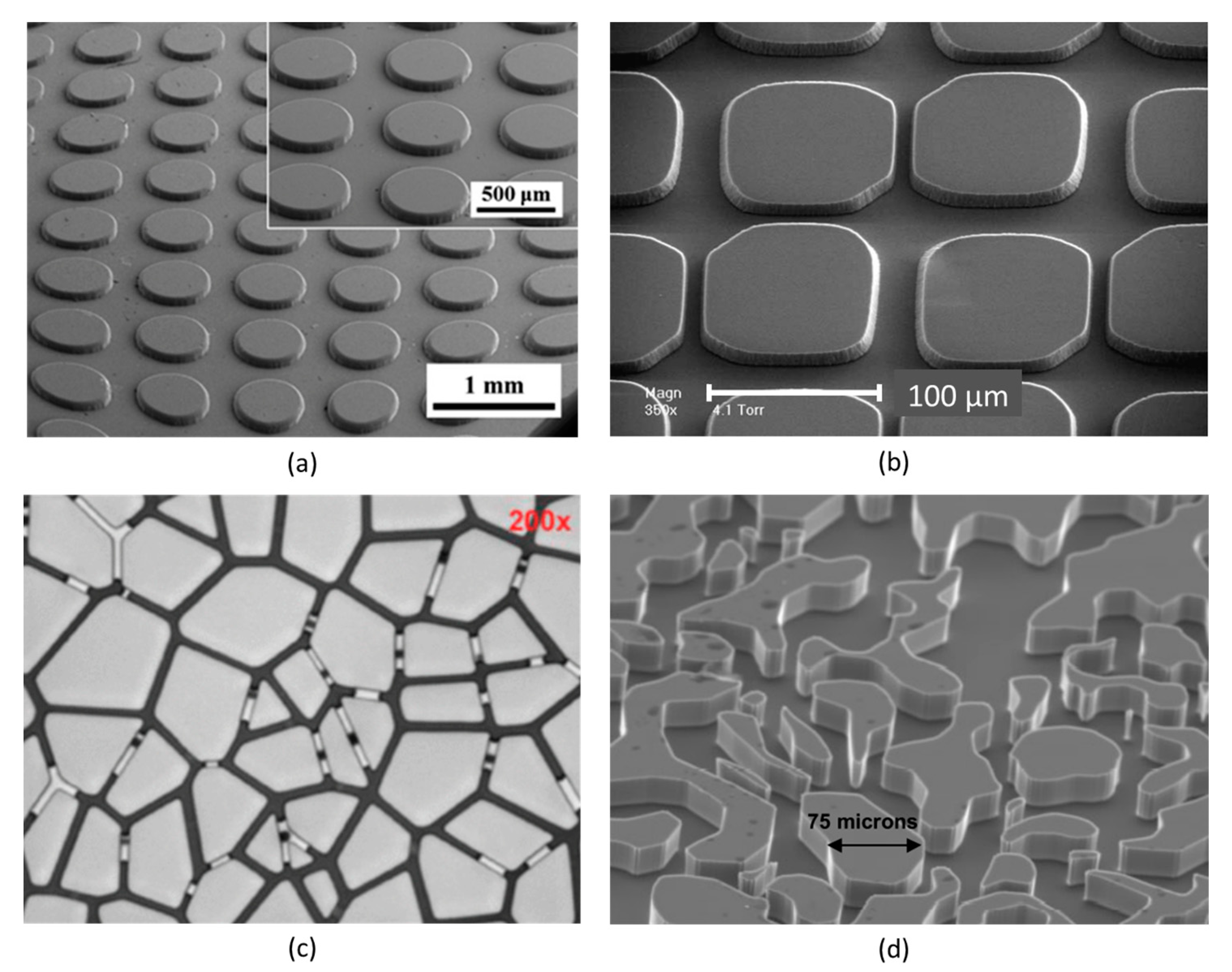
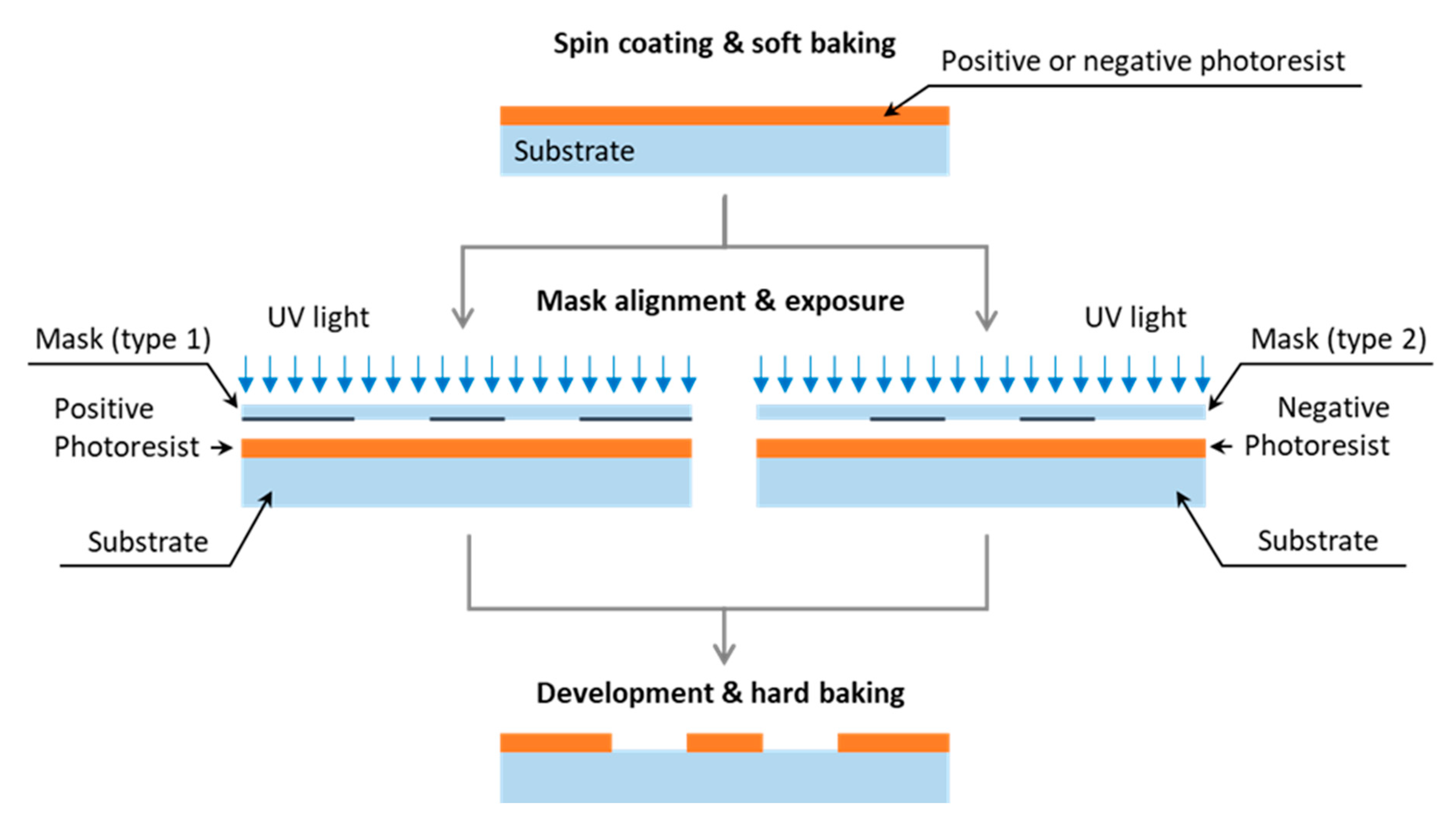
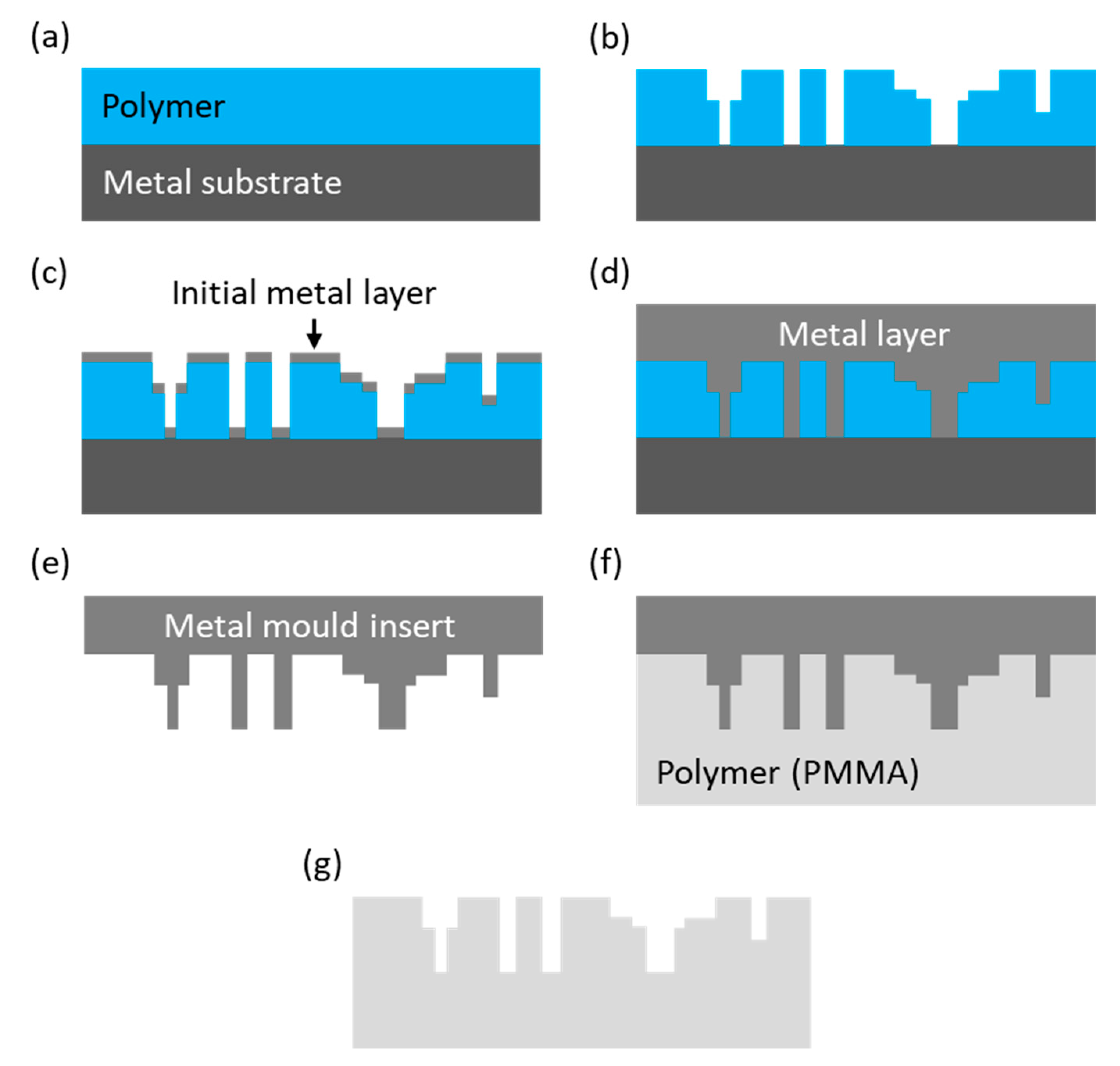
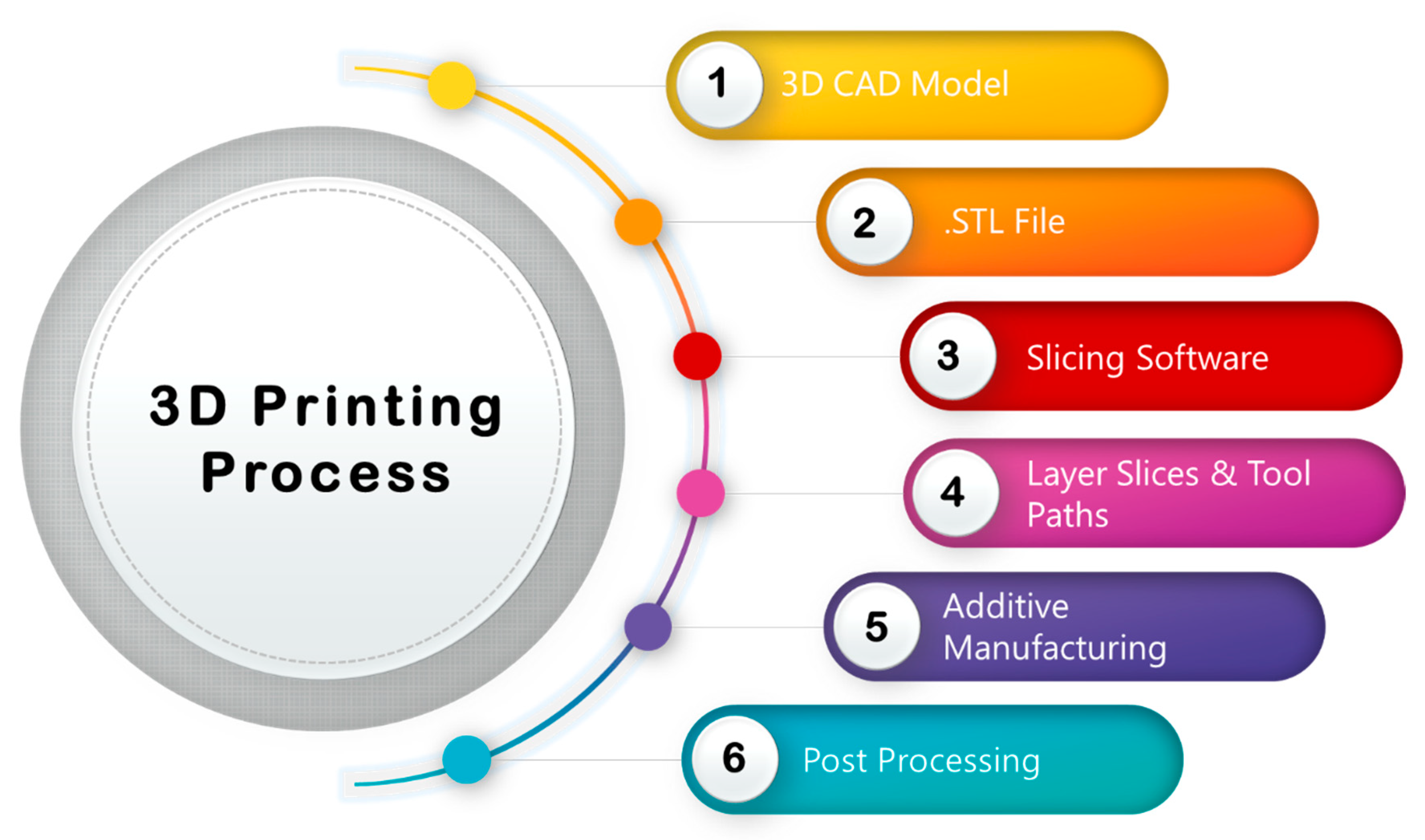
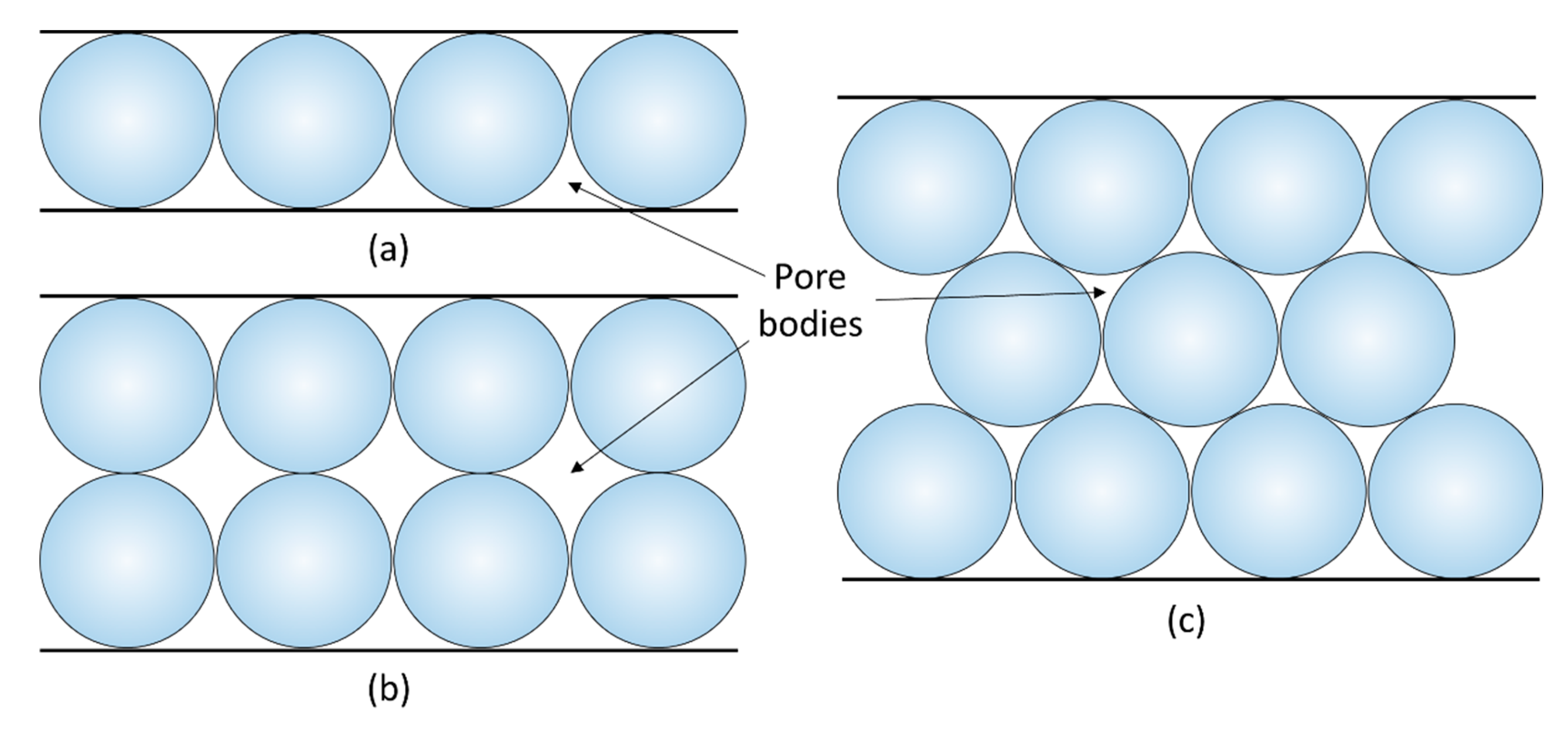
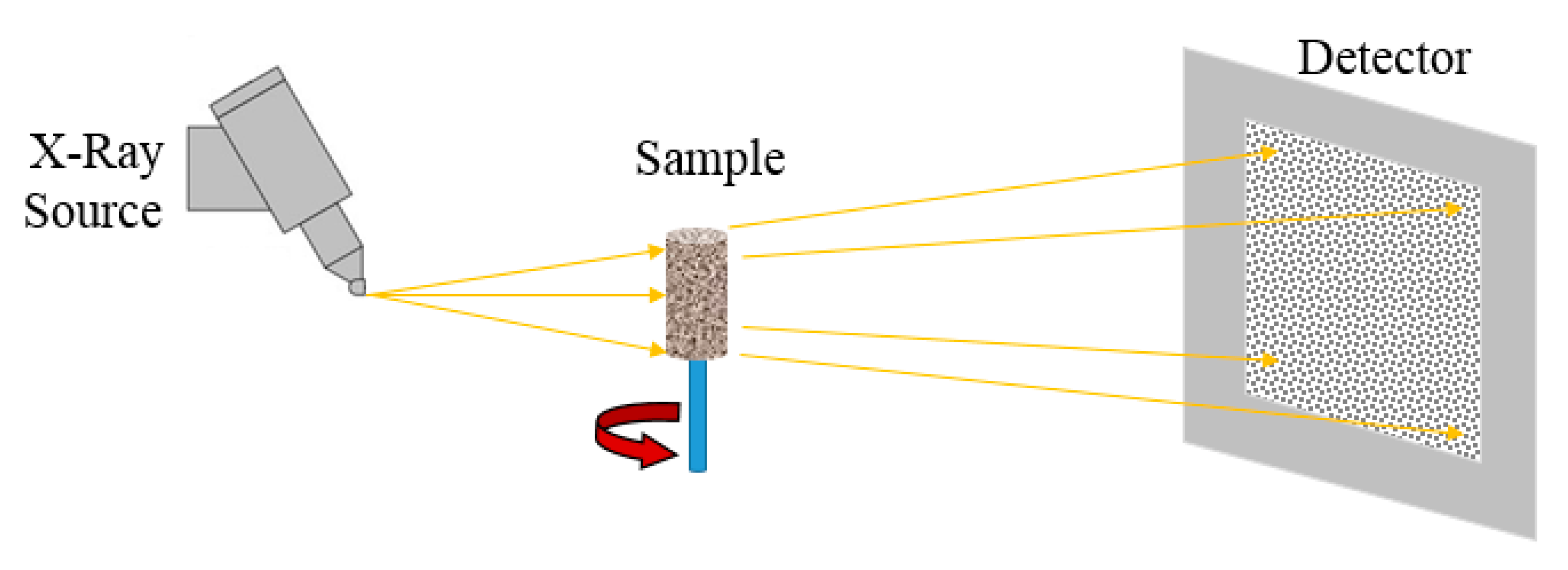
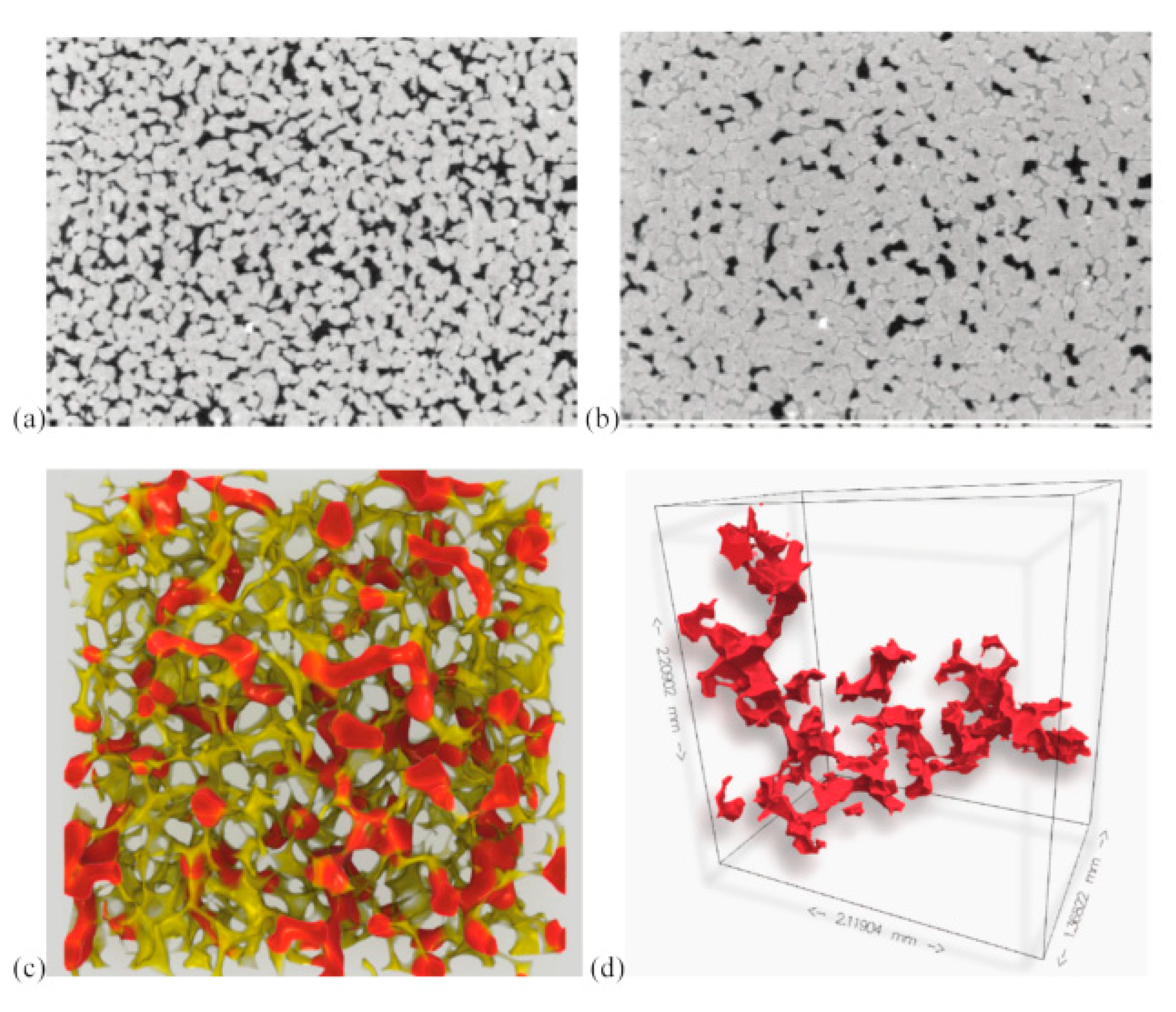
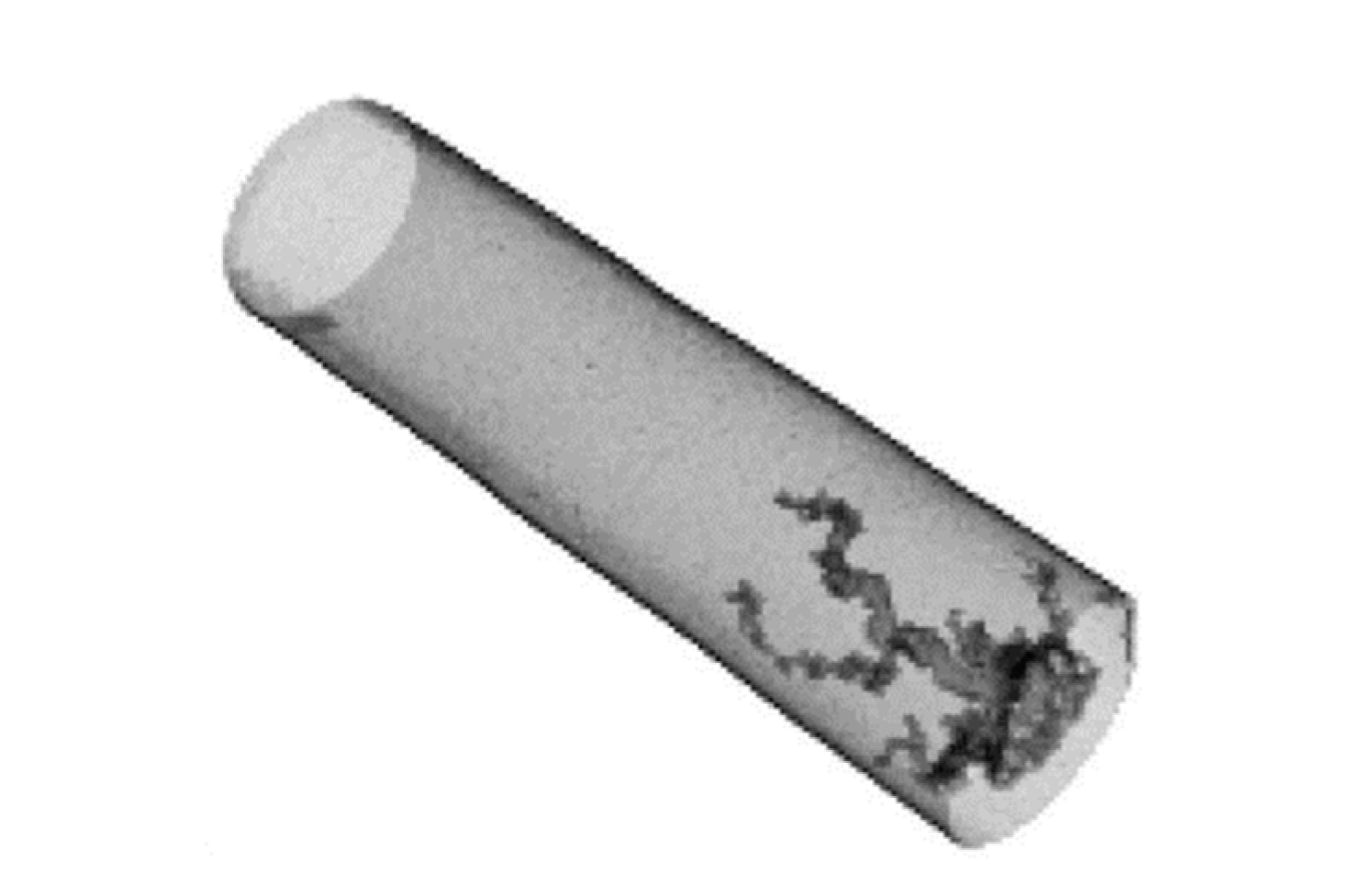

| Type of Models | Pattern Generation Methods | Bonding Techniques | Advantages | Limitations | Selected Applications | |
|---|---|---|---|---|---|---|
| Glass-based micromodels | Glass bead | Arranging of glass beads in transparent container |
|
|
|
|
| Glass plates |
|
|
|
|
| |
| Photoresist-based micromodels | Photolithography | Pressing cover glass to soft photoresist, then hard baking |
|
|
| |
| Polymer-based micromodels | PDMS | Soft lithography |
|
|
|
|
| PMMA |
|
|
|
|
| |
| COC | Photolithography & hot embossing |
|
|
|
| |
| Resin-based 3D printing | 3D printing technology (layer by layer fabrication) |
|
|
|
| |
| Silicon-based micromodels |
| Anodic bonding |
|
|
| |
| Hybrid geomaterial-based micromodels |
|
|
|
|
| |
| Imaging Technique | Image Dimensions | Image Resolution (IR) | Advantages | Limitations | Selected Applications |
|---|---|---|---|---|---|
| Optical Imaging—camera & microscope-camera | 2D |
|
|
|
|
| Optical Imaging—Photoluminescent volumetric imaging (PVI) | 3D |
|
|
|
|
| Optical Imaging—Raman Microscopy | 3D |
|
|
|
|
| Optical Imaging—Micro Particle Image Velocimetry (µPIV) | 2D/3D |
|
|
|
|
| X-ray Computed Tomography | 3D |
|
|
|
|
| Neutron Tomography | 3D |
|
|
|
|
| Positron Emission Tomography (PET) | 3D |
|
|
|
|
| Nuclear magnetic resonance (NMR) & Magnetic Resonance Imaging (MRI) | 3D |
|
|
|
|
| Dual-Energy Gamma Radiation | 2D |
|
|
|
|
| Transmission Electron tomography (TEM) | 2D |
|
|
|
|
| Focused Ion Beams Scanning Electron Microscopy (FIB-SEM) | 3D |
|
|
|
|
| Type of Models | Micromodels | |||||||
|---|---|---|---|---|---|---|---|---|
| Photoresist-Based | Polymer-Based | Glass-Based | Silica-Based | Geo-Material | ||||
| PDMS | PMMA | 3D Printing | Glass Beads | Glass Plates and Hele Shaw | ||||
| Fluid displacement (Drainage & Imbibition), Single- and multi-phase flow mechanisms, Gravity drainage, Capillary rise, Infiltration, Flow instability (e.g., viscous fingering), Saturation distribution, Trapping/residual saturations | Oxaal (1991), Cheng & Giordano (2002) | Qi et al. (2009), Qin et al. (2010), Wu et al. (2012), Karadimitriou et al. (2013), Xu et al. (2014), Watson et al. (2018) | Hsu et al. (2017), Chang et al. (2017), Tsakiroglou and Avraam (2002), Chapman et al. (2013), Hsu et al. (2017), Ju et al. (2017) | Watson et al. (2018) | Chatenever & Calhoun (1952), Saffman & Taylor (1958), Chuoke et al. (1959), Lu et al. (1994a, 1994b, 1995), Manz et al. (1999a, 1999b), Nguyen & Miller (1993); Cinar et al. (2009), Lu et al. (2018) | Wardlaw (1982), Sohrabi et al. (2004, 2008; 2008, 2017), van Dijke et al., (2006), Riazi et al. (2011), Keller et al. (1997), Bijeljic et al. (2001) | Buchgraber et al. (2012), Bandara et al. (2013), Wang et al. (2012), Li et al. (2017), Dimou et al. (2019), Watson et al. (2018), Kazemifar et al. (2015) | Song et al. (2014), Song & Kovscek (2015), Song & Kovscek (2016), Zhu & Papadopoulos (2012), Bowden et al. (2016), Tanino et al. (2017 & 2018), Wang et al. (2017), Alzahid et al. (2018), Porter et al. (2015), Bowden et al. (2016) |
| Fractured rocks and heterogeneous media | Cheng et al. (2004) | Qi et al. (2009), Qin et al. (2010) | Chang et al., (2017), Ju et al. (2017), Yu et al., (2019) | Suzuki et al. (2017), Ahkami et al. (2019) | Karambeigi et al. (2013) | Keller et al (1997), Corapcioglu et al. (1997), Rangel-German & Kovscek (2006), Bijeljic et al. (2001), Wan et al. (1996), Farzaneh et al. (2010), Kamari et al. (2011) | Oostrom et al. (2016), Roman et al. (2016), Rangel-German & Kovscek (2006), Chomsurin & Werth (2003), Zhang et al. (2010) | Porter et al. (2015), Gerami et al. (2017), Bowden et al. (2016), Alzahid et al. (2018) |
| Reactive transport, Transport of colloids, solute and particles, microbial treatment | - | Singh et al. (2017), Soulaine et al (2017), Auset & Keller, (2004), Zhang et al. (2013) | Kim et al. (2013) | Ishutov et al. (2017, 2018a, 2018b), Kitson et al. (2012) | Karambeigi et al. (2013) | Conrad et al. (1992), Danesh et al. (1988), Corapcioglu et al. (1997), Doryani et al. (2016), Goldenberg et al. (1989) Wan & Wilson (1994) | Zhang et al. (2010), Oostrom et al. (2016), Chomsurin & Werth (2003), Baumann & Werth (2010) | Song et al (2014), Song & Kovscek (2016), Singh et al. (2017) |
| Velocity profile (local & field) | - | Heshmati and Piri (2018) | Chang et al., (2017), Ju et al. (2017), Yu et al., (2019) | Ahkami et al. (2019) | Al-Mugheiry et al. (2001), Lu et al. (2018) | Bijeljic et al. (2001) | Roman et al. (2016) | - |
| Porous media characterization, wettability effect, Rock/soil deformation | Cheng & Giordano (2002) | Schneider & Tabeling (2011) | - | Kong et al. (2019a, & 2019b), Ishutov et al. (2017, 2018a, 2018b), Head & Vanorio (2016), | Gueven et al. (2017) | Lee, et al. (2015), Morrow et al. (1986) Wardlaw (1982), R. Hu et al., (2017), Lee et al. (2015) | - | Ishutov et al. (2017), Song et al (2014), Song and Kovscek (2015), Gerami et al. (2017), Song and Kovscek (2016), Tanino et al. (2017 & 2018), Wang et al. (2017), Alzahid et al. (2018) |
| Fluid displacement (Drainage & Imbibition), Single- and multi-phase flow mechanisms, Gravity drainage, Capillary rise, Infiltration, Flow instability (e.g., viscous fingering), Saturation distribution, Trapping/residual saturations | Li et al. (2017), Kazemifar et al. (2015) | - | Wang et al (1984), Hicks et al. (1992), Kumar et al. (2009), Oughanem et al. (2013 & 2015), Sato et al. (2012), Al-Menhali et al. (2015), Oughanem et al. (2013 & 2015) | Charalampidou et al. (2017), Cordonnier et al. (2019) | Manz et al. (1999a, 1999b), Dijk & Berkowitz (1999), Al-Mugheiry et al. (2001), Bijeljic et al. (2001), Colbourne et al. (2016) | Khalili et al. (1998), Haugan (2000), Boutchko et al. (2012), Hu et al. (2017) | Nicholls & Heaviside (1988), Huang & Gryte (1988), Ursin (1992), Oostrom et al. (2003), Brusseau et al. (2008), Cihan (2008) | - |
| Fractured rocks and heterogeneous media | Ahkami et al. (2019), Yu et al., (2019) | - | Hicks et al. (1992), Howard et al. (1993), Van Geet & Swennen (2001), Brattekas et al. (2016), Schmitt et al. (2016) | Lewis et al. (2017), Tudisco et al. (2015), | Manz et al. (1999a, 1999b), Dijk & Berkowitz (1999) | Kulenkampff et al. (2015 & 2016), Brattekas et al. (2016) | Ursin (1992) | Chen et al. (2013), Ahmad & Haghighi (2013), Li et al. (2017), |
| Reactive transport, Transport of colloids, solute and particles, microbial treatment | - | Singh et al. (2015, 2017), Poonoosamy et al. (2020) | Richter et al. (2005), Wilding et al. (2005), Cai et al. (2009), Bray et al. (2017), Brattekas et al. (2016) | Cordonnier et al. (2019) | Colbourne et al. (2016) | Kulenkampff et al. (2015 & 2016), Brattekas et al. (2016), Kinsella et al. (2012), Pini et al. (2016) | Brusseau et al. (2008), Oostrom et al. (1992), Gharbi et al. (2004) | - |
| Velocity profile (local & field) | Ahkami et al. (2019), Lu et al. (2018), Roman et al. (2016), Kazemifar et al. (2015), Yu et al., (2019), Heshmati and Piri (2018) | - | - | - | Al-Mugheiry et al. (2001), Bijeljic et al. (2001), Dijk & Berkowitz (1999) | Hu et al. (2017) | - | - |
| Porous media characterization, wettability effect, Rock/soil deformation | - | Singh et al. (2015, 2017), Poonoosamy et al. (2020) | Gueven et al. (2017), Hicks et al. (1992), Head & Vanorio (2016), Al-Menhali et al. (2015), Schluter et al. (2016), Charalampidou et al. (2013), Tudisco et al. (2015) | Kichanov et al. (2015), Tudisco et al. (2015), Cordonnier et al. (2019) | Xiong et al. (2016), Odusina et al. (2011) | - | Bodwadkar & Reis (1993) | Curtis et al. (2011), Wu & Aguilera (2012), Chen et al. (2013), Ahmad & Haghighi (2013), Li et al. (2017) |
© 2020 by the authors. Licensee MDPI, Basel, Switzerland. This article is an open access article distributed under the terms and conditions of the Creative Commons Attribution (CC BY) license (http://creativecommons.org/licenses/by/4.0/).
Share and Cite
Jahanbakhsh, A.; Wlodarczyk, K.L.; Hand, D.P.; Maier, R.R.J.; Maroto-Valer, M.M. Review of Microfluidic Devices and Imaging Techniques for Fluid Flow Study in Porous Geomaterials. Sensors 2020, 20, 4030. https://doi.org/10.3390/s20144030
Jahanbakhsh A, Wlodarczyk KL, Hand DP, Maier RRJ, Maroto-Valer MM. Review of Microfluidic Devices and Imaging Techniques for Fluid Flow Study in Porous Geomaterials. Sensors. 2020; 20(14):4030. https://doi.org/10.3390/s20144030
Chicago/Turabian StyleJahanbakhsh, Amir, Krystian L. Wlodarczyk, Duncan P. Hand, Robert R. J. Maier, and M. Mercedes Maroto-Valer. 2020. "Review of Microfluidic Devices and Imaging Techniques for Fluid Flow Study in Porous Geomaterials" Sensors 20, no. 14: 4030. https://doi.org/10.3390/s20144030
APA StyleJahanbakhsh, A., Wlodarczyk, K. L., Hand, D. P., Maier, R. R. J., & Maroto-Valer, M. M. (2020). Review of Microfluidic Devices and Imaging Techniques for Fluid Flow Study in Porous Geomaterials. Sensors, 20(14), 4030. https://doi.org/10.3390/s20144030

