You are currently viewing a new version of our website. To view the old version click .
Sensors
  • Article
  • Open Access

21 February 2019

Uplink Non-Orthogonal Multiple Access with Channel Estimation Errors for Internet of Things Applications


and
1
Dept. of Information and Communication Engineering, Dongguk University, Seoul 04602, Korea
2
School of Electrical Engineering, Korea University, Seoul 02841, Korea
*
Author to whom correspondence should be addressed.
This article belongs to the Special Issue Future Research Trends in Internet of Things and Sensor Networks

Abstract

One of the key requirements for next generation wireless or cellular communication systems is to efficiently support a large number of connections for Internet of Things (IoT) applications, and uplink non-orthogonal multiple access (NOMA) schemes can be used for this purpose. In uplink NOMA systems, pilot symbols, as well as data symbols can be superimposed onto shared resources. The error rate performance can be severely degraded due to channel estimation errors, especially when the number of superimposed packets is large. In this paper, we discuss uplink NOMA schemes with channel estimation errors, assuming that quadrature phase shift keying (QPSK) modulation is used. When pilot signals are superimposed onto the shared resources and a large number of devices perform random accesses concurrently to a single resource of the base station, the channels might not be accurately estimated even in high SNR environments. In this paper, we propose an uplink NOMA scheme, which can alleviate the performance degradation due to channel estimation errors.

1. Introduction

Next generation wireless and cellular communication systems are expected to support a variety of services requiring high data rates, low delays, high availabilities, high reliabilities, and large connection densities [1,2,3,4]. Especially, one of the key requirements for the next generation systems is efficiently supporting a huge number of devices for Internet of Things (IoT) applications [4,5,6,7,8,9]. In the future, the prosperity of IoT services can greatly increase the density of devices, which will require massive IoT technologies to support simultaneous random accesses from a large number of devices to a single base station (BS) [4,5,6,7,8,9]. For this purpose, one can use non-orthogonal multiple access (NOMA) schemes, in which signals from devices can be superimposed onto the shared resource and distinguished by spreading or interleaving patterns [10,11,12,13,14,15,16,17]. NOMA schemes can improve the connection density by allowing a greater number of concurrent random accesses compared to other orthogonal schemes.
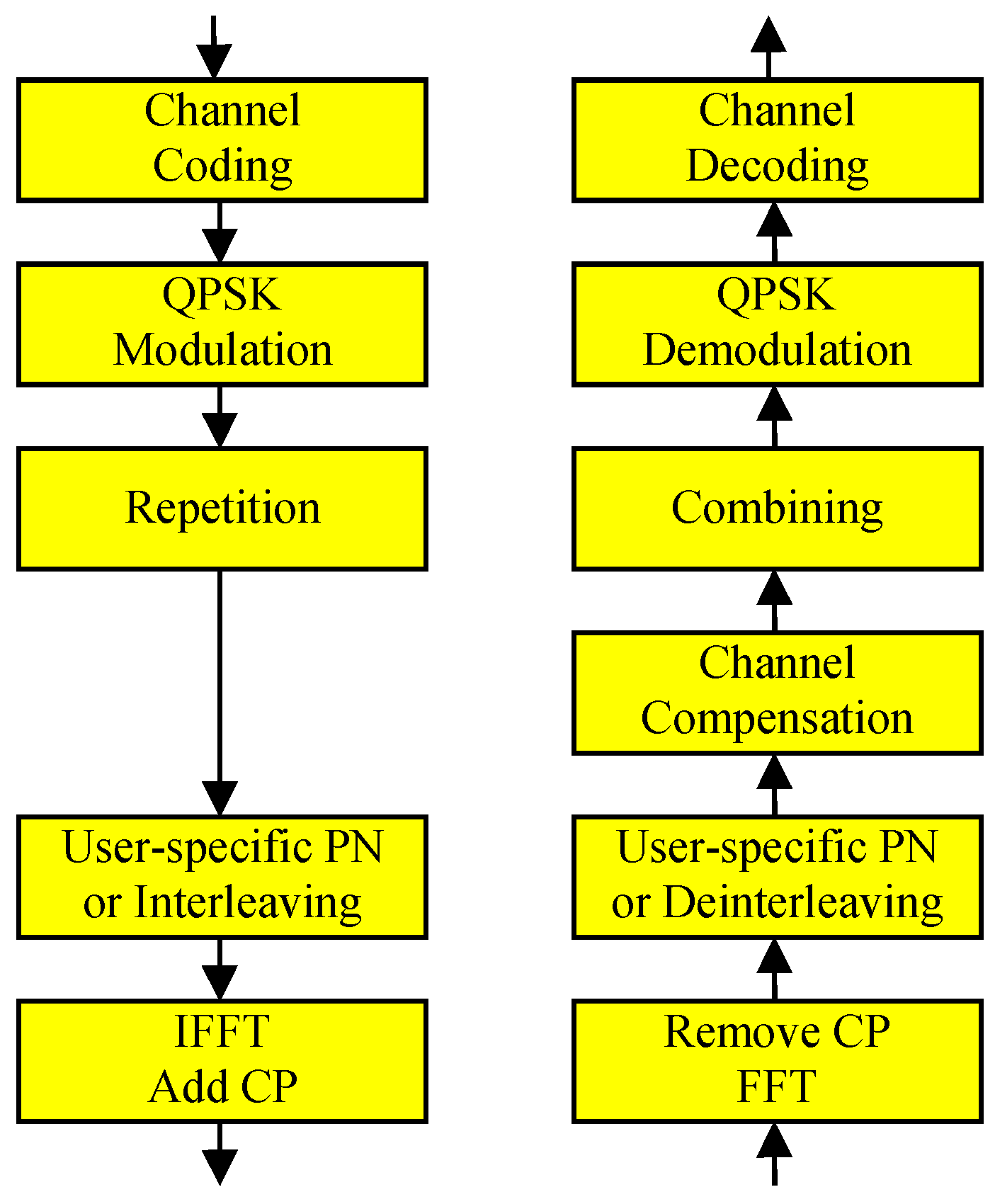
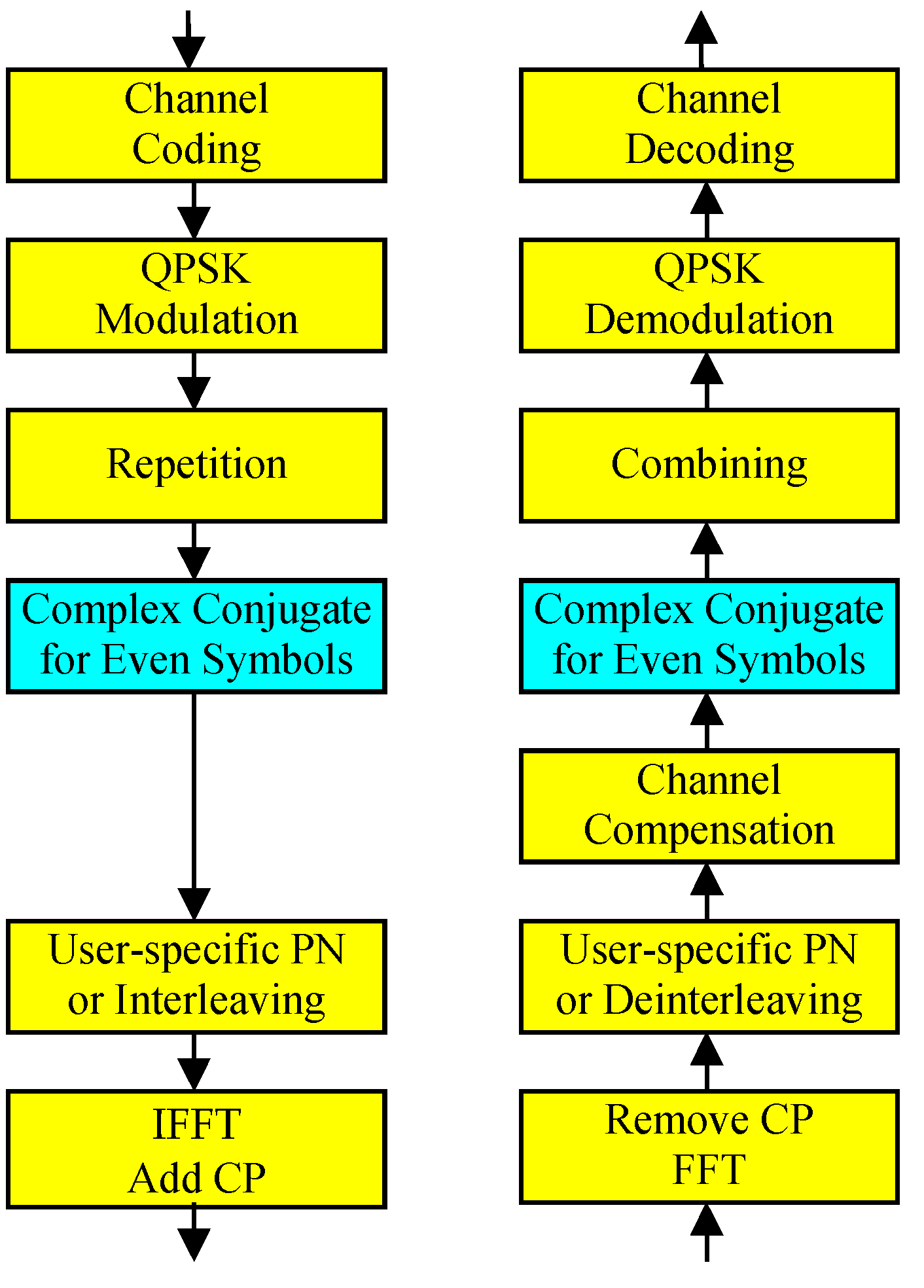
Since IoT devices have low transmission power and are often installed in near-shadow areas such as inside-buildings or underground, they typically transmit signals at a very low data rate using repetitions and/or low-rate channel coding. In an uplink NOMA system, data is transmitted at a very low data rate to maintain the required communication coverage, but a large number of users are superimposed on the shared resource, resulting in efficient resource utilization. For low-data-rate transmission, quadrature phase shift keying (QPSK) modulation can be used. QPSK has an advantage over binary phase shift keying (BPSK) in the sense that QPSK allows longer spreading patterns than BPSK, while they have the same bit energy to noise spectral density ratio. In NOMA systems, there is no exact limit on concurrent random accesses, and superimposed signals from many devices can be decoded with the help of interference cancellation techniques. However, preamble or pilot symbols may also be superimposed onto the shared resource to reduce the amount of resources required, and the performance can be degraded due to channel estimation errors, especially when the number of superimposed packets is large [18,19,20,21]. In this paper, we discuss the performance degradation due to channel estimation errors assuming that QPSK modulation is used. We also propose a NOMA scheme robust to channel estimation errors.
The rest of this paper is organized as follows: Section 2 describes the system model and conventional uplink NOMA scheme. It also addresses the performance degradation due to channel estimation errors. Section 3 proposes a modification to the conventional NOMA scheme to alleviate the performance degradation. Simulation results are shown in Section 4 and conclusions are drawn in Section 5.

4. Simulation Results

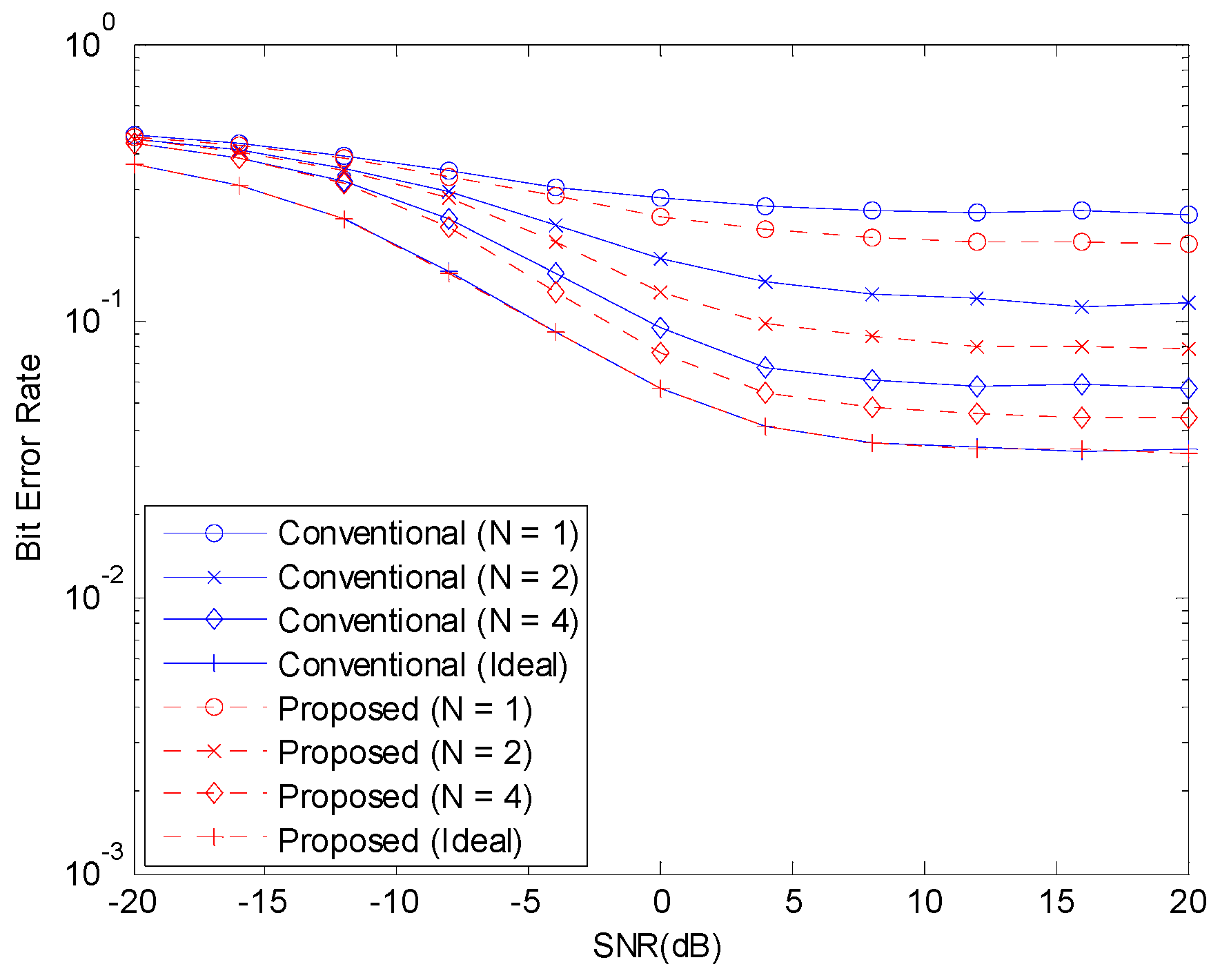
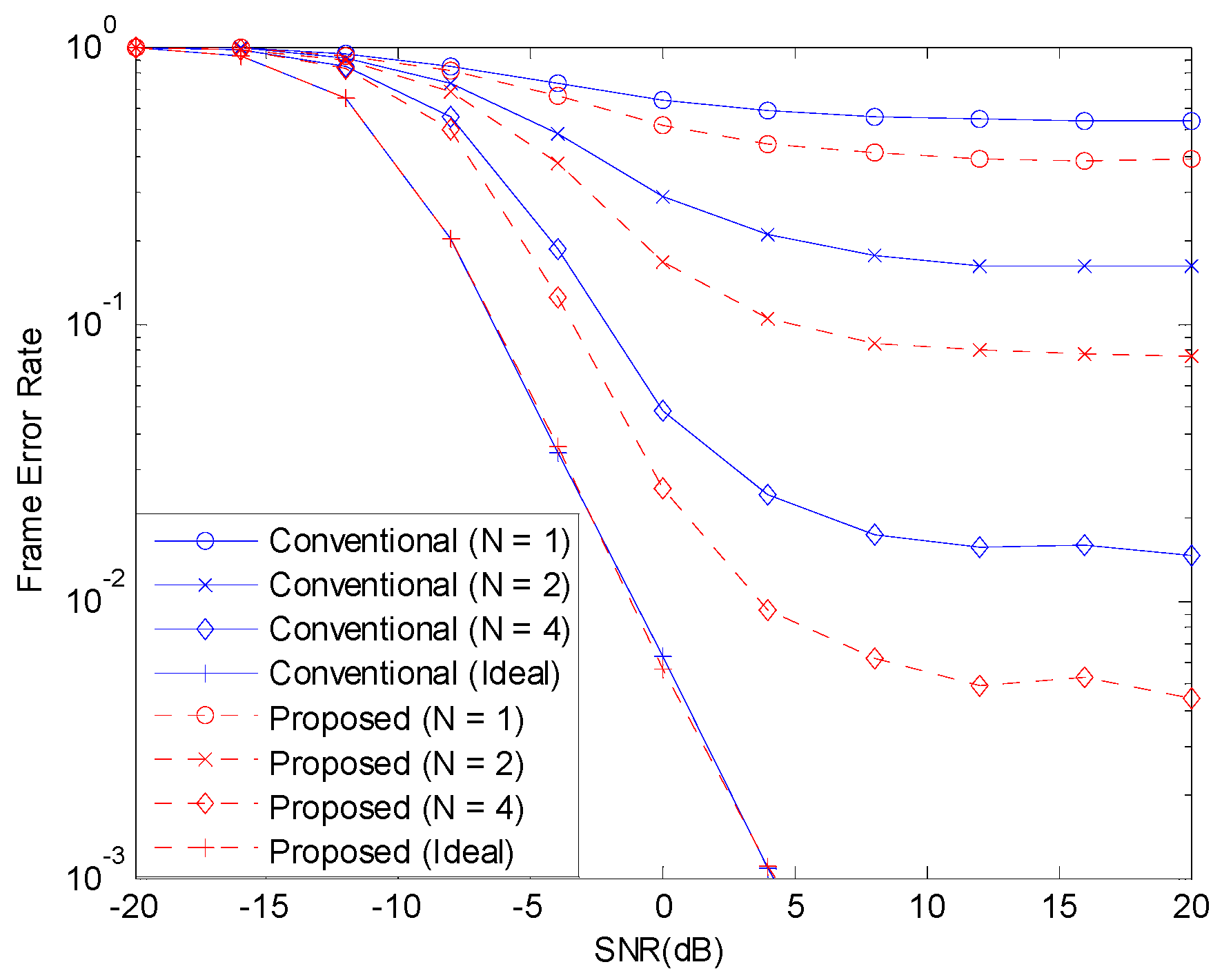
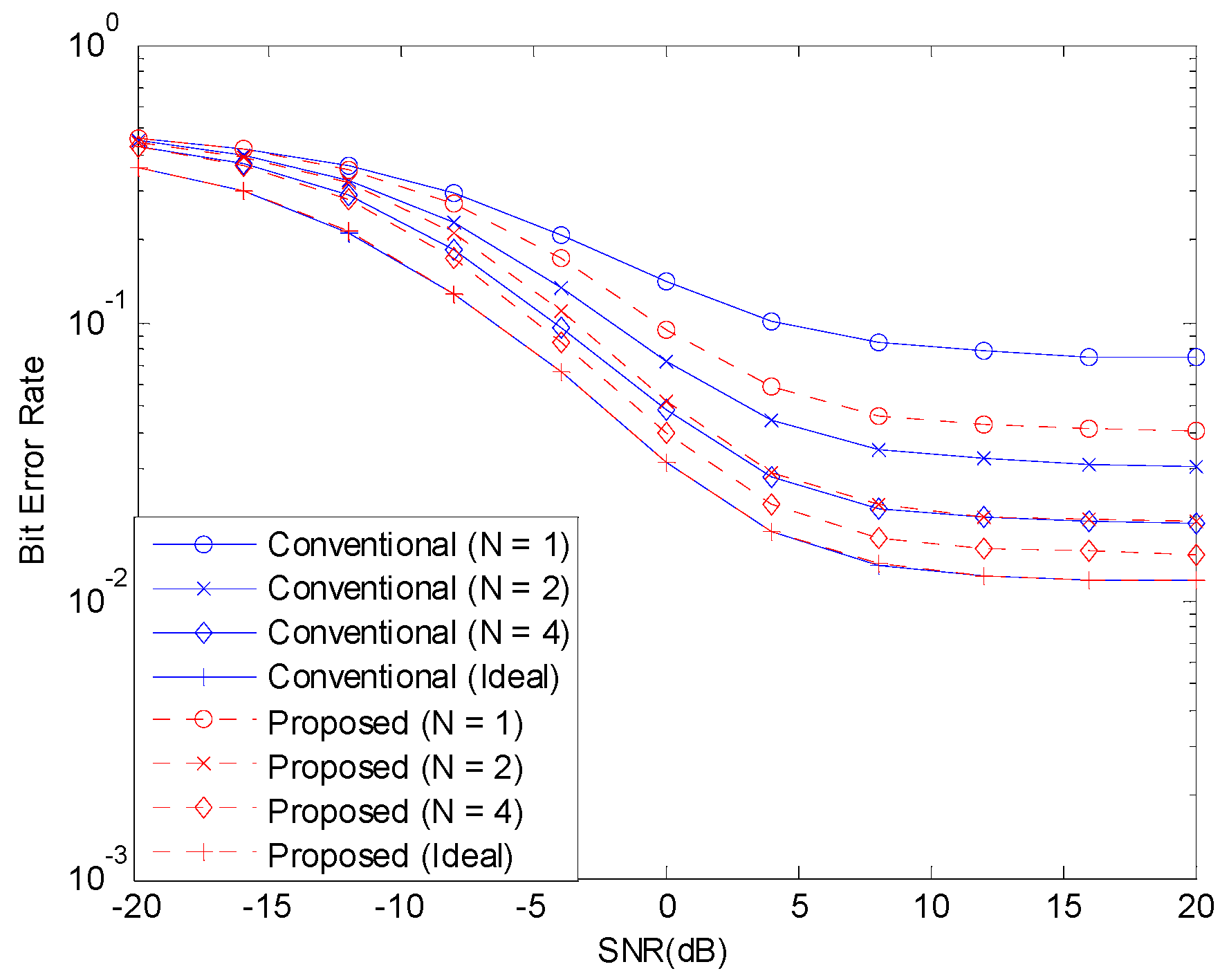
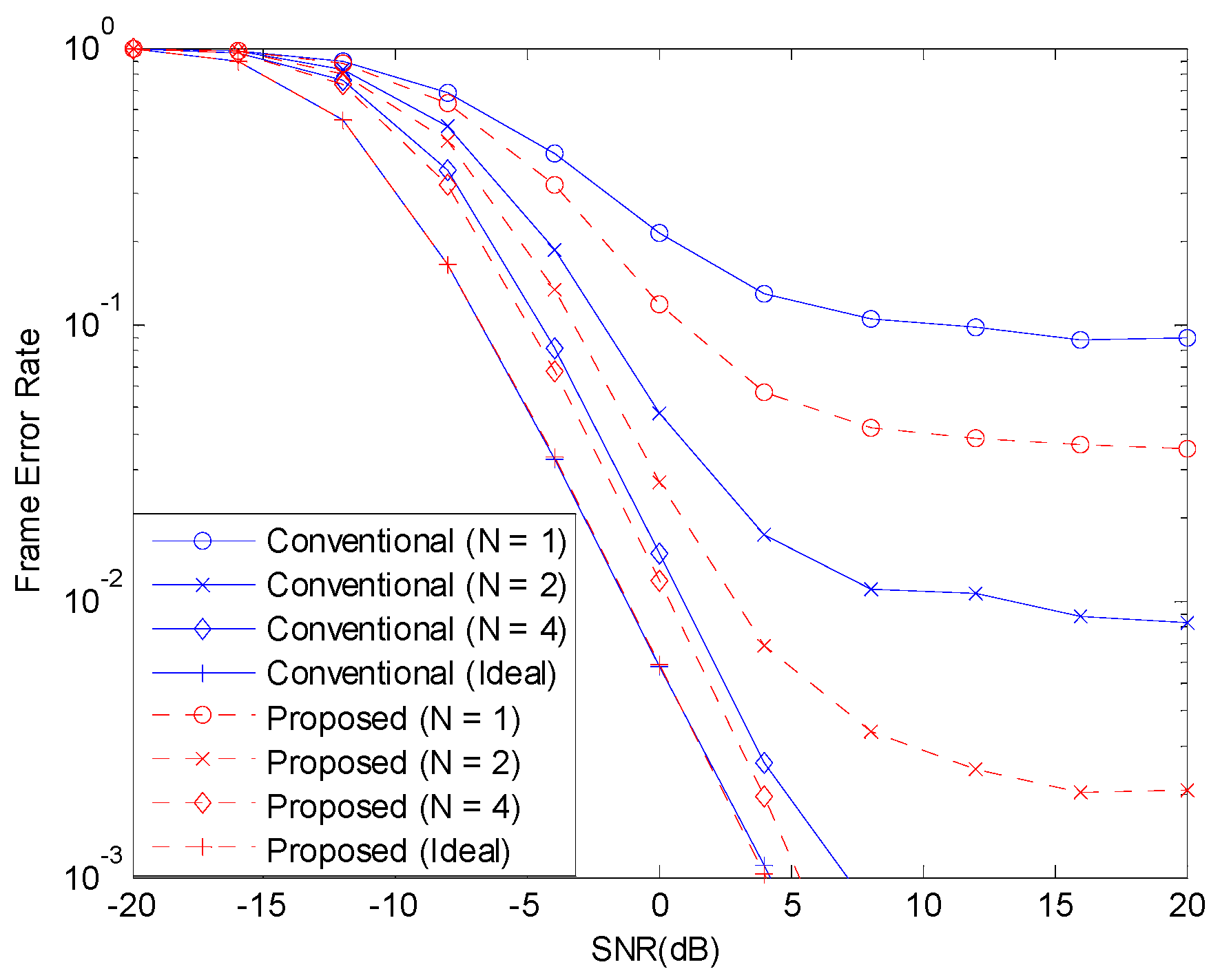
In this section, we compare the conventional and the proposed schemes in terms of BER before channel decoding and frame error rate (FER) after channel decoding. Each device transmits 20-byte data (160 bits) with 1/3-rate channel coding (convolutional coding with constraint length 7 and generator polynomial 171, 165, and 133), QPSK modulation, and eight times spreading with random phase sequences. We assume flat fading and consider channel estimation based on eight ( N = 1 ) , 16 ( N = 2 ) , and 32 ( N = 4 ) resource elements for pilots in addition to ideal channel estimation. Open-loop power control of the transmitting devices may not be perfect and the received signal power is generated uniformly from -3dB to +3dB compared to the operating SNR. Successive interference cancellation is used in the decreasing order of the received power strengths.
Figure 3 and Figure 4 show the BER before channel decoding and the FER performances, respectively, with 12 concurrent accesses to the shared resource. The number of pilot symbols N increases the waste of resource and the accuracy of channel estimation. If the channel estimate is perfect, that is, if N is infinite, the NOMA system can achieve good performance. But, when N is small, the channel estimate is inaccurate and the performance of NOMA system degrades. When the channel estimation is perfect, there is no difference in the performances of the two schemes. With channel estimation errors, the performance is degraded but the performance degradation can be alleviated with the proposed scheme.
Figure 3. BER before channel decoding with 12 active devices.
Figure 4. FER with 12 active devices.
Figure 5 and Figure 6 show the BER before channel decoding and the FER performances, respectively with 20 active devices. As the number of active devices increases, the inaccuracy of the channel estimates increases and it is important to consider the effect of channel estimation errors.
Figure 5. BER before channel decoding with 20 active devices.
Figure 6. FER with 20 active devices.

5. Conclusions

As IoT services become richer, there is a growing demand for massive connectivity technologies to support simultaneous accesses from a large number of devices to a single BS. In order to fulfill the requirement, one can use NOMA schemes, which improve the connection density by allowing signals from multiple devices superimposed onto the shared resource. In this paper, we discussed the issues relating to performance degradation due to channel estimation errors in uplink NOMA systems. When pilot signals are superimposed onto the shared resource as well, and a large number of devices perform random accesses concurrently, the channels might not be accurately estimated even in high SNR environments. This paper proposed an uplink NOMA scheme, which can alleviate the performance degradation due to channel estimation errors. An optimized scheme assuming perfect channel estimation might not be the best with inaccurate channel estimates and channel estimation errors need to be considered for uplink NOMA schemes in order to support a large number of concurrent random accesses. There are a large number of variations in uplink NOMA systems and more rigorous theoretical analysis needs to be performed with diverse uplink NOMA systems in the future.

Author Contributions

Conceptualization, M.R.; Formal analysis, M.R.; Project administration, C.G.K.; Writing—original draft, M.R.; Writing—review & editing, C.G.K.

Funding

This work was supported in part by the National Research Foundation of Korea(NRF) grant funded by the Korea government (MSIT) (No. 2016R1A2B1008953), in part by Institute for Information & communications Technology Promotion (IITP) grant funded by the Korea government (MSIT) (No. 2014-0-00282, Development of 5G Mobile Communication Technologies for Hyper-connected smart services), and in part by ’The Cross-Ministry Giga KOREA Project’ grant funded by the Korea government (MSIT) (No. GK18S0400, Research and Development of Open 5G Reference Model).

Conflicts of Interest

The authors declare no conflict of interest.

References

  1. Andrews, J.G.; Buzzi, S.; Choi, W.; Hanly, S.V.; Lozano, A.; Soong, A.C.K.; Zhang, J.C. What Will 5G Be? IEEE J. Sel. Areas Commun. 2014, 32, 1065–1082. [Google Scholar] [CrossRef]
  2. Boccardi, F.; Health, R.W.; Lozano, A.; Marzetta, T.L.; Popovski, P. Five Disruptive Technology Directions for 5G. IEEE Commun. Mag. 2014, 52, 74–80. [Google Scholar] [CrossRef]
  3. Osseiran, A.; Boccardi, F.; Braun, V.; Kusume, K.; Marsch, P.; Maternia, M.; Queseth, O.; Schellmann, M.; Schotten, H.; Taoka, H.; et al. Scenarios for 5G Mobile and Wireless Communications: The Vision of the METIS Project. IEEE Commun. Mag. 2014, 52, 26–35. [Google Scholar] [CrossRef]
  4. Kim, G.; Rim, M. Internet of Things in the 5G Mobile Communication System: The Optimal Number of Channels in Channel Hopping. Int. J. Netw. Distrib. Comput. 2018, 6, 108–117. [Google Scholar] [CrossRef]
  5. Zheng, K.; Ou, S.; Alonso-Zarate, J.; Dohler, M.; Liu, F.; Zhu, H. Challenges of Massive Access in Highly Dense LTE-Advanced Networks with Machine-to-Machine Communications. IEEE Wirel. Commun. 2014, 21, 12–18. [Google Scholar] [CrossRef]
  6. Islam, T.; Haha, A.M.; Akl, S. A Survey of Access Management Techniques in Machine Type Communications. IEEE Commun. Mag. 2014, 52, 74–81. [Google Scholar] [CrossRef]
  7. Hasan, M.; Hossain, E.; Niyato, D. Random Access for Machine-to-Machine Communication in LTE-Advanced Networks: Issues and Approaches. IEEE Commun. Mag. 2013, 51, 86–93. [Google Scholar] [CrossRef]
  8. Rim, M.; Chae, S. Frame-Based Random Access with Interference Cancellation across Frames for Massive Machine Type Communications. Mob. Inf. Syst. 2017, 2017, 1–7. [Google Scholar] [CrossRef]
  9. Zanella, A.; Zorzi, M.; Santos, A.F.d.; Popovski, P.; Pratas, N.; Stefanovic, C.; Dekorsy, A.; Bockelmann, C.; Busropan, B.; Norp, T.A.H.J. M2M Massive Wireless Access: Challenges, Research Issues, and Ways Forward. In Proceedings of the 2013 IEEE Globecom Workshops (GC Wkshps), Atlanta, GA, USA, 9–13 December 2013. [Google Scholar]
  10. Mohammadkarimi, M.; Raza, M.A.; Dobre, O.A. Signature-Based Nonorthogonal Massive Multiple Access for Future Wireless Networks: Uplink Massive Connectivity for Machine-Type Communications. IEEE Veh. Technol. Mag. 2018, 13, 40–50. [Google Scholar] [CrossRef]
  11. Shirvanimoghaddam, M.; Condoluci, M.; Dohler, M.; Johnson, S.J. On the Fundamental Limits of Random Non-Orthogonal Multiple Access in Cellular Massive IoT. IEEE J. Sel. Areas Commun. 2017, 35, 2238–2252. [Google Scholar] [CrossRef]
  12. Kiani, A.; Ansari, N. Edge Computing Aware NOMA for 5G Networks. IEEE Internet Things J. 2018, 5, 1299–1306. [Google Scholar] [CrossRef]
  13. Dai, L.; Wang, B.; Yuan, Y.; Han, S.; Chih-Lin, I.; Wang, Z. Non-Orthogonal Multiple Access for 5G: Solutions, Challenges, Opportunities, and Future Research Trends. IEEE Commun. Mag. 2015, 53, 74–81. [Google Scholar] [CrossRef]
  14. Zhang, N.; Wang, J.; Kang, G.; Liu, Y. Uplink Nonorthogonal Multiple Access in 5G Systems. IEEE Commun. Lett. 2016, 20, 458–461. [Google Scholar] [CrossRef]
  15. Chen, S.; Ren, B.; Gao, Q.; Kang, S.; Sun, S.; Niu, K. Pattern Division Multiple Access—A Novel Non-orthogonal Multiple Access for 5G Radio Network. IEEE Trans. Veh. Technol. 2017, 66, 3185–3196. [Google Scholar] [CrossRef]
  16. Du, Y.; Dong, B.; Chen, Z.; Fang, J.; Gao, P.; Liu, Z. Low-Complexity Detector in Sparse Code Multiple Access Systems. IEEE Commun. Lett. 2016, 20, 1812–1815. [Google Scholar] [CrossRef]
  17. Tao, Y.; Liu, L.; Liu, S.; Zhang, Z. A Survey: Several Technologies of Non-Orthogonal Transmission for 5G. China Commun. 2016, 12, 1–15. [Google Scholar] [CrossRef]
  18. Chen, Y.; Schaepperle, J.; Wild, T. Comparing IDMA and NOMA with Superimposed Pilots Based Channel Estimation in Uplink. In Proceedings of the 2015 IEEE 26th Annual International Symposium on Personal, Indoor, and Mobile Radio Communications (PIMRC), Hong Kong, China, 30 August–2 September 2015. [Google Scholar]
  19. Sergienko, A.B.; Klimentyev, V.P. SCMA Detection with Channel Estimation Error and Resource Block Diversity. In Proceedings of the 2016 International Siberian Conference on Control and Communications (SIBCON), Moscow, Russia, 12–14 May 2016. [Google Scholar]
  20. Du, Y.; Dong, B.; Zhu, W.; Gao, P.; Chen, Z.; Wang, X.; Fang, J. Joint Channel Estimation and Multiuser Detection for Uplink Grant-Free NOMA. IEEE Wirel. Commun. Lett. 2018, 7, 682–685. [Google Scholar] [CrossRef]
  21. Gao, Y.; Xia, B.; Liu, Y.; Yao, Y.; Xiao, K.; Lu, G. Analysis of the Dynamic Ordered Decoding for Uplink NOMA Systems with Imperfect CSI. IEEE Trans. Veh. Technol. 2018, 67, 6647–6651. [Google Scholar] [CrossRef]
  22. Haykin, S.; Moher, M. Communication Systems; John Wiley & Sons: Hoboken, NJ, USA, 2010. [Google Scholar]
Article Metrics

Citations

Article Access Statistics

Multiple requests from the same IP address are counted as one view.